
Build A Million Dollar Life With These 5 Habits | Dan Martell
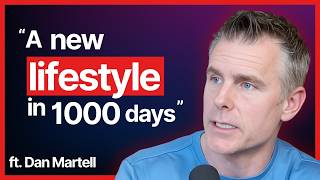
A podcast-style interview (YouTube) with Dan Martell and Ryan Daniel Moran about Martell’s entrepreneurial journey, how he built wealth, and practical habits and frameworks for high-performance living. Topics include Martell’s early software exits, building a personal brand (YouTube), SaaS investing and acquisitions, capital-raising approaches, lifestyle design, and his five daily non-negotiable habits for growth. The piece mixes personal anecdotes with tactical advice for founders and creators.
Chapters
Most people are a thousand days away from a completely different life. If you can't describe to me your future the same way you can describe your current reality, then you're not clear. Like when I decide to do something, the older I get, I just go, could I give it 10 years?
Help us figure out this riddle wrapped in an enigma nestled on a sesame seed bun of mystery.
I'm going to give it. And if it's too much, I apologize, but grab a notebook. One of the biggest thiefs of wealth is self sabotage. So you have an identity, what you think you should have as savings, what you should be paid, and you'll never receive a penny more than you think you deserve. The exercise is the belief two things can be true at the same time. You can be absolutely grateful for what you have and also be aware that you are capable of more.
So when you are working with an entrepreneur who is burnt out or is thinking about selling or getting out or something, what is your lifestyle design process?
Yeah, so it's a great question.
One of the advantages that I have after being an entrepreneur for two decades now is that I meet a lot of people, some of whom have moderate success, some of whom flake out after a couple of years, and a few that break out really big. And when you've been in the game for a long time, you meet people when they're starting or when they're at the middle of their journey, and then you watch them explode over a short period of time. Those are the stories that fascinate me. The people that I grew up the ranks with and then had explosive growth over a period of a few years. I'm always curious what they did differently than everybody else. One of those people is Dan Martell. I met him at an event seven or eight years ago, and in the last three to four years I've watched him explode onto the scene both as a founder, an investor, and also as a personal brand. So I invited him onto the show to ask how he is winning in all of these different areas. But I also wanted to know if what he put out on the Internet is actually what is true behind the curtain. Because you never really know if what someone is showing on their social media is what their life is really like. So one of the questions that I ask Dan is why do you have this personality on the Internet that attracts such a polarizing crowd? It attracts a lot of people who are just that front of the market, wanting to be rich, driving Lambos. Because I know who he is behind the scenes and he's not that guy. And so we wrestle with that on this podcast. We also talk about his five non negotiable habits that he does every day. How he grew so quickly on social media. And we talk about how he runs at such a high level without ever burning out. I hope you enjoy this episode as much as I enjoyed recording it. Let's go hang out with Dan Martell. Dan, the way that I like to start these is I like to ask, how did you make your money?
Yeah, that's the question. How did I make my money? It took a while. I think I was seven years into building companies. Like, I, like, legit tried. I just got lucky. I started young, So I was 17. Um, you know, there's the backstory of getting a ton of crap, ton of trouble. And then when I finally started building businesses, I was 17 and I went till I was 24.
I.
And honestly, I almost gave up. My dad would be like, why don't you get a normal job? And I just said, I don't think I could do that. I don't think I would be a successful employee. Like, I'm too opinionated. Back then I was definitely way more opinionated.
But then I built a company called Sphere Technologies that was an enterprise portal. I mean, nobody knows what that is. But we sold software to big companies. And the interest. I never shared this story, Ryan. So I'm selling software to Fortune 2000 companies, okay? The biggest of the biggest. Procter and Gamble, Dole Foods, Johnson Johnson. People always ask, how did you at 24, sell to the C suite, right? The CFO, the CTOS. And the way I did it was, was I made fake resumes of people that I knew they would want to hire that would tell me that they were buying that kind of software. So essentially I made a resume for a software portal architect and a portal developer and all these stuff. But the phone number on the resume was my cell number. So when they would call and it'd be like, yeah, is John there? I'd be like, oh, John's on vacation. But he forwarded his number to me. And. And that's how I use that as an indication to have the sales conversation. So that's. I mean, technically that's how I made my first dollar. But it took a while. It took seven years. Hired a business coach, this guy named Bob. He was an E myth coach. He showed me I was more technical. He showed me how to do the business stuff. And that company made me a millionaire at 27 and then multimillionaire at 28.
And you sold that company?
Scaled that 28 to a US firm. I'm Canadian. Thought I was going to retire at 28. Yeah. Oh yeah.
As all 28 year olds do when they make a boatload of money.
I literally was like okay, did that thing everybody talks about. I lived in a small town, 100,000 people on the ocean, eastern Canada. I was built, I decided to build a new house. I bought a cottage on the water, I bought a boat, I bought a hot tub. I thought I was sorted. This is, this is c la vie. And I think I lasted like four or five months just like hardcore partying and trying to figure out like what are we going to do next. There was this guy named Norm, he's still alive and I love Norm, he's a nice guy. But norm was the 40 year old out on his boat with a bunch of 18 year olds on the boat. Now they might have been 18, maybe their 20s, but whatever, like he was that guy, you know what I mean? Like the kind of the old Florida.
Guy like the dan B. Arian.
100% and, and there was something about seeing that and realizing cuz his story was, was similar where he was a business guy, made some money at a young age, kind of semi retired, still had like the lo shop and these things. But I was like do I really want to wake up in 20 years.
And be like Norm Liz is not that cool. It's cool when you're 25.
It's cool for a moment, it's cool for a season. Like I, dude, that was one of my favorite summers. And then it was like okay, you.
Were 28 or 29 years old of course.
Yeah, I was 28 and I had gone through four years of just heads down, 100 hour week like grind. So it was nice to have a chance to reset. But it was after that that I was like what am I going to do? So I remember I almost had allergic reaction to the moment and I bought a one way ticket to San Francisco in the middle of building this new house in the middle of everything, one way ticket. That was, it just went.
It's interesting when I had my big windfall when I was 29 and my experience was a little bit different because I had a one year old and I basically just went right back into grinding on things that didn't matter. You didn't even give yourself a break maybe. I think I read books for a week or two and then I went right back into grinding.
Even with a one year old.
Yeah, yeah. I didn't Know anything else? I've been doing that since I was 18 years old.
Yeah.
Just grinding. But the thing that I've noticed, both for myself and other people who have that windfall moment after grinding for a long time, is there's this period in which you go, like, what the heck matters now? Like, I know I can be successful. I know that I can put my attention on anything and probably have it work. But finding that next mountain to climb is a completely different set of challenges than just trying to make your first dollar. So how did you navigate that? Because you're still grinding. Like, you're.
I mean, I did drift for two years. So, like, Napoleon Hill wrote a book called Outwitting the Devil, and he talks about this concept of drifting that the devil convinces us to. You're good, things are awesome. Just, just chill out. And that's why I think, see, I had the opposite reaction. It was such a. Four years of dedication. I was engaged during that time. She left me. She was just like, I can't deal with this.
Health went to crap. Put on, like, 30 pounds. It was, it was so, I guess, painful that I finally got to that promised land. And I said, okay, I'm gonna enjoy this. I'm not. I, I. And I, at least, I don't know. I, at the time, I thought it was a smart move. I, I said, I'm not gonna start something new. Like, I'm gonna go to San Francisco, I'm gonna meet people, maybe do some angel investing. But in hindsight, I 100% drifted. Like, I allowed myself to use that pain because I think fear gives bad advice. So I was scared.
Success can too, sometimes.
Yes, totally. And, and that was, that was the, that was actually the moment where a lot of the ideas that I teach today, the buyback principle, came from. Because. And you just kind of alluded to this. I, I have a gear to want to create. The problem is, is especially in being a relationship with kids, is I know how intoxicating that can be, how that can. The art of the deal and the rush. And it's. And it's a known thing. It's my emotional home. Like, that's, that's actually easy for me. What's hard is actually saying, okay, well, how do I do that with some level of integration. Not balance per se, but harmony is a better word, I think. And, But I went the opposite. And I took my foot off any gas, like, just, just took meetings with people, angel invested, but didn't really push or, and really not even push in business. I stopped Developing me. And I think that would be the biggest.
I can relate to that.
That's the distinction that I would say is I knew from a young age, you know, 17, 18, that like the personal development, right. I can only become to the level I develop. And I just decided to chill, travel, stop reading books, stop that. The mindset, the beliefs, and that cost me a lot. And in many ways, emotionally it cost me a lot. I think financially definitely cost me a lot. So that's the new norm for me is how do I operate in a way that doesn't feel restrictive but doesn't create, doesn't penalize anybody in my life for me wanting to be that way.
How did you find which mountain you wanted to climb after having a big windfall at 28?
I don't think I figured it out at 28. What happened was, is I had, I had a full time CTO building cool stuff for me. So I at least I said, hey, his name was Scott. I said Scott. I got crazy ideas. I code, but I'm just like, I don't want to work, so I'm going to travel. But as I have ideas. This is early days of social media web2 and we just built a bunch of cool apps. We built Twitter tools on top. I had this really cool thing called Twinter Sec that was like LinkedIn for Twitter. So I could look at your profile and it would tell me who follows me, that I don't follow that, that you follow. So it would.
I'm already confused. Yeah.
So the whole idea is there's a social graph that exists on all these social networks. If I want to connect with Ryan, the best person for me to get an intro is somebody that follows me that I don't follow because they're interested in me. That you follow that one degree of separation kind of, but also the social signals. So we built this app called Twinter Sec and It was essentially LinkedIn for Twitter. And I would use it to reach out to everybody and ask for introductions. And built another app called Hedwig that would look up social media data on email addresses. I mean, it was just Instagram. We built a, we visualize all the posts in a city so you could, you could see in real time people posting on Instagram. And it was just like a discovery tool. They were just like little apps that me and you know, Heaton Shaw. Have you ever come across Heaton Heat? And I would just talk about it. He did Crazy Egg and a bunch of other companies with Neil Patel. So if you know Neil. Yeah, Heaton's his business partner.
So, Dan, I want to, I want to tell you a way that you fucked with my brain and I'm really mad at you. Okay. So it's going to be good. We first met at a camp Maverick.
You do remember, years ago. I do remember that.
And you gave a talk. And I only remember one thing from the talk. And the talk. The thing that you said in this talk was that the culture of your business will be determined by the first seven people that you hire. And has always been in my brain. And I've actually looked at it. I have never built a team beyond seven full time people. And I think it is because in some ways I'm like, is this the.
Culture that I want?
Is this the culture that I want to lock in or do I need to make some changes? And so I have a bit of a history of expanding to 7 full time team members that work closely with me and then I start to make some changes. So I'm curious if you stand by that statement of the culture being set by the first seven people.
I definitely do. But I think the caveat is it's not necessarily the first you hire. It's the ones you curate to be the ones to go on the journey.
Oh, interesting.
Yeah. So that might be the caveat. I would say so in every company. And here's the other lens. Every person I hire when it's, when it's a small company, I'm asking myself a question. Could they manage other people? Because if they couldn't, I'm creating bottlenecks for myself right out of the gate.
So.
So most people don't even ask themselves that question. They're like, oh, I need an administrative assistant. Cool, you can do the job. Need a graphic designer. Cool, you can just. But if you just said, could this person manage a graphic designer, another admin, Then all of a sudden your capacity will never be bottlenecked.
That makes sense.
That's why I say that is not only culture. Yes. The type of people. Because as the company gets bigger, what happens is your values dissipate down the line. Right. So the team's a thousand people and it dilutes itself. So that's why the initial core has to be so aligned and kind of on the same page that as it scales, it has some level of ability to dilute without like losing its. Its magic.
Yeah, that. That makes sense. We haven't seen each other much since that first meeting, but it seems like your life has gone on a very interesting trajectory since then. And I know Very little about your business, but I hear your name everywhere now, and I see your content everywhere now.
I just pay people.
You just pay people? You just hired seven people.
Yeah. Just to talk about me, Gonzalez being one.
So I. I want to. I want to hear from you what you put your focus on over the last six years in order to grow the business that you have now and your personal brand.
Yeah. So it's a great question. So I'm. I. I've been the software guy my whole life built. So Spheric was the first one. Then I did Flowtown with my business partner, Ethan. Then I did Clarity FM after I did Clarity. And honestly, that company was me being too scared to do what I really wanted to do, which is coach. So there was a period where I've always been the guy that loves to help people. Like, that's just, like, people know me. Like, Dan, so nice. He's so helpful. Just love that. I love to see other people win. Like, if you're in, you're like, that's just I. All the time, somebody wants help, let's talk. Let's figure out how you can win. And because I was so scared to be one of those guys, I mean, dude, today it's like, there's coaches that code coaches. It's just. It's kind of a joke. And I get it, and I understand it, but it's always been like that. Real estate agents, people talk about that. Social media experts. Talk about AI experts today. Whatever, whatever. And instead of just going all in on teaching and mentoring and coaching, I decided to build a whole platform. The whole platform, just as a disguise or like a little Trojan horse for me. Because, dude, while I built Clarity, which is a platform, a marketplace for entrepreneurs to get advice over the phone, okay? I personally did 1300 calls in two years. So, like, I really wasn't even running the company. I was helping other entrepreneurs. And most of those calls were free. And I just. I'd say, oh, I'm using my own product. But it was just my real passion place. So towards the end of that company, after I exited it, I started a YouTube channel. And that was the gateway drug. So my buddy.
That was when.
This would have been eight years ago.
Okay. That was your gateway into actually doing the coaching rather than building.
So Travis Houston, I don't know if you've ever run into a guy. So Travis from San Diego. I run into him. He's working at My buddy. He had the. They called the. The Fockers Foc. It was the Friends of Chuck's and there's this corner of his office. Chuck Long Necker, he had this company called Digital Telepathy in downtown San Diego. After I sold Clarity, we were literally. My wife and I went down for six months to just reset. And I would go once in a while and I. And Travis is one of the fuckers. He's like the friend of Chuck's that works in this corner. And there's like eight other guys. And I sit down, I'm working. He goes, aren't you. Are you Dan Martel? I said, yeah. He goes, you built Clarity, so, yeah. He goes, dude, that's so cool. Yeah, I use a product. I love it. And he just says to me, have you ever considered doing YouTube? And I go, no, like, zero. Part of me, I'm not a YouTuber. Like, dude, I'm 30 something. Like, let's leave it to the kids. He goes, nah, man. He goes. And he starts showing me all his clients. He's working with JJ Virgin and many others. He goes, dude, I would want to hear your content. You should do YouTube. So I asked him, well, how would I do that? He says, well, you need a camera. So I think it was a Canon, some kind of camera. I bought the camera. I asked Chuck, hey, dude, can I come in on the weekend? I'll use. You had this beautiful creative agency space. And I said, can I shoot some videos? And, dude, I just sat there by myself and I talked about stupid shit. Like, well, not stupid stuff. I shot videos initially for my kids that I could get behind, right? Like, what would I say about finding your passion? What would I say about being productive? What would I say about dealing with tough times? And that was the beginning of my YouTube. And I. I did it every week. I. I've been doing it now, I think, nine years, Sam. Nine years. I haven't missed a week ever. Ever. Nine years. Consistent. I just said, I. I'll dedicate a decade. And I think that was a big idea that a lot of people don't get. They're not even willing to dedicate a week or a month or year. Like, when I decide to do something, the older I get, I just go, could I give it 10 years?
It is amazing how as you get older, your time horizon of what you're willing to goes up. That changed for me when I had kids because it's the first time I had to think about 18 years, 100%. So before it was like, where am I going to live for six months? What's my project going to be for the next Six months. And then I have a child and I realize I have an 18 year, actually rest of my life project, but at least 18 years where I'm going to be very focused on another person. And then from there dedicating 10 years to a channel, easy. Not really a big deal. Not at all, no. So that's where that flipped for me. It sounds like you were leaving a legacy for them. Would that change for you as well?
Yeah, I did it for the boys. Initially. Ran out of content. I mean, there's a lot. Like, I only know so much stuff that I want to teach as life lessons. Then I got into, I think it was general business and then just kind of ran out of that content. Then I got into the software stuff, but it was probably seven, eight months into it. People would reach out and say, do you do consulting? And I'm like, no.
Into doing the software content? Is that what I mean?
Or into doing YouTube software? YouTube.
Because it seems like when you pivot into that type of content, that's when your career as to what you are known for now started to change.
That's what happened. Yeah. So once I started doing software stuff, it was actually a conversation with a friend and he goes, what are you doing? Because my initial coaching that I launched sex years ago was general business. When I saw you at Camp Maverick, I remember I just launched it then because at that event there was a friend of ours that helped people write books, and I wrote him a check for two books and one was a growth book for business and one was a software book. Took my money, said, yeah, we'll write you two books in six months. And I was like, yay, book checklist done. Never happened. But that, that was the beginning of. I started coaching general entrepreneurs. And then a friend of mine called me up and he goes, why are you. Because I was coaching H Vac entrepreneurs and sign companies and real estate folks. Because why are you doing that when you're literally one of the few people that I know that have built, exited, raised capital in the software space in Silicon Valley? Well, I'm kind of bored. I was kind of bored with it at the time. He goes, dude, you're walking over dollars to pick up dimes. And he wasn't wrong. And that's what shifted. I go, I teach this stuff. Isn't that horrible when you have. You teach stuff and people, you wish.
You had a Dan next to you.
But you said this, and I was like, oh, you're not wrong.
It's funny how we're able to give such Clear advice to other people, but for ourselves, it's almost like, I need orion over here 100%. It's usually the people close to me that just hear me give the same advice to a bunch of people who say it back to me. And I go, oh, that's, that's actually what I would tell somebody.
Yeah, I like role playing. I'll role play it myself.
That's kinky.
Yeah, it's kind of weird. I'll just be like, hey, Dan, what do you think Dan should do?
So you, you go all in on software?
SaaS. Yeah, software as a service in specific. B2B business to business. And that's when I launched SaaS Academy. And, and that just. I mean, I think one of the first few events we ever did actually was in this city in Austin 2018. And there was maybe like 40, 50 people at that event. And today we have like 400. I mean, it's bananas.
You mentioned that you're. You're one of the people that has raised capital in this space. I'm curious for you how you structure those deals when you go to raise capital for a company. Because this is, it's such a. In the world of entrepreneurship, we understand the game of at least that term of cap raising capital and the cap table. But in the global world, the idea of raising other people's money and structuring that in a way that is unique to you and fits for the business and is a very small amount of people. So when you go out for a capital raise, first of all, do you do that at the beginning of a venture? Do you do it once it's launched? And how are you thinking about how to structure the cap table? Hey, you watch me on YouTube and you listen to me on your favorite podcast player and I've been thinking, you and I need to make this official. We've gone on a few dates. I've been whispering in your ear for a long time, let's make this official. Let's put a ring on it. I pride myself on bringing you the real in the trenches entrepreneurs that these are people who often don't have followings. There's people who don't have a book to sell or a course to offer. These are the people who are doing real business and getting their fingernails dirty so that you can learn from their mistakes and their big wins. It helps me go get more people to help you when you hit the subscribe button. Cause it gives our community more leverage to be able to get the people that don't usually do podcasts and YouTube interviews. So if you've been listening to me for any length of time, would you make this official and hit the subscribe button? It'll take you two and a half seconds and it will help me help you on your journey to building a successful business.
So a few things. I love this question. That's an awesome question. I'm gonna, I'm gonna give your audience. I'm gonna just give it. And if it's too much, I apologize.
But grab a notebook, I'll play translator.
There's four ways to get leverage. I learned this from Naval Ravikant. Code, Code, content, collaboration and capital.
Okay, so this book talks about faster than me.
I talk about a lot. So that book is really about collaboration. How do you work with other people? That is the easiest way for you to get leverage. The capital one is actually anytime I talk to an entrepreneur and they go, I would grow if I had more money. That is a bad excuse. That's just you not knowing what skill you have to go develop. And raising capital to unblock capital as a constraint is your next skill to develop. So don't shy from it. Don't say, say that. Know that's the thing you got to go do in regards to what kind of capital. That's the, the whole concept of like capital stacks, right? Like when you're small. When I start off, it might be just like sweat equity capital, right? Like social capital, other people helping out friends, you know, 48 hour launch thing, whatever it is, then you got to go, okay, do we have friends and family? So like low risk, you know, not professional investors, they understand there's risk, but they want to see you win. So you go with friends and family the way I do it today. And you can go all the way up to super. You can go banking, go credit cards, you know, line of credit. You can go government funding, you can go blah, blah, customer financing, which is an awesome form of capital, all the way up to professional capital, which is, you know, I would say, you know, venture capital, risk capital. And then all the way up to growth capital or some other kind of even debt or mezzanine bridge financing. At the highest level, that's kind of boring, but it's there, right? That's the capital stack. And what happens is every business has different needs for capital. So if they think of like each one of those streams is like a different.
Kind of reason for capital, they, they're all different, right? So like what's required when you're trying to raise friends and family is different than when you're trying to get the bank to give you a line of credit and they all serve a different purpose and each person that lends at that level wants to create a portfolio. So that's another thing worth considering is that you have to look at what you need. Sometimes it's just bridge capital. Short term, six months, you can go private. Right. I've done some private money lending. That's a good option. If it's like short six months, pay the 10 origination fee, 12%. Whatever the interest is, it keeps fluctuating, but you pay it, it's easy peasy. When me and my brother started a real estate company a long time ago, that was how we did it.
Sure.
Yeah. Just short term. When I do venture back, stuff like if I do, if I look at clarity, I probably put, I don't know, not a lot, maybe 30, 40k into the business. My own hired a couple of developers, we built the prototype and we had revenue generating. By the time I raised my 6 million, I raised 6 on what I raised it on, I think 6 on. I gave up 30% of the company. No, I raised 1.6 on 6 million. That was the number. So I raised 1.6 million on 6. I didn't have any co founders because I bootstrapped it.
Was that a friends and family round?
No, it was actually led by professional investors because I had already built and sold Flowtown. Okay. And then even before that, that one was our first round of funding. Again, I bootstrapped it and financing myself because I had the capital, because I made the money in the first one, that first one I did myself. There was no, there was no external capital. It was, it was, I mean, and it's, it wasn't smart. If you're trying to move fast because it's about speed. Right. Capital just unlocks.
You're either paying in money or time.
Yeah. And like you can, people are like, I need to hire a CEO but I can't afford it. Cool. You didn't earn it. So you can either go raise money to pay for a CEO and understand that that's just like putting on a credit card, that cost of capital is real.
Yep.
Or you go hire a junior person, you call him a ops manager and you realize he's going to make mistakes and that's the cost there. So like there's, it's always comes down to what are you trying to accomplish. Like I would even say in business today, like yourself, myself, where we have capital. So when you start off, you build bottom up. Right. Because you don't know any better. You don't have the money, you don't have the resource. You have to build from the bottom up when you have capital. Like today we build top down. Most people forget that. So they do their second, third, fourth venture.
I'm guilty, dude.
Don't go bottom up. My first hire, my new media company, guy named Todd, he was the GM general manager. I'm building under Todd. I'm building, understand, like the new stuff. Like my new. I have a hundred million whole coat. My business partner, Kevin, him and I start there. He's the CEO. We build under there, build the team under there. Because that is, you know, as point to leverage. That is the highest point of leverage if you have capital is deploy the capital for collaboration. For people that know how to do this, be the visionary, support the mission, show up the way they need to act as talent. Like my whole frame for how I show up in all my companies today is I'm the talent. So I don't own nothing, I don't run nothing, I don't have work products. You guys need stuff from me, let me know, we'll negotiate. That's what I'll do.
Makes total sense. I'm in the e commerce world. And the e commerce world took a big kick in the teeth in 2023. Right. Valuations came way down. Software, same thing you had Thrasio go. I don't know if they're out of business, but that bubble burst essentially. I'm curious on your take on the SaaS world and where we are in the cycle, because what I see in the e commerce world is you had these valuations come down so much, but you still have these big opportunities to deploy capital in like the institutional firms, but now just the terms are better, the valuations are more fair.
Yeah.
And so I see, I see an opportunity to pounce. What do you see in the SaaS world right now?
Well, it's the SaaS world, it's any world. When everybody else runs, you lean in.
Yeah.
So. So we, Kevin and I were looking at buying companies. So he had sure. Swift before we started the new big band software. That's my Holdco. So we have $100 million to deploy. Deploy.
And when you say you have $100 million to deploy, what does that mean? Does that mean you have a hundred million dollars in a bank account ready to deploy or does that mean that you've got commitments from a New York firm that will.
That would be a traditional PE firm. We're a Holdco. So Us it's cash, private equity or venture capital. They just have capital commitments. They call them like I'm an LP in a bunch of funds. So like whenever they do a deal, they're like, oh, we're doing a capital call and I wire my portion of whatever the deal is. This is completely different.
So you've raised $100 million for Future.
70 and then our capital. Yeah, the. And we only have two investors. They're long term. We did as a whole code because we want to recycle the capital within the company and it's a way better structure. I mean that's the thing if you can pull it off. But you need a track record. So the.
Here's what happened in. So, because I was an LP in Kevin's previous company, SureSwift Capital, and the valuations were, I mean just, they weren't. They were out of whack.
They were.
And guess what? People were paying it because there was a lot of dry powder looking for a home. And the thing about, there was also.
A narrative about since we were in a low interest rate environment, there was all this innovation that things were just going to continue to go crazy. I was going to boom. Yeah, Everything Internet based was going to boom. Right. And then the economy changed and not.
So much interest rates go up. All of a sudden fundamentals change and companies stop spending, spending and everybody gets laid off. And, and, and so sales teams and all. So it's, it's kind of awesome because we were finding deals. It was so hard to find ones. We do. So like the velocity of our deals at sureswift was like pretty slow and smaller because we wanted to find people that were reasonable. Now that everybody. And it's, it's actually took the last year, 12 months, 18 months for it to work through the system. Yeah. Some people are still holding on. It's kind of like people that bought homes in Austin.
It's just like real estate.
Yeah. And the str. The short term rentals, they're all like. I get messages on Facebook, hey man, I got this great scr. You want to buy in? I'm like, yeah, no, I'll wait. Watch. What? Try to unload it. Like the prices are just going to keep coming down because the inventory, everybody's still trying to hold on these valuations. And now, dude, we're buying a company a month. And, and like, so let me give you real numbers. I want to give your audience like the real inside. I would say back in the day we were paying 12-14 x EBITDA it honestly didn't make sense. But again we weren't using debt, we had capital but the interest rate was so cheap. So I mean at the end of the day when you buy a business that you're still trying to figure out what's the return on deployed capital. Now we're paying five to seven. That's awesome. So five to seven gives us. And there's more sellers, we can be more discernible.
You take your time.
Yeah, the dollar amounts bigger so we don't have to buy like a, a 1 million companies now we're buying kind of 5 to 6. Right. So the deals are bigger. So that's better as a portfolio, especially as a Holdco.
And I just think that's what happens in all markets. Right. So like I've been through 2001, you know, 2008 now to 20, 23 when everybody decides to pull back, go in. Right. Dude, I felt like an idiot. I was on cash for a long time.
I know what you mean. Like if you feel everybody is deploying and everybody is getting these crazy returns and you feel dumb for being patient.
I just couldn't, it did not make sense to me. And I was okay being in cash. Right. And, and I just waited, I waited, I waited. And then once the valuations came down, 23, and Kevin's like, hey, I'm gonna go do this new thing. You wanna be my partner? I'm like, dude, it's perfect, let's do it. Let's take all the playbooks we built at SaaS Academy, let's build all the pipeline. Cause that's essentially in my world from a marketing point of view, people come to me cause they either wanna like make it better themselves or, or they want to get out. Cool. Come get coaching at SaaS Academy or let's talk about buying it yourself.
Yeah, it's, it seems like we have about, I said about a year ago that we had a three year window. So I think we have about two years of a window left in which valuations are going to be reasonable across the board.
Yeah. And then they'll come back up, same thing.
We'll go through another cycle, always cycles. But, but we've got, we still have about a two year window where it's time to be aggressive, start new things, invest in new things, buy companies, invest in cool projects because very few people are willing to do that.
And I'll tell you another reason why. Downward economy. So if you look at all the top tech companies from Google to Amazon, et cetera, they were all started in down economy. Keith Raboy, who's one of the best operators, he was at PayPal Square, you know, he's at Khosla now, he's a VC. He said it to me this way, he goes, the reason why the best companies are started in a down economy is because they're high IQ per square foot. He said, when the economy's going and the money is flowing, then all the talent gets dispersed amongst a bunch of ideas. Right. Why commentators saying, hey, we'll give you 500k. And there's all these accelerators, there's all this like, you know, drunk excitement. He's like, when everything's compressed and people are trying to recruit talent and those people that are crazy enough to go do a startup, they get together. That's how you create a PayPal mafia. So I would argue if you're willing to go into the bunker, into build mode right now for two years and you get ready and you build your AI thing or E commerce thing or whatever it is, on 24 months from now, when it ever the life is getting breathed back into the market, you are going to be ready to go with it. And that is where people think, well, things aren't good now. I'm not going to start. No, start now and ride that wave.
I completely agree. I wanted to ask you something about something you said in a recent video that you posted. You said that you will never make more money than you think that you deserve and even if you do accidentally, you will sabotage it. Yeah, I'm, I'm assuming this either comes from personal experience or observation. All of the above. So I was hoping you could clarify that statement.
One of the biggest thiefs of wealth is self sabotage. So most people, they think, oh, it's the market, you know, A guy said it, I love the way he said it. He said, me being rich doesn't make you poor. And McDonald's selling cheeseburger doesn't make you fat. Okay. There's 100% accountability to your circumstance. It has to be received. There's a perspective there. And what happens with self sabotage as a concept is people have an internal thermostat of who they are, their identity, their level of wealth. Right. We see it in our weight. We see, I mean, people. I always tell them, if you went, they're like, I don't. It's not about the money. Okay, how much money you got, your bank account or how much you get in your savings? Imagine you get, you open up your bank account tomorrow and half of it is there do you change the way you show up? Well, yeah, that's about the money. So you have an identity, what you think you should have as savings, what you should be paid. And you'll never receive a penny more than you think you deserve because if it was half, you would fight for more. Yeah, so that's the identity part. The self sabotage comes in. This is so fun because they have beliefs about what it means to be that, that they haven't resolved. And anytime they go above it, they make decisions to collapse it. So for example, some people have beliefs that are unconscious about rich people and they have a hard time saying I want to be rich because they've been told their whole lives that rich people are bad, but yet they're an entrepreneur and they're trying to be successful. I can't tell you the amount of people that I've seen. They reach out to me that might make 5, 6 million top lines. They don't even pay themselves a salary. I know why. Because they don't believe they're worth it. They have a business that is, it's there, but they have never taken a salary because they don't think it's.
You think it's that, you don't think it's that. They're, they're afraid the business is going to go away anytime tomorrow. Because I see that a lot where people are just so afraid that they don't, the business has grown faster than their expectations or it's grown bigger than what they thought that they could do. And so there is this belief that at any time the rug is going to be pulled out.
That is called self sabotage.
So same thing, different values, gives bad advice. So my, my experience was a little bit different. I had my big windfall at, at, at 29 and I was richer than I expected to be. And so I started investing into people that I thought were smarter than me and turns out they weren't. And that was where a lot of my money went.
I call that outsourcing your confidence.
Just saying it's a good, it's a good term. But I experienced the same thing where it was I made more than my expectations and then my net worth came back to my level of expectations. And now I get to do the work right. So now I get to do the actual work of having, of both changing the expectations of myself and also changing my financial circumstances. I'm curious how you would coach somebody through that process of changing the level of deservability that they would expect of themselves.
There's a lot that's a deep question. I would say, first off, I don't believe you can hit a target you can't see. So that's right off the bat. Most people won't give themselves permission to be clear about what they want to create. They say, I want to be richer, I want to have a higher net worth. I want to be happier.
But I'm like, I thought you were going to say, like, if somebody says, I want to be a billionaire, but they have no reference point for what that actually means, that's a target.
I would say saying I want to be a billionaire is still a lack of clarity. So let's say you do want to do that. Then tell me where we're going to be at the end of the year. Five years, 10 years, and let's just. Let's write it down. Like I said, it's a thousand millions. Most people don't even like, if you had to plot it, they don't even realize how ridiculous that sentence is. So them saying I want to be a billionaire is no different than I want to be happier. It's just they don't believe it. They just say it because they think that's what I'm supposed to say. Just like a lot of people. It used to be a million. That's not coin. Or has to be a billion. So unless you want to be a billionaire, you're not. You're not doing it. So 100% clarity. So first off, specificity matters. Then I would say once we have the specificity and the way I describe this is if you can't describe to me your future the same way you can describe your current reality, then you're not clear. So if I asked you to describe this room, you see it. If I say, describe that place you want to be in 10 years, and you're like, better. That ain't it. So 100% clarity. Then. Once we have a clarity, then we just have a hundred percent belief. But the key for 100% belief is understanding. You do not and will not understand how to get there today. That's a hard one, Ryan. People don't want it. They're like, but I need to know. Those are the left brain people. Yeah, tell me.
It was an obsession with how. Until I know how, I can't build it.
Dude, there is no how. Because I can tell you every win I've ever had. When I look at why I won wasn't the way I thought I would win. So it's not the how. The. The exercise is the belief and Just hold that, visualize that, say with that space, be in that energy. Your frequency is what you will frequently see if you cannot get in tune with how that'll feel. Because that's the cool part. It's not actually about the shit or the money. It's about how you're going to feel.
That's right.
So now we talk about the feeling in that feeling. Then we say 100% of the time. So the degree that we can have 100% clarity, 100% belief 100% of the time. 100% of time is a big thing. It's nutrition, dude. I have sugar. I see the self doubt creep in. It's weird. It's like it comes. Most people, your first thought, you don't control, you only control your second thought. What do you mean? Well, when you're driving down the street and you have a thought, you didn't think about that thought, it just came to you. But you have the ability to control the meaning of that. The second.
So yeah, the response.
Yeah. So the whole idea of being in belief with that frequency, that energy of what that would feel like being there. So if you're like, I want to be a billionaire, cool. Tell me about the billionaires that tell me how it's going to feel. How are you gonna feel? You're gonna feel light, you're gonna feel creative, you're gonna feel playful? Are you gonna be around people? Are you gonna be on an island? What are we doing? Are you on a plane? Are you flying around Europe? What are you like, let's talk about it. Get in that, that put that energy in your body and then live there.
So this is such an interesting segue because I was gonna save this for last, but I was having this exact conversation with somebody a couple days ago. We were talking about the difference between what we called egoic desires, like the things that we think will make us feel that way and the actual feeling, feeling that you want is then we think that the things are going to bring us one feeling. But what we actually want are just like deep vibrational emotions.
All we want is to answer the question, am I enough?
So don't get ahead of me, Dan. And then the person I was talking with said, and see, you got your egoic desires and you have your emotional desires. And the person that I cannot figure out between those two is Dan Martel. And I said, great, tell me, because I'm going to see him in a couple of days. And he said, well, I spoke with Dan once and I asked him what does he really want out of all of this. And his answer was more. And he interpreted that as an egoic desire of just more. But I've seen enough of your content now. That's not. At least. That's not 100% true. It might be 80% true, but it's not 100% true. You talk enough about the emotional perspective that you have some understanding of this. So help us figure out this riddle wrapped in an enigma nestled on a sesame seed bun of mystery.
Dude, I love that question. Thank you.
Because there's levels to this, so I'm going to try to answer it as concise as I can.
Nope, we're out of time.
Okay, well, I was gonna tell you the meaning of life, and now we gotta go. Follow me on Instagram.
Uh.
Lot of stuff. Two things can be true at the same time. You can be absolutely grateful for what you have and also be aware that you are capable of more. And those are not in conflict.
Okay.
So my coach calls it blissfully dissatisfied. You're allowed to be in joy, in gratitude, in abundance. At the same time, desire to create more. The issue is not more. It's why you want more. If more is to try to fill a void called Am I enough? That's where pain comes from. That's where challenges and setbacks and emptiness is felt. If more is from a place of contribution, of service, of being, the expression of who you are. This whole world, if you look around, is about growth. It's about. It's about expansion. That is what we are as humans. We start as little tiny babies, and we end up as older people that have other babies. And we. We. So like my philosophy in life. The. The.
Was that a Minions reference that you just did? That voice?
You have young boys in your room.
I was trying to find that man.
It's Groot grew. Yeah. It's awesome. He's a cool dude.
Is. This is. I believe every human on Earth is here to do two things. Become the best version of themselves. What I like to encourage people consider is become the person you need in most. In your darkest days. Become what I call your 10.0 self. Right? Every beautiful expression of your character, who you genuinely are. All those little moments, if you put them all together into one day, right? When you're on point, when you're kind, when you're assertive, when you were driven, all those stuff, that's your 10.0 self. And then this is a kicker, because that's cool, but that doesn't close the loop. The other part of that is and share that process with the world world give yourself to and. And for a lot of people, their world is their kids. And that's fine. I would just invite them to consider that it could be more. It could be your team, those seven people and what a beautiful gift you can give them. What if it was your community, your city or in this world. We live in the world. The social like and here's the cool part is in doing that you will ex. You will become more so. One of the works I do with my coaching clients is I. There's five non negotiables but one of them is they have to post a direct to camera talk on Instagram or Facebook, wherever they want every day, three times a day. And I'll tell you, you want to talk about people that are scared shitless. It's people that they don't want to talk to the camera. I don't like the way I look. I don't like the way I sound. What if nobody cares? What if people criticize me? Yes. Because that is your ego. So there's this beautiful transformation of saying, hey, this isn't about me, this is about them. See, that's the difference. When, when people.
I get that.
Yes. Like, don't make it about you. Every time people go, do you get nervous when you get on stage? Only if I make it about me.
And I don't want to be like, this isn't an ego thing. But I always tell my friends that are speakers. I said, tell yourself this before you go on stage. Act as if God told you to be there. Act as if he's asking you to do this and, and show up for other people. When you make it about other people, it's impossible to be. You know, I just did Tony Robbins Business Mastery and people are like, were you nervous? And I said no, because at that point I gave it to the. I wasn't there for Dan Martell. I was there to serve and appoint.
Those people get that all, all of my depression, anxiety, nerves, fears, all come from me thinking about what I'm going to get out of something. And the minute that I flip it into what I can do for somebody else, all that dissipates and everything else is added on to you as well. It. And, and the ironic thing is that that's when you get everything that you want.
Everything.
But it's not about getting what it is.
No, this is, this is the hardest part because it requires faith that when you take this step to a completely different way.
I'm sorry to, to Steamroll you on this. But I don't look at it as faith. At some point, the pain of selfishness is just too much to bear anymore. For me anyway. It's just like my own selfish tendencies hold me back enough of happiness to where it's like, I actually enjoy my life better when I make it about serving you or the other person.
When I use the word faith in that context, I mean, you have to have faith that it is the better way of doing it without proof. Because most people are like, I don't agree.
That lands. Yes, that lands. Because there is still like a.
Because they're like, how does this work for me if I make it about them? And I'm like, trust me, it actually does. Because in the service of other people, that energetic exchange, that frequency, right? You, you, you. The world isn't as it is. It's as you are when you flip the inward and you go outward. And it's about contribution. You see the world completely different. You see those opportunities, opportunities, those. Those collisions, those connections. It's like, how did I meet the perfect person at the right time? It's because you were coming from a place of service. That's. That's karma. It's actually spiritual. You can only. It's tithing. You can only receive what you give people. Like, I want more love in my life. Give more love.
Yeah, that. There's this still this idea that lives in my brain of if I really flip all over into service, then I'll run out of money and I'll let people down. That is, that is what you're saying where the faith comes in. Because I'm at a point right now where it's more like if I run out of money and I lose everybody close to me, like, I still would rather be in a serving place in my life for the experience of it and the joy of it. But I know intellectually that it will probably lead to even more good than if I'm operating selfishly. That's what you are calling.
That is. And I think some people have a hard time because I'm saying you have to learn to let go, to show up and give and know in that space without a place of need. That's a problem that it will work out. So it's blissfully dissatisfied. It's. It's understanding that when we can create from a light energy. And I get it when we start off, we're like, whatever we got to do to move forward. And it's. I'm going to prove this person wrong. And It's. It's a very dark energy. It's like diesel fuel as you continue and evolve. And I think that's what we're all here to do. Ram Dass has this great quote that says we spend the first half of our lives becoming somebody and then spend the second half of our lives becoming nobody. Right? There's a reason why billionaires want to be Buddhists, but Buddhists never want to be billionaires. But the light energy is actually a more potent fun. That's why I wrote this book, dude. This is a gateway drug to get people to create the space in their calendar, to go on the journey that we've been on, to do the work all caps. You know what I mean? Like, I just think it's the funnest part. If people want to come for the business growth, I'll give them that. But that's only to serve the calendar, to create the space and go and.
Do the work, completely get it. I'm actually going through that transformation over the last year of just creating more space because when I'm in an effort energy, that is when I sell the hardest. It's when I want to take the most. It's when I want to just grind. But when I have space to come up with the insight that allows me to think about doing something completely differently than anyone in the space has ever.
Done, that's how we innovate.
That is when everything opens up. And. And Ryan Deiss actually said that you are the best that he knows at intentional lifestyle design for that type of a structure of actually reverse engineering. How do I create that space in order for that truly innovative idea to be able to make its way through me? So when you are working with an entrepreneur who is burnt out or is thinking about selling or getting out or something, what is your lifestyle design process?
Yeah, f. First off, I think people are burnt out because they're doing stuff they know they shouldn't be doing. I don't like when people use burnout. And I know that was in your context, but I think for anybody listening, just because you're doing a lot of something doesn't mean you get burnt out. So I think the. The challenge is people connect those two things, a lot of work to burnout, and it stops them from living their greatest life. So right off the bat, there's that caveat. Here's what I do. It's. You have to first understand for you at your current, let's call it frequency, what lights you up, your consciousness, what is missing. And this is where People do need somebody that's been there that can give them options. Because if you don't know that going to the gym is a thing, then something. But some people may not even realize right or how to do it right. So I think first off, let's talk about what would, you know, 12 months from now? What would a 10 out of 10 day and week look like once we have clarity around that, like, people want to work. Most people don't want to not work. They want to feel fulfilled. And to create fulfillment, you have to feel like you're contributing or you got to feel useful. So let's figure out what that is. If it's 30 hours a week, 20 hours a week, 40, 50, I don't care, just tell me what it is. And then let's talk about moments you've had in the past where you felt that gave you opportunity to pause, opportunity to reconnect, opportunity, spiritual, your relationships or whatever.
So I like for me, being on stage, going to events with other amazing people, those are the first two things that came out.
But you wouldn't do the stage if you had to do 15 keynotes a month.
You're absolutely right.
So that's the part that I help people with and say, okay, well, let's put some numbers around this. So two great keynotes a month. That's cool. Yep, that's cool. All right. Boom, boom, boom. And then we put it into the preloaded year. So I have this one page template I give people they can download in the book, but I use it and I'll show you mine after this. It's literally every month in my calendar on one page. And then the way I do is I put the big rocks that are there for my family and I first. So I always go, my wife and I stuff all of our family vacations, all of our couple retreats, that goes in first. Then I go to the work stuff. All the money making, the events I got to do this week here, that's been in the calendar that we do that in December for the following year. And then I go into my personal stuff. So the boys trip my mountain biking, snowboarding, snow biking, all that stuff that goes in. And then I go and I ask other people, my team, is there anything you guys would like me to do? Sam's like, hey, I want to do media tours. We're going to do la, New York, et cetera. Perfect. Let's figure out, because I'm looking at the energy, rhythm. See, people think they manage time. They don't. You manage your Energy and time. So like, I don't look at like how to be productive. I look at how to use my energy.
Okay, wait, wait. So that is why you prioritize the things like the family stuff and the things that you want to do in the business first, because you know that their energy gets giving, not energy taking. And I, I've done the opposite and paid for it, which is like, what's the most productive thing? I'll grind at that. You flip it because of energy.
And, and where, if there was pain, would you drop the other thing? If they came into conflict? So most people, if their family was at risk, they would drop the work. So that has to go first. Most people, if it's work or play, hey, let's get the work stuff. Because it gives me the right or the resources to play more so work, then play than other demands. And that's kind of the big rock concept that I put in. But once we design it and I don't try to overload it, but like, look at the rhythm. Like we do quarterly couples retreats and I do like three boys trips a year and then you just run it for the year. And at the end of the year, me and my wife sit down and we look at this and I look at it and we ask ourselves, would we do it again? And anything that doesn't turn out to be an F. Yeah, it doesn't end up back in the new rhythm. It creates the space for us to evaluate. Hey, here's other things we want to do. Like this year we, we want to go to Australia in December. Usually. We did a Christmas thing with our family this year we're going to Australia. We usually did this in the summer now that we're doing this in the summer. So we're, we're playing with that. Because if you're intentional about it, you'll never wake up and go, I feel burnt out because I haven't seen my family in three months.
Right.
See that's the problem is most people that feel a certain way, it's because they've neglected another area of their life. When you design it this way, you can't neglect it. I can't neglect my wife if I've got a three day couples retreat every quarter. Like, it's like we're together. Well, we should probably talk, you know what I mean? We should hang out, we should cuddle. Like, let's do some stuff. So that to me is, is what makes my approach different than most. And at the same time, some people don't like to plan that much. I just don't know what. What are we doing here?
I get it. That really lands. We don't have time to go into this concept, but I want to tell you my one really big aha that I took from buy back your time. The difference between transactional leadership and transformational leadership. This idea of you have transactional leadership, which is I will tell you what to do versus transformational leadership, which is this is where we want to go and who we need to become in order to execute that vision. That was a big aha for me and gave me kind of my next set of growth that I need to work on. I want to wrap by hearing you mention the other four non negotiables that you teased earlier. You said three Instagram posts a day.
They're all. They're very designed specifically for different expansion of the body, the person. Okay. So I'm going to tell you the mechanics, but I may not have the. There's. There's levels to why these things matter. Okay. Some people, like, oh, post three times on social media. That's for marketing. Yes. And, and, and, yes. And so first off, review your goals three times a day. So when we talk about belief, hey, man, you will adjust if three times a day, I have triggers. I review my goals for the year 12 power goals. Review those three times a day. Workout 45 minutes a day. Must sweat. Must break a sweat. I don't care if it's a rock or a gym or yoga. Must sweat. 10 pages of a book. Feed your mind. Some people think it's about learning. Yes. And it's about. It's literally kickstarting your mind. It's the three posts every day so that you have to share yourself with the world because that's spiritual, that the energy will come back. And then the fifth one is five opens five outbound messages to people you think you can help or you can collaborate with. Dude, I call that your personal economy. If you do that, it's impossible for you not to grow.
Dan.
Five a day. I do it every day. Still. It doesn't matter. Is this really Dan? I'm on Instagram. I'm like, I'm sending voices. We got footage. I'm at the gym. And I said, dude, if you ask me if this is Dan one more time, I'll block you. Like I told you it was Dan. Yes, it's me. Because I believe in that exchange. I want to. I want to have that engagement. I want to see if I can be helpful. And I just think those are the five. If I had to pick it to, this is, this is what I will do for the rest of my life. These are the five. And when you do that every day we talk about dedicated decade. Most people are 1,000 days away from a completely different life. If they could just do 1,000 days of five daily non negotiables. Every day, every day, even on weekends. Yeah, well you can't work out every day. Yeah, you can, don't you? Come on, seriously. You can do a recovery run, you can do a recovery bike. You can every day, a thousand days.
Of those five habits, less than three years.
I can't even imagine what your life would look like.
Dan, this was fun.
Super cool.
Thanks for coming to Austin, dude.
I appreciate it. Ryan, this is fun.
Grab the book, buy back your time. Dan Martell, great to see you again.
You as well. Cheers.
I loved where we concluded this episode because it has been kind of a theme here on the the channel. Have you noticed this, this idea of operating from a place of service, of creating something that impacts millions of people or impacts one person. And when you can think about the actual contribution of your career and you can focus on that, the, the beautiful irony is that everything else you want is added unto you as well. If you're focused on actual abundance, which means creating more value for other people than you will ever anticipate getting from your for yourself, that is where you are liberated to create an endless amount of wealth. And the weird irony there is that it doesn't feel like exhausting work, it feels like fulfilling work. The lesson that life continues, continues to train me and one day I hope to actually get this is the more that I think about creating for someone else and not for me. That is when I am most fulfilled. That's what's most important. But the secondary result of that is that I end up making more money and creating more wealth and more upside than I could have ever dreamed possible. Alex Hormozy and I talked about this once here on the podcast that the beautiful irony of entrepreneurship is that it is a process of humbling yourself enough to where you are truly selfless and creative in your value creation. And that is when you get everything that you want. That is real capitalism. That is how capitalism really works. When you create more value for others, you end up getting everything that you want. That's why I believe in capitalism. And if you believe in that message, hit the subscribe button and let me know in the comments. I'm Ryan. Daniel Moran. Thanks for watching. See you next time.







