
Can You Build A 7-Figure Business Without All The Hard Stuff?
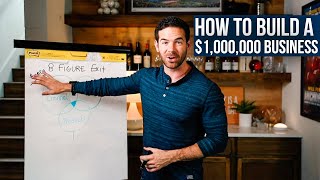
Ryan Daniel Moran (Capitalism.com) presents the "owner's model," a blueprint for building seven-figure (and scalable/sellable) businesses without owning every operational detail. The model centers on combining three core elements—sales channels (where orders are taken), product portfolio (e.g., multiple SKUs at modest daily sales) and audience/distribution (influencer partnerships, ads, PR)—while outsourcing execution, raising or finding capital, and leveraging partners. The presentation doubles as a pitch for the Capitalism Incubator program, which teaches and supports this approach.
Chapters
Hey capitalists. I'm Ryan Daniel Moran with capitalism.com and in this video I'm going to share with you the exact structure that we teach our students and clients about how to piece together a seven figure business that you can sell. So I'm going to walk you through the exact structure and the different pieces that we bring together in something that we call the owner's model. Now, the owner's model is a way of structuring a business so that you as the entrepreneur do not need to be in control of every little piece of the business. Instead, your job as the founder, as the entrepreneur is to set the overall vision is to make sure that you've got enough resources and that you have the right partnerships to be able to execute upon that vision. So what that means is that we structure it in a way so that you're in the visionary's role and that's it. Everything else can be outsourced, especially today. So we're going to cover all of that in today's video. What you're about to watch was recorded for people who were considering joining our program called the Capitalism Incubator. And this is what we do inside the incubator. We teach this model and we help our students execute this model by creating partnerships, by casting a vision, and by getting the resources that they need in order to launch profitably and build the foundation of a savings seven figure business that they can sell. And once you see how we structure them, you're gonna think to yourself, oh, this makes sense. Like, I now see that I don't have to be like in the grind of every little piece of the business. I don't even have to fund the business myself as long as I have a really good vision and I've got the right people on my side. And we'll walk through all of that in this video. If after watching this you say, hey, this business model makes sense to me and I'm in the position where I want to build a seven figure business that I can sell. We work with content creators who have a little bit of a following. We work with entrepreneurs who want to build something that they can sell. And we work with people who come from corporate backgrounds that are ready to build a business the right way, doing it the real way. So if that's you, then you can find out more about what we do inside the incubator over at capitalism.com inc. Capitalism.com inc. And you'll see this video that you're about to watch on that page as well as some of Our success stories and some additional resources that will help you decide whether or not this is the business model that you want to pursue. So here is exactly how we structure and build the foundation for an eight figure exit. Hey everyone, my name is Ryan Moran, and in this video I'm going to walk you through over the next five minutes or so a model that we give to our students to help them build seven figure businesses that they can sell. That's what we do. We help entrepreneurs build businesses that they can sell. Because in my opinion, you don't have a real business if you don't have something that you can sell. A few years ago, I was an Internet marketer, which means that I knew things like search engine optimization and email marketing and some social media stuff and how to run ads and funnels and all of this stuff. But I felt like I wasn't building a business that I could scale and sell. And a lot of times in kind of the Internet entrepreneurship world, you know, you have influencers who are used to monetizing their audience and they don't really like it. You have Internet marketers who have a skill set, but they don't feel like they're doing something meaningful. And then you have a whole bunch of other entrepreneurs who would love to get into the game, but they follow like all of these people who are teaching how to make money, which is cool, I like money. But they're not teaching them how to build real businesses. So what I help people do is I help entrepreneurs build businesses that they can sell. And the interesting thing is that when you get this, you realize first of all, your skillset and your audience and your desire is all way more valuable than you knew it was. And also, things can be a lot simpler than you thought because it doesn't mean that you have to work harder to get better results. It actually just requires you to have some bigger vision. So let me just show you the model. The model looks like this. If you bring together sales channels, audience and product, you get the bullseye, which is an eight figure exit. And I want to walk you through this very briefly so you know what I'm talking about. So a sales channel is where you take your order. It's Shopify, it's Amazon, it's, it's Clickbank, it's your sales letter. It's wherever you're collecting the order, it's Kickstarter. And the thing about most entrepreneurs is they get held back by, they become sales channel obsessed. So you have all these Amazon ninjas who are great at one thing they know how to sell cheap crap on Amazon. Or you've got people who know how to write a great sales letter and they're info marketers. They don't have a business that they can sell. So the beauty of this is if you know this like just enough, you can walk away from it. And what I do is I just partner with like an agency.
Agency, there we go to handle this. For example, I made a lot of money by selling products on Amazon.com and so some people think that I'm an Amazon guy. I'm not an Amazon guy at all. I hire out my Amazon management. There's agencies that know way more than I do. Way more than you'll ever know. I don't want to know that stuff. Like I don't want to manage Shopify and ClickFunnels and Amazon Kickstarter. Like I don't want to know that stuff. Right. There's all kinds of people out there that you can partner with to be able to handle all of that. So on the sales channel side, what holds people back is they don't want to have a business that's all about a sales channel. So we don't, we partner that with the other pieces here. So the second one is product. And this formula I've gotten a little bit of a name for. If you have four products that sell 25 sales a day, that's 100 sales a day. Right. Easy math. And if your average price point is $30.
That'S $3,000 a day. Still with me. Yeah. Okay. And $3,000 a day times 365 is approximately a million dollars. It's actually a little bit more than that. It's like 1.09 million or something. Right. That's a million dollar business. And at that point you have kind of the foundation for a business that could be scaled or sold. Awesome. Like we can take you through that process, especially when you have the sales channels be able to handle that. Now the thing that holds people back here is capital. So people will.
Not have enough money to order inventory or, you know, they're used to selling physical products or they're used to selling advertising, which are high margin things. When you're selling physical stuff, which is what I focus on because I think it's the best way to have a business that you can sell. The margins, you know, might be 40%, 50%, sometimes more. But in order to make a real go at it, it's a little like it takes like, it takes at least like a few thousand dollars. And so what some entrepreneurs will do is hold back because they don't feel like they have enough capital and so they never follow this formula. Once again, you don't have to. The beauty of this is there is money everywhere to fund those types of businesses. In fact, I have a fund that puts money into physical product brands, e commerce businesses because there's lots and lots of money in those types of businesses because they can be scaled and sold. That's the beauty of this beauty, is you're building a business to have an exit. You're having a business to sell. And so when you realize that what you're building is a foundation for an eight figure exit, it makes sense for you to invest the resources or go find an investor or go find a partner. And if that scares you, don't worry. This is going to make sense in a second. And the third piece that we bring in is what I call audience. This is a following, this is awareness. This is how do we get the word out about a new business or a new product line. And once again, I know how to run an ad, I know how to build an email list, I know how to build a blog and do SEO. Like I know that stuff. I don't want to do that for a new business. So what I like to do is take a page out of the book that I learned from a friend of mine. His name is Brian Lee. Brian Lee was the founder of LegalZoom and he was the first investor in Honey, the app, which sold for $4 billion. Brian takes all of his businesses and partners with an influencer or somebody who can get PR for a business. So a good example was he was the founder of the Honest Company. He partnered with Jessica Alba. She got a whole bunch of attention for it. The company went public.
He did well. So this is just a partnership, right? I don't want to become a social media influencer. I want to partner with somebody who already has the distribution. I don't want to run Facebook ads. I might partner with somebody who runs the ads and builds the audience for me. So what we help entrepreneurs do is take these three pieces and bring them together into something that we call.
The owner's model. And the owner's model is simply bringing together those three pieces. So you're in the owner's seat. You're the owner of the business. You're not the audience builder, you are not the funding, you are not the manager. Although you can be all of those things or any of those things if you have an audience or you have capital or you Have a skill set. You can bring those to the table, but you don't have to see. Most entrepreneurs think they got to be good at every single step of the process, but they don't. You got to be good at three things, and they are casting the vision of the business, the vision that's in your head, the thing that you want to bring to this world, that's the most important piece. And when you cast a vision for something that's actually meaningful for you, then it becomes really simple. Simple to do the next step of the process, and that's just to create partnerships with the people who will do this stuff. You create partnerships with the agency that manages your sales. You create the partnership with the blogger or the other influencer or whoever can help you get awareness or the Facebook ads team that's going to send your advertising out. And you create a partnership with people who can fund your capital or can fund your. Your inventory, fund your product line. That's your job as an owner. You come up with the vision, you create relationships, and you ensure that the business has enough money. And. And we can talk about doing that in a variety of different ways. The easiest is just to partner with somebody who's excited about your vision. So this is what we do. In an experience called the Capitalism Incubator, we spend a tremendous amount of effort working with our students to make sure that they have the vision that they want, the vision that excites them, the vision of the company that they want to come through them. And then we stack the deck. We bring in influencers, we bring in investors, we bring in advisors, we bring in agencies to help them have the relationships so that their idea can come to life. And then we have resources to ensure that you've got enough capital. For example, I mentioned that I run a full. I invest in some of the businesses that come through our incubator, and then I sit on the board as an advisor to those businesses. And there's other opportunities to fund your business as well. So when you do these three things, you get to sit in the owner's seat where I own this business. But I'm not in every detail. One of the people that really inspires me is an entrepreneur named Trevor Blake. Trevor Blake. He tells me that he has had four exits, three or four exits totaling over a billion dollars. I haven't checked his tax returns. I don't know for sure what the amount was, but that's what he tells me. And he also says that he never works more than a few hours a day. Why? Because he casts the vision, brings in the relationships, and gets out of the way. This is how big businesses, big entrepreneurship, this is how capitalism is, is done. It doesn't require you to come in and do everything in the business. Requires you to have the vision and the relationships to be able to bring something that can be scaled and sold. So a couple examples for you, just so you can kind of see this in your mind. One of them is Onnit. Onnit you might have seen sold for. They didn't disclose the amount, but it was over $100 million. The founder of that company, Aubrey, he's a buddy of mine here in Austin, Texas. I was an investor in Onnit, and he built that business following this model. He partnered with an influencer named Joe Rogan, who was not as big as he is now. He raised capital and he set a vision to have a human performance company. Fast forward a few years. He sells for a whack ton of money. There's a company that comes from our community. There's a company called Bear Complex, founded by two cousins who they partnered with. Rich Froning. Is that a CrossFit guy? They're a CrossFit company that. I'm not a CrossFitter, obviously. They partnered with one of the big guys in CrossFit named Rich, and they built this company together where they cast the vision. He was the audience. They had a manufacturer make the product line, and they partnered with somebody else to manage Amazon. And that was where a lot of their sales came from. And so they got to be in vision mode. I already mentioned the honest company. Brian Lee raises the money, brings in the operator, brings in Jessica Alba. That's how he built that company. So that's the owner's model. It frees you up to be the owner of the business rather than the manager of the business. And rather than dive into this more. If you want to learn more, if you want to see more examples and see how this model works, there's some resources on this page, some more examples on this page that you can dive into. And we're gonna follow up with you with some case studies from our students. Some examples of businesses that have grown to seven or eight figures. Examples, we do have students who have sold for $10 million, $20 million, $75 million. One of our past students just got a valuation of over $100 million. And if those numbers scare you, it's fine. Like, we also have students who get $1 million when they sell a business. It's how big of a vision you're willing to cast. So we're going to send you some of those examples. And in the meantime, there's a full write up on this page that goes deeper into the model and you can browse through that and see if this is the next stage for you in your career. And I would say if you're an Internet marketer who knows a lot about this stuff and you know that you've been like trading your skill set for a short term result rather than building something meaningful that you can sell in, this might be for you. And I also say if you're an influencer, like if you have an email list, a podcast, YouTube channel with more than, you know, 5,000 followers, you're in a really good position to be able to build a business you can sell because it only takes a very small loyal following in order to make it easier to cross seven figures. And if you're what I would call a wantrepreneur, if you've been sitting on the sidelines waiting for a model that you feel like you can actually do while you've got other responsibilities, while you've got family stuff and career stuff and you're looking for something that actually makes sense to you, I'd invite you to consider this as a model because I wish that I had learned this the beginning of my career, but I learned all of the hard stuff. And now I realize that business doesn't need to be that hard. So we'll follow up with you. But also there's some resources on this page for you to dive deeper and to decide if this is a model that you want to pursue. Whenever you're ready, we run a little incubator called the capitalism incubator and this is where we actually get our hands dirty, help you get your vision, bring together the relationships, and we have capital available for people who have exciting visions. For now, thanks for watching this video. Again. My name is Ryan Daniel Moran and I hope this was this valuable for you. Thanks for watching.







