
Capitalism Community Coffee: Video Ads That Convert
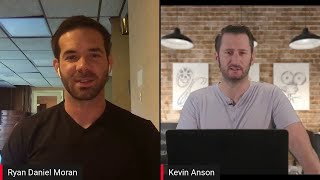
Kevin Anson breaks down a 10-ingredient framework for video ads that actually convert: pattern interrupt, hook, pain points, social proof, and call to action. He covers organic vs paid placement and walks through common mistakes like a weak hook or forgetting to address the viewer directly.
Chapters
Welcome to Business Church with capitalism dot com. I'm Ryan Daniel Moran. Today we're going to be talking with the best in the business on viral videos and viral ads. Kevin Anson. But first, before we dive into the word of capitalism, please grab your cup, your mug, your glass, your chalice, your stein, your tankard, your thermos, your vessel of any kind, and join capitalists around the world. Because there's one thing that we do when we get together that makes the economy better. It makes your sales go up. It makes the stock market better. It heals viruses and something called the simultaneous sip. So join me now. Go.
Mmm.
Scotchy. Scotch. Scotch. There it goes. Down, down into my belly. Before we bring on Kevin, I just want to share an interesting anecdote with some of you today. So, as some of you know, I came home to Cleveland this week kind of last minute for, for a funeral. Unfortunately, a friend of mine from high school was killed in a tragic accident this week. And although I hadn't seen him in many years, I was very close with his family growing up. So it was one of those things that, you know, you have to go to be there for the people that you loved, even if you haven't seen them in years. Now here's the irony of the trip. While I was here, actually right before I left to go on the trip, I discovered that my family had forgotten to inform me about something because they figured I wouldn't make it because I live in Texas and they live in Cleveland. But it was my grandfather's 90th birthday and they were throwing him a surprise party. And so we showed, my whole family showed up at the 90th surprise party and surprised the whole family. Nobody knew that we were going to be there. And so it was interesting one day after the next. First day was the funeral for my buddy who lost his life at 30 years old. And the next day was a birthday party, a celebration of life from my 90 year old grandfather. And the contrast of these two events was so striking because one was so tragic and somber and one was so elevated and excited and full of gratitude. And the whole family knew this is probably the last family reunion before the leader of the family goes on and joins my buddy in the next life. And the stark contrast of this was so interesting and it was such a reminder of the fact that literally none of us know if we're going to have one more motorcycle ride like my buddy or if we have.
60 more years and we'll still be kicking. None of us know if we will be the person that we, that the family is mourning or the person that the family is celebrating. None of us know that. Literally none of us know that we can make plans. And it's kind of, it's kind of cute how we all make plans. My body had lots of plans, my grandfather had lots of plans. And we never know how many days we're going to have left. You can eat the right foods, you can build the right businesses, you can have the right relationships, but one wrong turn or one tragic event can change everything. Or not. And we might have 60 years left. But I also know that my grandfather, it was one of the best days of his life. Looking back, we did this. My brother made this slideshow to music. Not a dry eye in the whole place. And my nine year old grandfather is looking back on his life. It was almost like a funeral for a person who is still alive. It was this really beautiful thing. And he's looking back at the slideshow of all these, all these photos from times he went boating to times that he was out with his five kids, to playing with his grandchildren, to playing with his 15 great grandchildren. There's pictures of all of them. And there wasn't a single word uttered about what my grandfather accomplished. There was not a single word uttered about what my grandfather did for a living. There was not a single word uttered about how much inheritance he's going to leave to his kids. Not a single word. It was on no one's mind. And at the same time, there was, there was none of that said about my buddy who lost his life either. The only thing that was discussed were the memories of the people that each of those men loved and the good times that were shared with each of those two men. And so this stark contrast simply reminded me. I spend so much of my life living for one day, living for tomorrow, living for when the time comes and the time never comes. You're always here, it's always now. And we never know if we're gonna get one more of Those days or 90 years of those days. But at the end of it all, there will be very little uttered about what we accomplished. There will be very little uttered about what we left. I mean, even the richest people who leave the most, who leave the most to charity, who have buildings named after them, are now some of the most hated people in history. They tear down those buildings and those statues. So what are we all trying to accomplish by doing great things if they don't have meaning in the now, if they don't have meaning while we are still here? On earth. And it was a reminder to me that I don't know if I'm gonna go this year or in 70 years, which is still earlier than I planned, because I think I'm gonna be around for well over a hundred years, but we have no idea. And there's no point in trying to push off satisfaction until later, because the most satisfaction happens when you're satisfied in the now. And you are building within that satisfaction and bringing more and more hope and joy and love to the experience that you have now. And that was my reminder this week. So if you will join me one more time for a simultaneous sip in honor of my two dear friends.
Thanks, y'. All. Alright, now, today we're gonna talk about one skill that if I could master, that I want to master, that I'd like to master, that I haven't yet mastered, but I would like to be better at this. It's viral videos. And there's one man who is the best in the business that people go to all the time, and he's one of our own here inside of the 1%. His name is Kevin Anson, and I hope you will join me in welcoming him. Kevin, give me a thumbs up if you're ready to do this thing with me. All right, let's bring Kevin on live.
Kevin, Good morning, my friend. How are you?
I'm doing amazing. Good morning.
How are you? Do you have a green screen or do you just have, like, the perfect setup for doing videos?
I just have an amazing office. No, it's. It's a green screen. Yeah.
Well, you could have fooled me. Well done. How's it going, Kevin?
It's going good. It's. It's early over here in SoCal.
Well, thank you for being up at. But crack of the dawn and early morning for us.
Hey, man, of course. For you, anything.
I appreciate it. Well, would you, would you give us a brief kind of background on you? Because I know, like, you're the guy that the guys go to when they want to become the guys. So tell us what the heck you do for your clients.
So I have a video ads agency. So we produce a lot of video ads and for, you know, some, some of the top names in the business. I've been doing video for probably, you know, 16 years. And like, I always tell people, I'm like, before probably about four years ago, I didn't know what I was doing. I was just like a video guy who knew the art of making videos. And then I met a guy named Russell Brunson, and he took Me under his wing, hired me to do a bunch of stuff for him, and started to learn marketing, human psychology, copywriting, all that fun stuff. And I just was able to take the art of making videos and marry it up with the science of marketing. And it's just been. It's been, you know, fire ever since.
So before you knew Russell, you were. You were just a video guy. Is that fair to say? Like, you were good at the creative side of it, and now you've learned enough about the marketing to be able to bring kind of the strategic side into the art side. Is that a fair summary?
Yeah, exactly. Because there's a lot of stuff that, you know, you can create a fun, artistic video that you think looks good, and you think that everyone's gonna want to click on it or everyone's gonna want to watch it because I spent a hundred hours on it. But it doesn't mean that it's gonna actually do well or perform well. So there's just a few things that a video needs. It's like these psychological triggers that people have, like, unconsciously, like triggers that they need to see inside of a video in order to get them to click or take action to build rapport with you. So I kind of learned those things over the last. I mean, it's been a quick four years that I had to learn all that stuff.
So, you know, there's something that people ask when they are going through this process. That is, there's often like a. If I could just make a video go viral, that would change everything. And you and I know that that's not necessarily the case. Right. You can have a viral video that a lot of people see. That doesn't mean it changes anything in the face of your business. And at the same time, you can have a video convert but not get any shares. If it converts, then you can spend all the advertising dollars you want to make it go viral and it do really well. So there's a big difference there. And so what I want to start with is asking in your mind, what is the purpose of the video that you're making when you're going into this, what are you actually optimizing for?
You're optimizing. I mean, it depends on what your goals are with the video. If you're trying to get. If you're trying to build an audience, if you're trying to get sales on your product or service, it just depends. But you are. I mean, you're. Sorry, did I go in the wrong direction on that?
Well, I mean, you have My attention because I would have equated those. A lot of people, myself included, would say that the best way to build an audience is to have conversions of your product. But you immediately differentiated between the two. So in your mind, do you have different goals when you're making a video of this one's to get opt ins, this one is to get conversions, this one is. And if so, tell me about the thought process that makes it different depending on what the goal is.
Yeah, so I mean, so as you guys know, there's different awares or different levels of awareness when it comes to your customers. They're either like completely unaware or they're somewhat aware or they're really aware. And so it depends on what level they're at. Um, if they, you know, for you, Ryan, if they've seen your stuff before, it's a lot easier to put a video in front of them. You can just jump on camera, hey, I'm coming out with a new product. You guys should probably go buy it, right? So that's pretty easy to make a video like that. But if you're trying to build up an audience of people who have never heard of you, they don't know what you're doing. You know, value based videos are super. They could do really well where you're just kind of just giving some knowledge. I mean, you can do this inside of video ads and usually I like to do a hybrid where it's like it's building value in the video and then it's also a little bit about your product and then a call to action. But it just depends on where your customer's at in the journey. I mean, there's just so many different types of videos that you can be creating. But for a lot of people, I think it's just if you're terrified of video, you think that you have to buy all this expensive equipment, you gotta hire a team and all this stuff. I mean, you can really just take out your smartphone, start creating some videos. And if you hit on certain elements within your video, whether you're doing organic, organic strategy or you're doing a paid strategy, I mean, just putting a couple ingredients in there, your video will do really well.
So Kevin, do you have some examples that you want to show us and some, some things that you want to go through or should I. Should I walk through those elements that need to be in every video? How would you like to take this conversation?
Yeah, I mean, I have a whole training that I just developed and I kind of go through the 10 ingredients and if you want, we can kind of go through each one of them.
Let's do that.
Yeah, let's do that. That way, you'll have some questions, and I can give you stuff. But if you guys are watching this right now and you're out there at home or whatever, I would. I mean, I would recommend sitting and listening, at least getting, you know, a majority of the 10 ingredients. Because even just, like, for me, when I first figured these things out, I, like, put two or three of them into my video, and I'm like, oh, my gosh. Like, the difference that it made for people, like, them viewing my stuff more or clicking more, whatever it was. I mean, it makes a huge difference.
Cool, let's do it. And, Kevin, I want to give you permission if you have anything that you want to bring into the context of the stuff you've seen us do well or poorly, you can be as hard or as loving on me as you want to be.
Okay, cool.
I trust your opinion implicitly.
Sounds good. Cool.
All right, so let's dive in.
So, I mean, the first one that. It's like, my favorite ingredient to teach is the pattern interrupt, or you can call it a scroll stopper. So if you guys are scrolling on Facebook or Instagram, there's things that catch your attention, and there's things that don't. Right. And so typically, the difference between something that catches your attention and something that doesn't, it's something that's out of the ordinary. Like, maybe it's like, you know, somebody setting something on fire or, you know, they're. They're, I don't know, waving their hands or there's somebody's, like, blowing something up or just something. Right. That's out of the.
I once threw a plunger at the. At the camera, and that. That did really well. I'm in my hand, and I pointed it at the camera.
Or that one time when you're on the toilet and you're like.
It was the same video. Yeah, I was sitting on the toilet. I did a couple. I've actually done a couple toilet videos, now that you mention it.
Yeah. That video was. I got my attention. You're like, hey, are you pooping right now? Me too.
I'm glad you enjoyed it.
Yeah. You earned my. My cover to cover. Watch on that. I watched the whole video. I was like, dude, I have to know what this is about now. This is great.
Good.
I'm glad to hear that Ryan understands that, like, he wasn't just trying. I mean, he's trying to be funny. Obviously. But he knew when he made that like that's. This is going to get people's attention, right? And so, and I was gonna talk about the other side. Like if you see somebody on Instagram or Facebook and they're just standing there talking and that's, that's all it is. It's like eh, like what is this? Like I'm not gonna click on that. Like I'm not even gonna give that guy the turn on the sound because he didn't get my attention, right? So that's the scroll stopper or the pattern interrupt or whatever you wanna call it. It's actually an NLP term. Pattern interrupt is. It's neuro linguistic programming. It breaks people out of their patterns, like their everyday patterns of. We have this pattern now in the day and age that we're in where we scroll on our phones or on our devices and if something doesn't break up our normal everyday pattern, it doesn't get our attention, right? And so like I have my firewall here. I got it ready for you guys. Like this is something that I use in my ads all the time where I'll just pull out this wallet and I just flick this thing and it catches on fire, right? And I mean you could start out the ad with a hundred different ways. You could be like, hey, is your, is your marketing burning a hole in your pocket? Or you want to be cheesy about it? You can do that, but. Or you could just set this thing on fire and be like, hey, now I got you guys attention.
Then you go into it, right? And so it's just like, it's like, whoa, this dude has a fire. A wallet that's on fire. Like what the hell is he doing? And so I just got your attention long enough because people are like fish right now. Like long enough to where now I can start sharing something with you. But I mean it's not over there. It's just because you got someone's attention doesn't mean that now they're gonna watch your whole six minute video or whatever. Like you still have to kind of take them through a journey and like hook them in, give some.
It's like copywriting where like the purpose of the headline is to get them to read the first paragraph.
Exactly.
And what you're saying in this, in the first part of this is if you can capture their attention enough to listen to the first line, that's still better than what most people accomplish.
Exactly, yeah.
That. I mean I've used that trick so many times, I've taught it to so many people. And like, even if, even if you just do that and just turn off this live stream right now, just walk away with, just don't do that. But like, just that, like you're, you, you just like you're gonna be way more successful than you were before you jumped on this. I'm telling you, it works. It gets people's attention. So try that.
So my, my favorite example, like, I, I think the most underrated, underrated person in our industry is Tai Lopez. Tai Lopez will be the first social media billionaire. He is wicked smart and he's really known for one video that really built his audience. And it's my favorite example because that video got about a billion views collectively and put him on the map as a social media celebrity. And that video opens the pattern interrupt of a Lamborghini here in my garage. Just bought this Lamborghini here. And at the time, that selfie style video where there was a car in the background was different than most of what other people were seeing. And so a lot of pattern interrupts are just doing what is different, what captures attention, what looks weird, what. So now if a bunch of people do that, it's been done, it's been seen, it's no longer a pattern interrupt. The brain knows what to expect there. But when it sees something different that is out of the ordinary, that's enough to be able to continue watching the ad. I'm just thinking of Ty as the example of at the time having that beautiful pattern interrupt of here are my garage.
Right.
I'm sorry, I'm steamrolling here, Kevin. I promise this is my last example. I had a buddy who wrote a video sales letter years ago when everybody was doing these super professional video sales letters. He had the number one converting clickbank product. Because the beginning of it, he just went, hello. And it was this really goofy, like, what the. What, what? But it got you to keep watching just because there's this very goofy opening. That's a pattern interrupt.
Yeah, absolutely. And if you guys are sitting there thinking like, okay, so what are, what are some other things that I can do? I don't have a Lamborghini. I don't have a wallet. Right. Like, you can do something as simple as just waving at the camera, like, or maybe you're holding your camera selfie style with one hand. You just be like this. Or you can, like, act like you're punching the camera or spin around in a circle or I don't know, go stand.
You can drop something.
Yeah, you could.
You could hold up a dead fish. You could juggle three onions.
Yep. Yeah, you could.
You could just do weird things.
Yep. Just do weird stuff. It doesn't have to relate to what you're going in. Going to be talking about. Like, Russell did one recently. Where? Not recently, it's probably like a year ago, but it's doing really well. Where he stood in front of like a random green statue that he saw on the street. And like, he's always thinking that stuff like, oh, pattern her up, pattern up. And he saw that green statue. He stood in front of it, he's holding his book and the ads crushing it. Because it's like, why the heck is this guy standing in front of this weird green statue?
Right?
So this stuff works. So do it. And then.
The second ingredient, and it doesn't have to go in order. I mean, you could either do this one or the next one. But the second and third one. But the second one is to identify people. Because if you jump on camera, you got your wallet on fire and then you go into it, you're like, hey, are you a stay at home mom? Right? It's like, immediately somebody who's watching that, they're like, I'm a stay at home mom. Like, that's. That speaks directly to me. Right? You, like identify them. It does two things. One, it hooks them in if they are a stay at home mom. And the second thing is that actually screens people out who are not. So if you're like, hey, I'm a stay at home mom, or sorry, are you a stay at home mom who's just struggling with your online curriculum right now with your kids, and it's driving you nuts. There's millions of women out there who are struggling with that exact thing, but there's millions of other people who are not. So it saves you a lot of money on ad dollars if you are screening people out because you don't want people watching your stuff and clicking on your stuff and engaging with your stuff who don't need to be there anyways. Right? And so that's the whole thing with marketing is like, if you're speaking to the masses and you're making videos and you're getting people into your world, but if you're getting the wrong people, they're just gonna waste your money and waste your time.
So you also identify people by the problem that they're trying to solve rather than the group of people. Is that the same. Same impact?
You can. Yeah, it doesn't have to be a specific individual, but yeah, you could Be like, you know, hey, are you struggling with back pain? Boom. Person? Like, I'm in, you know, or whatever. The thing is, whatever your product or service, whatever it solves. Yeah, that's another way that you can do it. And then. So that's pretty simple. That's. There's that one, and then the third, the one after that. Or you could do this one instead is the hook. And we've all heard of the hook. Like, that's the most common marketing term that we know. And you could do like a question where you could be like, you know, hey, are you making these three. Three mistakes.
In your E Comm business? Or like, you know, are you. Are you having a hard time selling your product on Amazon? Right. And so, you know, you're hooking the person in, and you're also kind of. You're kind of tying in a pain point as well, which usually works really well, but. Or you could do, you know, where it's like, hey, fire wallet. Right? Hey, I got your attention. So do you guys. Are you. Do you want to know the three, like, biggest secrets that I use in my business that made me a million dollars last year or whatever? Right? So then you're. You're hooking them in. It's kind of like the best thing I say is if you had two books on the shelf and one of them just has a picture on the COVID the other one has a headline, and the headline talks about, you know, hey, here's a way that you can save $1,000 in your next vacation. You're gonna open the book that has the awesome headline that hooks you in versus the book that just has a picture. So as soon as you kind of tell people what the COVID of the video is using the hook, they're more likely to stick around and watch the rest of your video. Because I did an ad, it was like, probably about a year ago where I said, hey, at the end of this video, I'm gonna share with you guys one video technique that I had to spend $1,000 to learn, and I'm going to share with you guys what it is at the end of the video. So people are like, dude, I'm going to stick around and learn what that thing is. So now it's like, it helps with your video. It shows the Facebook algorithm or the Instagram algorithm. Like, hey, this video has a lot of retention. People are watching it to the end. It's going to show it to more people. And so it's just a win, win. So definitely use the hook. Hook in your videos.
So I'm kind of putting together a basic ad in my brain. I'm using my book as the example. And so what, like, what's coming to mind to me is.
You take some. I'm just take my toilet video, for example. And I've got my plunger, and I'm putting my plunger at the camera and I'm like, hey, do you know that there's people who make a million dollars selling plungers on the Internet is, hey, if you're. And then I think something like, hey, if you're an entrepreneur who has yet to cross the first million, I'm gonna give you my three stage formula that I've given hundreds of entrepreneurs to cross their first million in 12 months or less. So that's how I'm starting to put together the basic framework of if I were to do an ad for my book. So that's how I'm kind of piecing it together based on what you've shared so far.
Nice. Yeah, dude, that would crush for sure. And then just set your book on fire, you know.
And then plunge it.
Yeah. So, I mean, there's, I mean, I'm kind of giving you guys the really quick, like, elevator on each one of these elevator pitch. Because I don't want to go into like tons of examples, but I think you guys are kind of understanding the, you know, the premise. I mean, you can really, after this, you can Google pretty much any one of these terms. They're well known. Like every one of them that I share with you, Ryan, you've heard of it before. You're already doing it. It's just like putting, taking all the marketing thingies that are out there and putting them into this one formula that works well for videos is what's important. And so, I mean, if you guys want to look out, I mean, go out online and type in good marketing hooks or type in like famous headlines. I mean, you'll go all the way back to the 1700s and people were writing crazy headlines. And it's fun. I love you can, you can go deep. But so the, the fourth one is pain points and desires. We kind of already touched on this. But I mean, you can make it really.
Really specific. Like after your hook, you know, hey, I'm gonna share with you guys, you know, three things that helped me make a million dollars in my business last year. And then it's like, you know, are you.
Are you just trying to come up with an example? Erica, are you, are you struggling to.
Come up with your idea that's going to work.
Yeah.
And are you strapped for cash? What's that, Kevin?
I was going to say, are you struggling to come up with a pain point right now in your cash?
Then you should watch this video with Kevin Anson and Ryan Moran.
Yeah. It's really early.
It is. We'll let you catch up till. Well, it's almost 7:30 your time. Well, by the way, what's the part of SoCal? Are you in?
I'm in. It's an hour north of San Diego. It's in Temecula. So it's a mini, mini Napa Valley, I call it.
Yeah. That's a beautiful area. I love that area. Yeah. So the, the pain points that come to mind for me are like, are you still going to come up with your idea that you can really get behind that? You know, you can scale to a million, to a million or more?
Have you launched products in the past and they failed because you didn't have a clear roadmap to take sales and have repeat customers that wanted to buy from you over and over and over again? And are you still waiting for that clarity of what business that you can go all in on that you know is going to bring you the lifestyle that you desire? So I just, I pulled those out of my rear, but that was two pain points into desire that I tried, tried to work in there for a. Again from my book.
Love it. Yeah. And I mean, it has to be something too. That's that really, like people are sitting there like, and it keeps them up at night. I mean, they have the hot sweats, they wake up at 4am because it's bothering them so much. Type of a pain point. It can't just be something that you think is a pain point or that you think that your audience is struggling with. I mean, really, I tell people to do their research, like, go out there and start clicking on some other ads from your competitors or start like seeing what makes these people tick.
Even if you've been in the business for, even for me, like, in my business, like, you know, I've been doing videos for a long time and once I started launching video ads for our video ads agency, like, it still, it took me a minute to kind of figure out what is it that people really want. They're just like, you know, they want more. Are you looking for more clicks on your videos? Are you looking for more sales? Like, all the things that people actually want? Like, just make sure that you touch on those things. Because people, they don't always do their research and so, you know, you could be like, you know, hey, are you. Are you afraid that your retirement's going to run out? Like, that's a pain point that people have, or, you know, there's a million of them. But just make sure it's very specific and it's something that people are really struggling with and you don't have to list off a bunch of them. I mean, you could just say one. Like, are you struggling with back pain so much that, like, you can't even play with your kids? Like, hey, we're going to talk about that right now.
You know, and friends, I want to remind you that this is only possible if you know who your person is. If you're just selling the product, it's really hard to come up with the pain points that it solves because it's only people that buy products. Products don't sell themselves. If you know who the prop. The person is, then you can speak to the pain points. But it's hard to do that when you're product focused. Just a reminder, it's always people first.
Yeah. And I think, isn't it, with products, you want to sell the benefits, not the features. Right? Nobody gets a crap about the features.
Nobody.
Nobody.
Cool. All right, so that's four pain points and desires.
So five is. And some of this stuff kind of starts to kind of combine together in a way, but you get the point. So 5 is the result, slash the promise. And, you know, you could. You could say like, hey, this, you know, this product is.
Give me an idea for a product. I'm looking around. You know, maybe it's like a. I don't know, pre workout. I have some pre workout.
I've been Simon pre workout. Pre workout. Pre workout's way better. So let's stick with the pre workout. So the result of the feature of.
A pre workout is it tastes great. But that doesn't sell. If you sell the endpoint, which is increases lifts by 20% after just three uses, that's a promise or a result.
Right.
And would be a badass pre workout if it actually could do that.
Yeah, that would be guaranteed.
You're gonna get jacked. Guaranteed.
In just three workouts don't work out by Wednesday, you can be jacked.
Please don't sue us. But we guarantee it.
So, yeah, I mean, that's. That's the result and the promise. I mean, you're telling people what. Because people want their results from whatever it is that they're getting into. I mean, if you're selling coaching, if you're selling, you know, products or whatever. Like, what is this. Like, what is this fidget spinner or what is this, like, firewall or, like, this thing? What is it gonna do for me? What's the result? And that's kind of a benefit in a way. Like, you're thinking benefits, but you're also thinking results. Because people want it to solve some sort of a problem. Right? And so it's kind of like, here I was before I brought the product and my life was terrible, and now I have this product in my life, and it's amazing, you know, so, like, what is that result? Like, how did that. How does that look? Like? What did it do to your life? Right?
And you could either say this or you could probably show case studies, examples or testimonials at this point in the process as well. So after you've done the pattern interrupt, you've identified the person and given the hook list of the pain points, you might slot in. Well, here's what happened with so and so when they implemented these three things that I'm about to give you. So you don't have to just come out and say them. You could show them instead of telling them as well.
Right. And that's actually one of the ingredients that's in the formula. That's why I said it. Some of this stuff kind of. It kind of blends together in a way. But the social proof is. What is that? Number nine, I think number nine. So, yeah, social proof is huge. We'll get to that. And then six is authority, right? So if Ryan. Ryan Moran was to bring me on this live stream and he was like, hey, I got this friend and he's really good at videos and he's just super cool. And that's. That's it, you know, and he. I don't know. I don't know if he's really made any videos before. I don't know if he's done it, but I think he's cool. So you guys should listen to him. I mean, yeah, you have authority. So people will probably listen to me because you have authority, but they don't know who I am. So I have, like, zero authority. Unless you were to be like, oh, he's worked with Russell Brunson. And, you know.
Gosh, I'm just like, blanking on the names Russell Brunson, Grant Cardone, Brendan Burchard, like, you know, all these people. Then it's like, okay, cool. Like, he has the authority. And so tying that into, like, a product business. It's like, oh, hey, We've sold, you know, we've sold 10,000 products on Amazon. We've got over, you know, 5,000 positive reviews or we've been in business for 25 years. Or, you know, we're the number one.
Seller of this product or the number one seller in this category, or there's over 5,000 positive reviews. Or Tim Ferriss said this on his podcast about our product. Or like any type of. Look at this review that came in. Look at this Reddit user who said this. Like any sort, anything that works you up. If you've had a celebrity tweet about you or a jacked dude hold your pre workout up in an Instagram post. These are all things that elevate you in the mind of the person. This is some pre workout. We got to start a pre workout company now.
We have to.
When you were saying that, because I'm like, I could just see him, he's all jacked.
He's like, three days, Three days.
I used to look like, it's like skinny.
This is what I used to look like. This is what you'll look like by Wednesday.
It's good. So, yeah, I mean, authority can come in a lot of different ways. And it's, it's, yeah, it's, it's super powerful because it's like, you know, you're, you can't just jump on and be like, hey, you know, I've got this cool thing. You guys should buy it. But it's like, people have to know that you have some experience, right? So it's, it's basically authority slash experience. Like, what have you, what have you accomplished? So yay. And then number nine. I like this one.
Well, don't. Let's not skip, let's not skip eight.
Sorry.
It's going to be well, but you have to wait until the end of the video to get number eight. Number eight is the super secret. And so we're going to save it for the end.
It's 7:35am I can't get my together. Okay. 77 is the new opportunity. So the new opportunity, right? This is how you basically differentiate your product or your service from all the other noise out there in the marketplace. So, you know, there's. There's no other product in the world that does what ours does. Right? And so it's something that, when people hear that. And by the way, these are all triggers that I talked about. Like, it's just this unconscious trigger that people have. Cause if you're selling like, I don't know, like a laser Pen. Right. Like, there's 100,000 laser pens in the world. Like, hey, like, no other laser pen is, like, as good as ours. No other laser pen does what ours does, or no other pre workout is formulated like ours is. There's no other one in the world. And so that's why this is the.
Only one that'll get you jacked by Wednesday.
Yeah, the only one. So you gotta buy ours. And so that new opportunity that I'm talking about, it's just, you have to differentiate your products, because as soon as you say that, we just have this product and it's just like everyone else's. Like, if you don't differentiate it in some way, people won't feel obligated to buy it. Right.
So this is always one that I've personally struggled with, which is making the product look like a new opportunity versus just talking about where I'm different. That. That it's one thing to say, like, my product is different from everything else. It's another to cast, like, a much bigger idea over what the new opportunity could possibly be. So would you speak to that difference and how to find that. That new opportunity in the midst of differentiating factors?
Yeah, sorry, I blanked on that because you're. Somebody was dancing by and it was just so awesome. But.
So how to differentiate your products with all the noise, Is that what you're saying in the marketplace? Yeah.
By the way, that's what happens when you stay with family, when you come home at last minute.
I was just trying to find a reason to blame it on somebody that I blanked out.
So that difference between the new opportunity and the difference has always been kind of a struggle. Like a, Like a confusing point for me is it's easy for me to say, like, why am I different than Kevin? Why is Kevin different than me? Is different than saying, let me cast the new opportunity vision for working with Ryan or working with Kevin. Those are. There's a two different focuses. So would you speak to finding the new opportunity instead of just comparing yourself to the competitors?
Yeah, it's. I mean, it's a tough one. There's just so many different examples that I can. That I can come up with. But, you know, it's.
So let's take. Let's take the example of, like, the keto diet's popular right now. Right. So at one point, the keto diet was the new opportunity. Eat bacon and get abs, that's a new opportunity.
Right.
But now that there are like a thousand products in keto, how do you cast a New. How do you be a new opportunity in that market when you're still selling keto friendly products? Does it make sense what I'm asking?
Yeah, you can kind of combine. Sometimes you can combine things like you could say, like, hey, there's no other product out there that sold, you know, a hundred thousand of ours, of our copies of our thing or products or whatever. Like, you know, you can kind of combine those two, just coming up with something that's. That's differentiating. No other, you know, no other product has as many reviews as we do. Like, we know what we're doing. No other product has changed as many lives as we had or has as many case studies or many, you know, success stories or results.
In your mind, that is enough of a difference to stand out?
Oh, yeah, absolutely.
In Expert Secrets, Russell talks about the new opportunity. It's like one of the big foundations of the Expert Secrets model is going into that wide open blue ocean where there's nobody else trying to be like you. And that's always been a struggle point for me of finding that messaging instead of just differentiating around the edges. But you're saying that it doesn't need to be as vast as that in order to be a new opportunity. Am I summarizing you correctly?
Yeah. I mean, you don't have to. You don't have to be like, you know, saying that I Ryan Moran, and, you know, no one understands business the way I do or, you know, you don't have to because that's a bold claim. Right.
It's just like, you know, differentiating yourself like no one else has really, you know, had this many success stories for, you know, Amazon sellers as I do. You know, I mean, I know it's tough when you're saying that type of thing because it's kind of braggy. You know, you have to navigate the waters on how you word it. But.
Here'S what I'm hearing you say.
Then, like there's this old kind of phrase in copy. That was, when you're summarizing your product, you start with the only blank that. And you fill in the blank.
Yep.
And so it might be as simple as the only spatula made specifically for bachelor dads. And that would be the differentiating factor. So saying who you are the only thing for or the only yo yo that sleeps for over a minute. And so whatever, whatever your only is that. Do you know that term? The yo yo that sleeps. Are you old enough to remember yo Yos?
I'm in 1979.
Are we the same Age, just, just about. Anyway, Yo Yos had this trick where you could make it sleep anyway.
Oh yeah, dude, I can do that trick. I can do that trick.
Good. Alright, cool. So that's number seven, the new opportunity or the differentiating factor.
Right. So I mean, you know, it could take some, take some work. I mean, you might not have that right now. And like I said, you don't, you don't have to have every single 10 of these ingredients in every video that you do. I mean, that would just be insane. But just, you know, thinking about this stuff in your messaging and when you're talking.
And then 8 is value perception. So basically it shows them that.
If you were to buy this product somewhere else, it would cost you more time and money to do that. Right. So it's like an example would be if you were to go and learn all these 10 ingredients that I'm showing you. If you were to just not buy my program and just go figure this stuff out on your own, you would spend hundreds of thousands of dollars, probably millions of dollars on ads and reading articles and, you know, you would study stuff for probably the next couple of years to try to figure all this stuff out on your own. Or you can just let me teach you and I'll teach you in less than an hour. Right. So that's value perception. So people understand, like, you know, if I, if I just buy this product from this person, it's going to save me time or it's going to save me money because it's the quickest route to get to where I want to go. Right.
So I'm again hearing this in the context of my book. It would be something along the lines of, this is the same formula that I walk through $20,000 clients or $100,000 clients, and I put them through this process in a year's time. You can either hire me to tell you this information or you can buy my book for 15 bucks.
Exactly.
That kind, that kind of value perception is what exactly?
Yep. It's just, I mean, that's pretty straightforward. So it's like, dang, like I need to buy Ryan's book because I don't want to spend the next year. I mean, they could spend 10 years of their life trying to figure out what you've figured out in your career. Right. But it's all in that one book. So it's like you're, you're an idiot if you don't buy it from me right now. So that's. Yeah, that's value.
And yours would be Something. If we're going to go with the time example, yours could be something like, you can continue to try this on your own, running ad after ad after ad, or you can just have me help you put together the structure so that you can have winning ads over and over and over again. And we can solve that in about an hour's time or working together over the course of 30 days. Right, got it, Loud and clear.
Cool.
So number nine is of course social proof. We talked about that. And.
I mean, this is just probably one of the most powerful things in the entire formula when it comes to crushing someone's objections or reasons for not buying your thing. I mean, what's the first thing that you do when you go on Amazon or any other E commerce site is you look at the reviews, right? And as soon as a product and if it has one review or it has a couple bad reviews or whatever, like you're gonna see that and you don't wanna buy it, like instantly you click off and you try to find another version of that product. And so social proof comes in so many forms for other services. Like for mine, if it's like, you should buy Kevin's course because it's like a no brainer, I would have paid thousands of dollars for this or whatever. Like peer recommendation is the most powerful thing that we have. And it comes like, even if it's somebody that you've never met, but they're recommending this product or service to you, like when you see that, whether it's in a text form or it's a video form, I mean, it speaks volumes otherwise. I mean, you guys, you know, you already know that. You guys know that Amazon reviews are so powerful. That's why you spend so much time and money trying to get reviews from people, right? I know that's a huge struggle getting people to buy your product and review it. Like, review my dang product, please. Like, I'll give it to you for free if you just review, view it. Right? So social proof is huge. I mean, we put Those in probably 99% of our video ads that we do for our clients. I mean, a simple formula can be, literally can be like pattern, interrupt.
Identify, hook, social proof, call to action, done. And I mean, that's enough for people to be jumping on video and talking about your product or service and be like, oh my gosh, this thing changed my life. But the one thing about social proof that's really important is a lot of people will make the mistake of they'll ask their buyers or their customers or whatever for that social proof in a text form or video form. But they don't ask the right questions. And so they totally miss an opportunity because somebody will send them back a video testimonial and be like, oh, this product was so awesome. I bought it for my husband, and he loved it. It's like, okay, cool. But, like, what was the result that it got you people still, this ties back to the results. People want to know what the result was. Like, I bought this for my husband. He spent all weekend in the garage building it, and it was so cool for us to spend time together. I loved it. Or whatever. What was the result? Right. And so don't forget to ask people in their testimonials, like, please tell me what the result was, because you can't say.
Kevin Ants or Ryan Moran's Amazon program. It was. It was fun, and I enjoyed it. No one cares. No one cares about that. I don't want to hear that. It's like, no, Ryan's Amazon program. I. I went through his coaching, and I made an extra million dollars last year. That's a result, right?
So I crossed a million dollars for the first time. Even if it's as simple as, like, I finally know what product I'm gonna sell, how I'm gonna sell it, and how I'm gonna take this business to a million dollars. And I never would have that clarity if I had not read this book, even if it was as simple as that, which is just, like, the hope and the anticipation of what the product is going to do for them. Or as a result of this, I feel like I finally have a plan to be an entrepreneur, and I've bought copies for all of my friends because I want to go into business with my buddies. That's enough to show what you've done with the product.
And what type of a result somebody can expect. Now, my question for you, Kevin, is can you reorder these ingredients? I see a lot of ads that use social proof as the pattern interrupt. They'll do, like, a selfie testimonial that they'll do as the opening with, like, the text of the testimonial going across the screen. Or it just came to me of, like, what if you had a celebrity read your reviews where you got somebody on cameo and you got a celebrity who was just reading the review that was on Amazon? It's Morgan Freeman reading your favorite Amazon review or your favorite book review of your product, and that was the pattern interrupt. Can you combine and reorganize these or is it important that it follows this formula?
No, it's not important that it follows the exact formula in that order. You could. Absolutely. I just saw a acne ad recently that we're actually modeling after for one of my clients. And it's. It starts off like that, where it's like. It's talking about all of the different products that they tried in the beginning. All these women, they're like, I was. You know, I had acne, like, nothing was working. I tried this, and it's just like a cut of, like, you know, 10 different women. I tried this one, I tried this one. I tried this one. I tried this one. Did. Nothing worked. Nothing worked. Nothing worked. And it's just like this really quick, quick, quick, quick cut. And that was enough to pattern interrupt you in. And then it also had those pain points. And, like, the pain points were strong enough that people watching it struggle with. They're like, have acne my whole life. Can't get rid of it. Blah, blah, blah, blah, blah. And it totally works that way, too. And then it goes into, you know, the result and then the promise, and then they have a little backstory in there of the company, and then it goes into showing some more, like, social proof of women, like, before and afters and stuff. So anyways, yeah, you can totally do that.
Beautiful. Cool. All right, so eight is social proof.
Gotta have social proof. And then also with social proof, you know, sometimes you can actually write your social proof or your text. I mean, not on Amazon, but in other products or services. You can write the testimonial for someone and ask that they approve it. Because it's kind of like the example I always use is, do you think that Michael Jordan really said about the. About the Nike shoe back in the day? Like, hey, this thing gave me an extra 2 inches on my vertical jump. Like, the words were so, like, carefully, like, structured. Like, there's no way that he said those words. Like, they told him, hey, is it okay if we say this and put your name on it?
Of course.
And they. He's like, yeah, give me a million dollars. I'll write. You know, and so you can have. You can write a testimonial for your customer and get them to approve it. So that's another way. So that way you can kind of write it and structure it the way that you want, because you want that result in there. Because sometimes, like I said, people send you back a testimonial, and it's garbage. It's just says, I enjoyed it. It was fun. So it's like, no, can I write. Can I rewrite that for you? And then you rewrite it and then get them to approve it. So I would highly recommend doing that, too.
Cool.
And then the last thing.
Are we on 9 or 10?
We're on 10. I'll go through them real quick at the end.
We're on 10.
We're on 10. So 10 is call to action. And.
You'Ve probably heard it, you know, the cta, the call to action. This is where you hit someone over the head and you say, hey, make sure to click the link below or go to this website or reach out to me on this social platform or whatever. Like, you have to tell people what to do, because they will.
They will watch a video and they'll just click off of it unless you tell them what to do. Like, one of my favorite things to do within my videos, I'll just stop what I'm saying and I'll just be like, hey, if you guys are getting a lot of value out of this, please drop a comment below or hit that like button or make sure to subscribe if you haven't already. You notice youtubers do this a lot throughout their videos. Like, they stop. The bigger YouTubers, if you watch them, they'll stop in the middle of their video and be like, hey, we're gonna take a break real quick for five seconds. I want you guys to hit that subscribe button real quick. I challenge you to hit the subscribe challenge, people. Or like, hey, if we get over a thousand comments on this video, I'll shave my head, right? And so they're, like, getting people to comment, getting people to, like, to subscribe. So asking for that action. Because people, like, like I said earlier, they fall into this pattern of watching a video. They're sort of asleep while they're watching it, but as soon as you, like, wake them up and say, hey, would you mind doing this thing? Or go to this website and enter your email and I'll send you this free download or whatever it is asking for. The action is super powerful, and it works really well. I did that inside of my course. And the funny thing is, people are now.
Posting their feedback or they're giving me their testimony inside of the Facebook group. So now I'm able to screenshot those things. I sit inside the course. I'm like, hey, if you guys are getting a lot of value out of this, please drop a post inside the Facebook group and let me know what you think. And, like, people are doing it. Because if I didn't say that people wouldn't do it. Right? Yep.
It's funny that those actions also become social proof. So using the call to action actually becomes. I saw Jeff Walker do that this week when he was doing his new product launch formula, you know, version 87 or whatever it is, where he says over, he's like, go enter your email address. Over a million people have gone through this course for free in the past. So, like, the past results of his calls to action are the new social proof. Or if you do a Facebook post and you get a thousand comments, that is social proof enough to actually give you authority because you told them to leave a comment. And so it builds upon itself as a result of doing that.
Yep, 100%. And then, you know, this is something that you can do throughout your video, like I was just talking about. But of course, the call to action typically lives at the end, right? So I, 100% of the time will create some sort of a scarcity or urgency based call to action when I'm trying to get someone to take action. Click a link, go here. So like for Ryan's book, for example, I would say something like, I mean, you, you could say like, hey, copies are running out. Maybe they are. You don't want to, you don't want to lie to people though too. But like, if, maybe, maybe we are running low at the printers. I don't know. But like, you know, copies are running low.
You don't want a lot of people.
But if you could, yeah, copies are running low. Get yours while you can. Or, or this ad could disappear tomorrow. So get your free copy now. Get your free copy now. I use that one a lot because it's true, like, Facebook ads are terrible and they do disappear tomorrow all the time.
And so Facebook has been banning my ads. So while you can see this, please click the link below and go get your free copy.
This book is only free on this ad right here, right now. Or this product is, is only 30% off on this ad right now. Like, click the link, right. And so some sort of scarcity urgency that lets people know, like, if I don't take action right now, I might never see this ad again. I might never see this product for this price again, or I might never see this promo code ever again.
So use scarcity Origins before you go through the 10. In summary, if those of you who are watching live want to come on and ask a question to Kevin or myself, if you have a give for the community that you want to offer to everybody else, if you've got a Product or a service that you want to plug. The last 20 minutes of this, we just reserve for you to give to the community, to ask from the community, or to share with the community. So there's a link inside of the Facebook group for you to come on into the green room. Valentin, I've seen you popping in and out a couple of times. Hunter, I saw you pop in and out a couple of times. If you guys want to come in and be on the live and ask myself or Kevin a question, go ahead and use that link. Pop on in and. And we'll address it. All right. Kevin, would you walk us?
This is the green room. Okay.
Boom, boom.
You guys gotta come on in.
That's a pattern interrupt.
The official green room. Boom. Boom.
Yeah.
People are like, right now, they're like, what is this guy doing? Is he having.
I would love to hear a little bit about your setup if you're willing to share, because whatever you've got going on is pretty cool.
Yeah, it's just a. It's actually a green screen that you pull from the ceiling. Kind of like those old projectors that you have in school.
Yeah.
So you just pull.
Boom. Yeah.
And that's so cool. Dude, this thing was $180.
I'm in. I'm sold.
Yeah. Such a good deal. And so I have a light here, and I have a light here. Yeah, And I have a light right up top my head here and then the cameras over there. And so I'm basically using.
I mean, yeah, this is a little bit over the top for people, but that camera is like. It's like a $12,000 camera. You know, I've. I've been using it for six years. It's like my video production camera that I bought when I was doing corporate videos and stuff. But, yeah, it's a great camera. And then I have like a cam link 4k with an HDMI cable going straight into my laptop. And yeah, I could talk about gear all day, but it's. It's a cool setup. I mean, I just leave it all like this. I have like a bar size table in here. And, you know, lift up my. My laptop on a little riser here. And I just have a little wireless microphone and.
Yeah, so beautiful. All right, cool. Would you walk us through the 10 steps, the 10 ingredients?
So the first one's a pattern interrupt. Right. The scroll stopper. Light your house on fire. No, don't do that. Light something on fire. Jump out of the water, wave at the camera, have weird props, Wear a wig. Crazy Glasses, something that's out of the ordinary for people. Identify them. Where you're going to basically call them out and say, are you a, are you an entrepreneur or something A little more niche than that, but like are you a stay at home mom or you're a real estate agent or are you experiencing back pain? Like identify them. Number three is the hook. You know, are you. Three huge mistakes 99% of home buyers are making. I'm going to share with you guys that in this video, right? Hook them in, tell them something that you're going to cover in this video, sort of like the COVID of the book. Number four is pain points and desires. I'll make sure to talk about the pain points that keep people up at night.
Or the desires that they have that like things that they're aspiring to do. Like, hey, are you looking to grow a million dollar business in 2021? Like here, let's, you know, I'm going to share with you guys some secrets. And then number five, the result, the promise. Talk about the result or the promise that your product or service provides. Number six is your authority, your experience. Don't forget to talk about that, whether it's you or your product. What is the experience or what is the authority of your product? 7 is new opportunity where you differentiate your products from all other products in the marketplace. Eight is value perception. So they can save themselves time and money by buying your product or your service right now. Because if you were to go out and do this on your own or if you were to go out and buy other products, you're going to waste, you know, thousands of dollars or months of your time. 8 is value perception where it's, you know, you could. Wait, I already said that one. Did I say number eight already?
I think you're on. Eight. Value perception is like the comparison between what happens if they don't use your product or if they were to get the solution elsewhere versus what they could save in terms of time and money as a result of using your product.
Product. Right, Yeah, I think I covered that one. Or maybe I combined the two. Anyways, opportunity. So talking about how there's no other.
Sorry, yeah, there's no other product like yours in the world. Eight is value perception. So they're saving themselves time and money. Nine is social proof. We all know what that is. Testimonials, reviews in the form of video or text. And then 10 is the call to action. So scarcity based or urgency based call to action.
Kevin, how does this differ, if at all, when you're Talking about videos to build an audience or to, or to create engaging content versus an ad that converts. Do you use the same elements for all of them in different orders? Do you mix them in? How do you approach them? If it's a different goal, yeah.
So for organic stuff, I mean, you could just use the pattern interrupt and the hook in the beginning and then just go into whatever you want to talk about. So let's say you're just trying to build up your credibility and authority on Instagram and you're making videos or you're making videos for Facebook or Maybe you're doing TikTok or you're doing YouTube videos using those scroll stopping pattern interrupts. And then the hook, like the hook is sort of like the COVID of the book like I talked about. Right. So you're telling people, here's what I'm going to talk about in this video to make them to want to stick around. Right. And so you could just use those two ingredients and then fill your video with 10 minutes of great content or 5 minutes or whatever it is, and then have a call to action at the end. I mean, that could be a pretty simple video. For organic stuff. You don't have to get into all this stuff if you don't want to. You can just kind of sprinkle things in. Or maybe you're going to sit down one day and you're going to make 10 videos that day. So maybe just kind of figure out what ingredients you're gonna sprinkle into those different videos. But like I said earlier, you don't have to put all 10 in every single video you're doing, but just be thinking about them, you know, because people are unconsciously wondering a lot of these things about you or your product. Like, does he have any authority? Or like, does he have any results? Or like, you know, why is this product better than all the other ones out there? Like just be. Just. You have to know that going into it. Like people are thinking about that stuff when they're watching your. When they're watching your videos.
Yeah, I'm thinking about. You mentioned TikTok, how TikTok is basically a never ending stream of pattern interrupts. That's why it works. Like every video is like a. What?
What?
It's just a dopamine haven.
It is.
So it makes sense to use that in your, in your content organic stuff as well.
Yeah, definitely. Yeah. I haven't figured TikTok out for marketing purposes yet. I don't know how you can get people off that platform to go Buy your thing. I'm not sure about that yet, but it's an interesting platform.
Would you share with us a little bit about the work that you've done for some of the bigger names in the industry? Why do they hire you and what is the result that they come to you for when they're working with you?
So I think it's just coming up with the creative and different ideas that, you know, that we do. Like when Russell reaches out to me, or if it's, you know, the marketing team at ClickFunnels, they'll be like, hey, you know, we need some new book ads. And they just know that, like, that's. That's all they have to say to me, like, hey, we need some book ads. And they don't have to, like, hold my hand and tell me what to do, what to say, how to edit it, what music to put in. I'll just come up with random ideas. And a lot of the book ads that we do, for example, the whole thing is just a big pattern interrupt. Like, I did one in my house where I pointed the camera downstairs because we have two levels. I just dropped the book down the stairs and then I reversed it and it reverses back up and then it goes down, then it goes up, and then I put a testimonial over top that says, this book, whatever it said, this book changed my life. You must get it, or whatever. And like, that ad crushed it for a long time. Or another one is I set one of his books on fire and put a testimonial over top. So it's just like they come to us for basically the creativity that we have. All they'll send us is a link to their landing page and we come up with the rest. And so I think that's kind of what differentiates us.
That's what I wanted to ask about next was the landing pages that you like to see or that you know are going to work. You know enough about the two worlds of marketing and traffic and video and virality to be able to combine the two so that you can nail the video part of this. But if your landing page doesn't convert, you know you're only getting half of this, right? So what's important in the other side of this, if you've got a video that is that that meets these criteria, how do you ensure that it converts? Do you have any say in that part of the process?
I don't actually have any say on that. The. The landing page itself, I mean, you can usually tell when you Visit a landing page. If it's, you know, if it hooks you in, it's sort of like. I mean, it follows a formula. It's different than what I am sharing with you guys, but it follows a similar formula. There's a lot of ingredients that are similar to what I just taught you guys. You know, the headline is really big. It hooks you in, gives you a reason to keep scrolling. It kind of takes you on a journey down the page. You want to have a video. If you can have a video that talks about what you're trying to sell, make sure it's above the fold. On desktop and Facebook, which means. Or, sorry, desktop and mobile, which means that somebody doesn't have to scroll at all to see the video.
They don't have to scroll at all to see the best content on the first page. But yeah, I mean, that's not really the world that I live in, per se. Like, I'm not somebody who goes, or I don't, like, consult people on their landing pages. Like, I can consult people all day long on their videos and their video ads. I could look at a video and go, I know why this isn't working, like, immediately. Like, my goal in my career, I guess, is to get people to take action on a video, and then it takes them to this other place. And that other place isn't my problem, really. So.
So I'm actually. I'm right in the same boat with you, so I'll add a selfish plug here. I'm actively looking to hire or partner with somebody who is great at landing page, landing page conversion optimization, landing page upsell flows. I'm actively looking to hire or partner with somebody who is great at that because I want to live in more of Kevin's world than in the conversion, landing page side of things. So I like coming up with hooks for videos, not so much for landing pages. So if you live in that world, I would like to talk to you about hiring you, partnering with you, doing some test projects or something like that. Kevin, what do you see people get wrong in this process? You said you looked at people's videos and you can know exactly why it's not working. What are the common things that you see when things aren't working?
Usually they'll just kind of jump on camera or whatever it is, and they'll just kind of talk about themselves or, you know, they just. They take too long to get to the point. I mean, you have to constantly be like. Like, that's why the formula works. It's just hooking people In. I mean, they just. Yeah, they just. They share too much. They're. They're just too, like, emotionally attached to the product and they don't think about the viewer. I mean, we hear that in marketing all the time. It's like, no one cares about you. And it's really true. Like, no one does care about you as the person selling the product. Like, they don't give a crap. They just want to know, how is this gonna solve problems in my life? Like, why should I watch this video? Who are you? What have you done? Show me some social proof. So people just kind of. Yeah, they make the mistake of going on a live stream even they'll just start rambling forever. But it's like, you know, you have to put a cover on it. Like, what are you gonna be talking about in this live stream? Why should I stick around for the next 6 minutes and 36 seconds? Like, what is it? You know? And so people make. Make that mistake all the time where they just kind of assume that just because they made this great video with all this great value that everyone's going to watch it, but you still have to put those ingredients in to get people to stick around.
So.
Cool. And Kevin, would you share a little bit about the agency? If people want to work with you, how they might do so I also know you've got. You've got several things where you help people do this on their own in terms of, like, trainings and courses like that. Go ahead and give a quick plug for that kind of stuff.
Cool. Thanks, man.
Actually, I want to talk about the video formula first because that's like exactly what. This is what I share with you guys. And there's a whole crap ton of other bonuses inside there that talk about how to add captions to your videos without even touching a computer, how to write really good headlines, how to get better video on your smartphone. But go to thevideoformula.com and actually@ the time of this recording, it's. I'm not going to say a price, but it's a lot cheaper now, right now, today, than it will be. I'm going to raise the price. So the videoformula.com go check it out. And then on the agency side, it's adsofhire.com work with us and just fill out an application and we can chat with you about how to start helping you with your video ads. It's crazy. Like when the pandemic hit, like we were working with, you know, mainly it was like clickfunnels and Brendan Burchard and we're producing. You know, I think we were doing some stuff for you too, Ryan. Like, we're doing hundreds of just, you know, organic type videos. We're just kind of doing some video ads. But that wasn't like the bread and butter at the time. And the pandemic hit, and it was just like, boom. Like, our whole agency just imploded and everything went to zero. And then I was just like, man. I'm like, why aren't we just. Why aren't we doing a subscription model with people where we do video ads on an ongoing basis? Because creative gets stale after a while. It hits what's called ad fatigue. Right? And so people need creative constantly on an ongoing basis. So I'm like, let's just get people in and charge them monthly. You know, two ads a month or five ads a month or ten ads a month. We'll just keep charging them. And we. We launched that and rolled it out. And I can't even. It was insane. Like, I ran ads and I had to turn the ads off after 10 days. Cause I couldn'. I, like, broken. See? Completely broke. The, like, they were like, we're way too overwhelmed. You need to stop selling so much. I'm like, sorry. Selling stuff over text messages. People didn't even get on the phone with me. They're like, how do we sign up? And like, my stripe accounts blow. I'm like, dude, this is crazy.
Good for you. That's great.
It was fun.
But yeah, Kevin, I'm gonna say it one more time. Ads. Yeah.
Adsofhire.com work with us.
Cool. I'm going to give the last word to Valentin, who has been hanging out in the green room kind of on and off. Valentin, your video is kind of cutting out here and there. So if you can hear us and see us, give me a thumbs up and I'll bring you on live. But as soon as I started talking to you, you froze up. There you are. All right, here we go. Valentin, you get the last word today. And of course, he disappears right as I put him on stream. So we're just going to hang out and chat. Kevin. I'm sorry, Valentin, unfortunately, as soon as I hit ADD you on, you just disappeared. So we're just. You just have to post your question in the Facebook group and we'll get it. Look at it that way. Kevin, I love chatting with you, dude.
I am very impressed by all that you have accomplished. So congratulations on your success. And if you need somebody, I give my full endorsement to Kevin. And you've also been very helpful to my team. So thank you for volunteering some of your time to help my team and for all that you've done in the industry as well.
Thank you, man. I really appreciate it. I've been following you for a long time and it's really cool. I remember I saw you on a live stream with Danny Inny.
Yeah. A long time ago.
Yeah. And I was like, I had this. There was a webinar that you guys are doing and I was like, I have to watch this webinar, but I can't because I'm going to be on a plane. And I, like, downloaded it somehow and then I watched it later and anyways, and then I bought his course. And then this is before I even knew who Russell was a long time ago.
So I think I was drinking on that webinar too. You remember that Esther had just been born and Danny needed help promoting his thing and I was like, I'll only do it if I can just have a ton of fun because I can't even. I don't even sleep at night. And so I had, I had, I had beers. I was like, we're having a webinar. Yeah, that was fun. Well, Kevin, thanks for sharing with the community. You're a legend and I'm looking forward to continuing our relationship and working with you in the future. It's great to see you, Kevin.
Great to see you too, man. Appreciate it.
If you enjoyed this, please give Kevin some love in the form of hashtags. That's how we give applause here inside the 1%. And if you enjoyed this, please say thank you and consider working with Kevin. If you need video work. Good to see you all. We'll finish up the month next week by talking about. We'll do a Q and A. But let me actually button this up just a little bit. Last week we talked about closing out Q4.
By increasing your sales cruising into the year. And we talked about building the audience by capturing leads and selling on the back end. This is the top end of that. This is the top end of how you run the ads, create the content to get the traffic to put them into the lead capture process. That's how you can build that audience and build the lead flow to be able to grow any business by the end of this year. So next week we'll button that up, we'll do Q and A and you'll have your plan to complete the year on a high note. Good to see all of you. Thanks for spending your Sunday with us and we'll see you next week. Take care, everybody.







