
Economic Impact Of COVID: An Interview With The Professor Who Changed My Life | Ryan Daniel Moran
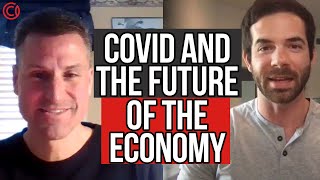
Dr. Tom Layman argues governments should fund testing and vaccines but criticizes broad stimulus as distorting markets. The Fed expanded its balance sheet from $4 trillion to over $6 trillion, and relief programs created perverse incentives. He sees a possible V-shaped recovery if the virus is controlled, but warns of long-term malinvestment and stranded resources.
Chapters
Well, I'd like to start off my response to that question by just saying, first of all, that the fiscal and monetary response to this, in my view.
Has not been good.
Hello, Dr. Ehrman. It is good to see you, my friend.
Good to see you, too. Thanks for having me.
I said this to you privately, but I will say this publicly on the record. You know, when people ask me if I have any regrets in life, I say my one regret is that I was a business major in college because I just felt like I didn't take anything away from that. But then I always have a second to that said, but had it not been for my business degree, I would have never met Dr. Tom Lehman, and that was worth more than all of my other classes combined. So I just want to be on the record as saying how much you have affected my life and the direction of capitalism.com and my thinking. I don't think anything has made me more of an educated person studying economics. So thank you for the impact you've had on me.
Well, you are very welcome. I'm humbled to have played a small part in your thinking or shaping your thinking. And I just appreciate so much what you are doing now in all of your various efforts and all the different directions that you've gone and your successes. And so it speaks well of what we try to do in our economics program and.
Is very humbling to have been part of that and played a role in that.
Thank you.
So I've been just dying to ask you about the current situation because.
It'S violated all of my.
Preexisting beliefs about what we should do in a crisis from an economic standpoint, and also my ability to predict what's going to happen and my ability to consider what appropriate policy is. And so I think the first thing I want to ask you is during a crisis like this, what is the role of government? Because I happen to be of the opinion that the government that is involved the least is the one that governs best and that people take care of themselves better than governments can. But this seems like a unique situation in which you might have to have a change in policy. So what is the role of government during a crisis like this?
Well, strictly from an economic point of view, the role of government would be to address market failures or failures to.
See markets function as a result of the pandemic. So this is kind of an unprecedented thing.
At least in more modern times here.
And it's an interesting question to ask. Economists have given a lot of thought to things like this over the years.
To actually see government in action and try to apply these things is a different thing. I think when you go from theory to practice, there's a lot that can happen and can go wrong.
But hopefully some things go right in terms of, for example, the spread of a virus is typically what economists would call a negative externality. So.
Governments have a role in trying to internalize that or reducing the costs of the spread of the virus. And perhaps also vaccines are seen as a positive externality or a spillover benefit. And so perhaps the role of government is such to fund the development of those types of things. I think that is where most economists kind of would arrive initially and say, first and foremost in a pandemic, the government may have a role to play in terms of internalizing these externalities. And.
Just for clarification to your listeners, for economists, an externality is any kind of spillover cost or benefit that is imposed on other people outside of a transaction. What we call it an externality.
So when you go out and like pollution or something like emfs or education has positive externalities.
Right.
So that the extra benefits from a transaction that weren't involved in the transaction, it's the more of the global impact or communal impact of a transaction, either positively or negatively. And something you taught me is that sometimes the government has a role in trying to limit the negative externalities while protecting the transaction and maximizing the positive externality. While.
That'S exactly correct.
So in a pandemic situation. I remember well, yeah, you remember well, what does it mean to internalize that externality in the context of a pandemic?
How do we do that except just shutting things down as we've been doing?
Yeah, well, there's a couple of different, different ways to look at this. One is to have kind of a strict regulatory regime to internalize the externality by just keeping people away from each other. And that is probably the. Right. Now the dominant policy that prevails is the social distancing and the shutting down of what are considered.
Unnecessary.
Kind of types of commerce, restaurants, entertainment, that type of thing. So this is a regulatory policy. Another way is to kind of tax the behavior of the person creating the negative externality. The problem with that in this context is that we don't really know who is creating a negative externality and who is not. Unless we have much more widespread testing and can determine who is a carrier of the virus, but we don't know, or if we have very limited knowledge of who is the carrier of the virus actually taxing the.
Creator of the negative externality, in this case someone who would be affected with COVID 19 and be out in public, perhaps spreading around the virus. Taxing those people is very, very difficult. So the easiest kind of the low hanging fruit has been the regulatory approach.
Well, when it comes to doing that, you have further spillover of now, you have limited commerce, you've shut down a lot of transactions. And so is it kind of a judgment call in your mind of policymakers to just decide what's appropriate?
Well, there's a knowledge problem here. There's the inability to really know in advance of these regulatory kind of one size fits all, at least at the state level, one size fits all regulatory policies. What are the real costs of these and what are the benefits that we are deriving? In other words.
It'S in my mind we're not able to accurately measure the benefits that we're getting from the regulatory policy of social distancing and shutting down large swaths of the economy. Are those benefits in terms of reduced spread of the virus and lives saved?
There is that question. There are lives saved. There are the benefits of that greater than the costs in terms of the lost income, the lost streams of revenue, the lost wages, and possibly even lost lives as a result of the economic contraction? If we had good numbers, good measures on this, we could do a cost benefit analysis and say this amount of regulatory policy is appropriate up to the point where the marginal costs equal the marginal benefits or the marginal social costs in this case equal the marginal social benefit. But that's very difficult to get at. And so policymakers are in a real quandary, I think. I do not envy their. I may disagree with their policies, but I don't envy their position because.
There'S just.
A galactic knowledge deficiency here about what are the costs and benefits and what are the trade offs. We just don't know. We're in a world of radical uncertainty right now.
So let's go to that point you just made there because from a micro perspective or more of a local perspective, everything that you're saying kind of makes sense. And then from a federal response, the overall policy has been basically throw money everywhere. It's been like, put it in the helicopter and watch what happens. And we're starting to see the fallout of what happened with the paycheck protection plan and big businesses getting the money instead of those who needed it. And I'm just curious from your perspective on the effectiveness of the current federal policy and what you may have liked or would have done differently if you had a Say, hmm.
Well, I think just to go back just really briefly, the precedent for all of this that we are seeing now was really set back in the Great Recession and the response toward the end of the W. Bush administration, the beginning of the Obama administration and the financial crisis, housing collapse in 2008 and 2009, where the government spent well, the executive and legislative branches spent around a trillion dollars of stimulus, and the Federal Reserve engaged in several rounds of what came to be referred to as quantitative easing at that time. So the precedent in terms of the macro, the fiscal policy, the treasury, the taxing, the spending and the monetary policy, the Fed precedent for, for what we are seeing now was set or planted. The seeds of that were planted back 1012 years ago. What we are seeing now, however, is just a major explosion of that, relatively speaking, it's just so much larger, it's double or more than double the amount on the fiscal side. So we're looking at an additional 2 trillion, 2.3 trillion roughly in government spending in all different directions. Some of that's going to healthcare, but a lot of it is going to, as you mentioned, the personal paycheck protection program and others, extended unemployment benefits and subsidies directly to families and then some to business loans, business grants. Businesses do certain things, they get to keep the money, they do other things, they get to borrow at zero interest. And then we've got the Fed and monetary policy opening up the spigots tremendously, creating all kinds of different facilities now where they are lending not just in terms of.
Treasury securities and mortgage backed securities, but now all manner of private sector bonds, municipal bonds, state bonds, just buying up assets left and right in financial markets to an extent that we have never seen before. So this is the seeds were planted for this 10, 12 years ago, but we are now in completely uncharted territory. And the size of the Fed's balance sheet, which is a reflection of the amount of new money that has been created, has increased just in the last two months by about 50 to 60%. So we've gone from a balance sheet of about 4 trillion to a balance sheet of over 6 trillion.
That's staggering to think about.
Yeah, in a two month period of time. So that's the monetary base of the economy.
That the Fed has injected that amount into. And these are still ongoing, so we don't know what the result will be.
But do you see any scenario in which, as the President would say, when people are turned loose again, all the pent up demand creates a new economic boom, or as some people would say, do you see any reason for there to be kind of.
A new interest in new industries that are now possible because of the Internet and streaming and digital workplaces? Is there another scenario in which the bubble doesn't burst, but it almost folds into the next era and brings that economic growth to a point of expansion that outdoes the recession that we're currently in?
Could that also be in the cards? I guess is what I'm asking.
Short answer is yes, I believe. Now here's another way to kind of think about this. You've got short run, you've got long run. What we've kind of been talking about is what are the long run implications of all of this lending, all of these Federal Reserve manipulations and facilities of lending, how this money is flowing into the treasury from the Fed and the Fed is spending it and borrowing heavily, and the increase in our debt and the increase in our deficit, what are the long run implications of that? Okay, that's kind of what we've been focused on now in the sense that you're talking about flipping the question right now. We are shifting into the short run. And what has happened here in this period of time with the pandemic is that there has been a collapse in aggregate demand and also a collapse on the supply side. So the pandemic has made it very difficult for us to produce to supply supply chains cut off.
The web. The intricate web of the marketplace has been significantly disrupted as a result of the pandemic and then as a result of the government's attempt to social distance and keep people away. So there's supply disruptions and then there's demand disruption. People have reduction in income, they don't spend as much. That creates a kind of vicious cycle whereby the reduction in income, the reduction in spending, creates further reductions in income, creates further reductions in spending. This is kind of a, this is what we would call a kind of reverse multiplier effect.
If we were to use the standard Keynesian terminology. Right. So there's both a collapse in demand in the short run and a contraction in supply in the short run. That has certainly brought us to the brink of what we might consider a depression. If you look at the unemployment numbers for last month, for example, at 14 + percent rate of unemployment.
That'S like Great Depression level numbers. But we're talking now a kind of short run analysis here where you're asking the question, once we start to open up, if and when we start to make progress on the biological front of this thing.
Can we get a vaccine? Can we reduce the rate of spread of the virus. Can there be a treatment, an effective treatment that prevents the spread of the virus then in the short run? I think yes. The answer is yes, that the economy could experience a kind of V shaped recession. What that means is that we go very quickly into a depression kind of scenario here, which is probably where we are right now. We'll see to a very quick recovery if and when the biological challenges can be solved and the economy begins to open up and we begin to adapt to.
Kind of the presence of this virus and our ability to mitigate its spread.
So we've been talking a lot in theory about what might happen, could happen. And everything in me, Dr. Tom just wants me to hear you say this is what's going to happen. Of course we don't know what that is, but what would your say you think is going to happen as a result of all this?
Well, I'd like to start off my response to that question by just saying first of all that the fiscal and monetary response to this in my view.
Has not been good.
You asked me earlier if I were king for the day or if I could set policy or if I had influence over policy. My view is that what the government should have done was spend a lot of money in the healthcare sector testing vaccines and then initiate a period of time of social distancing to try to prevent the spread of the virus. These are all good, what I would consider good or less bad forms of public policy. Right. To try to internalize these externalities. The increased spending is really just, and this is kind of the the point that I would like you to consider or like your listeners to consider. The market is responding, as we would expect, to a decline in demand and a decline in supply. The contraction is playing out through the marketplace. The market is telling us that things have changed, that consumers no longer demand certain products either because they are quarantined or because by force of policy or because they are just not buying stuff as a result of being fearful that they are going to spread or contract the virus. So the market is really reflecting these changes in supply and demand. The market is like a mirror, if you recall that metaphor that I like to use. The market is just a reflection of the changing conditions of supply and demand. And the market is a mirror or a messenger. Those changes through prices, wages, profits, losses, interest rates, stock market, okay, beginning of March, people did not like the message that the market was sending. We often don't, depending upon what industry we are in or what kind of employment we are in. We don't like the message that we're getting. Right. But the macro response to that has been let's shoot the messenger.
Let'S break the mirror or let's distort the mirror. Right? You get up in the morning, you look in the mirror, you don't like what you see. So instead of changing your own appearance and adapting, you say, ah, let's, let's figure out a way where I don't have to change or I don't have to respond, I don't have to adapt by distorting the mirror. But that doesn't change reality. All that these fiscal and monetary policies have done in an effort to try to.
Give people the illusion that they don't have to adapt is to sacrifice the future in order to ameliorate the effects of the present, the negative effects of the present. Okay, so I think it's important to say my view would be allow the market to adapt even though we aren't going to like that and even though without the Fed and the treasury doing what they are doing, things would probably be worse now. We would forego the distortion and the costs down the road. I think there's significant distortion that has been introduced into both financial markets and in general.
Production and consumption, supply and demand throughout the economy overall as a result of in effect the macro policy.
Trying to distort the mirror. So now the long run implications back to your question would be how do we come out of a distortion? There could be in the short run a V shaped recovery, but then there are all of these misallocations or mal investments, capital distortions, capital market, we're supporting the stock market, we're supporting the housing market, we're supporting bond markets. What happens in the long run when the market cannot accurately reflect changing supply and demand conditions and how does that then reduce our standard of living down the road? So I guess I'm in some sense speculating that those are costs that we are going to have to bear one way or the other and those are not going to be enjoyable. Maybe better that we take the medicine in its full dose now.
Which people don't want to do, rather than string it out and postpone it and delay it and defer it on into the future.
Well, I was just speaking with someone this morning who finally received unemployment and it was delayed in their state and it is just enough for them to justify not continuing to go to work. Oh yeah, and it's not as much as they were making, but if they were to work and make the same amount, it would counter unemployment. And basically what I'm hearing you say is that's a distortion.
Absolutely.
We have heard those stories and it is not that person's fault. That is the situation. But it is a market distortion because what is distorted about that is where value is coming from. That person is pausing their value creation because the short term impact of them doing so is that the safety net kicks in. But the long term impact of that is now the economy has been robbed of a productive person serving other people, serving clients and customers. And so in the short term.
We have a very small concentrated benefit for one person. And no one would blame them for making that trade off. The long term global impact of that is now you have a reduction of production because you have removed someone from the workforce who genuinely wants to be working. And so magnify that over 20 million Americans are in similar situations. You have a reduction in that short term economic impact, which keeps things moving in the short term. But the long term is you now have 20 million people who have not brought their goods, services, creativity to the marketplace. And that has long term impact. I mean, just think about when you start a business. It takes a year to be really productive. And you could have just gone along your merry way doing things the way that you were doing. But had you taken the risk, taken the short term sleepless nights and lost capital in, in the first year to have increased output in the long term, the whole world, your customers.
Your employees, your family are better off having a productive business. We've basically turned off that, turned off the ability to plant those new seeds by distorting the market. That was my long way of saying. I think that's what you're saying, Dr. Layman.
Yeah, very well said. I think you're exactly right. And it's not, it's about stranding resources not just out of the economy, which is.
In your example, we're stranding some workers outside of their productive work. But not only that, but stranding workers and other resources, scarce resources, in lines of employment where they may no longer be creating value. And we want to send them the message. We want to create an incentive for them to move over time, move capital, move land, move labor into lines of employment where they can be of greater value, given the changes that the pandemic has created. So it's twofold. Are we stranding resources outside of the marketplace through the regulatory and fiscal policy incentives that we're creating? And then are we encouraging those resources to remain in lines of employment where they're no longer valued simply for the purpose of creating stability or simply for the purpose of being able to tell people or create, as I said earlier, create the illusion that, oh, you won't have to change.
Yes, and it makes total sense to me. And again, that difficulty is you don't fault those people for making that choice. But it's a distorted market because of the policies that have been implemented. And so I think the alternative that you're suggesting or that you're at least thinking about is if we took the short term medicine, that would look like significant unemployment in the short run and it would look like a lot of hardship in the short run. But in my assessment, and I want to know if you agree with this, in my assessment, there's a benefit that people don't factor in and it's lower prices. When you have that many people who are not spending, who are not productive, who are not working, there's reduced pricing that happens, which naturally starts to stimulate demand again. And when you have natural stimulation of demand because there's lower prices, interest rates come down. Now I want to consume more. Now I need more workers to come and keep up with that demand. And so the market takes care of it, but not as quickly to bridge that short term pain. There is a short term pain that we have. Do you agree with that overall assessment that in a normal, non distorted economy you have the benefit of lower prices, which factors into a potential recovery?
Absolutely. You've done a good job of kind of laying out what I would call, or what economists would call kind of the classical or neoclassical understanding of how markets function absent any kind of externalities from pandemics and what the government can do there. Simply allowing the market to adjust means that prices in certain markets will go down. Perhaps prices in other markets will go up. Wages likewise will move in different directions. Unemployment will occur in certain sectors that are no longer demanded. Where supply capacity is constrained, certain businesses will exit the market in those areas.
And wages, prices, interest rates will all adjust downward, both on the output side and then as a corollary on the input side, leaving businesses with the opportunity to hire at lower nominal wages, buy raw materials and lease capital at lower prices in order to then restore productive capacity in some way, not necessarily the same way that it was before the event, like a pandemic occurred, but now in a way that adapts to the new reality. Okay, that is the classical view. Now there is another counter argument to this, which I will kind of try to give the benefit of the doubt to here because you and I generally agree that markets function and that we should allow those markets to operate and reflect the changing conditions of supply and demand. But the, the more compelling counter argument to that is this view that if prices fall, if wages fall, if unemployment is allowed to rise to these very high levels which we are already experiencing to some degree, despite what the government has done to try to arrest that, if we allow that to prevail, the.
What we would call kind of the Keynesian or neo Keynesian view is that the economy would be stuck in a permanent state of decline and malaise, or a kind of.
Permanent depression or recession whereby business firms, because output prices are falling, would be unwilling to invest, be unwilling to produce for the future, and thus unwilling to hire workers. Workers would lose skills because they would be out of the labor market for extended periods of time. Workers would not be willing to accept lower nominal wages. This is known as sticky wage theory, sticky price.
But doesn't that assume that there's, that there's not consumer demand? I mean, does that not assume that there's not concentrated areas of increased demand?
Well, the theory is that if income is low, then demand is going to be low as well. But if income is stuck at a low level because of a high level of unemployment, such as you had in the Great Depression, and if wages and prices are not adjusting downward, that's the linchpin here, that's the key, that wages and prices may not adjust or not adjust rapidly enough, then we end up in a kind of.
Economy that is stuck in the rut and we need pump priming, we need spending, we need zero percent interest loans, we need quantitative easing, we need stimulus to revive us from that. That's the, that's the alternative view that.
Many are arguing it just to me, and you said that. Well, without putting your bias into it, I'm not as good at doing that. But my immediate bias in hearing that is it seems like a very incomplete argument because it does not seem to factor in incentives. Incentives being that if there is demand, I have an incentive to supply, and if I have an incentive to supply, then I have an incentive to supply at greater efficiency. And if I have greater efficiency, then I have profit, and if I have profit, then I consume more in other related ways. So to me that just seems very incomplete because it seems like more of an analysis of the mirror than an analysis of who is in the mirror and what is driving them forward.
Yeah, that's a good way to extend that metaphor. I think the assumption in the model is that, or in this kind of Keynesian view of the world, is that These wages and prices will not adjust downward to clear the market, and that there will be such a widespread scourge of pessimism that business firms will will all behave in kind of a herd mentality in the same way, pulling in their horns like a turtle into its shell, and that they will not spend and not hire. Thus, households will therefore not spend, inventories will accumulate above target levels, and business firms will respond to that by reducing investment. The classical response to that is, well, if households are not spending, then they must be saving.
And there is an increase in the supply of loanable funds, perhaps putting downward pressure on interest rates. If all else is held constant, that input costs, because of slack in production, input costs will go down and eventually, as you mentioned in your comment, the expectation of profitability will, will emerge and entrepreneurs will then take advantage of their opportunities for arbitrage, saying, oh wait, yeah, if the prices of outputs have gone down and that's all that's happened, I'm not interested in producing. But if the prices of inputs have gone down by the same or greater magnitude than the prices of outputs, then I will see opportunity for profit and I will be willing to produce once again.
Yeah, amen to that. This is why I say entrepreneurs and capitalists create change. We are the engine that drive things forward. Dr. Layman, to wrap up, I wanted to move the conversation into.
From a societal standpoint, what changes do you think will be on the other side of the. Of the changes that are happening now? The changes in policy, the changes in consumer demand, people staying at home much more often, people driving, less people not going into the office but still working digitally. My bias is, I think that commutes are kind of a thing of the past, that retail space will be drastically reduced which will free. Free up some land and we'll have lower fuel costs. We'll probably have a reduced demand for live in person entertainment, more for digital entertainment. And so these are all opportunities. To me, all I see here is freed up land. I see opportunities to move a more digital environment forward, more digital education moving forward. I see. Curious, from your perspective, looking at more of a macro view, what changes do you think may happen in society?
Well, all of those.
Elements that you mentioned are possible. It's possible that that is the direction that we go.
I'm reminded of what some futurists and.
Pundits and some scholars were saying 20 years ago.
When the World Wide Web and the Internet really became more ingrained in business practices. Some were making claims that it would be the end of the city, that the Urban form would go away because people will no longer have any.
Need to.
Be in close proximity with one another. They won't have the need to be actually, literally face to face or drive to the office.
They can all just commute virtually, you know, or be face to face in a virtual way. And they were predicting this. That prediction did not actually happen. As it turns out, people are very social animals. They want, if not for business purposes, for pleasure, just being around other people.
They are drawn to crowds and to interaction face to face. And so the city, in spite of the predictions of many futurists, and in spite of the effects of online media, networking capabilities, the. The city has continued to evolve and develop and grow, and large megacities have become even larger megacities. So it's very difficult to say at this point whether this pandemic.
Is going to kind of accelerate this process that some futurists had predicted 20 years ago, whether we are now going to actually go in that direction possible, or my view is more that, yes, we will go in that direction and remain kind of apart from one another until.
A biological solution to the spread of the virus is.
Found or is implemented and people begin to trust the vaccine, to trust again. Once the trusting of being face to face and interacting with people returns, My view is that people will return to that kind of quote, unquote norm. Now, what business firms will be around at that point and how resources will be used at that point. Maybe a year from now, two years from now could be very different. I'm not willing to write off the idea that people, or to embrace the prediction that people will no longer want to socialize with one another, even though they may have the capacity, and they may have now a better understanding of how to use the technology to be virtual, to do their work virtually. There will still, I think, be so much desire on behalf of humanity, culturally and as a human race to be together. I think we're wrestling with this in education. You know, some people are saying, oh, this is the end of traditional education. Others are saying, no, students still want to socialize. They still want to have that campus experience of being around their peers and being around people of the same age, dating and interacting and socializing, in addition to the intellectual pursuits of the academy. And so.
I hate to make sweeping predictions one way or the other. But my view is that if the biological challenge can eventually be solved, we may do things differently, but we won't. We won't stop being social creatures. We will continue to socialize, and I think we will continue to desire the company of our peers and of others.
Well, Dr. Tom, you've had a meaningful impact in my life because of conversations like this. I can recall many, many times in which I had a knee jerk reaction to a situation going on because I was a student of yours during the last economic crash. I remember walking into the class, my favorite class I had with you, which is called the Economics of Public Policy. And it was the day after Lehman Brothers failed. And I asked you the question, did we do the right thing? And you slammed on the desk and said, absolutely, this is what's supposed to happen. And so you have markets, you have fundamentally changed the way that I see the world. And I just want to say thanks for sharing with those of us@capitalism.com well.
Thank you so much for having me. And again, I just am humbled to have played a role in your shaping of your thinking and so appreciate all that you've done and just am happy to be here. And hopefully your listeners are enriched by our discussion here.
That was Dr. Tom Layman and I'm Ryan Daniel Moran and I want to wrap things up by giving you my predictions for where I think we're going as a society and as an economy moving forward. I love Dr. Layman's analysis and I so appreciate the impact that he's had on my life. And I've taken all that I have learned from him and from my experience as an entrepreneur and my own informal continuation of my interest in economics.
And I have formed a view of the world.
That is a little bit like putting all of those things into a blender. I guess all of us can say that about our life experience, right? To put into a blender and then blend up. And for me, I have reached a belief about the world, that the world continues to evolve and get better and better and that we continue to move in the direction of solving the inefficiencies that we experience as humans. That's overall our trend as a species. We tend to come more and more together to solve more and more problems and create more and more efficiencies. And when we do that, we create inefficiencies along the way. We create breaking points that we then disperse, come together and solve. And so it's a beautiful thing to be a part of this process that is expanding more and more, solving more and more problems and creating new and new opportunities that also have their own problems. And where we are right now as a result of COVID and the economic slowdown is that we now are solving for different inefficiencies And I believe that it's obvious that is all moving online. The workplace has now been replaced by Zoom. So office rent has gone from $10,000 a month to $300 a month because your office just went from in person to being on Zoom and Slack. And all shopping is now deliverable. And that trend will continue. So retail space will shrink. No longer need large retail places when all you need to do is hit a button and have them come bring it to you. Or you can just go to a storefront and tell them what they want and they'll run and go get it. And so I think that we are creating new efficiencies by reducing the amount of space that we will need, reducing the amount of overhead that we will need need. And then in our personal lives we will want to expand, we want to expand in our relationships because what we're seeing right now is a great inefficiency of I literally cannot get together with you. I literally cannot touch you or be in front of you, or be more than six feet distance between us.
So the thing that we will solve, we will overcorrect as human beings to solve that inefficiency by creating more. I almost call them like social pods. You'll have your list of people that you get together with on a regular basis and you probably won't move from that as much, which means you'll have deep, deeper relationships. Closer knit circles, which some people will say is a really great thing because they're coming from a place of disconnection, they're coming from a place of high rises, they're coming from a place of us not spending in person time together. But that will have its own problems too, because if we create depth in a relationship, we get rid of the vast width of relationship. And so we won't have as many connections, we will have deeper connections.
Jason Hartman and I were talking about.
How this probably means that we will have a demand for more land or bigger houses. People will have a slower pace of life because we're coming on the other side of a very fast paced life, of a very immediate, let's travel all the time, let's go, go, go. And then we were forced to slow down and there's positivity and that slowdown. The result will be that we go through this period and we choose a few things that we like to bring with us that are solving for problems we've experienced in the past. So we'll have deeper connections, we might have a slower pace of life, we will go more online than what we have even up until now. And that will create its own challenges which we will then continue to solve. I do not believe that we are going back. I do not believe that we are going back to our productivity or back to our demands and desires. We are only going forward. We are only moving ahead. Dan Sullivan is one of the people I find most interesting in this world. And he very accurately and very early predicted that Donald Trump would be the next President of the United States. This was very, very early. I thought he was nuts, I thought he was crazy. But he said something interesting, that the president who wins has almost always been the outsider, at least in the last hundred years. And when you haven't a two term president, the swing in the other direction is almost the exact opposite of whoever has been in office. So George Bush. What could be more opposite of George Bush than Barack Obama? What could be more opposite of Barack Obama than Donald Trump? Now I tell you that because if history stands and Donald Trump is reelected, then the next president will be the opposite of that. Which, by the way, is why Pete Buttigieg should have waited four years to run, because he would have been the front runner anyway. If that theory holds, after eight years of Donald Trump moving forward, you'll have the exact opposite of that. Because there will be a hole.
In our society that people will want to solve by putting in the exact opposite. We tend to be very.
Very. We swing back and forth between extremes, especially in the West. I tell you that because that is the case with almost all things that we approach. It is that way with our philosophies, with our beliefs, with the economy, with our policies, with the way we view the world. We tend to bump up against pain and swing in the opposite direction and find new pain and swing in the other direction. And that's what I think we're seeing here. It's what we're going to see in the economy. And that doesn't mean that the market's going to crash to 10,000, although I have, I have friends who think that. I think we are probably, I think our bottom, I always said our bottom was about 18,000. We hit 18,000, we might go back there. I don't know that it matters. What I am saying is that after a period in which we have been hustle and go and extremely fast paced, the next era will be a slower pace, a simpler life, maybe not as aggressive, and that will have its own challenges and then will swing in the other way. We as human beings are wired to see problems allocate resources together to solve them, move on to the next phase, allocate resources to solve our current challenges and continue moving forward. So I am not afraid of quarantine. I am not afraid of COVID I am not afraid of the economy. I am not afraid of the changes that are coming. Because we have always improved life and society as a result of times like this. And even if the economy doesn't recover for years.
There will be things that we solve and we create that will make things better than they've ever been.
You're an entrepreneur and you're part of that. And if you're a forward thinking entrepreneur who listens to capitalism.com then you're definitely making the world a better place. I salute you. Thanks for hanging out with us. I'm Ryan Daniel moran. This is capitalism.com and I'll see you on the next episode.







