
F2L2 Leaks: Q & A With Cameron Herold
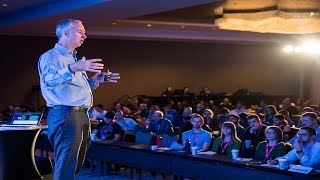
Cameron Herold answers questions on hiring, firing, and scaling. He recommends starting with revenue-generating roles, hiring ahead of need, and firing fast. After a health scare following his uBarter sale, he learned to prioritize meditation, exercise, and vacations to manage CEO stress.
Chapters
It's all about execution. It's all about the initial idea. Half of my life was just do I have the guts to place this order?
Ended up launching in 42 days we raised $600,000.
Entrepreneurs are a billion fold over anybody else. Solving the problems because a great problem is a great business opportunity.
Hey fastlaners, this is Ryan Daniel Moran. Welcome back to Freedom Fastlane. Today you're going to hear a clip from December event called Freedom Fastlane Live. It was held here in Austin, Texas. And what we try to do at Freedom Fast Lane Live is put the best capitalists, entrepreneurs, brand builders and investors into one place, invite people to join and watch what happens. We just try to create the biggest business up leveling possible. This year's event featured Peter Diamandis, JP Sears, Cameron Herold, the founder of Whole Foods, John Mackey, a panel of people who built $100 million businesses, our investor panel and a bunch more. And in past events we've had billionaire Jeff Hoffman, Pat Flynn, Robert Herjavec, Gary Vaynerchuk and others. So today you're going to hear a clip from the recent event. We don't release the entire event for obvious reasons, but there are certain clips that we find particularly beneficial that we want to share with you. So that's what you're going to today's episode. If you want to be on the waiting list for the event in 2017, you can go over to freedomfastlane live.com enter your best email address and you will be on the notification list for when we release the speakers. Until then, enjoy this clip from Freedom Fast Lane Live.
So Cameron, great, great stuff. I know a lot of people in the room. Is anybody running a one or two man show in here? Keep your hands up. If you're running a one or two man show, keep them up.
Every company started as one or two people, by the way.
Keep up. Now put your hand down.
Put your hand down. If you don't work too much.
If you work too much. Set, you're saying put your, put your hand down. If you're balanced, there's power in confusion.
All right, let's just do that again. If you're a one or two men, should I put your hand up now keep them up. If you work more than you'd like.
Okay, so for that amount of the room, working more than they want. But they're one or two man shows. The biggest transition that I have seen, like the biggest challenge has been for those individuals to get the first hire right or to start learning how to Build the team. Last year there's several of our backroom members who were one and two man shows and now they have. There's the first one that was really, really difficult. But after that the team started to blossom. So what have you seen be that process for hiring the right person or who are the first hires that you think need to be in place in order to get that moving?
Sure. So, and even, even before the first hire, I think a lot of it is our stop doing list or I call it my fuck it list. You gotta look at a lot of the stuff that's on your list of stuff that you do day to day and decide what things you're not gonna do anymore. Cause some of it is just pointless. So the next hire that I would get into is actually start outsourcing using Odesk or Elance and looking for fractional people that I can hire who can do little bits of work instead of full time employees. The first full time employee I'm probably gonna get to is either gonna be a sales or marketing person, probably salesperson, anyone who can drive revenue. So in my world, revenue solves problems. There's not a single problem that exists that can't be solved by a check. So the more gross margin you have coming in, the more people you can hire. So I'd be looking for revenue producing roles versus overhead and then hiring fractional people as much as I can.
Do you think that you should hire people that will grow into a role or people that should have already done it?
Yeah, I ideally like to hire ahead of the curve. So I hire people that I know I'm going to need in two years. I try to hire them early and tell them to roll up their sleeves and get dirty. It's like, I know this role is a little bit beneath you, but look where we're going. So I use the vivid vision as a way to attract them. By the way, again, we're passing out the bag to bring in the donations for leukemia and also the draw. And the draw is for the full package and the double double fast track that I just filled out with you, which is all four of my speaking videos and ten copies of my book and an hour of my coaching time. You can also buy that package as well today.
I'll also donate 10% of all the double double fast tracks to leukemia today as well. So for the 1297 package, I'll donate $150 from every package to leukemia as myself as well. So if anyone filling those out, that was another add moment.
Sorry, you Were talking about hiring ahead of the curve and I want to know, would you hire somebody who's done it before or will they grow into that?
Yeah, I'm hiring people who have done it before as much as possible, which is why I like outsourcing, because I can really get people that have done it more often than not. We don't need full time employees, we need some stuff done, but we don't really need an employee, we just need the stuff done. So if you can get somebody who can do it in three hours, at three hours once a week, I'd rather have some fractional people, some part time people than a full time.
What would you consider the difference? Meaning for what role would you hire a full time person? Because there's a lot of people in the room who are saying, like, I have a lot of things that need to get done. How do I identify which ones need to get outsourced and which ones need to be full time people?
You start grouping all your tasks together or all your projects together into buckets and you'll start seeing that some of the buckets have a lot of stuff. And as soon as you have enough stuff that is going to be getting done for a number of hours, you can say, okay, now it's really a full time role. But if you see that it's stuff and it's only a few hours a week, then you can outsource it. As soon as your stuff gets to maybe 30 or 40 hours, then you're going to start hiring full time people.
I asked you this question after we recorded the podcast. I wish that we had been recording. So I'm going to ask you here on stage, Cameron, you seem like you have it all together. Do you ever get stressed?
Yeah, I get stressed all the time.
Back In October of 2000, I had an employee. We built a private currency company. Prior to Bitcoin. We created a currency called uBarter.com, we had 30,000 companies accepting our currency instead of the US dollar. We sold the company to Network Commerce in January of 2000 for 64 million. And when we were selling the company, the stock crashed. We were public, they were public. And I went in to get a physical done. So I'd just gotten married and we were buying a house and I'd collapsed on the floor of the elevator crying a couple days before with stress. And the doctor said, is everything okay? And I said, yeah, everything's good, totally good. I just need get this physical so I can get insurance. He goes, anything wrong with your body I'm like, no, everything's good. I said, I've got this weird metallic taste in the back of my neck. It's almost like I'm chewing on aluminum foil. Has anybody ever had that aluminum foil, tin foil taste? Put your hand up if you've had it. Seriously, put your hand up high if you've had that aluminum foil taste. It's actually a chemical secretion that is caused by stress. I don't remember the name of the stress test, but I had nine of the ten most stressful events happening simultaneously. My mom was diagnosed with cancer. We just bought a house. I'd quit my job. Stock market had collapsed. I'd lost 30 million.
I had gained some weight. I was drinking a lot. I was moving from Seattle back to Canada. And I thought everything was good. I thought I had my shit together, but my body was telling me that I was stressed. And this chemical secretion was literally me clinically redlining. So, yes, I get stressed. I've lost 35 pounds since then. I run a lot. I do meditation. I do the morning savers from Miracle Morning. And I'm in way better shape than I was ever in.
Okay, so.
Oh, here we got the money. Okay, so we've got. Oh, this is cool. We've got literally like this much like a huge.
Wow.
Yeah. So why don't we do.
I saw some Benjamins in there.
Yeah, there's some Benjamin. So we got. Got some cash. So I'm gonna have. Oh, there is. There's some. There's some good numbers in here.
There's actually a bunch of hundreds too. So I'm gonna have Ryan put his hand in and pull out. Oh, pull out a couple bills.
So Ryan will put his hand in, pull out a couple bill or pull out one bill. And whoever's bill we pull out is going to win the full double double fast track of all four of my speaking event videos, 10 of the books, and an hour of my coaching time.
Oh, I pulled out a Benny pull out 100.
And this is Carmen Bullens. Where's Carmen?
Thank you, Falcon. Thanks very much. So fill out your form and just put free winner and then I'll make sure that you got that. And thank you. That's very generous. So all of this money is going to be donated to leukemia. I'm going to give this. Where's Evan?
He's backstage.
Evan was part of the COO alliance, which is the only network of the kind in the world. For second in commands. I'm going to have Evan take care of getting this to.
Leukemia. And then he can also get a count done and tell us how much we raised. That would be great.
We'll get it done. All right. So I want to go into. Into stress. Anybody ever feel stressed? As entrepreneurs, especially those of us who are leading companies, we put a tremendous amount of pressure on ourselves. And.
I honestly don't know what to do about that, except to just become incredibly present to what your own personal needs are and make sure that you're not siping those.
As a way of sacrificing for the business, because then you just burn out. You've worked with a bunch of entrepreneurs and you've experienced this yourself. So how do you coach somebody through particularly stressful times?
Sure. So I actually wrote about it in double double. Chapter 12 is the highs and lows of CEOs. And we go through this roller coaster of emotions that are magnified because we're the ones who have our house on the line and we're recruiting people to join our great company, even though we're not sure we're going to be in business in two weeks. We have this magnification of stress, and we can't tell our board what's really going on. We can't tell our employees really what's going on. So we're often living in this very scary place. So the stress that we're under is really magnified. So when you're at what I call crisis of meaning, which is that real death spiral at the bottom where you're just stressed or depressed, or you're at home calling your employees saying, I can't come in this afternoon because I'm busy. And really, you've got the duvet pulled up over your head. You need to detach. You need to take vacation. In fact, I said to Evan earlier this morning, I really want Ryan to make sure he takes two or three days after the event is over to go on vacation with no laptop and no cell phone, because you need to decompress. Because as soon as this event is over, you know it's. You're going to crash. So I want you to take a vacation for a few days and promise me that you'll just detach.
Okay.
Will you do that? You bet. Okay.
So you have to do that.
Stop working at night. You're not going to get it all done. You're lying to yourself. You're avoiding your relationships. You're avoiding pain in some way. You're avoiding the fact that you've lost hobbies and. Stop it. You're not going to get it all done. As soon as you catch up, you're going to have a new list anyway. So work a solid day and then have a solid afternoon and evening and weekends of fun and get some hobbies back in your life and get some grounding back in and be interested in stuff. I go to the main TED conference every year. I'm going to TED Global over in Africa. I go on vacations. My wife and I are going to sail in the British Virgin Islands with a Hollywood director and his girlfriend for a week after Christmas. We're going skiing with my kids before Christmas. Like I will. I'll take 10 weeks vacation every year where I'm. No phone.
But this wasn't always the case.
No, no, it wasn't always, but I've.
Had to learn this and both you and I are members of.
But even in a startup, if I was in a startup, if I was in a two person startup, I would never work nights again, I would never work weekends again. You have to get balance because you're not going to get it all done. You're operating on this reduced capacity. You think you're working hard, you think you're getting stuff done, but you're not. I've got a client who only sells on Amazon. His company is called Viva Labs or Viva Naturals. Hussain's products, if you look up like coconut oil on Amazon, he's got the number one product on Amazon with like 16, 17,000 reviews. He's gone from 3 million to 38 million in three years that I've coached him. Hussain is now working out with a personal trainer. Never working weekends, never working evenings, like spending time with his kids and going to the park. And it's hard for him to unlearn these habits, but he's realizing it's powerful.
There's a lot of individuals who are at kind of that $3 million point. What did you coach that client through to go from 3 to 38?
Sure. So the first one was to look for very profitable products and sell more of those. So find all the high gross margin products because again, revenue solves problems. Next one was to get focused. He had a million things that he wanted to be working on and it was starting to pick the critical few. So if you think about building a home for a second, you want to put the wolf stove in and the cool cabinets, we'll get there, but let's get the foundation locked and loaded first and then let's get the walls and then let's get the plumbing and electrical. So for him it was vivid vision. Core values, core purpose, bhag, getting rid of some bad employees, hiring some good employees, putting interviewing and hiring systems in place, engaging some executive search firms that recruit for him, driving pr, driving marketing, driving culture. And then we kind of grew it from there.
What do you think are the responsibilities of the person leading the company or the founder of the company?
So the CEO or the entrepreneur is about vision. You're the one who has to be the caretaker of vision and culture. So I always say the entrepreneur can only have five direct reports because you also have your board and legal and culture that you have to take care of. But I think the CEO's job is around growing people. I flip the org chart upside down. The CEO is at the bottom of the org chart supporting the VPs who support the managers, who support the employees, who support the customers. So it's an inverted pyramid. Is your org chart. If you do it right, your job is to be able to support. So my job is to direct you and make sure you're working on the right stuff and give you the emotional support and the technical support you might need through mentoring or situational leadership to help you.
Is this helpful stuff?
So I could sit here and talk to Cameron all day about this, but I love the fact that we're getting into really tactical stuff. So we're going to reserve time for four questions. If you want to grab one of the mics that I imagine are over there. I can't see because the lights are blinding me. So if you line up or if you put your hand up, if there's not secret mics there, we'll find a way to get some Q and A with Cameron. So what have you seen be the.
Traits and entrepreneurs who make that pivot from the 1 or 5 million, the single million dollar business to really growing? Because you've made that transition multiple times and work with people who have made that transition. But most entrepreneurs never grow beyond that. So what have you seen be the traits in those who make that?
Yeah, actually I actually cover it for the first time I've ever put it in writing is in the last chapter of the Miracle Morning for Entrepreneurs. But I'll give it to you right now. It's three things. It's focus, faith and effort. So on a scale, write down these numbers for a second. Just put down F times F times E. And then what percent focused are you today? How focused are you on the critical few things? How focused are you on a channel or on your products? How focused are you during the day? Are you wasting time on Facebook and stuff. What percent focused are you out of? 1 to 100%? And then how much faith do you have? What percent faith do you have in your business, your economy, the market? How comfortable do you feel with it all? What percent on a scale of 1 to 100? And then how much effort are you and your team putting in? Are you guys working hard or hardly working? So let's say that you had 50% focus times 50% faith times 50% effort. That comes out to 12.5% chance of success. If you're even at 80% focus times 80% faith times 80% effort, that's only a 51% chance of success. You may as well go to Vegas and put it all on red to truly be successful. Even 90% focus, 90% faith, 90% effort is only 74% chance of success. So what I've seen the most successful entrepreneurs do, and I've coached some of the best in the world. It's about focus, faith, and effort. And they literally work on the critical few things with the best employees. They work on protecting their confidence. They work on relaxing and like. It's those basic things. Business is, again, so simple. If you go back to your office and teach everybody how to run meetings, it'll help your company in a huge way. If you don't, you'll spend the rest of your life saying business is difficult.
Let's go over here. Cameron, you reiterated that you need to handcuff your best employees. Now you said you need to find out what they need to be handcuffed. So why don't we ask them straight up what they want?
We should. That's exactly one way you do. You just say, what would keep you here? You know that you're a great employee. I know you're a great employee. I want you here forever. What would keep you here? So I have an executive assistant right now, Meredith Kubo, who's just fantastic, and she's just finishing her first year with me. My old one was with me for four years, and I just asked her the other day, what would keep you. She goes, cameron, I'm never leaving. I said, no, that's not my question. What would keep you here? So you have to ask.
Let's go over here.
You talked about firing quickly and do you tend to prepare to fire or, like, for people you're telling to fire people on, I guess, Monday at noon. Are you thinking that they should have a replacement in mind or just. No. The cost of keeping the wrong person is 15 times their salary. So let me give You a couple reasons why you just need to fire them even before you have the replacement. Let's say you have an A player, a really fantastic employee who comes into you and says, you know what, I'm quitting. I'm leaving because I can't work with Bob anymore. And you go, yeah, but I'm firing him. I've already taken another job. How would that feel? Or you have a customer who leaves because of Bob, or you have the negativity, or Bob makes a mistake, so you just have to make the cut. So the test I work with entrepreneurs on all the time, if you got a phone call right now and you found out Bob was hit by a car and killed, what would you do to replace him? So go back to the office, fire Bob and start working on that list of five things, but get it done quickly and then do it with integrity. Do it with empathy. You also, like, I've heard all the time, oh, well, legal, we can't do it. Really? I sat in the CEO of Sprint's office, Marcelo Claure. We top graded his entire team and he called in his chief legal counsel and said, I'm firing and I won't give you the title, but a guy who'd been with him for 27 years at a C level role, he said, I'm firing him tomorrow. Don't tell me I can't do it. Tell me what I need to do to do it, because it's happening tomorrow. I sat with Governor Doug Ducey in Arizona and he fired the head of the Department of Transportation because he didn't support Uber. We can do whatever the hell we want because it might cost us six months severance, but that's better than 15 times that it's costing us to keep them. We also give way too much time. Our A players are your racehorses. Your B players are your workhorses. Your C players have to go to the glue factory. We give too much time to our bad players instead of to our A's.
We've made difficult decisions in the last couple. In the last year, I'm learning how to hire. I'm also learning how to fire. I've also found that there's fear going into it, but afterwards, there's so much freed up energy in the office because everybody knew it was coming. And when that happens, there's like everybody rallies and there's a new level of expectation.
It's like a team playing shorthanded. I don't know if you watch hockey. I love hockey. But if you see a hockey Team who's down a player and they score a goal, and it's because they rally and they work harder together. Right. You can get way more. My original working title for Double Double, before Seth Godin. Seth Godin actually gave me the title for Double Double. It was originally gonna be called how to Get More Shit Done with Less People Faster. It's because you don't need these big, complex teams. You need the right people doing the right stuff and acting like Navy seals and everybody aligned. And then life gets easy.
Let's go over here.
When hiring for culture, you're at risk for having a business full of white guys. No. So I'm assuming you don't. So tell us how you do that. Yeah. So I'm not saying look for the same people as me. I'm saying I want people who line up culturally with. They love the vivid vision. So they're vibrating. They live the core values. So that's critical. So that's what I'm looking for. I know that's what you're looking for, but how do you teach other people? That's the. There's a difference. Well, it's 2016.
It's 2016. I mean, I'm quoting our Canadian prime minister when they said, why is your cabinet 50% women and 50% men? Because it's 20 fucking 16.
So Silicon Valley is not listening. Well, I don't work with them. I work with people who actually wake up in the morning and realize that women are as smart as men and African Americans are smart. Is Chinese. Like, can we please move past this discussion? For the most part, most people treat people like people. And this isn't a criticism of you. This is a criticism of, like, I'm sick. I went to Ted Women. I was one of 20 guys in a room of 800 women at Ted Women. And women were saying, you know what? Let's move past the discussion. We're already there. We need to stop these old discussions and realize that most companies are already in diversity. Most places are already there, and let's get rid of the people that aren't.
But most of us are doing it. I just don't notice it anymore. I'm in Vancouver, Canada. We have 52% Asian now. The nickname for Vancouver is Hong Koover. My kids don't notice it. My kids don't notice. I call it Van Groovy because we also smoke pot every day. But my kids don't notice the difference between them and Chinese kids because they're all the same. I think we're way Past the diversity discussion now, for the most part.
Let'S do one more.
Hi, Cameron. Great talk, by the way, but I was wondering, what would you suggest for someone who's building a virtual company with five employees or less for culture? Yeah, so great, great question. So a lot of my clients, I coach a group called Acceleration Partners. They do the affiliate programs for all the major brands like Uber and yeah, like any brand that you can think of, they're running all their affiliate programs. They have 80 employees that are 100% virtual. So all of our communication is on video, which is huge. When you use Zoom and you can actually communicate face to face with people, that's massive. When you get your people together for quarterly meetings and retreats and you actually hang out in like breather spaces or in airbnbs and you communicate and work together, that's huge. Using online tools like Slack or this new. I'll tell you, the big game changer is Facebook Workplace that's launching. We just saw the beta of it the other day. It's like a holy shit. It's a private Facebook that is your company. And it's all of the tools and features of normal Facebook, but it's just for company use, like Facebook Live, streaming, groups, chats. Like Slack is in a lot of trouble because anyway, those kinds of tools I think are huge. And then just hiring people who literally get their stuff done. So deliver what you promise, respective individual pride in all you do. When you have that kind of collaborative workforce distributed, those are core value things. They're huge. So video and getting together and using the technology. But how would you reinforce it? You could tell them to read the vision statement and then they kind of read it and then a month later they could. You hire people who already live them and you fire people who don't. I was asked by Fortune magazine in 2003, first time I was interviewed by Fortune, how do you motivate your employees? I said, I don't motivate employees. I hire motivated people. So it's like they asked Herb Kelleher from Southwest Airlines, how do you get all your employees to smile? I hire happy people who smile. You can't take grumpy people and make them smile. I can't take people who aren't aligned and align them. I can't take people who don't live core values and live them. I can't take people who aren't going to live their behavioral traits I'm looking for and create them. So you interview better, you hire better. I had a CEO recently who I had to check hard on this one. He said, you know, it takes about 90 days after you hire someone to know if they're the right fit. I said, bullshit. That's because you have a shitty interview process. If you do it properly, you know, the day you hire them, if they're the right person because you've grilled them so many ways. You've used thread of reference. Check like, I can teach you some systems or in my books, I teach you systems so that you know before they even hire if they're going to knock the COVID off the ball.
Final question for you. A mutual friend of ours, hell, Elrod, was recently diagnosed and I'm curious, when you get news like that, it has a way of revealing what's really important.
Yeah.
And for us drivers who are always thinking about work and success, that's like the biggest wake up call ever. And I'm just curious, when you receive news like that, what immediately comes into focus as to what's really important?
My kids, my wife, myself, People, community. I learned it. I went to Burning man my first time in 2007. I've been five times and that fundamentally changed me because I realized that you can't judge a book by its cover anymore. I was meeting these incredible people who you don't know what they do. And no one talked about work. We spend a week together talking about our fears and our insecurities and our joys and our passions and you know, I asked Evan a question today. He goes, wow, that's kind of like going outside of like, let's ask those questions. Let's have the real discussions with people. None of us are getting out of this alive. Every single one of us is going to die. Every single one of us is in pain. Every single one of us is a 13 year old trapped inside of an adult body. Connect as our 13 year olds again and love each other and hug each other and work hard together, but that's what's important.
Yeah, clap that up. Yeah.
Was this last hour a multimillion dollar hour? My goodness.
The beauty of this is that it really is the way that you make your dream happen. And so if you have a vision in your brain, a business that you want to build, get it on paper, get the right people in place. That was the model right there. Cameron, thank you so much for hanging out with us. Give it up for Cameron Harrell.
Sam.







