
Flipping The Mastermind Model On Its Head - The REAL Opportunity With NFTs
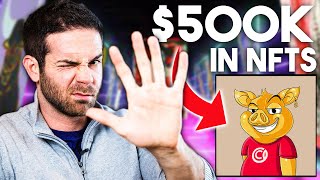
Ryan Daniel Moran sold NFTs by backing them with a real three-year mastermind and investor network called Capitalist Pigs. He charged 5 ETH (about $20,000 at launch), sold roughly 75 spots, and kept the focus on serving members rather than a quick exit. The key insight: access to people and experiences can become an asset.
Chapters
So it's 2023 and you looked at the title of this video and you're like, what, making half a million dollars selling NFTs? It's a bear market. Besides, NFTs are scams anyway. So how could you get away with not scamming people? Well, hang on, stick with me. I want to tell you a story. Back in 2020, when the whole world was shut down, I first started hearing about non fungible tokens NFTs. And it started with NBA top shots and people trading digital stuff, right? And I thought it was pretty cool to see all of these people who are just flipping stuff. It was a cool distraction, but really I didn't think anything of it. And the more that the market developed, I honestly thought that it was looking scammier and scammier. But then Gary Vaynerchuk started to get really loud about NFTs.
It's the biggest technology that's ever happened in the history of life outside of things like fucking fire. And like the printing press is the one that I keep going back to. Television phone, fine, but this is like printing press 10. Oh.
Now I've sat down one on one with Gary Vee a handful of times. I find him to be an incredibly genuine and incredibly intelligent person. He's also a visionary. He sees several years out. He sees what a lot of people cannot see. And I've learned based on both consuming Gary's content and also getting to know him a little bit to pay attention when he's really bullish on a trend, he's not always right, but when he's right, he's really right. But contrast that with me, who is so not a crypto guy. I've been bearish on bitcoin for years. That changed in 2020 for reasons outside this video. But I pretty much bought bitcoin at the top, sold it at the bottom, bought it again at the top. I mean, I am not the guy to go to when it comes to crypto advice. Then Gary launched vFriends, which by the way, I thought was the weirdest project I had ever seen. But I bought anyway for an obvious reason. It was to spend more time with somebody that I look up to. I was interested in the utility of what I was buying, not thinking that it was going to go up in price. I bought a dinner deer and a hangout hawk. A dinner deer got me one dinner with Gary every year for three years. And hangout hawk got me zoom calls with Gary multiple times throughout the year. And for three years plus two tickets to his annual event called VCon. What happened next was the big crazy boom of NFTs. I did not see this coming. I didn't expect this. I still don't quite understand it. But that was when I saw my NFTs triple in value. Now, that was cool, right? It's fun to see something that you own go up in value. But that was when my brain really started to understand what was happening in this space. In business, we're always trying to reduce our expenses and our liabilities and increase our assets and our cash flow. And this was the first time ever that I had seen something that would be a liability or an expense turn into an asset. Here's what I mean. I've spent hundreds of thousands of dollars asking Gary to speak at my events, having dinner with him, donating to charities. These are all expenses. But this time, I bought dinner with Gary and it went up in value to the point where I could resell it. Something that was normally an expense for me became an asset. If I had had that realization earlier that I wasn't just buying a product, I wasn't just buying access, I was also buying an asset that could go up in price, I probably would have bought more. And knowing that after the fact, it made me think, huh, wait, if I could position my own products as an asset, what would that do in the minds of customers? After all, when we're making buying decisions, we're weighing the risk of buying versus the risk of not buying. Do we want the thing that we're buying more than the money, or do we want the money more than the thing that we're thinking about buying? But if you took money out of the equation and you said, hey, if this thing doesn't work out, you can always resell it for something else, that de risks the purchase of just about everything. I've always made the most money and had the most fun by being early in a project. So I was early on Amazon.com, i was early in SEO. I was early on the ClickBank Marketplace years and years ago. And so when I saw NFTs, I thought, I want to do an experiment here, because this is the purest form of capitalism I've ever seen. Yeah, there are people who are doing money grabs in the short term. I know that I don't want anything to do with those projects. If something is just selling because the art school or because I think it's going to go up in price, well, that's just not something that attracts me. I'm interested in Something that is a real product. And Gary Vee was one of the few projects that had that. So I started looking at where we could start to experiment with this technology in our company, and I started looking at our industry to see where things were the most antiquated and on a date. Now, I've been a part of expensive Masterminds in the past, and I have held my own masterminds where I charge as much as $50,000 for someone to have a seat at the table. In most of those Masterminds, you have a group of people who are sort of sitting at the feet of a guru, and the guru is there doling out the information, and you build some relationships with the people in the room as well. But that's sort of the after effect of it. What I was interested in was replacing that model in a way that prioritized community, but also gave everyone the same incentive for the community to be awesome. I decided to experiment with a different type of Mastermind, where instead of paying a silly high rate to get at the feet of the founder, you bought an nft. And that way you had an asset that you could always resell if you weren't happy with the experience that you had. And that way, my incentive would be to create as awesome an experience as possible. I partnered with a developer on this project. He was adamant that we have really cool art. To be honest with you, I didn't care about the art at all. I didn't care if it was a picture of a pony with a gorilla growing out of its ass. All I cared about was creating community where people were incentivized to serve one another. So I launched a project called the Capitalist Pigs. And the Capitalist Pigs is both a mastermind and also an investor network where I'm bringing my deal flow to this group of individuals. And we're hosting regular events throughout the year where we get together Mastermind, rent an Airbnb, catering a bunch of food, bring in a chef, do cool activities like a traditional mastermind would do. When we decided to launch the Capital's Pigs, I set the price at 5 Ethereum, which at the time was $20,000. That was a fair price for a Mastermind. I've charged $50,000 a year for masterminds. This was only 20,000. And I decided to make the time in the mastermind three full years. So it was actually only, you know, $7,000 per year. But then the price of Ethereum went from over $4,000 to under $1,000. And that was right when we were about to launch the project. Now a strange thing happened for me because normally I would freak out about this and I'd want to change everything, but all this did was it gave me more conviction to sell what I had because the price of the this thing that I'm selling just went from $20,000 to $5,000. And now I'm like, oh my goodness, people would be an idiot not to buy this. I mean, if somebody only ever came to one event for three years, it would be well worth their investment at this price. It's literally the lowest price thing that I charge $5,000 for three years of access to a community of successful entrepreneurs. And I'm involved. I'm bringing my deal flow and opening up my network and we're working together and we're having events together and we're getting together every month or so on Zoom to network and collaborate. I mean, this is ridiculous how much of a no brainer this is. And that's when my conviction went really high and I started getting aggressive telling people that they needed to buy this thing. And at the time of this video, We've sold about 75 spots. That was about $400,000 in revenue. But the price of Ethereum has gone up in that time. And I kept all my money in Ethereum. So the overall amount of money that I made from selling this project is about $500,000. Now that amount of money is really nice and I'm keeping it all in Ethereum. I have no plans to cash that out. I'll keep that maybe forever and ever. I'm in. We'll see. But my focus has to go to creating the best product possible. And this is the real takeaway from this video. So many people get caught up in the hype of things or what the marketplace is doing, or what the paper value of things are, or how much money so and so made in this launch. And so little do we talk about how much intent goes into the creation of a great product. And that's the name of the game. There's so many projects out there that have just been big pump and dumps or cash grabs. I don't care about any of that. I want to create a great product for the 75 people who bought my thing and for the hopefully up to a thousand people that buy it over the next three years. I want to give them an amazing experience to where they say, I can't believe I got all of this for such a ridiculous price. If you treat it like a product and you treat it like a community rather than this hot thing that people are making money in. That's the mindset that's going to win. And that's why when you see the market right now in the crapper, when you see Ethereum down, you see NFTs down 80, 90%. The reason why most of those are not going to come back is because they never built a great product in the first place. They sold a piece of art and then said, what product are we going to put behind this? Your job as an entrepreneur is to create great products and great experiences for a core group of people and then all of the marketing and all of the sexy new stuff that comes out that's there to amplify the good work and service that you're doing for people. So I made half a million dollars selling NFTs without scamming anybody because my job now for the next three years is to serve those 75 people or those 150 people if people continue to buy at further releases. We've already had a couple of meetups. We have more meetups planned for the rest of this year. We're bringing deal flow to the group and my job is to see how great of a community I can create. And at the end of three years, we'll see what happens. Maybe we'll continue it, maybe we won't. I'll make that decision then. But for now, my goal is to turn the mastermind model on its head. To create real intentional relationships with entrepreneurs and have regular in person touch points and share in opportunities and deal flow in a way where everyone is incentivized for the rest of the group to win. That's a model that I'm excited about regardless of if it's based in NFTs or USD or Bitcoin or something that doesn't exist yet. That's the product I want to create and the marketing mechanism will take care of itself. I'm Ryan Daniel Moran with capitalism.com if you'd like to follow along on this project you can find more@capitalism.com pigs and if you're an entrepreneur, I'd love to serve you on your journey. Hit the subscribe button and I'll keep in touch with you then. Thanks for watching. See you next time.







