
From 6 Figures To Seven : How To Leverage Capital To Pass 100k Per Month
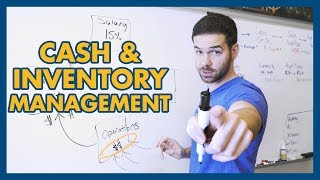
Ryan Daniel Moran breaks down how to scale a physical-products business past $100k monthly. Once you hit that threshold, reserve 15% profit, 15% owner salary, and 20% for taxes, then use debt to fund inventory so your profit reserves can go toward high-leverage multipliers like new products and advertising.
Chapters
Hey, what's up everybody? I'm Ryan Daniel Moran from capitalism.com in this video I'm going to be sharing with you some strategies and some tips that will help you scale from a six figure a month business to a seven figure a month business. Specifically when it comes to the way you manage your cash flow and the way that you reinvest into your business. Up until about $100,000 a month, you've got to be rolling everything back into the business with new products, with new pay per click campaigns, with new advertising sources. After about $100,000 a month we can get a little bit creative. And what I'm going to hopefully do in this video is help you plan a little bit strategically about how you can allocate the sales in your business so that you've got profit to put in your pocket. Because that's what we're after. Let's be real here. We are in this because we want to profit and also have enough leftover for us to reinvest into the business in a way that is sustainable, predictable and allow us to grow. So that's what we're going to go through in this video. This is part four of a video series about scaling a business that is selling physical products from your first million ish to eight figures and above. So this video is going to help you with the cash flow management side. Up until this point, we've been talking about building an audience by producing content. We've been talking about making offers, getting email addresses, taking sales on our own website or through our own offers. And we've been talking about advertising sources, how to boost content to build your audience, and also how to work with influencers so that you have new places to advertise your product. And today we're going to talk all about how to manage the cash flow side of this. So let's dive in. Okay, this is going to be meaty stuff. So I'm going to try and make this both exciting and useful for you at the same time with which is gonna be a little bit of a delicate dance. But there's two major takeaways that I want you to get out of this. The first is how to allocate profit, how to actually manage how much you can take off the table. How do you make that decision once you're running a million dollar business? A lot of people are just guessing at that point. You know, a lot of entrepreneurs get into this game because they wanna have a million dollar business. But once they're there, everything that they do from There is kind of a guess. So hopefully by the end of this video, you'll can pay yourself comfortably without starving the business of cash. And number two, we're going to go over how to manage your cash flow so that you're investing in the right things once you're past a million dollars. Many entrepreneurs put money, their savings, like the business profit, into places that they shouldn't be putting it, and it drains the bank account. And that makes it really hard come tax time, it makes it really hard to pay yourself, and it makes it really hard to be able to make good decisions. We're gonna solve that as long as I can make this exciting and useful for you and give you these two takeaways. First, let's talk about paying yourself. And I am going to completely rip off an author that I like. In fact.
Mr. Michael Michalowicz has a book on this called Profit first that is fantastic for every business owner. He makes the argument that a business is a cash sucking machine and that if you are not allocating profit before everything else, you're going to have a hard time. So let me tell you how we manage this. So we have four buckets. There's bucket, one bucket, two, three and four. All right, so we've got one bank account where we collect all of our sales. So we're going to call this the operations bucket. If we take sales, if we get a wholesale check come in, it is all coming into operations. Now this is just how we do it. A profit first advocates for a little bit of a different approach. But this is how I do it within my brands. Okay, so we take all of our money into this operations bucket. The first thing is that every month we put a certain percentage of that money into the profit account. Now, I'm going to suggest that you allocate 15% of whatever comes in here. I mean, it deposits. You take the money once a month of whatever came in and you're putting it into profit. So that means it's not after everything is paid, is that this is paid first. So what that does is it forces you to be prudent and it forces you to take money off the table. So that business is actually exciting. You know, I used to think it was almost like a badge of honor to not take money out of the company. And guess what? You have more energy to put into the company when you're taking money out of it. You are more likely to be like, let's go, let's go, let's go. I got this idea and this idea, when you're actually getting the money from it. Now taking a fixed amount allows you to make good predictable decisions. Whereas if you're just taking money when you feel comfortable with it, you know, you're still guessing. So this is part one, taking 15% reserved for profit. Now profit could also mean reinvestment, which we're going to talk about here in a second. Next thing is, we're going to take 15. Well, I think McCallowicz suggests 20%. I'm just going to say 15% again. So 15% going into.
Salary. Whose salary? Yours. Your salary. You as the business owner taking 15%. So what this means is that 30% of whatever is going into opera, of whatever sales are coming in are going to be reserved. They're going to be, you can't touch them. Actually you're going to touch 15% of it. And 15% is going to be reserved for profitability. That's so as soon as it hits, whatever got collected gets allocated. And then this third bucket is taxes.
The evil tax man. And we're going to take 20% to reserve for taxes. So in this way, actually half the money that comes in is being allocated somewhere. What that means is that 50%, half of our sales are staying in operations. That is what's left over to hire people, to manage inventory, to run advertising. Now if you didn't feel a little in your body, you might not be running the numbers. That's a shoestring budget in operations. I mean we're getting shoestring at that point. If we've only got 50% of our sales to work with, to scale a company. By the way, this is only true once you're over 100k a month. If you are not at a million dollars yet, we're not taking a salary and we're not taking profit. But once we're at a million dollar run rate, half is staying in operations, half of it.
That is going to scare you when you start to run the numbers. It's also going to excite you and incentivize you to grow the company to also do the things that drive profit. We waste so much time on our businesses. We waste so much time like let's run the numbers here for a second. If we're running a million dollar business, this means that we're going to be allocating $150,000 to us, which for most of us is more than enough to be able to retire on a beach. If that's what you run. If you want to run a nice simple little business, which I know A lot of you do. That's going to be enough. And for us to live comfortably while we grow the rest of the operations and everything else is going to be lean until the point where we can reinvest some of what is left over. Okay, so half is staying in for operations. That's inventory. That means we've got to have 2 to 1 profit margins, which we're going to build up through raising our profit margins through the things we've talked about in this series, through building audiences. Like, we've got to be very efficient with our operations if we're going to run this process. Now, if you want to start at lower numbers here, that's fine. If you want to take 10% and 10%, that's fine. Or if you think you're going to be running at break even and you want to not allocate for taxes, good luck with that one. But that's what you want to do. You can play with these numbers however you would like. The important thing is, is that you're taking a consistent amount every month to reserve for profit. I call it profit and reinvestment. And a certain amount for your salary. Once you're over that million dollar point, that's going to allow you to take money off the table and have some in reserve so that you can start to reinvest. All right, so this is part one. This is how we determine how much we're going to pay ourselves. This is how we're going to determine how much we have to reinvest into the business. Because if profit is also reinvestment, that's what we're going to reinvest. The salary is what we're taking off the table. Operations is what we're using to pay everyone or we're using to buy more inventory and run advertising. So that's how we figure that piece out. There's a second piece to this, and it's how we reinvest into the company. All right, I haven't decided yet how I'm going to draw this out visually, so bear with me here for a second. All right? I want you to remark in your brain, this allocation of profit.
What most people, what most entrepreneurs will do, and I think this is a mistake, is let's say they have $150,000 over here in their profit account, their reinvestment account. Then it comes time under operations. This is where you're about to get a brain gas in here. So we have operations. Remember, that's 50% of our sales. And you probably spell out your sphincter go on that number, because now we gotta manage things a little bit differently. Well, here's the braingasm. If we've got 150,000 of retained earnings, what most entrepreneurs do is they'll get. They'll start to run low on inventory, and it's time for a $75,000 order. So on their physical products brand, they're going to. Now, what they would do is like, well, we've got $150,000 retained earnings, so we're going to borrow out of this account. We're going to borrow out of what would be profit and pay for the $75,000 purchase order. That is not my recommendation. That's not the best use of capital. Your own profit is reserved for investment into what I call multipliers. I have a podcast all about this. It is called Only Invest in Multipliers. And my thesis in this topic is, is that your profit and reinvestment allocation is reserved for the things that can exponentially grow the company. They're not to be reserved for purchase orders. That comes out of your operations budget. But this is also where it makes sense to strategically use debt. Debt in the form of Amazon lending, Shopify lending, PayPal lending, cabbage, an investor, an SBA loan, traditional bank financing. These are all sources of debt that we could use here. I used to fear debt. Grew up really financially conservative. Now I see it as a very strategic tool specifically for this. Okay, so check this. And now I had a business partner who was way more conservative than me, and once I gave him this, Aha. He was like, oh, my goodness, I finally get it. Like, I. I see the light on this. All right, so here's. Here's what we're looking at here. $75,000 to order up the next round of inventory. Right? That's what we would normally just write a check for and then get it and sell through it. We'd play this whole inventory management dance. Here's another way to look at it. Let's say we took out a Bank loan for $75,000.
And let's just say it was a total of a 10% interest. Okay, so.
What'S 10% of $75,000? $7,500. So our actual cost of this inventory is now 7,500 bucks.
So when we're looking at our operations account, that 50%, we're like, wait, we got to use that 50% of operations to manage inventory and advertising? Well, when we run debt on this, even at a high interest rate of 10% instead of $75,000. It's only $7,500, which means that there's. Check my math on this. $67,500 that we essentially saved. Now, of course, we got to pay the loan back, but it means that we've got $67,500 left in the operations account for us to continue to run advertising, pay people. And guess what? The sales of this inventory order. So this is our cost on the inventory order.
The sales on this are what is going to pay for the loan. So we ordered. We only had to spend $7,500. The interest payment. That was all that took or got taken out of the operations account. And now the inventory is being paid out, is being paid for from the sales of that inventory. It's kind of like when you buy a house on a mortgage and you have a renter in there who's paying it down and you're taking some profit off the table, and you continue to build the asset over time, and it appreciates. It's kind of the same thing with the inventory. So what does that mean with this $67,500?
We're only going to invest that in multipliers. Hey, C. Money, would you toss me one of these, One of these, Any bottle over here? All right. Thank you. So this is one of my first products that I have ever had on Amazon. And this product, my first order was a hundred units. And I think it was maybe $6 cost of goods. So it was $600. Right. So our first inventory order, $600. I wish I had bought more, but this is when I was first starting in my career in physical products. And that product, that $600 product, $600 investment, ended up turning into a product that did 200 sales a day. 200 sales a day at a $30 price point is $6,000 a day or profit at, I don't know. I mean, 40% profit margins, 30% profit margins. We're looking at like 1500-2000 dollars in profit a day. Was that a good use of my 600 bucks? Yes, of course. So if I can turn $600 into $6,000 a day, why am I wasting $75,000 an inventory order when this money could be freed up for the next new product or for the next employee or the next thing that has the potential to grow the company exponentially. That. That is a proper use of our profit and reinvestment account. So we can strategically use debt to manage inventory or anything that's predictable to be able to have the operations running and Keep allocating money into the profit account, into our salary account, and free up all of this to go into multipliers, which is people, which is new product, which is new forms of advertising.
Now, if you don't do this process, you're going to be constantly stuck in this hamster wheel of like, I've got $100,000, but now I got to pay 80 for inventory. Now I got $20,000 to run an ad. Crap a lot of money. Now I want to launch a new product. What do I do here? Well, I got this money starting to come in again, and now I got to buy inventory again. You're always on this hamster wheel, but when we're strategically using some smart debt. Smart debt, meaning we can predict the outcome to some reasonable extent. Because I know that I can buy this inventory for 75 grand and sell it for 150 grand. If we could do that, then it makes sense to finance it because it drives down our expense by 90%, freeing up the investment into these other multipliers. So part one, allocate money into profit and reinvestment account like a habit every month and take the same amount for your own profit. That's what you can take off the table. Number two, we free up operational expenses using strategic debt and take that money that's freed up and use it for operations. And your profit goes into the multiplier category. That's how we're going to really scale this thing. That's how we're really going to grow from six figures a month to seven figures a month, if that's where you want to go, by the way, I don't know if I mentioned it yet. We've got an accompanying guide with this and a podcast series that's going to walk you through and examples and strategies that you can use to grow that seven figure brand and get it to the level that you want and do it in a way that's scalable and sellable. And that is over@capitalism.com million specifically for those of you who are physical product sellers or want to be because you want to build a brand, this is how we're going to scale that. Using our money strategically and allowing you to have enough left over so you can live a life, because that's what you want. That's why you got into this game in the first place. All right, I know this was meaty, but if you get this, it changes your business completely from top to bottom. It gives you more energy because you've got a reward for your hard work and you've got the ability to reinvest into things that are actually going to grow the business. Let me know what you thought of the video over in the comments and you can head to capitalism.com million make sure you are subscribed to the channel for more videos and video series like this, and if you enjoyed it, please share it with somebody that you know would benefit from it. Thanks for watching and I'll talk to you soon.







