
From Burnout To Boredom: Crafting Your 4 Hour Work Week
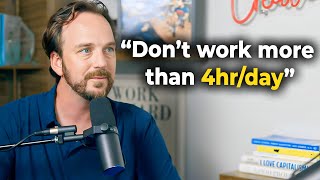
Eric Farewell went from 100-hour work weeks in internet marketing to building a multimillion-dollar paramotor training business, then systematically removed himself from daily operations. He used delegation, hiring for mission alignment, and therapy to get to a four-hour work week focused on family and new projects.
Chapters
My wife goes, you know, you hate what you do. I can tell. She's like, you're so stressed, you're in so much pain, you can't walk. What would you do if you could do what you love? And I said, well, what was the.
Process that you went through to start pulling yourself out of this so that you had the space to focus on.
Only what matters most interest is the baseline. Passion is crucial. I'll never forget, you know, the first time we hit a million dollars, and a month and a half later we hit million two. And a month and a half later we hit million three. A month and a half later we hit million four. And it's like, holy crap. You maintain that focus, focus because you have the passion and you've learned the discipline, it can build to something that really matters.
That's so obvious.
It is.
This is the brain gasm I'm having. This is like the, like I see it now.
I would say there's one extra layer that really is crucial.
But you don't work.
Not the way I used to anyway.
Well, that's the transition I want to hear about.
Yeah.
A few years ago, Eric Farewell was working hundred hour weeks and he did that for eight years. Today, Eric works a few hours a week and yet he still has a multimillion dollar business. In this episode, Eric shares how he pulled himself out of the weeds of his business while still maintaining profitability. How he was able to go from absolutely burned out to admittedly bored and pursuing new breakthrough ideas. Today, Instead of working 94 hours a day, Eric spends most of his time with his kids and looking for the next breakthrough while treating his company like he is a consultant rather than doing every little thing in his business. This is a transition I'm going through right now and that a lot of entrepreneurs are looking to make in their business. How do you simplify things so that you can show up in your zone of genius? Because we all know that when you do that, that is when the company will grow. We love to think that we will grow the business just by working more hours. But we've all experienced when we end up working on things that aren't important and that don't move the business forward. This is going to be the interview that helps you see how you can stay in a high level position in the business so that you're working on the things that actually move the company forward.
Hey, Eric. Good to see you, man.
Glad to be seen. Yeah.
Eric, the way I like to start.
These is asking how did you make your Money.
Painfully, with lots of, lots of sweating and stretching and almost dying a few times.
You want to say more about that one?
I think, I think what should be said first is this is probably the first podcast that I've heard of yours where you didn't prep the guest at all. So I have no idea what we're going to go into. I'm actually a little bit afraid I.
Did that intentionally with you. Yeah. So what do you mean almost dying a few times?
I don't recommend ADHD kids be test pilots, particularly in high school.
Okay. What does that have to do with.
You making your money?
So to give the further backstory, I grew up in an entrepreneurial family. I was born at home to a family of. Ended up being five kids. I was the second, and my great grandmother founded a restaurant on that same property. So I grew up at a restaurant, a country inn. And my grandfather flew in World War II, so of course he did the logical thing, which was build a Runway. So I was born 100 yards from a Runway. Started working when I was 7, but by the time I was 7, I started working because I knew I wanted an airplane. Um, I saw people fly. I went for my first flight at three years old and the experience was so profound, I could still tell you what that airplane smelled like. I remember doing barrels over the orange groves and I knew I wanted one. So as soon as there was something for me to do in the restaurant, which was of course, seven year old, making giant vats of coffee. Just very logical, I started working. And fast forward 10 years later, I'm test flying airplanes and breaking my back in five places and losing 80% of my memory and beginning a very different, more challenging chapter. A chapter where pain became my constant companion, but that I wouldn't let myself, I wouldn't give up on myself. It changed the trajectory of my entire life. Like, I was like Air Force Airlines, I'm going to do this thing. Was I was an entrepreneur. I'd started a business at 13 selling airplanes on this new thing called the Internet. And that was doing.
Selling airplanes on the Internet?
Yes. So at 13, about my first airplane kit and shockingly ADHD kid, I couldn't focus enough to actually build the thing. So after two weeks, I managed to put five sticks together, it was wood, and glue them and then like sand them down. And that was it. That was all I could do. So I put it up, put it up for sale on this new thing called the Internet. This is 1999. And it sold. And so the guy I bought it from was like, I put a hanger full of stuff. I'll give you 10%. I said, make it 20. And he did. So I sold his hangar full of stuff for him. And then more people started coming to me, and I started advertising. And at 15, I hired my first employee. And so we had an amp mechanic, and that was great. We're building airplanes, we're selling airplanes, and it's all on this brand new thing for me, you know?
And when you say airplanes, what do you mean?
So everything we had. The most expensive thing we had listed was a Gulf Stream at one point. Most of what we saw was ultralights, experimentals up to Cessnas, Pipers, beaches, that kind of thing. So kind of the cheapest would probably be a 5 to $7,000 single place ultralight. And the more expensive stuff would be 2, 3, 400 grand that we're taking a percentage of.
Is that kind of still your business now?
Not even close.
Okay. We're homies. I don't really know that much about your business.
We don't really talk about business. We talk more about our kids and we talk about ideas.
But the thing. The thing that really interests me about your business brain is that you don't work in any of your businesses now. You have basically automated yourself out of a lot of business. Of your businesses.
Yeah.
And you have this portfolio of businesses now.
I do. And there's one I'm still working in because I just acquired it a year ago. So I'm still actively working in that business eight weekends a year.
And that sounds like a lot of work.
I know a couple. Couple hours a week. That's the one that's taking the most time and attention.
That's where I eventually want to get to, is how you removed yourself from the operations of all these businesses. But I know that you cut your teeth first just selling random things on the Internet, but then you got into the Internet, like what we call the Internet marketing space as a. As a teenager, essentially. Right. And you're going to these events with the, you know, the OGs in the direct response space where I cut my teeth too. And you were the young kid learning about sales pages and direct response.
Yeah.
Would you. Would you share a little bit about that world? Because I'm sure it framed your entry into building real businesses.
Oh, massively. And it's actually part of what pushed me to building a brick and mortar business was I. This is kind of. Give me the punchline. I became so disillusioned with the Internet marketing space after 11 years in it that I just wanted something real. I wanted something tangible. I wanted to get hold of my hand.
I can completely relate. So I got me into E Commerce. Right.
And E Commerce. Even that like I have an E commerce business. Right. And it's great. I hate it sometimes because it's. I think we're at 3800 SKUs. You know that we have to warehouse everything. It's all in house. It's just a giant pain. So if you're going to do that, do follow the ryan Moran the 12 months to 1 million. I have my copy. You know, I'm telling you that the single SKU business is brilliant. That said, building that brick and mortar was only possible by using what I learned in Internet marketing. And I was 13 years old, my dad invited me to go to the big seminar with him. There was Big Seminar two, so that should.
Which one was that?
That was I believe in San Francisco.
But it was called Big Seminar.
Armin Morin ran that for a couple of decades.
Name.
Yeah. So Arman ran them. And when I was there, there was this guy. There was. There's several guys there that were just really intelligent and I've listened to them speak and I took pages of notes. And there was a guy, Alex Mondosian, who I basically attached myself at his hip. And there's another guy who I just thought was the coolest and that was this hillbilly from Georgia. This is before he reinvented himself as a surfer selling ebooks. And so I took his model. This is Frank Kern. I took his model. And I learned so much from Frank Kern. John Reese, Alex Mondoz. I lived at Alex's house when I was 14, I think it was for a few months. And I learned about consulting. I learned about how to value time. I mean Alex would for me, like he would do this at clients and he did it to me too. Like I'd schedule time with him. If I walked from my room in his garage up to his office and I was three minutes late, he's like, no, we have to reschedule. If I'd been a client, he would have charged me eighteen hundred dollars an hour for that hour. Right. But I took all those different pieces on throughout the years. And it taught me that you can make money doing anything if you're passionate about it. And it's only going to last if it has a deep enough purpose.
Those are two big lessons.
Big.
And I just want to double click on that because oftentimes I fall into this trap of thinking that there's a way that there's a model, that there's the right business and the wrong business. But you really can make millions of dollars doing anything if you're genuinely interested in it, if there's actually something that is emerging. And what was the other point? Oh, if.
If there's purpose, if there's purpose, it's bringing good into the world. And I think the interest is the baseline. Interest is the baseline. Passion is crucial. If you're not passionate about what you're doing, it's not going to take long before you just, you kind of overextend yourself and you're just done that burnout that hits. We were talking about it earlier about a friend's business who didn't send any marketing emails month.
Right.
Because he's burnt out, he's tired.
You're talking about me.
I'm just trying to be.
I didn't send any marketing emails for the last couple weeks and my team is frustrated with me, but just, I just don't have it in me to like push things right now.
Right. You're not in a place where you have to push. And if it was something that you were deeply passionate about, you're changing the world right now. This is everything in your life is driving which you are that passionate about. Like Capcom, right? I've would I hear you talk about your events. The real Ryan comes out, right. When I hear you talk about running the day to day in a business that you've been doing for a long time, that's. That's not turning you on, it's not getting you fired up. So to me, passions first, purpose second. And that purpose piece is really where everyone in your business aligned. That's how I've gotten out of my businesses. It's how I've gotten out of the day to day. It's how I've been able to find the right team members who. People who come to work for me for pennies on what they were making before because they see the purpose, they understand the vision and they want to be a part of it because it is changing the world.
Did you have a business that you had to pivot in that way that was making money and then you said, all right, we're going to make this purposeful? Or did you just walk away from cash flow businesses? Because I know you walked away from the Internet marketing space to build real businesses.
So was it a transition or was.
It like a hard cut off and then you started new things?
It was basically a hard cut off. I remember the day I closed my ClickBank account. And I mean, again, I'm old. All right, well, I'm not whole, but my marketing experiences.
I was with the clickbank people last week.
They're still around. Yeah, I think I had 40 or 50 ebooks that were actively selling. And the. The story, the long version of the story is my wife and I got married very quickly. We've been married now for 14 years. And we fought for it, to have a great marriage, and we have an incredible marriage today. But she knew me. She knew my heart better than I knew my own before I learned to trust myself. And we'd been married for about two weeks. We went to a conference, and I spoke. I closed, like, 60%, like, the best I'd ever closed a room. Like, I killed it.
You were pitching from stage.
Pitching from stage. And I had a 500 offer, $5,000 offer, $25,000 offer. And I mean, I made six figures in two hours. It was fantastic. And a few nights later, we're in Wimberley, Texas, down the street here, and we're in a hot tub. We're looking at the stars. And my wife goes, you know, you hate what you do. I can tell. She's like, you're so stressed. You're in so much pain, you can't walk. What do you. What would you do if you could do what you love? And I said, well, fly and photography, those are the two things that, like, make me most excited. I had a blog that had done really well on Zanga. Again, I'm dating myself, but, wow, about 220,000 people a day read my blog. So I had a following. I had this. This penchant for photography. And I love to fly. So my wife said, well, just do those things. I don't care about the money. So that we literally went in, closed the clickbank, closed the businesses. I upheld my contracts for everybody. I had outstanding stuff for. And it was just done. I stopped copywriting. I stopped all the different pieces that I had learned. Like, Jay Abraham was one of the guys who taught me copy in Las Vegas in the Palace Station Casino. You know, these trashy places that you go to learn things. But they all led me to the path of creating something real, visceral, that had real world value. I think partly because I realized that even if I tried to sell all those businesses and I got like, five times ebitda, no one's going to give that for an ebook business. Right? It was such a. And to be frank, I was so burned out, I didn't have the Energy to try to sell it. So I wanted to build something that had tangible, real world value that I can go. Like right now, you go to my hangar and you, you know, the hangar's worth a million or $2 million. You know, the stuff in the hangers with that and X and Y. And it's just, there's something kind of fun about building a legacy of space, you know, space that you own, which has been different.
And so you did you start, you start a completely new business.
So I started a YouTube channel, as everyone, everyone should. And the idea initially was, look, I love flying. I love photography, I love adventure. You know, at the time, Anthony Bourdain, God rest his soul, that guy was one of my inspirations. My family owns this five star restaurant. I love to cook. I love watching his show. I loved how he traveled around the world and met people where they were and then would cook with them. I said, I'm gonna make a TV show. And I was big into video games. This is very ancillary. When I broke my back the first time, I couldn't fly anymore for a very long time. And video games basically saved my life because it was the one place I could go and be engaged. As engaged as you are when you're flying, right? And so I was in the video game space. So I had this YouTube channel. The first video is me in front of an airplane talking about flying and video games. Very weird genre mix. I just, I knew, I knew the market, I was the market. So I wanted to go down this path. Channel blew up. We grew to 26,000 subscribers in a few months. I launched a thing called the Call of Community for, for Call of Duty, which was a charity stream to combat a really horrible stream that was being done, a suicides and stuff. And it went nuts. We had the largest viewership to date. To that day, we had the biggest viewership. We beat NASA. I can't remember how many it was. It was, you know, over a hundred thousand live viewers, which is nothing today, right? But it was huge. So I started this YouTube channel. I didn't know what I wanted it to be. It was me. It was flying, it was video games. And then I saw paramotors at a fly in or air show. And I'd seen them before and I was always thought they looked kind of weird, you know, kind of goofy, like who would they kind of, the people fly them kind of smelled like pee. Kind of awkward. You know, they're all wearing flight suits that are odd colors. And this time I saw them and they were lighter and they look fun. And people were flying around doing figure eights and some, like, wingovers. That. That looks kind of cool. I wonder if I can get one for free. So I reached out to all the top companies that were around at the time, and I got a paramotor for free, and then I got training for free. And both were worth what I paid for them, by the way. Which leads me to why I started the business that we have.
I see. Okay.
That. That became an obsession for me, flying paramotors. We had our first child. Airplanes are expensive. We had. I've been flying an airplane every day, so.
But. But at this point, Eric, there's still not a business.
Not yet.
Right.
But.
But. But there's. There's a very interesting narrative that I'm starting to notice here. Right. And obviously we all interpret things through our own lens and filter, but you went out and you built an audience of people like you. Right. Without really an intent to monetize it or turn it into something. You're just kind of following your natural inclination here. And then you saw a hole in the marketplace.
I did. And what's really cool about this is building that audience. My entire purpose was to create this television show to be the Anthony Bourdain of adventure, to go out and do cool things with people, to inspire them to get off the video games and go do something different. And then it ended up inspiring me to fly paramotors. I discovered that the paramotor world was not like the airplane world. There was not professionalism. There was not safety first. There was not real businesses. There was, you know, one guy in a tea hanger that's falling down trying to teach people. So I took my flight experience and my education experience, and I kind of combined them all. And Fast forward, we're 24 employees in two locations, really? Three. Two in Florida, one in Tennessee. And, you know, watching that business scale as a brick and mortar has been fascinating.
How did your direct marketing or Internet marketing experience inform how you run that business? Or does it.
It informed the marketing side for sure. You know, everything that I do or I did at the time was branded. Everything we did, no one else had, really hit the market with a good logo and a good brand name. And Aviator Paramotor is pretty solid.
And it just kind of took over the market. We became the 800 pound gorilla. You know, we've. We teach at this point, we probably teach five times more than our nearest competitor, if not eight times more. And we're the only one capable of fulfilling the larger DoD contracts and that kind of thing.
Could you fill in the gap of what the business is like? The business model.
So the business model is twofold. We have an E commerce business where we sell parts, paramotors, paragliders. We also have a training arm which is our primary business. We teach people how to fly, we teach them to run to the sky. Just like their dream. That business has now transformed into not just the civilian side, but also working to teach members of the US Government and SOCOM countries.
Yeah. So you start, this is, this is why, this is interesting to me. You start a YouTube channel just following your own interest. You find a hole in the marketplace about how you can make a product better. You start doing that. The business, now it's a, now it's a business, Correct? Right. And then it opens up the opportunity. Now you have an audience of customers that have a higher margin demand of learning how to fly. And now we have a real business that's existed for how long?
This we are 11th year, 12th year.
And their revenue is, it depends.
This year has been hard for us, honestly. And we can always bounce back and forth. Our best years, close to six. But each of these years, as you start to see the economy change, we don't sell toilet paper or bullets. We still sell a luxury device, Right?
Yeah.
But it's definitely, it's been a very fun journey and watching that growth, I'll never forget, you know, the first time we hit a million dollars and I had a business partner at the time, he came, we popped champagne and went on a boat. And then a month and a half later we hit million two. And a month and a half later we hit million three. A month and a half later we hit million four. And it's like, holy crap, right? Like that, that flywheel effect. When you stay focused on something which adhd, kid, it's hard to do. But when you maintain that focus because you have the passion and you've learned the discipline, it can build to something that really matters. And that's been part of my experience. Now as I start to look at these little businesses, I go, that could be a $10 million business in six months if you just put your head down.
Right.
Stay focused, don't necessarily do what you want to do.
Well, you know, I, I, we had this mastermind event in person last week and there was somebody saying that if you've got a seven figure business, you are 12 months and one acquisition away from a multi eight figure business. Because from his perspective, if you really put your head down on what is working. And then you look at things like acquisitions and you start partnering with other brands or businesses and bring them in. You have a multi eight figure business. It's almost like you can skip a level when you start thinking like that. And I know that you have acquired a few businesses in this space. Could you talk a little bit about the portfolio and how your approach goes to bringing in other businesses?
Yeah, so we, what we did initially was build the brand so people knew what the brand was. We built the understanding of what we were about very, very purposefully. Everything we did was we are here to inspire people to make their lives better, to overcome their fears through flight. Because I think on the other side of fear is true joy. And so we, we help people with this and we pushed it and we, our testimonials, we had hundreds and hundred. Like every person I, if we, if you'd come to me eight, nine years ago and learn to fly, I would be hounding you until I got a testimonial on every platform. Because it was, it mattered. Right. We were the young guys, we were the new, the new people on the block. And over time, 2016, we trained 66 people and we had a wait list of over 500. You can fall asleep at night knowing you've got millions and millions and millions and millions of dollars in a wait list. Yeah, right. And so this year we'll train around 300 people, which was just because we decided to scale. It was either sell because I was burnt out again, or scale. And we decided to scale and scaling. The way that we did this time was much more purposeful than any other business I've been in. And then we finally reached a point where we said, look, we genuinely don't have enough space or enough people. We have to acquire. So we've been working on acquiring other businesses in our industry. Whether it's other schools or manufacturers or, you know, everything's on the table. And in this space it's such a small niche. I mean, 11 years ago there was about 3,000 pilots that flew these in the U.S. since then we've trained over 2,300 people. Right. But it's still small.
When, when you go and acquire these businesses, how do you structure something like that?
Most of the time it's single operators and they have minimal assets. So rather than going in for an ebitda, we offer a high paying job and buy other assets because they still want to do what they're doing. But there's parts of the job, like if you're doing Everything that happens in a sales training, maintenance business that we do in our business, we need 20 plus employees to do it. If you're one guy doing all of it, wearing all the hats, it's exhausting. So knowing you can keep doing what you're passionate about, make the same money or more, and not have to do all the stuff you don't like is a win, win, win.
Yeah. So you're basically bringing in your systems.
Correct.
You're bringing in your team and you're able to free them up to do what they want to do and then you're partnering the assets together. Correct. Now you've been able to build up a multi seven figure business and acquire the kind of this portfolio in this space while also removing yourself from a lot of the operations. Correct. This is the thing that I'm fascinated by about you because when I met you, you were bored still.
I'm a little bored.
And you're like, I don't work anymore and I have this successful business. And you'd be like, oh, I'm in France doing this acquisition right now. And I'm like, that's cool. But you don't work, you don't do anything.
Not the way I used to anyway.
Well, that's the transition I want to hear about. So at some point you had to make this transition of pull yourself out of the day to day in your business.
Hey, you watch me on YouTube and you listen to me on your favorite podcast player and I've been thinking, you and I need to make this official. We've gone on a few dates. I've been whispering in your ear for a long time. Let's make this official.
Let's put a ring on it.
Would you hit the subscribe button on wherever you are listening to my sultry voice or looking at my bearded face, I pride myself on bringing you the real in the trenches entrepreneurs. These are people who often don't have followings. There's people who don't have a book to sell or a course to offer. These are the people who are doing real business and getting their fingernails dirty so that you can learn from their mistakes and their big wins. It helps me go get more people to help you when you hit the subscribe button because it gives our community more leverage to be able to get the people that don't usually do podcasts and YouTube interviews. So if you've been listening to me.
For any length of time, would you make this official and hit the subscribe button?
It'll take you two and a half seconds and it will help me help you on your journey to building a successful business.
So we talked about starting with with passion, following through with purpose. And then third, and this is what I think is most important is what does success look like if you're going to start a business, you're going to have all these different ideas for business plans, et cetera, et cetera. But if you're not mapping what success is going to look like in 5 years, 10 years, 20 years, what does it look like in your real life then? Why do any of it? You can make money and that's boring. Go work at Walmart, right? If you really want to have a boring life. That's I mind you, I don't think that once you reach a certain level of affluence, the money doesn't matter anymore. I know that sounds really hoity toity, but I found that to be true within my very, very wealthy friends. It's important to have the money, to be able to have the freedom. But what real victory was for me was spending time with my kids, teaching them how to be passionate and adventurous, loving my wife, and then encouraging others to step into their discomfort so that they can find who they're meant to be, like be present with who they're meant to be in the, in the future. And so that became my mission. I wrote a book. But to get to the point where I could even write a book was getting the right systems in place in the business, hiring the right people, firing a lot faster than I used to, and reminding them always, hey, you're here because you have a, you have a passion for it. Our purpose is helping people overcome their fears through flight. And here's how we're changing the world with this way, right? And what's been really neat is over time, over 90% of our employees are former students. They've learned to fly with us. They fell in love with what we do. And then I realized that if my victory is time with my wife and time with my kids and actually being present there and not being needing to be pulled away constantly, I mean, guys, I'll be honest. We had our first vacation last year, first vacation ever. Every trip we'd ever taken had some business element up to it, right? We did a month in Alaska and my wife's like, do you realize this is our first vacation ever? I was like, well, there's still some business elements. She's like, no, there's not. This is the first time you've ever taken a month away from work. And that was just Last August. So a year and a half ago. And hiring those people was paramount. Building systems was paramount. But the most important thing that's hardest for most entrepreneurs is being willing to let go and know that, like, our close rate. I just got the latest numbers. We were 83% closed for every student buying equipment. Right. So that means that their value goes from, you know, a $4,000 sale up to about a $19,000 sale.
Okay.
Out the door. So 83% people doing that. Then it. When I stopped running sales and I stopped being the day to day, it went to 40.
I can relate to this.
Right.
I'm. I'm going through some bumpy transitions with this too.
And the thing is that most entrepreneurs would see that 40% number and go, oh, my God, what am I gonna do?
Yup.
But I moved to Austin, Texas instead because I had a bunch of friends here. My wife loved it. There's a great school for the kids where our daughters go together. And I thought I was like, you know what? It doesn't matter if I try to step in right now and save the business quote, unquote. Save the business A. It makes me feel good. But what does it do for my team? It tells them I don't trust them. I just got the numbers last week. We're at 73% or 71%. Right. That's not what it was with me doing it. But guess how many sales calls I've been on in the last 18 months?
0.
0.
So this is reminding me of something that always stuck with me that Dan Sullivan says, which is never, ever, ever, ever, ever, ever jump in and save your team. Just never, never jump in and do it for them. And I have violated this rule so many times, and every time I regret it. And now I'm kind of in this position, like you said about this mysterious friend that was actually me, where I just. I'm not gonna. I just can't jump in and save. Right. I just have. I have too many other things going on. I only have so much attention. I only have so much energy. I can't jump in and save people. And sometimes that means that people gotta go.
And the reality there too, is if you jump in and save. So, like, I've withdrawn to such an extent that I think I've been to a dozen of our weekly level tens in my primary company, the one that makes the millions of millions of dollars I've worked for over a decade on. I think I've been to a dozen meetings this year. And last week I was coming Home from a friend. I had lunch and I was going to be five minutes late for the meeting, so I'm not going to show up. I've learned that from Alex Mondozi, and I already screwed over my team, so I'm not going to be there. And I got a call from my CEO. He said, look, it was the best meeting we've ever had. We finally became a real team. We all solved each other's problems, we all stepped up. We didn't lean on you for your experience, you know, and there's a lot of areas. I mean, we could talk about tactical things we can do about getting, like, taking things away from yourself you don't want to do. Having your team learn how to delegate, you learn how to delegate. And that's all stuff I think as I reinvent myself again, I think that might be what I do next, is I might start consulting for entrepreneurs who have success. That success doesn't look like working 80 hours a week anymore because I've done it and I know how. And you have. There's a lot of different, like, strategic pieces of, like, I don't reply to any of my emails anymore. Like, none. 250, 300 emails a day come to my inbox and they all get replied to. And I haven't had to open that inbox in two years. That sounds awesome and that sound great.
Yes.
Do you know why? Why it's that way?
Tell me, please.
So I made a list of all the things I was doing I hated doing. The number one thing on top of the list was email. I mean, I can talk to people really fast. As you can tell from that. I feel bad for anyone listening to this on 2x.
But I realized that email was a thing that when I got to my computer in the morning and I opened my laptop and I was like, I hate this.
I can relate.
I'm drained before I even had breakfast, right? And so I had a va and I trained her. I said, okay, look, there's like 280,000 emails in my inbox from the last decade. Go through every email and as you see that there's new email to be reply to use the search bar. It's probably been asked before in a decade, right? This is not the first time. The rarest thing in the world is a unique idea or a unique question, right? It just doesn't happen. So I just asked, please write all my emails and put them in drafts. And every day I'd go through and I'd read the drafts and I'd make A quick loom. Hey, here's what you can change here. We can change. And then over time, eventually, I didn't have to go to drafts anymore. I just said, you got it. If there's anything needs my attention, text me. And now email's off your plate. It's not rocket science. That person cost me $11,000 a year, which is a 40% increase over what she was making in a previous job of six years. She's happy. She's over the moon. Right? And my stuff's done. So there's lots of strategic pieces, but there's also mindset pieces we talked about earlier, like being willing to. To have the multimillion dollar hit of. Okay, you're not closing 80%. You're closing 40 for a while. It hurts. But also.
I got to hang out with my kids. We got to go camping together. We got to do things that would otherwise not happen. Right.
Well, also, there's something to be said about creating the space for the next breakthrough. Yes, of you can. You can optimize that one number. And there is a time to optimize for that number. There is a time to optimize. Hey, guys, if we go from 40 to 80, we'll double, right? There is a time to optimize for that. And there is a time to say, now we're going to create space. Because now there's a different breakthrough that has to come out of that. And it's been my experience that you cycle through those different periods. It sounds like you reach just a point in your life in which you were wanting to optimize for space. Is that a cycle you go through or is that more of an end point for you?
It's certainly a cyclical thing. I don't think that any of us reach an end point. We could go deep on that. I think that the cycle is really important too, because it allows. If you honor it in yourself, others will see it like my kids see it. They see how daddy has shifted, how he works. There were weeks of my life where I wouldn't see them. I went to work at 4:35 in the morning, got home at 11:00 clock at night. They were asleep. Now they see my presence. Every morning we have a game. Whoever gets to my bedroom first, come walks in. I asked for a pair of socks. We throw socks back and forth across the room for five, ten minutes. I know it sounds ridiculous, right?
But I'm sure they love it.
Oh, they love it. My passion too is like, I want to be present as a man, right? I want to be present with them for them, for my wife. And so that time when you're playing catch with somebody, you can't be on your phone. There's absolutely nothing else that matters in my world except for playing catch with my kids in my socks. Right. It sounds ridiculous, but because of my physical condition, I broken my back twice as we started kind of telling the story there. I lay on tennis balls in the morning so I can stretch my back out, get the fascia release so I can actually, you know, move about my life. So I just take that time to throw, throw freaking socks back and forth. And that's success for me right now. Right. I have ideas of, like I mentioned before, maybe consulting for entrepreneurs who want to get out of their business, maybe write another book. I've got like 18 more ideas there. I've been doing a lot of work with. Front Row Dads is a group you and I are both part of, which is my favorite mastermind group I've ever been a part of. But at this point, it's just kind of. I'm enjoying this season. What did I call it? I call it comfortable Uncertainty. I'm comfortable enough and I'm uncertain what's.
Coming next that lands.
But I love it and like, I have so many great ideas that I just need to find the right people to hire because I'm never going back to 100 hours a week.
So I need, I need to back up a little bit something in your story. Are you, are you comfortable going super personal here?
It's fine with me.
Okay, so you've lost a few friends in your life, Right. Because you've been in high risk activities, Right. So that involves jumping out of airplanes. It means flying airplanes means all kinds.
Of high risk motorcycle racing. I was 18 when I tried to get life insurance for the first time. And they told me no. They're like, wait, you scuba dive, you skydive, you race motorcycles, you race cars?
No.
It's a hard stop.
And so you've, you, I mean, you shared with me that you've, you've been there when an accident happens, jumping out of airplane and you lose a friend. And this has not happened to you once or twice, but quite a few times.
Quite a few.
Yeah.
Yeah.
And I have a sense that this sort of informed how you frame what's important to you.
Yeah.
And I was hoping you could share a bit about that.
I've lost a lot of friends in the air show business. We lose about 1% of the pilots every year on a, you know, Good year it might be one or two. On a bad year it might be five, six, seven. And there's only a few hundred air show pilots in the US that are flying. So I've learned to, when you say goodbye, you really say goodbye to someone. You've learned. You learn to really lean in and really give a real hug.
And I better on a loss. A lot of times in my life, I don't know why I, you know, I, I'm the guy who's been in the middle of a 20 car, three semi pile up and I'm ended up being the guy trying to help people, right? And the next day on the way home, after our cars totaled, our friends come and pick us up and we watch another car crash and I pull another body out of a car and like, it's just those things have happened in my life. But the most challenging was my brother. He passed away when he was 22. He was driving home drunk. He had a four month old baby.
And then three years ago, my sister was in a skydiving accident. She's a quadriplegic on a ventilator in Salt Lake. So, like this recurring theme of loss, I mean, pain in life is I had the physical pain, I had the emotional pain. And it's very easy for most people, including myself, for a lot of years to just numb it with whatever felt good, whether it's alcohol, whether it's running or it's flying. Like flying for me was an escape from all the pain.
Doing the inner work to actually address the traumas is the best journey of my life. It's the hardest, but it's allowed me to really value the highs that I have now.
How does that change how you view what's important now?
I think that when you experience as much hardship as I've been honored to experience.
I mean, I could tell you stories that would just make you. We go well past your normal podcast time. Millions of dollars stolen. All kinds of different things that have happened to me, they've really happened for me to inform how I can start to create gratitude no matter what is going on. And I'm at a place in my life now where I feel gratitude all the time. It's a muscle that has been so trained that when I pull into the parking garage and there's no space for me and I go, oh, I'm grateful, there's more places to look. It sounds silly, right? But it's down to that level of nuance. I want to be living in gratitude and be present with whatever's happening to me without feeling down.
Is it fair to say that's because you know that everything can be lost?
I think everything has been lost over and over again. And to be able to. When you cling too hard to things or people, you can never really experience them.
When do you think that shift started for you?
Because this is the story arc I'm putting together.
Yeah.
And I mean, half the reason I do these podcasts is for the audience and half is for me. So I see an arc happening in you that somehow I relate to myself. And there's an arc happening that I see where you started in the same world I did, which is you sell things on the Internet. Right. You learn that you can make anything profitable. You learn that you can make anything work. And then you go through some life shifting or perspective shifting experiences that make you reframe how you want to do this. You can make anything work. And when you are young and have nothing to lose, that means gaining the world. Right? Right. Selling the room, closing 83%. Right. Accumulating more. And then you experience some things that shift your perspective. But you know that you can create anything you want. You know, you can create business intentionally, but now you have a different frame of reference to build that business.
Absolutely. And I think, honestly, it sounds benign, but the reality is it all began to shift with therapy, just traditional talk therapy going in. My wife and I had a lot of challenges. We fought to keep our marriage together. We both loved each other, both cared about each other a lot, and we had a lot of childhood abuse and issues that we hadn't addressed. And So I think 2019, I spent more time at the therapist's office than I did my office. It was just trying to heal ourselves so that we could be good for each other. And then that. That opened the can of worms into meditation, into plant medicines, into all these.
Different areas of healing.
Healing of really looking into your traumas and finding ways to be grateful for the experience and finding ways that, like, well, that should never happen to anyone. I was doing some somatic breath work at Front Row Dad's Live two weeks ago. And, you know, some of the things that happened to me as a child, I was visiting with that inner child, and.
He'S just crying, why me? Why me? And then an older version of him steps into my mind and goes, it's so you were ready for your wife. It was so you were ready to be able to hold space for her when she's re experiencing her traumas. And, like, that's a whole different Reframe for me, right? Like, this is way off basis for business. And, and, but you know me, I'm always happy to have deep conversations. So having these opportunities and doing the work on me personally.
Has been everything that's become the number one priority in my life is I have to show up for me so that I can build what I need to be for my wife, for my children, for my businesses. And the businesses are just fun. Like, business has always been the thing that's like, if I wanted to go out and have a great time, I mean, I'm probably not going to go play volleyball or whatever. We get linked up on. What was that game?
Can jam Worst.
Can jam Participate.
You were the worst.
Ryan hated me. Ryan didn't speak to me for days.
This is, this comes up in therapy for me.
It's like we were so close to winning and you just.
I screwed it all up, guys. So if my options are, can jam.
Can I get a beer?
I need to forget these feelings.
Can jam or any other game, or talk about business. Build a business. Give me a piece of paper. I mean, my daughter. Oh my gosh, this is so fun. So my daughter's 8 and she came to me a few weeks ago. She closes the door, she says, daddy, that's very important.
Okay?
Just picture her doing this.
Oh, yeah, I want to start a business. Okay. Sort of dog washing business. Oh, okay. We can, we can do that. And you know, the day we live in today is so much simpler. If I were doing this 10 years ago, it would have probably been a couple of hours. But 21 minutes later, we had a business plan, a pricing structure, a logo, a brand name, a membership program. Everything done, like, generated. Everything's in place. And she's got flyers up all over our neighborhood with my cell phone number on them asking for people to wash their dogs. Right? And it's the best part of this is we're at school, at school drop off, and there's a family there with these two dogs and they're all painted up like a zebra. I'm not even kidding. Like what, the orange, orange zebra dog. Okay. And they get one of her business cards and they call us and they thought it was dog watching. So we watched these dogs for a.
Week, which was, hey, you got some. Sometimes you got to cater to the customer.
Exactly, exactly. And the thing is, my daughter cleared $200. That's after paying her rent, after paying her brother a percentage because we built the whole business plan in 20 minutes. That's fun for me. But the Rest of the work, the interpersonal, really diving deep on who we are. I mean, I think that the biggest challenge that at least I've had in my life is learning to love myself, you know, so that I can actually be present with who I am. And here we are.
Could you comment more about that? And specifically where I want you to go is that a lot of entrepreneurs can relate to the idea of like you getting to the top of the mountain. And then things feel mostly the same. You don't really feel that much different. You have more resources now, you have more opportunities now. But I have experienced this. You win the game and you fill the game with more things and there's like not room for you to come out. Right, right. And it sounds like you have intentionally unwound that over the last few years.
And now you're in a place of.
Space, which sometimes feels like boredom, but it also is allowing you to move into the experience of life that you want.
It's, it's again, we're talking about different chapters, right? I certainly, you know, I bought the airplane I always wanted. I bought a $700,000 motorhome. You know, all the things that you're supposed to do when you make money. And they didn't make me any happier. So as time went on, I've learned that the true happiness comes from within me. And even if I'm quote unquote bored because I'm actively working on a new project that fulfills that ego side of me, I'm purposefully sitting outside my ego going, I am grateful and this is enough. And there will be another time when I'm back to the ego and I'm working my butt off again because there will be things that I get passionate about. But right now I don't have that deep passion. I have a business that I'm actually, I am really excited about. It's the one I bought last year. It's an aircraft racing series slash social media marketing company. So we have this year so far we've had 55 million viewers of this of our races which are short takeoff and landing. It's all 45 to 65 year old white men who make a lot of money. So we have like a perfect demographic to market to. If anybody out there wants to sell ad, ad space, I've got 55 million viewers. Come, come talk to me. That one I'm still passionate about, but I'm not nearly as passionate as I am about working on me. You know, whether it's all the stuff we talked about before. That I've told you. If I told you about Rolfing yet.
Yes, you have. Okay.
Roll things like my nude, my new jam. Apparently, I just really like pain and suffering and working on unresolved trauma through the body. But it's been. It's just. This is that chapter for me. This is the chapter to really be present with who I am now. And eventually there'll be more things that get me excited.
Could you tell me more about the unraveling of yourself from the business itself so that you have the space for this? Because part of me is going, that's great, Eric. I have things to do. There are people who depend on me. There are things that need to be sold. There are businesses that need to be grown. So there was a definitive time in which you started making that shift and you got email off your plate. And then you started to practice this muscle of pulling yourself away from all these businesses to the point where now it's clear to me in our interactions that you only show up when you're genuinely excited about something.
This is fascinating to me.
So I'm going to give you the opportunity to practice consulting for entrepreneurs who want to step away from their business. What was the process that you went through to start pulling yourself out of this so that you had the space to focus on only what matters most?
How deep do you want to go? Do we want to actually do this for real? And spend an hour laying out what you're doing and we can actually do a session.
We can play just the tip with it.
Okay.
But he does not like long podcasts.
I told him my average podcast is four hours long, and he had a freak out.
So what?
Just walk me through how you would.
Take somebody through that process.
So the first step is always to fully understand what each person in the company is doing.
So what they're doing or what they're supposed to do.
What they're doing. What. So I always ask the question this way. What is your responsibility? What were you hired to do? What are you doing now? Where are your areas of frustration? What do you feel like you wish you could do, but you never get to? What do you wish you never had to do again?
I have immediate answers for all of this.
Right. They're very obvious questions. By the way, this is a great. Even if you're not ready to get out of your business, you ask those questions of your spouse. You ask those questions of your employees. You ask those questions of a partner if you're not married. The results of those questions is fascinating.
I'm I am going. This is. This is. Oh, public declaration.
Let's go.
I'm. I'm gonna do this at our next quarterly.
I'll give you the list of questions.
I'm. I'm gonna sit down with my team and ask those questions.
Or bring me in. I'll do it.
Okay.
Okay. I love doing that. Like, I genuinely. That to me right now, that is the thing I'm probably enjoying the most. I've done this for three different companies in the last month. Sitting down, asking this question, not of just the CEO, of every employee, of, like, if you have. If you're a mailroom person, I don't need to have that information in my head, but I want to have your director's information. Right. And so I said it's a pretty painstaking process. If you have a group of, let's say, 60, and you may have eight.
Simpler. You ask those questions, you do it for yourself first. And that gives you a lot of thought starters, thought joggers for your team.
Right.
Well, email is annoying. Well, yeah, email is annoying for me too. Getting those thought trackers out there, allowing them to have a baseline and all that goes into a ma. A mind map for me. I love mind maps. I'm old school. I still use, like, the same program I use in 2008. I know.
But what's fascinating is quickly you'll start to see trends from yourself, the employees, and then you start to ask yourself, what can I give up? What can I give up now? And what. What areas really affect the performance of the business? The last thing I gave up was sales, because I knew that when I did sales, it went better. The first thing I gave up was teaching. It's the thing I enjoyed the most. I love to teach. Teaching people to fly, are you kidding me? When they land the smile on their face, they're usually crying. They're so happy. It was incredible. But it was also the biggest time suck. It fed my ego really well, but it didn't feed my family. So I gave that up in 2018 so I could have more time to work on the business, not in the business. So at 2018, moving away from. From teaching, I had four employees, $4 million a year in revenue. It's killing it. So I hired 20 people, taught them all how to teach, slowly but sure. And what's really interesting is I was back in Florida last week for the first time since we moved to Austin, and my team asked. We have all these new instructors that have come on since you stopped teaching. Would you mind coming Back and teaching a class and because I had strong boundaries, I said absolutely for three days. It's a two week class. So I'm going back in January to teach a class for a few days just to teach the subtle. And this is actually where the Internet marketing stuff comes in. I use so much persuasion technique in teaching people how to fly paramotors. The intro class is everything. That class sets the stage for how big people's breakthroughs are, how good the sales are, all these different pieces. It's all from persuasion, you know, and it's all fascinating. So I'm looking forward to going back and teaching three days.
So you can consciously choose to do this and something. This is something I've noticed for myself. When I am at choice in an activity, I do a frickin great job.
Oh my gosh.
When I am. And my, and I haven't found a way to articulate this to my team yet, but they know that if Ryan has to do something, he will resent.
It and he'll put it off.
I, and, and, and I will. And I'll suck at it too. And so at times there's a resistance to ask Ryan to jump into things, which some of that is healthy. But also when I can choose it, I'm awesome and I'm fun to be around and I do a great job. And the business grows and then we formalize it and I frigging hate it.
Then you have more energy for your kids. You have all these other things because you're in flow, right? If you can stay in flow. So we take all of the information, we ask all those questions, we start pulling away which pieces make me out of flow, which things take me out, right? And then we just say, okay, how do we get these right? Like my employees, they know that we've said this for years. For a while we had masseuse coming and they would get massages every week. And it's like, if you guys want to have a chef, just figure out how to pay for it. We'll do it, right? They're, they're incentivized to think entrepreneurially and so they get pretty cool opportunities, right? So as we continue to that, that growth, we look at all the things that are, that need to happen, that are happening in the business now. We look at the areas where you in your absolute skill of Ryan Moran exists to do this. And then you only do that. Like you only do that. And that's where you start creating super strong boundaries that you don't break. Because when you Break those boundaries when you bend to somebody because it needs to happen real fast.
Yeah.
That's where you end up at the end of the day with no energy left for your kids, no energy left for yourself.
Yeah.
And then the next day you wake up and you have to do it all again. And I'm just. I refuse to live that way. I play video games with my 12 year old every afternoon and it's like the most fun thing in my world because I can be fully engaged with him. I'm not checking email between games. I'm just with my kid talking. You watch wrestling, which is.
I mean, I've never seen wrestling. How dare you accuse me of watching wrestling. So. So I told you that in confidence, Eric. So the first step is pulling out where people want to be aligned and where they're spending all of their time. And that then it sounds like it's a process for unwinding those pieces that are around each person and either not doing them or giving them to other people.
I would say there's one extra layer that really is crucial. We talked earlier. My three keys. You have to have a passion, you have to have a purpose. Right. All these different processes that are over here that you're either doing or not doing that need to happen. If you don't. If you don't have a team or yourself aligned on what your passion is and what your purpose is, what good you're bringing into the world. That conscious capitalist piece is so imperative that, like one of the companies I recently did this for, they had a vision. They have their core values, they have all these things, but they didn't really have very clearly defined what happened when someone bought something from them. How did that person's life change? And then once we got down to the very core of all of it, what happened for that person who was really important, it's life changing, it's world changing. It's like, it's awesome. But that was never really defined as the number one reason why they were there. Now we redefined that. We redefined. This is why we do this. This is why we show up in the morning. This is who we're fighting for. We're fighting to make the world a better place through X, Y and Z. Then all those other pieces comes down to a question of, are we doing good for our mission? Is this like my company? Is this good for Aviator? Because we know Aviator's doing good. We have eight core, five core values. The core values are very succinct. They're direct. Every one of Them means something and it matters. And we send them to every client. When they sign up and they pay for our training, we say, hey, we do these things. This is what we believe in. This is why we believe in it. If you feel that we're falling short at any time, here's the CEO's cell phone number. Do you know how many phone calls I've gotten?
I hope not many.
Zero, thank God. Because I mean, they're trusting us with their time, their life, their money. And I think that it's imperative in every business that if you have a deep enough purpose that you can rely on, that purpose is going to carry you when your passion runs out.
Do you think that it is?
I'm thinking about the entrepreneur who is just grinding to make money. At what point do you think that that becomes paramount? The focus on the purpose?
Here's what I've noticed. I've noticed that entrepreneurs can kind of grind their way or like three step their way to a million dollar business, sometimes a $2 million business, and then there's a flat line. And then they have a choice, and they have a choice of am I going to milk this thing for cash or am I going to turn this into something that is scalable and sellable? And either one's fine, but you can't really do both.
And there is a different level of.
Commitment that comes when you want to go beyond like the 1 million or 2 million dollars. And that is when these questions have to be asked.
I think that what it comes down to for me and my experience has been you can build a business that makes money and that's fun. And for those of us who are just natural entrepreneurs, we'd love to do that. I've done it with every passion I've ever had. It's actually humorous the kind of businesses I've had in my life.
It's when you want, when you sit down with yourself, if you look in the mirror and go, who am I? What legacy do I leave?
What do I want my kids to remember me for? What do I want my employees to think of me for? Yes, you can keep building businesses that just make money, but if all you're doing is selling shit that no one needs, not making a real impact.
That'S kind of an empty life, you know? Does anyone need a paramotor? I mean, not really. You're not going to fly one to work very often, right? But it does shift your perspective, like of everything. You know, astronauts call it the overlook effect. We watch people solo, come down crying as I said before saying I just stole moments from heaven. Shifting how they look at themselves, how they look at the world. I see the good. The big boisterous guys like me get quiet. Calm, sullen.
Yeah.
The real quiet guys become, like wild with excitement.
Yeah.
So if I can bring.
I'm tracking with you. Yeah, yeah.
So if I can bring change into the world, that, to me is imperative. So can you make money? Yeah. I've got a business idea right now that I'm working on for holistic healers. And it's like this. My wife does energy medicine stuff. She loves it. And I. There's no education on business for these people. And I'm like, look, I want to build this business looking for a partner, by the way, if you know anybody. But it's probably $100 million a year business, like, ready to go. It's going to take probably 30 days to set it up. And I've been sitting on it for seven months because I'm not that passionate about it because it's just going to make me a shitload of money. And that's great. But if it's just going to make me a bunch of money, that's not as imperative to me as developing something that I know will make impact in generations to come.
That lands what I'm sort of processing through and why I've really slowed down is, is I liked how you shifted this idea of does anybody really need a paraglider?
Yeah.
And then you say, well, what is the impact that we're having? And I'm thinking about, like a brand that I invested in the fund. It's like, well, we just sell this. Right. But actually, if we remember who the person is and how it affects them. And that little shift for me gets me out of my selfish egoic. What am I getting out of this business? And gives me a reframe for the impact that it's having outside of myself. And I can actually build systems for that.
And it goes back to features versus benefits. If you're writing copy. Right. It's the same idea. It's the exact same idea.
That's so obvious.
It is. Right. If you think about these. This business does this. That's a feature. What does the benefit bring to the universe? Right. That's. That's just there. And so few of us are willing to look at that as the primary driver.
Right.
This. So this is. This is the brainiasm I'm having. This is like the, like, oh, I can. I can get. I see it now is that every time I feel stressed in my business or overwhelmed. Like I have a full plate. I'm thinking about, I'm actually thinking about me.
Yeah.
And the times when I actually feel in flow or an alignment is when I'm thinking about that, that end piece for the end user. Whether they're buying a supplement from sheer strength or I'm thinking about they're buying a program@capitalism.com or they're coming to one of our events. Like when I am stressed, I am worried about the result that it is going to mean for me and how I'm going to look.
So I think about, I think about my supplement company. It has been a way harder turnaround than I expected. Just like.
I've concluded that turnarounds are harder than new starts.
Oh, 100% trying to recreate and build a new culture. Oh, buddy.
But my stress is over. I'm gonna look bad. My stress is over that person who put up money so that I could reacquire the company.
They're gonna think I suck. I'm not thinking about the end customer at all. But the minute I switch over to the fact that I love the thought of helping a dad become a dad, bod become a father figure. Different energy, man.
Totally different. And what's really unique. So I, I obviously Brian and I are friends, right? Like we hang out, we watch wrestling together.
It's great.
You make me watch wrestling.
He brought his PS5 to my house in case I didn't have the right channel.
I'm gonna need you to stop talking right now, Eric.
All your secrets are coming out. If you look at your website, you look at what capitalism.com does with the exception of the Capcom. Like your conference is you on paper. Like that is. I've never. There's no other part of your business that more reflects who Ryan Moran is, what you bring to the world. You are so passionate about making sure it's high quality, making sure it really delivers, making sure that people get a ton of life changing moments. All of your courses, everything else. If I were to look at all of those and you rewrite your sales letters to make them about impact.
And benefit over features and money, I think that that would, that's fair. That would represent who you are. Like who I know you as a father, right? Like when I watch you parent your daughter or your son, when I see who you are in that space, that is true to your heart. When I see you here and having great conversations with great other people on the podcast, there's a piece that comes out every Once in a while. But it's so easy to revert back to what the features are and buy this, get this course, because it's what we've been taught. That's what everybody else does. And so when we start having a.
Deeper conversation, actually, no, I'm going to be super vulnerable.
That's what I think people want. That's where I get. That's where I freeze up sometimes, is when I believe the story of, like, this is what people want.
This is how it needs to be sold.
Well, I'll challenge the listeners then. If you guys have the opportunity, either email Ryan or leave a comment on the podcast.
It's going to hurt.
No, this is a great opportunity because I think that what people value most. We grew up in the technology age or the information age. Right. I think that today information is so aplenty. ChatGPT can make this whole podcast right now. Right. With a couple of simple prompts, but having deeper intention and being more vulnerable and being open with our challenges. People are so desperate for connection that we create when we have that vulnerability, we create an opportunity for connection. When you say, I'm not happy with how my business is running and I don't have the space in my head or my heart to write more sales letters, maybe that's your sales letter. Maybe you write, I can't believe I'm writing this subject line. Next line. Hey, guys, Ryan here. It's the week before Christmas. I'm writing this email because my team's telling me I have to. The last few weeks, I've been off my game. I'm overwhelmed. I'm emotional. I'm struggling with this, I'm struggling with that. Here's the challenges with my kids, here's the challenges with my partner. Here's the challenges of my business, here's how my health has been. And while I could write a sales letter that says this business does all these things, I'm not going to. I just wanted to check in with you and let you know that I recognize that I should be investing in the relationship you signed up for. And that's it.
It's really good.
Right? But that's real, though.
Yeah.
And if we start to market from our heart versus from what we think we're supposed to do, shit just happens. Like, that's why I'm not worried about money ever again in my life. It's like, it just. Somebody will hear this podcast and they'll hire me and pay me God knows how much money to get them out of their business so they can be with their kids and not be 70. Still working. I don't know. Living in Austin is kind of expensive, so I hope a lot of.
I don't know. I'm very passionate, obviously. I'm very passionate about people just being less of a. Of a. Carrying less of a facade, you know, being who they are. Because who people really are on the inside, most of them are really freaking awesome. Like, really awesome.
I can relate. Yeah. I'm really sad that we have to wrap.
This is good.
Three more hours.
What I'm loving about what you're saying is I've always thought about getting yourself out of the weeds almost as, like, a way to automate a business. That's how I've thought about it. And what this is sort of reframed for me is not about getting out of the business, but prioritizing what really matters in the business. And when you shift your focus not from, like, what you're moving away from, like, I want to not do email anymore, or I want to not do sales letters anymore. And you shift it instead to, here's the impact that we want to make on this group of people. It doesn't feel the same. It doesn't feel like we're running away from a stressful business anymore. We're actually flipping the script towards building a more intentional business that has the impact and the purpose and has room for the passion and the space for you to be able to do the things that you want to do.
And it brings the right people. I could never do any of this without my team. My team is incredible because they're aligned on all those things you just said.
That is a big shift. Thanks for that. That's how you pull yourself out of a business. You prioritize what matters, and then you build that.
People should hire you. Where do they find you?
EricFairwell.com they can find me there or anywhere else you can find Eric Fairwell. There's not a lot of. There's not a lot of us. Eric. And farewell. Like you say, goodbye, Eric.
Good to see you, man. Thanks for being here.
Loved it. Love you too, bud.
Most of us got into the entrepreneurial.
Game because we wanted freedom.
And if you're like me, freedom means the ability to pursue really exciting projects. It means the ability to follow wherever our impulses lead us. It means working on things that challenge us and excite us, but at choice, rather than being stuck in the grind forever. I have become friends with Eric over the last year or so, and one of the things that he has helped me to rethink is how I can keep my businesses simple enough so that I show up in that area of genius. When I'm in that area of genius, I come up with the best ideas. I come up with better ways to serve my clients and customers. I even come up with better content ideas. But when I'm in the grind and when I am in the weeds of my business, that is where all the creativity gets starved. And if you're an entrepreneur who wanted freedom to pursue big ideas, you know what that experience is like. Some entrepreneurs start a business because they're excited about an idea that they want to bring to the world. And then after a year and a half, they are so bogged down with the details that their life doesn't look anything like they imagined once they became successful. Eric is a really good example and a case study of what it looks like to create space for yourself so that you can pursue the next breakthrough. Recently I had a moment where I realized that if I want to pursue the really big ideas that have been percolating in my brain, I have to.
Create room for it.
Which means that I either need to stop doing things or I need to empower other people to do the things that are keeping me bogged down. That's been a little bit of a transition. It's been a little bit of a hard transition. But making that transition is allowing me to create room to pursue the projects and the ideas that I actually want.
To bring forward into this world.
So I hope this conversation with Eric and so inspired you as much as it did me. I'm Ryan Daniel Moran with capitalism. Com. If you enjoyed this, would you please let me know in the comments and.
I'll see you on the next episode.







