
From Zero To $200 Million On Amazon - The 9-Figure Ecommerce Playbook
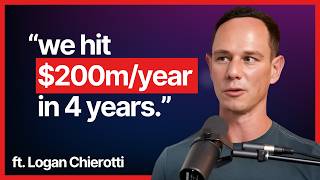
Logan Karodi built Physician's Choice into a $200M supplement business on Amazon by losing $800k-$1M in year one, then narrowing to 3-4 core products that now drive 80% of revenue. Heavy Amazon PPC spending and bestseller badges won market share; hiring finance and HR talent let him scale while stepping back from day-to-day work.
Questions this video answers
Approximately $200 million per year.
About $800,000 to $1,000,000 (roughly a $1M loss).
About $25–26 million in year two.
About two and a half years without launching a new SKU.
Around 80% of revenue from 3–4 SKUs.
Chapters
Turns out you can get to $200 million a year in five years with just four products. Not only did that happen, but this was an entrepreneur who wasn't even in the game a few years ago. And today we're going to break down exactly how he got there. I had Logan Karodi on the podcast earlier this year and he told the story about building a nine figure brand mostly focused on Amazon.com and I brought him to the Capitalism conference because that's where he got his start. A few years ago he was an attendee at one of our events and he got the idea to start a supplement company which is now known as Physician's Choice and does $200 million a year. What the French toast did he do between then and now? But the reason I want to share some clips from this talk with you is because I know so many of you watch this content or maybe this is the first video you're seeing and you feel like a big amount of success is forever away. So I want to break down someone who was in the audience watching content just a few years ago and today runs a nine figure business. To be specific, it's a $200 million a year company. Mostly on Amazon.com and spoiler alert, he did almost all of it with just four products. Remember the formula from 12 months to 1 million, it's four products at 25 sales a day at a $30 price point. That's a million dollar business. Logan makes those numbers look really small because it's four products with thousands of sales every day at about a $30 price point and he has a $200 million business. As a result of hearing me talk with Logan on stage, you're going to realize how simple this plan can be, how you're probably over complicating it and just how much wealth and success can be generated if you follow the plan over a couple of years. Let's dive into this talk with Logan Karodi.
Logan, why don't we start by you telling me where you were in this room five or six years ago. Starting over, looking for a new path, trying to find your next mountain to climb.
Yeah, I guess I was just like all you guys, I was sitting out here but I saw like, I was like, there's an opportunity here because a lot of like really young kids at the time were like making a bunch of money. And at the time this was Amazon. I think it was like six or six years ago maybe or Capcom six years ago in Austin. But it was really Amazon focused. Like now we're talking about TikTok and all these other channels. At the time, it was like Amazon. And I just kind of got, like, a fire lit under me where I was like, you know what? Like, I'm gonna go all in on this. I'm gonna double down. I have, like, a marketing background, so I felt like, okay, I could probably do something here with, like, the marketing, like, SEO kind of background I have. And so I have a business partner who's here with me, Ryan. And we just doubled down on Amazon and, like, went all in. And it wasn't easy, right? Like, the first year was. Got kicked in the teeth. It was horrible.
Yeah. You mentioned that you took a loss the first year, too, correct? Yeah.
Yeah.
And what. What, looking back on that, was that a necessary part of it or not? Not from, like, a personal growth perspective, but from the business perspective. Were you too aggressive or was that a necessary part of getting to the scale where you are now?
It's a good question.
I guess we are where we are. So it worked. But we were probably too aggressive, and we were probably, like, overly cocky, right? Like, we thought. I thought, like, okay, these young kids are making a bunch of money. Like, they don't know shit. Like, I'm gonna come in and, like, outspend them out, market them. And then we got there and I was like, just, holy shit, this is much harder than we thought. We were, like, getting our asses kicked. We were overly aggressive, but it worked out. But I think we probably didn't have to be as aggressive.
Could you explain what that meant of you were being overly aggressive? Does that mean that you were spending too much to acquire customers? Does that you were launching too many products? Looking back, what was too aggressive about your approach? Because there's approximately eight people in the room who are like, I'll take a loss for a year to have a $200 million business. Doesn't sound too aggressive to me. So looking back, what was too aggressive?
I mean, we were. Well, we lost a million dollars our first year. Like, 800,000, which was like, you know, almost all my net worth. Me and my partner, I was like, tell my wife, like, I think we're have to file for bankruptcy. Like, I was, like, laying on the floor, like, crying in my room. Like, you know, I was like, in a dark, dark place. I was like, this is bad. Like, I really screwed up here.
The first thing to know is that Logan launched Physicians Choice and took most of his sales on Amazon.com and he went all in. He went super aggressive, which now he kind of regrets because after the first year of being in business, he had lost a million dollars. He was a million dollars poorer than before he started the business, and he almost went bankrupt. But he turned the whole thing around, and he did it by focusing on fewer things rather than more. I hope that sounds familiar if you watch our content. So let's go into what happened when Logan started this business a couple years ago.
I think we were overly aggressive, to answer your question, on, like, marketing spend at the time. Like, promotions were a big thing to, like, do well on Amazon. So we were, like, doubling down on promotions. We launched too many SKUs. It was just like throwing a bunch of shit at the wall and seeing what works. But we eventually found what worked.
And from what I remember about our conversation on the podcast, one of the big turning points for you was actually doing less. Yeah, it was actually.
It was actually narrowing in.
Okay, you, you. You went wide and you were trying to maximize this channel, but you're losing money. And so at some point you had to pare down and get really focused. At what point in the process was. Was. Was that focus now? Yeah, front and center.
That was probably year two or three. But on that point, I. I find, like, for us, I think focus was probably, like, the key lever and, like, what made us successful. And then, like, to this day still is. And what I mean by that is, like, once you find an edge, you're like, okay, we can make money, right? Like, you find something that works on TikTok or Amazon or whatever. It's so easy to just be like, I'm gonna go launch a million products. I'm going to expand this to a million different channels. Like, you're just going to, like, it's much harder to stay disciplined and say, like, you know what? No, I'm going to focus on, like, one or two core products and push those really hard and, like, put everything behind those. Like, I think that discipline in my mind is, like, what made us really successful. Because we said year two or three, we had launched 15, 20 SKUs. Like, four of them were really working. The rest were just kind of floundering. And I kind of had, like, an introspective moment with my partner where we said, like, you know what we're really good at marketing. Like, we're not really good at, like, supply chain and innovation. Like, those are not our, like, core skills. Like, we hire people for that and they do a great job at, like, what are we really good at? And it was marketing. So I was like, we could market two or three SKUs really? Well, we could probably be like the leader in Probiotics. We could double down on Probiotics, but like, we can't be the winner in Turmeric and we can't be the winner in osha. Like, we can't have the number one skew in every single supplement category.
So because somebody else is going to have that focus in that category and you can't, you can't out focus them.
Right? Exactly.
When you, when you have spread a bunch of different products 100%.
And so we made a tough decision, like, let's cut stuff even though it was making money. Right. Let's cut parts of our business, let's cut out distractions and let's just focus on our core SKUs. So for two and a half years, we didn't launch one new SKU. We didn't try to launch it for.
Two and a half years.
Two and a half years.
Wow, I didn't know that part.
I mean, even to today, like, you know, if we do, like, we'll probably do around 200 million sales this year. That's made up 3 or 4 SKUs make up 80% of that revenue. And so we still just double down. And like we just started launching new SKUs again last year, but before that two and a half years, we didn't launch one new SKU, poured all our money back into three core SKUs, just like these are. And they kept growing and it kept like, you kind of get to a point where you're like, oh, this might cap out, but we just kept reinvesting.
This comes up time and time again. With the entrepreneurs that I work with and the entrepreneurs that I invest in at the Capitalism Fund, we're distracted by what everybody else is doing. TikTok is hot and Amazon is growing and you should build an email list and you should sponsor influencers and you should do all of this stuff. And after a few months, you're just distracted, all over the place with no idea where to put your focus. And we wonder why we're not growing. Don't worry. I only know because I've struggled with this too. But as Logan shared, and as I've discovered both personally and working with hundreds of entrepreneurs, it's by doing a few things very well. Well, that you start to break out. In fact, if all you did was have a small email list and a couple of products on Amazon.com and you get good at those two things, you can have a multimillion dollar business. And guess what? That takes like six months. The plan is 12 months if you do it slowly. But if you have an audience and you're good on Amazon, that's all you need to do to have a seven figure business. And in Logan's case, when they started doing fewer things and selling fewer products, they broke out of losing money and they started making gobs of money. And Today they're a $200 million a year business. So I asked Logan, how did you have the conviction to double down on something? How did you know when something was working enough to say, that's the thing, that's when I need to double click on. Let's go into that. Here's what he said to that question.
So what gave you the knowledge or the knowing to be able to say, if we really double down on these three, then I can own the market And I know that it's going to be this big, even though the data wasn't supporting that at the time.
Well, I think the data did support it. Like when we, you know, like I have, we hired like really good people, so we have a really good analytics person and they started like digging around in Amazon and digging around the category and they're like, the probiotics category has so much white space in it, like to room to grow. So like for me, I was kind of blind to it. I didn't know like one way or the other. But like having good people on our team that could do this research come to me and say, like, hey, we gotta, you know, we're not even close to the ceiling yet where we can keep doubling down, we can keep pushing, we can keep growing. But I think like on a smaller scale, like, I think probably every one of your businesses has more room to grow than you probably think.
Amen.
Like, it's just like I was talking to Vlad in here the other day and he was telling me about his product and I'm like, you have so much room to grow. Like just trying to launch new SKUs to get new revenue is like, it's one way to do it. If you're really good at innovation and I don't know, bringing products and supply chain, but if you're really good at marketing and that's what your core skill is, like a single product can be a $100 million plus business any day.
So how did you know that when you were having that conversation, how did you know that there was so much more upside on that one or two product? What gives you that clarity?
You know, I didn't know for sure, but actually funny enough, like Goalie, which a lot of us know, like, has a.
The apple cider vinegar.
Yeah, yeah. Thing.
Yeah. Okay.
I mean, they were like a rocket ship. And I was looking at them and I was like, you know, this brand is just, like, crushing it. And they have one SKU. They're like, pushing 500 million in sales. Like, wow. I was like, why can't we do that with Probiotics, right? Like, why can't we? Like, no one has done that in that category. There isn't, like, a vital proteins or, like, a cool brand that's, like, really broke through in the probiotics category. Like, why can't we just do what they're doing? And so that's like, that, like, copying their model is kind of like, what gave me the insight. Let's do this.
As you can see, Logan wanted to win, and he put all of his energy into winning at one thing. They put all of their money into winning in one strategy. And over the long term, it worked out. Now, I wouldn't necessarily recommend the exact strategy that Logan did because he was worried about going bankrupt, he was worried about losing everything, and he kept going when most people would just quit. Now, again, I don't think that's good advice for most entrepreneurs. So I dialed back and I said, all right, Logan, I'm glad that it worked out for you, but most people shouldn't take that risk. Can we go into the actual strategy that took you from almost bankruptcy to a $200 million business? How do we allocate our focus? What did you do that actually got you to break into profitability and predictable scale? So in this section, we go into more of the tactics that grew his E commerce business.
The way you're describing it almost seems too simple.
Yeah.
So. So there had to be certain metrics that you were optimizing for in order to ensure that you're going to become the number one in the categories. Are you putting all your energy into review generation into pay per click, into organic?
Yeah. Okay, I get it. I mean, for us, pay per click was the biggest thing. And at the time, like, this is like, 2019, 2020. Like, in this even 2018, 2019, 2021. Like, these years, not a lot of people were spending money on Amazon pay per click. Like, it was like Dolan was talking about how we, like, took their best seller badge in the Probiotic category, and that's because they weren't spending money on pay per click. They were just, like, riding this organic wave, like, making a bunch of cash, and we were looking at, like, we wanted to be the best seller in every category. Like, I like to win. I like to be in categories where I can be the best seller. I can get that badge because then it increases our conversion rate. Like, instantly becomes, like, a cash cow. So I was like, I'm gonna spend money to get these badges. Like, it's tons of pay per click, tons of discounting. Like, I mean, for like, two years, we were in a battle with, like, Garden of Life trying to keep these bestseller badges. Like, I've always been like, let's get a bestseller badge and use pay per click and discounting and promos to make that happen.
Well, that's an interesting paradox because year one, you said you were too aggressive.
Yeah.
And you are spending too much on advertising and being too aggressive with your acquisition. But now you're saying that being really aggressive on acquisition was what took you to 100 million. So was it just that you needed to focus all of that aggression into a few key things or, like, what. What was the difference between those. Those two mindsets?
I think it was the focus, like, focusing on the probiotics category, cutting skews that were just like, maybe they're profitable, but they were, like, dwindling. I was like, we're never going to be number one. Like, this is not our expertise, so let's cut those out. Let's focus on what works. And I think hiring, like, good people that, you know, I'm not like, a numbers guy. I'm not, like a pay per click marketing guy. So I hired a really good person and he was like, man, this is like, you guys are just like, they, like, call me the blow and go guy. They're like, you're this, like, blown go marketer where you just, like, spend a ton of money and, like, hope it makes money. I was like, I guess. I guess so. But, like, he came in, so I be like, okay, let's optimize towards cat. Let's optimize towards roas. Like, let's really dial this in. And so I think, like, that my mindset of, like, blow and go, spend a bunch of money and his optimization of, like, you know, we kind of balance each other out. So, like, having someone on your team that can balance you out and, like, I don't know, like, I guess enhance your weaknesses or, like, make up for your weaknesses. My weakness is like, I'm not a good analytics person. I'm not a good numbers person. But, like, hiring someone like that.
So is your approach then to spend on pay per click until you Win in that category and solidify the market share, solidify the conversion rate and then stick there. And knowing that it's going to, it's going to back out over a 12 month period or so, pretty much.
I mean, at this point we'll set a budget, right? We'll say like, okay, let's just call it a million dollars for a product launch and that'll be over 12 months or whatever the timeframe is. We'll just use 12 months as an example and we'll say like, this is the bucket. We have a million dollars to play with. It's like to be pay per click promos. Like whatever, you know, we can do, our marketing team can do whatever they want with that million dollars. But it's, you know, they're smart enough to say like pay per click is giving us the best return. So we're going to allocate the most money towards pay per click. Maybe we'll put a little bit into Facebook. I mean now Tik Tok's doing well, so we'll put some more money into TikTok and then we'll start to see what's getting the most return. But like, it's not. We don't just have like an endless amount of money to like invest in a product.
But, but, but, but you're, you're looking at that million dollars as your acquisition costs. Like that's what you're willing to lose in order to win a category.
Exactly.
Knowing that it is going to both back out, but also build enterprise value.
Right, Exactly.
Because if you're winning in that category, you're probably adding tens of millions of dollars to the value of the company. And when you look at it as I'm willing to lose a million dollars to add $50 million in enterprise value, right. That's a good ROI. And that doesn't even factor in the cash flow that will back out. On the other side of that, I.
Mean I can give you a, like a year, right. About a year ago, so about 12 months ago, we launched a digestive enzyme product and we looked at like the number one digestive enzyme was doing 25ish million a year on their skew. And so we said, okay, if we have the number one digestive enzyme product, that's a $25 million to us, that's a franchise product, right. Like that adds a ton of value to the business. It's a ton of ebitda. It's like a cash cow machine. So like, what can we invest in that? We decided like we'll we'll invest like 3 to 5 million dollars on this new SKU over the next 12 months to make it so we can have a 20. And. And it worked. And we did. Granted, if we were like going down that path in like six months in, we were just like getting pounded and we had like lost half that money and like nothing was working. We weren't seeing momentum. We probably would have reevaluated. We wouldn't just like flush $5 million down the toilet. But we saw the momentum after a few months. We're like, this is working. Okay, let's keep doubling down, let's keep building. So there is like a give and take of like if it's not working, you know, And I think the question probably is, well, how do you know if it's not working?
Yeah. When you, when do you pull the plug?
Yeah, yeah. That's a hard question to answer. I think it for everyone's different, but for us you kind of have an idea of like, is this getting momentum? Right. If you're investing money and you're not seeing like significant sales, you're not seeing like month over month growth, like just kind of stagnant. Like, I think you need to like, question, is it the right product? Is it the right product market fit? Like, do you have the right listing? Like, there's a lot of things you can tweak to make it better. Like we use Amazon's a B tab. I'm getting in the weeds here, but we use like Amazon's a B testing tool a lot to like optimize our listings. And that can change, like it dramatically change the sale.
So it's also a lot harder to know if something is working or not when you have 19 different things that you're focused on versus three.
Yeah.
And it's very refreshing to hear that you can do so much more with less and focused on fewer things.
So let's break apart what Logan just said in layman's terms. He had a couple of metrics that he was optimizing for. He was optimizing for reviews, he's optimizing for conversion rate, he's optimizing for Market Share on Amazon.com these are actually controllable things. When you have those metrics that you're optimizing for, that if you do well at those numbers, they'll lead to long term success. You can put all of your focus into things that you do today, things that will move the needle today. I'll give you an example of how I usually recommend most entrepreneurs Start, I say that they should optimize for things like email addresses and reviews. Those two things are very controllable because you can create content. You can run ads, you can make posts on social media that build your email list. And if you build a connection with those subscribers, you can often turn them into sales and reviews in the short term. That stuff doesn't move the needle today, but it will in a week and a month and six months and a year. Most people just don't want to do those small sales steps that lead to the long term success. So that is what Logan was doing. When he's optimizing for things like sales from pay per click and getting reviews. It doesn't take you to nine figures today or tomorrow or next week or next month. But optimizing for a few metrics that you know will win in one strategy will pan out over the long term. So what area can you put all of your attention into that is somewhat controllable? You can control to some extent how many email addresses you have. You can hustle to get more people on your list, you can hustle to get more raving fans, you can hustle to get more reviews. You can build strategies that optimize for all of those things. You can control your conversion rate by running a split test on your different products. You can control how much content you create. You can control how many people you interact with. These are not the scalable things. These are not the things that you can build a system for. At least at first we have to work our way there. And over six months we've done enough work that most people are not willing to do. And you're the person who wins. Somewhere during this transformation, Logan discovered that he needed to make a personal transformation as well. His business was starting to resurrect, but he was still overweight and out of shape, unhappy, and working 12 hour days while missing important days with his family. And he decided that he needed to make a change in order to both have joy and happiness, but also to become the type of leader that was capable of taking Physician's choice to the next level. And in this section, Logan talks about when he started to make that transformation of becoming the leader that he needed to be in order to see that physician's choice became the company that he knew it could be.
There was, there was another turning point for you somewhere in that transition where you just decided to take care of yourself differently and you started taking care of your mindset a little bit differently.
Yeah.
Where did that happen in the, in, in the time frame.
So, like, early on in my journey. So we're, like, going on six and a half years now at this point, at physician's choice. So I'd say, like, the first three years, I was, like, a complete disheveled mess. Like, I was, like 60 pounds heavier. Like, if I showed you guys a picture of me, you'd be like, well, that guy looks like a complete. Like, I looked like a meth head.
When we were reintroduced. I didn't recognize.
Yeah.
I was like, I've never met. I've never met this person before.
I was a mess.
And. And then I went back, I was like, oh, whoa. Okay, that. Oh, this is a different person.
I look at, like, pictures of myself, and I, like, say to my wife, I'm like, how did you stay with me? Like, what? I really like my hair. I, like, hadn't got a haircut in, like, six. I was just a disaster because I was so plugged in. I was obsessed with, like, winning. I was obsessed with the bit, like, the fact that we were, like, getting our asses kicked so bad was, like, consuming. I just couldn't focus on anything. So I'd say, like, around year three, we really. And again, it goes back to this. Like, we've got a good team in place, and it's not easy to get these good teams in place. Right. It took a long time, like, probably cycled through hundreds of people to get, like, a core leadership team of, like, five or six people that are just, like, amazing. Like, to this day, it's like, I probably work two, three hours a day because our leadership team is so good that they're smarter than I am. I trust them to make the right decisions. Like, I can focus on the bigger strategy. So to answer your question, like, around three years, I started be like, okay, I got to get, like, myself in shape and I got to be here for my family, for my wife. Like, it helps. Like, and at the time, it was a hard disconnect because you're so used to grinding or I was so used to just, like, 10 hour day, 12 hour day, grinding, grinding, like, pushing myself to the limit. And I was like, can I succeed in business without doing that? Like, I would see other people doing it. I was like, is this just like, Instagram? Like, you know, this guy's over here, like, on a jet, like, having this great life, and I'm here, like, glued to a computer like a crackhead. I was like, does that sound familiar to anybody else? Yeah. I was like, there has to be a better way.
And I don't, I can't answer the question if I didn't have that team or not, if I would have been able to, like, step out the way I did. But I can tell you that I did step out and I did, like, you know, get my health in shape. I got my, like, mindset right. I got everything. And, like, I'm operating in a way better place. I think I'm making way better decisions. Made a lot of mistakes because I was like, so, like, in that crackhead world of just like sitting at my computer all day just like a maniac. And I think if I wasn't doing that and I was healthier and I was in a better mental spot, I would have probably made better decisions early on.
Now you've, you've said in some of your public content that if you could go back, you would have done that a lot earlier.
Yeah.
And that even, even if that meant that you went a little bit slower, that you wish that you had prioritized that earlier. Could you comment on that?
Yeah. I think, you know, to this day I question, like, God, what did I, like, do to myself, you know, like, over those years, just like, from a health perspective, like, I feel like I just, like, I don't know, I grinded myself down so bad for so many years and like, yeah, I got us to having a successful business, but like, now, you know, like, I'm in good shape and good health, but, like, I feel like I paid the price. Like, I took years off my life to do that. And I think what I've realized, you know, now that I'm like an old grandpa up here, is like, you have a lot of time to make money and build a business like you had. Like, I was in this big hurry to be like, I need to get this super successful business and like, be super rich and like, blah, blah. And then like, it happens and you're just like, oh, okay, like, now what? Like, I could be doing this until I'm like 60 and that'd be totally fine. Like, I could go a little slower. I think when there's opportunity, like, I'll back up. Like, I think when there's opportunity, like, tick tock, Amazon early days, like, you have to get aggressive, you have to move fast. But that doesn't mean you have to, like, destroy yourself. It means, like, make smart decisions, hire the right people, like, go all in, double down on things that are working, but also take care of yourself because it's like a long journey. Like, building a successful business doesn't happen in A year. It doesn't happen in two years. It doesn't even happen in three years. Like, it takes a lot of time. And I've realized, like, AJ's a good friend of mine. Like, he can, like, kept pounding this my head. Like, good businesses compound on each other year over year. And took me till, like, get to this year to, like, 200 million to say, like, oh, he's actually right. Like, good businesses do compound on each other year over year. And if you have a good business, like, and you make the right decisions, you don't have to just kill yourself. You can kind of step back, take it a little slower, and let the compounding work.
Why do you think you were in such a hurry at the beginning?
I don't know. It's a good question. I think because I just wanted to, like, get rich.
Being honest. Like, I just was like, I want to make a bunch of money. Like, I'm tired of, like, you know, I was like, I didn't grow up with money. My dad was like a house cleaner. I was like, I'm tired of being poor. I'm tired of, like, living this, like, shitty life. And I grew up in, like, a, like a fluent area in Boulder. And all my friends had money. And I was like, I want to have money. And so I was in a hurry to make money. I think, like, at the time being like, 30, I was like, I'm so old. Like, I gotta, like, keep up. You know, now that I'm 40ish, almost 41, I'm like, yeah, I'm not that old. I got a lot of time. Like, you have so much time in your life that, like, you can slow down, you know? Like, I was reading something about the guy that started, I don't know what it was, was some Chinese conglomerate billionaire, started when he's 55. Like, we have time.
Started when he was 55.
Yeah, yeah, yeah.
But what's interesting to me about the way you're describing it is it sounds like being in a hurry was what kept you stuck for so long.
Yeah.
And not. Not just at the beginning of. Of this business, but you had other businesses before then that you were just trying to force to make happen.
Yeah.
And then one year into physician's choice, you're thinking about declaring bankruptcy.
Yeah.
I mean, it. It. It sounds like that hurried Persona is what was hurting the actual success. And when you started to prioritize other things, you had more of a space to be able to grow and compound.
That's deep. You should be a psychiatrist. I feel Like, I'm getting cathartic. I have a podcast that's actually very true. I think that's a really good point. And I think even to go deeper on that is when I was in that hurry and I was in that mental state, like I couldn't hire good people. Right. Like, I was like, I couldn't even like get unplugged from my computer for like a few hours a day to like go sit in an interview. And the people that I'm talking about, like hiring, like, these are like people from like, you know, top consulting firm, like really smart people that have worked at like other big C, like they're, they're not going to want to work for some like, crackhead that like just sits at his computer all day, like looking like a maniac. You know, you have to like, step away, you have to get healthy and you have to like be able to be present and like out of this like crazy space to get the kind of good people I'm talking about. So I do think that like being in a hurry, like really being in a hurry and like not taking a step back and slowing down, like really almost slowed down our growth and my business growth.
Yeah, there's like a, there's like a frenetic energy that no, no one wants except for other frenetic, chaotic people. They don't want to be around that. Right. For sure. And the highest quality people are not frenetic and, and antsy and scared.
Right?
Right. The best people are calm and they're collected and they have a long term view and they have a good time horizon and they're strategic. Which means that you have to at least look something like that in order to be the type of leader that attracts those types of people.
You know, so often we want the system, we want the hack, we want to know what we have to do, we want the checklist. And we completely ignore ourselves. And guess who's leading this whole ship? It's you and me. If you and me are not taking care of at the top, if we're not taking care of our health, we're not taking care of our mind. We're not taking care of the people around us. We feel lonely and isolated. How long are we going to be able to operate at a 10 out of 10 level? Not very long for a lot of us. The reason why we're not seeing the results that you know, that you're capable of is because you are not the person that you are capable of. And unfortunately that comes down to our habits. It Comes down to the way we think, it comes down to the way we treat our body, it comes down to the way that we sleep. Because when you're operating at a 10 out of 10 level, it's only a matter of time that that energy starts to influence the direction and the growth of your company. If you have a really good product, if you are good at marketing, if you do the basics, if you optimize for those core metrics that you can control and you work really hard, there's a good chance that you can build a seven figure company is almost a very good chance that you can build a seven figure company. You might even be able to build an eight figure company like Logan did. But you are not going to be able to build a nine figure company. In order to get to nine figures like Logan did, you have to acquire a new skill set. And that skill set is working with really good people. You can only get really good people if you're a really good person yourself. And that requires that you make a transformation into being the type of leader that is capable of seeing the vision of your company come to fruition. But you need other people too. In this clip, Logan talks about how at some point they had just random people throwing together the operations of the business. And he knew he needed to get better people if he wanted to go from eight figures to nine figures.
There was like a, kind of like a turning point I think. Like our numbers got really crazy, right? Like year one, we did like 3 million revenue, lost a million. Year two, we just like really started taking off and we did.
What do you say you three million, top line. But you lost a million.
Wow. Okay.
So that's, that's aggressive.
It was aggressive, yeah.
And wasn't super aggressive.
Wasn't working. But we weren't building up subscription, which at the time I didn't really like whatever I didn't really know about or I didn't like get into the weeds on. But that started compounding year two and year two, we did like, you know, end of year two, I think we did 25, 26 million. So like, and then the business started becoming profitable. So we like really took off. Year two, like our finances were just a complete mess. I had no idea what was going on. I was like hiring these bookkeepers, like just, you know, I had like Sally, Joe, sue come in who like couldn't even like open her laptop and I was like trying to like slack. What this? What is this Slack? I hired this like other guy that was like definitely like taking way too Much Adderall. He was like in the basement doing like calculation. Like, we were working out of Airbnb. It was like, weird. So I was like, I could not get. And I was posting for like, bookkeeper, bookkeeper. I'm talking to a friend of mine that's like a CFO at a 2 billion dollar year company. And he's like, bro, like, what is this bookkeeper word you're using? He's like, he's like, you need a proper finance person. Like, you need a director of finance, like maybe a CFO. Like, you have a 30 million dollar year company, you're trying to hire a bookkeeper. And I was like. It kind of hit me then I was like, I don't know what the I'm doing here. I mean, like, way over my head. Like, I don't like, I'm trying to hire like, you know, Mary Jo sue to run our like $30 million.
Like, I can just see the job post now. Need a real fucking finance person.
So this was like kind of a moment that hit me was like, I don't know what I'm doing and I'm just like, so plugged in, like obsessed with like Amazon numbers, Amazon rankings and like, you know, bestseller tab. I actually need to like step back and build a real company here. I need to like hire people. I need to like, get my shit together, like, not be in my pajamas all day. Like, I need to like, take this seriously. So this was like a real like turning point where I was like, okay, to hire people, we need to like professionalize the business a bit, right? We were working out of an Airbnb that I, like, me and my business partner had we converted into an office. And like, I was like, can't like bring people onto this house in the suburb and be like, you want to be our director of finance and you can work in the guest bedroom? Like, I was like, this is just not gonna work out. So we were like, we gotta professionalize the business of it and I have to like step out. And so that was kind of the turning point of like, okay, I'm gonna step back, I'm gonna slow down a little bit. I'm gonna hire like, I hired an HR person to come in and like, help us professional. Which is a weird hire at this point because we had like four dudes in an Airbnb. And I was like, why do you need to hire an HR person? It's like, seems very random, but my thought was like, we'll bring her in and she will help us professionalize the business a bit. She'll help us, like, put together a hiring funnel. She'll help us go recruit from, like, other big CPG brands or like big consulting firms with really smart. Like, she can help bring in the talent. And I'll do interviews with her. Like, I didn't know how to like, interview some guy from like, Bain & Co. Or like some super smart. Like, I was just like, not on that page at this point. So that kind.
Of. At this.
Point. Are you still 60 pounds.
Overweight?
Yeah.
Okay. Because it seems to me like you were both professionalizing the business, but also professionalizing your personal life in some way. Like, there's. There seems to be this conscious decision that you were going to stop.
Around. There was, yeah. But I think the business came first. I was like, I gotta, like, I gotta professionalize the business so I can step out of it and like, start to take care of myself. Which probably was backwards. I probably could have done both at the time, but I think at the time I just didn't really understand that. So.
Yeah, I don't.
Know. So this HR person came in and kind of gave you some space in.
Some. She gave me space to hire people. And like, you know, she. We would go and do interviews then and like, people were throwing out these, like, for me, hard questions, like, what's your 401k plan? And what's your, like, you know, cobra benefits? I was like, it's a cobra. I was like, I don't know. But she was able to like, field these questions. She's like, oh, we're working on our 401k plan. Here's our health benefits. Let me walk you through the package. Here's how the bonus program we're putting together, like, she could, like, start professionalize everything with, like, these potential employees. So this is a big turning point for us where I was like, okay, she helped us get our. Who is now our cfo. We hired him as like a director of finance who's just like an absolute killer. Like a complete rock star. I would not trade this guy for like $10 million. The best employee I've ever had. Like, without her, I would have never gotten. Like, he was even questioned. Like, he's told me now he's like, man, I was like, bit skeptical of like, what. What is going on here? But he's like, having her in the room and like, she's like, you guys presented really well. Like, so that really kind of shifted the course of our business. I hired a CEO to run the business maybe two years about Two years ago. And like before that we'd always talk about strategy and strategy talk. Like it's so annoying. Like what is.
This? Just spend more.
Money. Yeah. Like the strategy is to win tell what is the strategy.
But he came from elf cosmetics which is like, you know, a 10 billion dollar market value. Like he was like worked, you know, for a TPG private equity company for 14. Like he's got a lot of high level experience and so he put together like, okay, this is our strategy. We're going to focus on like and I helped work with this Himalayan, what is our strategy? But it was like we're going to focus on the core SKUs. So that hasn't.
Changed.
Right? We're going to like double down on our core. We still do that. So our top three SKUs, now it's four because we're going to include the digestive enzyme. Like we're going to double down on those. We're going to like be go really deep in retail accounts. So we're not going to like spread wide into like mass retail. We were like in Walmart, we're in Target. We're going to go super deep in those accounts and we're going to like invest in those relationships. We're going to try to get like end caps. We're not going to try to get into like Walgreens and seven eleven. Like we're not going to go wide, we're going to go deep. It's like this strategy kind of like helped lay the groundwork of what are we gonna.
Do? I want to remind you that Logan was sitting in the audience of the Capitalism conference just a few years ago. And today he has one of the largest supplement companies in the world. It might be the number one supplement company on Amazon.com he started back at a time when there was less competition, when there were fewer supplement companies. And his strategy was right for the time there weren't as many people running pay per click, there weren't as many people being aggressive trying to buy market share. And that strategy may not be the right strategy for somebody who is starting today. So I asked him what would be the strategy if you were starting over today? For those who are watching in the audience, for those of you who are seeing these clips on YouTube, what would be his recommendation for someone who was starting today and wanted to have eight or nine figure success over the next five to six years, what is the best opportunity today? Here was his.
Answer. If you were starting position choice right now and you wanted to dominate a category, what would would Your playbook be the same or would you take a different playbook based on the changes that have happened in the last year or.
So? If I was starting a new brand today, my playbook would be Amazon and TikTok and I would not mess with anything else. I don't even know if I would build. I would build a website just for aesthetic presences. But like I wouldn't be like trying to drive traffic to it. I wouldn't be messing with like Facebook or. This is just me personally because I've.
Never. Does that, does that sound familiar at all? Like those, those are the two white.
Spaces. Those are the white spaces. Yeah. And even Amazon, like we. It's gotten more competitive, right? It's like still. But when I started Amazon, it was also competitive. Like it was a different competitive. There was like black hat competitors. Like screw. Like it was a.
Different. That's a great point. It was a different kind of competitive, right? Like it's still competitive. It's always going to be competitive. But it's. But it's different where the competition is now. Now it's more consolidated over paid.
Media.
Right. Whereas before it was just like a bunch of cheaters and that was how, that's how you competitive. It's like, like pick which is worse, you know, paying your way to play the game or fighting off a bunch.
Of. Yeah.
Yeah. Fake reports that are coming at.
You. I think Logan is bang on with this point. You go after a big market and then you target a subgroup of that market that's easy to target. That's a certain group of people within that big market market. And then I would suggest that you build an email list of those people so that you can launch the product and get the Snowball building over 30 to 90 days. That's your opening move. And then you start to optimize on Amazon.com until you're doing at least 25 to 50 sales a day. And when you're ready for expansion, you can turn on the magic that is happening right now with TikTok Shop. I think that's the strategy, really big market, pick a subgroup, get good at Amazon and then turn on TikTok shop. That's all you need to be able to have a multimillion dollar business over 12 to 24 months. And I mean it, those are the only things that you need to focus on. It's a really good time right now to follow that playbook. Hear me? It's a really good time right now to follow that playbook. So if you're watching this and you're like, I want to do what that guy did. I want to do what these people in the audience are doing and they're building multimillion dollar brands. Here's an easy thing for you to do today. You can download the free course that we just put together over at capitalism.com playbook. When you go over there, you're going to get the playbook for how we get our businesses to seven figures in 12 months or less. There's also going to be a 15 day indoctrination sequence with case studies and examples and people from the audience who have done this and are seeing success as well as what is working right now. It's a free course. It's at capitalism.com playbook. Go over there, put in your best email address and this is a great first step for you to come up with ideas for you to realize what your plan is going to be so that a few years from now you're either at seven figures or maybe you're way beyond that. And we're on stage breaking apart your campaign case study for how you got started at the right time and now you have a multi million dollar business. We do it every day here@capitalism.com that's what we're in the business of doing is helping entrepreneurs build seven figure companies and having multi million dollar exits. I'm ryan dan with capitalism.com thanks for watching. Tell me what your favorite part of this video was in the comments below and I'll interact with you there. See ya.







