
Gary Vaynerchuk : An Inside Look At His Business Success
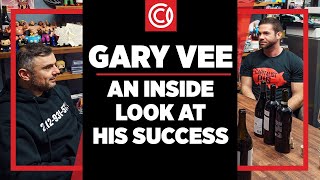
Ryan Daniel Moran shares what he learned from Gary Vaynerchuk: build an engine, buy companies, scale them, sell. Gary's real edge isn't the brash persona but the humility underneath and the willingness to give without expecting anything back. Moran walks through concrete examples like the Empathy Wines launch and his own 2015 event.
Questions this video answers
2015
2011
100 cases
Chapters
My mom always said it's rude to talk about people behind their back. So welcome to this video where you and I talk about Gary Vaynerchuk behind his back. Come on in, grab a seat and a beverage. Let's have some fun.
In 2008, I was 22 years old and I was sitting in my girlfriend at the time's apartment and I watched this video of this guy on the Internet say that he wanted to own the New York Jets. My dream as a kid, ever since I was a little kid, was I wanted to own a baseball team, specifically the Cleveland Indians. And I thought to myself, this is somebody I need to watch. Because if in 10 years he's closer to owning a team than I am, that he's got something figured out that I don't have figured out. This to me is modeling success, watching people who have done amazing things and said, hmm, what are they doing differently than me? How are they thinking differently than me? And so in this video, I'm going to tell you what I've learned from Gary Vaynerchuk after spending a little bit of time with him one on one and in a group setting and also analyzing his business thought process. And we're going to do the whole thing while drinking some Empathy Wines, one of Gary's companies. So let's dive in. In 2015, we had our first event@capitalism.com and the first person that I called to keynote the event was Gary Vaynerchuk. And Gary was big. He was a well known entrepreneur, but he wasn't big like he is today. But the thing that compelled me to him was I wanted to find out what, what's your strategy that you're confident is going to have you own the New York Jets? And it was the first time that I ever heard him describe the strategy, which was, I'm going to build an engine, I'm going to buy companies, put them to the engine, and I'm going to sell them, make a bunch of money and buy the New York Jets. That was interesting. But something else was more interesting than that.
You didn't have anything. You found an idea, you found somebody that gave you a concept, you got something that worked and now you got something, something that you were sold by the American media machine that you want, like a fucking watch or a car, like, you know, you got something and the fear is you don't want to go back to not having it. My greatest rationale for marrying my wife and the greatest thing that I know about myself is not only am I capable to going Back to Queen's studio apartment. I secretly want it to happen like, you know, Rocky V when it's all sad and shit. Cause he's like, back to the thing. And everyone's like, oh, too bad. I'm like, that's fucking awesome. Like, for me, it's the game, right? And so, like, I don't need fancy shit. Like, fuck. That stuff kills me. Yes, I wanna buy the jets.
But I won't buy a jet on the way there, right? I may, because it's actually time efficient. I've come to learn. But it's really interesting. I think the thing that makes me sad is people accumulate a little something and they don't wanna go backwards. And so they're not willing to change their behavior to go three steps forward. People are literally, literally crippled and scared to take one step back a place they've been. And they should understand that's what scares them, though. Instead of going three steps forward and they get into that hump and that million that they're making is now their handcuffs and they're stuck. And the reason I push hard work is there's a lot of people in here who are in that exact situation and still have seven hours a day to start something new, but aren't putting in the hustle to do that.
You see, at the same event, I had Grant Cardone speak. And Grant made the entire experience about him.
So, you know, dude, you gotta be liquid, baby. You gotta be liquid. You gotta be ready. You gotta have more.
It was all about Grant. He had people chanting his name. What's my name? Grant.
What's my name?
It was the Grant show from day one.
Yeah. Yeah.
Aw. Dear.
I immediately regret this decision. Gary, the person who I thought was all about hustle and grind and killing it and bravado and ego, humbly walked backstage quietly without drawing any attention to himself. You said something. I will never forget this. Cause it changed my brain. When I asked you, I think you were talking about 137, okay? You were talking about the businesses that you build and acquire and you scale the teams. I was like, gary, how do you manage all of the scale for that? And you're like, well, we don't make much money. And then I said, how are you comfortable just continually rolling all the profits back in? And you said this. My only fixed expense is rent. And I was like, holy shit. You have no fear in losing it all because you can. If it all goes away, your only fixed expense is rent, and you're fine.
That's right.
There's no ego in that. There's like no ego in that.
When people.
I have to understand how, like, because.
I'm humility disguised in perceived ego.
My personality, my vibes, my energy on camera makes people think I'm ego. My actions over the last 20 years. And the people that know me the best know I'm predicated on humility. I have audacity and confidence and fucking. I'm an alpha, but I'm built on the ground of humility.
So many times as entrepreneurs, we think that we have to force ourselves into things. We have to dive into the extra energy reserve and force ourselves to do things in order to get the result. But the people who are extraordinary performers are operating in a different gear because they're just amplifying what is completely natural to them. They're doing what is unique to them. And what I learned after spending some time with Gary was that is really where success comes from. I have spent so many years in my career trying to force things, trying to.
Make things happen, trying to hustle.
But when Gary talks about hustle, what he really means is doubling down on what makes you happy. I really believe that's what he means because I've observed that the last time I was at Gary's office, we were drinking some Empathy wines, and he sat down and looked up at me like we had been there all day. And here I was, like, ready to go, all amped up, drinking. I drank a bunch of coffee to get ready for this interview, and he just looked at me like, I'm ready. He is constantly present, which is why he's able to work 17, 18 hours a day when he needs to. If you are present in what you are doing, your energy is infinite. If you are not present in what you are doing, you're operating from a drained battery.
Most of the time, we get burnt out and we get tired because we're doing things that we don't see as meaningful or inherently fun. And that's usually not how we succeed. If we don't find it meaningful or if we don't find it fun, we're probably not going to give everything we have, which is what success requires. That's the biggest lesson that I've learned from Gary, from spending time with him in person. The second thing that I've learned from Gary from spending time with him is that the way that you get wildly successful is always operating in service to other people. Here's a clip of Gary sitting with me and telling me how his strategy was not to monetize his audience was not to go for the big get, was not to cash in the chips, was not to give with the expectation of getting. But here's where he describes that his real strategy is just to contribute as much as possible. Let's watch.
I put out good content for the sake of putting out good content. I built VaynerMedia in 2011 to take advantage of K Swiss or this. I never and still don't anticipate having 6 million people on 5.5 million people on Instagram convert, which is actually why I think it works. I'm comfortable asking my audience to like. My whole pitch is very simple. If you wear sneakers, if you drink wine, I'd love for you to consider buying mine versus buying someone else's. But it's amazing. The reason I'm so happy is the value I've brought versus the return on my investment in what I've gotten is a terrible deal. Like the people that are hucksters that I make fun of who are just converting their audience from day one, they're killing me in the short term. But I'm not playing for money. I want my audience to show up at my funeral. I mean that. I don't need their fucking money for my wine and my sneakers. I have a marketing capability. I'm gonna sell way more Empathy Wine to people that have never heard of me than to the audience that has extracted enormous value out of me. How much value I've given away, especially the last two years, and how big my audience has become. It's a joke. I should be sold out of all 30,000 cases. I'm not. Cause it's not how humans act. Humans do not feel a sense of responsibility to deliver back to somebody. This is why I keep telling everybody, you want to be happy, give without expectation. You want to be super unhappy, Think you're getting something for your actions. You want to get really unhappy, do shit for the sake of something else happening, which is what everybody does. I watch people gay me every day. The problem is they don't understand that I understand what they're doing.
I'm having what we call a brain gasm here@capitalism.com. you see, what I thought Gary's strategy was was to build a big giant audience so that he could launch the Empathy Wines. And he admitted that there was benefit in having a big audience when he wanted to do a big launch. For example, I bought 100 cases of empathy Wines when it launched. I'm talking about it right now. I'm drinking it right now. So, of course, him producing value in the world produces business results that are unrelated to the content that is created. But the reality is that what his strategy was is just to continue creating things that he loves and enjoys and to build the machine that can scale these businesses. My strategy, my strategy for one day buying the Cleveland Indians is very similar. It is to build the relationships that the assets, the connections, and the skill set so that when you've got the thing that you want to bring to the world, you have the capital, the relationships, the connections to be able to bring that thing to life. I call it lighting a fire. My logo at capitalism.com is a C with a flame at the end. And it's made that way because I believe my purpose as a business owner is to light fires, is to start new things, is to light the next idea and watch it catch. That's what we do as entrepreneurs and as capitalists. It's our job to bring together resources, to bring together capital, to bring together connections so that we can light the next great idea, so that we can create the next thing of value, so that we can solve the next problem. So often we confuse entrepreneurship with the process of getting money. But our real job is to multiply resources. We do that by bringing people together, bringing ideas together, and solving problems. And the byproduct of that is money. You said, right now you believe me 92%.
Yes.
And you were saying it from the context of it was more than the.
Time I saw you at the Core Club. That I remember too.
Yeah.
I don't know if I said it out loud, but I remember that as well.
And you said that and it meant the world to me. And then you said, but right now you still only believe in 92% about there's no ask, there's no like. It purely is just a give play because it feels good. And I believe you 100% now. So.
It has been a lot of personal work to get to that point.
And getting to this point now is so scary good.
Thank you.
Honestly, dude, it's really. It makes me so happy.
I just want you to know I get it. No, and it was.
I don't know that I would have gotten there as quickly without your example. And so one of the things, like the reason why I put a lot of energy into seeing you once a year or so is because you're kind of like a mirror of where I'm at, because I think you're really clear internally about who you are. And it acts like a mirror to me of where I am. And so I just wanted to thank you for that.
Makes me happy, bro. I really get it. And honestly, it's. It feels so like. It feels like it's not the alcohol. It feels warm. It feels warm in my body. And it's actually to think about the kid that I met at the event to this moment is the actual dead example of the process that I'm trying to do at scale. I think some.
Thing happened where I get the great blessing to be the communicator that takes a lot of alpha winners and eliminates the bad behavior and instills more. I don't know what to say. It's super. It's super petty. It's super in the clouds, it's super. It can even be consumed as obnoxious. It's just actually, I still believe it. I believe that it took a very unique voice to take guys that look like you and me and actually get them to think empathy and long game and kindness was actually the cool thing, not all the other stuff.
Serve first, give first, make deposits first, put deposits in other people's bank accounts, in your relationship bank accounts, and let there be interest before you cash that check. That's jab, jab, jab, right hook. And that's the idea. That is really the philosophy of creating content. So many of you are creating content to draw attention to yourselves.
The only people that are trying to put out content for people are trying to trick people into their own money. And everybody who actually is a great entrepreneur is selfish. I'm putting out shit.
I promise you that I will at least try to match that.
I believe you 100%. I believe you 100%.
Thank you.
Because I believe that's actually my legacy, that I'm gonna frame it.
And the understudies, I believe that about you.
I believe that.
Yeah, because you, I think you turned that page. You were the first person to turn that page.
I think so too.
And my context, really committed to it. My context of growing up was always about the do this so that you can have the ask correct. And you were the first example in my life that there it was just about doing it because it was the.
Right thing and it was different. And not being uncomfortable with asking because there's a level of practicality to it, but being remarkably okay with a no. You know, there's one thing that makes you special, man.
I've known you for a while, I've seen you throughout, and you are sincere. Thanks, Kamal.
You've always been sincere. That's like, that's your rock solid.
Thanks, Kamal.
And in my opinion the day I met you, you had subconscious aspirations for sincerity, but you weren't.
I think that's a fair analysis.
That was my sense.
Come on. I can almost guarantee that I won't get it right. Thank you. I can almost guarantee I won't get it right every time. But I promise you that I will at least try.
Whatever change you want to create. If you want to create change, it starts with you. It doesn't start with the government, doesn't start with your neighbor. It doesn't start with social media. It doesn't start with any. Anything outside of you. It starts with you own that change, create something new and always be in service to other people. That's how you create change. My name is Ryan Daniel Moran. I help entrepreneurs build businesses and create new ideas and bring them to life. If you need some help, we have some resources and some guides that will help you create the systems for you to bring those ideas to life, to find your idea, to create that first product, to bring about that change that you want to see in the world. You can find out more resources around this video or you can just subscribe to the channel and we'll keep throwing free stuff at you. Either way, it's an honor to be of service to you. Thanks for watching and we'll see you next time.







