
Getting Back On Track To Your $1,000,000 Brand - (Consultation) Road To $1 Million
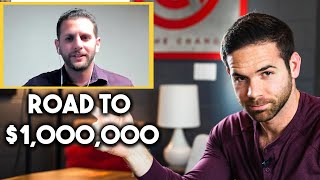
This is a recorded Capitalism.com consultation (Road to $1M) between Ryan Daniel Moran and Anes (Capitalism Incubator member). After supplier problems at a Chicago trade show, Anes pivots from planning a halal supplement company to launching a halal food brand serving Muslim consumers. Trade-show feedback revealed strong demand (parents seeking permissible foods for kids) and product ideas. Ryan advises positioning as a premium, representation-driven e-commerce-first brand selling bundles (3–6 jars) to achieve margins for advertising; recommended first line: sauces with protein (three SKUs in same line), build publicly, create a prototype, run a pre-launch, then scale. Focus is on serving a specific underserved person, owning premium pricing, and using early launches to validate and fund expansion.
Questions this video answers
March 6, 2023
Chicago
About 45 minutes
$20 per hour (used as a conservative estimate)
About $5–$6 per jar
Chapters
Welcome to the road to 1 million. I'm Ryan Daniel Moran. This is the show where I interview members of our community and I help them take their visions and get back on track so that they're back on the road to $1 million. Sometimes it's really helpful to just have an outsider who knows this business keep you on track and hear about your specific situation and guide you back to where you need to go. And today I'm going to be joined by one of our members of the capitalism incubator. His name is Anes. Anes got started in the incubator with a very clear person that he wanted to serv. He wanted to serve Muslims who were eating the halal diet because there were no brands that were targeting this person. There's all kinds of options for keto and even kosher, but no one for someone like him. So he wanted to go in that direction. But he thought it would be easier.
To start a supplement company first.
Then he ran into challenges and setbacks and he was feeling really discouraged until he went to a trade show and got feedback about the direction of his business. And he realized that starting a food brand instead of a supplement brand would actually be faster, easier and more profitable for him. It would also create more opportunities with investors, partners and influencers because it's what the customer actually wanted. The ironic thing is it's also what Ines wants to do too. You don't need to wait to do the business that you really want to do. When you do the business that you want to do, doors just tend to open. But Ines needed some help staying on track and being on the road to 1 million. So let's dive into the conversation.
So you've run into enough hurdles now to where you've had to come back to square one. Where are you thinking about taking things now?
So all happens after I attended a trade show, like a conference trade show in Chicago. I we booked the booth that we are going with product and samples to show to people, shares with the people, potentially take pre sales till four days before, four days to five days before the show. And the supplier was a no, no for us. Like hey, we can't work with suppliers. They are not communicative. They don't know even what they are talking about right now at this point. So it's, it's, we have two options. Go to the, to the, to the show and with no products and just talk to people or just kind of sit back. So we just decided to go to the bazaar, to the trade show with no Products, no samples. We basically went with a pen and post notes and we're asking people give us ideas like we know where as a Muslim community have a problem finding halal products and halal food. And we're just basically I was there sharing my vision, my vivid vision and the pitch deck. That's what I was doing for three, four days.
Nice.
And it just, we got like tons of ideas. Like the engagement was crazy.
Well and so you're just there with the vivid vision and the pitch deck that you put together inside the incubator and you're just showing up talking with people. What were they sharing with you? Were you getting advice? Were people offering to invest in the company? What type of engagement were you getting?
All of the above. And even more like I got people who are sharing ideas, they go get their kids to share ideas to write down, like what candies and things they, they like to get. Because it's actually the parents, they have different needs than the kids. And thus the company is the struggle of the parents finding things for their kids that permissible to eat, that things they get good. Like dragging them at the grocery store. No, we can't have this. And you have to explain why we can't have this for the hundred times. But my friends, they can't have it, why I can't have it. So that's kind of was a big pain point there. Some people offering consultation, other people, they just straightforward said, hey, when this thing picks up and you find the right product, here's my phone number, contact me, I'll be interested to learn more about them.
Beautiful. That's beautiful. How cool is that? Remember, you know, we say this all the time in the incubator. If you ask for money, you get advice. If you ask for advice, you get money. And so you're there asking for advice and people are giving you their number saying give me a call when you're ready to raise capital. So aness, that's a beautiful shot in the arm. I'm so glad this happened. What did you decide to change now that you got this feedback going to this trade show?
Change a little bit of my vivid vision.
In a sense I need to think even bigger and bolder. Good. Like don't know myself. That's, that's, that's kind of taking it from outside in. That's the outside scope. That's 1, 2. The pain point is way bigger and way deeper than I thought the next I anticipated.
Good, that's great.
Everyone, everyone, everyone is feeling it, feeling it more. And as an Unfortunate thing, but it's this pain kind of getting passed down to the next generation with minimal solutions available there. So it's just like the pain is getting past. So that's the second thing.
Well, let me, let me ask you this. I mean kind of what I'm hearing you process this conversation is that you've run into challenges getting the Halal certified supplements made, but you know of options in the food space and it almost sounds like there are options for gummy bears or for snacks or candies or what have you. So what is preventing you from making a food product, the first product in the line since you know there are manufacturers for that and there's obvious demand based on the feedback that you just received.
Well, there's another change I had to, to change and I don't know if it would be in my vivid vision or just in general approach. And my, my approach was to have a US based manufacturer. So it will be the brand is my Halal company like American Muslim brand by American Muslims. It's just like based here in the U.S. but we're having really hard time getting a U.S. manufacturer to, to work with us in the capacity that we are in right now.
I understand.
Yeah. So the switch that we made, we started looking abroad for those, those products. So that's the first thing. So it happened two in one. I, I was looking for supplements only and in the US only. Now I'm looking for more of a food brands, snacks, condiments, sauces, all this line. I'm looking inside the U.S. and outside the U.S. so whatever it comes in, it just needs to be a quality cleaning, ingredients and all that stuff.
Okay, so I hear that data point. I still have the question, why would you not prioritize food instead of supplements since you know there's demand and there's supply for it.
Oh, it is. Right now it is. That's what I'm looking like. Since I came back from this threshold, I'm contacting specifically about food products.
Good.
Cause I'll tell you aness, I like a food brand for this community way more than I like a supplement brand. I like this idea from an investor standpoint, from a consumer standpoint, from an advisor. I like this all across the board better. And from what I remember about our conversations and you doing your pitch, supplements you thought were going to be easier. You thought supplements were going to be easier to get into.
Right? Right.
What you really wanted to do was food.
Yeah, I just, I just does. You're the second person in 24 hours telling me that says, dude, your pitch is about mashed potato, bacon bites or red skin, potato bit, whatever it is and you just wish to supplement. How is that? I said, well, I don't know. It's just like the first part of my pitch. Yeah. The first part of my page was like, is it really emotional? That's my story. And then the supplements. I put it because I was looking at data points and opportunities. I use metrics. I know, I know.
It's just like you finally got it.
An S.
This is a perfect example of why I tell people to always start with a person instead of a product. Many entrepreneurs in their quest to get.
It just right, look at data and.
Trends and use tools to tell them what a good product to sell is when the answer is whatever is in service to the person that you want to serve. And s fell into this trap.
He thought, hey, I got my person.
And so an easy way for me to get in with them is to.
Sell them a supplement. And the marketplace went, what he really.
Wanted was to start a food brand and that's what the customer wanted to. And as a result of him focusing there, he'll have way faster momentum and he'll be on the road to a million dollars.
When I thought, when I thought, okay, sauces and these things say, oh man, it's going to be hard to ship. The margin is really low. It's is, this is comes in a glass that's breakable. I had a brand before with a glass and it just like is pain in the butt. It just, I understand it around and so my head start thinking of, oh, all the challenges. Exactly, exactly. Like hey, if it's going to be sold for 3 $4 and how I'm going to be able to ship it because for my strategy, e commerce first. And people got excited when I say, hey, it's going to be available online. If you have Amazon prime, you can order it. Because people complained about price as well. Say, well, we go to the store and it's three, three dollars. We order it online is six dollars. Yeah. So I'm taking in all these data points. I'm trying to make sense of first product.
My advice to you, like you've got to run a successful, profitable business and you're not going to do that out of the gate selling three dar three dollar jars of pasta sauce.
Yeah.
So first you'll have to be a premium brand. You just have to accept that you're going to be a premium brand. And remember, you know this, if you are creating a product specific for Your person, they will pay a premium. They absolutely will pay a premium. Number two, I think I'm looking at your face.
Yeah, yeah.
Before I, before I go to number two, tell me what about your challenge with that?
I think, I think is purely is a belief challenge. I don't have the data to back it up, but just thinking, people always going to compare you. Oh, just because this is a notion. Hey, just because it's halal, you're charging double the price. That's what people say. Like there is a saying, oh, just because it's organic is three times the price.
And that's. That's kind of this. It plays in, in my head.
So let me ask.
I love to be a premium brand because actually I'm sourcing premium ingredients.
That's right. So let me get. Let me ask you a couple of questions and ask.
Do you.
Are there halal pasta sauce brands right now?
Not that I know of, unless it gets imported. So it's not US brand. And because it's imported, it's more expensive, so people know that.
Okay, so if someone wants to make a pasta sauce, they have to make it homemade. Is that correct?
Yep, for the most time.
How much time does it take them to make a homemade halal Sauce? Pasta sauce?
45 minutes, at least.
45. Okay, great. What is the cost of someone's time per hour?
Yeah, it'll be $20, I'll say at least.
What does a jar of pasta at the store cost?
5, $6?
Probably 5 or $6. Okay, so would it be fair to say that if someone paid $10 for a jar of pasta, they just saved an hour and therefore saved money since their time is worth two times that?
Yes. Okay.
Okay. So here's the thing. I had a mentor named Kevin nations who used to say, you don't compare your price to other people.
You compare your price to what the value is that they get, and then you charge a little bit less.
So, for example, I could write a book called 12 months to 1 million, and I could sell it for $20, which I did hundreds of thousands of copies of it. And I didn't make much money from that book, but it got me people in the door. Was that book worth $20 or was that book worth $1,000 or $5,000 to the right person? Now, I wrote it for a different reason.
Then. If you look at my consulting rates, my consulting rate is $10,000 an hour.
Is that the same price as someone else?
No, but it's a filter to get.
The right people to which I can create $100,000 worth of value in that same time.
Okay, I hear everything. I was talking about like. Yeah.
So in your case, you are not selling a competitive pasta sauce. You are selling an hour to two hours of someone's time. You are also selling representation in the marketplace.
You are also selling.
That's what I want.
Yeah, that's what you want.
That's what I want. That's. That's my. Does the. Let's say that's the our. Our. My not tagline, but is more of the. Of the vision is like you have all these different groups that are represented with their food. You have the vegan, the vegetarian, you have the kosher. You have all other places like Paleo keto. You have like more keto than anything.
Exactly. And that's actually, that's one of the messages that hit home with people. I said we are just. The number of people is we are similar to the Jewish community in the US but we have way, way less down products than them. It's like that should be an example for us to increase our product line.
Totally be available.
Available in the market. And that's. People said, yeah, true. Like why I can have it at Walmart or Target or Costco or these big stores. I have to go to a specific shop and get it from there. So that's the messaging, that's the vision and the goal.
That's right. And that's why I say people will pay a premium if they feel like it's specifically for them. They are supporting their own representation. So before I mentioned, you just have to own the fact that you're a premium brand. You've just got to accept you're going to be a premium brand. Justify it however you want. Justify it by the mission, justify it by the ingredients, justify it by whatever. The second thing is, since you're going to be an E Commerce first brand, you're going to have to sell this in bundles. Someone is going to have to buy three to six jars of pasta sauce in order for you to have the margin to be able to run advertising.
And by the way, ns I love honesty and marketing, so I love saying that kind of stuff up front. There's a question on the sales page. Can I buy just one?
No.
In order for us to advertise to the Muslim community, we need to have healthy margins. Therefore, as of right now, we're a new company looking for our super fans. And that's why we can only sell it in bundles of three, six and nine jars. I hope you'll decide to support us as we try to represent this community in the marketplace.
And as we grow, we hope to.
See you in Target and Costco and Walmart and all these other places where you'll be able to buy single jars. Right. That is the most honest answer in the world. And everyone who gets it will be like, that makes sense. Yeah, that makes sense to me.
I like that. I like it. I like it a lot. Yes.
So theoretically, if you sold $9 jars of pasta sauce, which to me does not seem crazy, there's this one brand I really like. Let me look them up. They're called Victoria. Is it called Victoria's? And I think they're on the more expensive side. Yeah. So they're an $8 jar of pasta sauce.
Right.
And I buy them like it's nothing. It's my favorite pasta sauce. Get it at whole foods or HEB or whatever. Right. So you selling a $9 jar of pasta sauce is like, yeah. And like, that's not even expensive to me. So let's just round it up and say it's $10. You sell a three pack of halal pasta sauce for $30, and guess what? You're right. In Target with the 4 times 25 times 30 formula, you get that to 25 sales a day. And you think about product number two, and you do the same thing.
Aness is building a brand for a very specific person. A specific person. Person that is underserved in the marketplace. And for him to do a great job at serving that person, he's going to have to charge a premium price point. And yet, because it's for a specific person, that customer will willingly pay more for that product versus a generic competitor.
Always.
Every time. And that's why it's a good idea to think of yourself as a premium brand that is specifically made for your perfect customer. Now that we've figured out the overall vision for Anessa's business, now we're going to talk about the specific tactics to use to get this brand on track and on the road to 1 million.
Yeah. No, the good thing is.
I don't have a lack of product ideas.
That's a good thing.
That is.
The hard thing is which one to start with, that maybe a good foundation is not going to break the bank. That can go to product number two.
I understand.
I think I'm looking for validation data points. I don't know if I need them.
Does that make sense?
It does. You're wrestling with the analytical brain versus what you want. So let's just let's just. The anecdotal brain is very important. Let's just let it come out in a second. What does aness want to bring to the marketplace based on the feedback that you got, the excitement you have, what your family needs, what do you want to bring to the marketplace as a first product?
Protein based products.
Okay.
Because I know this is the hardest.
Okay. All right. So are we going, are we going back and saying the cooking line is not actually what you want to start with? You want to start with.
No, no, no. But anything has a protein, anything has, has meat in it. That's like that straightforward is going to be. That's what the community needs. Like pasta sauce with meat. If you have any like that's, that's specifically people are asking or asking that a protein like the beef stick, the beef jerky, the sauce is the, the bone broth with something with vegetables like they can cook with the curry based chicken sauce, whatever it is. So all these lines will have proteins in them. That's, that's the home run, I feel.
Okay, where can I support you in making a decision? Because I like all of these ideas and they all sound like they're the same to me. It sounds like you're talking about a sauce line that makes making halal cooking really simple and easy and they're delicious and healthy with premium ingredients at a premium price.
That's what I heard you say. So I don't see any conflict in you choosing any of those. The first one's going to be curry, the second one's going to be pasta sauce. That all doesn't matter to me because you're going to do them all. So if you were to stick with my formula, I would say pick the gateway product. Pick the one that makes someone likely to buy future products and start with that. And based on this conversation, I think that's a pasta sauce.
Okay, process out loud, please.
Yeah, I just think is it the. Would be pasta sauce or the bone. Bone broth? This one. But I'm thinking if I get three products because the manufacturer wanna. If you're importing it, it's gonna be way cheaper to get three products on a container, bring them with shipping and everything. So should I pick three products within the same line or three products in.
Different lines?
Let me make this easy for you. Pick three products in the same line, okay. And take that as close to the million or above as possible. So you have the margin and the customer base and the flexibility to be able to launch whatever the hell you want next.
Because when you've got a business that you love with a raving fan base that's spitting off cash flow.
And you're growing and you're excited and you have people who are supporting the brand and choosing you, then you can go do the jerky or the marshmallow and not worry about is it gonna sell? You know it's gonna sell. You at least know you're gonna sell through the inventory. Cause you have this giant customer base and if the product flops, you didn't lose anything. So start with the three in the same space and do it really well. And again, based on this conversation it sounds like that is sauces with protein and you make three different kinds and you make three packs at premium prices. So you've got the margin to be able to acquire customers. You do it extremely well. And now you can go do the lunch snacks and the treats and you've got the margin and the customer base to, to be able to do that well.
Okay.
I want to tell you Anes, I like this vision for your business way better than the business that you presented in your pitch deck.
This to me is a slam dunk. Whereas a supplement brand felt like a good idea. Like, oh yeah, that's a good idea.
But I wasn't chomping at the bit to invest in a supplement company that was halal. I'm really interested in a food line that is halal because it's such a clear person and it's such a clear pain point and it's such a raving audience.
You'll have no problem doing whatever it is that you want to do. Getting influencers, getting user generated content, getting investors. You have no problem, no problem at all.
Good to hear that. Because all these playing in my, in my head is like what if this? Or what if that happened? I think, I think what I'm lacking, you know, we always look for example, and there is no clear example. And within our audience, within our community, for someone who has done something like this.
Right.
But you could, you could go with.
Examples like Primal Kitchen, that did it for the keto and Paleo space.
Exactly. And that's what motivates me. Like there is a company, I don't know if they know, you know, heard of them. It's called Public's Good.
Yeah.
They launched the launch on Indiegogo 2, three years ago and I've been following what they're doing. So I want to do something similar to them, what they are doing, but to the Muslim community.
Yeah.
In the United States. And that's you build your category as you go and that's right, whatever sells, expanded, whatever doesn't sell, just discontinue it.
That's right. Do you know what Primal Kitchen sold for?
No.
You want to take a guess?
I would guess based on what you said, probably close to half a billion.
$200 million.
$200 million.
And they were about four. They were four or five years old before COVID Oh, nice.
That's before the frozen meals. Right?
Before the frozen meals. And their audience was the paleo community, started by a 60 some year old guy who was a blogger.
Oh, that's right. That's right.
So, Aness, I really like this brand for you.
Thank you.
The missing piece for you is your conviction.
And the reason you're caught up in it is because you're, you have doubt that it's going to quote, work.
You want to know what the outcome and the result is going to be. In order to have conviction, you've got to find your conviction from another place. Your conviction has to come from the fact that your audience needs this.
Your conviction needs to come from the fact that your audience needs and wants representation in the marketplace. Your conviction needs to come from those places. You'll let the results fall where they're going to fall.
Yeah. I think you said something really hit me a while back in the book. He said, if you're looking for success, you'll find it. If you're looking for failure, find it like the evidence for it. And I'm stuck on the.
Not I say the failure part, but if it's going to work part. Because I have previous experiences where it did not work out.
Yes. And let me guess, you did those things for money.
Yeah. Yeah, yeah.
So your conviction just needs to come from a different place. And it needs to come from the fact that you're going to be the source. You're going to be the person that solves the problem. This annoying problem. The fact that it's hard to find halal foods in stores.
Exactly.
You fix that problem and the money will take care of itself. I mean, theoretically, you could make no money for two years. But Heinz says, oh, this is a growing category. We're going to buy them and they write you a check for your business. Why? Because your customers are choosing you. Not because of what the margins were, not because you were profitable, but because your customers were prioritizing you.
So that needs to be your conviction, giving your customers the option, solving this problem. And you can always be excited about that. You can always be excited about making things accessible and available for your customers. You won't always be excited about the daily sales, but if your North Star is service to that person and the representation of them in the marketplace, then you will always find a reason to continue to serve them. Which means that long term this company works out.
Okay. Exactly. That's what I need to hear. Because one of my questions that can come back and wrote even few places is how to enjoy the process before I get to my. To my goals. Because I so many times I just say why I'm even doing this.
I understand.
I hope I have a job so I just can't go and don't get up at it. And I hope I have this. You get. I'm saying it's just.
I do. I totally get it. And the way is to have a way that you are rewarded that isn't financial. I'll give you an example from my own life, right? I used to get really hung up on my podcast, download numbers, my YouTube watch numbers. That was my edification. That's what determined if I felt good about my progress or not. Because I was comparing myself to other people who had larger followings. I don't have the largest following in the space. I have a very loyal one, but I do not have the largest following. People tell me all the time, I don't understand why you're not more popular.
And I wonder this too sometimes.
I had to stop making that my North Star and I had to start making my North Star. Did I enjoy making this content?
Because I love to speak and write and create and share opinions and debate and interview and grow and learn. Money is how I sustain the space. To be able to do that from a place of contribution.
Okay.
You picking up what I'm laying down?
Yeah, yeah, yeah, yeah. I'm just relating to what you're saying. Like what do I enjoy? I enjoy business. You do.
You also enjoy serving your community?
Serving? Yeah. Yes, exactly.
You enjoy coming up with ideas that solve problems for your people. You enjoy the idea of people like you being represented publicly. You enjoy the process of getting feedback about how much people like your idea and like your products.
And by the way, this thing is about serving people. I always felt it, but I shied from it for the longest time. Yeah, I just. It's not comfortable. Like.
Yeah, that's a different story, but it's not comfortable. Say, I'm a Muslim. Where your hair walking in the. In the US Market? Or is this halal? And ask what's halal? What's wrong with this guy? Why you don't eat this or that. So it's just like it's all these things. Is more of a. When I was talking to people, I say it's more of a. What you said is identity is like more than the product. And this is the first time ever that I'm focusing on the person more than any product.
Good.
So I didn't have a hard time switching. Oh, dropping the supplements. That's fine. Whatever. Whoever is going to serve this person.
So well and as we need to wrap. But I feel like we just outlined a truly exciting business for you. So is there anything that is preventing or anything you want to run by me in order for you to feel clear on moving forward in this direction?
Probably. I would say my next step. My next step. What do you see? It is invest my time in. Is it the product or still building the audience or reaching to people or investors or your neck.
Your next step is to go get a really great prototype and share publicly what you're doing.
Share. Share publicly that this is the direction you're going in, why you're doing it. Go into Whole Foods and be like, are any of these. Hello. Nope, can't see. Hello. I think our pasta sauce belongs right here on this shelf. What do you think? So start documenting the fact that you're going on this journey. Do it publicly. Go get a great prototype. When you've got a great prototype, then it's time to do a pre launch.
You take the orders ahead of time.
So you can place the order and.
Then you're off to the races.
Okay, I like that. No, focus. I shouldn't focus on.
Okay, Trying to process because one of the things that I've been focusing on, but you addressed it, so I have to keep in mind I'm a premium brand, so don't focus too much on the price.
No.
Okay, got it. That helps a lot.
Thank you. Thank you. I really appreciate it. I appreciate the time.
All right, Ines, keep me posted. Keep us all posted. We'll be watching your progress and we're rooting for you.
All right, we'll do.
Great to see you.
See you.
I have nothing to add.
That was a masterclass on how to.
Bring an idea into reality. And the fact that an S actually cares about this group of people because it's him, means that he can document the whole process, go all in on his customer, have a great launch, and.
Build a million dollar business.
The process is not hard. It's choose a person you want to serve. Select four products that serve that person. Build a tiny audience Launch. Get a $10,000 launch under your belt and then start building from $10,000 to $100,000 a month. All of the complicated stuff is how we think about it. It's how we complicate the process and how we doubt ourselves and how we think we're going to take shortcuts when the reality is we'll get to the million if we just focus on serving the people that we're in the business of serving. That's what we do at capitalism.com we mentor entrepreneurs on their road to a million dollars. And the more that we focus on our customers, the more results they get.
The more people who follow our work.
The more people who join our programs. Entrepreneurship is the process of selflessly serving other people and having the money show up to sustain that good work. And as soon as you're in that energy the road to 1 million it's fast, simple, and usually enjoyable. I'm Ryan Daniel Moran. If I can be a mentor to you on your road to 1 million, hit the subscribe button around this video. Thanks for watching.
I'll see you next time.







