
He Built An $80M Company Working 5 Hours A Day
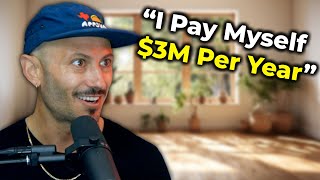
Noah Kagan built AppSumo to $80M revenue while working five hours a day. He launched in 2010 with $300k in year one through Reddit posts, hit profitability by year five, and reinvested heavily like Amazon. His system: a yearly dream list, weekly three-question reviews, and a $3,000 monthly freedom number that let him step back from daily operations.
Questions this video answers
2010
~$80 million (top line, 2023)
Approximately $45–51 million
Approximately $5–6 million
Year 1: ~$300,000; Year 2: ~$3,000,000
Chapters
I'd say there's two strategies that have worked exceptionally well to run an $80 million business. Popular YouTube channel, almost a million subscribers. You can do this in every aspect and it's the cheapest way to get pro.
That doesn't add up to me. Tell me more.
What I learned from working for Zuckerberg directly was every single week, at the end of the week, I basically asked myself three questions. AppSumo took off immediately and built something people actually really wanted right away. This year we'll do something around 80 million top line revenue. I got to a point where I was worried that I had nothing to show for that. I'd been building this company, making no money for, for many, many years. Only until year five was there actually enough profit. I couldn't reinvest it. I was like, all right, I'm gonna take something.
Noah Kagan runs an 80 million dollar a year e commerce company, has a 1 million person YouTube following, and has more free time than most of us. So in this interview with Noah, I asked him how he approaches accomplishing really big things while also maintaining a life. I also ask him how he gets the the best advice from some of the industry leaders without having to break the bank and hire really expensive team members. In this episode, Noah shares how he breaks down really big goals, how he accomplishes things that most people take a lifetime to accomplish, and how he does it all while still living a great life. This is a wide ranging interview with my friend Noah Kagan. So Noah, sometimes the way that I like to begin these conversations is just to ask, how did you make your money?
I made all my money@appsumo.com so I tried 10 years working at a cubicle at intel, living at my mom's house. I was early employee number 30 at Facebook, number 4@mint.com and I did so many different hustles over 10 years and never really got rich, but always wanted to be rich and have all this money that I wasn't even going to spend. And finally AppSumo started and I still didn't get rich. And then about five years in AppSumo, I started making almost about a million dollars a year cash.
And what specifically at AppSumo took off at year five, like what was the general the money generator within that business?
The biggest difference is actually in the beginning, day zero, AppSumo took off immediately. And so a lot of the way I've figured out after years of failing and years of trying all these different businesses is I built something people actually really wanted right away. So when I launched our first deal, Appsumo software deals, immediately it was like hundreds of people I promoted on Reddit. It was, it was an imgur. You guys remember Imgur is like Imgur?
Yeah, I m g u r that one. Yeah.
So it was like they had a pro version and I had this. The way I like to approach business is like, what am I validating? And it's like, I think people want software deals, I want a software deal. So I always solve my own problems too. Where are these customers? They're on Reddit. People on Reddit like Imgur. Cold emailed Imgur founder, hit him up, said, yeah, I'll do a deal. Cold emailed the Reddit founders named Chris, took him out to breakfast, said, hey, I got an idea for this, Can I get some free ads? Put it on. And immediately people started buying. And so it was the fact that people wanted it so badly. So our first year we did 300,000. Second year, 3 million. Right. It was just like, okay, you have a business that worked. And so only until year five was there actually enough profit I couldn't reinvest it. I was like, all right, I'm gonna take some of the table for me.
And was that because you were reinvesting into people, because you were growing so fast, you do year two, $3 million, but you didn't make a million take home until you're five. So is that because you were redeploying back into people and more deals and all this stuff?
Year. Year one I made zero. Year two, I made 42,000.
Yeah.
Three I made 75,000. Year four, I made 120,000. So just to give people context, like how little I was making. And so it was either I can do it in ads, I can do it back into people, whatever it was. It's the Amazon approach of that all massive redistribution, reinvestment this year for a bigger next year. And we still do that to this day.
Yeah, I'm glad you said that because just a few days ago somebody emailed me and they were, they asked me, hey, if I start an E commerce company, you're all about 0 to 1 in a year, 12 months to 1 million. How long until I can make enough money to quit my job? Like, this is a wrong question to ask. Is the absolute wrong question to ask. So you have an 8 for your company, but you are, you know, making entry level salary until at least year three.
Two interesting points though. I have an eight figure revenue company and it depends where you're from. So I'm from Silicon Valley. That is a nine figure valuation. Yeah, right. If you're a bootstrapper, you say, I have eight figures in revenue. And so that's something I always consider. The other thing is I made my first million before that.
Say more.
So I made my first million with boring ass shit. And this is the stuff I think people kind of miss out on. They're like, well, I got to be an entrepreneur and I've got to suffer and I've got to make $0. And I did live in my aunt's basement. I did do all these things. I lived on couches for a year. But it's because I had took basically basic ass jobs. So Intel, 55,000 salary. Then I worked at Facebook, $65,000 salary, then Mint.com, $100,000 salary, then I created conferences where I made about 200,000. So I made money over these years and I didn't spend anything. So I lived in my mom's house two years. I lived in my aunt's basement for one year. I lived on couches for a year. And so because I never spent money, I just put in the stock market or I kept it in cash. By the time I was around, give or take 30, I had a million liquid. And it's just I was living so cheap. So, so cheap.
And that kind of gives you the COVID to take risks with appsumo.
And I think that's where people miss out on. Is that because I didn't think, I didn't have a wife and kid. I didn't have a lot of expenses. I wasn't living luxury. I could do the things and get my freedom number. So that's what I look for is what was my freedom? It was $3,000.
$3,000? Yeah.
My freedom. What was yours?
I'm still stuck on $3,000. You mean $3,000 a month? Yeah. Okay.
So every person has a freedom number. What do you remember when I started?
It was like $10,000 a month.
I was like, I was not living like that. I was just living so cheap. And for me, what that enabled though, is to be able to go and do the thing I really wanted and find the thing I really wanted, which does take time, you know that. And as you educate your people, it takes time to find the thing. But knowing that number, then it was like, okay, if I can just get something that does 3,000, I don't have to have a boss ever again. And I could live wherever I want and I could do whatever I want.
And knowing that Gives you the risk tolerance to go build $100 million ish company. Which I want to ask you about. But first, do you remember how we met?
No.
Really? Not at all? Nothing? We met at an ayahuasca retreat.
You were at the first one.
No, I wasn't at the one where you lost your mind, but that's what I want to ask you about. Because I almost didn't do ayahuasca because I heard the story of. About you losing your mind the first time you did ayahuasca.
Yeah, that's.
And I was standing by the fridge before the first night, and you said, how are you feeling? And I was like, I heard about your story and I'm a little worried. And you're like, you won't. You'll be fine. You'll be fine. And then we went right into it. And that's how we met. We met at the fridge at an ayahuasca retreat.
At the second one.
The one. The one that was in Guatemala.
Yeah.
Dude, those are wild.
So can you share the story about what happened the first time that you went on one of those retreats?
Yeah. I mean, it's funny. Things go through waves, right? Like now, like cold plunges and saunas are kind of like the.
I'm so not in the psychedelic world right now. I have no interest. But there was that period where that was. It was very helpful and very mind opening for me.
Yeah. I was reflecting how we all change and mature. Like, I think I'm going through similar experiences in life, but because I've grown and matured in different ways that I feel like I can handle it better now. And at that point in life, I did not like my work. You know, I was working, running appsumo. I wasn't happy in my relationship. I wasn't happy with where I was living. And I was like, man, I'm going to therapy. I am meditating. I am checking any checklist that you can watch on a video on YouTube. I checked it.
Yeah.
And it just wasn't happening. And I said, okay, I need to try something maybe a little bit more extreme that could potentially shake me out of my comfort zone and shake me out of this funk of my life. And I sometimes think it's like, there's never really a secret bullet. There's nothing in a book you're not going to probably know from that you haven't already heard. That's the reality. Most books are fiction. Like, there's nothing that's really going to change that. You haven't Seen or you can't do. And so I was like, I'm going to go for it. Went. A buddy of mine brought in shamans who used to be a New York banker.
That mutual friend of ours was at my house last night.
Oh, is he really?
Yeah. Okay. Yeah. He says, I don't think we.
Billy Murphy.
Yeah.
He's a. He's a good friend. I talk to him every week. And Billy was always sad to me. And one day he seemed happy, and I was like, billy, why are you happy today? He's like, oh, I did this ayahuasca retreat. I'm finally happy. I was like, if he could be happy, then it's gotta work. Yeah.
He was always serious and kind of closed.
Yeah.
And in his head. And then he did this, and he came back and he was just like this wildly different person. And the way I described it was I never was interested in ayahuasca at all until I saw Billy's transformation. Because he was my most. He's my most reasonable friend. He's, like, methodical and thoughtful and logical, and he's saying that it was this amazing experience for him. And I was like, all right. I mean, if my most reasonable friend says that it was a great experience. And it sounds like he sold you, too.
He did. Just by showing, not telling. What was your inspiration?
Well, why did I decide to do it?
Yeah.
So I come from a super religious background. Right. I went to school thinking I was going to be a pastor. So I have all of the. And I don't. I'm. I'm not a practicing Christian at all anymore. And so I had all of this, like, spiritual story about the. Like, spirituality needs to be this way. It needs to be. And it's either that or it's nothing. It's either Jesus and you accept him and you go to heaven, or you go to hell or nothing. It's those two extremes. And so I wanted to see if there was a different perspective, there was a different way. I have a spiritual experience that wasn't religious. And my ayahuasca experiences have all been very hard. But one of the nights on that first retreat where we met, I felt like I completely reconciled my faith. I completely reconciled all the baggage I had. And it was like this experience of, oh, this is my culture's best way to describe the divine. And I forgave that experience. I accepted that some people had that experience. And I even felt that I could now find value and benefit in a Christian experience while forgiving the messaging that I found limiting and hurtful up to that point. Now we keep skirting the issue. You had a very different experience.
So just to give the context, where Billy came in, your experience. Mine was just in, you know, I think. Which is very common for a lot of the people out there, which is. Work is not good. My lifestyle's not good. My living situation's good. Maybe my relationships aren't good. I want to change, and there are other ways of approaching it. And so that first night, you know, I've partaken drug usage, and I've partaken drinking. I like partying. Not as much as I've gotten older, but I liked it. And so the guy. You go into this room, and it's a half circle, and it's all dark. And I'm afraid of the dark. I'm afraid of the dark. And this shaman guy's like, you want some? I was like, dude, just give me double. Don't worry about it. He's like, hey, slow your roll. Slow your roll. And so, I mean, he said it in shaman talk. And so I take it, and I'm like, okay. And then they have all these singing, and it's in a dark room, and you're on a mat. And I'm like, okay. Half an hour goes by. Nothing. And then, like, 45 minutes. So another 15 minutes goes by, and the room gets darker, and there's a fan. And then the shaman. It's, like, emotional. And then shaman starts singing, and I'm just. I'm fucking terrified. Like, I don't know what's happening. I don't know where my brain is going. It's the easiest way to think about it is that the world feels pixelated.
Yeah.
And very disassociated. So you're not really sure what's happening. And so I go outside, try to go to the bathroom, and Kevin catches me, and he's like, bro, you need.
To stay in the room.
Like, you just need to stay in that room. Just don't leave the room. Don't leave your mat.
And then I go back to the room, and I'm just like, I'm really scared here. And then I'm like, I don't know what Billy did to me. I don't know what these fear. I don't know any of these fucking people. I don't know what they gave me. I've got to get out of here. I've got to try to, like, survive. So I leave. And it's in the woods, and I remember being like, I don't know what's happening? It felt like I was in the video game.
Yeah. Okay.
And I'm just. I don't know where I am. But I do know this house we're at. It's close to a friend of mine's house.
Oh, no.
And I was like, I can run to his house if I can find it. And so I eventually get off the property. Oh, my goodness. And then I'm also shirtless. So my shirt's off and it's in back. So I'll just say it's in backcountry Austin. It's in, like, remote. Remote Austin. It was backcountry, and I'm running the streets.
This is probably Austin, Guatemala. Austin, Guatemala is a city in Guatemala.
Yeah. It's like Paris, Texas.
Right.
And I'm running the streets. And I honestly felt fucking wild. I just felt like, you are a wild beast. And then I thought about my dad. He was a very. He's from Israel, an immigrant, didn't speak the language. And he was just. He was honestly just wild. And I was like, you're him. And it was just really like, I don't know what's happening. My mind is out of. Out of my mind. And then I thought I saw, like, Holocaust to the right. Like, there was the gates of Holocaust, the gates of, like, Auschwitz and these things to the right. And the trees and the leaves are all pixelated. So I cannot find how to get to my friend's house. And I'm in the middle of the road, kind of leaning over and kind of starting to just. I'm scared. I'm like, I don't know what the fuck's going on. I hate Billy. I hate these people who gave me these drugs that I chose to take, but I just taken. It was a really good moment.
And the good summarize.
It was great. And the good moment was in that moment of bending over and. And. And shirtless and wild. Like, I felt like a wild beast. I was like, no one's coming. No one's coming. I was like, I have to take care of myself because no one's going to come Count. No one is coming to help me. So I go back. This is. It's all interesting. I think this.
It was.
It's an interesting story for me. So I go back. I find. Luckily I was able to find the ranch we're at in Austin, Guatemala, and the person who owned the ranch. I see them watching tv, and I.
And I thought, you saw them watching tv.
Yeah, through their window. I finally kind of started coming Out a little bit. And I could see them watch tv. And I said, if I knock on their window, this is all over. And I came here for a reason. So let me push through and not give up yet. So I go back into the. To the. Not the main hut, but to the room. To the lodge where we were staying, where I was sleeping. I just lay in my bed, and I'm just, like, trying to calm down because I'm just so fucking like, what is happening?
They have to be searching for you at this point, right?
No one's ever ran away.
No one. No one in this group has ever run away before that.
No, they. And almost never people run away like that.
Yeah. I mean, I'm thinking about it. Like, I can't. I couldn't move. Yeah. When I was doing.
I know. And I'm like, out. And I don't know where I am. All these things. And so the shaman comes in the room, and he's like, bro, you got to come back. Like, you fucking scared us. Like, just come back to the room. And I was like, I need to calm down. I need to calm down. I'm like, so I'm not just angry, I'm just disassociated. He's like, let's go shower. So I take off all my clothes, and I don't like being naked in front of other people. Like, naked for myself. But I technically was like, dude, what the fuck are you doing? I was like. I was like, I don't know, man. Like, I don't know what's happening. So I get naked, and he showers me. He doesn't bathe me. Showers. Okay. Just turns the fucking water. And then I go back into the room. He's like, are you. How are you? I'm like, I'm still tripping balls, man. I don't know what's happening here. This is the part. This is the part that's interesting. He's like, I gotta go. I'm gonna go back to the ceremony. And they're playing music. And so I'm in the room, laying on the bed naked. And I'm just.
Calming down, and I hear singing.
Calming down.
Here's the singing. I'm in the bed. I'm like, you need to go to the Voice. You need to go hear that singing. I was like, I'm so embarrassed. I, like, ran away. I, like, wasted his time. Everyone must, like, disappointed in me.
So, like, grab my blanket. I have. I put on clothes. I know that's what everyone's wondering.
And then I, like, Walk back to the outside of the. The lodge that they're having the ceremony in. And I go into the ceremony and I just. They're singing. Her name is Carol. I think she has, like, one of the best voice in the world. And I get on my mat, and you're not supposed to ever give your mat. Clearly, I didn't listen to that. And I just start crying. I start crying for myself. I cry for my girlfriend. I cry for my father who passed away. That's been a big story for me. Cry for my stepfather.
Then I just, like, cry probably for like an hour or two, just cry. And then I go up to the shaman at the end. I was like, hey, I'm really sorry. Like, I'm really sorry I left. I'm really sorry I embarrassed you. I'm really ashamed. He's like, courage is being afraid and doing it anyways.
Yep.
And you were afraid to come back in, and you were afraid of what you were going to do, and you still faced it. And that's courage.
It's big words.
I was like, wow. So, yeah, it was. It was. It didn't change everything for me, but it was definitely an interesting experience that, like, brought different things to light, similar to you, that some got closure on, some I was surprised about. But I think all of us have that ability to face something we're afraid of and. And realize we can make the change and we have the power to make the change in our life.
Well, I think a lot of people. Dan Sullivan talks about the difference between courage and confidence. And a lot of people want the confidence before they have courage. And the difference between the two is that confident feels good and courage feels like shit.
That's very well said.
So we all celebrate courage and acts of courage because we know that it's hard, and you have to go through a period of courage in order to be confident on the other side. So when you're starting a business or you're facing your internal demons, or you're overweight and going to the gym for the first time, these all feel uncomfortable and require a certain level of courage before you have the confidence to get the result. And so there's that uncomfortable period where it just feels like crap and you have to just be there and feel. Feel it.
A lot of times lately, like, even I have my book coming out, Million Dollar Weekend, and I. I get rejected. Like, someone's like, hey, I don't want this. Or someone says, I know. I don't want to buy it, or, I don't want you on My show or in fantasy football, which I'm a big fantasy football player. I lost this weekend.
I like to think it's like, hey, do you really want it? This is just a test of if you want the thing or not.
That's it.
It's not more or less. Someone didn't want your own book. Do you still believe what you're doing? Okay, fine, move forward. And I think that's the thing that we kind of get hung up on when something bad happens, like, oh, bad, bad, bad. No, it's just a test if you really wanted it.
Yeah. So what, at what point period in your business, how long had you been an entrepreneur when you went through that experience with that retreat?
That retreat was in 2017, 2016. So AppSumo started in 2010. I started my first company where I paid my own salary, got my freedom number in 2008.
Okay.
So about halfway through Appsumo.
Okay. Because it seems like you had this big upswing at some point where Appsumo, Appsumo has always been kind of a leader in the industry, but from a growth perspective, something seemed to really take off and now you're, you're like at 100 million a year, right.
This year we'll do something around 80 million top line revenue.
Okay. So it seems like there was a big hockey stick somewhere in that period. Can you reverse engineer where that happened or it's a big jump to go from I'm doing deals for software companies between Imgur and Reddit to what you have now. That is an 80 million dollar year company. Something changes in that period. Can you identify where that happened or what happened?
Yeah, a few key things happened. So one, it's market, it's straight. What is what got bigger? So let's just take content. YouTube. It's just, there's a lot of people watching YouTube. So if you started doing some content, you've been doing it for a long time. I've been doing a long time. If you're just in the ocean, if you're riding the wave and it's a big ass wave, you're gonna do okay. And so for me, like I cycle a lot and so just for people out there, one of the things I think about is like when I'm indoors and it's raining, I don't go outside. But if I just go riding and it starts raining, I'm like, well, I'm already in here, let's just fucking go. And so I think it's just put yourself in these places and I put myself fortunately In a place that I understood that went from when apps you wanted, there was 10 software products. Now there's probably a hundred thousand. And so the amount of products available just expanded. And so we were just in a place where the market grew and we were just in the water. So I think that was a key factor, number one. Number two, I hired someone.
Like, lesson one, show up.
Just game.
Yeah.
Yeah. So the way I like to call it is be an experimenter. And I think sometimes when you're getting your e commerce business started, you're so much pressure to make a million that you don't even make $1.
Yeah, right. Yeah. I gotta have a big launch. I gotta have. I. I gotta hire this agency to do this. I gotta build an audience. Or you could just put something for sale.
You go get a customer, go on ebay, go on Craigslist, go wherever you are in the old Facebook marketplace, go to your friend and just sell something.
Just. Just take an order.
Yeah.
Get a customer.
Yeah. So that was a. That was a major thing, I think also second major thing. This one, I've. I've learned, finally, 10 years later, I've learned we hired someone. And I hate when people talk about hiring sometimes because they make it sound so easy, like you just hire and then, you know, you got rich. But I. It's. What did the person do differently than I did as the market grew. And so we hired this guy, Ayman Al Abdullah, and we went off to build some other new products. But what Eamonn did, that was there's two key pieces that Eamonn did, and this changed everything. Number one, Eamon doesn't do new things.
Eamon is not Noah. Old Noah, not new Noah. Eamon just did what worked. He just did what worked. And I'm like, fuck, no. No, Eamon, let's try something new. Let's go do this Sumo.com thing where email pops. He's like, nope, just gonna do deals. Okay, no, no. But like, let's do like, I have this idea called tidycal.com, which we built, which is scheduling software, and it'll be. He's like, nope, still deals. I'm like, oh, that's interesting. It's always so appealing. I think when I was in my 30s and I'm in my 40s, I'm trying to do new things. Now I'm just trying to do things that work and the things that work, just stick with them and not. And so it's like really, really, like four days of the week. The thing that worked Maybe one day you can do something new. But I think as especially if you've had some success, you think your next thing is going to be your best thing. And it never is. It's always the thing that works. And so I think Aiman was very good at just being consistent. And now with like my YouTube channel, what I look for is longevity. How do I do content for 10 years? How do I do this business for 10 years? Because it's very easy to get. I always, I joke, my mom does the watermelon diet for 30 days and then eventually you have to eat real food or you're not going to survive. And so how do you do that, the diet, how do you create the content? How do you create the e commerce business that you can just outlast? If you can outlast, you can outwin. So I think Eamon did a very good job being consistent. And I've in with appsumo, people now are like, hey, we should do this new thing. I'm like, nope, we do the thing. Second thing that Eamon did very well. And I'll give specific examples. Double down. And this is something I hate people talking about because you hear it. Have you guys heard double down? People talk about do more what works.
Of course.
What the fuck does that mean? What the fuck is a double down? Let me give an example. Because I hear it and I'm like, yeah, I hear it, but how do I do it? So for example, with appsumo, you know, we do software. It's a software marketplace. So recently we started finding that creating video content around, sponsoring video content around these products crushes for us. We make our money back week zero. We make profit. And so if you guys have done any ads and anything or you spent money on performance for your business, you know, you almost never make your money back weeks. Yeah, right. And so we built modeling all this stuff, but we, we're making about 1.2%, 1.2 x 120% week zero. And now what double down means is we've now built out a team of five people just to go get more. We call them ambassadors, video ambassadors for our products in multiple languages. In Spanish, in Italian, in Portuguese, English. And so we have dedicated team of five people after we tested and found out that it worked, that is double down. And so going back to the original question of how did we go and how did we spark this thing? Because we plateaued. And this is what happens in every business. I'm sure you've experienced it and you've coached and Helped a lot of people. When I got the business appsumo, the first five years I got it to 4 or 5 million, I could not break through. I could not break through that.
5 million is a pesky little glass ceiling there.
Yeah, it was tough.
I had a mentor say once that $5 million businesses are the worst businesses because you need expensive talent and you can't afford them, and everybody else thinks you're crushing it.
I feel that.
Yeah, yeah. And I think Aiman. So doubling down. I just gave you a very specific example. So, you know, we found now video investors work. So you go. And we have. I think we have almost 60 video ambassadors. We're trying to get to 100 by Black Friday. And so Eamon did that on very specific areas of the business that were working. So he did it with our affiliate program. Initially, just general affiliate. He did with our Facebook ads. He did that. He's like, all right, now let's go build out a large team to run Facebook ads and do with our email marketing.
Going really deep in these areas that were proven.
Yeah. So, like, AppSumo today has five people just on email.
Wow.
Just on the email team. We have at least five, if not more, plus contractors on the affiliate ambassador team.
Wow.
There's, you know, so affiliates big. Our ads team is pretty big. Our email marketing team is pretty big. And so it's like Eamon was the one who kind of really reminded and really built that into appsumo, which is why we went from 5 million to almost 80 million today.
So here's how I'm kind of processing that. I work with e commerce entrepreneurs that are doing 2 to 3 million bucks a year on Amazon.com and their first question is, all right, how do I diversify onto Shopify? I'm like, so you want to take your attention away from something that's doing $3 million and put it into the thing that's doing zero. Tell me why this is a good decision. And they say things like, well, I don't want to be beholden to Amazon. So you want to be beholden to Facebook ads. You think that's less temperamental in some way? Well, I want to control the experience. Do you think you're ever in full control here? Or we could just launch another product and go from $3 million a year to $4 million a year. Or we could double down on customer experience. So people voluntarily. You.
Yes.
And now you're in control of the experience.
That. That's doubling down. Right. So you're even taking it one step Further of you're building almost entire teams around the areas that are working.
Yes. Yeah. And I mean, the teams originally, to be clear, they're contractors to start. So we freelance, we do agencies. Like right now we're testing Twitter. So we got up to about a thousand dollars a day of Twitter ads. And it's not roi, just not. So it's like, all right, we're pulling back to around $300 a day, and it's not something we're gonna double down. And so I think it's being mindful in two. Two stories, especially for e commerce people, is what is the core of your business? And the core of Appsumo's business is very, very simple. In terms of our Flywheel dope ass product. Dope ass price. For solopreneurs, it's basically small business owner, less than five people. And I think people miss out on that. They're like, what is the core of your business? Because for AppSumo, I was like, all right, we're gonna do like this kind of thing. We're gonna try this thing even two years ago, we went from 300 products in our store to 13,000.
Geez.
Right? And AppSumo is trusted because we choose very, very few amount of products. We package them really well at the great price, and then we promote the shit out of it. That's what we do. And so I do think people have to come back. What is the core of your business and how are you staying focused towards that? And then secondly, where I've gotten even better at is who is your exact customer and what do they really want? Because I think what most business entrepreneurs do is say, how do I go from $1 million to 2 million? Yep. You see this all the time. I'm sure you see this. How do I get my $4 million business to 5? Or it's like, well, what does the customer actually really want? And then, yes, you want to tie it to goals and things like that. But really focusing on, like, our customers need this. And so our heroes at AppSumo are our partners. The hero is a software creator, could be anywhere in the world that wants to that has built a product for solopreneur. How do we help them more? What do they need? How do we get them to be like, yeah, if you did that. Oh, shit, that's crazy.
Yeah.
And so I think those kind of areas have helped us get to 80, and I think they'll help us get beyond that.
How do you have an $80 million business and still have time to do YouTube videos and podcasts and travel and go for hikes and meet me for coffee and do ayahuasca and have a girlfriend. Like, you seem to have a very.
Very desirable life and a very desirable. I don't. I'm trying not to say work life balance.
Yeah.
But you seem to have a lot of time.
Yeah.
And you have an $80 million a year company. Yeah. That doesn't add up to me. Tell me more.
I was explaining someone yesterday, I don't believe in time management because if you doing the things you want, you don't have to manage it. Like, I get to do my. Like, this is my job to come talk to you about how I run my business. And like, we get. You get a. I get to learn from someone who's sold a lot of books how I can sell my book. I don't have to manage that. Like, I'm going to go try to prioritize those things. There's a lot of like. And we can get in tactics. And I think people get excited about that, but it's more just like, how do you find the things that excite you and spend your time there at the end of the day? And so for me, creating content, I love it. I've been doing 23 years now.
It's not.
I don't make a lot of money from it. I get to meet interesting people. I get to put myself out there. I get to learn. Like, I've been doing it 23. I'll do it for the next 23. And so I think, I think for all these things, it's like, what are the things that really give you energy? One of my favorite books about this is Powerful Engagement, Power of Full Engagement. And he just talks about it, which really resonated with me is like, just find the things that give you energy and spend a lot of time there and find anybody else who likes to do the things that don't give you energy to take care of those.
Man, that lands, man. I mean, every time I break that principle, I regret it. Not right away, not even midterm, but long term.
I'm like, yeah, damn it.
Because I compromise the thing. I compromise like the soul of why I started something so that I could grow what I wanted to start totally, rather than just stay in the thing that I wanted to start and wait maybe a year, maybe two years for that partnership with the person whose soul lives and breathes that thing that grows the business. Yes. And I think for my. My experience has been. And working with other entrepreneurs is people don't want to wait and stay in that zone. They want the ego boost of the growth so they can justify that what they're doing is valuable enough, rather than just saying, if this is providing value for myself and other people, then is intrinsically rewarding. And I'm going to grow that into such a foundation that I can't help but attract the people that I want to partner with that helped grow it. It's like flipping the whole thing.
It's been. I'd say there's two strategies that have worked exceptionally well to run an $80 million business. I have popular YouTube channel, almost a million subscribers. I'm really doing it. I'm really working on prioritizing my girlfriend so that she gets the time she needs. And then I have a book coming out, Million Dollar Weekend, and it's just like, yeah, that is a lot. So I'll tell you two things that work really well. Number one is be very clear on your dreams. And I think people kind of have, like, vague dreams. They're like, I kind of would like some money. Okay, how much? And so what I like to do is I have a dreams for one year. I do a dream list for one year. And what I do is I write out everything that I could possibly do in this one year. And then I like to bucket into four categories. So what is my work? What is my travel? What is my personal? What is my relationship? And that's it. And then I pick, okay, what are the things in my dreams that I want to do? That's it. And every day I look at it, it's on my phone, it's on my computer. So number one, just be clear on where you want to go. If you don't have a vision, if you don't have a dream for your business, for your relationship, for any of these things, like, that is the best place to start. And it always sounds so daunting because I meet some people who have purpose. I'm like, where'd you get this fucking purpose? Is that on Amazon? Did you get on Prime? I was always jealous when people fat like you meet these people that seem so confident of their purpose. And I was like, man, I wish one day, one day I'm gonna find that purpose. You know, it's gonna be out there. You know, I'm talking about. And purpose is just like, what would be cool? What excites you? What have you done for free? And if you can just be clear in your dream, that's now a destination. That's your vision. Let's Just be. And then put that down on paper. Now I'll tell you the second thing I do every single week, and I don't miss every single week. At the end of the week, I basically ask myself three questions, and it's related to my dream. It's like, number one, how was my behavior this week? How's my behavior? And I'm aiming to be consistent. And if I'm inconsistent, what happened? Okay, number two, what are my goals this week? And how did I do against what I said I wanted to do? Every single week I do it. It's just a Google form, and I get an automatic notification in Slack. That's like, it's your weekly review time. I can show you my Slack message. And it just. It's just, how did you do against what you said you want to do? Okay, cool. And in those things. So I rate it 1 through 5, so you can see a trend graph over time. And then I comment. So an example could be, I had a meeting with Kevin, who's our VP of finance, and I was a little bitch to him. Right? I could be a little bitch to Kevin. And it's like, okay, well, that's interesting to notice. Or I was in a meeting around some of our Black Friday prep that I didn't need to be in. Okay, that's interesting. Cool. Noted. And then the last question is, what are the three things you want to do next week? And I either do this on Fridays or Mondays, but I always do it. And it really prioritizes because I'm like, I had a dream, remember? We come back to the first part. What was your dream? Now, I told you what I said I was going to do. And then it's like, well, did you do it? How was your behavior on it? And then, what's the three things you want to do in this upcoming week? There's a lot more to it, and I do have assistants and EAs and this kind of stuff, but that ultimately will help me stay focused and priorities around those areas.
You mentioned that you've been creating content for 23 years. You're going to do it regardless, right? And I'm the same. Yeah, I've been creating content for, like, 15 years. Am I going to do it for another 15? Regardless. But I remember a podcast episode that you released had to be five or six years ago, in which you were starting to document your growth on YouTube, and it seemed like you were ready to start taking it seriously. Like, it seemed as though something was changing and you were ready to go pro. You Were ready to really give this a shot. And you went from like 30,000 subscribers and there was a very slow curve up and your goal was like 100,000 by the end of the year. And you didn't hit it, but you didn't stop. And I've. I'm in a similar transfer, not transformation, but like similar period right now where it's like, I think I'm ready to start going pro. And I wanted to hear about what changed for you as you started taking content creation seriously. Because it seems to me that in multiple areas of your life, you just go find really amazing people and you surround yourself with them. So with your book launch, you're going and hiring the best editors and going to your network and finding the people who have sold a whack ton of books and finding out how they did it. And it seems like that's a theme in your life. Could you say more about going pro and how you think about that? Yeah.
So you can do this in every aspect and it's the cheapest way to get pro advice. So what I do is I get advisors and we do this in appsumo. So almost every single person in our leadership team has a pro advisor. For example, I'm running the marketing team right now and I have. My advisor is Moody Glasgow. Moody was the CMO of Zapier, the CMO of Glassdoor, and a vice president of ea. I'm getting a cheat code. His hourly. I can't say his hourly publicly, but it's a lot. It's more than most people making a month. Sometimes like his. It's a lot.
And we have done that in a lot of different areas. So for our CFO Kevin, our VP of finance, we hired the chief financial officer of mailchimp to advise him. And so the same thing.
These are not people on staff. These are people that your staff is paying for consulting or coaching or advising.
Exactly. There is no way we could afford them. Even like Moody, we cannot afford. I asked him, he's like, dude, just don't do it because you can't. And most of us can't. And the reality though is you can get them on an hourly. I don't. The equity is a whole separate. But you can get most people for an hour and then on. And if you do the work that they say, which is what all advisors actually want to have happen.
Yeah.
They'll want to keep working with you.
That's right. Yeah.
You know what I'm saying? And so with YouTube, there's two pieces. So we hired A guy, Patty. Patty Galloway. He's pretty famous now. He helped Mr. Beast, he helped Mokagan, he's helped other people. And it's interesting to go to him and be like, hey, Patty, I want to do this video where I sit at my desk and I talk. He's like, that's cool, but no one's going to watch it. And over time, though, our topics, the topic that's really, like, at the crux of what depending on who your audience is. Our audience, we call them underdogs. What do they want to watch? And then what's the topic that will actually be exciting for someone who doesn't know you to want to actually see it? So we've hired Patty and then we just invested. At the end of the day, we had a goal. So the goal was 250,000. And really, by almost being. And this is a thing for everyone out there, by having limitations is how we succeeded. Because I think most people think of the fact they don't have money. Noah's got money and Noah's got his really good looks. And Noah has all these things that I don't have. Don't laugh. And.
That'S how he's winning, because he's got all these resources. Like, no, because we didn't have things in the beginning. We made three videos a week for a year. We did not miss a week. And nothing worked. Because nothing worked. And we wanted to go from 100 to 250,000 subs. And we were at 179,000 and we just could not get it to grow. We're like, we gotta do something different. We've gotta use a limitation. Because it was November and we had two months to try to get, like, I don't know, what is that? 80,000 subscribers. And so it was like, all right, this limitation is what's going to help us. So have a clear advisor if you can. And if you can't, guess what Patty and all these guys are giving on YouTube for free. You don't even need to pay them if you can't afford it. Two have a goal. So same with AppSumo, we have revenue goals. Same with our YouTube channel this year with 750,000 subscribers. And I will say I've changed my goal setting process a lot where instead of such a big goal, I try to do a sustainable goal. So AppSumo, our revenue growth next year is 5%.
Yeah. I call them process goals instead of outcome goals.
Yes.
Because if I set an outcome goal, then I beat myself up. I just think about the cheat code to getting somewhere. But if I set a process goal, like we talked about this at coffee this morning, my process goal is to get up at 5:30 and go work out. That's a process goal. I have a different life. I mean I have two kids. Right. I gotta wake up before them and go work out.
Yeah.
And that process goal is different than an outcome goal because it's just about waking up, having a good habit, getting my day off to a good start and that gives me a different experience of life and as a result I'll get in shape.
Totally.
But if I have a outcome goal of having 8% body fat, then I'm gonna starve myself. Think about getting there as fast as possible so then I can stop the process.
That's exactly right.
And then I'll bounce back. Ask me how I'd known.
You don't know.
Oh yeah, yeah.
Body's looking good, dude.
Thank you. Thank you. I do 10 push ups every morning. So that's, that's. So it's the process goal instead of an outcome goal that is sustainable rather than I'm gonna bullets my way somewhere that's not sustainable. And that will get you a result for a short period of time, but it won't give you a career, won't give you a life and give you a business and give you a short term temporary result.
The thing I would add to that is that I do think if you do an outcome goal. My outcomes goals used to be extreme. It's like I'm gonna like when I started Appsum, I was like, we're getting 100,000 email subscribers our first year. That was actually our first major one. And what I learned from working for Zuckerberg directly was pick your goal and just have one of them. Just do one. And people are like, I know, but I'm special. It's like, okay, you're better than, you're bigger than the trillion dollar company. Like, you know, I'm better than. This guy has done pretty well. I don't think so. And so I think what I would change though, and what I've adjusted I think is more effective is have a goal that's just a little bit more each year. And Eamon was really good at that. Zuck a little bit more each year. Yeah, so have an outcome, but it's just not so for me it'd be like this year it'd be how do we go from 80 million to 150 million and then you go crazy and you get to 150 million and people are burnt out and people are tired. And maybe you get it or maybe you get at 110, but it's just like, is this sustainable? And the answer is no. But what you hear and what you hear on YouTube and other places or podcasts is like, oh, grow fast, get more. It's like, no, grow slow and you'll get bigger. And so with YouTube, had advisors, had a goal and now our goals are even smaller. We're getting smaller and smaller and we're growing faster and faster, which is kind of counterintuitive.
That's really interesting. You're setting smaller and smaller goals. Goals. And you're growing faster and faster.
Last year we finished 539,000 subs. This year our goal was 200,000 more or 250,000 to get to 750. And now we're almost at a million, I think. But yeah, and that not. But that's working for us. So it's like I'm going to just keep doing the sustainable part.
Here's how I'm processing that. I'm thinking, what's a really small goal that could create a really big outcome? It's like, let's get our click through rate from 6% to 7 and a half percent. That could theoretically change a channel. Or how do we get our watch time from 10 minutes to 14 minutes? Like these are, these are small changes. But if you put everything on those processes rather than I'm gonna have, I'm gonna double my channel this year, I'm gonna double my revenue this year.
I think that's where people go. And it, it's not that it's bad. Right? There's many ways of getting to McDonald's. I've just found this works best. And I've done this for a very long time and I've had the success with it. And so this is my playbook that I recommend. The other thing that I would say is that if you want to be professional, you have to treat it like a profession. And I think people treat it like a hobby. Expecting professional results. Yeah, they're not hiring a videographer. They're not worried about the audio. For example, when we're choosing a video, what we found strategically is we only do two videos a month.
Two videos a month?
Yeah. If you go to our YouTube channel, there's only two, maybe three videos a month. So what that means though is that if you think of professional TV shows, what do they do when they put out. They put out four episodes a week. Four episodes a month. Each episode is One of a thousand ideas they had.
Yeah.
So if you go to our content, it's very highly curated, which videos are putting out.
Yeah, that makes sense.
And it's very patterned. So it's like we have two types of videos, old wisdom from old people kind of that are pretty well known that people don't have access to. Cause I have an advantage that how do I get people that others can't. And the other ones is asking millionaires. So like asking a private jet, asking people at their homes, asking people on their yachts. And those have been the content that, that have historically worked for us. Now the only other caveat I would say is what is unique about you? Port Hemplo, as I'm learning Spanish, we're doing these asking millionaire videos where I knock on doors and we put out one last week where I went to Newport beach and I knocked on doors. And that same video in Texas, in Austin was like a million view video within a week. The video in California is now maybe a hundred thousand. Okay, so what's going on? It's going on is that anyone can go and do that. And there's a lot more content that people have just now copied around that. So I do think it's like, okay, how are you evolving with your unique story in whatever angle it is? So anyone can do that. What are things that people can't do? People probably are not going to wait outside a private airport and get on a private jet. That was very strange. Right? People are probably not doing first class, which is we have a video where I go to, I get a first class ticket and I go into first class seats and I just go around asking everyone what they do. Like, that is, not everyone's going to be able to afford that or do that. And so I do think you have to consider what's the unique angle to help create your own strategy and then be mindful of evolving that.
What is your process for doing that with content right now? Meaning you have this team of people. Do you have this group of people that come up with the ideas and you choose your favorites? Are there people sitting you down and being like, I know what works, just do what I tell you to do. When you have a team that is a team of pros that are doing this, what does your role end up looking like?
My dream role is to just show up. My dream role is like, hey, I do want to be part of choosing the content because I want to enjoy it. Yeah. And it's like, what videos are we agreeing to? Where is it in the calendar and then all the scripting, all the producing, all the thumbnails, all the titles, all how it's getting distributed is just handled. And that I would say 90% happens right now.
That's, that's a special place.
It's been good. So for, for, for example, tomorrow I am flying to Rhode Island. One of the guys, I was in New York and I asked, I go up to people and ask people who look rich, which is always an interesting caveat because just because you look rich does not mean you are rich. And also rich could be very different. People in YouTube world and podcast world have a lot of fiction is what I call, they say big numbers, but those numbers are never true. And mostly you need to be worried about liquidity and actual profit. People always have big numbers. I'm like, I think your net worth, your real estate portfolio is one thing, but the actual equity of your portfolio is another. Yes, real, real entrepreneurs. No. I met a guy in the street, he said he had a clip about why rich people have too much money that has 17 million views. And so someone on our team was like, that worked really well. Talk about double down. We should go interview him. And so one person on the team found him somehow, set up the meeting, called him, got production, like all the background story, wrote the questions out that they think are going to do well. And then I'm flying out tomorrow morning to meet him in Rhode island and like, so I have the scripts of all the different questions that we're going to ask and I'll review it with Jeremy, who's our producer. But that is the level of like, found the person. We know his content's already kind of tested. It's not like we think it works.
It worked.
And now we're going to create a long form interview of him and then maybe we'll go sailing.
Tell me what some of the advice you did not expect or the perspective that you did not expect as a result of knocking on rich people's doors and asking them how they made their money. Because this is, this has been kind of a cornerstone of your content. And I do something similar where I often open these conversations. Like, I did this by asking, how did you make your money? Yeah, but you just went to people's doors and asked, what's. What are some things that you discovered that you didn't expect?
The number one thing.
I'm ready.
The power of asking it is one of the most underutilized skills in entrepreneurship today. If you want something, you can't wish for it. If you want something, you can't hope for it. If you want something, you have to ask for it. And so the number one thing for knocking doors is the reality that if you want a customer, if you want a girlfriend, if you want a business, you just go ask. And so the practice, and it's a practice, it's not. People might think, I don't get scared. I'm. I was telling you guys before the show, I'm so anxious. Like, I did this one in first class passengers, and oh, man, probably a week before, I'm just like dreading it. The day before, I'm dreading it. During it, I'm dreading it. And then after it, I feel good.
Yeah.
And that's very common. It's not. And. But it's a skill that's courageous. It is courage. And one of the things I've taught and I encourage people to do is the coffee challenge. And so what that is is anytime you buy anything and what you have to do is commit before you go. But if you go to Merit Coffee, where we were today, or if you go to Trader Joe's, whatever you're going to go buy coffee is the most universal. You just ask for 10% off and you don't say anything. And then they say no and you get rejected. And then you realize life goes on and you're okay. And sometimes, guess what? You might actually get it. So the number one thing I've observed from knocking on doors, doing yachts, doing supercars, doing private jets, doing first class passengers, doing lounges, is just if you're asking, you might actually get something. And the upside of that is unlimited. Who I've met, Going to Rhode island to meet a guy. I met another guy. I'm going to go to his house in, in Connecticut. He's a multimillionaire from building houses. We just asked him if we could interview him. And so I think that's number one, is that you don't realize what you can get just by asking.
And I think that's been the most thing that I take away every single time.
And asking is so much about.
Being okay with a no. Because the worst people who ask are the ones who have these complicated proposal because they're trying to get the yes. And so what I try to do is I just go for the easiest yes possible.
Mm.
Which is. Is something. If I'm building relationship with somebody, it's, it's. Can I promote your thing? Can I have you on the show? Do you have a book coming out? Can I buy bulk And I mean, that is how I, that's how I built, like a lot of my relationships is you just lead with the easy. Yes. And then you open the door.
Totally.
And now you can lead your way to bigger asks, asks along the way.
Percent that's 100 when I do. And I've evolved with how I've done it with these videos. And also, as you're saying in sales and all these things. Like, if you're asking, if you're an E commerce business and you want to partner, how do you make it easy for them? And as I'm working on my book, for example, one of the things that's been crazy with Million Dollar Weekend is that how many people are willing to help me? And I'm like, why are they so many willing to help me? It's because I've offered to help them.
Yeah.
Years ago, Vanessa Van Edwards, Lewis Howes, Jordan Harbinger, even us. Like, I've got your number. We did ayahuasca, which I forgot. But like, we've been around where I'm like, holy shit, there's, there's a lot of people I've tried to help before I even needed anything. And it wasn't like, I'm going to do this now and get something later.
Well, think about this in like the dating context. You ever hear girls talk about how dating sites, how some people, how some guys will just open with these long love letters, some the, the creepiest guys, while these long love letters about how you're the one and God led me to message you, and they're like, well, I'm out. Or like, hey, it looks like you like dogs.
What kind of dog you got? Yeah, much easier. Yes. To answer what kind of dog I have than do you want to get married? Much easier. Yes. It's just basic relationship building. And as a result of doing that for a long period of time, you end up building a stack of people that can help you. I mean, in your case, you take somebody that is advising you. Moody was his name, I think you said. So you're just saying, can I pay you for advice? It's kind of an easy yes.
Can I give you a lot of money to talk to me for an hour about what you enjoy talking about?
That's an easy S. That's an easy.
So I think that's a great point. Like in our videos now, I've changed how I approach people. When I go up to people now, I'll say, how do you like living in Newport Beach? They're like, oh, well, I want to talk about myself. I like living here. Oh, it's kind of expensive living here. What do you do for a living to be able to afford it versus I've gone up to people and say, hey, what do you do for a living? And they're like, what?
Right.
But you see how it kind of, like, made it a little bit of a similar thing. And I think that works in most regard. The other thing I would say for asking, we can go back to what I've learned from talking to a lot of rich people is a lot of times, how are we giving before we're getting? And a specific example of that is how many times have you gotten a text message like, how you doing, Ryan? How many times you got that text message?
All the time.
All the time. How many times do you get a text message that's, like, from someone? Ideally, you probably want to hear from Ryan. Here's what's going on with me. I got a voice message from one of my best friends, Andrew Chen, recently, and he was like, I just got married. Like, I'm biking a lot. I watched that Netflix documentary, the Netflix Tour de France, which is phenomenal if you haven't seen it, even if you don't like cycling. I watched it. It was so good. I hope I get to see you soon. How are things, Appsumo? What's going on with you now? I'm, like, excited because I've gotten something from him. And so I do think there's something kind of in these lessons about how are you giving and helping another person, even in that small instance that now I'm like, okay, I want to give him something. I want to give him my story about what's going on.
Yeah. So, well, I wanted to go or talk about the book that you're working on, because mostly I want to talk about the thought process that has kind of. Kind of been teased throughout this entire conversation. Seems like also applied to the book that you're writing, because when you are working on YouTube, you have kind of your panel of advisors who tell you what to do, and now you're taking over to the next project, which is the book. And that's what I find most interesting. Like, I actually don't even know what your book is about, which would be a good question to ask you. But the thought process for how you are planning the book is very interesting to me because you have this list of experts. It's not just you typing away. You methodically planned this out. And so you should probably answer the question, what's the book about. But then I want to know more about this thought process and this mindset you're taking to the next project.
Got it. One other comment. Going back to knocking on doors and talking to hundreds of stranger millionaires. Like random millionaires across the different countries. Monaco, Switzerland, New York, Miami. You can get rich in many ways. And I think that's something that I, especially from Silicon Valley thought. You only get rich in tech, and rich is only for someone else out there. It's only for someone who's really smart. And the reality is I am blown away all the times that I meet these different people. I met a guy in Miami. He's very rich from fire reconstruction in the Midwest.
That's niche.
Yeah. There's just so much a yoga instructor, he's like, yeah, but I get paid $500 a session. I was like, how did you do that? He's like, why do it online or brands now? Because I have an online presence. Fly me out to go to yoga classes.
Wow.
So that is, I think, such a powerful lesson. I always like reminding myself, you can get rich. Just find the thing you like to do. Maybe it's behind the camera. Maybe it's lighting. Someone made this turkey.
That's. Yeah, that's the cock of the walk.
The cock on the walk.
The cock of the walk.
Cock of the walk.
Yeah. That was my improv graduation present.
Someone probably got rich making cocks, you know? So I just think for whatever. The point is, for anyone out there, you can get rich in a lot of different ways. And I always. I always like knowing that. I like knowing that you can get rich not having to just. There's not one path. It's whatever path's right for you. So that book is how to Change youe life in 48 hours through business. It's called Million Dollar Weekend. You can check it out at million dollarweek and.
Com.
It's how in 48 hours can I actually get a business that can make me a million dollars? And then 12 months later, through Ryan's book, you get to the million dollars.
Frequently bought with, yes, it probably will be.
It probably will be. And so, yeah, milliondollarweeking.com and it's. You're right. My. One of my strategies is go to the people who know the answers, pay them or help them in whatever way possible and get the cheat codes. And the specific phrase like go through my head all the time is stack the deck. Stack the deck, Stack the deck, Stack the deck, stack the deck. I'm like, how do I Stack the deck so much in my favor that it's going to be very hard to lose. And I just keep stacking the deck. So for this book, I was able to talk to James Clear. I was able to talk to Tim Ferriss. I was able to talk to Ramit Sethi. I was able to talk to Ryan Moran, who has a very successful book. I was able to talk to Vanessa Van Edwards. So I am not leaving it up to chance that this is going to do well. I hired James Clear, proposal writer, to help me write the proposal. Then I said, who's the number one publisher? Then I got the number one publisher to buy that it was bid on. Then I said, all right, who has written the best business books I've ever read? Because I've read, you know, I'm sure you're a reader, a lot of your audience of readers. It's like, who's written the books that I love? And it was like, there's a guy, I keep seeing his name. And so I just cold emailed him. And then I cold called him. And then I persisted until I got it. And I do love the phrase persistence beats resistance. And so I just persisted with him. And then his name is Tal Raz. He wrote Never Eat Alone and never split the difference. And my book does not start with never, which is hopefully not a bad omen. And then it was like, all right, what else can I do to make sure this is guaranteed success towards my dream and towards the outcome, which for me, as I told you, it's a thousand book reviews when it launched. And then secondly, I'd like to get 25,000 sales within 30 days of launch.
You mentioned this guy that you found out that wrote those books. He's not the. The name on those books.
He is.
You said, what is it?
Tall Ross? If you go look at those covers, he. It's part of his collaboration deals that he has to be.
I see. Because Never Eat Alone is Keith Forazi. And then neither alone and then never split the difference is Chris Voss. Chris Voss, Yeah. And so you actually went and looked who. Who was the writer? Yeah.
And then I interviewed other writers, but it was who wrote the best. And I'd like. And it's not just who's the best. I like those books. Like Keith Rossi's Never Eat Alone was one of my favorite books of all time. And then I also read. I went back and this was part of the process, which is like, I went and read all the most popular business books again, Tim's book, James Book, Gary's book Ultimate Sales Machine which is one of my favorite books and was like what was it about those books that were so good? What can I copy? So I literally went and did book reports on every single one of those books that then now my book is stacked the deck that like all right, well Tim's book had certain diagrams. Hermosi's book did a ask thing to leave reviews. James book has a thing where there's a bunch of links to his website where then tells you to go leave a review afterwards. What's the content material? What's the photo material like? Marie Forleo's book like? All right. Have quotes in the book. Just certain things that as I'm creating the content it's not up to chance that it's going to do well. And I ultimately and I think what you ask any successful author write a good book first. And so it was like how do I stack the deck? And writing this book with Tal. So after we put it together and one things I was sharing with you, every single chapter had 10 beta readers that dissected words.
That's crazy to me. Every chapter you beta tested chapters.
That just wild to me.
I was like no, it should be further. I mean we beta tested every. It's not just. I think people test because they're. They're scared. I think testing is cause you don't want to be take responsibility for your choices. And I'm happy to make the choices. Like Million Dollar Weekend. I didn't test cause when I put out this article on Tim Ferriss blog 15 years ago, Instant viral hit and it was called Million Dollar Weekend, I was like, nope, that one hits every time I say it hits. I was proud of that. But in the content, who's my customer? I think we were talking about it at the beginning. Who's the customer? It's someone out there that wants financial freedom. Wants. Wants to have their own freedom number hit. Wants to make a million dollars or whatever that number is that they can live their lifestyle. It's like, all right, well what do they really say? And when I gave them the book, I'm like, what do you mean you didn't like this example? What do you mean? This isn't clear to you? Of course they're my customer.
Yeah, that makes a lot of sense.
And so yeah, they did that. And that was part of the process of stacking the deck.
No. Is there anything that I should have asked you that I didn't.
My salary.
Actually I was curious about if you're comfortable talking about net margin on $80 million. Because it seems like you, I mean, obviously you take money off the table now, but it seems like you're aggressive in rolling it back in and like building up the asset. So what, what is the net margin on $80 million?
So net total. So this is where again, don't trust the fiction business writers out there.
Yeah, yeah.
Trust someone who, you can see their business. Trust someone you could see at the body, they have a good, at the gym, they have a good body. And so you can go to appsuma.com, you can go to tidycal.com, you can go to sendfox.com, you can see my businesses. And you might have been a customer of some of these businesses. I hope so. Especially if you're a small entrepreneur and you like good prices.
Absolute top line, 80 million net revenue is going to be around 45 million. So that's after credits, that's after refunds, that's after discounts of different things within the top line. So it might be actually 50 ish, 51 depending on how we end up this year. Out of the 50 million, net operating income this year will be somewhere between 5 and 6.
Great.
And so that money though, then we take that money where this year, this is coming out in six weeks. So it's fine. We're taking 15%, distributing it to the team. Not leadership, just the team. So they get 15% of that. Then we take some of that money, we invest in servers. Our server costs are pretty high. So we prepay for next year. Then we have. We're taking a million. For acquisition.
For acquisition.
We're going to try buying something.
Oh, okay. Yeah, Cool.
Yeah, we're going to try to buy another company based on our vision. We have a three year vision.
And so we have two, two key areas that we're working on. And so we want to acquire someone in those spaces versus building it ourselves. And then I distribute the other part to myself, my partner and the leadership team. Yeah.
Thank you for sharing all of that.
Yeah, I always think, how do I make next year better? That's every senior I'm like, all right, I can make 3 million, which my general salary is generally between 2 to 3. So it's like I can make more or I can even make more than next year. And I always think, let's make next year better. Let's make next year better.
That's a fun game to play because when you're, when you're always thinking about maximizing tomorrow, you make way Better decisions. When you're thinking about how do I maximize today, you end up cutting corners and sacrificing tomorrow. One of my favorite quotes is from Jesse Itzler. He says, remember tomorrow. Always remember tomorrow. Because when you're thinking about just now, you sacrifice tomorrow. But if you remember tomorrow, you end up building it better than it is.
Yeah, I, I got to a point where I was worried that I had nothing to show for that. I'd been building this company, making no money for many, many years. And before that I was in companies that wasn't always making money. And so I did get to a point. I was like, I'd like to have a family, I'd like to have a nice house. I'd like to be able to afford a Tesla, which is an expensive car. And it was like, I need to take some off the table to take care of my, my future as well. So that's where I was like. And it is very uncomfortable to make a million dollars. It's uncomfortable. You're like, am I allowed to do this? And it's like, but yeah, I needed to have like, if this company went away, I have nothing to show for it. And we're not, I don't want to go public. I don't know if we'll ever sell. I like what we get to do. And so I needed something that, like, if this goes away, I have something that I can take care of my family and myself.
I know the book's not out yet, but if somebody wanted to be alerted for it or preorder, why do they do that?
Ryan, I thought you never ask.
We're going to have some bonuses just for the listeners of Ryan Moran. You can go to milliondollarweekend.com Ryan Moran we'll have some bonuses, some of the top content. What do you think your audience would like? Like some of the top shows?
I mean, I think how people made their money. So the most interesting things of how people made their money and then anything where you break down your income or how you broke down like the revenue of AppSumo, my people will like that.
Alright. Milliondollarweaken.com Marianmaran How I make my money.
If you have a video about that. Okay, we'll have a video about that.
That'd be hot for the listeners. Milliondollarweeking.com Ryan Moran will be in there.
Cool. Thanks, Noah. My favorite part of this episode was when Noah talked about people being a cheat code. It's been my experience that you can learn something yourself and spend years trying to figure it out. Or you can just partner with the people who are the best at what they do. That's kind of the impetus behind what I refer to as the owner's model. That is, when you own the business, but you don't try to be an expert in every single thing. That is the foundation of what we teach inside of the capitalism incubator. Because when you own the business, your expectation is to be kind of the chairman of the board, not the expert in every little thing. And so many entrepreneurs waste so many years of their life trying to become experts in everything, rather than partnering or hiring or getting advice from people who have already done what you want to do. I think this approach applies to anything that you want to be great at. You can become the expert or you can go find the experts and you can partner with them. If your goal is to build a million dollar business. That's what we specialize in. That's what we're the best in the world at. And you can find out about how we do that over at capitalism.com1. I'm Ryan Daniel Moran with capitalism.com thanks for watching. I'll see you next time.







