
He Sells $8m/Year Working 2 Hours/Day
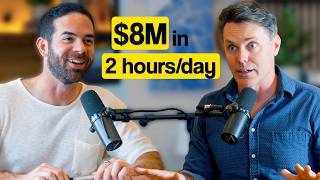
Mike Tekoo built Momentum Shake to $8 million a year while working two hours daily. He scaled from in-house production to 5,000 bags per day by keeping manufacturing internal and focusing on his unique talent. He builds for conviction and pride, not just money.
Chapters
Can you build a $10 million business without compromising your lifestyle? Can you build a $100 million business just working a few hours per day? My guest today is building a business that he believes can get to 9 figures while maintaining a really amazing lifestyle. Mike Tekoo was here on the show about a year and a half ago, and he said, I think I can build a $100 million business working just a few hours per day. And as of right now, he's within striking distance of having an 8-figure business. So today we're going to break down how he built Momentum Shake to be a multimillion-dollar business without doing a bunch of marketing, without dancing on TikTok, without even really having a social media presence. Instead, it has been a relentless commit to having the best product possible. Mike, the last time you were here, you said that you were going to build a $100 million business in 2 hours a day, working 2 hours a day. How's that going so far?
I want to put on the record, I was taken out of context. I said I have 2 good hours a day of thinking and I'm going to do all my big decisions in 2 hours a day. Now there's obviously more work than that a day, but after that it's probably not very good or quality. So I try not to make decisions out of that timeframe because they're going to be lower quality. And that's what I think my most important skill set is, like making really high-quality decisions. Because if you do that right, you're going to eliminate 80, 90% of the nonsense things that you shouldn't have been doing in the first place.
You were, I think, at about $2 million a year when we spoke last.
Maybe a million, I think.
It was 2 or under.
Yes, for sure.
So where are you at now?
We are at like 6.5 for the trailing 12 months. And that has been constrained by some pretty impressive tariff stuff that happened. That happens. Are purchasing ingredients from, I think, 20 or 25 different countries. And so that was a fun little jigsaw puzzle. And then I built my own factory. I'm not sure if I have that.
Yeah, I actually have in my notes, the last time you were here, you said you were gonna take manufacturing in-house.
Yeah.
And I wanted to know if you went through with that.
I did.
Yeah. Why?
It's insane. Yeah, well, I've been thinking about all of this through the lens of power. Recently. I'm not a very money-motivated person. I don't need to make any more money. I'm not really obsessed with winning the game or anything like that. And so I've been looking at this simply through the lens of where can you actually cultivate and have power moving forward in the future? I think marketing is becoming a commodity. Mm. It's not defensible anymore. And 6 months, a year from now, if you're watching this, it's probably already true. That it's like a utility. Like anybody can have good marketing with probably a few clicks of a button. Not right now, but like in a year. So that's not where I want to be. I want to have something where there is power. And so what do I mean by that? I mean with the flow of energy, where is there a constraint on desire? I want to own that energy. Intersection on the constraint of desire. And so when I'm looking at delivering the means of production or the means of distribution, and I look at production, there is a constraint in my category of supplements and wellbeing on quality and on quantity. All of the really, really good stuff is made in very small amounts, and it's very hard to find good stuff. Everybody that's selling stuff right now, somebody else makes. It's the lowest quality that you can get 'cause they're trying to maximize profit so they can spend all their money on marketing. All of these supplement companies you see out there, 99% of them, they are marketing companies. All of the people, all of the effort, all of the energy goes into marketing. They never touch the product, they never see the product, they don't source it. And so they have no defensible position there. They're not owning that constraint.
On the product side.
Yes, on the production side.
And it sounds like what you're saying is that the overall, the marketing moat is going away because with a few clicks, anybody can be a good marketer.
I could be coping 'cause I'm not a good marketer, but that from my observation 2 years ago, and it's getting stronger, is that marketing is the lever we've been pulling and I think it is about to be turned into a commodity. So I went all in on manufacturing for those two reasons. I could not outsource it to make the quality that I wanted. It just did not exist. Like, an example of how we do one of the things is most people are using a vanilla-like substance. You know, they don't use real vanilla. It's extraordinarily expensive. So we do. We import beans from vanilla, and then we process them for 6 months, and then we, add that to the shake. We probably spend more on that than people do on their whole products. I could not get a third party to do that or any of the other things we do to maximize the quality. The product would cost 10 times more. It would just be impossible. Nobody would be willing to do it either 'cause it's laborious. So there's that. And then to turn it into the quantity that I want, my goal is to help as many people as I possibly can, which means I gotta make a lot of Momentum.
[Speaker] Right.
So to use a third party for them to dedicate the space would be like 15,000 square feet plus the machines, the time, the labor. They just, nobody was willing to do that. So I knew where I wanted to go, I had to own the constraint on quality and the ability to produce enough. And the only way to do that was to figure out how to do manufacturing at scale. And that's been the last 2 years. Is I built out a factory, made custom machines, trained people, learned how to do it, made processes for everything. And then we outgrew that place and we just moved into a new place about 6 weeks ago and reinvented the entire manufacturing process so we could go from, when we started it was like 50 bags a day, we were making very small batches and now we got it to like 1,200 bags a day. and this new process is gonna get us to, I think, 5,000 bags a day with about 2 people. Okay? So that is going to allow us to actually meet demand at a quality level that I want it to be at.
It sounds like you're making the bet that if you put your energy into best possible quality, best possible experience, that marketing will take care of itself. Whether it's because marketing will be ubiquitous and it'll be a commodity and you can hit a few buttons and AI will take care of it, or because word of mouth will be so good that it will just hit. You're putting your bet in having leverage on the product and the development side rather than on the marketing side.
Yeah, there's a couple other reasons for that too. Last time we talked, I really talked about things being easy and obvious. And I didn't wanna be taken or misunderstood in that business is easy. It is certainly not. This is the most difficult game that there is in the world. And it's that we're competing against the most intelligent, most innovative people in the world. So it's, there's nothing easy about it, but the answer, when you finally figure it out and you look in hindsight, it's always the thing that feels easy and feels obvious in hindsight. That's how you know it's the right path. So for me, it was a compass, kind of philosophy, there are literally 10,000 things that we could be doing at any moment. 9,990 of them don't work. And we just don't know which ones that are like, which hallway we're going down. And so we can test a bunch of these things, but the one that's going to end up working and scaling by default has to be easy to do. Otherwise you cannot scale it. So back to my like concept of like really focusing on power, there's a difference between power and force. Force is like our will, our energy. And it's like, you can do it short-term. I think that's a lot of people do this grind kind of thing and they just like, well, I'll just work harder, right? But you can't lift it that far. There's no amount of force you could have to like lift a plane. You have to have the power of wind and lift and like that kind of magic thing that you have figured out.
Great analogy.
And then you can move forward. So it, there's nothing intuitive or obvious about a plane being able to fly before people figured it out, right? But now that you see it, it feels obvious 'cause you just like look at a bird, right? And it certainly feels easy in comparative to trying to throw a plane with you. You know, it's gonna hurtle you through inner, like look at a rocket right now. That is pure force and is just, that's why it's so hard. Elon's trying to make rockets easier and easier and easier, but it's still insanely hard. And I think, you know, 10, 15, 20 years from now, they're gonna figure out a way through some other way to make that easy, and that's when it'll become really scalable.
Okay, so how does this apply to your decisions at Momentum?
Sorry, sorry. Power versus force. When I started this company, it was an exercise in helping me grow and become a better person, right? I wanted to acquire skills. I wanted to learn things. And it wasn't just to grow another company. I've done that already. I don't need to do it again. So I made a bunch of rules for myself that I, like part of the 2-hour thing. It wasn't that I wasn't going only to work 2 hours. I wasn't going to, stress about stuff. I wasn't gonna do things I didn't like to do. Wasn't gonna do things that felt like I was forcing myself to will this thing into existence. The only way I was gonna move forward to the next level, whatever the next process was gonna be, was when I found the easy, obvious thing. And so I just didn't allow myself to do things I didn't like doing or felt icky. Like we were joking about before about emailing. I haven't sent any emails to customers for 3 years.
Breaks my heart.
Yeah, I know, I know. The marketer in you, everyone reacts. I don't really like getting emails. I don't like popups. I don't like a lot of marketing tactics as they are. I feel like they kind of can take away from trust. I'm certain that there's a way to do them in an ethical way. I just don't personally like spending my time on it. I like working on machines. I like working on products. I like, I like, I have spent so much of my bandwidth and time making the product better.
So are you dancing on TikTok?
No, I'm not.
Are you posting on Instagram every day?
Never.
Okay, are you running retargeting ads?
Uh, no.
Really?
No. We, I mean, so the last, since we spoke 2 years ago, we have basically been running into the ceiling of production, right? Like, okay, we can't make more than this, or this product is out, or they're not even shipping to America anymore because of tariffs. So it's been a lot of figuring out supply chain and production. We're finally starting to unlock that. 6 months ago, I started looking into the means of distribution and with full honesty, like I'm in the wilderness on that. I have no joy source from it and I don't know anything about it and I don't feel super passionate about learning it. And so I've made a bunch of, making mistakes, not even listening to my own advice, right? I've been trying a bunch of different things that people are telling me to do. I've not been doing them very well and they're not working, right? So I'm trying to figure out now, what does this look like if marketing was easy or even better yet, what does this look like if I didn't need marketing at all? I think there is still a place for it. And I think it's moving towards something that feels a little bit easier. But this was just a, to answer your question, a long-term thought and vision to move towards a thing I thought would have power 5 or 10 years from now. And I think that's still the means of production.
Let's digest what Mike just said, because in our internet marketing world, it is so tempting to get caught up in whatever the hot marketing strategy is. You should be on TikTok Shop and you should do really well on Amazon and you should build an audience. And all of those things are wonderful. But I am reminded of something that a mentor said to me more than a decade ago. He said, the best marketing in the world is a great friggin product. And that is what Mike is living because he has such a relentless commitment to a high quality product at Momentum. He doesn't have to do a ton of marketing. Instead, he can kind of leverage all of these platforms like Facebook ads or using influencers without him having to hustle all of the time. It is really tempting for those of us who have a marketing background to overemphasize the marketing, and I think that's a skill set that is extremely powerful. It has made me millions of dollars, but it's convicting even for me to hear Mike talk about how focused he is on the experience for the customers. And as a result of him being so focused on product quality, he doesn't have to do a ton of marketing. The marketplace takes care of the marketing for him. Well, what's interesting about your approach is that this really allows you to play the long game. You are not— you do not seem bothered at all that you have not sent emails to your customers. You do not seem bothered at all that you're not running retargeting ads. Two things that any marketer would tell you you should absolutely do. But instead, that freed up energy has gone into making the product really good and making sure that you never compromise on quality. And as you grow, you don't have to cheapen the experience or the product. And that is probably why you have happy customers.
Yes.
And why you've been able to 4x since we last talked, despite having supply chain issues and not focusing on marketing. Have you been able to live on $6.5 million a year?
That's revenue, right? And I think we all know, or we should be learning, revenue and profit are not the same thing. We went to a party last night, Ryan threw, and we were talking about a fellow entrepreneur's business who is just, just doing an incredible job. They're doing like $20 million a month in a similar space. Then I dug into a little bit more and they're losing money every month, right? So, I mean, amazing. It's a different model, right? And I think there is, it's just a different game, right? I'm not interested in selling this company. It's not for sale. We have no investors. There's no one I need to please except for myself, right? Other people that have lots of investors, and that means there's expectations. And the game is no longer for them to create a profit and distributions. It's like, how big can we make this company? How quick? And then can we sell it to a private equity firm? And then that private equity firm will—
Bankrupt it and then you buy it back for pennies on the dollar.
Exactly. Yeah. They'll gut the product, they'll fire everybody, and they'll try to squeeze out as much as they can, or they'll try to raise more money and grow it even bigger and then pass it off to another company that eventually goes to an IPO and then someone else Anyways, I'm not interested in playing that game. I mean, I think when you really step out and you look at this like a game, the point for me is not to win, but is to enjoy playing the game, right? So I'm really centering around that. Like, what do I love to do in this business? Why am I doing it? And then how can I do more of that and less of the stuff I don't like to do?
This next part of the conversation is where Mike talks about how he thinks about developing products. And what's interesting about this part of the conversation is he's talking about product creation like it is an art form. He's talking about it like it is a gift to the world. And he gets a little philosophical, even a little bit spiritual in this part of the conversation. But pay attention to how he looks at this like a creative act that is a gift to the entire world. I think a lot of us are in business because we want to get to this place where we can just focus on our art, whether that art is podcasting or it is volunteering. It's what do we need to do to be in that state where our life and our activities are a gift to everyone else? It's kind of the highest state of being. And Mike takes that into his business itself, and I think that's why he is able to have such great success and live such a wonderful life and maintain his happiness. So pay attention while Mike talks about how he looks at his business as an art form. That he's giving to the rest of the world. On our last interview, you said this quote, "If I'm approaching something like this is my art, like this is an expression of me, this is my love language to the world versus somebody who's going out there trying to make the most money possible, you're just not going to be able to beat me." I think so.
Yeah.
Would you stand by that statement today?
Yeah. It's going slower. I have such optimism in my own ability to solve problems or even to like find the right question to solve, that I overestimate how simple something might be or what is in my power. A lot of the last year has been like, some of the things that have delayed us have been out of my control. Like I don't control tariffs, I don't control like other people's supply chains.
I wish you did control tariffs 'cause I would have a few requests for you.
I don't even pretend to know the right answer on that, like what we're supposed to be doing. All I can do is react to certain things or try to anticipate them and just be pretty zen about the whole thing. So things are moving slower than I want them to or slower than I am like figuring out solutions, but that's okay. I'm in this for the very long term. I wanna create a platform that I can be fascinated by for a long time. 'Cause I've already done the retirement thing. I already know what's that, that's like. Something I've been thinking a lot about is people talk about being red-pilled, you know, you got the blue pill and the red pill and it's, see, it's the idea that you have secret knowledge and that you'll escape the matrix and once you're there, you'll be really happy. And I think a lot of us as entrepreneurs think that we've taken the red pill and that we'll have this freedom at the end of it. And I mean, obviously, if you're a Matrix fan and you've seen the second Matrix, you know that there is no Zion, there is no world outside of the Matrix. It's just more Matrix, right? He doesn't, it takes him 2, 3 movies to figure out that he's just escaped into another program and that he did not have the truth. He just had the illusion of truth. The whole thing is an allegory for Genesis, right? You have the tree of life, life and the tree of knowledge. And we got tricked into biting out of the tree of knowledge. And then we got to spend the rest of our lives toiling. That was the punishment, right? I think there is a third option, which is you are aware of the choice and you choose neither. Right? You just stay in that space. Like, okay, I am aware that all of this is an illusion, a game, and I'm not going to pretend that now I have the secret knowledge. So like, we work really hard, we build a company, we sell it, and then we retire. And then you— there is no escape. Like, you are stuck in the matrix. And you can either fight against that and resist, or you can just lean into the fact that we have this programming that says, hey, you're going to be miserable unless you start expanding and growing and building stuff. There isn't, you know, there is no such thing as like retirement and like happiness. You either have a purpose or you do not. And it feels like death.
Yeah, you actually said that this idea of retiring or this idea of not having to work goes completely against our human nature. We are wired to want to contribute. We are wired to want to create. We are wired to be in the context of other people. And this idea that we can escape that one day, and that is secret knowledge, is probably gonna lead to a lot of unhappiness.
It's just, Jim Carrey said this once, like, I hope everyone gets to become famous so they know it won't make 'em happy. And I think the same thing about freedom and wealth or whatever it is we're striving for. You're gonna get there and you're gonna have traveled the world and you're gonna be staying at the, you know, the Four Seasons and you're going to, be completely adapted to it. Mmhmm. You're gonna be standing in the Louvre for, like, the third time. This happened to me. And I was seeing— I was in the, uh— I forget. I was looking at some Michelangelo piece, and it's just truly—
As you do.
Yeah. It's truly, you know, like you see it and you don't even need to know what the nameplate is, and you're like, "Oh, a masterpiece." It's so obvious when you're sitting in front of a masterpiece. Um, then you like look at it and like people are like coming up, taking pictures and just walking by. And then you just, it just doesn't feel the same. What you still appreciate its beauty, but now everything less than that is like, you don't even notice anymore. Whereas the first time you were just amazed by everything. Yeah. So, uh, there isn't a right answer, you know, like you can be a stoic and like just have the bare minimum of everything or you, it doesn't matter where you're at, you're going to get used to it. And only the peaks and the valleys will stand out. So.
[Speaker] How does this affect the decisions that you make in your business? I mean, it sounds like in some way you have learned to enjoy the experience and that you've realized that there's no there there. There's no mountaintop to climb. Life's not gonna be different if you have a $100 million business or a billion-dollar business, or you have another exit or what have you. I mean, you kind of get kind of cynical thinking about that. But you seem to have integrated that in a different way. So how does this affect your business decisions?
I find it very freeing. I get to do, I find it almost spiritual in the sense that my decisions on what I'm doing are not from the desire to escape anymore. It's the desire to be more present, more involved in the thing that I'm doing, more in love with the thing that I'm doing. Because like everything is, the present moment, right? I know that's a cliché, but everyone we talk to, you know, and I'm guilty of this too, is, you know, well, as soon as we solve this problem, then we'll be really great, right? When we talked, I was at $1 million a year, which is awesome, by the way. And now I'm at $600,000 and feeling frustrated. The psychology is not fair on this. So I got to like zoom out. And like, I was happy at $0. I was happy at $1 million in revenue. I'm gonna be happy at $6. I'll be happy at $60. It won't make a difference. It'll just be my perspective on the thing.
Funny, I learned this lesson in the opposite way.
Yeah.
Because I realized I was unhappy at $0. I was unhappy at $1 million. I was unhappy at $10 million. Yeah. And so at some point you realize none of the different milestones are gonna make me happy.
Yeah.
That just is hard to hear. This is not a, this cannot be solved in this way.
Right.
This is a me problem. This is no longer about the circumstance.
Yeah.
This is about, I have to deal with this instead of casting my hope into the next revenue milestone that is going to make me happy.
Yeah. It's empowering in that sense that a friend of ours lost a bunch of money, got stolen from him, and he was just so zen about it. Like he just had just almost forgotten that it had happened. We were suffering for him.
Both of us were like, I'd be in the fetal position if this happened.
Yeah.
So he's like, no big deal.
He has gotten to that place. It's a privileged place to be, you know, like you have made enough that these ups and downs don't, aren't gonna define you. Right. Um, all I know is that when I get to that thing in the future, I'm going to want to be somewhere else or I'm gonna want to be in the past. Mm-hmm. And it's, I can, all I can do is try to enjoy the process as much as possible and try to maximize for that. That process as much as possible, that right now I'm going to enjoy my life, especially as we're looking forward and we have this super uncertain future. You know, I really want to enjoy the time we have here.
As humans, as humans, in physical bodies.
Yeah.
You made this statement of, "I'm no longer trying to use business or my decisions to escape." Yes. Do you mean escape from problems, escape from unhappiness, What do you mean? What were you trying to escape from?
Well, I guess when you really think about it, it's just this idea that who you are and where you are isn't enough and that someday you'll be more and that will be enough. Like, I'm escaping that idea.
That hits home. Yeah, that resonates. I want to highlight what Mike just said because I found this very convicting for myself. I think often we use business as a complicated escape. We're using business as this tool that we can use now so that later we can have a better life. We don't want to be broke, so we make a lot of money so that we don't have to be broke anymore. We work really hard now so that we don't have to work really hard in the future. I, I think there's a time and place for that, but I wonder what would it be like if I built a business that I wasn't trying to escape from? What if I did activities that I didn't want to stop doing, that I wasn't doing for an end goal one day? And Mike has that integration in his business. He doesn't have dreams of selling this business for a whack ton of money. I, I think it's great to build a business and sell it for a whack ton of money. I do that. I help clients do that. But I think the highest state of being is having a business and a life that you don't want to escape from. And if you can find a way to do that, if you can find a way to live in that zone where all you're thinking about is making your business and your life better without any desire to escape from it, isn't that what we all want at the end of the day? And I don't know if you can get to that place without making a lot of money first. I, I genuinely don't because I remember being in that place all the time and, and I still fall into that place at least 50% of the time, but That part of the conversation convicted me to think about how I can build a life that doesn't have any need for results because I'm enjoying the process so much.
The worst thing in the world— I used to be a musician— is you're creating your art and you're not enjoying the process. You're only worried about the validation of it coming at some point. And in 6 months, a year, AI's art is gonna be better than what most of us can make. And so the purpose of it will not be external validation. It'll just be for art's sake, right? And so when I make a business and this product is my art now that you get to consume and then I see it reflected in your life, that process is for its own sake. It is just for that. I was watching a video last night about iodine. Are you familiar with the story of iodized salt?
No.
You and I were talking last night about being grateful for who we are and what we have. And whenever we're feeling down about trading in our soul and putting it into a jar full of every soul that's ever been, and would we be willing to trade with somebody else's Course, the answer is absolutely not. I would not trade souls with any of the 8 billion people alive or the 50 billion people that came before me. So up until like 1900-something, people used to get goiters. A goiter is when your—
In your thyroid.
Your thyroid expands so much 'cause you have an iodine deficiency that you get this big lump in your neck. It was like 50% of people in Switzerland had, giant goiters.
I believe it can be too much iodine too.
Yeah, a reverse problem. But in this situation, most people were iodine deficient. They didn't even know what it was. Like, the scientist figured that out, right? How do you get iodine into people's diets? And he figured out like the amount and that you could just add it to salt because everybody had salt and salt was ubiquitous and cheap. And they did it. They got all the salt manufacturers to start adding iodine is like 5 cents a year per person in the world. And within like a year, nobody had goiters anymore. It also increased everybody's IQ. Like the next batch of babies that was born had an average 15-point higher IQ. Now you don't know who that person is. That man changed humanity forever. And that's beautiful. I don't know if he ever made any money on it at all. Now, like, Everywhere in the world you have iodized salt, and this isn't an issue anymore. And that's like an incredible feat. And that's art to me. The reason for doing that is self-evident, and you don't need to necessarily have made a bunch of money on it or to have had a big exit or whatever it is. Those are just actions. There's nothing wrong with money. I like money, but like, it shouldn't be the main motivation. I think we're gonna be moving into a place where if money is your main motivation, you're a commodity yourself.
I'm feeling a little convicted by this conversation. Oh, good. Because it's— money is one example, but that example can also be egometrics on social media.
Sure.
It can also be the affirmation of the opposite sex. It can be status in a room. The external things that validate that you're doing something well, come as a reflection of doing good work. They come as a reflection of the art, is what you are saying. But the minute that we trade the art form for the external validation, we're now operating in this feeling of lack. Because like, there's never enough money, there's never enough validation, there's never enough likes on social media. These are temporary bumps. These are not things that are fulfilling. What is actually fulfilling is when you have enough of those things so that you can do the art form.
Right.
So, which I think what everybody is chasing.
Yeah, it's Maslow's hierarchy of needs, right? So you like, I used to be on food stamps. I used to be completely destitute. When I was a musician, I was literally a starving artist. I think I made $4,000 a year that, I quit and started my first company. Need is a real thing, right? The hierarchy of needs. So you have to, before you can do anything, you need to be able to take care of yourself. You need to be able to put a roof over your head. You need to be able to feed yourself. You can't take care of anybody else yet. You haven't earned the right to take care of other people. And then you can slowly move up that. But I was happy then. You know, it's not like I have increased my happiness. It is simply the process of moving up the hierarchy of needs that makes us feel alive and good. That is the compass that we have. And all you need to know is like what, where you're at, have some self-awareness of where you are at, and then solve that problem and then directionally move towards the next hierarchy of needs. It's the map. And so I'm in this place where I'm trying to move in from, I'm in self-actualization. I'm trying to figure out, well, what is my ceiling? How great can I be? And quite frankly, my vision of myself is intentionally slightly delusional because I'm taking on a huge amount of risk. I have to believe that I can do it. I don't know if I can, I haven't been tested. And right now I'm at the ceiling of my abilities. I have never gone farther than this. You know, like, this is the first time I've made a company completely on my own, taken it to $6.5 million. It's profitable, which is super rare for a company, right, that's growing. And now to get to that next spot, $10 million, is extraordinarily hard. And I've been approaching it maybe naively that I can do it. right? And it's going slower. There's infinite amount of unknown that I don't even know where to begin. I have no idea how to do marketing, right? And I don't have any interest to learn. And so that's difficult, right? And there are all these other meta skills on top of that. Should I even, like, is that a useful skill 6 months from now to acquire? Is managing people a useful skill 6 months from now to acquire? I'm not even sure. Maybe it's managing agents, right? Or you have one person that manages agents. Like, you have this chart up there, you know, from entrepreneur up to capitalist. And like the real meta skill of like capitalist is like, how do I use power, money, some other sort of resource to get what I want done instead of me doing it? And so like I want to be acquiring that skill. So that's why I've created all these rules for myself. Like, okay, I'm not gonna take investor money. I'm not going to learn some of these skills. I'm going to try to leapfrog. And that's also why it's taking me longer, 'cause I don't have that meta skill yet. But that's what I really wanna learn.
You brought up this example of looking at, was it the Michelangelo painting? Sure. Some famous art thing that you looked at. And when you look at that, it's not like the most famous art pieces in the world are better or more compelling. There's something else that you're appreciating about that. Like AI can do duplicates of a lot of those pictures now. And basically what I'm hearing your thought process go around is that the thing that may stand the test of time, regardless of what happens with technology, is the art form of creating something useful for humanity. And so you have tried to keep your focus on where do I create unique usefulness? And that's probably not gonna come from selling more product or learning how to sell more product. It comes from relentlessly being focused on where there's unique value being distributed to other human beings.
Yeah.
Is that a fair summary?
I think so. And I think that's because in the back of my mind, the next step is self-transcendence. So the guy that discovers putting iodine in salt and saves millions of people's lives and the future of intelligence, like that's self-transcendence. He's doing it for the art's sake. And I wanna move to that place. Like that takes a tremendous amount of skill and power to get to that, but also a belief structure. And I wanna get there not for the accolade or the validation or any external metric, but just simply because I know that is the directionally, that directionally that is where I would go for growth. Yeah, but just to put a finishing point on what we're talking about, a lot of companies die in this like $5 to $10 million range because so few people know how to do it. It's extraordinarily difficult. And I was kind of beating myself up about not knowing what I didn't know. And then I started looking at the numbers, and I'm sure you're probably aware of these, but I think it's super important for your listeners to understand and have some empathy for what you're doing because how many companies make it to $10 million?
A very small percentage.
0.35%. That's of companies that, survive, right? Only 5% of companies even make it a year, right? And then 5% of those go on to make $1 million a year, and 0.35 go on to make $10 million. That is extremely rare. If you're playing college football, you have a better chance of making it into the NFL. I did not realize that when I was saying, I'm gonna make $100 million. That's almost nobody. That is some super rarefied air. And I'm very excited at the challenge and I still think I can do it, you know, but I am humbled and grateful for the belief that I'm going to do it. But I understand that it's not going to be simple. If it was, it would happen a lot more. I mean, and of those 10 million, those companies that make it to 10 million, how many of them are profitable? It's gotta be like a point. 1% of those companies that make it that far.
As you're sharing this, I think about, every time I think about going to $100 million, it's through force.
Yeah.
How hard will I work and how can I grind my way there? And the way that you describe your approach to momentum is totally the opposite. Slower on paper at first, and it's almost maniacally focused on doing one thing extremely well. You have one product, right? Yeah. You have one product, you do no marketing, and that approach I think creates the fodder for it to become a $100 million company.
That is the hope. That is the theory. The whole, the philosophy of momentum is that. Right? I am moving with momentum. I'm not trying to create it. And so I'm looking, I'm trying to find the thing that makes living, growing easy. And so when I was designing the product, I tried to take something extraordinarily complicated, which is health, right? There are tens of millions of hours of YouTube videos endless, infinite opinions about how to be healthy, right? Almost all of it's wrong. There are people who dedicate millions of dollars and their entire lives to regimens to try to be healthy. And these are not sustainable. That's force, right? And the average person cannot emulate force. You have to create something that makes it easy. You click a button, And now you have it. You add iodine to salt and nobody in the world is even aware of it. They just don't have goiters anymore. So how can I spend— I spent 3 years researching what is our body made out of and declining in with age? What are we deficient in that is not allowing our perfect bodies to repair themselves like they're designed? What are we missing? So that's the keystone of Momentum. What is our body made out of and declining in. There's nothing in there that is built around, I know better how your body's supposed to work, and I'm gonna take— you're gonna take this supplement, you're gonna take this drug, it's gonna alter the way your body works. My belief is that after a billion years of evolution, your body figured out how to repair itself, and maybe we just aren't giving it what it needs. So I've specifically focused on just that. There's no nonsense in it. What are the effective doses of those things? And then what is the most expensive version of all of those things? Because that's a pretty damn good litmus test of like the quality of something still. Like, is this expensive? Why? And so I deeply understand the process of each of those things and the value prop for each of those. Put them all together to make it easy. So wisdom to me is knowledge. What I just described was deep knowledge on something, years and years of research, probably 15,000 hours of research went into making this. You don't have the time for that. My customers don't have the time for that. They're making their own art. Put that complex thing, match it with like the human thing that you would need to do. You would have, take away the research. Now you gotta go buy 30 things. You gotta go research 100 companies to find the good ones. You can't trust any of them 'cause they all have an internal motive to make the cheapest shit possible. I do all of that research for you and then I put it all together after sourcing it, and then you just have to take one thing. It's an easy button. And on top of that, it's actually pretty delicious. So you actually look forward to it. The entire lie out there is that health has to be counterintuitive, that it has to be hard, no pain, no gain. You know, eat your greens. Nobody likes that. It's something you have to force yourself to do. You have to diet all the time. You have to fight with yourself. These are not sustainable things. How can I make this something you desire? How can I own the constraint and make it easy to get your desire? You want to be healthy and you want to enjoy it. So that's the entire focus of Momentum. And my hope is that you do this one thing and that makes everything else in your life easier. Health is not complicated. There's so many podcasts out there about it, or videos, or people selling courses because complication, making you feel like you have not succeeded because The thing is complicated, then you have something to sell them, right? So it's very simple. You exercise and you probably eat less than you do right now. It's like 95%. And then you aren't deficient in stuff. So Momentum will cover all of that nutrient deficient gap stuff, but it also replaces a meal. And now you're eating less calories. And in 6 months you've lost weight and now all your biomarkers are better. And you've lost weight, and now you also have more energy to exercise, and now you sleep better. And these are like the essential things for living a better life. And longevity is not a secret either. Like, the best way to live longer is to be healthier now. So that's the main focus. It's not about like extending you into decrepency and you're like 110, but like barely hanging on. Like, no, you are as healthy as possible right now, and that is the momentum that you need to have to go farther.
How have you been able to cultivate such peace of mind to be able to think about these long-term things? It takes an incredible amount of mental space or, or peace to be able to think about, you know what, I'm not even going to worry about selling this very hard, or I'm going to think about what, how this is going to be an art form for me, or I'm going to research 15,000 hours of what the human body needs in order to be healthy. And expecting very little in terms of ego metrics. I've had glimpses of that, usually assisted with some exogenous substance. But very few, you're almost talking about transcendental experience in your business. That doesn't come automatically.
I have slowly been moving up the hierarchy of needs, and I got to make it to a mountain peak, and I just saw more mountains. And luckily, I had enough self-awareness at the time to realize that repeating that was not going to change the outcome. And so, and I'm also in this, I was in that place that I don't need to work. I have this space. I would wish everyone to be wealthy so at one point they can figure out exactly why they want to live. Because we don't really have an intrinsic reason that we can understand on why we're here or what we're supposed to be doing. We invent all that. That's that tree of knowledge, you know, the original sin, right? I know why I'm here, and therefore I'm going to decide what I'm supposed to do. That's the oldest story in humanity. And it's in like almost every religion. There's some kernel of truth in there that that is the original fall, is this lie that we tell ourselves that we know what we're supposed to be chasing and doing. We don't. So I gave myself the space and the permission and the quietness to start listening to the programming. What's lighting me up? What am I excited about? So I could have never forced myself into 15,000 hours of research on biology and supplements, right? I was just super excited about it. It wasn't going to be a business. I was just purely interested in it. And then one day I asked myself, like, what am I— I started paying attention to my attention. What am I— where's the momentum? What is— what am I excited to look forward and to do with it? And I just like, oh, you know what you've been doing 6 hours a day? This. Oh, interesting. There's something here. And so I just kept going with it without any expectations of results or anything like that. And then, um—
Mike, I have to interrupt on something, and this is gonna— This is gonna sound a little bit of an insult, and I don't mean it that way. I mean this for the benefit of the listener. OK? You and I have known each other a long time.
At least 15 years.
We're pretty close. You're not that rich.
No.
So, like, you're well off. Like, you're comfortable.
I have about— $5 million. My houses are paid off. And, you know, I don't know whatever the company is worth at this point, probably.
Yeah, but let's backtrack that before Momentum.
Yeah. Right?
I mean, you've taken some distributions and some money from Momentum.
Yeah, yeah, yeah.
So, but before you started Momentum, you had less than that. Yeah. Right? So, but you still had this space. So I'm drawing this to show that you keep saying like, I don't have to work.
Right.
Some people will say that, oh, he must be a billionaire. He must have $100 million. Like, you have a few million bucks.
Sure, yeah, yeah.
Okay, and you're how old?
I just turned 42.
Okay, so I mean, you've done well, but you're not that rich.
Right.
And yet you, like, I am still like, gotta make more, gotta do. And most people with 10 times your net worth are still going, I gotta find the next mountain, climb the next mountain. —so there's something different about your approach that gives you this space to make art. And the irony is that that is actually what all of us are seeking. Right. And so I'm hoping that you can just take me to the promised land.
I don't know if I can take you. I can try to explain.
Yeah, I want you to try to explain how you have this different ability to give yourself that amount of peace? 'Cause I'm envious of that experience. And I think about packing my kids' lunches tomorrow. And I think about taking care of the business and paying my employees. And no, we had a bad sales month. And I find ways to stay on the grind. So explain to me how you are able to operate more in that transcendental, experience?
I don't wanna paint the impression that I'm never stressed and I don't fall into those same— Don't kill my dreams. I was super stressed out 2 weeks ago, like to the point where I was just like very unhappy. And then I like gave myself like, what are we upset about? What are we doing? Is there a reason? There's nowhere to go. There's no escape. We're on this like planet hurtling through space. With no destination, just racing in circles here. What are you trying to get to? Like, there are problems today, there'll be problems tomorrow. And thank God, 'cause then you have something to work on, you know? So I just think it's a little bit of some rest and recalibration. And I guess it's a philosophy, right? You just go look at the stars and it puts things into perspective so quickly. I know that's a cliché, but— That was pretty cliché, yeah. No, okay, so listen to this, right? This is the things that I think about. I like do the Magic School Bus and I shrink down really tiny and I go into my cells and I shrink to the size of my cell and I go talk to my blood cells. And I'm like, hey, what are you working on? And they, you know, probably if they could speak, English, right? There's trillions of them. Like, we're really busy doing this thing, completely unaware that the thing that they're doing is like transporting oxygen around my body, right? They probably don't know that that's the purpose of them. They maybe have invented other things that they're stressed about and like working real hard on, and they are unaware that they are part of this larger being, that I'm God talking to them, right? And you go inside of a cell and there's that whole universe there. There's infinite little things happening, probably with some level of consciousness, unaware that they're part of a cell, that's part of a thing. And we are no different. We are part of a much bigger thing that goes throughout time, this concept of consciousness. And we are aware of this level of consciousness. And, you know, we talk about, transcending. We're part of a much larger connected consciousness, and we are just but a moment in time of that. Elon Musk is creating God right now. Maybe you are. He's gonna make this computer chip factory that is going to be shot into space to make an AI mind that is a million times bigger than anything we have right now that's gonna be powered by the sun 24 hours a day. And then that AI mind is gonna make things that we could never possibly imagine for the future. But I think it's pretty obvious, looking at where we came from, where it's all going, if you had a child, right? That's part of your purpose for you. Your child will have a child. It's happened a million times. And throughout that, consciousness has evolved from a single-celled organism up to this ability to create an omnipotent God in the sky. And maybe it's made out of metal, metal and silicone, and runs on the sun. But what's the next step after that? Well, space is way too big. It's infinite, and I don't think we'll be able to conquer it. So you could send out robots, but like none of the planets are terraformed. So what would you do? You would probably just send out code, right, that could self-replicate. You'd shoot it out across space and it would land on any planet and it would learn how to take the materials there and replicate. And then just by existing, it would terraform itself and then it would evolve higher and higher into an intelligence until it did the whole damn thing over again, right? That's exactly how we got here. So I think about that, that all the stuff that I'm doing is irrelevant, it's made up. My existence is the purpose, and it is just one step on this continuous circle of consciousness expanding and pollinating, and it's just spreading, right? Replicating. So I just don't take it all very seriously.
Is that perspective of you are the bacteria in— We're in stage consciousness. What I used to use this phrase of, we are God's microbiome. Sure. Like we're just like the little tiny speck finding all this information, sending it back to the mother cell, like sending it back to the brain. Like we're God's microbiome. You're basically saying the same thing. Like we're a small part of this infinite whole.
Not just that, God has a child and that child becomes God. So our destiny is to become God and then repeat the process all over again. We could go down a real deep rabbit hole here. Yes, we're getting real.
And that rabbit hole would make other rabbit holes. So what I'm wondering—
So turn on ad spend is the metric we're looking at here.
What I'm wondering is, does that perspective of you being part of this infinite whole give you that space to say, okay, part of my purpose is to just create good for the whole.
I have no idea what my purpose is at all, and I'm not gonna pretend to know. All I can know is the thing that makes me feel alive. And what I have discovered through observation is that ascending the hierarchy of needs makes me feel alive. Growing makes me feel alive. So I seek out things that I don't know how to do, that I'm naturally interested and curious, and I don't really care what I think it's supposed to do. All I know is that I am driven towards a thing, and I accept that that's what I'm supposed to do without understanding the purpose. So for me, the next step is I stand on the frontier of the wilderness. I don't know where to go. I don't know what I'm supposed to learn. I just go test things and then I feel good about it. Like, this is the right direction. This feels easy. Now that I'm here, it feels obvious. And then I move until I'm confused and lost again. And that whole process felt really good. Sometimes I get lost and nervous and anxious about the results. And then I step back like, you're just going for a walk. You're just going on an adventure. The purpose is not to get somewhere, it's to go have fun. And so as long as I'm experiencing something new, I'm turning the unknown into the known. I'm doing the thing that I'm programmed here to do, and I don't need to understand more than that.
So do you freak out about it all going away?
So when I said I don't need money anymore, that the whole point of this journey is that I've become powerful. You can take everything away from me. But I still have my power and my skills. I know things that apparently most of the world and most of history have not. Like to be in the 1% is a test, right? And it's not a hierarchy of value. It's not a way to measure people, but it's like, okay, I did well on this test that we have invented. I'll do well on the next test. And so when I was starting Momentum, I had allocated the money to a bunch of things. I'd paid off my houses and I was gonna run outta money, right? Like I put all of it on this bet. And if it didn't work, I wouldn't have had enough money to start another company. But like I have insanely valuable skills at the end of 15 years entrepreneurship. I know how to do every job there is. Right? I can go work for somebody else. I'm not worried about it. The money is not important. That's why I look at the lens of power. Like, I have developed things that are valuable and will always be valuable. And so the next thing that I do is not to acquire more money that is just gonna, you know, be inflated away. Is not gonna be, you know, a million dollars, $5 million is not gonna be worth much in 10 or 15 years. 15 years, if we even have money at all in the future, who knows? We have no idea what the future is like. But will I be able to outcompete everybody else to survive? Probably. Will I even be interested in outcompeting? Probably not, because I'll be trying to organize people to make some great outcome, right? Which is the true power, right? Does any of this make sense? Yes, it actually does.
And, and I, I am, I am processing this as —when I do something to get something— Mmhmm. —it means that I'm assuming that I don't have it, which means I'm operating in lack. And usually, even if I get it, I feel really shitty about it afterwards. Oh. But when I do something just for the sake of doing it, or when I do something just to make it great, I'm either gonna enjoy the process or I'm gonna get more external validation. But what usually happens is both. Yeah. And I enjoyed the whole process and I usually get the end result anyway. And I'm wondering how I can be in that state more often. And you've gotta have had days where you have a red month at Momentum or you are moving into a new manufacturing and it's a real expensive, long, laborious process and a couple customers are unhappy and you're thinking about it where you are just, you are not vibing. Oh yeah, all the time. So what do you do to get yourself back in this crazy spiritual state?
I mean, like I said, literally last week was maybe the hardest week I've had in 3 years. I completely forgot my own beliefs. I got sucked into being super stressed out, made a lot of bets that I was wrong about, right? I hired a lot of people. I made some deals. We are supposed to launch in the Vitamin Shoppe and I don't know if we're gonna be able to deliver it, you know, 'cause my factory's not at full capacity, the new one, like where the supply chain is, you know, we're running out of fiber and I'm like trying to like make it happen and I don't know if it's gonna happen. And that's okay if it doesn't, right? At the end of the day, I think it would be good. And if it doesn't happen, that's also good. And I'm just, I had to get back to that place that, the success or failure of this is in no way indicative of who I am or my worth. And that I have enough. And if I have nothing monetarily, I still have enough. And so when you said like, Mike, you're not that rich. Au contraire. Very rich. Very rich. What are you measuring against? Literally, you and I are both in the top half a percent of people in America in wealth. That is extraordinarily rich. I don't have any debt. I have two paid-off homes. I have incredible friends that I look up to and are a source of incredible wisdom and knowledge who like me, you know, like, wow, incredible. I have love, I have family. Most importantly, I have my health. I am in incredible health. I see people around me that like are getting cancer and dying of heart attacks, and I think it's all related to stress. So I don't let myself get stressed about this stuff because I know the cost of it. It's not just psychological. Your entire body feels stress and operates worse, and then you can't repair yourself and you age and you get worse. But thank you. I have this one precious life to live and nothing is more important than that. No goal, no thing that I create is more important than the gift of life that I've received. So I wanna treat it with some dignity and respect and not let this bullshit get to me. So anyways, no, I think having more than like $500,000 a year is extraordinary. We didn't use, you and I would've been peasants 200 years ago. We're not born into nobility. What a gift that I was able to come from a middle-class family, be literally on food stamps and living in subsidized housing, and then to, with friends and the internet and Alibaba and the means of production and the means of distribution at my fingertips, I was able to take advantage of peak civilization. I was born now in America, and I could go from nothing, not knowing anything about anything, to not only being one of the wealthiest people in America, but one of the wealthiest people in the world of all time, right? Like, I was reading this thing— this is terrible, uh, you know, the men like— men like to talk about the Roman Empire. Let's talk about it for a second. If we were born then 30% of people in the Roman Empire were slaves, right? Like, the odds that you and I would have been born into slavery and died there are extremely high. Uh, you would have been kidnapped by some powerful soldier and thrown into the bottom of a boat and chained to an oar, and you would have sat in your own piss and shit and rowed till you died. And that would have been your experience on Earth, right? And then eventually someone discovered the magic of wind in a sail, and all of a sudden those people were not needed to be slaves. And so there's these few moments in history where people have recognized that there is power and connected it to a desire and removed suffering. And that is the elevation of consciousness. It's the same thing that's happened throughout history and the creation of capitalism, like why we're here talking today, is the really, the winners, the powerful people, they have discovered something what we would identify as magic, whether it's like goop that comes out of the ground and you can burn it as energy, And then Rockefeller like, "Oh, I think this oil thing is gonna be pretty good." Everyone else is like, "No, we got whale oil. We're fine. What are you gonna do with all this stuff? We just need it for lights." And he discovers that there is a constraint on refining this black goop out of the ground into gasoline. So he goes and creates refineries and he does it so well and he owns this constraint that he ends up buying all the refineries. 'cause he can just do it better. And that's how he becomes the richest guy in history. And then you got, I'm reading the book on Carnegie right now. He did that with steel, right? To turn rocks into this incredible magic steel that you could use for almost everything, you know, transporting, you know, turning into rail lines, turning it into skyscrapers. One of the most important substances that like he happened to be in the right place at the right time. Recognized the magic and then removed the constraint of production on it and was able to deliver it to people. And that just happened over and over again. We did it with electricity. That's magic, right? That's just power. And then the internet came and that's just more magic. And then we got to grow up in that time period and recognize that we could use this power and use it to eliminate constraints on people and give people optionality and, deliver stuff. And now the new magic that's coming out is intelligence. And that's going to turn into a commodity and be, you know, basically free, just like electricity and oil are almost basically free at this point compared to what they used to be. And we have no idea what that intelligence is going to unleash. The entrepreneurs of the world are going to take this new magic, this power, and start making things easy. And the opportunities for that are probably limitless. And everyone's upset about AI replacing jobs. I think you're gonna, you know, that's probably what they said about the sail. What are these slaves gonna do? Now that they have the sail, they don't even get to row. I think we'll figure it out.
What is your sense on what the next few years look like? You obviously spend a lot of time thinking about this and also how it factors into the evolution of consciousness. Right. So where do you think we sit a few years from now?
I write an annual newsletter. I haven't written it in a few years.
I've written 2 newsletters. I don't email my customers and I don't update my annual newsletter. It's just something I don't want to do.
I spend a lot of time thinking about doing it. Anyways. About 3 years ago, I had the realization that that was the new magic, that intelligence was going to be the next revolution. Something I've had an insight on that all of these amazing guys throughout history that have changed the world, they were on the frontier of something. They were the, you know, Carnegie was in Pittsburgh. Where it just happened to be the best place in the country to make steel because of the coal deposits and its location by rail to, you know, the Lake Superior ore and things like that. It just happened to be like at the right place. And so that industry started to birth there and he recognized that opportunity and took advantage of, just exploding thing. That's the secret to entrepreneurs. It is not about outsmarting people or working harder. It is about recognizing what the next thing is and learning how to move to the constraint and use that power to like solve constraints. It's not about solving problems. It's about recognizing where desire is not being allowed to reach its full capacity. A lot of people are out there solving problems that are completely useless. You have to go where desire is constrained. And then create a bridge.
Okay. In this next part of the conversation, I ask Mike to break down how he builds this type of life. How does he focus on what is going to move the needle? And then how does he build systems in order to protect his most important work? Because we've all got a thousand things going on, but Mike is able to maintain really good balance in his business. So we break down the strategy of how he's able to focus so much in business while still having a life and build systems that protect his focus. When someone looks at the lifestyle you have, uh-huh, I— the assumption would be that you have incredible systems in your business. I mean, how else would you have your own manufacturing and a $6.5 million a year business?
Mm-hmm.
But I haven't heard you talk about that at all. Sure. And even my assumption coming into this discussion was gonna be that you've kind of automated or systemized your way into protecting this presence that you use to make your most important decisions. But instead, it just seems like you ignore a lot. You ignore a lot of things that other people think that you should do. And so you only think about a few things. Right. And I'm curious if, is there a balance between art and systems, or do you just not have that much to systemize?
It's 100% the art of systems. Oh, dear. Uh, what do I do with that one? So the difference between good entrepreneurs and great ones is a system, is a mental model. It's a system for thinking. Everything bleeds down from that. If you talk to literally anyone who is doing amazing stuff, it's not that they, they are probably have a higher IQ than me or the average person, but they also have mental models that they run everything through and they're religious about it. Once they've found a way of thinking, they stick to it. So Elon does this, he runs the same algorithm, he calls it the algorithm. It's a 5-step process. Of which he does everything. If you don't know what it is, go look it up. It's brilliant. And he's religious about making everything and everyone run through this process of designing and building things. He does not stray from it. I made the mistake in the last 6 months of not just repeating my algorithm that I know works. So my process I call learn, create, systemize. The first step, you're on the frontier, you're in the unknown. I have to start, I start with the end goal in mind, which is I want to have an amazing life. So everything else is subordinate to that. So to answer your original question, how do I maintain this peace? Peace is the purpose. It's not to make a great big huge company or whatever that stuff is like, will this allow me to grow, increase my wisdom, my ability to love? Those sorts of things, right? So it makes a lot of things impossible to do. So I get really strict about what I spend my time on. One of Elon's rules is that most things that people systemize should have never been a thing to begin with. So you have to ruthlessly delete. That's like step 2 is like ruthlessly delete stuff. And then only after you've maximized it and sped it up as much as you can, then you systemize it. So my process that I came up with like 10 years ago, was learn, create, systemize. So I spend 80% of my time learning what all the possible things are and which ones I think will be easy and obvious to get me to my true end goal. And then I create the thing. You learn so much by doing rather than listening and talking to people. And then once I understand it and I've made the thing that I want to make, then I systemize it. And because of the system, because I've spent so much time learning and creating, I can replace myself with someone who doesn't have to solve problems, who feels a lot more joy out of following a recipe rather than creating it. Most people are built that way. They like knowing what they're gonna do and then doing it really well. I don't like doing that at all. I'm not wired like that. I like—
I'm just, yeah, I get it.
Figuring out what I'm supposed to do than making the thing and then not thinking about it anymore.
I call it doing it the long, hard, stupid way first. Yeah. And then I figure out what works and I turn that into a process and then somebody else can do it. Yeah. And for a while I'm just doing it the long, hard, stupid way while I'm experimenting with a bunch of things. And then I kind of have an idea of what it is and then I hand that off to somebody else. Yeah. Dan Sullivan says that there's make it up people, there's make it real people, and there's make it recur people. And so I'm a make-it-up person. Just make something up, test a bunch of things, and then I hand it over to somebody else to turn it into a process so that it can go on and on forever. Yeah. That's— it sounds like you're living in that world of experimenting until you can go hand that off to somebody who makes it recur.
Not just experimenting, but like creating the thing. So like I had to learn everything about longevity and health and supplements, and then I had to create momentum, right? Like actually make a product worth making. And that took 100 iterations. And now I've been learning about manufacturing and then, you know, I'm on my third iteration of creating a factory that ideally is so systemized and made taking something so complex and making it so simple that my people don't have to solve problems. Is a totally different skillset. And I don't expect them to have that. And I'm not mad when they run into a problem and they're like, "Hey Mike, can you solve this?" Like, that's what I'm here for. I like to solve those kind of things. I wanna make it so simple that they can just do what they love. And so I have been very focused on achieving that goal because that's what's scalable. When you make something so simple, you've scaled it. So, Wisdom, to go back, you have a mental model is wisdom. You've taken a bunch of knowledge and you've made it automatic. And that's what wisdom is, is automatic knowledge. So how do I make a system or a product or a factory have wisdom in it that you, like an algorithm, if this happens, then do this. They don't have to figure it out, they just execute, right? So that is why I can have this company run with like 2 guys in the factory. They're like very intelligent, very reliable people, and they can execute on the system that I built. And I don't have to go in and check on it all the time. The point of learn, create, systemize is that it is a fractal. It is the same pattern that you repeat over and over again. And so once I've systemized this skillset or this process, now I can go to the next layer and start learning about that and start building on top of it. Most of us have businesses that are really just jobs. They're not building the Lego pieces and structure. They just like start, they just do more. They run more ads, they do more marketing. And the second that they stop doing it, the whole thing falls apart. That's not a business, right? There's no system there. It's just work. So ideally, once I've built the thing, I can step away from it and it'll keep running. Like if I never did anything else with Momentum, grow and continue to be profitable. And so that's valuable to me, but I want to keep growing it because I feel like there's more things for me to learn and to grow, right? So the second that's not true, I'll go do something else.
You've got a captive audience of people who have businesses that are more work than they are businesses. And would love to make this like steps in the direction of something that has more leverage. And coming into this interview, I really thought we'd reverse engineer more of the process of—
Yeah, I asked you any questions.
Getting to $100 million. But what I've kind of learned from this is that it, in your mind, it is more about what we reduce so that you can focus on creating something so good that it may never require marketing. And creating something that is, purely of benefit to other people. These are not like the quantifiable things. And I personally have lived enough life to know that that is a more rich experience of life. And I think there are plenty of people who have had glimpses of that and would like to make moves in that direction. Where do you think people should invest their time, energy, and money? In what gives them power? What allows them to start making the moves in that direction?
I think radical self-awareness is where most people need to start. Um, I, I know so many intelligent, hardworking people that are making themselves do what they are not designed to do, right? Um, most of the people that I've partnered with in business are outstanding operators. They're so good at executing, like making, you know, like I'm kind of head in the clouds a lot of the time, right? I don't know if you noticed, but it's like, it takes a lot of force for me to finish things, right? This has been a really fun experiment for me. Like building this company by myself is like, okay, I finish this, Mike. Finish doing this boring part, fill out that paperwork. And I've always had amazing operators as partners. And something I noticed in them is that they didn't wanna, I have accepted that I'm not a good operator, right? And I know what my strengths are at and I know where I'm very weak at. And I'm very honest about the things I am not good at. And they're usually things I don't like, so I just don't do them. But what I've noticed a lot of people, are not being honest with themselves. I was talking to a new friend the other day and she's an outstanding operator. And she was like, you know what? I think I'm gonna start a company. And I was like, oh, you're gonna like partner with like a visionary kind of person? She's like, you know, I've always been a visionary. I think I'm gonna do it. And I'm like, cool, tell me about some of your ideas because I can't turn them off. I have 50 a day. It is like hardwired into me all day, every day, all I think about is ideas and it's like flowing water. And she's like, well, I mean, I'm gonna come up with some. I'm like, sweetie, no, you're an operator. You should accept that. And that's a beautiful thing. And you should partner or you should hire or like get on someone else's train and then help. I think it's a lot of us shouldn't be entrepreneurs is my point. I think it's an extraordinarily rare personality and skill set and a bunch of unquantifiable traits that don't make you better or worse. You're probably insane, right? Like a little bit, right? You do it because you are compelled to do it. You don't have a choice in it almost. And I think you should have the self-awareness if that is you or not, or if it's just something you want the end result because you've been force-fed through TikTok or Instagram that entrepreneurs are rich and happy.
Like, we're not. Well, this is where this is hitting me is there are plenty of things that I do that I'm probably not designed to do. But if you took away everything from me except a microphone, I'd still show up and talk in front of it. Right. Like, I feel like I don't have a choice. Like, that is just hardwired into me. Put a microphone in front of me and I will sit here and I will talk and I will talk to my friends. And we'll talk about weird blends of consciousness and business and philosophy and sometimes politics, 'cause I can't not. And so what this is sort of convicting me to do is say, how do I partner with other people to do everything else? Right. Because for someone else, that area that I am forcing myself to do is their genius. Mm-hmm. And I should not do that. And I should actually be maybe okay with everything else falling apart. Yeah. Because if everything else fell apart, I might just focus more on my gift, which is showing in front of the microphone and saying interesting things with people that I like saying them with. And what's interesting about that is if I were to do that, because that's my art, then I would— well, I got that, like I got that little excitement feeling right there. 'Cause if I was actually able to do that, only think about that, then I would have more access and leverage to operators who are to do the things that I'm forcing myself to do. And so by doubling down on where I'm just naturally designed to throw energy, I will have more leverage to create the partnerships that make it okay for me to say yes without forcing myself to do those things.
Yeah, just giving yourself radical permission to just do the thing that lights you up and say no to everything else. Because wherever you have lift, wherever you have momentum on something, you are getting permission from the creator, you know, whatever you wanna call it, that that is the right direction. And you don't have to do anything at all. So you might as well move towards the thing that feels easy and obvious and then just stop doing the stuff that doesn't. And it doesn't mean that you can't, you know, you never have to do, you don't have to pay your taxes or something, you know? You just need to attract the other people that like think your vision is cool or values what you do. If you're an operator or you're a bookkeeper and that's not hard for you, someone's gonna value what you do. Like there's no way I could do Momentum alone. And people have continually raised their hands. They're like, hey, I love what you're doing. Can I be part of it? And I'm like, show me what your light is. Show me what you're excited about, what you're good at, what feels, effortless for you. Like, okay, here's where I could really use you and we could work on this together. And that's, yeah, I've just been like slowly collecting like allies on that journey and trying to let go of the need to make everything perfect. And then just moving closer to that. So yeah, I think you're obviously very good at what you do in this area and it doesn't feel like a lot.
No, you're stunned that I do so many of these. Yeah. And it's like, this is effortless for me.
Guys, this is his third interview of the day. I'm gonna take a nap after this. This is like all of my energy. And he's like radiating joy and light, literally God speaking through him, powering this. It's 'cause it's power, not force, Mike.
That's why. Correct, yeah. Every once in a while I get this feeling, or I, I don't care if anyone else listens to this episode. Mmhmm. Because I feel like this has switched something in my brain. I could listen to you talk all day, and you're so goddamn beautiful. It's just so easy to stare at you and listen to you talk. But I am— Every time you go deep into one of these, I realize how much time you think about the— state that I want to be in all of the time. It's like you've gotten a glimpse of it and you've— there's a parable that Jesus tells of the kingdom of heaven is like a man who knows that there's treasure in a field. And so he sells everything that he has to go buy that field because he realizes that that field has the true value and he'll give up everything in order to acquire that field. And the kingdom of heaven being within is kind of like that. That once you get a taste of it, you're willing to give up everything in order to find that. And when I hear you talk about this, basically I'm comparing you to Jesus is where this is going. What I'm basically— We are all part of God. Okay. I get the sense that you've had like a glimpse of that, like a taste of that. And you're like, oh no, I'm not gonna run Facebook ads 'cause that doesn't bring me closer to like that glimpse. Like it doesn't bring me more to like the contribution that I want to experience. No, I don't need to have a TikTok account. No, I don't need to raise capital. No, I don't need to be beholden to investors. No, I don't even need to go fast. What I want is the state of being, of creating and serving. And if I'm so focused on that, then everything else is gonna take care of itself. Would you agree with, Jesus's assessment of Momentum as a business?
He'd probably be like, "Turn water into Momentum." Something I've been struggling with is a bit of sour grapes, right? You know, the parable where the fox tries to jump up to grab the grapes on the vine and he can't reach them and he says, "Oh, they must be sour anyways." I'm not good at marketing, right? I don't like doing marketing. And so sometimes I go like, "Marketing's stupid." or it's cheap or it's degrading. And that isn't true either. Just because I can't do the thing doesn't mean it doesn't have value. Fair point. Great point. So if doing Facebook ads and marketing really well is gonna help me deliver momentum to more people, then it's something we should do. I should find people that are excellent at it and I shouldn't try to do it and I shouldn't tell them what to do. I should just like connect the people. That come into my life on that. Um, we get these reviews and I just get so jazzed about them. Like, we just got this one like yesterday that this woman, all she said is like, I have a terminal illness. Um, I can't eat anything. I've been living off of Momentum for 2 months and things are turning around. And I go, I need to figure out how to do this more in a way that both increases the quantity so I can get this out to more people, but it also increases my life. I can't have it be that, like, I have to sacrifice my life, 'cause that's not sustainable. I mean, I can't use force. I need to figure out a way to— that the company gets bigger, to help more people, but it also makes everyone else at the company running its life better at the same time. 'Cause that's where growth is a flywheel. Yeah. Have you heard of the Alan Watts thing about dreaming? Mm-hmm. You know what I'm talking about?
Remind me. I mean, I know—
For the listeners, it's a thought experiment where you're given the gift of being able to control your dreams. And so then you do everything that you wanna do. You, you know, you conquer your foes, you go on every adventure, you sleep with every beautiful person you've ever wanted. And then you do that for 1,000 years and you get a little bit bored. And then one day you're like, "Well, let's try some surprises. I don't know what's gonna happen." And then one day you decide like, "I don't even wanna know it's a dream." And then you realize that that's what we are experiencing right now. If you were going to design heaven, that is what it would end up being is right here, right now. You wouldn't wanna have full control. You wouldn't wanna know what was coming. You would wanna be excited every day with the knowledge that you have this deep power in you to be able to be worthy of solving and conquering or achieving anything that you wanted. So that's when we go back to that idea of, you see the red pill and the blue pill, or the tree of knowledge and the tree of life apple, and instead of taking either one, you just are aware of that question exists, that option exists.
Mike, I love the way your brain thinks. Like, I feel like— I don't— It's almost like you challenge me to find the best version of myself and bring that out. Good. And that is, that's what I'm processing as art. Like the best version of me, whatever that is, whatever that looks like, and give that to the world is the highest form of contribution and also the best way to live. And you inspire me to think more like that and I really appreciate it. Nice.
Well, I think what you're doing is a form of art and not everybody can do it, right? Like this feels easy for you and you get energized from it. That is the sign that this is something that is, you have an uneven talent at, or you were given a talent that not everybody was given at. So I think that's, we need to be, not everyone can be an artist. I was not blessed enough to be a musician, but maybe that was a good thing. But you know, I quit because I became aware of that. Like I was good, not great. And most of us are good, not great at most things. And we need to find, we need to give ourselves the space and the permission to accept that and be okay with that and just feel like that's part of the plan. And there's something that we are exceptional at and we should get everything out of the way and do just that thing. And like put all of our effort into watering and loving that little seed inside of us and allowing it to grow. Reach the sun, whatever you want. So, um, yeah, I hope that's what people get from this.
And that's, and that's how you build a million-dollar business in 2 hours a day, right? Yeah. Mike, it's great to see you, buddy. Thank you for being here.
I'll come back in 2 years. We'll see in 2 years and we'll track where you're at in the run. And maybe we'll just have like AI by then or something, like listening to the podcast, and we'll just be like, it'll just be AI Mike and Ryan doing the podcast.
We'll see, we'll find out.
Or civilization will have collapsed. It's one of those I'm gonna go spend some time in Italy.
Love you, buddy. Good to see you. So often we're trying to build a business so that blank, so that we can live a great life. We make a lot of money so that we can live a different kind of life. But what if we weren't thinking about the so that? What if we weren't trying to get the end result because our life would be better as a result? What if we were just trying to build a business because we were so proud and convicted about what it is that we brought to the world? Man, I don't know if I can get to that point in a permanent state, but I feel very inspired after this conversation to at least do it more. And I hope that it had the same impact on you. We'll continue to document Mike's journey and his progress towards building a 9-figure company that is his gift to the world. And if you want to build something that is your gift to the world, I think I can help you at least build a high-margin consumable business that you're really proud of. We do cohorts at Capitalism.com where we help people launch businesses that are consumable, high-margin, and if you want to have a really big exit one day, and you can get on the waiting list for the next cohort at Capitalism.com/bootcamp. I'm Ryan Daniel Moran with Capitalism.com. If you found value in today's episode, please subscribe. Let me know in the comments around wherever you consumed this piece of content, or you can email me. I'm ryan@capitalism.com. Thank you so much for watching. I'll see you guys next time.







