
He sold his eCommerce startup for $600 MILLION | AJ Patel
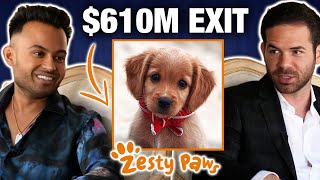
Conversation at the Capitalism Conference where Ryan Daniel Moran interviews AJ Patel about his entrepreneurial journey. AJ recounts early side hustles (e.g., selling Facebook poker chips), struggles (broke after various ventures), a stint in corporate America, then an Amazon breakthrough in 2013 where he launched product(s) with $3,000 on credit cards and reached $1M/month within ~13 months. He built multiple CPG brands including Zesty (pet supplements) which sold for about $610M and High Key (snack cookies) which scaled rapidly into national retail. Themes: product-market fit, hiring for cultural fit and leadership, fundraising strategy (AJ raised ~$5.5M for High Key with no board seats), taking chips off the table vs. long-term conviction, and personal transformation via coaching and meditation.
Questions this video answers
Approximately $610 million (speaker cites $610M).
About $3,000 on credit cards.
About 13 months after going all in.
Around $5.5 million (AJ said 5 and a half million).
Around 40% ownership at time of sale (AJ said he owned about 40%).
Chapters
Welcome back to capitalism.com I'm Ryan Daniel Moran. Today you're going to see a chat that we hosted at the Capitalism conference with AJ Patel. AJ is a freak. AJ has built multiple nine figure companies. And at the time that we met for the Capitalism conference, he was just signing the documents to sell a company for $610 million, which I believe is a record for our community. For someone that comes from our community and has an exit, I think $610 million is the record. That's bigger than RXBar selling to Kellogg's for $600 million. Just a few years ago, AJ sold a pet supplement company that started on Amazon, started with a few products, started, you started very humbly, and then grew it all the way to being a nine figure company. And sometimes it can be intimidating to hear from somebody who has had such a monstrous exit. But if you remember where he started.
You'Ll get excited because AJ started just selling a couple products on Amazon and then growing them and getting reviews and going from four products and getting them to 25 sales a day, a $30 price point across the million said I want, he went to 10 million. He said I want more. And he ultimately built multiple nine figure companies. So I want you to know that before you hear him talk because otherwise you'll compare yourself to where you are now and where he is now. And what I want you to do instead is compare yourself to where he started and where you are now. Because if you can frame it that way, you realize you're starting in the same position that AJ started. And in less than 10 years, he has multiple nine figure businesses. That's how fast things can change. And things are changing at a faster rate today, which means growth happens faster, which means there's more opportunity, which means the exits are bigger. So if you're starting today, he was starting the same place that you are, maybe in a worse place than you are today when he started building brands. And after he gave this talk, after we had this chat with him, he just mingled in the crowd and helped to answer questions to people who are where you are, who had million dollar businesses or less or more. And he was just there humbly answering questions and pouring into the people who are at the Capitalism Conference. That's just what happens at our event. And I hope you decide to join us the next time we have the Capitalism Conference. Stay tuned for for those announcements coming soon. All right. I hope you love and feel inspired by this chat with the multiple nine figure guy, Ajay Patel.
Welcome to stage AJ Patel.
Hi, everybody.
Thank you for being here. Good to see you. So it's kind of difficult not to start by acknowledging the fact that you just had a major milestone. Two weeks ago, you sold Zesty $610 million.
Clap that up.
Really quickly. Just tell me how you're feeling. Two weeks later.
Same. You know, I mean, I've had the realization that this is going to happen probably for two years. Not this big, but.
It felt good when it happened. Like, felt great when it happened. Now it's just like, what's next kind of thing. Yeah. It's good, though.
So is there disappointment on the other side of that? Like, expecting it. Did you expect it to be different?
No, because I've had other exits, and there was a point when I expected money to make me feel different, and it didn't. And, you know, so it's like it's a journey that you just realize it's meant to happen and you just feel. You feel good about it. But it's not like I'm at a point in my life where I don't have ebbs and flows and emotions. So kind of more, you know, here.
Yeah. Just like Sam was saying yesterday, all of his work is just to stay in, like, an emotional neutral place, because otherwise his erratic emotions are gonna take him on track. Off track. On track, off track.
Yes. And been there.
You've been there.
Yeah.
So we'll come back to this exit, but I wanted to go back to the beginning of your journey because.
It feels like yesterday that you were just starting. It feels so recent. You had a really rapid progression in your journey, and there had to be moments along the way that changed something. So would you kind of take us back to the beginning?
Sure. So I'll go all the way back in the beginning. I've always wanted to be an entrepreneur since I was a kid. My parents, entrepreneurs for 30 years and going. And high school is kind of when I started my hustling, you know, sold movies, started a web hosting company for a couple of years where I was making $5,000 a day and had people from India employed around the clock. But that's when I learned my first lesson, which is not to take money out of the business to buy stupid shit like clothes or cars. Served me well, though. And then college, same thing. Continued on Internet marketing. You know, I would always try to find ways to make money because it was kind of my DNA. So senior year of college, I stumbled on. I was playing.
Facebook, Zynga's Texas Ola map in an internship. Since I hate jobs. And.
I lost the chips that they give you. And then I was like, well that was fun. Let me go figure out a way to play this again. So I bought about a quarter million worth of chips for five bucks. And I was like, okay, if I want this, there must be other people that want it. So I go on ebay and check and it's like 1 million chips being sold for 37 bucks. Zynga selling it for $100, give or take. So I messaged everyone on the leaderboard on the app and say, hey, you want to sell your chips, I'll buy it. And that's how I got started. So one guy sold me 100 million for thousand bucks. And one on ebay sold that for 37 a piece. Anyways, long story short.
So you're arbitraging fake punch poker chips.
Exactly. Huge market, huge market.
This is like crypto before crypto.
Yeah, I have my roommates working around the clock. When I started my website I was like number one for Facebook poker chips. And we're making, I was making three to five thousand dollars a day. So it was a good time in senior year. Right.
And then graduated in 09. I sold that because I figured Zynga was going to come after people and they did. So I got rid of that. And in 2009 I graduated degree in finance, told my parents, hey, I'm going to figure something out. I don't know what it is, but I've had these one hit wonders for 10 years. And so let me go try my hand with the six figures that I had in bank account. So I tried everything really. Ship businesses like hookah bar to staffing agency with a scammer. So I left that.
The real estate and face of Facebook game as well. And two years later I was broke, depressed and.
And how old are you at this point?
22, 23.
Okay, so like early to mid-20s. And you're just like idea after idea after. Exactly after idea.
And that was kind of a theme.
That came up yesterday is like every person who has eventually broken out had like lots of swings at the bat. Yep.
And I just wanted to capture that because sometimes we get romantic that this idea needs to be the idea. Whereas sometimes you need to get some.
Failures out of the way before you hit pay dirt. And it's easy to look at what you've done. We have this rule. Matt and I used to joke, rule number one, don't bet against aj. I remember a year or so ago Matt called me. I was in the Austin Airport, going somewhere. And he's like, AJ's doing this thing where he's buying GameStop stuff. Do you know anything about this? I was like, that's the most ridiculous thing I've ever heard in my life. And then we're like, well, don't bet against aj. What does he know that we don't?
It's just like. And I tell you that because it's important to note that you didn't just, like, come out of the womb knowing things. You had this section of your life in which you were trying this, flipping this.
Oh, yeah.
This agency doing this thing and ultimately leading you to. Yeah. Something that started, did well, and continued to grow. So. Forgive me for interrupting.
No, you're fine. Yeah, I mean, especially in Indian culture, right? Like when I was. When I was struggling, like, people shit on you and you get a reality check of, you know.
You have to kind of believe in yourself even when everyone else doesn't. So for me, when I got a job in corporate America in 2000, I don't know, 12. So I was there for two years, I'd have to remind myself that I was 1% in high school and I was a 1% in college, and I can do it again. And that alternative being in corporate America was never an option. I just wouldn't let my mind get there. And I think your mind plays such an important role. And now knowing some of the materials, like manifestation and stuff like that, like, I didn't know about it, but that's essentially what happened. Right. And so why did you go?
Why did you join corporate America when you had all these side hustles?
Because I was broke. I lost. I lost it all. And depressed.
You're a broke, so.
And I have to tell my parents I'm doing something in my life.
What. I see. So what you were. You had some things that were producing significant revenue. You also sold a couple of those things. What happened that took you from, you know, you had something going to being broken, depressed. What changed there?
Well, the Facebook chips thing, that was producing income. I had to get rid of it before they started suing people, thank God. And from there, so I only had about 150, 200,000 saved up. And I just started a bunch of dumb shit. And I was saying yes to everything because I didn't know. I didn't know how I was going to make money. I didn't know what was going to make me money. And so, you know, this guy I met at a poker bar, he's like, hey, I want to Start a staffing agency. I'm like, that sounds like a cool idea. Let's go to Atlanta. And again, turns out he was a scammer. I'm like, fuck this, I'm out.
So it's just like I was lost. I was super lost. But I was willing to try and continue to keep trying. And then I also gave some money to my brother to open a liquor store because my parents helped him. So that was the last of it. And I was like, well. And I was, I was not a good spender. I mean, not a good money manager. So probably had 15, $20,000 in credit card debt. So I had to do something.
Yeah. So you, you went from probably feeling like hot shit in college.
Oh yeah. To making $35,000 my first job. I was like, fuck. I used to make that in like few days.
35 is what you said.
A year. 35,000 a year.
You took a $35,000 a year job?
Yup.
Good old days.
What was the job?
I was a back office accounting accountant. I was great at interviewing. I was a horrible employee.
Yeah.
Really bad. I still don't remember what the fuck I did.
And you were in that for two years.
So that job, year and a half. And then I became. Went to an agency for. As a project manager again, I didn't know jack shit about what I was doing. I would just, you know, fuck around with the clients, fudge the timeline and say, I'm doing these things. And I was a pretty bad project manager.
I didn't realize that part of the story because I didn't realize that you took an entry level job.
Yeah, right.
And then you became project manager, one step out. And when you were in corporate America, I assumed that it was kind of a fancy job. So I actually didn't know that part of the story. But the whole time you're sitting there thinking like, I've done it once, I'll do it again. I don't know how this is gonna go. This is temporary.
Exactly.
Yep.
And that's what kept me going. And 13 stumble on, on the Amazon thing, put $3,000 on my credit cards, launched the first product. Two weeks later it was doing thousand dollars a day. So after like 10 years of on and off failure, I knew this was a, you know, pattern recognition. You know, put 40,000 on my credit cards, went all in, set a goal for million a month within 12 months. And every day I'd ask myself questions what I'm doing today going towards that goal and if not, cut it out. Top line revenue Right. Thirteen months later, hit it from the free cash flow of that company. I started four other brands around this time. I'm opportunistic. Right. I have no passion for solving world peace here. It's just like these categories are open. I'm going to go, I know this lever. I'm going to pull it. I'm going to pull it till it stops working.
I remember that time like you were.
You were winning in a lot of spaces, but you were not.
You were stretched like you were really rolling it all back in. I remember you were living very modestly and you were just plowing. You had all your chips.
Yeah. I mean, I didn't pay myself for a year. Again, going back to a lesson I learned. I never took out money. Right.
And so did that. But then after the million a month and the skincare brand, I'm like, I want to do something that kind of outlives me. I don't want to have a one hit wonder. I've done that for so long. And so didn't know what a CEO was. Didn't know how to build teams. Hired a CEO for the skincare brand. Smooth talker, great communicator. And I bought his bullshit. And he said, we're going to get 200 million. And then year for a year from 2015-16, I kind of checked out. I'm like, I hired a CEO, I got to let him do his job. Clearly he knows better than I do. And when I put my head up, I realized that we were talking about getting 200 million, but we never talked about the how. And we were doing the same shit that I had done. So it's like, all right, I got to step in. He's the wrong person. You know, I fell for it. It's okay. Fired him.
And I want to emphasize here, that was a hard time, right? It was that, that was.
I was breaking down kind of time. I was dying kind of time. Yeah, yeah.
I remember because I knew this person and, and there was a, there was obviously a relationship that you guys had built up and that's a hard band aid to pull off.
You mean firing him?
Yeah.
Oh, that was easy.
Well, because I look at it as like, business is a living organism and I'm willing to fire myself for the business. I will have no, I have no emotional attachment if someone doesn't serve the business. So with him, I mean, it was a little hard because again, he's a manipulator. So. And I'm naive at this time. So we had. It was a Rough two to three months to get him out, but getting him out was the best decision, but also the toughest thing for my personal life because I had to fire half the people. I don't know jack shit about accounting. I learned accounting by fire. I learned the business by fire. Essentially at this point I go from being a horrible leader the first three years and I'm growing kind of this, this is like a good inflection point of my life where I'm like continuing to grow significantly from a personal standpoint, leadership standpoint, but also I'm like mentally fucked for the next year because scarcity mindset kicked in.
That was my business. And when it declined by more than 50% and I'm now in it to turn it around, I'm like, what if I don't have anything after this? You know, what if I lose it all? Did I do all of this for nothing? All of these 13, 14 years, am I going to go back to corporate America? So all of these irrational fears kind of kick in. And at the same time, some of my other brands are taking off. So. Well, I can't sell, I can't sell the skin care company on a decline. So I'm like, fuck it, I'm going to take chips off the table and get security, right? And so I got on this sprint of trying to sell some of my companies and one of them was I took roughly. I mean, at the end I owned about 40% when we sold Zesty four weeks ago, but I took 56, about 60% off the table when I was doing 25 million run rate. Literally the next day I knew I made a mistake. I was like, that's a quarter billion dollar brand. I fucking knew it.
So it's like I couldn't see the forest from the trees during that phase of my life. And it was tough. It was tough. I had emotional breakdowns often. I was stressed out like crazy. And so, you know, I stayed involved in Zesty for about a year or so.
And AJ what would you have done differently now in that time?
I wouldn't know how to control my emotions and my. I would be more sane because, you know, I wouldn't have at that time. You've got to keep your irrational fears in check, right? That's what I would have done differently because that's all it was. I mean, there's people I've talked to, you know, within our circles, like, and they're about to sell their business because they think they're about to lose it. I'm like, don't don't do it. You're not in the right mindset and you're gonna regret this later. They don't listen. They do it. And they come back and say, yeah, I shouldn't have done that. It's okay. You gotta make your own mistakes.
Yeah. Yeah. There's like, when you make decisions from the scarce place, you end up getting scarcity.
Exactly.
But if you are in an abundant place, you end up making the decisions and doing the things that bring more of that. And it sounds like you were in a place where you were so afraid that the kingdom was about to crumble, that you did things that were at least suboptimal.
Yeah, Right. To say the least.
So you took some chips off the table to try and get a foundation.
And then I felt like shit as soon as I got the money because I realized it was a mistake. But I'm glad I did because. Because everything kind of in my mind now happens for a reason. Because.
I wanted to prove to myself that I could do it again.
I didn't game a system that wasn't at the right place, the right time. I little bit played into it. And so that was a catalyst for me trying to look for another opportunity, which created High Key, which, again, is kind of a similar business I'm really proud of.
And kind of gives me conviction that I can do it again and again and again.
And is it fair to say that High Key has had the fastest growth trajectory of all the other brands.
For.
The first three years? Yes.
Yeah.
And that's how old we are.
Yeah. Okay. So. Yes.
How many of you are familiar with High Key snacks, by the way?
I walk into Costco and see the display and I'm like, yes, AJ did it. Right. And that was what was different about that brand than the others. Because that wasn't like you didn't look at the Amazon data and decide that was a play. And you had done that with Zesty, you had done that with Insta, but you didn't do that with High Key. So what was different in your approach there?
Well, I saw the macro trends, Google, Amazon too. But I saw my thesis was what Zesty taught me was product market fit matters. If you want to create something huge, product market fit matters. So something unique. Do you have a reason to exist? If not, don't do it right. And so High Key, when I looked around, it's like, I have a sweet tooth. I love sweet shit. And I love Quest bars. I love my cookies. And so when I was looking for something like that, I Saw a couple of competitors where their product genuinely sucked. And I was like, okay, if I can make a good product, a great product, then I can beat this market. So I didn't know jack shit about food and beverage. I cold called 200 people and met someone that was running a co man facility that had an act for innovation. I'm like, hey, John, this is what I can do. This is my background. Jump ship and convince him to join me. And I was working with a consultant for.
Six months. Had a broken, moldy recipe, large one. And I told him about it. Within two weeks, he gave me the mini cookies that we launched with. And I was like, all right. And then when we launched online on Amazon was the first. And D2C, within two weeks, we beat Oreos and Chips Ahoy. And that was enough proof that I needed to go all in from kind of what? Again, my mindset is like learning from Zesty. If you got something, go all in. So put fuel to the fire. Built out the team. Six months later, we're nationwide in target. Target. We're beating velocities by 6 seconds, category average. And then from there, we just started running the tables, right? So Whole Foods, Kroger, Costco, everywhere. So now it's just kind of running the tables a little bit and getting focused around the brand and all the stuff.
Did you raise money for that project?
5 and a half million. My money first. Okay, funny story about that. I was actually made a dumbest mistake. So John was part of the co main facility. And I thought, you know, if we could get to scale, maybe vertical integration wouldn't be a bad thing. And so on a handshake, because that CO man was losing money and he was willing to give us the keys if we just took over and took over the burn rate. So on a handshake, I gave him a million dollars. Hey, let's cover the burn rate. We'll launch it and we'll turn that. We'll make a profit here. We'll make a profit here. Holy shit. Let me tell you, contract manufacturing, never get into that. We're losing two. I was losing $250,000 a month, my capital. And it's like for three, four months, I was like, john calling John. I'm like, john, I can't do this. I'm so like, you know, million is still a million.
And I'm like, fuck the conman business. Let's get into the branded business. Give him back the keys. I can't do this.
So, yeah, I almost thought we were not going to have a business. But it took off, thankfully.
I asked you about raising money for High Key because I thought you did a raise.
I did.
So Covid hit.
I raised a few million dollars at a much higher valuation.
Just because I wanted somewhat strategic on the cap table.
It was for strategic reasons.
Yeah, a little bit. And a little bit of capital because my. I had also blown some of my earlier liquidity and made some mistakes. Okay. And so. But he was strategic in a sense. But my caveat was I want no strings attached investment, no board seats, nothing.
You raised on your terms?
My terms. Right. Because I had the money and I could. I could do it. I don't need your capital.
Yeah. I asked that because I'm curious about the difference in your approaches of bootstrapping. You know, from 2013 to 2016, when you're just pouring everything in versus having some dry powder, your own or somebody else's, what the difference in the approach was for those businesses or if they were mostly the same, how would you comment on that?
I mean, some categories are just going to require more capital. Right. So food, I mean, that was. We were in an investment period.
Margins in food is lower. So that was out of kind of necessity to put fuel to the fire, so to speak.
Get customers.
Exactly. Scale, build out the team. I mean, we went from four people to within 18 months, had a team of 60. My payroll is pretty huge on that team. And that was unintentionally because I want to build not for today. I want to build for the future. You know, I want to get the scalability and the talent as opposed to hiring in the rear, so to speak.
Right.
And that's because I've done that too. Built a lean team, done it slow. It takes years. I'm more excited about, like, how do we scale, but not at the expense of not having a good business model. It has to turn profit or you don't have a business model, in my opinion.
Yeah. Now.
When you were hiring that CEO and building that team, you were doing it, like, figuring it out. Right. Like, I remember when you had one person who was helping you with systems, was basically your operations manager. And then you end up hiring the CEO at Insta and you're like learning how to build infrastructure. Now when you run high key, you're not scrambling as much anymore. You go from a few people to 60 people in a short window of time. What have you learned about building teams that you didn't know when you got into this game or that when you were building the team the first time?
That's a great question.
Early on, I didn't know jack shit. So I think experience has been my biggest, you know, the biggest lesson, because we've hired now across all the companies, probably three to 500 people.
Early on, you make the dumbest mistakes. Like, you prioritize skill over cultural fit. You know, I. And so now say it again. You prioritize, like, skills or cultural fit. Right. Like, I used to do that.
And you say that's a mistake now.
Yeah, 100%.
Tell me. Right?
I E. Like, I used to have someone on the skincare company.
Really negative person. And really, like, he, you know, very political about the way he communicated and just not a good cultural fit. Made everyone feel like shit. I kept him on because he delivered value. He had the skills. Exactly. Now as I look at it, you have to be a good person, good cultural fit, and bring skills to the table. Right.
Are they in that order? Yeah. Okay.
Well, yeah, because if you're not a good person, then, you know, I got you something. So cultural, they have to align with our values a lot more than before. And I think now that we've, you know, I have my HR person that's been with me for six years, so she's really good at filtering from the top and only letting the decent people come to the hiring managers. And even then, we go through three interviews to make sure we all agree.
Yeah. So the lesson there was hiring for culture over skills rather than prioritizing skills.
100%.
That's interesting. What else have you learned about team building that has allowed you to have infrastructure that doesn't collapse?
You've got to map. Like. So for me, I know my strengths and weaknesses really well. And so I will mask my weaknesses with great leaders.
That have their core competency and strengths. Right. This. My partner, CEO of Haiki. Great. Loves managing people. An inspirational leader, very honest. And we can have. We can disagree and commit, but we can call each other out in a very respectful way. And he knows retail. I don't want to know retail. I don't care about retail. You know retail. You do retail. So it's kind of like just knowing for me at least the strengths and weakness and masking those weakness. And it's worked really well for me. My leadership style is unique. I am not kumbaya. I'm not going to give you positive reinforcement. So these people that I have that I work closely with, don't need that, but they know me, and I invest in them and I take care of them in the ways that they're motivated by and I'll build personal relationship with them and likewise they take it down.
So the interesting thing that you're commenting on there is that you hire and focus on leaders.
Yeah.
Right. Like you are not hiring for somebody deep on the org chart at this point. You're hiring for leaders.
Yeah. And then they do their job.
I'm asking this selfishly because this is a skill that I want to learn. So when did that switch for you? Because the first time you did didn't go how you wanted it to and you ended up coming in and taking over. But you stepped up to the plate again and you did it again. So what did you do differently after making this mistake that you regretted?
I'm trying to think.
You know what I'm asking. Because you're commenting on hiring leaders. But the first time you did it.
I didn't have leaders. I didn't have leaders in that company. Right. I had to coddle a lot of people and I can't coddle people. I know that's not my skill set.
I think it's just like there are a couple of people that I've worked with for years which I really admired our working relationship and it's just kind of like a learn. I learned what works for me and it's different for everyone. Right. What works for me is I don't want to manage a team. I don't like the day to day meetings that much. And so it's like if I can trust you to do your job and chemistry matters. So for me with a CEO, chemistry matters a lot because without that you're not going to have a good fit. And now for me to trust him to manage say the cmo because I don't want to deal with that shit, I'll manage E Commerce kind of departments here. Supply chain will kind of divide and conquer. So it's just. I don't know. I don't know. I don't know the answer. It's just like it's happened organically for me where I've realized this is what works for me and this is the type of culture that we want to build based on the values we've created.
Well, what I'm processing as you're saying that is that that first CEO that you hired provided a lot of contrast for what you actually wanted in a leader. Yeah. At that time you hired somebody who came with CEO credentials that you trusted and it didn't go well, but it gave you clarity for what you actually needed.
In your next hires in lead leaders. How do you find those leaders at this point?
Force Brands is great for C levels.
What's that?
Force Brands.
Force Brands, yeah.
So it's a CPG recruiting firm. Okay, so I'll go to them or basically the C levels is definitely recruiting firms and they are not in Orlando. So you know, I'm open to remote. And so we stole, you know our CEO as an example came from Ancient Nutrition. Our CEO came from.
He was the CEO of Australasia General Mills. You know, so a CMO came from four Sigmatic. So basically kind of poaching talent from other places.
Yeah. And that sounds expensive. So how do you think about compensating leaders?
Market rate.
Market rate?
Yeah, I mean I don't want to be specific because these are my people.
Yeah, sure, I understand. What I'm asking is like there's sometimes we hear stories about people who come from a big company who have a great resume that want a very healthy salary and yet their skill set doesn't match that of somebody who's just young and scrappy. Yep. Right. And when you're in startup mode and you have like a seven figure business, the idea of going and finding somebody who's run that just seem, just seems risky when you could hire somebody that's young and scrappy. So I want to know from you like what is the difference in those two approaches?
I think you've got to be on.
A good opportunity. You have to be honest with yourself what kind of opportunity you're on. Like for me this was an opportunity worth going all in on. And when you describe a seven figure opportunity as an example, I'm just saying if you don't have a good product market fit, that's not going to scale. Omnichannel. I don't know if I'd hire the team I hired.
Yes, Got it.
Right. Like I'd be okay with the project manager and like hustling and lean and then if something works out and you see an opportunity in a white space in retail then maybe, maybe you hired. Right. But otherwise I wouldn't go all in.
That makes a lot of sense. So the difference there is with HighKey, you know, this is a multi nine figure opportunity.
Yep.
So you're hiring four. Multi nine. Exactly. Yeah, yeah. And with another brand that you think may top out at 10, $10 million, you're building a $10 million team.
Yep.
Right. I'm curious about, I wonder if the expectation creates that. Like in your mind you are so convinced that high key is a multi nine figure opportunity. You have made that happen? Right. You saw product market fit. Plenty of people could have seen product market fit and only built a $10 million business. And you did more. You've done more than that. Right. So I'm curious how much of your approach has affected that. I'm just wondering that out loud. There's something I've been wanting to ask you. Since we texted about it, I've been dying to ask you this question, and it was that you told me that you've reached a point in your life in which you are happier and clearer and feel more purposeful than you ever have. And these are words I had never heard you say. Right. There's a long journey to getting there, and I really would like for you to unpack what has flipped there. And it would be easy to say, well, of course you're breaking records. Well, of course you're leading in the space. But I've seen more of the internal journey and know that you didn't have the same peace, satisfaction and joy that you've arrived at now. So what changed?
Chad, my coach, was the biggest catalyst of my life, I would say, from. I had him from2017 to 2021. And I think personal growth unlocks everything in life. And so for me, going through that tough time of 2016, 17, 18, I was beating myself up for fuck. I exited too early. I could have done this myself and all of these things as opposed to now. It's just like that happened for a reason. And without that, I wouldn't have this company. I wouldn't have the conviction to start other companies. And the experience I have now is so vastly different and great in its own way, and it's just been working on myself.
Would you say. You say that again? Because you said that quickly, that you said, I forget your exact words, but it worked out and it's been great in just a different way.
Explain what you mean by that.
Like, so as an example, if I hadn't sold Zesty, and I would have sold Zesty, like, took chips off the table and would have sold it, you know, four weeks ago, that's probably the only thing I would have done. I would have been happy. I would have been really happy with it, too. But I'm also really happy with the fact that not only was I able to participate, see that journey through, but I got to do it again with this other company. And by the way, this new, you know, I launched another brand, which I failed. I'll talk about that in a second. I'm grateful for that, too, because I'M learning something. So I love. I look at failures, I look at opportunities. I look at what happens in life as, like, growth now, right? Like, and if I. If I don't look back 12 months before in my, like, let's say last year, I want to. I want to tell myself that guy was an idiot because then I'm growing, right?
And so you want to be able to look back and say, that guy was an idiot.
100%. Yeah, 100%. So now I just. I understand people. I want to be a good human being. Chad and I just ended our coaching, I don't know, three, four months ago. It's like. Because, like, Chad, I don't have any problems. I don't need to talk about anything. We're good, you know, because, like, I know if I have issues, I can work through them. I went to Jojo Spencer's meditation retreat. That was great too, you know, I just. I just feel good and peace with myself and money. All of this success is just a byproduct of doing shit I love. I love creating, I love building teams, and I love doing it again. And if I fail along the way, fuck it, I'll do it again.
I just had a big braingasm. Because what you're essentially saying is like, for a while, for years, you had the mental chatter of beating yourself up.
Imposter syndrome. It's like, I don't fucking belong. I had it all.
And. And now what you have realized is that all. Everything that happened has led you to here and here is great, just in a different way than if you had made different decisions.
Exactly.
One of that being, had you not taken chips off the table with Zesty, had you kept all of that money yourself, you may not have ever run into the point where you had enough money, negative mental chatter to go work on it, to arrive at a place of peace and internal joy. Both are great journeys, like lots and.
Lots and lots of money or still lots and lots of money and happy.
They're both great. And you never know what the other path would have led to.
And I know that I play this game of, like, should have done this differently. Could have done.
Should have pursued that opportunity harder.
Shouldn't have had that relate.
Like, shouldn't have X, Y and Z. But if you could be happy with now, then everything just led as being context for getting to this place.
Yeah.
You mentioned going to Joe Dispenza. What was that experience like?
I mean, there are few people that have done it here. I know. Incredible. I mean, it's Just.
It'S just the energy, the whole thing. Right. Like I've been into mindfulness for a long time, but man, I felt fucking great and I'm chasing that high again. So I'm going end of next month going again for his advanced thing and then probably going to go to December and his week long again. So I'm just going to continue to chase it. What is that high clarity and like detachment from everything. In a sense it makes you a good person. I just want to grow. Right.
Do you get that in your day to day life outside of those peak experiences?
I do. So I wake up, meditate an hour every day, usually 30 minutes at night. So it's kind of, you know, kind of trying to stick to it.
Yeah. How is your life different after prioritizing the own internal experience?
Chaotic. Really fucking chaotic. Because life before.
Before him?
No, not before Joe. But I was just thinking like before I started working on myself.
Right.
Just because Chad, Chad, like the self growth I had with him was also significant. It would just be like I'd let life run me. In a sense I'm reacting to life. Whereas now it's almost slowed down and you know, you get to dictate, which.
Is hilarious because your life has sped up so much in the last year and a half.
Right.
That's hilariously ironic.
That's a byproduct.
Is it? I think at least tell me why.
Work wise as an example? Because I believe that's what you're referencing.
Right, yeah. Well, I mean, just career wise.
Yeah. I don't do much. I don't do much. I have great teams and.
I try to focus on just creating stuff. So right now I'm working on more than Ikea as an example because I've got a team built up, a venture studio working on that, creating an incubation ground where I would invest, buy back entrepreneurs. So it's fun. But it's like all of the seeds that I put in in the early days are now sprouting. So it seems like things have sped up, but things are for me at least the same in a way.
Do you think that as a result of pursuing that internal clarity and getting calm, that calm inside, that it allowed you to detach enough to be able to plant those seeds that were long term.
Maybe now.
Yeah.
Back then it was just like there was a thing of right place, right time. I'm not going to bother that. Right, sure.
But I mean it seems like since you've prioritized that you make much longer more strategic decisions which May be slower in the very short term, but sprout and create faster compounding results. When you say you don't do much, I believe you. Right. And I think you have prioritized that internal experience which allows you to kind of be on the, be the conductor of your life rather than the actor in your life. And I've experienced times where when I'm letting life dictate me, I'm just in the chaos and I'm making more of it. And I think you going on this journey has allowed you to kind of pull yourself out of that and conduct more of it.
Yeah, for sure. My project, I can make long. I make decisions that are more long term focused now than you know, say the 16 where it's like fuck, everything's, I'm gonna lose everything and I'm gonna make short term, short, short sighted decisions. So for sure, like high key, same thing, long sided decisions.
Even being on the, on the board, you know, over the last year or so on Zesty, it's like got to see us making good, rational long term decisions. It's like, you know, you soak that in.
Yeah, that's beautiful. So let's talk about Zesty because you had this exit. Was it two weeks ago that it finalized?
Three, four. I haven't even gotten my check.
Time is a human construct.
I think you exited operations of that when you partnered with the group.
I was there about a year or so and then when we brought in the, I was still involved. And then when we brought in the CEO, I transitioned. Well, I was all in on the board but then really took a board role.
What did you see happen?
Because I think this was your first brand that crossed nine figures. So what did you see happen in that ramp up period between when you were at the helm and then the group coming in and helping to scale it? What did you see from the sidelines?
Trying to figure out how to answer this.
The seeds that we created 2017.
Basically. I was also in the VMs category for humans and I saw branded ingredients were big, then brought that into the pet supplement space and everything we did, we were the first Allergy Multi. No one was doing it and we innovated in a very clinically science based and a fun based way. That brand blew up right then and there and everyone could have checked out. That brand had such strong tailwinds that it was kind of meant to be in a sense. We went from 3 to 25 to 55 and then retail came in and then like two years later, 100 plus.
I've never seen. I hope to be part of something like that again because it was like the perfect lightning in a bottle with great product market fit when we exited number one on every platform we were on. And so what the private equity group did that I probably wouldn't have done is when we brought in the CEO, they pushed for retail, which is a great fucking thing. So we proved it out at Target and petsmart and that was one of the bigger. Because strategics want retail proved out. And so I created the online moat. But they had the wherewithal and the patience to create.
The retail side of things, which I may not have done given this was if I had kept it. And I'm so thankful that this happened because I probably would have sold for 100, 150.
Right.
Taking chips off the table wouldn't have done retail because like Moyes, when your net worth is tied significantly, you want chips off the table.
Of course.
Right. So having seen that gave me conviction that anything's possible, having been part of that journey. Right. It's all about mindset on how big you can create a company. Because when I took chips off the table, our peers are exiting for 10, 20, $30 million. Like, well, that's fucking pinnacle of success, right?
Yeah.
And then when I saw that movie, I'm like, well, anything's possible. And so high key. My aspirational I want to create.
When you saw your peers exiting for 10, 15, $20 million, that made you say, oh, anything is possible.
No, no, no, no. That made me say I need to exit because that was a pinnacle of success at that point. But now seeing the zesty movie, I'm like, anything is possible. Can I create a billion dollar company? Yes.
Got it. So it gave you different context, like a different reference point for what was actually possible for you and in this space and in this industry.
Yeah, it's all, it's all mindset, you know, like we can all, anyone in this room can create a billion dollar brand.
Okay, you keep saying that. It's all mindset. Could you break that down into something that is less, less esoteric?
Oh, man.
It's like we, we see that all the time. It's all mindset. It's all mindset. Well, it's just like AJ actually, it's.
Just like if you don't believe, if you don't believe you can do it, you're not going to do it, Right. If you don't believe, you can. If you believe that the limit. So when our peers are exiting for say 20 million on average that that's the height of what I can achieve.
Right.
But if you set your mindset to be a little bit higher. No, I can create a hundred million dollar brands. You might act differently.
Right.
You might do things differently. You might look at opportunities differently. Like when I start companies now, if it doesn't have a hundred million or more potential, I won't even look at it from a product market fit. So you know, like my filters are very aggressive right now. You know what I mean? So again, that's what I mean. But you have to believe that you can do it to do it. Because if you don't believe it, it's not going to happen.
And I think it's important to note here, you didn't always believe that it was possible. And that's okay. Like you had some base hits and some strikeouts and a couple, you know, solo home runs before you had Zesty and before you had high key. Like you had to work yourself into believing that this was possible. And now it is.
Yep.
You've seen it, You've proven it to yourself. So now there's total confidence in going into that. And so $10 million projects don't interest you anymore. $50 million projects don't interest you anymore. But that was not always the case.
Of course not.
Right.
Do you think it is possible to skip those steps, say that differently? Do you think now that all your expectations are this is going to be a nine figure brand? Do you think that it would have been possible to collapse that timeline? How long it took you to get to that expectation?
Not unless I got lucky the first time and I saw the movie first time.
I see.
I think these are all good experiences that. I mean, even the lessons I've learned over this past seven or eight years from hiring to.
The retail, I don't know.
It's just.
I don't know if I would have done differently, but I guess maybe it would have played out differently if I succeeded early on.
Maybe, but it doesn't matter exactly.
Who cares?
Yeah, I'm going to go over to Q and A for Mike runners in a second. But I did want to ask you, A.J.
There'S a handful of people in the room who have seven figure businesses that are struggling with that same idea of like. I'm not sure that I do believe that. It's a hundred million dollar thing.
It's one thing to try. We're hearing two things in this conversation. One is you have to work yourself into believing it. But the other thing that we're also hearing is Sometimes you have to cut things.
I agree.
And move on.
I agree. Who said that yesterday? Someone said it yesterday.
It came up quite a few times. Yeah. So I'm, I'm curious when you know, it's time to like work yourself into doubling down or cutting bait. Or cutting bait. And I believe you did this recently.
With a. I'll give you an example. I just cut bait.
So I was bored. Last summer I hired the team out for hikey. I'm like, well I want to do something else now, you know, because again, I love creating. That's my zone of genius. And so the plant based has been on my mind. Plant based snacking, high protein, took a couple of macro trends, put them together, launched a brand about. And I went all in early on. Really all in. So like a million and a half, 2 million in. We launched in April, two, four weeks. And I'm like, and I'm about to raise money from VC cause 3 to 4 million. I'm like, I had to look at myself in the mirror and say, man, do I want to take other people's money on shit I don't even believe in? Because there's 15 fucking puffs. We don't have a reason to exist. And I decided to call it quits and say, no, I'm not going to do a brand that will have headwinds from day one, especially when I'm responsible for other people's capital. And so that was. And I'm so grateful again I went through this journey because now my filter is a little bit higher as opposed to mixing couple of macro trends and going after an opportunity. And so and I had a buddy of mine, you know him, he was in the VMS vitamin category and I told him three, four years ago that I was seeing this, you know, because I've seen the same patterns I'd seen in my skincare companies, Jeremy. And I'm like, bro, take chips off the table. This is. And you know, he had this confidence that no, he wanted to take it to 50 or $100 million, right. And it was like, it was. I love belief in yourself, but you have to be honest about the opportunity you're sitting on and be a little bit objective because it's okay to take 2, $3 million and cut bait with that opportunity and go to the next one that might be much bigger, right. Instead of holding on and having this oneitis or thinking this is my only thing and having these aspirations that are a little bit delusional almost. And some entrepreneurs have that tendency and you've got to be. And I don't know how to advise where you're going to be honest, how to be honest with yourself. That just again comes with experience. He didn't listen to me and you know he's going through that shit, same shit. But you gotta make your own mistakes. I think advice doesn't do shit.
Yeah, I think that's well said.
Where's the mic? Let's go here to start.
So first off, congratulations on the exit. I had some like just people I worked with who were like selling in the same category and always looked to you as an example of what was working really well. And so congratulations on that.
Thank you.
My question to you is it seems like it's kind of around how you know the size of the opportunity you're on or how you identify an opportunity that's going to be a 9 or a 10 figure brand. Something that's hundreds or hundreds of millions or billions of dollars. You mentioned tailwinds. You mentioned like kind of having something unique or a reason to exist. But I think a lot of us, if you're starting a new brand and you haven't had that scale before, hard to identify exactly how big you're going to take this thing. What's important about building something that's truly going to be big? Is it a unique product? Is it identifying the trends that you're going to be a part of or how do you look at that if you're going to start something new?
It's a fun question.
Are you solving a problem that a consumer needs or are you creating something unique in the marketplace which doesn't exist? Could be your brand, I don't know, product proposition, I don't know. But it has to. For me it has to be.
I don't want to be even the third or fourth puff in the marketplace or some commodity. I don't want commodity.
So I'll just give you an example. We were category leaders and creators on Zesty Highkey. Same thing. And so from my mindset I'm looking to not necessarily create category all the time because you can always piggyback on something but improve the fuck out of.
It.
And give them something unique, if that makes sense. So like dog food, very saturated category. It's been on my radar for three to four years. I've never entered it because I could not find anything unique. Kibbles, Everyone does it. It's overrated in garbage and freeze dried. Same thing, commodity. So it's like the only reason now I'm about to enter because I Found couple of unique angles that I think are potentially disruptive to the category and that a consumer would resonate and one might be, like, two to three years ahead, but I'm willing to make that bet now. So it's hard for me to, I guess, answer that. Besides from my own perspective, there's solving.
Of a problem and there's uniqueness in the marketplace.
Yeah.
And I was thinking of an example while you were answering, which is, are you familiar with truff hot sauce?
Yeah.
It's fucking amazing. Right. But there's 95 hot sauces on the shelf.
Yeah.
What? The only thing that is. And this has had.
That's a great example.
It's massively taken off, but it's just so unique. Yep. Right. It's just this. This flavor combination of truffle and hot sauce to make something that just stood out. It was just so wildly different and four times the price as everybody else. Like, it was.
They did not.
There was no, like, lack of hot sauce. There was no one on chat rooms saying, I really wish there was another hot sauce. No one had this problem. But it was so unique in the marketplace.
And I think the people, like I work with, so many entrepreneurs who get stuck at low seven figures, and they're stuck at low seven figures because they.
Pursued the marketplace that they're just getting a small piece of. Rather than creating something that was truly unique, it's riskier to do something that's truly unique, and the rewards are much greater when they're truly unique. So I was just thinking about that example.
I think that's a great example.
It was saturated market, but it was so different.
Yeah. Because I have that in my food all the time. I'm like, man, I wish I would have thought of that. Because it's the same thing. It's like you're taking established analogs. You're so. You're not educating people, but your truffle is so popular and loved, at least by me.
That's something really unique.
Right.
So again, you can. Like our cookies. There's nothing unique about it. Cookies are well known. We just made it better, you know?
Could I ask kind of one follow up there, actually?
Yes, please.
To dive a little bit deeper into the product development and becoming a category leader or creating something unique, just like, tactically or operationally for you. Like, are you partnering with people who are good at doing the product development, or is that something you're uniquely able to do to go out and find products? Like, how do you do that?
I find. So for the Food business. I found a person that was good at innovation and he's in charge of that. I don't worry about it. I just tell him what we want or our team tells him what we want. He solved it. We have a team of like five, six people are in R and D for the other business. For Zesty, we basically worked with Coman and we had internal and external consultants working on the formulations and sourcing. Let's go to Christy.
Okay, thanks. So I don't have a question, but more of something that maybe help the audience if that's okay. So I have a love hate relationship with AJ just hearing him, but even though he thinks he's the innovation leader, I was actually in the market before him and was like, no one is doing a high.
Human food grade supplement and the market needs this. So I'm here to tell you how mindset really does make a difference. Because I came in, it was my first.
Amazon type business. So inexperienced, bootstrapped, didn't have any money, cash flow was an issue.
And then the mindset. I came into the business with a scarcity mindset. I had to make it work. I had to like, I wanted this to provide for my family. I had all these expectations and created the first product. It was doing pretty well.
For the first product. It was doing like 8,000amonth or yeah, 8,000amonth. Which for me I was like this is awesome. Created this second product and was just beginning to sell it and all of a sudden there's this brand, zestypaws who like takes over and I'm looking at their sales volume and they're doing like $100,000 a month and like came out like two months ago. And so that like, because I had that scarcity mindset, like just that whole process of I still was able to grow the business and have an exit. But so one like the experiences from that. What I would say in listening to you, what not to do is like, you have to have the abundance mindset number one. Number two, a lot of people are afraid, I think especially as new entrepreneurs to trust other people to outsource to bring on team members. You think, well I'm building this, this is my baby, I want this. I want to have like the success in it. Not realizing that if you would bring the right people on, you could grow so much faster, particularly like capital or figure that side out. So yeah, that's just the two things I would say is really helpful and I don't have any bad feelings for you. Just say you.
I Like, you.
Will you keep the mic up here? I want to go over to Damian.
What's up, aj? I just have two questions for you. Number one, when you were launching, what was your primary acquisition strategy?
And.
And number two, what was the happiest moment of your journey and why?
Number one's too tactical. I don't know my business. I have good people, but obviously, Amazon was our main. Am I mic working?
You're good.
Okay. Was a main platform and direct to consumer. Now, as it relates to. Happiest moment of my life and this journey.
There'S not a moment. I mean, like, you know, when they. When the.
You can't say I don't know.
To both clients. No, no, no, I know. Hold on, hold on. Like, three, four weeks ago, when the 610 number was confirmed and that number got increased at the 11th hour for various reasons, and that email came in and the signing was five minutes away, it sunk in. You know, it sunk in in terms of, like, I don't know, I was trying to get tears that didn't come, but, like, I was happy.
I was happy in terms of, like, culmination of everything I've done, you know, being realized. But, you know, this. This whole past past few years, I've been. I've been very content, very happy. Obviously, there's ebbs and flows. I'm still a human. We still have emotions. So overall, though, I'm good this year.
What's so interesting is that the happiest.
Moment was five minutes before the exit.
Not when the wire hit.
I haven't gotten the wire. That's October 1st or 4th.
The wire hasn't hit yet.
No.
So there might be a happier day in a week or so, but, like, five minutes before it was official, the excitement and anticipation of this is gonna happen. Yeah. I once heard Tim Ferriss do a podcast. I know. Some sex expert. They were saying how if you look at the studies of sex, the happiest part is the walk up the stairs.
It's like the.
This is gonna happen.
That was it.
What a perfect comparison to what you're describing. It's like all of the joy.
The happiest moment is in that this is gonna happen.
Right.
It hasn't even happened yet.
And afterwards, you're like, I'm ready for the next one. The next one will be great. It's the anticipation of it that is the best part. Makes me wonder, like, can you.
Can you manufacture that anticipation with the confidence and the excitement? Can you manufacture that to be in that state over here which One Ines, whoever you're closest to.
Hey, aj, congrats on the success with Zesty Paws, albeit it wasn't, you know, ideal for you. Two quick questions. First one, how's Zen doing? What's his favorite product from Zestypuz?
You know my dog? How do you know my dog?
Oh, that's scary.
He likes dental sticks. I give it to him every morning, and he hits me if I don't give it to him. And also, I don't regret. There is no downside to that journey.
Very nice. Yeah, my dog also loves the dental chews. You know, kills two birds with one stone. Right. Cleans the teeth and tastes minty and refreshing for them.
I haven't tasted it, so I can't tell you that. Yeah.
The second question is, we hear this term product market fit a lot. It seems like it's. That's a term that's thrown for when your product that you're launching hits a nerve and finds, like, exponential growth and success. I'm wondering what your definition of it is. And if you believe zesty pause and high key.
Hit an unforeseen or unmet or, like, when you're doing data validation, unmet consumer need.
Yeah, that's not. It's not inertia. Obviously. You can manufacture that and it works too. Right. Like native deodorant. Perfect example. I mean, were there natural deodorants in the market? Of course. He made it better. Right. And so for us, it was just like we were literally solving a white space. And there was a cookie, you know, in the marketplace for high key as an example, but they just suck. So kind of like native made theirs better. We made ours better. Zesty was like. That was a different story. That was like, everything we launched was a white space. Solving the white space.
So that would be more of a category market maker.
Yeah, but the consumer demand was there. Okay. It was already there. So that was a great product market.
You weren't manufacturing desire exactly. You were meeting desires that was unmet. Yeah. Very well said.
Go over to Chad here.
Congrats on all your success.
Your cookies are awesome, by the way.
I like them. Thank you.
Can you speak to how you scaled your headcount so quickly with talent while staying profitable? Because there seems to be a gap of when you hire really good talent.
You might kiss some frogs.
So there's going to be a lag.
Time before there's an ROI on that town.
Good question.
So for the food business, profitability wasn't a key focus for the first year or so. So I intentionally overhired for a different revenue business. And, you know, it depends. For me, growing and getting to critical mass, going, getting to retail, and becoming a category leader was more important than short term profit. And so that's what I prioritize. And as it relates to kissing frogs, you're going to make mistakes, learn from it, fire them quickly if they're the wrong cultural fit, and move on.
Manny, let's go over here.
All right, A.J. you mentioned. So actually, Christy mentioned something that triggered my question with respect to how fast you took off on Amazon. And I'm curious with Zesty, like, what was that process of taking product to market and creating that ascent so quickly? What were the critical pieces in that journey to make it go so fast?
You mean in terms of like, hitting liftoff on the primary launch channel?
Correct.
Do you know what that was, A.J. or do you have magicians that do it?
No, it was again, it was when we launched the products that were.
In demand by the consumers, but there was, like, on Amazon, I'll give you an example, it was only joint and probiotics. So everything else we launched was kind of. We were there when the consumer needed us and there was no one else. Sorry, Christy, you might be there. I don't remember.
So allergy, multi, like everything, you know, that's why I thought we created a category, but it just took off.
Manny, do you still have the mic? Would you clarify that question a little bit? Because I think you're looking for something.
A little bit more strategic.
Yeah, so, like, we talk to a bunch of folks that really know how to utilize Amazon really effectively. Right. To launch things, to make things go. I understand in a lot of respects, categorically leaders, you guys stood as leaders. But functionally, what were some of those levers that you guys pulled to make it go?
I have a person.
So you have.
Okay, you have a. I don't know, Amazon.
And that person is a mystery person.
Or can you name them? She's worked with me for six years.
Oh, it's in house.
Yeah, in house, in house.
But I've spoken with some members of your team, and it comes back to the foundational pieces. It's like, can we get velocity through an audience? Are there people to launch to? And how do we get reviews?
Yeah, exactly.
It's sales and reviews. Same thing, same stuff, same thing. And when you find a piece of that that's working, you go harder in that direction. I'd be curious about when you're launching something new, because I don't think There was an audience for high Key when you launched it.
But there was demand for sugar free cookies when we launched it.
Yeah.
Do you know what was the igniter for it?
I don't know. Besides the fact that.
We had a great product and then igniter was just kind of to your point. Let's get some social proof. So we launched to our IG Facebook group and all of that and got good feedback in return. And then we just started ranking number one for sugar free cookies, low carb snacks, everything. And eventually, literally that product within two months was top 100 in grocery and beet Oreos and Chips Ahoy and had stayed pretty much that way.
So like there was, there was some strategy in terms, like there was a Facebook group and like. Yeah, social media.
Yeah, exactly. And we had D2C at that time when we were throwing ads in the early days too.
Okay.
Which was having a spillover effect.
Yeah. So, I mean, you were hitting it from all angles in terms of awareness.
Exactly.
You were firing bullets in that gun.
Yeah, yeah.
With some advertising, with Facebook groups, with some social media. But it's not like these are mysterious, mysterious strategies.
Yeah, yeah. Everything that everyone does and you can.
Throw a lot down the chute to try to make a product that isn't going to take. And that's a force that. Right. But that usually burns out pretty quickly.
It was the fact that you had product market fit that made it possible for all of this to support that which gave you the awareness to be able to hit top 100.
And then all of the tactics become that much easier.
Right, right. Yeah. It's like we love to talk about the tactics that work for people, but they're completely worthless without good product. Yeah. Without what you've built. There's a couple Amazon ranking services that I've been chatting with because I want to find some and make it a resource for our incubator members. And after speaking with a lot of them, I've seen a lot of their results were like, they'll get you number one for a keyword. And then very quickly you flip, flutter down. It's like it's not their fault. Right. It is like, does your product have the lift off and the momentum to build? And it's so tempting just to be like, we hit number one. I guess we just need to spend more with that service. And so we stay there because we got a lift, but then it flutters down like it means we got something internal that we need to solve. It doesn't mean the product isn't great. It just means that there's broken pieces that need to be assembled there. There's only so many tactics that you can throw at something that just isn't getting lift off.
Yeah, for sure.
All right, let's go over here to the corner. Just, just shout it out.
So I.
Recently had an exit of a little over eight figures business. Congrats. I've got a couple brands that I'm building, kind of the same goal. My question is.
The last business was just like a few partners, we sold it, we didn't hire out and we didn't kind of solid get it to this point, sell it and be happy. My question is like, are my site set too low? Am I missing a big opportunity with.
Having that be my goal for my two other brands? So you had an eight figure exit, your goal is another eight figure exit and you're wondering, am I selling myself short?
Yeah. Am I like missing something big like hiring out, scaling bigger, going to retail and all that? This is what do you want? That's all that matters. It doesn't fucking matter what I want. Don't look at other peers because if you look at other, other people, there's always going to be someone that's you know, doing better than you and then it's gonna make you unhappy. So if you're happy with a eight figure exit, do that. If you, if you don't like hiring people because it's a pain in the ass and you don't want to get involved and this eight figure exit kind of gives you the means for your lifestyle short term and long term, continue to do that. But that's a question you've got to search for inside. And for me, I'm not chasing the nine figures or whatever for the money. I like creating and I want to solve problems that are scalable, that are more worldly, so to speak. Right. As opposed to selling a spatula, which I don't want to do.
I would also comment on this as like in five years you might have all the desire in the world to build a big infrastructure and have a giant team. Yeah.
I think we often try to project out what is going to be.
Optimal for our lives. But you have no idea. If you told me what my life was going to be three years ago is not the same.
It's impossible for us to project that out. So you might wake up five years from now and have a completely new set of desires than what exists right now. And so it's important for us to not just grow for the sake of growth. That's the mentality of cancer.
To just.
Grow because we think we have to unless there is desire and alignment behind what it is that we're were growing towards. So if there's not desire to go build a big infrastructure, wait for that desire to build. And you might in 10 years say.
Had I built the infrastructure earlier, I'd.
Be way richer than I was. But it would be impossible for you to do if you didn't have the.
Desire in the first place.
And you can just keep on trying, you know, eight figures. And if you're sitting on a gold mine, go longer. Right? Just be honest with yourself, is this the right point going to sell or can I do it longer for a year? And then before you know it, you might have a nine figure business without even trying.
I think one of my most unhappy periods was after my eight figure exit and then going through this set of like, whatever I do has to be bigger than the last one. It just has to be. Ryan Deiss told me once that I had second album syndrome, where after you have a band release a great album that's a hit, they often freeze in the creative process because they're like, what if our follow up album sucks?
What if our follow up album is.
Not well received by the audience? And so there's this like creative block that happens. It's like we had this success. The second one's gotta be great. But all my favorite music is from bands who just keep playing and they have duds and they have winners and they just keep part of the creative process.
All right, let's do two more.
We'll do Drew and go over to Ru. Awesome.
Hey, aj, I'm Drew. Thanks for being here. You mentioned a pivotal point in your life was when you started working with a coach. So I'd love to hear more about that and kind of what was the impact? And what do you look for in a coach?
I can't speak more highly of him.
I mean, I don't know how to describe him. He's got this structured program of six months. And I did that twice where you work through every shit in your life from childhood, parents, whatever, and it's the unblocking that I had. And also like there was, I remember module seven still active listening. It's like, what the fuck? I didn't know what active listening was. And that was such an aha moment in building relationships because you're not listening to respond, you're listening to be present and then just be curious in the conversation. So for me, I was not a Self aware person at all. Before 2016, Chad changed my life from the fact of I grew as a human being, I grew as a person, I grew in self awareness.
I think everyone should have someone that improves, whether it's a therapist, a coach, that improves their mental psyche and helps you grow as a human being because that makes every part of life way better. Does that answer your question?
It does, yes.
Thank you.
So it sounds like Chad had product market fit for what you were looking for.
Awesome. Thank you. A.J.
No, right by you.
Hi, I just wanted to ask you, you mentioned you were kind of bored and you started a plant based business which is kind of my category and you mentioned, can you elaborate a little bit why the differences of that specific product didn't work out in your mind or it wasn't going to work out compared to high key and kind of the USPs on the differences between the two, even though it's slightly different category. I'm just curious.
So I want to dive deeper into this. Are you asking this question because when. Well, yes, but when AJ said we decided not to go into this category, did someone in your brain say, well, if A.J. thought this was a bad idea, it might be a bad idea for me too?
Possibly, but it's more so, you know, his experience lends a lot of wisdom like that maybe I can't see and the people that analyze it.
So when I wanted to create that brand.
Maybe it was my delusional confidence or the fact that I really do competitive landscaping. Well, by the point we got to launch, I realized that there were so many competitors in this category, our value prop wasn't dialed in. If I'm honest, our product sucked.
And so we had inherent bias in there too. And I was at this point where obviously I needed to raise money. I didn't want to take other people's capital if I didn't believe in it myself. So it was a combination of too much competition and then retailer is going to carry maybe three brands with similar value prop. So for me, when I go into food and bev omnichannel lens is on. Right. And if I can't take it into retail, you're not going to get value on e comm brand in my opinion.
And food.
And so that was it. Just kind of my eyes open when we actually launched.
And I think it's important to note here, the first product were they were like high protein puffs.
Puffs. Yep. And some chips. Okay.
And what you saw was that there.
Were a bunch of different brands and some were Great. I'm like, fuck, this is great. Why do I need to exist?
Yeah. So you were going to be another chip and another puff.
And so just knowing what I know about your business, it's the same industry.
But one thing that's coming up for me is it's one thing to say.
I'm gonna go into fried chicken and I'm gonna go into truff hot sauce.
Same industry, completely different approaches. They're both food, so be careful not to compare. Just because it's a plant based approach that it could be the same industry, but what you're doing is very different than selling high protein puffs.
So it was not an industry thing. No, no.
Plant based is the hottest thing. You put plant based on a deck, you'll get $40 million.
Switch is plant based.
Just.
We'll be doing a raise later this afternoon.
Aj, it's been a, a joy and.
A privilege to be part of your journey and to watch your journey and to see it at different stages. So you should feel very proud, and we are all very proud. Thank you for blazing the trail in this industry and for sharing this.
Give it up for aj.
All right, buddy. Thanks.







