
He Went from ZERO to $6 Million - Here's how he did it.
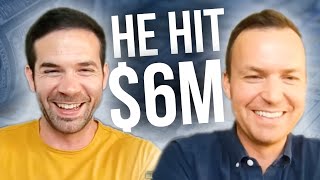
Travis Zigler built a dry-eye brand called Hydrate from scratch to a $6 million exit on June 1. He focused entirely on Amazon, grew a Facebook group to 15,000 members, and found his breakout product in Hydrate Lidden Lash Cleanser, which hit 50 to 100 sales a day. A costly year-long Shopify experiment cost him $150,000 before he refocused on what worked.
Questions this video answers
June 1 (exit closed on June 1).
About 15,000 members ("dry eye syndrome support community").
About 50,000 subscribers.
Hydrate Lidden Lash Cleanser (brand: Hydrate).
About 50 sales/day initially, scaling to ~100 sales/day within ~six months.
Chapters
Hey, guys.
Exciting news.
One of our students that I've personally worked with for the last four years.
Or so just exited his business for a really big payday. I watched him grow from the grind of getting this business up and off the ground all the way to having the big company come and purchase the business. It was a huge win for him. So I asked him to come over to my house and do a special session for our members of the 1%. We do a regular session called Wine with Wyan. We drink wine, and we talk business together. And the reason why this is so exciting for you is because Travis, who you're going to meet in a second, got into this game. Before I wrote my book 12 months to a million before, we were doing regular content here on the YouTube channel, before we were sharing all of these resources that we consistently put out here on YouTube and on the podcast and in our membership. So Travis and I were working really closely together, but he didn't have the resources that we put out here regularly.
So I wanted him to come on.
And share his entire story, from the grind of just getting this business off the ground all the way to that exciting payday. Because the more that you see examples of people who are actively doing this stuff and getting amazing results, the faster you're going to see that this is possible for you, too. So if you follow my work, have read my book, listened to the podcast, subscribe to this channel, this is a case study to show you what's possible for you when you put it into action. I'm really excited for you to see this conversation with Travis Zigler.
Travis Zig Zizzle. We've been working together for four years, and you just had a big day. Yeah, tell us about it.
June 1st, we exited. So we had our big exit following pretty much 12 months to 1 million, step by step. He did not pay me to say that. He. I. I followed the 12 months to 1 million. Before it was actually book. It was just a YouTube video. And we're like, I. I would listen to it every single month, and that's how I. We built.
What do you mean you listen to it every single month on YouTube?
I'd watch the same YouTube video every single month for.
For. Why?
Why?
So I think what most entrepreneurs kind of do is they try to focus on so much stuff. I read 52 books a year. Yeah, I do this, I do that. I read probably six books a hundred times. I listen to the same things over and over again. When I find a concept that works really well, I Just focus on that concept until I master it. And then once I master it, then I might go on to something else. But that's. We've. We grew our business with simplicity, and that's thanks to you.
Well, thank you for that. So. So tell. Tell me a little bit about what you mean, because you made a lot of changes in your business. When we started working together, you were selling eyeglasses. And then, I mean, you don't sell eyeglasses anymore. Or sunglasses, specifically. You don't. You don't sell sunglasses. Now, you made some pivots along the way, and you did some things I thought were very smart, especially at the time. So what. What per. We'll dive into all of that, but what in particular did you keep really simple that led to the exit?
So when we were selling sunglasses, we were just selling pieces of plastic out of China. We still have five pairs of sunglasses that we sell. Okay. And we. We were in practice at the time, too. My wife and I are both optometrists. We had two practices. We had just started two practices when we started this business as well. And when you started practice, you're a little bored because you have a lot of time between patients. I went from seeing six patients an hour to one. And so my wife and I were planning on doing a pediatric practice, but geriatrics came to us. And so we kind of pivoted our practice number one to serving that geriatric population. So we were selling sunglasses, and then we kind of shifted to more of a dry eye focused practice and glaucoma. But dry eye was our big focus.
Because that's what the market was coming to you for.
Yes.
Or. Because that was the demographic.
That was the demographic.
Got it.
That was the market that we were in. And then that made us kind of shift. It was actually at one of your events that we kind of shifted into the dry eye space by listening to Dr. Cabral up on stage. And I had an aha moment, like, we need to start going into dry ice. So we did. And we didn't really. We couldn't really build an audience around sunglasses. I've seen great brands that have done it. I don't consider Ray Ban to have a great. They have. Yeah, they have a pretty great following. But like Goodr sunglasses, G O D R, they focused on runners and perfecting a runner pair of sunglasses that didn't bounce when they ran. So they did that really well. But we just couldn't find that, like, audience that got us excited in sunglasses. So we focused on dry Eye and we started a dry eye syndrome support community. And the three things that we did really well. Amazon ppc. To go back to your question, by the way, Amazon ppc. We built our audience and we created content to provide value to that audience.
Hold on. Amazon ppc. You built your audience and you created content for your audience. That was a three.
That was a three.
Tell me these last two that you did really well. Are you smiling? Because you're looking at me in the screen and you're looking right next to me and I'm in the corner of your eye.
Yeah.
All right. So the content and the audience piece, obviously, we throw around these terms. I talk about this all the time. And this is always a point of confusion for people. And it was a point of confusion for you when you were going through it, of, like, building the audience. If I remember correctly, I told you not to build the audience in the way that you ended up doing it, and you were like, we're going to do it anyway. And you turned out to be way right, and I was way wrong. So when you say you were creating content for the audience, how did that whole package work together?
So the reason that you didn't want us to build this audience is it's called the dry eye syndrome support community. It's still on Facebook. It's 15, 000 members strong. But go join it if you want to see how we do things. You didn't want us to do it because you were suffering a little bit from dry eye. Yeah. Post Lasik. Yeah. And the problem with that is that's not our demographic. Our demographic is menopausal females, which we were seeing all the time in our practice. So we knew the need was out there, but it wasn't for you as our demographic.
Okay.
So we just. We literally started this Facebook group and, you know, invited our friends. We had about a hundred people in the group, and we just started going live once a week. And that's all we did, is we went live once a week for probably six months before we even had our first person join us. You will hear crickets. You literally will. Nothing will happen. You feel like nothing is happening, but you're in what Google calls the sandbox. Facebook wants to make sure that you're real enough to, like, start showing you. And so that first six months of going live every week, we had no rewards from it, and nothing. And then people started joining, and then one of the questions we asked when they joined the group was, how did you find us? Facebook suggested it to us. No no paid ads. Facebook was just starting to suggest it based on the keyword dry eye syndrome, sport, community. So when you search dry eye on Facebook, we're the first to come up. When you search dry eyes, we're the first to come up. And that is a result of engagement. And so we just kept going live over and over again. As people started coming in the group, they started asking the same question over and over again. Then we started making content around those questions that were asked over and over again. So instead of typing a long response in Facebook, we can now post a blog post. They then were going over to our blog, where we then try to capture their email address.
So, in essence, the group was the list that was like the core group of followers that found you organically, just in Facebook groups, and then you were nurturing them with the lives and the content that you were making to respond to their questions.
Exactly.
I mean, that's so beautiful. I remember one time you were launching a new product, and forgive me, I don't remember what the product was, but it was a product that had no Amazon search volume. This was nothing on paper to say, like, it's a good thing to sell on Amazon or there were no competitors selling. It was something new in the marketplace, and you launched it to your audience at a price point that was like 30% higher than what you might call market rate. And if I remember correctly, you went.
From zero to 50 sales a day.
In like, seven and a half seconds.
Still our bestseller.
That's your bestseller now.
That is what led to the growth of the entire company.
Okay, tell me more about this.
So it was actually the opposite of what you said. So there was a. A product of our. That we sold in our practice called Avenova. Avenova is a great company. If it wasn't for them, I would not have the business that I had. But they did something really odd about four years ago. They took their price of their product from $30 to $300 a month.
Okay.
Because they were prescription. And when they did that, it made a lot of people mad. Patients, doctors, everybody. And so one day, a patient actually came up to me in my practice and said, hey, can you make this? Because it went to $300 a month. And I was like, I don't know how, but I can look into it. So I took it, found a manufacturer for it. Very, very specific manufacturer, because when you create our product, it actually creates bleach as a byproduct, and we didn't want that in ours. So we found a manufacturer that had A patented process that doesn't have bleach as a byproduct. And we literally marketed it against our biggest competitor as an alternative. And we were only 15amonth versus their 300. They have since come down to 30 again, and they're over the counter now. But it was funny because when they came became over the counter and went on Amazon, it actually lifted everything up.
It made the category bigger.
Yeah, exactly.
But you launched that to your audience and got like. Yep.
So it was.
You got a big liftoff right from the beginning.
Yeah. So it was a, hey, are you using this product? Well, now you can get a, you know, less expensive version just as effective. Buy it here. And literally, we went to 50 sales a day. We. I think we were up to, like, a hundred sales a day within six months.
And it never would have happened without that group there.
And there's no category for it. Like, you don't sell. You don't have a search volume for it.
You're not finding that on Jungle Scout.
I did not find it on Jungle Scout. Like, the keywords that we were going after were things like dry eyes, dry eye, sty, blepharitis, all disease terms. But when people search that, they don't know what they're looking for.
Yeah.
And so you're just trying to get up to the top of that. And we don't go for those anymore because our brand name's recognized now. But that was how we got started with that. And that's how the whole. It's called Hydrate Lidden Lash Cleanser. That's how the whole Hydrate brand was born, was just because that product, that one patient coming to me and saying, can you make a better version of this?
So, Travis, I remember you when you made that pivot of focusing on audience, if I remember correctly, you quickly went from like 80,000amonth or 60,000amonth to two or $300,000 a month. This is maybe two or three years ago. Am I remembering that correctly?
Yeah. So the hydrate brand really helped take us to a whole new level, because when you have an audience, your brand's invincible. I mean, you can do whatever you want, and to a certain extent, of course, but you can pretty much come out with. So we're. We're releasing an eye cream this month and. Eye cream. Eye cream. Go look for eye cream. And Jungle Scout, it. It's probably a one out of a hundred because of the opportunity. There is nothing. But we're not worried about the Amazon sales. We're worried about serving Our audience. And when you're serving an audience, it just can catapult you to a whole new level. Because once you hit the million dollar point with an audience in place, to get from 1 to 10 is just more products. You've already learned how to sell if you've gone 0 to 1. So when you're going 0 to 1, this is, you know, ready, fire, aim right here. When you're going from zero to 1 million, it's all about learning how to sell and how to serve. That's the key part there is serving your audience. Not the selling part, the serving part. And the sales will come once you get to a million. Going from 1 to 10 is now just about more products. You're repeating the process to make sure you can repeat it.
So you mentioned earlier that you followed the 12 months to 1 million model to a T. And what you just said was that the way that you kind of started to grow this was releasing more products. Does that mean that you had 12 products doing 25 sales a day at a 30 price point? Or. Or was it more like you released 15? You cut some. Some were winners. Was a little bit more messy than that.
It's a lot more messy.
Okay.
You will have so many does. We released a product two months ago and it was complete dud. Nobody wanted it. We sold, you know, probably 500 at launch, and we're now selling two a day. So we cut it.
Okay.
So it just. You'll. You'll have probably just as many duds as you do singles, and then you'll have one home run that will take you, take your business. But our home run was probably our 21st product.
21St.
We had great doubles and some triples, but we never hit 100 sales a day until we came out with hydrate.
Never hit 100 sales a day. On a single product?
On a single product.
Okay.
All right.
So your first home run being a hundred sales a day consistently.
Yes.
Okay.
Most of our products usually averaged around 25 to 30 sales a day, and we had a lot of them. We actually had about 10 products that did 10 sales a day, and we were happy with that. And so those are all singles. Yeah, so we had lots of singles to get us to that 1 million, but we didn't have an audience behind it. And so that kind of brand, the sunglass brand, it's trickled down quite a bit because we have no audience backing it. But it's still there and it still does well. It's just cash flow. But when you build an audience behind it, you can keep the momentum no matter what. So if we need a boost on a product, we put a sale on it, email our audience, boost it back up, and sales pick up again.
Tell the story about the year that you spent trying to build funnels and then finally came back to.
The basics, we might call it.
You mean the year I quit the back room?
I wasn't gonna go there, but you're welcome to drop specifically. Like I remember.
You'Re not the first person that I have seen go try to build cold traffic funnels and go down that rabbit hole and realize it's a completely different business. Would you. But would you tell your experience with that?
Yeah. So I was in the back room for three years, and I don't know what it was. We just wanted to try something different for a year. And I think that happens with a lot of entrepreneurs. So my fourth year, we decided to join a different mastermind. Great guy, great mastermind. Little unorganized, but great guy, great mastermind. And. But they're all about direct to consumer through funnels and Shopify. Click funnels, all of those. So we actually met somebody at his mastermind, and we hired them to do funnels for us and to do all that for Shopify and to build that out. Facebook ads, everything. Our. Our sales actually shrunk that year, revenue wise. We took our eyes off the prize of Amazon. Amazon was how we got there. And so we stopped focusing on how we got there and started focusing on everything else over here. And so we actually went from, you know, 3.6 to 3.2 million. But our profit tanked because we invested so much in Shopify. And when we did that, it. I think we lost 150,000 that year on Shopify. And so in December of that year, actually in November, I'll go back to November, we rejoined the back room, had a little talk with him. We almost sold our business for nothing because.
Oh, my goodness.
Scared that year.
I remember.
Oh, I forgot about this.
It was in Vegas, right.
And I was like, please don't sell your business.
We were at Wolfgang Pucks, right?
Yeah.
And I looked at Jenna and I was like, jenna, please, Please don't. I. I think I even said, I will buy your business before you sell it for what you wanted to sell it for.
Yeah, we about sold it for nothing, essentially, because Shopify tanked it. And focusing on Shopify should say tanked it. And so we literally got rid of that. That crew, the Shopify crew.
I'm so. I feel so proud right now. I Forgot about this story. And oh my goodness, I'm so glad this happened. I got one right. Okay, sorry.
Please continue.
I'm so happy right now.
So the funny thing about that was in December, we let the team go for Shopify and we did nothing with Shopify next year. I took my internal team. I was like, we have five people. I said, we're going all in on Amazon again.
Now hold on. You have spent like all of 2019 building up this Shopify presence.
And you lost 150. Your net was negative 150,000. Your profit tanks, your top line revenue drops by more than 10%. So you're from 3.6 to 3.2. Your profits in the toilet. Spent a year wasting this November, December, you fire this team and say no more.
And then, and then we did nothing with Shopify. We literally just kept it up, did no advertising. We do some advertising to our blog, but our blog goes to Amazon to buy. We focused all of our attention back on Amazon and our revenue went up by 20% and our profit went up by 10x10 times in 2020.
Now what happened to your Shopify revenue?
Shopify went up.
Shopify went up.
Profit went up by 300,000.
Why?
Because we refocused on what was working and we got the overflow going back to our Shopify store because we built our audience.
I have nothing to add, ladies and gentlemen. You can drop the mic.
Yes.
So I, I went on a tangent rant Fire talk today on a coaching call inside the Capitalism incubator in which I told the members in there to have a primary and simple strategy that you can put all your eggs into and that will carry you and create a halo into the other tactics, the other strategies, the other storefronts. I told the story about someone who is here at my house for a workshop and they were doing about $40,000 a month and they wanted to go from. They wanted to cross their first million. And she was convinced in her mind that the way that she was going to build this business from 40,000 to 80,000 was by taking her focus away from Amazon and putting it on Shopify. Exactly what Dr. Travis Zig ziggle, Zig Zizzle is talking about.
Hey, I just noticed that.
We gotta check your eyesight, doctor. So she takes her attention away from the thing that is driving sales and puts on the thing that is doing zero. And it took about two and a half days to get her to realize that the thing that she was missing was not another channel. It was diving deep into the customers who were already showing up in their business, doubling down on the channels that were already providing sales and revenue and profit and customers going all in on that and then letting the spillover come to these other places. And by the way, some of you, myself included, on my new brand Switch, Amazon won't be the primary play. Amazon will be the secondary play. So having a great funnel with cold traffic advertising will be the primary play for Switch. But as a result of running $200,000 a month in cold advertising at break even to acquire customers, we'll get tons of Amazon sales from people who will see us look us up on Amazon and buy. There must be a primary focus in which there is customer acquisition and letting the halo effect go elsewhere. Now, Travis, 2020.
Some things happened in the world. You were more focused on what you were doing, what happened in your business that year.
Yeah, so 2020 was a great year for us. We moved to Austin. He finally got me to Austin. Yeah, he's been working on that since 2017. And so I actually live 10 miles away. And so I drove over to his house tonight. But that's not what you asked. So 2020, we refocused on Amazon exclusively, and we just. We just focus. So more products on Amazon. So to shortcut our pro, our. Our path for more products, we actually bought a company. So we bought another company that had five products that were in the I space just like we are, and we bought them May 1, and that literally helped us take off even more. So what was happening is. So we run a Amazon ads agency as well.
My.
Not my wife and I, but one of my friends from college and I. And one of the clients we were managing was having a cash flow problem. We'd scale his sales up a lot, but then we'd run out of cash for inventory, so we'd have to turn ads off. So it was like this roller coaster that a lot of you will be going on. Trust me, once you guys start ramping up sales, cash becomes crunched. You feel like you're not profitable, but you're profitable. You just don't have cash to order. And advertising.
That's right.
So that's where this guy comes in. Actually, I have to point the opposite way. There we go. There we go. So we ended up buying this. This company, and they were going from 30,000 to 60,000. We got them to 90,001 month and then back down to 30 and 60 when we bought on May 1st. That month we did 60. June, we did 90. Now we're doing about 150,000 with that brand.
Amazing.
No new products. Just from getting inventory stabilized. Now here's the fun part. We are still running in to inventory problems with that company because we continue to scale their sales. And so that's what we did. We were like, we could release these five products or I could go over here and buy this company and have it like that. And so we bought the company with no money down. We actually didn't pay them cash at all. We gave them equity into our company.
Because he's basically a share swap.
Yeah, just a share swap. And he's a doctor as well. So he was kind of an ambassador for our company as well. And he ended up winning in the end too. So.
So at what point you. You just closed? When? When?
June 1st.
June 1st.
Ladies and gentlemen, throw some hashtags in the chat box. Congratulations, Dr. Travis Zigzzle. We have another exit in the books. My. I'm so proud of you, my friend. It has been so fun being part of this journey. Tell me why you sold strategy.
So our goal in our business is to heal 1 million dry eye sufferers naturally. Which means we teach people natural ways to heal their dry eye. Because you don't need to use pharmaceuticals. You don't need to go down that whole rabbit hole. We got to a hundred thousand, but it took us four years. We wanted to step on the gas pedal. And so we. You guys will probably get this too, but we get getting emails after email for like, hey, we'll buy your business. Hey, we'll buy your business. Hey, we'll buy your business. I always shot the same thing back to him. This is what my terms are. This is my ebitda. This is my terms. Good. And it all goes back to something you said, that you are the hot girl at the dance.
Yes.
They want you more than you want them.
Yes.
Even though it may feel the opposite, it's not. And so this is my terms.
Take it or leave it. And finally two people said yes at the same time. And so we kind of talked to both of them. We were actually leaning towards one, and then the other one just made more sense. And that was back in September. And nine months later, we closed with them.
They are a bigger company than us in the same space. So they're in Icare. They're going to help us reach our. Reach our target demographic faster. And so we're putting our foot on the gas more. And we were at the point that we're kind of like, I don't want to do what we've done to grow Anymore. So who can get us to the next level?
Yes.
And we started thinking about that. Who More and more. And the company that acquired us is that who. And that's why we're so excited about it, because nothing changes. We're still part of the company. We're just part of a bigger company now. And we're still, you know, in it to win it. Like it's still our company. Nothing's changed other than an exit.
Except your bank, your bank account's changed. Bank account has changed slightly.
Slightly, yes. It's been great. We're debt free now. That's been the most exciting part about the whole thing is we had lots of debt from student loans, from optometry school, from everything. We're debt free now. That's probably the most exciting part because my wife is now free. She's free to worry about everything else in the world.
I hope she's watching that. Sorry. Honestly. But that was the biggest thing. It was a strategic move and we're 14 days in. You asked me about like, what's the biggest stress right now? It's adjusting and it's figuring out like where my role is, where my place is. But from what I've learned so far, they're a bigger company than us by a lot. But it's no different. It's no different. Except what they've figured out is in order to grow and scale, they need more who's. So they just hire more people to take them where they need to go and they're not afraid to do it. Whereas in, when we're small, in that 0 to 1 million area, we're scared to do it. And one of the coolest things about this is cash is no longer an issue for us. So I can spend more on advertising. We can over order inventory so we don't stock out in case we get fluctuations or something like that. And that's the importance of your incubator and your, your fund. Because if you can fund an early stage entrepreneur to not worry about cash anymore, it's, it's huge. And you know, you don't realize the impact and the power that that has until you're on the other side. And you, you never will, unfortunately, until you're on the other side. I'm on the other side now. And I was like, if I would have known this before.
Yes.
I would have taken off a lot faster.
Yes. Tell, say, say more about that. What, what do you wish you had known before you sold?
So the biggest thing was we met with their, one of their their employees. And I was like, can I raise our advertising budget? We spend about 120,000amonth on advertising. I was like, can I raise that by another 30,000, another thousand a day? And they're like, yeah, please do. And so what we did is we took our ROAS targets return on ad spend from about a 2 till 1.5. So we're not getting as good of a return on it, but whoever can pay the most to acquire a customer wins in this game. What that's done is we're only 10 days into this and we already increased our Amazon sales by like 12,000 for a week per week, which is a lot over the course of a year. Yeah, we're only, we're only 10 days into this. And our website sales and our leads are all increasing now as a result of being able to put more money into all this. And so all we're doing is putting more money into what's already working, lowering our ROAS targets and it's resulting, it's paying off.
So that that ability to just turn the dial up with more ad spend without you having to think in your head, how much money is in the bank is what is starting to create incremental growth within a week of closing.
Yeah, and that's because it's not my bank account anymore. And I respect the company's bank account, of course, but it's not my, it's not my living, it's not what I'm using. Yes. To live off of. And so again, that's where an investor comes in. Because if you bring an investor and give you the capital that's needed, then you stop worrying about those little things and you just start growing and you just start spending more to grow and you'll experiment more and you'll have more fun.
I tell this story in my book in marketing headlines about how I took my company from a $600 investment to $16 million. And I said I took no outside capital, didn't take on any investors. I don't even remember if we used any Amazon debt.
Right.
We bootstrapped the whole thing. And that's a cool story, but you know what? I regret.
That it was only $600.
If you turn $600 into 16 million, why didn't I put 600,000 in? Now, I didn't have $600,000 back then, but it would have been smart to find somebody who did. If I knew what I know now, if I know, if I knew what I knew now, that I could create more products, increase my ad Spend higher, faster. Now, of course, whenever you. There is the bladder rule of finance. The more money in the system, the more pressure to piss it all away. But if I had known what I know now, I would have gone much more aggressive. I would have put much more money in. But we often hedge because we have this fear that the business's money is our money. We emotionally get attached to that, and so we don't do the things that.
Move the levers of the business.
But if you can detach from that, you can move much, much faster.
So the first time we ever met is in Vegas. And, you know, my wife grabs me. She's like, that's Ryan Moran. Like, he's like a celebrity in this space. And I said, no, no. He makes me feel like I can do anything. And I said, so go tell him that. She's like, I can't go talk to him. Like, he's like a celebrity in this space. And I said, he's a. He's a person, and I'm sure he'd love to hear that. So we walked up, and she said it to him, and I think we talked for, like, an hour. And you said something like, hey, are you gonna come to the cap, the Capcom, or what was it then? A freedom fasting life. So. And I said, no, I'm not ready for that yet. And, you know, I left it that he. You said something like, you're always ready. And the next time I saw him was at the amazing event a year later or probably like nine months later here in Austin. And you're like, hey, you should join the back room, because I was only. I was doing right at, like, the threshold.
Yeah, you're like, right at a million.
And I was like, no, I'm not ready for that yet. And then I caught myself saying it again. And, like, you're just like, how about you just come tonight and just check it out? And I went to the dinner that night and signed up for the back room, and I've never looked back, because whenever you think you're not ready for something, that's that. That is the discomfort. Saying like, that will make me uncomfortable, so I need to pursue it. And the funny thing is, I actually had that experience here recently. And every time I feel that now, I think of you. And then I'm just like, yep, this is the right move.
Oh, that's great.
And another example of that was when my wife and I sold our two practices. I mean, we were doctors. We made, you know, $250,000 a year in salary plus, we own the businesses, so we got the business dividends as well. So we made a significant amount of money being doctors, but we were miserable with it. And it's not that we didn't like helping patients. That's what our whole life's about. It was we didn't like going in and seeing the patients and taking the time. And so the time that I felt that discomfort was when we sold our practices. And I was like, is this the right thing to do? Should we completely stop practicing? And it was just like, yeah, it's very uncomfortable, so we need to do it. And we've never left.
That's awesome, man. It makes me so happy because I remember. I remember you said, no, I don't think we're ready for that yet. And then you said, crap, I think I said the same thing to you last year.
And what was so beautiful about that was you caught it. And if you know that quote, if. If you believe you can or you believe you can't, you're right. Either one. And sometimes it takes a while for your, like, beliefs to catch up with your intentions. But I.
One of my.
One of. One of my best friends here in town is Brooke Castillo. Brooke Castillo, in case you're not familiar, is making. Was a Life coach making 400 grand a year. Awesome. Then said, I want to make a million dollars. So she changed her whole business, went from 400,000 to a million dollars and then 5 and then 10 three years later, then 17 four years later, then 34. This year, 50. $50 million. As a life coach.
And what I have gathered after spending and having many deep conversations with her is she has me convinced that the belief comes first, not the how, not the who. The belief comes first. That is the first thing. Because if you don't believe it, if you don't believe it, then when you meet the person, you'll say, I don't think I'm ready yet. You will deflect that. When the how comes, you will say, too good to be true. When the how comes, you will say, I'm like, we're ready for that yet. But when you believe it and the how shows up, if you believe it and the who shows up, you will say, feels about right. Go.
Did you know how you were going.
To sell your business for however much you sold it for?
Can I say yes?
Sure.
So the funny thing about that is when we started Hydrate as a brand, we always said, let's grow this to sell to Johnson and Johnson, and then Johnson and Johnson can plug it into their system and spread it throughout the US and that's essentially what happened. It's not Johnson and Johnson, but it was a company exactly like what we always manifested. We always wanted it to be. We stayed in the company because we still want to be. We still want to serve in the dry ice space. We want a company that can help us expand faster because they already have the logistics. And that's exactly what came to us. And we didn't go to them. They came to us. But I'd go to conventions, optometry conventions, and we'd go up to all the pharmaceutical companies or the bigger companies than us and be like, hey, when are you guys gonna buy us? Hey, when are you guys gonna buy us? Because everybody knew who we were because we're like semi influencers on YouTube. We have about 50,000 subscribers, and a lot of people in the industry watch us. And so we'd always put the seed out there for everyone. And then it finally came to us. So the how. We always wanted it to work out the way it did, but did we know it was actually gonna do it? No.
So when you've got 50,000 subscribers and you're known in your space now, you have a whole different level of. Who's that? Show up, Travis. You're. You're about nine minutes post exit. The wire has cleared. How do you feel? How do you feel post exit?
Now the best feeling is being debt free because, you know, we were swimming in student loan debt. But honestly, guys, it feels no different. The wire came in at, like, 5:22pm and I had it on my app, and I showed my wife. We were putting our kids to bed. She's like, oh, cool.
That was it. Yeah. And we celebrated. So we did celebrate. We actually. We celebrated more when we paid off our last student loan than we did when we got that wife.
Oh, wow. Now, like, just, like, to be fair, you're debt free, but you're also. There's some left over.
Oh, there's a lot left over.
Okay, good. So. But it wasn't that much student debt.
There's a lot of student debt. Unfortunately, that's what doctor programs do nowadays. But, you know, it feels no different. My. My life has. Yes, it's more free now. I don't have to think about, like, everything I buy, even though I still get yelled at for buying $200 worth of groceries in a week. So.
Shopping at Whole Foods, man, it kills you. But it's, you know, it's great. But I love the grind. The grind is the fun part. You guys are in the fun part. If you're watching this, like, this is what's fun about this business, is building it. My agency is in the grind. We're from. In that 0 to 1 million stage. We're building up those raving fans. We're getting new clients, and it's the fun part for me. And so, like, now we're in that, you know, we're trying to go from, you know, up to 100 million with. I love. And it's more bureaucracy. It's like, you have to make sure your HR is in place. You have to make sure you have contracts in place. You have to make sure this is happening. You have to make sure this is happening because you have more eyeballs on you. So just the game changes on each stage. But the grind is the fun part. It's the. The free part. You're free to do what you want. Like, I'm free to do what I want with my business now, but I still have to talk to people like, this is what we're doing in. I love. They want me to show them projections on. If I do this, this will happen. If I come out with this product, this is what I expect to come out with. And I don't mind that. It's just a different game to be played. And so enjoy the process, you hear all the time. But that's all we have. And here's the funny thing is, like, I've always enjoyed the process. I love what I'm doing with. I love. I love the process, always. I love what I'm doing at the agency. And the funny thing is, like, after the exit, I realized that I was still doing some things for money instead of just the process and falling in love with the process because it was still always there in the back of my mind.
So what do you mean by that? Like, there were certain things that you were doing in your business that you realized, oh, I don't actually want this.
I don't want to be doing that. Okay. So I shouldn't be doing it. What happens if I, like, if I got rid of it before, I'd be like, well, then our income will drop or we'll lose money.
Okay.
Whereas now I'm more willing to let it grow and help somebody else grow into that role instead. So we talked about earlier, I do the sales calls for agencies, so I still talk. I don't call them sales calls because it's more of me interviewing them to see if I want to work with them, actually. And I was sitting on a sales call last week and I was like, I don't know if I want to do this anymore. And I feel like I did it before because I felt like I was the only one that could do it. Maybe I don't think that, but I maybe thought that and I wasn't having as much fun at the sales call. I love doing the YouTube videos though. And so we're now training somebody else to do the sales calls. Slowly starting to increment them in. And so they're going to start doing more sales calls and taking me out of the equation. Plus, it opens up the calendar more because I. I'm only available two days a week. So little things like that that you don't realize that you were actually doing for money, once the money comes, you're going to realize how much you don't like doing certain things. And I think that's been the biggest, like, real, the aha for me. Like, let's just see what happens if I give this to somebody else. And so far, we've grown.
Yeah, it is funny how that works. All of the things that we do in order to, like, try to extract more are the things that actually prevent more from happening because they, because they become bottlenecks, become things where we just start focusing on, like, protecting instead of growing. Dude, I'm. I'm like, I am. You're my favorite story. I just, I just think you're fucking great. Great fucking work, my friend.
I appreciate it.
If you watch this and you're still here, then you're probably asking yourself, how.
The heck do I do this?
I want to get results like this. I want to, to go through those highs and lows and get the big payday and have an exciting business that I'm proud of. And if you're asking that question for yourself and you're wondering how you can get started building a business that you can scale and maybe sell one day. That's what we help people do in our program called the Capitalism Incubator. This is our incubator where my team.
And I help you get clear on.
Your vision and launch profitably and bring in resources and relationships to give you the free foundation for a seven figure business that you can sell. Travis is actively in there helping other people like you build brands that they can sell. This is not just some po dunk place. These are people who are building brands that are at seven figures and they're built businesses that several of our coaches have had exits, including myself, and we're now investing into the next generation of entrepreneurs. Who are building exciting businesses that create change and produce a lot of profit. You can find out more about what we do and decide if you're a fit for this over at capitalism.com Inc. And you'll see a full video about how it works and how you can actually go along this process. And we might see you in a case study like this in a couple years when you get your big exit. I really hope that that's the case. There's some of my favorite conversations to have. Thank you so much for watching. I hope you found value today if you did hit subscribe so that we can serve you on your entire entrepreneurial journey. And I'll see you next time. Take care.







