
He's Made $300,000,000 Working 4 Hours A Day... Here's How.
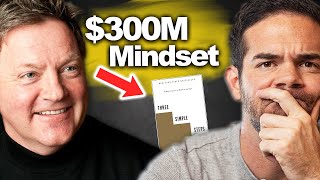
A Capitalism.com interview (Ryan Daniel Moran with Trevor G. Blake) exploring Trevor’s mindset, intention-setting techniques, and lifestyle. Blake — a late-start entrepreneur who claims ~$300M in exits within his first decade — describes scientific-style intention setting, “mini mind movies,” thinking big, and a five-hour workday built around focused work and deliberate relaxation to maximize creativity and results.
Questions this video answers
$300 million (as stated by Ryan Daniel Moran).
Three Simple Steps.
$105.5 million (as Trevor states).
Less than five hours a day (Trevor's stated work schedule).
Chapters
Trevor G. Blake. I'm fascinated by this human being because he wasn't an entrepreneur until he was in his mid-40s, and then he had $300 million in exits within his first 10 years. And he says that he never works more than five hours a day. This is a guy that I want to learn from. Trevor authored the book Three Simple Steps, which I listened to and loved, and I've listened to it multiple times, and it's basically how to create great results in your life, regardless of where you're starting from. Everything starts in the mind. And when I sat down and interviewed some of the most successful entrepreneurs that I knew, I wanted to include Trevor in this because he started late, he has really big success, and he has the type of lifestyle that most of us desire. What you'll find in this discussion is that Trevor has a way of blending the woo woo energy stuff with very logical principles. And I think there's something to that. If nothing else, it gives him permission to go after really big goals and to accomplish amazing things. And that's something that I think we as entrepreneurs deserve to listen to. Well, I wanted to start things off today with something that you said to me on one of your coaching calls. I'm a member of the Guild, your coaching community. And something that you said to me on one of the calls was you kind of called me out for not thinking big enough, which really sort of sat in my body for a couple days, and I sort of had to wrestle with this for a little bit. And your exact words to me were, ryan, with your skill set and your background, I think you need to add a couple extra zeros to your goal. And you said it like it was just a foregone conclusion that someone should be thinking a lot bigger. And it's rare that someone challenges me to think bigger. So I wanted to hear you comment on what led you to say that and why you operate from this place of, you might as well just think bigger.
I mean, there's several aspects of several layers to it. So this won't be a really quick, straightforward answer, but I think you expect that of me anyway, so. So the first thing is there is a magic to thinking big. There's actually a book called that, which is not one that I recommend to people, but. But there is a magic to thinking big, because what. When you think big, you. You know, you retrain your neurons, you create neuroplasticity, and then those things that you previously set as what you thought was a stretch goal no longer seem so intimidating. They seem really small. And so when you think big, getting those other things that previously seemed big just come so much easier to unit. You know, a good, a good example, I suppose would be, you know, is anything physical? You know, when, when I get into my lazy mode and I pamper myself in my lifestyle and then I think, oh God, I've put on five pounds, I need to get it off. You know, the first step of getting back onto the treadmill is really hard. But then after a few days of jogging, then I'm kicking a football, then I'm playing tennis, and all of a sudden losing a few pounds seemed ridiculously small goal to set. So life is like that. So there is a definite magic to thinking big. So that's number one. So always recommended to everyone. Number two, everything in the universe is energy. And energy isn't fragmented. It doesn't get, you know, sort of distributed in small amounts to some people and large amounts to other people. It's just there. And so it takes the same effort to tap into the universal energy. Whether you want to get 100,000, 100 million or 100 billion, it's the same effort. So you may as well aim high. So that's, that's kind of number two. Number three is. And I don't know how this happens, but I'm something of a reader of souls, so I can be in someone's company and I can see. See something that. So a lot of people will say to me, I feel seen for the first time when, when with me. I don't know what that is or how it happens, but it's always happened throughout my life. In business, it's an absolute godsend because you can spot bullshit a mile off. And that's, that's really helpful in negotiations and things like that. But, but when I met you for the first time, the back of my head is saying, why is he holding himself back? And I. And I felt you holding yourself back like I'm. And we all do it. Like, you know, you have these amazing ideas and you say, well, am I really worthy of that? And you had that to such a degree that you sort of pigeonholed yourself into the. Into this number. Whereas really with the same mindset and the same energy, you could be at a much. You should be at a much bigger number in your life. And that, because that's in your soul path. I mean, whether, whether you get there tomorrow or 10 years now is entirely up to you. But that's what I feel.
I love that Trevor starts with this point. The idea that Everything's energy, so you might as well pick something big and, and go after it. It made me think, how often do I hold myself back by thinking small? Trevor has called me out on this, that I might hold myself back by just limiting and putting a ceiling on my own success. And he says, we're just going to go here and I'll grow into it. What a freeing idea to think that we can just think really big and then go after it. But what I see most entrepreneurs do is whenever they think big, they doubt it immediately so they shrink their goals. Let's just play with this idea that you can think really big and that you're going to become a new person in that journey. One of my goals is to have 100 million dollar net worth over the next seven years. I'm going to have to become a completely different person in order to accomplish that. I don't know how I'm going to do it, I don't know what I need to do yet. I just believe that I'm going to become that person and that guides my journey. And whether or not the woo woo stuff is real or that's just a good way to set goals, I think it will put me closer to that goal, if not ahead of that goal, rather than just settling for what I believe I'm capable of doing. I remember something that you said about the first company that you built and sold. I think it was your first company where you wrote down a goal or stated that you would sell something for over $100 million. And at the time that felt like Austin Powers Dr. Evil saying $100 billion. It was like a made up amount of money that didn't exist in the world. It felt like the biggest mountain you could climb. And then a few years later you sold it for over $100 million. And I was hoping you could share about that experience. And what gave you the confidence to be able to state something like that even though it felt impossible?
Well, it never felt impossible. And so because you never ask how, you just set an intention. So I've learned over the decades how to set intentions in an effective way. You know, there's a lot of schools of thought out there about how to do intentions. And many of them they sound good and they make you feel good about the life you have, but you want a better life. So you need a tool and technique that's backed by science. So I use the science to put a tool together that I can have confidence in that if I just am disciplined enough to use the tool. I Don't have to believe in it even. I just have to do it and it'll happen. So I'd experimented many ways in my life with that. You know, I'd said when I was earning 12,000 English pounds a year, you know, I set a goal to earn 333. I just like the number three. $333,000 a year, which meant not only do I have to earn dollars, I have, I have to be in a country where the US dollars exist. So I've got to, I've got to move from one country to the other, find a job, and I'm going to earn three. And that happened within four years. And so I knew. And so a lot of people, they would say four years is a long time, but you know, that's really not a lot of time to go from one version of quicksand to financial independence. And so, and so I learned the sector technique and I just started playing with it again. So when I started my first company, I had no doubt in my mind it would happen. I didn't know how or how long, but I had the sense of who I was, what I wanted to achieve in this business. But also I had the motivation that I wanted to prove somebody wrong. The person who doubted me and said to me, you'll never make it in your own company because you're not smart enough. You'll never be able to be a successful CEO because all you've been as a junior manager, as a director at the time, I think, and that was my boss, my CEO in the company. I bought the rights from his company as the company went out of business and I went on to be successful. But so in order to achieve that, I said, I remember sitting one day and think, well, when I go up to this man and say, look, told you so what does that look like? So I'm thinking backwards has already happened. It's going to have to be $100 million because that was his target with his company. And so it's got to be at least $100 million. So I set the intention and it wasn't any cleverer than I have sold. Qualmedical. It still exists. People can look it up. Qolmedical.com I have sold quality for at least $100 million and I sold it for 105.5. So then I realized, well, I should have said a billion.
But. But at least I. But the technique works. Doesn't matter how you know, as long as you do that, you have the discipline to do the Technique, then it works in any situation, not just in business like you and I like to talk about business, but in relationships as well. I've just had that very experienced myself, which I can talk about. If it's of relevance to your. To your.
I'd love to go there. But before, before we go into the intention setting technique, there's a, there's. I can hear sort of the way that most people might implement something like this. And I have noticed a difference in people like you who sort of set the intention and it unfolds naturally. And then there are people that I see that almost set goals or set intentions out of a place of insufficiency or not enoughness. It's almost like to compensate for their lack of belief. For example, I see the people who have the hardest time financially often set the bigger goal or the bigger intention almost to justify themselves. And the longer they struggle, the bigger the goal gets. And I'm curious how you have seen the difference between people who are able to set those and watch them unfold naturally versus people who seem to perpetually struggle and set bigger and bigger targets, and yet they seem never to make any progress. What's the difference in your experience?
I think you actually mentioned it in the previous sentence in the letting go part of it. You know, when you know something's backed by science and neurology and, and the art of peak brain performance, then you don't have to believe anymore. You can just follow the plan and it'll work, right? So, so it takes all that pressure away. It's very important. But to get, get to that point where you trust is quite hard for a lot of people. And so I find people are split between two groups. One, one just get to the point where say, oh God, I'm fed up. Just I give up, make it happen. And the other, the other saying that doesn't quite work today I'll try a bit harder tomorrow I'll do a longer, I'll do more meditation tomorrow and all this kind of stuff. So they're not trusting the process.
I don't know if Trevor's process is actually based in science. I don't really have a strong opinion about his, his way of goal setting or intention setting versus others. But here's what I noticed. Trevor believes that his process works. Trevor has certainty and can almost outsource his faith to the process. And that's what I think the actual magic is. So whatever you believe strong enough for you to stick to and sort of outsource your doubt to and say I'm just going to punt my doubt for what while and believe in the process. That's the process that will work for you. And I think Trevor so believes in his intention setting process and has the science that convinces him to trust it, that it allows him to just rest in the knowing that that outcome that he set is going to happen. Whatever it takes for you to have that amount of certainty, that's the right approach. So pick one, trust it, convince yourself that it works and let that be the permission that you need to just go after big goals. I'm 34, about to be 35 and sometimes I forget how much time I have. I forget how many chapters of my life I still have. And you even being decades my, my senior, are still setting new goals and new long term plans. And I was hoping to hear you comment on how you think about time and what to do with that time.
Right. Time's a complete illusion. So, but, but the funny thing is the older you get, the more you hear people say that.
Right? So because you don't want to believe that you're getting older, of course, but you're not getting older. You're physically this body that holds our soul and our, you know all about what I call the torso wand. So, so the body that holds the torso wand is just a vehicle. And so it's going to, you know, it's going to get old eventually. It can't help it, it's exposed to radiation and gravity and eventually it's going to wear out and you get another wand. That's basically how I think about it.
This is a theme that comes up a lot in this series. People who are super logical, people who are super woo woo, all come back to this idea that you can really create, create whatever it is that you want, including the body that you want, including the aging process that you want. I don't know how I feel about that, but I do think there's something to focusing on what you want versus what you don't want and allowing your actions and your thoughts to follow in alignment with what it is that you do want and giving as little air time to what you don't want as possible. I always admire the people who are several decades my scene senior and are still starting new projects. My friend Tom Burns here in Austin is 30 years my senior and he's starting brand new projects. And then Trevor is also 20 or 30 years my senior and he's just starting new things. I love to think about people who I admire starting brand new things because it lets Me know that I could be hitting stride in 20 years. And if you're over 50, you could be just starting and have plenty of time to build a life and a business that you truly love.
It's how we think. So at the back of our brains here is the reticular activation system, and it gives us what we want. And it doesn't have an emotion, and it doesn't say, oh, he wants only good or he wants bad. He'll. He'll give us what we're focusing and what we pay attention to. So if I pay attention to the aging process, then the reticular activation system is going to give me even more reason to pay attention to aging process. I'm going to start getting pains. I'm going to start to lose my mind a bit. I'm going to start to see more old people than young people around. But my reticular activation system knows that I want. You know, my favorite quote is, I want to die at 95 years old from a single bullet wound to the head fired from the gun of a jealous lover. Okay. Because that's a. That's a life. Well. Well, run. Okay. So. So I want to. I want to. I want to be the, you know, the. The oldest, randiest man in the world, if you like, the oldest, sexiest man in the world. I want to. I want to. I to want. Want to be hedonistic to my. To my very last breath. And because of that, my reticular activation system, which just keeps giving me what I want, will give me all kinds of experiences and, you know, and connections that will allow me to continue to stay young. You know, brought. It. Brought a tennis guy into my life. And I'm playing tennis now, which I didn't play tennis before, and I'm loving it, and it's really helping me physically and with my reactions and everything.
I came across somebody who was a brilliant teacher of yoga. I've not done yoga before, but what I didn't know is this person also was a teacher of swing dancing, and I'd never done swing dance because I'm swing dancing. So I'm treating life the same way now as I did when I was your age. And I don't. I'm not going to say that it's an attitude. I think it truly is a question of getting our reticular activations system programmed in a way that it gives us what. What we want and not what we don't want.
There's an important point about the process that Trevor is talking about, and that he is focused on the feeling of the experience, not just the outcome of the experience. Something that I've noticed in this mindset series is everyone that I spoke to, when they're imagining something or trying to manifest something, if you believe in that, or when they're trying to create a different, different life, they're thinking about the experience itself, not the conditions that they think are required to have that experience. I notice in my own life that when I think about the conditions or the results, I feel stressed. But when I think about the experience and the feeling, I feel better because I feel like I can have that now. And the interesting thing is that when I feel it, I tend to do the actions that are more in a alignment with it, that will bring more of it. Whether that is science or law of attraction, I don't know. But I find that that's the important distinction to whether or not this process works. So, Trevor, you, you mentioned several times the, the scientific process that you, you use to set intentions. Would you walk us through what that looks like?
Yeah. So. So we crush time. We've already mentioned that time's an illusion. So one of the secrets is to understand that the past, present, present and future exist at the same time. But in the present moment, we control it all. We can affect the past and we can affect the future that we would have if we changed nothing. So if we remain exactly thinking as we are today and behaving as we are today, we can pretty much predict what the future would look like. And we can pretty much remember and hold on to the past that got us to the point where we feel this way. But if we decide to change the way we think and the way we act and the way we write and talk, then we have an opportunity to change both what happens from this point forward and also the effects of what happened to us in the past. We loosen those, those ties, those anchors. And so what we do with intention setting is we put our mind in a place of where we want to be and we imagine a day in the life of that success. So let's say I decided today, my intention is I am a billionaire. Okay? So now I put my head into what does a billionaire feel like? What does a day in the life of a billionaire feel like? And then I will window shop around that and I'll start to get the experiences of what a billionaire might feel like in that situation. And then I use a technique I call the mini mind movie, which again, everyone can get into in trevorgblake.com and in the mini Mind movie. I imagine the most important thing, which is the feeling of what it's like to live that life. And the minute I connect with that feeling, as you were mentioning earlier before, we now have scientific labels for what used to sound like woo, woo, which is this connection to the Higgs field. So we can use this feeling to connect through the Higgs field and pull it to us so we can experience it in the shorter term rather than having to wait, say, centuries to have that experience. So that's how an intention, a scientific intention works. But it requires a bit of foundational knowledge to get to the point where, okay, I understand why this technique works, therefore I don't have to try and believe it, I'll just do it. And also you get to the point where we're quite practiced in creating the mini mind movie and then sharpening the detail of the mini mind movie with, with, with the detail we do through window shopping. So it's unlike anything, any, any. I mean, people are talking about intention, setting, and they're telling people to share it with the universe and all this crazy stuff. And of course, when you do all these crazy stuff, you go against the laws of energy and you get a life of frustration. You don't get your intentions. So long as you follow the science and follow the laws of energy, then you can change anything.
This is a constant theme among the very successful entrepreneurs that I spoke to. The idea of convincing yourself we're really desiring to be in a place of absolute certainty that we're on the right path and that the things that we desire are on their way towards us. I was on vacation with Alex Hormozi recently and he was telling me about how he had convinced himself that an offer he was going to make to someone, someone was a great offer. And I asked him, I said, in your mind, are you telling yourself a story about why you can do something? And he said, all day, every day, like, what else is there to think about? And it so struck me because I compared that to the self talk that I usually have, which is usually how I'm not good enough or I'm going to fail, or what if this happens, or what if the economy melts? But the people that I spoke to in this series had processes that were unique to them where they practiced convincing themselves that what they wanted was possible. Trevor just shared his. But every person that I talked to had their own unique process that worked for them for convincing themselves that it was possible. I often also used to think that once I achieved whatever my intention was that I'd feel elated and excited. But that over excitement, that over, that over enthusiasm is almost what happens when you overcome a doubt, when you're surprised by something. But if you truly believe it, if you can truly step into the feeling of having it, then you're not surprised at all. It's more a feeling of quiet gratitude. It's more an appreciation and an eagerness for what comes next rather than this completely excited, I won the lottery and I surprised myself kind of feeling. It's almost the next logical step and the unfolding of whatever the next intention is going to be.
It is. And I don't know about you, but I never, I never get used to the sense of awe at how easy that all was, you know, how easy it was to get from point A to point B with a few simple techniques and changing the way I think. And I still, still get a sense of awe every time, you know, I start a creative project and then it comes to fruition. So always comes, it always comes better than I expected and better than I said. And then I just, I think, wow, that's just, it's an awesome process. And that's why I think people like you and I, you feel a bit selfish knowing it and holding it to yourself. I think it's, I think we feel that would be wrong in some way, so that's why we share it with everybody else. Because you want, you want everyone, you know, to have that same sense of gratitude, but also that, that, that, that feeling of awe about how, how amazing this universe is that we can convert one form of energy into, into another form. Simply by the way, we think success.
Is about more than just how much money you make. It's the fulfillment that you feel, it's the enjoyment of your day, it's whether or not you feel like what you do matters. And one of the things that attracted me to Trevor's work was the overall lifestyle that he enjoys while pursuing really big things. He goes for long walks and he plays with his dogs and he was very committed to his wife. He had a great life. And one of the things that caught my attention was how limited his work schedule is, how protective he is of his mind, space and his schedule. So in this clip, Trevor shares how vigilant he is about protecting the things that he gives attention to and what shows up on his calendar.
So the way I run my companies and run them all at same time, as you've heard, is, is through working less than five hours a day. And it sounds counterintuitive, but Actually, it's based on science, it's based on peak brain performance and about structuring a day into dedicated work periods and then dedicated relaxation periods. And the dedicated relaxation periods are where the magic happens. So there's certain things that I have to do in the productive period. I got to check on forecast and budgets and stuff like that. In the dedicated relaxation period, I'll walk on a beach and I'll use a couple of tools and techniques and that moment of insight that's worth a lifetime of experience will hit me and that will solve any problem that seemed insurmountable when I was in the productive period. So I structure my day like this. And if you want to know how that happens and why it should happen scientifically, that's it. There's a free no strings attached download at Trevor G. Blake.com the practical magic of the five hour workday. But I learned a long time ago that working less achieves more and thinking more achieves more. And so actually thinking less achieve more, but relaxing more achievement. And so I structure my day like that, like this. So two hours in the morning, I never work before 9 o'. Clock. I don't allow distractions from electronic devices. So I work on the work, then I go and work on the relaxation, come back, work on the work, work on the relaxation. And that's what I've done. Well, probably I used to do it in the corporate world, so it's not just something that applies to your own business. When I was in the corporate world, I realized the madness of making people work 10 hour days. And so I would only work five hours a day, but I'd have to cheat and lie to my bosses about the other five hours.
And yet I won every award, going regional manager year Sales manager year Marketing manager, European Marketing manager manager. All of these awards that were up for other people who work 10, 14 hour days. You know, I, I won not just, you know, he's, I won by a, by, by a, by a mile. By following this science of peak brain performance which, which tells you that the brain's at its most creative when it's tired, not when it's fresh. And that the brain can't concentrate more than two hours at a time. Everything after that is mushroom and not worth the effort. And so by structuring your day that way you can achieve them, you'll blow your mind with what you can achieve.
Trevor. We're doing this mindset series@capitalism.com because the more that I go down the rabbit hole, it just keeps getting confirmed that mindset really is everything in entrepreneurship. It's not second or third. It's first, second, and third. It runs everything. So what do you say to entrepreneurs who have a dream, but they doubt it, but they feel unqualified, but they feel like their dreams are impossible? You have proven that the impossible can be accomplished seven out of seven times. So what is it that gives you the mindset to be able to continually go after these goals that some people would say are impossible?
Well, if an entrepreneur came into my energy field saying what you were repeating what you've said, just said, Ryan, you know, I'd say, welcome to the world of entrepreneurship. That's. That's what it's like, right? That's what it's like. It's a world of uncertainty. And you have to be the personality that loves that. You can't. You can't. If you're looking for security, then get a corporate job. And even that's not secure, but at least it'd be more secure. The fun is in the playing of this game. It's, you know, you hope to get a good result, but the fun is in playing of it. And so when people come in with that and say, okay, what do I do next? My answer is always the same, saying one word, start, because you don't know what business you're in until you get in the business. Best bits of. Best bit of business advice I ever got from George Rothman, who built Amgen. I was waxing lyrical one day about a business idea, and he said, just start. And he was right. And so I started, and I thought the business was going after a particular direct in a particular direction. As soon as I was in the business, an opportunity I never would have known existed popped into my life, and it was 10 times bigger. And so although I kept with this business, I ended up really going in this direction. And all the funds from this paid for this beautifully. So, you know, you. But you had never been able to predict that forward. I could only look backwards and say, wow, I'm glad I made the start. I'm glad I met that person. I'm glad this happened, that happened. You can put the dots together in reverse in the past, but you can't, and you can't go forward very well. And that's why intentions work so well, because you avoid the process of the dotting. You jump to the end, and then the dots fill themselves in. And so that's kind of how I do it. Just start is my advice. To answer your question.
Trevor Blake, what an interesting character. I should note I have not fact checked everything that Trevor says, although he gave resources and the names of his companies if you want to go look them up. But Trevor fascinates me with how big he thinks and just his overall enjoyment of life. Now this video is part of a Mindset series where I sat down and interviewed some of the most successful entrepreneurs that I know. Eight and nine figure entrepreneurs, and I asked them about their mindset and their thoughts. Because it starts up here. Success starts up here, and it's remarkable how each person had a different perspective, but they were all sharing the same foundational beliefs. Make sure you're subscribed to the channel if you want to see the entire Mindset series, but if you'd like to see the full, unedited versions of these conversations, I posted them on my podcast which is called capitalism.com so if you search my name or capitalism.com and you want to hear the entire conversation, just go over to Apple Podcasts or Spotify and you can hear the whole thing. I'm Ryan Daniel Moran with capitalism.com success starts up here and it's only then that you can build million dollar businesses that you can sell or that you can use the cash flow to invest into all kinds of things that provide passive income and wealth and growth. All things that we talk about here on the channel. Thank you so much for watching the video and I'll see you on the next one. Take.







