
How I Profit $100K Per Month With 90 Minutes Of Content | Lauren Tickner
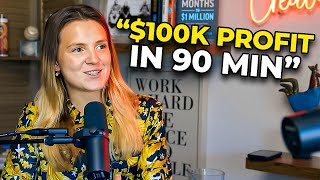
Lauren Tickner breaks down her 90-minute weekly content system that generates $100K monthly from organic social. She uses three types of posts (top, mid, and bottom funnel), lead magnets, DM automation, and email sequences to convert small audiences into customers through case studies and live webinars.
Questions this video answers
Approximately $100,000 per month consistently for the last three years.
She states 100%.
About 250,000 books.
She said she grew from 0 to 100,000 on Clubhouse in three months.
Chapters
I mean, if this was revolutionary for me, it's definitely revolutionary for the person who's got a small business they're trying to get leads for. So would you please walk me through this thought process that you take?
Yeah. So the goal is to really trigger intent in the mind of your potential customer. For me, this is my favorite, of course, because this is where the money is made.
That surprises me.
That's surprising, right? The biggest demise of many business owners is that they focus on the thing that feels the most painful to them in that moment, which isn't ultimately the thing that actually is slowing their business down.
It's like you've done this before.
Yeah, exactly.
My guest Today has profited $100,000 a month consistently for the last three years using just organic social media. And she's done it without becoming an influencer. She's done it through building business systems on the back end of her social media following. And you don't need to have a large social media following in order to turn this into. Into something that generates sales for your business. You just need to have a systematic strategy that works. I asked Lauren to come join us on the podcast because we're developing systems according to her format. We're building them into our processes that we give e commerce brands inside of our programs. We've been using lauren systems@capitalism.com to expand our reach, get more leads, and close more customers for about the last 90 days. And we've been very enthusiastic about the results. So in this episode, we talk about her framework for using social media and mostly organic social media to get more exposure to the type of people who want to buy your stuff, how to turn them into leads, and how to get them to close into customers. This is particularly helpful for those of you who are grinding to that first 100 sales per day because you don't need that many followers or that many leads to turn any social media page into a lead and sales generating machine. And we're going to cover all of that in this masterclass with Lauren Tickner. So, Lauren, the way that I sometimes like to start these is just by asking, how did you make your money? Or how do you make your money?
Well, according to the Internet, I have only fans. No. So. Well, my background was fitness, so I was selling online fitness programs. And then since then, I had a personal branding program helping people make money online. More like biz op, and then from there, ultimately helping people scale their business using social media. So that's how I make my money these days. And I've always Chosen to more so follow the things that interest me innately. And I think that's one of the most powerful things about having a business based around you and your name and your personal brand, because whatever you're interested in, you can ultimately mobilize your community to also be.
You could pivot anytime you want.
Exactly. And so that's kind of what I've done over the last six or seven years.
So what percentage of your sales over the last five years have come from social media?
100%.
100% of them?
Yeah.
Tell me more about that.
Yeah, so I don't know what it was, but when I was like, 16 years old, I became really interested in social. And this was at the same time that Instagram was just getting popular. So I made a secret Instagram fitness account because I just lost 50 pounds, and so no one else around me was interested in health and fitness. And back then, it was a little strange for girls to be weight training and tracking macros especially. So I wanted to just make friends with other people that were interested in the same thing. So I made this account. And then from there, I just realized that I can. I can create demand and engagement through making specific posts. So back in the day on Instagram, you could make a post in the morning and then a post in the afternoon and a post in the evening, and the same people would see it because of how the algorithm worked. So in the morning, I would make a post with, like, a photo of, like, some protein brownies that looked really delicious. And I'd spent literally two hours taking these photos. And I would say, hey, who wants this 20 gram of protein brownie recipe? Comment below saying, me. And then literally hundreds of people would come in, and then in the afternoon, I would remind them, hey, remember, you can get this recipe. And then in the evening, I would give the recipe or there on the Instagram. And so I think I just realized very early on that you can make a lot of money with social media, and if you're interested in it and it's something that you're curious about, you can actually build a community of people just like you on the platform. So I was able to do it in a way where I didn't need to spend money on ads, have affiliates, do a ton of SEO, because that just wasn't interesting to me, and I thought it was a waste of time. So I just stuck on organic social. And it's been good ever since then.
It's been good. And it's still the case now that most of your business comes or all of your business comes from all of Organic.
Yeah, organic. We are going to start running ads soon because I think at the end of the day, unless I want to always be making content, then of course I need another way to do it. But that's purely because I want to try something new and because I want a way in which is more systematized without me always needing to be on camera.
Well, that was something that I learned from you, was that content can be systemized. And I had never thought about it like this before. And every time I show up to make content, until that conversation that we had, I was thinking about, what do I want to talk about, what does my community need? And I was always in my head about what do I create, what do I create, what do I create? And you help me see that if you think about it for like a few hours a week, you can plan ahead and actually have a process for doing that. So could you walk us through how you think about systemizing content?
Yeah, totally. So with your social media content, there's always three groups of people that are potentially looking at you at any one time. The first is people that have no idea who you are. The second are people that have seen your stuff before. Maybe they follow you, but they don't really know what you're all about. And then the third type of people are people that love you and they want to give you money. You're just not giving them the opportunity to do so, or they don't know exactly how it works. So if you're thinking about content on a week by week basis, you can literally take one post for each type of person once per week. That's all it takes. And it can take 90 minutes a week. And you literally just write to the pain points and problems that that person's facing. So I know when we spoke before, the first type of content, for those that don't know who you are, one of the things that you had told me is that you had sold a.
Book to how many thousands of 250,000 people? Yeah.
And I was literally like, you've sold 250,000 books, that's insane. But I don't think you necessarily realize how much of a big deal that was. It had become normal to you. And so many people have these things in their life that are so incredible and that if other people were to hear you say that at a cocktail party or something, their jaw would drop like minded when you told me that. So I like to think about, what are those cocktail party brags that if you were to speak out on social media, other people would see it and they'd be shocked because that's really good framing in which to create the content for that first group who have no idea who you are because it gets them to listen to you. Because the unspoken question in people's minds when they're scrolling on social media is, who the hell are you, Ryan, and why should I listen to you? So when you create the content for this group, you must answer the question, why should I listen to you? And then you want to go into like three to five value points showcasing exactly why that thing that you mentioned in the beginning is, is true. So for example, you might do a post on I sold my business for how much was it exactly?
16 million.
I sold my business for $16 million without having to do whatever things they would hate to do. Here are the three steps I took to sell my business for 16 mil. And then you would go into 0.12, 3, boom. And then at the end, if they want to take a call to action and comment. A word or DM youA word. Obviously, once they send you that DM, you can use multiple different tools like ManyChat or Mobile Monkey or go high level so that once they send the keyword, there's an automated response and then it goes right there into your database and it's super easy for you to then follow up with them. And. And so that's the first type of content.
Yeah. How would you do that if you were not a personal brand? If you were not. Yeah. If you were consulting with a company that was a SaaS company or an E commerce company. Yep. How would you go about that if there wasn't a personal brand that was doing that content?
Yeah, totally. So instead of talking about yourself, the easiest thing to do is just take a customer journey. A customer story. So I think one of the easiest things for software companies or E comm or whatever to do is, is to take their best case studies and to get those clients to answer a survey form as to what are the clear outcomes they've achieved through their product or their System or their SaaS or whatever it is. Because then from there you have a ton of different stories, unique, different stories that you can talk about. So Sally was 50 pounds overweight and she lost. You know, that's really bad copy. But you get my point. You're like, you would she lost 50.
Pounds by eating pancakes every day. That's how she did it. You talk about the recipes or whatever.
It is, the student becomes the most at.
So in that case, those top of funnel pieces, those are really audience builders. Is that correct?
To reach more people and also to be able to showcase your authority in the mind of the potential follower.
So is the goal there a conversion or is the goal there to spread awareness or is it both in that content bucket?
It's really just to spread awareness. But the nice thing about it is if you do include a call to action, which I do suggest, is that people who are already following you or people who just read it and they're like, wow, I love this person, then they will go and take the cta, which could be. Click the link in the bio. It could be dm. I think the one that works the best just on organic social media is commenting. Because when people, more people comment, then what ends up happening is that it pushes it further out in the mm.
That makes sense. So that that initial post or mostly the. These are mostly text posts too that you're doing right, because all the attention is around reels or what's working on TikTok or what will go viral and you don't pay as much attention to that, at least in the business strategy side of things. That's been my impression. Is that a correct assumption?
Yeah. So I like to do everything text first because text can much more easily be turned into video. So sometimes what I'll do is I'll take top performing copy and I'll copy and paste it onto like a photo or sorry, a video of me walking outside with some nice music. But, but I just find that like if you're wanting to do really, really well on video, it's just, it is a different strategy in its entirety. But once you have the written post, you can sit in front of a camera and you can just record exactly what it said. And I've done that before and turned those into short form pieces of content and they've absolutely crashed.
Yeah, it's been my experience that it's, it's for me anyway, it's easy for me to hash out text posts as, as my test and then if something works well, then we'll do a long form video about it or we'll do a short form video about it. And that is, that will take more effort, but I have a higher likelihood of that hitting with my audience than if I'm going to sit down and record a bunch of different topics and then hope that one goes viral. It's much more strategic if I have some proof that this headline or this hook is going to get a certain Number of the audience that follows me.
Totally because as well, so many people make the barrier to entry so high for themselves on social media. And so if you just write it and then you copy paste it over onto every single platform, then you've just had one piece of copy go on to many different places. And then as you said, if it does crash, then sure, go and film it and, you know, make yourself look nice, get your clothes on, do your hair or whatever. But I can't lie like I'm half the time, just like lying on the couch writing copy, having the time of my time of my life.
Living your best life, Lord.
Yeah.
Well, you, you kind of skipped over a point there, which is we, we have this high barrier for what we consider success, and yet you don't need that many people to have a really successful launch or to release a new product or to launch a new business. I mean, we have case studies of people who launch products with a hundred people on an email list, and they get to 25 sales a day, and then they just repeat the process. And so what I've really enjoyed about learning from you is that you can build that list of people pretty darn quickly, and they're all targeted for what it is that you offer to the world, whether that's a product or something digital or an event or whatever it is, you can kind of siphon off that hot list really quickly. So the first bucket you talk about is that top of funnel. That's awareness. That's who the hell is this person and why should you listen to them? Could you go through the other buckets?
Yep. So there's only two other different buckets. So the second group of people are people that are probably already following you. They. They're in your world, in your ecosystem, or they've known of your name. Maybe they watch your YouTube, but they don't necessarily have you on Instagram or TikTok already. So with regards to those people, the easiest way to create content that actually converts into email subscribers or even potential customers is to list down all the objections that you get in sales. So when you're on a sales call with somebody, what are the reasons why they say that they're not going to join right now? Or what are all the things that they say that they're struggling with? That list of objections becomes things that you need to talk about in this middle of the funnel content, because those are pain points and problems that those people are literally experiencing in their life right now. And that's the easiest way to get them to pay attention so you can think about this content. It's 100% problem focused. It's not about aspirations, it's not about how to make 5 million a year or whatever this is about. Here is why your lead generation isn't working. And you want to get super strategic, super tactical because this is where you can showcase why they should actually opt into your thing.
So give us an example in the fitness world, because you were in that world for a long time, how would you address that in the fitness space?
Yeah, so you can't fit into your skinny jeans. Question mark. Here's exactly why your diet is failing. Okay.
It's like you've done this before.
Yeah, exactly. So point number one, okay, you're eating way too many calories. What you need to do.
What you need to do is buy a weighing scale, weigh out all your food so you have an awareness of how much you're consuming on a day to day basis. Point number two is you're hitting 10,000 steps a day, but you're failing to consider the fact that that's not burning as much as what you're eating right now. In fact, I've recently put together a brand new free training breaking down the five reasons why your diet isn't working and what to do about it. Comment the word access. If you want me to send you access to sign up for free. Point number three, you give your third point and then at the end, thank you so much for reading. Remember, if you want access to that live training, comment the word access and I'll, I'll send it over to you. So you do a call to action in the second point and at the end because it's kind of like when you watch a vsl, right? You'll often notice that people say, and if that's all that you need to hear, then go and click the button below and apply right now. It's a similar thing because if they've heard enough and they love what you're saying, then they will actually take action then and there. Plus a lot of people when they go onto a post, the first thing they do is look at the comments. And so if they see a ton of people commenting access or whatever the keyword is, then they'll quickly be scrolling through to see like, what is this? What are all these people actually commenting to try and get access to. So I would say for me personally, that's the easiest content to make because you're legit just taking every single potential objection or problem that you're hearing about from your potential customers, and then you're creating content around that. And one of the easiest ways to do it is the style of post that I just did there, where you're just showcasing value but. But you can also share it within a customer testimonial story. So you could do a before and after transformation. For example, I had a recent one where this guy called rory was in $31,000 of debt. He'd been in debt for 12 years and so within three weeks he was able to pay off his debt in full and now he has 25k in the bank. So this was a crazy story for us. This guy has a decent audience online, but this is something that I didn't actually realize was so relatable until I posted about it. Because for me personally, I've never been in debt. So when I posted it, I realized, wow, that's actually a pain point that I'd never actually heard in my sales, but that my customers were actually facing, which I should have paid more attention to when I was reading customer surveys that we'd received from the people who were actually our clients.
Yeah. So for an example for me would be somebody saying, I don't want to start a business because I don't have five or ten grand in startup capital to start my business. And so I tell stories about Mark who pre sold $25,000 worth of product and it wasn't even ready yet. He didn't even have the capital to place the deposit or so. And so launched this new thing and they took pre sales and they did $100,000 in sales and it took six weeks to go get the inventory. But their customers were fine. I just tell those types of stories.
Exactly.
And that overcomes that objection. So they don't have that when they show up for the sales call or they opt in for the thing. Now when you're creating those top of funnel and middle funnel posts, are you usually sending them to the same lead magnet? Yeah, same thing.
Same one. Yeah, we tried, we tried segmenting it, but to be honest, it was just, it was creating more complexity in the business that we just don't need. And so what we find to be the most valuable thing is to do a monthly live webinar. So every single month we do a new live webinar. That's because we have a good enough organic audience to do that. If I didn't have enough, whereby if I went live, you know, if I was getting like less than 100 people shop live each time, then I probably wouldn't do this because it's again is additional complexity. However, we found that because the conversion rates are really, really high on these live webinars, it's worth our time doing that. But if you have a smaller audience, what you could do for the top of the funnel people is you could make the lead magnet potentially be something that's a bit more broad, a bit more value based. And then for the middle of the funnel it could really just be something that, whereby you know, there's a a bit of value. It's more so revealing what's do not necessarily how to do it, that could.
Be cool, but, but for the vast majority of people, it's having these processes in place and sending them to any lead magnet is going to be a step forward. We kind of, we have a rule at capitalism.com, we build the system even if the system is not perfect. We test the system before we make it complex or before we change anything. Because my tendency is to say, okay, three types of posts. We could have three lead magnets with three sales processes. Oh yeah, oh, there goes three months of work.
I'm the same as you. My brain really thinks that way. And yeah, so to put it simply for the top of the funnel and for the middle of the funnel, most likely you just want to have a different keyword that people comment or DM you so that then you can segment because if you don't. So okay, so let me give you an example. We analyzed the most recent 50 people that have bought from us to see where they'd come from when it comes to the content and if they'd even come from content or had they come from referral or from email list and all of them had either come from email list or content. And everyone who was on the email list had come from content in the past. And none of them, not a single one of them had originated from the top of the funnel keyword.
That surprises me.
That's surprising, right? But a lot of them had come from the middle of the funnel and the bottom of the funnel or they'd sign up to the live training, which for us is also a middle of the funnel content. So I know this may be a little complex for anyone that's hearing this, but put simply, top of the funnel designed to reach more people and this is designed so that those people that you're reaching see you as an authority figure so that when they see your future content, they actually begin to listen to you. Obviously there's going to be people who love you and are obsessed with you. Who do see all three types of content because that's how social media works. You don't have your targeting really, really dialed in, but you're targeting through the words that you say rather than targeting through clicking buttons.
Yeah, that makes sense. Before we go into the third bucket, last I checked you had 130 or 150,000 followers. So how did you build that audience? Because that's, that, that, that a hundred thousand mark has been elusive for me and I'm sure it's elusive for a lot of people. So how did you build that to be able to get the kind of reach that you're getting?
Yeah, I mean I would say my audience is kind of in pretty much the same for, for many, many years actually. The people have just kind of replaced themselves. So I grew my audience largely in fitness, but then I grew from 0 to 100,000 on clubhouse in three months. And so when it came to Clubhouse, a lot of my audience, I became a lot more aggressive on my Instagram. And so I kind of shifted out a lot of those fitness followers and replaced them with people who found me on Clubhouse. So when it comes to like the audience growth side, I would not say I'm your girl. I don't think I'm the best in the world at like growing an audience. I actually prefer to bring in experts to train both my team and then also my clients on how to do that just because like I'm much better at converting an audience into leads and money.
Well, what we discovered is when we started using some of your processes, our exposure on those top of funnel posts were just shellacking the reach that we were getting with other stuff, like the stuff that we will put hours of work into for a video would not get the same amount of reach as a simple text post that was value driven with a good catchy headline that got the attention of the vast majority of our audience. And so our audience growth started to pick up when we just started using those types of processes, which is really helpful because you were absolutely right. We were tripping over all the things that made me or one of my companies interesting. All the things that you'd brag. So actually it's more what somebody else would brag about at a cocktail party.
That's true. That's a good point.
Yeah, it's not the thing, it's not the things I think to brag about because it was three years ago or four years ago or I've said it so many times. I actually, I tell people I wrote the book 12 months to 1 million. Because I never wanted to say 4 products times 25 sales a day times a $30 price point is a million dollar business. And that backfired. And the more I say that on social media, the more people like, oh, math amazing. So those talking points that you overlook are the things that often will grow the audience. And I thought that we had to make up some new talking point every five seconds in order to stay relevant and that just simply wasn't the case.
Yeah, well, if you think about it, there are so many people on social media now that other people don't know who to look to as an authority figure. And so they want to know and they want to see proof that they should listen to you because you're going to be able to actually get them there because there's so much noise. And so when you actually do showcase that you know what you're talking about, you've done this thing before, then they're more likely to trust you and listen to you. And I think that that's the power in the strategy.
Okay. So the top of funnel is pretty much awareness. It's to grow the audience, get people to pay attention. Middle funnel is your pain points, what.
People are struggling with, and to convert into email subscribers.
Into email subscribers.
That's the main goal. So the main goal when you're getting these people, at least for me personally, unless I'm doing a live training, I'm not necessarily worried about if they watch the training or not because my strategy on email is pretty aggressive. And so we know that once someone's on our email list, that is actually where the majority of our direct conversions come from, into customers. So while we get a lot of new leads through social, of course, all of them, the actual buyers, it's very rare that someone comes from social. They send us a DM and then they pay us that same day. There's normally a period of at least a few days where they're getting a few more emails from us. And then one of those emails that they get on automation then convert them into the customer. So we just want them on our list. And I think a really solid email marketing strategy is very much underlooked these days.
Yeah, very much. These days. We call it the traffic triangle. You need to have three places where you keep somebody. So you have your place for awareness where people can discover you, your traffic.
Yep.
And then you have the place where you wind up converting them, that's always email. And then you need a place where you're going to engage with Them. So that could be a podcast, could be a YouTube channel, it could be a Facebook group, it could be a Slack channel. Someplace where you are building a little bit more of a community where, where something like Instagram is great for awareness and getting eyeballs and making connections and getting people trust you. But your typical influencer only does that part of the triangle.
That's why they make no money.
That's exactly right. Yeah. That's why they're great to partner with on brands and for launches. And that's why the only reason they can monetize anything is through a paid shout out or a paid like a sponsorship. So they, they're almost the experts in that part of the triangle. And then you have these Facebook groups that get tons and tons of engagement but they have no business model and they don't have any figurehead about around them. Then email list is where all the buying happens but when you marry the three, it's really powerful. And what we were missing was that exposure piece. If you give me an email address, somebody's going to consume my long form content and they're going to feel bonded to me and they're going to subscribe and eventually they might buy and if nothing else they're going to get value out of the content. They're going to tell through people about it. And so we were missing that exposure piece which is why what you taught me was so helpful for our overall strategy. So tell us about the third bucket, the bottom of funnel.
Yeah. So for me this is my favorite of course because this is where the money is made and so this is really all about.
So let's think about it like this. When you're on social media it's business media, not social media. And so when you reframe it like that, what are you there to do?
I really appreciated when you told me this the and and by the way my team really appreciated that I listened to you said this because I, I stopped just thinking about what do I feel like talking about and I started thinking about my customers.
Uh huh. So the goal is to really trigger intent in the mind of your potential customer. So what is intent? Well, purchase intent is the likelihood of someone wanting to buy. So if you can find a way through your content to actually get them to want to give you money, then you're using social media for business media and therefore growing your company. And so the way in which you can do this the best is essentially through putting out offers onto social media directly. And it's pretty simple. But most people just don't do it. So an example, let's, let's think of an example for you. Right. So can you share with me a recent customer win that you've had like one of your clients success stories? That really was a really good one.
Sure. Ryan and Tristina. Tim just pre launched a new flavor of a product and did 17,000 in pre sales before they even had product ready.
Okay, so Ryan and who was it?
Tristina.
Ryan.
They'll love that. We're getting, they're getting a shout out. We love you Ryan and Tristina.
We love you, Ryan and Tristina. So Ryan interest, but your name is Ryan, so maybe it's, it's a bit confusing, but whatever. So Ryan and Tristina made $16,000 without even having a product ready.
Correct.
They didn't have to spend a dollar on inventory, right?
That's my understanding, yes.
Okay. Okay. So then, and then, so that's what you would write. And then it's like.
Comment info. If you want me to send you a quick video that breaks down exactly how they did it. So at this point you could either make a quick loom video whereby you kind of tactically break down how they did it, or you could just do a quick zoom call with them, you know, 10 minutes or so recording that. Or you could just have a normal vsl. So a video which breaks down your systems, your strategies, your processes, which every client goes through. So I know you have your roadmap and all of your different pillars that you take your clients through. Personally, I prefer the final option just because it's more evergreen and it means that you don't have to create a new video every single time. However, if you're, if you're newer and you don't necessarily know what converts yet, I think it's a really great concept. And I heard Reed Hoffman say this once to do the unscalable things because that's ultimately what's going to allow you to scale in the long term. So you could pick one of those options and you could make that as your post once per week. Again, each of these things, just once per week until you can get consistent with it. And that's really all that you need to do. And you'd be amazed at how many people are going to comment on that post about Ryan and Tristina wanting to know how they did it. Because when you're showcasing a customer achieving the thing in which you help people with, then more people are more likely to actually opt in. And it's just, it's like a couple sentences, this final style of post.
Okay, so the. It sounds like the third bucket is strategically different from buckets one and two. It sounds to me like buckets one and two are mostly the same. Like one is broad awareness and the other is more engaging and getting the email from that. From that group. But this third is probably a separate lead magnet and this is where you're being slightly more direct about what you have to sell.
Yep. I call this like a just a direct offer. So that was one example. Using a customer case study, you could literally just put together an offer as well, saying like three spots left this month. If you want to get your ECOM brand to 10k per month, comment the word info and I'll send you a video explaining how it works. I did one yesterday which said want to hit 100k per month in the next 12 months. I'm looking for 10 more people to get there this year. Comment the word info if you want me to send you the very direct. Yes, super direct. And obviously it's not guaranteed that I'll get them to 100k but I then in the comments section I pasted a ton of testimonials just from people who had achieve those type of results.
Yeah, so actually I've missed this in your strategy. So we've been and, and we've been wondering like we're, we've actually gotten a ton of leads and exposure but it's been top of funnel type of leads. And so you're being really direct with that third that is just you're saying what you have for sale and the people who raise their hand for what they have for sale, those are your hot, hot leads that you're then following up with.
Yeah. And here's the key part. So any time that someone in the middle of the funnel or the bottom of the funnel starts replying and asking a ton of questions, we put them on a hit list. So a hit list is essentially our list of leads that we are set on converting within the week. And now some sometimes obviously that doesn't happen, but the goal is to take people who are in our ecosystem, get them on, on and off the headless as quick as possible. And so the goal in the hit list is to get them to apply because we are not trying to sell directly right then and there. We want them to apply and then once they've been approved then of course we can sell to them. However, our goal is. Okay, you commented on the middle of the funnel post saying access and then you said oh, thank you so much. I watched the training, it was so helpful. I'm going to implement this, this and this. From there it's like, yeah, okay, well I'm glad that you love the training. You know, how exactly do you feel like this is going to support with the problems that you have in your business right now? And then they're going to start saying, I'm having this, this and this problem. And then you'll keep asking open ended questions until they essentially tick off your criteria to make them an offer to apply. So we tend to have a few different key criteria. Number one is knowing the goal in which they're working towards. So we primarily, and we only help people sell their knowledge online. So if they start saying that they want to have an Ecom brand, actually I've done this in the past where I've just told people to check you out. So if they, yeah, so if they start saying that, then obviously they're disqualified from working with us. Right. Second thing that we need to know is we need to know for sure that they're already an expert in something. So what is it that makes you qualified to teach that online? Because again, if they're like, well, I really just, I saw this ad about dropshipping and like, I think I can like really kill it by showing people how to do that, then we're like, okay, so what success have you had in dropshipping? Okay. Because at the end of the day we can't position you as an expert online if you haven't had success in it yourself. I wish more people would think that way. And then finally we just need to know that they actually want help right now and they have intent. Because again, you could have a ton of people in your world who love you, who love what you're about, but if they have no intent of actually buying right now, meaning they don't have the resources or they don't have the time to do it, then of course you're just going to be wasting your time getting onto sales calls or DM conversations. But I'm never going to give you money, so we just qualify for those things. It's actually usually a very short DM chat back and forth because we just want to get people as quickly as possible to get into that application.
Another thing that you help me kind of recontextualize in my mind is you don't base the success of a post based on number of likes, number of people who saw it, number of comments. You base it on the number of leads that it Generates. Oh, my goodness, Freedom at last. So, so this was such. I mean, if this was revolutionary for me, it's definitely revolutionary for the person who's got a small business that they're trying to get leads for. So would you please walk me through this thought process that you take?
Yeah. So let's say you make a bottom of the funnel style post, the one where it's just like the direct offer. So if there are no comments on that and nobody wanting to actually get the information, then the offer just clearly isn't good enough, or you haven't yet done enough of the top of the funnel and middle of the funnel to build a big enough audience for the bottom of the funnel people to actually see it. So that could also be a potential problem. So I just really look at is this actually converting into the thing that I'm trying to have it convert into. So if it's a post where I want to get more people to sign up to my live training, did the post get more people to sign up to the live training? If, like 10 people liked it, but I also got five people to sign up to the live training, then I'm really, really happy about that because I actually got people to sign up to the training. That's my goal. And so I think that when you remove the pressure on actually growing the following or getting people to like and comment and tell you to look cool, then again, you're on there for business media and not social media. So I just really go by the metrics of the company.
Yeah, I think that's so freeing. And it's, it's equally freeing when you realize you don't need that many people. I mean, you don't need that many people at all in order to have a meaningful impact on your business. And this was the first time that I really understood what Gary Vaynerchuk always says about, he's like, people need to stop complaining about the algorithm. It's freaking free. And, and, and I think, I think a lot of entrepreneurs will think about social media as this place to get a big audience and drive all this awareness. And they don't think about the fact that they're able to just get people to raise their hand and say, hey, I'm a lead. Hey, tell me what you got. Sell me on your thing. There's enough authority built. I'm following, I paid attention. Sell me on your thing. And the minute you realize how few people you need to raise their hand and say, give me your thing. As long as you have decent processes for Turning those into sales, then you're golden. You're kind of. I felt set free to go create more, and that set me free to go give more to my people. It was this huge monkey off my back of trying to just sit there and think about how do I get attention. I start. I started calming down and thinking about serving my community more. It was kind of a dose of my own medicine. Talk me a little bit about the backend sales systems that you put into the process for following up with Elite.
Yeah, no, totally. But just real quick, imagine if all the people that engage with your stuff on Social were like in a room. That would really be a lot of people. Oh yeah, that'll be a crazy amount of people. And we have a ton of clients with 200,000, 300,000, even a million plus followers, and their revenue is significantly lower than you would expect when they first come to you.
Tell a story in some of your content about somebody who had hundreds of thousands of followers was making like three grand a month.
Yeah, he was making 4.6k per month. He had more than 450,000 followers, including 200,000 of them being on YouTube, which are really, really, really valuable for us. And his revenue was obviously what, less than 60k per year. And so that's Australian dollars as well, by the way. Okay, that's not even us.
That. That's like 40k us.
Yeah, I only realized that after I made that post. And so obviously now he's making a lot more. He's making around 40k per month USD, by the way. But that's really just because he's figured out who his audience is and matching the right product to that audience. I mean, I've done consulting with some people who have more than 4 million subscribers on YouTube and the product they sell is absolutely nothing related to their audience. And so when we finally get the right product in front of the audience, it just everything makes a lot more sense. Because if you're trying to sell a course about one thing, when your audience is there for something totally different, there's this natural conflict. And it's because the creator has made content about one thing for so long, they're kind of over in their mind, whereas they want to go and move on to the next thing, but they know they can't let go of their YouTube channel and change the whole topic. So then they create this course that is something that two of their friends have asked them about once. And it just doesn't make any logical sense. But to your point regarding the backend, so I'm a huge fan of automation and I think I became a fan of automation because when I first started my business, somehow I stumbled across this course about Zapier. And so I did this course and I just learned that you can automate like absolutely everything. So I just became obsessed. And so I would automate like every single process in my business. And it was just really, really fun for me. And so now I have to, you know, try and stay away from doing that because otherwise I'm just spending my whole day building workflows. But yeah, so after somebody comments a keyword, you can automate the response that they get in the DMs and then for the next 24 hours you can follow up with them continuously so you can continue sending them messages to make sure that they actually opted in for the freebie to check in on them. And once they reply, I made this mistake in the past where I automated the whole thing. So once they replied then it was another bot response. And I think AI as of the time of filming, this has a long way to go. Who knows, in a couple of years maybe you're going to be able to have a full AI conversation which is just like a human. And I'm pretty excited for that to be honest, because if it's AI or a human, then it doesn't really make any difference as long as you're honest about what you're doing and the customer on the other side of things actually knows. But from that, essentially like I, I have two different approaches depending on what the strategy is that the company wants to take. For some people, they just want to get people to a live training because they know that they're better at a 1 to many sales sales environment. And this is a really great way. If you're good at speaking on stage and doing presentations, you can get everybody to just go to that training and then showcase your expertise. One to many, make a ton of sales all in one go. The other side of things is if you prefer one on one sales, you can have DM conversations back and forth. And the key really is just to ask open ended questions to get them to open up. And so from there it really is just about, as we talked about earlier, qualifying them and then once they, you know, they're qualified, then I have this like magic line where you just say it seems like we found each other a perfect time. Then right now we're looking for a small handful of people to and then insert whatever it is that they're looking to do and do exactly what you said. And so please let me know if you're available at this time or this time and we can have a chat to see if it's a good fit.
Yeah. So let's walk this through how we're doing it right now because I'm currently in the process of doing more of what you referenced. Reid Hoffman talks about doing the unscalable stuff. So we will automate the first message or two and then after that it's one to one. You know, we're, we're not at the point where we're automating that entire flow. We're automate, we're automating like just the outreach and then it's real one to one after that. But here's, here's what we've been considering doing and I'm 80% sure we're going to go in this direction. It used to be and as of us talking right now, if you were to go to capitalism.com1 and then click on the apply, it would pull up an application and they'd fill out the application to work with us which is super bottom of funnel. Right. That's somebody's got to know who I am, know what they want. It's very bottom of funnel, like apply to work with us. But what we just started doing was instead of having an application that's not a real application, which is what most people do. If all an application just a disguise sales form, we're doing one to one video reviews of someone's business. So we'll fire up Loom. I'm doing some of them and then some of the advisors on my team are doing it too. Where Fireball Loom. Go through their plan, look up their website, give feedback on here and then say by the way, if you want to work with us, here's the next step. The next step is to book a call or the next step is to fill out this form or whatever it is. And so I've been thinking about how do we make that more of a, a selling point for someone to fill out a form to work with us. So my call to action in some of these follow up messages on social would be fill out this form. We'll review your plan and tell you where you're missing. So that to me is actually more automatable on the front end side. Now I don't want to automate my sales process. Right. That is, that's super high touch point for us. It's a representation of my brand. I want to be protective of that. But I feel like that becomes a selling point that you can talk about in social media and actually drive attention to. You're thinking about doing this. Fill out these seven questions, we'll have somebody on our team review it and tell you if you got something or if you need to go back to the drawing board. Does that make, does that make sense?
Yeah, I mean, I think that's just a really great lead magnet, to be honest. It's a middle of the funnel strategy. I think if you were to make that post, you would probably get hundreds of people commenting for it though.
That's the idea.
So you might just need to consider how much time it's taking you to do well.
That's the qualifiers that you're talking about where you would automate, like answer this question to make sure you're ready for this or in order to create boundaries before people get to that bottom of the funnel piece.
Well, no, what I'm saying is I think that what you're wanting to do. So some of the best lead magnets that there are is where your team actually does some actual work. Yeah, right, right. And so if you think about like in the real world, right, like they give you a free cup of coffee to get you to love the coffee. So they're making it and they're doing a bit of actual work. We're just so used to in the online marketing space, building one thing once and then people can see it.
It makes money for years. Yeah, passive income.
Exactly. So at the end of the day, I think it's just, it's a great lead magnet, to be honest. I think if you have the time to. And your team has the energy to be able to go through all of them. I would just be interested in knowing the take rate because at the end of the day it just depends upon the conversion. And I would like to know, is the conversion on that any better than the conversion on like a live webinar? I don't know. Because if you're having to do that one on one so many times, maybe you'd be better off just literally getting like a few hundred at one go to a live webinar.
Yeah, that makes sense.
That would be my kind of thought process.
Now we've talked a lot about this from a context of selling something that's personally branded or something that's a high ticket offer, which I think is where most of your clients come.
Yeah, yeah, we have a few who are like software companies. Most of them though come to us when like my clients that have brick and mortar facilities or something when they want to build a personal brand business online. Because what we really focus on is selling expertise.
Yeah. How would you modify or would you modify this process? If you're selling something smaller like SaaS or an E Comm business or something, or to promote a retail business, would you change the process? Because for me, I think with some slight adjustments, everything is still the same across the board. It might even be a shorter sales cycle because the take rate is not 2%. It's a lot higher for something that's a lower end product.
Yeah. So I have a client that does, I'll just say multiple millions per year. They sell sun tanning equipment. So essentially like spray tan for women and like all men and teeth whitening products and stuff. And so essentially what they did is they were able to automate a large part of their sales process through the DMs. So they would literally follow the content playbook exactly as we said here. Instead of the post being like I did this and this and this, it would just be something along the lines of like, you know, I put my suntan on and whatever. Some, some, some customer testimony.
And so yeah, then they would just drive traffic into their DMs and they would just automate the sales process like through bots. And so that's how they were able to use it. I really am not an expert though when it comes to like E com or, or B2C.
Well then let's talk about that for a second because it seems to me that if you post, if you're selling a weight loss product, a weight loss supplement and you post a before and after photo and it's. If you want results like this comment results below and we'll send you our write up about how we do this and then it sends them to a lead magnet that is a 10 page ebook about the process, how the product works, why it works and then have the sales done in both the ebook itself, the DM follow ups and the emails that are going out, it's like to me that's, it's, it's like 2/3 of the traffic triangle just taken care of with a couple posts.
Right, right.
Because you're getting the opt in and you're able to follow up with them in two different ways and they're pre sold on what it is that you sell and the sales process is a lot shorter. Yeah, so that, that's how I would apply it.
I'd probably do that if it was like a premium product, if it was a, you know, a cheaper Thing I'd probably just go direct sale to minutes.
Tell me more.
Using customer testimonials. Yeah, I mean, we have, we have. So what we help the client on is like the actual knowledge business side. But a lot of them also have like, kind of, you know, physical product companies, which we don't, we don't touch them. But what I've seen they've done and we have like kind of a community where they will share their tips and stuff. So I'm learning from them at this point. But what I see they do with their like ecom brands or that like physical locations is. And you probably know this with your clients, but they're just offering offers all the time. So maybe it's more like comment, the keyword to get the offer sent through to your DMs.
What's up, Tyler? Here's what we'll do. We'll perfect this process for physical product brands and then we'll give the systems to all our members so that they can use them. We'll send you all the personal brand people and you send me the E Comm people and we'll perfect your processes for the physical product people will just make that part of our program.
Love it.
Great.
Let's do it.
Tell me a couple stories about people who have implemented this and what kind of results they got.
Yes. So the one that comes to my mind is like, I had this client in Finland who she made €9,000 in the whole of 2021. And so she was like 25 years old and she had a baby that was three toddler. And so she was doing all these courses, like on Facebook ads and also SEO and spending a ton of money. So she was actually, she had a decent revenue. It's just the profit was super, super low. So she wasn't able to even pay for her own living expenses, barely. And so she, she started working with us in the beginning of 2022. Now she makes more than 150k euros per month in net net profit. Right. And she's pregnant right now. And so the way that she's done that is she's literally just following this organic social media strategy and she's doing it on Instagram and LinkedIn. That's all she uses. She doesn't use all the other platforms. I told her that she should use Facebook as well because I just believe in copying and pasting the content onto every platform because you've already made it, so you might as well. But she's resistant to it because she uses her Facebook profile for her friends and family and other kids, parents that she hangs out with. So I was like, sure, no problem. Like as you like.
But.
But I just thought that was really cool because that's really like life changing for somebody, you know.
What market is she in?
She is in the Finnish business consulting space.
Okay. That's a niche.
It's all in Finnish language. Everything is Finnish. Like, so when I go on her page, I can't even read.
I don't know if her copy's good. I can't read it.
Yeah, so she. When she used to work with us, like a year ago, she would. She's a friend of mine now, actually. We met last year, which was nice, but she would translate it all into English and then obviously translate it into Finnish when she'd post it so that we could help her with the copy.
That. That's funny.
Yeah, I just thought that was cool. But like, she's actually now featured all the time in, in PR and is able to go and do in person consulting as well at big companies because they notice her on social. So these big, big corporations now bring her in to teach social media to them.
And I'm gonna guess that a large part of that was just getting her to think about the cocktail hour bragging points we all overlook.
Well, she was beaten down, you know, because if your revenue is that profit, if your profit is that low for a whole entire year, you know, you feel a little low about yourself because she was actually really good in business and her whole thing is like digital. And so what she was doing was helping companies get digital, essentially. But because she herself digitally was not making much, she felt a lot of imposter syndrome. But the reason why she was making so little is just because she wasn't able to talk about the people that weren't already digital. And so when we were able to, because. Because that's who her clients were. So when we were able to essentially help her dumb it down, that's what she really needed to do, was dumb it down. She was using a ton of jargon in her content, you know, and people didn't understand what she was saying. And then she would talk about really specific things that they didn't even know were that problem. So when she started to take the problems that she was hearing on sales calls and tie that into her content, then things became a lot easier for her and they actually resonated with the message that she was sharing.
You one of your cocktail hour bragging points is that you've made a hundred thousand profit every month. For I forget however many months, like 36 months or 800 months or something like that.
Maybe not.
It was on a podcast once. It must be true. So tell me about the business model behind what it is that you do and teach.
Yeah, so what we've been doing for the last three to four years is consulting on helping people package and sell their knowledge online. So we really focus on people who actually are really, really good at what they do. And then we take them along our seven. So we have seven areas of impact and those areas ultimately. And I can. I can list them out just because in case people are wondering. So it's like your products are the thing that you sell. So we make sure that their pricing, packaging and positioning is actually right for the people that they want to serve. Because the woman who I was telling you about, the Finnish girl, she was selling more than 10 different corsets. And so people could never figure out what they need to buy. And it's probably much like your clients where they have like all these different skus and all these different colors and whatever, and so it becomes confusing and just the operations becomes way too complex. So product is really all about pricing, packaging, and positioning from their authority. So authority is probably the most underlooked thing when it comes to being successful online, because people just naturally assume that because you've had success in the real world or because you're interested in the thing that you're doing that, you know, other people should listen to you, but they don't. It's very. It's very crowded online. So the authority is, first of all making sure that you actually do have authority, and if you don't, going out and getting it, but also positioning yourself as an authority figure. And this comes down to what we spoke a lot about here. But then also, who are you seen with? So you have photos with Gary Vee that immediately makes your potential clients see you as more of an authority figure because you're around him, you have press and pr. And I don't necessarily agree with, like paying for press, but there are ways that you can get press for free and that could even just be getting on other people's podcasts. Right. That's another way to actually build your authority and showcase that you really know what you're talking about. Guest blogging, etc. From there, it's all about lead generation. So we spoke a lot about that here today. But lead generation is in order to get people to actually opt in to become potential clients for the thing that you're selling the next One is automation. And follow up with your leads. You'll be shocked at how many people get leads and they do nothing with it.
No, I wouldn't.
Yeah, it's wild. So one of the big things that we support people on is automating a lot of that because once you automate it, once it's set up forever, and then you don't need to think about it again. From there. Then of course, sales. Okay, so what's your sales process going to be? How are you going to sell to people after that? Client retention, client success, and then finally operations and your team. So we support across all the seven areas. And so our whole approach is minimum viable dose. Because much like in fitness, right, when you're losing weight or getting fit, you want to do as little as possible to get the maximum results. Because if you try and do too much at once and do everything, then you just confuse yourself and you're running before you can walk. So we have everyone rank themselves from one to seven on each of the seven areas. And then you're able to see if you were able to fix one thing in your business, which one thing, when you fix that will make an impact on every single other area. So for most of our customers, it's actually either product or authority. And they never realize that because they come to us with a legion problem. Most of the time it's a lead gen problem or an operations problem. Then they do the assessment and they realize, no, actually their problem is their products or their lack of authority.
That makes total sense to me. And so in that way you're able to address what in the business to fix next.
Yeah.
And oftentimes you're trying to fix all of those different areas all at once so hard, then you're wondering why the you're stressed.
So stressed. Yeah. And, and the interesting thing is, like, for a lot of our customers, this business is not like a make it or break it, life or death situation. A lot of them want to do it because they really are really, really passionate about it and they genuinely care to serve their customers and their people. So I have this one client, Deb, who had two ski resorts and each of them got to more than 100 million in revenue annually. And so these were her own businesses and she was really good at like cash flow management. Right. And so what she does now is she teaches cash flow management. But her problem was that she has an email list of like a thousand people and she knows them all. She knows every single one of them. She's met them shaking all of their hands. And so now she's like, how can I possibly reach more people? I don't know how to use social media. And I'm like, do you know how many people on social media, if they had your authority, they would literally have tens of millions of followers right now. Let's go.
Yeah.
And so, yeah, like she's brand new and she's someone that I recently connected with, but I just thought that, you know, that type of person is the type of person who needs to get their message out there.
So. So to kind of bring this home. Tell me what strategy you told her to follow.
Yes. So her strategy was pretty much that she needed to dial in her product because she again was selling multiple different courses and they were really low price. So what she needed to do is she needs to go out there and find five to 10 premium clients that she could work with hands on one on one to get really solid testimonials to show that while she has so much authority in her background that she's done for her own two businesses, she needs to be able to show that she can replicate this result for somebody else. So what she's doing right now, she's working on just getting 5 to 10 clients that each paying her between 2 and 10k, which she was really resistant to because she wants to give it away for free. But we had to tell her that if people don't pay, they don't pay attention. And she needs to actually get people to put their money where their mouth is and commit to her processes and her strategies. And she has all the frameworks and everything's already that she's already got in her head, but she hadn't ever put it down on paper. And so now we said get these people through the door, deliver it live to them and go through like an 8 to 12 week period and get them to give you feedback, let them in for 50% of what you're going to eventually be charging them. And that very simple thing gave her the confidence to know, okay, it's fine, these first ones, like I don't have to be perfect the first time around because I'm going to tell them straight up that this is my first time doing something like this. And so now I don't, I would have to check exactly where she's at with this. But she seemed really good when she was, you know, first getting started and she's getting on the social media system that we spoke about here today.
Is that how you would build the authority lever then? Is that how, how would Let me just ask you the question. How would you build the authority for that person who has this great resume but has never built any authority for themselves online?
Two things for her, she needs to get content up on social media so that people know that she is a true authority figure, using the cocktail party brag. And she needs to get on other people's podcasts because she has enough of a story and also enough money in the bank to be able to pay a virtual assistant, you know, 700 bucks a month to actually go and do outreach to get her onto other people's podcasts. So the question is, who has her audience? And whoever the people are that have her potential customers as their audience, she needs to get on shows with them. So for her, it's really simple. Anyone that has business owners that are listening to their stuff, so we just told her, hire a virtual assistant, tell them to send this script, go on these podcasts, try and get on 50 over the rest of the year, and then as well set up a camera when you're filming all of this content. And then you're going to have enough content that you need to put on social media to show you as an authority. Because if you're always on a new podcast all the time, then eventually people are going to wonder, who is this woman? They'll check you out and then you'll see, they'll see the other posts, which are the top, middle and the bottom of the funnel stuff, and they'll also eventually opt in.
What I love about this entire framework is I've noticed that people want to systemize everything before there's anything provable. So this forces you to sit down and create something of value that is worth systemizing. So somebody wants to have the high end course before they've helped five people. Somebody wants to have the authority before they've gone on a bunch of podcasts. Somebody wants to have a bunch of leads before they have a real system for actually serving those leads or follow up processes for them. So it forces you in order to go and sit down and do the work that is required, rather than skipping to passive income on the Internet. Right? And this is, I think sitting down and doing the unscalable things is almost like you getting the chops to be able to do it at scale because then you have something that is actually worth sharing.
Yeah, no, you're right. And I think as well, like the biggest demise of many business owners is that they focus on the thing that feels the most painful to them in that moment, which isn't Ultimately the thing that actually is slowing their business down. And I see this time and time again where people will even spend months or even years focusing on a problem where ultimately they end up just moving sideways versus moving forward. So instead, diagnose the right problem so that then you're able to spend your time, energy, effort, and resources on fixing that thing once and for all, getting a system in place. Then you can move on to the next problem. Because then the pain that you were once feeling was, which was just a symptom, doesn't ever feel anymore because you solved the right thing.
That's right. Lauren, is there anything that I haven't asked you that I should have?
I think this was a good, good chat. We spoke a lot about content and I think the, the thing that people are probably wondering next is, yeah, but I've tried social media, I've tried content and stuff in the past and it didn't work. And so I think I would actually ask you, what do you think for. You made the biggest difference when you change your content strategy to follow this approach because you're a testimonial that what we talk about here today actually works. And so I would, I would want to ask that to you because I remember your Instagram before I was kind of trolling you because you just had like these random picks of you just like at these dinners with the bros.
What do you got against my bros, Lauren?
And so I, I now, I was looking at your Instagram the other day and it looks great. You're getting a ton of comments and everything. So.
So here's what changed for us Once I reached out to you for help. I realized the things that I don't think can be systemized can be systemized. And so now part of my morning routine every Monday is I sit down and I write out posts for the week. I craft at least an outline to the emails that I'm going to send. I still like sending emails in the moment, but I will at least outline what am I going to say. And there's a process for it. So I send a case study every week. I, every Friday, it's just like my thoughts or what's on my heart and mind that week. But I have a, an actual cadence for which I send stuff to my email list. Whereas before it was like every morning I would wake up and say, what am I going to say to my.
My loss, the worst feeling. Oh my gosh.
And I was doing it everywhere. I was doing it in social, I'm doing it in email now. Every Monday, I outline that for myself so that I go to show up to write an email on Friday morning. I know at least the outline of what I'm going to write, which saves me a ton of time and stress. And I do that with social too, is I write posts every Monday about writing recent wins that have come up in our community or problems that I see come up in our community, and I'm addressing those. And so I have more of a process for which I'm crafting my content. But we paused part of our, of our, our. This process because this helped expose where we had gaps in our closing process. So we were getting more people who are applying for our programs, people who are reaching out for our help or my help. And I was noticing that the people coming through our pipeline were not getting the personal attention that I would want to represent my brand. And so I paused for us to rebuild our sales processes so that instead of it feeling like a high pressure sales environment, first thing that you're getting when somebody applies for one of our programs is a personalized loom where somebody is walking through your application, looking up your products, looking up your social, looking at where we can add some value, making recommendations on next steps. So if nothing ever happens after that point, they feel like they got value from raising their hand and saying, I'm interested in working with Ryan, Ryan's team. And now that that is a lot more solid than it was. And I'm actually proud when people go through that process. Now I actually feel more energy to do the posts and follow the process and build the following because there's a really good system behind it that is going to grab those leads and sales. So until then, it just felt like chaos. Just like a post here, I got to do a podcast, got to write an email to my list, which is so diagnosable from the outside, but from the inside, I just, I couldn't see it. And so. So working with you helped me see that, oh, this piece of the business can be systemized. Where else do I think it can't be systemized? That I need to slow down for a week and build some systems and processes so that I can be more aggressive in serving my community moving forward.
So this is interesting because what you were experiencing, like when you just thought, okay, well, crap, I need to make a post on social or an email, like, that's kind of what we spoke about before, where that's ultimately a symptom of you feeling a certain way, causing you to want to put the energy and effort on Fixing that thing, which is obviously when we spoke, then highlighting that the actual problem was a sales.
Yes.
So this is where the seven areas of impact that I had spoken about before, unfortunately, we should have done that back then because then we could have realized that the bottleneck was actually the sales process, because then that could have been fixed first and then the social would have been done after. Thankfully, you realize it very, very quickly. And thinking. I always like to think in a systems perspective because really a system can be built either through technology and automation, through tech, or through people and then people following that process. And I think that oftentimes people are kind of put off by putting a system in place because it may not feel personal.
Right.
But when you build the system in a personable way.
Right.
It's, it's. It's just done the right way, the right. The white. The. The right way every single time. And then there's no risk of anybody potentially dropping out. Because the worst thing is when like a lead really, really wants your help and they feel like they're just being ignored. And that can happen with social, when you do get a lot of interest through the door. But yeah, that's really cool. And so to answer your question, I don't think that. I don't think there's anything else that, that you should ask me. I think this is fun.
This, this felt like a master class. Yeah. Thank you so much. Thank you for being good at what you do. It's been helpful for me and I think it's been helpful for a lot of people listening.
Yeah. I want to know how much money it makes you.
I'll let you know. Give me 90 days. Thanks. Lauren. Good to see you. I hear a lot of entrepreneurs say that they don't like to use social media or they don't want to spend a lot of time creating content for social media. And guess what? This is going to surprise you. I don't either. It wasn't until I started implementing some of these frameworks that I was able to see that I can actually build a system in which I don't have to spend hours coming up with a bunch of content to follow Gary Vee's playbook or being Alex Hormozi. I can actually think about my content in about 90 minutes a week and be prepped for one to two weeks and do it in a way that both serves my community and leads to more leads and more sales. And again, this is the process that will help so many of you who have small social media pages or new businesses. Be able to maximize your exposure and turn it into actually paying customers. Customers. Because remember, you don't need that many people, you don't need that many leads in order to get to 25 sales a day on a product. We have people inside of the 1% who build small, little audiences of 100, 200 leads and they turn that into a launch that gets them ranked for keywords, which gets them reviews, which becomes 25 sales a day consistently. We're taking some of Lauren's processes and developing them into to templates that our members can use in their business so that they can get to 25 sales a day faster. And if you want to join the community that will help you get to 100 sales a day, you can find out what we do and apply to work with us. Over at capitalism.com1, I'm Ryan Daniel Moran with capitalism.com thanks for watching. I'll see you next time.







