
How LMNT Scaled From An Idea To $100M in 3 Years w/ Luis Villaseñor
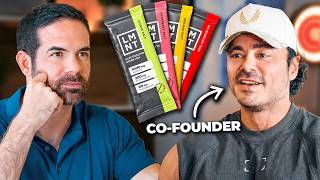
Luis Villaseñor turned a keto electrolyte recipe into LMNT, a $100M brand in three years. He started with his 100k-person keto community, partnered with Robb Wolf for credibility, and brought in James Murphy to handle manufacturing and scaling. The company stayed profitable and self-funded on just $75K from three founders.
Chapters
Imagine going from just having an idea to $100 million in revenue in just 3 years, and then imagine doubling beyond that. That sounds impossible, but that's exactly what happened with Element, the popular electrolyte drink. And believe it or not, just a few years ago, people were not buying electrolyte drinks. It wasn't a trend. There was no data to suggest that it was a good idea. But today I'll sit down with the co-founder of Element to talk about how he was able to spot a 9-figure trend and how he was taking an idea that he had been using for more than a decade and turn it into a product that turned into a 9-figure business. Luis, is it true that Element went from just an idea in 2018 to over $100 million in sales like 3 years later?
Totally, it is.
So this started as an idea that you were mixing at your home, giving to clients, if I remember correctly. Is that right?
So basically, let's say that I've been coaching clients for low-carb keto and many other diets for over 25 years. And one of the things that I found with many of my clients is that they were getting tired, hungry, they had lots of cravings. And it hit me that what they were experiencing was dehydration. But it was not just the idea of adding more water, but adding more electrolytes, but basically sodium. So I started to create this homebrew recipe where basically you got water, some lime, some sea salt or whatever salt that you would want to add, maybe in some cases some other ingredients just to add some flavor. You mix it by yourself and you had it first thing in the morning and then eventually throughout the day. And it worked very well for a lot of my clients, especially for me. It's something that I myself experienced, right? I felt tired. People think, oh, you need sugar. No, I need more electrolytes. I need more water. I need a little bit of, we call it in Mexico, suero. I don't know if you probably experienced it when we've been at the beach. They give you Topo Chico with a little bit of lime and some salt. So it's a thing we have normally in Mexico when It gets very hot and it's usually a great way for you to get rehydrated. So that's a little bit of where the idea came from.
Okay, so when did this hit your brain that this was gonna be a business? Because you, you had this home cocktail that you were giving to clients for over 10 years.
Yes.
But when did you say, okay, this, this little thing's gonna be a business?
Okay, so It's funny because my passion is health and fitness, but I've always been sort of like an entrepreneur in the sense that I'm always trying to sell something. Just to give you an idea, when I decided to create my community, which is called Keto Gains, the first thing that I did was, okay, I'm gonna call it Keto Gains, but I'm also going to register the brand, create a logo around it. I'm gonna make it professional. So I did all the due diligence. And I always was thinking of a way to monetize what I was doing. It's like, okay, I'm gonna do coaching. How can I not just coach one person, but probably 100 at the same time? Or ways to find how to monetize this group that I'm creating because I created a group that eventually got 100,000 followers and 200, 300, or between many, you know, Reddit, Facebook, Instagram. We sometimes hit over a million followers. So it's like, if I find a way to get $5 out of a subscription model, it's going to be pretty good. But I just couldn't find a way to actually monetize it. Although we started to do coaching and eventually we hit over $1 million in coaching alone just by coaching in groups. But it was something that was not recurring revenue because how many times can you actually coach the same person? And you have a very big churn rate. So you get new clients, but then they go away and then the acquisition is very hard and difficult. And then I've been always answering questions to people that are in the groups. And one of the questions that they always had that I got tired of answering is, "I feel tired, I feel hungry, I feel like this, like that." And the answer 9 out of 10 times was, "You need electrolytes." So much that I had this FAQ. And the first question was electrolytes. And so one day it hit me, everybody's asking about electrolytes. I have this big following and I'm not selling them electrolytes. I'm gonna find a way to sell them electrolytes. If I give them the convenience of electrolytes, problem solved. Because I was giving them the formula. We have this formula on our website where you go in and answer the first question and you get the recipe to make your homebrew version of the prototype for Element. We call that the keto rate at the moment. But people are lazy. They don't know how to measure. They don't want to make it.
And at the time, is this what people are drinking for elements? You know, they're drinking Vitaminwaters and Gatorades. Were those the best options? Because as we sit here today, there's a bunch of Element-like products out there.
Yes.
But I think Element was the first, one of its kind. So what were the other options?
Yeah, yeah. When we talked about electrolytes, you had Gatorade, you had Powerade, you have all these other options. But the thing is, none of them had two things. They had a lot of artificial ingredients, lots of sugar, which we are against sugar to a point, and they didn't have actual electrolytes. They just had— because this idea that salt and sodium is bad for you, the average electrolyte drink probably had 100, 200 milligrams of sodium. So you actually had to probably drink 5 to 10 of them just to get about a gram of sodium, which was what we found that was the minimum amount that you need to at least get that pickup feel, right? And yeah, basically the options that were viable were not sufficient. So it was just better to make your homebrew version.
But it's, as we sit here today, everybody takes electrolytes. But at the time, was not the case.
No, it was.
Right, this was not a trend.
It was a category. And it is just a little bit of background. One of my backgrounds is the beverage industry. I worked at Coca-Cola for about 2 years and a half, 3 years. So it is a category and it was a category at the time. Where basically it was forgotten. They just had it because, you know, they need to have electrolytes, but it wasn't a winning category. It was just like a little bit forgotten.
And so what gave you the confidence to go into a market that doesn't have a whole lot of volume or data to say?
Everybody told me, "You're crazy. You're just gonna be selling what's already there. You're just selling salt." Right. Yeah. And precisely that was my idea is there's not a single product that actually has enough sodium to fulfill the needs of my clients or what I'm envisioning.
So this was really a way to bring a good product to market that you believed in and monetize the audience that was there.
And then I was using myself. So it's, it's not only something that I saw as an opportunity, which it was, but also a product that I wanted for myself.
All right. I wanna break this apart a little bit because Luis just said that a Electrolytes were a declining industry. They were declining category, and there was no market data to suggest that this was a good idea or that this product was gonna work. So how was he able to identify that this would work? First of all, he had the audience, so he was able to launch to a group of people that he knew it would help. The other thing here is there was something different about his electrolyte than what was common in the industry. First of all, it was, it was just a packet. It was not a Gatorade. It also was the first to have no sugar. So you had Gatorade Zeros, but most of the Gatorades were full of sugar. So this was just enough of a difference for him to be early in a trend. And so you can hear him talking about how keto is kind of a trend. Paleo is a trend. Low sugar was a trend. And so even though electrolytes were not a new idea, he was able to take advantage of these early trends. Throughout this episode, you're gonna hear him talk about how he was early to things. Pay attention to that and see how you can implement that into your business. You don't need to have a brand new idea, but if you can find something early that is an emerging trend, that's often where the riches are created.
Yeah.
At some point you connected with Rob.
Yes.
Who also had a large audience. And tell the audience about Rob for those who don't know him.
So Rob was and is a big inspiration for me and a mentor. When I started into this health space and everything, one of the persons that basically picked me up and put me in the limelight was Rob. He interviewed me for a podcast. He gave me an opportunity and in, and just as I had a following, he had it like 10 times more because he's one of the grandfathers of the paleo diet. He's a biochemist. He's—
This is Robb Wolf for those who don't know.
Robb Wolf, yes. He wrote the paleo diet, the Paleo Solution book. Then he wrote another book called Wired to Eat, which is also an amazing book that basically explains how we are wired to eat and why we eat in a certain way. And again, yeah, he was, a great inspiration for me. He always pushed me forward. And him being a mentor, I thought, okay, I want to make this business, I wanna make this formulation. But I was selling like a homebrew version in Mexico already, and I was exporting it to the States to some of my clients. And for me, this was like a proof of concept, right? I was ready with a, let's call it Element 0, which was a crappy version. It's funny.
An early prototype.
An early prototype, which was we sold in a pouch. And the issue was that once you open it, because of the humidity, it sort of became like a salt rock. So you had to go and grab like a knife and basically just go away and try to get a little bit of salt out of it. But it sort of, it worked and people were buying it and they were fighting for it because we got like 100 pouches in the States and my clients were like, "I'll pay you $100 for it. I'll pay you $120." They were fighting for it because we had built this trust already with the community, right? And they loved what I said, what we did. They got results, and it was now a way for them to also get the electrolytes they were missing and we were talking about so much.
Okay, so you go to Rob, and between the two of you, you guys have a decent following. He's got the paleo crowd, you've got the keto crowd, there's some crossover there. So you had enough of an audience to where you knew that you, You could move something if you really put some muscle behind it.
We had a huge audience and we were not really selling them anything out of, okay, our coaching, our books, our presence, right? And also we were at the right time where keto and paleo and fasting were basically in the spotlight. We're talking about 2017. We were all going through conventions. We were in the limelight all day long. People were inviting us to podcasts. And so it was the perfect moment for us to launch Element.
So what happened when you did launch? People are asking for the early prototype and offering to pay $100 for it. When you finally get a product that you can bring to market, you've got these two big audiences that you can launch to. What was the initial response?
It was overwhelmingly positive. Yeah, people were— imagine that. From one day to the other because we sort of kept it in secret. Then we say, "Hey, we've been working on this for about a year. Now we have the perfect solution for your dehydration problems." And then we just show them Element and basically people were like, "Oh, let's try this. We wanna basically get a piece out of it." And we were in many trade shows and conventions at the moment. And I remember that we just were there and people were like just hugging us like if we were superstars trying to try the product and they loved it too. Again, the initial response was, it's not just because it's Rob and Lewis, the product is great. And because it also works and fulfills a need, it's funny, but people actually get sort of addicted to it. They cannot really, they realize they cannot function with it because they are dehydrated to a point.
And do you remember what sales were when you launched?
So when we launched, we had two theories. One is, "This can either be a hit or we can probably end up selling it as probably a margarita mixer because yeah, probably that salt has a little bit of flavor. We can probably refurbish some of it." We never thought it was going to be such a big company.
What did you think was going to happen?
We thought, "Okay, we sell $3 million, $5 million, it's going to be amazing." And we were very happy with those numbers. But we never thought it was gonna become such a big thing.
Okay, so you're like, this'll be a nice little 7-figure business.
Yeah.
And we've got the audience for it. It'll be a great product. We'll be proud of it. Have a nice, you know, little thing we did. Monetize the audience a little bit. Be proud of the product. And what actually happened is that it became a 9-figure company in 3 years.
Exactly.
How important was it for you to bring in the operator who solidified your audience and Rob's audience and built the infrastructure. How important was that relationship?
That's paramount. Like I always say, James is the, let's say if I'm, it was the spark and then Rob was, is the soul of the company.
You were the spark 'cause you formulated it.
I had the idea. Rob is the soul. He's one of the faces. And James is the brain. He's the one that created the whole process on how it works. For me, he's a magician. I don't even understand how he does it because the initial team that started Element, 6 persons that are still in the company that are the hardest working people that I know that are extremely brilliant, hardworking, passionate about the product is a classic team that They don't work just because they work in a company. They actually live and breathe and understand the product. And yeah, they basically made Elementor their own and they've helped it grow as if it was a small kid that now it's a, I wouldn't say a teenager, but it's a person by itself. It has a soul.
It's a 9-figure teenager. It's a rich, privileged teenager from California.
It's a cool teenager. It's a salty teenager.
It's a very popular salty teenager. I want you to comment more more, this is James Murphy.
James Murphy.
Is he the CEO, COO?
Yes, he's our CEO, the brains behind the process.
So tell me, this is good news for a lot of entrepreneurs 'cause you had an audience, but this was your idea, your brainchild. And then Rob is not gonna step away from what he's doing to go operate a company. And it's nice to hear that it's possible to just sit in one of those seats and find other people that you can partner with who help bring this to life. So could you explain what the relationship was like in bringing on James Murphy, the COO, and how you guys created that partnership together?
Yeah, so I'm a believer of teams in the sense that every single company that I built and that has been successful, the particularity that it has is that I play a role, but I don't get in, I'm not stubborn into understanding this is my place. I'm good at this, but I'm not good at that. So I just move away and let the perfect person for that job to take over because otherwise you won't grow.
Yeah.
And I understood that, okay, I'm great at communicating, I'm great at sharing certain skills, but the perfect operator for this company is not gonna be me. And we had the great luck of when I presented or pitched the idea for Element that Rob had just met James and they already had built this friendship. And Rob said, "I have the perfect person to basically help us make this idea a thing." And James had this great success rate of, creating companies from scratch and building teams and basically taking an idea into something that actually becomes a product and sells.
And how did you know he was the perfect person?
He already had built a company like very similar to what we want for Element, which is Garden of Life. So he had this success, right?
He built Garden of Life, like he founded it or?
He basically created the company in the sense of the products and the pipeline and some of the how the company worked. And then the company, of course, grew by itself. Right. But he was the, let's say, sort of the brain behind the big success of Garden of Life to a point. So he already knew the playbook.
How did you entice the person who built Garden of Life to come in and sell some salts to the audiences that you're gonna launch it to, this thing that you're gonna make into a $3 to $5 million company, how do you convince that person to come join and operate this company and take it to 9 figures?
We didn't thought it was gonna be that big at the moment, but James is super passionate about the same things that we are. He's also super passionate about fitness, passionate about business, very knowledgeable about, many of these things. And so when we pitched the idea, he was in between different ideas and he liked this much more because it was something that resonated with him.
And did he think it was a 9-figure idea out of the gate?
He thought it was gonna be big. Uh. But again, in between the all of us, we've never thought it was gonna be this big.
I wanna interject here 'cause I don't want to gloss over what Luis just shared. There were 3 partners. There was the person who came up with the idea and had an audience. There was another person with a lot of influence and connections, and then there was the operator. And between the three of them, they all put in a little bit of money and they each had their defined roles. A lot of times entrepreneurs are so focused on keeping 100% of the pie that they miss out on how big of a pie they can build. I found it really encouraging to hear Lewis share that he knew he wasn't going to be the operator to grow this business and that he partnered with another person with a lot of influence and some, some face recognition, some brand recognition in Rob Wolf. And then they brought in the operator and they, they all knew where their lane was. I found that encouraging because sometimes as an entrepreneur, I feel like I got to have everything figured out. But what's true is I need to figure out where I bring value and then partner with the people who also bring value in complementary ways. It was a really nice reminder that I don't have to have it all figured out. I can bring in the partnerships in order to build the type of business that I want to create. How did you guys fund the initial launch of this? Because if you, if you launch it to both of your audiences and it takes off, you've got a ton of money that's going into inventory and, and production, especially if it's exceeding your expectations. So how did you fund that growth?
At the beginning, it was self-funded. We each— each party just added about $25K, and that was our initial investment. And believe it or not, the initial sales and everything took care of itself. Wow.
So you guys took a total of $75,000 and turned it into a 9-figure company?
Eventually, yeah. We eventually got a little bit of capital, but not because we needed it. Just to expand, right? And more so we call it like the friends and family fund in the sense that it's a way for us to make people feel they own a little bit of Element. And so they feel like owners and they're more—
they want to buy more, they want to share, they want to have influencers and strategic advisors.
And they can write clients. Believe it or not, one of their first rounds that we had was basically Probably 500 of my own clients bought a piece of Element.
Wow.
Because they just wanted to own a piece of Element. That's it.
Have they been happy with their return on investment?
They love it. Yeah.
So just so I'm clear, $75,000 was enough to fund Element until it was at $100 million a year-ish?
We can say we've actually never asked for money.
But I mean, I understand you never needed it, but like the $75K took you all the way to—
We can say so, yeah.
That is insane.
Yeah, we've been profitable pretty much from day one. We have a great margin. And again, it's all in very much in thanks to James' stewardship and the team that has been very savvy intelligent with how we spend each dime, put in, you know, marketing, everything else is always top notch. Okay.
Did you catch that? Luis and his partners put in a total of $75,000 and they've never had to raise capital. This is a multi-nine-figure business. How the heck does that happen? Well, he had a product with really good margins. And the product had a very high reorder rate. People buy it frequently. And when you've got a high margin product and people buy it frequently, well then it just becomes about math. And this is how Lewis was able to give away so much product and be so aggressive with advertising because they had the margin and the repeat order rate to be able to do that. That's how they were able to take $75K and turn it into a 9-figure business. I kind of joke that I started my supplement company with $600, sold it for $16 million, and my only regret is that I didn't put in more than $600. So it does not take a ton of money. Doesn't even take $75,000 like Lewis, Lewis put in. But if you knew it was gonna be a 9-figure company, you'd go find the $75K. What really matters is that you have strong margins and you've got strong repeat order rates. And if you wanna launch a brand that is a consumable brand, meaning it has high margins, it has repeat orders, it has recurring monthly revenue, and has the foundation to grow to 7 figures and sell maybe someday for an 8-figure exit, then I would encourage you to go to Capitalism.com/bootcamp and get on the waiting list for our next cohort. This is where we help people launch their brand, help them get customers and repeat orders and build the foundation of a 7-figure business. You can get on the waiting list for our next group over at Capitalism.com/bootcamp. It seems like there was a, a, a strategic decision at some point to go really hard in podcast sponsorships because every single podcast you've ever listened to has some call to action for an, for an Element ad.
Yeah.
Whose idea was that and what gave you guys the confidence to go so aggressively into that vertical?
I think it was a little bit of a coincidence that we started with, at the same time that many big podcasters and our team had a big eye and a sense in between the team and Rob and I We were at the right time where we had a lot of connections and friends in the industry. And basically we started to pitch, "Hey, we're creating this." It was a mix between, "Do you want to help us and we'll also pay you either with money or in some cases with a little bit of equity?" And so people liked the idea and so they got on board. And then of course the team has a great eye and a great sense of smell to probably think, "Hey, this," this person is going to make it big because we didn't just grab the big ones from the start. Some of them, we grabbed them when they were not as expensive and we built a loyal relationship with them, but others were not as famous. And over time they actually became super famous. It was probably the beginning. We're talking about almost 10 years ago, 8 years ago in the making where podcasts weren't as big as they are today. Right now everybody talks about podcasts, 8 years ago was a little bit of easier time, right? So we were in the right moment when all of this was starting.
You know what's interesting, Luis, is all of your answers have been about people. There is, there is the relationship with Rob, there's a relationship with James who ran the company. There's a relationship with the influencers. There is a relationship with your clients in the beginning stages. There's the audience here. But it was all about people like you haven't. At any point said, oh, it was the amount of capital that we create, that we raised, or it was about this specific strategy. You built a great product that people liked with good margins that they wanted to buy over and over again. And then you built a team of people around you that were able to bring this to life. It's just interesting that that has been the core of every answer in this discussion. So, Have you always built your businesses around the depth of connection with the people around you?
It was built out of a community. If we go back to how it started and why it started. So we do believe in communities and giving away. There was a saying I heard sometimes that the more you give something, the more you receive. And my communities, and then with Element, And many of the success stories we've had with Element is because we give something without expecting something back in return. Just to give you an example, one of, one of our biggest hits and campaigns was during COVID when we gave away hundreds of thousands of dollars of product to first responders because we didn't care. It's just let's help some people out. Let's just give them hydration because they actually need it. And we didn't do it as a marketing campaign. We just did it out of goodwill. And then that backfired, but into a very positive response in the sense that people try the products like, "What is this? Oh, it's an electrolyte drink. Let me try it. Oh, this is amazing." They started sharing. So they became like our own ambassadors without paying. And then they became customers. And because we helped them when they were in need, they basically were customers for life. And then we still have like mails and comments from people back then that were super grateful and they love the product and, you know, oh, Element saved me, Element made my life different, things like that. Hmm.
That is— I'm sitting with this feeling of you can do that because you have a great product. And because you have the margin to do it, and because if you actually just get that out to more people, then there's likely going to be ripple effects that benefit the company. And I'm wrestling with like, that's the math of it, but there's also like, you know, when that's your guiding light of just giving more than you expect to take, that does have a way of just finding its way back to you.
Exactly. I'm a firm believer of that. You know, the saying of pay it forward, because every time that I, in my experience and in my life experience, every time that I given, I get much more in return. And every time that I try to take, it just doesn't work.
So this is why I'm wrestling with this a little bit because as an entrepreneur, most of us get into the game for at least partially selfish reasons.
Of course.
So what allowed you to have that mentality of, I'm going to give more than I take, when you're also wanting to make a profit? Because how do you balance those two things?
I guess when you are in a comfortable place, of course it's easier to make these decisions, right? Like, oh, you're making a profit, you can take the luxury of giving some product away. That's one thing that's of course, right? If probably some entrepreneurs that are not in a good place may not take that risk, and it's perfectly understandable. It's in the end a survival thing. But again, coming from experience and then not just mine, but also from the team, the team is extremely open-hearted and we have this sense of always serving the community. One of the pillars of our community, or let's say the client response, is always answering questions in a good manner, helping people. If we don't care about if someone is trying to take advantage of us in the sense of, I didn't like the product, give me my money back. Yeah, no worries. You don't even have to send the product back. You don't like it? No questions asked. Because again, we believe that in the end it's going to pay by itself. And it has so far has proven right.
Did you always have that approach in business or did that develop over time?
It developed over time. Like before I started with the coaching business and all of this, I used to run restaurants, right? And running a restaurant, even though it's very service-oriented, you get a little bit tired of certain clients that do take advantage of you. So I had this story that I always tell. My restaurants were Spanish-themed. So we had a, I don't know, you're familiar with a tortilla española, right? With a Spanish tortilla, which is like an egg omelet. So I had this client that came and he returned the dish like 3, 4 different times. It was never to his liking. And then I wanted to really make him happy. The best tortilla that he ever had. So I went with him and said like, "Sir, why don't you like it? How can I make it better? Is it too cooked? Is it too dry? I don't know. How can you explain it? How can we improve?" And he said, "I just don't know. It doesn't taste like the one my mother makes." And that's when it hit me. It's like, I cannot really help everyone. but I can try to help. Like, you know, the customer is not, they say the customer is always right. What I understood is the customer has his or her reasons, is not necessarily right, but I can find a way to make it better, right? So I'm not going to be able to please everyone all the time, but I can try to please them if I find How can I help them? And in the sense of my coaching and then with Element and other businesses that I've made, I find that if I make the client angry, they're just going to get angry and they are not going to come back. If I try to help them and just listen to them, I may not be able to help them, but they're going to go happy. And I'd rather get a person that's happy, even if they are not a recurring client. Becoming a recurring customer, but they won't have a bad taste in their mouth, right?
So this was a muscle that developed over time.
Yeah, it is something that you build.
That now infiltrates all parts of your business.
And now it's very much in the sense that I don't care. I let it go. Like if someone is angry at me, I used to, like as social media person, what I used to answer every single question that a client has or et cetera. There comes a time where a lot of people just troll and they just throw shit at you and say ugly things. I used to respond even to those. And what I learned is you say something bad, I just delete it or don't care, move on. You want some answers in a good way, I'll respond to everything.
You're at the company size now where you've achieved 9 figures, you're the leader in the space, everybody is trying to be like Element. Where do you go from that point? Do you IPO? Do you hope that you get acquired for $1 billion? Do you hold onto it forever? Like, what do you, where do you take it from there? I mean, you're like at the top, right? You won. So what do you do from there?
James has the idea to continue to grow. And we were talking about this the other day and he basically said, I want to continue growing this company for the next 30 years. And I mean, no, I'm all in for this. Like, if we can take it to double size, triple size, eventually expanding and having more line of beverages or supplements, basically let's go. Because our mission is to restore health through hydration. It's not just about money or just building a company. We want genuinely to help people. That's one of the— that's the mission behind Element. So this is also why You were asking why we help so many people. That's one of the reasons we're restoring health through hydration, helping people feel better, be better in a, in a little way that we can. Right. So that's basically the idea or what we want to continue developing.
All right, guys, this is my favorite part of the discussion. I'm really glad that you stuck around for this part of the interview. I've noticed throughout this conversation and previous conversations that I've had with Lewis that he spots some trends, man. He seems to be able to see what's coming. Now, I think I'm pretty good at spotting trends, but I've never built a 9-figure business based off some trends that I see. Lewis has done that. So I'm about to ask Lewis what trends he sees coming and pay attention to some of the small niche markets that he thinks are gonna explode. You're gonna see a few trends that he sees are converging, and there's a lot of interesting product and brand ideas that come out of this. So pay attention to this part. I, I wanna wrap by asking you about some trends that you see, because from what I know, we haven't known each other for that long, but from what I have been able to figure out in some of our conversations is that you see trends before other people do. Like you were in keto for a long time before people knew what keto was. Like before the rush, you were in it for years.
Yes.
Electrolytes now just seem obvious.
Nobody knew.
But nobody was selling electrolytes in 2018. You basically built this market. What do you see now as some of the trends that are coming in 2026 and beyond?
That's one of my passions and sort of superpowers, looking at what's like the next wave. And one of the things that I see now with, for example, peptides, supplements that are adjunct to or to support peptide use.
Ah.
So for example—
Ooh, that's good.
Everybody talks about GHK or the GLOW combination, which is a combination of 3 or 4 peptides, BPC, GHK, TB500. The benefit of this combination, like in short term, is basically that it gives you better skin quality. It increases collagen production, reduces inflammation. A lot of my— my wife's a plastic surgeon, so we're seeing that they ask about this all the time. And it's using clinically now in many procedures to improve the results. But for example, this works well by itself, but it works much better if you add collagen. So for example, finding, okay, we're going to use this peptide or people are using this peptide. What would be a supplement that helps a lot for this peptide to work much better? So for example, this peptide with collagen, then you have, believe it or not, Ozempic and GLPs, one of the things that I've found out is they dehydrate you. So there's a big opportunity for Element in the next years. I was already talking with the team last week, probably, I don't know, create a campaign or probably adjust some of our messages or find a way to advertise toward people that are going to be using GLPs, which in the next coming years, probably one of every five Americans is going to be using, if not more.
Yeah, I mean, I think it's gonna be huge for the protein space.
And then protein is another trend that's coming, just coming out of Expo West. Everything has protein, everything has creatine, collagen, or in a way also probiotics. Like there are many things that have been around for years, but now you're seeing them added to things that you probably wouldn't have seen them I saw an ad yesterday for creatine cereal, and I was like, it's, it's gone too far.
No, no, don't put creatine in my cereal.
You know what we had for dinner 2 days ago? If you tell me that one, that creatine cereal.
No, you didn't.
I did it. Oh, I finished the whole box by myself.
Well, that's why I got the ads, Louis, because we were messaging on WhatsApp, probably Instagram connects to WhatsApp.
And you got the creatine cereal.
And I saw the creatine cereal.
It's not bad. It's gone too far.
It's gone too far. So it's interesting that you mentioned, I mean, I'm a supplement guy myself, but the idea of it being the industry getting bigger because of peptides and GLP-1s. And if you're on a GLP-1, you're gonna need more protein, more creatine, more electrolytes, of course, more vitamins and minerals.
Like, the thing with certain peptides is, in the case of GLPs, right, the idea is that you eat less. If you do it correctly, you eat less of the crappy things and more of the good things. But still, there are some people— okay, again, you're talking to a guy like me, and you or many others that do things correctly, there's not such a big bad thing that's going to happen. But for the average person, and I've seen many horror stories where, yeah, they lose a lot of weight, but most of it, it's also muscle.
Yeah.
But also they get super malnourished, right? Because they are just eating Twinkie Wonders or a pizza, which has a little bit of basically no actual nutrition. So creating a lot of line of supplements to support the use of these peptides, right? And again, like we were saying also the other ones like beauty peptides, okay, you need the materials to make the signaling happen because what peptides do in many cases is just increase a signal or a hormone, but you still need the material or the resources for that to happen, which is in the case of the copper peptide, you still need the collagen. If you don't supply the collagen, well, you're using the peptide, but it's not going to be as efficient.
So I'm assuming you're a few years into this, as am I, but peptides are probably gonna be a huge trend. They're still in the early stages.
They already are.
They already are, but it's gonna be even bigger.
Yeah, like I been talking about this the whole week, but in the next 3 to 5 years, and I even see it probably beforehand, we're gonna have a patch where you can probably get certain peptides. Depending on what you probably need at the moment. And yeah, like even your mom, dad, and the gardener is going to be on a certain kind of peptide. There are going to be peptides for everything and for different market prices and for different social classes, et cetera, because it's something inevitable. It's like we're just, it's just like AI basically just hit us like this. The same is going to happen with peptides.
Yes, I agree. Okay, so peptides and supplements for peptides.
Peptides are one of the things, the biggest things that I see in the next 2 years.
Do you have any other trends? Because you tend to be really good at these. So do you see any other markets or industries emerging?
I'm really focused into supplements and food industry, so I wouldn't be able to say with a lot of certainty.
Okay, well, what about in the food space then?
In the food space.
Protein seems like it's, we've protein maxed. It seems like we've, Starbucks has protein foam.
Now it has protein shakes as well, or protein in your coffee.
So have we, has protein peaked or is this market gonna get even bigger from here?
It's getting bigger.
Really?
Yeah. The thing is mostly protein was for bodybuilders or people that did sports. Now they're adding protein just to whatever. Because the messaging that has been expanded by a lot of podcasts is that muscle is not just for looks, right? But it's a longevity organ. And so how do you build more muscle with having protein? And then with all the changes, even in the government right now, you know, the food pyramid turned upside down where they put in protein in the forefront. It only is natural and expected to have many food products add protein if they don't have it, or people are actually looking— just as they looked at calories before, carbs before, now they're looking at the protein content.
It's hard for me to imagine peptide supplements and protein getting even bigger than they already are.
Yeah, you even have water with protein right now.
I've seen that. Yes. But it does feel like all of those trends are inevitable. And just like GLP-1s are inevitable, like once you have a— now an oral drug that works as well as it does, like, okay, it's inevitable. So the trend is going to be— we're reversing the obesity trend now. Great. That's a net benefit. What are all the things that are gonna need to happen in order to support that trend? And then that creates its own trend. 'cause we've solved this macro— solved this macro problem. And that means there's gonna be a lot of trickle-down effects from that. And it does make sense that the nutrition space would get even bigger because the fallout of undoing a lot of unhealthy habits is that they're gonna have to get healthy.
Totally. And just to going back on this trend, just as protein is increasing, maybe creatine, collagen, probiotics, there are other industries that are decreasing. For example, the alcohol industry.
Yes.
Have you seen the trend? I have some friends in the industry that basically, well, they have been worried for the last years, but now it's like, again, something inevitable where lots of people are not going out. They're not partying as much as they did before. And it's funny, but I live in Mexico And people my age are the only ones that are still going out and drinking. So they, it's funny, but you had the bars for younger people. Now they opened bars and discotheques for people my generation because they found out that younger people are just not going out. So they wanna recapture the older generation. And now they see that older people are sort of like in their second wind because some of them are getting divorced. They still wanna hang out, they still drink. So let's just hit the older crowd instead of focusing on the younger ones that they don't give a crap.
How important do you think it is when you're starting a business to go after a trend that is emerging? Like you were early in your businesses, so that was obviously an advantage for you, but how important do you think that is in order to build something that is hugely successful?
That's a difficult question because both approaches are valid in the sense that if you are able to find a trend before it becomes something, you're going to always have an advantage. But it's also valid sometimes to just pick up on a trend and maybe improve upon it. There are some, some examples of other companies that have gotten into a trend and made a better product or a cheaper product and even dethroned the king in the category. Right. So I guess both approaches are valid. It really depends on the quality of your product, how much money you actually have. Probably it's going to be harder in some cases to be the second because you probably have to pay for marketing. Or again, you maybe have a better idea than the original and you can improve upon it and again, be better. But again, I guess it depends on the context, on the person that's actually spearheading the company, it has many moving parts. So I wouldn't be sure to say which one is better.
Yeah, I like to try to find, try to be early but not first.
First has its downsides because you can basically have many errors, right? Yep. And implementation or even not be at the right moment. You can be sometimes too early and it wasn't the right time to actually create something.
Right.
And maybe 2 years or 3 years later, that's when the actual trend starts to, to get.
And sometimes early to a trend can also mean early to a platform, early to a marketing strategy. If you were early on Amazon and you were still around today, you own that platform. If you're early on TikTok Shop right now, you're a huge company. If you're early to sponsor Chris Williamson, that paid off really well. If you're early to spot something that emerges, that is sometimes all that is necessary. A really good product and early to something. I don't know how you figured out that you were gonna be early in the trend of electrolytes and be early to platforms and be earlier— early to sponsors, but whatever magic skill set you have to spot that, I wish you could bottle that and put it into a peptide 'cause I would inject that into my fat cells. Luis, this is great. Congratulations on all your success.
This is—
I mean, what an inspiring story to go from $75K to a 9-figure business. I hope you're very proud of yourself and I can't wait to see what you guys do next.
Amazing. Thank you. Yeah, we are super proud. And again, I'm like you mentioned, I mentioned people all the time. I know that we wouldn't be able to do this without the team.
And if you want to save 20% on your next Element order, go to I don't have a link. It's a joke.
I can get you one. Okay. I'll get you one.
Louis, great to see you, man. Thanks for being here.
Thank you, Ray.
Element started as an idea that one guy was formulating in his house and giving to a few clients. Today it is a multi-nine-figure business that probably will become a billion-dollar company. They were able to do that because they had a a good team. They had a good product. They had good timing. They also had good margins and a strong base of customers that wanted to buy from them again and again. Most of us are never going to launch an Element, but the pieces that were used are exactly the building blocks to take a company to 7 figures and beyond. It's It's having an audience, a great product. It's knowing the numbers behind your business, having a strong launch and getting good reviews. It's managing repeat order rates, building a brand, and maintaining really healthy margins. I like consumable brands like Element. I like supplements and beauty products and pet products and food and topicals. I like I love that kind of a business because I can be aggressive on getting the customer to buy from me, and then I can get them to buy over and over again. If that's the type of business that you'd like to build, if you wanna build your element, you wanna launch your product to the marketplace and build the audience that buys it and buys from you every single month, you can find out what we do to help people bring consumable, high Margin Brands to Market over at Capitalism.com/bootcamp. We put people through these cohorts where they come up with their idea, they launch it, they get the first customers, they build the, the base of a recurring business where customers are buying every single month at high margins that are bought into what you want to do. And we put them through this process to bring that product to, to market, get a launch, and build that foundation. And you can get on the waiting list for the next group at Capitalism.com/bootcamp. My name's Ryan Daniel Moran. I work with e-commerce entrepreneurs. I invest in e-commerce entrepreneurs. I have a portfolio of e-commerce brands. And if that's the journey that you're on yourself, then I'd consider a privilege if you would let me be a mentor to you on your journey and that you subscribe to the channel. Thank you for being here. I'll see you guys on the next episode. Take care.







