
How Mike Dillard Recruited a $100 Million Panel for his Disrupter Business
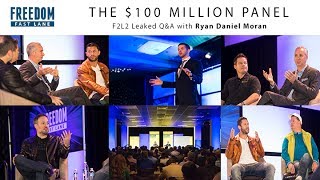
Transcript of a panel from Freedom Fastlane Live (Austin) featuring Mike Dillard and advisors (Aubrey Marcus, Josh Bezoni, Ron Lynch, Cameron Herold, Ryan Daniel Moran). The discussion centers on Mike Dillard’s new hydroponics/‘boss water bottle with plants’ venture: mission to bring affordable healthy food to families, recruitment of a high-profile advisory board, product development timeline, funding strategy (self-funding vs. raise), launch and marketing plans (crowdfund benchmark, podcast/affiliate/influencer outreach, Facebook pixel strategy), team-building and operational lessons from scaling consumer products. Panelists also share broader startup advice on hiring, margins, audience building, PR/TV, and advisory boards.
Chapters
All about execution. It's all about the initial idea.
Half of my life was just do I have the guts to place this order?
Ended up launching in 42 days we raised $600,000.
Entrepreneurs are million fold over anybody else.
Solving the problems because a great problem.
Is a great business opportunity.
Hey fastlaners, this is Ryan Daniel Moran. Welcome back to Freedom Fastlane. Today you're going to hear a clip from our December called Freedom Fastlane Live. It was held here in Austin, Texas. And what we try to do at Freedom Fast Lane Live is put the best capitalists, entrepreneurs, brand builders and investors into one place, invite people to join and watch what happens. We just try to create the biggest business up leveling possible. This year's event featured Peter Diamandis, JP Sears, Cameron Herold, the founder of Whole Foods, John Mackey, a panel of people who built hundred million dollar businesses, our investor panel and a bunch more. And in past events we've had billionaire Jeff Hoffman, Pat Flynn, Robert Herjavec, Gary Vaynerchuk and others. So today you're gonna hear a clip from the recent event. We don't release the entire event for obvious reasons, but there are certain clips that we find particularly beneficial that we want to share with you. So that's what you're gonna hear on today's episode. If you want to be on the waiting list for the event in 2017, you can go over to freedomfastlanelive.com Enter your best email address and you will be on the notification list for when we release the speakers. Until then, enjoy this clip from Freedom Fastlane Live.
Please join me in welcoming the entire $100 million panel.
I want to brag on you guys and then I'll let you introduce yourselves. But does Mike look familiar? Did you like that yesterday?
So you heard a bit about Mike yesterday. His new hydroponics company has a Rockstar board of advisors, including those you see on stage. We're going to be unpacking that business and the plan to grow that. Throughout this panel, Josh Bazzoni. You guys hear the podcast with Josh Bazzoni?
Three people, 15 of you. Okay, great.
Thanks guys. Appreciate the Support.
Founder of BioTrust did $100 million in revenue in the first 12 months. Right now runs one of the biggest and most successful supplement companies on the planet. Cameron Herold might look familiar to you. He was up here earlier.
Aubrey Marcus, founder of Onnit, and Ron Lynch. You guys like Onnit?
Yeah. Thanks everybody.
And Ron Lynch, I have no idea what Ron lynch does and he and I are Friends, but have sold $4 billion worth of products in your career, right? Yeah.
And counting.
And that's a few dollars. All right, cool. So I want all of you to talk a little bit about what you bring to the table in terms of the new venture and what your vision is and a little bit about your background. Mike, I'd like for you to talk a little about the vision of the company before we talk about your board of advisors.
Sure.
So I think I give everybody a good idea of what the purpose was and why it was started yesterday.
You know, how do we voss water bottles with plants?
Right, right. But, you know, the goal is how do we bring put clean, healthy food back on the family dinner table at a price everybody can afford. That's the goal. That's the mission. It's a really quickly growing industry. It's almost every month another product seems to come out and hit the market right now. So the world has kind of figured it out. There's a lot of excitement and progress happening in that world right now. So the question is, how do you build a company that will get enough distribution and enough units out there to actually make a difference so that it's not a novelty item? How does this make a real impact? And.
It'S just been such an honor to have all of these guys up here as a part of this project and for them to have said yes and to have given their time and their expertise to it, because I have approached this from at least try to a really, really humble fashion in the fact that I have no idea how to pull off something like this. And I think if you start from that position, then you can acquire the knowledge that you need.
Josh Bazzoni, two questions for you. 30 seconds or less. How do you make $100 million in 12 months or less? And how are you going to take this company to $100 million? 30 seconds. Go.
Oh, my God.
How do you build a company in to 100 million? It's all about execution. It's all about the initial idea. It's a lot of experience. BioTrust is an overnight, we call it a 20 year overnight success story because I've been grinding it out for 20 years in order to have a company that could go from 0 to 100 million in a year. So it takes a lot of work, a lot of failure. Don't be afraid to fail. I have a ton of failures, Mike, and I talk about it all the time. And you can learn and grow from those and apply it to the next business. So it's been A crazy ride.
Cameron, what excites you about this new project and how are you viewing this in terms of the execution plan for rolling this out?
Sure. I think I'm almost the antithesis of the be okay with failure part. And it's not criticism, but I fucking hate failure. So I'm here to try to give some of the operational and execution and culture and people side of the growth to Mike and to kind of say what maybe other people are saying or thinking but aren't comfortable saying. I don't have a filter, so it just kind of comes out. So that's what I'm trying to bring to the table.
Aubrey, what do you bring to the table? And tell us a little about the evolution of Onnit because it seems like, how old is the company?
A little over five years.
Okay, so in five years it seems like you made a huge splash in the marketplace. Everybody knows who you are. So how are you bringing some of that expertise to this new project?
Well, I think one of the things that's really helped Onnit are the connections that we have. Forging those connections and then being of service to the people that we're connected with. It's not all about paying the high dollar athlete to put a logo on their golf bag or put a logo on their hat. It's about getting them fully engaged so that they love what you have to offer and you form a bond that transcends the traditional business model of I give you this, you give me that. It becomes something on the abundance model where you're both just giving as much as you can. And you'll see that with our top athletes and the individuals we work with, and I think with Mike's product, that's a product that people can get behind with their heart. And that's something that's offering a service that they'll believe in so it's easier to form those genuine connections. And I can walk this into any of the athletes, any of the stars that we work with, and they say, man, this is a great idea. I want to get behind this. And the discussion comes from, not from, how much can I pay you to man, how can we do this? How can we make this work? And when you get in that frame of mind, anything is possible.
Magic. Ron, would you talk a little bit about your background and what you're bringing to the table for the new project?
Sure.
I spent my first 10 years in business, in the grocery business as a CEO. So actually, John Mackey and I got to talk yesterday and we'd met 25 years ago, so that was nice to see him again. So I understood operations and P and ls, and as fast as I could get away from human resources and all the things that Cameron does, I did. I hate hiring and firing people. In fact, over the years, my companies have gotten smaller and smaller and smaller, and we have more of a team that inserts ourselves into other companies. So one of the things that we did, I guess, that we're noted for in the last decade is I happened to run into a guy named Nick Woodman at the Salt Lake City Outdoorsman show. And he was living in his van, selling this surfing camera. And I went, well, that's a pretty good idea. We should put that on tv. And so we broke that product down into a creative brief and executed against it. And GoPro ended up scaling pretty rapidly from $600,000 to $600,000,000 over six years. So part of it's being in the right place at the right time and being able to identify when Mike brought this product to us. The immediate thing is we have criteria, and it ticked all of the boxes of the criteria for us, which are kind of four key things. All right, he's got all the parts and pieces that you need to have that kind of success. So picking right, I think, is it's like getting married. You all have companies, you all have products. You're married to your product. Did you pick right? That's half the problem is picking right.
Mike, there's one person missing from the panel that will be here later. I want you to tell a little bit of that story, and let's start off by talking about how did you pick this panel? And how did you get such a rock star board of advisors to be on board and support this?
Yeah, no, it's a great question. I'd have to say some of the relationships are new. Aubrey and I met in the last year. Ron, six months ago. Josh have known for a long time. Caramel I've known of, but we haven't really met until probably a year ago. But I'd have to say it really just starts with the mission and the vision. I'm pretty confident that if I said, hey, guys, I've got an idea to start an Internet business, and the goal is to make 100 million bucks selling a widget, they would have all said no, because they're not in it for the money. They're in it for the purpose and the contribution and the impact that it can make. So I'd have to say that more than anything else. Is the single biggest piece to the puzzle here as far as finding and recruiting amazing people onto your team that can support you, is having a grand vision that has real purpose. And it's not really about the money.
Could you talk a little about that elevator pitch? What was the elevator pitch? To bring on the right people? Because when you started building out the board, it was an idea. You might have had some things to show them, but it's not like there was a prototype made. Right. And you self funded the thing. So it's not like you could say, we're backed by this venture company. So what was your elevator pitch to get people on board?
You know, I think making it after you've got that vision box checked, making it a no risk, no lose situation for the advisors. Like, I just asked these guys for their help in exchange for a piece of equity in the business. I wasn't asking for money, wasn't asking for a bunch of their time. It was just, hey, would love to have you involved, would love your contribution, to be able to learn from you and to help make sure this is a success. So I think part of the webinar formula I took you guys through yesterday, right, Removing all of the risk from the situation I think was probably a piece of it. It's hard to say no if you're just being made an offer to help.
Aubrey, I want to ask you that. What got you on board to advise the business? What excited you? Or how did Mike frame it to you that made you say I want in?
Well, clearly in the business that I'm in, I recognize that input equals output. And you can look at clinical trials and look at nutrition as being one of the leading indicators for juvenile delinquency. Like when people are fed well, they respond well. The body is linked inexorably from the mind, from the spirit. And so being able to support that base foundation is huge. But it's not something that you can easily ship to customers worldwide online like we do with our supplements and some of the more prepared foods. You really need to grow vegetables or you need to get them from another grower. And I think this solved a major problem and added a piece to that kind of holistic total human optimization picture. So that was key. You know, the product was key. But then also I had to assess Mike and you know, he'd been coming to the gym. I got to see him in a variety of different situations. I love seeing people under stress when they're working out or maybe they're a little too drunk and see if Any of the cracks come through and I can look and say, all right, can I trust this guy? Would I go into battle with this guy? And Mike, he passed all that criteria and said, all right, this is the right guy, this is the right product. I'm in, man. What do you need me for?
Last year at Freedom Fast Hand Live, Gary Vaynerchuk said, if you want to go from 10 to 100, it's all about people. Cameron, I asked you on the podcast, would you echo that? You said, absolutely. Josh, you've built $100 million company and you give a lot of public credit to the team that you've built. So would the two of you comment on the team in the process of. When you're looking at this new project, how are you going to advise Mike to build the team to support what you want to do?
Yeah, hiring stars is extremely important. We've got one star up here. Sean Wells is on our team.
Great.
He develops our products. Amazing guy.
Cameron said it earlier. Hiring people that have done what you want to do is extremely important. When you're trying to grow. We found that hiring rookies and trying to groom them is something great for some companies, but when you're hitting very quickly and you're growing very fast, you have to have experience on your team. So that's extremely important. I'll hand it over to Cameron.
I know why I joined and it wasn't because of the product and it wasn't to change the world. It was the chance to work with Mike and I will bet on an A player any day. So I had heard of Mike. I had heard great things about Mike. I knew a lot of people that had great things to say about Mike and when Mike asked me to join, that was a no brainer. So it actually for me didn't have anything to do with the product. The second part that clicked in was when he was self funding it and I was not only intrigued, but I also thought he was a complete idiot.
You may be proven right.
We then dug in on that. So that's why I joined. Though on the people side of things, what I'm going to be pushing them on is just continually communicate the vivid vision. When people do see where we're taking the company, they'll join. If you show them where you are today, they're not going to join. It's too risky, it's too out of the box. But when you share the vision and you can articulate the vision and they get the vision, that's when the investors, the suppliers, the Employees are all going to join.
Something to add to that, too, is Mike's added a lot of value to my life through the years, and so I wanted to reciprocate. And so people out there, a lot of people, are always about what's in it for me, what can I take? And just giving and being of value to other people years down the road, it can always come back to you. And so I wanted to give back to Mike because he'd given to me. So there's a good lesson in there. Business perspective.
Ron, your expertise is tv, correct?
Yeah.
Putting a product on tv. So what about this idea or this project made you say this is perfectly in line with what I know is going to work?
Well, it was funny after I signed up for this, I didn't know what I was signing up for, frankly. Like these guys, I had met Mike and we'd interviewed together. Part of his recruiting process was actually not telling me what the product was, was interviewing me and saying, did my skill set apply to him and would we like each other? So we actually had lunch, and it was more of a social engagement. And maybe 10 days later, he said, hey, I'm going to send you some stuff over about my company. So I sent the product over and I said, well, I called him back and I said, I got to tell you something kind of funny. I launched Aerogarden. I've actually done this once. And Aerogarden I considered to be a sample size of his product. Aerogarden is like six pods, eight pods. And I was like, okay, I get this because I've been there. And being a grocer prior, I got it. And then I also got to see who else was on the board. And I was like, wow, I get to work with these rock stars. And being from television, I was very, very ignorant about Internet marketing. You know, we start with these big budgets, and then we go on to television. I've had to learn in the last five years. Now I have another business where we do the. You know, we go learn stuff on the Internet and go to TV eventually. So this was a great opportunity not to be someone that shakes, but from you guys who wouldn't like, what a great team to be associated with and learn from.
Mike, can we talk about the board member who is not here right now?
Sure.
Talk about that.
Sure, absolutely.
Why don't you talk a little about that and how you recruited that person, Peter?
So Peter Diamandis was actually the first person that I invited to be on the project. And that was a relationship that was Built over the course of probably six months through some mutual friends. And I guess about a year and a half ago, two years ago, he was in town speaking at this hotel at an event, and we happened to have dinner and showed him a picture of the boss water bottle with pretty plants. That hundred bucks was well spent, I have to say. But the whole business was inspired by his book Abundance to Begin with and Exponential Businesses and decentralization and all of the talks and content that he's written about over the years. So to have Peter's frankly approval of the project for me was a really big deal. And he's been unbelievably critical as a part of getting it to where it is today. Even though it hasn't been a direct role, I'm very conscious of his time. I don't call him and ping with random questions. But just having his name on the project has just been huge because a lot of people don't know who I am and they're like, hey, who's this? Who's this kid in the plant world? Like, oh, Peter's on the project. Oh, okay. And it opens up a lot of opportunities and a lot of doors for sure.
That's one of the reasons Peter is keynoting later today is because he sits on this board. And we'll go into a little bit with him when he arrives this afternoon. I want to talk a little bit about the launch plan. So, Mike, you've publicly talked about this. You've kind of say, almost like nonchalantly, we'll come out probably a $25 million launch or whatever number you pick. And I want to hear a little about your vision for the launch. And then I want to turn it over to you guys.
Yeah, sure. So that number isn't pulled out of the sky. That's actually based on other campaigns. I've spent at least six months looking at all of the crowdfund Kickstarter campaigns that have launched since that site was released. But we benchmarked a company called Glowforge. So if you go to Glowforge.com, it was actually a 3D laser printer, scanner type of device that came out about a year ago. And there were a few parts about the campaign that were unique. One, they did it on their own website. So it was not done through a third party platform like Kickstarter. And it was around the same price point that we're looking at for this product in the $2,000 to $3,000 range. And both of those were really big questions that I had Going into this process is, hey, can we launch for a pre order campaign, a product that's two to three grand? And they proved that model. And so here you have an unbelievably niche product for a very small group of people who would purchase what they were selling. And they did 28 million in pre orders in 30 days. So I was like, huh, We've got a product that would have a Target audience at least 50 to 100x larger than this product. We're selling for the same price point. We're going to market it on our website instead of a platform so it can be done. So I really set our sights on duplicating their results or exceeding that from a crowdfund campaign. I talked a little bit about this yesterday, but the other lesson is don't launch until you're ready, the product's tested, you've gotten everything done and ready for delivery so that as soon as the orders come in, you can ship. So that's really how I've approached it and the marketing has. It started a year ago when I started talking about it, talking about it on the podcast, building interest in it, giving people an Update maybe every six weeks to 12 months. And the interest is there, the story is being told. So people are participating in it over the two to three year dev cycle already. So I think the question is not will it be successful, but what will.
The numbers be and is it just your audience that you're going to? What is. I mean, it's not like you just throw up a crowdfunding campaign and money falls from the sky. And I know it's not just your audience you're going to. So what's some of the plan there?
I think Aubrey brought up a great point earlier when you talked about finding people who believe in the mission. You know, there are things that I'll promote these days, some of Yalls books and other people. This event, I don't care about getting paid on it at all. It's about, hey, will this benefit my audience and bring good to the world and, and if so, great, let's do it. A great example that I gave yesterday was Drew Canole from FitLife TV. Drew loves the project. He's seen it, he's designed his studio to have one built in it for all of his videos and it's just awesome. It's not about the money. It's like, hey, this is going to do a lot of good for a lot of people. And so connecting with influencers through the podcast has been a really big Deal. And then we'll start to do a pre order, not a pre order, but a Pixel campaign from a really granular level. From a Facebook standpoint, six months before Facebook Pixels typically last about six months. But how can we go out and start advertising little cheap banner ads on niche blogs and all of these niches where we'd have potential consumers and just pixel those people and build a Pixel audience on Facebook of 5, 10 million people, maybe for 100 grand that then we can go target specifically when we launch the campaign and we've identified, you know, this entire group that we can then target specifically.
So do you have a launch date?
No.
You know, this is interesting. The rule of 3x is real. When I mentioned that yesterday. So you know the expectations that I had in my head and that I've been given through my conversations with ID firms and manufacturers as a product of this complexity, you're looking at a three year dev cycle. You know, it takes three to five months to build a prototype, test it, and with plants, we're looking at minimum 30 days for a growth study before we figure out, hey, did this work? Well, do we need to make a change? So we're about a year and a half in now from when Whipsaw started on the project and it just takes a long time. And from a funding standpoint, Cameron and I have had a lot of discussions about this, but I have not wanted to bring on investors for this because I would just feel so much pressure not to fail those people that it would. It's just, it's not even something I want to think about. So self funding, this has been the way that I've gone and that just changes month to month. Right. It's going as fast as I can push it forward and we're probably looking at another 12 months at the soonest.
Oh, wow.
You know, if you, once you start the tooling process, that's five to six months alone to have the tooling made, then you've got to do a test run of 50 to 100 products. Hopefully all of those come out well. Nothing else needs to be done. And then from a marketing perspective, we're looking at least six months to put together the marketing platform, the E Commerce platform, all of the media production and all of those things.
Cameron, as an advisor, when you hear Mike say that I'm self funding it because I don't want to let investors down and you say I'm compelled by that and I also think he's an idiot for doing it, what's your opinion on that? Perspective now.
Yeah, so we sort of. When I was coaching Mike back last year, we did two calls a month for a number of months, and I was working through some of these issues with them. And I kept pushing him on the fact that at some point I really need you to tighten up on budget, on all your expectations, and really having some really good scenario planning on what you might actually be spending. And then ask yourself, are you really prepared to keep self funding? Because I think the number is going to be a lot bigger than you think it's going to be. And we went through those exercises and it came out that, yeah, it's going to be a lot bigger than he thought it's going to be. And so now let's take it out a little bit longer and potentially at some point raise money or go back into the crowdfunding side. But I at least wanted to have a reasonable expectations. I see it so often with entrepreneurs that they come into this business with this irrational exuberance, or I call it uninformed optimism. And you come into this stage where you're like, yee haw, I'm going to take over the world. And then you kind of go over top of the roller coaster and you go, oh, shit. And you're at informed pessimism. You need to start building your business model and your planning when you have some more information. And I think that's where Mike is now is he now has more information. He knows what he's looking at. It's not pessimistic, but it's more realistic. And so now we can build the real plans and now we can look at how to capitalize.
Aubrey, you can correct me if I'm wrong, but Onnit really launched on the back of podcasts and you went really heavy there, partly because of the success of the Joe Rogan podcast and then other podcasts. I think that was your primary advertising platform. So when you're looking at launching, how are you crafting in your mind advising the launch plan or what would be your advice?
Well, when something succeeds as dramatically as it did for us, I mean, I would recommend the same to run it back, do the same thing. I mean, all of the individuals that support us on that podcast platform. Podcasting is really unique because it allows people to express an authentic idea. You know, the people listening to a podcast become their friend rather than a personal figure. You know, and I always tell the story. We'll have someone like Ludacris, for example, you know, platinum selling artist, 12 million people on Instagram. He will Literally post the best testimonial I've ever read. He said, I'm taking every onnit product. There'll be a picture. I'm Gonna Live to 120. This is amazing. And I go rush back and look at my dashboard for stats, crickets, nothing. And then some small podcast with 40,000 downloads on iTunes, will. Will break out and start telling their audience about their interactions with our products. And we'll see the numbers just start climbing immediately. And so it's really interesting to see those targets that we may all have in mind. Oh, man, if we could only get the rock on board, man, imagine what would happen if the rock was swinging our kettlebells. Nothing. I'll tell you, nothing will happen. If the rock swinging your kettlebells, your homies will call you and be like, yo, the rock was swinging your kettlebell. It was amazing. And that's cool. I like that. But it's not going to do anything for your numbers. But you get somebody else with a loyal following who knows that person and knows when they're full of shit and knows when they're telling the truth and they're talking about your products, and then you have magic. So it'd be about getting these products in the houses of all of these individuals, getting their families using them, and so they can tell that story. My daughter, she never really liked this stuff, but now she's watching the vegetables grow, and she wants us to be cooking kale every meal. And it's, like, amazing. They tell that story, and then people are like, oh, man, I have a daughter. That would be cool. I'd love to do that, too. And then that's when you get this kind of real solid growth that you can depend on. So I would advise them and kind of walk them into all the connections that we have, because this is a product that I know people would love, and I'm sure that we could duplicate similar success.
You mentioned that you had great success with that model. Would you talk a little bit about that experience? And actually, that advertising platform, I think that gets overlooked kind of in our industry.
Yeah. I mean, I think once we realized how powerful that was, I mean, we launched Alpha Brain on the Joe Rogan Experience, and Joe Rogan's a business partner, so that was easy enough. We didn't have to work out the numbers. He owns a good portion of the company. We sold out within 12 hours of our initial launch. Everything was just gone, and people were clamoring, and it was just really. The first six months of the business was how Much product could we get in the door? That was the biggest challenge we had. How fast could we get packages out? I mean, it was so much more dramatic than we had anticipated. Just because he had built up that trust with people. And when he said something and the results for him were dramatic, he wasn't faking it. So we saw that, and we knew that this could be duplicated, and so we just went out there and did it. And now it's becoming more mainstream. Like, people have ad networks that are going out and seeking advertisers, and they're doing cold reads. They're doing reads where they get a script and they just go through and they read all the points, and that's not nearly as effective. And so what we always do is we send a box of our stuff and we say, hey, find something that you're going to interact with. Find some reason that you love this. Tell the story authentically. That's the relationship that we want. And I think when you're looking at that for doing podcasts, that's the way to go. I have a story like, we sent Adam Carolla a giant box of all our stuff. We got all the supplements, all the foods, everything we have. He pulls the jump rope, which is the last product in our inventory, out of it, because he was an old boxer, starts using the jump rope, and he's like, man, I really love this jump rope. We're like, that's what you chose, really? The jump rope. But we're like, go with it, man. Just talk about the jump rope. And then we started selling a ton of jump ropes, and then from there, people gained trust in. In the quality of our products, and then they started buying other things. So really, just sticking with authenticity is the absolute key to that podcast platform.
Would you say that the growth of Onnit was due to getting those influencers on board and using the products and talking about it 100%?
Because I'm not as good. I'm not that good at doing what Josh does. That's an area where we can get a lot better. He's really good at managing the stats and understanding how to convert cold traffic, how to go out there and convince people to buy the product. We're not that good at that. What we're good at is forming connections and making products that people are really going to love and want to talk about. And I want to get better. And that's one of the things Josh has been super generous with. And I really appreciate what you've done. He's always come by and be like, hey, this is what we're doing. This is what works for us. And I really appreciate and respect that because we're naturally in what could be deemed as a competitive field. But he doesn't look at it that way. He doesn't have that scarcity mindset. He has that abundance mindset where he's like, hey, man, I think if you did this, it might help you out. And that's awesome. And that's something that throughout our lives, I'll know. The relationship is forged a different way because of that, and I think that'll definitely pay dividends.
Josh, you also launched BioTrust on the back of audiences, but it was a different type of audience. So would you comment on that?
Yeah, the affiliate partner network, we kind of have a bunch of Joe Rogan's out there. When we launched the company, I mean, people that believed in the brand, an all natural brand that didn't have all the artificial colors, flavors, preservatives, hormones, antibiotics, things you find in proteins. And so we built this, really a tribe of people who loved the products and promoted them. And that's how we grew so quickly. Were also profitable in the very first sale because you don't have to pay for those media expenses when someone promotes the product, but they love them. And that's what I want to help Mike with, is getting the product into the hands of these referral partners, affiliates that can really get behind the product and love it and promote it to all the people that follow them.
So both of you launched with audiences or just somebody else's audience, and you paid them, you paid them in sales, you paid them in probably sponsorship, I'm assuming.
Yeah, different models, but yeah, generally sponsoring the podcast.
So basically the same model, just a different flavor to that different medium.
You know, I mean, the podcast is a specific medium, affiliate network, generally, it's going to be an online medium because the trackability is key. That's one of the challenges with podcasts, is tracking, is you can send them to a landing page, but it's. It's not good enough. It's not tight enough to really track things on an affiliate model that. Well, there's a lot of leakage because you're going from verbal to down, relying on people typing in and then may not type in the exact URL you want. So really that's one of the differentiating factors between the two mediums.
But it comes down to trust, because Joe Rogan's followers trust him and our referral partners trust them. And so it all comes down to Authenticity and trust and them conveying that, and then customers beginning to trust your brand. And so really, that's what it comes down to, fundamentally.
There's 500 people in the audience. Approximately 350 of them are terrified of spending money on media because they don't want to lose money. Am I right?
Sort of.
Okay, so I want the two of you to comment on this because you're. You've built businesses on that, of spending money on media and being willing to take risks on that to see if it pans out, and then refining the process. Aubrey, since you've been commenting, I'd like to start with you, and then we'll go over to Ron.
Yeah, I mean. I mean, you gotta. You gotta shoot to. You gotta shoot to score. You know, like, you gotta go out there and put the money out and see. See what comes back. You know, you use all the data that you have gathered, and then you give it your best shot. And you have to be willing to lose. You have to accept that as not. And not take it on your ego. Just realize this is part of the process. Part of the process is you're going to miss. Part of the process is you're going to win, you know, and then as soon as you see those first wins, though, you know, it's possible. And so you just. You just keep shooting and you keep refining, you know, refining your skills. You hone your craft. I mean, you know, there's many ways up the mountain, like, you know, the way one way, and then you can apply that the other way. It's. It's all the same. It's just repetition, practice. Practice always makes the master. And so just keep going out there, refining your message, finding new targets, and let it rip.
Ron, you were insane backstage that you don't even know if something's going to be a success unless you spent a few hundred thousand dollars on the marketing process. So would you comment on your willingness to spend what it takes to prove something, and how would you advise this new project to do the same and those in the audience to prove what mediums are going to be profitable?
So the first thing you have to do is you have to change the way you think about money. Most of us have such an attachment to money as children. Most of. I'd say most did. Anybody in the room grew up just filthy rich because I'd like to talk to you later. So none of us do. We don't grow up filthy rich. We manufacture this attachment to money, and we think of it as something that it actually is. Not we think of it as an attachment of success or ego, of money equals something. Well, money equals, in my mind, is a math problem. Money equals money. That's all it is. It's just a resource in another form. Would you like $500,000? Would you like 500,000 gallons of gas? You can resell it, can't you? It's three bucks a gallon. You know, you can wholesale it out and it's $750,000. Most people, though, will answer that question, oh, I'd like to have $500,000, because what would I do with 500 gallons of gas? 500,000 gallons of gas. So you got to change what you think about money, first of all, and realize it's just one of your resources, and it's actually a byproduct resource. You have the integrity of your product, your intelligence, your creativity, your ability to communicate. Those are core resources of your business. And money will be a byproduct of that. So you're going to have to burn some money to get those sales.
How much time have you burned to get those sales? You're pouring your whole life into your business and you're afraid to spend $10,000 on media. You need an innovative product and you need margin. Those are the first two boxes I tick of my four criteria. If I don't have an innovative product, I don't want to talk about it. I'm not going into a business that's not innovative because I know eventually I'm not going to have any story or audience, or I'm selling a commodity, and I don't like selling commodities. I want innovation, then I want margin, because margin is where the money is, right? If I have 60 to 70% margin from the factory to the audience, I know that's where my marketing dollars are going to come from. And I'm willing to burn 60% of the money along the way to build audience and reputation. But to your point, it better be a damn good product. Don't sell shit. You get to choose what you sell. Don't sell shit. Sell good quality things because that's what's going to give your business longevity.
That's beautiful. Lap that up.
Ron, what would you consider an innovative product?
It's going to have to have a couple of things. It's going to have to probably have a usp, which, you know, that gets talked to death. Maybe a patent, maybe the opportunity, you know, it solves a unique problem. It hasn't been solved in this way before. It makes it simpler for me and improves My lifestyle, like Mike's product, obviously improves your lifestyle and your life and your family and your health, also improves the planet. There's like six innovations in that product. Is it protectable? Is it patentable? That's important. Can it be changed over time? Can I get into new iterations? The iPhone is an iteration business. There's demand built by the next iteration. People are standing in line for a frigging phone that does 0.5% more than the last frigging phone.
Right.
So that kind of innovation with USP around it, with uniqueness about it.
Cameron, what, if anything, would be the downfall of this new project?
Wow. The downfall of the new project. I'm historically really bad at telling people if an idea is good or bad. I told the founder of Uber it was a stupid idea.
Oops.
And I also turned down founder stock in Tesla.
What would be the downfall of this idea?
Yeah, I don't know. I don't know. Haven't thought that way. I do know that missing an opportunity on PR would be. It would be your downfall. Like, the press wakes up every morning wanting to write about something and all we have to do is contact them and say, hey, I have a good story. Do you want to write about it? They're going to say, yes, Mike has a huge story here. And the path, the media is not going to be the path to your door. There's no such thing as investigative journalism. They don't think find you. It's very rare that they stumble upon. Which is why that was Garrett's first company, was StumbleUpon, the guy who founded Uber. Anyway, that's an ADD moment.
Bring it back.
So the media is not going to stumble upon Mike's company and find it and go, oh, can we write about you? But if we actually reach out to them and contact them and say, hey, we've got a good story, they're going to write, they're going to cover it. So TV will be all over it, print will be all over it, bloggers and podcasters will be all over it, and we just have to reach out to them. I think a big risk would be not going after that, but I don't know what a downfall would be. I think one downfall might be just not really, really understanding what it's going to cost to get it there. And does Mike at some point want to keep self funding it or do we have to go out and raise money?
Mike, you have your background in online marketing and sales. This has been a completely different project than anything in your past. What has Been the biggest shift that you have had to make as you build out the project.
You know, it's just not being able to control the outcome. With a digital product in the field that I've been the last 10 years, if I need to change something, I can change it myself that day. And with digital media, there's no cost of goods sold, there's no development. It's basically free. Right? So the cost of making a mistake is very little. This project, very different things are not in my control. I have no ability to make a change on the product of any kind. You know, if you want to make an edit or you learn something from one of the grotesques, you need to make a change. Hey, okay, no problem. That'll be another 75 grand in three months. Like shit. And going through and developing something like this, especially someone without a background in horticulture, botany, or, you know, hydroponics or anything like that, it's definitely been a learning experience. And a lesson's learned now in a situation, again, are very, very expensive to make. So when this originally started, the proposal from Whipsaw was 500 grand, and now we're 1.2, 1.3 into it, and we're not even halfway to prototype two. Right. So rule of 3x comes into play. So that's been the biggest lesson learned here, is go through and explore every possible question, outcome, and everything that you could possibly do on paper. First on software and a business model like through lifeplan. Which is why I brought that up yesterday, because I only started doing that four months ago. I should have done it two years ago. So that's been the biggest lesson learned through this process.
If you could go back and change something, would you? Yeah, let's go there then.
Lots. You know, the first would have been to. You know, there's a funny saying in entrepreneurship was entrepreneurs tend to jump out of the plane and figure out how to build a parachute on the way down. That's totally been me in this case, where it's like, hey, I've got an idea. Let's do it. We'll figure it out along the way. That's been a really, really expensive process. And so if I were to do things differently this time, it would have been going out and finding the right people to hire onto the team from an engineering standpoint and a botany standpoint, Real plant experts who've been doing this at a university level for 20 years, having them on the team full time, not as a consultant. We've had a lot of really talented, smart people in that area on the project as consultants, but they don't feel a lot of ownership with it. They have other things going on that they get distracted by and they become different priorities. So if I could start over again, it would be to absolutely find those two key roles and to hire them internally on a full time basis, which would have been less expensive and more effective and to go about that way.
So there's the famous question, what would you do if you knew you couldn't fail? So I'll propose this to you. If you knew this project wouldn't fail and you would not let down your investors, would you have gone back and raised money?
It's interesting. I've had a lot of really good advice from some VC friends here in Austin about this and their advice was do not raise money even in this scenario until you absolutely have to. Ideally not until after the launch. So one of the things that you have to ask yourself is where's your biggest problem point of leverage? And for me as a business owner, the single biggest point of leverage that I have is the day the product launches. So pre revenue, the valuation that I would get on it now would be X, post the launch, the next day, the next week, the end of the launch campaign, three days later, the valuation would be 10 to 15x different in my favor.
Price to be paid for raising capital. Now the cost of that money would be unbelievably expensive compared to again a day after pre launch. So that was their advice to me is like, hey, see if you can get it to that milestone. Which is why I talked about that yesterday. And then raise capital, you've got tangible results, you've got your first, hopefully five, 10,000 customers and orders. Everybody else is confident about the success of the business. At that point, the risk is a lot lower for everyone and the valuation is definitely in your favor at that point.
Aubrey, I don't know, did on it bootstrap or did you raise money? And I'd like you to comment on your opinion on this.
Yeah, I raised a little bit of money, went to one of my best friends at the time, Bodhi Miller, who's an Olympic skier and had a business plan all printed out and took him out to dinner and was like, hey man, let's do this. Like I have this great idea, I need $60,000 to get started. I handed him the business plan and he just continued to eat shrimp cocktail and not look at the business plan and just looked me in the eye like, you really want to do this? You're going to Do. And I think he flipped through it just because I prepared it. And then he's like, all right, I'm in. And then same duplicated that. I got another $50,000 from an old investment banking mentor. Same thing, gave him the same thing and had all the graphs and projections. And he basically flipped through it to see, I guess, maybe if there's actually words written on the page or not. And then push it back, look me in the eye like, you gonna do this? And I said, yeah. So in that case, two people who believed in me a lot more than the business plan, a lot more than the project. And with that, I borrowed a little bit more money, another 25 grand, which I paid back pretty quick. But we were able to launch from there and never raised capital, since that's one of the beauties of that online retail model is we had net 30 from our manufacturer. So we were getting product in, selling it and selling through it, and then getting that cash back and reinvesting like a proper rap song. You know, you start with a few little bit of drugs, and then you sell those drugs, and then you eventually start selling bricks, and then you eventually are like Pablo Escobar and rats are eating your money, you know, but.
And then you get shot in Colombia.
Yeah, well, everybody's got to go.
Rick Ross, Ron, you've been a part of. Well, you mentioned GoPro going from 600,000 to 600 million. You've seen breakthrough successes. So when you see a company break out and scale like that, when we look at the funding side of things, have you seen any bootstrap to get to that point? Do they usually raise money? What have you seen work for those products that have really gone big?
So they happen in a variety of ways. Sometimes they're like, I've gone to where I found products, and we've just licensed them from an inventor.
GoPro. Nick had the advantage. He has dad who's in the VC business. His brother was one of the founders of StubHub, so he was actually the second successful kid in the family.
People scale differently, but you do need money to do it. In my world, what I tend to find is I'm kind of a frustrated inventor. I have a couple of patents. Some of the things I've patented have actually been other people's inventions that we found. So to me, it's around the ip. Is the idea really solid to warrant the funding? If the idea is really solid to warrant the funding, there's too many smart people in the world with too many good ideas. So just Match them with the people that have the money. So I'm kind of a yenta. I can match that person with that money and go, hey, we could sell something here. And I think that that's a fine way to do it. To Mike's point, I don't like to do it early. In fact, we do deals with where I don't buy the company initially. We go in and we go, hey, we'd like the right to market your product for 120 or 160 days to see if this is a healthy relationship. But I do sign the prenup. We do formulate that deal before I do that. So if I'm going to drop 3, 500 grand into somebody's product, I want to know that I'm going to come to an outcome that's I'm paying the pre valuation price before we've marketed anything. So I'm getting the good deal from the investment side. So you can't grow without cash. It is a resource that you need to get. Can you bootstrap it from one unit up? Yeah, people do it. It just takes longer. It just takes longer.
Josh, if you were at the full helm of this project and it was your project, how would you have done it differently than Mike?
Let me criticize Mike.
Do you want to sit down here?
No. This actually, I think is a fantastic question because I, I would. This is, this is why they're here. This is the entire point.
It's easy, you know, Monday morning quarterback. I know some of the problems that Mike's run into and we've talked about them. I could do the same in my business as well. Just doing a lot of market research, extraordinary amount of market research, especially when you're doing an appliance. So you know what the competitors are doing out there is really important because technology changes quickly and you can get yourself in a bind if you create technology that's not as good as someone else. So I would just say not Mike in particular, but when you're doing this type of project, you got to do a ton of market research to figure out what competitors are doing. A lot of entrepreneurs like myself, it's kind of what's the saying, Ready, fire, aim. So we don't put enough groundwork into it. Something else. I was going to talk about equity. When we didn't take any money from when we started BioTrust, we never even borrowed a dime from a bank. But if you have a company, I would take money if you need it, but I would hold onto your equity. It's Better to borrow from a bank but hold onto that equity. Because when you're a small company, you give away a lot of equity for a little bit of money. You sell 30% of your company and you have a home run, that 30% is going to be worth a fortune. So I would hold on to your equity. I would borrow money. When I first started my very first company, I was 23 years old. I worked for a guy named Bill Phillips. He ran a company called east, wrote a book called Body for Life. And I started my first company when I was 24. And I went to all these banks with a business plan, and these bankers, I looked like I was about 15. They would tap me on the head and say, good luck with that. I went to my family and friends. No one would lend me a dime. So I went out and joined 10 different credit cards all at the same time. So when they checked my credit card report, I got $10,000 from 10 different credit card companies, had 100 grand to start a company, and then that next year, we did 3 million in sales when I was 24.
But it was calculated and, you know, when I was 24, it didn't really matter. I didn't have a family. I didn't have a lot to risk. But I would hold onto your equity, is my point. As much as you can.
Aubrey, same question to you. If you were at the full helm, what would you do differently than Mike?
You know, that's an interesting question. I think. I think for me, I like to have something that I can start small with. I like to be able to start selling sooner. So maybe even starting with getting in the space with something that's more brand focused, just providing the actual vegetables that you could grow in a more conventional garden, having some way that you could get people familiarized with that and then start spending money on. On the actual concept, like the vision of the importance of being a part of the food chain from top to bottom and start to position yourself and build an audience around that, build a Facebook audience and start growing food and showing how important it is and then aligning with some. There's some great charities out there. One of them's called the kitchen community, and they're putting in gardens and inner cities and things like that. I think maybe instead of waiting for. Instead of waiting for that big thing to drop, you've already established yourself and kind of put that phalanx, put that wedge into the market already, and then you have multiple options once you start building people, because people are the absolute most important thing you can get the audience and the connections. Mike is amazing at getting the connections. He's great there, but now starting to build the people who are interested in that. Then if something happens with this thing and it doesn't end up working out, he can go a bunch of different directions. He can start pivoting and moving. Because onnit wasn't always what it is now. I started with a much different idea what this thing was going to be, but we had the audience, we had the connections, and so we're able to pivot, take little steps this way or that way. And I think that provides this kind of insurance policy that's greater the authenticity to the people and then the access to that platform.
Ron, what would you say is going to be your greatest contribution to this project? Because you've, you've built a name for yourself in advertising and tv. And I haven't heard that this product is, is going to go on tv. You can correct me if I'm wrong. So I'm curious what you bring to the table that is going to help this company grow.
I say initially it'd be the strategic engineering of audience to. When I look at a business like this, when I look at any business, I'm always looking at the exit. That's kind of I build backwards and go, who are the three companies that I could sell this thing to? Because ultimately I'm going to connect an audience to that. And this is probably something I've learned in the last eight years or nine years. I haven't known it forever, but audience is critical because that's part of the strategy. So how do I take this product? What is the audience? How do I subdivide the audience into 10 or 12 or 15 categories, create messaging about them that enrolls them in. And you can do that online. It doesn't have to be on tv. If there is one question that can guarantee everybody here, if you knew what the question was, that could turn your business from a million dollar a year business into $100 million year business. Would you like me to tell you what that question is?
That's the technique.
He's selling a pro.
I knew who the hell I was selling to, right? I asked you the right question. And the question wasn't about me. The question was about you. So we go out and we find out what all those funnels are and ask the right three questions. If you ask the right three questions at the beginning of the sales process, you've actually closed the sale. So you're in search of the right Three questions that open their ears, open their hearts and minds to the problem that they have with humility and then the third question teases your solution. So we're going to do that over and over and over again until 100,000 people initially buy this product and be the tribe.
Mike, have you thought beyond launch or right now? Are you so in development mode and thinking about launching this that that's all your focus?
Yeah, I just, you know, I think cycles spent on that are not really have a real big ROI because it's so nebulous. It depends on the launch. Right. What that looks like is incredibly different. If we sell 2,000 of these versus 20,000 and we just don't know what's going to happen. So for me to think about what that looks like next, it just didn't seem like it has a high ROI on it. I think we're going to have three to four, five months once the pre order campaign is over to ship those products and we'll know how many customers we have at that point. Now we've got three to four months to figure out, hey, you know, how big of a team is required, what does distribution look like? You know, who needs to be hired?
Cameron, you're nodding.
Yeah.
No, we've actually shelved my coaching of Mike for like another year because it's pointless for me to be sitting and talking about the stuff that just is so far out there at this point.
It's all about focus, right? Focus, faith and effort. So he needs to be focusing on the critical few things.
How about the three of you, have any of you thought about post launch how this thing is going to be.
Marketed, how it's going to be marketed?
I'll bring up a question. I've had discussions with Aubrey and Josh about both, which is what is this company? Actually as of right now, it's a product that is not even available yet. But what is the company? What are we actually selling to the consumer? We talked about the drill in the hole yesterday. As far as I'm concerned, I am not selling a hydroponic appliance for your home. I'm selling a way for you to get healthy, to have more energy, to feel better about yourself, to feel good about the impact that you're having on the environment, to increase your longevity and vitality. That's really what we're selling. And above and beyond that, what happens next. If you just have a single product, you don't have a business, you just have an offer. So keeping those two things in mind, what the company's about and what we're actually providing to the customer. What does phase two look like? Are we a health and wellness company? Because this is a health and wellness product. At the end of the day, it's not a garden product. Are we going to compete with honest company Jessica Alba selling clean, chemical free products for your home and body? Because that would be aligned with what our customer who bought this product would want? Or are we going to be Nest? Are we going to be the technology company based around the future of food? Are we going to continue to work on high tech innovations and hardware pieces for your home? So those are questions that we've talked about and that are really still up for debate, frankly.
Josh, when you launched BioTrust, were you launching an offer or did you have the long term business in mind? How did it start?
We started selling a protein powder first because we saw in the market most protein powders are full of all these artificial colors, flavors, preservatives and hormones. And so that's the initial product. And we did a market test really to see if it would resonate. It did do really well. And then after that we decided to build up the whole line. And that's what Mike's talking about. When you start with one product, you want to quickly figure out what your customers want. You can survey them as to what other products they're using and then provide them a good alternative. So you have a whole line and you can become their one stop. Shop for everything in it for us, vitamins and minerals and supplements. So we started with one, but then quickly grew to a whole line.
Aubrey and Josh, both of you have companies with large lines of products. Could you talk about one of the duds, like a product that just didn't make it?
Go ahead, go for it.
First of all, Ana's got some great products. I love what Aubrey's doing over on the brand. So much better at branding than we are. So there's a lot I can learn from Aubrey. But we came out, here's a funny idea. We came out with this liquid fish oil that tastes like a dessert, right? And so we launched it and it tastes really good. And we actually, the problem is every time I'm putting it in yogurt or whatever, I'm like, this is just liquid fish chopped up, you know, omega 3s. And it was great. People loved it. But we didn't survey our audience. And had we surveyed our audience, I'm sure they would have told us liquid fish oil that you squirt into yogurts and stuff is not going to be a great product. But it's a good point because after that, we started surveying our customers and asking them what products they wanted, then ranking in order to. And then we now come out with our research and development based on what our customers want. Before, we used to guess, and whenever we guessed, we come out with liquid fish oil that we squirt on toast and some bad ideas that we discontinued. So that's mine.
Can I add into this? I was on a speaking tour in India to groups in seven cities of CEOs from all over India a couple years ago, and I met with the CEO of a $400 million company, and he said, Americans have got it all backwards. And he said, Americans invent products and then try to figure out how to sell it to a whole bunch of people who don't need it. And I said, well, what do you do in India? He said, we try to find out what the demand is. We have to find out what people want, and we just keep selling it to them. And so it was just an interesting lesson that when you ask your customers what they want and then you just create that product and you give it to them, it's going to be a lot easier than us trying to figure.
Out that's so accurate. That right there was the essence to the grocery business. When you have a failed grocery store, you have to learn really quickly to sell more of what's selling to who's buying it, period. That's right on the money, Aubrey.
Yeah, I think, you know, for us, we're really selling not any particular product. We're selling total human optimization. We're selling an arsenal of tools that will fit for a variety of different people. And so there's. There's been products that have been more successful or less successful, but I think the flexibility to not be married to anything, you know, will pivot quickly and revise something and fix it. Because everything that we do fits into the vision, you know, and even if it doesn't sell well, like, you know, we have some personal care products that don't sell well. But the idea that what you put on your body, you know, gets in your body, is such an important message that I want to get out there that we're continuing the line even though, you know, we're not selling a lot of deodorant, we're not selling a lot of toothpaste, we're not selling a lot of these things. But it's an important message that kind of fits in the vision. So I actually look at it a Little bit differently. Like, I'm trying to support that idea. The grand picture, total human optimization with every product. And that's something that it's hard to get wrong if you really go in deep and understand what the function of this thing is and how it fits. So there's different metrics that we use. It's not just how well did this sell? It's how well does this feel, fit within the picture. And then if people didn't like it, then maybe we have to explain a little better how it fits in the picture. Maybe we have to pivot that product. Maybe the flavor sucked. Maybe some of the things that we did weren't exactly right. But always looking at that vision first and then product second, I think is how we do it.
All right, gang, you have $100 million panel here, and we have two microphones. So if you want to make a mad scramble to the microphone to ask this rock star panel how to grow to $100 million, let's do it.
Okay, gentlemen.
Ron, right hand side, patent man.
Did I call on you? Did I call.
Oh, I'm sorry. I'm sorry.
I'm being presumptive.
Excuse me, sir. I'm sorry.
Maybe I am too aggressive.
Seriously, go ahead.
Excuse me.
So sorry. That was really inconsiderate.
Sorry.
I guess listening. Lord.
Okay.
Okay.
All right.
Now I totally blanked out.
Okay, back to Ron.
I have a product that, after looking.
At the patent, it has prior art. It's a gentleman that I encountered who.
Was a Navy F18 fighter and outdoor guy, and he had a final product.
Where it would actually.
It would be a bullet catcher with Kevlar inside.
Okay.
He claimed, subject to verification, that he.
Did one spot on a television show.
And in the sporting channel and during the gun show. And he did just one spot, one 60 second spot. And he did 60,000 units at a price point of about $40.
Okay.
He's. His product says patent pending. I did the research, and there's prior art. So he won't get that patent, which.
Means I won't be able to get.
A patent either if there's prior art.
So my question is, this thing is going to sell.
I've seen a lot of people have interest in it.
What would you do if you were in my shoes?
Thank you in advance.
Sure.
Well, prior art exists, and for every patent, that's why you get a patent, is you're looking for new art. So a lot of patents are built out of two different. Completely different products that are put together. So you really have to dig into the contents of that patent and see does he have something that's unique and outside of the existing ones. What you're talking about essentially is what we call a workaround. And workarounds exist and you need someone creative and smart to re engineer what you're doing. So my first question really is, if you sold 60,000 units in one spot, why is he not on the COVID of the New York Times? Because I've never done that. I've. That doesn't even sound possible if he's saying multiple, multiple airings. Okay, 60,000 units is a fair amount of units on TV. Something about that doesn't pass the sniff test to me.
Yeah, that was my gut too, the verification part.
So that sounds like trade show talk, you know, someone on the trade show talking themselves up. So I'll try to call. That raises more questions than it answers.
Excellent.
Thank you very much.
Let's go over here.
First, I want to thank all of you guys for taking the time to come out and give us insight and whatnot. I know you guys are all very, very busy, so I'm sure it means.
A lot to all of us.
But I kind of put together a little outline of questions that I think.
Will help everybody and maybe.
So first off, when you're structuring boards.
And doing all this stuff, how do.
You hold the particular parties responsible? Does everybody stay kind of within a certain lane?
And how do you hold people accountable?
Like, is there a service agreement that ties to the partnership agreement?
Do they invest or is it just kind of like, you know, their track.
Record and sweat equity that they're putting in?
How do you define roles and responsibilities for them? All right, so let's, let's answer those. Okay.
Any of you guys, Cameron, or any of you guys want to take this or.
It's.
To me, it's just integrity. We're, we're friends. You, you, you know the entire thing for 30 seconds. Imagine how much time he gets. He gets his all the time.
The entire thing has been completely in informal.
Okay.
It's just based on trust.
And then do you outsource DevOps and marketing and stuff like that, or is it done internally? And do you have a name for the company?
The name is.
Can you throw five more in there.
Just so we can. How do you solve world hunger?
I think there's something worthwhile to talk about in that. In that there's always the way you can contract and you can paper everything up. And sometimes that's warranted and sometimes that makes a lot of sense. But if you. If you really have a kind of bond that transcends all the paper, I've had to go back with different partners and go back to Joe Rogan and go back to other partners and say, hey, man, I made you this deal, but I didn't know the company was going to look like this. You're getting paid a lot of money. We could really use that money to get put back into different endeavors. Every single time I've had to do that, people have been like, yeah, man, that sounds right. Even though the paper had said that they were entitled to even more money, so they were going against their financial interest just because the bond transcended the paper. And I think that's the type of situation you want to build, especially with the board. If you're relying on the board to do stuff for you because of something that's on paper, you're already losing. When you're building this team, it's got to be a team that you trust and you want to go to battle with and that you know will have your back no matter what's on that paper. And I think that's really the key thing to remember.
Cameron.
So I'm on actually a number of boards, but I don't really want to be. But I'm on a board of another local Austin company. Book in a box with Tucker Max and with Mike. Their advisor agreements are very different, but they set out in advance. They kind of said what they wanted from us. I actually covered in my book Double Double in pretty good detail a full chapter on setting up a board of advisors and the difference between a board of advisors and a board of directors. So how to structure it, what to look for? The two roles that you don't want on your board are legal and accounting, because those are the people that are really often going to be saying no to everything. What you're looking for in my world is five or six people who have very, very deep expertise in one area but are very strong generalists across business. So even though Aubrey might be talking about his experience with Onnit, I might still chime in with some experience or some insights or some thoughts related to maybe his area of expertise. And he might come at my area of expertise. So you don't really want people to stay in lanes, but you really want to know, what are we bringing to the table? And then can we all really work well together and harmoniously and do we care about Mike in the business?
So, Cameron, I actually want to go into this a little bit more because we don't talk about board of advisors very often in the entrepreneurial space. I know you advocate for it. Aubrey, you have one, correct?
It's really informal. I mean, more informal than this.
But there's multiple partners, at least, that bring a different set of expertise to the table that a certain aren't necessarily involved in the operations. You have a board, correct? You do not. Okay.
So I think you need a board of advisors at a certain point. So, you know, a lot of you are 2, 3 million. You don't need a board of advisors. You need what I call our mentor board of advisors, which is a number of people you can turn to informally and ask for advice on things. So I actually keep a lot of those people very close to me. I have a top 50 list of the 50 most influential people with deep expertise. And I'll go back and look at my list if I'm having an issue, and I'll call the three people that are strong in a certain area. But at some point, you tend to want to have a pure advisory board. That's really when your business is probably getting in the 20 to $50 million range, then you might want to look for a board.
Okay, thanks.
I have, like, 50 other questions, but I'll let.
All right, let's go over here. Ron, you said you look for companies that check four boxes, the first two being innovative product and margin. What are the other two?
Innovation, which covers USP and all of those. Margin, which is going to fund you three is audience. You got to have somebody to sell to. So the bullet thing concerns me a little bit. The Kevlar thing, like, how big is that audience to get to the size? And then the fourth thing is story. And that's essentially what people hire me for. But I need the three things in advance of that to drive story.
Thank you.
Over here. So this question is for Josh and Aubrey and Mike. So I've heard a lot of discussion. Josh and Aubrey, you're launching products at a lot lower of a price point, Right. And Aubrey, you kind of alluded to it a little bit. I'm familiar with sourceforge as well. So the price point's a lot different on this product.
And it feels to me, Mike, like.
The risk level's a lot higher. You're swinging for a home run. Aubrey kind of talked a little bit about maybe launching complementary products, building out that audience and then giving them something else.
So can you talk a little bit.
More about strategy there? Risk for launching a higher ticket item, swinging for the fences versus building that.
Audience and ticket Price difference?
Yeah, I mean, I think it's just time right now. We talked about yesterday how I've been attempting to fund all of this through self made ban and the E learning side of that business. So right now that takes about 90, 95% of my time. So to go in and execute on a lower level and start to do a more thorough job, frankly, as Aubrey described, would require time that I don't have. And so I'm focused on the one area that I have the highest level of competency and that I know I can produce a result in order to keep the project moving forward.
So for Josh and Aubrey, does the.
Strategy change at all in your mind.
From a low price point item to a high? If you're a beginning entrepreneur, I think you start off selling content or ebooks, building a community. There's low risk, super high margins. Margins are everything in business. So that's where I would start. Where Mike's starting is at an advanced level. Starting with an appliance. As I've learned by watching Mike is getting that technology built and the upfront investment. If it is a dud and doesn't work, you're at a lot of time and money, which Mike can afford. But as a beginning entrepreneur, I would start with content, high margins, low barrier to entry.
And then grow from there. But I would change it for this audience. I wouldn't necessarily go out and try to invent the better mousetrap that takes all the technology and patents and everything.
Mike, you have said it's time. You don't have to be able to build out more. Do you have a resistance to building a team around you to support the ventures that you have?
Yeah, I mean, I don't know if resistance is the word, but it's definitely an area that I'm extremely weak in. And, you know, I'm an introvert's introvert. So that's my biggest weakness. And that's why these guys are primarily here, is because they've all built teams. So just I learned through modeling and observation. So even just going, you know, over to Haunted Academy and watching the team and seeing that, I learn from that. And then I look at guys like Branson and guys like Tony Hsieh, who's Tony's. I've spent some time with Tony, founder of Zappos, and he's just an unbelievably bright dude, but very socially awkward. If you spend time with Tony, I'm like, man, if this guy can build a company that they literally wrote a book about on happiness and culture. There's got to be a way to, to do that as well. So that's my biggest opportunity for growth for sure.
Cameron, would you comment on that?
Yeah, I really, honestly, I still think Mike should go raise money. I think Mike could sell the story. I think he could raise the money fast at a bigger valuation than he thinks. I think he could have the cash in which would free up his time and free up his head and he could get going with this thing and I would give up the 10% or 15% and I would sell a big fucking big dream and I would have people invest it more. Because you'll deliver on it. You are going to deliver on this regardless, right?
And I think.
Question, I'm curious, I'm curious about just building the team around, being able to.
But he needs the cash to do it because he's not going to self fund this. He can't self fund the team yet.
I'm not even talking about the hydroponics business, but even around Self Made man and selling list grow, could you automate some of that and free up the time so that you could build more cash flow to be able to fund that? It's an honest question.
I don't know if the writer or not know that part of his business model well enough to comment.
It has to happen one way or another with one of the businesses or the other. What I did not anticipate two years ago is the success that Self Made man has had where it is today. I thought it'd be like, hey, this little side thing, and it's kind of taken on a life of its own and the growth of the podcast and just the feedback that we've been getting and it's like, crap. I, you know, we've built something in this process that needs to live on and continue to grow. So there's going to become an inflection point where I'm going to have to find a replacement for me in that business, which is going to be interesting.
So I think one of my old adages has always been that a person can only sit on one toilet at a time. And when you try to sit on more than one toilet, it gets kind of messy.
He's starting to realize that he's got a few toilets and all of them are all really good, but it's starting, like at some point we got to build one of those out.
All right, let's go over here.
Hey, guys.
First of all, thank you so much.
To the six of you for your time and putting out all of the nuggets that you're doing as well as your products.
Aubrey, I took Alpha Brain this morning, so that might be up here. Nervous and shit.
You should come sit up in this chair if you want to be nervous. I haven't earned that chair yet.
What I wanted to ask actually was it's very, very obvious that the networks.
And the teams and the people that.
You surround yourselves with provide serious value.
And I was just wondering if you had any kind of, I'm not going.
To say tricks or tactics, but help.
For locating the kinds of people that.
You want around you to advise you.
In your business or to get them.
On your podcast, for example, and how.
You really attract them. If there are bigger fish than you, for example, how you really attract them.
And compel them to work with you.
For a small space of time. I'll jump on all of that. My mantra has been my network is my net worth and it's who I spend time with is who are the ones going to help me grow. Like it's coming to events like this. I'm a part of four major groups. I'm a part of the Genius Network. I'm part of Mastermind Talks, I'm part of Maverick, I'm part of YPO. I go to the main stage TED conference every year. I go to Peter Diamondis Abundance 360. I will literally immerse myself and surround myself with brilliant people. But then I actually get to know them outside of what they do for business. I don't really care what Ron does for work, he doesn't really care what I do for work. But the connection that we're going to have to build after this is I want to know his fears, his insecurities, his joys, his passions, his dreams. I want to know his 13 year old kid. And when you connect with people about that stuff, it gets real, real fast. And then that's when they're going to go through brick walls for you.
I think also too when you really embody that movement that you're trying to make and to me this is everybody has to, I like building a movement, not just a product. And when you really embody that and it's straight through, through to the bone, you know, and then, and you really living that, living that way, then you become like an attractive force. You have start to have a gravity around you. And so many of the connections we have have just come out of the woodwork like comets that have been circling around and they sense this gravity and they just come right in. And then when you really got the goods, and you got it right in your heart all the way through, you know that'll stick. And you get sticky because you have expertise, you have something that you can offer them that they know is real. And I think that's absolutely crucial. And you hear all of this great advice from everybody. One of the last parting advice, I would say, is Steven Pressfield has a bunch of great bodies of work, War of art, turning pro. But one that's often overlooked is a book called Swing, Your authentic swing. It's the authentic swing. And everybody has to find what your own authentic swing is, how that absolutely looks. So you're going to be in the flow, and that's what's going to attract people. When you're in that moment where you're speaking your truth, you're feeling your truth, it's embodied. You're going to be like the sun and everything is going to gravitate towards you.
That's huge.
Thank you so much.
All right, we got. We got time for one more.
My name is Jeff Woods. I moved here a year ago to partner with Gary Keller and Jay Papasan, who co authored the One Thing. They wanted me to turn that into a bigger company, which now we're looking at, to taking that into a training and technology platform. The challenge that I have encountered over the last year is Gary point blank said to me, look, we put five years into writing the One thing so.
That the quality bar was here.
Your job is to raise it, not bring it down. But in the process, over the last year of segmenting our list and starting to sell products, I can't help but feel like the traditional Internet marketing tactics undermine the overall brand. And so now I'm in the position where I'm going, how do, like you Aubrey just said, how do I build a movement? How do I build this into a brand and a movement that is just so valuable and the experience is so deep, but all the while still leading with revenue and actually selling. How do you build that brand?
That's an interesting question. That was to you, Aubrey?
Well, you know, I think it really comes down to not thinking about it as a brand. Like, when actually I reflect on it as a brand, things get funny. I look at it like, oh, wow, what is that thing? Because I am on it. Like, we are on it. The people coming in there are on it. Everybody who's doing it is on it. So the brand is almost secondary. It's like as soon as you target it, you separate yourself from it. It's like you become the observer Rather than actually in the brand and being the brand. And to me, that's the key. If you want the brand to be, you want to build the brand, stop worrying about the brand, Just be the thing, be the service, be absolutely of service in every possible way that you can. And then that brand will develop because people will come in and people will say, man, this is amazing. What do I call it? Oh, that thing. I call it that thing. And then the brand develops organically. So just be in that moment and be of service and the brand will come naturally.
Mike, you've actually been really experienced in doing things above board in an industry that is used to just kind of taking. And you've been really successful and made a name for yourself without ever looking like a douchebag. So I think this is a really good question for you to tackle as well.
Jeff's actually a good friend of mine and we talk about this quite often because they're looking to build a brand and a platform.
For that particular project. And I'm trying to do something very similar for, for Self Made Man. And we're both, you know, he's the host of the Mentee podcast and I'm the host for Self Made right now. And we're both trying to figure out, hey, how do we extract ourselves from being the center of this world and turn it into something bigger than ourselves? So, you know, it's something that I'm attempting to do as well. And it's really interesting. I go back and forth on this. You know, when he talks about the typical Internet marketing, you know, video sales letters or long form copy or whatever it may be, on one hand you want to be perceived as this more noble brand or whatever it may be. And on the other hand you have here's what works and actually produced revenue that allowed you to continue to grow the business and hire a team. And at the end of the day, I look at it and I'm like, well, which did the customer vote for? Did they vote for the video sales letter and that's what they purchased off of, or did they vote for the really pretty website that wasn't very salesy or not? And in most cases they're not going to pull out their credit card for that. So at the end of the day I'm like, is this just a bunch of ego coming from me? And it's like, what does the customer want? And are they voting with their wallet in option A or option B? And in my case, it's always been the video sales letters and the material that Actually works. So it's been a hard, you know, it's been a hard process to navigate.
One of the other problems is the ideal audience for us. I mean, everybody who traveled here probably saw the book in the airport and we lose money on every book that is sold there. The reason we do that is because.
The person who buys a full price.
Book in an airport is likely a CEO. And those Fortune 500 CEOs call us and want us to then come into their companies. And how you market to that type of a person versus how you market to the individual is completely different. So how do you still show up in the world in such a way that you're bringing value to people at.
The highest level while also serving the individual? Well, part of that, and we talked, Jeff and I know each other as well too, is where it's, maybe you don't show it to the world in your particular case, maybe the world doesn't need to see it. It's how do you make the traction to your audience? I sell stuff on tv. I know all about losing money to sell stuff. But it's in your world in particular. I would take a serious look as well as testimonial driven. One of the things we were talking about backstage was when you hire a testimonial versus it's really, truly an authentic testimonial person who walks in and experiences the product, starts talking about it to the world, that's probably some of your best advertising, is how to recapture that and rebroadcast that in the venue that they're in. So finding the media that they're in is really critical. So that's one of the first things I'd look at.
That was a light bulb for me right now. We need to wrap up. But Cameron, you're looking at me.
I use an R and D model ripoff and duplicate. And one of the best experiences I've seen at building a community is Hal Elrod with the Miracle Morning. And in his book and in all of his videos and in his online communities on Facebook, it's extraordinary what he's done in his online community. And I would research it, I would talk to him, I would rip it off and duplicate. I would just look at what he's doing, look at his interaction, look at what he's saying in the book and how he's saying it and just see if he can model it. But he literally, as Aubrey said, he lives his brand perfect.
Well, gentlemen, you guys are up to big things in the world. Let's give it up. For Ron Lynch, Aubrey Marcus, Cameron Harrell, Josh Dazzoni and Mike Dillard.
I hope you enjoyed today's clip from Freedom Fastlane Live. In my experience, all of my biggest breakthroughs in both the people I've met and the information I've consumed have come as the result of attending events like Freedom Fastlane Live. And our attendees, even our speakers would say exactly the same thing. So I'm going to encourage you to head over to freedomfastlanelive.com make sure that you are signed up for the notification list for when it goes live. We'll also be teasing out speaker announcements throughout the year as they become official. You're not going to want to miss Freedom fast lane live 2017, so make sure you're on the notification list@freedomfastlanelive.com hope to see you there. Hope you enjoyed today's episode. Make sure you share it it with someone you think would find value in it and we'll see you guys on the next show.







