
How To Become A Millionaire In E-Commerce In 2024
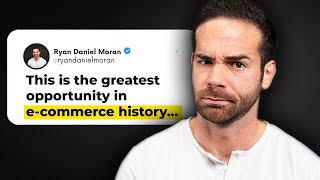
Ryan Daniel Moran (Capitalism.com) discusses the collapse of many Amazon aggregators—highlighting Thrasio's Chapter 11 filing after raising roughly $3.4B and previously being valued as high as $10B—and uses this to argue that buying platform exposure without building a real brand is a flawed thesis. He defines brand as serving a specific customer group, building trust through pre- and post-purchase communication, and creating a moat. Moran advises entrepreneurs to focus on audience-building, customer care, and brand messaging to create defensible businesses; he says this environment creates opportunities for brand-first entrants.
Questions this video answers
Chapter 11 (restructuring).
Approximately $3.4 billion.
Up to $10 billion; earlier hit $1 billion valuation a few years prior.
Chapters
Right now, so few brands have cared that if you care a little bit about your audience, you start to win. So few businesses have tried to do a good job and put their customers first that if you do it even a little, you will still win. So the big news in E Commerce is that Thracio, the biggest aggregator of Amazon based businesses, is filing for bankruptcy. Now they're filing a Chapter 11 bankruptcy, which is restructuring. It means that they go to their lenders and they say, we might go out of business. If you don't work with us, it brings everybody to the table so that you can renegotiate all of that debt. And they announced that that renegotiation has been complete. Now, before we go into what that structure looks like, let's look at how we got here. The Rossio made really big news when they achieved a $1 billion valuation back a few years ago. This company that nobody had heard of was valued at a billion dollars because they were buying up fast growing Amazon businesses. And then all of the banks and all of the private equity firms started throwing money at something that could have that type of evaluation. And you saw Amazon aggregators pop up everywhere. And all of my students got rich cause they sold their companies to these aggregators. But if you were in the space at all, if you, if you were even somewhat exposed to how Amazon worked, every single one of us saw this coming for years. There are exactly 0e commerce operators who are surprised by this news or are surprised that the whole market has gone kerplunk. We've been waiting for this for a couple of years now. But at one time, Thrasio was valued at $10 billion. $10 billion, meaning they were raising capital at that valuation. In fact, they've raised a total of $3.4 billion in both equity and debt, giving them a valuation of $10 billion. Now if you're going to raise $3.4 billion of other people's money, you better have two things in place. Number one, you better buy really good businesses, and number two, you better have really good operators in place to ensure that those businesses are going to grow. Thracio did neither of these. In fact, most of the Amazon aggregators did neither of these. Instead of buying really good brands, what the aggregators were doing was buying up businesses that had the most exposure on a platform, which by the way, is a very good tactic. It's a great tactic to get a lot of exposure on one platform. But that does not mean you have a good business. That's where these aggregators went Wrong. The secret of course is to use the exposure that you get from a platform to build a brand. So what the heck do I mean by brand? Brand does not just mean that you have a collection of products. Brand does not mean you run TV ads. Brand does not mean that you're the number one seller in a category on Amazon. Brand means that you have one target customer that you serve and you have a group of those people that you communicate with and they trust you. That is what brand is. If you're only selling on Amazon or if you're only selling on Walmart, for goodness sake, if you just are taking sales on that platform, you do not necessarily have a brand, you have a sales channel. And this is why there are many people who go out and build Amazon based businesses or start e commerce brands and they don't make it. So they become Amazon sales channel managers at some other company because they're good at managing a sales channel, they're not good at building brand. There are new entrepreneurs or and there are entrepreneurs doing $1 million a month who struggle with this transition. They have a sales channel, they're not sure how to make that mean a brand. The pivot point for both of those groups, whether you are just getting started or you're really experienced in the space, the pivot point is creating a group of people that you care about and that care about you, what you are doing in the world. Peter Drucker said that there's two functions of business. He said the first function of business is getting customers and the second function of business is keeping those customers. Let me ask you a trivia question. If you take a sale on Amazon, which of those two functions of business are you doing? Trick question. It's neither. If you take a sale on Amazon.com, you are not getting a customer. Amazon is getting a customer. In order to build brand, you've got to have the customer choose you, which means that you're doing something to get their awareness and their attention to before they ever hit the Amazon storefront. And most Amazon sellers are just trying to take advantage of Amazon's own internal traffic because it's aplenty. They can rank for keywords and you can get free exposure. And if you have a good conversion rate because of strong reviews, good image copy and you have a good listing, then you'll make sales and you'll often do it profitably. Net gravy train has been so strong for so long that entrepreneurs haven't had to build brand in order to have a million dollar business. They haven't had to build an audience in order to stand out. Except now, if you've been in the game, you realize it's not just something that some dude says on the Internet. It's a necessary part of the business if you're going to build and maintain a valuation on your company. So how do you do that? You communicate to your ideal customer both before and after they purchase. Whether they purchase on Amazon, whether they purchase on Walmart, whether they purchase from your own website. You are building brand before they click to buy and after they click to buy. That means having inserts in packaging. It means having a consistent brand message, means having a presence where your audience hangs out. It means doing the things that build awareness. That's how you build brand. That's how you build a moat. What is a moat? A moat is a defensible position. You do not have a defensible position if Amazon makes a change and you're out of business. You do not have a defensible position if you drop for a keyword ranking and your sales go down 50%. But this is what aggregators like Thracio were banking on. They thought that their moat was reviews. They thought that their moat was organic listings. And they also, and there's an argument to be made here, they also thought they had a moat in terms of integration, meaning the sheer size of their operation could drive down costs and they could streamline the entire process so they would have a strategic advantage. But there's a critical flaw in this thinking. When you are too focused on integration and you're too focused on synergies, that consultant word, you lose the entrepreneurial spirit. And when you've got a 2 million dollar a year business that's spinning out $500,000 in cash, it's not ready for those type of synergies. It needs more entrepreneurial spirit. And when you buy a business and kick out the founder, you lose the entrepreneurial spirit. Most entrepreneurs and a lot of investors undervalue that entrepreneurial creativity at the beginning of the business and they favor operations and systemization. But the purpose of operations and systemization is to protect the entrepreneurial creativity that is driving and fueling the growth in the first place. So this thesis was flawed from the very beginning. And anyone who is in the space could have seen this coming. So what do we learn about this as entrepreneurs? Does this mean that the space is drying up? And is Amazon going to crumble? Is TikTok Shop going to eat up all of the market share? Let's talk about where things are going next. Oh, look at this. A new news report has come across my desk. After the Amazon bankruptcy, there was another big piece of news in the Amazon aggregator space. Two of the largest Amazon aggregators decided to merge. The Razor Group bought out Perch. These were two very big Amazon aggregators, not as big as the Rossio, but one bought the other, and they were both in stressed financial situations. Now, what's interesting about this, if you look up the funding behind a lot of these aggregators that went really big and bought up all of these not very good brands. One of the investors behind Perch, which had all these financial problems was Bernard Arnault, one of the richest men in the world, some would say one of the best brand buyers in the history of the world. Now, how does somebody that smart make such a bad financial play? And it is because when you have a new space and Amazon is still new in the total landscape of brand building and business building, Amazon still very new in the early stages of new platforms. It is all small entrepreneurs who are scraping together whatever they can, coming up with whatever products they can. They're figuring things out. They're building the platform as it goes. And this is where the people who are early and the people who do well, they get the spoils. But the people who bet really big investor dollars in this space were often betting on the platform, not the brand. They were betting on Amazon continuing to go up and up and up, which it does, except for the fact that the brands or the businesses on the platform were not positioned in a strong enough way to be able to shield off all of the competition that is coming into the space. I challenge you to go to any of these three aggregators websites, Perch Razer Thrasio, and find one brand that you and your family recognize their products. They're not brands. They do not have brand messaging. They do not have audiences. They do not have a clear message to one person that they are serving for a very long time. They are easily knocked off. They have lots of reviews, they have good organic rankings, but they don't have brand. And this is why I hammer it home to everyone who reads my book, listens to the podcast, meets me on the street. You have to build a brand. And a brand is not just some crazy frou frou word. It means that you have a small group of people who actually care. And you do not need 100,000 followers or a million person email list to do damage. You need a few hundred people that really care. People are often surprised that I respond to my own emails, that I get from followers. People are even more surprised when sometimes I fire up loom and I record a video going through someone's email, looking up their website and giving them feedback on what they're doing right and wrong. But I am doing that because I'm building a raving fan base of people who consume my content. Brands do that. Products do not. Amazon sellers do not care. Brands at least act like they care. And the way that you start that process is choosing one type of person that you serve, creating messaging for that person, and then actually caring about that person. And the more that you prove that, the more that people voluntarily choose your products over everybody else's. You have high profit margins and you have a moat in the form of a brand. And that is how today you continue to stand out in a noisy marketplace and build a business that you can sell most of. And I mean most of the Amazon aggregators that raised all this money over the last couple of years have either failed or they are failing. There have been several that have gone bankrupt. And I know a lot of people have gotten screwed. They were owed money, they held back equity, and now they're not going to get their big payout. This hurts in the E commerce space. So what does this mean for our community? What does this mean for the e commerce space overall? What it means is that the thesis that I have been preaching to you for the last eight to 10 years is more important than ever right now. So few brands have cared that if you care a little bit about your audience, you start to win. So few businesses have tried to do a good job and put their customers first, that if you do it even a little bit, you will still win. And good news for those of you who are starting out in E commerce, because so many of these aggregators have failed and because there's all this capital that has been pulled out of this space, there's now opportunity to start brands and get a foothold very quickly. Our students@capitalism.com, i don't mean to be a big pitch man here, but our students are getting faster results than I've ever seen, partially because there's no competition anymore. There's no news about how much money there is to be made on Amazon right now, except our students are doing like $50,000 launches over two weeks after never having a physical product before. Why? Because they build audiences, they build brands, and they build a product for a specific group of people and then they launch hard and they're good to their customers. It is not rocket science. It has never Been rocket science. But the capital markets got so frothy that they overlooked the customer. As Internet marketers, it is tempting for us to forget that behind every like, behind every purchase, behind every click, behind every click through rate, there are people. Human beings are the ones that are driving that data. And when we overemphasize the operations and the systemization, we under emphasize the fact that there are people behind all of that data. We are destined to fail because we forget that everything about business is a people business. You are selling to people. Who are you selling to? If you can't answer that question, then you are simply selling on a platform. And the minute that a platform makes a change, you can be put out of business. It happens in every market. It happened with the bloggers who are creating content for the algorithms on Google and and then Google slapped them and they went out of business. It happened on Amazon when you chose your product based on helium 10 data. And then you optimized for what the platform wanted and you cut your prices so that you could get a higher ranking. And then they made a change and you had no people to market to. It happened on Instagram when you were creating content for the algorithm and then they make a change and you had no raving fans and so no one followed you. It happens in every platform. You have a wide open west, period. Bad entrepreneurs come in and they optimize for the platform and they forget that there's people behind every decision. But if you can have the lens of realizing that you are creating content or products or info products or an agency or whatever it is that you sell for a specific group of people rather than the numbers that are giving the indication of what people are doing. And you prioritize the people that are driving the data rather than the platform that has the people.
That'S when they get crushed. So your job as an entrepreneur, whether you're first starting out or whether you already have a million dollar a month business, is to come back to who I serve, how I get their attention, so that I can create value for them, lead with value, so that they will learn to trust my brand. And then if I continue doing my job well, they will come back again and again and they will prioritize me over everyone else. I think this might be the best opportunity for the aggregators that still exist because now you can buy businesses that have moats, valuations are down. You can buy businesses that have really strong foundations and really strong audiences. This might be the best time ever to start an aggregator. So there's still time, you can still build through it. And I still think that E Commerce is about to go through a bull run like we have never seen before. I'm Ryan. Danny Moran with capitalism.com Let me know what you thought of today's video. Did you see this one coming? Could you see the writing on the wall? Did you sell to one of these aggregators and lose your shirt? Let me know in the comments. I still think it is a great time to be in E Commerce and I might be even more bullish than ever. Especially for those of you who are first getting started. All right, thanks for watching. I'll see you on the next episode. Take care.







