
How To Build Long-Term Wealth With Real Estate Investor JP Newman
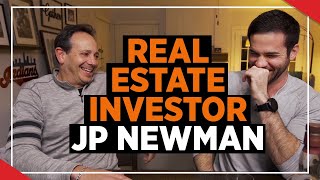
JP Newman started investing in real estate in his mid-30s and built a $35M sports complex called The Crossover. He talks about treating money as neutral energy to fund meaningful projects, and how personal setbacks taught him humility and purpose.
Chapters
Hey, capitalists. This is Ryan Daniel Moran, and you're watching. I've had a little bit of whiskey because JP Newman convinced me to do whiskey with Ryan instead of wine with lion, and things got a little bit out of hand. But in this episode, we're talking about building wealth. We're talking about finding your why and your purpose in life. And we talk about what it looks like to be dialed into your purpose and your mission and your why and how money shows up to fund the things that are most important to you. If you're an Internet entrepreneur who. Who's following people like me who talk about building businesses and making money, and you secretly know that all of these people don't have long term wealth or pursuing short term profits that have long term wealth. This is going to demystify what it looks like to have a life of purpose, a life of meaning, and a life of long term wealth, which is what you really want. At the end of the day, you're going to love this because I did some of that was the whiskey. But we had a ton of fun on this episode. Please enjoy.
All right, well, we're breaking rules tonight.
We are.
This is not wine with wine.
This is not wine with wine.
What? What are we drinking? You coaxed me. You got me all liquored up, and then you coaxed me to do silly things.
Gotta do it. Let's. Let's see what happens when we do whiskey with wine if it changes the conversation.
We're doing whiskey with wine tonight, ladies and gentlemen.
So sophisticated.
Wine is 2019.
It's so 2019.
It's whiskey, whiskey. It's a year of whiskey, whiskey. Everybody's got to drink whiskey this year. When you see what's going on in the world.
Double shots.
Hey. We are live with JP Newman. I call him one of my mentors. He calls me friend. And he is just one of the rare capitalists in the world who is incredibly successful, incredibly giving, incredibly present, incredibly happy. He is in the 1% that we all want to be, which is healthy, wealthy, and wise, all of those things. So thank you for hanging out with us.
Yeah, this is great. Thank you. I'm honored for that, too. And I have a compliment.
I have a gift for you, jv.
What is it?
It's a limited edition.
What?
Preview copy of 12 months to 1 million.
Wow.
You can't buy this right now, AP. You cannot buy this. No, you can't buy this. You cannot buy a preview copy. There's only 35 ever printed. 35 preview copies ever printed.
Now Can I read it and sell it on ebay for a couple thousand dollars? Or would that be rude?
Look, if you find that to be a good roi, if you find that to be a good use of your time and dollars, I say go for it. Yes. So, jb, I want to ask you about wealth.
Yes.
In this crazy Internet entrepreneurship world, those of us who have Internet businesses so easily fall into the.
Fast riches, fast results.
Scaling really quickly. We fall into this, and I don't think it's inherently wrong or bad. I want fast results, I want lots of profits, I want to move quickly. But it's very rare that those of us who are Internet entrepreneurs pause and think about long term wealth. Because so much of our focus goes into the 12 hours a day of go, go, go, go, go. Make new stuff, get new stuff, create new stuff. Right. And I wanted to just get your opinion on. You're kind of on the other side of you focus on creating wealth and income. And from my watching you over the last four years that we've known each other, I don't see you hustling. And I don't mean not working hard. I mean, I've never seen you not have time for me. You've never not had time for your wife, you've never not had time for the things that matter to you. And so I was just hoping you could speak to how you think about wealth. And I don't think you even started until you were almost 40, right?
Well, I started about 35. I started really getting traction around 40. Okay. Yeah.
Would you tell me about this a little bit about those five years?
Yeah. Well, you know, if you remember, the one time we got together a couple of years ago, we spoke about it, it was the most humility, my early 30s, where I had to switch careers from being a corporate guy at Sony to switching over to being a real estate entrepreneur. And it wasn't, you know, it was pretty gritty. Moved to Austin, new identities.
I know you came, you came from la, right?
Came from Los Angeles.
You created a few films in la.
Did.
And you were somewhat successful, but not financially free at that point.
Correct.
And you moved to Austin and started all over.
Well, I had a little bit. I was already at that time, I was kind of like, if you remember the story a bit. So when I left Sony, I produced my own film, phenomenal film. Disney released it, but my backer basically backed me, but not in a good way. He backed me in a corner.
By backer, do you mean investor?
My investor basically violated our contract. And I Had to get a lawyer and I did win. But by the time you pay the lawyer's win, he was kind of losing.
Yeah, it kind of took your well dry.
Essentially. It took my well dry. I put two years into getting this film made. Phenomenal film, by the way. Where the Red Fern Grows. You can still see it, but it's a great friend.
I forgot you made where the Redfern Grows.
I forgot Zay Matthews, Allison Krause.
I have the coolest. I have the coolest friends.
Yeah, yeah, yeah, yeah.
J.P. knew this guy made where the Redford Go.
I know, it's a great film. It's pretty amazing.
Okay, I'll be over here.
100 of the most important books of all time, according to American literature. But anyways, so that was very humbling because I was owed a large. A good mid six figure amount was owed to me in production fees and back end. And by the time I paid, my lawyer sued the guy who's a wealthy Texan, by the way. Wealthy Texan in real estate. Now how ironic is that?
I had never been to Texas. I'm like, who's this wealthy Texan? So he was the guy who, after the legal fees, I got paid about that much of what I was owed. But that was it. That was kind of my transformation into I'm gonna have more control of my destiny than what the movie studios say and who's smiling at me and all that stuff. Which is why I went from intellectual property to real property. Cause really there's a lot in common, especially when you get really fun and juicy and creative making a film. And like right now I'm making a sports complex, right? I'm making. You've been here. I'm at my sports complex that opens in five months. There's so many similar ingredients of making a film into making this sports complex right now. And that's why I keep talking your ear off about it, because it's really fun, it's incredibly creative. It's a business. It's just like you starting a business.
Would you tell the capitalism.com community a little bit about the sports complex?
Yeah, so I, you know, just like a film. I got a pitch from a local developer here in Austin named Eric Perardi. And it's really a story, a lot of great stories. Tell you a story about his childhood. He was the underdog, he was small, he was picked on, and no one thought he'd ever really become an athlete. And his dad bought him a used pair of skates. And from those used pair of Skates. He became a semi pro hockey player. And his whole passion, which is our project's called the crossover, is crossing over to your highest and best self through sports. So there's like a spiritual and also a crossover is a really awesome hockey move that usually it's like a power move and hockey, lacrosse, football and soccer. So we're building the crossover and it really is A. It's 240,000 square feet. It's a pretty big complex anchored by Chaparral ice, which is ice rinks. It's the local like 25 year trusted brand here in Austin. And really we're curating kind of the best of classic for families. And you know, as a father, you'll know soon you're running all around town. Ice skating's here and this is here. And the work, you gotta go work out, you gotta go to your gym.
And the whole process sounds like someone who has boys.
Yes.
So I'm thinking like dance classes over here and zoom classes over there.
So we are bringing it all under one roof. We are curating a communal experience. It's never been like this before. By taking the best brands, the trusted brands of Austin, Texas and curating one experience so that you as a father, you can relax and have a drink, you can do your wireless, you can work out while your kids playing hockey, bowling, arcade, all these really, really cool things.
And your role, your role in all of this has been what?
Well, it's interesting. Usually my company thrive as a private equity firm. So usually I'm quote unquote, the money.
I'm the money. But in this one, because it was so personal, it kind of borrowing from my Hollywood days, I am definitely a co creator in this thing. So more than just the money, yes, we did provide the majority of the money. But I am a co creator in this because.
Would it be fair to call you the producer?
I'm the producer.
So in that you've kind of, you've brought the money to the table, which is some of your own money, but it's, it's other people have entrusted their money to you to be invested well.
Correct.
And you're also bringing in your relationships and your clout in the city to be able to build this. You're really incubating a business. Essentially, you're producing this.
We are.
And that's why you say it's similar to what you did in film.
Right.
Someone had to go raise the money for the film. They had a backer. Somebody had to go get the director. Somebody had to go get the Actors. And so you are bringing all of those pieces together.
Yes, now. And by the way, this project is, here's what's reported at over 35 million. So it's a sizable business that we're launching. It's not like a little thing. Yeah, it's big. And you gotta hit in June. It opens in June no matter what. So like just like a Christmas special, they don't sell well during Easter time. I produce five Christmas specials, some for CBS when they're late. You really can't be late.
That's true.
Just like we can't be late. We've got kids running with hockey leagues and skates that are gonna be there on June 5th. We gotta open. You gotta open.
So in the entrepreneurial world, it's been my observation that a lot of us don't take the producer role, or what I would call the owner role, where you own the business and are bringing the pieces together and instead we play all these different roles. And that's why I think entrepreneurs are. They settle for less than they could create because they're operating, they're flying solo and they're trying to do everything themselves. So.
You got into this game that you left la, you started investing in real estate. Starting all over at 35. And there was about five years of grind. You started. Really?
And humiliation.
Tell me about humiliation.
Well, going from being a successful because, you know, even, you know, I was on a corporate salary, but it was still a reasonable six digit corporate salary. So going from that in a vice president, a movie studio to starting a business where you're starting at zero. And my dad at that point was mentoring me, but he was at the end of his career. So guess where my first office was? My childhood bedroom. So going back at 35 to your childhood bedroom, there was a, there used to be a, there was a great TV series. It was called Get a Life Old.
Old.
If you guys ever want to go back to a class and get a life of. So it's. Who's the guy from Chris, what's his name? The blonde hair guy. I'll have to think of the comedian. But it's about a guy who's 35 and lives with his parents. Okay. And that's exactly how I felt. I'm like, what happened to me? I was a vice president, a movie studio. I am back in my childhood bedroom making calls to raise money on small apartment deals.
Wow.
Just to give you a little.
What's a small apartment deal at that time? Yeah.
Eight, six million, five million.
Like how many units is that 60?
Okay. Maybe 100.
Okay. So that's not insignificant. You're not doing duplexes and fourplexes.
I was doing those two. I needed to make money. I was doing anything that paid the bills.
All right, so I was on the hustle ride. But you're doing this from the bedroom where you grew up.
Yes.
As a 37, 38 year old man.
Yeah. With.
I mean, are you living at home at this point?
No, I'm living in a very modest rent control apartment in Santa Monica. I bought a used car that I could afford, which was crazy because I was used to having really nice cars in the movie studio.
What was the car?
I'm embarrassed to tell you.
I'm kidding.
After having many nice cars, I was so tight on money, I bought an Infiniti J30. It is the most mediocre car, but it's all I could afford is.
I don't know this car.
Oh, it's such an awkward car.
You know cars more than me, Seymour. Is there a J30 awkward crossover? Oh, no. I just googled this.
This is. It is a funny looking car.
This is one of the worst incentives, this one.
No, absolutely the worst.
So, J.P. newman, you moved from LA at 35 to Austin, Texas.
Yes.
A couple years later, you are using your childhood bedroom.
Yes.
As your office.
Yes.
Trying to raise. Raise money to raise dollars.
Small dollar amounts these days compared to today. Small dollar amount.
But you're starting out trying to acquire things. Small to medium sized apartment complexes as well as duplexes and four plexes because you needed to make money flipping the houses.
Whatever I needed to do.
Whatever you needed to do. So I wanted to highlight this for those of you who feel like you're behind, who feel like you have been putting in the time, who've been waiting for your time. You're still in the grind. J.P. newman, at 37, 38, was making is pitching people from the bedroom. He grew up in, in his late 30s. He is now one of the people I most admire in my life and in this city. So keep making the calls.
And by the way, keep showing up. It's even harder when you've had some level of success. I was actually talking to a. I.
Didn'T think about that.
It's not like. It wasn't like I had nothing to do. I mean, I already had been a vice president at a movie studio, which is a very prestigious thing in la. So it's almost like you fall. I was talking to a guy today. He's had three businesses so Far, he's more your age than mine, and unfortunately, he's had some.
I think of you as my age, but go on.
So nice. He's had some roadblocks where his business is evaporating. Right. All the cash from his business just stopped. It was a big check, and it just stopped because of some unexpected things. And he went from, like, a big number to zero. And his life was built on that number. And it's really painful to see. But my point is, I think it's hard if you've never had it. Maybe you're used to eating top ramen, but if you've achieved a certain level of success, whether it's in title, social status, or the way you're perceived, and then it's taken away from, you have to reinvent yourself. And that's what he said to me this morning. He said, JP, I know I'm 35, but I'm ready to reinvent myself. But he had the confidence. But that's a big statement because he had the wisdom, the confidence, and the experience and the skills to reinvent himself. But I know what that's like. So it's one thing to never have made it, but it's another thing to kind of fall from your first plateau.
To eat that, reinvent yourself, and come back to eat that humble pie and then start climbing again. Now, just for the. I mean, those of you who are listening and watching have at least consumed this part of my content.
And you should know, like, I've gone through that cycle. I'm in my third or fourth cycle at this point. I'm 32. I've been an entrepreneur since I was 18, but I'm probably in my third cycle where I lost some things, took some swings and misses, now found my center again, and I just feel like I'm beginning to grow.
Yeah, that's exactly it. And I. That's exactly what you're describing. That's. It's. It's like that. Yeah.
And. And. And I can tell you the. The pullback, if you will, sucks. Sucks, because it's humbling. But it also sheds you of all the things that you don't want to bring forward.
Totally.
But you have to. You eat some humble pie in that time. And it's only now, after, like, probably two years of being here, that I feel like I'm growing again, that I'm pursuing opportunity, that I'm excited, excited again. And, man, things just get really fun when you start to go on that upward trend again. So.
Especially with the humility and the Wisdom because it's more fun because you've earned it. Like, you know what it's, you know when you've had a couple batterings to your head with two by fours in business, you actually appreciate the victories. I think they're sweeter.
Yeah.
Beautiful. Yeah.
So in, I know what year is this that we're talking about that you moved to Austin or.
I moved to Austin 14 years. So let's do the maths of 2006.
Okay. So wow. Gosh. I remember 2006. It feels like yesterday.
But actually I graduated high school in 2006.
I know.
So man. Okay. Time flies. So 2000. It's funny, I think of were the Indians good in that era And I can think back to the Indians were good that year. So in 2006 you are swinging and missing and you're taking your lickings and finding yourself again. It took about four or five years for you to really start to see some success. And then over the last five years it's been extraordinary. You own half of Texas at this point.
The last five years have been hyper accelerating, but really 10, it's been a good 10 years.
So how many politicians do you own at this point?
I actually got a call today from a U.S. senator. A candidate ran for U.S. senate today. He left a voicemail. I'm thinking he was a former congressman. I'm thinking, shit, you just left me a voicemail. Why would you call my secretary like you're a Congressman writing for U.S. senate? I take the call. I know it's for money, but I'll take the call. But I get those. They leave voicemails for me on my office voicemail. That's how old they are. Nobody leaves me office voicemails except people running for Senate and Congress.
So I'm tell you a quick story and this story is going to get me in trouble.
And there's also Greg Reed told me once, he's like, the people who make the most money are easy to get ahold of because they have a shockingly amount of. They have a shocking amount of free time.
It's true.
And I was like, that seems weird.
It's totally true.
But you just said it's true. Totally true. So I would like for you to comment on this because I perceive this about you.
Yeah.
I perceive that like that you don't stress nearly as much as me. So please comment on.
Well, I think that.
I think part of the definition of wealth, I think wealth means. Can mean a lot of things to a lot of people. But I think that you know, part of long term wealth, which is your topic tonight, right. Is going back to your mission and your why. Because wealth, what is wealth is. We know it's just energy. Money is currency, it's a current and the current is a material current that can do material things. That's what currency is.
Oh, we're going deep real quick. Hold on.
So let's say you amass a bunch of this energy called currency. Right. So what does it mean? Well, it really means nothing. It means whatever meaning you want to put to that.
God, that's so true.
I mean it means nothing. It's totally neutral, just like any other energy. It's fun to have that energy. The question is, what are you going to do with it? So my first thing on long term wealth is you got to know what you want to do. If you, once you amass this currency of this energy, what do you want with the energy and why is it even interesting? I think for a lot of people, once they hit X, whatever their X is, 100,000, a million, whatever they hit, it's almost like they get depressed because as if they were going to be happy or as if it actually, yes, I've experienced this and it means nothing. It's totally neutral. But what it does mean, if you know your deepest mission, your deepest why, then currency, or that energy of currency can help supply part of that energy, including your health. As an energy, all your energies together help you kind of move your mission forward. And that's the real fun part. Like the sports complex is a combination. I have to be healthy. Takes money to make a sports complex. Yeah, it takes mental health, it takes, it takes all these different energies together. Takes gasoline, tractors, contractors, steel. There's all these kind of forms of energy that all kind of come together. But the deepest thing is Eric, that my partner, his skating story is the why. And I resonate with his mission and I resonate with the project, which is why it's like bringing all that together. So long term wealth, to get back to the point, I think starts with knowing your, your why and why that why you want to amass currency and the material currency. What is it about material currency that's inherently interesting? I say nothing's inherently interesting about it. Time magazine, we all know like over 60 or $75,000. And once your hierarchy of basic needs are met, it's really pretty neutral from that point forward. The rest of it is the narrative in your head.
Yeah.
Of what it means. So if you don't tie it to something that you're really excited or passionate about. It's kind of random. And that's why I think a lot of people get into divorces or affairs or cars or boats or they get uber wine collections. It's like. It's because they don't have. Really.
Why would you want an uber wine collection when you can just. Glenn drone.
This is a five sip buzzer.
Why do I say I'm actually like hammered?
Yeah, this kid. This is. You gotta. The whiskey with wine.
I've had like seven sips now.
You gotta. You gotta pace yourself.
I'm a little bit like, we all here currency.
No. All right, so. All right, so you're. Let me throw in one more thing if I can.
I'm drinking from a fire hose.
Go ahead. I'm sorry, I'll slow down.
So before you add that, what I'm basically hearing you say is that money is your relationship with money. That money is neutral.
Neutral.
You don't have like a. You don't have like a feeling about money. What you have is a feeling about what you want to do and where you want to go.
And the byproducts of money, which is time. So the reason why I enjoy money is not because currency is just paper and coins and they're dirty coins with lots of germs on them. Maybe coronavirus coming from China, but. So there's nothing inherently interesting about that. But one of the byproducts is you can parlay a lot of what your daily life is with that. With that currency and do what you really like to do. So you get to recapture your time and be more present to the things you want to be. Like I'm. And you get to do choice. Like I choose to be here with you right now. Yeah, I can choose to be with my kids. You get a lot more choice, a lot less have to. So that's one of my.
Choose to do the crossover project.
You like, you conscious choice.
You don't have to do the. And forgive me, would it be fair to say that that's financially a little bit of a higher risk play than buying another apartment building?
It is. Right. So.
But you choose to do it because you want to do it right. And so you recognize that money is just simply stored energy. And you're. What you're saying is a foundation of wealth for you is to identify what you. Where you want to guide the energy where you want it to flow.
That to me is the most. The best part about it for me is that freedom is the number one thing and not worrying about your Month to month bills, which is survival.
And okay, that, that makes total sense. What do you consider freedom?
Freedom is.
Doing things with conscious choice. Knowing what actually like what lifts you. What's more towards your mission. Once you know your why, you try to pick things that bring your energy up and avoid things that take your energy down. Whether it's people, activities, have to's relationships. Today was a difficult day for me. There's someone who I really like, I've known for a long time, but I just checked in, this person's been pinging me left and right and my energy is not right now to respond to that. And I can go on a long story of why it doesn't really matter. But I think that for me, as I've gotten older, as a practice, I check in more and more to see is this something I really want to be doing.
So JP just said the first secret to wealth is to know the purpose behind it, which no one wants to hear.
And it takes work to find it.
Like they want to hear that. Well, here's how I get wealth.
Right.
JP is saying the first thing.
Why you got to know the why, not just the how.
Right. So that's, that's what you're saying is the first step. There's no, no where the energy is going to get. Like where what are we doing all this for?
So.
When you go to the gym, why are you going to the gym and working out? Because you want more energy, you want health, so you work out for health. What is the definition of health? Health generally, if you're healthy, you have lots of energy. When you're unhealthy or in disease, your energy is way down. So you're going to work out, you're trying to enter. You're using energy with a purpose for health so you can create more energy. That's just one example. In the physical world of energy, while we're talking about is a different kind of energy called currency, which is material energy. It's the same thing.
You're rocking my world right now.
It's the same thing.
Or maybe the Glendronic is rocking my world. I'm not sure in this state. This makes a ton of sense to me. All right, let's talk about money.
Let's talk about money.
So how do you make money?
I'm going to take over this show. Brian is temporarily out of service and we'll be back in about 20 minutes. Let's get that little needle. She's so smart. KG Here goes. No, I think, I think the other I Think the other thing to long term wealth. Besides knowing your mission and your why, I think a lot of people don't assess. You are hysterical tonight.
I've lost it.
I'm out.
No, it's good. I'm out.
No more.
It was your idea to do whiskey with wine.
I'm not, it's not going to be whiskey.
So I serious, let's talk about money.
So I think, I think beyond mission, I think a lot of people also once you've made money, there's a sense of overconfidence. Oh, I know how to make money. I've made x millions. That's true. X hundred thousand. And that I see people who gain it and lose it are over confident, over cocky because I do think that as good as we all are with our talents, our skills, our work, timing is everything I've had. I am very good at what I do. And I happen to live in Austin, Texas that now ranked number five in the world as the most vibrant city in the world. Not in America now, in the world. So it just so happens that I was in the right place at the right time with the right skill set, with the right intention. But I could have the right skill set and the right intention. But if it's not the right market, it may not matter. If everything was going down and the US was in the worst depression and we were in a 10 year depression then it wouldn't matter. So the point is I think that sometimes people are overconfident with their success and then they start to do things that are the risk reward. Once they've got money, they don't realize the risk they're taking so they're not thinking about the long term. You know, you want to build an. You basically want to build something that's built to last. Once you've worked your butt off and you've networked and you've done all these things, I'm telling you, you want your time. Not everyone wants their time. I want my time. I know that I want my time to do things I want to be doing and that's not necessarily vacationing, that's fine. But this is what I want to be doing. But I think a lot of people lose it. They make it and they can't hold on to it because they've over assessed their ability. They've confused that it was tenacity and some luck. There's just luck because you got the best product and it isn't always going to make it. If the market's not right, if your competitor Beats you. There's a cadence to it. And I think having that humility that you talked about before, walking with some humility so that once you keep money and you understand what it's for, I think you make better decisions and you build an engine to last as opposed to just like whoop, whoop. Yeah, yeah. That kind of thing.
Yeah. So I mean, and there are, especially in this Internet world, the Internet entrepreneurial world, there are so many. Woo.
I've seen a lot of people do.
The episode bitcoin, Tesla, Facebook ad selling on Amazon.
There's so much of this pursuit of whatever is hot and then the fizzle out that comes after.
Right.
And what would you say to the person who is in that position of pursuing the short term wins and has never done what you did, which was just willing to eat dirt for a long time, what would you say to somebody like that?
It all depends where they're coming from. You know, if you don't know your why, you're wasting your time, in my opinion. Because I think you can buy all kinds of shit, there's all kinds of cool shit to buy, but it's not, it's. It won't get you there. I think that, I think once you know your mission, you're unstoppable. It doesn't matter what amount is. And without it, it's almost a waste of time.
You have.
Does that make sense?
Well, yes, but it's surprising to me that you've brought it up three times.
Now because I hear so many people who I mentor or people I talk to, I'm amazed how they're not clear. Very few people are truly clear about what they're doing, why they're doing it and what.
Instead they're pursuing the how.
All the how. I hear how the how. Every day people come to my office, I'm like, shh, shh, stop talking. I heard, I know what you're doing. Dah, dah, dah. It's the greatest. Why are you doing this? Give me the story. Like, how'd you get here? I bet on that guy, my partner in the sports complex, because it was his story. His mission started when he was 8 years old. Through this whole project, the crossover is him at 8 years old. His dream of empowering other people, that they can be somebody because he was a nobody. This project's there, the crossing over to be somebody in your own confidence, crossing over to your own self esteem. It was that little boy's mission. That's his story. That's not even my story. That's his story, but it's a story that I want to bet on.
And how do you.
Which mixes Hollywood and real estate, by the way. And it really mixes with any business.
Okay, so do you know it when you have a feeling?
I do.
All right, so it's a feeling thing to you?
It's a feeling thing. And remember also I took a lot of pictures in five and a half years at Sony. So I've been pitched thousands of ideas.
And okay, so you've seen thousands of pitches. When you are analyzing a pitch, you know when it's right, when you can.
Feel it and you gotta be able to feel it. But there's a lot of people who can emote the emotion, the feeling, but that's. Then you need the how. You need both. You know, it's not the why. It's not the why or the how. It's both in the right. In the right kind of why first balanced. Yeah. Without the why. It's not even interesting. Really.
It's so interesting to me because I think it's really easy to.
Just obsess over the how. How to make money, how to build wealth, how to like tell me what to do.
Right.
And what you are saying is none. That's a non starter if you don't have a reason for it. All right, so what happens if somebody knows the how and does all these things but doesn't have something that's driving them? I mean and I know plenty of people who are like, just tell me how to build long term wealth. Like I. Because I just want long term because I want to own my own future. Right.
There was a study of UCLA incoming freshmen this year and in 1972, 20% of UCLA incoming freshmen said that wealth was even in their top five of important life values.
What percent?
28%. 72. Last year it was reversed and so 27, it was 72%. So you have incoming freshmen who are already drilled in saying that money making money is my number one priority. It's rolled into our society. That's part of your value, who you are. But even it's interesting that in 25 years it went from 27 to 72. Before in 72, the number one value was finding meaning in life. And that's like barely a top five right now.
JP at what point in your life or your career did you feel like you.
Discovered or had a knowing of who you are and why you're here?
No, I think, I don't think there's any easy answer. I think as you start at 16 or 17 on my fraternity roof, I learned to meditate. I was reading a meditation book while I was living in a fraternity house. And that was always kind of interesting, like, lots of drugs going on downstairs. And I'm trying.
And you're meditating.
I'm trying to find white light and reading about white light as everyone's snorting all kinds of things downstairs.
I'm guessing you came out ahead on.
That one, so, you know, I don't think there is. I mean, maybe for some people, there's an aha moment. I think that it is a. I think it's a journey.
Well, I don't mean like an aha moment. I mean, I think when you're 38 and you're making cold calls or investor calls from the bedroom where you grew up, it. It's easy to be lost in, like, the. The thick of the grind. And at some point, you kind of get an understanding of what drives you, and you start to get closer and closer to what drives you, and it becomes like this vortex that brings everything to it.
Yeah.
At what point did you start to see who you were so that you could dial in closer and closer to that?
It's a long story, but to answer your question, it took a very dark period to get to the light period.
And was that. Was that post 40, like, after you.
Were seeing some success right around that time, Right when you saw success was happening? Ironically, I went to a crazy dark period for a while, and it was in that dark period. It's when you grow the most. It sucks, but sometimes it's those dark periods.
You really, really. I can attest to that.
It doesn't feel fun, but that's. That's really when you kind of. And it was kind of funny because I was already starting to hit some pretty good strides, but I had more growing to do to kind of catch up. So it was definitely during that time. And then I think that when that period was over, which you could call grace or whatever you want to call it, but I call it work. I remember, and actually it's right. I remember reading Peter Diamantis book When Bold came out. Yeah, that was a big piece for me because it gave me an idea. Peter Diamantis, Optimism for the future is the spark that I needed to say. I want to hang around entrepreneurs and people who want to make the future better, who are here to repair the world. And that was my first aha. Because I was reading Bold and I wasn't in the greatest state. But by the time I read that book. And the book was over. I think the why started leaking out, which was, I want to be on that team. I want to be on the team. That's not identifying the problem. I want to be on the team that's talking about, we're going to boldly change the future of humanity. I don't want to hear how we're going to destroy ourselves 19 times. I want to be on the rebel Jedi force. That's the force for good. That's just going to change the entire paradigm. I want to basically be one of Peter's stories. And then a lot of times, that little spark has led me to create a nonprofit to name my company Thrive fp, the Conscious Capitalism. A lot of that journey started in some darkness reading Mold. So thank you, Peter.
So I have got to ask this sounds to me like once you realize that you wanted to be on the side that creates change, you wanted to back the person who is moving forward. You wanted to bring your energy and match it to their energy.
Yes.
You wanted to fuel the energy that you found.
You know you're defining my sports complex, Right. Do you really? Do you see, like, how that book and the sports complex, you're defining that person with a mission, doing something for good. We're creating a community for families. That's never been done. No one's ever done this in America. It's the first one. It's the same story, just keeps going on and on and on. And you get to keep recreating the clay, and you get to keep recreating it in different ways, but it has an underlying thematic tone that you get to build on. And then as you manifest it, then if you manifest it well with the right intention, then the universe seems to let you manifest bigger and bigger things.
Okay, so, all right.
Was that too much?
No, it was great. But I want to ask about before that transformation, because basically what I heard you say is that when you really decided to bring your energy to match other people's energy that you believed in, that's when your life and your career really started to take off. It did. Before that. Were you doing it for the money?
Yes.
You were?
Yes. I needed an apartment to live in. I needed a car, even if it was an Infiniti J30.
Slow to put gas in it. Yeah. I was in total survival mode.
And you started to get some success, and you went to a dark place.
Yeah, but. But it wasn't the success that brought me to the dark place. It actually was a whole other thing.
I'm guessing was there A lack of meaning in that period?
No, it was actually a death. There was someone dying that just was very heavy.
Okay, well then that just ruins my point. Jp. I'm sorry, I got nothing else to say.
We didn't go back. Yes, it was.
Oh, it was.
No, but, but there actually. But just to validate part of it as success was starting to happen before my why really became clear and clear. And I had an amazing coach here in town that, you know, who helped me over years, really, I worked hard to get to that, to really take that book, that inspiration and carve it into a more beautifully clear thing. There was definitely times where I was starting to make money. I didn't really. And it wasn't depressing, it just was kind of anti climatic, I think is the best way to say it.
That's a good word for it.
It's anticlimactic. You're like, oh, you realize it's neutral. I just made more money than I've ever made in my life. Okay, should I be happier? There's digits in my bank account. Isn't that cool?
And you feel like very neutral about.
It, a little depressed because it's not what you expected it to be.
You expected it to not be neutral. You expected it to be like to fuel you forward. But what you've said over and over again is that you're the fuel forward and money will match the vision that you have in bringing whatever change or vision that you want to bring about.
Right. And by the way, can I just say one more thing on that? I suppose may not be in this capitalism tribe, but I want you guys to think about something deep too. We always assume that more money is better. And I say the answer is maybe not necessarily. There's a great saying that actually comes from the Talmud and it says the way the Talmud, the Old Testament defines wealth is wealth is knowing and accepting and loving your lot in life. Whatever it is.
That's the definition of wealth.
That's the definition of wealth. Knowing and accepting your lot in life, no matter how big or small. So if the postman's mission is to deliver the mail with a smile and he's doing that, who says that's any less valuable than the person generating a nine figure income? As long as the postman is found that you know, or the person who's bagging your groceries has found the joy in that service. So I think the point is, you know, I think for all of us, type A's or what I know your members are type A's. We're all type A's. We're alpha dogs and female dogs and male dogs, and we all want to accomplish. And I love manifesting big things. I mean, I do. I'm a creator. And it gets more fun. I mean, certainly I love adding things to it, but that's my journey. It's not a better journey. It's just a journey.
Yeah.
And I think it's important because I think sometimes, again, we can get caught up that more is better. I think more could be worse if you're not built for that.
Yeah, I totally get that. Right. See money. When we were in Ukraine together, I remember we were staying at that resort in Ukraine and feeling so just, like, dialed into who I was, having a great time and having this realization that if I could feel that way all the time, I could be working at Juice Land, which is a smoothie shop here in Austin.
Yeah.
I could be working at juice land, making 12 bucks an hour and be just as happy. It was the first time I realized that no matter what the external results were, if I was enjoying life as much as I was enjoying it in that moment, that was wealth.
Right. And if providing people health through fresh juice makes is part of your mission, then you're right on mission.
That's why you say that. No matter. Like, the first point is knowing why you're doing it. Tai Lopez likes to tell a story about his mentor, Joel Salatin. Who do you know Joel?
I don't.
Joel was. Is, like, the most famous farmer in America. He was in Food Inc. And he's been in a bunch of documents, documentaries about organic food. But Ty likes to say that when he was an apprentice to Joel, Joel would pray every night at dinner and open the prayer with God. Thank you for the opportunity to bring people healthy food. That was his mission. He woke up every day excited to bring people healthy food, and he's been immensely successful. But it's a byproduct of him focusing on the why he's doing it.
Got it, Ryan. I feel like I'm starting again. I'm ready to take my phone and just drop it and say, done.
What is the most valuable advice that both of you have ever received? So I'll start. I'll say, the best advice I ever received was given to me by the grandfather of a girl I dated in college and just after college. So we called him Pop. And I remember I was on the beach in Florida visiting them. They went down there every summer, every winter. And I said, I was sitting on the beach and I said, pop, what's the secret to life? And he said without batting an eye. It was like he had been waiting for me to ask. He said, work hard. Work and don't worry about the other guy.
I love that.
And they comment. He was like, let them do their own thing. You focus on your thing. Just work hard and don't worry about anybody else's shit. That's how I would summarize Pop's advice.
That's really good. Yeah, it's good. Mine is more recent. You know, sometimes I had a. I've had a couple of challenges, you know, And I always say your relationships, like whether it's your business partner or your. Your spouse, can be some of your biggest challenges and your biggest growth opportunities that you can have. And sometimes when you're at the absolute, like, most frenzied, like, ah, I can't do this.
Those can either become a nightmare or your aha moments. And I think that I was knee deep in trying to work out something with a business partner that I just felt. We just work completely at 180. Like, we just, we weren't even close. Like sometimes you pretend like you're close. Yeah. And we weren't even like, close.
Yeah. Yeah.
And I felt really strongly about something that he felt very strongly about it from his point of view. And a good friend of mine said, jp, you're ultimately have to make a decision, do you want to be right or do you want to be happy? And then immediately, like, immediately took me a while. And it makes me think really quickly, a, is this a person back to time you want in your life? And if so, drop your shit. And that doesn't mean surrender to what's important to you. It just means, like a lot of times I think we, we take positions for the sake of taking positions. And I think as you get older to those positions to your point, what was the quote from?
You work hard and don't worry about the other guy.
Don't worry about the other guy. Let go. Sometimes don't worry about your guy, your inner guy, or your inner woman. Sometimes it's okay to let your narrative go because there's a lot more flow and joy in letting go that story that may not even serve you anyway. Maybe an old story that you've held onto. So I'd say question if it's worth. If the relationship is worth it at the end of the day, then you get to question your own value and find your spot. But I'll give you an example from today. So today I had a three hour Meeting. It was supposedly an important meeting I needed to be at. Right. But my energy was not to be at that meeting today. My energy was one of my team members just needed me. I just knew emotionally, energetically they were down. I can feel it on the work is, it's not there. So I also knew that my partner could handle the task. Even it was an important task. I knew my partner was competent enough to handle that task and that I could pivot. So literally with 20 minutes to go, I made a pivot. I just texted my partner, I'm not showing up. And I took him out for a two hour lunch. We had the best sushi in town. And he cried. He just cried and just let out what he needed to let out so that we could get back to doing what we needed to get doing. And that is to work and to not work at the same time. Yeah, that's because it's energy.
That's beautiful.
It's what you're saying. It's just kind of how it plays out on a daily basis.
Jp, I can't cheers you with an empty glass.
No. Here. Ready? Cheers.
This is awesome.
It's fun. Thank you.
You are.
I think.
Listen, I think part of where I am in my career is I've recognized the fact that I'm an Internet entrepreneur who is helping a lot of Internet entrepreneurs become real business owners. Because this Internet entrepreneurial world is so.
It'S so intense and distracting. And I play this unique role of being able to bridge the Internet entrepreneurial world and what I would call the real business world. And by bringing some of the lessons that art that you've already forgotten, bringing that into these crazy entrepreneurs will just radically change people's lives.
It's great.
So thank you for being with us.
You're welcome. Thank you all for listening in. This was great, Ryan. It's a lot of fun.
This was fun. Hey, thanks for those of you. Let me try again. Thanks for those of you who are participating. I can't even say it. I love all of you who are watching live. Thank you for hanging out with us live. If you want watched on the recording, please join us on the next live. You can join us over@capitalism.com 1. This is where we help entrepreneurs build real wealth and create real passive income and actually create more purpose and meaning behind their work. So please join us inside the 1%. We'd love to see you on the next live. Join us@capitalism.com 1. And we're out. Good night everybody.







