
How To Build MORE Than An Amazon Business
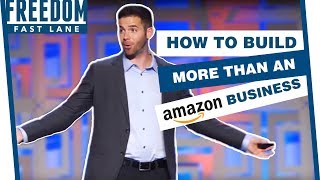
Ryan Daniel Moran (founder of Capitalism.com) presents a recorded conference talk (Freedom Fast Lane community) about building a sustainable business that is more than "an Amazon business." He recounts his 2013 restart, first Amazon sale (June 5, 2013), and a personal turning point (birth/October 3, 2014) that motivated building a durable, mission-driven company. Moran outlines a 3-stage starter model (Grind → Growth → Gold) for Amazon sellers, critiques commoditized, review/keyword-driven selling, and argues sellers should instead define who they serve, identify customers' pain points (most buyers act to avoid pain), and build an audience off-Amazon via content or paid placements. He uses data (Amazon 2015 sales $113B; total e‑commerce 2015 $1.67T; Amazon ≈6.7% of e‑commerce) and examples (Quest, Julian Bakery, Onnit, Luxy Hair) to show how audience-first marketing raises margins, reduces price sensitivity, and increases company valuation.
Questions this video answers
June 5, 2013.
October 3, 2014.
$113 billion (2015).
$1.67 trillion (2015).
About 6.7%.
Chapters
All right, so our next speaker is the founder of capitalism.com.
Which seeks to defend and promote capitalism as the way we solve the world's greatest problems. He shares his thoughts on business, entrepreneurship, investing in politics on the Freedom Fast Lane podcast. Let's welcome Mr. Ryan Moran.
Hey, bud. Thanks for having me.
Hey, everybody. It's great to see all of you.
In 2013, I shut down a business because I felt like a fraud. I woke up every morning hating my life, hating the business that I was in, and desperately needing a change at that time, that was kind of the peak of the info marketing boom. And if you ask me, I would have told you at that time that I thought it was full of a bunch of fakes and phonies, that it was a bunch of people who were just trying to extract as much as possible. And I considered myself at least trying to be one of the good guys who cared about his customers and delivered something good to the world. But everybody that I hung out with, everyone that was in my little community was not one of those people. And it's really hard to have a certain set of morals and standards when everybody around you is just out there to take their peace. Entrepreneurship for them was a get rich quick scheme, even though all of their sales letters said, this is not a get rich quick scheme. To them, it was all about the dollars and not about the people. And one day in 2013, I woke up and I said, I just can't do this anymore.
Now. I didn't have a backup plan. I didn't know what I was going to do next. I knew I had a certain number of skills that I had developed.
And so I took on a couple of clients in the meantime in order to bridge the gap until I found my next thing. It was around that time I knew Matt. I had met Jason.
And I started a new business. And I had one little thing going for me, which was the fact that I had this set of experiences and I had this set of marketing skills that I could put behind my business. And on June 5, 2013, something magical happened. I took my first sale on Amazon. Does anybody remember that feeling? That first sale? Oh, my goodness, this is real. I matter. I'm important.
So that happened on June 5th of 2013.
And over the next 12 months, that would become 10,000amonth, then 50,000amonth, then 100,000amonth. And this continued to grow. And some of you have seen that evolution over the last three years as we've been here in rooms like this together and watched them grow and when that business was at about 200 to 250,000amonth, right when I'm flying high, right when I'm on top of the world at the peak of the ego, I was brought to my knees. The most humbling experience of my life.
The most humbling day of my life happened on my birthday, October 3, 2014.
And it didn't come in the form of a business hit. It came in the form of a plus sign.
And that's when Tish got real.
Because it was then that I realized.
That if this whole thing came crumbling down, if this whole thing went away, and we all love to not talk about that fear that happens of what happens if it goes away or a pesky competitor comes in and eeks my margins. And there's a whole lot of people moving in and we don't like to talk about it. But all of a sudden I realized that if I didn't do something about that, that affected more than just me.
It affected my unborn daughter as well.
And that's when I decided it was time to put on the big boy pants. Because it was time to think about something a little bit bigger. This had to be sustainable. This had to be something that lasted more than what I had seen crumble in the info marketing world of people just taking.
And I realized I had never really broken that pattern. I had set this up as a cash flow business, as a business that I just wanted to extract money from. And I hadn't really built a plan that was bigger than just the thing that generated cash. And it was time to do something about this. About three months later, I got a phone call. It was from my business partner. My business partner had a little bit of shakiness in his voice.
He said, ryan, is there such thing as a false positive pregnancy test?
And I said, you too?
And now we were in the same boat together.
So my business partner and I both went through this transformation of realizing that this had to be something real. And I also.
Realized that I had had the benefit for many years of being one of those guys who really had nothing to lose. I realize now that many people become entrepreneurs and they have plenty to lose. Taking a risk of leaving the corporate world, taking a risk of leaving the security of a job means a lot more when there are repercussions to something failing. When you're young and have no obligations, who cares? You can do whatever you want.
So I realized that there had to be a better way of repeating the patterns that I had seen in the info marketing world of trying to take as much as possible and watching it all crumble down very quickly. Now, before we talk about how we do that, I just want to thank all of you because besides the fact that this community completely changed my life and career by the fact that it taught me a model that has treated me very, very well, all of you have supported me through now four times on this stage through the podcast. I'm so thankful for this community and for Matt and Jason, and I know I'm not the only one. So can we thank the two of those guys and thank all of you?
So this is the fourth time I've been on this stage and I want to quickly recap the three other topics that we've covered because they are still relevant coming up to this point. The first time that I was here, we talked about the Amazon launch formula. Now if I were to boil this down into one sentence, this is simply the argument that you'll take off much faster if you have a small community that you can release your products to. That is the ultimate point here. This second talk was about the formula and the plan to go from 0 to 1 million in 12 months building a business that's based on Amazon. The Cliff Notes there is. Your job in that stage is to get one product to 25 sales per day and release new products until you're at 100 sales a day. And that's your only job. That's how we build a million dollar business quickly. And then the third piece was when, where and how to sell your business. And the Cliff Notes there is that everything you do does not just impact the sales you make on a daily basis, but it also impacts the total value of the asset that you're building. And most people forget that. And that's relevant here because most of you are operating your business as an ATM rather than an asset. And in that talk I attempted to relay the point that you're building something that is not just a cash flow machine, but something that could be built and sold. These are all on YouTube. I'm sure they're in the Amazing.com community as well. If you want to watch any of those or get caught up, I want to also recap. I have three stages that I boil business down to, at least in the starter stage. And this has been at least communicated to me that it's been particularly helpful. So I want to recap it for anybody that may not be familiar with this. When you're first starting out, you're in the grind. If you've got one product that's selling less than 25 sales per day. Your only job during this time, regardless of what shiny object you would like to follow right now, your only job is to run giveaways and launches, preferably to a community that you control. Until you rank for keywords, pump in some pay per click, and hustle your way to 100 reviews, whatever it takes. Order pizza every night and have the pizza man write a review. Call your neighbor, do whatever it takes to get there. Do nothing else until you're at 25 sales per day. That's the grind. The growth is. When you've got product that's selling 25 a day or so, you're ready to amp things up. You're not yet on pace to hit the million per year. Only thing you need to do there, Repeat stage one again and again and again over three to four products until you're on pace for a million. What does that look like? That looks like four products. At about 25 to 30 sales a day, your average customer value is 25 to 30 bucks. That's a million dollar business. And then stage three is what I call the gold, which is you've got several products selling well. You've got a machine starting to grow because you've got repeat customers now. It's starting to build. Your job here is to turn on outside traffic and to start building cold leads through your inserts and your packaging. And then we can complicate the process through things like social media, video, and doing things like branding. That's where we could also start to think about going into other channels. And this is also the place where you can think about paying yourself, not before here.
Now, I know, because I am one of you, that there is currently this idea of are the good old days over?
Are the days of putting up products, ranking them and getting them to sell? Are those days over? Even I have publicly used this word, consolidation, that the marketplace will consolidate. I'm here to tell you, if you're selling the same thing as everybody else. Yeah.
Yeah. Because that's not even entrepreneurship. That's just selling things.
I want you to, if you take away nothing else from the rest of what I have to say, get this.
You are not selling products. You are selling to people. And that is a big, big difference. Today, sellers are selling or trying to sell the exact same products as everybody else, some with the exact same copy as everybody else. Oh, does that bullet point work? I'm gonna throw that into my listing and get a conversion bump. Hey, what headlines are you using? Oh, that's the image formula I should follow, I'll do that so I can get a bump on sales. We all know that there are people who are frustrated with this and are resorting to black hat tactics in order to rank for keywords. All this does is it creates a price war. Creates price wars. Who has the most reviews? Who has the best price? How can we drive down the price as far as much as possible so I can outrank this person? It becomes a game of taking advantage of Amazon rather than actually building a business. And what that does is it turns your entire business into treating your customers like numbers rather than people.
Our community now if you I hear the conversations talking about very minute details rather than how we're actually building a business, this is the result and this is the conversation that I hear happening in my communities, in this community. And so I'd like to offer you a different way of looking at it. I believe it's my core belief that entrepreneurship and capitalism is the solution to the world's greatest problems. In 2016, when we have politicians and media telling us that we need solutions outside of ourselves, I believe that it is entrepreneurs and capitalists who actually bridge those solutions and make change in the world. But entrepreneurship is about creating new value. That's what an entrepreneur does. An entrepreneur solves real challenges. That's how you make the pie bigger. It's how you bring new blood to the marketplace. So I ask you, does your business solve any problem? If your business went away, would anybody care except you? That thought of what if this all goes away? What am I going to do? Does that concern anybody but you? That's a real question. If it doesn't, then let's think about this a little bit differently. Because I would propose to you that with a few tweaks, we can make more sales, have more raving fans, and continue to build the business that we have without having to play this game of like gaming the marketplace in order to get money. It doesn't have to be that way. But if your business only sells what's already selling on Amazon and brings nothing to the bigger picture, then the way you are forced to think is to just take out of the piece. There's this pie, there's this number of sales, and I've got to get my piece of it. It becomes this game of reviews and out spending on ppc and who can bully the other person out of the way to rank for certain keywords?
So what do we do about that? How do we make a business that's bigger than this game of Amazon? How do we make the pie bigger? If you use the words I run an Amazon business.
I think that's a way of saying I don't have a real business.
Look, this is a huge shift for me, and I want you to get this. You don't have an Amazon business. You have a business that collects its orders on Amazon. That is a vastly different proposal, is a vastly different way. Amazon makes things so much easier for us. But if we stop the conversation there, we miss all of the good stuff. If you are restricting yourself to only thinking about Amazon, you miss the business principles that can make you successful. I remember a video Matt did once, and I thought this was brilliant. Matt did this video in which he showed basically two circles on a whiteboard. And one showed the old way of doing things. And it showed that businesses had to do fulfillment and they had to do marketing, and they had to do customer service, and they had to do shipping and warehousing and sourcing. And then on the other side, there was the new way, which basically crossed out everything but marketing, which is the beauty of the model that most of us follow, where we get to automate everything except the marketing. But we've traded real marketing for simply collecting as much out of the pie as possible. That's not real market. That's not bringing new people to the marketplace. Now, to put this in context for you, Amazon sales in 2015 were $113 billion. That's a big pie. There's a lot to get out of that pie. We can't ignore that pie. People in this room have gotten rich off having a piece of that $113 billion. But total E commerce sales in 2015 were $1.67 trillion. Now, I know that's hard to see in your mind, so this is what it looks like visually.
The green is Amazon. The orange is the rest of E commerce in the world. And we are sitting here scrambling and fighting over the 6.7%. Hmm. Interesting. So here's the pivot. Here's where we can start to make a shift. Here's where we can start to think about how we build something that's bigger than just where we rank, what our reviews are, what tags we have, what our images are. And here are the questions that I want you to honestly consider about your business. And we'll go through how to do this. First, who is it that you serve? Not what do you sell, but who is it that you serve? And number two, how do you serve them? How is it that your product or service gives them the effect that they're looking for the result that they're looking for. Number three, what are their pain points? What's the real reason why they're buying? And we'll go over some examples in a couple of slides. And finally, where do they hang out? Seriously, where do they gather? Who do they follow? Where do they congregate? Because if Amazon went away, you guys know that businesses exist outside of Amazon, right? If Amazon went away, the model is to take your product where they already hang out. Now, we love Amazon because all the buyers are there, but our target market, the people behind the buyers, where are they hanging out? What are they talking about? Who. Who do they follow? This is where we start to actually put people behind our business. And we can start to think about our business a little bit bigger than how we've been pigeonholing ourselves. So who do you serve? How do you serve them? What are their pain points? And where do they hang out?
There's a very different effect that happens here because we start to separate a commodity from a brand. A commodity is a product that is either not differentiated or can't be differentiated very much. A commodity is something that people buy on price. A commodity is a product that people buy regardless of who's selling it. A brand is when someone chooses you, and that's the difference.
So who are your ideal customers?
When I say, what's your business? If you respond back, I sell spatulas, then you're always going to be a commodity.
Because it's very difficult to just sell differentiated spatula. You can play that game. Very hard to scale.
Commodity businesses can only compete on price. Very small little changes where you rank, what your reviews are. But a brand is a business that serves a person and that person chooses you. So what I've done is, as a little example, if your answer is, I sell spatulas, I went ahead and I made a list of all the other things that I think you could sell. If we think really hard. If you're selling spatulas and you say, I'm in the spatula business, I made a list of all the other things you could sell in that business. And here's the list.
Not a damn thing.
There's my favorite movie.
Because I'm a big dork and I don't have to hide from it anymore. Was written and starred in and directed by Weird Al Yankovic.
And he poked at this. And I'd like to show you a clip of him poking at at that type of a business.
Honey, where's the spatula? Okay, kids, let's go.
There's just one place to go for all your spatula needs. Spatula City. Spatula City. A giant warehouse of spatulas for every occasion. Thousands to choose from in every shape, size and color. And because we eliminate the middleman, we can sell all our spatulas factory direct to you.
Where do you go when you want.
To buy name brand spatulas at a fraction of retail cost?
And this weekend only, take advantage of our special liquidation sale. Buy nine spatulas, get the tenth one for just one penny.
Don't forget they make great Christmas presents. And what better way to say I love you than with a gift of a spatula. Spatula City. Spatula City. Hello, this is Cy Greenblum, president of Spatula City.
I like their spatulas so much. About the company.
Spatula City. Seven locations. We're in the yellow pages under spatulas.
My, where did you get that lovely spatula?
Spatula City. We sell spatulas and that's all.
Get the point?
Who buys nine spatulas? Nobody who knows what brand their spatula is.
So why are we trying to build a business out of that? So this is the exercise I'd like to walk you through instead of focusing on what it is that you sell. Who is it that you serve? So I made up a phony, different way of describing this. Who is it that you serve? Remember that question? We serve busy moms who take the time to cook for their children because families are stronger when they sit down together. Who do you think is going to show up when we phrase our company like that? Probably busy moms who take the time to cook for their children. Now, when we're serving that person, when we think about the person, what else can we sell in the business? I started to brainstorm. We could sell them food if we were in that business. Cookbooks. They tend to take or need more. Massages or relaxation products. Kitchen equipment. There's information products now that that person consumes. They also tend to come home from work, want to put on comfortable clothes and cook.
We have a business now. Now we have things we can actually sell to a person because we're not thinking about what we sell. We're thinking about who the person is that shows up. Now here's a classic example. I started to think this way after reading the book Start with why by Simon Sinek. If you don't want to read the book, watch his TED talk. I went through. Basically, I applied his philosophy to this example. There's two ways to describe your business. One is what you do. The other is why you do it. So here's a classic example of talking about what we do. If we sell spatulas, we sell spatulas. They're really great. They're sturdy, long lasting and they look expensive, but they're not. We have great customer reviews. Want to buy one? What does this look like? Only every Amazon listing ever, right?
What is this doing? It's describing the product we sell. It's selling the what. Here's when we address the person, we believe that the family is the centerpiece of society. And families and communities are stronger when they sit down together. Even if it's over a quick meal. We serve busy moms who still take the time to cook for their children because every child deserves a home cooked meal with a family who loves them. We sell spatulas. They're really great. Want to buy one? Do you feel the difference?
It's the same product. All we've done is we've addressed who it is rather than what it is. We've chosen who it is. Our ideal customer is, and we can speak directly to them. Everything shifts. So if you take one action, let's borrow this from the book of Joshua. Choose this day whom you will serve. As for me and my business, I will serve blank.
Who is it that you serve? Please answer this question.
It will shift everything about how you show up in your business from now forward. Now, the question always comes up, but won't that pigeonhole me? Won't that ruin my market potential? Won't that cut off all the people who are not busy moms who cook for their children?
When I was in university, I had a professor who was considered an expert on something called product diffusion. And it was basically the theory of how products got released into a product cycle. Now, the first piece of this, that first deviation, the dark blue on this graph, is called your tech enthusiasts. They're your innovators. They're the people who will wait outside for the next iPhone regardless of what it is. They will stand in line in the rain for 24 hours to say that they have the new iPhone. That is a very small percentage of the community and the total buyers. But they make a lot of noise. Why? Because they connect with something about the product and the brand. It is them who then are the trendsetters and bring in this green section. Those people who say, oh, that looks pretty cool. I'm gonna go get one of those. I'm ready. Yeah, I'm ready for an upgrade. So I'm gonna go get it. I love Apple. I buy all Apple's products and it's them who then use it, take it to work, take it home, and they bring it to the pragmatists or the early majority. The people who say, these things are really catching off. I'm gonna get one of those. And then you have those who are like, they still love their iPhone 4. They finally upgrade. And then in the red, you've got grandma, right, who's still got a rotary phone. So this is the product. Now what we're doing is we're going right for the blue. I just want to rank for the keyword. Get the sale. That's all I want. And only a few people can win at that because that's a fixed pie. But if we go after the innovators, if we go after those people who love what it is we do, who are connected with what we have, who believe what we believe, they drive the rest of the curve. Now, somebody asked me the question, they said, I hate to ask this, but what if I really don't care about my customers? I have a friend who doesn't care about his customers. So how would you suggest this? Now, it's a good thing to care about your customers.
But even if this is just a cash flow business to you, you will influence more people and take more sales. If you choose who your market is, they will rally behind you, they will buy from you again, they will come back, they will share it with other people who might not buy on the target market where you are listed. They will create more sales. Even if it's just cash flow machine to you, your ideal market will be the people who spread your brand. Here's your second action item. Remember we talked about, what are their pain points? How do we serve our market?
Most of you are painting a beautiful picture in your business of what it will be like when someone becomes a customer. But the truth is, most people don't care if they go to heaven. They just don't want to go to hell. Most people just don't want pain. 98% of people buy on pain, not pleasure. Interesting fact. They found that the people who are more motivated by pleasure rather than pain. Entrepreneurs. Interesting. But the vast majority of people buy on pain, not pleasure. No one actually wants to eat kale. They just don't want to get cancer. I eat kale every day. I said this once, somebody was like, I love my cheddar crusted kale. And I said, that company knew everybody hates kale, so they crusted it in cheddar. That's why they're in business. Nobody actually wants to eat vegetables. We all want to eat pizza. We're just trying to avoid pain. Most people don't even really want to run businesses. They started a business because they got tired of their damn alarm clock. They started their business because they wanted to quit a job because they couldn't take it anymore. Most people don't want to work out. Most people don't want to lift weights. But one day they say, never again will I look in the mirror and see this. That's pain. That's what drives most behavior. Oh, no.
You missed that putt again. You probably don't have enough time to practice. You can have more time to practice your putting with the potty putter. When you're bored in the bathroom, you rush, and that's unhealthy. But with the potty putter, you'll take the time to play with your putter.
Where did I park my car? Oh, no.
If you have trouble remembering what you don't write down now, there's an easy way to remember everything. It's called my little reminder. Just press the button to record milk.
Juice, butter, and eggs.
Then play back your reminder when it's time. You want to keep warm when you're feeling chilled, but you don't want to raise your heating bill. Blankets are okay, but they can slip and slide. And when you need to reach for something, keep your hands are trapped inside. Now there's the Snuggie, the blanket that has sleeves, perfect for chilly outdoor evenings. Staying cozy and warm at sporting events.
You get the idea. Now, I picked these specifically because these are all campaigns that are actually driven by pain. They all start with.
Something frustrating like you don't have time to practice your golf swing.
Now, these are. Honestly, these are ridiculous products. They're all just. They're absolutely ridiculous. Why did they sell? If they had come out of the gate and said, oh, we're going to release a product that allows you to practice your golf swing while you're pooping.
Can you imagine that on Shark Tank?
Oh, shoot. I ended it early. There was another one where it was, you drank too much water, but you're out on the golf course introducing the golf club you can take a pee in. It was, I mean, the most ridiculous products you've ever seen. But if they're sold on pain, I have had that problem before.
Thank you for creating this solution. Now, here are some examples in some of your contexts. Why do people buy spiralizers? Is it because eating vegetables is so much fun for the whole Family. Or is it because someone finally said, you know, we need to get more vegetables because I don't want you people to die early.
Why do people buy weight loss pills? It's because it's so much fun. It's popping fun. It's pill popping fun for the whole family. No, because one day someone said, I don't have time to work out, I'm tired and I don't want to look like this anymore. I'll try any solution. I've tried four of these before, but. Alright, fine, I'll try this one too. Why do people buy beauty cream? Is it really because they love the smoothness that they feel on their skin? Or is it because you fear losing beauty and value as you age?
This is why people buy. They buy on pain, not on. Not on the heaven that most entrepreneurs paint.
Now, pain does not need to be overt. It does not need to be cruel. It can be very, very subtle. And all of your customers have some sort of pain that they're trying to avoid. I'm going to show you an example of what I think and I'd consider the best ad I have ever seen in my life. I actually saw it about a month ago and I said, that's the best commercial I've ever seen.
Question and be honest. Are my teeth yellow? Have you tried the tissue test? The what tissue test. Hold this up to your teeth.
Oh, yellow.
I don't get it. I use whitening toothpaste. What do you use? Crest White strips. You should try them. Whitening toothpaste only works on the surface. But Crest white strips safely work below the enamel surface to whiten 25 times better than a leading whitening toothpaste. You used the white strips? I passed the tissue test. Oh yeah. Would you pass the tissue test? See for yourself with Crest White strips. They're the way to whiten.
Now what do we learn in that ad? First of all, we learn exactly who their target market is. Affluent women who consider themselves attractive who are probably under the age of 35. And what did they do? They created new pain. Do you pass the tissue test? Hold the tissue up. By the way, what human being has teeth that white?
Zero. Who passes the tissue test? Nobody. They created it. It's new pain. I watched that. I was like, oh my goodness, that's good.
And now every woman in that demographic is like, I wonder if I passed the tissue test.
Oh my God, I need Crest Whitestrips. That's what happened. Crest Whitestrip sales skyrocket. Why? They've created pain. Now.
I Want to tell you a personal story. For six years, I had been working out hard on my own with really, really poor results. A friend of mine had really good results with a trainer that is the most expensive trainer in Austin. He's $5,000 a month. I pretty much laughed when he told me his fee. I was like, who pays $5,000 a month for personal training? That's ridiculous. Until one day.
I worked out really hard and I was like, I just, I'm not going to keep doing this if I'm not seeing results. So I called up David. I've been working out with him for about half a year now. In two months, I got more than a year's worth of results because I finally was committed and I bought on pain. Plus, guess who shows up. Affluent men who are tired of not getting results and don't want to have a dad bod.
That happens to be who I hang out with. I'm the ideal customer. I've now sent several referrals over to David. Hmm, interesting.
So give your target market what it wants. Give them the solution to pain.
They will go out and bring other people. They will become your superfans. But this will never happen if you do not know who your market is and what their pain points are. It will never happen if you never address that. You will never build a raving fan base. You will never have an audience unless you address this first. My favorite company right now is called Julian Bakery. As I was going through my fitness transformation with this trainer, I discovered I loved Quest Bars. Quest Bars were the end to my pain because they gave me just that little bit of sweetness when I couldn't have any sugar. Except I have the tummy of a nine year old girl and they just mess up my stomach. And I found Julian Bakery. I found out that I can have the same experience and my tummy isn't bothered.
Now get this. I found them on Amazon and bought about $100 worth of their products without ever testing it first. I Now spend like $100 to $200 a month buying Julian Bakery products. I love them so much that I'm up in front of you talking about them.
I have stalked them on Instagram. I have made recipes out of it. I'm a superfan. I buy all of their products.
Now. They must have a really, really solid base on Amazon, right? This is their store. I know this is hard to see. 15 reviews, 3 1/2 stars. 34 reviews. 3 stars. They don't rank for keywords. I actually contacted this company, Julian Bakery. If you're watching this, you really need to call me. I contacted them, I was like, look.
I'm one of the top Amazon marketers in the world. I really think we should talk. I'm a super fan. You guys really have an under marketed store. We're actually crushing it on Amazon and we're Amazon experts. So thanks for your email, but we'll pass.
This. This. That's an expert who. Someone needs to be fired. Like a lot. Fire them so many times.
Their copy. Terrible images, terrible reviews, Terrible. I'm still a superfan. If Julian Bakery drops off of Amazon, I'm still gonna get my friggin Julian Bakery bars. I'm gonna find a way to get it. Cause I'm a super fan. So all of us worried about the Amazon apocalypse. You don't oh worry about Amazon. You have a relevance problem. You have a problem that you haven't connected with your customers. You have not identified who it is that you serve, how you serve them, where they hang out. Here's why this matters. If we complete this, if we identify this. By the way, Julian Baker bar is not cheap.
I don't care. I'm a super fan. Like they could charge $49.99 for a dozen bars. I'd still buy them because I'm a superfan. What does that create? Okay, how many bar companies are there? If a new one comes out tomorrow, am I immediately gonna switch over because they rank higher for keywords? No.
So when we create, when we know exactly who it is that we're serving, we give them the solution to pain. We, we talk directly to them. We can charge higher prices. It doesn't matter so much what our review count is. It still matters. Yes.
But we have raving fans now.
We know exactly who we're going to serve rather than what we will sell. We know what their pain points solve rather than just what the product is.
The result of this is that we get higher profit margins. We have less competition because we've got raving customers. Also, we have a business now that attracts customers outside of Amazon. I can tell you also from experience that this will drastically impact your valuation as a company.
Most of you who are running around scared right now thinking about selling, awesome. I've done it. I've sold a business that only took orders on Amazon. Great day. But if you're selling out of fear, it's because you don't have the base that's behind you because you truly identified who it is that you serve. So this will raise your valuation drastically because it Makes you more.
Solidified as a company. It gives you higher profit margins. It increases the times that people come back and buy more. So once we've identified these, once we've identified these questions, what the heck do we do next? It's then when we pivot and we simply spend our time getting in front of our ideal customers.
This is the pivot point. We now go out and we do real marketing. Where do our customers hang out? That's the next piece of the puzzle. Look, we are all taking orders on Amazon. It is wonderful. It has changed all of our lives. The beautiful thing, though, is that everything is automated except the marketing. We just forgot the marketing piece. We forgot it. And we forgot that marketing is communicating to people rather than scrambling for reviews and rankings and price positioning. We're going after the 6.7% rather than the 93.3%. Yes. Rankings and reviews and keyword rankings, they all play a part in that startup process. You should absolutely focus on it as you are grinding, as you are growing, as you are getting on the path to a million dollars. But it's 6.7% of the total picture. So here's how we market beyond Amazon. Once we know who our target market is, we all hear this phrase, build an audience. That sounds like work, doesn't it? But it's way easier when we're targeting a group of people who will love us because we solve their pain. Have you ever sold the same product to somebody who just loves you and then that product to somebody who just thinks you're a scam? Same product, Was it you? Sometimes it's not you, sometimes it's not your product, it's simply who you sold it to. That is the difference between success and failure. Good customers, ideal customers bring more ideal customers. So go find where your customers, your ideal people hang out and go get in front of them. Listen, the best case study in the world on this is, is Donald Trump.
Oh, there's a nice feeling in the room right now. That's good.
The reason why Donald Trump won the nomination is because he kept attention at all costs. 9% of the electorate voted for him. 9%.
They resonated loudly enough to go to the polls.
Now, let's do a little experiment. I've got this nice aura in the room here. If I tell you that I believe that Donald Trump is the best person to be president this year, and I plan to go to the polls to vote for him, because we need to send a message to Washington D.C. who would proudly say that they're with me.
There's a nice feeling in the room right now.
Now, of those of you who clapped and cheered, how many of you are more likely to resonate with me moving forward?
Two of you. Whoo. Point made. Now, to the rest of you, how many of you immediately want to discount something that I said earlier because we don't align?
Well, I lied to you.
Because I would never trust that crazy person with a nuclear button. And that's why we knew everything to get Hillary Clinton into office this November.
Whoa. Interesting. This is fun.
Now, how many of you now are more likely to discount something I said?
And how many of you are more likely to resonate with something I said? Okay, interesting. I already told you I was a liar.
Which is why I don't trust either of those two and plan to vote third party. I'll be voting for Gary Johnson. Ooh.
Twice I. I've told you I'm a liar.
So here's the point.
If you're curious, I won't tell you where I fall if you listen to my podcast or follow me on Facebook. I'm pretty open about this. But the point is, I'm the same person. I delivered a different message three times. And at some point, most of you probably had some sort of an internal reaction to me. Positive, negative, nothing changed about the presentation. But a good amount of you, especially with option two, said you were either more likely or less likely to resonate with me. We are starving for people who stand for something. Anything. The world is open now. We have access to all of our customers. Building an audience way easier when you stand stand for something, when you know exactly who it is that you're targeting and you speak directly to them. Donald Trump is probably the best case study I've ever seen on this.
Now, this is why I say everyone is doing E Commerce wrong. There's this idea that, hey, I'm doing okay on Amazon. So now I'm going to go start another business that's making $0 and build an E Commerce store and try to drive cold traffic there.
I've seen so many people lose their shirt on this. E Commerce does not make sense until you control the audience. When you control the eyeballs, then you're. It doesn't matter. People will follow you. They will find you. You could put up a simple sales page. They will go there. That's the power of having the eyeballs. You never get the eyeballs. If you don't know what eyeballs you want, you never get the eyeballs. If you're not clear on who you serve what their pain points are and you go to where they hang out. If you think about Amazon as the acquisition center, the place where you close the deal, that's where you can start to think about going beyond it. We're going to bring the eyeballs that we want to Amazon. Two ways to do that. First, organic attention. Putting out content, Hustling your way to get the eyeballs developing, the audience going on social media, plenty of people have done this. That's fine.
Wherever you feel most comfortable putting out content, go do it as often as possible. I podcast because I like to talk. Some people don't like to talk, they like to be on social media. Do that. Go to where your audience hangs out. Put out content in front of them. Find others who do the same thing. Put your content out together. Find people on YouTube. You can do content exchanges, cross promotions. You can never do this if you don't know who you serve. But everything changes when you know exactly who that is. By the way, it doesn't have to be you that's doing all the work. It probably shouldn't be you, but it might be you at the beginning. The important thing is putting out relevant thing that connects with the beliefs and the ideals of your ideal market.
Some examples for this. If we go with the spatula example, remember, it's not the spatula show. We don't have a YouTube show about spatulas. Quest, by the way, Quest Nutrition does this really well. They throw out a bunch of different content. Their market is low carbers, so they put out all kinds of low carb recipes. They show up in Google. They do YouTube demonstrations of how to make low carb pizza crust with their products. Beautifully done. They're talking exactly to their target market. And they're increasing adoption. They're increasing the number of times people return to buy more product. They're increasing the times that people buy from them. And they're the most bought product on Amazon, even though their store is just okay in terms of optimization.
That's why they're driving awareness, they're driving attention. So if you sell spatulas and your ideal market is working moms who take the time to cook for their family, then you've got a podcast about the working moms podcast or the YouTube cooking show or families in real life as a blog. I did it in my yoga business. It was the first time I spoke on the stage where I talked about a page called I love Yoga. We didn't even do it great. We just did it okay. But we built up the target audience of people who cared about the earth, people who did yoga, people who liked inspirational quotes, that type of an audience. They bought yoga mats that put us on the map. The important thing is to create the content that connects with your ideal customer. Great example of this is Luxy Hair YouTube channel. They sell hair ties, 2.8 million views. They put out a video, it gets seen by millions of people. Someone said to me, the average video put out by luxy hair is seen by more people who watch the Jay Leno show in its heyday. Wow.
The only time they pitch anything is in the description of their videos and they make millions of dollars. This is organic attention. Option number two is just paying for the attention. If you don't have the attention, someone else does. So go get it. You can sponsor podcasts, you can go sponsor blogs, you can rent email lists of people who are on your ideal customers.
The idea here is not necessarily to roi from day one. The idea is to get your ideal customers on board so they become repeat customers customers and they drive the rest of the diffusion curve. Most of you are missing that. You're looking for roi on day one. Rather than who do I serve, where do I get in front of them so they can tell the rest of the world about it?
It's okay to start small on this, by the way.
Put your message in front of a small group of early adopters. I suggest a thousand people. When you have a thousand people, a thousand raving fans, they will be your early adopters and spread it to the rest of the world.
Look, we all have a bunch of ideas, a bunch of marketing opportunities being thrown at us all the time. This is the filter. The filter is does this put me in front of the ideal person that I want to serve? I hear crazy ideas of how people are marketing their businesses all the time. Doing TV spots, doing magazine drops, paying to be featured somewhere. The question is, does it put it in front of your ideal person? That's all that matters because otherwise it's just wasted money.
Great example of this is onnit. They're based here in Austin. Aubrey Marcus starts a supplement company. He thinks it's cool. He calls up his buddy Joe Rogan. They put it on the podcast. It's the ideal audience. It blows up. It's now a twenty million dollar a year company. Their main marketing strategy moving forward, sponsoring more podcasts. Another example, my buddy Drew Canole starts organifi. He's got a YouTube channel. He sells green juice powders. He goes on other people's YouTube shows. He calls his Buddies to feature it to their email list and on their YouTube channels. And oh yeah, they make millions of dollars on Amazon. Why not? Because their listings were that great for a long time. They had like three and a half star reviews and they're double the price of their next highest competitor. But they had the eyeballs. They built up the following.
So where do I start? What do we do with this? My suggestion, identify. Who are those 1,000 early adopters? Where are they hanging out? Go after them. It's okay to pay or it's okay to just hustle your way there through content. Either one's fine. And how are you gonna get them involved? You're gonna do it. You could do a challenge, an online challenge, or have them participate in a global mission. Just solve their pain point. That's a great way to do it too. Your early adopters become the people who are your best reviewers. They are your ambassadors, they're your core buyers who come back to you over and over again. And when you've got three to five products performing, when you're on track for that million following that three step process that we went over at the beginning, that's when all your focus goes to marketing and influence. That's when all of this really, really becomes important. If you can do it earlier, great, because it makes your launches faster, it makes getting reviews easier. It's when the snowball really starts to move.
So who do you want to attract? Adjust your listings to attract them. It's okay to turn away people who aren't your ideal buyers in the first place. Talk to your specific target market. Do it in your listings now. Go where you're strong. Where do you already have people rallying behind you? You at the very least have buyer lists where you can start putting inserts in and talking about what you believe in, the mission you represent, why you do what you do, getting to think about you more than just the spatula they bought on Amazon.
Speak directly to the people you want to attract and they will be attracted. So what message could you put in your inserts, on your boxes, in your listings that filter out the people that are not your ideal buyers and they get your ideal people to rally behind you and start talking about you. Your greatest source will be your existing buyers if you can get them to follow you in a different methodology, get them to follow you on Facebook, Instagram, get their email address. Because then at the very least, if you don't know who you serve, you can find out who's showing up and loves you. At the very least, you can find that out. So start where you're strong. Where do you have a following? Where do you already have buyers? Go there. And that's where you start. That's the nucleus where everything will grow. So here are your action steps. Number one, choose this day whom you will serve.
Define who your audience is. Who are your ideal customers? Solve their pain.
Number two, present your solutions, your products to the ideal customers. Go after the ideal superfans, wherever they hang out, they will drive the rest of the product adoption.
Those early adopters will be the core group that brings you into the mainstream.
And you can start marketing outside of Amazon by going where your audience already hangs out. And here's what happens. You get higher profit margins because people choose you. They don't just see you and buy, they choose you. You have less competition and less price sensitivity so you can stop worrying about it all going away. You have an audience that you control so you can compete in multiple channels.
You have more stability, more predictability.
You have happier customers because you're actually doing good in the world. You have a higher valuation because your customer value skyrockets. And that is when you have more than an Amazon business.
My name is Ryan Daniel Moran. My main website is capitalism.com I.
I run a podcast where I talk about this stuff more called Freedom Fast Lane. I do events here in town called Freedom Fastlane Live. But before I hop off.
It'S cool.
Before I hop off, I just want to say this. It's my core belief.
That the change makers in this world are entrepreneurs and capitalists.
We are so constantly thrown this message that it's someone else's responsibility and it's someone else's fault and it's entrepreneurs who take the risk to actually make it happen. There's no faster way to impact your own life, to change your family tree, to impact your community, to impact your employees, and to impact the people that you touch than by being an entrepreneur. That's a serious responsibility and we need way more of that. We need more of those change makers in the world. Thank you for being the change that we so desperately need. I love you. Thank you for having me.
Good job, brother.







