
How to Buy Businesses with Ace Chapman
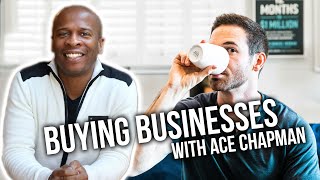
Transcript of a Business Church livestream where Ryan Daniel Moran interviews Ace Chapman about buying and building a portfolio of businesses, deal-structuring, finding off‑market deal flow, training dealmakers, and making person‑dependent businesses sellable through SOPs and systems. The conversation includes practical tactics (partnering with operators, advisor/investor syndicates, banks and niche groups for leads), examples from COVID-era outcomes, and program plugs (Dealmakers Institute, private equity fund incubator).
Chapters
Good morning, capitalists. Welcome to business, Church. I'm Ryan. Daniel Moran. We're gonna be joined by Ace Chapman today. In the meantime, if you are watching live, please say hello in the comments. Good morning, Sue Anderson. Good morning, Rhino. Merry Christmas. Good morning. Morning, Troy. Good morning, all of you who are watching on the spillover on YouTube today. This is the topic I'm most fascinated with in my life. Aces brought in for a strategic reason today. A selfish reason, you might say. Because this is where I wanted to go with my career for the last couple of years. Had a couple false starts, couple audibles, a couple head fakes, and we're gonna go to Ace to clear those up. Good morning, Chris. Good morning, Alexander. Good morning, Rupert.
Good morning, Matt. Good morning, Chris. Good morning, Salome. Good morning, Tyler. Good to see you. Good morning, Tony. Thanks for hanging out with us.
Remember, if you don't have a cup or a mug or a glass or a chalice or sign, you are missing out on 46 and a half percent of the goodness that happens on business. Church. Good morning, Joseph. Good to see you. Good morning, Mark, Ian. Glad to have you.
Boston Joe is in the house. Hello. Good morning, John. Good morning, Monica Gray. She had a big week. Good morning, Bram. Good morning, Brian. Good to see all of you. Good morning, Brian. Bean. Good to have you. Hey, K, thanks for hanging out with me. I'm part of your Sunday. Let's get this thing going. If you've got a cup or a mug or a glass or a chalice or a stein, a tankard, a thermos, a vessel of any kind, please join me now with capitalists around the world for something that we call the simultaneous sip Goes.
Your income level just went up 36 and a half percent. Let's go hang out with Ace Chapman. Ace, you ready to do this thing?
Oh, let's do it. Good morning. How the heck are you, my friend?
Good morning. Good morning. Yes, I have my mug here. I am ready to roll.
Good man. It has been a hot minute since I saw you.
And I actually have a thousand questions for you. But since it's been a little bit since we've seen each other, you know, we haven't seen each other since quarantine and the pandemic and all of this. And you were buying up businesses, mostly E Com businesses, from what I remember. And E Comms had a good year, so it boomed in all this gas. So I've been curious, what has happened for you and your business since you don't have one business, you've got a Business that buys other businesses. What has happened to your balance sheet in the last year?
Well, what we've seen, and it's kind of a testament to one of the things that I believe in, in that it's important to build a portfolio of businesses. As you look at Fortune 500 companies, there aren't any that make it into that realm that don't have a full department. In addition to hiring, sometimes multiple investment banks that are just consist on the hunt for complementary businesses, for supply chain businesses, for businesses that are kind of the future of where that business is headed and they're bringing those businesses to them and to kind of create this portfolio of businesses that either hedge or expediate growth. And so what we try to do and what I'm always preaching to, you know, even when I get a client that comes to me and they're like, I just want to buy a business and leave corporate America and all that, it's like, I don't want to take you on if you don't plan on having a portfolio of businesses, because that's what's going to protect you long term and give the business longevity. Because in addition to just the headaches of starting from scratch.
It'S just very tough to make a business last for years and years. And that's why we see that high failure rate. What we saw was what would be expected. We saw some businesses that were just really tanked, they got hit really hard. And then we saw some, some businesses that just especially early on that just double, tripled. You know, for instance, we all know that one of the things that people got obsessed with was toilet paper. Well, a side effect of that was they got obsessed with bidets. And we had a business that made money. So bidets, like it was just a normal, you know, easygoing, not gonna. We didn't plan on that business. We had kind of doubled it since buying it, but we definitely didn't have any expect that would triple from there. So, you know, just in those kinds of scenarios, we have those that did really well and then, you know, some other things that grew. Art became very popular as we were just like starting to spend more time at home and trying to come up with activities for their kids. And so we had a business in that space that did really well. But then on the opposite end, we have a SaaS product that serves offline restaurants taped, you know, and so that's the important thing. And the people that I felt bad for were the people that bought a business that, you know, in December was killing it, doing really, really well. And then, you know, paid a, got a great price, did amazing due diligence. Everything was, was done as well as you can. And then literally three months later, that business not worth zero is half of what it was. And so that person's paid double for this business. And if they bought the business at a million dollars and got an SBA loan, a lot of those ended up in a lot, a lot of trouble. And so I think this whole experience just really pushed to the forefront the idea that no matter how secure, how great your due diligence is, how great your deal structuring and negotiating, all that stuff is, you have to have this diversified portfolio in order to protect yourself and just know, hey, some of these are going to get nails with us. Some of them are going to explode and do well. And that's exactly what we saw play out in our portfolio.
So some businesses got crushed and some doubled and tripled. And that's kind of the benefit of having your hand in multiple businesses. And it's kind of reminding me of a company like Kellogg's, grows in profits and dominates the marketplace because they make the top selling cereals. They don't have the top selling cereals anymore, but they also own rxbar. They also bought this company. They buy this company. Every major company, once they kind of own the marketplace, has to continue to grow through acquisition or new starts or some way to stay ahead of the market. It sounds like you decide to be in that place from the beginning. I'm just gonna go build a portfolio company. My question for you, ace, how do you do that without operating a bunch of different businesses and working a thousand hours a week? How do you do that?
That is definitely the key, right? And I wish I could say I was the genius that came up with that, but I had a mentor, a guy who bought and sold hospitals and moved on to do some really amazing from there. And he was the person. You know, when I first was buying and selling businesses, I would take the profits from those deals and I would put some in real estate, and I put some in kind of stock market and playing around with trading. I would put some in, you know, trying to start other little projects and that kind of thing. And so I had the money flowing from this very great profit center of, at that point, buying mostly offline businesses and having small Internet deals kind of on the side. But what he looked at my friends, he's like, yo, why are you investing in this other stuff? Why do you have all this other stuff right now? You've Got these massive returns over here, in some cases.
100% net on net return. And you've got this cash flow coming in, like, do more. Do more of what's working. Which sounds very simple. And I'm like, Mike, like, it takes a lot of work. I don't have enough time. I need these passive things. And he was basically, you need to train other people to do what you're doing so that you can invest in those deals. And me being a cocky 27 year old in the back of my head, I'm like, yeah, that's great, but who else can do this, man? Like, nobody else could do this. This is my thing. Like, I figured out how to do this, but fortunately I did. I vividly remember I'd had a guy who had reached out to me, Jesse, who was a friend. He wanted to buy a business. Like, I heard you're buying businesses. And you know, and just in conversation, you know, I realized I had a buddy whose dad owned on the bank and still owns a bank in Memphis. And you know, he was coming to me and asking questions and like, dude, your dad owns a bank. Like, why are you asking me anything about business? Like, your dad knows way more than I do. And you know, in that scenario it was like, well, okay, this is a very specialized knowledge. And so Jesse was my first person that I tried that with. And we bought a fitness gym. And it's an interesting story because, you know, we did a deal in looking for, he knew he wanted a fitness gym. And looking for that fitness gym, we ended up finding another one of the deals that we found and reached out to was a fitness gym. But they were going out of business. And so we didn't want to do that deal. But when we found the deal that we did want to do, we were able to go back to this gym, which was down the street. I mean, it couldn't have been six blocks maybe from the deal that we ended up doing. And we said, hey, we will just buy the assets in your business and take over everything. And the asset that they didn't know that was probably the most valuable was their customer list. And so we reached out to those customers, gave them a rock bottom kind of Groupon style deal to come in. Immediately instantly grew the business that he was buying by bringing those customers in, and in addition had some backup equipment and those kind of assets as well. But here's where that story gets interesting is that over the course of about four years he's run the business, blah, blah, blah, and he calls me one day and he's like, the business is over. You know, Gold's Gym is already here. Planet Fitness is coming, like, right up the street. They're gonna put me out of business. Like, there's nowhere around it. All the. And then he said something that was instantly a click for me, but I couldn't believe it came out of his mouth without him realizing what he said. And he said, a lot of the other gyms are already closing. They're giving up before it even really starts. And I'm like, have you reached out to them to buy those assets and customer bases and all that? And he's like, no, I didn't. And so here's a case where we literally did that exact deal. And what I found over and over is it's so easy to slip into thinking like a business owner. And thinking like a deal maker is just a totally different way of thinking. And that's when we switched even what we call the program that I run from business acquisition program to the Dealmakers Institute, because it's really trying to get people to think and see assets and opportunities a totally different way that a business owner who's focused on their business focused on a lot of things. Like you said, it's a lot. The financial aspects, the marketing, the growth, the hiring, training. I mean, it just goes on and on. And so you get into that mode and it's a. Being an entrepreneur is a much different way of thinking than being a deal maker.
Yeah, that is. That's my biggest takeaway of this. I think about the fear of buying a business and then becoming the operator of it. But if you're just the owner of it, you get a leader in place running the business. So it sounds like in this case you went in with a partner. That partner was. Was expected to take over once you made a deal. Like, that person was the operator and you were going to stay. The agreement was made that you were going to stay as deal maker. So if that's the case, what is.
That person they end up selling? So they sold that business and have just moved on to different projects. Having a marketing agency firm that works with other fitness gyms, taking that knowledge, you know, which again, is just like leveraging the assets, all the assets that you have, including ip. But when I'm doing these deals, back to kind of the specifics of how I structure deals. So right now I've moved out of offline, and now my portfolio is literally 100% Internet businesses. So we've got about 42 businesses. This was a big month. November December combined closed five deals and I sold some over the course of this year. So I was down to 37. Now we're back up at 42. So for each of those deals, I do a structure that's a lot of fun, where usually I'll have some other advisors on the deal. So we literally just had a call yesterday with Jen, who actually just moved to Austin out there where you are from California. So y' all are getting a bunch.
Of people coming from California is welcome to move to Austin. As long as they don't bring their car and they don't vote. As long as they don't do those two things, anybody can move to Texas.
Yeah. So I know you were early on that curve, man. It's. It's a very big deal. So she is an amazing entrepreneur. I had the opportunity to invest in, in the business. She actually in a business she owns is now a seven figure business. But long story short.
She comes back after she's grown her business and is saying, you know, I want to invest in some of the deals that y' all are doing with the knowledge that, wow, you know, she built her business from scratch. And, you know, she basically said, like, if I could have started my business where it is now and just bought it and had the energy and the drive and the passion that I had just to get from the zero to where it is to start now and take it to the next level and it'd be a game over. And so she's excited to participate in deals that are where her business is now and help them use those same tactics to grow. And so what I would normally do is I'll have a couple of advisors like her and we'll invest in a deal and then I'll have people that are gonna run the business. And these people are kind of the folks that want to be in the business run. You know, they may be leaving corporate America. You know, shout out to Andrew, who's particularly on that, the lead on the deal that I'm thinking about right now, and they'll be running the business and pushing it forward. And so we invest. The.
Lead on the business also does invest. And we all just have, we have the same vested interest in seeing that business grow. So that's typically how I'll structure that.
How are you finding your deal flow and how are you finding that network of people to go into a deal with? You've got people lined up to run the business before you take it over. So how are you building those relationships and how are you finding your Deal flow.
Yeah, that's definitely where the training program comes in. And that's what Mike helped me get to, was, okay, I can train people on how to do this and in exchange have a opportunity to invest in their business. And so now that's grown to having funds that invest in these deals and you know, starting to build some paper asset portfolios around those businesses as well. But the kind of big transition for me was, okay, I'm not terribly interested in just having the biggest info product or having the biggest video training program.
What I'm interested in is doing more deals. And so in exchange for that, we built out this network of dealmakers over the last more than a decade. That was my first deal with Jesse was right after everything in 2008, so it was like 2009. So it's been about 11 years. And we've built this network of dealmakers that we're training on. Here are all the strategies. Here are the latest strategies to create deal flow. Here's some of the issues that we're seeing with due diligence. Watch out for this new Google update that's coming up. Here's how we're structuring deals. Here's where to go get the money on deals. And so you have this kind of snowball of knowledge where a lot of people are going out. And that's basically what I realized. Like, okay, I've got this little droplet of knowledge to get things rolling. And when they're going out and doing things with the network collective, you know, it's kind of this bucket and it's like, okay, I'm getting way more value even in the knowledge than what I put in. And so with each of those people in the network, they're figuring out things and then they bring that back to the network that everybody gets to benefit from, whether it's in the deal making aspect or with certain deals. Like here we've got this affiliate business, we've got this e commerce business. Here's this new Shopify app that people should try. This is how we're implementing it. And that kind of collective knowledge is probably the most valuable asset, especially in these Internet businesses where things change instantly.
So you've, you've basically built the, the info side of your business as your network, which is how you are me getting your deal flow. And it's so people, it's almost like in the real estate world they call it bird dogging, where you have people who are going out and finding deals and then kind of flipping the deal. It sounds like You've trained people how to go find deals, how to vet deals, and so they're bringing you deals, and then you might partner with them. And so everybody has a piece. Am I describing it correctly?
Correct? Yeah, that's exactly it. They'll bring deals on their end. The benefit is they've got an investor that, you know, knows a space that will be not just money, but value add and participating in the deal, and then, you know, on the back end of that, helping them once they buy the business. So the front end is like getting the money, doing the deal structure, all of that. You know, we want to make sure that it's a good deal because we're putting our money into it. But on the back end, it's having the advisors and the network of folks similar to a Y combinator, where just being a part of the network is a value add.
That is beautiful. That is beautiful.
I love it.
Yeah, that sounds really fun. It sounds really fun.
I've seen the scenario, Ace, where somebody goes out and buys a deal and the first one's a dud and they've got debt in the deal and like, and it be. And it becomes kind of a trap, right? And it's kind of like what you described. Somebody who December 2019, buys a business, good business, doing well, and then something out of their control happens and they lose all, you know, they. They lose all their momentum, which is money is one thing, but momentum is another thing. And so how do you avoid that and how do you spin out of that if.
That'S the biggest fear that keeps people from actually doing this? So what do you do if that is the scenario, and how do you get out of that and flip out, flip around the momentum?
So I think that, you know, even in Jesse's case, that's a great example of just going through this process from beginning to end is valuable, just doing it. So just jumping on the phone and talking to 100 sellers can get you more information and more knowledge that's actionable in the business and the industry that you want to work in than a lot of courses that people are paying thousands of dollars for out there. So just going through that process that gives you this foundation of knowledge, then finding the particular three or four deals out of that hundred that you're going to do due diligence on again. I mean, this is a business that's already done whatever you want to do. They've started from scratch. In most cases, they figured out what their target market is. They've tested a bunch of ads to get to an ad that is actually working. They've got the margins worked out so that after the cost of the product, after the cost of the marketing, they're still making a profit. And they've not just poured the money into all of those things. They've poured the time to research before even starting. They poured the time to actually test and refine and make each of those things better and better. And you get to come in and buy all that knowledge, all that effort and energy, all of that money that was put in, and buy it at a 3 multiple. It's absolutely ridiculous.
I'm thinking about, like, some of the most commonly asked questions amassed are like, what's a good product to sell? How do I. How do I line things up on a manufacturer? How do I solve three pl and international shipping issues? And what do I do about business licenses and taxes and import costs and all this? And when you buy a business, all those questions are not only answered, they're producing profit. It's like.
Like, you gotta pay for those answers.
That's right. So it's like you're looking at the balance sheet, like, looks like kayaks are a good product to sell. This is how you solve your 3 PL. This is how you solve this. Who. This is. Who does your importing? All right, where do I sign the check? It's just all that is already, already made. And at what level, like, what revenue amount are you usually specializing in? Or is it all across the board?
So it does vary. I mean, we're looking at deals. It's. It's more about, like, One of the five deals that we did was basically a $30,000 deal. And so that would be on the low end. You know, we bought a deal that was, I think, when we bought it, 5.7 over 5 million. So it's such a big range. But with the $30,000 deal, we had already run that art business that we talked about, and we've got some other models where we know, okay, this business has a similar kind of platform where we can build these other assets on top of it. So, you know, we just. We already see, okay, we can take what we do on this business, this business model, apply it to this audience, and instantly grow that into a mid six figure. So target market for us would be in the mid, like, half means six figures. But, you know, I'm always hesitant to say that, number one, because I don't want people not to send me deals. I want to be able to see every deal. And because we really do, like, we'll do deals on the each end of the spectrum. We don't go above 5. It's very rare that we go above 5 million just because you just get into the territory. We've seen now major private equity funds that when I started doing this stuff would never consider any deal under 50 million. And because the returns are so amazing, I've just seen them come from 50 to 40 to 30 to 20 to 10. And now we're literally competing with them. But that's one of the powers of micro private equity. And even with your deal when you sold it, you know, I mean those deals can become very competitive in that higher space. So when you get into the sub 5 million, unless you have a network similar to ours or you're just putting that into a company as a subsidiary of a larger company, where you're bolting that on instantly, there just isn't many of those that we have to compete with under the $5 million mark.
It makes sense. And when you say the profits are so attractive, do you mean.
I've seen that the smaller deals often have a higher percentage of ROI as long as the business is stable. Is that what you mean when you say that?
Yeah. So we talk about it as multiples. The multiples are lower, which basically says if a business is making half a million a year.
We'Re going to be able to buy it for 1.5. If that same exact business was making two and a half million a year on maybe a $10 million revenue, that business would be more like a five multiple, six multiple or more. And so you're literally dropping down your roi, Ace.
One thing that I realized that I had not seen before when I went through my acquisition was the realization that the powers that be, the mysterious private equity groups that buy businesses, literally wake up in the morning and think, I wish there were more good businesses to buy. Right. So, so me coming at this from, you know, starting my company with $600, you know, lower middle class kid from Cleveland, Ohio is about to get an eight figure payday and think that they control the terms. And here I am, did not realize I was the hot girl at the dance who built a wonderful company that had $3 million in EBITDA. So when it, when I realized that, something in my head really flipped and I realized that all the big money is hoping to flow into all these entrepreneurs hands. They want to buy more good businesses. Now you sit in that buyer's seat. So what does the buyer look for when they are waking up in the morning saying, I wish there were Good businesses to buy. You're speaking to a group of people who are hope to have an exit one day. So what do you look for when you are vetting a deal that you might provide an exit for?
You know, the selling things are obvious. So I'll quickly mention the obvious ones, but then I'll get to the less obvious. You know, obviously it needs to be for us in particular, it needs to be profitable. You know that, that there are buyers out there that will just buy based on strategic value. For us, we want it to be a business that's on the uptrend, which is important. I think that some businesses get comfortable and they feel like, okay, we've been growing at 50% a year and I'm very happy with the income. And so now we're gonna not do R and D as much. I'm not gonna go out and spend money testing things because that's like an expense and it's taking money literally out of my pocket. But when you don't do those things and that top line is stag, even though from your perspective, you're like, hey, I just increased my profit this year by not spending and testing and trying out all these random things that may work, may not work from your perspective, it's like, this is great, but from a buyer's perspective, they do want to see that top line. It's just this is something that's continuing to grow. So there are those kinds of simple things. Diversification in all aspects. So that's diversification from customer base, diversification from suppliers, diversification in traffic sources, diversifications in the products that you're selling. So all of those types of diversification, I mean, now companies that are just 100% FBA and don't have any other sources, those aren't getting as high of a multiple as even just a few years ago in a lot of cases. Just because it doesn't have that protection that that diversification. If you've got one of those businesses, I would say at least be trying and testing some of those other things so that those are the kind of obvious things. The less obvious is having a business that has SOPs and is basically run like a franchise. I like to talk about it from the franchise perspective because back in my offline days, I bought several businesses that were franchises because I didn't want to run those businesses. So while I was going out and building this network, I wanted to buy businesses where I could literally just send a manager to wherever it was. You know, one of the business we had was Plato's Closet. Another one was a subway. Another one was HomeVestors franchise, which was based out in Dallas. And I could send my employees out there, they could get trained, fly them back, and now they're ready to run this business. And when they call me with business questions, I can say, hey, I have no idea. But I do have this phone number you can call and find out the answer. So that was what got me into franchise as someone who owned a portfolio of businesses and didn't want to be on the phone with all these folks all the time. So what you realize when you look at the franchise model is that you have a business that people are coming, they're spending money up front, cash money, to get a system, and that's it. After they get that system and get a train on that system, they got to go find a location. When they're starting organization from scratch, they gotta build out, spend a ton of money building out that location. They gotta find the employees, they gotta hire the employees, they gotta start the business losing money every month for at least the first six months that they slowly get to break even, celebrate. We finally made it to just break even. We still have not made money yet. Before you get into making money, you compare that to what we're able to do with buying a business. And so if a business owner wants to sell their business at a premium, especially if they take that same and say, hey, not only am I going to give you this. Sell you this business, but we've built out the SOPs to be just as detailed as a franchise. And what I like to do if I'm. When we're selling is ask that person, like, what are your biggest concerns? What are your biggest concerns in this business? And, you know, they may say, well, you know, you've got the manager, Melissa, and she's amazing. A big part of why I'm buying this business is she's super talented. I know she's going to be able run it. You've trained her well. Da, da, da. But what happens when she leaves and I'm stuck with the business or something happens to her and she, you know, can't work. And I'm able to say, all right, let's go to the employee section of the SOP and walk through, like, within that, we look at the manager and we say, all right, this is the. Where we found this manager. This is the ad that we put up, the actual text. This is the questions that we first asked to filter out the people that weren't the right folks. This is what we did to train her. And so you're taking them through that exact process. And if she leaves, here are the three people that will do these separate three tasks until you go through this process and you ask what other concerns do you have? And you're like, well, the marketing. He goes, that section you break down. Here are the tests that we've done. And that's where, going back to a minute ago when I was saying, you know, you got to spend money on that R and D, you got to keep that top line growing. And even those things that don't work are valuable because you're putting those into your SOPs and you're saying, hey, here are the things that work and we're going to train you on that. But just as valuable to save you time, money, energy and effort, here are all the things that didn't work. And you may be able to tweak some of those things. So we're very specific. Here's the copy that we're using, here's how we go, how we went about putting the ad in. Just like taking them through that specific process, target market. And they have this valuable information. So a lot of cases, people are already doing the work. They're just not taking that extra step to meticulously.
Record what they're doing. So you're hiring people, but you're not creating that secondary value by showing the process and showing what doesn't work. And this is where all those things that don't work become very, very valuable. And after I go through that process, one of the things that I'll do and ask before selling is I'll ask how many other businesses they've talked to.
And if I'm the first one, I'll tell them, I won't negotiate with you until you look at at least five other businesses. Because I need them to understand that nobody else has that nobody else is doing that work. Before we start negotiating, I need you to know that this is the best deal on the market. Because nobody else has that kind of franchise like system that's going to come with this business after you realize that.
You mean when you're a seller?
When I'm a seller.
When you're selling, you will actually go to somebody when they're sitting there vetting you. Like, no, I won't start the conversation until you've vetted five other deals because you want, you want them to conclude.
I want them to see how much these sellers suck.
My goodness, Ace, I wish I had had that advice four years ago. Like that, that piece of advice right there would have. Would have made me several million dollars if I had been. If I had been able to come in with that amount of leverage going in. We were. The biggest mistake I made was I was a price accepter.
Yeah.
My biggest mistake. Look, nobody I knew it sold a business before.
Exactly.
No. But nobody I knew had sold. I was. I. I kind of broke the ceiling on the eight figure. Exit it. Right. The fba. I broke that ceiling, went through. I figured out I made all the mistakes.
Yeah.
And one of those mistakes is they didn't do exactly what you just said.
And you had a really amazing network of folks and that kind of thing, and still nobody had made those assets. The average seller doesn't have any real advisors. They may have a broker that's just looking for a commission. They definitely never sold a business before. So instead of first rodeo, and they're trying to figure it out. And it's so amazing because I'm on the buyer side, and I'll be amazed. It's incredible the number of people that I ask, okay, how much support and what are you willing to do after we buy the business? And they'll say, well, I'm willing to give you 30 days of support. I'm like, well, after that, you know, what are you willing to do? It's like, I really don't want to do much more than the 30 days. You know, I've got these plans, plans and this and da, da, da. And it's like, dude, you spent all of this time growing this business. You spend time every day right now running the business. You built this amazing, amazing product, and now you don't want to give support. You know, even car salesmen are like, hey, we'll help you out. If you have this kind of issue on a car and you don't want to give more than 30, 30 days on your business that you poured this much time, effort, and passion. It's incredible. And again, I'll tell them to ask specific questions. That'll be one of the questions that I ask where I say, hey, we'll be here for two years.
No seller's gonna do that.
Yeah, that's beautiful. We're gonna go over to the green room here in a second. So the link is in the chat box if you guys want to come hang out with Ace and myself. You want to ask a question about buying a business, selling a business, or running a business, come on in, and Ace and I will help you. Before we do that, Ace, I want you to give a plug to be Fully transparent. I know nothing about the info side of your business or, like, how people work with you. When you say deals, man, I don't even know what your clients are. So, like, I am both curious and I want to give you an opportunity to plug your stuff because it's really rare that somebody is like, look, I don't want to be an info person that is just there so that I can build my network so that I can help other people get more deal flow and we work together. So give a quick plug for that, if you would.
Yeah, yeah. And, you know, just from being transparent, like, we literally just make more money from the deals than that kind of thing. But the website, Ace Chapman.com if you want to find out about our private equity fund incubator, we basically take people through the process of starting a fund from scratch. We just completed the most recent group, Sleeping beauty fund, which had about 300% returns. We started with a new group, but we'll have another one coming in the next few months. And if you're just looking to do deals, check out dealmakersinstitute.com and that is the network of people that are literally all over the world from Dubai to Paris that are doing these deals. And then lastly, we just launched the merger agency specialist program. And that's@maspecialists.com and that's a group of folks that are helping offline businesses, especially during the time of COVID buy their competitors, their complementary businesses that may be going out of businesses and leveraging those going out of business and leveraging those assets. So those are the three programs that we're Beautiful.
Thanks, Ace. I'm gonna go over to Joe, who's been waiting in the green room. Joe, give me a thumbs up if you're ready to do this. All right, let's go. Good morning, Joe.
It's a total, total privilege and honor to be here with both of you guys.
Good to have you. Joe, good morning for you.
Ryan, you're the best. Ace, you seem totally legit, so thanks for having me on. So I have a business that I started, but I want to move into the online space. I'm a home inspector, so if I don't go out, I don't get a paycheck. And that's the thing that I don't like about that. So anyways, I won't get too deep, deep into that. But going forward, what are some things that you think that I can do in the beginning to make my business more sellable? Particularly things that can be more challenging to Sort of go back and fix or add later on. I want to set it up for success in the beginning. So what are some things that, that I can do in the, in the beginning that could be challenging maybe to go back later on and fix or add? Maybe it's documenting the numbers better. Maybe it's whatever, whatever it is.
So right now, are you the only person doing the inspections?
Yes.
Okay. That would probably be one of the first things. And I know it's tough. I mean, I own a homevestors franchise and they did a pretty good job of creating, creating a system where, you know, I, I had an employee that would go out and literally make six figure decisions on the spot after, you know, a fair, you know, after our version of an inspection. And so I had to be able to trust that person that, hey, this inspection is definitely gonna work. And you know, because of the sentence, she ended up training two other folks. And within that system, we ended up buying like 100 houses over the course of a couple years and I maybe saw 10 of them. And so I think one of the first things is out is getting that, getting a little bit out of having to do the inspections, which, you know, there's licensing, so there's some things that you would have to do there. But I think that's, you know, nobody wants to buy a job. You're not going to get as high a multiple. If you're saying, when I sell this business, you're going to come in and then you're going to do these inspections. Can you sell it to. Yes, you can definitely sell it that way, but are you going to sell it at a premium? And that's always what I'm, what I'm thinking. Like exits are the biggest wealth creation in America. People talk about all these other things, but the biggest wealth creator is the exit. And so you want to do the work to make sure that exit is as good as possible. And the tough thing is that that in some cases will mean, you know, like I was mentioning earlier, sacrificing a bit of the profit. So definitely, obviously the documentation, all of that is going to be there. But having.
A business that you're selling as opposed to something where somebody's got to do some of that work will be valuable and then you can take that time and start to build those marketing systems, which, you know, Ryan is definitely an expert at. But partnering with some people that have that kind of expertise, because those are the two big things. If you're saying I have a system to consistently get clients and here's that funnel and that system. And then I've got over here a system to deliver the product for those clients. And that's documented over here. Then basically what I've got is a money printed box, and that's what everybody wants.
Okay, very cool. Appreciate that.
Does that, does that, does that make sense, Joe, that the most important thing you have to do right now is not be the person who is irreplaceable. Yes. Like right now, you think you're irreplaceable, and that's the thing that will make you not sellable.
I. I struggle with that. That's the biggest thing. I have no shortage of work. I basically, I turn work down. I have no shortage of work. I cherry pick the jobs. My rates are up. Like, it couldn't be better in regards to what a lot of guys are experiencing. But like I said, if I don't, it stinks. The. The notion just, it's bothering me so much. If I don't go out the door, I don't make any money. And that's a big, big problem. And I've been fortunate to fall on the right side of the. As far as who's allowed to go out and perform work with the COVID thing, you know, I did, I did fall into that category here and Massachusetts, the list of people that are allowed to still kind of work. So thank goodness for that. But it's definitely made me look in other directions and one of the things would be some kind of an online presence. I'm thinking about going the direction of an authority page, an authority website where I have not only, you know, video tutorials, all kinds of other services, affiliate marketing and all that. And what do you say in regards to maybe going in that direction?
I'm going to go ahead and veto you. That's just, that's a dis. That's a distraction. Oh, like you're. I mean, you're telling us what your number one challenge is right now. So, yeah, basically what you're saying is, I'm too busy. What do I do? You should start. You should have another baby. That's what that will make you. Not busy is basically what you're saying. I'll start another side business that is currently doing nothing.
Right.
Not a bad business idea. It's the number one way that I recommend people start their entrepreneurial journey. Right. But that is not your biggest challenge right now. Your biggest challenge right now is you are literally turning down sales because you haven't replaced yourself. So your job right now is to hire someone that Looks a lot like you.
And you've just. You've now doubled your capacity to go do the. Take the sales calls that you're not able to take right now.
Right.
And now you have a sellable business.
Which is the most important part.
And what. And what is. I mean, Ace and I both recognize that that's. That's a challenge. It's a. It's a really a mental challenge more than anything else. But what is preventing you from doing that? When you have openly said, I know I'm leaving money on the table by not taking all these calls, by not.
Taking these sales calls, what's preventing me? There's a few things. Number one, people call me from me.
They.
It's a. It's a relationship business. And a lot of it comes from the real estate agents that are out there in the world who want to make sure that the people. They've vetted everyone. They've vetted mortgage people, they vetted home inspectors. So when they have a client and it's go time and it's inspection time, go see this guy. This is the guy. He's got the personality is great. What he does is great. Just everything. He's just. He's got all this experience. So if I get some guy out.
There.
It will be far less a problem than you think.
Okay?
Okay.
And the other thing is, just generally speaking, in the industry, there tends to be a lot of one man show. You train someone and they go off and they start to wrote gig. I guess that's possible for anything in the world. So I guess maybe I just need to find someone that. That perfect blend of that perfect with just that person with just the perfect constituents, where they stop working, stop worrying.
About what they're gonna do three years from now.
Okay.
They start throwing thing mazel to tough, they'll see how hard it is.
Right?
And if you're building a machine, that becomes a machine as well. You know, just like we're talking about documenting everything. You know, when you find this person, Somebody had a recommendation that popped up in the comments of building relationships with the inspector schools and that kind of thing. But like, whatever system you build to find that person becomes a system. And so you're expecting for them to leave. I mean, it very much reminds me of what I was just talking about as far as, like, you know, buying a business is complicated. Like, I can't systemize finding the deal, doing the due diligence, you know, negotiating the deal structure, finding the money and all that. And it's like, no, like you can. So but then, you know, once you systemize that. Great, go off, I put a bunch of work into you, go off and do that. Because they've given you the gift of a system where you can tell that buyer, it's like, oh yeah, we've got these three inspectors. Like if they leave, here's this is always churning. We're always having these folks come in and that just becomes, if that's the case that they're going to start their own thing that becomes a part of what you're promoting. It's like, hey, I'm help, like I'm going to get you started in this. It may even be something where they can pay to work for you. I always like the Tom Sawyer models. So the other part I would say is, you know, there's a business like one model that reminds me of is the plumbing business where, you know, we'll go into a city and we'll find the plumbers that are interested in selling. They're always one man shows or electricians. This just works across the board and they eventually will want to retire, want to sell. We'll buy the minimum assets just as a truck. But what we're really buying is their number one, number two placement in Google. So now those calls come in, we dispatch those calls to us and then we tell a new up and coming plumber, hey, we got you a van. You're ready to roll. We're gonna get your business and we're gonna charge 30% off the top to send you out on these jobs. And a lot of times that person is the person that's at the bottom of the top 10 plumbers. So they're literally right there. You don't even have to hunt from them. So that's from another industry. Just to give you some, some ideas there.
Yeah.
So you could buy a competitor in some cases and there may be, there may be some, some opportunities to do something.
So here's, here's your assignment, Joe. Your assignment is to write the job description for the ideal person that you would want, want to be in this role. And it's going to look a lot like a younger version of you.
Yeah, right. Got a beautiful problem. It's a big income opportunity for you and for somebody else. Because there is that other inspector out there that's talented, that does have a great personality. As cool as you seem to be, there's, you know, there's going to be another one out there that's going to be able to win over those clients and build relationships and all of that and they're in a drought like they don't have. They're suffering, so you're safer for them.
Interesting.
Yeah, it's giving me a lot to think about. I appreciate it.
Cool. Good to see you, Joe.
Thanks for perspective. Thanks, guys. Take care.
All right, great question. Keep us posted. All right, let's go over to Raleigh. Raleigh, give me a thumbs up if you're ready to come on live. Let's do it. Good morning, Raleigh. How are you?
What's up guys? How y' all doing?
Doing good. What can we do for you?
I'm in Dallas. I used to be a mergers and acquisitions attorney. I actually just sold a business for seven figures about six months ago. So I've been.
Congratulations.
I've been on the hunt. I have two questions. I have one on the business search front.
And then another one. My wife. My wife runs an Instagram business that's very influencer focused where she's kind of the center of the storm. So I have a question about the exits there on. On the broker side. Ace, what are your on do? The majority of the deals that you do are they broker represented on the sell side or you. Do you prefer to find off market deals?
Yeah. So love brokers, you know, nothing against brokers that get a lot of deals that are from brokers. It just so happens that the very best deals that we get get done are direct, kind of what we call off market deals for a lot of reasons. And just at the most basic level, in a lot of cases, a broker is making their money off of the percentage of the sales price that they get at any given point. So if it's a million dollar deal and you structure something, only paid 250,000 up front, but typically they're only going to get 10% of that and then they have to wait to get their money as you pay and they're taking a risk along with the seller. If they can convince that seller to just do SBA and get all the money up front, then they get 100,000 so.
That they're going to want the 100,000 over the 10,000. And so they're pushing for those sales where it's going to be the maximum amount of cash up front. And so for some of the creative things where even we can show a seller where this is more beneficial for you tax wise over this period of time or this is more beneficial for you on a ROI basis, you know, how many of these exits are you going to have? And if you can, over the course and through this Deal structure, make one and a half million over these next five years, is that worth it? Instead of that one million, and that extra half million goes to a bank because somebody's gonna get that additional money. And so we can do the work direct with a seller to show them just literally. Here is why. This deal is not only great for us, it's definitely great for us. We're not trying to hide that, but here's how you benefit from that as well. And, you know, we've got a broker inside involved. And then there are other reasons, which is very basic level. You know, it just. Yeah.
Does that usually. Do you find the most productive to be just cold outreach to businesses that try and Find owners on LinkedIn.
And yeah, let me get. Let me give kind of three or four of just the best sources. Because it's not just finding a deal, you know, that that's not necessarily what we're looking for. It's finding a motivated seller of a good deal. So what we want to do is find where are those motivated sellers? And part of that could be right now. Banks are amazing because they've got commercial debt. They know who's in trouble, they know who's not, you know, who isn't, who's having a hard time selling. So what my calls from banks typically look at, like, because they can't tell you, oh, this person ain't paying the bills. But so here's what, what my calls. And I've got. I've got literally this call where they just say, hey, I don't know if you've ever been down to Big River Restaurant. You ever check that restaurant out? Yeah, love it. It's great. It's like, well, you know, if I were you, I'd go and try to build a relationship with that owner because there may be some opportunities for you. And so it's just very general, and it's up to you to take that information, go ahead and start to talk to the owner. And sometimes they're gonna clam up and, you know, just say, hey, like, I'm interested in the business, so I wanna lead. Where it still ends up being cold outreach. That bank isn't gonna make an introduction, but you've got a lead to know, okay, there's a situation going on in here. And, you know, we had a situation where the bank called and I didn't know front end what was going on, but. But on the back end, the son. It was a great, great business. And their own son embezzled a ton of money from the business. And Just put them in a tough spot where it's like, if they went to insurance, he's going to jail. And so it was what it was. But you know, you just have these kinds of. The reason I bring up a specific situation is that that's what we're looking for. We're looking for situations that we can be of help and get a really great opportunity. And especially in that case where it's a great business. But you know, after that, you know, attorneys, divorce attorneys, a lot of people going crazy right now in quarantine, they're having some second thoughts on these marriages, man. So, you know, being able to swoop in and say, hey, we can get some cash in this business and pay that chamber of commerce is will know when people are having kind of trouble and those kinds of things. So, you know, thinking strategically that way of, you know, where are the business? And then, you know, also just reaching out to the kind of grapevine information. Being networked in either online, in Facebook groups, LinkedIn groups, all of that being networked and letting people know that you're in the market and in your market, in your local market doing this thing.
And those have been, those have been good for, for, for online businesses as well, I would imagine. Divorce attorneys, banks, I would think that those would make a ton of sense for brick and mortar. I mean, I had a brick and mortar business that I sold. But you've been able to find online businesses as well through those avenues.
So for online, the, the groups are great. Yeah, the groups are much better. So online, you know, joining the Facebook group and in just letting people know, it's basically like a history for a lot of these businesses. One of the things that you can look for in those chats, just you join the group, you go back through reading all of the posts and you look for the person that's having. And it's even more powerful because you can look for the person that has the problem that you're an expert at fixing. So if somebody, if you're a Facebook expert, Facebook marketing expert, or you mentioned your wife is influencer on Instagram. So a great case in point. You literally go through that and whatever space she's an influencer in, when somebody's talking about having a problem with marketing in that space, you know, I could buy this business and instantly promote it to my wife's audience and that becomes a very valuable.
And these are industry specific groups. Like this would be like, like a fitness Facebook group, not like divorce. I would do get a divorce group.
Yeah, yeah, no, yeah.
So this is specific.
They're looking for help with their business. Yeah, yeah, yeah. So they're looking for help for this type of.
Business.
Problem business, problem groups more than industry specific marketing groups. Not necessarily fitness. Yeah, it.
Exactly.
Raleigh. Tell us about the, the question you had about the influencers.
Yeah, so, so my wife, my wife runs a, a fitness business and she's, she's the influencer. Her name's Fitness Carly on Instagram. So she's got like whatever, 75, 000 followers and she's always had meal plans.
Group coaching. You know that's always been a seven figure business for her which has been great over the past couple years. My sense has always been that it's an unsellable business just because it's so tied to her as the center of the machine.
And so because of that we've just started to think about Ryan. We've looked at, you know, more product based businesses where she can push traffic, you know, kind of behind the scenes, but the product is branded separate away from her. So Asa, I was wondering if you've done any businesses that are more. And we, we have a lot of. Ryan, you're probably the same place. We know a lot of influencers that have really cash generative businesses that they can never get away from and they're kind of on a content treadmill and they also can't really exit and they're you know, trying to figure out something similar. So I was wondering if you've, if you found a way to acquire that problem or.
And you know how, how that's looked or if you just can't touch it because you know you have a key man issue where the center of it is someone that drives the whole engine.
I, I have an interesting answer to this Ace, but before I answer I'm curious. Have you ever bought a personality brand or something that was so dependent on one person?
One of the deal we have and so one of the deals, we've done it several times but we just bought a business called Rhyme Makers which is in the hip hop space and trains people on how to rap which a lot of people want to learn how to rap. I know that I will never be able to rap well, so I won't be a customer. But you know, it's around one guy, he was a, a battle rapper. And another thing that I could not imagine doing like I did not the way my self confidence is set up. I'm not gonna sit in front of another man while he finds like everything to talk bad about me. My Life and all of that. But that is a case and you know, there's a pro and con. The deals can get done. It's kind of what I was mentioning to Joe in Boston. The deal can get done, but you're not going to get the premium. You know, want to maximize the exit. And so that's what we're really focused on. We did it in the art space as well, you know, so we've definitely done it. And then our job, we're. We just do the work that we would have paid them to do by giving them a premium on the business.
So building the SOP is.
Well, we'll first start to build relationships with other influencers. So we'll find other influencers in the space and we'll basically build a relationship with them. And so, you know, we'll get one of them to, you know, in the art business, we literally have a podcast that's run by them. We have courses that are made by other artists. We have influencers that we pay percentages to promote that, you know, with all of these different things, it's just you got to take everything that she's doing and get other people to do it and build systems around getting those other people to do it. And just that even the mental exercise is where I would start. Now if she did nothing, what would we. Who we need to find and how will we replace what she's doing? And then starting to build out that skeleton of what that business looks like, which will be a totally different business.
Raleigh, my answer is that I would put your focus on buying a business in the fitness space that you could then give equity to to these other influencers or to start the physical products brand. I looked up your wife. I know that she plugs a couple of pre workouts and a couple other supplements. So you already know that there is is a customer base there.
Are we talking to the Ryan Moran right now?
I know, I know.
Ace too.
Hi guys. I was like, are you talking about.
I'm so used to.
And we're talking about you.
Are we talking in the fourth person?
I'm like, wait a minute. I was so confused.
Continue.
This is my Christmas present from him. Merry Christmas, Carly. So I would either acquire or start one of those fitness lines that is already being promoted by those influencers. And now you have the buy in from those influencers because they're looking for something that is a little bit more scalable outside of their audience. Give them that opportunity, they can own a piece of the whole pie. And when everybody is coming Together, we're no longer. We're no longer competing with one another. They're all in on the same business. So that's how. That's how I structure things. And that's, you know, that's. That's something that we. We talk about here a lot inside the 1%, inside the incubator. So it's something that I can speak to if you want to speak about it further. But that. That is how I would look at that opportunity.
No, that makes a ton of sense. Super helpful.
Appreciate it.
You bet. Good to see you, Raleigh.
We'll talk to you later.
All right, take care. Bye, Carly. Bye.
See ya.
Would you give a quick plug for. For yourself again? Ace? Chapman.com is where people can invest with you. And you. You have a fund that invests in businesses and buys businesses. And then was it dealmaker initiative or institute institute.
Dealmakers institute.com. that's where they can learn about doing deals. Yeah.
Yeah, very cool. And that's. And that's where people are, like, in the network, where they're learning about this and they can actually plug into the systems you've got, Correct?
Exactly, exactly. That's what we're taking them from beginning to end. And the whole idea is, you know, we've gone from just, okay, we're gonna help you buy a business to we're gonna help you build a business buying machine.
So I want to close with one more. One question just to like, like, just to excite. Just to excite the people. Ace, give me the best deal you ever did and sold. So the best deal you ever bought, negotiated on, and then turned it around, got it more profitable, and then sold.
Well. It's one that I got a little bit lucky on, which, hey, a little sprinkle of luck, it can. Can definitely help you when it comes to this stuff where we're seeing a bit of that as deals come to the stock market right now and have IPOs and one of the frothiest markets ever. But, you know, I mentioned to Joe a bit ago that I owned a business called HomeVestors. And so this is a business that I bought. It was in the real estate space over. It was what I did not know. You know, just as a business buyer, you're out there doing these deals. Sometimes you don't have the full context of, you know, what's happened before, what's. What's gonna happen next and all that. But this was 2006 close on this business. We took a business from buying and selling. It was really, you know, the Bottleneck is exactly what we talked about with Joe. With the bottleneck was this guy was doing 20 house a year. He was making a lot of money. And it was just him, you know, it was like he was doing all the work. He was, you know, just spinning his wheels and working crazy hours and, you know, pouring himself into this business and just warm self out over the course of a few years. So we get to come in like, hey, yeah, we'll buy the business from you. We do. Because a lot of the other people that were in the real estate space were like, okay, we'll buy this real estate that's currently in the portfolio. He's like, no, no, that's not what this is. This is a business. And this is value added it differently. So we go in, we buy that business. We then kind of bought a small mortgage company that was very inexpensive. And that's a part of what we want you to think about is, you know, just like you mentioned with Carly, it's how do you find these other bolt on businesses? Instead of just doing a promotion of a product, like, let's find something that may not be as popular. It may not be where we're either getting equity or we're buying the whole business or whatever and we're doing that promotion. So we saw. And this is, this is probably one of the most important things that has changed my business over just the last five years is looking at every, every expense in the business and trying to turn it into an asset. If money's going out the door, how do we turn this into an asset? The most recent fund, one of our greatest investments was a bookkeeping business that we basically said, hey, like, we're going to take every business that we have. I obviously have a bunch of businesses. We're going to instant. That's an expense. Now this becomes an asset. Same thing with a marketing agency. This is expensive. We're spending a bunch of money. Let's go buy this agency. And we at least know that our money's going there. So those kinds of things. And so that's what I saw with this homevestor business, which was, all right, we're spending a bunch of money. We've got to get a mortgage on the front end, we're on the back end. When we sell the business, we're helping people send them get a mortgage. And we're sending a bunch of money to this mortgage company. Let's go buy a mortgage company. So we find this, this thing that instantly starts to grow. And then like I said, I put People in place. I sent them to Dallas to get trained in that system and pull them back. And now they're ready to run the business where I didn't have to look at a house, I didn't have to talk to a seller, I didn't have to talk to a buyer. I could really focus on high level work growing and building this, this business, which is an asset. So fast forward two years later, I learned from a business, my first business, which skyrocketed and then crashed in the dot com bubble bursting. And I had had a seven figure offer. I'm like, ah, no, this thing is going to be much bigger than this ridiculous offer. I would have begged for that if they would have given it to me later. But in this deal, the homeless deal, I'm looking for any offer that comes in. And an offer does come in, but I still feel like, you know, I wanted it wasn't for sale. I felt like we were growing the business so fast that I wasn't ready necessarily to sell for anything less than what I felt was a great price. And so I remember this guy was calling me. I was traveling up to Nashville, hanging out with friends on a birthday. We're kind of negotiating this deal. I told him, listen, the price is the price. And I'm not really negotiating because it's not really for sale. You called me before it was on the market. So he calls me during the middle of my friend's birthday party. I step outside into the cold winter thinking he's like, okay, I get it, I'm gonna give you your price. And he's like, okay, well I can't just give you the asking price. I just take 10,000 off of it. And I'm like, dude, do not call me back again unless it is my price.
And I got so lucky, Ryan. It was just that, you know, I should have given him the ten grand. A little bit of it was just frustrating at a party and da, da da. But I should have given him the ten grand in all honesty. But I got really lucky, called that the next day, said, okay, we're good. And I'm like, great. You know, we get this deal done. And a few months later, 2008 happens. And so, you know, had no idea, you know, he was a wealthy guy and just had the cash. At that point, I'm bootstrapping, like every dollar is going. You've got multiple deals. Like I did not. It was bankruptcy for me. So that is the best deal. Just because like the difference between where I sold and where I would have Been personally financially, a few months later, if I hadn't was very, very huge.
Well, Ace, I, I will tell you, I get, you know, while I'm on these calls, I get DMS and slack messages and texts and I see all the comments and I'm getting more brain gasms and holy crap, this is so good than I've gotten on a Sunday coffee in a long time. So thank you for sharing with us today. If, if, if you appreciated Aces Wisdom day, give him some hashtags in the comments. That's how we do applause here@capitalism.com and you can see Ace's energy and my genuine interest in this. This is where I really want to go with the next stage of my career. I've had a couple false starts, a couple of surprises, couple of children, but this is, this is where I have wanted to go. So, Ace, I just, I love, I loved every conversation we've ever had and every interaction we've ever had. So I enjoyed as much. Thank you so much for sharing with capitalism.com today.
Thanks for having me on.
Hey, and everybody, just a quick plug. We're releasing a new YouTube video today on the YouTube channel and it is about businesses that profit at least ten grand a month. And number three is buying businesses. It's what I say in the videos. Like if you wrap your head around it, the fast lane is to just skip everything and go straight to acquiring the cash producing asset that is already profiting. Ten grand a month, like that is literally you can acquire it and now you're profiting six figures. So we talk about that in today's YouTube video. If you're not subscribed to the channel, hit the subscribe button and you'll get notifications for when that goes live. And that goes out here in a little bit. So thanks for watching. Special thanks to Ace Chapman. Take care, everybody. See you soon and Merry Christmas. We'll see you guys in the new year. Take care.







