
How To Craft An 8-Figure Exit
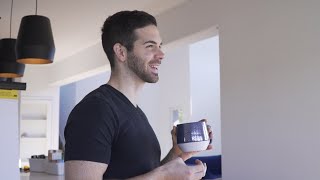
Ryan Daniel Moran breaks down how to build a business toward an 8-figure exit by balancing audience, sales channels, and product. He contrasts profit-focused companies with high-valuation ones like Zoom, explains equity allocation (seed around 20%, 10-20% for partnerships), and covers early tactics like starting on Amazon with 3-5 SKUs for the same customer.
Questions this video answers
September 1, 2020.
Primal Kitchen sold to Heinz for $200 million.
"Now trading at 2000 times earnings" (as stated in the talk).
Approximately 20%.
About 10–20%.
Chapters
Boom.
Boom. Whoa. Hello. Why can I not go live on Facebook? What's going on here? Not sure. Sue Anderson, can you troubleshoot what in the world's happening? Who deleted my post on Facebook? Who would do such a thing? Who would do such a thing? Why in the world.
Did my post get bleedded? That's bizarre. We're live and I'm embarrassed. I'm embarrassed on my own live, everybody. Why can we not go live on Facebook? What the. French toast.
Hold on. We're gonna post this thing. Why in the world.
Hi, Drew.
Drew says Facebook decided to censor. Yeah, I don't know what's going on. So here's what we're gonna do. We're just gonna post the link over on the Facebook group to YouTube, and then we'll actually get this thing off the ground. So give me. Give me nine and a half seconds here.
All right, let's do this thing.
Well, good morning, capitalists. Good morning, capitalists. Good to see all of you. I'm Ryan. Daniel Moran. Welcome to Capitalism and Coffee. If you're watching live, please say hi in the comments. Good morning, Rhino. Thanks for posting on Facebook your picture of my nephew's. Well, art of you. He was really tickled. I took a screenshot of what. What you posted to him. He was really tickled. Good morning, Sue. Good morning, Drew. Good morning, Salome. Good morning, John. Good morning, Matt. Good to see all of you. This is capitalism coffee. And today we're going to talk about how you craft the eight figure exit. So this is exciting stuff. We're going to talk about how you build the foundation of an eight figure exit at the very beginning of your business and how you can set yourself up to have that and how you can just, like, sprint towards it. One of the things that I talked about in the workshop that I would hold at my home before everybody stopped leaving their house, it was a. It was a workshop called eight figure Exits. And one of the things that we would do is line up the target, which was the exit, and then just walk right towards it. Whereas most people will kind of dance around it for a long time and never really just move straight towards the target, which is the exit. And so we're going to talk about exactly how to do that today. But first, I know why you are here. It's not for me. It's not for the cats that sometimes run across the stream. It's for something called the simultaneous sip. And to participate, you need a cup or a mug or a glass of chalice of stein, a tankard of thermos.
A suitcase, Something to hold a liquid. And then you join me now for the simultaneous sip. You ready? Let's go.
Oh, that was good. Yes, Bram, I heard. With the. Ah. I could hear you. Oh. Oh. Now it can begin. Hey, have you noticed how great the world is recently? You guys, have you guys noticed this? I mean, think about six months ago, how uncertain we were, how freaked out we were, how we didn't know what was happening in the world, how we didn't know who was. We had no idea what was gonna happen. And like all the political shakeup and now everything's just fine. You notice stock markets are at record highs. People are wanting to buy and sell again. Everybody's like, are we still wearing these face coverings? God bless America. Ah, such a great world now. And guess most of us are still at home. We got so little to complain about. Coronavirus numbers are plummeting. I mean, just plummeting. If you don't look at the charts, if you want to have a great day and you want to just look at the 7 day moving average of the number of cases of coronavirus in the United States. States. And you're like, oh, oh, we're almost out of it, ladies and germs. Of course, if you watch the news a little bit different.
But if you look at data, oh, man, we're almost through it, ladies and gents. So there is a. There's something to be said about this from a business perspective because many people were sitting on the sidelines for the last six months, and we've had all of this movement go into the online space. We've had all this movement, all this new investment moving into the marketplace. We've had all this stimulus money moving to the marketplace. So what do we do about that? So if you, like the rest of the world, are starting to come out of this, and you're saying, I don't think I want to go back to work, or you're saying, I think it's time for me to double down on the business that's moving or the business that I've started. Well, then here's how we do that. Because if you start the business with an exit in mind, you will not only position yourself to have the exit, but you will also just build a better company. You also just build a better business. Because the business that sells for the most money is the business that you don't want to sell, is the business that is performing well, is the business that you're not tense about. So as you build that foundation for a business that you can sell, you will hit better numbers along the way whether you decide to keep it or decide to sell it. Now, a big thing that I realized when I was selling my company was that valuation and profit are different. Valuation and sales are different. For example, if you'd like, open up a new browser tab and look at Zoom Stock today. Zoom Stock is going nuts. Absolutely nuts. Now, their profits came out and their profits suggested that they were gonna just absolutely destroy earnings. Like, meaning they were. They'd had a great quarter, but the valuation of the company went up a very disproportionate amount to the amount of earnings increase. So Zoom is Now trading at 2000 times earnings. That means that if you've got a million dollar company, that's a two billion dollar valuation that's absurd.
To most people anyway, not to Zoom in. Now what's the reason for that? The reason for that is because earnings and profit are different than valuation. And when you are building a company for an exit, you're building for valuation, you're not building for profits. This is the big braingasm that most solo entrepreneurs are missing and that keeps them held back because they're optimizing for profit. Why? Because to them, profit equals lifestyle, profit equals success. To most small entrepreneurs, the success of a business is not determined by how much you can sell the business for, is determined by how much you can put into your pocket month over month over month. That's amazing. That's awesome. But that's a cash flow business. That's a business that can never grow outside of the founder. That's a business that is going to have a hard time being positioned for a sale later on. Now, we know lots of people in the info marketing space, in the Amazon space, in the online business space who make amazing profits or have incredible revenues, but they can never step away from the business, they can never sell the business, they can never exit, they can't even walk away. Kind of a classic example of this is Tony Robbins. Tony Robbins has done extremely well as a personality and as a personal brand. But it will be very difficult to continue on that legacy when he retires or passes on. That's going to be a very difficult transition for and very big shoes, quite literally to fill when he has built a whole company around himself. So what Tony has done is actually partly my model as well, which is you build the audience and you build the cash flow structure around that part of the business and then you use that exposure, that cash flow and that influence to take equity Positions in other businesses that he then advises and helps grow. And those are the businesses that can be sold for millions or billions of dollars. And that's why Tony has a net worth of whatever it is. Sue, we should probably do a write up about him. That's why Tony has a net worth of hundreds of millions of dollars. It's not because he makes so much cash, although he might. It's because of the value of the positions that he holds in the other companies. So that's the first major distinction that solo entrepreneurs would benefit from knowing, which is that valuation is different than profit. And sometimes there's a trade off between those two things. Sometimes you have to eat less profit in order to invest into higher valuations. That means taking some of that profit and putting into things like team and infrastructure or traffic or areas of growth that will help accelerate new areas of the business.
So that's the first piece. And on the other side, when this is a bit of a mind warp, but sometimes if you have given the perception of maximizing profit, then the valuation of the company can go down. Why is that the case? Reason for that is because when you have maximized profit means you have kind of flatlined in your profit. It sends the signal that that might be all the meat that exists on the bone. And so if that's the case, then another person who's coming in to buy the business doesn't see the same value add potential that was there before and they might be willing to pay less money. This isn't always the case, but the important thing is that a group of systems from the buyer and a group of systems from the seller come together to create more value and more profit. In other words, when you are selling the business, you have to have something that when plugged into another business, increases the value of both. An example of this, Primal Kitchen. Primal Kitchen was started by blogger Mark Sisson five years ago in within three to, I think it was three years, he sold to Heinz for $200 million. This is a blogger. A blogger sells a business for $200 million. Now when Heinz comes in, what are they buying? They're buying the customer base, the awareness. They're buying the audience, they're buying the existing profit line. Yes, but the least important of that was profit. Get that? The least important part was the profit of the business. When Heinz comes in and buys a company, they're buying top line revenue, they're buying exposure and brand awareness and they're buying the audience. Why? Because Heinz can roll out product after product after product. They can bring in their systems to drive down costs. They can bring in additional advertising to boost revenue. That is how real business is done. That's how business, how the big boys play business, Whereas most solo entrepreneurs are just looking at profit. So what do you do about this? Inside of our trainings, we break this into three categories. We have audience, sales and product. Now, when I'm drawing this out, my whiteboard in here. No, when I draw this out, I draw this in three circles like a Venn diagram. And we look at where they intersect when we look at product. You can develop the best product in the world and be broke if you don't have sales channels. Now you can have great sales channels and crappy products and go out of business because you're just a marketer and you're selling stuff, but you don't have anything that is adding value to people's lives. So you have no. You have no depth to the business. And you could have sales and product but be vulnerable to competition if you are not building an audience. And you could also be an audience and be broke because you're just famous and nobody buys from you. So the real magic is when you combine a great product with good sales channels and a good audience. And when you have all three of those that are good enough, you're in business and you have the potential for an eight figure exit. So an eight figure exit is determined by those three categories coming together to build a brand. And that's you have a great product, you have an audience of customers who want your stuff, and you're on good sales channels. And you can think about this in minimal viable terms. You can think about this as you need to be on a platform like Amazon. You need to have those three to five products that serve the same person and you need to have a customer list that you're following up with. That's enough to get the ball rolling. Those three pieces, repeat customers, good product or product line, and you've got clear sales channels on a place that is easy to sell and easy to buy. Make sense so far? Does this make sense? How y' all doing there, everybody? Hi, Krista. Good morning. Hi, Adam. Hi, Justin. Hi, Don. Good to see you. Hi, Tiffany. Hi, Tyrese. Good to see all you. Hi, Kyle. Hey, Spencer. Good to see you. Spencer. Excited to work with you, Spence.
Oh, we got. And we got a full room too. We'll get to you all in a second.
Is this making sense? Good. Thank you, Linda. Thanks for letting me know.
All right, cool. So then let's keep going. Hey, Greg Johnson, good to see you.
So let's dive in a little bit deeper.
Now. One of the common concerns that entrepreneurs bring up when I talk about this is they're looking at, okay, how do I pay myself? While also building something that has the potential for an eight figure exit. And this is where collaborative capitalism comes into play. So let me tell you a quick story. Yesterday I was, I had about an hour ish long conversation with one of our recent graduates from the tribe. And this person runs a pretty, a pretty sizable manufacturing company. He's been helping some of our tribe members with some of some of their product design and product optimization. And he's also working with us at Capitalism Brands to help us get the formula really dialed in and nailed. Well, we were talking about this brand that has a $2 billion valuation, a public valuation of $2 billion and they've done $2 million in sales. What in the world? How does a brand that has $2 million in sales not profit? Half of you on this call have $2 million in sales. Doesn't mean they've made anything in profit. Why do they have a $2 billion valuation? Well, the reason was 100% pure awareness. There was a survey done that 1% of customers had enough awareness about this brand and 1% awareness is enough of an adoption for a big acquirer to come in and say, we can take this thing. You have done the hard work of getting 1% of people to know who you are and where you're going will come in with the infrastructure to take it to 80% and that would be a multi billion dollar business. So in order to get 1% awareness, what do you need? You need things like awareness, you need things like advertising and you need things like capital. And that's the magic piece. So when you're building something to sell and you're building with the intent of making the biggest pie possible, then the focus is not what do I take off the table, it's how do I create as big an exit, as big a pie as possible. And sometimes that means you go raise capital, it means that you are okay managing debt. It means that you use other resources that make that pie as big as possible instead of looking at how do I drain the bank account so that I can protect my freedom. Remember, freedom is not how much money you have, it is doing what you want to do. So this always comes back to building the business that you want to build and then building the systems to keep you in the spot that you want to be on a day to day basis. And sometimes that means being willing to go out and sell 20% of the company at a lower than you want valuation so that you can make the investments in the people, the advertising, and the vision for the business that you want to build. So when you come together with those people that can provide funding or provide infrastructure, then you're able to build a much bigger pie. It's that idea of two plus two equals five. It's very hard to build a business that you can sell just operating as a solopreneur. It's very difficult to build a really big pie when you are committed to controlling as much of the pie as possible. It's really difficult to have a big exit if you're unwilling to create partnerships or to build the infrastructure that's needed for for you to walk away. Think about that for a second. Most of us, most solo entrepreneurs, are so focused on profit that they can't walk away from the business. That's not a business that you can sell. So the thing that needs to be in mind is are you putting enough investment into the business for you to be able to walk away? And if so, then you have a business that you can sell. And where do you put that money? You put it into building great products into good sales channels and building the audience so that you're building as big a pie as possible and you are in the position to sell that for eight figures. Now, what I like to do to make this thing happen fast as possible.
Is you carve out a certain amount of the business to raise your seed capital, and sometimes that's like 20%. Then I like to carve out a small amount of the business that's 10 to 20% for partnerships and audiences. That's board members, advisors, but most importantly, it's people who have audiences. So if I create a partnership with an audience that has 100,000 people and that helps me get to 100 sales a day much faster, then I have basically cut out a year's time of grind and it cost me 20% of the business. But now I have a very predictable way to get sales for any product at high profit margins. I'll make that trade all day long. One of the best assets that you have in your business is the equity and the control of that pie that you're building. And guess what? Jeff Bezos only owns 19% of Amazon. Mark Zuckerberg only owns like 18% of Facebook, and I think Elon Musk owns 20% of Tesla. They're all doing just fine. So when your focus is on Building the biggest pie as possible. You now have the ability to go make the strategic investments that you need in order to get audience partnerships, get investors to manage cash flow to bring on that great employee. And that requires you to have a very clear vision for the business that you are building. We're going to go over to questions here in a second, but quick plug if you are ready to get off the sidelines and actually build one of these businesses. I have eight or nine spots open in the capitalism incubator. That is six months of training and six months of relationships and you can apply at capitalism.com inc.the * is you need to have your application in by Sunday. So have your application in by Sunday. We'll be closing spots on Tuesday and there's eight or nine of them. I doubt they'll all be open by by Tuesday. But if you want to work with me and your team on actually getting in the game, go to capitalism.com Inc.
I'm working into a working in a new idea, into all of the trainings that I do. I'm actually thinking about building like a lead magnet PDF around this idea of the fact that the world or the universe or the economy is always expanding. Like rule number one of understanding how wealth and the world works. Everything is expanding. You are expanding. The government is expanding, the economy is expanding, the population is expanding, net worths are expanding. Things are expanding and it's impossible for them not to expand because we are all wired for growth and expansion. It's just the nature of the world. Things will continue to expand. We'll have increases in freedom, increases in liberty, increases in wealth. It will always continue to expand. If you don't believe me, think about when you were a kid. When you were a kid, do you remember what your parents said was a lot of money when you were a kid? Do you remember how much money you wanted to make when you were a kid? How many options of cereal boxes were there when you were a kid? How many options of places to eat were there? Now compare that to now? What is it now? What is a lot of money now? What are your desires now? How many cereal boxes are there to purchase now? How many options of us to allocate our attention are there? Is a world getting busier with more places to put our attention or less? Is the stock market higher or bigger? Is the government spending more or less now? If that's not a clear enough example, let's go back to Jesus time. When Jesus was walking on the earth, how many options were there? What was A lot of money.
So you can go back to any point in history, look at from then to now and see that everything expands. So if you want to understand wealth, then you have to understand that wealth is created by the expansion. And so the thing that you need to have to be in the game is ownership of part of what's going on. I remember I was living in my apartment in downtown Austin and I was looking across the city, this is about two and a half years ago, and just thinking about how much expansion was happening in this city and how I wanted to just own a piece of all this expansion. To me it was a similar feeling that I imagine some of the pioneers of the country had. Like there's all this expansion having in the country and I want to own some of it. There's a gold rush happening. And So I bought two homes, one of which went up by approximately $100,000 in two years time. Was I a genius? No, there's just expansion and I owned a piece of it. I recently bought a home outside of Austin proper. And the reason I did that is because A, there's not a whole lot of desire right now to live in the cities and two, all the expansion is happening outside of main cities right now. There's a pouring into the suburbs. And so then it was announced like four weeks after I bought the place that Joe Rogan and Elon Musk were moving to that general area. What do you think is going to happen to those property values? They're going to go way up and they already are going way up. So this is.
I am, I don't consider myself a real estate investor, although I sometimes invest in real estate syndications. The point being that wealth is always going to expand. The universe is always going to expand. The world is always going to expand. And the first rule to money is you have to have ownership of what is expanding. And the fastest way to do that when you are first starting out and you got no money, is to cast a vision for a business that you can then go recruit the assets to expand. So if you watch this video or you're watching a clip of this and you're sitting here going, this all sounds great. For people with money here to tell you the best way to get in the game is to decide what you own is to create something that you own, because that's going to expand the most. Especially when you're operating with the mindset of I can bring in other connections and relationships that can help me grow this pie. Alright, let's go over to the green room. Bram, you've been in here since before me. Let's do this thing.
What's up, my friend? How are.
You?
Good. How you doing? I'm doing great, man. It's good to see.
You.
Likewise. What's.
Up? Well, they opened the gyms here in New Jersey today. I Woke up at 3:30, excited, like going to the first day of school in elementary.
The, the gym open at 4:30 in the morning. There's a line outside. Everybody was really excited to go in. It was.
Great. And you look huge. I mean.
You. I.
Know. I'm so great.
Work. Yeah, I.
Know. I love your shirt by the way. I love that brand. Yeah, they're amazing. They do a great job. I think they're in.
Boulder. They are, yeah. Greg's been to their.
Taproom. That's, that's awesome. Well, what's up, dude? What can I do for.
You? I wanted to pick your brain, so I read three Small Steps and I thought that was an amazing.
Book. I have a call with him later this.
Afternoon.
Really? Yeah. I'm excited to talk to.
Him. So anybody who hasn't read that or hasn't or missed the, the, the recommendation, I mean they really should check it out. It's an amazing.
Book. What do you like about.
It? Well, the three. I mean the, the. You know, for anybody who hasn't read it, it's really, really simple. I mean he recommends three things. Have a positive attitude. Meditate and work on intentions and set intentions. And I just like the way that he framed it because I've heard, I've heard about all those things before. But he just framed it in such a way that I hadn't. It sort of resonated with me and I wanted to pick your brain. I mean I. A positive attitude comes to me very, very easily. I don't need to work on that. That's just my nature meditation, something I've been doing for ages. So that's easy too. I've always sort of dabbled in intentions but it's always felt like sort of like the secret and woo and like weird and I, I don't really get how to wrap my head around it and do it properly or, or let it go so then that I can just, you know, do it without thinking so much. How do you think about intentions? I mean, how have you worked around this? I mean, do they work for you? For you and what sort of the evolution of that for.
You? I love, I love that you say that. Meditation, that's fine, but intentions are woo.
Woo. Yeah.
Yeah.
So just the distinction that Trevor makes in three simple steps is the distinction between goals and intentions. So a goal being something that you set and that you work towards, meaning like every day you are moving towards it. And an intention is one that you kind of set into the future and you sort of let go. Yeah, you are just like kind of keeping in mind. So the difference for me is just that when I've done goals and I don't hit them, I feel like shit. Like I just. I think I'm a terrible person. I beat myself up over my work ethic. Whereas an intention is more like I am looser about it. And so I personally tend to move towards them a little bit faster because I don't get into these ruts of like beating myself up over them. I actually think that the difference is more personality than anything because some people are really driven by having that target they're working on every single day. Whereas people like you and me are more like we kind of. We know what we want and we kind of know it's going to happen. And if we continue to work towards it, it's going to happen. But we don't have that tenseness over moving towards it every day. That's how I've internalized it from like the woo woo perspective. I think Trevor would say that thoughts are energy. Everything is energy. Energy is moving towards energy. That is like it. If a thought has energy and it has momentum, that it will continue to pick up momentum over time. And that the worst thing you could do is look at a goal and see it not there. Because now you are conflicting the energy. That is what he would call an intention. Whereas an intention is the thought that is gonna happen. It's already happened. It's just kind of moving towards me and I'm gonna let it go because I know it's gonna happen and I. And that frees up the energy to move towards it. I think that's how Trevor would say it. Those are my words, not his, though. But that's kind of how I've internalized.
It. Yeah, I think I struggle with it.
Of those three, the intentions sort of part is what I struggle with. Just because I feel less practice in it. And I wonder whether I find myself asking lots of questions like, you know, how specific should I be or not? Should I just sort of try and see how it feels and do like soft focus or what have you. My suspicion is that it's just a matter of familiarity. It's like talking. I mean, again, you meditate a lot as well try. It's. You don't even have to think about it, but someone who doesn't, you have to try and sort of explain it to them. And no matter what you do, as far as, I mean, words can't really encompass what three years of meditation feels like.
Right? Well, here's how you will be able to distinguish the two. If you think about what it is that you want and you find yourself working in your head around it, then you have a goal that you believe is impossible and that you're struggling over. So like, if I have my set of goals and I look at them and I'm frustrated at myself, then that's putting me in a state of hustle, lack, workaholism. Whereas if I'm more daydreaming of what that's going to be like when it happens, that's what Trevor means by intention. If you're able to daydream what that is like, imagine what that is like, make decisions from that place. It's like, I want to run a hundred million dollar company, so why would I make decisions about getting to $2 million? I'm operating from the place of this is a hundred million dollar company, let's make a hundred million dollar decisions. That's an intention. Whereas a goal is I'm gonna have a hundred million dollar business first I'm gonna have $5 million, then I'm gonna get $10 million, then I'm gonna get. And it's sequential.
Sure. But isn't, but doesn't that sort of. But that sort of speaks to. What Brooke once said was, you know, think of where you want to be and then all of your objections are the things that you have to.
Solve.
Correct? What? So that's.
That'S. But that's goal orientated. That's not. I mean, that's, that's the goals getting in the way of the intention, I.
Guess. So I just, I just spent three days with Brooke, so this is fresh on my mind. But so. So Brooke would say that it doesn't require time, that if you are daydreaming or whatever it is about when you want it or, or what you want, and then you put a deadline on it, all your objections are gonna come up and the work is then moving through the objections rather than setting the goal of I'm gonna do this first, I'm gonna do this first, I'm gonna do this next. So the goal is sequential, seeing the timeline. Whereas the intention is you might have objections, but you're anchored in the fact that even Being beyond the objections, what you bu. What you want is going to come to fruition and you're just moving through the mental objections of.
It. So let me. Let me try and sort of wrap it up in the sense that. So what you're saying is I set an intention.
The moment that I can imagine it, it's so. And then all of my brain screaming.
Is that those are the objections. That's what I gotta work through.
That. That's right. And so what do you work through? You work through finding evidence to the contrary. So an example that is your brain says that's bullshit. You say, well, I mean, did Elon Musk start with just an idea too? Okay, so I guess it's not totally bullshit, but maybe it's bullshit for me. Okay, well, if it's bullshit for me, has there ever been a time where I had something big that I thought was impossible that I accomplished?
Yeah. I became a father. Okay, well, so I guess some things are that. And you. And you just. You just push against it until your brain has no more reasons to doubt the objection anymore. And now you're able to just kind of move towards that with ease.
Cool.
Cool.
Thanks.
Man. What.
Else?
Trying to figure out what the hell to do with the kids. They're really disappointed they're not going to school. It's driving them.
Crazy. You guys. You guys are so. Your schools are so close, aren't.
You?
Remote.
Until. Until this is Roger. He's saying hello. And he is caught on my shirt. I wish I could send him to school.
So you guys are doing all.
Remote.
Yeah. That stinks. Yeah, I'm the same boat trying to figure that out. If you figure it out, give me a.
Call. We'll.
Do. All right. Thanks, man. Good to see.
You. All.
Right.
I've been muted that whole time. Son of a mother's lover. Well, now I'm just embarrassed. Mons. I was going to bring you on, but you have left the room. Hunter Kane, you're up next. Give me a thumbs up if you're ready to come in the room. Alright, let's do this. Hello, Hunter. How are.
You? Hey, what's going on.
Man? Good to see.
You. Yeah, yeah. So I just launched a brand called Sugar Plums and it's flushable wipes. And we're moving into the. There's a lot of. I guess my question is about where to expand into and what your opinion is on that. Because there's a bunch of different ways to go right now. And.
I feel that we could move into, like, become a In the vertical of gut health and move from these flexible wipes into.
Probiotics or even becoming like the new Metamucil for Gen Z with fiber with that. Or I could just do the tried and true expanding into, like, right now we just have 60 pack wipes and we can move into the single pack.
For.
Traveling. So I like your first idea better, but let's talk this through a little bit. So the big. The big distinction is what kind of a company does sugar plums want to be? So does sugar plums want to be a wipes company? Does sugar plum want to be a optimized pooping company? Does sugar plums want to be a less waste? Like, less waste from. From toiletries brand? These are all different businesses that are great. The question is, who do you want to be? And then we can take the conversation from there. So what do you want sugar plums to.
Be? Right now I want it to be an optimized pooping company.
That's like what's in my. That's my gut reaction to.
That. But your gut reaction is.
If that's the case, then your first idea is spot on. Going with probiotics or fibers or whatever it is that optimizes that. That's what you should focus on. That, to me, is your. Is your winner, winner, chicken.
Dinner. I agree with that. You made a point where you dislike companies that just do fancier packaging with the same kind of product. But it's like at the end of the day and which I. That's kind of like. That's just been sitting with me because that's kind of what we are. We're like a conversation piece in your bathroom. It's like beautiful packaging.
Hopefully it's like a.
Statement. Packaging is great. It's just. It's just not a way to build a.
Company. Right.
Right. Build a company on brand, audience, product, message. And so go keep doing your packaging stuff, man. But remember that you're not a packaging company. You are not a wipes company. You are a digestive company. You're at your digestive toiletries brand. So go all in on that. So your next step is to decide which of the next three to five products you're gonna launch and then you move.
Forward.
That definitely has provided kind of all the clarity that I wanted. I agree with what you just.
Said.
Awesome. Glad to help.
All right. Good to see you, Hunter. Take care.
All right, Matt, you is up next. Give me a thumbs up if you're ready.
Mr. Matt. Yeah, you. Yeah. All right. Yeah, you. Yeah, you.
What's up?
Matt.
How'S it going this.
Morning? Doing good, how are.
You? Good.
Good. Pretty good. Pretty good.
Actually. Actually, I'm not sure how to start this one off because really what I've been doing is just trying to understand the group. I've been following you for years.
I'm actually a plastic product design and manufacturer. So I'm actually looking for partners.
That handle selling and doing the branding and those sort of things because that's just not something.
I'm good at or.
Looking at doing and doing. All right, so those, those people exist. So what's the.
Challenge? Finding those.
People. Okay, so you're looking for what.
Exactly?
Somebody I can partner with to use my skills to help bring a product to market. Whether it, whether it, you know, you.
Know. So, so focused around classic. So which piece do you suck at that you want to create a partnership.
With?
Probably everything that you.
Do.
The creation of.
Brands. The creation of.
Brands. You do plastics.
Right? Yes.
Yes. So here's all you have. So here's all you have to do, Matt, is you need to start advertising to people like me who build brands. Right, right. And that's it. And you have all the brand builders that you want coming to your.
Door.
Pretty.
Simple. Yep. So what, what, what's the hesitation or the, or the tenseness around, around.
It?
I guess what I'm looking for is more of a focused group to.
Get involved with.
I don't want to just advertise because then I wind up doing a lot of consumer education.
And I'm busy enough as it.
Is. All right. Are you a member of the.
1%? Yes.
Yes. Okay. You got a bunch of people saying you should post in the 1%. I'm going to take it one step further. You should pick out a couple people in the 1% and make prototypes for them. You should find out what people want and do a couple case studies and become the go to guy in that group that does prototypes for brand builders. Because every group, like every pocket of brand builders and sellers has like a core group of manufacturers and prototype designers that they recommend and go to. And those people get all of the business. And that comes like, the important thing is that you're building up trust with the core group of people in that group and then you're able to get word of mouth advertising into the rest of the group. But that requires you to go all in on a few people and like just give until you can't give anymore and treat them like world class clients even though they're not paying you. And Then you build up the goodwill in that group to be able to get all of the business. That, that's how it works. And it could be the 1%. It could be any Amazon group. It could be a group of business buyers who are looking to expand.
Just about any group just requires you to go in on a few customers without expecting anything in return. And you will get lots in return.
Okay, okay. Talk this out some more because I, I perceive you as not being satisfied with this.
Answer.
No, no, no, I get it. That's kind of what I had in mind of what I really kind of need to do. It's just, I guess, getting.
Engaged.
So rather than think about getting engaged with a group, just think about getting engaged with a couple of companies that you're genuinely excited about. Find, find out what people are doing that is interesting to you and go be a part of that. Go contribute to the ones that are already exciting. You don't have to do anything you don't want to do. Just find the companies that are exciting you and be the go to guy for them and watch how fast more opportunities open.
Up. Yeah, well, see, I'm doing. I'm kind of cut now, like equity in a company to help redesign a product that couldn't be manufactured the way that it was currently designed. And we're just now kicking that off. I probably sent you something on it just for some.
Feedback. All right. So did you, Are you documenting the development of that business? Are you, Are you really involved in that business and talking about it to other similar companies? Or are you hoping that the equity.
Is your payday and either one's fine. I'm just a little bit of both. Okay. So are you pumped about this.
Business? Yes.
Yes. Okay. You should be talking about it publicly, sharing what worked and what didn't work. But most importantly, you should just be going all in on that business and the owners of that business because when that takes off, it's now the case study that brings you all the business in the.
Space. Yeah. And that's kind of. Or it's just a. It's a lengthy.
Process.
Yeah. It's not a simple.
Hydroponics.
Yep. Components to.
It. That, that doesn't shock me. I mean, I've been making. I've been making content for 13 years.
Things take.
Time. Yeah. Yeah. And so we've bringing that to market and now I'm kind of looking for something else to go in with another.
Product. And like, what do you do better than anyone in the.
World?
Oh.
But what my focus is and what I enjoy doing is the actual product design and solving problems. Okay, so helping entrepreneurs actually.
Bring.
Great. So do that. Like, go. Go find businesses that you enjoy. How do you like? How do you do that? Make an offer. Like, you make a give to try and beat somebody else's prototype and be the person who creates great prototypes. I mean, you. I mean, you only need like three of those to get exposure for you to have all the business that you want. You just got to enjoy those three. So be selective of who you work with. But the very fact that you're on in front of the 1% and Bram is offering to put you on Loveline for business and you're Gonna post in 1% will get you enough lead full for you to choose three that are.
Exciting. Okay. Okay. Well, I appreciate.
It. You bet. Pick the ones that are exciting to you and do.
Those. Sounds good. Sounds.
Good. All right, Matt, good to see.
You. Thanks.
Thanks. All right, we're gonna do one more. Mons, you're back with us. Is that your real name? Give me a thumbs up if you're ready to come on.
Mons. M O, N S E.
I'm spelling your name. Give me a thumbs up when you're ready to come on here. You're sitting there with your arms crossed. I'm talking. I'm just gonna put you on. Oh, hey, Mons.
Yeah, you. You're in front of the world. What's up, dude?
Yeah, I'm talking to you. You look great. I like your shirt. Hey, hey. There he.
Is. He.
Lives.
Mons. Is that your real name, Monsie? Yes, it is.
That's a badass name. Monzi, what can I do for you? Thanks, man. No, I was just listening in. You know, joined the group a few weeks ago and just drinking from a fire hose right now. It's just a ton of information. So loving it now. It's just a ton of information. That's great, man. Anything that we can help with specifically? Not yet. No, not specifically. I'm just trying to listen in and absorb what I can.
All right, Manzi, well, do an intro post in the 1%. Let us know a bit about your background. We'll see how we can help. Sound good? Okay. All right, man. It's good to see you. Welcome to the group. Okay, sounds good.
All right, take care.
All right, since that was quick, I'm gonna. Well, no, Bradley Halpert, if you turn on your video and give me a thumbs up, we'll come on and do this thing live. But I'm only gonna give you a couple seconds to turn your video on. Going once.
Going twice. And sold. All right, capitalists. It's good to see all of you. Thanks for hanging out with me. We're gonna have an updated schedule for regular scheduled programming here coming in the next few days, but I will see you guys Thursday morning. Thank you for sharing part of your morning with me. I'll talk to you guys soon. By the way, if you want to come hang out, if you want my help or the team's help, go to capitalism.com Inc. And we'll get you inside the capitalism incubator. Alright, guys, talk to you soon. See ya.







