
How To Develop Emotional Intelligence
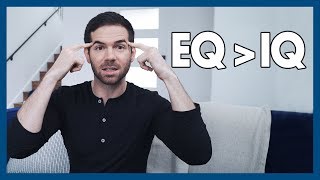
Ryan Daniel Moran breaks down emotional intelligence into three learnable skills: noticing what your body tells you about your emotions, spotting the avoidance habits your brain uses, and reading what's driving other people's behavior so you can connect with them.
Chapters
Hey, everybody. In this video, we're going to be talking about how to develop emotional intelligence, which is something that many people say is either an innate skill or it's not that it can't be taught or it can't be learned, it can't be developed. But I think it is just like leadership or business acumen. It's a skill that some people have naturally that other people don't have as easily, but either one can become better and more in tune to it. Before we jump into how to develop this, why is this even important? There's two reasons. Number one, the first reason is because everything that you want in life, everything that you will ever want in life will be an emotion. So before you can actually enjoy anything that you get or pursue in life, we have to have the intelligence to enjoy it. That seems weird, but the truth is we desire emotions more than we desire things. We think things will give us emotions, and that's why we want them. And the second is that everything you ever want will come from another person. And persons or people are either persuaded or more likely to give you what you want. When you are emotionally intelligent, when you have emotional intelligence, if you're a business owner, you can charge higher prices. If you are a parent, you can calm your kids down much quicker. If you debate or communicate, you can more effortlessly persuade or communicate your message when you are emotionally intelligent. We'll go through that throughout the rest of this video. My name is Ryan Daniel Moran. I am the founder of capitalism.com I work with business owners and entrepreneurs to build businesses businesses and invest the profits. And we do a yearly event called the capitalism conference@capitalism.com and a few years ago in 2015, we had Gary Vaynerchuk, one of the most famous entrepreneurs on the planet. He keynoted a day of our event and the topic of his conversation was how to go from $1 million to $100 million. And he had done exactly that. So he was giving the path for doing that. And one of the things he said, and there's a clip that you can find of him saying exactly this, he said through a couple curse words, he said, here's the thing that none of the other mothers will tell you. It's about people. And you'll have to tap into your EQ skills, meaning your emotional intelligence skills more than your IQ skills. And that leads me to the first way that you develop emotional intelligence and it's paying attention to your body. Now why is that related? It's related because there are really two modes of operating in our system, there's our bodies and there's our brain. And get this. Part of your brain's job is to keep the body safe. And one of the ways, one of the cues that the brain hears that it's not safe is through things like stress, anxiety, rejection, emotions, fears, feelings that we have. So our brains go into overdrive into thinking in order to protect us from a lot of our emotions. So in order for you to be more intelligent emotionally is to go into your body and to pay attention to what is going on here. Your brain is designed to keep this safe. So many people in today's world live in their head and that's worsened in today's society because this is the first time ever that we don't have to pay attention to our emotions and our bodies. Why? Because every time we feel something we don't like, we can pull out the phone and go immediately into our head. We can go into judging other people on social media, we can go into looking at emails, we can go to responding to fires. Our brain is protecting us from feeling whatever we're not wanting to feel. This isn't woo woo stuff. This is basic biology. Our brains are desired to keep us safe. So when we feel something we don't like, the brain turns on and says, how do I get rid of this? How do I neutralize? How do I feel safe? And one of the ways it does it is through distraction and thinking and projecting and responding. Judging. Judging is a head thing, not a body thing. So if you pay attention to your body, if you can even practice feeling where you breathe, feeling where there's tension, these are usually signs of where we're holding stress, which can point to other things that we'll address in point number two. But for example, for me, one of the places that I feel, have always felt kind of recurring pains is in my neck and shoulders. And part of that is due to like I slump over at a computer screen, right? And I have to correct my posture a lot. But part of that, and as I have done a lot of work through therapy and my own journey of developing emotional intelligence, one of those has been.
Ever since I was a kid, I felt like I was on my own. My parents split, I started a business, I took care of other people and I felt like I had to grow up and it was all on my shoulders and I was all alone. That's a lot to literally carry on your shoulders. And so when stress kicks in, your body does this. Your body goes like this brain kicks on into response mode. The Way through that is noticing what's going on in the body so that you can actually understand the emotion that is being felt. That's an emotion of fear, that's an emotion of overwhelm, right? So these are little nuances that our bodies or our brains will distract us from. And the truth is the body is feeling something. The brain's job is to distract us from feeling it. And the way through it and the way to be become intelligent about our emotions is to go into the body and see where it is being stored. Emotion, energy in motion, it's energy in the body. It gets stored in the body. So if we look at other areas of discomfort, like if you have recurring digestive issues or if you have a recurring knee problem, or these often, not all the time, but often can be places that point to some sort of emotional stress. And so when you're in tune with that in your own body, it can make becoming intelligent about what to do about it and how to lead and guide other people a lot simpler and faster and easier. So that's number one. Number two.
Is being aware of your negative habits. Now I bring this up now. Part of this, a lot of emotional intelligence is the ability to connect with or persuade other people, not just you, right? But you can't really know other people. You can't really know what they might be perceiving or how they might feel unless you have felt it yourself. You can't really know what somebody else goes through. But if you're really aware of your own emotions and your own experiences, that is how you can now come out of your perspective and into someone else's and lead them, guide them, or persuade them to whatever it is that you want, whether it's to vote your way, to buy your thing, or to lead them as a leader. We have to be able to connect with them first. And we do that, we do that emotionally. It's one of the mistakes that I see a lot of debaters make is they are trying to make facts and figures be the thing that persuades them. But the truth is you only do that through emotions, because people make decisions out of emotions anyway. That is a rant for another day. But the idea of recognizing your habits, specifically the negative habits that you have, are another way that the brain distracts us from what we're feeling or from what we are trying to or wanting to discover. So the brain will often go into patterns where it knows how it can get a certain, certain results or avoid a certain feeling. So one of those for me, is eating so eating out of destruction, eating out of boredom. If I feel like there's something I don't want to do, I'll make a snack instead. If I'm avoiding something, I'll usually go to the fridge. If I don't like something, if I want to destruct, if I'm feeling lonely, I go to the fridge. Now, the reason this is important is if you've got habits that you go to, like.
Substances that you go to, like distractions, like.
Anything in your life that you want to change or that you feel, that you think you're addicted to. And if you can't go without it for two weeks, you're probably addicted to it. So anything you're addicted to or that you use for some sort of chronic habit, that is often a strategy the brain deploys to prevent us from feeling something. So what do you feel and where do you feel it in your body when you don't have that distraction or when you need to go to that distraction? Now, we've all discovered these feelings or made these feelings because of something that's happened to us or a story that we put on something that happened to us. And if you start to connect with that and you actually feel it, doesn't feel good at all. But if you don't feel it, you don't get emotionally intelligent and you can't connect with other people. And so going into the body away from the brain, noticing where our habits are and seeing that as like, oh, this habit keeps me from feeling this. Even if you don't change anything about it, just being aware of it increases your emotional intelligence. That leads me to number three, which is understanding the feeling behind other people. Now, I don't just mean compassion or empathy. We can be super superficial about this if you want to be. And that is simply wondering what emotion is driving other people's behavior. If you play with that thought, it can make you very emotionally intelligent. Now, we have to have a basic understanding of our own emotions, of what's going on in us before we can really judge the world. But we can use other people as practice case studies, if you will, to identify what emotion is going on there, to become more emotionally intelligent. So why do people.
Complain? Or actually, let's say, why do people believe conspiracy theories? They believe now, they believe all of this data, they have all this information, and that's what they will communicate to you. But human beings are not entirely rational. We don't make decisions. We don't come to conclusions based only on data. Most of the time we are Making them emotionally. And we justify them with data or we justify them with our brains. So what is really driving human behavior? I'm sure you've experienced something in your life where you had all the facts and you communicated to someone else, but they still didn't buy into your argument or to your side of you. Why? Because it didn't change the underlying belief. The belief is there to justify an emotion. So if you're looking at other people, you know, why does this person believe conspiracy theories? Okay, well, they have all these data points, but what was the emotion that drove that? Oftentimes it's fear. I'm afraid and I need some way to justify this fear. And now here are all the ways that I justify this. And oftentimes it's superiority, which actually that's not a feeling, it's a cover up feeling, A cover up strategy for a feeling of inferiority. So if you can identify what drives someone to believe the things they do or do the things that they do, why does that person start a business? What makes a person so driven? Are they running from a negative emotion? Are they pursuing a positive emotion? What do they feel when they're going through that process? If you can pause in your debate, pause in your judgment, pause in your need to fix, and simply be curious about another person's experience, what are they feeling that's driving them to take the actions that they're doing to either avoid a feeling or pursue another feeling? It gets really interesting to see what's going behind the curtain. Even with people that you hate. This is a really good exercise because when you just observe their behaviors, you can say they're a terrible person, they're nasty, they're just evil. But the truth is they're probably that way because of something that they've experienced emotionally. So make it your goal to pursue, push through the judgment and go into what you think that person feels. And then you can judge them if you feel the need to judge them. But it's at that point that you can really understand them. And now you're very emotionally intelligent. The way this plays out in the practical world is if you are a salesperson, you can really connect with your prospect and speak to the emotion that they are feeling that's keeping them from buying something. That's when you become a really good salesperson. And so if you listen to somebody's justification for why they're not buying, but you can feel or identify the emotion of what's driving that, you can usually flip them into buying. Because now you know, I Don't need to sell them more features. I need to speak to the fear of loss and I need to address that. Rather than tell them what the product does. Or if you are a parent and the child is trying to get away with something, or your kid is throwing a tantrum, but you get in and understand what they're feeling, you'll be surprised at how quickly you can neutralize that. So one of the strategies that I do with my daughter is when she's really expressing a loud emotion, if it's a negative one that I want to neutralize, I'll get down on her level and just ask her, are you feeling this way? Are you feeling this way? And when she can identify how she's feeling and can communicate that just by saying, like, yes, I feel sad now, we can deal with it and we can end the tantrum much faster or at least mitigate some of the craziness that can happen in a tantrum. If it's a positive emotion, I'll wait till afterward because they experience it. Have them have the joy, the excitement, and then ask them afterwards, what did you feel? So that I can connect with her on that level, and she knows that she feels heard and might get more of that emotion later. If you are a debater, the way this plays out is actually, you know, there are two people who are very good at this. One is Donald Trump and one is aoc. Alexandria Octavia Cortez. Did I get her name right? I hope so. Don't hate me in the comments. I didn't. Ocasio. That's it? Yeah, Alexandria Ocasio. Okay, well, you can hate me in the comments if you want. Aoc, Both of them are very good at connecting with the emotion of their electorate. And the way they do this is by speaking to the pain point as a debater, as a persuader, they don't come at you with a bunch of facts and figures. It's why Donald Trump could get away with a lot of.
Things that didn't pass the fact checker. But he still got elected because he was still able to persuade emotionally. It's why AOC can do exactly the same thing. So you'll see this in good communicators. They don't come at you with a lot of facts and figures. They come at you with a fee. They look to address, push or twist an emotion, because that's how we make decisions. So when you are emotionally intelligent, you're a person that everyone around you respects more, someone that everyone that you speak to is more persuaded by. And it helps you ultimately adjust your decisions and the way you present yourself so that you can get more of what you want, whether that is professionally, personally, romantically.
You're making decisions based on emotions and so are other people. And when you're intelligent about that, you can speak to that in order to shift things towards what you want. I use this in a business setting with my team members and my employees, and I use it from a presentation standpoint because I give talks and give a lot of podcasts and do a lot of videos specifically on the topics of business and investing. So if you're an entrepreneur and you want more of that kind of stuff, make sure that you are subscribed to the channel and you're if we also give a whole lot of free stuff away on our podcast, just search for capitalism.com My name is Ryan Daniel Moran. Thanks for watching. Yeah, good stuff.
Cut.







