
How to Flip Baseball Cards For Fun & Profit
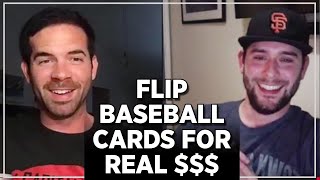
Dan Ivars explains how to flip Bowman Chrome baseball cards for profit by buying underpriced first-year autographs of top prospects, then selling them within one or two seasons. He uses Baseball America rankings to find prospects, favors position players over pitchers, and targets high-grade cards with low serial numbers. The best buying windows are November through January and during market dips.
Questions this video answers
About 14 years.
Bowman Chrome first‑year autographed rookie cards (colored refractors/serial-numbered variants).
Baseball America's Prospect Handbook (uses 0–80 tool ratings).
Bought two orange refractor autographed Bowman Chrome rookie cards (numbered to 25) for about $300 each and sold them about nine months later for about $1,200 each.
Approximately $12,000 (illustrative figure cited).
Chapters
Hello, ladies and gentlemen, it is time for Wine with Wine. I am joined by Dan Ivars. Did I say that right?
Yes.
My new best friend in the world. We, we met 20 minutes ago and we're all, well, virtually. This is virtually quarantine edition of Wine with Wine. And we just became fast friends because tonight we're talking about flipping baseball cards for fun and profit. And since it's a special quarantine edition, I decided to go full on white girl. And I'm calling it White Claw with Wyan. It is White Claw with Wyan.
Ladies, I wish I had gotten the memo because I'm actually on keto. So you're on what? A ketogenic diet? So I'm getting married in October and I gotta lose some weight, man. I gotta lose that weight. And so I hopped on keto about a month ago and I'm already down about £15. Good for you.
Well, when you're ready to step it up a notch, I've got my keto pedo, my keto pito, my keto pizza recipe, which is a baller.
I'm actually working on a new business right now called Fitbake flours, which will be a low carb, high protein flours that you can use for pizza crusts and you can use them for cake mixes and you can use them for banana breads and all kinds of stuff.
That's what we need. You know, I got this carb quick stuff right now that we're using to, to make what not. But it's tough, it will hold you.
Over, but it's not quite, you know.
Well, you get sick of cheese, you know, cheesy biscuits after about two weeks. That's where I'm at. I can't do bacon anymore, man. Congratulations on £15.
That's great, Dan. I mean, we're gonna, we're talking about trading baseball cards tonight. But I wanted to ask you, I know this is kind of a side thing for you, is that correct?
Yeah, yeah.
What is your, what's your primary source of income?
So, yeah, so I actually, I own a talent agency based here in Austin, Texas. And you know, we dabble. We did a lot of stuff kind of in the tour industry, touring around musicians, YouTubers, and then we also built accounts as well. And we did stuff with vans. Warp Tour. I don't know if you're familiar with them. We kind of co founded the YouTube Warp Tour program. So we did stuff with them and now we do a lot of brand deals, sponsorships, conventions for a number of major talents. About 400 right now. So it's, it's been keeping me busy, but it's okay.
That's. Well, that's great. And how long have you been trading sports cards on the side?
About, I want to say about like 14 years.
Okay.
Yeah. So it's been a while. It's been a while.
Yeah. And so kind of the, the pulse on the market seems to be that it's kind of seeing a resurgence in the last few years. Especially like the last year. There almost seems to be kind of a lot of new people coming in. Is that, is that the case?
Oh yeah, oh yeah. Especially for the, for the NBA. We're seeing a lot of money, you know, going into NBA rookie cards like Lucas Giannis. You know, the money that we're seeing flowing into sports cards specifically has been really, really interesting and fun to watch because, you know, again, I originally got into it during the 2008, 2009 crisis. So, you know, the prices back then compared to what they are today, it's like night and day. The cards are way more expensive now.
And is that like, if I mean it, it's one thing to take like a Michael Jordan rookie card and say, of course the price is higher now than it was in 2008. Are you saying just across the board? All, All.
Oh yeah. Oh yeah. Oh, totally. So, you know, there used to be. I'm a prospector. So what I do is I buy and buy and sell baseball cards, specifically autographed rookie card variations.
While they're, while they're in prospect form before these guys reach the major leagues. And I profit off of sales, you know, before. While they're hyped as a prospect, a top 100 prospect. And usually I'd be able to buy in. You know, we'll say Mike Trout back in the day used to be able to buy in at. He'd be pretty hype, but he'd be able to buy it like 60, 60 to $80. And now his base, you know, his baseline rookie card auto, his Bowman Chrome First Auto is like you know, $12,000. And, and now.
Well, I mean he's, but he's, he's one of the greatest players history of baseball now.
But you'd buy in before people knew that. So you'd buy in when he's in, you know, single a, double A. Before people knew, you know, Mike Trout was. Yeah, and that's kind of the name of the game. It's all speculation and you know, used to be able to buy really good players, really high grade players. You know, for like 20, $30 and then you'd be able to flip them for, you know, 60, 70, $80 profit. But now people are so in tune to this market. You know, Jason, Jason Dominguez is a great example. 17 year old kid that the Yankees signed, he hasn't, he hasn't even played a single game in any, in any minor league affiliate and his stuff's going for 170, 180 bucks and he hasn't had a single at that. So there's so much speculation in this market. You really got to be smart about how you invest and, and how you go about it. And you know, we're going to talk a lot about, you know, a lot about that tonight and see if we can help people out.
Yeah, we're going to dive really into that. First of all, if you are watching live, please say hello in the comments. We're using some new software tonight that actually beams the comments right over to us. It's a, we've moved a little bit away from zoom lately. So Austin Dixon, it's good to see you. Call me when you're ready to upgrade things. My friend, Curtis Rummel. Good to see you.
We're wearing the exact same shirt. That's funny. So let me just jump into one interesting question that Curtis posted here. I've got it on the screen. He says, so based on what you're saying, are sports cards pure speculation? Why do they hold value? It's hard for me to understand why they're valuable. Could you answer that to kick things off?
Yeah, you know, it's a tough one. It's why is Bitcoin valuable? You know, why are some stocks valuable? You know, a lot of people buy into speculation. Right? So for this market, it has such a storied tradition of baseball cards. It goes back 100 plus years of people collecting, people investing, people buying. I think that's something that has really carried through the generations and has made it exciting for people to get involved in. Yes, a lot of it is pure speculation, but there's ways to mitigate risk and we're going to talk about that tonight. How we can know, mitigate the risk and buy into good players that could potentially be superstars and make, you know, double, triple your money off of your investments. But yes, a lot of it is pure speculation, but you know, a lot of stuff. I mean if you, if you've got money and you're investing, you're usually investing in some sort of speculation.
I mean there's, there's some truth to that. If you're hoping that the value, the actual, the, the value that other people put on it goes up, there's buying a dividend paying stock. You're banking on the dividend being consistent, that company being profitable. But the speculation part in baseball cards is coming from the performance of the player.
100%.
The performance of the player will determine how in demand the card is. To answer your question, Curtis.
So you know, it's actually interesting just to kind of play off that a little bit. It's two things. So you know, it's not only performance of the player, but in what I invest in. It's actually how the scouts perceive the player's potential. And it's, it's really interesting because you can have a player that bats 217 in his first full year, but they're still very high on his tools.
I see.
You know, and that's a lot of it is like. A lot of it is performance based when it gets to the major leagues. And performance can help you determine what players are maybe living up to expectation. But it's a really interesting scene. The minor league investment pool.
Yeah. To kind of piggyback on your example, which is a. I obviously an extraordinary example of Mike Trout where you could buy a rookie a minor league card for 60 or 80 bucks and now it's worth 12,000. The, the difference there is Mike Trout is literally might be the greatest baseball player in the history of the game.
Yeah.
And he's not done yet. I mean he is just is a top five. He could retire now and be a top five player ever.
Right.
At what? I don't even know if he's 30 yet.
I think he's like 26, 27, 23rd.
We're talking about an extreme example here. And what Dan is saying is that he bought minor. If you had bought minor league cards where you were betting on this young kid making the major leagues and then being good, you would have had absurd roi. But this was an extreme case. Just to show you the, the contrast that can happen. But between the Mike trouts, there are 100 other people who have good careers. And if you have their minor league card, you were really early to the game and that the value of that goes up because all of the attention comes around the people who are good. That is, that's the reason why the price goes up. It's not because they have any other intrinsic value except for the fact that other people want them. And it's been a hobby that has existed for a hundred years. Right. Just like antiques Just like Magic the gathering.
Paintings. What's the other one?
Paintings. Yeah, we could, boys.
Art, right? It's art for guys, right? And you know, autographs alone have been collected for, I mean forever. I mean, autographs alone. You know, there's a market for just autographs. Whether it be, you know, politicians or, you know, players of different leagues or, you know, famous people in general, actors, whoever it may, you know, might be. There's, there's, you know, you know, market, a strong market for that. And you know, when we're talking today about, you know, baseball card investments, we're talking, I'm talking specifically about Bowman Chrome, the first year player autographs. So they're, they're going to look like this, they're going to look like Bowman. There we go. Yeah, get that. So Bowman Chrome, these are the only ones we're talking about today in terms of investment quality, investment grade, high return cards. So any of your listeners that are kind of tuning in right now and wanting to know what's really good to invest in for baseball, specifically Bowman Chrome, the first year autographs, those are the Mike Truck $12,000 base auto cards. Those are the Wander Franco $400 base auto cards. Those are the big cards that you want to invest in and they come in color variations, which we'll kind of talk about a little bit tonight.
Yeah, so the game has matured a little bit since I was trading baseball cards in elementary school because the color coding and all of this is a little bit new to me now. Bowman is, has been around forever. They're, they're the brand of sports cards. But explain to me what the rest of what you just said means.
Yeah, so we're talking tonight, we're talking investment grade stuff. So, you know, back when we were kids, you know, Don Russ mass printed, you know, everything under the sun, every player that you could name. And that's the reason why Randy Johnson autographs from 1987 or whenever he was rookie only go for maybe $15, maybe $8, something like that. They were mass printed, you know. Now Bowman Chrome, specifically Bowman Chrome for baseball, that's really viewed as the pinnacle. That's, that's viewed as investment great. You know, collectors all over want to get their hands on specifically Bowman Chrome first year autos. And that's most of where I've made money. A lot of people have made some good money doing it as a side hustle. And that's mostly investment grade stuff. So that's kind of what we're mostly looking at today.
And you're saying Investment grade auto. I know auto means autographed. Yes, autographed is investment grade. Is that a phrase you're saying or is that an official trading card lingo?
Yeah, so it might be trading card lingo. I use it kind of with my friends as to like what is investable because there's a lot of cards out there. If you go on ebay and you look up Randy Johnson autograph, you're going to see Don Russ, you're going to see Fleer, you're going to see all sorts of autographs. But it doesn't necessarily mean those are investment grade. You know, there needs to be a demand for whatever card you're, you know, you're investing in. And you know, they are serial number. And the lower the serial number is usually better. But you know, tonight I really think the focus with Bowman Chrome rookie cards is where it needs to be for investment stuff. So investment grade is kind of a term I use. But you know, for anyone who's kind of in the industry that understand like where investment money should lie. And Bowman Chrome is definitely a good spot for anyone who's looking to get involved.
And do you. And you only buy autographed rookie cards?
Yeah, so I typically only buy. I mean, I have bought just regular Bowman Chrome non autographs. And you know, those are fantastic as well. You can make quite a bit of money. But for me, it made even early on, I mean, when I was 16, 17 years old, some of my first investments were $300 cards, 300 $400 cards. And actually Jose Fernandez, I don't know if you remember him on the Marlins, God bless him, but yeah, colored refractors which we'll dive into here in a second. Those are where you can really find the big multipliers and quick money. I mean, we're talking. I think I bought two of his orange refractor autographs graded which are numbered to 25. They're an orange Bowman Chrome rookie card and they're autographed. And I think I bought two of them for 300 a piece. And then within nine months, I mean, the guy was rocketing through the minor leagues and it looked like he was gonna be the next big thing. And he was. Yeah, sold them each for 1200 at 16 years old. And that was one of my first big trades.
Okay, so you had bought them for 300 a piece.
Yep.
Yeah. And you sold them for 1200 a piece.
Yeah. So it was pretty.
So interesting. Where were you buying them?
So most of the business that I do is through eBay, eBay is a fantastic resource. You can also go to card forums. Baseball Court, I think it's actually called Baseball Card Forum, to go trade with people to buy on there directly to save on ebay fees or whatever it might be. You know, there are awesome forums that you can go to to kind of build a community around what you're doing. And for me, it's obviously investing. So back when I was trading those cards, specifically, I would go to Baseball Card Forum and there'd be a group of people on there that traded Bowman chrome, and as 16 year old, I'd get in with those people, trade around, try to get the cards that I wanted and then sit on those and hope that they would, you know, they'd have a good season and then flip them the following season for what would be more money. So that's, that's mostly what you do is ebay card forums. You know, there's not a lot of stuff on like Facebook Marketplace.
Yeah. So the, the Jose Fernandez example, buying them for 300, wait a few years, flip them for 1200. Those are not autographed cards, correct?
No, those were, those were nine months. Again, you can make a lot of money in just one season.
That's really interesting. But here, here's the story that's playing over my head. When I was, when I was in New York. Last time I was in New York, I was interviewing Gary Vaynerchuk. I was sitting in his office, and he has just stacks of cards, right? I mean, he is. And they're all the same card. Like, he's buying lots of the same right now.
He's bought a ton of Giannis right now.
And the, they're. None of them are autographed. It's just like, just a stack of cards. And I didn't know enough about the strategy to even know. It was just like, oh, he really thinks this guy is gonna hit it big. So explain to me the rationale. Your, your rationale is you buy single autographed rookie cards. And then there's the guy that is actually, he's probably the, he's popularized baseball card trading again. And he's got a hundred of the same exact card. So explain to me the difference in the mentality there.
So think of it like the stock market, right? You're buying stock in a player, and you know when you go to the stock market, you're usually buying more than one stock because you want to make more money off of product. And, and so that's kind of the same mentality you have to have when you're in this space. So when you're buying baseball, basketball, football, whatever, soccer, whatever it might be, the mentality going into it is unless you're buying high grade cards like I was with Jose Fernandez, you know, you typically want to buy if you're really big into a player, you want to buy really as many as you can to invest and have a position in that player so that when the market does rise, you have a stock to sell. And so that's, I think, why, you know, Gary is really investing heavily in certain players because he wants to have a position in those players. And that's a lot of what I'm doing right now in baseball especially, you know, with, with the season on hold, it's a great time to buy because there's a lot of people panic selling right now. And that's a great time to buy. And low. And, you know, that's. It's an awesome time right now for people just looking to get into the market because prices right now are probably going to be as low as that they're going to be all season, you know, pending. We don't have a season.
Yeah, yeah. Great example of it being like the stock market where you've got, you know, you could buy a hundred shares of ExxonMobil at fifty bucks or you could buy one share of Amazon at two grand.
Right.
That's the difference. That makes sense. Thank you for that. Now explain to me why with the season on hold, there are people panic selling. Why is that creating more of a buyer's market?
Yeah. So, you know, I think there's two things. There's a squeeze right now because people need cash. Right. So you have a lot of people. What I'm doing is I'm buying high grade stuff. So it's cards that are graded by Beckett, cards that are graded by psa. They have a high grade in their grade system. Just to give a little context as to what I'm talking about, Bowman Chrome specifically has different color refractor variations. So they start with a regular refractor that's numbered to four. Actually a base auto that's not numbered. They have a refractor that's numbered to 499. And then they have other color variations like orange number to 25, red to 5. And obviously the lower the number, the lower the serial number, the more valuable it is. And what we're buying mostly right now is there's two different.
So basically what I'm hearing is I'm going to show my nerdom here, but basically this is like Pokemon cards. And then you had like the Pokemon Platinum or whatever it was. And then there's the same card, but it's like a different.
Is that basically there's. So there's basically different levels of the same card.
Exactly.
This brand has. Okay.
And people love lower serial numbers, especially in collectible cards. If you see a serial number, typically people. It's more valuable to people. And we're looking at, you know, graded cards as well. You know, there's higher multiples on graded cards. Specifically the PSA and the Beckett graded. The BGS graded cards. And their grading system is at Beckett by a 0.5 decimal. So this card right here, a Diego Cartaya. There's a Dodgers prospect. You see the 9.5 up the top, right below that. There's different variations. It kind of says, like, centering 10 corners. It's got grades on pretty much every major piece of this card. And it came out to 9.5. And the autograph is 10. And these are the highest grade of investable cards for prospects and just baseball and really any sports card in general. 9.5 and a 10 instead of a 9.5. That was a 10. It'd be a 10. 10 per steam. And those are the hardest ones to find.
I see.
And. And then we have.
So just. Just to catch anybody up to speed on this who's not familiar with some of these terms, what Dan is saying is that these. These signed, rarer cards of prospects, of young players, once they're signed, they're sent off to be authenticated. And then the. Basically the rating system grades how sharp the corners are, how good the. The autograph looks, and gives it a rating 0 to 10, you know, by anything lower than an 8 or a 9. And that's a 9.5 10. 10 is where you. Where they're the rarest and the highest quality. And that was a 9.5 10.
You rarely see any. Any 10 of tens. You know, this is the PSA version. It's a sparkle autograph. It's a little harbor the light there, but it sparkles. It's number to 199. It's a bowman first. And.
And that's a. That's a PSA 10. So it's a PSA. It's a high PSA will give, but they don't do like half increments. So it really goes like 9 or 10. And the only ones you really want to buy are tens. PSA only buy tens. Folks only buy tens unless it's a very low serial Number autograph, then you can make an exception because there's only a few of those autographs and the demand's still going to be there. There's actually been cases where people have bought lower grade cards and just cut them right out. Just cut them right out because they're actually worth more out sleeve instead of in.
That's interesting. So that card, can you tell me a little bit what your thought process was when you were going in and buying that player and that card?
Yeah. So let's, let's actually back up into how we evaluate this.
Yeah, great, great.
Everyone. The prospect handbook. This is going to be your bible. All right. Baseball America's prospect handbook. This thing is fantastic. It gives you the top 30 of every single organization, the top 30 of top 30 prospects as to who's going to be maybe up and coming for a certain organization. And then also gives you kind of the top 100 of major league in general, the prospects. And, and for each prospect, they give a rating between 0 and 80 on each skill set. So the hit tool, the power tool, their arm, fielding speed, and again, everything is kind of, you know, rated between 0 and 80, 80 being the best. I don't know why it's, you know, between 0 and 80. It's kind of weird, but that's how they do it. And you know, reading through the prospect handbook, you want to look for, you know, different prospects and at certain price points that make sense for you and your budget to invest in. And that tool, if anyone gets anything out of this today, it's that handbook. That handbook. Baseball America is fantastic because that combines not just their opinion, but an opinion of.
Every organization out there as to what they think about each of the 30 players for each of these organizations. So it's invaluable when going in and investing in players. And for me, Diego Cartaya was the individual. The card that I had posted up, I've been buying into him quite a bit, see if I can get. Yeah, so we've been buying a bunch of Diego Cartayas. This is a base auto, this is a refractor auto. And you know, we're looking for really high grade stuff with him. And you know, he's an 18 year old catcher out of Venezuela and you know, they have some really high grades on him right now for not only his catching skill, they think he's on already major league quality behind the plate.
And that's one of the hardest positions to master. You know, usually you're not popping up into the majors until you're 25, 26.
Right.
You know, and so for an 18 year old to kind of show those attributes, it's pretty impressive. But you look for keywords and that's how you can kind of slip in and get those good players based on the scouting reports that you read and in their future skill set, what you envision them becoming.
So for another example for what Dan is talking about is in. I'm a Cleveland sports guy, I'm an Indians fan. And for years, for years we had two prospects in the minor leagues that all of the scouts said were going to be basically the next franchise players for the Cleveland Indians. And they were Francisco Lindor and Chisenhall. And there are these two infielders that were very highly regarded by the, the book that Dan just showed. And every single, every single scouting report said that those two guys, Lonnie Chisenhall and Francisco Lindor, are going to be the face of the franchise. If you had bought the minor league cards and especially the signed cards like Dan is talking about, and you had held them to today, your Francisco Lindor card, he is now one of the best players in baseball, it would have gone through the roof. Yeah, you would have had an amazing return on investment. You probably could have bought at 50 and then now be 500 or 5,000. I mean, I mean, an amazing return on investment. Lonnie Chisenhall got hurt and is out of baseball. It, you're, you're, you're, it. You would be worth less than what you bought it for at this point because no one even knows who Lonnie Chisenhal is. He was, he was hot for like a minute. We called him Lonnie Baseball in Cleveland.
He had one when he was healthy, he was great. When he was healthy. Oh, he was great.
And he smoked left handed pitching. He was great. But he's out of baseball now. He's 31. He got hurt. He retired. Yeah, and so that's the speculation part of this. That's where if you guess right, your turn on investment is unbelievable. If you guess wrong, you lose and you're out 50 bucks.
You know, great examples. Jose Fernandez, like that was a great example there. But Jose Fernandez, the guy died like folks, the guy died and luckily, you know, I sold before he even, you know, made his major league debut. But, you know, the guy died in a boating accident. And again, if you're buying stock into this player, there's a potential something could happen. We've seen top prospects in the past five years pass away because of freak accidents, whether it be automobile or Just drug use or whatever it might be. Make sure you do your background research. It doesn't happen very often. It's quite rare that something like that does happen. But if anything in the scouting report suggests that maybe this individual is having a hard time with personal matters, then fare away. That's increasing your risk in a particular player. And there's plenty of minor league players that you can invest in to make the same kind of money, if not more.
So I don't mean to be morbid here, but is it fair to say that Jose Fernandez, now being deceased, that card might be worth more now?
You know, I actually just recently looked into. I was just kind of curious and, you know, I don't know if they're worth more, but I'd say they're still worth money for sure, because there is definitely kind of a. A collector base that, that follows that. However, you know, he only pitched, I think, maybe three or four years. There were a great three or four years. But it's not like this guy's gonna slip into the hall of Fame for, you know, pitching less. Yeah.
Yeah. So I, I wouldn't say if you are looking to. To invest in deceased players that did not play more than 10 years. That's a tricky market. I would highly suggest it's just too volatile.
It's too.
Speculation runs through the roof and, and it's really not somewhere you want to be placing your bets.
So. So your game is to buy them by the minor league signed cards, and you're betting on the player being good enough to make the major leagues and have solid careers, and you're selling them as soon as they basically kind of popped in the market. Is that summary?
You know, in some cases, we're selling them before they even make their major league debut, maybe even before they reach double A or Triple A. You know, we're just watching the dollar sign.
All right.
We want to make sure it's crazy. So story about eight or nine years ago, I was investing in a guy named Daniel Vogelbach. He's the first baseman, DH for the Seattle Mariners now. And, and this was back, I think, when I was like maybe 19, I bought a big position in Daniel Vogel. And, you know, the guy he hit, it was. It was like four straight games with a home run and then five straight games and then six straight games and then nine straight games of the home run. And everyone on the forums, everyone all over the place, he wasn't a top rated prospect, but everyone saw that and everyone was kind of freaking out because he already had A great power rating. And so, you know, naturally his card spiked and he was only in single A. And so I ended up just selling my entire lot. Entire lot. And I made great, great money. I was very fortunate on that. But I sold him what I told him. When he was in single A, he wasn't even close to the majors. But you got to be. It's just like stocks. You got to know when. You got to know when to leave. And you can't be, like, be emotionally invested in players because you might need to stick with them for a little while, but understand that there is good money to be made within a year. Within. Within a single year doing it this way. You know, if you're looking to speculate on players long term, then like with my Trout, you know, if you. If you want to hold on to him to see where things went, or Manny Machado, see where things go, you can do that. But, you know, be warned, you're probably going to be in it for a while, and you might not make nearly as much money as you think. So.
So question, Dan. Is Manny Machado the most overrated player in baseball?
Oh, my goodness. You know, most overrated in baseball. You know, I got to think. I got to think Bryce Harper is really most overrated because. Oh, man, people. Think about it, though. Think about it. All right, hold me up.
Billy's got a Coup.
I know.
$300 million for him. Is that not overrated?
First season basis, they stole him.
Oh, I. I don't.
You know, I think it was. I think. I think his contract was a bargain.
Oh, I. I mean, brandability, yes. They're probably going to make a lot of money off of the merchandise because he's such a big name, so he's going to pay for himself in some way. But if we're talking overrated players, I mean, there's the BJ Uptons of the world, and.
And I feel like Bryce, you know, Melvin Upton.
Please, please.
See here, Dan.
Melvin Upton. She's some goodness. But, you know, I feel like for the longest time, you know, through the minors, up to, like, his MVP winning campaign, I think it was. When was that? 20. 20. 12. 20.
Are you talking about Harper?
Yeah, Harper.
Okay.
So he was right there with Mike Trout. Like it was. It was. He was the best player in the nl and Mike Trout was by far the best player in the al. Best player in baseball. They were neck and neck. And Bryce is more like. He's kind of downshifted. So he's. He's more.
Yeah, yeah, yeah. Okay. Well, I just, I just, I just personally can't see the hype behind Manny Machado. I just don't get why people are so bullish on him. He's a solid player, but I don't think he's like a franchise player. I just, I just don't. I just don't really get it. So that's why I brought that up. Okay, so. So where you were going originally was you were showing Prospect America and how that's kind of your, Your guidebook, that's your bible that you use to do all of your scouting, to do all of your looking through where the next up and coming players are. So how are you making buying decisions off that?
Yes. So, you know, the buy cycle typically is you want to start looking at players during the off season because that's when fewer people are actually looking to buy and prices are typically cheaper. So you want to be buying, you know, between like November and late January.
That's what if the season shut down into April.
Exactly. Or if there's a pandemic and you're in quarantine prospect.
So right now is an exception. It's a great time to buy because there's potentially not going to be a season. And, and you know, for minor league years specifically, you know, that's a whole different can of work.
I see. Okay. Yeah, that makes sense.
And so right now they might lose an entire year of development, and that's huge for prospect. And you might be able to find some good prices, and we've been able to find some good prices and we've been buying now. But typically you want to buy between November and late January and that's when you're going to find the best prices. And the prospect handbook usually comes out in February. And the cool thing, though is unless they're drafted in June or, you know, when the, when the prospect handbook hasn't updated, you can typically use the handbook from the previous year to find what players you want to invest in in Bowman Chrome for the following year. And, you know, good sources. Every week during the minor league season, Baseball America, they send out this hot list of players that might. Players specifically that have done really well, kind of improved, that have impressed them. And that is a great meter. That's a great way to follow what's going on in the minor leagues outside of the players that you're. You're mostly invested in. And that's a great way to find trending players.
So first, are you like, making a. Are you making like a watch list out of your out of prospect America at the beginning of the season and then tracking their. Their rankings throughout the rest of the year when they're released on a weekly basis. Is that kind of what you're doing?
Yeah. So, you know, what I'll do is I'll go through my prospect handbook. I'll start highlighting players in each organization that I really think are attractive, and then I'll go to ebay and I'll type in each one of those names, 150 names, whatever it might be, to see if they have Bowman Chrome, specifically Bowman or Bowman Chrome cards. And then I'll highlight those, and then we'll note the price, the starting price, and then we'll go in and try to figure out which players to invest in based on the price.
Because, again, looking for a mismatch there are you, like, looking at kind of, okay, this guy's trading for 30 bucks, and then you're gonna get a base price, and then you notice that someone is ranked just as highly as the guy trading for 30 bucks, but all of his cards are selling for five bucks. Right, those mismatches, is that kind of how you're playing this?
Yeah. So, you know, we're looking for either players that don't have enough data to suggest they. They deserve the ranking they have or are outside the top 100. So each year, mlb.com used to be top 50. Now they come out with the top 100 list. And that's a list that everyone. All collectors, all baseball fanatics, all fantasy, you know, baseball players, I'm sorry, fantasy owners look at to speculate on who might be, you know, the next big thing. And so, you know, we're looking for players that could potentially join that list the following year. And Diego Cartaya, the player that I showed previously, you know, again, he's so young. He's so young that he has not been able to really showcase his full potential to scouts. And the initial reviews that we've, you know, discussed in baseball America have been. Have been fantastic. So I'm speculating that that player, you know, next year, given the graduation of some of the top prospects and his potential rise to fame within prospect ranks, will then yield a much higher price in the following year or during the season, you know, depending on how hot it gets.
This. This is. This is a good question that Curtis posted. He's asking between, okay, once you know who you're looking for, are you buying packs of cards or are you buying the rare cards? Now, I know you haven't said anything about buying packs of cards, so I Know that you're looking for individual cards and that's why you're going to ebay to buy them. But minor league cards are rare just among, like just on their own. So is that a spec, is that specific to the Bowman brand or how is it that you're going out and finding the minor league cards?
You're just going to ebay and looking at these names. What, what else?
Yeah, so this is actually a great question and you know, for, for me, I never touch packs, do not buy packs. Do not, do not, do not, do not. So for packs, it's a total lottery. Even if you're buying a case, you know, because case cases of Bowman Chrome prospered, the prospect edition or the draft edition, those will yield only prospect autographs. So, you know, if you were looking to get or buy packs, those are the ones you'd want. However, you know, a lot of times you're not even getting, you're not even getting 10% of your money back off of it. You know, case of, you know, a case of eight, eight boxes for twelve hundred dollars. Better off taking that twelve hundred dollars and investing specifically in cards. You want, you know, it's, you know, again, go back to the stock idea. You want to go directly to what you want. You want to buy specific stocks that you're passionate about that you think will do well. Never. I personally, I personally would not pull the dice on packs. I just. And you can even honestly, if you want to, if you want to test it. A lot of what I do is go online and there's box breaks where people on YouTube will go through cases of these and open them and show you the cards they get. And you can, you can look on ebay, oh, you know, we get an orange refractor or how much is that on ebay? And you can actually tally it up because you know how much you paid for it and see what the kind of return is. And, and that's a great resource as well. Going on YouTube and letting other people open the boxes, open the packs and, and you evaluate the price for the product based on that and just based on what I've seen over the years is you do not get your money back unless you get really lucky. Yeah.
So you're going after, you're picking the individuals going over to ebay, buying Bowman autographs specifically on the prospects that you believe have a chance of breaking out. And you're, you're entering your position based on the mismatch between the prospect price and the value that you think the prospect has relative to the rest of the market. Yeah, typically, yeah.
That's pretty typical of what, you know, what I do here and what friends of mine do as well. You're looking for the best deals, like in any business scenario, looking for the best deals. What can I make the most money off of investment wise? Where can I place my money and make a return? And for baseball, again we're talking about Bowman Chrome so you can do the non autograph route. It's the same concept of what we're talking about in regards to autographs. It's just probably going to yield less money because people want the autographs, they want the first year autographs and that's where the premium is paid. And for me, I'm looking to double, triple my money within a reasonable amount of time so that I can reinvest and get new cards for a new season and just continue to cycle that money. And that's something you need to keep in mind as well. Unless you're looking to play the long game, you know, which is a whole different ballgame.
But you're flipping season to season. You're, you're in and out in one to two seasons, which, which is really interesting. Let me ask you, when you're entering into this Dan, how much money should you be willing to lose to be able to give this a fair shot?
Yeah, I mean I think it really depends on your appetite for risk. So everyone's budgets are different. I think me, you know, I think I started with you know, just maybe $100. That was it, maybe $100. And I went out there and I really, I hit the books hard. There's so many great resources. You know, MLB.com comes out with their top 100 prospect list and it's very detailed. All the scouting ranks and you can figure out who's what and you know, or if you're really, if you feel comfortable with it, maybe up that to $5,000 and start investing in very high grade stuff like the, you know, we're talking about refractor variations earlier and so we'd be looking at the lowest number variables which is like the red refractor which is number to 5 or the orange which is number to 25, etc. So it really depends on your appetite for risk and how confident you are with the player. You know, for me I really now that I'm super comfortable with. I've been doing it over a decade. You know, I've got more money invested in it now. But you know, it is, it is, it is a Hobby. It's not something I do full time, but it's definitely a good way to make money if you know what you're doing.
So a couple questions here. If you've got. I'm just going to use your example of $12,000. Is, is there, is there logic to just buying the Mike Trout signed autograph card versus going and buying a bunch of unproven minor league players who might break out? Is there logic to that? And if so, why do you prefer buying the young up and comer?
You know, I think there's just more money to be made in prospects.
Okay.
Because there's so much speculation. I mean, you know, Wander Franco, he's the, he's the 19 year old top prospect for the race and this kid is off the charts. I mean, he might be a once in a generational talent.
All right, so I'm keeping a tab of names you dropped. So Walter Franco is one of them.
And you know, his base autograph we're talking about just his base autograph is selling for four to five hundred dollars. And you got to wonder, how good does this guy need to be for you to make money off of a 4 to $500 base auto investment? I mean, to put in perspective, Manny Machado isn't even going. His base auto graded isn't even going for that much money.
Huh.
Okay, so you really got, you gotta, there's gotta be a few different things. It's gotta be like the perfect scenario for you to really make, you know, $12,000 off a base auto card. And he's got to be like LeBron James. He's got to be the generational talent that everyone rallies behind, that everyone's ooing and eyeing over and say it needs.
To be that person. In order for what? In order for that, that base price to go as high as the Franco cards are warranting or, or something else. I missed some transition there.
Yeah. So you know, for, for you to make money off of like Wander Franco specifically, we'll use him as an example. You know, if you're investing in his base autograph and it's four to five hundred dollars already, I mean, this guy has to be a legitimate superstar for you to make money off of it.
Got it.
Yeah.
So would you consider a card like that overpriced?
You know, it's hard to say because I think, I think for him and based on his, his prospect grade, he's filled out. So I don't know if there's any more money to be made while he's in the minors, I think. I think he's filled out price wise. I think he's. He's at the max. He can probably be for the base auto in the minors, but if he makes the majors, say this year, next year, and he becomes that superstar that people are talking about, then, you know, we could see some, some major price price increases for his base auto. But again, it's not likely because he's going to be in Tampa Bay and that's a very small market. And that also plays a huge role as well, you know, because the bigger the market, the more collectible it is.
Yeah, I mean, I'm thinking about how much of a jump somebody like a Francisco Lindor is going to have when he is inevitably traded at the end of this upcoming season or if, if the season is delayed even before the season starts because he's probably going to be. Be traded to a much bigger market.
Right.
That's the case. Then his value goes. Goes way up. It's interesting how that, how that affects it. I'm also thinking about somebody like, like a Brandon Phillips. You know, Brandon Phillips was a prospect for the Indians who then got just crushed when he came up to minor leagues, had attitude problems. So his value of his cards came way down. Had you bought at that time where it was like, oh, this guy's washed. He gets basically flipped for a bucket of baseballs over to Cincinnati Reds, becomes a perennial MVP All Star.
Yeah.
And so, so if you had those cards, like the mismatch would have been just crazy betting on that. That prospect turnaround.
You know, a great example. One of the best examples I think you can really come up with is, Is Josh Hamilton.
Yes, good one.
Yes. This guy was drafted in 1999. Don't call me. I think it was 1999 or 2000 by the Rays. I think was first overall. Had so many issues, so many personal issues that he fell out of baseball for many years and he came back up with the Reds. And I believe this was SP. It was like his SP auto, his rookie auto ended up spiking from like $5 to like 150 overnight. And, you know, the hyper. He was fantastic and, you know, unfortunately couldn't keep it together, but it was, you know, it's a great example of speculation. You know, if you think, you know, based on the pedigree of the player, they're going to be good and the price is right. Invest. Because, you know, what. What's the worst you could have done with. With Josh Hamilton? Lose $5. Yeah. Make 145, you know, you gotta weigh the risk. Yeah.
It really is interesting how you keep comparing it back to the stock market because it really is like you're buying a mini version of an, of a underperforming company. You're deciding you're betting on if this company is going to break out. And so you're betting on the stock of that player going up with the performance of the company. It's a really good analogy. A question was posted in the 1% Facebook group of what are some of the. And what are some of your favorite places to sell? And I'm curious, when do you know to sell?
Yes. So you know where I like to sell. Typically ebay is the best place to sell. And I would personally not go the auction route. I'd probably do buy it now listings. So you get what you want for it, especially for the higher grade refractor autos because those ones will be probably worth thousands. And you want to make sure you don't get $900 for a car that should be worth 1500. It's a pretty big swing. You can also trade and sell cards on forums. There's a lot of really healthy baseball card forums that you can kind of join the community. They have like trade or membership ratings. So you can tell if somebody has done this before, bought or sold or traded with other community members and what their reputation is. So forums and ebay specifically, those are the two that I mostly use and have really for the past, you know, 12, 14 years, as long as I've been doing this.
Yeah. Sweet. So you buy on ebay and you're selling on ebay?
Yes.
Yeah.
What date is that? Because I think ebay actually ending tonight. Ending tonight. Ebay specifically is a promotion for just collectible cards that you can get. I think it's upwards to 20% off, up to $50. And so if anyone's looking to get started tonight, don't rush the process. But if you got some players in mind, use, use that promotion code.
So I wanted to ask you, could you riff on some of the players that you like right now?
Yeah, absolutely. So Diego Cartaya, I've got a position in him right now. He's a Dodgers catcher and I think right now he's number seven in the Dodgers organization of top 10 prospects. And I think he's going to be fantastic. So that's somebody I'm buying right now. So Diego Cartaya, I think he's fantastic. We've also got actually an Indian, an Indian shortstop. Brian. I think it's Brian Roccurio. Not sure how to say his last name, but he's.
I don't know this name. And I'm. Yeah, you're deep in the minor leagues. If I don't know who it is.
Brain. It's Brain Roccurio. And he's a shortstop. And he looks. He looks special. He's already got a nickname at 18 years old. It's the Professor. And you know, people are raving about his IQ. He's only got a 30 grade on power, which is really, really low. But, you know, I think he's. I think he's five'11, £150, 18 years old. There's. There's room again, this is what we're looking at as prospectors. Is there room for this player to grow? And at 150, he's not gonna stay 150 pounds, hopefully forever. If you put on some weight during quarantine, you know, could see that power grade go from 30 to maybe, you know, major league average, like 50. And if that is the case, then, you know, we could see his other tools play out better, too, and that could become a really cool situation.
Yeah. And another thing that you would factor into something like that is if you have a young player that plays shortstop in the Indians organization, knowing that the current shortstop is going to be on his way out in the next year or year and a half, and now there's a very clear pathway for that person to have an opportunity to be great. And so that at the moment that the Indians trade Francisco Lindor, Brian Rickier, stock probably goes up.
Yeah.
And even if. Even if he's just at single or double A, at that point, you get a bump in value which allows you to flip it and have some quick profit. One of the pieces of speculation that gets worked into some of this analysis.
Oh, absolutely. Hit it right on the head. I mean, that's. That's part of speculating is know knowing a prospect might fit into an organization's plans. But also keep in mind, these guys get traded quite a bit. I mean, one of the greatest blunders all time was when Fernando Tatis Jr. Got traded from the White Sox to the Padres for James Shields. Like, what is going on? And you know, people that were on that bandwagon investing in Fernando Tatis were making out like bandits. And, you know, he got trade to an organization where he could be used a little bit more efficiently and who needed a shortstop, quite frankly. So, you know, it's. It's understand that prospects will change positions. I mean, Josh Donaldson was a Catcher coming up through the A's organization. In fact, his Bowman Chrome card is him with a catcher's helmet on. And now he's a fantastic MVP winning third baseman. And, and same with Bryce Harper. He was a catcher coming up and he got, you know, get turned to an outfielder.
And so Carlos Santana, a power hitter for the Indians, was like, was a catcher traded for Casey Blake. What a great trade that was.
Talking about trades all day.
Oh, I love it, I love it. I'm sorry I cut you off.
No, that's all right. But there's a common theme that all catchers might be.
The jokes aside. You know, again, a big reason why I invest in prospects and usually sell them as prospects is because you have situations like Matt Weeders. Matt Weeders coming out of college, out of Georgia was so highly rated. I mean, he, he did not, I'm sorry, did not live up to expectation. He did not. We thought this guy was gonna be the next Ivan Rodriguez, the next punch, and it didn't happen. And for people who bought in, they lost their asses. And that's not what you want. But if you had held and sold as a hyped prospect, you made out pretty good. You did pretty good, man.
I, you know, the white claw is hitting me, but this is, I'm having so much freaking fun talking about this because it basically like flirts with all of the dopamine sectors in my brain of baseball, stock investing.
Speculation. It's just all of my fun centers in my brain going crazy now. I want you to poke some holes in my theory though, Dan. My thought, my kind of approach, approach to this was like the, the young up and you can't quite call him up and comer because he's a, he's a starter now for the Indians would be Oscar Marc.
Oh, yeah.
So Oscar Marcado now, you know, in half a season, became a irreplaceable player on the Indians. And so my thought process goes, okay, what you want to do is just like you would sign a young player to a long term contract. That's the player that I would really want to bet on. Because I'm betting on this person being a stalwart for the team for years to come. And that's not the strategy you're saying. You're saying the best move would have been to buy Oscar Marcado four years ago. And now I'm selling him because he could get hurt next year or he could, he could have a, the sophomore slump and be terrible and be replaced by another AAA guy. Is, is that kind of how you think about it, rather than thinking about looking at the guy who's still a young player who might become an All Star? Is. Is that how you look at it?
That's a great question. And honestly, you know, a guy like Oscar, you gotta ask the question, you know, is, is he going to be an All Star in the future? Is he going to command some sort of a spotlight? You know, what organization is he? Is he. You know, if he's a Yankee, that's a much larger market. There's more people collecting and if he becomes an All Star, there's gonna be. But the craziest thing is with prospect autos is that there's so many people collecting in that market looking for the next Mike Trout that they're willing to throw. I mean, we talked about wander Franco. He's 19 years old, he's double A. He's in Double A and he's going for 400, folks. He hasn't had a major league get back. You don't know how this is going to work. We don't know how he's going to play out. We don't know what it's going to look like over the next 10 years. He could die next year, God forbid, but we just don't know. And people are paying a premium for that card. So when, when you bring up that Oscar Moncado situation or if you're investing in major league players, you have to ask the hard question. It has to be much harder, this question that you ask yourself than minor leaders. Will this guy become an mvp? Will this guy become the face of a franchise? Will become a perennial All Star? Will this guy become a Hall of Famer? Because those are things, those are notches in the belt that help to increase the value of a car. Because we're looking for SEO, we're looking for search engine optimization. We want that, we want people searching for these player names and if there's no demand there, if nobody is typing, you know, that player's name into to ebay, their search engine, then you're not going to get, you're not going to make money, you're not going to make money off your cards.
Now the, the kind of traditional thought process around baseball cards is that rookie cards are where it's at. It's kind of the standard where everybody's brain goes. Why do you, why is that not the case in your mind?
Yeah. So I mean, rookie autographs traditionally, or just rookie cards in general have always been the most sought after cards. You know, there's been a few scenarios that I can think of that where that really hasn't been the case. And in fact, Itro Suzuki was a fantastic example because he signed his rights away to a Seattle company, I believe it was in 2004. And he was exclusively with that card shop for like 10 years. So there's a strain on the IT market. He could only sign for this one card shop and he couldn't sign for upper deck, Don Russ, whatever, and he's now out of that contract. But you know, again, Itro at the time, any autograph, any Itro autograph was just going up and up and up and up and up. And it was because there was a squeeze on how many he was actually producing for these major companies. So you know, another great example would be really any foreign player because they're coming from a market where they're already popular. You know, Daisuke Matsuzaka. Remember Daisuke? Oh yeah, Daisuke. So really any card that came out with Daisuke, you Darvish, Hideki Matsui, you know, they already had like rabid fan bases in Japan and those people were buying and people here in the US were just getting introduced to these great players and they were now buying. And so that created kind of a squeeze in the market. And those are rare circumstances where, you know, these foreign players were really. Any autograph was worth money, especially if it was serial numbered and not necessarily if it was a rookie card. Shohei is not quite the same because there's, there's really. They're producing so many different autographs and he's, he's, he's come up in a different era of sports cards. But I would say, you know, back then, you know, Japanese, specifically Japanese players that were coming over, there was a squeeze in the market and there were a lot of, there's a lot of demand for them.
And those are, those are the exceptions to the rule. As a rule, rookie cards are the most sought after. They, they have the highest demand. But that's not the play that you're making. You're going after minor league cards. So and, and it sounds like you're saying you're doing that because the kind of the, the delta on the speculation is greater in mine in minor league cards. But it has, it, is it that the market has changed and rookie cards are no longer as sought after or is it that it's just not the flippers game to be in rookie cards?
So, you know, what Bowman Crumb has done is actually backed up a little bit. So it's, it's what we're investing in are major league cards. So they're not the, like if you go to a minor league facility, they'll have their own cards for players on the roster that year. And we're not investing in those, we're investing specifically in Bowman Chrome first year autos. So you know Diego Cartaya, who I've shown earlier, he's, he's in his Dodgers uniform, he has the Dodgers, the Dodgers logos there. And you know, everything is Dodgers esque. It has first year and you want to, when you're buying into Bowman Chrome, you want to make sure it has first year. It's going to be like a first. Right. I think the top right hand corner.
It'S almost like that's the new rookie card. Yeah.
That becomes the new rookie card. And they're trying to get ahead of the curve by producing these cards before the player even, even reaches the majors.
And so when you say first year, that's like their first year in the minor leagues. Right. So you're buying like single A, double A. Well, is that right?
It's, it's, I think it's a loose term because, you know, like Jason Dominguez, the, the Yankees number one overall prospect, he doesn't have a Bowman Chrome autograph yet. And when he does, I think he's gonna be in this next set coming out in September. It will say Bowman Chrome first. It just means it's the first Bowman Chrome card.
Okay.
Yeah, Donald Russ has already been on that. You know, they've already signed him up and he's already got cards on the market that are selling. But again, like Prism for, for, for the NBA. Prism specifically is, is the hottest thing out there. And this is kind of that, that take for baseball. Bowman Crumb is really where, where the money is most, really flown the most.
There's an interesting question that was posted. What crashed the sports card market and could it happen again?
And first of all, was there, was there a, was there a major 2012 crash that I don't know about that this is being referenced or.
Yeah, you know, it's, I feel like it's a good question. I, you know, I think again when we talk about people's wealth and how they're diversifying their portfolios. Right. Usually the first thing people do when they have excess amounts of income is invest in the stock market. Right. And then maybe into gold or they might do, you know, different assets. And baseball is probably like the fourth or fifth thing they're thinking about unless it's a hobby. And I feel like the price of cards fluctuates based on how much additional income people have. And we've been in a bull market where we're technically in a bear market right now, but we've been in a bull market for really the past 10 plus years. So cards, really, all that side income, the income that people had that were already invested in the stock market, already invested in gold, already invested in these different assets, we're putting into bitcoin, we're putting into trading cards, we're putting into basketball, whatever it might be. And so right now is kind of that resurgence. So there's been a resurgence really in the past five or six years of sports cards investing in those. And you know, what causes crashes in those markets are. Right now is a great example. We're all being quarantined.
This year. And if they can't play naturally, you're going to see a lot of these car prices drop. But that just means, you know, again, Warren Buffett, you know, buy when there's fear in the market. And you got to do that. You got to make sure, you got to bite your tongue and just do it. If you have a good, you know, if you're passionate about it, you think you've done enough research and you feel good about it, put a little bit of money into it and see what happens. And you know what, Honestly, this is the best advice I can give you. If you put in $100 and you lose 50 your first year, $50 is the price of that education, of learning about the market. And really, I mean, that's a great price to pay for some really solid education on how to make money, how the markets function and where you can maybe look to do better next year.
I used to play cards.
With my grandmother. This is like a weekly kind of thing that I used to do. And we'd play into the wee hours of the night for her, which was like 8:30, and when she would inevitably win and take my 60 cents, she would say, you see, that's what it costs to have that much fun.
That's great. But it's true though, you know, I feel like people don't realize that is that, you know, if you lose money in stocks, if you lose money in crypto, you know, that's the price of, you know, of education. I mean, how did you pay for college? You know, thousands. And you got to understand through life and especially in sports cards or investments, you're going to lose money. And don't, don't be kicking yourself. I lost tons of money on Sports cards at different points. But I also made a lot of. Yeah.
I learned. And it made me a better investor and allowed me to be a little bit more critical on my investments.
I've got to echo this because I've been trading options for about six months and I've about broke even. And I'm having a great time getting better at looking at the patterns and figuring out. And then this week, I haven't traded at all during all the volatility. And I place, you know, two bets on things that I thought were sure things. And I got crushed. And so it's like, okay, I still have more to learn. But it's one of those things where once you learn the skill set, you have a skill set that is with you for the rest of your life that costs you a few hundred or a few thousand dollars and some time of having fun to learn.
Right.
You know, I know SEO for that reason. I know copywriting for that reason. I. I'm learning baseball cards for that reason. So all, all of these are way that, you know, I got, I got an email today from somebody who was upset that they could not cancel their membership inside the 1% and keep their access because times were hard. And it was like, dude, you have all these skill sets that you could be applying, that you could be learning, that you're just choosing not to. But at times like this, if you know how to flip baseball cards, or last week we talked about doing retail arbitrage, flipping on Amazon or making masks.
And selling them on Etsy. You know, it's stuff like that. You know, get creative, guys. This is, you know, you gotta understand, this is a prime time for people to really get involved in industry, get involved in collecting, get involved in business. This is a fantastic time to do that. You know, I mean, we don't know what the future looks like. But if you do have that passion, you do have that desire to really get aggressive with certain investments, now is the time to really start looking into that and doing research.
So just to play here, I'm curious, Dan, would you share some of your really, really big wins that you've had trading baseball cards?
Yeah, so, I mean, there's been a few times where like, I've gone like yard sale or been through actually a funny one. This is, this is probably one of my best stories. So it doesn't actually have to do. I love autographs, so I collect a lot of different autographs. Autograph posters, autograph, you know, baseball cars, different autograph, you know, baseballs or whatever it might Be. And this was more of an autograph baseball story, but it's still a great one. So I was at my friend, I was maybe 13 years old, 14 years old at the time, and I was all into autographs and figuring out what was what. And I was at my friend Matt's house and I went upstairs. Huge Yankee fan, right? And his, his grandfather had unfortunately just passed away, so they had received a bunch of items from him. And he had some baseballs and they were hanging on the shelf. And so I walked up to his room and I was looking around and he's got a Jeter autograph baseball. Paul o', Neill, Roger Clemens. And then I saw this one, this one old looking ball. And I said, matt, where'd you get that? And, you know, he said, his grandfather passed away and they found it in the attic and they, you know, they took it and, you know, his dad gave it to him. Didn't think anything about it. So I said, hey, can I look at it? And he said, yeah, yeah, you know, pick it up, check it out. So I looked at it and I was like, Matt, do you know what this is? And he was like, no. And I was like, dude, that's Pee Wee Race. That's Jackie Robinson. You have historic signed baseball sitting on your shelf all dusted up. You have no idea what's going on. So now they got it. I think they got it appraised and it's sitting in a bank safe. So that was.
I should have traded him for it. But I was, I was a good.
Friend, you know, I thought for sure you were about to just say the plot of the sand lot.
I know, right?
That's where I thought this was going. You were just repeating the whole plot.
Oh, I know, it's, you know, but that's the kind of stuff you get involved with when you, when you start to really, you know, open your. Broaden your horizons in autographs in sports and memorabilia. And, you know, that was one of the most exciting stories I've ever had. I mean, you don't, you don't see Jackie Robinson's autograph really on anything.
He's right.
It's a very hard autograph to find. It was really cool seeing it in that context and being able to, you know, discover it. 14 years old for them and so. But you know, Jose, I'd say Jose Fernandez. That was probably one of my biggest trades all time. I mean, to go from a $300 card, selling them each for, you know, $1200 just nine months later, within nine months I mean, that's. That's fantastic. You know, there's been a lot of situations where, you know, jerks and profile. Back when he was a top prospect for the Rangers, you know, I bought in about 30, $40 a card, and, you know, that season he was really hyped. I mean, he was just cruising and never made the majors. But I was able to sell for, I thought, you know, $90 a card was. Was fine. So I wanted to get out of my investment, get into something else. Ended up making about $60 a card. And, you know, I think I had maybe 10 of his autographed rookie cards. And, you know, there's been a lot of, you know, scenarios like that where I've flipped cards, you know, the season of or the following year, and been done pretty well. But you also have to understand there's, you know, players won't necessarily do as their scouting reports say, lose a lot of money. Michael Maine, back when. This is like maybe 10 years ago, back when he was a top prospect for Texas, and actually, this is a great segue. Michael Maine was a pitcher for the Texas Rangers. He was a top 10 prospect. The guy was throwing gas. 96, 97 consistently just sitting there. And it looked like he had front of the rotation, like, frontline stuff. So I bought in really early and I maybe got. It was like 10 bucks a card, 11 bucks a card, whatever it might have been. And the guy just couldn't pull together. Couldn't pull together. And, you know, he ended up flopping. And I still have those autographs because, you know what? You don't lose until you sell. So.
This would be another example of. Of what? I wasn't trading baseball cards at the time, but I would have lost my. My rear end was on my daughter's birthday, not like her third birthday, the day she's born. I'm sitting. I am sitting in the delivery room hitting refresh because it's the MLB draft.
Oh, no.
And the Indians are drafting 15th. And I'm sitting here going, you got to be freaking kidding me. That Bray. Brady Aiken is falling this. This fall.
No.
And the in. So the Indians at 15. I'm like. I'm saying, I'm like, I'm like, it's going to be an Esther miracle. We're going to get Brady Aiken. Like, please, please, sweet baby Jesus, let us get Brady Akin drafted. Brady Aiken. And I mean, you had to make that pick. And he fell to 15. And I was sitting there like, I would have spent my life savings on Brady Aiken.
Cards.
Yep. And guess what happened? He got hurt. And he never made it past the lower level of the minor leagues. Will probably never pick up a baseball in his life. He's trying to make a comeback. Probably not gonna happen. But I would have absolutely lost my shirt had I done that. And that's the speculation piece that most makes it fun and profitable, depending on what the underlying business.
You know, it's great you mentioned that. Because if you, if we were sitting there together and you're like, you know, I gotta buy as many Brady Aiken Bowman Chrome rookie cards as I can, I would have told you to stay away from that guy. Really, Tell me. This is it. And this is a nugget for everyone out there, right? A lot of time.
So pitchers, they're always injured.
It's true.
Like we're talking about COVID I'm talking about Tommy John, folks like, it is a mess. It is the sale. Noah Syndergaard, I mean, we're talking about people that have positions in those incredible players have lost a lot because they're going to miss a full year, year and a half. And so, you know, for me, Michael Maine was a pitcher. I lost my butt on almost every single picture that I've invested in. Almost every single picture. And you want to know the reason why? Because people are looking for superstars. They're looking for superstars. Jose Fernandez might have been the only pitcher and I got lucky with him that, I mean, just crushed it. And there's so many variables. You're going to see picture cards when you go on ebay or when you go to trade or whatever. You're going to see Bowman Chrome typically picture yourself for a lot less. I mean, that's interesting.
I mean, I mean, when you think about just the superstar power. Corey Kluber is a two time Cy Young award winner, but he's not considered a superstar because he's not like, you know, he's not a charismatic player. He's known for being calm under pressure and like the steady leader. So like the value of his cards wouldn't be that high. So.
Great example though, because Ryan, how long did it take Corey Kluber to become legitimate?
A long time.
Long time. I mean, he went through a lot.
Yes.
And you know, for you as an investor, you could get an ace out of it, but it might take you a long, long time to do so. Like Casey Mines right now from Detroit, you know, he's probably the top trending pitcher right now. Nate Pearson for Toronto, I believe is their top prospect. He looks Fantastic as well. And they're. They're trading. You know, again, these are the top players we've already discussed. Wander Franco, number one overall, 19 years old, shortstop, hasn't played really above double A, and he's going for $400 per base. Bowman chromatograph. Guess how much Case is going for. For like 80. That's 80. Like, it doesn't make any sense. There's no. The multipliers are really not there.
So the upside on pitchers isn't all that high, and the downside's really low because they get hurt a lot. Yes. Okay. Got it.
So just.
So just as a rule, pitchers aren't where the money is.
Typically not. Because there's so many variables, because again, a lot of times good pitchers turn into relievers. Got to understand that, folks, you know, to really become a successful pitcher, to become a successful batter, you can hit. You can only hit. If you can only hit, you might be able to make some money off that player. They don't even need a field. There's DH for that. They can hit David Ortiz, it. But for pitchers, there's no money in relievers unless it's like, you know, Mariano Rivera style esque player. And those rarely even come around. I mean, even Craig Kimball, you know, it's. He's been horrible for the past year and a half. We don't know where things are going to go. But, you know, regardless with pitchers, to be. To be considered a frontline starter and to really get rave reviews, you need to have three pitches, three pitches that grade at least plus or close to it. And then, then we're not. We're not even talking about makeup. You know, can the guy keep it together in the mound or are we gonna have a Carlos Sombrano style picture where he just freaks out every time he throws a. You know, he walks somebody. So, you know, there's so many variables with pitchers. You need to be so uber careful. So you might read the scouting report. There's actually a guy right now.
That I'm speculating hard on, and it's a rare occasion. His name is Chris Rodriguez and he's a. He's a top prospect for the Angels. And this guy has had injury after injury after injury after injury. And, you know, scouting reports, they're raving about him. I mean, they think he's got frontline stuff. And when he's healthy, he has been very, very good. And last year he had a. He's had like a reoccurring back issue that's really been most of it, the arm has been fine, which is, which is key, but the back is also a big piece and he had season ending surgery last year to hopefully fix the stress fracture in his back for good. And if that's the case, you know, buying colored refractors for 20 bucks a pop could turn into, I mean, I could get tenfold out of that if he does well this year, if they even have a season.
So, so in essence, you're buying in my, in my context, you're essentially buying Brady Aiken now that he's recovered. Like you're, you're buying a rehab project. Yeah, that is very, very buy low with the expectation that if you're right, you end up 10xing your, your, your investment on that player. Correct.
Easy 10x again, easy. We're talking like 12 months 10x because we're buying. You know, again, this is all stuff you got, you have to do. Everyone out there that's listening, you have to do your own research because you're, you're probably going to disagree with me in a lot of these different, you know, prospects that we're discussing and whether or not, you know, you should be throwing money at them. And for me, Chris Rodriguez is, is one of those prospects that I'm, it's a great example that I'm throwing money at rolling the dice because I think it's worth losing $25 to potentially, to potentially make 250, $300. And you know, that's something you, you have to, you know, if there's, if a player has an injury history, you have to do your research. You have to see what that problem is. I don't know much about what was wrong with Brady Aiken. I think it was mental and physical.
Well, he had, yeah, I mean he had Tommy John right after he was drafted, obviously, and then, and then he just couldn't find, he just couldn't find his pitch right after, after, after that. So I, I don't know.
But Rick Enkio is a great example.
That's right. Yeah, it's a good one.
I mean, he was so touted, you know, coming out and you know, he just couldn't pull together mentally. He just physically was fine mentally. He could not pull it together. And again, that's part of the reason why I sell while they're in the Miners because guys, the major leagues is a whole different game.
Well, it's just, it's just new to.
Me that you, there's even this new market of minor league players when, when I was really into card Collecting minor league cards were extremely rare. And so there's this whole new market that has opened up in, in, in the players who haven't even made the majors yet. All right, so Dan, we, you gave us a couple names. You gave us Wander Franco, Diego, Brian Ricario, Chris Rodriguez. Who else are you tracking right now?
Yeah, so you know Gunner Henderson from, from the Orioles prospect they drafted last year. I think there's some potential there. Guys, I'm giving you some nuggets so, you know, take some notes here. You know, I'm doing the research for you. But Gunner Henderson, he's selling between 18, $23 base auto, some really good, I think there's some really good potential there. His hit tool, he's really just a good all around player and I think there's some potential there. People haven't seen him enough. We could see that spike to, you know, 40, 60, you know, in the coming year, depending on whether or not we have a season. You have to keep that.
I love how much you're nerding out on this right now. It's, I'm, I'm telling you and I'm very aroused.
Blake Walston, a pitcher, like another pitcher, but again, speculate wisely, invest wisely. Blake Walston, left hander out of Arizona. I think he's their number three prospect, throwing 96, 97. He's had a major uptick in consistent velocity over the past year. The guy's only like 18, 19, super tall, 65205. Got a little bit more projectibility. We could see him turn into to a special prospect next year. You know, that's, that's kind of a speculative piece right there. But you know, guys that I would stay away from. You know, I don't think people talk enough about this.
You know, this is interesting. Go here.
Yeah, you know, there's, you know, Christian Robinson, he's a number 44 prospect. Depending on what list you're looking at for top 100. Overall, he's number like 44. Arizona Diamondbacks. I mean folks, if they're going for 100, you know, $180 plus. A hundred dollars plus, really the money might already be made. You know, people maybe have already made their money and you're really risking a lot to potentially make some money. So you know, Christian Robinson, you know, we talked about Wander Franco At 403. $400, it's too expensive. I would stay out of that stuff.
So you're, you're avoiding prospects that you see. You feel like the market has priced appropriately. Yeah, you're only buying the prospects that you feel like have the ability to outplay their market. And that's where the. That's where the speculation happens.
Correct. You know, because again, the stock market example is the best one I can give you because it plays exactly like it, you know, Facebook stock, if it's already priced in, it's priced in. You know, you don't want to be buying into a stock where, you know, it's already been priced and there's no money to be made. It's the same thing with baseball, autographed rookie cards is you got to really try to find, you know, those Gunner Hendersons, those Diego Cartiers, Brian Ricaria, like those. Those prospects that have the potential to turn your $20 investment into that 3, $400 rookie card, you know, within a reasonable amount of time. And, you know, again, you're looking at age. You know, look at age. If the player is younger, yes, there is a lot more risk, but there's also more potential that, you know, they could be something super special, especially if the scouting report kind of suggests that. And that's really what I'm looking for, these younger players that have the potential to be, you know, something special in the minor leagues, make that top 100 chart and really start trending with scouts.
So I want to kind of recap the strategy that I'm hearing so far. So first you're. You're looking at the prospect handbook and kind of, you're keeping tabs. You have basically a watch list, just like you'd have a stock watch list of the players that you're tracking. You then go look up those players on ebay and you're looking for their base Bowman Chrome autographed cards, specifically their first. The. The first year card. And you're getting a price, kind of a lay of the land of the market for each player. And you're looking at what players might be underpriced based on talent, path to the majors, and a few other factors to see if you can buy low on players that have a chance of getting more attention in the marketplace or breaking into the major leagues.
Your sell signals are when you feel like the. The prospect is now properly or overpriced and you're. You're selling, especially if they're breaking into the majors or if they are kind of at their highest point of speculation to where the market has really overvalued them, and that's when you're starting to get out. You avoid pitchers. You prefer position players because they have more superstar power.
And if you can afford to get the super rare cards that are. I forget the term you used.
Refractor. Yes. Then those, those, those rarities, those rare types of cards have a higher value as well?
Well, yes, yes. Especially for people looking to, to really make more money on their investment. You know, again, like red, orange, green, blue refractors. Those ones. You know, again, Mike Trouts, I think he's got a gold. A gold refractor which is number to 50 Bowman Chrome. His first autograph. Bowman Chrome up on ebay. If you want to buy it, folks, it's $250,000. 50,000, folks. It's expensive.
What could you have bought that for a decade ago?
About a thousand? Yeah, about a thousand.
That's good.
So, I mean, I just bought a Brian Riccirio last night. Been sniping some auctions and Brian Riccirio, the Indian shortstop, is red 9.5, graded 9.5 10.
Autographed red refractor, number to 5 for $538. That's insane. I don't know, people must have been quarantining hardcore because nobody was online looking at that thing. And to put in perspective, red refractors, almost all of them sell for at least, at least 1500 to 3000. Almost all of them. Almost. It doesn't even matter the player. They sell for a lot of money. And, you know, if Brian does make the top 100, we could easily see that go to 3,000. Easily.
Interesting.
Yeah. So there's a lot of opportunity if you guys.
That can happen in 12 months.
Yes, it could.
Absolutely.
Well, Dan. What?
What?
Have I not asked you that I should.
Geez, we've covered a lot tonight. Let's see here. I mean, we've covered the grading system. Actually, there is another segment of the market as well. If people want to kind of less speculate more, get into grading and selling those cards. We didn't really talk about the graded premium on cards.
Okay, tell me, tell me.
So what you can do is you can buy a regular Bowman Chrome card. And based on how it looks, the condition of the card, you can send it into PSA or BGS to get it graded, and then you'll get those grades that we showed earlier. PSA 10 or BGS 9.59, whatever it might be. And depending on the grade of the card, there's, there's multipliers. So if you get a pristine, you know, 10 to 10 card, you know, you might have paid $30 for that card and you paid $15 to get it graded. It comes back pristine, 10 to 10. You might be able to sell for 100 immediately. Sell for 100. So that is, that's a huge segment of the market as well. You know, for me, I'm not as big into buying and grading cards because a lot of it, what they do is they'll buy the card under a microscope, they'll make sure that, you know, the surface area is nice, no scratches, corners are good, not dinged. Autograph is pristine, send it in and hope for the best. And, you know, a lot of times they'll either hold onto the card or just sell it immediately. And I prefer just to buy into those graded cards, the ones that are graded already, kind of skipping the step of buying the raw card and then sending in for, you know, potential grade that I don't want.
So, so what you're saying is that some people will buy the card that is not graded. Yes, it's signed, but it's not graded. And then they will send it in for the actual grading process and if it comes back high, the value skyrockets. Is that right?
Exactly. And you know, there's, there's scenarios we're talking earlier in the podcast where, you know, sometimes they might get PSA 9. Really all you want is PSA 10s. That's all you want. And if you get a PSA, you know, 8 or 9, this is excluding older cards. You know, remember that, folks.
Right, right.
Say six Babe Ruth or, you know, Ty Cobb.
You did five.
Great for yourself. But for these more modern cards, you really want pristine. So, you know, we're talking about PSA 10 specifically. You want, that's, that's, that's very investable. And then we're talking for BGs, which is more sought after. Keep that in mind, folks, is BGS is more sought after, in my opinion. It's more sought after. And they, they, they drive the best price. And BGS 9.5 on the face of the card with a 10 autograph is great. Stay away from nines. Unless it's a really, you know, rare low numbered refractor card. Then at that point people care, but they care less because there might be only 5 of that one card or, you know, 10 of that one card. And it's, you know, it's, there's nothing you can do about it. It's rare as it is. But if it's a base auto, where there's thousands in circulation, potentially, you want to make sure you're investing in the highest grade cards you can find. And those will drive premium Prices. And there absolutely is an industry of people buying in bulk.
Any player. They don't even care. Wander, Franco. They don't care. They'll buy it at 400. They'll send it in to get graded. They'll come back graded. It'll sell for 800. You know, that's, that's absolutely a mark and that's absolutely people. You know what people do. But I'm more on the, you know, stock side of it where I invest in a player and, you know, now that I have a little bit more money to spend, I try to spend it on just rated cards because those demand the highest premium.
Well, this is beautiful. Dan.
I'm trying real hard.
I mean, I was asking, is there anything that I haven't asked you that I should have? Oh, man.
I, you know, I think, I think that's. I think we did a pretty good job. I think you, you asked just about everything. There is good work.
I mean, my only regret is that we couldn't do this in person.
I know that would have been great, but.
So we'll have a. We'll have a wine glass after you lose what you want to. Want to lose on keto.
Yes, yes.
And so, and just, just. I guess I'll wrap with this. You believe that the market is low right now because of coronavirus. There's a lot of panic selling. And so you think we might have a dip in the market to where there might be some opportunities to go in and buy low. Correct.
So actually this is, this is probably a good topic to discuss just real quick because this does have a lot to do with when good buying periods are. And we're in a unique situation where, you know, there's no sports being played. So right now, based on what I've, What I've seen over the past month, we've been tracking, or I should say I've been tracking the data on sales for just base auto cards, base autograph cards. And there really hasn't been much movement on the. The premium player. The top 100. There has been movement on the. The cast asides. Those players outside of the top 100. However, I have seen a dip in premium card prices because people are less willing to spend. Again, I bought that Brian Rickerio for 538. That should have been. That should have sold for over a thousand. That easily sold for over a thousand. I've been doing this for 12 years. I have never seen a red suffer that low. And at least for, you know, for a premium prospect. And. Yeah, so you Know, there is. We have seen prices drop in for, for different players in these more premium, great premium graded cards, premium ungraded cards that are refractors, that are colored refractors that typically, you know, go for hundreds to thousands of dollars. We are seeing a dip now finally in those car prices. And that's great. Yeah. So good. But the question is, do you think there's going to be a season?
I, I mean, I can't imagine that there would be at this point. I mean, like, I mean, I, I know there are people saying that they'll start at the All Star break and then they'll do a bunch of double headers and I don't know. I don't know that anybody's gonna want to go to games. Yeah, so if nobody's gonna want to go to games, what's the point? And so, but then there's also the argument of like, what, what, what happens under the collective bargaining agreement in that case? Like, do you pay the players their full salaries? This, I have no idea.
Well, you know, the tricky thing is they floated this idea this week that they might use the Arizona facilities to do crowdless baseball starting in May. But again, this is all part of finding a good time to invest. Is just like the stock market looking into the future, trying to look into the future and seeing where things are headed. And I do agree with you. I'm telling you right now, folks, if we're in mid May and this is still a problem and the NBA is not, there's no end in sight. I don't think we're gonna have a season because it's gonna, how long do you think it's gonna take them to ramp back up? Like, honestly, it's gonna be at least a month.
Yeah, at least.
It's gonna be at least a month.
At least.
So, you know, if they want to start in, you know, July, they gotta be ramping up in June, if not earlier. And is that going to happen? As of right now, I don't think it's gonna happen. You're not going to play September, you know, just September in October, part of October, have a 60 game season. I don't see them doing this.
So you, you don't think we're gonna have one either?
Oh, I think, I think it's, I think it's, it's, it's, it's getting slim. The chances of us having a season this year. And I, I don't, I don't know when the NBA's gonna, you know, pick back up the NHL they gotta finish up and they gotta restart in September. Yeah. How the heck is that gonna work?
Yeah, so, yeah, so this. This is interesting. And it's also really interesting to see how that will affect the prospect market.
Exactly.
Because you have. If you have a whole year skipped, could go in one of two directions. You could have a year missed of development, or you could have teams saying, well, I guess we're rebooting and not sign the older established players and create room for the new prospects to come up. So you could have an accelerated path.
Yes.
You'd have a hindered path to the majors, and no one really knows which way that's going to go. Probably the. The teams that were going to rebuild are just going to rebuild faster as.
A result of this. Well, you know, the scary part about this is we're talking about Francisco Lindor. And the scary part about this is that I think the MLPA came out and said that regardless of whether or not we play baseball this year, it's going to count as a year, which means that Francisco Lindor would not play a single. Mookie Betts might not play a single game for the Dodgers. Red stocks would come out on top, and it would just go right to free agency unless they reset. So that's, you know, that's. That's a scary piece of it. But like you said, you know, we. We might lose an entire year of. Of. Of prospect development. I don't know what they're doing behind the scenes. I don't know if they can lift weights. They're not making that much money. So it's not like they, you know, these. A lot of these guys have their own private facilities. And. And so I guess my suggestion for people, again, this isn't, you know, I'm not like a certified pro. This isn't like, financial advice. But I would say, wait. You guys are really blessed right now. This is the perfect time to have this podcast, because right now, we're in the middle of a pandemic that has halted sports. And if this thing goes through the summer, you guys have the next month or two to pick up that prospect handbook, go on ebay, Amazon, wherever. Pick it up. You. You guys now have time to read it while the market is shifting down. Shifting, so that when you're ready and when you found, you know, prospects that you're into that you think might do well, that you want to speculate on, they're probably going to be at their lowest. They maybe, yeah, this is a prime opportunity to really get involved and to do your research and to start, you know, really looking into different players and to give that book a good read. Baseball America, folks. Baseball America, the. The Prospect Handbook. That is. That is your. That is the holy grail. That is your bible. That is what you need as a prospector. You know, looking to speculate into this industry.
Well, Dan, I. I've enjoyed this podcast.
As much as any I've ever done, so thank you so much for tickling my dopamine receptors. You are for talking dirty baseball to me. This was, this was a whole lot of fun. Thanks for hanging out with us.
Thank you for having me. It's been fantastic. And for all you guys looking to get into it, you know, it's a, it's a fun hobby and I really hope, you know, everyone gets into it, has a good time, and, you know, make some good money.
If you are a 1% member, we'll be talking about this all month. We'll be tracking players and looking at markets, so feel free to drop names of players that you're. You're looking at in the, in the Facebook group. And if you enjoyed today, please give Dan some hashtags in the comments and we'll see you guys next time. Take care.
Of.







