
How To Handle Impostor Syndrome As An Entrepreneur
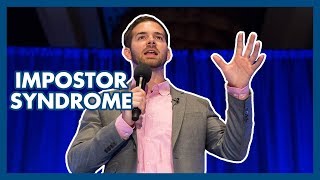
This is a transcript of a Capitalism.com YouTube panel titled "How To Handle Impostor Syndrome As An Entrepreneur" (panel recorded/uploaded by Capitalism.com). Multiple entrepreneurs (including George Bryant, Ryan Daniel Moran, Josh Bezoni, Cathryn Lavery, Greg Mercer, Jeff Lieber, Justin and others) share personal experiences of impostor syndrome, burnout, addiction and mental-health challenges. The panel emphasizes owning one’s story and authenticity (George Bryant), the power of community and networking to combat isolation (Ryan Moran, Jeff Lieber, Josh Bezoni), and concrete coping approaches such as openness, delegation, meditation, clinical psychedelic-assisted therapy (Josh Bezoni mentions MDMA in a study), time off and team-building.
Chapters
The reason I felt alone is because I felt like people didn't truly know who I, who I was. And I was being incongruent, which left space for me to make up judgments against myself. And so the biggest catapulting in my business was when I told the entire world that I was an active duty Marine with tattoos purging in porta Potties in Afghanistan because I hated myself. And then that it came from sexual abuse. And then I owned that story and figured out that everybody has a past and a history. And when you can own your story, your story can't own you.
When people who have a similar mindset come together and are led by people who have a vision for how.
To stretch what's normal to you, and you get around that atmosphere, just magic happens. And I've noticed that entrepreneurs are notoriously guilty at isolating themselves and playing this game alone. But if you ask anyone who has had an amazing growth curve like we saw today from entrepreneurs who hit 100 million in two years, or can't keep inventory, or have audiences of hundreds of thousands of people, what you see is that it is always about who. It's always about who you surround yourself with. And when we play this game of business and life together, it's more fun. We create more amazing opportunities and.
We open up that growth trajectory far faster than we could have ever done ourselves. And that's just happened. What happens when you take amazing person, amazing opportunity and connect it with this type of an environment? This group of opportunities just hits and amazing things come out of this. When you realize that we've all got it, you can be free of it. None of us are alone in our struggle. None of us are alone in the quest for meaning. None of us are alone in the comparison game of figuring out am I on the right path or.
Everybody passing me up. I need that reminder. So I'm sure every entrepreneur needs that reminder. People who are running nine figure companies need that reminder. I mean, somebody on stage just admitted they're like, wow, I sat next to you and I felt like my comparison come up because you run this big company and I run an agency. And he's like, I kind of feel better about myself now knowing that you probably freak out more than I do. So there's, there's such power in that. And we just shared like a ton of content about what's working and what's killing it and where people are advertising and what they're spending to acquire customers and how they're scaling companies. But then to hear on the other side of it, that there's still, like, that internal struggle when we don't connect, and the power that happens when we do connect and genuinely, like, play this great game of business and life together. The magic and the power that comes on the other side of that, that's just like. That, to me, is the most meaningful thing in the state of the entrepreneurial ups and downs through the panic, the crisis, the exhilaration.
What are you doing in order to mentally stay on track?
Thank you for asking that question. I have imposter syndrome, like, 23 and a half hours out of the day and self doubt and guilt and shame and failure and all of the stuff. And so I just tell everybody. That's all I do. That's how I built my social media.
There's the secret.
250,000 fans.
Why?
Because I told them I was bulimic, I was struggling, I hated myself. And then I carried it over into this space. And I walk into consulting meetings, and they're like, hey, can you help? I'm like, yeah, you do this. I'm like, oh, that was about my ego. Hold on. I really am doubting myself right now. And it just takes all its power away. Just really, really easy.
Can you tell a story about that?
You want the. The story with Aubrey?
That's what I was thinking of. If you've got a different one, I'll hear it.
So Aubrey Marcus is a really good friend of mine as well.
And they were one of my first consulting clients. So I walked in to consult Aubry on launching all of his digital programs, and he's like, I really could use your help.
And on it, and.
And I was like, cool. Set up a marketing meeting, and we're reviewing their first funnel, and I did not belong there in my brain. I was, like, sweating, nervous. And so every time I asked about a part of the funnel and I was writing the percentages on the board, I was like, oh. And it was so bad. And Aubrey, in front of the entire company, he's like, hey, we get it. Don't be a fucking dick.
And I literally. I about crapped my pants. I wanted to run out like a little baby, like, run away and go hide and cower. And then part of me wanted to fight, but Aubrey's a pretty big drunk dude. And so I stood there and I was like, wow, you're totally right. I am being an asshole. That's because I don't know how to help you. And then it created the best space ever. And I've been with them for 15 months since, launched a book program, scaled campaigns and done all of that. And I just feel like. And I was talking to everybody about this while I've been here in this entrepreneurial space. Like, we all have it. We all have the stress. We have, you know, the people that quit. We have the families, we have the challenges, we have the funding, the broken products. Like having Facebook ad account shut down. And it's so normal, but it's so not talked about. And I just want everybody to know that it's normal and, like, we all have it. And if you commit through it and you share it with people and you network and build all of these relationships and it's what makes it different. Like, don't wallow in your shit and sit behind the computer and punish yourself. Like, tell somebody and go help a customer. And so, like, I share it very openly because it's been probably the biggest key to my success is just talking about how I feel.
So there's a reason why I attempt to be so open about the downs of entrepreneurship, because I've got it, too. I mean, I have it every time I take a mic, every time. Every time I fire up the microphone on a podcast. I wonder, does anybody care? Is anybody listening? What is the YouTube comment going to be?
And we all like to act like that stuff doesn't hit us, but every once in a while, there's one that just that gets you, and those are the things that you remember. And our brains are wired to keep us safe, not make us happy. And that's why we worry about these things. And so one of the things that the reason I try to be so transparent about that is one, to give all of you permission to feel that too, and to keep doing things in spite of it, because you can do great things in spite of how you feel about it. And number two, because that makes me feel free of it just by expressing the fact that sometimes when I get on stage and take the mic, I don't feel like I have anything of value to say. And sometimes I do a podcast about how I don't feel like I have anything of value to say anymore. And that makes me feel free to go provide value, because as soon as I'm done with the mental frame of I have to show up and act like I have something to say, as soon as that's gone and I relax into my body, then, like, magic shit just happens. Because there is value there. It's just blocked by the frame that you are projecting to the rest of the world. So that's why I even care to express that. Both because it invites all of you and anyone who listens to feel that and move forward, and because it makes me free to move forward.
Permission, safety and accountability.
Josh, would you comment here? Because, I mean, you've been open about the ups and downs of entrepreneurship, the stressful days. What do you do to stay on track and talk about that?
Self proclaim or self confessed, whatever, workaholic, for sure. Ryan and I have had a lot of discussions about this. Some of the most successful people you run into behind closed doors, unless they're really authentic, are some of the most screwed up people you'll ever meet. Like, I have friends that are at the top of their game and everyone, they're on stages and not talking about just Ryan. But.
Ryan's actually a. Ryan's actually a stable guy.
But yeah, it's.
I mean, I take all your vitamins.
We've all gone through it. I mean, I've had panic attacks in boardrooms. I've about lost everything. I've, you know, struggled with no sleep and depression and just all these things. And until recently, no one would talk about these things. Then Tim Ferriss started talking about his issues. Lewis Howes came up with a whole book and came out with a lot of his issues. Mask and masculinity, I believe it's called Aubrey. If you listen to his podcast, he's talking all the time about his issues. I started talking more about my issues because I think it helps people and people can relate to you. We all have the same issues we've had, especially in business. It's a grind, man. By the way, is there anyone here the first time they've ever been to a conference? One or two. Let's give those people a round of applause because.
I remember the first conference I ever went to. It was a carpet cleaning conference with a guy named Joe Polish and he had a guy speaking named Gary Halbert, which is a famous copywriter. And that was my first conference. I just remember thinking, oh shit, I shouldn't be here. Everyone's gonna know I don't know what I'm doing. And I just kept plowing through it.
So anyway, and that's interesting you bring that up because Gary had his demons as well. His entire life.
His entire life.
And so it's his. It's easy to project what you think you should be or who you think someone else is when they're on stage and compare your inner junk to their outer mask. But so in your case, you had that twinge of self Doubt not only Gary at the end of his life talked about that he had all kinds of demons that were followed him throughout his entire life.
Yeah but what I do I when on I love these guys that have my morning routine, my afternoon routine and my evening. I'm like fuck that man. I wake up at like 10am frantically on my phone because I stay until 3 in the morning the night before I'm struggling through my day like to keep up with my email. I got so much freaking email I can't keep up with it and I end up just deleting it all and then you know. But I also work until and a half for years until like three or four in the morning a lot of the times. So these routines and stuff. Don't beat yourself up if you're not I mean I hang out with Tim Ferriss. He's not working four hours a week. You know.
He'S as neurotic as the rest of us. Great guy.
You want a journal?
I need a journal.
No but when I started hanging out with Aubrey I'll tell you two things that have helped a lot. One is meditation. As corny as it sounds I grew up in Mount Pleasant, Iowa 30 minutes from Fairfield, Iowa with the Maharishi are there if anyone knows. Yeah. Which when we were young I didn't realize the benefit of that we thought they were all crazy and now I want to go back just to do that but meditation helps a great deal and psychedelics I've gotten into psychedelics with Aubrey recently. MDMA is a godsent but.
Ecstasy is a good thing if you're not partying on it.
With a shaman or with yeah to confront your crap from your past because we all had a lot of us had shitty childhoods and that stuff will drive you but it'll also drive you crazy after a while.
So just to protect my own little meditations and mdma just as a disclaimer you're talking about therapeutic use which is actually in phase three trials with the FDA and can actually be licensed with a trained professional who can prescribe.
This was during part of an FDA study. It wasn't like it wasn't with friend in a dark room.
And at least three of us on stage have donated to this cause. Maps and capitalism.com nor anyone up here does not endorse the recreational use of illegal things. Also, everything that is set on stage throughout the next three days is for entertainment purposes only. None of it works or should be taken seriously or implemented into your business or your life. Copyright capitalism.com 2019.
I told Aubrey, I said, you can't be having these podcasts about psychedelics when you own a supplement company. It's like the worst thing you could ever do. And then he proved me wrong. I mean, they're killing it.
It helps.
I know it helps. It's authentic.
And anyone else. Would anyone else like to comment on this? Not.
Oh, let's all go around and talk about all the drugs we've used, starting with cocaine.
I'm microdosing right now.
I'm high right now.
Oh, Catherine, please say something intelligent.
Oh, God, this is really digressed.
Pretty.
So I think we just. I also am a workaholic. I burned out last year. I was actually at Capitalism conference at the end of the year, and I had a trip booked for Thailand three days later. And the day before the conference was great, by the way, but I was like, I can't take it anymore. I just got on a flight, went home to New York, and then I went to Thailand and just turned off social media. It was the first time in, like, five years I hadn't been on my email or on Slack, and I just took, like, three weeks off. And I think that was the best thing. And I also think entrepreneurs hang out with other entrepreneurs, which means we're always thinking about work, and we're like, oh, you're the average of the five people you spend the most time with, so God forbid you hang out with anyone else.
But it's actually, like, I think you need to have a mix of friends. Like, friends that can do fun stuff where you're not talking about work all the time or conversion rates or traffic or anything else. And also, I do a float tank sometimes as part of an FDA study. With mushrooms?
Well, on psilocybin, while on mushrooms.
You mean reishi and portobello mushrooms? Yeah, you just put them in the float tank and float around. That's how you cook them. Okay. Justin?
Yeah.
You're gonna go through all sorts of crazy shit. Nobody's immune to it. We are all workaholics. I find that my outlet is. I mean, I went through the period talking down where I became an alcoholic. Found myself at the bar at noon with my laptop, and then, you know, six, eight drinks later, then go home and finish a bottle of wine. We all go through these ups and downs. So I quit, and I turned my focus to meditation and exercise, and that's really what happened.
The two calm dudes on the stage screwed up.
Do you have ups and downs?
Of course. And.
You know, I think the original Question was kind of, like, advice that you have, and I don't know if I have any real advice for, like, what you can do about that besides just acknowledging it. Same thing for me. You know, I remember especially, like, when I was starting Jungle Scout, I was super unhealthy, sleeping, like, a couple hours a night. I had, like, shingles on my face. I went into the doctor. They're like, we think this is shingles. We've never seen anyone under, like, 60 years old have shingles before. Like, what are you doing with your life? It's like, well, not really sleeping. I'm really stressed out. I'm not eating healthy, all the bad things. So, yeah, of course not recommending any of you guys do that, but I think you just kind of have to acknowledge the, like, the emotional rollercoaster that comes along with entrepreneurship. I think it's part of the reason I love it. But some months or years or anything else, you feel burnt, burnt out, terrible lack of energy, everything else.
Jeff, have you ever had a bad day?
Yeah, of course. And now I'm sitting next to Josh. I feel a lot better that.
Well, no.
First I'm like, okay, this guy's Superman. I should not be on this panel. And now I feel better.
Yeah.
So, honest question, while we're being super honest, did it come up for you hearing a 1, 2, skip a few 99, 100 million. Does that come up for you? Like, oh, I shouldn't be on this panel. Like, my imposter syndrome comes up. Does that legitimately come up?
Oh, yeah, of course. We all go through it, I think, and I definitely go through it, you know, and what helps is just. I mean, I've been doing it for five years, the entrepreneurial journey. And, yeah, there's been a lot of ups, a lot of downs. What I would recommend is try to, like, getting the shiny object syndrome. Like, I at one point was managing four different businesses, you know, because opportunity comes up. Like, I could do that, right? So that was. Those were my lowest times. And then after, you know, then getting rid of two of them and then selling one, and then now just focusing on just turnkey. That's been the best thing possible. And then also getting yourself a really good team, like, my sister's here, my cousin's here. They've helped the business grow so much and surround yourself with a good team of people. So you're not doing it alone. That's, you know, been the biggest help.
Let's conclude with that thought of. Feel like you're doing it alone. Has Anybody here on the panel felt like they were doing this alone. And what have you done about that?
I was under the guise when I. I mean, I've been doing. I've been full time as my own business for over 12 or 13 years now, but I was always under the guise that if it was going to be done right, it was going to be done by me.
And I could only go so far, I could only do so much. I could only get so much done. And then as soon as I started letting go, yeah, it's not going to be done 100% up to my specs, but if it's 80% of the way there, if you hire the right people and train them effectively, you go miles instead of feet in your business. But I was really hard about letting go and having it done right. And now, you know, I've got a staff of 20 that handles all the day to day and I manage that process. So it frees up a lot of my time and energy to focus on the strategic side of things.
Anyone else ever felt alone in this game?
Very alone. Especially like in the earlier days when the company's not producing much cash and you can't hire, you know, other people to help you. That's really tough. I think even, you know, I think I've felt alone during other stages as well. Like even after the team was 20, 30 people and there weren't many other kind of like senior leaders or like really experienced people. A lot of kind of like individual contributors are really good at their particular crafts. I think at times like that I felt alone, not maybe other people I could talk to about certain things. One lesson I've learned from that is I wish I would have hired like very experienced, more like executive level people earlier. Something to think about.
Yeah. One of the biggest things that's helped me is I'm friends with now a lot of people in this room that, you know, dating back to conferences four years ago, you know, you see them at the same conferences over and over, especially if you follow Ryan. And so just being able to like connect with some of those friends that they're going through the same stuff that everyone on stage and everyone in the crowd is going through and just getting to like check in with them once in a while and hear their pain points, it just, it always brings you back home, like, okay, I'm not the only one that is really stressed out today and so make good connections with the room and open up like these guys are talking about because that's the best way to have good Relationships, I think.
Anybody else.
When I started the company was virtual. Not biotrust, the one before this. I worked in Denver and I was a workaholic. I usually just sat alone in a room and talked to people on the phone all day. But for like 10 years, it was a long haul.
I started being much more fulfilled in life and also started making a lot more money. When I started networking and being around like minded individuals. And also when I learned to hire, I had my account map out my whole career of my income level and it went like this. And then when I learned how to delegate and network, it went like this, literally, like in a year. Because.
Entrepreneurs are usually. Dan Sullivan calls them rugged individualists. You want to do everything yourself and it's so hard to delegate. But once you learn how to delegate, get good people around you, you don't feel so alone and it'll end up catapulting your business. And I went through probably five years of not doing that, not bringing people on, and it cost me a lot. So that would be my best advice.
Kathryn, everybody loves you. Do you ever feel like you're on your own?
Yeah. So I used to be an architect. I didn't come from an entrepreneur background at all. So I was like, I don't know anything about business. I'm gonna be like the odd one eyed that just knows design stuff. And I just read a ton of books and I was scared to go network because I thought people were gonna think, oh, you don't know about business. You only know about this fluffy stuff that doesn't matter. And so for a while it took me, you know, I just read a lot of books about business so that I could feel like I could have a conversation. And then I networked more. And then I realized a lot of.
People that I was coming in contact with actually needed some of the stuff that I was good at. And so I built confidence through that. But it was only by networking and realizing, oh, I actually do have skills that aren't usually here. And that really helped me get more confident.
George, you get the final word, my friend.
Yeah. So for me, the most feeling of being alone is when I felt like people didn't know who I truly was, like, authentically. And so it left space for judgment. So, you know, the first two years of my.
Would you say that again, George?
Yeah. Yeah. The reason I felt alone is because I felt like people didn't truly know who I. Who I was, and I was being incongruent, which left space for me to make up judgments against myself. And so the biggest catapulting in my business was when I told the entire world that I was an active duty marine with tattoos purging in porta potties in Afghanistan because I hated myself. And then that it came from sexual abuse. And then I owned that story and figured out that everybody has a past and a history. And when you can own your story, your story can't own you. And there's no veils. Like, if Josh doesn't like me, he's gonna tell me and I'm totally okay with it. I might be a little sad with imposter syndrome, but, like, at least I know that I'm congruent with my head, my heart and my belly. And it was single handedly in my consulting and my businesses and everything. The biggest breakthrough everywhere because from the top executives of CEOs in the $40 billion companies that I've worked with all the way down to the small, we all have a past and a history. And the networking is so we can build these relationships that stand the test of time.
I mean, it's easy to see the breakthroughs and the momentum and the scale through which these types of companies have been built. In my experience, they happen when you, like when you drop the frame, when you drop the.
Projection and you're scaling what feels natural and easy, which everybody up here is in their unique ability. And that's why they have scaled so quickly. Hey, can we give it up for this panel of rock stars?
Justin, Greg. Jeff. Josh. Katherine.
George.
Hey, thank you so much. Appreciate it, guys.







