
How To Identify & Speak To Your Niche (Part 3: Building Authority Sites Q&A)
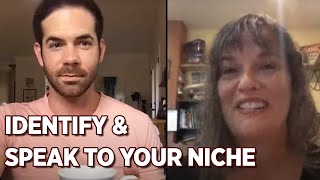
Ryan Daniel Moran answers questions about building authority sites through content. Use transcription tools like Rev and Otter to produce fast, then narrow your niche over time rather than starting too specific. Convert podcast episodes into written articles to build authority and keep readers on your site longer.
Chapters
Good morning, Greg Johnson. Hello, Charmaine. Welcome back. Okay, my friends, grab your cup, grab your mug, grab your chalice or stein, your tankard, your thermos, your vessel of any kind. Join me now for the. The thing that makes Sunday church even better. It's a simultaneous sip.
Go.
Oh.
Oh, that one. That one was needed. We needed that one. I actually. It's been a week, ladies and gentlemen. Has anybody else had a week? If you've had a week, raise your hands. Hallelujah.
Praise the Lord.
We're having another simultaneous sip. We're having another simultaneous sip because we need to sip away the blues of the week. Oh, the stock market's giving us blues. Oh, the news is giving us blues, ladies and gentlemen. But if you feel the caffeine spirit flowing through your veins, if you can feel. If you can feel the spirit of capitalism bringing us closer together, grab your mug again for another simultaneous sip.
Go.
Oh, see, money. Got a big one on that one, C. Money is gonna. Who see money? I got. Calm down from that sip. I just saw you. You take. Oh, my friends, hello. You look great today. I'm so proud of you for showing up and smiling during what a week. What a week. Ladies and gentlemen. If you are feeling it, don't you worry. You have Sunday. You have Sunday business. Church. To drink away your blues with coffee. To talk about capitalism over coffee. Ron Taker says you're in the wrong profession. Ryan, disagree. Hey, sue, give me a thumbs up if you're ready to hang out with me right now. Cool. I want to introduce y' all to somebody. If you haven't met the lovely Susan Anderson. Hello, Sue.
Hi, guys.
Good morning. How are you?
Good morning. Fantastic.
I got a terrible delay on my end with you, so I'm gonna. I'm gonna read your lips for a little bit, but.
Hello.
How are you? You did your hair.
Oh, thank you. I did my hair. Yeah. Usually it's not like this on Sunday morning.
So if you haven't met sue, sue is the one who interviews a lot of you for the 1% newsletter. She's also who is in charge of all written content inside the 1% and@capitalism.com. and sue and I met when we were both young pups.
We actually met at an event about 10 years ago and stayed somewhat in touch and ended up working together about a year and a half ago. And it's been a fun ride, and we're just getting started.
Oh, yeah.
So, Sue, I wanted to recap. We've. For the last couple of weeks, we talked about Authority sites, and I call it the Just One. The Just One site model around building an authority site around a niche market, getting the key. The articles to rank for keywords, selling affiliate products. And I wanted to. I know you've had a background in SEO and in. In all things editorial, so I was just wondering if you'd give a little bit about your background and what Swiss army knives you bring to what we do here at capitalism.com?
I am the Swiss army knife and the human exclamation point.
Yeah.
I've had a writing firm since 05.
It's been incredible. I have some of the same writers working with me since 06, which is amazing. Some of the same clients since about then. And it's just been amazing watching the Internet unfold. And going from what was appropriate SEO to what works now has been quite the transformation. But it's really fun. Get to play mad scientist all the time and see what will work.
So one thing I wanted to ask you about was kind of the biggest bottleneck that I see people run into is they get the overall strategy of everything we've talked about over the last three weeks, and then the actual going and writing and creating content is overwhelming. Yeah, you create content faster than anyone I've ever seen. Sometimes we come up with an idea and have it posted by the end of the day. So how do you handle. How do you get. How do you get things out so quickly? And where do you find good people to make the content?
All right, well, it's really easy with Ryan, of course.
He's the one. Take Wonder as far as he will riff on Rev, and then we can get that transcribed and write it from there. And it really doesn't require a whole lot of cleaning up. I'm hearing echo.
I get that a lot. People tell me that it always comes through fine on the play.
Okay, cool.
But the process that you're saying is when I talk something out and then transcribe it and then you clean it up and cut it up, it doesn't take a whole heck of a lot of time. It doesn't require me to write anything.
Exactly. Which is great. It's, you know, if somebody typically, we can speak way faster than we can write. And if you're speaking, you have a very little window of time to correct what you were saying and backtrack. So it's a lot easier to kind of get if you know the topic well. It's very easy. Just record yourself, send it off to Rev. Their AI version of transcription is entertaining. At best, but it's really cheap, so that's one way to do it. And then just clean it up from the transcript and you've got, you know, it's amazing how many more words you can get out in a minute of talking than you can of writing really well.
Yeah. And then the other app that we'll sometimes use is called Otter, which we talked about the last couple weeks. That's another transcription app that you can just talk out, hand it over to an editor and then they can clean it up. Sue, you also had the keyword research side of what we do, so would you talk a little bit about how you find the topics that we are publishing?
Definitely. So if you've got, you know, if you've got something in mind, obviously you would, or you wouldn't be sitting down to write. So whatever it is that you're looking for, do a little keyword research and try to find what's called low hanging fruit. So you want as many searches as possible and as low competition as possible. And plain old Google AdWords is fine for that. Just for discovering this, you can get fancy with Semrush, which is amazing.
And so once you've got your keyword set, what I do is go into Google itself, do a search for that and see what questions come up. Google is essentially telling you exactly what they expect to see in a, in a new piece of content. They want new content. Like, when's the last time you clicked on something that was written in 2015, unless that was the only thing. So this is how you can compete is by having fresher content. So you go in, you find out what are the questions that Google has gathered that people are already asking about that topic. And then if you scroll, scroll way to the bottom, you'll see there's a list of suggested other searches and you probably should mention those terms as well. And then, and I've written this up, you can find it in the 1%. I wrote up a little blurb about how to do this. Then I use a tool called Page Optimizer Pro. So you take your keyword, you go in there, you do a little research. You can use that tool for content that's already created or content that's brand new, and you can find out exactly how many words you need to have in order to compete. You can find out who your best competitors are for that particular keyword and then where the keyword ought to go. Back in the day, way back in the day, you could just shove that keyword in everywhere. That's not a really good reader experience. Google is very much interested in making sure that people enjoy the read, so you don't want to overdo it. And so we use that tool as well. There are some tools. I think it's Buzzsumo, but also I use one called Kudani, which is kind of expensive. Now Buzzsumo is probably a more affordable option, but you can see what's been shared socially on that specific piece of content. No problem with piggybacking on that. So you can find those pieces, see what's actually been shared a lot and work that as a citation into your article at some point. So that's like this is the mother of all articles type of thing. So we've been able to rank really well for. If you look at the Capitalism blog, you'll see we've got what we call net worth pieces or profile pieces.
Graham Stephan was one that we just did fairly recently and it's already, you know, fairly competitive. But it's creeping up. It's at the top of the second page. Haven't looked yet today, but maybe we're up. Well, we've been able to outrank some people for their own name.
That's right, we do. So what you will find as you're going through this process that we've covered over the last two weeks is that as you post content and as your website starts to get authority over the first few weeks, you'll start to see that Google naturally sees your site as an authority and a reference for very specific pieces. So it will for us, profile pieces and net worth pieces, like highlights about how people have made their money is what ranks really well for our stuff. And then you can start to optimize for those types of pieces. Sue, would you share a little bit about how you are finding writers that you are working with on a regular basis?
Well, I used to try to make my own. I had some courses on how to become a freelance writer. I really don't want to be in info marketing though. So there are sites that you can go to where you can find them and you don't really have complete access to them. Things like writer access, which is kind of funny, ironic, but so you can, you know, kind of take your budget and get the best writer star wise, star rating wise, that you can afford. The trouble with some of these sites like that is the writer's not always available. The writer's only getting a really small fraction of what you're paying. But it's if you need somebody fast and you need it like you don't want to have to spend a whole lot of time. I recommend writer access. Upwork of course is fine, but you're kind of on your own as far as vetting them and making sure they can actually write as well as their samples. Show some other places that I've found that are kind of off the beaten path, but there's a site called workathomemoms wahm.com and actually that's where I found all of my long term writers, which is pretty amazing actually. One of them I went to high school with, so she doesn't count.
But that's all moms who are working from home and they have side jobs and one of them being writing. And so you give.
The pieces to those moms.
Right?
So I'll actually place an ad there and say, hey, I'm looking. My team is expanding, we need some help. You know, you could write the exact same thing as that and you know, you set up a little task like you know, you want to make sure that they're able to follow directions. So make it a little bit complicated as far as you know. Please send your samples to this email. Please answer this questionnaire. I've set up a questionnaire that they have to complete. If they don't, obviously we're not working together, but it's, you just want to, you know, writing ability is one thing, but you also want to make sure you're going to get somebody who can follow instructions, which is really important, and then do a test project. And I have always, always do a test project. Do not rely on their samples. I've had people where I'm like, did they pay somebody to write their sample? It's so bad. So you just, you want to start with a really small test project just to make sure and then once you have, you know, a writer that you love, do whatever you got to do to keep them, give them regular work, all that kind of stuff.
Amen to that. So for those of you who might not be as familiar with this process or missed one of the last two calls, we went really deep into this authority site building model which is like if I could only have one business and you allowed me to have one site where I wrote content, I could turn that into a six figure business within six to 12 months. And so we've been going into that, we go into that really deep and if you miss Those, they're on YouTube and they're in your members area so you can go through those. But we've gone really deep into the How I want to spend a couple minutes talking about the why. Like why, why does this, all of this matter? Before I go into it though, I'm going to, I'm going to experiment with something different today, everybody. So usually what we do is we, we say if you want to come on live here in the hangout and you want to have a give for the community or if you have a question that you want to ask, if you want to workshop on something or if you want to pitch your product or service, then you would hit hashtag, go live and you would, and you would see it in the comments or we'd see it in the comments and we'd send you a link. I am going to do something different today. I am just going to post the link here in the Facebook group. And so if you want to come out, there is a max of the number of people that can come in here. But what I'm going to do is I'm just going to post the link here in the comments.
I'm doing this now.
And you can just come hang out, click that link and it'll open it up into the, into the room here. And then if you have a question, I'll just ask it a, give me a thumbs up and you're ready to come up and we can work on your question live. So while you are trickling in.
Here'S the why of what we've been talking about over the last couple weeks. So if you have a physical products brand, if you have a personal brand, if you have a, if you're employed at a company that has stunted growth, all of these three things can and will be supported by buoyed by a site that gets 100,000 unique visitors a month from Google and getting 100,000 unique visitors a month from Google comes down to really good content that ranks for keywords and good link authorities over a long period of time. We've gone into exactly how to do that over the last two weeks. Most people when they get into business, especially Internet entrepreneurs, get into this game.
And they have a product for sale or they're building a business and they hit a plateau. And the reason why they hit a plateau is because they have no way to build long term authority and build long term traffic.
Within their control. The way that you can do that over the long term is by generating content that ranks for long term keywords. And there's two types of content. There is link bait and there's money bait. Link bait is topical content that is relevant to what is going on right now that attracts other news media sources to link to you. And money bait is when you are doing a long term keyword that is going to rank for something that you can sell advertising on. You can build a list around or you can sell a product around. And we've gone into those detail in the last two, but that is the found that will be a foundation for any type of business that you want to launch from there. And if you do it well, this is how I made my first hundred grand when I was in college. And AI is actually the foundation of the businesses that I launched from there and can serve as the foundation for a physical products brand or whatever it is that you are trying to build. So that's the why behind all of this. I see a couple of you starting to trickle in. Wes, I see you just joined us. Give me a thumbs up if you are ready to come hang out with us. All right. Wes. What's up dude?
Hey man. How's it going?
Good, how are you?
I'm doing good, I'm doing good. Thanks for asking.
You bet. What's going on? How can we help?
Yeah, so I've been listening to the Authority site stuff for over the last couple of weeks and that's something I'm definitely interested in doing. That being said, my main question today is a bit more on the product side. So is it okay if we ask something like that?
Absolutely.
Okay, cool. So basically for my product I'm having a question about my target market. I'm basically my target market, which you would think I wouldn't have questions after that, but I'm having questions as far as how deep to go. So basically my, the product, my market that I'm looking at are people who have had a hard time losing weight. They've tried everything. They're ON Try number 10 of keto paleo, this, that, counting calories, everything. Right. So. Because that's where I've been. So what I'm looking to create are a different suite of products, but basically one, the first one is going to be one that helps with food cravings and shutting those down because that's one of the biggest problems and challenges that I have is starting anything new, you fall off the wagon after a couple weeks. And I figured if I have that problem, I'm sure a lot of other people have that problem. So my question though is when I've gone through the trainings and I've joined Million Dollar Brands, which great job on the book, by the way. I have it. So it actually made me Join.
Yeah, but when I've gone through that, the examples I've heard you give are things like moms.
With their kids or whatever. And that's why you do spat. Like, that's how you would do spatulas or I don't know, for me, if it's. Do I need to go and pick like a demographic? Because right now I just have a vision of, hey, people who have tried everything to lose weight and they haven't been able to. And I have an image of that because I'm that. But as far as going beyond that and say, okay, moms with kids or dads or professional women, like, don't need to go that deep or can I stay where I'm at?
You can stay where you're at. So for someone, when you start going into demographics, it does allow you to be really specific into how you're communicating with someone. But when you have a product that serves multiple demographics, it's not necessary. It is really helpful when you are starting to be able to really nail your ads and get very specific in the language that you are using. But it's absolutely not necessary. If it's causing you mental stress that's preventing you from moving forward, then go more general. Because what you are basically saying is that you have a good foothold on what the product line should be and how it should help someone. You're struggling when you're trying to get too specific on who the demographic would be. So that's fine. So you know enough to be able to identify what those three to five products are. They're going to help that person who's on a journey. And that's the hack. That's, that's what we need to unlock. And you don't, you don't need to go more specific from there. You can if you want to nail a specific market for launch, but you don't have to to be able to get the product rollout going and to start getting your messaging dialed into that audience.
Okay, cool.
Does that make sense?
Yeah, that does make sense. As one more follow up please. Okay, so excuse me. So based on that then what would, if it were. Because I know you did a, a supplement, it was slightly different. I think it was more about like fitness based as opposed to weight loss based. But if you were in my shoes and you were doing a weight loss one, would you like, how would you target as far as like ads and things? Would you look for people who are interested in keto or Paleo? That's kind of what I'm Thinking.
Or. Because, like, you talk about finding where these people hang out. That's the one thing when everyone has a problem losing weight. Not everyone. Everyone, but, like, so many. Like, a vast array of people. Like, how do I find out what the commonalities are of where they hang out?
Yeah. So let me. Let me give you a little bit of an example that I think will really help. So who. Who is the influencer behind Weight Watchers?
I don't know.
Oprah. Oprah is like, a 10% owner in weight Watchers, and she's the face and the influencer behind it. Right. So is. Now that's a weight loss community. She's a perfect avatar for something like that. Now, is Oprah Paleo?
No.
No, probably not. Is she Keto? Probably not.
No, no, she's not. She's not Keto either. Right. So I would actually encourage you to think about this a little bit differently. The person who is struggling with cravings is probably not ideal identified as Keto or Paleo. The person who calls himself Paleo is the crossfitter who.
Eats an 80% Paleo diet. So when you start identifying as something, it means you're down the rabbit hole, right?
It means.
It means that you are. You are now through some of the challenges and you are well on the journey. The best buyers are the people who are opening a new journey.
So since you said this so beautifully, where you said that my person is on their 10th try, that was so well said. And so the person on their 10th try might know what Paleo and Keto and Weight Watchers and all these things are, but they don't identify as any of them. Most of them identify as stuck.
Yes, 1%.
All right? So that's their identification point rather than identifying with a diet. So your ad, your targeting is.
To the demographic of people who are on that 10th try. And listen to those podcasts, follow those influencers, watch those YouTube videos about those things. So your ad is something like Paleo, Keto, it's all the same when you want chocolate cake.
Yeah. Okay.
They all work equally terribly when you really want to eat chocolate cake.
There's. There was a great ad that I saw once that was this British guy who was. It was a video called why Keto Sucks. And he was. He was a bodybuilder. He had. He had big guns. And he's like. He's like, you want to know why keto sucks? Because biscuits are awesome. Right. And it, like, it got your attention because there's some part of it, everybody who's on keto is like. Yeah, would kind of like a biscuit. That does sound. It does sound really good. So I think the opportunity for you is to. I mean, throw shade is a bit of a. Is more than. I mean, but for you to be able to poke fun at all of the crazy diets when all of them are just hacks to eat less, and you could follow a crazy diet that was invented by ancestral cavemen in order to eat less, or you could just take my product.
Okay.
That actually. That actually helps with an ad, and I just target that to.
People who.
Are following different podcasts but don't necessarily identify with any of them.
Well, not necessarily diet podcasts. Like, you don't want to be advertising on Bulletproof Radio.
Okay.
You want. You want to be targeting. You want to be advertising on people who are watching Rachael ray videos on YouTube.
Got it.
Okay. That's where I was stuck.
You just had a brain gasm right there.
Yeah, it's.
It's the. So this is. This is such a beautiful moment because what. What you're realizing, and you're being such a great example for so many people who are watching, which is that we often think of targeting the person who is midway through the journey because they're educated about the journey, but they're not on the journey. It's just like, I have thousands of people who follow my content, and I feel fall into the temptation of, like, teaching them about step nine in business when I know that the vast majority of them listen to my content as entertainment, and I got to bring them back to step one and get them to take step one.
Got it. Yeah.
That makes so much more sense now. Like, I'm looking at. I'm looking for people who are still searching for where their spot is so they would listen to people like Rachel Ray or. I mean, I don't know if Oprah has a thing, but different people who are kind of. They're kind of talking to that first step, they're also trying to get them on that first step, and that's why they're listening to them as opposed to, like you said, more down the rabbit hole of, hey, I'm Paleo. If they're like you said, if you're calling yourself Paleo already, you may still have issues, but you're not necessarily my market.
That's right.
Okay.
That's exactly right.
Yeah.
Cool.
You got it, dude.
Thank you.
Appreciate it.
You bet.
Thanks for hanging out with us.
You too. Take care.
That was. That was fun. I like this stuff.
Sue, do you take any of that when you're creating a blog or when you're writing content? Do you take. You just did some work on, like, the customer journey. Would you talk a little about that process that you just went down?
Oh, yeah, sure. So you kind of have to, you know, you can start with yourself because you're the one that you're gonna. If you are your target market, you're gonna be the easiest avatar to create that you're ever gonna see. So we'll use that as an example, like Wes. Okay, so you would kind of go through and say, what kind of questions are you asking right now? Like, what is. What's going through your mind constantly where you're like, crap, I fell off again. Darn it. I promised myself today I wasn't going to do this. I did it anyway. I'm never going to get through, like, just kind of journal a little bit and see what comes up, because guarantee that's going to be, you know, a lot of your target market, your audience has that same thought process going on.
And then look at, like, what, you know, once you have some content anyway, that's one thing you can kind of, if you have a lead magnet, you're going to send out or anything that you want to direct people to. If you have, like, the money pages that Ryan was talking about. So keep some of those in mind. You want to always keep, like, actually a spreadsheet of all the content that you're creating because you'll forget what you've made, but you want to be able to draw people into that. So let's say you've got something about, well, here's how you battle cravings. All right, so now you've got content that's about. Shoot, you know, I did it again. I ate the cupcakes. So you could work through, you know, what are the people saying to themselves there? Pull some keywords from that, of course, and create a list of, like, what are. You know, what are 10 things that are happening to them? You could create content around all of those. Like, you are about to enter down the rabbit hole answering everything. You don't have to be the expert on this. You can talk from your own experience, right from the heart on this, and people are really going to identify with that, but you can kind of plan it. So let's say they need to first see, you know, one particular piece of content. You can create a bunch of various.
Like a flow for it.
Yeah, like a flow. They can come at it from a bunch of different places, but keep in mind, a flow like. Like, let's say that you want them to first consume this one piece of content and then you want them to get here. So what questions would they ask after having this? Like, what else do they need to know? What else are they struggling with?
Remind me. Google rewards time on site. That is a major. Correct. So part of the reason why sue is bringing this up is the longer that you keep a user on site, the more Google rewards that because they're optimizing for user experience. So if someone comes in to one piece of content and then it takes them down another rabbit hole, that keeps them on site longer, which will help increase the. The Google love that you are, you are getting. We're about to lose Sean McCool over here. So, Sean, wake up over here and give me a thumbs up if you are. If you are, I'm just gonna bring you on. There he is. Oh, that was more of Sean I ever wanted to see. What's up, dude?
Is this on? Hello?
We can't hear you. You ever have to talk louder.
Hello?
Can you hear Sean? Sue? I can't hear. I can't hear a thing.
Reading lips.
What's up, dude? Like, the beard looking a little pudgy.
I don't know. I think it's the thing. It's a narrow.
The camera adds two and a half pounds.
Thank you. Easy there. So this is good stuff. This is good stuff. I just want to say hello to everybody.
What's up, dude?
Yeah.
Are you still in Florida?
No, we're back.
Oh, you just got back.
Back at the house.
Hi, Sean's house. If you haven't ever been to Sean's house, it's a. It's a great oasis. Everybody, we're next. Everybody to Sean's house.
Only if you get to pet the dog.
The dog is. Yeah, we're going to pick up the dog this morning. He's been at the kennel all week. But, yeah, no, I was just wanting to say, like, this. There's that echo. The stuff you guys are talking about. Like the. As a copywriter, like, some of this stuff is, like, really bothered me. Like, the idea of being general enough to hit the newcomers and the big part of the audience, and then the whole idea of, you know, in copywriting, there's this over.
You get into marketing in this marketing world and Internet marketing, and I think people get too hung up on niches and they go too deep and too narrow. Like, if you look, you know, back on all those books back there, you know, a lot of those are like best selling books and they tend to be pretty broad.
So if you're wanting to build an audience, I do agree. You know, what you said to Wes and kind of starting broader I think makes a lot more sense.
Would you explain from your perspective the difference between that and what you're calling a niche?
Yes.
I mean, you did a pretty good job of it. So I'll just steal what you said and reinforce it. But basically, you know, the niche would be like crossfitters who eat Paleo on Thursdays would be a super, you know, tight niche.
As opposed to crossfitters who are vegan as opposed to, you know.
Vegan bodybuilding, for example.
Yeah, like those are like super tight niches as opposed to people who are into fitness. Like fitness would be super large and then the next one down might be, you know, strength building fitness as opposed to aerobic fitness or cycling fitness or something else. And even within cyclists, you're going to have mountain bikers, you're going to have road cyclists, or you have spin class people, you know, and like any of those three would not at all consider themselves to be part of the other two more than likely. Like, they're usually very different, very different personalities. You know, there's some crossover in mountain biking, road cycling these days.
But you know, you know, Sean, I'd love to hear you keep talking about this because this is something you and I have talked about privately that I've. I personally struggle with. You know, I can see it in other people, but I've struggled with this where, where when I have a brand like capitalism.com and yet my background is in physical products brands, I feel the tug between like talking about what I know and broadening it. And I feel like I'm just starting to get, give myself permission to start broadening the message to be bigger than my past, like my past history. I think, I think you're going to be very pleased with what sue and I have cooked up for the next quarter. I think. I think you will finally be going.
Yes, they got it.
But it was, it's been a difficult train, like difficult learning experience for me of like getting out of a narrow niche and going a little bit broader. But I feel a lot freer after kind of going in that direction and I think it's going to help me serve more people as well.
Yes. So specifically, what's your question?
Why did it take me so damn long to figure out that you were right?
That's a good question, man. I do not have the answer for that.
So, I mean, I guess like we all have struggled with this. Sean has really coached me on getting me to think bigger than my own.
Frame of seeing it. And so I, I think for those of you who are watching and feel stuck in that, like I need outside opinions on that as well. And I think we all kind of go fall into that sometimes.
Yeah. But I mean to address it.
I.
Think one way to think of it is you can start, you know, I think Russell Brunson's book is it Expert Secrets where he talks about the niche, you know, niche and sub niche and all that kind of stuff.
Yeah.
Which is I think where a lot of Internet marketing crowd direct response. Like if you study any of that, you really can get hung up on finding the perfect niche. I know I do as well in coaching. Like, you know, I want to coach everybody, but then everybody tells me you got to have a super narrow niche or else, you know, it doesn't mean anything and all that kind of stuff. But then I look at.
You know.
One of my gifts and my curses is being able to see like both sides of an argument pretty clearly.
I look at like best selling books of all time. Not just like recent but like all time. You know, how to Win friends and influence people. 7 Habits of Highly Effective People. These are pretty broad topics. You know, even some of the great business books, you know, who Moved My Cheese or Rich Dad, Poor Dad. Rich dad, Poor Dad. I mean these are pretty broad ideas that.
Worked really well to build an audience to. So I think what I'm coming to is that you start your niche broad and then as you ascend people up in the, in your products, you can start to niche the products as you ascend in price and things like that. Which if you think about it, you know, I come from the world, you know, I spent some time in the Agora land.
And that's what they do. They'll talk about dividend stocks on their front end newsletters, but then they'll take people up to trading services and then they'll take them not only to trading but FDA approval trading services. And those get more and more and more expensive and they get more and more narrow. Not from the niche as far as the person, but niche and the information that is being, you know, sold. And that's a, you know, that's a whole nother way to niche is by information type as opposed to just person type because then the people will self select.
I so appreciate how you said that because my journey kind of in the last few years has been the opposite. Starting off Pretty specific and going broader. And man, that's a lot harder than starting broad and going more and more narrow, but catching a wide net and then getting more and more specific and charging higher and higher prices is. Is the natural progression of how people follow you and your natural progression as an entrepreneur and as a leader of a community. So. So, Wes, thank you for kicking off this conversation.
If you're watching and you're struggling with the same thing, it's okay. In fact, recommended by all of us to start a little bit broader and then to narrow in over time. I kind of made the mistake of going opposite and it took Sean about two years and like, probably a lot of doing this. Like, when is this young idiot going to get it for me to. For me to finally listen?
Yeah.
Thanks for your patience, Sean.
Yeah. Sue and I have had a lot of conversations behind your back about this.
I believe you.
Ryan. I think part of it with you, though, is you came in as an expert. You had already built a physical products brand and sold it. It's hard to forget what you already know and have curiosity about that.
So, you know, for people who are just starting, if you're, you know, like, you're biggest asset is your curiosity and your enthusiasm for learning. So if you're bringing people along with you, it's a lot easier to do, do it the easier way than what Ryan did. So.
Yeah, Amen.
I want to drop one more thing, and then I'll let somebody else. Is streamyard camera backwards from, like, other video streaming services? It seems like it is like, yes, it goes the wrong way.
So I'll add one more thing. There's two ways you can ascend people in price. One is more specific information, and the other is access to you as the expert.
So both of those are ways to ascend and make more money. If we're talking about building a website that makes money is one is more access to you. And that doesn't mean direct. That could be go from huge, you know, group of 10,000 people down to a group of a thousand people, down to a group of 50, you know, to a live event. Those are all different ways to ascend people from a monetary standpoint is through access. So if you think of like as you're building out your product, you know, suite, those are different things. More detailed information you can charge more for and more access you can charge more for. So that just popped in my head, so I wanted to share that while I was here.
Beautiful. Thanks for your help, Sean. Appreciate you.
All right, I'm gonna Go back.
All right, I'm. I'm gonna head over to Ron Tager, who's gonna pitch us all on an MLM business opportunity.
Are you ready, Ron? Give me a thumbs up if you're ready.
Give.
Give me a thumbs up. I need a thumbs up. There we go. All right, Ron, do you have your pitch deck for us?
Oh, my goodness, Ryan.
You'Re mean. You know. Did you know that you ruined my night?
I ruined your night? Did I?
Yes, you did.
I'm watching you, Ron.
I know. That's it. That's. That's exactly it. So I was, you know, I was asleep, but I was looking around. Where is Ryan? Where is watching me from above?
I have. I have eyes everywhere. I have eyes everywhere, Ron.
There you go. So, yes, so this is not an MLM opportunity. And actually, I think, and please correct me if I'm wrong, that this is going to be a really huge gift to a lot of people.
All right, tell us what you got, Ron.
Okay, so here goes. And by the way, Sue, I mean, I've never met you, but I want to talk to you because you'll. You'll get why in a second. Anywho.
So one of the things that I've been working hard on is a digital magazine which is about to launch. Now, my niche is dogs, more specifically. I mean, so any dog lover would love that magazine. However, my specific niche is dog rescue and wellness. Okay? And since a lot of us here are with physical products and, and actually that was a brainguysm that I had last week while you were talking to Yasmeen. I said, well, you know, a lot of people, at least at the beginning of their journey with. With the physical product necessarily have enough exposure. And, you know, being talked about in a magazine that has a worldwide distribution, and I'm talking.
Lots of eyeballs looking at that could be a great asset for people like that. So that's pretty much what I want to offer anyone in the. In the 1%. Okay? So what I want to offer, and I regretfully, I cannot serve everyone.
So what I want to offer is to, for a few people who already have a product, that their product serves the world in a way. So whether it's helping humans, helping pets, helping the environment, something that really does good in this world, okay, I would like to really give them exposure in the magazine. And how that would work is by putting a full page ad as well as a write up on their journey, on their brand, on their product, etc. Etc. So that's the 30,000 foot view. So hopefully that doesn't sound like, like an mlm.
Right, so, so once they get the ad, is there a downline for other people that they can bring in?
No.
My humor will warm up on you, Ron. It'll take some time, but I'll get you. I'll make you laugh at some point.
I got it and I said no.
How do people contact you to be featured in the magazine?
Okay, so what I would like people to do is actually to.
Email me. My email is rontager. R O N T A G E R gmail dot com. Just email me very shortly, Let me know what your product is, how do you think it contributes to the world? And then I'll start kind of a process and I, I'll, I'll get back to everyone with those, you know, who, who really fit the purpose. I will, I will get on a zoom. We'll talk more, we'll find the, the best way to do that. And I think that, uh, this can, I mean, be a huge jump start for, for a few people. Thus the amazing word.
That you hated so much.
I was just picking on your own. I'm curious though, tell me about the thought process for the magazine to launch the brand that you're building because I really, I really like how you're thinking about this and I'm curious how you arrived at it.
Well, so, so, you know, I mean, this, this was actually a, in a way, a fluke. Okay. But things happen for a reason. So a few years ago, I bought, I purchased the right to publish a magazine on a certain platform. Okay. Didn't do anything with it and just put it on the back burner and pretty much forgot all about that. However, after, and you were with, you were actually a huge part of this process. After I.
Decided to focus on my passion, which are dogs.
I got an email from the new owner of that platform saying, hey, you got the right, You've never used it. Would you like to jump on a call with me? Yeah, sure. We got on a call and while talking, you know, I mean, I was like exhausted at the end of the call because of so many braingasms that I was getting. I mean, I was pooped out and I, I got the idea of what this magazine can do. I mean, but, and, and, and, and what most people here don't know is that actually the end goal of this whole thing is not so much like, I mean, making millions of dollars, but actually it's a cause, it's, it's my end of life mission, which is bank building a sanctuary for. For stray dogs. Okay. So I got this whole picture and I put everything in place. And the magazine is a huge part of that.
Which I think, I mean, really is something that a lot of other people should consider, but probably we don't have the time now to, to, to really get deep on that, but I mean, it's huge. And the whole, the whole journey. And then another great thing that, I mean, I got from you, Ryan. Enjoy the journey. And. Oh my God, am I enjoying the journey.
Oh, good.
I am. Oh, this is just amazing.
So.
So, yeah, so I do have a. I mean, a. A physical product brand, right. Which of course will be supported by the magazine. But while, you know, listening to you and to. And to Yasmin last, last week, I said, you know what I mean, this would be my give to people as long as there is some alignment, of course. I mean, I, I mean, if you have.
You know, your physical product are cups. I don't know that I could really.
Cups are where all the money is, Ron. Selling cups is where all the money is. I mean, I bought this at a garage sale. It was three bucks. That's where all the money is, man.
But you know what, let me, let me explain why I thought that Yasmeen would be a great candidate for that. Now Yasmeen is doing something.
Ron, be brief because I've got seven questions for you that I want to ask you, so go quick.
Yasmin is doing something that is in my alley. I mean, in, in the big picture, meaning non toxic stuff. So sustainability, you know, natural, non toxic. I see the alignment there. And this is actually. Well, I haven't even discussed it with Yasmin. I just gave her a hint yesterday in my post. But I'm hoping that we will get on a call and discuss how this would support her.
And her brand. Because, you know, many dog owners are also parents.
So I want to highlight something that you're doing that I think is really smart, Ron. First, do you have a physical product associated with this brand?
What brand?
So, so the magazine, is it part of a physical product brand?
Okay, so it's not the same brand name, but that's.
That's fine. But the same company, correct?
Well, in a way, it's structured in a different way, but bottom line is, yes, there is a. There is a physical product brand that you, you. That will be exposed in the magazine, of course, because.
Okay, so, so what is the. Tell me a little about the physical product brand. What are some. What are the three products that are.
Okay, so, so this is all dog related exclusively, needless to say. Right. So, so there, there is a, there is a reflective.
Harness, right. And leash and there's also a, a, a.
A supplement that, that is coming out. So, and, and also some surprise, surprise, print on demand. So lots of, you know, different.
Got it. I, I would highly encourage you to add dog shampoo in there. So I, I would highly encourage you to do that.
Okay.
Now there's a couple reasons why, but the thing that I'm seeing about that I think is really smart about what you're doing that I think everybody who's watching could learn something from is physical product brand owners are kind of guilty of trying to.
Stuff the box full of crap that people don't want. Like I hear people say, if I give away a free ebook on my Amazon listing, will I get higher conversions? No, no one cares. But what you're doing, where you have a publication that is building goodwill in a specific community is a huge value add because I can see, I know, I know where your heart is on this business is helping dogs get rescued. And so if this publication is actually highlighting dogs that are being supported, dogs that got rescued, dogs that got rehomed, and it's actually giving, giving attention to the cause now everyone who buys is basically being invited into this movement and into this community. And so where, where a lot of product owners go wrong is they try to give bonuses that don't really build long term customer value. Whereas what you are doing is you're creating a golden thread that ties all of this together that is really a cause and a movement which is so much smarter than how most people go about this. Ron, you said that your long term vision is to open a sanctuary. What is the plan to actually open the sanctuary?
Okay, so I have a nonprofit that I, that I put together.
And, and eventually that, I mean, so, so part of the income from the magazine, part of the income from my physical product brand, plus of course donations, which I'm not going to get into, but that's a whole different conversation and so on and so forth, that money will go into the non profit will eventually have enough funds to go out and build a huge sanctuary that would, you know, house any dog that was put on a euthanization list.
And how much does it cost to open one of those?
Well, to be honest, I haven't really put, I mean I haven't done the calculation, but I know it's millions of dollars. It's millions of dollars.
I don't believe you. I think you could do it for a lot, lot less. Well, and when you know and when you have a plan, I want you to come back and tell us because I think the 1% would support something like that, as would I. Wow.
Thank you. That's amazing. Brian, right there. Thank you so much.
Cool, dude. Well, thank you for the give. We've got your email address.
So now. Now we're good. You're off my back.
I don't know. I'm still watching you, Ron.
All right.
So be all right.
I'm rooting for you, dude. Keep us posted.
Thank you so much.
All right.
Thanks, Ron.
Ryan, I love that idea because he's kind of coming at it like, create a media company.
I like that too. And I think. I think it creates a backbone for all of the sales that are now going to be happening on Amazon and other channels. Yeah, it just. It creates a reason to stay regularly engaged when you don't have another reason to stay regularly engaged. That's. That's why. That's why the brand and the person is so important versus just selling random products.
There's great precedent, too. Guinness Book of World Records and Guinness Beer. You know, like, I mean, if you can create a product, you've got your product. If you can create something that's just of interest. I know there were some farmer, might have been John Deere. I don't remember which agricultural brand, but they created some stuff where it was like. Yeah, it just constantly. It was a different give. And then you've got free advertising in your own publication, of course, but you're able to read Goodwill. It's a beautiful.
It was a trip. Yeah. One of the, like, they did a travel magazine for some reason. I'm trying to find the story behind there. Sean McCool would know.
He would definitely know.
He knows everything.
David Harrington. Give me a thumbs up if you are ready to come join us. All right, My friend. Hello, David.
Good morning, Ryan. How are you today, sir?
Good morning. It's good to see you.
And you and you.
Thank you. What can we do for you?
So really I just wanted to give. I just wanted to give because the whole process of. I started watching your content probably 10 to 12 months ago, and it's just been. It's been transformative. Not from a business. Not just from a business standpoint, but from my own hero's journey. And you know, really, I just have to thank you and everybody on your staff that facilitates it for sharing your hero's journey with other people. Because that to me, at my core, that dialogue that Conversation of people sharing where they are, what their struggles are, how they move through it. That's really kind of the purpose of the hero's journey is to arrive at a message where we can share it and all grow from it. And it's just been really fantastic. So I want to thank you for that first.
Thank you. David, how did you find the cult?
I start out, actually, I tripped over.
Someone'S.
Amazon training course on YouTube, and I started looking through different avenues and pathways, and I started looking into the amazing sewing machine program. And then I finally saw one of your earlier stage presentations there. And as I watched your transformation from one year to the next, I saw something that was a spark, you know, and I saw your personality and your character change. And I said, that's the type of transformation that I want to be a part of. I want to be able to see human beings really take control of their own life. And I think maybe it was your first 12 months to a million speech. There was a raw energy and an emotion in you that I said, this guy is so all in and so for the right reasons. And I said, that's the type of journey that I want to be on.
Thank you very much for that. That's very kind of you. Well, how can we help you, David? Where are you in your journey?
Well, I'll admit I'm kind of a hot mess. I work ridiculous hours in construction and got a family of four kids and pushing everything through, but.
I don't know that I have anything to ask for. I think that for me.
The conversation today opened up with sue talking about content generation and things like that. And after the last. The last live, live chat on Sunday morning, I downloaded Otter and I started recording conversations that I have with my kids. Because what I'm most interested in and what my entire brand is focused around is facilitating people's ability to open up a dialogue with others or within themselves. Because that, to me, is where the journey really happens. That's where all the decisions were made is in our own head. You know, we have things that come in at us from outside. But until. And this is my personal experience, and I've found that when I start talking to the people that I'm engaged with, when I start talking to the, you know, situations that are going on in my life and fleshing out that stuff in my own head, things just move out of the way. But it takes that conversation to really get things moving.
All right, so, David, could you give me three things that you're really interested in that you would really like to dive deeper into.
So really, what I, I've distilled my.
I'm sorry, I'm sorry to interrupt, but for anybody, for anybody watching, I'm really close to a hook. For David's business. This is, this is, my super power, is getting enough information in 90 seconds to spit out the hook, angle and direction of the business. And David, just my sniff test on you so far is that you're in a point in your life where you're wanting to make a change and you got a lot going on and you're exploring different avenues and you're liking where your mind is going, but you're ready to sink. You're looking to sink your teeth into something. Is that a fair analysis? Like, am I reading you right?
I've done quite a bit of distilling to get down to it and I can give you the 62nd on that. Really, from a physical product standpoint, I love glass. I love shaped glass, blown glass, sculpted glass. And so really, my brand story, the hero's journey that I'm on, that I want to assist others in, is how to open up the dialogue on a daily basis with yourself to make life simpler, get the trash out of the way, focus in on things that are important to you, live a better internal health. And so from a physical product standpoint, I'd like to take something like glassware, like high end quality kitchen utilities and housewares that can be a daily reminder to people that this is the level of quality, this is the level of quality of life that you're seeking and that you're after, and it's up to you to have the conversations that deliver it. And so different products like that, that can be a daily reminder and anchor for people. A coffee cup is very simple, but lots of people use it every day. If you imprint intention on that, this is my special mug. I'm sure you've got your own, Ryan. And most of the people on the call have their chalice, their stein, etc. And it's a reminder to say, be present in the moment. Be the person that you want to be.
Don't win, Maria.
Maria is raising her special glass to you, David. Thank you.
Thank you, Brent. And to you. So from a fiscal product standpoint, it's about giving people utilities that are an anchor to an idea. And the idea that I want to promote into the world and to assist other people in grabbing hold of is learn how to talk with people, learn how to talk with yourself, keep that dialogue open and flowing so that you can Move through situations.
Because when we don't talk, David, your highest value that you're expressing is connection. And you see conversation as a route to connection. Right. So where do you live, David?
I'm in Southeast Texas, about an hour and a half northeast of Houston.
Okay, perfect. So, David, you're sitting on this. Is your business live right now, or is it still in concept?
It's still in concept.
Okay, so you said. You said three C words.
You've said construction, connection, and conversation.
Man, that's a great podcast and authority site because here's. You're sitting in this beautiful, timely market right now where you're a Southeast Texan starting a business in construction. You have. You have a stereotype around that avatar, right? And you are starting this beautiful conversation around how you want to open up dialogue and discussion in order to create more connection. Man, the world needs a lot of that right now. And you have this really cool hook for your business where you want to construct things that create simplicity and peace of mind so that people can connect on a slower, deeper level. That is. That's how I'm internalizing what you are describing. The special cup, the special glass, the special. Right. You are. You are a details guy, and so you. You kind of buck the stereotype of a southeastern construction guy, right? So having deep conversations with a southeastern construction guy, that's a really cool podcast and authority site. And the fact that you're already recording your conversations means that you want to have genuine conversations as it's like a natural desire for you. And if you start putting that into a content publication system, the products.
Are in very clear alignment with what you are trying to do. So there's something around the hook of, like, construction and conversation.
Or.
Or it's like it. It's connection and construction. Constructing conversation.
Building a new reality through intentional conversation.
Yeah, that. There's your tagline. There's. So there's. But there's something very elegant and simple about what you want to do if you put a nice wrapper around it. And I think that you're sitting at. I think you're sitting on your hook, and I think that would be a business that made you really happy.
And I wrestled with.
My brand story from the front end. I really did. I did fall into the trap of getting things backwards, and I fell in love with some products that were an interest to me, and I had a passion about glass and glassware and glass, things like that. But I really had to try, and it's taken me a few months of really working and researching to try and get down to a point where the brand story matched the product. But the interesting thing is my brother has.
Indicated for years that everything is a metaphor for everything else. So I realized it didn't matter what the product was. My story was going to be the same at the end of the day, because my story is about me.
Yes. So, David, David, your. Your product, brand, you keep saying glassware, that's like glassware, right? That's what you mean by that. All right, cool, great. So your, your brand is a drink brand. It's coffee, wine, whiskey. It's.
Coffee's the long term goal.
Okay, cool. It's.
Well, that's great.
It's just, it's the things that people have long conversations over. That's the brand. So people have long conversations over coffee, they have it over wine, they have it over beer. They have it. Or whiskey, they have it over food. And so if I just love this, your entire brand is to have deep conversations on a podcast and to distribute it. And then you sell physical products and on the podcast you're like, this is our new whatever. Here's. I always judge, I never. And then you go by, I haven't even gone cast.
That's right. I haven't even gotten the physical products off the ground or started yet. And honestly, they've become. I'm looking at them more and more as the afterthought and the tag on to the real. You know, the last episode where we started talking about content and authority side, I said, you know, really, the information is way more valuable than anything that I can put in somebody's hand that they can use. That's what I really want to be able to give to people. And it's simply because when I have conversations with my kids, when my son calls me from out of town or with whatever he's got, and he asked me for advice for a parent, there's nothing. I can't think of anything more valuable than a child coming to their parent as their friend, as somebody that they trust. And I know that that started years ago when I began focusing on having real conversations with them.
That's right. That's right. So if you can inspire more people to do that, you've built a really cool business. So, David, I would encourage you to start a podcast. Have those podcasts summarized by a writer, and those become articles. So summarize. Like, you take your hour long conversation, have someone turn it into a thousand words, summarize it, and that becomes the text post. And now you're building the authority site, you're building the podcast following and you can start building an audience for free while you are kicking around the different physical products. And I would also encourage you to have conversations with people that look and live their life very differently than you and bridge like the stuff with your son. That's awesome. Also work in conversations with people that come from a completely different line of different world than you and set the precedent that you're the guy from southeast Texas that is bridging the gap. And you will do very well.
Excellent. Well, thank you for that, Ryan. And again, thanks for everything that you do and for sharing your hero's journey. God bless you all.
Thank you very much. David, it's good to meet you.
Thank you.
All right, take care.
That was fun.
Maria, you're gonna get the last word today. Give me a thumbs up if you're ready. She is. What's up, team? Hi, how are you?
How are you?
Good.
Hey guys, what can we do you for?
Thank you. So I just want to show this one. No, but this is not why I'm here.
But I.
So it says.
And this is our brand.
Beautiful.
Yes. So I'm a money making machine is what it says in Spanish.
So this question is to take advantage that sue is here. Thank you. And thank you, Ryan, for having us again here in our pajamas.
It starts at 8, 8am in Costa Rica.
So.
My question is for a YouTube channel or a podcast, should we still use. Because we're not completely.
Excited about an authority side, but we are about the six months to six figures model.
So my question is, should we use the adwords and look for the keywords to build the YouTube channel and the podcast Also, even if we're not writing a bunch of articles.
So are you asking about how necessary is it to do keyword research when you're doing YouTube and a podcast? Yes, exactly.
So I have a mixed opinion about this. But, sue, you've gone down a little bit down the YouTube rabbit hole lately. So would you give the first word on this?
Sure. Yes, I would do it for sure. I've seen with a test site that we're building.
A channel, developing that before you can be monetized, obviously you have to have a certain number of subscribers, certain amount of watch time. And what's worked for that is having some keywords in the title of your video. You're mentioning that keyword as you're speaking on the video and then hashtag it.
So, Maria, could you mute yourself when you're not talking? There's some feedback on your side. Yeah.
Yeah. You know, do that keyword research first, but don't let it constrict what you want to talk about. And I think that's where Ryan's headed on this because that will suck the life out of your joy and doing this. So make sure, like find your topic first. And then there are keyword tools. Look for just Google keyword suggestion keyword questions for YouTube and you'll find there's some tools that are free, that are out there that'll give you great questions that you can, you know, if you put in your keyword, you're going to find something. Or even if you do a Google search for your keyword, see what some of those questions are, if any of them align with what you already wanted to talk about, go for that and for sure, you know, feature that. When you're SEOing your video content and especially the description and the title, those are very important, your tags, there's a lot of things you can do to kind of boost your YouTube success chances, but that would definitely help. But don't let that constrict what you're going to talk about. You have to have that enthusiasm and joy and if you're just doing it from SEO, it's going to stop.
Yeah, I could not agree more. So when it comes to YouTube, the most important thing is watch time, how long and how engaged are people on your video and on your channel. It's hard to do a good job when you're speaking for a keyword and you have 900 people who are trying to do exactly that. So trying to be better than them at talking to a keyword, very difficult. But if you can get them to stay and you get, and you get high click through rates and you get good engagement and you have people recommending the video and you're doing those things, then you can do SEO this well and get a whole lot of traffic for it. So ranking for keywords on YouTube is not the biggest driving factor of who sees your videos. It's how engaged people are in the actual video, which is the quality of content versus what you've written for, for, for SEO purposes. So I wouldn't give it nearly as much attention as you give. What really lights you up that when you start talking about it, you can grip people into watching the whole thing.
Okay, thank you. And can I ask another quick question?
Of course.
You're a lot far ahead in the creative genius process than me. So the thing is, we're thinking about the podcast we really like. Our business is about personal Finance and financial freedom, like passive income.
So.
My question is, we really like Gustavo, my husband. He really likes whiskey. And we are like. And I'm kind of a nerd fan of whiskey. I don't like drinking it so much as I like, because we have been to all the main distilleries, a lot of them in Ireland and Scotland and also in the US for the bourbon ones. So I was thinking it would be so cool to relate whiskey with.
The podcast and with our brand, because I think it's also aspirational, so.
It would match. But the thing is, I see it very masculine, so I don't know if it should be. Gustavo has his own brand, and he is the one talking about whiskey and how to match it. And Maria has her own brand, and maybe I would be focused on women. So, like.
So I'm gonna stop you from making a really big mistake.
Okay?
Do not have two brands.
Okay?
Have one brand. One brand.
I muted myself instead of muting the background noise.
So.
Do not divert your focus over two brands. Two things. If, first of all, your perception of whiskey being masculine is just your own perception. Like, I mean, sue is shaking her head, right? Gustavo has got my back on this. Right? So first of all, it. It's a. It's a BS Thought that it's a ma. It's just a masculine thing. And.
And second of all. Second of all.
If there's a lot of dudes that are into whiskey, what do you think happens when a pretty girl starts showing yourself drinking whiskey? You blow up.
I think Gustavo has been telling you this for a while. Yeah. So. So, like, by all means, Gustavo is a character in the story, but you are doing yourself a real disservice if you divert the focus and try to do two. The two of you can own that shit if you do this together.
Plus, who do you think buys the whiskey sometimes for these guys? Even if the woman's not all into it, but a lot of them are.
You got it, Maria?
Yes.
Got it.
Thank you so much.
You bet. Good to see you guys.
Thanks.
Good to see you too.
See you, Gustavo. Bye, guys.
Bye.
Bye.
All right, I have. I have one sip left, Sue.
So, See Money, are you willing to join us so that we can embarrass you?
See Money, C. Money ran away.
Put your shirt back on, C. Money, and come join us. There is. Can we come and can we embarrass you?
He says.
He says maybe he's fixing his hair. All right, so C. Money has been my right hand for three years now. Now I've always said that if. If the day came when he had an opportunity to have his own thing, if he had his opportunity to go his own way, I would absolutely support him and see money has that opportunity. And he has decided to go his. To go in a different direction and to start something that he's really excited about and be a part of something that he's really excited about. And so I've saved one sip for sea money for three amazing years of trips, literally around the world together, of trips to Multiple trips to VaynerMedia Studios, trips to the west coast, trips to see pretty girls in the Ukraine and Romania. Speeches, embarrassing moments that thankfully never hit the Internet. A few embarrassing moments that did hit the Internet. Like that time you recorded me dancing in the private room in Ukraine. Hi, Ashley. And you. And you posted it in a story, and I was embarrassed and it still got like 3,000 views. And I was like, what are we doing making all this content. Just put stupid videos of me dancing. Or the time you recorded me in New York saying, lose yourself to dance and dubbed it. The time you did the bloopers reel of me and embarrassed the crap out of me. But it was the funniest thing ever. The you are enough videos that you edited and will be changing lives for years.
Your fingerprint is all over the 1% and all over the entrepreneurial community, capitalism.com and elsewhere. So I love you, buddy. I. I'm really proud of everything we have done over the last three years, and we got your back in your next venture. So this sip is for you, my friend.
Yeah, I'm going to be. I'm going to miss all you 1 percenters, but I'll be lurking in the background if anyone ever needs any pointers on podcasts, on content, on video marketing. Don't be a stranger. Feel free to reach out.
Well, I'm very curious to see if you keep your nickname in your new digs. I was thinking about this this morning. I was like, is he gonna be called C Money here? Over there. But you'll always be seamoney to us.
Yeah, it works perfectly with capitalism. So I don't know, it might be time to retire C Money.
Oh, no.
At least for. Yeah, we'll see.
Okay. We're gonna need it. We're gonna need a cardboard cutout. Sue.
I'm on it.
Well, we love you, buddy. We're gonna miss you on these calls and miss you.
Around the office in the lake house, but we're excited for your next journey and to support where you're going next, so we love you. And it's. It's been a hell of a of three years.
Love you, too.
We'll miss you, friend.
All right, capitalists, give some hashtags and some love to see money. Thank all of you for hanging out with us this Sunday. We have an off week next week, but next month we are talking about team building and organization and automation. And we will see you in a couple weeks. All right, guys, we'll see you soon. Talk to you later.







