
How To Launch Your Digital Business
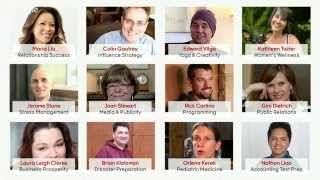
Ryan Daniel Moran and Danny Iny show how to validate and sell digital courses before building them. They walk through four selling strategies, from email campaigns to webinar funnels, and share examples like Ryan's pilot that made nearly $100k. Start small with low-tech pilots, involve early students as co-creators, then scale what works.
Questions this video answers
July 5, 1989.
About 17,000 downloads in the first five days.
Chapters
And there we are.
Awesome. It works.
Apparently, I was joking with Danny. The stuff that people don't see is the exciting stuff I've often cracked about on our tribe hangouts, about how every time we do a Google Hangout, I feel like I have to relearn it. Danny was here watching me run around, freaking out, getting an email out, yelling to Pam to go get my charger. The baby's crying.
We're zipping around over here. Hey, so do me one solid. Make sure in your chat box below, assuming that you're watching this on the primary page and not the event page at Google Hangouts, do me a favor and give us a holler in the chat box. This does two things. One, it lets us know that you can hear us, and also it does my ego a favor because the thing at the bottom doesn't update how many people are with us unless you're logged in. So if you're inactive or you're not actually participating in the chat box, it won't show that you're there. And so it helps my ego. I don't know about Danny's ego, but it helps my ego.
Know how many people are here by having that in there. If you're wondering why I'm holding a phone, it's because I left my charger at the office, and that's one of the reasons why Danny and I were scrambling here for a second. So my charger is on its way here, a beautiful girl is bringing it to me, and then I'll stop doing this annoying thing. Hey, I just realized, I guess, Danny, most people don't know who you are, so you got to do that token wave that you do. There it is.
I pick on Danny for that wave that he does in every video. I'm Danny Heaney.
And today I found this was really important. You guys know I don't participate in a lot of launches. I don't try to distract you from a lot of things, but Danny and I were sitting at coffee.
Oh, thank you.
For all you who are typing in the chat box. Good to see all of you.
The.
Thing I really want to share with you, Danny and I were having breakfast. Was it what, two and a half months ago? I think Esther was, like, a month and a half old. That was.
No, no, no, no, no. She was not yet. She was like, this is a week before she was born or something. Really? Yeah. This was in. I feel like it was in June because Priya was, like, three weeks old or something.
I think you're right.
I think you're right.
I was like, what's it like? That's right. Okay. You're right. So it was just before she was born. So it was just over three months ago. And I told Danny I had been kicking around an idea for a course for like a year and a half and Danny was like.
Let me help you out with this one. And totally simplified it. I had this story in my head about how hard it was going to be, about how difficult it was going to be, how I would lock myself into being that guy forever. And Danny completely demystified and simplified the process. And on like a napkin in 15 minutes we outlined the pilot strategy which we've been talking about. We talked about in our podcast together. I've been sharing with you in some of his prelaunch content and so forth. The result for me was 100 grand in profit two weeks later.
And that was just like. We whipped it together super quick. Super quick.
We just threw it together and ran with it, warts and all. Hundred grand. I guess a little bit less after a couple people refunded. So just. Just under a hundred grand. And it's been a great experience and this was something I had to share. And it just so happened that Danny's got some training all about this and he has success stories with his students. So that is Danny Enie for you also. Danny and I decided if we were on a reality show together we would. We would take down that if we were on Big Brother or Survivor together we'd own the house of the island.
We would just kick ass. We would dominate.
We would. Because we're so different and nobody would see us coming. I'd be in a suit. You'd be in a T shirt. I'd be hugging everybody. You'd be waving.
That's how it would be. Alright, so. Hey Rocky, thank you for the congrats in the chat box.
And Doug, good to see you. Doug, don't you. We'll get to all your that question. We got you covered, dude. We got you covered. Doug, you want to know what? If we don't have any ideas for a course we will get you. I promise.
Danny, you can probably switch over to you. If I mute myself then I won't be interrupting your screen. But go ahead and share your screen and it should give you controls.
Let me see if I can figure out how to do that.
It should be that blue button.
What are you looking at right now?
I see your screen.
All right. That worked then.
Fantastic. I'm going to mute myself just for the transition. Part so I'm not interrupting you. And then when I want to interrupt you, I will.
Perfect. All right, so I'll kick this off. I want to start by saying, obviously I'm doing this presentation. I'm kind of trying to stay on top of what's going on with Google Hangouts. And Ryan's going to be watching the chat and we're going to be talking throughout. To help us out, I've asked two people on my team, Rocky and Lindsey, who are both going to be in the chat. So if you've got questions that we can't stop the whole presentation to answer, they'll be there to answer them and they'll kind of prompt them and re ask them when we get to the Q and A at the end if we don't get to them in the middle. So if there are people being very, very helpful, providing answers to questions, that's who they are and that's why they're doing it.
So let's dive straight in. I've got just a massive amount of stuff that I want to share with you guys. We're going to cover tonight how to build and sell your first course in the next 60 days. And there's really a lot of meat that I want to share with you today. So just be completely present, clear the next 90 minutes out of your day to really hear and be present. Hear what I've got to share with you. Shut off your email, your Twitter, your cell phone, and get something you can use to take notes. You're going to want to take notes. There's some written exercises you're going to do as we go. So pen and paper is good. Or even better, you can go to CVLab, BZ Action Book. It's no opt in nothing. It doesn't cost anything. It's a workbook that I've create that'll help you just get as much as possible out of this call.
So let's dive in. I think Ryan, he's already introduced me and we've talked a little bit about here and on the podcast, how we know each other. We won't do the whole long buddy, buddy intro because you guys are here to learn and we're going to chat plenty along the way. It's just when it's me and Ryan, there's going to be a lot of chatting. It's just how it is. So let's talk about what's the impetus for doing this training.
As Ryan said, I've got a new program. Not a new program. I should say a refreshed program that is open, accepting new students. But that comes on the heels of a new book that I just published A couple weeks ago. I published this book, Teach and Grow Rich. And I was feeling very nervous about how this book was going to do because it's just a different kind of book from what I've written in the past. And it's actually done very, very well. It's been downloaded about 17,000 times, a little more than that in the first five days.
There's a. The screenshot's a couple days old, but we're well past 100 reviews at this point. They're primarily five star reviews. The book has done very, very well. Stupid itunes. And it's been very, very gratifying. And I owe a thank you to a lot of the people who are on this call because I know that there are a lot of people on this call who have downloaded the book, read the book, written reviews, and I'm grateful. It's because of you that we hit number one in business and money. We hit number one in business.
The stat that I'm most proud of, we hit number 34 in all of Kindle. Like not in any category, just number 34 on all of Kindle. Usually the top 100. They're all like romance novels.
I don't think you ever shared that with me. Dude, Congratulations.
Thank you. It's been a whirlwind for the last two weeks. It's just been insane and it's been pretty great. So the book has done so well because the ideas have really resonated with people. And the big idea is that building and selling courses is a huge emerging opportunity for global impact, freedom and wealth. And particularly now. We're going to explore the timing reasons in a moment. And very importantly, this is true not just for people with specialized expertise like software development or access to physical resources, like physical products to sell that I know that Ryan teaches a lot about which is a fantastic model or a shipping infrastructure, but like literally for everyone. And you might hear that and think, well, you know, but there have been courses sold online since forever, right? Info products, it's not news. What I'm talking about is different from information product. It's different from the info products you've seen online. And I know what you're. I know what you're thinking of, right? Like these ebooks and reports that cost hundreds of dollars, these Facebook groups that cost hundreds of dollars each month and these courses, so called courses, this is my pet peeve that cost thousands of dollars when it's not really a course at all. It's not an educational experience. It's just a bunch of videos in a member's area. And that's the key difference. Like, what's the difference between a real course that justifies paying a premium price for and, you know, just a collection of videos in a member's area. It's what happens if you need help? What happens if you have questions, if you've got to go to other students or Google for help? That's not a real course. And the best illustration of this is imagine you're in a university. You go to class, you sit down, the Prof. Walks in and he says, all right, everyone, I want you to turn to page two of your textbooks and read to page 247, and I'll be back after the golf tournament like you. Like, what the hell is that? Like, that would be completely unacceptable, except that regardless of whether it's video or audio or text, these info products, that's basically the experience.
Danny, I'm sorry to interrupt, but I gotta interject here because you know this about me. I don't believe in going low end like the 47 or $97 approach. I'm just not into anymore. So unless a customer or client is gonna spend at least like bare minimum $1,000, I'm not. I'm not interested in working with that person. I'd rather they just listen to my podcast for free than for me to spend my time with them. And I just want to clarify that just because it's an education product versus information product, that doesn't mean that it's harder or that it requires.
Necessarily more of your time. And I think we'll massage that and clarify that. But I just want to squash that objection right away that there's some cool strategies that we can work out to where in some cases it's even less of your time, or at least more in your sweet spot so it's easier and you can charge higher prices. And I'm sure you're gonna go into that more than, you know, me just.
Yeah, no, absolutely. I think it's a really important point. It's not about kind of working harder and harder and harder and harder. It's about doing the best things that create the best outcomes for people, for the people who are going to serve. Right. Ultimately, it's not. It doesn't come down. People don't care how much you work. Right. They care about the outcomes that they're going to get. Real education is about delivering outcomes. And you put into it whatever it takes to put into it, which doesn't have to be a lot depending on what you're doing. Ryan, I'm getting a bit of an echo.
Are you?
Yeah.
Yeah, I'm on headphones.
I hear it just fine. So if you're hearing echo, let me know. You know what, I'll mute myself. I think that should probably. I'll just, I'll only unmute myself when I'm talking.
How about that?
That should fix it. Give me a shout if it does.
Sure. So this is me talking and I'm not hearing it. Yeah, it worked. Okay.
Okay, but so this is what's happening. This is what you get with info products. Right. And I'm talking about premium, by the way. Right. People spend 1,000, $2,000 on a course and it's just videos in a membership site and they're on their own. And that's fine if that's enough to get them an outcome, but often it's not. And that's why the information market is spiraling into crisis. And you're seeing this everywhere. Everyone who's selling information will tell you it's getting harder and harder to sell information every day. Refund rates are shooting through the roof and the smartest entrepreneurs are exiting the market in favor of software, in favor of physical goods, as you know very, very well, in favor of high priced coaching groups, they're moving away from information now. I agree with you 1000%. There's nothing wrong with high prices. Right. As long as you're getting an outcome. And that's the question, I mean, like, I'm going to ask this of everyone and Ryan, you can tell me what you think, but, you know, wouldn't you be willing and even eager to pay a premium for a real educational experience that was guaranteed to support you in creating the outcome that you care about? Like, it's a, it's a no brainer. I don't know if you guys can see the screen. I don't know how this works. But if Ryan's not talking, but his.
Thumb went up, I think they can see me and I give a thumbs up. They should, they should be able to see me. I know I would. And I try to give my students that now, which I think is part of the reason why I've been able to go higher end than I ever was before. I'm gonna steal a spotlight for a second, Danny, and I want to tell a quick story because I used to play the game that you just outlined as like, don't do this right Like, I use. I played the game for like eight years. That might be a little bit generous. Like six and a half years where it was, first of all, push, push, push, push, push for the sale and then charge $97, upsell them in a whole bunch of stuff they don't need, and then disappear. And a. It sucked because you had to go recruit a bunch of affiliates. I never felt good about it and it was never the money that I thought it was going to be. And all you had to constantly, like, churn and burn through things. I promised I would never, never, ever do that again. And the only times that I do, I almost said doo doo. The only times I do do, I said doo, doo, doo. That approach where I'm teaching something, it's the approach you just outlined where we are educating them and somehow I'm tied to the results either because I'm working with them directly or because they've signed up for a level to where it requires me to get them a certain result. My life is so much easier and profit shows up so much easier and faster than.
Ever doing it in the six and a half years where I was beating my head against the wall. And the other thing about it, Danny, is I actually like who I'm working with and hanging out with, which I couldn't say before. And if there's time at the end, I'd love to go through some of my, like, NINJA client acquisition strategies for people that you actually want to hang out with. But that's my personal experience, so I can completely verify what Danny just said.
Ryan, I love that you said that. Like, here's this is the exact issue. The problem is not with high prices. It is with charging education prices for information content. Right? And none of us like to pay a lot when we're getting a little. Like, that's just. That doesn't make sense. And that's what you've got in this industry. You've got prices up here and value down here. They're just, prices and value are out of alignment. And when they're out of alignment, they've got to come into alignment. So there's two ways that can happen. People can stick with selling information that doesn't really do much for people. And prices are going to drop. They're going to drop to about 10 to 20% of what they are now. And a lot of people are going to be squeezed out. And you can already see this happening, right? Because there are a lot of major marketplaces for this kind of content. If you want to know what the real market willingness to pay is for an ebook is go to Kindle. That's where ebooks are. They cost one to $20. You want to know what a course that is? Not really a course, an education course. It just videos on a membership site. Go to Udemy. That's where they all are. 10 to $200. And, you know, if you want to do an enormous volume and churn and burn the way Ryan was saying, you can have a business. There's. But that's not attractive to a lot of people. Now, the really exciting part is if you just go in the direction of education, you increase the value. People who build real education products will command premium prices more and more easily. That's what it really comes down to. And I love that you were saying how you're attracting the best students, the people you love to work with. Imagine, you know, we talked about that university situation where, you know, the professor walks in, tells you to read the textbook and leaves. What if in that university there was one professor who actually taught? He walks in, starts teaching, answering questions. Students get results. How hard would it be for the Prof. To fill that class? It's like, not at all. The class would fill instantly, and it would fill with the most committed and dedicated students, the ones that you want to work with the most. Not the ones who are looking for the super easy A without doing any work. The ones who are, like, really excited about what they're there to learn. And because you've got the best students and a teacher who's actually teaching, you get the best results, the best testimonials, which is going to attract even more students. It's a virtuous circle. And that's kind of the big idea. Now, how do you do it? Right? That's the. Okay, great. In theory, how do you do it? Well, you do it by running a pilot. So what's a pilot? I put on the screen. This is the Google dictionary definition of a pilot. There are a lot of definitions. We're looking at just one. So this one, it's a television program made to test audience reaction with a view to the production of a series. So basically, in show business in Hollywood, because producing a TV series costs like a gazillion dollars, Instead of someone going to the producer and saying, I've got an idea, and they say, no problem. Here's a check for a gazillion dollars, the producers want to hedge their bets. They say, here's a much smaller tip, much smaller check. Make one episode. Let's see how it goes. And if it looks like it could be good enough, maybe we'll do some more episodes. Here's a real life example. Everyone's gonna recognize this. This is Seinfeld. By the way, Ryan, I was doing the research on this. Do you know when the first episode aired? Do you want to take a guess?
Oh, man.
1993.
1989. What I saw that. I was like, wow, I feel old.
Oh, my God. The first episode aired July 5, 1989. Oh, my goodness. And it kind of stunk. Like, it wasn't very good. Elaine wasn't even in the show at the time. And here's how you know that it stunk. Usually you have a pilot, and if it goes well, you get a mandate to produce, like, a series a season, right? Like 12, 24 episodes. You want to guess how many episodes they were. Were given the money to make after this pilot?
Four.
That's exactly right. Four episodes. The producers basically said, all right, this doesn't look very promising, but it looks like there might be something. We're going to give you four more episodes to try to make it better. And of course, those episodes started to do better. Season two aired in 1991. The rest was history. But.
If the. If Seinfeld, if he had wanted. If he had kind of said from the beginning, look, here's my brilliant idea. I want money for a whole season off of this script. The show would never have been made.
And it just. That's crazy, right?
I gotta tell a story. Here we go, Dan.
Go for it. Go for it.
If you remember what was going on in my life a year ago, I was getting ready to go on a reality show, and I had been completely vetted for this new show on Fox that was gonna be completely groundbreaking. It ended up being a shit show. It was called utopia. I bet two of you watched it.
Two of the 1600 of you that signed up for this class watched Utopia. I was on the roster for Utopia. I was next in line to go in, and it got canceled because it was a terrible show. And they spent $52 million building up this show. It was a sunk cost because it was terrible, because they didn't put me in the opening lineup. That's what it was. Had I been in the opening lineup, I would have, you know. You know, I would. Rating around, I would have. But it got canceled before I went on.
Well, there is something brilliant to this, right? Because even though every so often Hollywood will throw $52 million into a losing venture, they've had to get smarter because you can Only burn so many billions of dollars before you're like, okay, I've got to get smarter. Now, you can apply this same testing process to building your courses. And this is the exact opposite of how most people build courses. What most people do is they spend months or even years building their course or, you know, ebook, membership, site, whatever, and they just hope to God somebody's going to want to buy it. Usually nobody does. And I'm sure there's a lot of people on this call who can relate. I'll tell you, I'm. You know, I had that experience my first course, and I'll tell you about this in a few minutes. I spent thousands of hours on the damn thing, and it didn't sell. Like, anything. It was. It was terrible.
I've done the same. And let's hear from you. If you've ever done that, let me know. I'd love to hear if you've ever done something like that. And then it was a ghost town where nobody showed up. I'd love to hear that, too.
Let me know in the chat. It's devastating. Like, it's. You know, you pour your heart and soul into it. You've done all this work, and it's all building up to this, like, magic moment where you're gonna, like, click, publish. It goes live, and you're, like, dreaming about how the next morning you're gonna wake up and, like, you know, your inbox is gonna be full of PayPal, like, money transactions. And it's like there's nothing. Nothing happened at all.
Ryan still there?
Yeah. I had myself on mute and didn't know it, but, yeah, I've had that.
And even if.
This is what I'm big up on now.
Even if it went well.
If you do this wrong, you end up getting a certain type of client or customer base that you don't necessarily want. Now, I'm not trying to belittle or.
Thumb my nose at anybody who's in a different place or wants to target a certain. A different crowd. But if you mess that up and you do all of that grunt work where you do thousands of hours and then you release it, a couple things can happen if you screw this up. A, you subject yourself to a whole bunch of criticism that's unfair, or you get a bunch of customers that need a bunch of hand holding and you drive yourself nuts. I've had both of these experiences. I found that by tweaking the process, this goes away, or at least is eliminated by about 95%. And it's by following exactly what Danny is outlining.
So why does this happen though? Like, why do we launch these massive courses and they're disasters? It's because course builders fail when they don't validate assumptions. You have a whole bunch of assumptions in your head about how this is going to work when you build your course. And we just take those assumptions as facts and they're not facts. So, for example, that your audience wants to learn exactly what you want to teach, that they wanted enough to pay for it, that you can teach it well enough to deliver the desired outcome. Those are all assumptions. And when you don't validate those, that's where you kind of get screwed. Now, piloting solves all of that. Instead of building a giant course, you can limit your focus to the minimum content that you can teach and still deliver a worthwhile outcome. You can usually succeed with a much narrower focus than you think. I've got a whole slide of examples here. But if your expertise is vegan cooking and you want to teach like the masterclass on vegan cooking, your pilot could be three easy vegan dishes. If you're a yoga and meditation expert, your pilot could be about starting to meditate. If you're a blogging and social media expert, your pilot could be about how to land your first guest post, which incidentally, I did, and it became a very successful course. Finding your soulmate can become great first dates. Video marketing can become how to set up your studio. Home renovations can become getting to know your toolbox. The point is that you want to find a really narrow, specific and focused outcome that people will care about. And here's the best part. You can sell it before you build it, and you build it on the fly with your students. You'll explain what you're doing and that your pilot students will get a lot of extra individual attention plus a discount in exchange for their feedback. They'll be thrilled to be the first ones in and excited to co create the program with you. And there's some really interesting behavioral science, behavioral psychology research as to why this is so powerful. And I'll share that with you in a few minutes. And counterintuitively, and this is really important, the less scripted and structured approach means that you can be more attentive to your students needs and create a better experience. So think about this for a moment, right? We have this preconception that if I don't make like detailed scripts and notes and outlines, I'm not prepared. I'm not doing a good job for my students. But it's not True, because if you have a super detailed script and you show up to start teaching your class and people aren't getting it, well, you've got this whole script to follow. You're stuck, right? You can't, you can't adjust. You're much better off with a loose outline that you're delivering on the fly. And you can be adaptive to what people actually need. So there's no need to create members areas or fancy videos or anything else. You can deliver your pilot live on a webinar, or if it's a small group, even on a Skype call. All you need to prepare is an outline and some slides and you're ready to go. And when people buy you have validation that you're on the right track with something they want to pay for. You have feedback to help you make it better, and you have money to continue to fund your work. And you can do it all quickly. It like, you know, in 60 days, which is what I'm going to show you how to do. It's a winning formula because it's a win for you, it's a win for your business, and most importantly, it's a win for your students. Now, this is kind of what the book was about. And from the day it was released, there was a lot of excitement. But also, you know, when people get excited, there are lots of questions. And all the questions kind of fell into two big buckets. The first is, will this work for me? And the second is, how can I actually do it? So, you know, sounds great in theory, but will it work for me? And if, yes, if it will work for me, how can I actually do it myself? So I'm going to answer both of those questions today. But before that, I do want to take like two minutes to just tell you a little bit about who I am and where I'm coming from. I'm not going to do a whole long bio. I hate it when people do that on a webinar. But it is important before you listen to somebody's ideas, to know where they're coming from. So who am I? Well, first of all, before anything, I'm a husband. And recently I became a father. That's. I don't know, Ryan. I don't know if you've seen Priya or photos of her. I should say that's my daughter. She's about four and a half months old. She was born.
That's the first I've seen. So hopefully it'll be Esther's first international friend. Hopefully.
Well, hopefully very, very soon. I haven't seen pictures of Esther either, actually.
I'll take an inappropriate video later and send it to you of her farting or something.
Priya is about a month older than Esther, so four and a half months old. And having like, Ryan, you can maybe tell me what you think, but like, just having a new baby, it really brings into focus the importance of what we're talking about here. Because we're talking about, you know, there are a lot of ways to make money, but we're talking here about making money by taking knowledge that's in your head and giving it to someone else, empowering somebody else to do things that are better in their lives. It's like we're talking about making money by making the world a little bit better. And when you have kids, it suddenly kind of drives home. That's really important.
It just kind of struck home for me in the last few months. Like, Ryan, what's your. What do you.
My whole brain changed when I, when I had a kid.
And not only. And not only just from the sense of like, wanting to be at home more, but like, what's the difference I'm gonna leave in what I'm doing? This is really morbid, but I'll go here. When I started thinking about there being a new life, I started thinking about my own death because I had like this full circle go through of, you know, there's this new life coming in. That was me one time. I don't really remember that. And then there's gonna be this other part where I'm gonna die. That was the thought process. I'm sorry if that's morbid, but that like, changed the legacy I wanted to leave and the impact that I wanted to have. Which is which. It made me refocus in what I do and why I do it and even question, do I want to keep doing this? Is this really the difference I want to leave in the world or should I pivot? And I'm obviously still here, but it made me get super clear and focused on the impact and the message I wanted to have.
That's powerful. So anyway, that's a tangent, but like, yeah, it matters, but so, you know, I'm a husband, I'm a father, and you know, professionally, I've been an educator, entrepreneur since I was 15, teaching what I know. I'm the founder and CEO of Firepower Marketing. I'm the author of, Well, I guess three now best selling books and the creator of three courses that have together graduated over 4,000 online entrepreneurs. I lead a team of about 25 people, we generate multiple millions in annual revenue. We do it by supporting hundreds of thousands of entrepreneurs and readers, including thousands of students. We don't say customers. It's an education business. Hundreds of. Excuse me, thousands of students. My work has been endorsed by almost every leader in our industry. I put pretty much as many face shots as I could around the screen. I ran out of room. There are a lot more faces I could add there. Here's what just a few of them have to say, including Ryan right there on the right. And I'm not going to narrate all this. Of course you guys can read. But I do want to say I'm not sharing this to brag. I'm sharing this because I want you to know that what I'm telling you is credible. Right. I didn't just show up online one day and decide, oh, this is a good idea. I've been doing this and teaching this and helping people succeed with this for years. So with that, let's answer these questions. And the first one is, will this work for me?
Actually, I have a question. Before that, it was, who is that handsome man in the bottom right screen on the last slide? He was incredibly handsome. Bottom right, middle right. I remembered it wrong. Bottom right, too. You know what, Ryan liaison, you're handsome, too.
Give me a. I can hook you up. I can hook you up.
Awesome. Appreciate it.
All right, let's answer this question. Will this work for me? And people don't ask it like this, right? This is the question behind the question. People ask it in all kinds of different variations. They say, what if I'm not an expert? They say, what if I want to teach? Fill in the blank. You know, whatever your topic of interest is. What if I've never built a course before? What if I'm not good at technology? What if I don't have a website or an email list? These are all good questions. So let's. Let's explore some of these. And I want to start with the first one, the question of expertise. Because, you know, in this kind of learn how to make money online kind of world, a lot of people like to say, oh, yeah, you don't need to know anything. You don't need to be good at anything. You can just, you know, follow my system and you'll be a millionaire in two weeks. It's like, that's a load of crap. Like, you do need. If you want to. If you want to build a course and sell it. Yeah, you need to have something that you're qualified to teach. But it's important to understand what it means to be qualified. Right? You don't need to be the world's leading expert on the topic. You just have to know something that would be of value to others. And most people usually don't. They don't step into respecting what they have to offer because you're usually so busy looking at what you don't know. A really useful illustration of this is that you know, if you're in the second grade, the fourth grader is an expert. And I know that everyone who's on this call is well past the fourth grade. So you all, there are things that you know, there are things that you can do competently that other people don't and would benefit from. So if that's the case, you have something to offer. So I'm not saying you can teach if you don't know anything, but I'm saying you probably do know more than you think. So that's the first question. But what about all these others? What if I want to teach random topic? What if I've never built a course before? What if I'm not good at technology? What if I don't have a website or email list? These are good questions, but they're also kind of excuses. It's like, it's not so much a question, it's more of a. I don't think this will work for me because here's why I don't have to step out of my comfort zone now. I could spend like time answering all of these and you know, I've got good answers. But frankly we'd be here for a long time and you know, you guys have more interesting things to learn. So rather than go through these one by one, let me just share some examples of people who I have taught this process to, who've applied it successfully. And I'm not going to go through all these case studies again. You know, we have better things to do. But I do want you to pay attention to just the diversity here. There are people here who have learned all manner of things. Like we've got very business oriented niches, we've got very non business niches, we've got people who had big audiences, we've got people who had no audiences, people who had experience teaching and people who didn't, people who had comfort level with technology and people who were totally freaked out by technology. It runs the gamut and it's worked for all of them. And it's worked for me too. Like I mentioned to you earlier, I spent I wish I knew this from the beginning. I learned this by accident, right? I spent over 2,500 hours. It's not a typo. That's a depressingly large number. Over 2,500 hours on my first course. It was this magnum opus, masterpiece of a course that in the end, nobody bought. I think over its lifetime, we sold less than 50 copies. I did the math once. I think my dollars per hour on this course was like, 17 cents. It was, like, terrible. And the silver lining was that while I was working to build this audience and sell that course, I stumbled onto the strategy of guest posting. And I did very well with it. I became featured on just about every major site you can imagine. And people started to notice what I was doing. They started to ask me how I did it. And so I'm going to share with you. This is a real email that I received on November 30, 2011. Here's what this guy wrote. He said, danny, I have no bloody idea how you are such a prolific writer, but kindly share whatever magical Chinese medical brew you are drinking on a daily basis. He goes on and on and on and says, how the hell do you do it? This was an unsolicited email. I was getting three to five emails like this every week for months. Now, Ryan, you're a smart marketer. If you were getting all these emails, what would that tell you?
It meant I had something like, something's working right. I have a mentor named Travis. He says this. He calls it Popcorn Poppin. It means, something's a brewin, Something good is happening.
It's like, yeah, there's very clearly an opportunity here. And in spite of there very clearly being an opportunity here, I was really resistant to the idea of building a product because I'd been so burned by the last product I wanted to build. And so I resisted and I resisted, and the emails kept coming. And finally I was like, okay, I think I've got to do this, but I want to be 100% certain. So here's what I did. I prepared the lesson outlines and the slides, which was kind of the minimum work I felt comfortable having ready back then. Today, honestly, I would do even less. And I offered for people to buy in as charter students of the program. I told them, it's not ready yet. I'm going to build it on the fly with you. And the reason I did this wasn't, like, brilliant strategy. This was just, you know, I was trying to hedge my bets. I kind of figured, you know, if nobody bought, I could Cut my losses. But to my great surprise, not only did people buy, we sold out in 24 hours. This is the first time I sold something out. And it was actually became a bit of a fiasco because I have a bad habit of doing product launches on holidays because I never remember the dates of anything. And so this was a holiday weekend and a lot of people didn't see their email in time before it all sold out. And a lot of people were really upset with me and I was like, well, what do I do? I said there was a cap. But like people were upset and I ended up opening more spots and it was good problems to have. There was a whole mess because I was just. It was a level of response that I totally couldn't anticipate. And this became my Write Like Freddie training program, which over the course of that year, we enrolled almost 1,000 students into the program. It was 1,000 students at $137. Not bad for my first successful product.
Not bad. I want to ask Danny, are you going to share at all what you did after the pilot? If not, I'd love to hear like a two minute spiel about after you did your pilot, what the heck did you do next?
Really straightforward. You do your pilot and it goes well. And even if it goes well, not everything is perfect. Right? People had questions, you gather feedback. So you go through your outline, you fix it based on whatever you learned, you make it permanent, you know, series of videos, membership, site, etc. The support that people need in order to succeed. But if you fixed it properly, that shouldn't be a lot of support. And then you launch it again and boom, everyone's excited because you've built something great and you've got case studies of all these people who've been through and they were super successful.
Exactly, exactly. There's another thing I wanted to ask you. Oh, this was, this is a while ago, so I'm guessing your audience is a lot smaller back then. And you're like, copy was a lot.
The copy was not very good. Yeah, yeah, I'll share all the. I'll share the numbers on this. Okay. Conversion rates, everything.
So. But in a few minutes. But. So this was my first course and you know, this is pretty cool. And you know, I had students who were starting to go through it and starting to see some good results. And you know, eventually the bug gets you again. You get to thinking, well, you know, I think I have more to teach. Right. I mean, guest posting was really a tiny piece of what I was doing, but Again, I was like, do I really want to build another big course? And especially this would be a much larger course. I was really hesitant. So again, I was hedging my bets. So I did a webinar, invited my audience to attend. I called it the Brutally Honest truth about Building an Audience Based Business. Not a great headline, not a super well executed webinar. You know how you look at stuff you did years ago and you're like, what the hell was I thinking? Like, look at that, look at that font. Like, what the hell was I thinking? Like, it looks like a ransom note for how to build an audience business.
I already give you a hard time for your marketing. It's a good thing we did not know each other back then. I would have had a field day.
It was not well executed, let's just say that. But I just walked people through my process as well as I understood it at the time, which was not as well as I do now, obviously. And at the end of the end, I'm going to invite eight people that I'll mentor for the rest of the year intensively on this process. It was a $6,000 price tag. So this was my first kind of move in the direction of like, you know, charge higher, like you were saying. And this is a pilot, by the way. This is a pilot, $6,000 a piece. I had nine people apply. I interviewed them all. I turned two of them down because they just, I didn't feel like they were a good fit. And because this worked so well, a few months later, I did it again. In total, we made $79,000 on pilots we didn't have. Like, there was no product yet. The course wasn't officially launched. And when the full course did launch and it launched again before it was built, we built it. Like we started building it. As we launched it, we made almost $300,000. And you know, this was just like a year and a half or so after I'd started my business. Like at the time I was like, oh my God, that's a big number. This became my audience business masterclass training program. It wasn't even built yet. We've enrolled since then over 2,500 students, which is over a million and a half dollars. Again, not bad. Now, I want you to notice the pattern here, right? My first failed product. I spent over 2,500 freaking hours before I made a dollar. Nothing pre launch and less than 50 students altogether. With Write Like Freddy, I spent 60 hours before I made my first dollar. I made 6,930 in pre launch income. And we had over a thousand students over the course of its lifetime with the audience business masterclass only 30 hours to revenue. $79,000 of pre launch income and over $2,500. Over 2,500 total customers. Now the pattern's pretty clear, right? The less time you spend before you launch, the more money you make with the launch, but the better the results are later. And that was counterintuitive to me because you'd think that, I mean, I get it, that, you know, the faster you are to market, the more responsive you are, the better results you get. The pre launch. But you'd think that launching a pilot like that would cannibalize sales later. But the opposite was true. And this was puzzling to me. So I started digging into the research. I was like, what's going on? And I stumbled onto this research that came out of Harvard and Yale and Duke. It was a research team led by Dan Ariely at Duke University. He wrote Predictably Irrational and all these behavioral economics books, great books, they're fantastic. And I'll explain the research because you need to understand the consumer psychology that drives this. So they invited people to come in and build something. And different things or different iterations. So they had them. They had the participants fold like origami. I don't know what you call an origami thing. They had them fold origami things like origami paper sculptures. I guess they had them build an origamous. Okay, well, I had them make origam or whatever. They had them make these things. They had them build things out of Lego and they had them build IKEA furniture. And because of that, the phenomenon they discovered is called the IKEA effect. So they had these people build them. And then two groups of people were asked to put a price tag on the object that was built. You have the builders, like the people who built it, were asked, how much do you think this is worth? Then they took the builders out of the room. They brought in a bunch of strangers. These were the evaluators. They said, how much do you think this is worth? And the research showed conclusively that people were willing to pay more for the imperfect pieces that they built themselves. And here's my favorite twist on this research. So, Ryan, I'm not an expert IKEA builder. When I build IKEA furniture, you know, this screw is in too tight and this wood's a little bit cracked. And you know, that table leg is slightly askew. You know, it's not perfect. This is not my expertise.
And that was the case for these builders. These were just amateur, random people. So they had the researchers had these people build their IKEA furniture, which is clearly imperfect, and put a price tag on it. And then they brought in expert IKEA builders who, like, you know, they assemble it perfectly. And they asked the same original builders, the non professional ones, how much would you pay for that perfect piece of furniture? And people will pay more for the imperfect furniture they built themselves than for the perfect furniture that somebody else built. The upshot of this research is that the more invested people are in the process of something's creation, the narrative, the process, the experience, the more they value it. And that's the real magic of the piloting process. It leverages the IKEA effect by engaging your students and your audience as co creators of your course, by being a part of the narrative of its creation and giving you feedback on how to make it better. Isn't that cool? I just geek out on this stuff.
I know you geek out on it, but I'm so bad at IKEA furniture that it actually makes me feel a little bit bad about myself.
I'm sorry.
I actually feel a little bit humbled because I would value my own work as zero because it's so bad.
What about if you were building Legos? Are you good at Legos?
I'll find out in approximately three and a half years when Esther turns three and a half. Awesome.
Well, anyway, all of this is a long way around to answer the question, will this work for me? Will this work for you? For people who are watching this, yes, it will. It works for me. It works for a lot of other people. It's backed by Ivy League behavioral science research. This will work for you. But it's not just a question of will it work. It's also a question of will it be worth your while. So I want us to dig into that. And Ryan, you and I, we've had conversations around pricing and what we should charge for stuff. I want us to really dig into it. So we're talking right now about the launch of your pilot course, which you can do in 60 days. So there's two numbers. You got to multiply how many students and at what initial price. So, Ryan, you and I are probably not going to agree on what reasonable numbers are. But, you know, if you have to say, you know, someone's first pilot, they're just getting started, what would those numbers be? How many students, and at what initial price?
So are we assuming somebody has a responsive audience? Are we asserting somebody? Wow, I must Be drunk after one beer.
Are we assuming that I can't even talk? Are we assuming somebody has an audience or no audience?
Let's say no audience. If you've got an audience, then you know that obviously you can inflate numbers.
Okay, so let's say 12 to 25.
People.
At what initial price?
250 to.
$400. I'm trying to be conservative. I would go way higher than this. But for the newbie who's never done this for 250 to $400.
Okay, like there is no right answer. I'll tell you what numbers I plugged in in a moment, but I want us to talk about the levers of pricing with the pilot. Because people, people's kind of gut is to go really cheap. And I actually, I don't think that's a good idea. Like, even though I, you know, my bias is not towards super high end the way it is for you, but especially for a pilot, I don't think it should be cheap because there are two levers, right? You, you start with, you know, the course I eventually want to sell. What do you want it to cost? So let's say, you know, sake of argument, $1,000. You know, eventually we want that. That's the ultimate end goal. So there's two levers. The first is the proportion of content and outcomes. So if in the pilot I'm going to teach 20% of that, it makes sense. $200, right? 20% of 1,000. But there's a second lever that people forget, which is the proportion of attention and interaction. Right. With the course you might just offer email support because it's polished. That's all people need. With the pilot you say, well, I'm going to do group coaching calls, I'm going to get on the phone with people. Maybe because you want the feedback on how to make it better, but they're getting like 10 times as much interaction. So even if the pilot is only teaching 20% of the content, you could still charge $2,000. You could charge more for the pilot than you could for the final course, which also works really well as a price anchor for selling the final course. So just for people to keep in their back of their minds. And if people want to follow along as we kind of work through these numbers in the workbook, cblab, BZ Action book, there's a page you can fill all this in. So I had plugged in 25 students at $200. So we're kind of in the same ballpark as a conservative estimate. Like, I mean, I've never done a pilot where the numbers were this low. But you know, this is a conservative place to start. $5,000 in 60 days. So we're asking the question, is it worth your while? So like Ryan, would it be worth your while to do a pilot and 60 days from now you've made $5,000.
So for me it wouldn't. When I was getting started, yeah, that would be like, that would have completely changed my mind. But for me now, you know, my prices are going to be a lot higher.
Sure. And you know, I look at these numbers, I kind of feel the same way. You know, I mean, there I've been in situations where, you know, making $5,000 in 60 days could change my life, but now I'm not. That's not where I am. And I think there are a lot of people for whom $5,000 is not going to change their lives. And that's why it's really important to keep in mind this is the first 60 days. This is not about the first 60 days. It's about what comes next. Right. You've got your pilot, like we said, what happens next? So you've got the feedback, you fix it up, you turn it into a full course and it's how many students come into the course at a time at what full price times how many enrollments in a year. So again, let's be conservative. Let's say 50 students at a time, $500 each for the full polished, super valuable course. You bring people in twice a year. This is like, these are not aggressive numbers. You're looking at $50,000 a year. That's not nothing as a starting point. And then you say, okay, I think I've got more to teach. I'm going to do another pilot and I want to go higher end with this one. It's going to be more sophisticated. Maybe you take 20 students at $500, it's 10 grand. Again, you know, not going to change your life, but not nothing. And then you say, I'm going to open this course once a year and it's $1,000, 50 students, because it's a little more sophisticated. Suddenly you're up to $100,000 a year. Right. It starts looking interesting when you see it in aggregate. And once you've built a course, reopening it is not a lot of work. Like this could be a very part time effort.
So I want to make a comment here because a lot of us are familiar with the good folks over at Amazing Selling Machine, Good friends Of mine. I've promoted their stuff five times now. They followed this process exactly, this process where their first go was a pilot. And their pilot was bigger than your average pilot. It was like $7 million. But no, actually, I lied. There was one before I had ever met the guys. They had a pilot before they teamed up together, and that's where they got some of their bumps and bruises along the way. And that was probably like a million dollar pilot or something. And then they've done subsequent launches after that where they've got all these case studies. There was a.
Quote from a buddy of mine, his name is Justin Brooks, some of you may know him. And he said years and years and years ago on a webinar, he was like, if you want to be successful, stop doing what the gurus teach and start doing what the gurus do. And if you look around, this is kind of the model. I think most of them get it wrong. And this is a better, more efficient model. But it's a version of this. Get your errors out of the way. Some people just launch it and burn it and then go away. That's what Danny was talking about at the beginning. That's like, you don't want to do that. But this model is what all the guys who have stuck around forever have done is you get your pilot done and then you open it for more students, Then you open it for more students later. It's exactly this model.
So what do you say? Do we keep going?
No, let's just stop it here. Thanks for coming, everybody.
I'm gonna go get another beer. Well, I'll tell you what, hang on, let me pause for two seconds. It's getting really hot. I'm just gonna open the window and then we're. Cause I've got, like, so much more to teach.
I'm thinking about, should we take. Are we taking half time? Because if so, I'm gonna take it. I'm gonna go get another beer. But now Danny's not here to answer me, so I'll just say, hey, everybody, how we doing? Do you guys know that when a microphone comes in front of me, my voice gets two octaves lower? See, this is my normal talking voice, but as you'll notice, it's higher than my normal. My podcasting voice. As soon as a microphone shows up and I'm not talking into a microphone, it's not here. It's at the office. So it's at the office. This. It would normally drop into another octave. Danny went to open the window, so probably has no idea what was.
I'm back. I'm back. I heard you change your voice.
Yeah, microphone's changed my voice. Now we're completely off topic. Back to money.
Let's. This is what happens when we talk. It's like you can't stay. It's weird because you and I are both focus people independently. But. So anyway, looping back around. Will this work for you? Yes, it absolutely will. Question number two is, okay, how can I actually do it now? There's a lot of steps in the process. We put out this global course, Empire Roadmap, that teaches all the steps and how they interact. And I teach people how to navigate all these steps in our course Builders Laboratory training program. It's 32 lessons and eight modules. It's detailed in depth, personal support from real people, and guaranteed results in the time that we have left. And I feel like we're going to go over the time we have left, but that's okay. I'm happy to stick around. I'm going to teach you some of the most powerful strategies from inside the course, so. Including four ways for you to launch your pilot course in the next 60 days. Now, because. And you know, after that, I'll tell you about how you can join the program. And, you know, Ryan will speak about that as well. But right now I'm going to teach you these strategies. And because these are strategies from inside the program, for you to be successful with them, you've got to meet the same requirements that my students do. So there are four requirements. And Ryan, I'm going to ask you to say, like, yes or no in terms of are these reasonable on behalf of the audience? Okay, here's what you're gonna need to succeed. First of all, something of value to teach. And we talked about this in the area of expertise earlier, so. Good.
Cool.
Agreed. Yes.
You need an inclination to contribute. If all you care about is making passive income and you don't care about who you impact or who you affect honestly, this isn't for you. Like, I don't know if there is a legitimate business model that is for you, but, like, this is not it. You've got to. Wanting to make money is great. Improving your life is great. But you've got to want to do it by making things better for other people, too. So, Ryan, what do you think? Fair?
Yeah. I think there's a very distinct distinction from money extraction and value creation.
Exactly.
One works for a short amount of time and the other works forever. And that's value creation. And that's how I would Describe it.
Awesome. I agree 100%. So the third thing is the desire for freedom, because if you don't want to change anything in your life, you know, why make an effort to do anything? Right? So fair.
You're making me unmute myself on an awful lot here, Danny. But, yes, agreed.
All right, I'm going to make you unmute yourself one more time. Here's the last one. You need a work ethic, and this is important. You know, it's. It's not about working hard. It's about working smart. That's why you can launch in 60 days. But there are people who teach about how you can make a bazillion dollars online. It's like, you don't have to work hard, you just have to work smart. And, like, as if to say that working smart doesn't sometimes also mean working hard, it's like you have to work smart, but sometimes you also have to work hard. Does that sound reasonable?
I'm glad you said that, because so many people are like, this is easy, and it's just. And it can be easy and simple, but it doesn't mean that it doesn't take, like, serious, consistent, focused effort from you. So I'm glad you said that.
Awesome. Well, then let's talk about how to do it. Fundamentally, you need three things. You need something that you can teach, you need people who want to learn, and you need a strategy for selling. And I'm going to talk about all three. We'll start with the first two, because they kind of go together, right? Something you can teach, and people who want to learn, they go together. If you have something you can teach that nobody wants to learn, doesn't do anything for you. If you've got people who want to learn, but it's stuff that you can't teach, then again, what are you going to do? Now, this is important that they come together, because in almost every case where an offer fails, it's because the offer and the audience weren't aligned. And there's a reason for that. It's hard to get the fit of the offer and the audience exactly right the first time you try it. Right. You know, if. If that's what they tried to do, pouring millions and millions and millions of dollars into Seinfeld, Seinfeld would never have happened. Right. And that's the beauty of the piloting process, is that you can be close enough and get feedback on how to do better because you haven't invested all that much. And because of that, you don't need the exact Right answer. In terms of what you're going to teach, you need to know the topic. So let's start with a topic. And I want everyone who's on this call to ask themselves the question, what do you know that's valuable? Now, you don't need to share the answer with me, but I want you to think about, is there something that you can think of? Right. And usually when I do this kind of presentation, about 80% of people say, I can think of something right. Most people can say, yes, I can think of something that I know that's valuable. And if you're in the other 20%, I've got an exercise to solve that as well. But like, let's assume for sake of argument, you've got something that you know. Ryan, is that your second or your third beer?
It's sadly still. I'm still nursing my first because I'm so into this that I haven't run. Will you hate.
Will it look weird if I run.
Away and go get another one while.
You keep, I don't know, ask, ask, ask on the chat. Let's see what people say.
Okay, so what do you think?
How wasted can we get, Ryan, on this weapon.
After two beer? I don't. Have we ever drunk together? Drank together? Danny, we must have in the Philippines.
We've had drinks together. I don't know if we've been drunk together. It's not.
See, my course, my pilot is going to be how to clear your liver so much that you can get drunk on half a beer. That's going to be my pilot. And if you will buy that, it's only $197.
You'll get a pilot with me.
It's@freedomfasting.com beer.
I'll bet there are people checking the URL right now.
I better set up a redirect or something to an affiliate link for Guinness.
All right? So I'm going to try very hard to stay focused. Ryan, you can go get a beard. Don't worry about it. But so 80% of people can usually think of a topic that they would be that they, that they know that's valuable if you're in the other 20%, don't worry. We'll come back to that in a moment. But let's assume you've got one. The key then from having that topic is to get really, really specific. So I've got a thought exercise for you. Imagine you just got on an airplane. You're in New York, you're getting on an airplane, flying to Chicago. It's about a two and a half, two and a quarter hour flight. And just as you're, you know, the plane starts taxiing down the Runway, you start a conversation with the person sitting next to you and you realize pretty quickly, you know, you hit it off, you really like the person. You realize pretty quickly they're like your ideal customer, your ideal students. They need exactly what you teach and they need it desperately. Like they're in trouble. You want to help them because you're getting along. But here's the catch. You've only got two hours. In two hours, the plane lands, you go your separate ways. So what could you teach in the context of your topic over the course of a two hour flight that would change somebody's life? Given that structure of a question, it's not hard to come up with an answer. And your answer to that, like that's 90% of the way there's to knowing what your pilot's going to be about. Now that's great for, like I said, 80% of people. Maybe you're listening to this and you're in the 20% who's like, okay, that's great, but I don't know what the topic is going to be. So if that's the case, I've got another exercise for you. Imagine that you just won a sweepstakes and as your prize, you're going to get to spend a year at a vacation beach resort. You don't have to worry about money, they're going to take care of food, everything. The only catch is that you have to commit to spending the year studying one topic and you can't stop in the middle of the year and you can't switch to a different topic. So here's the question. What would you commit to studying for a year? Think about it. And again, in my experience, no. You're going to study Guinness. Huh. Well, that is a perfect illustration of the point. So why do we.
Why do we do this exercise? It's because a year is a long time to study something, right? It's a long time. Study something if you're gonna hate it. And so if you're willing to commit to studying something for a year, odds are you already know a good amount about it. You know enough that this is something you could probably teach about. Okay, so case in point, Ryan could potentially build a course teaching people how to appreciate the finer points of Guinness. Hold on now.
I have actually been to the Guinness.
The brewery in Dublin.
Thank you.
Yes, I've been there too.
So. Well, you know, if you had met a few years earlier, you could have joined my pilot group tour where we, where we went. I didn't really have a pilot tour.
But.
I want to share with you, you know, my pilot that was on investing. And I don't have any credentials or like special certifications or letters after my name about investing. I've just been reading investment like I was a nerd in high school. I read real estate books instead of going to parties. Okay? So that was what I, that's what I geek out on. I learned what an option was calls and puts when I was in high school and I geek out on that stuff. So that was not, by the way, what my audience knows me for at all. It just happened to be something I was really interested in. And when Danny and I were talking over breakfast one day, I was like, I really just enjoy this and I wish I could talk about it more. And he was like, well then why.
The hell don't you?
And then 100 grand showed up doing a pilot.
So there you go. Topics not hard to come up with. So you've got your topic, you've got your focus. Next you need to sell it. So I'm going to give you strategies for selling. I'm going to give you four of them. There is the pre sell email campaign. There is getting JV partners to mail. I'm pretty sure the first one's pretty much what you did to sell your pilot. I'm going to, I want to hear, I'll walk you through and then you tell me how close it is.
Okay, perfect.
The third I call the Lou Dala method. Excuse me, the Lou Dalo method. I'll explain why in a moment. And the fourth is personal network outreach. Now, I'm sharing four strategies because not every one of them is going to be right for any one person. Right? Different people have different circumstances, different needs. They're not all going to work for you. But at least one of them will. But like I said, at least one of them will. And they all relate to each other, right? The narrative of co creation and a pilot runs through all of them. So I want everyone to pay attention to all of them because you might be surprised. Like often I'll go into one of the strategies and someone will say, oh, well, I can't do that. One I don't have. For example, the first strategy requires an audience of at least a couple thousand people. So they'll say, well, I don't have a list of 2,000 people. And they tune out. There is a strategy for everyone But I want everyone to commit to paying attention for all four of them because they're going to learn something. Ryan, is that reasonable or.
I think that's reasonable, because I'm guessing my strategy was like one of those, and there's like three others that I talk about, and they're probably. We'll compare notes at the end.
Awesome. So, first strategy is pre sell email campaigns. And this is basically, this is the archetypal strategy for launching a pilot program to your audience. So it does require a mailing list of at least a couple thousand people. The other strategies don't. So here's the structure of the campaign. You start by floating the idea to your audience. You basically send an email saying, it can be a podcast episode, it can be a blog post, whatever. Let's say email. Sake of argument, say, I'm thinking about running this pilot. What do you think? Is this something you'd be interested in? And when people reply and say, yeah, I'm interested, absolutely, you say, all right, then here's a survey. I've got some questions. I want you to answer them so I better understand what you're looking for. Maybe you send them another email reminding them to fill out the survey. Then you announce a few days later, okay, you know, I looked at the survey results. It's looking good. I'm going to do this. Then a couple days later, sneak preview. Here's what's coming. Here's how it's going to work. It's going to. We're going to cover this subject matter. It's going to start on this date. I'm going to have only this many spots. The full price will eventually be this. But for the pilot, I'm going to have the reduced price of this in Exchange for feedback, etc.
A couple days later, you announce the card is open, people can sign up. Then you have an email answering key questions, like an FAQ email, an email reinforcing the benefits, and another email saying, it's your last chance to sign up because the class starts tomorrow. Now, there is a narrative flow. There's a progression to these messages, to these components, right? And you want to be intelligent about it. You know, you're only going to proceed from the first step to the second step if there is indication that you're on the right track. If you send an email saying, hey, I'm thinking about doing this pilot. Are you interested? And nobody replies, don't continue with all the rest of the steps. That's when you know to move on to something different. Now, looking at this as a list, it can feel more elaborate than it is. So I want to map this out. If there are people, and I'm sure there are people on this call, usually about 20% of people do have an audience that they could do this with. If you want to launch a pilot in October, in the next few weeks, I'm going to give you day by day. Here's the campaign you run. Let's put this on a calendar. These are the actual days, like, you know, Monday the 5th is Monday October 5th. So we're going to skip the first week of October so that you can have some time to write emails. Here's what you're going to do. Email on Tuesday the 13th, floating the idea. Then Thursday the 15th, you send the survey. Then survey reminder on Saturday the 17th, Monday the 19th you say, okay, this is good, looking good, I'm going to do it. Sneak Preview Wednesday the 21st, CARD is open on Friday the 23rd. FAQ. Email the next day, reinforce the benefits on Monday the 26th. Last call Tuesday 27th, because class starts on Wednesday 28th. There you go. It is exactly two weeks and 1, 2, 3, 4, 5, 6, 7, 8, 9 emails. Two weeks and nine emails, you fill your pilot. And like Ryan, how much, how similar is this to what you did when you, when you sold your pilot?
It's, I did a bit of a modified version. Do you want me to go into it or you want me to save.
It up to you? Go ahead and share.
Yeah, so I didn't do the survey thing. I just went the content route. So instead of, let me pull up your slides instead of doing a survey. Mine was just pure content, like here's idea number one or here's concept number one. And then it was, here's the next concept. It's like, hey, by the way, I'm just doing a class. I decided I was just gonna do it because I was coming in from, I had a little bit of head start. I had an audience. It was an audience that wasn't necessarily interested in what I was talking about, but I had an audience of people that I knew were at least listening. And I just went by the comments on those pieces of content that I was, that I was putting out there.
So, and that, you know, obviously it works very, very well. And there are a million variations on this, but this basic structure, this is basically every pre launch campaign ever. I will say, just as like food for thought, if you do this again and for everyone who's listening, this, the survey is, it's not just about gathering, like what do people want? It's about people having the experience of weighing in. This is what that's part of what kind of brings the IKEA effect to bear. So even if you know what the responses are going to be, it makes everyone more invested. Even if they don't buy the program, they'll buy the live course later.
So you're saying that by having them have a say in the creation of the course or even the say in if you're going to do it or not can create kind of a bonding effect that makes people really married into the idea.
That's exactly it.
That's pretty incredibly powerful, dude.
That's pretty ninja.
Well, thank you. It's super powerful. The impact of this is just incredible. So the first time I did this, I mentioned earlier I'd share results. First time I did this, 90 sales at $77. Cause it was a pilot and I was super afraid to charge a lot of money. $6,930. That was a 2.25% conversion rate from a 4,000 person list at the time. And I've done these kind of campaigns again with like my own audience for clients. I've seen students do them. These conversion numbers tend to hold. This is about what you can expect if you execute this moderately well. So pretty cool. And you know, again, as great as this was, this is the first pilot, right? It's not about the first 60 days, it's about what comes after. This was just the beginning. This put me on the trajectory for everything we've built. You know, I've grown a global team of almost 25 people. I've empowered thousands of entrepreneurs, I've published best selling books. I'm supporting my family, I'm living happily. It all started with that one pilot. Now obviously this strategy requires a few thousand subscribers. So what do you do if you don't have them? Let's go to strategy number two, which is getting JV partners to mail. And if you don't have an audience, this is what you do. You can leverage somebody else's audience. Now, you don't need an audience for this, but here's what you do need. You need a warm relationship with an influencer. Which is not to say that you're best buddies and you've hung out at parties and all that. It's just, you know, they've interacted with you, you've exchanged an email or you've messaged on Facebook or you've tweeted each other, or you've commented on their blog and They've replied something like that. Usually again, I ask, you know, how many people on this call have a warm relationship with an influencer? Usually it's like 90, 95%. This is not hard to get. And I have a trick for building the warm relationships that I'll share as a bonus.
I'm halfway drunk, so I gotta interject.
Go for it.
I have something ninja I want to share on this when you're done with this point. So I'm just going to tease a little ninja strategy that I'll share on the other end of this. Continue.
I'm really curious now because I've got a ninja strategy I'm going to share too. And I want to. I'm really curious how it ended up being the same.
Well, we're going to have everybody vote on which ninja strategy is best. How about that?
That sounds perfect. All right, so before, the ninja strategy is just the core selling strategy. So you've got a warm relationship, you're going to reach out to people. I'm going to give you the actual. Like, this is the copy. Swipe the copy. Okay. Once I fill the screen, just take a screenshot so there's no subject line because you're going to reply to your last interaction with them. Say, thanks again for relate to your previous experience, whatever it was you say. I'm writing because I'm gearing up to try something new that I think your audience would really appreciate. It's a new course that I'm planning about. Fill in the blank. One line description. I've already had great responses from people about the idea, and I'm looking for a small number of pilot students to try it all out at a significant discount. With your permission and blessing, I'd like to give your community first dibs on these spots. What do you think? Would this interest you at all? And like, take a screenshot of this, right? And remember, you're not asking for that much. I mean, yes, you're asking them to do something for you, but you're not asking for them to promote you super aggressively. If they have a reasonably sized audience, they should only have to send one or two emails. So let's see how this modifies the campaign we just mapped out. So we're going to take this campaign and this actually simplifies it a lot. You don't need the first five emails anymore because when your partner is going to mail, they're going to mail basically that the card is open. They're going to point to a landing page saying, put in your name and email address to get more information about this pilot. When people opt in, they go to us. The thank you page is basically a sales page. And all this does is it means that you can do the rest of the email follow up. Maybe you'll push the email over, the FAQ email over by a day. But that's basically it. Now I want to show you a case study of someone who did this. This is a student of mine. Her name is Diane. She is not in a sexy niche, okay? She teaches pacing for writers. Like, if you're writing a novel, the pacing of the novel. She teaches that. It's not a sexy niche at all. She didn't have an audience. Here's what she had to say. She posted this in my student Facebook group about a week ago. She says, I just got a student comment that was so good it made me cry. All I can do is take shaky breaths and squeeze my eyes shut because I'm doing it, you know, I'm bringing my dream to life, and it matters. I know you guys don't have any idea what this means to me because you don't know how bad the last two years have been, but it's enough to say, all I can think is, I'm going to be okay. Just believing that has been an act of faith. And this life I'm building is going to be okay. It's all going to be okay. It's such a relief to not be the only believer that the course, the hours, the learning, the grit, it matters. After all, Diane has 20 students, 20 paying students. In her pilot course, she had no audience of her own. So you can do this. And this is not a sexy niche where there's a million influencers who are paying a million dollars teaching this, right? Like, this is a difficult space. Now I'm going to share. Now I'm going to share my ninja trick, and then Ryan's going to share his, and then you guys are going to vote. So this ninja trick is, what do you do if you don't have any warm relationships?
And this is not one of the four strategies that I'm teaching because this could take a little longer than 60 days, but it's cool. So I figured I'd throw it in there. So if you don't have a warm relationship, that's okay. You can still. You can build one, but the approach is different. You never want to start with an email saying you've never heard of me, but can you do this for me? Right? Like, I mean, Ryan, I'm sure you get These all the time. I get. Like, I, I used to reply to them and say, look, here's why you can't approach someone this way. And it's just too many. Like, I just, it's spam. I just, I can't. I don't have time.
I get them almost every day. And now I just mess with them.
Like, I just.
I just mess with them.
Of course you do.
I either call them out on their BS or screenshot it and post it somewhere, or I just like to mess with them, tell them yes, and then I just. It's beautiful.
All right, well, at the very least, you're not going to get a response and it could be worse. But. So here's what you do. You start with a smaller ask. Instead of saying, can you do this for me? Say, can I write a guest post for your blog which is offering something? And I like this as a go to because I've done it like a million times. I've taught thousands of people to do it. It's not that hard to get a good guest post on a big blog. And this has a lot of advantages, right? It builds credibility. It helps you build your initial pilot launch list together because people are going to read the post, click on your link, go to your landing page, opt in, etc. Here's the ninja trick. You set the host blogger up as an affiliate, even though you never ask them to promote you. So you run your guest post, people click on the link, they get back to your landing page, they opt in, and you have a list. And you run one of the four other strategies I'm teaching. And then you're going to send the host blogger this email. I'm going to give you again the copy. Like, take a screenshot of this. Here's the subject line. Thanks, I owe you some money. What's your PayPal, Ryan, if someone you've interacted with before send you this email, would you open this email?
I would, yes. I like money.
Yes, you would open the email. Here's what you write. Thanks again for publishing my post. I'm so glad your audience liked it. I've got some good news to share. It looks like your audience really likes my stuff because a whole bunch of them bought my new fill in the blank. Whatever the product is, I think it's only right that you get your fair share, which is this amount. So what's your PayPal address? Where can I send the money? And if you're open to it, I'd love to chat about what else we might do Together. If you made this much money without even trying to imagine how well we could do, would you have time for a quick phone or Skype call in the next couple of weeks? And that's pretty good if nobody knows you. If you're starting at zero, this is your fastest way to build strong relationships with major joint venture partners. And it might take a little longer than 60 days, which is why it's not technically one of the four strategies, but it's still pretty cool. So that's mine. Brian, you're up. What's your ninja trick?
Okay, so a lot of pressure here.
Here we go.
I had lunch today with a good friend of mine. His name is Jesse Elder. He's been on the podcast two times. He runs a really awesome event for entrepreneurs. In fact, some of my audience have gone to his event. His event is. It started at $5,000. I think he just raised the price price to $7,500. Phenomenal event for coaches and high level consultants. He gets 100% of his leads from.
Facebook.
Not from having a Facebook page, not from doing Facebook ads from his personal Facebook account. Now how can that be?
This is actually a strategy that a lot of high level people are using and I have started to implement with phenomenal results. You have a Facebook page, probably 95% of you do. You're talking about certain things that you're passionate about all the time, probably on Facebook too. What happens when you talk about things you're passionate about and other people start to chime in? The people who are also interested in that thing also start to chime in. Now the way that Jesse got a lot of his leads was on a regular basis, not just posting about it, although he did post about it. He would do videos. He does a lot of mindset for entrepreneurs. So he would do videos just with his phone. Hey, today's quick tip is this. And talk for two minutes about whatever that tip was. This does a couple of things. One, it flips pre frames all the people who are on your Facebook page because that's an audience. It's people who see your stuff. You hit a button and people show up. So he pre frames them with, hey, today's video tip is. And he did this for a while and then did exactly the launch process that we're talking about now. Hey, I'm thinking about doing xyz. Would you be interested if I did this?
Yes.
Yes. Yes. Yes. What?
Guess what? That's your pre launch list. All they had to say was yes. And now you know all the people who are into it and you can send a follow up email to them. My buddy Kevin nations does this. It's one of the highest level business consultants in the world. As mastermind is $50,000 a year and it's full. He's got. I think he has over 100 people in there. He pre sells everything that he does with exactly this process.
He'll do content posts about a topic and then, hey, I'm thinking about doing a training on such and such. Would you be interested if I put together a small group of people for this? All these yeses come in. That's your pre launch list. So even if you don't have a business list, if you don't want to have a business list, the least you can do in order to get feedback. To test an idea, start pre framing your audiences. And an audience could be anything. Like anybody who sees your stuff. Twitter, Facebook, Instagram, anything. Pre frame them for an idea with some results. You know, I've been studying this. Hey guys, I've been studying this idea for a long time and I just want to tell you something I learned and then do the ask. Would you be interested if I put a small group together and train them on this? Get all these yeses. And that is. That is your potential pilot list. That is my ninja trick. So Danny, what are we wagering here for this vote? Loser a Tesla. Winner by winner gets the loser.
Next. Next breakfast buys.
I think next breakfast buys or if not breakfast dinner. Yeah. Because breakfast in the Philippines Got a Tesla. And are you. Are you gonna be at the Philippines in. In March?
I have.
Not that I'm aware of. But.
We'Ll talk. Okay. And I didn't mention I'm gonna be in Austin next weekend. So anyway.
Okay, great. So next weekend, winner buys, winner buys loser breakfast. At least.
Perfect.
Okay, so we need a vote here. Just type Danny or Ryan and we'll give it about three minutes and you'll keep going. And then I was gonna let one of your moderators decide, but I should really do this myself. I don't know that I trust your moderators to give an honest count here.
Well, my team is completely trustworthy, but let's. You can just count it. I trust you even more, so it's all good. Okay, cool. But so how about if I do, I'll do the third strategy and then we'll. Then we'll check back and you'll tell me.
Let's do it.
Okay. Because this is a pretty cool strategy. So this is the. I called the Lou Dalo method. And this is basically, there's no big list required. You need, you know, a couple hundred people on a list. You could use your, you know, your Facebook contacts even, or your LinkedIn contact, especially a couple hundred people. What you're going to do is free coaching calls to build interest. Then you're going to sell on a webinar. And because this involves free coaching calls, this is also a really good way to jumpstart a coaching business if that's something that people want to do. Now, I call it the Lou Dalo method, because this strategy was just masterfully implemented by my friend Lou Dalo. So let me tell you what his results were, Lou. This is a timeline. Over the course of the first 60 days, basically while doing his market research, he made $37,500 in coaching revenues. At the two month mark, he launched his pilot, made $30,000 selling the pilot, delivered it, gathered feedback, launched a full course around the nine month mark, made $100,000 in course sales and a quarter million dollars in coaching revenue. And that doesn't even account for the lifetime value of the customer. Now, obviously, to be completely responsible, your mileage may vary. Lou, like I said that he masterfully, just masterfully executed this. But even if you do a fraction of this, I mean, these are some pretty huge freaking numbers. And Lou only had an active list of about 350 subscribers when he did this. So you don't need a giant list by any means. So let's go through the steps one by one. And the core of this strategy is starting with these free coaching calls that you give people as a gift, these laser coaching calls, 20 minutes that you give people as a gift. And you've got to do a lot of them right? This is where the work ethic comes in. Lou did about 150 of them in three weeks. And this does two things for you. First, you get a real in depth sense of what people want to pay to learn from you, but also very powerfully, you engage with your best prospects. All the people who are going to hop on a call with you are the ones who are most likely to want to buy something from you later. And that means they're going to be listening carefully when you offer your pilot. So here's how you get all these people to say, yes, I want a free call with you. You say, and this is the messaging, you know, by phone, email, whatever. Hi there, I want to give back and better understand what people are struggling with the most. Can I offer you a free 20 minute laser coaching call about x Now, X is super important. X is the outcome that people care about. If you just say, hey, can I give you, do you want a free coaching call? It's like, nah, whatever. But if, if it's, hey, do you want a free coaching call about how to launch your pilot course in 60 days? That sounds compelling. If it's, do you want a free coaching call about how you can charge premium prices, high prices for your services? That's compelling. If it's an outcome that people want, it's compelling. And then you add, this is really important. And I promise not to try to sell you anything. If you do that, it's not hard. People are going to say, yeah, sure, sounds great, let's do it. And then, you know, you just, you help them. There's no agenda here. You just coach them, help them as much as you can, and take notes about what they're struggling with. So this is going to do two things for you. First, you're going to learn what your market is looking for, and that's going to set you up for a very successful pilot launch. But as a bonus, you're also going to sell coaching services. Now, how do you sell coaching services if you just promise that you're not going to try to sell them anything? Right? I mean, you just said, I'm not going to sell you anything. But the thing is, if you're really helpful, they're going to ask, they're going to say, can you help me further? So here's what you tell them. I promised not to sell you anything on this call, and I want to honor that. But we can set up another call to discuss. You set up another call, and it's not hard to sell. They're going to ask you, you know, how can I hire you? This is how Lou made $37,500 in 60 days, basically by doing market research.
So you've done these calls, and next you're going to review your notes to see what problems people are having. You're just going to make a list of all the people that you talk to. And two things. What is their big problem? And what can you teach to solve it? And now that you know what they want, you're going to offer it to them. Seriously, Ryan, too big?
That's awesome. You're going to invite everyone to a free webinar where you'll share the seven most common problems that people struggle with, which you know, because, you know, you just talk to all of them. It's in your notes. And then you say at the end of The. At the end of the webinar, you invite them to sign up for your pilot course. That's how Lou made $30,000 in pilot course sales. And then you deliver your pilot, you gather feedback, and you launch your full scale course. And that's where all the rest comes into the picture. So that's the third strategy. So, Ryan, I'm on the edge of my seat. Who won?
All right, so we have a bit of a problem.
What's the problem?
You have at least 10 moderators on this.
I do not.
Inflating your votes.
What? 10 moderators?
They're inflating your numbers because you are.
What are the names of my 10 moderators?
Anonymous.0349. Because you are kicking my ass in this vote, and I'm so surprised and humbled, I'm gonna cry.
And everybody loves Danny more than me, and it's my audience.
Well, first of all, I'm flattered. And second of all, if a few people want to throw Ryan some sympathy votes.
I almost shot beer out of my nose right there. That was very cool, Danny.
That would have been an awesome. An awesome YouTube moment.
Now I gotta buy this jerk breakfast. So you won.
By a pretty considerable margin. And so I'm gonna shut my mouth.
All right, well, your strategy was very good, too.
Thanks, dad.
All right, we've got one more strategy. Let's. Let's do the last selling strategy. And then after that, because you said you have, like four strategies, I want to hear, like, what. What lines up, what's similar, what's different? So this one is personal network outreach. This is like your. It's not my favorite strategy, but it's like if you. If you don't have a list and you don't have relationships, if you've got nothing, this will still work. So you just keep it simple and you reach out to your contacts to see if they're interested in your pilot. Because even if you don't have a list or an audience, you're still connected to people who could be interested. You have phone and email contacts. You have Facebook and LinkedIn connections. You've got social groups and clubs. You've got professional associations that you're a part of. Now, I'm going to channel the audience here. I'm going to try to anticipate a question. Ryan, tell me if this makes sense as a question people are going to be asking or an objection people are going to be having. I'm going to say, but I don't want to call my contacts to sell them something that feels super icky. Does that sound right?
That's why people hate MLMs.
Exactly.
I'm gonna go sell my grandma and some juice.
Yeah, it's like Amway. It's awful. And my response to that is that, yeah, it totally is icky. And so you shouldn't do it. Here's what you should do instead. Okay, first of all, you don't approach everybody. You know, you only approach the people who you think could really legitimately be interested in what you want to teach. And you're not gonna try to sell them anything. What you're going to do is just present the idea, tell them, hey, you know, I'm thinking about running this pilot course on this topic. Is this something that you might be interested in because you want their feedback, right? And, and by the way, I have a student who just posted my in my student group like earlier today saying she was super uncomfortable doing this. And it's like, it might be like selling it. So she just kind of brought it up. Before she could even say anything, the person was like, that sounds great. Where can I, like, sign me up when you're ready to do it? If it's an idea people are interested in, they're going to say, yeah, sounds good. Tell me more. So you can have 2 responses to this. They could say no, which is like the worst case scenario. It's not so bad. They say no. And so you say, okay, no problem. You haven't asked them to buy anything at this point. You just asked if they might be interested. You say, no problem. Can you tell me why not? And you tell them, I'm not trying to convince you of anything. I just want your feedback. I'd hate to build out this course if nobody wants us. So you get some feedback. It's all good. And people appreciate being consulted, by the way. But they might say, maybe I might be interested. Tell me more. So you say, cool. And you explain all the details. You tell them what you're going to teach and how many lessons it's going to be and when you're going to start and what the full price is eventually going to be and what the discounted price is going to be just for the people who sign up and how many spots there are. And you say, would you like one of the spots? And they can say three things. They can say, no, which case you say, okay, no problem. Give me feedback. They can say, yes, in which case you say, great. And you take their payments. And they can say, maybe. And you say, okay, can you give me an answer by whatever By Monday. And by Monday they'll tell you yes or no. And that's that. That's it. That's the whole conversation. And yeah, you're gonna have to make a couple dozen calls, but they're all easy and low key calls. There's no high pressure anything here. And if you're onto a good idea, you will fill your pilot in just a couple of minutes weeks. So that's the fourth strategy of the four that I've just shared. So we've got pre sell email campaigns, we've got getting JV partners to mail, we've got the Lou Dalo method, and we've got personal network outreach.
So do you want to like, because you said you have your own four strategies, like how do they line up?
So I, the only thing I'd add to this is if you listen to the podcast, you know, I'm all, I'm big on channel. And a channel is simply where your target audience already hangs out or where buyers already hang out. A fun story that I have is there was a guy and he created a character around it. It was just some dude in his boxers probably, but he created this whole character called Captain Black Hat. And it was on this forum that I was a part of when I first started my business.
He made up this character called Captain Black Cat. And he would post every once in a while about the Black Hat SC stuff that he did. And he would make these posts, like really long detailed posts about the black hat stuff that he would do. And then one day he knew that all the people on this forum were entrepreneurs or business opportunity seekers and they were following his post and commenting and he was like, hey, so would you guys be interested if I did like a course on all the underhanded stuff that I do? Yes, yes, yes, yes, yes. And he sold, I think it was 20 units at a thousand dollars, or maybe it was 20 units, maybe it was 10 units at $1,000. It was between 20 and $30,000 in revenue for his little pry, his little pilot course, which was about a two page document or like a four page document or something and then some Skype interactions at that point. And this was his first, his pilot.
And.
He cleared like 25 grand on something like that. So one of the channels where buyers already hang out is places like forums, Facebook groups, any place where you could be active in a community and then provide value and then say, hey, would you be interested in such and such? That is, that's the winning formula, no matter what channel you're on. Value, value, Value, value. Would you be interested? And then the community rallies behind something. Another kind of twist on this is to just go on YouTube or Facebook, where videos can spread, and again, value, value, value, ask. So it's a. It's like a setup to an audience. You are putting content and value where the people who would resonate with it already hang out. And then you ask, and then there's. Then there's the take. So it's give, give, give, ask, and then you follow the process that Danny just outlined. So it's the exact same thing. It's just a little bit of tweak on where you might be positioning some of that content or positioning some of the value.
Awesome. I agree 1000%. So all of these strategies and some of the stuff that Ryan shared as well, all of these things can get you to the profitable launch of your pilot course in 60 days, which is amazing. But I want everyone to remember it's not just about the 60 days. It's about what comes next for me. I made millions. Lou, who I told you about, he made hundreds of thousands of dollars. A lot of people have much more modest ambitions. Diane, who I told you about, she changed the trajectory of her life. And I don't know what it's going to do for each individual person, but you do. That's why we ran through all this math. That's why I asked everyone to fill in their own numbers. You know, what the impact stands to be. Now, I've shown you the path to follow to make this all happen for yourself. I've actually shown you four paths, and Brian threw in a couple more. So we've shown you a lot of paths that can make this happen. But of course, there are still going to be questions. Questions like, how can you be sure you're selling the right idea? Which selling strategy is right for you? What price should you charge for your pilot? What should your emails and your marketing materials say? Do you need a sales letter? And if you do, how do you write one? And a lot of other things that you probably haven't thought of yet. Now, my course spans 32 lessons and eight modules because there's a lot of detail way more than can be covered in a single webinar. It doesn't matter how much we cram into. I mean, we've been going for more than an hour and a half, and, you know, admittedly, we had some tangents here and there, but even so, like, we covered a lot of ground. There's only so much you can do in a single webinar. Now, you can figure all this out yourself eventually if you don't give up along the way, which is unfortunately what happens to most people or for those who are interested, I would be honored to help you get there faster with guaranteed results. And of course I'm talking about my course Builders Lab program which is accepting new students for a very limited time. So I do want to say this special invitation is only for the people who meet the criteria we mentioned earlier. Something of value to teach, an inclination to contribute, the desire for freedom and a work ethic. And for everyone who meets these criteria, our promise, my promise to you is that you will build and sell your first course and earn at least $2,000 in the next 60 days, guaranteed. And I'll tell you about our out of this world guarantee in a moment. But I want to really emphasize that this promise holds regardless of whether you're an established blogger or expert or you're starting completely from scratch without so much as a website or mailing list. So how do we deliver on this promise? You get 32 lessons and eight modules. There's the videos, the MP3s, the audios, worksheets, case studies, tech tutorials, videos, and detailed in depth personal support from real people. We walk you through all of the steps in the global course Empire Roadmap and I want you to study this for a moment. Like, look at where this starts and look at where this ends. This will take you from zero all the way to multiple six or seven figures, if that's what you want. This program is not just a little piece of the puzzle, it is the whole puzzle. So if you've been on this merry go round of buying course, after course after course, this is where you get off the merry ground for good. We tell our students, we encourage them. We don't want you buying other stuff. We want you focusing on doing the work. And as thorough as this is, it's not just an information dump. I don't believe people should have to do things that are challenging alone. And so you're not going to. Every single student in my program gets a dedicated course building coach on my team who will get to know you and your business and answer all of your questions within 24 hours. Here's three ways that you're going to interact with your coach. Unlimited email support. You can ask any question you have. We will answer in as much detail as you need within 24 hours. During the week, not on weekends. Within 24 hours. There's no limit to this. You can, you know, we have students that we exchange pages of emails with every day. We're happy to do it. You also get one on one calls at key checkpoints in the program to make sure that you're on the right track before you kind of take a big plunge or make a big investment of your time. And finally, every coach has weekly office hours calls. You can hop onto and talk to them. And actually all the coaches, their calls are at different times. You can hop on and talk to other coaches too. We have 10 coaches on the team. They're all people who I've found and hired and trained personally. And they know my materials, they know my strategies inside and out. They also all have a direct line to me whenever they need. And they're all coming with their own unique background and experience expertise. So we will assign you the coach whose experience and background best fits the things that you want to do. So I mean, look at these people, look at the descriptions, what they do. Who would you want your coach to be? It's because of this level of refinement over we've piloted, we've gone through five different iterations of this course before arriving at what it is now. We have an enormous amount of personal support. And it's because of all this that I am confident enough to put two guarantees on it. The first is our 30 day test drive. You can watch the lessons, download the worksheets, work with your dedicated course building coach. You can try it all for 30 days and if you don't like it, you get a full refund. I don't know anyone who offers a guarantee like this on coaching services. And the only condition is that you have to actually try the course by submitting the homework of your first module because it's a test drive. Now the second guarantee is where it gets interesting. The second guarantee is our $2,000 in 60 days. We won't let you fail guarantee. If you put in the time, you follow the process and you do the work and you reach out to your course building coach when you need help. We guarantee that you will launch your pilot course and generate at least $2,000 within 60 days. And if you don't, we will personally get on the phone to get you back on track. Now why do I say we? I want to be super transparent. Usually it's I, usually I will get on the phone with you personally, but sometimes I'm traveling and you need to get the best advice you can as quickly as possible. And so it's always going to be the most qualified person who's available in the moment. Within my organization because I want you to get the support you need as soon as possible. But you can always say, you know what? I'd rather just wait till Danny's available and we'll wait and I'll take the call. I'll be very happy to do it because this doesn't happen very often. And I want to emphasize that you're protected by both of these guarantees. Even if you don't have a website or an email list, even if you've never built a course before, even if you suck at technology, even if you don't have an idea for your first course, even if you have too many ideas for your first course, and even if you aren't sure where to get started. We offer these two guarantees because we stand 100% behind our training and we know that you can succeed with our help. These are the results we guarantee in 60 days. But remember that launching in 60 days isn't the end, it's just the beginning. The program and your coach will support and guide you through the entire course building process with no time limit and no expiration date. We will support you to build your goals and dreams, whatever they may be. Whether that means a multiple six or seven figure empire or something that you can run part time. Creating freedom in your life. Now what do people invest to create this level of impact and freedom and wealth? There are three paths that people follow. The first is going to school, right? Getting an MBA or going to law school or medical school or whatever. I spent $84,000 on my MBA, took about two years and honestly not worth the paper it was printed on even though it was from a top rated school. The second path is getting a coach. There are some really great coaches out there. There are also some pretty terrible ones. But you know, if you get a good coach, a good coach is going to cost you at least $15,000 for six months and there's no guarantee of results. And the third option is figuring it out yourself. This is what a lot of people kind of revert to doing because they think it's free, but it's not because you're going to spend five or 10 years and you're going to buy a course here and an ebook there and you're going to pay your monthly subscription for AWeber and LeadPages and whatever else you're paying on an ongoing basis. And you know what? That really adds up over five or ten years. Now why do people invest these crazy amounts? It's because all of these paths would be worth it if only they delivered on the results that they promised, except that they don't or at least not reliably. And certainly there are no guarantees. Well, we do. We deliver and we guarantee it. It costs a hell of a lot less to get started. You can get started in the Course builders Laboratory for $187. It's $187 today and another 11 monthly payments of $187. That's only $6.14 a day. Plus the most important investment is your hard work and dedication. And if you want you can pay in full now and you save $250. If all that sounds good to you, then I am very excited to personally invite you to join us in the Course Builders Laboratory while it's still open. And you can do that at cblab bz Ryan. And here's what's going to happen next. You're going to take the plunge and join the Course Builders Laboratory. You're going to schedule your welcome call, meet your coach and plan your pilot. And then you're going to launch your course and earn at least $2,000 within 60 days. Now here's what some of my students have had to say about this experience. Maria Lu is a love success mentor. She says I have eight students enrolled into my course with no promotion, just under the radar. Colin Gautri is an influence strategist. He says the hard numbers on the table is $20,000 from I think it was 21 people over a five month period. Edward Vilga is a yoga and creative guru. He says when I made the first offering I wanted a dozen people just to test it and I got 42 without really trying. Kathleen Tozier says, my first group was six women each paid 527 apiece for a six week program. Jeanne Dietrich says we now have 12 people enrolled at $2,000 a month. You can do that quick math, that's not a typo. 12 people times $2,000 times 12 months. And Laura Lee Clark says I used Danny's process to sell a training course pilot and I sold out all 50 spots. It was $3,850 in four days. So just to recap, you get 32 lessons and eight modules, video, audio, text, worksheets, everything. You get the support of your dedicated course building coach and you get lifetime access to all the content and the coaching. You're protected by the 30 day test drive money back guarantee and you're protected by the we won't let you fail $2,000 in 60 days guarantee and you can get started for only $187. Now I don't know what to add to that. So, you know, that's it. I would love for you guys to join us. I would love to work with you and see you create something amazing. Ryan, what would you like to add to that?
First of all, I didn't know you had a payment plan and I think that's like an irresistible offer because you're. Let me get this straight, you're guaranteeing 2,000 in earnings to get started at 187 bucks. I think that's a can't lose right there. I want to throw in one thing. I want to talk about my bonus for going to throw up the link again. I guess I just got to click on you at cblab bz. Ryan, I want to talk about my bonus for a second, which is this. You saw there that the results that some of the students had were we're going from like 5 to $20,000 was kind of the average in there. As you'll. As you've heard my results from using Danny's stuff is actually was, was more than that. My pilot was, was just, just south of $100,000 and it was my first pilot. So my bonus. There's something is different there, right? Something's different between those two levels. So I decided to do a fun little bonus for those who use my affiliate link to join Danny's course and that's this. I'm going to do a two part training on going high end. What I mean by that is I'm going to do a two part training where we talk about how do you follow this exact process, the exact stuff you're going to be using with Danny. But do it Ryan style. Switch it just a little bit. I'm going to throw in some little extra stuff that shows you how I position myself as an authority and an expert on a topic, even if I'm not necessarily coming with a bunch of credentials or even if I don't have an audience on that topic. And how you can charge really premium prices for what most people will charge a lot less for. So you'll come in knowing that you will charge the most amount and your pilot is going to be the most profitable that it can be or subsequent releases of the same product that you would have released will be at a much higher end. And as a result you get a higher quality student and they end up taking up less of your time and you end up getting better results with those students which gives you more credibility when you relaunch because you can use those as Case studies and testimonials. The other cool thing about some of these twists is the people who come in really high end, not only do they pay more money, are they less work and get better results because they're better pre framed to take what you have to say seriously and to take action and to implement it into their lives. But also they're more, once they get results, they're more pre framed to work with you even deeper and join other groups and classes that they might have that you might have or choose to have after your pilot so that you can upsell them or cross sell them or bring them to an event or work with them one on one or do some sort of consulting work with them so it gets your foot in the door with that person with that lead and you're able to lead them along a more profitable and a longer journey because they'll have gotten extra results that a lower end buyer might not have gotten from you. So I'm going to do a two part live training and it'll be me training plus as much Q and A as we need so that you make sure you get this idea. So you'll be able to implement Danny's ideas from his training. Plus you're going to be able to tweak that and twist it that so that you're going to the highest bidder, the people who are willing to pay the most amount of money for this exact amount of process. So you know that you'll maximize the amount that you get from the training that you'll get from this and you'll be able to implement that within Danny's 60 day pipeline, Danny's 60 day timeline. So that one, two punch will create a really, really fun 60 days for you.
That is awesome. And like guys, I'm very good at what I teach.
Getting people to pay super premium prices, it's not my expertise. Yeah, I've done it. I've charged as much as $15,000 for a pilot. But Ryan is the master at this. So this is just the perfect combination and you get started for $187. I'm not going to belabor the point because it becomes borderline silly. So rather than belaboring the point, I want to say one last thing and then let's do questions. So before we wrap up, I want to ask everyone who's watching this, I want you to do something for me. I want you to open your calendar, I want you to check today's date and I want you to skip ahead 60 days and think about like look at that date. Look at what's happening that day. Where do you want to be in 60 days? And skip ahead a year. Where do you want to be in a year? And I want to close with a quote from Tony Robbins. Very compelling and very poignant. As much as it's very simple. If you do what you've always done, you'll get what you've always got. If you do what you've always done, you will get what you've always got. Now, I'm willing to bet that this is not the first webinar you've ever attended. This may very well be the most valuable one you've ever attended. It may very well be the most entertaining one you've ever attended. It may be the one that ran longest with the most beer that you've ever attended. But I'm willing to bet you've attended webinars before, and most likely you learned valuable things, even if not as much as today. And you didn't implement them all. You didn't act on them all. Your life has not changed other than the time having been spent on the experience. And I want to invite you not to do what you've always done and get what you've always got. I want to invite you to do something different and take that first step towards stepping out of your comfort zone in a direction where you're going to have a path to follow that leads to results and the support of people who want to see you succeed all along the way. So if that sounds compelling, go to cblab bz, Ryan, and we would love to work with you. And with that, let's go to Q and A. If there are questions, then I would love to answer them. Ryan, I'm not watching the chat, but I know that you are.
Yeah, I got. I got one I want to address right away. Somebody asked, if we do 25 grand on our pilot, will Ryan buy us breakfast, too? And my answer. Question, My answer to that is, if you do 25 grand on your pilot.
I think, why would you buy us breakfast? Breakfast? Yeah.
What is that about? We help you make 25 grand. Oh, we'll throw in a free breakfast. I think we're going to switch that. And you're going to be buying us breakfast.
I know your moderators have been collecting questions from the beginning of the webinar, so I'm hoping they'll chime in, because I'm scrolling up and there's a whole bunch of them, a lot of which we answered.
But I'm scrolling up to.
Find Some we did do Q and A kind of like interactively during the whole presentation, just because, like, we couldn't really resist. And we kind of went like, off topic. But.
People will chime in. Like, I think the easiest thing, you know, Lindsey and Rocky are moderating. And if there are questions that weren't answered, just like repaste them at the bottom of the chat. And if someone has a question that hasn't been answered, you type it in in the bottom of the chat. Or if it's a new question you want to ask. But like, Ryan, from your perspective, like, what's. What is left to ask? What would people want to know?
You know, I think the biggest thing that.
Stops people from doing what they know will work or has worked for a lot of other people is what the heck am I going to teach? Or.
What. How is what I really love to talk about going to resonate in the market? And I don't really think that's so much of a question as much as a piece of confidence moving into a market or doing something that one hasn't done before. And the best way that I know how to address that is that my guess is that someone has already taught or done a class on whatever it is that you want to talk about already. The difference in what we're doing is setting you up with people who are pre framed and ready to buy that from you personally, and they're probably already spending money on that in some capacity. If you spend money or read books or listen to podcasts, there's a chance, a very, very good chance that they're going to spend money to learn more on that topic from somewhere. You can be that resource as long as you set yourself up for that. There's one thing I want to add to this that we haven't talked about. I talked recently in a podcast about how I believe that there's a golden age waiting for people to do this model. There's kind of a gap in the market right now. People who are.
Wanting to go deeper into a topic without somebody to lead them. If you are not at the end of this training, if for whatever reason, you are still not confident in your own ability to teach a group. Right now there are about approximately 9.8 billion podcasts on itunes right now that are only being monetized through ads. And if you listen to what I talk about publicly, I don't think ads are the best way to monetize an audience. So they're just waiting for someone who knows this model to go to them and to say, hey, so have you ever thought about running a pilot to your audience? So it doesn't even necessarily have to be you that's doing the content. There are Thousands of podcasts, YouTube people, bloggers.
Newsletter writers who are producing tons of content and have never thought to do a pilot course. You partner with them on this. Watch your success get even that more accelerated. In fact, let me tell you a little bit about my devilish Takeover the world plan. Some of most of you know that I run a group called the Tribe and I am exposed to a lot of physical products entrepreneurs as a result. We have amazing success stories from this group. In 2016, we're changing the Tribe and we're launching it publicly to more than just physical products businesses. Why? Because I know I can take someone with an audience and with about three minutes of my time, build a million dollar business around their audience. What else I can do is I can partner them with a physical products business owner. If somebody has a Yoga podcast with 20,000 subscribers, someone else is doing a yoga business, I can marry those two together and create magic. Or if somebody wants to have they have a physical products business and they're getting leads from that physical products business and they say, we want to go deeper into this topic. For example, somebody who sells yoga products and they say we're doing either a workshop or we're doing a pilot course on meditation or something to go deeper into the topic of yoga. That's your audience. There are people on Amazon who are sitting on 50,000 customers that they've never thought to launch a pilot course to. It's revenue that's literally sitting out there in the air waiting to be tapped into. So I very much believe that we're at a tipping point of the next golden age of digital courses and it's just waiting for people to go through that learning curve of figuring out how to maximize the revenue out of it and then either do it themselves or license it out to other people. So even if you are not completely confident in your own abilities to do this with something that you're passionate about, this is something you can license to people who have a ton of people following them and digesting their content. And you can simply go to them and help them launch the course and then you don't even have to do anything but set up the process for them. Danny, I have stories about this. Do you have any students who have.
Actually done that with physical goods?
No, I just mean going to someone else that has the audience and partnering with them and being kind of the, the brains behind the process and the other person being the content provider.
Well, it's what I do with a lot of my private clients and it's magic because, you know, they, they have an audience and they've been cultivating this audience for like seven years. They've never sold them anything and so they've never made any money. Their expectation of the potential is incredibly low because they've never made any money. And I literally kind of like you said, you know, you map out an email campaign, put this thing together, takes like a week, and next thing you know, they pull out of it like $200,000. And you look like an absolute freaking genius. And honestly, it's like it's the process that works. There's an audience, there's a lot of latent demand. You run this process to harness the demand and it's magic.
So I personally think that's where, that's where the big money is made. When you've got an audience and then you launch things, those audiences, and if you don't have that, skip right to it and partner with somebody who has an audience. I do think it's important for you to go through this process on your own so that you get this down. But my goodness, there is just, there are so many podcasts and YouTube audiences. Quick story. And I'm getting all add on you because I'm excited right now. One of my best friends here in Austin did that exact process where he, where he partnered with somebody who was on YouTube and they had a big audience. And it was in an area that my buddy's name is Jordan. Jordan didn't. Was not an expert in by any means. And he went to them and he's like, hey, I happen to be kind of an expert in monetizing audiences. I'd really like to hop on the phone with you. I think you're sitting on the six figure empire. And they were like, yeah, whatever, B. Yes. And he was like, fine. You know, you don't have to pay me anything. Just give me a third. Cut me in as the third partner. There were two guys doing content, managed this process for them, use their audience. Six figures within days, six figures in sales within days of launching. And he looks like a frickin genius. Following the exact model that we've outlined on today's class. And that is duplicable over just about any market. So it can be you that does the content, but it does not have to be you that does the content.
Ryan, can I add something to that?
Absolutely not.
I'M going to add something anyway. All right, cool. So I agree with that completely. And the biggest opportunities are when you jump in and create something for an existing audience. But something else that's noteworthy is that having a course, building a course, and not with your first pilot, but you do a pilot successful, you launch a course. Like there is a ratcheting up process. It is a really good way of jumpstarting the growth of your audience. So I'll share my own example from the last two weeks.
Two weeks ago, actually, exactly two weeks ago, come to think of it, because my book was published 13 days ago. So exactly two weeks ago is before this started. I had about 35,000 subscribers who were members of my audience.
And then my book was published and we got into this whole launch for our course, for what we're doing. And that garners a lot of attention because we've done the pilots and we've built the relationships over time. Not a long time, couple years in the grand scheme of things, it's not very much. We've done the work, we've got the case studies, we built the relationships over the last 13 days. Do you want to just take a stab at a number? How many. How many people have. Have become a part of my community? How many new subscribers have joined my audience?
10,000?
29,000.
Nice work.
It's like, holy shit, right?
Yeah, yeah.
It'S like. So it kind of goes both ways. Yes, the audience is where the money is, but this is a good way of making money quickly, making sure you've got proof of concept, you're on the right track, and then it becomes a catalyst for kickstarting and accelerating the growth of your audience. So it's really powerful in that way.
I remember Jeff Walker saying something that was really interesting, and it was.
That.
A launch is often the best way to build a list. And.
That really is true because there's buzz around it. Right? I mean, you've done exactly this. And most people are kind of sitting on. Like, I was. I was sitting on an idea and I was making no money without implementing the idea. You were like, just tweak this. And I built a list on a topic that I had never talked about before. And I have YouTube videos on the topic with almost like 10,000 views on a topic I had never taught before and now have buyers on a course on a topic that I had never talked about before. And I'll probably. And I'm gonna, Yeah, I made 100 grand, so why wouldn't I do it again and again? And again and again. So it, I think that idea of I can't do this or I'm not an expert like you, once you move through it, there's this completely new paradigm that shifts for you that you. Everybody starts with that thought and then they do it and their paradigm is blown away and they realize that they are just like me and you and that they can duplicate this process to into the millions.
It's pretty awesome.
Yeah, it's pretty cool. I like what we do.
Can you see the chat box, Danny?
I can't. No, you can't.
Okay, so moderators, can you help us out? We've been rapping for a while.
Now.
I got to go through and find them again because there's a bunch of people commenting. Somebody asked about technology, they asked about what do you do to actually host these or how do you teach them? Is there a plugin you like or do you have to have a website for this? How do you answer that?
So I've got a few pieces to my answer. The first is obviously the answer is going to vary because different pilots run differently. Like there are different ways of building a pilot and our program is not one size fits all. We help you figure out what's going to work best for, for you. But that said, pilots generally should be low tech because all the elaborate technology, the membership site and the videos and the, all this kind of it's complication that you don't need. Like I want you to launch, I want you to launch quickly. And so we try to encourage our students to do things as low tech as possible because it's just going to be fastest, most effective that way. Now once you've done your pilot and you're kind of ready to turn into a full course, then yeah, you're going to want, you know, your membership site and learning management system and all that. And we do recommend tools. There are a whole bunch of good ones. Zippy courses is good. Lifter LMS is good if you want to go with a hosted solution that gives you a whole bunch of options around doing really interesting things with cohorts of students. Razuku is really good. We have a whole list of recommended tools and we've negotiated preferential rates for a lot of, for a lot of them with our, for our students.
That said, what we do is like, what we teach is technology agnostic. If you've got a tool that you really like, if it's working for you, then keep using it. But if it's not, like if you don't have something don't mess around trying to figure out everything. Just go with our recommendations.
Yeah, I mean, to start, like, I've done my current one. My current pilot is a Facebook group and free conference calling.
Calm. Yeah, there you go. Exactly.
That's it. I record all the calls, I post them to the Facebook group, and you're done for the pilot. That's fine. In fact, some people do much more than the pilot in those two tools. So myself, I'm a multimillionaire and I am very experienced in all this. I use two free tools, freeconference calling.com and Facebook groups. So we also. We do have a members area where we just upload the calls and that's it. There's nothing else. It's just they log in, they can download calls there if they don't want to download them straight from. They don't have Facebook or something. So that's it. So it doesn't have to be. Yeah, super, super simple. I always find that when I complicated, I make less money because I'm worried about all the details rather than just going out, making the sale.
We do have. I want to talk about something else inside the course that this is something new that we're doing. I think it's pretty cool because we have noticed that we've got a subset of students who kind of. They get hung up, they get stuck. Stuck on the technology. So what we did, for those who don't want to mess with it, we made a list of five kind of recommended technologies that, you know, altogether cost like $200. You don't need it for your pilot, but, like, later on you'll want it. And if people want just to not worry about it, they buy those tools through our affiliate links in our, like, in our membership site there. And then what we'll do is we will give them $200. We'll give them the affiliate commissions. We don't want them. And we will do the implementation. We'll set up all those tools to work together so you don't even have to worry about it.
Jeez, man. Jeez. Where were you when I started?
Question. This is an interesting one. And I'm gonna take this one. Rocky asks, I'm not terribly comfortable with being the face in front of my course. Is it possible to do a course while keeping. I can never say this word. Anonymity. An anonymity anony while staying anonymous. How do you say that word, Danny? You know everything.
Anonymity. I don't know everything, but I know that.
Say it again.
Anonymity.
Anonymity.
Yeah, that's basically it. Okay.
I think you do everything for. I think you do know everything. For example, I'm just gonna pull a random question out. What is the capital of Canada?
Well, I live in Canada.
You just spoiled it, man. I was trying to make the perception that you know everything.
Don't play softball.
If I'm gonna have the perception, I've got to earn it.
Don't play softball, Danny, because I just robbed you a softball anyway. Can you name all the provinces of Canada, Danny?
I probably can't. Okay.
All right. So my answer to Rocky's question is, yeah, you can totally stay anonymous. I wouldn't recommend it, though. So you can stay anonymous. And one of the things you can do is following the process that we just went over, which is doing this for somebody else. There's plenty of people out there who serve as managers for this process, starting at $187. To go out and be able to leverage this for other people is that there is a lot of value in learning this process. It is a very rare marketers, marketable skill to be able to go out and duplicate this for people who have audiences.
It's a big deal. With that in mind, I'd recommend you get over that fear and just do a launch. Just take 10 people and lead them through something. It's not nearly as uncomfortable as you think it is.
And most of that discomfort is a story you're playing in your head. And when you demystify that, it stops being scary.
Somebody typed out actually the phonetics of how to say that word. Animinity. Animanity. Animanity. Thank you for that. Hopefully I'm reading that correctly.
Would you add anything to that, Danny?
I would. I think that. So this whole issue of confidence and comfort zone, I feel like a lot of people think about it kind of backwards. They think like, I often get questions like, you know, how do I build the confidence so that I can fill in the blank? And that's not how it works. You don't build confidence and then go do stuff. You do stuff and push out of your comfort zone, have successes, and then you build confidence. Like, you know, it's like people saying, how can I, you know, how can I have the courage to not be afraid? That's not how it works. It's like courage is acting in spite of being afraid.
Danny, would you do me a favor and repeat the guarantee? The two part guarantee?
Yeah, absolutely. So the first part is that you have the 30 day test drive guarantee, which means you can get into the program, do the work, go through the lessons, work with your coach, do everything. And if it's not working for you for whatever reason, just tell us and we'll give you your money back, no questions asked. The only requirement there is that you have to have actually tried out the program by completing your first modules homework, which takes like, you know, a couple days. The second guarantee is the $2,000 in 60 days. We won't let you fail guarantee you can, as long as you put in the time, you do the work, you reach out to us when you need help, you follow the process. We guarantee that you will launch your pilot course and earn $2,000 within 60 days. And if you don't, we will personally get on the phone with you to figure out what the problem is and get you back on track. And we usually means me, unless I'm traveling. And then it'll be probably Megan, who's my director of education, who's been with me for over five years now. But you can always say, I'd rather just wait until Danny's available and I'll be very happy to talk to you.
That is a ballsy guarantee, my man. That's how they roll in Canada.
Anna Minoti, question from Diane. Diane said that she wants to get started, but she's got some things going on. I would like to start at a later date. Would I have to start immediately? I'm gonna answer this one and say the things that.
You need to do to get started take up, like, no time. Especially if you use any of the ninja stuff that. Danny. I went over, like posting to audiences that takes like 15 minutes a day. So that, to me, is getting started. And if you can't do that, I think you've got a BS story going on in your brain that we can fix in about 15 minutes a day from your cell phone while you're boarding a plane somewhere. What would you add to that, Danny?
No, I would disagree with that.
Like, I think in order to. And it depends on the pace at which you want to work. It depends what you've got to work work with. Like, if you've already got an audience, like, you know, I mean, like, you know, with you, Ryan, like, literally, I could parachute in, I could do a launch for you that, like, you know, you're gonna make a quarter of a million dollars in two and a half weeks. But that's exceptional, right? If people are starting from scratch, like, what I need, what I need from them in order to guarantee a result for anyone is 10 to 15 hours a week for 60 days. Some people can do it sooner, but I can't guarantee it. And, you know, doing something half assed is unlikely to lead to a result. So if you can't put in 10 to 15 hours a week, you can put in whatever five hours a week, bits consistent, that's fine, you'll get there, it'll just take longer. But if you've got something going on right now, you're about to go on a trip for the next month or whatever, something's going on, you can't start right now. You get lifetime access to everything. I would say sign up if you know that you want to do it. Not if you're like, yeah, I might do it. I'll keep it on the shelf and I'll think about it. Like, don't do that. I hate that. But if you think you actually want to do it, if you know something you want to do and you just can't get to it until, you know, a week from now, a month from now, three months, whatever the date is, but you know that there's like, this is going to be my start date. Sign up, get started when you can, but put a note in your calendar, that's when you're going to start. Tell, like, do the initial setup now, which means you sign up, you do your welcome call, you are assigned your coach and tell your coach when you're going to start so you can get started.
There's no clock on anything. You can start whenever you want. The only thing that does have a clock is the 30 day test drive guarantee. So I would in the next 30 days, poke around the program, make sure it's what you expect it to be. But other than that, I'd say if you know you want to do it, sign up and just make a plan to start when you're ready to start. Because, yeah, we're not opening this again until mid-2016.
There's a bit of a war going on in the, in the question box about how to pronounce this name, this word.
Anonymity is what oldtimer97 says. Anonymity. Anonymity. That does sound better.
It does sound. That's a lot better.
Anonymity. And somebody else said it's actually anonymous and a mini coffee. That's a terrible joke.
That is. Yeah, that's not a very good joke.
And that's all we got, Danny. That's all I'm seeing anyway.
All right, well, look, I mean, we've been, we've been at this for 2 hours and 17 minutes. Or if you count the fumbling with. With hangouts, about another 20 minutes beyond that. Yeah.
Or fumbling with. With double fist in it.
Ryan, look, this has been a total blast. I've done a handful of these for my audience primarily over the last week, and I've never had more fun than we have this evening. I didn't even have a beer.
Well, when you're two handsome dudes hanging out.
Talking about money over beer, one of us is over a beer. It really, really can't get much more fun than that. So the.
The link is CB lab, bz slash. Ryan, one more question did come in, and this is an interesting one, and it's how do we reach out to someone on the team or with you personally within that 30 days to get help for personal questions? I know you've got coaches assigned to us, but how do we get help when we need it?
So, first of all, I just want to say it's not within 30 days.
There's no expiration date for all the support that we offer. But what you do is you reply to any email that you've received from us or just send an email to, I believe it's TeamOurSebuildersLaboratory.com, but you'll get the correct email address once you sign up, and that's how you reach out to our team, and you will always hear back with within 24 hours.
Very cool. All right, my man. Well, Danny, you are one of, if not the best at what you do, and the fact that you carry such a large team that is just focused on making sure your students get results is.
Rare, if not exclusive in our industry. So thanks for what you do. I had no idea that the offer was split into payments. That makes it an even more irresistible offer, in my opinion. So thank you for that and the fact that you came on and I think we delivered an entire business model on this, on the. In the last two hours, which is rare in this industry. So keep on changing the world, buddy. Thanks for all your help tonight, dude.
Thank you so, so much for. Well, I mean, for the opportunity for. For the great conversation, for everything. And I'm looking forward to breakfast.
Next week.
Think about, like, am I going to have a steak for breakfast or how's this going to work?
I can't believe I lost that one. I'm so disappointed. I've made so much money following that strategy, everybody. I can't believe you didn't vote. You voted for Danny's and all right, man, I'll see you for breakfast next week.
Awesome.
All right.
Thanks, Ryan.
Coming, everybody. See you guys. Good night.







