
How To Make Millions Starting In Your 30s
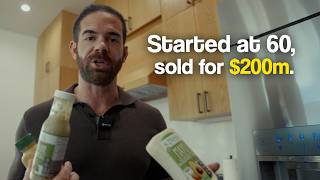
Ryan Daniel Moran, a multimillionaire who lost and rebuilt his wealth, lays out how people in their 30s and 40s can reach millions. Invest consistently in index funds, negotiate for equity instead of raises, and start a business by matching your skills to emerging trends. Mark Sisson started Primal Kitchen at 62 and sold it for $200 million.
Chapters
What's up, old fuckers? I think that you can have financial freedom in about 5 to 10 years, and it's easier for somebody who is starting a little bit later in life. So if you're 35 and you're feeling like you missed the boat, you missed all of the opportunities, I'm here to invite you to consider that you've got advantages that the 20-somethings do not have. And in this video, I'm going to lay out the exact financial plan for how you can retire with millions and millions of dollars. Not just retire, I mean get there in like 5 to 10 years. Now, if you don't know who I am, my name is Ryan Daniel Moran, and I am a near 40-year-old multimillionaire entrepreneur, and I got 2 kids. Now, between you and me, my net worth is probably about $10 million. That doesn't make me Jeff Bezos, but it puts me in the top 1%. I was one of those kids who started really early and made millions of dollars in my 20s, but I actually lost most of it in my early 30s due to some bad investments. That means that around age 33, 34, I really was pretty much starting all over again. And within the last 5 years, I made all of that money back and then some. And it's not because I'm better than anybody else or I'm smarter than anybody else. It's not even because I have better work ethic than anybody else. It's just because I had the experience of what it looked like to make a lot of money and I knew what tools and resources to pursue, and I was better the second time around. And hopefully this time I'm able to keep it and even grow it. Now let's start by talking about where you're at in your total income earning potential, because a lot of times when you're our age, it's easy to think that your best opportunities are behind you, or you wish that you had started earlier. And also we're secretly afraid that in the future we won't have the same opportunities that we've had in the past. And so we're in this awkward phase of both worrying about about the future and regretting part of the past? Well, I'm going to show you something that's going to, I think, reframe this for you. Take a look at this graph. Now, this is just one source, but this data and this study has been run over and over and over again, and they all point to the same thing. And that is that around the age of 35, we cross into this era where our income is going to go up for the rest of our lives. So there's a pretty good chance that you're earning the least amount of money than you will ever make in your entire life. Now that's just if you're average. Notice how even at the end of your life, this graph suggests that you're still making more than when you were 35. Now that's some really good news because if we're going to make more money in the future than we make today, now that opens up some good possibilities for us because if we're probably going to make more money every year or every decade than we're making right now, then we have the opportunity to do a couple cool things. Let's run some numbers and see what we can do now that we know we're going to be earning more money. So this little spreadsheet just demonstrates what would happen if we invested all of our extra money into long, boring index funds. So here are my assumptions. I'm assuming that you make $50,000 a year. And you get a 10% raise every 5 years. So nothing crazy. But I'm also going to assume that we invest all that extra money into long, boring index funds. So year 1, we invest $5,000. Big whoop-de-doo. But over time, as our income goes up, we can invest $10,000, $16,000, up to $23,000, $30,000 a year. Now take a look that this assumes that by the end of our career, we're only making $88,000 a year. You probably want to do a lot better than that, but those regular contributions into a long-term investment plan and the compounding effect of that money means that by the end of your career, you've got over $2 million. So this assumes that we don't get a huge raise over time. This assumes that we don't have a big financial win, we don't start a business. And I want you to see this because this assumes that even if you stay where you're at, but you get modest increases in your income over time, which if you're an average person is probably going to happen, but you park that away into long-term investments, you can still come out a multimillionaire. Now let's talk about how to make it bigger and faster. That's what she said. Now, I'm going to go on a limb here and guess that you work a full-time job. And I'm also going to guess that you want to make more money at that job. The fastest way to make more money in your current career is to pursue upside instead of raises. Now, I'm an employer and everybody on my team wants to make more money. Those selfish, greedy, entrepreneurial-minded people. And I love when my employees come to me and they negotiate more upside if they hit certain metrics. For example, you see this guy behind the camera? Yeah, his name's Alex. He's super cool. Well, Alex recently negotiated a pay cut on his monthly salary, but more upside if he hits certain metrics. And as a result, if he does a really good job, then he can earn up to 3 times what his previous salary was. He had to be willing to take a short-term pay cut and it forced us to have a conversation about what the most valuable things in the business are. And now he's incentivized to only do the most valuable things, and I want him to hit those numbers. So if you're willing to negotiate on upside versus raises, there's a chance that you're probably going to make more money. Now, if you have clients, people pay you for expertise like I used to do, I used to take on $4,000 a month copywriting clients. Well, what I should have done was instead of negotiating how I'm gonna get another $4,000 client, I should have said, pay me $2,000 a month, but I want 10% of everything that I create. Guess what? I would have been really motivated to make sure that that business hit those numbers, and I would have made way more money even though it looked lower risk to the employer. If you have no idea how to have that conversation, here's what I would suggest. Book a quick meeting with your client or your manager or your boss and ask this question. Where does this company wanna be in 5 years? And who would I need to become or what skill sets would I need to develop in order to contribute to those goals? And then simply say, are there any resources or relationships that you could provide for me that would allow me to help the company hit its goals? Watch how fast opportunities open up for you. And if you're in line for a raise, tell your manager or your boss you don't want the raise, you want upside instead. How can you align your focus to create the most value possible so that you can participate in those rewards? Just remember, any extra money that you make goes into the investment bucket. Not the lifestyle bucket, because the investment bucket compounds into a whack ton of money. The other way that you can make more money staying where you currently are is ask for permission to take on relevant side work. I am totally cool with my employees taking on extra work for things that don't conflict with the business because I think it keeps them sharp. For example, my controller takes on some bookkeeping clients for some of the people that we work with. And my old director of ops, he had a consulting client just helping them do what we did at our company. In both cases, I felt like it kept them sharp, it kept them motivated, and they get to make an extra $10,000 to $25,000 a year. That is totally fine with me. Now, if we're being honest, we know there's two great times in life to start a business. The first is when you're young and spright and you have no other responsibilities and you can live with two roommates and have almost no expenses and put all your energy into a business. That's true. But there's another equally good time for you to start a business. And that's once you're a little bit more established. Once you've got some resources and some connections and some experience. Once the kids are old enough to put in school. That is a whole new chapter of life. And it turns out the people who start businesses at that time in their life, tend to be more successful than the people who start in their 20s. Let me show you an example of somebody who did this really well. Now, this is my favorite mustard, and this is my favorite salad dressing, and this is my favorite mayonnaise. These are all made by a brand called Primal Kitchen. This was started by a guy named Mark Sisson. Look him up. Here's the thing. He didn't start this company until he was 62 years old. And then 3 years later, he sold this condiment company for $200 million. And I happen to know that he owned more than 80% of that company when he sold. Go ahead and run the numbers on that one. Now, was he able to sell a 9-figure company in 3 years because he had more energy than when he was 22? No, it's because he had some opportunities and some advantages that he didn't have in his 20s and 30s. Mark had more connections. He had more resources. You know what else he had? A reputation in other industries. He didn't have a reputation in the condiment space, but he had a reputation in other places where he had respect. And so as a result, he knew who he needed to call or who those people needed to introduce him to in order for him to build a great business. Here's the other thing that Mark had going for him. Mark was 62 years old. He knew that if something was going to take 5 or 10 years, that's going to go by in the blink of an eye. A 25-year-old is like, do something for 10 years? That's half my life. Mark is like, 10 years, let's just build this the right way. The irony is that when you build things for the long term, things tend to happen even faster in the short term. And that's why because he built a great company, that was acquired just 3 years later for $200 million. So what does that mean for you? It means that if you're stressing out at 35, you could get everything wrong for another 25 years and then 2 years later come up with your 9-figure idea. So how do you find your primal kitchen? Here's the formula. It's skill set plus trends. This is the multi-million dollar formula. If you have a few seasons under your belt, it means that you've seen a few trends come and go. It also means that you probably have a skill set that has been cultivated for at least 10 years. When you combine these two things together, you have a chance of making a lot of money. Think about it like this. The young kids They bet on crypto memes because they think they're going to go up. We have enough life experience to know that things go away just as fast as they pop up. You and I are more likely to buy long-term boring index funds because we see the long-term trend of it going up and to the right. So we have the experience to know when a trend is going to be here for another 10, 20, 50 years. And when you combine your skill set with a long-term trend, especially if you're early on that long-term trend, you've got a chance to completely change your financial future. This is my friend Pat Flynn, and this is my son's Pokémon binder. Now, one of these two things has a skill set. The other is a trend. Spoiler alert: my son's Pokémon binder is not the thing with the skill set. Now, Pat and I have been friends for a long time. and I know that he had a YouTube channel for years about blogging and affiliate marketing. He was really successful with it. That's a skillset, but I happen to know that Pat has kids that are about the same age as mine and they started collecting Pokémon cards. That's a trend. So Pat did something really interesting and kind of smart. He took his skillset of building a YouTube channel and he married it with a trend, Pokémon cards. Something that he and his kids were both getting into. As a result, after a few years, that YouTube channel has almost 2 million subscribers, and he's making a ton of money from it. Again, combining a skill set with a trend. And these are insights that you just don't have until you're in your 30s or 40s. So let's pretend that you're a realtor and your skill set is selling houses. How would you marry that with a trend so that you could start a business or at least stand out in your industry and get paid what you're worth? Well, there's a trend right now, obviously, of lots of people working from home. So let's say that you become the guy who helps people build home offices in tiny spaces. Most of the realtors that I know have handymen that they love to work with anyway. So we actually had this done in one of my houses. This was just an empty unused room. And so, we had this custom insert built into the wall of this house that makes it very comfortable to work from home. And this insert increased the value of the house more than what we paid to have it done. So, if you're a realtor, you're looking at your skill set of selling houses and you're looking at what trends you want to take advantage of so that you can help your clients increase the value of their home. Or you might even partner with the handyman you work with, or a tiny home builder in your area who's going to build an offsite office in the backyard. These are ways that you'll not only stand out in your marketplace and allow you to make more money, but also give you the ability to start your own business that serves that same client. That's how you combine your skill set with a trend to start making more money. Or maybe you notice the trend where buyers are looking up information about a house on Redfin or Zillow before they even ask to to see the house. So you start a YouTube channel that interviews the owners of high-end homes, and you ask them how they made their money, because you know that people want to hear the stories of how successful people were able to afford such a nice house. So you develop a YouTube audience with a following of people who want to hear those interviews, and you've got a baked-in audience for every single listing that you represent. As a result, you become the guy or girl that the high-end home sellers want to work with, and you've also got an audience that you can monetize. This is how you can combine your skill set with a trend and stand out in your industry and also start your own business. Okay, now let me talk directly to the 30 and 40-year-old somethings for a second. 20-year-olds, you can tune out for this part of the video. Guys and girls, at this point you know that the 20-something-year-olds kind of suck. Like, they They have nothing to offer the world. They think they're gonna be the next big thing, and they're optimistic and spry because life hasn't choked out all their hopes and dreams yet. But you know that life sucks sometimes, and you know that people are gonna disappoint you, and that means that you have a little bit more discernment over the decisions that you make. That's an advantage that they you don't have. Now sure, the, the young kids get all of this technical stuff, but those things change all of the time. Wisdom does not come in your 20s. Wisdom comes from getting punched in the mouth and moving through it, and the 20-year-olds haven't been punched in the mouth yet. Now this is not about who's better than who. This is just about what advantages you have that the younger kids don't have yet. And that gives you a better chance of being successful at this point in your life than any other time in your past. If you made it this far in the video, you might as well subscribe to the channel. I help entrepreneurs build million-dollar businesses. Great place for you to get plugged in is I wrote a book called 12 Months to $1 Million, which sounds like a hypey path to getting to 7 figures. But if you're 35 or older, you know that if you just do something consistently for a year, some amazing things can happen. And that is so true in business. If you do the right things in the right order for a year, you can have a million-dollar business. So you can check out that book on Amazon, and there's some free resources in the description of this video. My name's Ryan Daniel Moran. My company's Capitalism.com. Thank you for watching. I'll see you next time. Woo!







