
How To Sell A Business For 8 Figures
A live, informal discussion (Capitalism.com) about buying and selling Amazon/FBA and product-based businesses. Coran Woodmass (FBA Broker) describes shifting buyer demand—more institutional capital and international strategic buyers—while outlining how sellers should prepare (6–24 months) and what acquirers value (brand strength, net margin, diversification, retail-readiness). The session mixes tactical valuation guidance with anecdotes, event promotion, and audience Q&A.
Chapters
Oh, we're live on YouTube. They can see my hand for sure.
Oh, hey, you look great. All right, we're live on Facebook in 20. Here we go. Do you guys have wine?
I feel bad for the YouTube viewer. The YouTube loyal over here. Hey, guys. What's going on? Corin, welcome to Austin.
Thank you.
Did you already down.
Yes.
This is.
That's impressive.
I am Australian.
I will not appreciate.
Hold on a second. So you. You. It takes you all night to drink one glass of wine, and you just. You just doubled down on.
On this bottle, though?
Well, that's because, like, this is from last week.
It's from. Okay. No, I opened it, like, half an hour ago. Oh, yeah. I'm sorry. And you didn't. And you didn't give me any of this.
We can switch.
No, no, no, because this is what it. Here we go. I'll race you. You've got to finish this one in the time that I finish this one, remember? Hey, Facebook, what's going on? You know the hashtag? It's hashtag drink.
Click.
Clement drink. That's. And for every five hashtags.
Dear God.
Oh, we just. We just bombed on YouTube here. For every five hashtags, Clement has to take a sip, and his sip size is, you know, not well endowed. We'll say, see? Money. What are you doing to YouTube over there?
I'm not good with cameras. Sorry. Yeah, I think we could get a professional.
Holy crap. We're here with an Australian.
Yeah, buddy.
Corinne, what's going on, man? I cheers you, but I don't really have. Clement took all the wine. Look at. Look at this right here. Look. Clement got ambitious tonight. He just decided he's gonna use up all the wine. Well, Clement, you got some catching up to do.
Yeah.
Why don't you kick us off?
Does nobody else have any wine? Because Corbin already drank his, and you're like, I'll just finish off this wine from last week that I literally opened 30 minutes ago.
How is it.
How is it the other, like.
No, half the bottle is in your glass right now.
Okay.
We had dinner. There were four people at dinner drinking, and you're just like, oh, I'm gonna finish it off here. All right, well, hurry up, because we got another bottle. Kick us off, Dr. Clement. Go ahead.
Wait. Oh, my goodness. It's the most pathetic thing watching you drink wine. Hey, what's going on, everybody? Hey, Corin.
Where did you come in from? We came in from Prague.
From Prague?
Yeah.
We've got. We've got all the way from Antarctica. Everybody, Prague, Antarctica, is where Corin Wood, Mass. Flew in from. And we're joined by the good doctor, the gynecologist, proctologist, anthropologist.
Clement. Juan and Corin, you go by the FBA broker. We're gonna talk about selling some businesses tonight.
Yeah, that'd be great.
You were working on some deals today.
Yeah, I was always working those deals.
Always working those deals. Hey, before we get into that, if you're watching live, let us know in. Oh, I didn't go live on my personal page. Oh, hold on, hold on. We're about to go. Here we go.
Three, two, one. There we are. Hey, so if you're watching live, let me know in the comments. Would love to see who. Who we're hanging out with live. Oh, guys, I know this is gonna shock you, but Aiden Al is in the audience. Hey, Aiden, Aiden's with us. And c. Money is. Is here, buddy. Hey, Eloy. Hey. Jacob Brown. What's up? Scott Trimmer. Brianna Thomas is in the house. She's got.
Thank you, Brianna.
Hashtag let Clement be. Um, I'll let Clement be as soon as he finishes the glass that he poured for himself.
I figured I was taking one for the team.
Taking.
I thought it was like, this is.
What you left for me. Yeah, that's what you left for me.
Since I hadn't started yet, you're like.
I wanted to do a. I wanted to run a split test of wines tonight. And you're like, not gonna do that. I'm gonna take all of it for myself. Hey, Joshua Costner. What's going on? Derek Schaefer. Good to see you. Yuri Soria. Mia Shark. What's going on? Who else we got? Mohit Tater. That's a badass name. Hendra Manalu. That's also a badass name. Hey, Donna. Good to see you. So do me a solid. Let me know that you're watching in the comments. Thank you. Aiden. This. Figured this was the most accurate shirt for. To describe my life. Jack Tyler, good to see you.
Hey.
In Arlington, Texas.
Hey. Matthew Underwood. What's going on? Oh, hi. Jeannie Sago. Caleb Prasik. Dan Nader. Ron Lynch. Jen Nichols. Jason Holy cow. And I don't. I don't know that he's viewable on camera. This is kind of. This is kind of adorable. It's a little bit sad, to be honest with you, but it's sort of adorable. Can. Can Facebook see cash on camera? And of course, comments gonna pick up. Of course Cummin's gonna pick up cash on camera.
The real Stuff.
All right, hey, let's, let's jump in. We got a lot to talk about. Because, Because I believe in building businesses to sell. I've now sold a couple of businesses. Clement, the good doctor and I have acquired a couple of businesses ourselves. So I, I'm on both sides buying and selling businesses. And Corin sees more deal flow in the Amazon space specifically than anybody else I know. So, Corin, what are you seeing go on in the space right now?
Oh, man. A ton. A ton. There's a lot.
Forgive me. While I drink my one sip of wine that Dr. Clement left for me. I'll ask also, I'll act all sophisticated while I drink my one sip.
I'll drink my water.
Oh, come on, drink, Clement, drink. All right, corn. Tell us, Tell us everything.
Wow. Well, if I had wine, I could tell you more. But no.
The space is crazy. What we're seeing a lot is the money on the buy side is ridiculous. So real money is coming into the space.
Well, how do you define real money?
So I would say in the 10, $50 million plus budget range is real money. So strategic acquirers.
Companies that have raised capital, companies that have access to almost unlimited capital for the right deals. That's what we're seeing. We're also seeing international brands that are looking to acquire product based businesses that, that have proven their market on Amazon and they're looking to take them into their other channels.
What type of channels are those businesses?
So one in particular has. I'll tell you a little bit about these guys. So they have. I'm from Australia, you guys, we're in the States right now, just been in Europe. This product, these products that these guys have are in all of those locations. They have thousands of sales channels into retail, wholesale, just worldwide distribution. So it's not online. What they do online is small compared to their actual business. So they're looking for products that could go into retail that have proven their model. Right.
So when you say proven the model, what does that mean? What's that model?
They're solving a problem for a customer.
Okay.
So they've created a brand, they've created products that solve a problem for a real customer, and.
That'S the type of product they're looking for that can also go into retail. And they actually said to me, look, we're looking to buy.
I'm listening, Corin. Keep going. Keep spitting gold while Clement spits out his wine. You spit gold, he'll spit grape juice.
They're looking to buy these brands while they're small. So They've proven that they can solve a problem. They're looking to buy these, call up the sales department, say hey, put these in a thousand stores. That's what they want.
So they've already got the distribution and they're looking for products that fit that model of their basically distribution play. So they're looking to acquire them and they've got the history and the deep pockets to be able to acquire them.
And deep. Actually that's a great point. Just one more thing before we go on. Deep pockets is where it's at. So this one particular company I'm talking about, two brothers own this business. The head of M and A I was talking to, I said well, what's your budget range for the first acquisition? He said, well, one of the brothers, one of the brothers and I do M and A. We could sign a check up to 30 million, the two of us. If it's above 30 million, we would probably have to get the other brother and maybe the board involved above $30 million. These are my kind of people. Yes.
And the crazy thing I think is that most people who are in the Amazon space specifically aren't thinking about what it takes to position themselves in front of big money. And now you're seeing it inevitable that you see all the big money moving into the space. It was only a matter of time. It's finally happening. So how do you, you work with a lot of the one and two person shows that are selling to these strategic buyers. So how are you advising them to approach those types of situations?
Sure. So it's really about packaging up the business for. To position it in such a way that it appeals to these type of buyers. They need to be ready to go depending on the buy type. They have a lot of different metrics they're looking at and it's tough to be perfect for everyone. So we try and position them for success going into the sale. So often we're preparing six to 24 months ahead of time.
Wow.
Before actually going to market.
And what's actually being done in that six to 12 months.
Yeah, we spoke about this in key of this.
Oh yeah. By the way, we should tell that story. We'll get to that. How we met in a, in a crazy dirty place with actually wasn't. It's not. It's a great story. But anyway. Yeah, go on. We'll tell that story in a second.
So a lot of people, you know, they start a. An FBA business, let's call it just with the, the idea of what's selling on Amazon, what can I source, what can I, what can I make money on, what can I rank? And that's how you get started. That's all good. And well, maybe you find a product line, a niche that's great. Let's say sports and fitness, you're in one type of fitness, that's your jam. You get something ranking in this. If you double down on this niche and you say, okay, I'm going to create more products around this niche, it's going to take some time. So that first year is often figuring out what works. The second year is really doubling down on building out products for that niche. The third and fourth year are often either expanding again or optimizing for a sale. So you can't aggressively be growing and be positioning for an optimal sale. You can and you can't. It's hard because one of the, one of the things you want is good net margin. So that's something, you can't be taking great net profit out of the business.
If you're, while you're also scaling, like you're also investing in advertising. So two different levers.
I mean, I know this from my experience and how we addressed it when I've sold a couple of businesses. But when you're working with these businesses, are you advising them to not go to market until they're at that place where they're stepping back and now managing profitability?
It depends on the business and depends on the goal of the seller. So in some cases we've had clients recently that say, yep, I get that I could grow this bigger and I could position this for a bigger exit. However, the market rate, the value of my business today is enough for me to say this is a hell yes number. And we ideally want to take businesses to market where the seller, the founder is at a hell yes number.
Got it.
Because then we can shoot above that.
Got it. So another, another question that comes to mind is my deal was they bought them. The group that bought me, the group in Dallas bought a majority stake, but I'm still an owner in that company. I still advise that company. I still talk, you know, I'm not involved in the operations, my partner is, but I'm, I'm in touch with that team. I don't hear you talking about that type of a structure as much like the roll up structure or the equity model where, you know, we're going to sell that in a couple of years. So is, are the entrepreneurs that you're working with, do they have a different mindset or is it just a Different deal structure. Tell me about that.
Yeah, so you'll often see this come through as. As an offering. They'll always be a percentage of either. A holdback. Hey, we're looking to do this. You can retain some equity. This is the plan. And actually, while that. This is two sided coin. So the reason a buyer is making this offer is to reduce risk. And the reason you want to keep the percentage is for upside, for the most part. So with clients of ours, we're often drilling down on who's making the offer and what the offer is.
I'm sorry, hold on. I went to school to be a pastor, and you all know the story of turning water into wine. And I just need to do this for Clement real fast because he poured himself this glass and is now switching over to the cheap stuff that came out of the refrigerator. Just wanted to make sure that he saw the mismatch here. Keep going.
What was I saying?
I have no idea. We just turn water into wine. I want with wine. That's what we do here.
That's pretty nuts.
Hey, if you're watching live, say hi in the chat box so that we know who's watching. Hey, do you know that George Bryant's in the house? Everybody. Hey. Well, I expected a much louder response from that. Oh, where's T Coin? T Coin needs to get here. He's in Berlin.
T Coin.
We got T Coin and C money. George. What's up, dude?
Hey, George.
Hey, Colin. What's up, Oleg? Hey. Ryan Rouse. What's up? Jessica Bush. Good to see you. Hey, Carrie. Graham. Thanks for hanging out with me. What's up, Jeff? Call. Hey, buddy. Miss you. Oh, Leanne Woodmass. Do you know who that is?
No idea.
Not a clue. Okay. What's up, Dustin Titus. Hey, Warren, call George Bryant says I don't feel the love. Hey, George Bryant's in the house. Guys.
Clement still didn't.
No one has a worse time on Wine with Wine than the Doctor.
The good doctor.
Hey, Matt Underwood. What's up? Mark Murphy. Good to see you. Hey, Will Henderson's in the house. My favorite person. Hey, Omer Saar. What's going on? Justin Chestnut. Eric Payne. What's up, guys? Thanks for hanging out with us on Wine with Wine. And aidan Ow. About 3,700 times. Hey, good to see. Good to see you, Aiden. Hope to chat with you later. All right. So, Corin, we met. We met in Eastern Europe. Now we can't talk about 80% of what happened?
80%?
Correct. And when Clement gets to here, I want you to tell the story about Jerry Seinfeld, because I have played over that story in my head almost every day since. It really had a meaningful shift in my life. And you never know with the things you share with people, how they're going to impact them. And that story just impacted me in a way that I probably won't ever forget. And I'll share that when you tell the story. But Clement has to get. To get here.
You're, like, reducing this repeatedly.
Well, you are not reducing this. So the faster you reduce this, the faster Corin and I can drink again. Because you took half the bottle in your first go.
So, Clement, I. I'm, I'm Australian. I'm not sure what the culture is here, but usually if you have something to drink, that's a good thing and you can enjoy it. It's okay. Especially when you park for yourself.
You said you were taking one for the team.
Because I thought this was like an old bottle. Because you tend to do this. You tend to drink like half bottles and just leave them on the counter and for potential drinking in the future.
So. Okay. And so you decided you were going to take the hit and pour the whole glass and.
Yeah, because I said all night.
What about a new one? Yeah, we did. We opened two new ones. And I'm really excited to share. I discovered a new wine that is fantastic that I want to share with you. I want to share this with you, but it would be rude for me to pour it into our glasses.
It really is.
No, it is super rude for us to drink this while you're sitting there nursing what you thought was week old wine, even though it's. It's the good stuff. So I only got two sips of this wine, so I can't give an accurate. An accurate review of Mayomi. We've had this. We've had this on the show in the past. Have we had it twice?
Yeah, it's.
It's one of our old. Oh, here's the week old wine here. There you go. Here, like this. Sean Miner, which. I don't know who opened it. You can have this after you. You can pour yourself that glass.
Me?
Who opened it?
I don't remember. Corin, what's your review of the Mayomi?
Yeah, it was decent. I like the P9. Yeah, it's cool.
This was a 2016 Pinot Noir from Sonoma County. I thought it was just okay. I only got a couple sips out of it, so I can't give it a proper review, but my two sips left Some to be desired, but I'm very excited to share pad well with the pizza.
Good.
Well, I originally wanted this one but I'm saving it and we're going to be saving it for quite some time while Clement kisses his, his grape juice over here. All right, what types of. Are you seeing any specific markets or any specific industries sell for higher multiples or just like open ended question, what types of businesses are selling for the most as of right now?
Yeah, so actually the type of, you know your talk in Kiev was all about building a real brand.
Yeah.
Having product synergy, solving problems for that target market and that's actually what's always going to sell better than another. Another business.
Well compared to what?
Yeah.
So you know what's, I think in brands like what's the opposite.
Yeah. So we see a lot. So our brand is the FBA Broker. So. So anyone that sells via fulfillment by Amazon will come to us and think they can sell their business.
Got it.
So in some cases they could have a business on paper, but maybe they've got three, four different brands and six products. But three of those brands are a name and they have one product each.
Got it.
And there's no synergy between those products at all. All they're doing is looking on all the online tools to figure out what's so selling well and then they'll go do that and then they'll look for something else. They'll go solve this and, and is.
There a market for that? Do those businesses sell?
Depend. Depends.
They're not slam dunks.
Hell no.
But, but brands are slam dunks.
They can be. Yes.
Who has been saying this for years and years and I wish there was somebody who had warned us. Yes, I wish, I wish there was somebody who had warned us years ago that there was going to be big money moving into the space and they were gonna buy up brands. Ah, see money. We should have found that person and give them a podcast on capitalism.com or something. Should have done some videos, giving them some keynotes or something. I wish, I wish there was somebody who had let let us know about that. So, so if somebody is selling a product or a couple products that are not matched up, do you think is that sellable or is there anything they could do to make it more sellable?
Yeah, absolutely. So to preface this, I started the FBA Broker two years ago and back then we literally had buyers say anyone that's selling products by Amazon, we want to buy this. And the first guy to say this, the first partners to say this Had a million in cash ready to go and they closed on a deal. And the first deal I did was three bays, three close. It was nuts. And we're like, okay, this is a trend. Let's get into this. No one's talking to this market. Let's go in. And what we're seeing now, the change is happening so fast. You know, if you were to start from scratch today, you couldn't just do random products anymore. If you're starting from scratch, just selling, so that's a good thing. But also what we're seeing is that that's getting harder and harder to see sell.
What's getting harder to sell? The random product portfolio. Okay.
And I don't know who mentioned this, it was definitely not you, but someone who said, you know, start a different brand for each product you create. It's ridiculous.
Who would give that advice?
I don't know, but I have, I have conversations with, I've got three brands. And then we go to look at the business. This is not three brands. This is three products. There's nothing, any brand synergy.
Whoever said that should be hit in the shoulder with a wet dog.
A wet dog. Have you ever been hit. Have you ever been hit in the shoulders, particularly the left shoulder, without. With a wet dog?
Doesn't sound like you don't, you don't.
Want to find out what that's like. You know what they say about that. It hurts like a.
I'm a dad. I'm a dad.
I think, I think we just lost everyone.
Yeah.
There'S now a bunch of dirty mouthed 6 year olds who are watching, thinking it's hilarious. I was having breakfast with Esther this morning and she was laughing hysterically at all the ridiculous things I do. And I was like, finally someone understands me. Took 31 years. Someone finally understands my sense of humor.
It was bound to happen eventually.
You know, if I, if I sneak out enough kids, you know, one of them will find me funny. That's, that's my strategy. Oh, hey. Patrick Fisher on YouTube. Good to see you, dude. I see you. You're right. We need to pay more attention to YouTube. Sorry. The comments disappear. That's, that's why we, that's why, that's what makes it so difficult. Dr. Clement, how you doing over there?
Good.
I'm getting drunk.
Hey. Hey.
We're only four sips away.
That's right. We've got three millimeters left, everybody, until we can tell a good story. Hey, Katie Dorish, good to see you. Who else? We got Jake Slater. He says Sidetracked much? Well, sometimes. Hey, Timothy Sullivan, what are the hottest categories these days? That's actually a really interesting question.
So in terms of. I'm gonna say.
Hold on.
There's a really long comment on YouTube that I tried to read in under five seconds and it didn't happen. All right, so question about hottest or hottest categories right now. I'm gonna let you answer that from a sales perspective and then I'll go into it from an actual business perspective.
Cool. So one of the cool things, one of the best decisions we made two years ago when we started out, I was looking around for how to value an Amazon related brand and what I decided to do was start tracking the entire market. So not just the listings. We had look at everything that was available online. The first try of this, I had had about 16, 17 listings when I first trolled the Internet to do this. So we've been doing this consistently every month for two years. And about a year ago we started doing this weekly because there was so many deals closing, so many new listings with an Amazon sales channel. So I have a decent amount of data to go off this and I can actually share an article we wrote. So we did a 2017 rather than.
Of business sales. So there's 174 sales.
320 totally like in the total market.
Or so this is just public. Okay. Publicly available, confirmed sales. So there was some unknowns, there was some other. And definitely some other deals off market that just weren't public. Right. So out of those deals that we saw close, 174 deals closing in 20, 2017 publicly. The top category was home and kitchen by a decent.
Wow. Yeah, that actually really surprises me.
Yeah. So everyday products.
Sorry to interrupt, but when you say top, does that mean in profitability, most.
Closed sales, Most close transactions?
Most businesses boss.
Yes.
And do you discriminate against like price or is this like, could this theoretically be. You sold. There were a hundred kitchen brands that sold for $10,000.
It could, it could be, but it's not. So. Yeah, I'd have to pull up the dialysis. Yes. No, this is across the whole market.
What I'm kind of, what I'm kind of getting at is like just because there's a high number of transactions in a market doesn't mean that it's necessarily the most profitable market.
Right.
But it does mean there's a lot of buyers for that market, I think is what you're saying.
And you don't necessarily like when you consolidate the data. Do you actually know what the sale price is.
No, generally not.
So you just know that the transaction.
Okay, got it.
We try and get transparency, but a lot of my fellow brokers don't want to talk about stuff as much as I think the market is massive and we do more if we collaborated. A lot of people don't want to do that, which is fine.
So I'm just going to give a public endorsement to Corn right now since he brought up his broker buddies. I know, I know a lot of. A lot of you follow me because you run businesses that are physical products, brands or you sell on Amazon. And Corin is just a good, good dude. I just love hanging out with the guy. I actually. So I called it. I called a good friend today and I was like, I just, I just love my new friend Corin. I was like, I just love hanging out with him. I'm so excited that he's thinking about moving to Austin. My heart's a little bit broke and I thought you were going to be here for a few months and not just here visiting, but, but if, if you have an Amazon based business. FBA Broker is somebody that I've been recommending a lot of people connect with because he's just an overall good dude and you'll like hanging out with him. Please continue. Hottest categories. Home and kitchen is where a lot.
Of you're welcome cash is sliding across the table.
I mean, I mean, selfish like Corin and I have have kicked around a couple ideas potentially working together to get me really excited. So selfishly, I hope one of those come to materialize.
Also, quick update.
Leon H or Leon HR Says I.
Sold my business with Corin.
Yeah, thank you.
Actually, I have a story about Leon.
Let's hear it. Wait, are we allowed to share good stories until Clement drinks? We've gone there already. I don't think so.
So, I don't think so.
Like, this is probably the most you've ever drank online with Lion. Yeah, that's for sure. All right, well, let one story pass through the filter. Yeah.
Okay. Real quick. Thanks for jumping on Leon. I was hoping you'd put your hand up when you came on. So, Leon, we're in the process of transferring his deal right now and we were talking on Slack yesterday. I meant he said, oh, I see you're in Austin. Enjoy it. If you see Ryan, thank. He said, please thank him for helping with all his content for me to build a seven figure business that was sold. So that was great. And the second thing he said, which isn't going to be a problem. Thanks to Clement is. Don't get too drunk.
Well, we can't get drunk when there's no wine because it's all in Clement's glass.
And the bottle there.
Yeah.
And the many bottles.
Look, Clement, I wanted to share this bottle with you. I haven't even revealed what the wine is. This is a special wine.
I can see that. Yes.
It's a special wine.
Okay.
And I've been. I've been. I wanted to drink it with you. Yeah. And then. And then you poured.
And. That is a good story. So. So. So Leon found our work, built seven figure brand, found you, sold for a fat payday. And here we are, and now we're all hanging out. I say we do some eight figure brands next.
What do you say about that? Let's do it.
I have. I have. I know some people. We can make that happen.
I like it.
All right, let's see what else we got going on in the chat box. If you're watching live and you are just joining us, please say hi in the comments box. We'd love to see who are hanging out with. Whoa. Spoiler alert. Bomb drop. Katherine Lavery is here. Hey, do you know Catherine Lavery?
No, I don't.
She's pretty spectacular. Sounds very mysterious. Very mysterious. Got a weird accent because it's too. It's too slight to notice. And you're like, is that an accent? I'm not sure if it's an accent at all.
Where's it from?
Poland, I think. Poland or Japan? I'm not sure. Poland, Poland or Japan. Yeah, yeah, yeah. Right by you, right? Right by you in Antarctica.
Yeah, yeah, yeah.
You are in your veterinarian career, you worked on some Antarctican polar bears, didn't you?
Yeah, of course.
Mm. What was that like? Is it true. Is it true that a polar bear liver has so much vitamin A in it that one bite will kill you?
Wouldn't know.
Someone Google that. Someone Google that vitamin not you. C money. It's not fun if it's somebody who's in the room.
What's up, Micah Brat. Good to see you. So have you seen Jessica Yonker? My high school crush is watching. I don't know why.
Maybe the show.
It could. It must be it. I mean, she's married now with, like, seven kids, but. But. But, yes. My high school crush is. Is currently watching right now. Let's see who else. Who else we got? Hey, Omer. Good to see you. All right, well, we might be at story time.
Yeah, we are.
I think we're about. I Think we're, like, three sips away.
Maybe one more sip.
Maybe one sip away.
Like you mean it.
Like. All right. That was almost a real sip. All right.
So.
When Corin flew all the way from Prague, Antarctica, to Ukraine, and I flew from Austin, Texas, we were having a conversation, and thank goodness Seamoney had the camera rolling. We posted on YouTube, and we were talking about what happens after you sell a business, and, Corin, you were telling the story about Jerry Seinfeld, and I would like for you to tell that story again.
Yeah. So I might tell it a little bit different because we'd had wine at that point. We haven't now, so it's a different story.
We've just renamed the show to Wine with Clement.
So something. You know, when it. When you think about achieving goals, what life is going to be like after X happens, we're all kind of pushing towards X. I watched a documentary with Jerry Seinfeld on Netflix, and it was before Seinfeld. This is the name of the documentary. And something that really stood out to me was on the outside looking in, you'd think that Jerry Seinfeld, being a billionaire or close to crazy, he's a.
Comedian, and he's a billionaire.
Ridiculous money from doing something awesome like being a comedian, you think this is the pinnacle. But actually, in that documentary, he was really vulnerable, and he said when he was starting out.
He actually thought it was his version of success. When he started was having enough money to buy a loaf of bread and sit on the sidewalk when other people were going to work.
That's what that was. I've made it. I remember you made it.
I remember you saying, if he could just pay for dinner with the money that he made from stamp comedy, that was, like, the coolest thing ever. And did I tell you why that created such a shift for me? Have I told you that part? Well, here we go. I'll tell you the story live.
What that did for me is it actually put me into, like, a contemplation mode of, wait. Jerry Seinfeld is a billionaire doing something that he's good at doing, that he loves to do, and he didn't care about the result. Right. And here I am, you know, on a mission to. To buy the Cleveland Indians, which is going to cost about $1 billion. And I'm looking at, like, all these strategies that are going to get me there. And it's. And it's fun for me to read the books and invest in the businesses, and, like, all that's great. But I started to look at maybe my best shot at being a billionaire is doing the things that make me deliriously happy. Because you're bound to get really good at them. And I don't necessarily believe in following your passion. I don't think that's always good advice. But if you can marry that with a really good strategy.
That overall is. Is a good sign. That's like. That's like a perfect mathematical formula for success and happiness. So for me, I started to look at what are the things in my business that I'm doing just for the strategy that take me out of a point of creating a lot of energy or having a really good time, and what are the things in my business where I'm doing them that I really love and let's cut off everything else. And since I've started doing that, like, my focus is coming back, the team is rallying. I think people like hanging out with me more because I was trading energy for the result rather than building something that supported what I really wanted to do. Which I realized after that conversation would be my best shot at being a billionaire.
Yeah, absolutely.
So thank you for sharing that with me. And you've been really successful in your area of expertise. And you say, I can't believe people pay me to do this.
Yeah, yeah, 100%. When I started out, I was actually doing it for free.
Really? I didn't know that.
I had people reaching out saying, how do you evaluate back. I started out buying and selling digital assets and I had friends saying, well, how do you even evaluate a business when you're looking to buy what's a good deal, what's a bad.
Yeah.
And then on the flip side was, how do you actually prepare for a sale? And I just have these conversations. The first time this happened was in Berlin four years ago. Five years ago. Four or five years ago, friend of mine said, if you can look at this website, I'm thinking of buying, I'll buy you lunch. I'm like, sure, let's go.
So you literally were like, if I could get dinner paid for, it would be just awesome.
Exactly. And then people just kept coming back. They're like, wait, I actually prefer. So we're making good money off the deals with acquired the stuff we were growing and building. Sort of like the four hour work week. We actually had the four hour work week. I was fucking miserable. I hated it.
What were you doing when. When. So you were living the four hour work week.
Yeah. So we had a bunch of a portfolio of affiliate sites we were building, which we eventually sold Built from scratch. An E commerce business. We're buying, building, selling, basically, that was the whole model. And things were working. Cash was coming in. I was miserable because what I actually need is this. I need to be dealing with people that are happy moving forward. So what I do now isn't work for me. For the most part. 90% of the time, it's not work. 10%. Of course there's going to be times where, oh, shit, I got to do this. But for the most part, I'm dealing with positive people that have built great businesses. On the buy side, the larger buyers are excellent to work with. They're motivated, they're kicking goals, they have big objectives, and it pushes you to go farther.
So you started in doing like you were actually in the weeds.
Yes, building. Building digital assets and investing myself. Yeah. Taking the risk, taking some hits, the whole deal. Yeah. Both sides of the coin, like you guys.
Now, do you. Do you currently invest yourself in.
Existing brands or are you kind of out of the market?
So we have an FBA business, a supplement brand that we have.
There's no money in supplements.
Everyone knows zero money in supplements. I've actually run the numbers of selling that, and I make such a good return in my pocket that I don't have anywhere better to put that money right now. So to answer your question, not at the minute, but what I'm seeing is a huge opportunity in my space. I've looked at this a couple different ways. I no longer see using my own capital as the best.
Avenue to chase down.
And where did you get come to that conclusion?
Once I started talking to enough people, yeah.
Same with me.
Once you see the power of scale, you realize that doing this small scale with your own cash is pretty much a dumb move. The risk is very high. You deploy all your capital very quickly, so you don't have the chance to scale once something's working.
So, Corin, I want to pause there because I can't wait to go down this rabbit hole, but I think it's time. I think it's time that we had some wine. Yes.
Finally.
Yeah. I mean, you come to my house.
You downed your first glass in, like, 39 seconds. Dr. Juan is still drinking. He's almost there. He's almost there. And I've had two sips. So here we are.
Could we take this one?
What's that?
Do you want to take this head and I'll take the next bottle?
I thought you were saying we. We should give this to Dr. Clement. He'll. It's been open for 45 minutes. All right, so I want. I want to share.
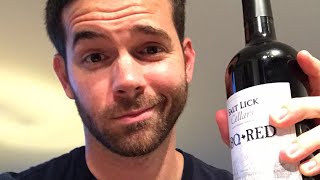
This is from Salt Lick Sellers. So somebody posted in the comments. Do you have any recommendations for a Texas wine? I actually don't like a lot of Texas wine, except for this one. This barbecue red is my jam. From Driftwood, Texas, just down the road where we just had our quarterly retreat in Driftwood, Texas, and looks to be hopefully, the hometown of the capitalism compound. When it is. When it is built.
That's what we're hoping for.
Yes. Have I not told you this?
I heard about the lake house, but not.
Okay, so the lake house is. Is stage one, if you will.
So a couple of years ago, I kind of looked at this life that we're all building doing Internet marketing, and realized we were a bunch of really lonely entrepreneurs. And when I had my exit last year, I. I looked at my ideal life, and I was like, what I really want is I want to wake up in the morning and cook breakfast with my, like, best friends. I want to get a workout in, record some videos, help out some businesses, and work with amazing people. I was like, that sounds like my ideal day, no matter what. And I didn't have a way to just, like, live that life within the current context of how my life looks. So I was like, I guess I'm just gonna have to build this. So the two scenarios of that were, if I had a home that everybody wanted to come to, and I had business partners there, and we had a cool video studio there, and there was a cool gym there, and we could have masterminds there, that would be really cool. And if we got bored, we could hop on some jet skis and jet around the lake. So I bought a lake house that I'm renovating. It'll be ready in a couple weeks. And then the second part of that was, well, you know what even be better is if you had, like, a retreat center where people would even fly their teams or stay there for months at a time because everything was provided for you. And if you were writing a book, you could rent a spot on the land, and you could be there for three months writing your book. And then three times a day, you could go to the community quarters and have dinner and lunch with your best friends. And when you wanted to get away, you could go back to your tiny home and work away at your laptop. So I'm currently looking at acreage and Driftwood, Texas, which is about 20 minutes outside of town, to build. To build the compound over the next couple years. I need. I'll. I'LL need my next windfall before. Before I can do it the way that I want to do it. But I'm starting to kick some tires.
Cool.
That's why. That's why you need to move to Austin, Texas.
That sounds pretty awesome, actually, doesn't it?
I mean, in that, like, what life's about being with, like, your. Your closest relationships, working on projects that you're excited about. What do you think of that, Dr. Clement? I've actually never asked your opinion on the compound.
Yeah, I like the idea. I think. Yeah, it makes a lot of sense.
Would catch be welcome?
I don't know.
Buddy.
I don't. So, you know, I was even thinking about, like. Like, the ideal life for pets. You realize, like, when we domesticate animals, we just put them in cages and put them in. Like, we completely. We, like, we completely ruin their lives. Like, you know what we could do, though, is if we had pets on a compound and they ran around a bunch of acreage. Now we're actually. Now that's a cool idea. All right, who else we got? Oh, we got. You know who Leanne Woodmass is.
She keeps compounding. Rick. Rick says that I must be wearing your shirt.
Very accurate.
That's. That's okay. Lane Etheridge. What's going on, dude? Who else we got?
Chris Van Loan the second. Do you know who that is? Hey, Nick Torson. What's going on, Justin? Aubrey is saying that Aubrey Marcus is an example of somebody who has built their life around their zone of genius. I completely agree. I feel inspired every time I hang out with a guy. Oh, boy. Hey.
Clement. Will you say that name for us? Will you say hi to Michael?
Michael Ra.
The doctor says that's how you pronounce it.
I think you nailed it. I think you nailed that one.
Brian Boland. Hello. What's going on?
All right. We finally get to try some wine.
Yes. Excellent Texas wine.
Would you like to. Would you like to join us in drinking this?
Eventually.
We got a couple more hours before we. Before we get there.
I'm already ahead by more than an hour.
Oh, I love this one. What is your review on the barbecue? Red Cornwood, Mass.
It's okay. I think it would be better with steak. So, yeah, it is a barbecue.
So you. So you prefer. You prefer the mayomi?
No, no, I think this. So I like this because we were having with pizza before the pizza you made, which is awesome. And this would just be better with steak.
But overall, the drinking wine, what were. What. How do you rate it?
It's nice I'm really a beer guy.
You're a beer guy. And here we are.
So is it a drink?
You know what? That's a fair point.
See, money, I like. Well, I'm Australian. I like Shiraz.
Okay.
Yeah, yeah, like a big, big red. It's not a big flavor, so. Yeah, but it's nice.
Well, I like it.
Something you could drink.
So we have. We have different palates. What. So what do you like about a Shiraz?
Just that it's. There's more.
There's more to it. You drink it. It's like, whoa. It's almost like a whiskey. Like, there's a good whiskey. That's just more flavor happening. It's more powerful. That's what I like. This is nice. There's flavor here, but it's not big. It's not punching you in the face.
Well, got bad news for you, Corin. This is the best Texas wine that you will find.
Two things. Corn. Aiden says, I like kangaroos, and two Jay Gabrani.
Yeah, that's a. That's a great question.
But I want to make this, like, one of the banner questions when we cut it off, cut it up. So I just wanted to highlight it. Go ahead. Sorry.
Oh, so, and Jake, if you could touch again on the different multiples of different industries.
Yeah. So are there different multiples depending on the industry that you're in? Does that actually impact the amount that you're going to sell for?
Yeah, absolutely. We work that into our multiples. And that being said.
One of the categories that has the most that you'll see this the most is supplements, actually health supplements. So buyers are split down the middle. They'll either hate them or love them. There's no in between. Whereas if it's a home and kitchen product, the chances of you appealing to a wider audience and getting a better multiple are higher. So we actually use category as part of our valuation.
So are you saying that a supplement. Because it is a polarizing, if you will, it's harder to get buying war. So it's higher to get a higher multiple, harder to get a higher. You're not saying that.
Okay. It just won't appeal to as many buys.
Okay.
Because some. Some buyers, especially in the private equity space, they are. Hell no on ingestibles. Anything that could potentially create some issues that they don't like, the liability aspect, so they're just out altogether.
So how does that play into your.
Projection of the market or the business sale?
Yeah, so there's a lot more that goes into the. The Evaluation than just the category. The category does play, but it's not. It's not a massive difference. There's not a 10 times better multiple for home and kitchen versus supplements.
Okay.
You know what I mean? It's more of a nuanced thing.
So when you say it's a nuanced thing, like, I would imagine characteristics like repeat buyers is considerably different than like, because home and kitchen, I would imagine you don't. It's a lot more difficult to get those rep buyers. Whereas like supplements, hopefully if you're doing.
Well, people home in the kitchen lend itself to replacement parts. So if you, if you get the two going together, it's quite good. But yeah, recurring income is great because it gives you longevity. Especially if, you know, a friend of mine sold a very decent supplement business, another friend that was in supplements, and they were doing a lot of their business, repeat purchase through their own website, and that played well in their multiple when they went to sell.
Now, have you looked and tracked kind of what kind of impact the repeat purchasing kind of behavior versus industry? Like what. What do you see as some of the bigger drivers in terms of value?
Yeah. So brand is number one. Brand. Brand synergy is definitely number one. Number two is net net margin. So your actual net margin, how much net profit over the last 12 months divided by your revenue, giving you your net margin percentage. That's the thing that gives you flexibility. So that's what buyers are really looking for. And then product range comes into play, the type of product, how defensible it is.
So you talk about brand. What do you mean by that?
Yeah, so kind of like what I was saying before, if, if I sold this glass and I called it wine.
That'D be a good wine.
That is not a brand. You sell one type of glass and it's called wine glasses, whatever. That is not a brand. There's nothing outside of Amazon. No one's looking for wine glasses yet. You could do this.
It's coming, everybody. It's gonna sweep the nation.
So how do you, like, how do you value that? Because, like, is there.
Do you.
Is it like porn? You know it when you see it? Or is it like.
Is it like porn?
Is it like porn? Well, that was the obvious question.
Legal definitions is like. I can't remember what the ruling was, but yeah, like the idea.
Can you explain what you mean by that?
So can you explain what porn is?
Dr. Clement, from your medical opinion, what exactly is porn?
Moving on.
We need to get him a little more drunk to talk about porn.
Okay, we'll talk about this later.
Okay.
So like you talk about branding, but is there when people are looking, when you say people are looking at brands as being a driving value, how do you know that? Like how is a brand evaluated? Because for some people, brand just means slapping on a nice looking label and being consistent across a couple products versus yeah.
So a good example of this is there's extreme examples, of course, Apple, Nike, there's, there's niche examples of this, like AeroPress. People pay more for an AeroPress because it's AeroPress. Yeah, right. And they built a brand story. People search for this, people talk about it. You go to a coffee shop and.
They is at the coffee maker.
Yeah, yeah, we have one of these. It's like, yeah, it looks like a big needle kind of. What do you call that? Hyperdome.
I'm terrified of needles.
Yeah.
I would never buy a pearl press. I'll wake up in the morning, look at my coffee.
I don't want my coffee anymore.
So they did such a great job telling the story of why this is so great. People go to a regular coffee shop. They have them down here at Merits, the awesome coffee shop we're telling you about. They, they have AeroPress there. It's on the menu. You can order AeroPress.
What?
Yes. So this is a brand who would want needle coffee?
So, but just still drilling down on that because like, yeah, again, like how do buyers value or look at that? Because is it just that they see it and then they, they feel that it is the case? Or do you use, are there objective metrics around this?
Yeah, yeah. So the best way to do this is to prove it. So if you have, you know, a Facebook page of social media following on its own won't increase value. But if that, if that group, if you launch a new product, say AeroPress, we've launched AeroPress version 2. Actually this is a bad example. But using that as an example, we've launched version two and everyone runs to go get it immediately. So you know what people used to do the blast for cheap giveaways to get reviews. This is the opposite of that. People actually are waiting for your next thing. Apple Stores, they're lined up out around the block when a new product's coming out. So that is a way to prove this, that you have a real brand following. People love what you're doing as they're lined up. When you're ready to go and you can demonstrate that, you can prove it. Okay. On launch day we had, here's what activity we had in the Facebook Group. Here's the sales on day one. So there's a direct correlation. That's just one example. Email list.
Just somebody who was teaching had been talking about this for the last several years. We'd all be better off by now. Please continue.
Email list People, do you actually. Could you show up in an event? So if you're in whatever niche knitting. Could you go to a knitting event and people line up at your booth? Do people actually know? Have you been out and tested the temperature of the market? Do people actually care? And that's, that's the thing. That is their knitting events worldwide. Knitting events that you see an uptick in sales that are unseasonable and unseason related. So you can say to a buyer, hey, when Knitting X20 was on, we saw a boost in sales. This type of stuff really plays that matters in value.
That's really interesting.
Yeah. So anything you can. It's not enough to just say, this is a nice logo. It's outside of. Outside of the sphere of Amazon. What does this do? And even inside Amazon, what's the search volume for your own terms? Do you convert well on your own terms? And people searching for Aeropress or whatever it might be.
See Money, you have our first drunk dial of the night. All right, we're gonna hand it right over to the drunk doctor, Dr. Clement. Wan. Hey, you're on with Wine with Clement.
Who we got on the line?
Wait, wait, am I on the line?
I hear a mysterious voice. It sounds like an old woman in Maine. Is that you? An old woman in Maine. Is that you, Brock?
An old woman in Maine? No, I'm not an old woman in Maine.
Oh, we got the wrong caller on the line. See Money. Who's the old. Where's the old woman in Maine? Brock, welcome to Wine with Wyan. What's going on?
Not much, man. Just looking forward to Brent Hilder Summit.
Are you all signed up?
Yes, I am. Got a group of four of us coming.
Good man.
Looking forward to that.
Good man.
So my question would be, how would one go about getting the most out of the experience? Or how would you go about getting the most out of the experience if you weren't in your position?
So tell me a little bit about your business and then I'll guide you from there.
Yeah, so. Well, I had my business back in the past where I was selling solar eclipse glasses and we crushed it with that.
You were selling what kind of glasses?
Solar eclipse.
Solar eclipse.
Oh, Brock, I remember this. Keep going.
Yeah. So zero to six million in six months. With that.
That's okay. Six million in six months. That's okay.
Yeah, it wasn't bad.
And then now, yeah, just switching over to new physical product brand which I'll be launching at the end of the year here. And I've been building up my YouTube channel, so. And then just releasing everything that I know. But I'm not, I didn't really call in about that.
Not trying to promote anything like that. I was more so calling of how you get the most out of personal, like in person events.
Yeah. So.
Obviously it's going to be. It's going to depend on where you are in your business. And what I'm hearing you say, Brock, is you had a business that made a bunch of money. It was a very seasonal product, extremely seasonal product. And now you're working on some new things. And so you're going to an event where there's some really great people going to be hanging out and talking shop and you're wondering how you get the most out of that. Is that right?
Yeah, essentially.
So. So I don't, I don't know what you're up to in life besides preparing for these other brands, but it sounds to me like you need to be in yes mode. And yes mode means you're looking for opportunities to open up. You're looking for new partnerships that excite you. You're looking for new ideas because you've got fresh eyes, you're flush with cash, you got some time, you have a little bit of experience, so you get to be the chooser in terms of what opportunities you pursue. To me, that's yes mode. So your goal at an event like Brand Builder Summit is be looking at the people in the room that you might want to start new businesses with, the people that look like ideal partners for you and the ideas that are going to be shared from stage that give you that fresh perspective on something that you haven't considered before. And you're like, oh, dude, that's the thing we're going to go all in on. For example, like one of the things we're testing right now internally is we're getting leads on many chat. We're getting many chat leads plus an email address for cheaper than we could get just an email address. So because I was in the mode of I'm looking for new opportunities, I was like, team go all in on many chat and email this combo, back up the Brinks truck, put all the advertising budget into that platform, build up that. And we're getting, we're actually getting more. Many chat subscribers than we are email subscribers right now. That's just an example of a tactic that if you've got fresh eyes, you'll be able to see. That's an opportunity that I'm gonna go all in on. Maybe somebody, maybe Catherine Lavery will be sharing about what's working really well in crowdfunding or on Shopify, or Ezra Firestone will be talking about building up audiences. Or you'll be learning from Chaz Smith about video marketing, or you'll be learning from Corin Woodmaster, who's going to be speaking at Brand Builder Summit about some of the businesses that are being positioned for sale. And one of those things will give you an idea and you're like, all right, team, there's four of us here. We got some cash, we got some flexibility. This is the direction that we're going to go. By the way, this is the partner that I just met for this. That's the type of perspective that I would encourage you to have. Going to an event like Brian Builder Summit.
Oh, all right. Yeah. No, that's where I'm interested in meeting those, like, those people that really match with me. But is it's always a busy space.
And so it's a what space?
I have a hard time. No, it's just like, there's a lot of people at events and I guess where I.
You know, like, going up and just like, cold talking to people is not my style. And that's kind of where I'm more weak at. I'm more analytical, super high thinking.
But it's just, like, approaching people who I'm qualified to speak to, but internally don't always think that I'm, like, qualified to go on.
Yeah, I totally get. I. You know.
One of the stories that I like to tell is that one of my first events, I noticed that I got super depressed by, like, the end of day two. And the reason was because the perception from stages, all these people are killing it. What am I doing wrong? And the truth was, I fit in with the rest of the group, just like everybody, right? But the perception is everybody's sharing their best stuff. Everybody's playing a who's got a bigger dick contest. And as a result, it's really easy to feel kind of bad about yourself, which is why our events are really, really different. And there's no ego at our events. Like at Brand Dealer Summit, you're literally going to be around a campfire cooking s' mores with a multimillionaire who, who's doing a roll up. And you Won't even know what he does for a living because you're sitting there talking about some unrelated topic while you're cooking a s'. More. And then later you go have a glass of wine and a beer and you start talking business. That's the type of environment that we build at our events, specifically Brand Builder Summit. We're outside of town. We're in the wilderness in this fancy resort that's in the middle of nowhere. We're gonna have campfires. I'll probably bust out my guitar. We'll drink too much wine. There'll be a bunch of keynotes.
We'll.
We'll have a bunch of fun and maybe some business will get done.
That's what I like to hear.
All right, great. Well, good.
Then you're coming to the right event.
Brock, I'm excited. I'm excited to meet you in person, man.
Come and say hi.
All right, man.
One quick thought is like you said, you're coming with four people. And I think what I've seen be very successful is when people come in couples, they split up. Like, you try to meet people that you don't kind of meet together or like you meet separately. And so that gives you an opportunity to play the field.
Makes sense, Brock.
Oh.
That sounds like. I mean, I'm coming with my friends, but yeah, I definitely want to.
Not stick with that. You don't want to talk and need with them because we're all YouTubers, so, you know, we kind of know each other digitally, but I don't want to be constrained by that. They're probably all watching this too, so. Hey, guys.
Awesome. And then I guess if I could add in one more question. Have you ever heard of someone that successfully used a physical product as a lead in for building a software company, A loss leader, or even to then build a software company?
You can make any funnel work.
I can't think of any specific examples, but yeah, you can totally make that work.
Okay.
I can't think of any. I can't think of any examples of Apple maybe.
Well, well, they made money on the products too, but it was the back end.
I guess Apple would be a perfect example. Now I've just been stupid and silly and we just dropped YouTube. Gosh, we're so mean to YouTube. Brock is gonna kill us because he's a YouTuber. So. Brock. Yeah. That the products just need to correlate with one another or the person needs to be the same. If you can do that. I mean, look, business is just people, so absolutely you can make the two fit.
You could also argue Microsoft was maybe an even better example because, like, ultimately, they bundled everything in, so it's not really a loss. Well, I guess it was a lost leader.
Was it a lost leader?
Well, they. They sold it into PCs, and then ultimately people had to upgrade or like, they sold their.
Office suite.
So the answer is yes? Absolutely.
All right.
All right, thanks, Brock. We'll see you in a few weeks. I'd like to hear.
Thanks.
And I'll see you guys in August.
All right, man. See you soon.
See you, bro.
Have a great night.
So my favorite part of that was where.
Relationship expert Dr. Wan said the best thing for relationship is when you split up and play the field.
Yeah.
That'S what's gonna happen at Brand Builder Summit. All the couples are gonna split up and play the field.
Mandatory.
Hey, as somebody who's skeptical of the traditional marriage model, this sounds like my kind of an event.
Everyone's in the same hotel, right?
Everyone is in the same hotel. Oh, this could get. This could get. And Aubrey Marcus is going to be there. You never know what's going to happen. But Aubrey Marcus.
This is.
This is the Brand Builder Summit. Just got a whole new audience.
Can we boot? Can we boot, please?
Boost. This boosts the recording. To everybody who likes the book the Ethical Slut.
That's our new market, everybody. That's how we're going to market capitalism dot com. To everybody who reads Sex at Dawn.
And the Ethical Slut couldn't be the worst thing. Good people.
Sometimes those are the kind of people you want in your audience.
You can charge higher ticket prices for that. Look, everybody in the audience has read the Ethical Sluts. We're going to be in the middle of nowhere. Everybody's going to be in the same.
Hotel, keys in a bowl.
Musical rooms.
I had to think there for a second what that reference was too.
Goose. Leanne. Witness.
I don't know how to pivot out of that one.
We're just gonna sit in the Ethical Slutness.
I got a mom question here.
You have a mom question?
Yeah, my mom.
That was a hard pivot. Your mom's watching this? This got weird. I'm glad my mom doesn't know what I do for a living. Question to Corin.
Have there been studies showing if a brand is aesthetically pretty, that the brand product will do well?
That's an interesting question.
How would you measure.
Yeah, that's.
That's actually a really interesting factor.
Design in sort of design. Aesthetics.
Yeah. And how would you measure that brand?
Yeah, that's a great question. As far as a, A study. I'm not aware of a specific study, just what we see on.
From buyers. So. So I'm kind of biased now. I look at everything as a buyer. So we're seeing what buyers look at when they look at a brand and a business is what we reflect when we're talking to sellers. So.
You could argue that something that looks nicer, has a better aesthetic, a better use, could have a higher value, but it's not always the case. Some things are over design, signed and too expensive to sell. So. Yeah, I don't have anything intelligent to say on that. I was fishing there. Sorry, Mom.
I think you could make the argument that like when things look better, you sell more anyway. So like it's the way I see a lot of design is it's, it's about reducing the friction to the sale. It's about increasing the trust that people can have have in a product that it'll actually do what it says because you've actually, you don't have spelling mistakes. It looks kind of nice. It doesn't, doesn't look like somebody just slapped on a label to sell on Amazon.
But that in a vacuum doesn't do it. Do you remember the brand tvr? The car Car brand tvr.
There's a car brand called tvr.
I know what you're talking about. Yeah. So there's a lot of car brands that launch. They look cool. The DeLorean, like at the time. Wow, this is amazing. Awesome looking car. But it didn't, it was a commercial flop. So the two don't necessarily.
If you just focus on one, if you just focus on this part, it doesn't mean FM run. Yeah.
And I think like you still need to have like an underlying great product.
Yeah.
Otherwise like. Well, actually Apple is a good example of how technologically it's probably not the most advanced product, but people buy it because it works. Like I, when I bought my Apple, it was kind of. Or my, my iPhone, I was really debating whether or not to get something else because like, functionally, technically it's probably slower, the tech is worse. But because like I don't want to worry about the fact that it crashes. The fact that things aren't compatible and like, I just want it to work.
Yeah.
And I, I would add that to your point. It's very hard to measure prettiness or design, but good branding raises profit margins.
Yeah.
You can charge higher prices for good branding for that trust factor that people put into design and that can obviously improve the profitability of a. Of any business.
And like brand valuation, for instance, the, the way that I think, I can't remember who the agency who does like brand valuation and then they value like the most valuable brands, but it's based on that present value of like the incremental price or margin that they can get based on the brand.
And Warren Buffett's a big fan. You know, they.
I heard Warren Buffett is semi successful, Right. He's done.
Okay.
He's like number four in a short period.
Let's see him over.
You can't evaluate his results just yet.
Let's see another century.
If he lives another 100 years, I give him success just for that. You can finish your thought, Corin.
Yeah, Warren Buffett.
That was my thought.
Yeah. One of the things they. So have you read the Snowball? I love this book. It's the, it's the closest we'll ever get to an autobiography with Warren Buffett because he's not going to write one. So he hadn't selected a.
Well, given 100 years, he might, he.
Might actually turn around and write it. But yeah. So this book is essentially the autobiography of Warren Buffett. And him and Charlie went in the early days when they were. They were actually both acquiring things on their own. And one of the things that they decided upon was really important was the brand behind the candy company, Seeds Candy and Coca Cola and stuff that they found. They discovered that people would continue buying something and the brand actually mattered. So that's what they started investing in. And it's turned out pretty bloody well. Yeah. So that's the end of the film.
We got one more Drunk Dial.
Yeah. Yeah. All right, Mr. Brian. Oh, no.
Well, I'm actually on the point of Warren Buffett is interesting, like how Berkshire Hathaway is like it almost failed before they actually got traction.
Well, it did, yeah.
And it's, it's a carpet manufacturer like the, the predecessor. Yeah, to that. Before he decided to get into like insurance and stuff.
Yeah. They leveraged that business to buy.
That's crazy. I did not know that. All right.
Absolutely.
Brian, you're live with Wine with Wyan. What's going on?
Hey, how you guys doing?
Well, you know, night's going a little bit slow because Clement's still on his first glass of wine. But we're doing okay, all things considered.
Currently half a bottle, though.
What's going on, Brian?
Not much.
I actually had like a follow up question to what Corinne said a little bit earlier about appealing, if you will, to buyers and it was this. Is there an ideal number, number of products and, or a length of time in business that would make a physical product brand more appealing to buyers than another outside of the niche? And of course the presence on Amazon or off of Amazon.
That's a great question. So on the first question, the amount of products themselves, you really want diversification. So somewhere in the vicinity of 20 to 30% of your revenue, no one product should be more than 20 to 30% of your revenue ideally. So that's the product diversification breakdown.
So mathematically would that mean that you should ideally have. Hey dude, mute your computer man. So ideally you would have five products, five rock star products, five good. In a like perfectly balanced portfolio, you'd have more than five products.
And that never happens.
Right, right.
And, and the, the larger you get, the more diversification you'd want. So that's why the percentage matters. Yeah. So percentage, percentage matters. What was the second question, Brian? Sorry, Matt.
The second question is, is there an.
Ideal length of time, time in business.
A buyer would want to have seen a business in business that would be appealing or an ideal time in business?
Sure. So the rule of thumb here is on history of a business is history isn't an indicator of future success, as all the disclaimers say. But the longer a business has been doing something, the chances of it continue to continue to do something is higher. And what a buyer will typically look at is year over year growth at minimum. And they want to see a forward momentum, a growing trend. So you may have two years of year over year growth and that may be enough. But you wouldn't limit yourself and more, everything else being equal, more is better. Does that answer the question?
Yeah, actually it does. Thank you very much. I appreciate that insight. And I ask that because right now I resell other people's products and I do pretty well. I'm doing right around 50,000, 60,000amonth just reselling other people's products at around a 20% margin, which is, you know, pretty decent. My business partner and I are going to be launching a new brand in a specific niche where the vault will, where the. Forgot the word, where the demand, excuse me, for the products is very, very high. But I think the margins might be around 30ish percent if memory serves me correct. But there's about 20 different related products and even more accessories that go with them. And I was just wondering if it was, if there was an ideal number of products that length of time because it wouldn't be.
Too outside the realm of possibility that it could be a million dollar a month brand probably within several years, barring everything went according to plan, so I thought that was relevant.
Yeah. Sounds like you're on a. A good path then.
Go. Go all in on that one.
Yep. Take the profit, Take the profit from the wholesaling stuff, jam it into the brand that you're building and go for it.
Roll, roll all of it into that thing and then call Corin and myself in a couple years when you want to have an eight figure exit.
Actually, Ryan, I've been following you ever since the very, very, very, very beginning of the ASM days way back in March 2013.
Wow.
I don't really do phone calls and things like that, so I'm familiar with what you do, and I've kept that in the back of my mind. You know, when I actually get something that's. Well, in your eyes, I believe you say, you know, if you have a million dollar a year business, that's really when it becomes a natural business.
That's right.
The marker I'm using for what I'm trying to build. So, yeah, when we get to that point, which I hope is sooner rather than later, we definitely want to position ourselves to sell for. I believe one of your terms is a last ton of money.
That'd be a term I borrowed from the good doctor. Yes, sir.
I will definitely be hopefully hitting you up within the next several years or maybe four, depending on how the cards fall and the gentleman sitting to your left. And hopefully we have a very bright, productive, very profitable conversation.
You're.
You're a good. You're a good man, Brian. Thanks for following me for so long. Looking forward to working with you in the, in the near future.
I appreciate it, guys. Enjoy the rest of your evening.
All right, thanks, man. Talk to you soon.
Cheers. Brian.
That was cool. Solid, dude.
Yeah.
Well, it looks. It looks like we got a millionaire in the making. All right, right there.
That's such a good play, though. Taking. Taking the cash flow business that isn't necessarily sellable. It's tough to sell a reseller business.
Yeah.
And sometimes, yeah, you're just selling cash.
Flow at that point, so you're going to get a pretty low multiple.
But. But taking that cash and putting it into something that he's already figured out, what that is.
Yeah.
Good margin, lots of product expansion opportunities.
Yep.
That's gold.
It's a good Play.
That's gold.
Dr. Clement, you look like something's on your mind.
No, I said. Well, actually, there's a good question here, and this is Probably a general marketing question Jay Gabrani asks. I want to teach my 11 and 13 year olds about physical products businesses. Better to start them on merch or Amazon or fba.
There's no money on Amazon. We all know there is no money on Amazon.
Well, merch.
Is that it?
That was, that was easy.
Have you sold any merch businesses?
No, no, we haven't. We've got one coming up that has a merch component, but we haven't sold a specific merch.
Only business merch is a cash flow play.
Yeah, I think so too.
But. But if we're looking at an 11 year old.
Yeah, I would say merch.
Whatever. Whatever is easiest for them to do. Yeah, whatever. They get whatever concepts.
Easier.
Easiest for them.
I wouldn't get products.
I'd get them selling something.
Yeah, which is why I like merch.
You know what I did at. I think it was 13 years old. I don't even think this was legal. I was selling.
No, that was nine.
At 13, I was selling filtered water door to door. And it was the best job ever. Not even so hard filters. Just the water from the actual. Yeah, so they would deliver this water to you in these huge jugs. It was ridiculous. Such a dumb idea. But I lasted the longest out of all of the first. I think I lasted three rounds of kids. We'd meet at the Hungry Jacks. We'd get in the back of a van. Wait, that was another gig.
Then we'd go out and sell, sell this filtered water. And I did okay at it, but it just taught me that you can talk to anyone and even if someone doesn't need something, you can start a conversation and find a way that they'll need something that you have to sell. And I think that would set kids up. If, if I had kids, that's what I'd be doing is teaching them how to sell. Because selling one to one gives you such a great skill set. You're never, you're never hungry if you can sell one to one. So if you, if you're destitute, if something goes really wrong in your life, you can go out, figure out how to make money instantly. So I think I'd, if it was me, that's what I'd train kids up with and then take that to the next level. So if they're selling, this is a. Everyone does this but something like a lemonade thing. I have a friend in Barcelona actually, he's into infused teas and stuff. Like this is his gem and he creates his teas and he takes them down at the co working space and shares them with people because he loves sharing his tea. He could sell that and then eventually scale that up and make it a product business if he wanted to. So I think that interaction, getting rejection as well, well, is a really important skill set to overcome rejection.
Have you guys heard of Junior Achievement? So Junior Achievement? I did.
Junior, it looks like you're holding a stuffed animal right now.
Well, it's kind of cute.
Cash. Would you like a glass of wine?
He just winked at you.
Yeah. Junior Achievement is like high schoolers and, and they also have like elementary school programs. So I don't know if they have that where, where you are, but it's for kids. They, they teach about business. You create a product, you create a physical product and then you go around and actually sell it.
Oh, that's cool.
But yeah, the reason why I said Merge too was because like it's easy to spin it up and so then the focus becomes a little less on the production end. It's more about like isolating and figuring out how to sell or thinking through ideas versus creating a product and selling it on Amazon has a lot more complexity. So whatever is easiest.
All right, it's time for our. Maybe not. I thought we had another, our last, our last drunk dial of the night. But.
One more question. Can you tell us like how, how the makeup of buyers has changed over the size?
Yeah, that's a great question. So yeah, so two years ago the bulk of the buyers were and still are at the lower end, novice buyers. So they're brand new to Amazon, they may be a high paid executive, they've got cash in the bank, they're looking, they do some courses like, okay, I could do this online, this Amazon thing, but I have more cash and less time so why don't I go buy something that's already working, put more cash into it or buy multiple brands, put them together. So we've seen a number of these executives over the last few years do this successfully and there's more buyers coming in at the lower end all the time. What we have seen, a year ago I was giving a talk in Bangkok about, about price points and the buyer types at different price points and the 1 to 5 million list price range used to be a massive black hole unless you were, unless your business was pre approved for SBA finance in the US So there's, there's all sorts of requirements behind that which drives that level of the market. But in Q1 this year a lot of companies have raised capital a Lot of our friends have raised capital to go and buy a bunch of brands. So right now, the first half of the year, 1 to 5 million, was actually the hottest market of business.
A sale price of 1 million.
Yeah, yeah. That was closing super fast. Lots of buyer competition. It's crazy.
Why do you say that's crazy?
Because. Because this shift, the change happened really fast. Yeah, it happened in a couple of months.
Do you see that continuing?
Yeah. So yes and no. So first half of this year, a lot of these guys had a thesis they ran. They raised capital. Excuse me, they raised capital and they had to deploy the first tranche of cash. So they didn't just get a big lump of money, they got it in stages and they needed to deploy X amount of cash to prove out the concepts. One, they could deploy the capital. Two, they could actually run the businesses after buying them. So there will be a lull, but there is more and more buyers coming into the market and more traditional investors. So this week I've had maybe four different family offices reach out and say we're looking for physical product brands specifically. So that's really interesting to me because traditionally family offices are very conservative, very traditional. D they love real estate. They love really established predictability.
What kind of criteria are they asking for?
Yeah, so at Brand Builder Summit, we'll actually have this on a slide. We've actually been working on this. So what we're actually doing is putting up some criteria with budget ranges because I find this fascinating, what people are actually asking for. And across the board, they're asking for growth, they're asking for margin, they're asking for brand. We've been hammering this brand point, but it really.
I wish there was somebody who's been talking about brand for the last couple years, so we would have known.
And then retail ready is something that we're seeing is becoming more interesting. And also price point, something that's fairly new in the market of interest on the buy side is higher price point items because there's potentially less competition. Competition number one and two, they can come in with cash and actually make a difference so they can get better margin by buying more. Because economies of scale. So yeah, that's, that's some of the changes we're seeing right now.
What, when somebody approaches you, what is, what do you, what do you consider kind of like the ideal client versus like a headache client as far as.
Like sell side, you mean? Yes. Yeah. Okay. So.
Ideally I want a seller to be happy with the bottom line multiple we think we can get and that's not because I want to sell it for the minimal possible. I want to shoot higher for two reasons. One, we could just get a cash deal and that be, hell, yes. This is. Is the best deal ever. Two, they could hold back some equity like you guys did. Right. And have some more upside, but still get enough off the table in the beginning for them to say, yes, this was a great deal for me. And it makes a difference in their life in some way, shape or form. And so having a realistic approach to the sale process that we need to work with the buyer to help them buy this business and succeed after I sell it and also have that realistic expectation in the beginning.
Have you been saying no to the many sellers or wannabe sellers?
Yeah. Yeah. We say no to a lot. Okay.
Has that been increasing or, like, do you find. Or is it. I mean, your time must be limited as well.
Yeah. So it's. Yeah, it's more about. More often than not. It's not. Not now. So often when I'm talking to someone, they're just not ready to sell yet. And that's a tough thing to hear. And, you know, if someone needs to sell. I think you're touching on this before. If someone needs to sell, that's a horrible proposition. We want to sell into strength because for whatever reason, if it takes longer to do a deal, we want you to keep growing the business. It's a solid business. You could keep this thing growing organically almost, but it's your focus to keep this thing growing.
All right, it's time for our last drunk dial of the night. See Money. Who we got?
We got Patrick in Brooklyn.
Patrick in Brooklyn. What's going on? You're live on wine with Wyan.
Hey.
Hey.
Hey.
Thanks for giving me a call, Ryan and friends. I see it's going to hold the video. Thanks so much for giving me a call.
Well, thanks for calling in. What can we do you for?
Well, hey, I'd love to feel the question that something is coming up in my life and sort of a catalyst for a lot of growth with me. I'd love to see what your experience is like. What. And for the three of you that are listening, what has your experience been? Smoking yourself out of your own bouquia? Is this something you've experienced?
What.
What kind of.
What kind of like, techniques, habits have you set? The three of them, either any of you developed to keep holding yourself accountable and sort of squash the internal resistance that would come up. So it's inevitably along the journey of life that would keep you from executing, keep you from doing the things that you really want to do and as a result increase else you want to get in life.
That. That's a fantastic question. I'll take it.
First.
I'll say having skin in the game, put yourself at accountability to yourself. So a lot of times we mentally masturbate about the goals that we are pursuing and we don't actually have any skin in the game. And skin in the game can come in the terms of investment, it can come in the form of time, it can come in the form of public commitments. That's how you get skin in the game. But I don't think there's any. I think there's any replacement for mentorship and community accountability. Mentorship is ultimately, we're only accountable to other human beings. We tend not to be accountable to ourselves. We're accountable to communities or accountable to individuals which come in the form of coaches or mentors. And that is who will hold you accountable to clearing out your own mental bs, if you will. I also am a voracious journaler. I journal just about every day. I'm writing down my thoughts, but I actually read my journal more than I write in it because I'm going through the reflections that I've had at up times, down times, and I journal when I'm feeling really good.
I journal at times when I'm on a high so that I can remind myself of what I'm focused on when I feel good. Because a good piece of advice that was given to me was you make your decisions when you're on a high, when you're on the up and up. You wait until you're in the clear before you make major life decisions. Clement, what about you?
I think I've seen like, good. I think Tim Ferriss had a good one. And I don't remember which book, but.
Stick using like S T, I, C, K, K. Yeah.
You can put a bet on kind of developing a habit. And I think like, and that's, that's part of it in terms of creating goals. I think a lot of us try too hard to try to think like there's an end game. Try to enjoy the process, try to figure out ways to systemize and to, to. To do like to be consistent about what you do and enjoy the road as otherwise. Like, I, I think a business is more of a marathon than a sprint. And if you don't, if you think of it as a sprint, it's really easy to get disappointed really quickly burnt out. And I think like, also as an entrepreneur, I think, like, it's. It's a lonely road. It's. So you do want to find other people. And I think on that note, I think. I think Y Combinator, which is a kind of vc, kind of incubation type fund, kind of recommends having a business partner. But the con side of that is, like, I've heard business partnerships are like marriages without the makeup.
Sucks. So. Well, I mean, we can all customize our own relationships.
Yes.
So, yeah, you want to be really careful.
Source of challenge learning in life. The hardships don't make the highs worth, at least in my experience. But I hear you about that.
Yeah.
I think most entrepreneurs I know are kind of manic depressives.
Yep.
Yep.
Pretty much.
Hey, Patrick, this is. We're not going to include this in the rebroadcast. Right? Right. So I am what. Let me say this, Patrick, in terms of discovering your own mental bs.
I. I cannot and will not recommend psychedelics at all. I'm not recommending any use of psychedelics whatsoever. I would certainly never recommend that, ever. I would also recommend therapy. I've had. I've had great results tracking, like, my. Like my childhood and my upbringing and the stories that I created out of. Out of. Out of my background and really discovering why I believe the things that I believe and the stories that I created about certain events and how that led me to where I am and how that might be holding me back. And I think you can discover that in a myriad of different ways. But working with a professional has really helped me identify those patterns and identify that mental BS so that I could make different decisions moving forward.
And coaches are similar to that.
Right.
And it's been really formative in your life so far.
What's that?
Well, it sounds like that's led you to a lot of growth and learning.
And understanding in your life, for sure. And Corin, you get the last word.
Yeah. So, Patrick, I think this is an excuse. And what I mean by that is what you said at the beginning, if I remember correctly, was.
You have all this but mental baggage stopping you from moving forward. So what I would do to clear that up is to say, what do you actually want to do? Why do you want to do it? And write down what the first step is to doing it and do it today. Don't wait, don't go to the therapist first. Figure out what you actually want to do, why the fuck you want to do it, and take the first step today and keep doing that every day. What's the next step? Do it Today, pick up the phone, make the call. That's what I would do, and that's actually what I did to get sitting right here today.
Wow. Thank you.
Great question, Patrick. Thanks for asking.
Loved it.
Thank you very much for fielding and giving me a call to include me.
Say hi to Brooklyn. It's one of my favorite places.
Yeah, drop me a line this time of year.
All right, See ya.
Right.
Well, Corin, thanks for coming to Austin.
I do have. Oh, one more question.
Let us have that.
So when people think of getting brokers, I think like, their concern is, well, how do I know that I'm not going to get screwed? How do I like thinking through kind of the pricing is do you find that the commissions are flexible? And how do I evaluate the right broker? Obviously, there might be some bias there, but what do you say to people as to like, what, what should they look for and how do they get the best deal?
And what if somebody wants to get screwed by a broker?
Literally or figuratively?
Well, when you're as handsome.
Well, the fire pit with s' mores at Brand Builder could be a good way to get that.
Who's Leanne?
That's brilliant. Good questions. So how do you pick a broker? So, yeah, obviously I'm a broker. So this, you know, before when I was buying and selling, I was using brokers. I have pretty good relationships with a lot of other brokers in the space. And actually, when I first talk to people on a call, I say there's three things we aim to get out of our first intro call. One is we'll figure out what the value of your business is today. Number two is, is now the best time to sell or is it best to plan for an exit and sell later? And three is after, are we the best broker to help you? Because I'm not the best broker for everyone and not all clients are the best fit for me. So you need to like your broker. Number one, because you're gonna be working with them for a while. Even if you get a quick sale, there's diligence, there's contract negotiations.
And on that point, what should people anticipate being the timeframes that they think about?
It depends on the type of business. It depends on the market at the time you go to list. So that can be how long is a piece of string question? It's really hard to answer. Size of the business plays. You know, I was talking to an investment banking partner of ours and they were saying, I was talking with them about a deal that was probably going to sell for the $20 million valuation. And they were doing.
4, 3 and a half, 4 million of EBITDA and earnings before tax, depreciation and amortization. So net profit basically. And they were saying, you know, this deal is okay, but here's why we don't really like it. And if this was an 8 million EBITDA deal, these things wouldn't be as big a deal. And I said, well, so how long would a 8 million EBITDA deal take to close typically? And they said the same amount of time. We'd be looking at a 4 million to 5 month process for a 3 to 4 million or an 8 million. So more than double, double the size business could take the same amount of time. So they would prefer to focus on these larger deals as opposed to the small deal with some nuance to it or some difficulties. So you know, as far as picking a broker, you want someone that, whatever niche you're in. So even if you're not doing physical products, whatever you're doing, if you're in SaaS, if you have a service based business, you want to work with a broker that has a track record in an experience knowledge database of specific buyer types. So for instance, we can tell you we have over 800 million in capital available from our registered buyers alone. The people that have taken the time to say, put their hand up, this is what our budget is and given us all their information, 800 million. So I can say for physical product brands, that's how much our buyers have to deploy. So if a broker can't answer that question for your vertical, that's not a good sign. They should be able to tell you that. They should be able to tell you for your business how long this process could take, what the deal terms are typically like, how to best position your business. And if you're not a position to sell right now, they should have the balls to say that. And realistic valuation is another thing. You know, we, we don't push for a huge multiple and then reduce the price just to say, oh, we couldn't sell it for that. Let's reduce the price. We see this a lot because we map the whole market. And this happens in real estate. This isn't exclusive to business brokerage. So it's not always the broker that tells you the highest price because the chance of them actually getting closed at that is one thing. For instance, I was talking to someone recently, their friend sold a business for 4x net profit for a fairly small business. And I said, oh, that's great. What was the deal terms. And he said, well, it was 50% up front. That included inventory. And we paid our broker that full fee at the beginning. Beginning. So if you actually break all of that down, you got like eight bucks. They got a really shitty deal to say they sold it. Forex. So the deal term as well. How. How can you help me through the deal process is what I'd want to know. And will you, as the broker, walk away from a deal that isn't good for me and tell me, look, this isn't a good deal for you, let's go find another buyer, even if it means the broker may not sell. Sell the business. That's the type of commitment I'd want in a broker. And I feel like that's what we deliver.
And on like price or cost for a broker, what should people typically anticipate and how hard or soft are those numbers?
Yeah, so price is an interesting one.
When I was selling businesses myself, I was looking at more. More who could get the deal done.
Who could get a deal done. And for a market rate, not necessarily how do I get the cheapest broker or the cheapest fee? So in some ways you get what you pay for. Sometimes it's not always the case, but there are some market averages for commissions that should be adhered to. If a. And also go with.
What the broker's been doing for you. So talking is easy. So someone just saying, I can get you this and I'll charge you less. That's just talk. What have they actually been doing for you up until that point? Have they been following up with you? Have they been professional? Have they been helping you prepare for a sale? Regardless of. Give it to you straight, Corin, what's the amount?
Sure.
So there's lots of different things. And so we use the M and A standard, which is the double Lehman formula. So that's what we use. And that's. That's pretty standard across the industry. Some brokers will.
What is that for people who don't know what.
Yeah. So the double Lehman formula was from the Lehman Brothers, which maybe we shouldn't be following this stellar.
Progress from the past, but basically when they were raising capital, it started as a single Lehman, then became a double Lehman. So essentially it's 10% on the first million, 8% on the second million, and it scales down at 2 less until it gets to 2%, then that's it for the rest. So it's a money in scenario.
So the more you sell for, the.
Less, the lower the commission goes.
Makes sense.
Yeah. So that's what we use. And so sometimes there's a performance component. So we'll say here's a flat rate, and then if we get above this price point, then we'll take a high percentage. Some people just. Brokers will just say we'll go rock bottom just to try and win the deal. And I think if someone's definitely speak to a number of brokers, don't just go with one. Get a feel for what's out in the marketplace. Get a sense, ask all the same questions to each one and see which one you want to deal with. I have a friend recently that spoke to seven or eight other brokers, and he's fortunately coming back to us, which is great. But he gave us some insight into the market and there were some things that we were taking notes on. So definitely go talk to the market. And if there's an outlier, if someone's saying half what everyone else is saying that why. Why are they saying how they just. Are they needing a deal or are they actually providing some? Do they have something else to back.
That up and it's negotiable?
No.
Corin, I'm. I'm stoked to work with you if our conversations go in that direction.
So I'm excited about what you're doing in the world. And if you have an FBA business and you're thinking about selling it because you follow my work and you know these businesses are hot right now. He might be a guy that you want to give a call. Fbabroker.com thank you. Right. Dr. Clement, any final words?
None.
I want to give public congratulations to the good doctor who almost finished his entire glass of wine tonight. That was a challenge and a half to get. You did it, my man. You did it. Hey, everybody. Thanks for hanging out with us at Wine With Wine. Oh, and public apologies to Tim Ferriss. We wanted to get to Tim tonight, and we just ran out of time, so hopefully, hopefully he'll be able to join us on a future episode. Thanks for watching, everybody. Good night.







