
How To Sell Your Brand For Billions, Part 2
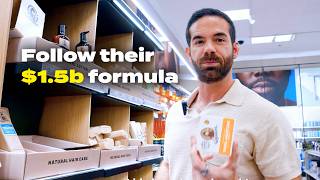
Ryan Daniel Moran breaks down how founders built billion-dollar brands like Dollar Shave Club and Liquid Death. Pick a big market, target one specific customer, solve their pain point, stand out visually, then scale with ads and influencers before selling to private equity for mass distribution.
Chapters
Doctor Squatch just sold for over a billion dollars. Now this probably isn't the first time that you've ever heard of Dr. Squatch. You probably know them from their viral videos and from Sydney Sweeney's boob ads. In June of 2025, this brand was bought by Unilever for $1.5 billion. But that wasn't just a random outlier. That was a thoughtful, planned, manufactured process. By the way, if we've never met before, my name is Ryan Daniel Moran. I've helped well over 100 entrepreneurs grow past a dollars million million dollars a year. I've had my own eight figure exit as a founder and I've had one nine figure exit as an investor. So I've seen across the board what works and what doesn't work. And I can tell you that Dr. Squatch was not an accident. In fact, they followed a pretty predictable formula. And once you see it, you'll see that it's applied to most of the brands that we see on the shelves. It's not a random outlier. This was a plan. And when you take the same plan and you sprinkle it into your business, you're going to sell more stuff regardless of what market you're in. So first things first, it's not like soap is a brand new idea. I mean look at this shelf. I mean we've got entire sections of the store dedicated to soap and shampoo. This is a big market. There's multiple billion dollar businesses selling soap and personal care Items. But what Dr. Squatch did better than anybody else is they knew their person and they spoke to one core person, clearer, better and louder than anybody else could. And as a result, they don't blend in with all of the other random soaps. And that's why a company like Unilever just has to buy them for a billion dollars. Another really good example of someone who did this well would be Ali. Ali went into a big market that is supplements. And they said who's our person and how can we be a little bit different than everybody else? And if you look at Ali's stuff, it's all gummies. But they were really the first brand that said we're going to be all gummies. And if you listen to what the founder of Ali says, he said, I view our market like a category. How do I get into a category and be different enough so that I stand out to my target customer? And at the time that meant that they went all gummies. And you can see they're just a generic supplement brand. Like everybody else. But they have it for every little problem that you could deal with and they have a gummy for it. And as a result, Ollie sold for a whack ton of money. So the takeaway here is go into a big market and then stand out to a small group of people. And if you get that group of people to come into your market share, you can't help but dominate over time. There's probably no better way to illustrate this idea than looking at the food space. Because there is a lot of money in food. I mean, food brands can sell for hundreds of millions, if not billions of dollars. We could be here all day and look at examples. But if you look at food for a specific group of people, like Legendary foods making pop tarts for the high protein, low carb world, or Quest making high protein versions of everything, these are great examples of brands who say, look, there's a big market here, there's a lot of customers. We just need to get one small group of them to love us so much that they take us to the rest of the world. And Quest sold for a billion dollars. Legendary, I think, was founded by some former founders of Quest who said, we got our money, now we're going to go into this brand. So the formula is going into a big market and carving out a small group of people that you know better than anybody else. And Dr. Squatch did that in soap where nobody else had done that. Now, billion dollar. Just look at how much shelf space this has. This entire section is dedicated to three brands. This section here is dedicated to two brands. Look at these brands that are dominating shelf space. What is different about them than the old legacy companies that have been around for decades? Take a look at these three different packages. I mean, we have the boring old Irish Spring and then we have Dove. These are both targeting men in the personal care space. But then this one has a goofy logo with a sasquatch smoking a cigar. And they call out the main takeaway that makes their brand different, which is that it's natural ingredients that don't put chemicals on your skin or on your balls. This is probably the best example of packaging that just looks different. Liquid death. I mean, it's canned water. Look at all the waters on the shelf. They're huge companies. And then along comes this one that just makes it cool. And now they're everywhere. That is just being different and knowing your market, big market specific person, your packaging speaks exactly to that core demographic. Beautifully done. Now it's not enough to just have good packaging and to Target a specific person. Every person in a big market has pain. And the way that you really stand out in a market is by talking to the pain that your customer experiences. Great example of this is Lume. Lume didn't talk about how wonderful the deodorant was. They talked about your stank and how you can put it all over your body in places that you're not used to putting deodorant. Same was true with Native. Native talked about the pain, the problem of putting harsh things on your skin. Notice that these things pop off the shelf differently than Gillette or Old Spice or Dove. These are the old legacy brands that no longer have the dominance that they used to. It's giving market share away to Dr. Squatch and everyman Jack and Native and Lumi and Mando. And the brands that are communicating to pain that their person experiences rather than why their product is so much better than everybody else. You can't win that game. You can't win by talking about why you're better. You win by talking about where you're different, where you're first, where you address a problem that no one else has spoken to. Dr. Squatch did that. They were the first people to say, why are you putting chemicals on your balls? Isn't it time to think about taking care of your skin, dudes? They were the first people to say that. And as a result, they got the market share by communicating that problem and to that person in a way that no one else had ever communicated to them before. Now, Old Spice has all of this shelf space. You don't think about them as an emerging, growing brand, but they have done one thing extremely well, and that's their promotion. They know how to get their products seen by everyone in their market. And because they're able to get that promotion, they can still keep a foothold in the marketplace. However, when you sprinkle that same process into what we've talked about up until this point, that's how you can build an organic brand that just blows up out of nowhere. Old Spice was really the first brand to do viral videos on YouTube. You know, the man, your man can smell like I'm on a horse. And they were communicating to men in ways that they had never been spoken to before. But then you take somebody like Dr. Squatch, and Dr. Squatch created viral videos that spoke directly to their person and about the problem that it solved. And now this nobody brand is almost as big as Old Spice in about a tenth of the time with 1/100th of the budget and It's a billion dollar exit. And it's not the only one. Once you know the person that you speak to and the pain points that they experience, if you focus on promotion, then that's how you blow up. Now there are other ways to get promotion that aren't just making a viral video. So for example, this is the Rocks Body Care brand. Right now you will have a hard time making a viral video about this brand because there's no pain points that it solves. They're riding the wave of the most famous person in the world and the promotion that he can bring to it. So if they didn't have that, they would have to find the pain point that this product solves and lean into that similarly element. This is the electrolyte mix. They partner with a bunch of influencers. They haven't had a viral video. They don't talk about the pain point that they solve. They just go on the backs of the promotion. They can, from all of their partnerships find the pain that your person is experiencing and you can just blitz that with media or you just partner with the people who already have the exposure and you get the word out. The important point to note is that the promotion side of it comes after you know your person, the pain that they experience and you're different enough to get their attention. Now the part that almost nobody knows about is that Dr. Squatch sold a few years ago. This isn't their first exit. In a lot of these examples, there is a point in the growth process where they partner with some investors or with a private equity group. And that was the case with Dr. Squatch a couple of years ago. They partnered with private equity. That's a group of people who have experience in business and can raise a bunch of money. And they plowed capital into this business to give it the distribution that they knew it needed in order to become $1 billion business. You will see that playbook play out in a bunch of other brands. Once you have the person and once you know the pain point and you get a little bit of promotion and you start to break into a market. That's when a company needs a lot of funding in order to get out to the masses. That's when you see partnerships in the form of private equity come in. It's only after that partnership that it can get the mass scale to become a billion dollar exit. And I want to show you a couple examples. Dr. Squatch is just one of them. Dollar Shave Club is a great example of this. They had their person and their pain point they that had famous viral video and then they were acquired by private equity a few years later. Our blades are great. Bought by private equity. Bought by private equity. Bought by private equity. Bought by private equity. Do you get the point? Why do all of these private equity groups buy up these brands? Because once they have the awareness, then they need funding to get the distribution. That's how they get into all these retail stores. That's how they create the partnerships to get all of this shelf space. So as a result, these big private equity groups plow money into the business to give them the distribution. That's how they end up on retail shelves. You don't skip to getting on retail shelves. You first target the person and the pain point, then work on your promotion and then a partnership can get you on the shelf of retail. Don't try to skip all those steps and just show up on the on the shelf. That won't make you a multi millionaire. You become a multimillionaire by communicating to the person and how your product solves their pain. That's the way to do it. That's what all these brands have done. Hey, Al, guess what? Bought by private equity. Banana Boat. Don't. I'm just going to figure them out right now. Banana Boat. Who owns, Let me see, who owns Banana Boat? Edgewell Personal Care. Guess what they are. Private equity. They're a private equity group. The thing that I think is so cool about this is once a brand gets acquired by a big private equity group or a conglomerate, they're publicly traded. That means that they're owned by pensions and they're owned by individuals. It means that the products on the shelves that we buy every day are owned by people like you and me. So as you can see, like, this isn't random. These aren't outliers. There is a kind of a formula that all these big brands follow. The end point is that they sell for millions of dollars. Right before then is when they partner with investors inside of a private equity group. But before that, they get exposure via promotion. And that promotion comes from knowing the pain that your person is in. If you know your person and what pain they're in, you'll be able to speak directly to it. And that gives you something different to talk about to make you stand out from all the other big brands that are usually on the shelf. If you crack that nut, then it's time to promote it to a wide audience. You can do that with viral videos or with influencers or by dominating Amazon or by having really good meta ads. But that's the point where you really double down into where you're different from everybody else. That's when you break into the awareness where everybody's talking about you. And then you get the attention of investors and private equity groups that want to back you. And then you sell for billions of dollars. That can take a long time. But I mean, in Dr. Squatch's case, it took less than 10 years. That's absurd. That could never be the case that you could sell a billion dollar business in less than 10 years. I'd invite you next time you're in a store. Just look at the brands that are on the shelf. Wonder who owns this? How did they start? What pain did they solve? Is there someone else on the shelf that solves a pain point better than them? If so, watch that brand because that's going to be the brand that breaks out and takes away the market share of these other brands. Or the brand says, ooh, these guys are getting market share. We better buy these guys. Oh, thanks for watching. My name is Ryan. If you're building a brand and you want some help, subscribe to this channel. I work with and invest in businesses that are selling physical products and I help them get to 100 sales a day. Have a multi million dollar exit. And if you want some help, I'd love to be your mentor on the journey. So subscribe to the channel and I'll see you at Target.
Bye.
Who owns Kleenex?







