
How to Use Debt to Create Passive Income
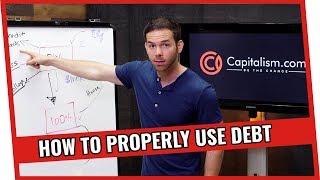
Ryan Daniel Moran explains when debt works: borrow at 5% to invest in a business returning 100% annually, or real estate returning 10%. He financed a $100k Tesla at 2% interest, then invested that freed capital into a rental property earning 10%. The math is simple: if your return beats your borrowing cost, debt multiplies wealth.
Chapters
Alright, so in this video, what we're going to talk about is debt. Is debt good or bad? Should you use it? When I grew up, I was taught debt was really bad, you should avoid it, should pay cash for everything. And I believed that until I was like 27 years old, until I really started to see success with my business. And then I came full circle on this. I have a friend and a business partner now, his name is Clement, who had me think about this a little bit differently. And you might have heard the phrase there's good debt and there's bad debt that comes from Rich Dad, Poor dad by Robert Kiyosaki. We're going to talk a little bit about that and the difference and how to identify that. So to illustrate this just for a second, let's assume that you've got a 5%, you've got 5% money out there, whether that comes from a loan from the bank or you have a private investor, or this is what you pay for your college debt or whatever the source of the debt is, or if you've got a really good credit card that pays 5%, if so, tell me what credit card that is. So what this just assumes. So if there's money coming in from outside sources, from the cloud, this is from banks and investors.
The question is not do I take the 5% loan, the question is where does the 5% loan go? What do we do with the capital from here? So if we have.
A business.
And that business as a result of having capital, allows us to release a new product and that product is going to have a 30% profit margin and it's going to grow over time, accelerate sales, and that capital is what allows us to release a new product. That could literally be a hundred percent return. In fact, when we break down, the reason why businesses grow faster than others, it comes down to their ability to, to turn over inventory. So the faster you can turn over inventory, the faster your business grows. And by that I mean sell through inventory and replace that inventory quickly. That requires cash. Sometimes it requires cash that you don't have, which is where this comes in. So if this is a hundred percent return, and I know that sounds silly to some people, but in business that happens all the time, I'm gonna take, I'll take $100,000.
And I'm gonna take that 100k, put it into a new product in my business, and at the end of the year I have $200,000 in profit. So that's 100% return, right? So in this case you have spent $5,000 to make $100,000. So in this case, is debt good or is debt bad? In this case, debt really good. We're good here. I want to take this money all day long because I know exactly where to put it in my business so that it gets a higher rate of return than 5%. We could also look at this in the case of real estate. So if we borrow $100,000 to put into a house that has a 10% return, and that 10% return comes from rent, and it comes from, you know, if we pay $800 a month to pay this back over 30 years, and we're getting $1,000 in rent, we're getting at $200 in profit. We're also paying back this debt. And the value of the house is going up. Is this debt good? 100%. We're making 10% on our money, plus it's going up in value, and we're paying off the debt over time. So in that case, debt really, really good. Here's where it gets messy. What most people think of debt, they think of borrowing money.
To get rid of it. And this would be credit cards.
Or it would be.
College. Now, here's where this is different. If you've got college debt because you went to college for general studies and you're hoping to get a degree, is there a clear way that you can deploy that 5% in your education to earn more over time? As opposed to a trade school where if you're going to borrow money to go to this trade school and as a result, you know you're going to make 65 to 85 grand a year for practicing that trade. Now, we've paid for the debt. We've paid for the 5% loan. We know exactly what the ROI is going to be, and we can make this decision. Whereas what most people do, what most kids do, and what the government incentivizes, which is just a ridiculous idea, they say just take out debt, go to college, you'll figure it out. And you have these kids who graduate with $100,000 in debt and they can't find jobs. We should not be incentivizing that. We should not be encouraging people to take on that kind of debt. There's no ROI to that. Zero. Now, here's where it gets interesting, especially if you are an entrepreneur or an investor taking out credit cards or taking out 5% debt to spend on cars. This is a really bad idea if you are just going to spend the money. But recently I bought a new car, a Tesla. It was $100,000 car and I took out a loan for it. Now why would I do that if I'm just spending it on something that some people would call frivolous? Well, I bought it on debt because I got a 2% loan. So at a 2% loan, what this allows me to do is it frees up $100,000 in capital, $100,000 in money that I would have spent on the car is now what am I going to do with that 100 grand? Now I'm going to take that hundred grand and I'm going to put it here. And something that actually creates a return. I use that money to buy a rental property. So I'm from Cleveland, Ohio. I bought a house for $100,000 in North Olmsted, Ohio, and that is rented out. It creates a return. It's going up in value. And what does that do? It allows me to pay this back, no problem.
And I'm actually getting a return on the money that I freed up. So I'm making. We'll just say it's 10%, I'm paying 2% and I have a car. So we get a three for here. Instead of.
Spending the money frivolously or wasting it on what Robert Kiyosaki would call doodads, I took the money, borrowed instead of spending it, bought the car. I'm now making payments on the car that is paid for by the house.
So I got a free car instead. I bought a house. I have profit and I get to have my house, my car, and eat my cake too. That's a really, really good use of debt. Now I'm going to make it super complicated. Now what's really exciting about this is as this gets paid off, as the house gets paid off, as the car gets paid off. If you want to make it super complicated now we've got value that we could borrow against. We could literally borrow against the house again at 5% and go buy another house. This is what we call a multiplier. I have a podcast about this on Freedom Fastlane. You could probably Google Freedom Fast Lane Multipliers. It's called only invest in multipliers. A multiplier is something that if you have capital, take that money and put it into something that's going to have an exponential return. What that might look like is as I have an investment, I can borrow against the investment at an interest rate that allows me to put it back into the investment and it can actually multiply and compound, which is really exciting and kind of sexy. So. So if you're interested in making it super complicated, you can look up that podcast. So if we were to totally simplify this, the question of debt comes down to the difference between the ROI you're gonna make with money and the ROI you're spending on paying that money back. So if we can borrow. Here's a fun story. I mentioned my buddy Clement before. So at capitalism.com, we train people to start physical products businesses as a way to be an entrepreneur. So we have free training classes and stuff that you can sign up for that'll show people how to start physical products businesses. And there's a site that some people use to fund their businesses called I think it's Upfund. And UpFund charges like 20%, 20% to get a loan from them, which people say is crazy. That's exorbitant. That's like putting it on a credit card. But if that 20%.
Goes into a product that's gonna make 100% return.
I'll make that trade all day long. So the question is not, is this cheap money or expensive money? The question is, compared to what? Because if we could be growing our business by 100% per year and we're not, because we're not borrowing, then we've actually lost all that growth that we would have, not to mention the customer base that we would get and all the individuals that we could then market other products to. So in that case, debt is a really, really good thing, but it is all based on what we do with it. Because if we're spending it versus putting it somewhere, we have a higher rate of return that determines if debt is good or if debt is bad. This is why people like Donald Trump use a tremendous amount of debt to grow businesses. They keep their capital, invest the debt into building other things, and that's how they become super uber wealthy. And that's why debt is not good or bad. It's about what you do with the debt that matters. Hope you found this video helpful. If so, share this with an entrepreneur or someone you know who would find value in it. And make sure you're subscribed on YouTube and on Facebook and we'll see you@capitalism.com thanks for watching.







