
How Trump Pays No Taxes (And So Can You)
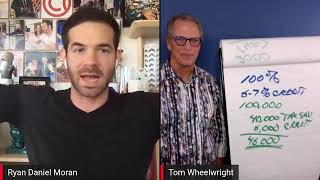
A livestream conversation (Oct 2020) between Ryan Daniel Moran and tax strategist Tom Wheelwright explaining how high-net-worth individuals can legally reduce or eliminate U.S. income tax by moving earned income into incentivized investments (business, real estate, energy/commodities) and by using tax provisions such as depreciation, bonus depreciation, debt leverage, and loss carrybacks. Wheelwright uses Donald Trump’s tax reporting as a case study (Apprentice income invested into real estate, subsequent carrybacks/refunds) and gives practical guidance for entrepreneurs on deductible items (home office, vehicles, meals, travel), R&D credits, inventory timing, and how political changes shift which sectors receive incentives. The video also promotes Wheelwright’s Wealthability network for hands-on CPA guidance.
Chapters
It's coffee and capitalism. Hey, if you're watching live, say hi in the comments. We're talking taxes today. If you didn't think that taxes could be exciting, you haven't met Tom Wheelwright. Because you know what's more exciting than taxes? Not paying taxes. And that's what we're going to talk about today with the legend Tom Wheelwright. Good morning, Brandon. Good morning, Choi. Good morning, Rhino. Good morning, everybody who's watching over on YouTube. Good morning, Herb. Good morning, Alex. Good to see all of you.
So you might have heard that there's this dude, he sits in this house and it's a white. It's a white house. And just came out that he didn't pay much tax. We're gonna unpack exactly how that happened and how we can, too. Because if you're an entrepreneur, there's a whole bunch of tax write offs that you're probably not taking advantage of. What's up, Sue? Hey, Don. Hey, Drew. Hey, Alicia. Hey, Jim. Good to see all of you. Susan says Tom is the Elvis of tax strategies. I couldn't agree more. I couldn't agree more. In fact, Tom has his own bag of Elvis tricks. He's got some Elvis glasses, some Elvis whiteboards, and he's going to do a dance for us as well. You just wait. It's the. It's the no Tax dance. What's up, Frank? Good morning, Amanda. Good morning, Kenan. Good morning, Shane. Good morning, Kala. Good morning, William. Good morning, everybody. Good to see all of you. I'd be curious, how much did you pay in taxes last year?
I like to go ahead and put it in the comments. What did you pay in taxes last year? I like to ask people, when they call me a greedy capitalist, I like to say, how much did you pay in tax last year? Why aren't you paying your fair share?
Or how many employees did you employ last year? Why aren't you doing your fair share? Shuts him up real quick. Hey, Iwana. Good to see you. Hey, Andrew. Good morning, everybody. Good morning, Edward. Good morning, Tiffany. Good morning, Rashawn. Rashawn says I love Tom Wheelwright. Who doesn't?
Socialists. That's.
AOC does not love Tom Wheelwright. That is for sure. Bernie Sanders does not love Tom Wheelwright.
Good morning, Alex.
So we're gonna kick off with the simultaneous sip here in two and a half minutes, so get your coffee ready. It's not business church if you don't have coffee.
Morning, Rhino. Good morning, Frank.
So.
Tom is kind of famous in our circle for Coming up on stage and talking about taxes and getting a standing ovation. That doesn't happen. Right. So it's. He's usually the most popular speaker that we have on the most boring topic in the world. You would think. This is why Susan calls him the. The Elvis of taxes. So we're going to have a really fun hour together. Good morning, Cynthia. Good morning, Justin. Good morning, Eric. Good morning, Karen. Good to see all of you. Karen Brown says, I love Tom Wheelwright. Yes, yes. He's very popular around these parts.
Alex. Yes. There's a link for Streamyard in the Facebook group. I put it in today's announcement. Good morning, Justin. Good to see you.
Morning, Tiffany. Morning, Alex.
So here's another question. How much would you like to be paying in taxes?
What do you think is fair?
This much. You know, there's a big misunderstanding.
This idea of giving back. You do your giving when you created it in the first place. That was your giving. That's your debt to society, what you created in the first place. Entrepreneurs are the creators. So if you're an entrepreneur, there are incentives to get you to pay less taxes, sometimes zero taxes. Good morning, Jacob. Good to see you. Troy says good morning from the Caribbean. All right, you've got 42 seconds until the simultaneous sip. All right, go, go. It's brewing quick. Good morning, Amanda. We got some. We got some libertarians in the House saying taxation is theft. That gets me in trouble if I say it on the Internet, so I won't. Hey, Monica. Hey, Mike. Good morning. Good to see all of you. All right, Tom's got his whiteboard ready. Good morning, Amanda. Tom's got his whiteboard. I've got my coffee. Let's do this thing. It's time for the simultaneous sip, ladies and gentlemen. Grab a cup, a mug, a glass, a chalice, a stein, a tankard, a thermos, a flask, a vessel of any kind, fill it with a liquid. I've got coffee. And join me now for the unparalleled pleasure that makes your tax bill go down and the economy go up. It makes your sales go up. It makes your bill go down. It's a simultaneous sip.
Go.
Whoa.
I can feel the socialist getting angrier with every sip. All right, Tom, are you ready to join me? Give me a thumbs up if you're ready for this. Let's do this thing. All right.
Tom. Welcome to the 1%. Good to see you, my friend. How the heck.
Good to see you, Ryan. Always good to be with your group. I love your group. Love you. I love Capitalists. I, I'm not a socialist. And we're going to have some fun this morning because this is, I tell you what, I've never liked the New York Times until a couple of weeks ago when they made, they made my stuff sexy. It was great.
Are you referencing Trump's tax releases?
Of course, of course. I'm going. This is great. Let's bring this to the forefront. Let's let everybody know what really happens.
So let's talk about that before we actually go into some how to here. Because, because this, this was the big story that Trump paid $750 in tax or whatever it is. So could you demystify for us how that happened? And is that possible for regular entrepreneurs who are not the president?
Yeah, absolutely. So this is why I have my whiteboard because easier to see it in pictures. Okay. And my friend Robert Kiyosaki, I'm sure everybody knows Robert Kiyosaki. That would be, that would be this book right here. Rich dad, poor dad, right? And so he came up with this idea, what we call the cash flow quadrant. And you can see that whole thing. Good, right, Ryan, you're good with that? Okay.
Actually, I'll need you to move your camera just a hair to it, I think is your left and then we'll be able to see that thing.
Actually, you know what I can do you know what? Oh, bump you this way.
Yeah, there we go. Now we can see. Loud and proud.
That's what you want. Okay, perfect.
Right there.
Is that good?
That's good. All right, that's good.
All right. So if, if you think about how people earn money, okay, you can really break it down into four groups. And this is, this is the whole essence of, of this New York Times article that they never addressed in the New York Times article. I mean, they did all this research and I, I believe they probably did their appropriate research, right? And here's what, here's what happens. Most people, right, they earn their money as an employee, okay? And then there are people who get extra education. They're Doctors, lawyers, accountants, etc. And they earn their money as self employed people, right? Then we have, you know, I can actually.
You'Ve got this if, if I, if I'm full screen. Right? All right, all right, Then we have big business owners, right? And we have professional investors.
Okay? Well, so Joe Biden releases his tax return and Kamala Harris release, you know, their tax return, and they're paying a boatload of taxes. Well, Joe Biden's paying a boatload of taxes.
Why?
Because he's here, he's an employee. And a typical employee pays 40%. He said he only paid 30%. So he's doing some kind of tax planning to get down to 30% over here as a self employed, that would be Kamala Harris and her husband, attorneys. And they're going to pay about 60% in tax. And then the big business owner, this.
Is.
Warren Buffett and Jeff Bezos, etcetera, they're going to pay 20%.
And then you have this group down here, these professional investors that are in real estate and agriculture and clean energy and natural resources, and they can actually pay 0%.
So basically what we have is we have Biden.
Right here, Harris down here.
And then over here.
We have Trump. He makes all his money in business and then he puts it into investing. So let me give you a simple example of this. Okay, so let's take.
The New York Times talked about he took his money from The Apprentice. Right? $400,000. 400 million. Sorry, $400 million. Right. And that would be taxable income. In fact, a lot of it was taxed. And that's why I had a big tax bill in a couple of years. There's. All right, but then what he did was he took that money and he put it into his real estate.
And when you put it in, when he put it into the real estate, it actually moved it from taxable.
To non taxable.
Okay. He moved it from taxable to non taxable. So here, I'll give it to you when you, we can get both on your screen. Okay. That's essentially what happened. Okay.
So, Tom, when you talk about non taxable, are you, are you talking about income sources that are more, that are taxed at a lower rate because of depreciation or because of the tax code? Could you elaborate on that just a little bit?
Absolutely. So, so the tax law fundamentally is a series of incentives. Okay. It's 6,000 pages, approximately. It's one page of.
It'S basically one page of.
Basically saying everything's taxable unless we say it isn't. Nothing's deductible unless we say it is. And then it's, it's another, you know, 5,999 pages of instructions on how to reduce your taxes. I mean, that's effectively what the tax law is. That's why I wrote my book Tax Free Wealth. Because what, what happens is, is that people think that, well, it's not fair if everybody doesn't pay the same tax rate. But that's not. But nobody really believes that because they say, well, it's not fair that, that Donald Trump got a deduction for depreciation. Wait a minute. Did you take a deduction for your, for your, or your home interest expense, home mortgage, for having kids or, or did you get it, Take a deduction? Did you take tax credits because you have kids? What about those people without kids? What about those people who rent? Okay, so the reality is, is that from that standpoint, it doesn't treat everybody equally. But on the other hand, it is absolutely fair because everybody has the choice of where they live in this quadrant and how they make their money. And everybody who lives in these quadrants pays the same amount of tax. So it's an absolute, it's actually a very fair system. The question for the politicians is where do you want your incentives? Well, so far the incentives have been heavily into economics, right? And energy. I mean, that's really where they've been. Economics, real estate, housing and energy. That's where the big incentives are. That's why these guys, I mean, think about it. Do you think Jeff Bezos has paid taxes? He hasn't been paying taxes. What about Elon Musk? I mean, Elon Musk doesn't pay taxes. Okay? I mean, they haven't made a profit yet. So that's what's going on is that people just don't understand that this is how the tax law works naturally. And it's not going to change. It's just going to change where the incentives are. But having incentives is never going to change.
Right. And you know, it's easy for us to banter about what it should be or what it could be or if taxation is theft or if it's ethical to pay taxes. We can rant about that another day. But the important thing here is Tom is just looking at what is, like what is in the tax code. We are not looking to hide money. We're not even taking it offshore, per se. We're looking at what in the US Tax code says we will incentivize these behaviors. And politicians have said we want to incentivize certain behaviors because it's good for the economy and therefore it incentivize certain activities by reducing tax bills. And that's what, that's what happens on the other side of this quadrant with the 20, with the, with the big business and the investor that are taxed at a lower rate.
Right. Now, you mentioned something in your introduction, Ryan, that I thought was really important, and that is that.
All income eventually gets taxed. It's Just who's paying the tax. Okay, so, for example, you have, let's say Donald Trump earns. Makes $10,000.
Right? And he pays $5,000 of wages.
And then he keeps $5,000.
Okay, so what's happened here? Well, first of all, all $10,000 is being taxed.5,000 by his employees is being taxed to his employees, and 5,000 is being taxed to him. Okay. Second of all, what has he done? He's paid employees. So the fact that you're paying wages, I don't know about you, Ryan, but I have. I have about, in total, about 25 employees. And I literally lose sleep all the time over how do I make sure those employees are fully employed, because I feel complete responsibility for them and for them having jobs. And particularly during this pandemic where we had. We had a big shock, frankly, in our system for a while, for a few weeks. And I'm going, what are these people going to do? So, you know, we do care. I mean, employers do care about employees. In fact, I, I'm pretty confident that employers care more about their employees than employees care about the employers. I'm pretty sure that's true. That's my experience, anyway, in life.
My employees and I are pretty tight. We're a little family.
I'm sure you are, but don't pretend. I heard Mr. Wonderful once, he said, don't pretend that your employees are your friends. They're not. They're your employees. And make sure that you understand that, okay? They look at it that way, so you should, too. But in any case, this is really what's happening. And you know, why you have the incentives and et cetera is far less important. Like you said, what we're discussing is what is the law, not what the law should be. Now, what the law is, is that we know that we do have to pay taxes. The Supreme Court of the United States said that the 16th Amendment was properly ratified, and when the Supreme Court says something, it's over, okay? Until they change their mind. Right? So we do have to pay taxes, okay. Under this tax law. This is the tax law. We have to pay taxes under. Okay? We don't have to pay taxes. You know, it's interesting. I was, I was interviewing this guy, and he's a. He's a Wall street guy, and he wanted to. He wants everybody, all rich people, to pay more taxes. And I'm going, so, you know, there's a box at the bottom of your form, right? Your, your 1040, where you can elect to pay more taxes, says well, I'm not going to pay him if everybody doesn't have to. And I'm going. That's like saying, I'm not going to donate to a charity, because unless everybody donates to the charity, Right. If you believe that it's right, then do it. And, you know, don't, don't expect everybody else to do it if they don't want to.
So, Tom, let me ask you this. So most of the world makes their income in the E and S quadrant.
Oh, for sure. 90%.
Right. And I think most of us would like to be in the B and I quadrant, and we're talking to entrepreneurs and investors. But I was hoping that you could clarify the difference between B and I. So this B quadrant, the business quadrant, is taxed at 20%, and that's your business, obviously. But this investor quadrant, that's at 0%. We kind of, sometimes that line gets blurred a little bit. And I was hoping you could help us draw some distinctions there, because I know that the greatest incentives happen when you move over into that I part of the quadrant.
Yeah, so, so big business, I mean, you know, think Amazon, you know, think Tesla, think, you know.
Well, we used to think General Motors, right. So now we think Tesla. But a big business really is bas need 500 employees or more. And, and, and here's here. But before I, right. Before I go there, just understand that anybody in the S quadrant can be taxed like the B quadrant, if you choose to. So you can actually, you can actually elect to be taxed like these guys if you decide to behave like they do. Okay. You can elect to be taxed like these guys do if you elect to behave like they do. For example, okay, C, Corporations, we know they pay 21% tax. There you go, 20% right there. But they leave the money in the company. That's what they do. They don't take the money out. Jeff Bezos takes a dollar. Right. Of salary. So what we do down here, we tend to take all our money out. Well, we're going to pay tax any money we use. This is another way to look at it. Right? Any, any money we use or save, we're going to pay tax. Any money we invest and produce with that goes into production, we don't pay tax. So if you use it or save it, you're paying tax. If you use, if you put it back into production, invest it, it's not, it's not subject to tax.
That's a, that's a huge distinction, Tom. That's my brain gasm. So far today that, that if you, if you basically take it for yourself and don't spend it, you put it in the bank and let it sit there, it gets taxed. But if you're putting it into production, then it's rolled over, it continues. It continues to grow and not be taxed. Now, in this s part of the quadrant, we're talking consultants, we're talking coaches. In a lot of cases, we're talking.
And frankly, anybody with a small business with only. With only a few employees. So you could be an Amazon reseller with two employees or no employees, and you'd still be here.
Okay, so how does, how does somebody like that make that move over to the B. Is that a structure thing like electing to be a C corp rather than an S corp, or is it something else?
It is. One of the, one of the things that I like to say is that if you want to change your tax, you have to change your facts. Okay, so what facts do you have to change? And that's where people like me come in. Okay. Where we kind of walk you through. Because everybody's going to be slightly different, right? Everybody needs different amounts of money to live on. Everybody wants to spend different ways, everybody wants to invest different ways. The general rule is if you leave your money in your business, okay, so you elect. It's a structure and election thing. If you elect to be taxed in the B quadrant, then you're electing to leave your money in the business and let it grow within the business. Okay? Now we have this wonderful thing that I mentioned on stage with your folks before, called section 1202, which allows you, if you do leave it in the business and then down the road, five plus years, you sell the business, you pay zero tax. So basically, here's kind of one way to look at it. Running the business is here and here, okay? Investing in the business is here. Okay? So even Donald Trump, you know, when he runs his is a real estate business, right? So he would qualify here. I laughed when he said he would release his tax charge when it's. When he's no longer under audit. Well, he's always under audit, so I think that's pretty funny. But look, if you, once you start, when you think about, okay, when he was on the Apprentice, he was here, he was superstar and he was on the Apprentice, he was making money here. But if you take your money here and then put it over here, then you get the tax benefits. And they're amazing. They're absolutely amazing tax benefits that you get. And I'm sure we'll get to that in this, in, in this church hour. Yeah.
Oh, yes. Oh, yes. The altar call will be for an investment, I'm sure, Tom. So, but I want to touch on this briefly here because what I think I'm hearing you say is that if you make your money in one of these other sections, but then you invest it into the incentivized places, you could eliminate what would be a 40 or 60% tax because now it's being rolled into the incentivized investment. If that's correct. Could you give me a few examples of what some of those investments are?
Yeah, I'll make it really simple. All of you should recognize these diagrams because you're looking at them hopefully at least once a week, not every day.
There's your income statement.
Income and expense. And this is assets.
And liabilities. This is your balance sheet, okay? So what most people do, what we were talking about is in the ems, what most people do is they take the money and then they spend it and then it's taxed, okay? That's what most people do.
What we are talking about is, look, if you put it back in your business, okay, comes in, but then it stays, goes in your business, there's no tax, right? There's no tax at all. Now here's what's pretty cool about our country right now, and that is if you take the money and you put it into an asset.
Then it's not taxed. And an asset, of course, produces income over a long period of time. So what are some of those assets? And that's, here's your example. Obvious one is your business. That's the place I tell every client of mine, your business is going to produce the highest rate of return for you at the lowest risk. So put your money back into your business, okay? That's rule number one. Because that's always going to give you the best result and tax wise as well, okay? You put it back in the business, it's not taxed. Now think about this. You also have, besides business, you have real estate. You have paper.
Assets like stocks, bonds, mutual funds. And then you have commodities like energy and oil and gas, okay? Gold and silver are not commodities. They're not used up. Okay? So to the extent they're used up, yes, but not to the extent they're not used up. So we don't, from a tax standpoint, I don't consider.
Commodity gold and silver really more savings. Okay? They're more savings. All right, so any place you put this, now, with the exception Here. So paper.
Paper, you can, you're very limited, okay? Because remember, that's a derivative. So you're really just, you're, you're, you're really just investing in somebody else's investment with paper.
Okay, when you say paper, could you define that?
Stocks, bonds, mutual funds. Okay, got it. Right. Paper. Any, anything that's a, that's basically the assets on a piece of paper, okay. As opposed to an actual business. See, paper is actually a derivative of business or real estate. Right? It's a derivative business, real estate or commodity. That's what a paper asset is. So it's just one level or two levels down and you don't get the same tax benefits. But, but you put your money into a business, you're going to get to write it off. Real estate gets write off commodities, you get to write it off actually 100%. I show you. And if we have time today, I'll show you how to do that in either real estate, for example, or oil and gas, as an example. Solar. Solar, you get the same tax benefits and sometimes even better. And I think with, if Biden wins this election as projected, then we're going to get a lot more incentives into the.
Net, into renewable resources. So that's just going to be where it goes. But these are all three of these. They're almost equal. Real estate. Right now, of course, we think about who our president is. Real estate is the top choice right now because you actually can get more benefit than the money you put in. So that's the only place you can do that.
So let's, let's summarize up to this point on this, this question of how did Trump pay only $750 in taxes?
The question is, why did he pay that much?
Why did he pay a whole $750? So.
What I'm realizing is his income, whether it's from the Apprentice or from, or from wherever, he then puts into real estate, right? Just buildings and apartments and condos and Trump Towers and stuff like this, that's incentivized and is not taxed because of depreciation and all the other incentives, and it cancels out all of his income right now.
So right now, Ryan, you know, you've heard he's under audit. Well, he's under audit for a refund claim. Well, so he paid taxes on the apprentice income, okay? And so when he, when he put the money a couple of years later into real estate, he got losses that he was able to carry back and offset the income, and that's that $70 million that's sitting out there actually, that he actually got the money and now the, you know, they're auditing him over that $70 million refund.
That's amazing. I mean, that's, that's just amazing. So, and you're, you said that real estate, you can get more tax write off than you actually put into it. It sounds like that's kind of the scenario that might be happening here is there's, so there's so many on paper losses that are depreciated that it's canceling.
Out here, here's what he's got.
He's got debt.
Right? He's king of debt. So debt, when you think about it, what does debt do for you? It leverages. Right. Well, in this case, it's not just leveraging your.
Return on investment, it's actually leveraging your tax benefits. So because of the way the tax law works, you could put $0 down. I mean, for example, if you bought a SUV in the last couple of years, you might have put like I did, you put $0 down, used 100% for business. You get a deduction for the $80,000 you paid for the SUV, even though you didn't put any money into it. Your business is paying off that debt. Right. But you got a deduction because that's how much it cost. And even though the bank put the money in, you get the deduction. So remember, it doesn't have to be your money that goes in, it can be the bank's money. And Donald Trump is, you know, the self proclaimed king of debt. And you know, I'm shocked that he paid any taxes, frankly.
So let's, let's make this a little bit more applicable to the, the solopreneur or the small. Yeah, the small business owner. Because I love, I mean, I, on paper, I just love the idea of using bank money to buy investments and never paying taxes. And I just, I just, theoretically that makes total sense to me. And then in practice there's a question about, okay, well, there's debt available pretty much everywhere right now. Putting that into investments is a question of, okay, is it wise to put that into real estate investments? Is it wise to put that into buying businesses? And we're not making recommendations here, but could you tell us what the menu of options is that entrepreneurs could look at and say, okay, which one of these strategies might make a, make sense for me where I'm at in my career, in my journey?
Sure. I mean, so first of all, anytime you can put it into your own Business, that's what, you know the best. One of the things we look at is look.
Here'S another way to look at it.
Okay?
Let's think about how educated you are about something, okay? So here's your education level.
Okay? As your education goes up, what are some things that happen? Well, first thing that happens is the more educated you get.
The less risk you have. So your education goes up, but your risk comes down at the same time that your risk is going down. As you get more educated.
Your returns are going up, okay? Because you're more educated, you're better at your business, you're better at what you're doing, okay? And this is why, you know, as Ryan says, we don't want to make suggestions just because everybody's going to be different, right? But in this case, everybody's the same because as you get more educated, your risk always comes down. As you get more educated, your returns always go up, okay? That's by definition. What else happens? Well, what else comes down.
Are your taxes. And what else goes up?
Your control. So this is the formula. These, this is the basic principle of how you make money. And don't pay tax right here, okay? You get educated, which is why I love what you're, you do, Ryan, because you're all about the education, right? But the more.
So if you're really educating real estate, if you love real estate, get educated in real estate and you can do real estate and real estate will give you those returns. I, I was talking to somebody yesterday, the day before yesterday, and he's very much into energy. Okay, well, he makes millions and millions of dollars in energy. Well, that's where his money goes, is in energy because he's very well educated on it, as his returns are sky, are sky high and his risk is practically nothing because he knows his business so well, okay? So it doesn't really matter. What matters is, do you, is it something you enjoy? Are you going to spend the time at it? Okay? You can't just turn your money over to somebody because that's as soon as you give up your control, okay, you give up all a lot of these other benefits, okay? So don't give up your control.
But you get that control from the education, right? That's where the control comes from.
So let's put this into kind of an order. Let me break this down for like where you might be at in business when you're first starting out. Things like courses, the 1% membership, events, mentors, travel, your own education, they're all write offs. Those are all Things that take like that just. You can write off and eliminate some taxes at the very beginning, even if you're not selling anything yet, but you just have paper that says you're a business. You can now write off all those pieces at the next stage. You know, we'll talk about the, about inventory and all and what's changed in, in that arena. But, like, where I'm at right now is the point where we're growing, and it says, okay, does it make tech sense now for us to buy a building? For us to have a building that we invest in, we have our office out of there, and we can say, okay, well, can we make this cost neutral by renting out other parts of the building, working out of one part, writing off some taxes? And so at every stage of the business, the tax code has different incentives to reduce down your tax bill, to keep you investing in the economy and in your own business. But that changes depending on where you are within that journey. But, but like for me, my education is in Internet businesses. If I buy an Internet business, there's tax incentives in that business. If you're in real estate, buying more real estate, there are additional incentives. Tom, you're nodding. So am I on the right track here?
You are spot on, Ryan. Absolutely spot on. Think about.
Becomes an addiction, okay? And it actually has to become a positive addiction, because the minute you stop reinvesting the money, you're going to start paying tax. Okay? So the tax law, what here's. I've got. I've got a good friend who's a client of mine. Good friend, and he's a real estate guy. And.
He, he was, he was raising a lot of money and doing a lot of syndications and wasn't doing a lot of his own real estate. And I said, pal, you're paying way too much tax. And this is all public, by the way. Every, if you, if you know, if you know him, he talks about all the time. But I said, look, we can eliminate your taxes, and all you have to do is do what you do well, okay? Put your money where your mouth is, okay? You're teaching this stuff on real estate. Now what you need to do is just go do it yourself. Don't raise money on one deal. So every year now for the last three years, he's paid zero taxes. All right? Now, but the problem is that every year, he has to find a new deal that he likes enough to put his own money in.
Right, Got it.
But here's what it does, is he's found these deals and they're way. He's told me every time he says, I would not have invested in that deal had the tax law not encouraged me to do so. But every time he's made a boatload of money investing in the deal now. But then what he has, has to. Now what does he have to do? He has to take the money he makes and he has to put it into a bigger deal and a bigger deal. So the tax law is actually encouraging you to get richer and richer and richer. And that's basically what it's saying.
I love it. God, God love these. I just, I love this game so much. Tom, there's some people are concerned about the election going one way or the other in, in a few weeks, we're, we're making this video a few weeks out from the 2020 election. And if we have a change in the White House, you know, Biden has proposed tax hikes kind of across the board, especially for people above 400,000. But you kind of tipped your cap to this idea that we might have new incentives. Let's not, let's just call them or different incentives in different areas. So my broad question for you is if there's a change in the White House, does it really matter when it comes to tax planning or do things just change?
Well, let me ask, let me put out a different question to answer that question.
Is there ever a politician who would give up any of his power?
Is there ever a politician who says, I'm willing to give up my power? No. That's why we don't have term limits. That's why we don't have. Because they don't want to give up that power. That's why we don't have flat tax, okay? A flat tax. They would be giving up their power of taxation, and that's one of their biggest powers of control. And so, and Biden's a politician, okay? So all he's going to do.
He'S.
Just going to change where the emphasis is, okay? So Ronald Reagan, for example, killed the real estate industry, Absolutely killed it. In 1986, I was in Washington. And as a result, we had the biggest real estate crash in the history of our, in the modern history of our country, okay? In 1990, okay, we had the, the government owning and banks owning billions of dollars of property as a result of that change in the tax law, okay? Then Donald Trump comes along, and now all of a sudden real estate's favored. Now here's what's going to happen. We're just going to shift down here to commodity. That's going to be the shift in, in Biden's, in Biden's proposal. So he's got this $3.1 trillion proposal. $2 trillion goes to the environment.
I think this is the biggest opportunity for entrepreneurs in history because the socialists think about this, the socialists are going to fund all of this and the capitalists are going to build it and make money from it.
Sweet revenge, Tom.
So to me this is like, why are you complaining? Who's president? Yeah, your tax rates go up so great. We do tax planning. We, you know, we. It doesn't matter. It doesn't matter what your tax rate is if you're not paying taxes.
Tom, have I told you lately that I love you? So basically what I'm hearing you say is that like in a scenario where it's President Biden and the, and the Democrats control both houses of Congress and they create initiatives that are green energy initiatives, it's likely that those are going to be tax efficient. There's going to be write offs and it's going to incentivize capitalists to make their building energy efficient and to invest in green technology and to come up with new inventions and we're still not going to pay any taxes. It's just going to be done in the way that the tax code now incentivizes. Is that correct?
Well, okay, so I know there are a lot of people on this call that are Amazon resellers and going, what's the biggest reselling item right now on Amazon? It's masks. So we have these masks that are a result of the pandemic. And you have all these people that are making millions of dollars on masks. I have clients that are making millions of dollars on masks. Okay? And ppe, right. So this is what entrepreneurs, this is what capitalists do, okay? They take whatever direction.
The world is going, okay? What entrepreneurs are so good at is adapting to it. Capitalists adapt and then, you know, we take, let's let the government put all this money into clean energy. I think it's great. It saves the world, it saves our health. You know, all the pollution is horrible for us. We all know that. So let's do this. But remember, it's the capitalists that are going to make it happen. And it's all going to be, the incentives are going to come through the tax law.
I love this. Friends and neighbors, if you're watching live and you want to come on board and ask a question, if you have a give for the community, if you want to make an Introduction to the community. There's a link inside of the Facebook group to come on inside the green room. I'll see you and we'll bring you on. And you can ask your question to me or to Tom or make your give to the rest of the community. So Tom and I will keep wrapping for a few minutes, but if you want to come on, just click that link inside of the members area. You can come inside to the green room. So Tom, a question that comes up often at this part of the conversation is, okay, this all sounds awesome. And the CPA that I use just kind of does what I tell them to do and is not telling me about any of these things. Where do people get real help? Where do people get help from sources that know that the tax code is incentivized rather than just a list of rules to keep you out of jail.
So I will tell you, Ryan, honestly, this is the most common question I ever get. You know, I travel all over the world with Kiyosaki and I talk about taxes in every, you know, I've talked about taxes on every continent. And always the question is, where do I find you here? Right? Where do I find somebody who understands this? And we took that on. Of course, my nature is an entrepreneur capitalist. So we took it on. We said, you know what, we're going to build our own army. Actually, it's more like a Marine Corps because we have really strict rules. You have to follow these rules that you're out of our network. And we have a network called the Wealthability Network. Okay. And this is a network. So here's what we've done. We've created a system to teach our clients how to do this. Because remember, I can't change your facts. You're the only one who can change your facts. My job is to tell you what facts to change. So we've created a system for doing this because you don't want to have to rely on your accountant for this. You do not want to have to rely on your accountant because they're still limited in their knowledge, okay? No matter how good they are, I'm limited in my knowledge, okay? There are certain things when it comes to international, when it comes to pension plans, certain things that I have to go somewhere else. Well, so what we've done is we've actually created an international network of tax professionals that I train on a monthly basis and sometimes a weekly basis. I've got a three day training coming up on Monday actually in tomorrow. So I'm starting another three day training because we believe that there's a lot of good CPAs out there that just don't understand how the tax law really works. And so we train them every single day on how this tax law works. And then, so when you come to us, you can just come to us at Wealthability, and what we'll do is we'll put you together with a CPA who's using our system. Okay? So it's a combination of our system and our cpa. When you make that, then we know that it's always going to happen, because our motto is, in three months or less, we'll reduce your taxes by 10 to 40% in three months or less. That's our motto. And so we can't do that unless we have trained CPAs and we have a system for doing it.
So this is. You work with CPAs and with individuals, with business owners, and when they both know what they're doing and they're coming together, they have a plan that they actually execute and, and is the website.
All right? And that's where they can, can get connected with other CPAs, or they can go, right?
So.
Go to wealthability.com, you'll have a conversation with one of our people. And what we'll do is we'll figure out what's the best solution for you. We'll help you figure out what's the best solution for you. And, you know, and it won't be based on, by the way, where you live. Okay. This is a technology group. We know that where you live is not relevant. All right? What's relevant is what you know and what you do. And our CPAs are all very technology driven. So it doesn't matter where you are. We're going to match you up with the right person who's at the right level and the right experience and all of that. So it's a, it's actually a fairly. What we do behind the scenes is fairly complex. What you see is fairly simple.
Tom, would you comment for people who are not based in the US if they're in Europe or Canada or Australia, does it.
What.
What of what we talked about today applies to them and what is going to be unique to where they live?
So the principles we've talked about, these principles.
These principles, they apply universally. Okay? I mean, even, even Cash Flow Quadrant, this applies universally. Every country I've ever been to that has a graduated income tax. Okay? So that's most developed countries. There are a few that have a flat tax or have no tax. You live in Dubai, you're not going to pay. Pay much of anything in taxes, right? There are certain places where that's the case, but most countries, this is going to apply to most countries. Actually those tax rates are common, so 40%, 60%, 20% and zero. That is actually common in, in most industrialized and developed countries.
And it would be logical, I would think, that every country is going to have different incentives, but that every has incentives.
They do, but they all relate here, okay? So the incentives. First of all, all countries have the business incentives. All countries do, okay? So if you put your money back in your business, you're not going to pay tax, okay? That is true in every country. Real estate incentives are really extraordinarily high in the US Much more so than other countries. But all countries have real estate incentives, okay? All countries. Now, not all countries have the same commodity incentives because most countries, the government owns the energy, okay? We're one of the few countries where individuals, citizens own the energy. Most countries, it's the government that owns the energy. The government owns the gas and the oil and all of that. Now, they are still going to incentivize things like innovation, okay? Most all countries that I know of really incentivize innovation, and most a lot more than the U.S. okay? So where we have a lot of.
Incentives in real estate, our incentives in innovation are not nearly as great as, for example, South Africa, where you get 150% deduction. So for a dollar you put into research and development, you get a $50 deduction. So that's leverage. Okay, wait, wait.
Was that, Was that US or somewhere else?
Not South Africa. South Africa. South Africa. Okay? Party in South Africa, that's, that's not that uncommon. In Singapore, it's 400%. I mean, there are, there are many countries. France, basically, you hire a PhD in your R and D unit. You're not. The government's paying their salary for two years. I mean, it's that the benefits in other countries are absolutely as big as the benefits here. It's just like you were saying, though, they're just different. They're just different incentives. So you do need a professional in your country. Okay? But what I would do is I pick up a copy of Tax Free wealth, right? Pick up a copy of Tax Free wealth, give it to.
Your CPA there, okay. Give it to your tax advisor there. And then if you're, if you're an American living abroad, then you also ought to talk to our network. Okay? So we do have, we do have CPAs in Canada, and we have CPAs in the U.S. we're about to launch in Mexico. And, you know, within a couple of years, we'll have them in 30 countries.
Tom, there's a lingering question that comes up a lot. There's still debate over something that you see said from stage at capcon a couple years ago about inventory in a physical products business. There's still debate over whether or not you can write that off. Could you set the record straight on this?
I will. You could write it off and now you can't.
Okay, so, so here's kind of the way I look at it. The Congress giveth and the Iris taketh away. Okay? So Congress gave us a deduction for inventory. It's right in the explanation of the staff of the Joint Committee on Taxation, Right. In their explanation that this was intended, that small.
Businesses would be able to write off their inventory. Okay, when they bought it, not when they sold it this summer. Okay? So I was really glad when Ryan connected with me because this summer, the irs, in their regulations, now, these are just proposed. These aren't final, okay? But in their regulations, they said we're not going to follow what they said in the. What the people who wrote the law said. We're going to follow what we think and we're going to say it's non. You can't do that. Okay? So they've allowed it. So those who listened, by the way, those who took action in 2018 when I first spoke at Capcon, got the deduction for a couple of years. And now what'll happen is you're eventually, I think once these regulations are final, you're going to have to pick that up over four years. But in the meantime, you got this huge deduction. And now.
If you didn't do it then, by the way, you can't do it. Okay? So you had a little window, because that's the law said it, so you had the right to do it. The IRS accepted it, okay? So, you know, we have many clients who did this, and the IRS accepted that, no questions asked. Now the IRS has come back and said, yeah, we're not going to allow that. So the IRS in effect, is writing law, okay? They're creating their own law, completely contrary to what Congress said, but they tend to do that. They've actually done that a couple of times this year. So, you know, they, they have, they have a lot of power, and you have to, you have to be willing to take it all the way through court if you want to, you know, want to challenge that. But right now, I'm just Telling people, you know what? If you did it before, you're good, at least until the final regulations came out. If you didn't take that deduction, then I would not take it because the IRS says. The IRS regulations are saying no.
Tom, I have something that I tell people when things like Roth versus traditional IRAs comes up, and I have kind of a rule that I preach, and I want you to tell me if you agree with this or not. I ask people, when is the best time to pay taxes? And I say the answer is always later. And the answer is later. If you can push off a taxpayer bill later, meaning, like I take, I have a traditional IRA versus a Roth IRA because I want the tax savings now. I want to pay tax later, not now with the justification of later. There will be other things that I will use that growth to invest in and continue to defer that, that tax bill. So I take a traditional IRA versus a Roth IRA because I get the tax savings now. I have more money to put in my investments. And as they grow, when they mature later, I will put them into an additional investment that will be tax incentivized. Do you agree with that principle or am I missing something?
So it depends on what you're investing in. Okay. If you're, you know, if you're investing in paper, 100% agree. 100% agree. If you're investing in business, real estate, commodities, I would say no. And because over here, by the way, business, real estate and commodities, why would you ever have an ira? It would make, it makes no sense. Your tax benefits are so good and you really never have to pay tax, pushing, pushing, pushing until you die and never pay tax. But the challenge with this traditional ira, and I know it's hard to understand this when you're under 50, but the challenge with a traditional IRA is that when you retire, most people, not all, but most people, when they retire, they want mailbox money coming in. Well, that money coming from the IRA is going to be taxable, and they may not want to be in production. And if you don't want to be in production anymore, you're going to pay high taxes on that. So it really is your facts and circumstances. I'm not saying never do an IRA when it comes to paper. I love IRAs.
You know, and whether it's, you know, deferring taxes, if you're talking about 30 years of deferral, you're way better off deferring. Way better off deferring than paying. Now, I like the idea of never paying. So I don't want to pay now, but I don't want to pay in the future either. So the girl is pretty much the last resort of any tax planning we do.
Got it. Tom, would you do a rapid fire with us on incentives that are available to entrepreneurs that they often overlook? You mentioned one earlier that was buying an suv. This is something that is incentivized if it's used for commercial purposes, and I believe that's a weight thing. So, like, cybertruck probably meets that criteria, whereas a Honda Civic does not. So. So would you walk us through some of those things that are incentivized to entrepreneurs that it might be overlooking?
Sure. I'll give you a list here. So I'll make it easy. Number one that people overlook. Absolutely. Number one is home office.
What?
It's been interesting, Ryan. I've been talking, doing a lot of interviews this year during the pandemic, and.
Every time I say so, you know, if you're an employee, you don't get to deduct your home office because everybody's in a home office right now. If you're an employee, you don't get a deducted. If you're a business owner, you do. Okay. And then, you know, of course, these are. These are employees of the station that are interviewing me, and they're going, what? So they're not getting. They're doing their interviewing from their home office. They're not getting the deduction. That's a big one. And one of the reasons the big one is the next one that Ryan mentioned is your automobile. Okay? If you don't have a home office, your automobile deduction is going to be tiny, because.
Every day, the very first place you go for business is a commute. The very first place you go is a commute. It's non deductible. The very last place you go, you are in that trip home. That's non deductible. That's not deductible automobile expense. But if the first place you go is your home office, and this is the last place you go is your home office, then basically 100% of your car should be deductible as long as you're not getting groceries with it. Okay, so what Ryan was talking about with the car is that.
Trucks and SUVs.
Which include SUVs, over 6,000 pounds.
Over 6,000 pounds gross vehicle weight. Okay, over 6,000 pounds. You can deduct those the year you buy them. So this is a huge deduction.
Again, it has to be a truck. So cybertruck would Qualify. A roadster would not. Okay? So.
A pickup qualifies, but a Porsche does not. All right? So.
That'S a big difference. Another one that people miss all the time is meals.
The IRS actually clarified this in our favor this year and said, look, there was some discussion about whether the meals were deductible at all under 2017 law. That was just, frankly, stupid professors not knowing what they were talking about because they were looking theoretically and going, let's look practically at what the law really means. Meals, business meals are still deductible 50%, but they're still deductible. So if you take, you know, you go to lunch somebody, you go to breakfast with somebody, dinner, whatever, and you have a business discussion, okay? And you meet our four tests for deduction, right? You have to have a business purpose, ordinary, necessary, and documented. Then you can deduct meals. Okay? One that people don't use a lot right now is travel.
Not a. Not a big deal right this minute. Not a whole lot of people traveling. But business travel is fully deductible. And so. And all you have to do, by the way, if you're traveling within the U.S. only 51% of your time has to be business. So you could literally take a beautiful vacation. As long as you spend four and a half hours a day doing business, you can spend the other 19 and a half hours doing whatever you want. Okay, so just take four and a half hours. Do business. 19 and a half. Do whatever you want.
Did four and a half hours be working on my laptop on the beach?
As long as there's a reason for you to be working, in other words, as long as you had to go to the beach to work on your laptop.
Okay, Can I justify that by saying I do my. I think clear, and my writing is better when I'm on the beach?
I believe so. I believe so. I think. Well, for example, I have clients who are authors, okay. And they do actually, they have entire homes that all they ever do there is write. And they go there to write. Okay? I'm in a studio right now that I built last year.
Anticipating a pandemic. No, I'm just kidding. But.
But I did complete it in February of 2020. And. And. And it's right next to my home now. It's great. It's a great studio. It's awesome. It's convenient. But guess what? This is. I can do a much better job, and I've done more PR this year than I've ever done. Well, part of that's because I've got this great studio. That's right, actually on my house property.
Beautiful. Calla just posted a comment saying, can't you just say that the beach is content? And it just, it strikes me as you take a couple Instagram photos that you take on the beach. I've done some of my best recording on the beach. Inez Manziano note. We need to kick me out of the office and send me to the beach to record more content. It's a tax write off.
Okay, so go ahead, Tom. Let me, let me give you the four rules you have to remember, and then I. No judgment here. Okay? You decide. All right. First rule is you have to have a business purpose.
There must be a business purpose. Okay. That's probably going to be the easiest test to meet. The second one is it has to be ordinary, which means it would be typical in your business.
Done.
Okay. So if it's typical. So for example, if, if you're a dentist going to. Going to a mountain retreat, it's probably not typical. Okay. But if you're a writer, it may very well. It's very much be typical. Okay. Number three is it has to be necessary.
You can do it, Tom.
It's early.
And this means that it's profitable. So in other words.
If it were not. If it were not for the tax law, would you, would you do this there? Because it would be more profitable than if you did it somewhere else. Okay, so absolutely. Is it profitable? That's, that's, that's. This is the hardest one, typically, for people to meet these two, and then.
This is an absolute requirement. You have to document it. I just completed handling an audit for a client, and all that. All the auditor looked at was documentation. They don't look at any of this other stuff. They just looked at documentation. So. And that's what I found over the last few years with IRS auditors.
They're actually not learning the law.
They'Re learning about documentation. And they're only really, for the most part, looking for documentation. And if you have the documentation, you're good. If you don't, it doesn't matter how good these are.
I like to say that if you have pretend documentation, you get a pretend deduction.
You really have to do this one. This is the most important.
Tom, I want to ask you a selfish question. So in 2017, I bought a second home. And it's the home I'm in right now. And I bought it, unfortunately, three weeks before the new tax law went into effect. So I didn't get to do any of the accelerated depreciation on repairs and some of the things that were in the new tax law. However, I bought this house because I have business retreats here and I have my team meets here. We have our quarterly meetings here, and I have a podcast studio.
On the top floor. I have our office down here. This is my official office where I work. This room right here. So about half, 50% of the square footage of this house is reserved for business activity. Now, I'm going to throw a wild card at you. The house is paid off. I have no mortgage. I don't owe anything on here. So I would like for you to poke holes in what's available to me that I'm not using right now. It is my home office. I do use it as a home office. But if I were to borrow against this house, could I write off the mortgage? Are there other things that I could do here that I might not be seeing right now?
Okay, first of all, if you borrowed against the house and you used that money for business, it would be deductible. By the way. Think about this one, Think about this one. You know, we have this new limitation, the $750,000 limitation on home mortgages that only applies to the home mortgage deduction. That doesn't apply to all interest. So let's say you have a $2 million home on Lake Austin, okay? And it's paid off. And you go put a 1.5 million dollar line of credit on it and use that 1.5 million dollars to buy real estate or to buy a new business. That's all deductible because the purpose of the money was the real estate and the business. The fact that it's secured by your home is irrelevant. Okay, so this is a, this is a big one for people, okay? How, how you use your money. It's, where's the money going? That's, it's the simple principle. Where's the money going? Okay, now the other one that you, you know, you were asking about these, these ones that we don't typically think about and you kind of brought it up. And this is this 14 day rule, okay? And this is where you can rent a personal residence for up to 14 days a year and not pay tax on the income. So you don't get deduction, okay? But you don't have to pick up the income. So if you're using it for your corporate retreats, of course you're charging your business for that retreat and you're charging a fair rate, then your business is going to have a Deduction, but you're not going to have income. So it's like you created a deduction, right? But you. You do actually have to use it. So it can't be something, you know, don't. Don't be greedy about this stuff. I mean, I would really. We want to do everything.
Legally, ethically, and morally. So don't be greedy about this stuff. You don't have to be greedy. I mean, to not pay tax doesn't require greed. In fact, it requires you to be really very giving. Because if you're creating housing, you're creating energy, you're creating jobs, all of that is, to me, you mentioned at the very beginning of the show.
That'S a very generous thing to do and to, you know, go to work and get a job and then come home and spend all your time with your family. It's a great lifestyle, okay? But frankly, you know, you know, you're contributing to society in a very different way, and one that the tax law doesn't favor.
Now can. If somebody is watching this and they realize that they've left some room for optimization, can they go back and make adjustments to previous years and get a.
Big fat refund sometimes? Now, there is a really cool provision in the law this year, and that is that.
So in 2017. Let me back up. In the 2017 law, they eliminated the idea of being able to carry back a loss to a previous year and get a refund. That was eliminated in 2017, but the CARES act in 2020 brought it back for 18, 19, and 20. If you have a loss in either 18, 19, or 20. So let me give you an example. Let's say you talked about, you know, you have a build an office building. That's your office, right? Another thing that was different in 2017 is, you know, we got this bonus depreciation on real estate, but not on tenant improvements in an office. That also changed in 2020 in the CARES Act. So here's what you've got. Let's say that in 2018.
You went in and renovated your offices and you got. You spent $200,000 on this renovation. You didn't get to deduct it because the law said, guess what? You don't get to deduct that. That's tenant improvements in 2020. The law now says, well, guess what? Retroactively, we're going to say it did qualify for bonus. You can go back and take bonus. And let's say that. Let's say you only had $100,000 of taxable income to begin with now you've got $100,000 loss and you can carry that back. Okay? So any losses in 18, 19 or 20, you can carry back for five years. Five year carry back. There are billionaires carrying back losses from 2020 billionaires, literally. And frankly, that's. It was that kind of a change in law that allowed Donald Trump to get a $70 million refund was because he was able to carry back losses.
Into a prior year passed by a Democratic Congress.
There you go.
Yeah. Tom, is there anything that I haven't asked you that I should have? I'm. I can't. I. It's so amazing how excited I get about taxes after talking to you. It's ridiculous. It bloggers my mind, so I feel like I'm on drugs right now. I'm so excited. So what have I missed that I should have asked you?
You know, I think the most important thing is really this idea that the more generous you are with your time and your money, investing your money in other people in other places.
The more tax benefits you're going to get. Okay, so this is about, you know, if you build houses for a house for yourself, you get a very small tax benefit. If you build housing for other people, you get a big tax benefit. Okay, Charity. Charity is right now, for example, let's say that you took your money and you put it in the stock market. And the stock market, because you don't bet against the Fed, right? The stock market's gone up amazingly during a, a huge crisis. It's still gone up. And so you've got stocks that maybe you paid, you know, maybe you got Tesla Stock you paid $400 a share for, and it did a big split, right? And now that $400 is worth $2,000. Right? Not that, I mean, I'm sure some of you did this. Okay, all right, well. And you're thinking about your charities. We'll donate the stock. Okay? Donate the stock, because here's what you get. Not only do you not pay tax on the gain, that sixteen hundred dollar gain, you get a $2,000 deduction. You get $2,000 deduction for the stock contribution. So you gave away Stock valued at $2,000, you got a tax deduction of $2,000, which reduced your taxes by, let's say, $800. Okay. And you never had to pick up the gain in income.
So explain to me why that would be better than selling the stock and giving cash.
Well, it's not.
It's.
It's better than donating the cash because. Okay, so look, if you have, okay, $2,000, right, and you paid $400.
You, if you sold that stock, you'd have a sixteen hundred dollar gain. And at 40%.
Right, you'd be paying seven hundred and twenty dollars in tax. You're going to eliminate that seven hundred twenty dollars of tax by donating the stock instead of donating cash.
Got it?
Got it. All right, Tom, I have a couple, you brought up a couple interesting things here about when you're more generous, you get to write more off. So a couple things came up and I just want to rapid fire get your opinion on them. If you donate your time to a charity or to.
If you, if you do free consulting, is that a deduction or a write off?
It isn't, but you don't have to pick up the income either because you never got any cash.
Fair enough. Now what, what about the, what is the R and D write off in the United States?
So research and development, we get two things, okay? We get.
100% deduction.
For every dollar and a credit that's going to range between 6 to 7%. Credit.
6 to 7.
Okay, okay. That's really what happens. And so effectively, let's say that you had.
You know, $100,000 of R&D, okay, in a 40% tax bracket, all right, you get $40,000 back in tax savings.
Right? Plus another 6%, okay, another $6,000 in credit.
So effectively.
The government's putting in 46,000 and you're putting in 54,000.
Got it. Now what qualifies as R and D? Because R and D is, that's pretty loose term. Prototypes, Facebook ads. I mean, like what, what, like what is R D?
So, okay, so first rule on R D, you must get a professional R D tax credit study done. Don't do this yourself. Don't ha. Don't let your CPA do it for you, okay? Get a professional to do it. Seriously, it's like doing a cost segregation on real estate. You can't do that yourself. Okay?
Now, R and D, as a general rule, okay, it's, it's new knowledge. Think about it as new information, new knowledge. So it can be an invention. It could be, you know, it includes prototype, it includes your, it does include, by the way, an owner's salary, okay? And even if you have, if you have distributions, it could be your, it could be your share of the income. So, so it does include your time where charity. It doesn't include your time in R and D, it does include your time. All right? So remember that, that it does include your time, includes anybody who worked on it. R and D. Most of R and D typically comes from salary. Most R and D comes from salary. You know, you're going to have prototypes, you know, or it comes from technology. Okay, so for example, you're building a new software program that's probably going to qualify for R and D credit. Okay. Your new software program, if you're doing a new website, probably not. Okay. Unless the website is actually software. In other words, it actually performs a function other than like an advertisement. Okay? So it has to be new. But here's one more thing. Systems. New systems for how to do things. Qualify for R and D. New systems, new systems. So they don't have to be. They don't have to be software systems. They could actually be new processes. Let's say, for example, let's take a simple one. You invented a new process. Well, the process going on right now is vaccines. Right? That's basically a process that they're creating. All of that money they're spending is qualifies for the R D credit.
So process is also kind of a loose term.
It is, Right.
So like if you, if you run an agency and you're. And you do marketing for clients and you're running Facebook ads for them and you're coming up with the ideal selling process of selling their products on Facebook, that's a process. Does that qualify as R and D?
And you could actually have R and D in that situation. I can conceive of a, of a time when you might have R and D, but it's very, it's very fact specific. Okay, so this is why you must have a professional do this. Do not do this on your own. Okay? You must have a professional. Okay.
And you brought up software and websites a minute ago. It. It used to be, at least I was able to deduct website purchases and domain names. So where do we stand on that today?
So domain names have never been deductible?
Well, they are. Over a period of time.
Over a period of time, yes, they are. And websites over a period of time are too. Okay, so they're deductible for over 15 years, basically. Okay. They're like goodwill. Okay, so, but, but the development of the website is currently deductible. So the development of software is currently deductible. So you don't have to wait if you're doing it yourself. It's deductible if you buy it. It takes longer to deduct.
Got it. Cool, man. I'm gonna need a Cigarette after this one, Tom.
Well, here, how about have some coffee?
Oh, yes, Very, very well. Very well.
I so appreciate my time with you, Tom. This is so much fun.
Absolutely.
You know, I, I was on a hike yesterday with I think a mutual friend of ours, Tom Burns. Do you know?
I know.
Okay. So Tom's one of my best friends here in, in Austin. We were on a three hour hike yesterday and on Mount Lake way and he was telling me, you know, this is, this is a man who's 61 years old and he's been, he's been a surgeon his whole life and he's still a surgeon. He still goes in and does surgery three days a week. But all his wealth is in real estate. All his wealth was in taking the salary that he had and starting when he was, I think 35, started just buying little pieces of real estate. Buying little pieces of real estate, making little investments here, then getting better at it, building a network of it. And now he has this huge portfolio. He owns half of Texas basically. And I'm exaggerating, but he owns a lot of apartment buildings and office complexes and doesn't have to pay taxes because he owns all these, he has all this depreciation and he's just, and he's just such an example of somebody who had a career, you know, didn't start a business. He thinks that what I do is voodoo on the Internet, you know, and, and now he, but he's still able to take advantage of, of building wealth and, and not paying taxes from all the incentives in the tax code. So this, this really is available to anybody. And, and the longer you do it, the better it gets. So Tom, you are, you are changing generations here. Thank you, my friend.
Well, I hope so. Thank you.
Thank you.
If you enjoyed this, do a couple things for me, please. First, we are starting a passive income series, the channel and inside the 1%. So make sure you subscribe to the channel. Tom Burns, who I just mentioned is going to be a surprise guest. I guess not a surprise anymore because his first book is coming out this month and we're gonna do a, we're gonna, we're gonna make it kind of a book club reading for next month because it's all about passive income. Next, I want you to go to wealthability.com, that's Tom's website. And if it makes sense for where you are, go through the process, process and see if they're a fit for you. Number three. Give Tom some love in the form of hashtags, likes on this video and sharing it with other entrepreneurs. Tom is the only person in the world that I know of that directly talks to entrepreneurs about how they can maximize the tax code. I kind of take it as almost my dream. Like my dream is I just want to be the guy that lights fires like Tom to share with other entrepreneurs about this stuff. So you're doing me a personal favor if you share Tom's work if you buy his book it's called tax free wealth he just updated it for the new tax law so tax free wealth buy his book support his stuff like this video share this video it would be a personal favor to me if you spread the word about what Tom has done if you found value to today Tom I consider it a privilege to hang out with you. Thank you for sharing with capitalists all over the world.
Thank you very much Ryan. Love the capitalists love the entrepreneurs. This is this this is my life's mission so thank you.
Awesome. Thanks everybody. We'll talk to you soon. Take.







