
I Sought Help Building My Empire - Here’s What Happened
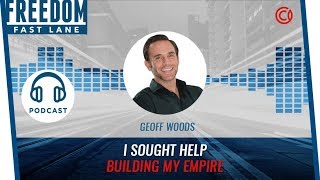
Ryan Moran built Capitalism.com around himself, creating a bottleneck. Jeff Woods, VP of The One Thing, told him to hire a marketing leader who can recruit and build funnels, set 90-day targets like $2-4 cost per lead, and spend 20% of his time finding that person. The fix: stop being the business.
Chapters
You're listening to Freedom Fast lane presented by capitalism.com. this is the show about building businesses and investing the profits so that you.
Can live life on your terms.
And now your host, the future owner of the Cleveland Indians, Ryan Daniel Moran. Hey fastlaners, Ryan Daniel Moran here. Welcome to Freedom Fastlane. This is the happiest you will hear me for the rest of this podcast because today I get so served a little bit of humble pie. You're going to hear me go to one of my confidants, who's Jeff Woods. Jeff woods has been on the show a handful of times. Now he might hold the record for most number of times here on the show, but Jeff works at. He's actually the vice president of the One Thing. The One Thing is one of my most gifted books to other entrepreneurs and he runs the company behind the One Thing. He works alongside Gary Keller and Jay Papazon. They built Keller Williams Realty, which is the biggest real estate company in the world. And Jeff has really benefited from being beside these two partners and building something incredible, building a real empire. So I go to Jeff to help me navigate my mental BS to really find out what I'm missing. And I go to him with challenges where I need to think bigger or challenges where I need his advice. And in this episode I go to him with basically a business download and say, hey Jeff, I need you to be the teacher here and I need you to tell me what opportunities I'm missing and what I need to focus on because I just sold a company. My commitment is to build capitalism.com into a media empire for entrepreneurs that also makes a meaningful and financial impact in our students lives. That spreads businesses that we believe need a platform and that spreads a message that makes an impact in the world and even affects policy. So Jeff helps me narrow my focus. He helps me identify what my biggest opportunities and challenges are. And you will benefit from this from a couple ways. One, his thought process about identifying what's important and clearing off everything else and is actually a really beautiful and liberating process. You're going to find out how much time you're wasting and how much opportunity you're overlooking. And second, you might enjoy hearing me squirm a bit because you will see that all entrepreneurs have challenges and all entrepreneurs have mental noise and all entrepreneurs wonder if they're on the right path. And I let my guard down a little bit throughout here and talk through that with Jeff and he helps me pick up the pieces. Jeff is a unique type of talent in this regard and I'm very glad to call him a dear friend. I'm very thankful to have daughters of the similar age so that we have an excuse to hang out every once in a while. And I think you're really going to enjoy this chat with one of my confidants, Jeff Woods.
Hey, fastlaners. Welcome to the show. Sometimes when we hop on a podcast, I am the teacher. Every once in a while, I am the student. Today I feel like we're kind of coming full circle because I've been on your podcast, Jeff, as the teacher, where you were the student, and I feel like my chickens are coming home to roost because.
Yes, that's the noise I had in mind. Wow, that really threw me off more than I expected. Jeff.
I feel like in the last six months or so, you building up the one thing you have gotten at least competent at a skill set where I'm really lacking. And I need your help. So I am going to kind of walk through where I'm at, and I want you to kick my ass, if you will, a little bit. Are you down for that?
All day, baby. Let's do it.
Okay, so I feel like I am. Our mutual friend Cameron Herold talks about the stages of the entrepreneur, and you always start with that uninformed optimism. And then what is it like, informed pessimism? And then.
No idea.
It's a roller coaster is what I'm saying. You end up being consciously confident by the end. You figure it out sometimes. And right now, I feel like I think from the outside, people probably think I'm absolutely killing it. I just sold a business for the biggest check of my life, which is great. Capitalism.com is growing. We have. Our capitalism conference really is gonna be something special. But I feel like things move so slowly, and I feel like there is so much going on, I'm having a hard time figuring out what to focus on and figuring out what is that main domino to push over. And you work here in an organization that is all about. I mean, this is the one thing. This is all about focus and productivity. And I feel like I'm really lacking in that. So I need you to walk me through the exercises that you go through and, like your continuity programs that you would take somebody else through. And I think other people will benefit from hearing me go through that.
Sure. Well, for people with a little background. So my partners are Gary Keller, who started Keller Williams, which is now the largest real estate company in the world, and his co author, Jay Papasan. And I've been with them for Two years now, getting mentored. One of the things Jay and I were talking about this recently. When you look at billionaires, what actually got them, there is a very crystal clear vision at some point in the future. You look at what Steve Jobs wanted to do, Bill Gates, Elon Musk, they have a really big vision. It's very clear, and it's in the future. They began there and they worked their way back backwards, which informs everything. Most people, when what we have discovered from the people we've worked with is they set goals based on this year, maybe a few years in advance, that's usually where it breaks down. My first question for you is, what is your Disney? What is that big vision? Where do you want to go?
So first of all, first context, you're not just throwing around the word billionaire. Your partner is indeed a billionaire. So we're not. Not just saying that, like making up names.
I don't comment on his net worth.
Okay. He runs the largest real estate company in the world.
There you go.
Anyway, my big Disney is. I have always been fascinated by the ability to influence businesses through audience. So one of the most fascinating things to me in the world was when Carl Icahn in 2011 tweeted about Apple stock being undervalued and that stock went up by like, you know, billions of dollars worth of value. I am fascinated by the fact that Tim Ferriss can talk about Mizzen and Main on the podcast, and that clothing company explodes in value. I'm fascinated by that. And I also believe that entrepreneurs solve problems better than government can. So my desire is to create a pipeline of entrepreneurs through teaching the model, through incubating businesses and publishing about our students, our clients and our customers that influences them and creates that impact so somebody can come to us, get the training to be an entrepreneur. We literally partner them with investors and with influence, us being the influencers. That puts them on the map while simultaneously building an audience profitably so that we can do things like swing elections and put a message on the map that we believe in. I know that we will have won when two things happen. When one of our students comes to us with a product or an idea, and as a result of us talking about them, they show up in retail stores and are a household name all across the country. And number two, when there's a Senate race in Florida and it's close, we like one person and don't like the other person and the person we endorse wins. That's when capitalism.com has won.
Okay, well, you helped me A lot there. Because what I was going to ask you is get more clear. How will you know, basically, that you won. What does that destination 20 years from now look like?
I'd like it to be more like five years.
Okay, excellent.
Five years. Yeah.
Awesome. Love that you think big. So what's the most present problem right now that's stopping you from getting there?
There's two things that I come back to on this. One is I am currently, as of right now, as we record this, I am the face, the salesperson, and the content provider all at the same time. And it's. Honestly, I think the biggest problem is that it is exhausting knowing that if I sell something, I also have to fulfill it. If I come up with an idea, I also have to create the sales message for it. And usually people are showing up for me. I have resisted that in the past, and now I have kind of embraced it because I recognize that there are people in my audience who respect me and want to learn more from me, and I appreciate that. But it is also kind of exhausting to have to be the constant content creator. So I'm audience builder, salesperson, and I'm the person leading the charge as well.
What would happen if tomorrow a bus hits you? What happens to your mission of helping entrepreneurs be that voice that can change the world?
I'm trying to think what would be left, and what would be left is, like, the world's greatest domain name.
I have a team that believes in my mission and my message. They would probably go out and get other people talking about business who already had audiences, and that's something I have. Can I go on a left turn here? Yes. Okay. So one of the things I think I'm really good at is helping other people who have audiences monetize those audiences and giving them more of a platform. I was at an event last week, and there were all these amazing people who have these huge audiences that don't know what to do with them. And it's not hard for me to go in and help them create those funnels or even, like, the platform to get their message out there. They have these audiences, but they don't know how to create, like, a systematic flow. So I kind of had the thought, what if I brought in those people under the capitalism folder so that there was more of a diversified message from different people. So if I did get hit by a bus, there were other people talking about the same aligned message. But as of right now, if I were hit by a bus, we have a lot of content that would be reruns until there was somebody else to be the face of Freedom Fast Lane and capitalism.com. and Freedom Fast Lane is a show on capitalism.com. i see capitalism as the media company. Freedom Fast Lane, as you know, a show on that media company.
So what I'm hearing is the business doesn't actually grow without you.
As of right now, I'd say no.
Okay. I remember hearing Gary at some point share. You're not a business owner unless you can step away from your business and your net worth goes up. When I look at what he has done with Keller Williams, from day one, he was very clear that the highest form of success is succeeding through others. Not being successful yourself, not being able to grow a brand yourself, grow an audience, create products, sell a business. It's the ability to recruit talent and coach them to their possibilities so they can grow an empire inside of your world. And your job is to play recruiter and coach. How many people on your team right now can play Rainmaker?
When you say rainmaker, you mean make it rain. Thank you for that distinction, Jeff.
You mean drum up sales?
If I told you tomorrow, I stood next to you every single day with handcuffs saying, you are no longer allowed to sell, what happens to your business?
Oh. So I took a step away from selling things about three months ago, and at that point, I had to kick down some doors and say, I'm removing other people from this. And I needed to get the company back financially healthy. And now the company is back, and probably the healthiest financial point has been in a long time, but that was because I went in and grinded for two or three months.
You rescued the company in a sense.
Yeah, yeah, yeah.
If you had to start over today.
Mm.
You have everything that you already have in terms of the brand, the audience, the products, the cash flow. You have the opportunity to literally bring on your dream team.
Yep.
You have every team's number one pick.
Oh, wow.
What positions do you absolutely need?
That is deep. I have every number one pick. So I think the first one I hire is.
Someone who. I don't know if you call it, like, the viral marketer or the content director or the vice president of content. I don't know what you call it, but it was. It's somebody content person. Actually, I have this written down. Forgive me. I'm not texting. I'm pulling out. I have this list. So it's someone whose three competencies are identifying viral content.
Recruiting influencers and people with audiences. So recruiting writers and podcasters. So people who are Creating content, connecting with influencers for distribution, and identifying viral content.
Awesome.
So that person's primary job would be generating content through other people. They wouldn't be a writer. They would be generating content through other people. They would have the relationships with people who had audiences so that it would spread, and they'd have the ability to identify content that would go viral because that would spread the message really quickly. Okay, I think that's my number one pick.
Okay, then let's not go any further.
Well, I really want to give you my number on my next number one pick.
Okay, give me your next number one pick.
Okay. My next number one pick would be the number one director of marketing, whose job is to create profitable sales funnels, lead traffic and conversion efforts, and build and monetize email lists. And the reason I really wanted to give you those two is because I've seen one person's job is to create the audience, and the other. Yeah. Is to rally that audience behind taking an action that creates sales. Those two positions really do, like, liberate me from having to be the business.
When you see those two positions, do you envision yourself going out and finding both people, or do you envision yourself finding one at a time? What I mean by that is only allowing yourself to find one at a time.
I don't follow.
Let me tell a story.
Okay.
One of my very first state of the company meetings with Gary. I walk into the room. It's Gary, Jay, and me, and we're sitting at this conference table on the second floor in Gary's little secret lair. I hand Gary and Jay my business plan. It was a single sheet of paper. On the top was a goal, what I wanted to accomplish for the year. Then there were three bullets. Priority number one. Priority number two. Priority number three. These were the three big priorities that I needed to accomplish in the year, the entire year, in order of priority that would allow me to accomplish my goal for the year. We start talking about number one. Gary asks a bunch of questions. I say, we good? He goes, yep. Start talking about number two. Halfway through. Through number two, Gary and Jay start asking more questions about number one. I answer them. I say, we good? They go, yep, cool. We finish up number two and start talking about number three. Gary starts asking more questions about number one. At this point, I feel like I'm the only person in the room who doesn't know what's going on. But I answer the questions. I say, we good? He goes, yep. I talk about number three for no more than 10 seconds before Gary stops me. A final time, he says, do you need to accomplish number three to accomplish number two? I said, no. He said, do you need to accomplish number two in order to accomplish number one? I said, no. He said, then draw a line between number one and number two. Or even better, just rip the page in half. Don't even think about number two or number three until you've earned the right to by mastering number one. If you had to show that list to Gary and you could only focus on one of them, which is the one you would focus on first.
Oh, man, that's hard.
Did you say you have a trouble with focus?
No.
My answer today is I would hire the marketing director because that would free me up. That's the primary thing that I think about is marketing and sales.
Cool.
So that would free me up to go make other hard decisions.
What I love about this is the last time, I think when we talked about this at the gym, you thought it was the content director, right?
Well, I think. I think the person who can identify viral content and rally the other people. I think that really grows the company. But what frees me up to go accomplish the next domino is hiring somebody who's better than me at the thing that takes up the most of my time.
So generating revenue.
Yeah. Marketing and sales. Yeah.
Okay, cool. So what do you do about that content director?
If you're just listening to the podcast, you can see my shoulders slumping. Like, I'm so put on the spot. Keep going.
So what do you do about the content person?
For now, you wait.
Good.
Okay.
What are the two to three things that marketing person has to be able to do exceptionally well, otherwise they get fired?
Is my list not clear enough?
Say it again.
Okay, hold on. Let me pull up.
Let's put it this way. If I can't remember it. No.
Okay. Creating profitable sales funnels.
Okay.
Leading traffic and conversion efforts. Does that need to be clear?
You tell me. How will you know if they are leading traffic and conversion efforts?
I will know that if our lead cost is going down, our conversions are going up, and we're expanding the sources of our traffic.
Can you make.
That's how I know. Yeah. If we have more traffic sources than Facebook ads, like, if we're renting email lists profitably, if we have affiliate promotions profitably, and we have a predictable launch and promotion calendar a year out in advance.
So what would they have to be able to do in the first 30, 60, and 90 days to demonstrate that they can do that?
It's a good question. They would.
Recruit affiliates. I'M writing this down. Recruit affiliates and schedule launches and promotions.
How many affiliates?
10, I would say 10 within their immediate network. And they would have to be networking with a broader network to expand that. But like the immediate win is that they can bring on 10amazing people who believe in capitalism and what we're doing.
Okay.
And then they have our promotions scheduled throughout the rest of the year. I think it was the only other thing I said. And then the last bullet was building and monetizing email lists. And I would add to that through cold traffic.
How many people would they have to add to your list through cold traffic?
My ideal would be to say to this person, here's your hundred thousand dollar budget. Go build one hundred thousand person email list with this. Come back to me with a plan.
So they have to get to a point where they can acquire leads for a dollar.
Yeah. I mean, yes, sure.
Okay, now ask the question, are these realistic goals if they at the end of 90 days are unable to generate 100,000 leads with $100,000, are you firing them?
No.
Then is that really the mark of success?
So the goal is, I was actually thinking more like six to 12 months for that goal.
Okay.
So in 90 days, I would want to be profitably buying traffic to a lead acquisition funnel that was acquiring them for between two and four dollars.
And if they can't do that in the first 90 days, are you parting ways?
Yes.
Cool. That's the right goal.
Okay, so that's what you mean by a clear, specific, measurable goal. So two to four dollars.
And for people who are listening to this, just asking Ryan questions and going deeper and deeper, because that's what my coach does to me. It's what Jay and Gary do with me. A lot of us think we are being very clear about what our expectations are. We think we're being clear about what the goal is. And the question for you is, if you asked, how will I know if they've accomplished this? If it's not the words that are written down, then you're not being specific enough. If you yourself as the owner of the business don't have complete clarity on what the job is and what success looks like, how can you hold them accountable to executing to your success?
That's so true. That is so true. I think I need to get clear about creating profitable sales funnels too. To me, that would mean that you can send an email to a list and there's a profitable upsell flow and you can duplicate that over multiple offers. And I don't have to show up for it to happen.
So just like with the 30, 60, 90, you, for that one person that you sent to me, get more clear on this. Send it to me and I'll poke holes again.
Okay. Okay, cool.
Let's go back to 40,000 foot.
Yeah, let's go. Oh, I love 40,000. I'm so good at 40,000 foot.
For the people who are just listening this, when I say that his body language completely shifts. His chest comes up shoulders back when we're going in the narrow.
I'm so not a detailed person. Right. It's my blessing and my curse. Like, I am a visionary. One of my coaches, Rachel Kirsten, she said to me once over, over breakfast, she's like, so, Ryan, you've never worked for someone else. You set the world's biggest vision in your industry and you've been at this for a year and a half and you're frustrated. Wow. It would have been a miracle had this worked. Right. And I have, just to be clear, like, I have an audience that is incredibly forgiving and supports our events. We have. I mean, we've create.
Yeah, your event's solid.
Yeah. Thank you. And we've created like between somewhere in the hundreds of people who are who now run seven figure businesses as a result of our training. We're in the block and I had this, this community called the tribe that has incredible success. We've made, we've made a lot of mistakes building that community along the way, but there's still a ton of success stories. And the intent is building VAP to be the incubator that creates these businesses that we can then partner with from the influence side. So we've made a lot of mistakes, but there are also things that we've gotten right. So there's progress here. So it's not like it's all right. All been for nothing, if you will.
That's right. Back to the 40,000 foot level.
Oh, right.
You look at building this type of company where you are able to put a company on the map based on your messaging. You're able to influence politics based on what you put out. You work back to the fact that what I'm hearing is the most present problem for you is the fact that you're shackled to your business.
Absolutely.
Okay. We've acknowledged that the highest form of success is succeeding through others. And if you could, that very first person is going to be that marketing person, right?
Yeah.
Okay. When we look at your time, when do you want that marketing person on by?
Yesterday.
Okay, here's and this is part going back to empire building. When it comes to hiring, a lot of people or most people were never really formally trained on this. When Gary was first starting Keller Williams, he knew he wanted to be number one in the world. This is when he was a small little real estate company here in Austin. He knew for that to happen, it didn't mean that he had to go and find every single person. He had to train somebody how to go find a person and be able to train that person how to go find a person and train that person how to go find a person. He had to build models and systems that could scale. He'll tell you, from day one, KW was not a real estate company. It was a training and education company. That's why everything.
Hmm.
The empire building process, it's a training. Our hiring process is a training. When you onboard somebody, full training, it's all systemized step by step. A big opportunity for every single person who's listening to this. When you look at that person, you want to bring on. You're not looking for a marketing person today. You're looking for somebody who has the capacity to replace you as CEO.
For people who are listening this my assistant sitting in the room. I was not looking for an executive assistant. What was I looking for?
Somebody who could ultimately take over my job.
Are you looking for that in every role?
If you are the CEO, at most, Gary's suggestion, you should have no more than five people reporting to you. And if they are a person who reports directly to you, they should be an empire builder, meaning they can't. It's not just that they're able to do the job today. They have the capacity to build an empire inside your world. It also means they have the capacity to recruit other empire builders.
From day one, Gary was clear about the fact that he was not supposed to be just the CEO of the company. Ultimately, his job was to be chairman of the board so he could recruit talent and coach them to their potential.
Yeah. So I so resonate with that because I, I like to think of myself as the owner and the performer, not the operator or anything else.
Correct.
Let's war game this for a second. So if the first empire builder is the marketing director, you're basically saying that they will be empowered to build the team under them.
That's part of their 90 day test.
So part of their 90 day test is to go recruit the Facebook ads person that is the number one pick.
Yes.
In terms of Facebook ads.
And they don't earn the right to be that very Coveted spot of one of the five people that reports directly to you if they can't also go out and recruit talent.
Hmm.
I was told before I was hired in the first 90 days, I'd have to do three things to keep my job. One, prove I could cast a vision. Because you can't be a CEO if you can't cast a vision. Two, deliver $100,000 in 90 days or less out of thin air. You have to be able to lead with revenue. Three, you have to prove that you can be a magnet for talent. Those three things.
That's it.
So just all those things were assessed, but from day one and when I brought on Inez, they were looking very carefully. How did I do in terms of my pick? You're good.
Right.
But now I'm assessing her because when she talks about she views herself as much more than an ea.
Great.
Prove it. Go find that customer service person. How are you going to handle that issue? That's her next big test.
Okay, so this makes a lot of sense to me. Starting over from scratch.
Now, what do you do when you have like.
Right, right. We have a team of eight people. Revenues in the 3 to 5 million range on capitalism specifically. And it's a way too level of an org chart structure. I mean, we have. It's not written that way, but it certainly operates.
Yep.
Too much that way. What do I do now? If I could go back from the beginning, that approach makes sense because there would. I probably wouldn't have trainings and the tribe and the event and the podcast and the YouTube channel and capitalism.com and Focus. Yeah, right. And a focus.
What do you think you should do?
Well, sometimes I think I should just retire off into the sunset and take my business sale and go get a nice beach house somewhere.
Well, you just got a lake house.
I did, yeah.
I'll come over.
Well, I hadn't talked about that yet, but yeah, we surprise. We buy. We bought a nice retreat center for workshops and masterminds for capitalism dot com.
Okay. Let's assume that's not the option.
Okay. What is the first opportunity I have to fix this? I think the next step is every time I analyze this, I think instead of cutting things out, which is always my temptation, like expand and then cut. Expand and then cut. I think what's really missing is pushing over the big boulders of moving in that person who tells me how to clean it up. I really don't know how to clean it up. Like, I really. I don't know how to get out of my own way. I don't know how to take this company beyond $10 million in revenue. I need to go find that person who tells me to get the heck out of the way.
You just said something that's very important. This is part of a trait of an empire builder. If you as a business owner have to say, giddy up, your goals aren't big enough. Move faster. If you are having to push them for growth, not an empire builder. An empire builder steps into your world and says, get out of my way. You're slowing me down. Part of Gary's model is he asked the question, how can I give myself permission to make my world so big that any talented individual can step in and have everything they want inside of my world? The permission. Part of that is the fact that it's not comfortable to have a talented person come into your world because they want a lot and they're going to want to move fast. They should push you to move faster. They should push you out of the way. Otherwise, they're not talent for that role. Now pay attention to the words I just used. Every single person, you got eight people on your team. Every single one of them is talent for something. The question is, are they talent for that role?
And do you only hire if they are in that role? How you described them of get out of my way, you're slowing me down. Like, is every person, does every person meet that criteria?
Every single person in the entire organization?
Yeah. No.
You need the people who are slow and methodical. You need that person who maybe is happy with their 40, 50k a year. There is a place for everyone. If they earn the right to report to you.
Would it help if they were an empire builder?
Yeah, of course. Because then they would just be reporting to me what's going on and I would be tweaking that process.
Another example, Gary knew he wanted to turn KW into a training and education company. Started with systemizing all the processes and him teaching the process. He then realized that the highest form of accountability is a coach. He asked the question, how do we become a coaching company as well? What most entrepreneurs would do is they would go and they would start coaching.
Right?
Gary said, I'm missing a person. I don't earn the right to develop that opportunity until I find the person and make it their opportunity to grow that organization.
So did not start that revenue stream of the business until that person was there.
I remember Gary saying in a mastermind, most of you, when you see opportunities, you think of, how can I go do it? When I see opportunities I think of I'm missing a person.
Gosh, that's so. I so feel like, as much as I preach not building half built bridges, and I don't feel like I do build half built bridges. I just build bridges that I have to maintain. I feel like I finish what I start, but then I have to maintain them all.
This is something that didn't make it into the one thing. It got cut because otherwise the book would have been 800 pages long. One of the thiefs of productivity, thiefs of time, is the thief of maintenance. As entrepreneurs, we have this shiny object syndrome, right? We see opportunities everywhere and we ask the question, can I take that on right now? Viable question. If we say yes, we go after it. The challenge is we don't have a crystal ball. We can't see what's going to happen in 5 years, 10 years, 20 years, 30 years, 40 years. Let me ask you, can you think of any industry over a hundred year period that did not get disrupted? Disruption is inevitable. It will happen. What happens when your golden goose, your mothership, suddenly gets attacked because people don't want to stay in hotels anymore because of Airbnb? People don't want to get a taxi anymore because they can click a button and a black car shows up.
So it's this myth of once you've completed something that it's just going to stay that way forever.
Gary said this in a Mastermind with his top hundred people. He said, so many people, they build this primary business and they try to build these other businesses. Number one mistake is they build a perpendicular business going in a completely different direction that has nothing to do with it. Mistake. You start building things out that are at least in a parallel, they're aligned. You're in the real estate business, you go into mortgage, you go into title, you go into insurance. They're at least aligned. The challenge is they start building those other businesses before their mothership is secure, meaning that they have replaced themselves and their net worth goes up without them being involved.
So my brain is going, okay, how I think we're gonna conclude this.
Is that my one thing is going to be that I need to go find that marketing empire builder. And then my brain goes, okay, well, I have all this copy to write and all these other things that I need to do in order to get to the point where I can go find that person.
When we work with people now you're getting to the heart of everything that we do in terms of our training. People tell themselves the story that I have to go do all the other stuff that's on my to do list. So I can do the one thing that actually matters. Does that sound backwards?
Yeah.
Let me ask you this. How much time. What is the minimum amount of time that you would need to invest on a weekly basis to move the ball forward in terms of finding this marketing person? Minimum.
A minimum six to ten hours.
What would happen if you did two hours a week?
What would I focus on?
No, what would happen if you did two hours a week? Could you do two hours a week?
I could do two hours a week. I don't know that I would find the person eventually. Maybe. Yeah, sure, sure. Yeah.
Let's go to the focusing question of the book. What's the one thing you can do such that by doing it, everything else is easier or unnecessary? You think you should do six to ten hours a week to find this person? The challenge is that represents a max of 25% of your time.
Right?
20% of your time. Can you really do that, starting now?
No.
Okay, so then the bar set too high. Go lower. What can you actually do?
I have never thought of it that way. So it's a matter of identifying what boulder you can push over.
That is the most important thing and making that the priority when people. Huh. I've never thought of it that way.
Well, it's a domino run. I'm not asking you to go down and knock a thousand dominoes down every single day. I'm asking you to wake up every single day and ask what would happen if I just knocked over one. Yeah, when you do one thing, the right thing, it topples over many things.
Do you think there's anything I'm missing in this?
Like, I mean, what are you missing? What do you think you're missing?
Oh, stop asking me questions. I'm asking you the question. Jeff Woods.
It's not about what I think.
Take off your philosopher hat. What? What? What? I.
Why do you feel the need to add another thing to the plate when you're already struggling to get the one done?
I hate it when you're right. I guess I'm asking you to call me on any BS that you think I might be spewing right now. And you did. I just don't like how.
Let me share something that happened this week. Literally this week, we were doing a training for our membership community.
Tell me the story.
I'm giving you one thing. I walked in this Monday morning after being on vacation for a week. Super unclear. I'm always crystal clear coming into the week on what my vital Few priorities are the handful of things, three to five things, max, that I absolutely must get done. I walked in this Monday, not clear. I get in front of this whiteboard, I list them out, and it ended up being three things. I then asked the question, how much time would I actually have to time block on my calendar, schedule time with myself to get this done? The answer was seven hours. It would take me seven hours to get my 20% work done. That 20% work that would generate 80% of the results would take seven hours. It would take 20% of my week to get my 20% work done. I had never done it that way, and that was a massive aha. And I tested it on our training, and it was pretty similar across the board. When you look at what you need to be doing, what would it look like if I told you for 80% of the time, 80% of your week, you could do exactly the things you've been doing? You can. You can worry about the copy, you can worry about the funnel. You can worry about if your shirt's too tight when you're about to get on front of camera.
And I'm asking you for just 20% of your week to reserve that for recruiting that marketing person. Can you do that?
Yeah.
Okay, now, what are the things that are most likely to distract you and get in your way from doing that?
Going to meetings, answering the rest of the team's questions? I think just responding to other people.
Other people's requests.
Yeah.
Okay. What's one thing you can do proactively.
To eliminate those requests, defer them to someone else, and empower them to make the decisions? Even if I. They're not the decision I would make.
How can you tell them before they even ask it that asking is not even an option? It takes time to respond and tell them to go elsewhere.
Oh, I would just tell them that I was not available. I would just tell the team that they are to report to someone else and empower the next report to make those decisions and be okay, that they're gonna make different decisions than me.
Are you willing to try that for a week?
Yeah. Okay. Yeah.
How will I know that you've done.
It when I dance into your office next time, instead of coming in with slumped shoulders?
How about a text on Friday?
Well, as I record this, I'll be at Burning man, so I'm going there to recruit my marketing director.
My one thing is that in case the IRS listens to this and wants to know why you expensed it.
Next question. Yeah. Right. So I told you the question that my temptation was to cut things out rather than add something in. Do you think that the approach of just identifying that proper boulder is the correct one?
Let me ask you this. You've got two options in front of you. One cut first, then find person. Other find person. Which one makes the other one easier?
Find person.
There you go.
Okay. Absolutely. Find person makes it easier.
What happens when said talented individual steps into your world and starts showing everybody what exceptional work looks like?
Everyone else steps up or. Or they get off the bus.
Is that a bad thing?
That's a great thing.
And what did you have to do?
Find the person. Is this what you do in, like, your monthly stuff? At the one thing. Do you just have to get everybody else? Like, I feel like as an entrepreneur, I don't know if you call me a coach or like, as an. As an advisor, 80% of what I do is tell people what not to do. Is this what you find in the one thing?
I'm figuring out that first and foremost, I'm not a coach. I have too much respect for coaches. I have a coach. Jay has a coach. Gary has a coach. That is a profession I have learned, and I am on a road to mastering succeeding through others, which means if I tell them what to do, I'm giving them the fish. Our definition of leadership is teaching people how to think so they can get what they want when they want it, which inherently means I don't tell them the answer. I ask them the question that helps themselves discover the answer. I could have just told you as the marketing person, but you would not have had the buy in that you now have. So what I end up doing, at least with our trainings and our membership and our products, is oftentimes coming together and asking people the questions that they need to ask themselves so that they can self identify what their priorities are, what the things are that are most likely to distract them, how they can proactively handle them so they can actually spend at least 20% of their week on their 20% work.
We should talk about this the next time we hang out, but I'd like to talk about compensating those people and how we actually go about getting those people. Because now, if that's my one thing that's a process like that is where does that person hang out? What attracts them? How do we recruit them? Sure. So we could either hit that in 30 seconds or we can save that for a.
It's too deep.
All right, so cliffhanger here.
We'd be doing a Disservice to the audience.
All right, cliffhanger. We'll talk about that next time that we're on the podcast.
And FYI, folks, I'm doing a breakout at the conference, right?
Yes. We haven't announced it yet. We'll just make this the announcement. Go ahead.
I'm doing a breakout on.
I'm doing the event.
I'm doing it. It's actually me, Ryan. He's gonna be.
This. Jeff woods will be leading a session at the capitalism conference in 2017.
On this.
I was actually having lunch with Mike Dillard, who was like, what's the book? Who's the coach? Who's the person you go to on, like, Building out the Team? And I was like, no one has taught me more in the last year than Jeff Woods. Which is funny because I'd say 18 months ago, you were coming to me for advice, and now I feel like I come to you for advice way more than you come to me.
So I told my wife I was. It was kind of. When you said that to me, it was a huge epiphany and very honoring because when I was in medical device sales, I remember very specifically being in my navy blue scrubs in Riverside, California, pulling up to a jersey. Mike's about to get my California club. Listening to you talk about your income report, thinking, who is this 20 something year old kid who's doing over a million dollars a month? And so good looking and wondering. Yes, and so good looking and wondering how the heck am I ever going to get out of my job and be able to do that one day? And what if I could actually meet that guy?
And here we are.
And here we are.
That's the power of focus, Jeff.
That's right.
Well, thank you, sir. Thank you for constantly pushing me. I appreciate it and I'm excited to have you share with the audience at Capitalism Conference.
Yeah, it'll be fun. Thanks, man.
All right, Cool, dude, thanks.
So to summarize what happened in this chat with Jeff, we identified my one thing, which is filling that marketing director role of finding somebody who is better than me at building email lists, at overseeing profitable funnels, and also turning cold traffic into leads and sales. If that's you, reach out to me on facebook@facebook.com ryandaniel moran or you can reach out on the capitalism.com page as well, and one of my team members will see it, or if you know somebody, please send them my way. We also talked about how much time it really clears up to have that one thing identified and to put that boulder in motion so that it literally makes everything else easier or unnecessary. Jeff gave me a few distinctions in here that really I hadn't thought of before and I was really thankful for those Jeff will be leading a session at the Capitalism Conference this December in Austin, Texas on empire building, what he has learned by working side by side with someone who has built one of the biggest companies in the world, and how he is using that process to grow an impactful company here at the one thing I think you're really going to benefit and enjoy learning from Jeff, if you have a big vision. Because sometimes as entrepreneurs we get so lost in the vision and the noise that we lose the actual how to piece. And the Capitalism Conference is all about taking that vision and creating that how to predictable plan and that strategy so that we can start moving in the direction of of the vision that we have. That's what we're about at the Capitalism Conference. And I hope that you'll be joining us December 7th, 8th and 9th in Austin, Texas. You can head over to TheCapitalismConference.com to grab your spot and we will see you there. Hope you enjoyed today's episode. Share it with somebody who you know is as distracted as I am and needs some help aligning their focus behind building the empire. Thanks for listening. I'll see you guys in the next show.







