
Influencer Marketing : How to Partner With Influencers And Increase Sales
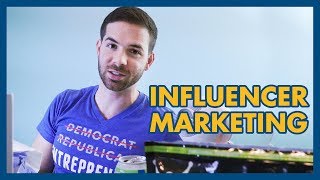
Ryan Daniel Moran walks through how product brands should test offers with paid ads before approaching influencers. Validate your unit economics first, then sponsor or build relationships with creators. Examples: Mizzen in Main with Tim Ferriss, Athletic Greens, and Honest Company with Jessica Alba.
Questions this video answers
November 4, 2018.
1,000 fans; 10 personal contacts; 1 influencer (with ~10,000 reach).
Chapters
Now, on interesting note, I was bringing up this shirt as an example from Mizzen in Maine. I heard about this in the Tim Ferriss podcast and Tim Ferriss was talking about it in his ads. So Mizzen in Maine paid Tim Ferriss to talk about this. You know, he says this podcast is sponsored by so and so, and it was Mizzen in Maine. Right? So I hear that they pay him, however much it is, say $20,000 to talk about it on the PODC. And guess what me, one person goes and spends $5,000 with that company and I'm one of hundreds of thousands of people who probably heard that spot, maybe millions of people who heard that spot. So the first point of working with influencers or any traffic source that is outside of what you currently control is can you spend money? Can you just pay the advertising rate and get that to cash flow on the other side? What a lot of physical product owners are hoping happens is that they can just pay to show up in front of the audience and somehow the money that they spend is going to be less than the money that they make. You've got to manufacture that. And by manufacture that, I mean your offer has to be good enough to get those listeners or viewers or the people who are being influenced to come back and buy your brand. Now, if it is not an offer, like you're driving them through a funnel or you don't have a compelling offer, then the product needs to be different enough to really stand out. Had this just been a T shirt company or a nice shirt company, I wouldn't have listened. But there was something different about this brand and it's made out of sweat looking material and it was positioned to people who travel, which happens to be me. So I plunked down money from my first Mizzen and main shirt and then up to $5,000. I've actually met the CEO. He's speaking at the capitalism conference coming up in January 2019. I've actually struck up a relationship with the founder of the company because I've become such a fan of this business. And again, how? Because I heard about it on a podcast ad and they knew that if they spent a certain amount of money that it was going to bring a return over time. What a lot of people want to see happen is they've got, they're like, hey, this product to do really good in front of Dave Asprey's audience. So maybe we just get Dave to talk about this. Well, look, Dave writes books, he, he does podcasts, he does content. He spends his entire career building up his audience. It's not like he's just gonna whore that out. You have to think about this from the perspective of the influencer. Even if it is, well, I'm gonna pay them. They don't need your money. The people that you want talking about you don't need your money. So there's a couple things that need to be in place in order for this to really work. First, we have to know what we can spend in order to ROI on the other side. And then when we strategically place our spot, our advertisement in front of the influencers, to the influencers, that's when things get really, really magical. So I have a following. It's not as big as Tim Ferriss, but I'm sitting here talking to you about Mizzen and Main. I'm sitting here drinking a Virgil's Soda. I am telling you about the deodorant I use, right? Like these are all products that were in my house. I talk public about the fact that I'm a Quest super fan. So all of this to say, I found out about some of these brands through somebody who influences the influencer. And if you can pay to go top down to, that's when you have the real impact that many of you are looking for. Another example would be athletic greens here. They actually were launched to the Tim Ferriss audience because they knew that they were influencing the influencers. My buddy James, who runs this company here, the Swanic Sleep, they really got a lift from being on Bulletproof Radio, Dave Asprey's podcast. So a good question to ask at this point is, is what you're doing in the marketplace, are your products, is your message? Does it naturally resonate with the people that you are trying to get in front of? Because if not, you probably need to go and rethink your brand proposition or your offer before you're shopping it to affiliates. Now you can just pay for traffic in front of those influencers to send them back to your squeeze page or, or send them back to your offer page. Doing that is totally fine. And you can make that money up on the back end, meaning on the actual sales sequences. So you can just treat it like a traffic source. My favorite approach to this is to pay the advertising fee on specifically videos and podcasts. I was speaking with another greens powder. It wasn't this one, but a different greens powder company. A couple weeks ago I spoke at an event that was about using audiences to launch physical products. And once somebody came up to me and said, hey, I Want you to know you added, I think, like $3 million to our business. I was like, oh, how's that? They said, you told us to sponsor podcasts, and we started sponsoring podcasts, and it added like seven figures in revenue to our business. Awesome. Good work. Guess what they had to have in place in order for that to create a return? They had to have the margin. They had to know who their ideal audience was. And they had to know that by spending a hundred bucks on a podcast, it was going to make at least 100 bucks. And most physical product owners don't know that because they've never tested an offer. They've never tested driving traffic from Facebook or YouTube or podcast to a squeeze page and then marketing to them on the back end. So your opening move is not to go out and sponsor influencers. Your opening move is to advertise on podcasts, YouTube videos, and Facebook ads or Instagram swipe up ads. Those are four great traffic sources for you to be able to perfectly target who your ideal customer is and send them to your offer. Remember, the bridge is that squeeze page. The bridge is your offer. Whereas most people are trying to buy Facebook ads straight to Amazon or have an influencer just talk about it and hope that they show up. That's not how it rois. You do it by having the offer and or the squeeze page in between the traffic and the sales. The conversion point. Let me show you a different example. Once you know that a certain audience responds to you and you can advertise all day long. For example, like, man, if you can get on the podcasts or interviewed on the YouTube channels that speak to your ideal audience, the numbers are just phenomenal. But you have to know your audience and your offer has to be different enough to show up in front of them. For example, if you're, if you're just selling a weight belt, going on the Ben Greenfield fitness podcast or going on Elliot Hulse's YouTube channel and talking about your weight belt, or even having them say, man, this is the best weight belt. That is not gonna work.
Let me save you tens of thousands of dollars. That is not gonna work. There has to be something notable or different or referable about it. You know, I often share my food interests on my channel in front of my followers. And I'll talk about, you know, I like Virgil's All Natural soda because it's calorie free and it's not diet soda. It's interesting for me to talk about. I don't know anybody here. I buy it at the Grocery store like everybody else. But I'm talking about it because it's got referability. There's a reason why I would talk about it. If you're just selling product, if you're just selling weight belts, what's the reason why I would talk about it? I just got it on Amazon. But there's something different about it. Even if you're just positioning it in a different way, that is how you can start to get the lift that you'll need from influencers or from sponsoring podcasts, YouTube videos, running Facebook ads and driving them to your offer. Now, let me tell you a cool story. This is a company that I advise called Bear Complex. And Bear built this product specifically for the influencer. So I have a podcast called the Brand Builder Podcast, which is all about physical products brands. And I interviewed them about this process and what they were, they were talking about was the fact that they had one influencer that they were really hoping to build a relationship with. And what they did was they went to that influencer and they brought them their product, which was not this product. It was a similar product, but it wasn't. They made improvements later and they gave him this product. And this is a CrossFit product. It was a famous CrossFitter. And he said, hey, your product's fine, but I would really like for you to change this, this and this. And guess what they did? They did that. They basically customized the product for that influencer. And as a result of doing that, the influencer had a connection to that product. It was exactly what they wanted. And so by creating the product specifically for them, they have the influencer on board. So that influencer now is talk about that product. Cause it was literally made just for him. In a similar way.
These are diapers. And Seventh Generation is a company that was acquired by Unilever for, rumor has it, $700 million. And one of their competitors is the Honest Company, which was built around an influencer, Jessica Alba. And I happen to have had the pleasure of building a relationship with her partner. His name is Brian and he was, he's obviously the co founder of the Honest Company. He's also the co founder of Legal Zoom and Art of Sport. And I was asking him about his thesis for building physical products brands and he says to me, well, I build all of it around the traffic source, which is the influencer. You gotta launch to an audience. Remember video one, when we talked about building your audience, the other way is just to partner with the audiences. Now in order to do that, in his case, he's going to people with followings of tens of millions of followers. So he's obviously giving them either equity in the company or a sponsorship package. But these are deep relationships. This is not DMing somebody on Instagram being like, hey, will you promote my product? So we'll talk about, in a second, we'll talk about how to actually open conversations with influencers. But in his case, he's building deep relationships with those influencers in order to build those companies. And that's the approach that I would encourage you to think about in your business. You know, I'm always amazed. People will spend, they'll spend thousands of dollars giving away product in order to rank higher on Amazon, but they won't spend thousands of dollars to advertise their product in front of the person who has the ability to really create momentum out of a business. So my recommendation to button this up into more of a step by step format. Your opening move, your first step is to test cold traffic with Facebook ads, Instagram ads, YouTube ads, or podcast sponsorships and driving them to your offer page, your discount, your bundle, whatever your offer is so that you can build your audience and so you can profit from that sponsorship. Your next move, if you're, if you're the face of your company or you're the, you know, the promoter of your business, Just like my buddy.
Just like my buddy James is laying around here somewhere. Sorry, James. Oh, thanks, C Money. Just like my buddy James, who makes these blue blocker sunglasses, goes on the Dave Asprey podcast as a guest. That's a really hot way to have a lot of momentum come organically. But the product has to be, it has to be referable. And he told me once the way that he gets on podcasts is he makes the offer to the podcast host. The offer being, hey, would your audience want to learn about blank? Would they want to hear about X? If the offer that you are giving to the influencer is, hey, do you want to promote my thing? That's an ask, not a give. So how do you open conversations with influencers? You go for the smallest yes possible. The smallest yes possible is, hey, can I make some content for your audience? Or hey, does your audience struggle with this? Or hey, could I give away 100 units of my product to your audience? Or hey, do you have anything you need to promote right now? Because I have an audience that's hungry to hear from people like you. That's how you open up relationships. Too many people are just trying to spend the money in order to show up in Front of Instagram influencers. And I think it's a waste of money. Deep relationships, 10 connections to the right people can completely change your business. Look at Aubrey, my buddy Aubrey. This is his company.
And this is his book. I got too much stuff on my desk here, ladies and gentlemen. But Aubrey here, you know, I asked him, how did you build your audience? He's like, podcast, my friend. He partnered with Joe Rogan on this business and he did podcast tours to build up his personal brand partnerships with 10 of the right people change everything. And most people are going out and just throwing money around to Instagram influencers, which I think is a waste of time. Now, I have one more example that I want to show you. And these are two different brands. But if you're selling a product and you haven't done influencer marketing, neither of these brands, to my knowledge, have done influencer marketing. I want to go through what that would look like. So this is an all natural sunscreen, and this is an all natural toothpaste and fun story. I bought both of these because I went to Burning man last year, and Burning man is a zero waste community. And so these have no carbon footprint. They're all like organic, compostable ingredients. Anywho, the way that you would promote this is you would start by running Facebook ads, YouTube ads, Instagram ads to your offer that was to the natural crowd. It would be. You would start with the problem, hey, do you know what's in your sunscreen? Do you know that this ingredient, this ingredient, this agreement has been known to show to cause this, this and this swipe up to get 20% off this all natural, organic sunscreen that works better than the big companies. Or you could do the same thing. Their whole big thing is that they're fluoride free. Well, why is that? Why is that a differentiator? Well, if you believe that fluoride is bad for you, I don't have an opinion on the topic. But if you think that it's fluoride and sulfates are bad for you, you'd make content in a video ad or an audio ad. You would then spend the money to show up in front of an audience, send them to your squeeze page and make the offer. That's opening move number one. And there is so much traffic out there that if you do that and then you send them to Amazon or then you send them to Kickstarter, or then you send them to Shopify, that's when you really start to scale. So are you allocating money from your sales to be earmarked into testing this process. If not, we're gonna talk all about that in the next part of this series. But in the meantime, your opening move, Drive cold traffic to your opt in pages to drum up the audience support for this. So in video number one, we talked about content creation around pain points. In this step, we're gonna spend some money to boost that in front of the ideal audience, send them to the squeeze page, and then follow up with them for the order. Right? Simple stuff, stuff that we can start to test in a couple of days. The second step would be to go to the individuals who run YouTube channels. They might have Instagram pages, they might have YouTube pages, podcasts. And we're going to either spend the money to have them talk about us, to send them to our offer to our squeeze page, or we're gonna offer them something in hopes that they put us in front of their audience. So in this world, I actually discovered both of these because of the zero waste community. I have two. I have a handful of friends who are into zero waste, meaning they try to reduce trash and waste in their life. I live in Austin, Texas, you know, hippie capital of Texas for sure. And.
As a result, they knew of these brands. Well, there's a good chance that those friends of mine hang out and find, follow certain influencers or certain YouTube channels, or they subscribe to certain podcasts, or they watch certain.
They digest certain blogs. An example that comes to mind is I have a student, her name is Sophie. And Sophie had one Facebook group that she went to, and she's one of those zero waste friends of mine, and she had some zero waste products. She went to one Facebook group and asked if they would support her Kickstarter. She said, can I make this offer to your audience? They said, yes. She got in front of that audience and she did a $25,000 Kickstarter, and it just took off on its own. $25,000 is a great starting point to raise money for your business. So if you're in front of these even small but influential audiences, it can really move the needle. Here's my rule of thumb. If you have 1000 fans, if you have 10 personal contacts, and we'll talk about that in a second. And one influencer, that is enough to move the needle to get you independent of Amazon for those of you who sell on Amazon. So let's go back. Let's come back to that in a second. We talked about sponsoring podcasts, sponsoring YouTube channels. Then the next thing that I would do is try to Create a deep relationship with the 10 people who can really move the needle for this brand. So that would be anybody in the eco friendly space, Anybody in maybe the meditation space. Like that circle of influence of people who are naturally minded. That's who we're gonna start to build relationships with. And that's when we've got. Now we've got advertising, we've got sponsorships, and we have relationships. And any of those can hit and really send a brand soaring. Now a good starting point for those of you who are just getting started using some influencers or sponsoring other people's content. A thousand fans. Which we're gonna do through boosting content, boosting content and sending them to a squeeze page. Once we have a thousand people, we've got enough to move the needle. A thousand people. If we can send an email and a thousand people will open it, that is enough for us to be able to rank higher on Amazon, to have higher profit margin, launch new products predictably. That's all. A thousand. Right? That's not. That's. That's maybe 30 days of work. Number two, 10 personal contacts. Why do I say personal contacts? Well, I'll tell you a quick story. One of my natural friends who turned me onto this product, her name's Carly. And Carly is a friend of mine here in Austin, Texas. We were friends for years. And Carly is really involved in, she loves essential oils. She loves like natural sunscreens, natural toothpaste. She's really down that rabbit hole, right? And so Carly tends to hang out with other people who are into those same things. And she might have, you know, 800 friends on Instagram or a thousand people who follow her on Instagram. Just personal friends. She might have a thousand Facebook friends. Well, if I can give her my product and it's like, hey, this is why I'm really excited about this product. And she buys into that message because it's something that she would like. That's a thousand people that she could influence just with a Facebook post. And if you have 10 of those friends that you do yoga with or that you go to church with or that you are friends with because of business, if you have 10 people who are just the people that you that represent who your product is for, that's 10,000 people that are now gonna see your product. 10 people with an average reach of a thousand, that's enough to do damage, guys and gals. That's enough. You do not need to go get the person who has a million person following out of the gate. 10,000 people is enough. So a thousand fans, 10 personal contacts, one influencer, one person with an influence of at least 10,000 people that you're in front of that can really move the needle. And so when you are just starting with this process, those are the things that are going to drive up profitability and allow you to take your own sales. In part one of this series, we talked about creating content to build up the audience and collecting email addresses. In part two, we talked about making the offer so that you have a way to deploy eyeballs for your next product launch and to drive up the profit margins of your of your business. And number three, we're amplifying that content to drive more paid media to our offer and getting in front of influencers who can now endorse the product and get us in front of new audiences. If you do those through three things, you have the potential to scale what you've got way bigger than what's in place now. And you just beat the pants of everybody who gets out there without doing this stuff. And that's most people. This puts you in a very.
Big head start ahead of everybody else. In the next part of this training, we are going to talk about the management of cash flow and how you can allocate the profit from your business in a way that allows you to take money off the table and also puts enough for you to scale. And there's a bit of a formula to this that I think is going to really help you out. So we'll talk about that in video four of growing from six figures to seven figures. Let me know what you thought about this video in the comments. And also if you want the accompanying guide and the free podcast content that we put out specifically about this stuff, head over to capitalism.com million this is specifically made for those of you who are already, you know, you're working towards the million dollar business and you want to grow through that. This is going to give you the resources to do that. So. So that's@capitalism.com million thanks for watching and I'll see you in the next video.







