
Investing $1 Million: How to Create Long Term Wealth and Passive Cashflow
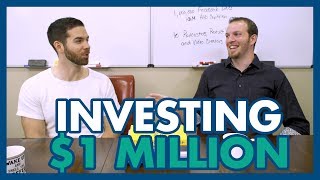
Ryan Daniel Moran and Sam Prentice discuss deploying $1 million for long-term wealth. Build a 'capital warehouse' earning 6-11% as a liquid base while waiting for deals, then invest the rest in real estate, oil and gas, dividend stocks, and websites. Stagger funding over years, keep a year of expenses in cash, and use specialists for unfamiliar asset classes.
Questions this video answers
1.7%.
About 6% (Sam: 6–7% expected).
Around 9–11%.
About $100,000 per year.
Approximately $500,000 total (Sam and Ryan cite putting roughly half of $1M over time).
Chapters
Ryan, Daniel Moran here. Oh, hey, Sam Prentice.
What's going on, dude? How's it going? Doing good.
Hey. So I have my favorite thing to talk about publicly is investing. I think the fast lane to freedom is to build businesses and invest the profits. If I were to make it even the faster ish lane, I'd say build a business, sell it, invest the profits for passive income. And my favorite thing to talk about has always been the investment side of things. And I've never really given myself permission to go through what my investment plan is, of how I generate passive income, of how I set myself up for life so that I'm not worried about money. I like to operate from the place of my life is taken care of and it's gonna grow and I can do whatever I want for as long as I want. And business is where I play. Like, business is where I get to have a good time. And if business goes great, cool. I'm having even better time. If it's not going so good, I'm probably not gonna be very happy about it, but it's not gonna affect my personal life all that much. And so I take some time with one of my advisors, Sam, and kind of go through some scenarios of.
What one person would do with a million dollars or if they had just sold a company, if they had a big windfall, if they had a good year, what would be the wise way or a way to consider allocating those dollars so that you had passive income, you had wealth growing for the long term, and you paid as few taxes to the evil government as possible? So Sam is one of my advisors. Sam, how do you describe what you do exactly?
Yeah, good question, Ron. So what I do most of is set up the capital warehousing strategy. So the capital warehousing strategy is a place to go store your money. Once you've created that windfall, once that windfall has been made, you have those dollars to work. We start with the capital warehouse, and then from the capital warehouse, we use that as kind of an alternative to a bank account. So. So that's where we store all of our money within leverage out of that to go into other cash flowing assets. What I do, what my firm does, we kind of help facilitate that. We're there to be your somewhat of a financial quarterback is we start with the capital warehouse strategy and everything else flows out of that. And so we use the capital warehouse as the base and then all the other assets come on top of that cash flow back into the capital warehouse. The capital warehouse provides a better return than other places to store liquidity. Like a savings account.
Yeah. So a savings account, which I saw an ad today on my ride into the office that said it was 1.7% money market interest rate, and I was like, oh, that's actually pretty good. On a savings account. And a warehouse Average is about 6%.
Six to 6 to 7% is what we'd expect.
And in the last five years, the average has been.
The last five years has been exceptional.
What does that mean?
Nine to 10, 11%.
Nine to 11% in the last five years or so. Okay, cool.
So.
So the idea here on this strategy is like to make that the foundation, Rather than putting your windfall in a money market account that's gonna do 1.7%, you put it into a warehouse, which we've talked about on the podcast we might talk about today or not, is you have 6 to 11%, but it's variable. Right. And then you're hopefully gonna do better than 1.7. When the average is 6%. In the last five years, it's been like 11. And use that as the. For the rest of the rest of the strategy, we'll go into a lot of that. But I know I came to you and I met a couple years ago, and I was kind of really starting to get my financial house in order, if you will. And you've worked with some backroom members on what do you do when you get a big windfall from selling a business, for example? So I have kind of my waterfall of where the money goes. But I'm curious for you to start, and then I'll kind of give where I allocate the money when I get a big windfall.
Yeah. So that's something that's really important to me is working with entrepreneurs who've gone out and created this big windfall, because that windfall is representative of, you know, two, three years of your life that you've given up to go create this amount of wealth. And it's incredibly impressive what we're able to do and what we're able to create in this country. Like, we have some very phenomenal opportunities that we have here to go create this wealth. So you've done that. You've gone out, you've taken that leap of faith. You've gone out and put that money at risk.
You put a product up on the marketplace. You've built up a business, you sold it for a million bucks.
Absolutely. You created something. Created something that's huge. So now the question is, what do we do with that? Money, because we all know we have to deploy our capital to keep growing. If you stay stagnant, you're going backwards. Because we're not in a deflationary environment right now. We're in an inflationary environment. So we have to keep our money.
Moving, which, by the way, takes up more mental energy than I expected. Because the initial, my business partner Clement calls it the bladder rule of finance.
Yes.
The more, the more is stored up, the more pressure there is to piss it all away.
That is so true.
And when you get, you know, when you have, if you're making a million bucks or you get a 10 million dollar check, the immediate thought is, what do I do? Because cash does not make you free. Cash flow and predictability makes you free. And that's a huge difference. Like having $10 million in the bank doesn't make you feel free. It's how that gets allocated. And that takes up a lot more bandwidth, especially when everything's booming right now.
And speaking of everything booming, that's something that. So real quick, I'm going to take a quick sidebar. We're going to come back to what we do with the money because when you talk about the mental energy that's there, it's so, so key. And if you think about the way that the psychology of investing works, we talk a lot about the details of investments which are good. Like you need to understand why things work and how things work and if they're financially viable. But even more important is just looking at the overall kind of macro trends, like the overall trend for an investor for you. You mentioned economy booming, like investing money. Now, here's what happens for most people with their money is when the economy is doing well, that's when you have more money. You just sold your business. Not because the economy is doing poorly, you just sold your business because the economy is doing well. So you're getting the best price for it because they see more value, the market's doing well. You're thinking, I can exit now and get more cash that I can go deploy elsewhere. Well, now you have this lump sum of cash, but when did you sell the business and acquire this lump sum? You sold it when the economy's at its peak, or not necessarily at its peak, but at least at a higher point than it's been in the past, because that's when you have more money. So now the timeframe, when you have the most money to invest in is perhaps one of the least optimal times to do investing. Because you're during that boom.
Like to put it in the stock.
Market, to put it in the stock market, to put it in any kind of asset class. Right now, when the market's at the economic highs, it's more difficult to find value. Not that it is not available. We still invest actively. I still invest actively. There is just fewer opportunities, there's more capital to be placed than there are compelling places to put it right now in today's economic environment. And so because of that, and that's not a problem that's unique to entrepreneurs, a problem that's unique to us, that is across the board, and that's how people's balance sheets work, is when the economy is doing well, they have more money to invest, and so they buy. When the economy is doing poorly, you have less money to invest. You may even have to go liquidate assets to be able to meet your living expenses or to meet your other investments.
This was my fear. My fear was when I sold my company.
I have this fear that if I go do what I thought was the right thing. Well, what if it wasn't? What if it was the right thing at the wrong time?
Absolutely.
What if I go buy a whole bunch of index funds, which everybody says is the. Yeah, just go buy index funds. And then we're in a 2007 environment and we. It comes down 50% and all of a sudden I have lost half of what I've spent my entire career building for. It was the one thing I didn't want to do. So I took a more alternative approach, which involves the warehousing strategy, involves some other things that we'll talk about. But that was a nightmare situation that I wanted to avoid. And what I'm hearing you say is if somebody sells or if somebody has a big windfall, it's probably because things overall are good and they may not be that good forever.
Absolutely.
So you do what instead, what you.
Look at doing is you look at where can you invest that has value, where can you do things that are countercyclical to what everybody else is doing? You know, when you started the Amazon business, you didn't start an Amazon business. When everybody was doing Amazon businesses, you started that business and you were trying to be ahead of the curve of what's happening. And it's not. You can be a very. You can be a. You can have a very limited knowledge of investing and understand the principles that guide investments as a whole. Do very, very well as an investor. Because if you think the goal of investing, if we're going to make this very simple, is you want to Sell things for more than you bought them for. And that's all we're trying to do is we're trying to make a profit. So we're trying to buy low and sell high. Like I said before is most people do the opposite of that because that's when you have money.
Bitcoin's at 19,000. Buy now. There's room for everybody.
And it's at 19,000 because everything's going well. And now you've got a lot of people, you've got a lot of money. And they're saying, well, let's go put it in bitcoin, because I'm doing really well. When things start doing poorly, what do they sell? They sell their bitcoin. And now bitcoin is at 4,000. You know, the same thing with the stock market. It just doesn't happen in a day. It happens over, you know, course of a year or so. But so it's the same idea as how do we get into counter cyclical assets, where when the market does take these downturns, we can trade an asset that hasn't taken a hit for an asset that has. So, for example, let me give you a real life example. I have a lot of clients who invest heavily in real estate. I love real estate. I personally own it, am a fan of it. There's a thousand reasons. We can go into why I'm a big fan of real estate, but that's not our podcast today. But for example, I have clients who had real estate in 2013, 14, 15, 16. They're thinking, okay, we bought a lot of this in 2009. We've made real good money. They're starting to exit these properties or refinance these properties and pull cash. You know, pull cash out of it. Actually pull equity out of the properties because it makes sense to do so. You don't want to have it tied up in the property. We want to pull that equity out. And so one thing in the last few years is they've not only have they not been refinanced, they've been selling.
Those properties because they've appreciated, myself included. I sold a house literally last week, and I sold another house three weeks before that. So I am totally buying what you're selling right now.
So you get this. So let's just look at 2016. In 2016, you may remember, gas prices went to an all time low. So you realized, hey, I'm filling up at the pump and this is dirt cheap. Not for Ryan. I know you drive that Tesla, so it's A little different for you.
Yeah. Put gas in the car, it ruins a $200,000 car.
But as a who for most people, you're putting your gas in your car, you realize it's down at a very low price. Well, why does that happen? Well, it's because oil got kicked right in the pants. And so we had oil down sub dollar thirty a barrel, which meant that there was some significant value created in the oil and gas industry. So there were a lot of energy plays that were very attractive.
So I bought a lot of oil ETFs, for example. Okay, good at that time. So that was the simplest thing that I knew how to do.
So I'll tell you the less sexy. I'll tell you my story in a second. But the, the sexy thing is I had people go from real estate. And so you know what a 1031 is, right?
Yeah.
Where you take money from one property, it's this depreciated property. You depreciate and you move over to the next property and keep carrying that on and I have to pay your recapture. Well, you can actually 1031 between asset classes as long as they're considered like kind. There's some things between real estate and oil and gas that you can do like kind of transfers. So I had some people literally exit real estate, exit for a great profit, take Those monies over 1031 then into now oil and gas, which has some different depreciation things. Super attractive, but they went from a peak like one asset class.
Oh snap. I did not know you could do that.
There's lots of fun stuff. So that's the idea as we go.
From here to here.
Well, we went from this asset at a peak and went over to another cash flowing asset that's now at a value and then that recovers. So for example, let me give an example, a real life example of what I did in my personal balance sheet.
But before you do that, so one of you're talking in smart people speak, and I'm good at talking and dumb people speak because I have a dumb person brain. And so I'm going to translate what you just said, which is you have clients, myself included, who are selling real estate right now because market's really high for I have a family member in Cleveland, Ohio that just put their house on the market.
Is it because LeBron left?
That's right.
Actually, I kid you not, LeBron did a lot for property values in Cleveland, Ohio. But it's like no joke, he made the economy better in Cleveland. We had a joke that said, our economy is based on LeBron James, so we'll see what happens over the next couple years. But I had a family member who.
They have a nice three bedroom house in Cleveland, Ohio, they're gonna put on the market for $160,000, which to them they were really happy with that. And in Austin, this would be like $800,000 house.
It's a bathroom apartment.
Yeah, exactly. And their realtor came to them and said, hey, market's swing. Really well, I wanna list it at $219,000. Like a month later they're like, we just, how did this money just show up? That's the market. Anyway, so we have people like me selling real estate because real estate's really high, oil and gas, way down right now. So just like it was a good idea to sell products on Amazon in 2013 and 14, some might argue that it's a good idea to buy oil and gas investments right now. So they're taking their money from real estate, selling it, putting it into oil and gas, and through a 1031 exchange. That's basically a no penalty transfer. You don't pay tax on what you sold.
You're not paying the recapture of the depreciations. You've gotten to depreciate this.
You don't pay tax on your winnings.
Correct. Yep, yep, yep. So very, it's just, just a, another strategy to let you go from one asset class has done well to an asset class that hasn't. So another example would be like in my personal, so I eat my own dog food and anything that I recommend, I personally do. And, and not even that. One of the things that's important about my firm is the mindset that we have. The philosophy is anybody we do business with, we treat them like close friends or family. Because it's one thing to do things with your own money. It's another thing to say, okay, would I put my, my parents in this? Would I put my close friend in this? Someone I'm going to see for the next 20, 30 years? Would I do this knowing that I want to keep a relationship with them? That's how we look at every single client we ever work with. And because of that, we will even turn away business. If someone we don't feel like is the right fit, is at the right stage in their business, at the right stage in their investments to do anything that we recommend. We are very upfront about that because that's how we treat those relationships.
So your personal balance sheet.
Personal balance sheet. What I do with my stuff. And so I have a life insurance policy very similar to what we set up for you actually. Same carrier even. So with this policy, I have cash built up in it. I store a lot of my liquidity there when I'm just not sure what to do with the rest of the money.
Meaning when you make some money and you're not sure what to do with it, you just put it.
I put it there, I just store it there. Because until I have a good place to put it, I know at least that's a safe way to keep growing that wealth where I don't have to really worry and think about it. It lets it just sit there and I'm ready to do what I need to do. Well, when oil took its big downturn, I had some MLPs and some other dividend paying pipeline stocks that I had tracked. So the way a midstream pipeline stock works is it's based on the profitability.
I don't know, I don't know that term midstream.
So there's, there's top and bottom. I'll explain. So in the midstream, it's based, its profitability is based on how much oil flows through this oil pipeline.
Oh, okay, okay, okay.
And so that's the profitability that's there is, it's based on how much oil flows through it. So when we went through oil's price going to a new low per barrel, that really should have little to no effect on how much oil flows to the pipeline because somebody somewhere is going to pump it whether they like the price or not, because we're still consuming it. Now if we entered into a recession where we had less consumption, that would be a concern for me. But for me, I have this stock that has had a 5, 6% dividend at an equity value of $40 or so the entire time. And then I see overnight, you know, it goes through, in the course of a couple months, it starts dropping down to 25, 20, $18 a share. So what I'm doing is I'm leveraging my policy. I'm borrowing against my policy, which has no effect on the growth of the policy. I'm able to borrow against that. Take these dollars over here at 4% and go put them into this oil stock that I'm now buying at $30, $25, $20 a share when it used to trade at $40. So I'm getting a lot cheaper equity buy. I have a dividend that's coming in. My dividend is more or less offsetting my borrow cost. So now I've got these two assets working during a recovery.
Yeah.
So now as oil recovers back up, my policy made that year, it made like 12, 13% in this return. My oil stock in six months had doubled. Gone back from like, you know, an average price of like $22 a share had gone back up to 40. And so I was able to pull out most of my money playing time with house money. Now I've got a dividend producing stock that's sitting there just because I was able to, by being liquid at the right times, trade a non cyclical asset for a cyclical asset.
I get it. So we're up here. I'm gonna bring it down to where the children are again here. So the what? Before we get all nerdy and excited, we're already so there. We're gonna get to what to do with a million dollars here next. But what you just said was you had some extra cash that you didn't see an opportunity for yet.
Absolutely.
So you put it into the warehouse. The warehouse grows at a rate, you know, that's variable, depending on what the market's doing. Then you saw an opportunity. So my temptation when I sold my company was like, look for the opportunity. Like, where is it? Where do I, where do I, where do I piss away the money?
Absolutely.
And this, what you did was you put into the warehouse, you waited for the right opportunity, it's growing on its own. And then you saw a play in oil and gas. And so you took the money from the warehouse and you put it into the opportunity that you saw. And now you have both of them growing at favorable rates.
Absolutely.
Which if you're not aware, if you're listening to this, you're not aware how that works, of how both of them can grow at the same time without penalizing each other. We've talked about that in other podcasts with Sam. You could just Google Sam Prentice, Freedom Fast Lane. And, and listen to that explanation. And the lights just went out here in the studio.
How to pay the bills. Right.
We can borrow that capital.
Warehouse.
I'm putting all my money into the warehouse. I don't have money to pay the electric bill. All right, so let's go into the practicality of this. Of if you have a big windfall, you had a good year. A lot of people are having good years right now. People are selling their businesses, they're selling real estate, they're taking money off the table. What does Sam do besides put it into a warehouse and wait? And I'll comment on kind of what I do. But what do you see as the overall strategy? Someone sells a business, they get a few million bucks.
Absolutely.
What's the waterfall look like? How would you advise that client?
And that's a great question. And this is what's difficult about the capital rousing strategy and anything related to infinite banking. That stuff we talk about.
Sorry, I'm gonna cut you off.
Go ahead.
I just. I don't. Simple. You're doing the advisor thing. Okay, don't. I just want to know, how would you advise somebody to invest a million dollars?
Invest a million dollars?
Yeah.
So very simply is we're going to set up the capital warehouse. There's going to be a limit to how much you can put into it each year. So there's going to take some time to fund it. And that's something that you would go through in detail. I know that's not the detail.
And what about with the rest of the money?
The rest of the money is we're going to go find cash flow and assets. So here's the model that I preach through to all of my clients, because this is simple. This is something you can do over and over and over again. And as you make more money, you can scale this, because money, you have to be able to deal with it and know how to make decisions. You have to have our framework so you can make good decisions. So the first thing we do is we have our bases built as the capital warehouse. The reason why is that is a liquid place to store capital. It's a place we can store our money and it earns a return.
So I'm sorry, I'm just gonna play this card. Of course you're gonna say you're an advisor for, like, that's your world. Of course you're gonna say that. What opportunities do you see right now for the rest of the money?
For the rest of the money, is anything. Cash flowing? And so with that, the opportunities that I see right now is right now, I would be very diligent with any research we're doing on investments just because the macroeconomic view of where we're at.
Do you see any opportunities right now that are particularly attractive?
Yes, to some degree. I would say there's still some opportunity in the energy sector. I think there's some opportunity in the oil and gas sector. Really, I think there's still some. That has recovered a lot of. So it's not like it was in 2016, but there's opportunity there. There's opportunity in real estate, obviously, there's still plenty of expansion going on. One of the benefits of real estate is if you're buying cash flow and you have a long enough time frame that you can hold that cash flow, then eventually, even if we go through a dip in the economy, the cash flow should continue. A lot of times there's an inverse correlation between the price of rent and the equity value of properties. And so that usually works in your favor. And we're able to continue holding that asset long enough for it to recover.
How do you invest in real estate? Because there's. You invest in syndications, you can buy real estate investment trusts, you can buy single family houses, which is what most people default to. You can buy commercial buildings, you can give it to a manager.
Right now what I'm doing most with my money is I am doing a combination. I have some long term buy and holds that I've done. But then I actually, I have a partner, we run a fund that flips properties in Illinois. So we do single family flips. And right now in my mind, what I like about that is I'm trying to buy in linear markets that are not heavily in cyclical markets like the coast. Anything you read about the newspaper, that's a more cyclical market.
Amen.
So I'm trying to stay in more linear markets, Midwest, sun belt, those kind of things that are very stable. And then what I'm doing is I'm buying those properties and then rehabbing them. So we buy them, we buy them at value. We buy a lot of properties. I've got some levers there. We're able to buy quite a few properties at a time. We get the economy of scale of doing rehab on a broader base. Instead of doing one house at a time, we're able to employ some of our labor, which makes our costs go down.
So it's an actual company that is flipping houses.
I like that model. And it's not that that's the only place to do it is there. There's other states that I think work phenomenally well for it. But the idea is we're really only tying up capital and putting it at risk in the economic cycle for four to six, eight months at a time. So we have a very limited risk exposure there.
Which right now you mean because it's a flip?
Because it's a flip.
Because it's a flip. So you're only tying up capital for a few months.
So I have two exit strategies. Exit strategy one is I sell it for profit, which is the goal of money is you want to Sell things for more than you bought them for. And exit strategy two is I can always go rent that property out, refi the capital out of it, and have my principal back to work with.
So there's a brain gasm going for here. You said you, you have a fund that, does that, does it mean you raise it from outside investors?
Yeah, yeah, yeah.
Oh, snap.
That's really cool.
So you actually have a fund that funds the business of the flipping?
Absolutely.
So what I like about this. So I'm just gonna pretend you asked me how I invest in real estate, which is I put my money into funds.
Absolutely. That's what I.
And the reason for that is there's a great, there's a great quote made famous by me, but said by Jay Massey at the Capitalism conference, I remember, which is that any investment is only as good as the business behind it. And so I am, I don't consider myself a real estate investor, even though I invest in real estate. I, A real estate investor, that's their business. It's not a, it's not my business. My business is the Internet. I, I type things and money shows up. That's how I make my money. I do not make my money in real estate. So I. To think that I am going to find better deals than the person whose business it is to find deals is silly of me. So instead I invest in those funds. And so like last week I wired $250,000 to four peaks Partners because they're doing a raise. Right. And that's all they do. Like, that's all they do. So that's how I invest in real estate. Because you still get the tax benefits, the cash flow, the upside. Yes. Now what you're saying is your base is the warehouse because it allows the money to go to work while you wait for the right opportunity of, to meet the person who's going to run a fund.
Oh, without a doubt.
Or you. Or you're going to.
Or for some people, it gives you a place where, when you're waiting to become an accredited investor, you know, when you're running your business, depending on your evaluation of the business for a time, you may not even be eligible to participate in some of those things until you've built up enough net worth to do so. And so for those that are out there, that are in that building phase, that's a great thing to do, is to build up your capital and wait for your time when you can go into those other deals.
That's the hardest thing to do, is to wait, which is why? Doing something like putting it in a smart spot might be something to consider. For example, I remember right before I got the check, when I sold my business, I was walking across the bridge in Austin, Texas with my buddy Kamal Ravikant. Kamal runs, you know, Kamal.
We met up in New York, I.
Believe at the back room.
Yes, sir.
Oh, cool. So Kamal runs a couple different funds based. There's. He has some crypto opportunities, he has some Silicon Valley deals, and he makes some of those available in the back room. But we were walking, I basically asked him, I was like, kamal, you invest money for other people. How would you suggest that I. What would you suggest I do with this money? I'm falling into the bladder rule right there. I'm like, how do I piss away this money, Kamal?
Haven't cashed a check yet and you're ready to piss away.
Exactly. Right, right. And he said to me, you know what I would do? Effing nothing for six to 12 months. And I said, why? And he said, because your desire is going to be to get rid of it. And you need to normalize having that amount of money in your bank account. But the idea of doing nothing with the money was really painful.
Oh, absolutely.
Which is why moving it into a spot where it's in the market but you still have access to it and doesn't go down in value is kind of sexy.
Yeah. And that's something you mentioned, the whole idea of being able to invest passively. When you think about as an, as a business owner, as an entrepreneur, you're used to the returns you get when you pair your capital with your time. Kind of like John Locke's theory of property. Same idea with your capital and your time is you pair your capital with your time. The returns you get on that are going to be exceptional. I mean, think about the returns that you made on your capital investment in your business when you first started.
Yeah. $600 into $16 million. Yeah.
So I mean, that's pretty good numbers there. And it's not really replicable in a passive environment. And so the question is, well, why would I ever invest passively? If I can go make 16,000% return, why would I go make this passive investment? And what it boils down to is eventually, for the sake of scale is you will have more dollars than you have, you'll have more capital than you have time to pair it with. And so that's the idea is you have to normalize that idea of I'm going to invest passively, I'm going to turn over the control of some of these dollars to another individual who is more adept in this management, whether it's real estate, whether it's oil and gas.
Whether it's whatever or it could be another entrepreneur.
So I've done this, I love that where I know I like businesses that I can impact or I can put my time and my resources and make that business more valuable. So I'll invest in a business that I know I can help or I can impact. And so that has like a mismatch of value where you can buy at one price. And by you being involved, that entrepreneur is the one trading the time for that. So that's another quote, asset class.
Absolutely. Yeah. I've had a lot of those opportunities. I've invested personally a few small businesses as well, which were. Which very rewarding because it is still paring a little bit of time with that capital. But it's very, very rewarding to do that. And then all my passive stuff, the real estate syndications have been invaluable to me for being able to scale my money without having to scale my time involvement in it. Because there's just. At the end of the day, I remember I even looked personally, I was going to go buy some mobile home parks back in the day. I went out and I traveled through the Midwest for probably two weeks, going from these different parks to parks and looking at the whole package. And what I learned from this is that this is not an easy business. It's not just buy it and put a manager in. There's active things that have to go on with it. And so I went through that and I realized, you know what, having somebody else manage this is really dang attractive.
So that was the direction that I went with that. And it's just been invaluable to me from an entrepreneurial standpoint. It's allowed me to spend my time and focus on what I want to focus on.
So if a client comes to you with a million dollars, you're going to suggest that they open up a warehouse which has a limit on how much you can put in.
So with a million dollars, you probably, if you had a million dollars of capital, we'd probably open up somewhere about $100,000 a year of a capital warehouse. And we plan on doing that for.
Maybe five years, which means that you can essentially move in five years time, you could put a total of half a million. Half a million dollars. So half of that million can go into this other bank account, if you will. Correct, yeah.
And then the other 900,000 in year one, because you have 900,000 still to work.
Yep.
We would then go passively in other investments. So we'd go into, you know, private placements, syndications, things like that, where you are able to passively invest, not have to have any time tied up in it. That's all dependent on what you want to do in your situation. If you only have a million dollars, if you only have it, and that's not your passive money, we may reserve some of that to go into your next venture. Because a lot of times you sell one business and you look for your next opportunity. So we want to store some liquidity there.
I'm sorry, it's. I had a brain fart at one point where I had my money and then I, on paper, like, allocated where I was going to put. I'm going to put a million dollars into here. I'll put on your whiteboard. Yeah, basically. Basically, yeah. And what happened next was then I was like, great. You know, this will. I think I had calculated that I would have $30,000 a month in passive income and then. And still have enough. Enough. And then I was like, great. Like, I'll never have to work again. I'm good. It'll be super. This is safe allocation. I'll still have access to a lot of money. And then. And then I was like, great, and then I can just start the next business. And I was like, oh, shoot, all my capital was just allocated over here. What about the money that I'm going to reserve for the business? Yeah, so that's, that's smart. Allocate a piece for the next thing. So your million dollar strategy, put as much as you can into the.
Oh, my goodness, Sam, let me finish it. Let me summarize what you're saying before you go back into smart people land. All right, go ahead. All right, so to put. Put a percentage into a warehouse, let that grow as you know, the next year you'll put a little bit more into that and with the money that's left over, put that into the opportunities that you see come up. Now, whether that is, you have an asset class that you want to invest in now or you want to put it into the next venture, if you want to put it into index funds because you have no other place to put it. And then as the warehouse grows, that is your wait for the perfect opportunity. That's. Wait for the home run play. Or wait for the play. Yeah, the compelling play. That's a better word.
So real quick here. I think one of the things that you have to do is. It's so tough to just say general, broad advice of what do you have a million dollars? You never know what each person needs. So you think about why are you making money? So when you think about why do you, why do you get up in the morning, why do you make money? And why do you care about passive cash flow? Why is any of this important to you? And you start thinking, you start going, that's a deeper question. That's the kind of question that I forget the name, the guy, the one thing guy. Let's say those questions you don't answer right away. You think about a little further and you think, most people, when you're thinking of why you build your business, why as an entrepreneur you go through that grind, it's because of the lifestyle you want. It's because you want to be able to live a lifestyle where you do not make decisions based on where my next patient is coming from. Yes. And that's a fair statement for where most people come from. That's step one. Then step two is there's probably things past that would make an influence and a difference. But you almost have to take care of yourself first to be able to get to that mental spot where you can think bigger. And so for most people, the question is a million dollars. If we can turn that into $100,000 a year of cash flow, depending on where you live, that can either make you a pop or make you wealthy. The question is, what are you trying to get to? What is your goal when you think of your passive cash flow? And that's why my model is build a base, use life insurance, buy cash flow, and you don't really give yourself permission to go to stage three, which is speculate until you've built that base wide enough that your cash flow is in excess of what you need to be comfortable.
That's a beautiful segue into my personal. And by the way, I, unlike Sam, am not an advisor, figured all this stuff out by reading books. This is a hobby of mine. Don't listen to anything I say. Qualification everywhere. Don't listen to a thing I say. I don't know what the heck I'm talking about. But what I do with my money for myself is I.
My foundation is my safety net. And I. And I, I discovered for myself. Right or wrong, Left or right? ABAB Select Start. That's a Nintendo reference. Are you old enough to remember Nintendo? I remember Nintendo.
I was trying to go through it. Well, I was a little limited.
B A up, down, B A Left, right, B, A select, start. That was the cheat code for Teenage Mutant Ninja Turtles.
Ah, there we go.
Anyway, I discovered for myself that right or wrong, you know, it doesn't matter. For me personally, I need to have a certain amount of money in the bank to feel safe enough to.
Make good decisions. And if that ever goes away, I go into freak out mode. And this is true in business, and this is true personal. And for me, that's about a year's expenses. So if there's a year's fixed expenses in the bank, I go, huh? Okay, we can. We can now wake up in the morning and do what we want and be a little bit more. We can be on offense.
Absolutely.
And so I have my security, which is a year's fixed expenses in the bank, and then I have kind of a different level of security, which is a warehouse. Right. So I put money into the warehouse so that it's growing along with the market, and that is like. It also has the death benefit if anything ever happens to me. Esther's getting 3 million bucks.
I would even go one step further is eventually your capital warehouse will have. You'll be able to store enough in there that you would prefer to store inside of your bank account. You store it there because it's got. From a risk profile, I believe that the capital warehousing strategy is less risk than a bank. And the reason why is the bank is zero percent, and we're in an inflationary environment. So at very least with the capital warehouse, all we've got to do to be better than a bank account is outpace 0%.
Right.
And you can't do that all at one point. Like, you can't put a year's expenses in at one point because it takes time to build.
Well, I mean, that. That depends. I mean, to be perfectly frank, my years worth of expenses is like, you know, 150 to $250,000. So you could put that in a warehouse. Without a doubt.
Without a doubt. Yes, sir.
Right. So.
It'S so weird to say that because there's somebody that are like, why does Ryan live so frugally? And then there's somebody else that's like, how could you possibly spend $250,000 a year?
It depends on what part of the country you're in. If you're in point, you're thinking 150 popper times.
Yeah, just come to Whole Foods with me on a Friday night. You can see how you can spend $250,000 a year. But anyway, so I've got My base, like my base amount which is a couple hundred thousand dollars like as my cushion. Yeah. As my years worth of expenses.
And then I have the warehouse which I'm building up over time, which by the way, if you've ever heard Tony Robbins talk about asset classes that go up with the market but don't go down, that's a warehouse. So I'm putting my money there. Then with 10% of my take home money from my businesses and my other investments, my total take home money, I have it set. E Trade automatically takes 10% every single month. Every single month, 10% of my take home dollars goes to E Trade. I don't even do anything with it. Once it hits E Trade, it's just going into E Trade so that I can buy dividend paying stock. When I see a dividend paying stock that I want to buy and, and by having it automatically go there, I'm doing the habit of putting it into a smart play that gives me a remainder of, you know, 75% of my money. Because 10% is going to E Trade, a certain amount is going into the warehouse. I got the rest of my money to play with. And that's where I am looking for what you said, active cash flow, creating asset classes. And the three things I look for are does it produce cash flow from day one, does it have the opportunity to go up in value over time and does it give me protection against taxes? I'll throw one more bonus in there is do I have access to the, do I, can I access the money quickly? If I can get two or three of those four, thrilled makes sense. So that's my criteria. And I can go into what some of those are. But what are some of the plays for you? You said, you said your fund for real estate. You're investing in real estate syndications. You're waiting to see when things like oil and gas go down so you can buy some of those investments. Are there any other things that you're looking at?
So I'm a fan of dividend paying stocks. Again, time frame, when that goes on and some of the syndications I've invested in.
I have committed some on the mobile home park side, I've got one, I've got another investment group here in Austin that has a hard money fund which I think is that thrive. It is thrive. Yeah, thrive. And the guys over there, I've known them for quite a while.
They texted me this morning and said, is Sam free to meet up later?
Oh, I'm in trouble.
But yes, it's a Great group of people over there. And their hard money fund is very well underwritten. I like that their underwriting is. Is pretty conservative. It's just. It's a good group of actually very socially minded people. It's a really interesting conversation because you've got very strong capitalists who have a strong desire to make a social impact as well, which is.
They're great. They're great.
Phenomenal. And that's important to me. Not that that's the only thing. I'd probably prefer my money to grow first and then social impact second.
But this podcast is brought to you by Thrive Financial in Austin, Texas. JP Take me to dinner.
That's right. So I've invested money with them and I've been very pleased. It's just something. Honestly, Ryan, I forget that I have money over there because I get the statement once in court. I'm like, oh, yeah, that's right, I did put money over. That's great. And so it's just nice to have that as passive. And then I've got some other people who do individual deals. I review a lot of them. I've got an oil and gas deal that I had someone bring to me here recently. It was an old buddy I used to play baseball with. His parents actually brought it, not an oil and gas guy. And so he brought it to me to review it first and said, hey, I know you grew up in an oil and gas family. Which I did very decently, well versed in that, I would say. And so I went to go look over the deal and I thought it to be pretty attractive. And it was in a weird sector of the energy sector. And so it's actually with the wastewater disposal. And so it's just. There's not. There's not really any. Don't get started there, we'll send more than an hour. But the point is, there's not really any specific play that I would say is the golden calf that you have to go behind. There's no golden goose. There's always, you have to look and see is there value. So right now I'd be very careful.
And that changes based on timing, the economy, the president.
So, like right now, as a general rule of thumb, I would say I would be careful in things, maybe like the hospitality issue, for example, because during a downturn, that's one of the first things to get hit. So when people aren't making as much money, the economy pulls back. They quit going out and spending money at hotels. So the hospitality industry may be a more risky area. Right Away, just for example, or maybe development, those kind of things are maybe more risky in today's period of the economic cycle. It doesn't mean that those are bad deals. I have a deal, I had one who put together here recently. It was in Burleson, Texas. So it's 45 miles south of Fort Worth, and it's in between Fort Worth and Austin right off 35. It's kind of a bedroom community for Fort Worth, but it will probably become a bedroom community for North Austin here pretty soon. And in that area, there were no.
200 to $250,000 priced homes in new construction range. And so there was a townhome development that we looked over the numbers. I found it to be very, very attractive. And right now I would be very far away from a development deal being what I'd look for. So I wouldn't say go find development deals. In fact, I would encourage you to be very, very wary of development deals right now.
I agree.
And so just.
So it just depends based on timing. And you're looking for a mismatch in value.
Correct.
Which means, which means a lot. For example, when you said in 2016, seen a lot of money flew out of oil and gas, so you said, I think there's an opportunity here, it's.
Much easier to find that mismatch in value during the downturn. And so that's why I said from a simplicity standpoint, if all you did was understand how to, when you get your million dollars in, how to buy the right mixture of assets where you're positioned to take advantage of the downturns, you would probably come out ahead of 95% of other investors.
And this is why you keep coming back to the base of it being warehouse.
It is.
We're in a boom right now. And so if you just park it in a place that's tied to the market, you'll get the benefit of that upside. And then if there is a downside, you can go, great, now I'm gonna take it out of the warehouse and go buy this other thing.
And one thing with capital warehousing is you don't necessarily even have to take like we've talked about, the one that's tied to the market. There's other ways to have a capital warehouse that's tied to even more like a fixed return if you, you want to be away from the market based there. So there's ways to get the upside of the market without the downside. There's also ways to have a fixed return that's maybe you know, 4 or 5%. You know, some. Some are as high as 6%. They're just a fixed flat. So there's different ways to do this that have the same tax profile. We write all kinds.
All that growth is tax free too.
Completely. Yes, absolutely.
Which is not the case.
And it's. And we're completely agnostic as to what strategy is used, is strictly looking for what creates the most value for you. I mean, I know what I do personally because I'm looking for a lot of. A lot of it's based on reducing cost. But it's a very flexible strategy with how you set your capital warehouse up to both be funded to earn returns, to be leveraged. There's a lot of moving parts to it that you can really customize.
So with the remainder of the money that you're not putting into warehousing, you're looking a lot of syndications.
A lot of syndications. Anything with a mismatch in value like you.
And my strategy is almost exactly the same, except I buy a lot of websites. I am actually considering raising a fund to buy websites.
I really want to spend some more time talking about that with you at some point. That's such a unique and cool asset class.
It's the biggest loophole that no one talks about.
I heard a joke once that, that was, if you're a Jehovah's Witness, don't listen to this joke. I heard this joke once, See money. There's the tagline for this clip when Ryan insults the Jehovah's Witnesses. So I heard a joke once. It was by Tammy Pescatale, I think, Santa comedian.
I'm sure the blame somewhere else.
Yeah, right there.
Dispersed the blame. Good job.
Crowdsourced my blame movie. And she said, you know, I was approached by Jehovah's Witness who said that only 144,000 people are getting into heaven. And I looked at her and said, if only 144,000 people are getting to heaven, why are you knocking on everyone's doors telling them about it? And I feel the same way about buying websites. I don't know why I feel compelled to talk about websites just because it's such a loophole. I don't know why everybody doesn't do it. I probably should just share.
Shut up and go buy all the.
Websites and not tell anybody about it. But it's oh, selfish plug. Here I am looking to partner with a manager of websites. If your background is in.
Website management, monetizing websites, growing their SEO performance.
Looking at a portfolio of Websites and saying we could do this here and here. I'm looking to partner with somebody who can be my manager, and I'll go raise the money and buy a whole bunch of websites, and you can imagine we'll come up with a split. So if that's you.
Hit me on Twitter. Ryan Moran. I think. I think I'm Ryan. I think that's my Twitter handle. Anyway, I buy a lot of websites because the tax benefits are the dumbest loophole I've ever seen. And then I'm putting a lot of my money into syndication. So I, too, have a hard time, hard money allocation. It's with a company called Freeland Ventures in Cleveland, Ohio.
Okay.
I have money in Four Peaks, which is the mobile home park.
Love the model.
Yeah, they're a really cool model. I have a lot of websites, and then I have a decent amount that I'm in wait and see mode where I'm like, I'm waiting for that next.
That.
That next thing to hit. But I'm after cash flow, tax, benefit upside, and access to the capital. Those are the things I'm.
I'm looking at. I love it. Absolutely love it.
Anything that we're missing in the overall strategy of how you would invest a.
Million dollars, it's super basic. Keep it simple. I mean, my goal is. I know we can get into the details, but the simplicity of it is, is we're trying to look for assets that have a value. We're trying to buy countercyclical assets when we don't know what we're doing, that we can trade for assets that have a value later. It's just. It's very simple. And I actually. I'll give you an analogy real quick here, and then we can wrap it up. Because. Because when I look at asset management, I always try to make it simple for me. I know when I was growing up, I played a lot of sports. I played baseball, for example. I actually used to teach through college. I taught private baseball lessons. So I'm very into mechanics of how things mechanically should work. And what I'll give you an example is if you go up to the plate with your hands, except for Ty Cobb. I mean, if you go up with your hands on the wrong part of the bat or you stand five feet away from the plate, your likelihood of success goes down significantly because you're not in the right position to be able to execute what you want to execute. So if on your balance sheet with your assets, if you will learn and watch the macroeconomic trends, if you are Just in the right position, you'll have a much greater chance of growing your wealth than losing it simply by the right positioning. And so you think about it, how easy was it make money? Like right now, there's much more capital to be invested. There are compelling investments. Yes, that will flip flop at some point in time. So if all we did right now were not screw it up, then there's going to come a time. And as a young entrepreneur, people under the age of 40, 35, who have made significant wealth, if we can just in this time frame, not screw that up and look for the next opportunity when that comes up, there's a lot of value to be had that'll be out there again at some point. So even if that's all we did, I feel like we would be much further ahead of a lot of counterparts. We're trying to push investments right now simply by being smarter about the timeframe, the right mechanics to what you're doing.
You did say that once you have the security.
Piece buttoned up, once you have the casual piece buttoned up, you, you said something about like a high risk profile or. Yeah, speculation.
Call Kamal. Honestly, call Kamal. That's what you can do with that. Call Kamal. No, no, it's exactly right. That's. And he would, he would tell you that in a heartbeat. He would say, do not put your money that you're planning on living on in this. And so if you are putting money and your plan is in 10 years, you're going to retire on Kamal's fund, he would turn your money away, almost guarantee it. I haven't talked to him enough to guarantee that, but I feel just from talking a little bit that I have these high integrity, high. Eli cares about his people and he understands the risk profile of what he's doing. That's speculation. Bitcoin is speculation. Even some forms of land are somewhat speculation. You just know how quickly they will appreciate or become cash flow.
I consider my backing of other entrepreneurs as speculation, absolutely.
Without a doubt.
I don't have more than, you know, 5 or 10% of my total wealth invested into other, like seed projects. Right. I'm also looking for, just like you're looking for a mismatch with value. I'm looking for a mismatch in.
I don't know what the right word is, but I'm looking for a place where I have a strategic advantage either in knowledge or in the people that I know or in like the sector that I know. Certain. For example, the businesses that I do invest in are usually Physical products brands. And I am going to be putting together a fund that is specifically for physical products brands. Guess what? That's where I know the most people. It's where I have all the lead flow. It's where I have a knowledge advantage. Right? That's my sweet spot. So that's where I'm taking my.
It is speculative, but there's a mismatch in strategy. It's not the same thing as if, as if Joe Schmo on the street is investing into physical products brands. I know all the people, I know all the plays, I know all the ins and outs. So even my.
Throwaway bucket is strategically placed.
Listen, just as a side plug here with the day that you get that fund set up, I've got both. Investor capital comes from physical products sellers as well as from outside. Especially people in real estate who'd like to move capital over to. That would be phenomenal. It's kind of like getting to invest in shark tank deals because you get the benefit of the deal in and of itself plus the team that's brought to go improve the asset class. So without a doubt, when that's open, available, that's, that's an attractive place to go put money and create cash flow.
Sam Prentice said Ryan Moran is an attractive place to give money. Alright, so I want to button this up with some action, some action steps because I know after listening for this long there's some brain gasms and some brain hurts, right? Sometimes braingasms cause brain hurts. So that was a dad joke, okay. And no one's laughing and now I just feel awkward. I don't know what to do with my hands but I know I like feel going through something like this, it's really easy to feel overwhelmed. So. And really I think everything comes down to who you know, not what you know and so who you play ball with matters. I have a bit of a horror story of, you know, I set up a capital warehouse with a slick salesman because as I did my own research, I loved the model. A friend of mine had used a guy and you know, the policy that he put together gave him a big commission and took a lot of money out of my pocket, right? So now I work with Sam because. And when I met Sam, I had a bunch of people cross check his work and now we're best buds and we talk baseball a lot. But the action steps here are first of all, selfish plug for Sam because Sam manages capital warehouse for myself and for some people in the back room. And if somebody asks me, how do you Set this up. I just send them over to Sam. And then number two, if you don't have access to those private deals that give you the syndications and the cash flow and the insider access for real estate or Silicon Valley deals or whatever, that's one of the things we actively do in the back room, bring in investors and we have these different. When I'm investing in something or if Sam has a deal he's bringing to the table or if, if one of our advisors or one of our members is investing in something, we bring it to the group and kind of open up these opportunities. So it's an opportunity machine for you as well, as well as a, a place for you to meet people who can set up the rest of your waterfall for the money that you want to deploy and what other action steps in your high risk profile. You said just put it, just give it to Ryan Moran. He said that was a good place to invest your capital. Sam, where can people find you?
Go to GoWealthPoint. GoWealthPoint.com we'll get there. The website will get to me. You can email me@samgowealthpoint.com I'll direct you to the appropriate member of the team. I'm still trying to be really accessible. I do this because I love being involved in entrepreneurs lives and so I try to make myself as accessible successful as I can be. But yeah, GoWealthPoint.com or email me at SoWealthPoint and that'll get to me.
Cool. And I'm just gonna put it on record so that you have to do it. I am really trying to convince Sam to do a podcast on capitalism.com that we can publish. So if you liked this video, let us know. First of all, comment and encourage Sam to start a podcast so that we can publish it on capitalism.com and number two, one thing that we have kicked around that I want to do, I just haven't had the mental capital and the time capital until now to do it, is I would really enjoy doing like a three day workshop for high income earning entrepreneurs and walk them through exactly all the different pieces of setting up a beautiful, well allocated investment strategy. Because entrepreneurs tend to be risk tolerant, we're not excited by 3 and 4% returns, we want 9 and 10% returns and more. We tend to love shiny objects. So we're looking at what's hot. We like cash flow and I know that. And most advisors who are not named Sam don't know that. So I've thought about putting together a workshop for high end earning entrepreneurs. If that sounds fun to you, if there was enough demand, I would do it. It just hasn't been a focus of mine. Let me know. You can let me know on Instagram or Twitter or you can comment on in the comments of this video. Just let me know. I'm looking for market feedback on this.
Cool.
Sam, thanks for hanging out with us, dude. Always good to see you, dude.
Always a pleasure.
All right, guys, GoHealthPoint.com is Sam and my Instagram handle is Ryandan Moran. If you want to send me any feedback on the show. Thanks so much. We'll see you on the next episode.







