
Is The World Economic Forum Evil? "You Will Own Nothing & Be Happy" Explained
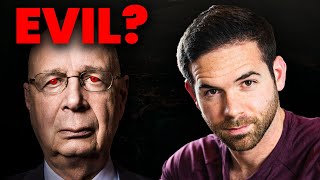
Ryan Daniel Moran (Capitalism.com) examines and largely debunks popular conspiracy-style claims about the World Economic Forum (WEF)—especially the slogan "you will own nothing and be happy." Moran traces that phrase to a 2016 fictional Forbes piece by Danish MP Ida Auken and to a 2016 WEF video that presented speculative predictions (not policy). He contrasts those sources with the UN Agenda 2030 language affirming access to ownership, notes that many WEF predictions are speculative rather than mandates, and rebuts related claims (e.g., that WEF trained Vladimir Putin or that WEF explicitly endorses Marxism). The video interleaves quotes from Sam Leeds (critic of the WEF and promoter of the "Great Reset" concern) with Moran's fact-checking and pro-capitalist commentary; it highlights subscription-economy trends and investor perspectives as alternative explanations for "own nothing" narratives.
Chapters
Could you please point me to any source in which the World Economic Forum or any member of the World Economic Forum said that their agenda is that you will own nothing and be happy. Go ahead. I'll wait. It's never been said. What?
This is a video that I've wanted to make for a long time, and I finally had the excuse to do it. Sam Leeds, who's one of my favorite real estate trainers in the world, did. Did a video recently on the World Economic Forum and how its agenda for the Great reset and the UN's Agenda 2030 is basically gonna enslave us all and prevent us from owning any property or making any money. Within seven days of Sam posting this video, it had nearly a million views and thousands of comments saying, thank you for exposing this. Thank you for speaking the truth. Now, even the mention of me making this video caused some controversy. I posted on Facebook that I was going to do a video about the World Economic Forum satisfying some of the fears. And I got a lot of pushback. People called me a communist, a defender of the socialist agenda. Some people even accused me of being a paid plant for the World Economic Forum. I mean, what better way for them to infiltrate than paying the owner of capitalism.com to defend their elitist globalist agenda? I'm exaggerating a little bit, but Sam did have a very strong opinion on the World Economic Forum. Now, I want to say up front, I like Sam. I like Sam stuff. I think he has some of the best content on real estate investing, and he's a great hero for capitalism. I've wanted to do a video about the World Economic Forum for a long time because there's a lot of really bold claims about what they stand for. And I want to make it clear that I don't like the World Economic Forum. I disagree with its founder, Klaus Schwab, on many different topics, but every time I explore the theories about the World Economic Forum, I find them very easy to debunk. So let's go through Sam's video and analyze it point by point and see if there's anything there.
The World Economic Forum are a huge global network of elitists, the super rich, and they have a world agenda which they themselves announced and said that their goal is that we all own nothing and be happy about it.
So the first claim is that the World Economic Forum has an agenda that. That you will own nothing and be happy. I have a request of Sam or anybody watching this video. Could you please point me to any source in which the World Economic Forum or Any member of the World Economic Forum said that their agenda is that you will own nothing and be happy. Go ahead, I'll wait. Actually, I'll save you the Google. It's never been said what? This idea of you'll own nothing and be Happy comes from two sources. The first was an article written in 2016 published by a member of the Danish Parliament. Her name's Ida Auchen. And she wrote a piece called welcome to 2030. And it was an insight into what she thought the world might look like in 2030. Here's the thing, it was fiction. And no, I don't mean fiction like it hasn't happened yet. I mean, there was a fake character writing in the first person about what the world looked like in 2030. It's literally a fiction piece. When I talked about this on social media, somebody said, wait a minute. So if Hitler posts Mein Kampf and it hasn't happened yet, are you calling that fiction? No, that was actually an agenda. This was a work of fiction about a fictional character in the future. It was basically Star Trek. Now, the author was asked about why she wrote this piece and she said, quote, to start a discussion about some of the pros and cons of the current technological development, end quote. This was not a proposal to. This was not a policy. This was a member of the Danish Parliament writing a fiction piece that got published in Forbes. The World Economic Forum has no policy saying that they want people to own nothing and be happy. They don't even have a statement that says they want people to own less. However, there was one other place where this idea of you'll own nothing and be happy got picked up, and it was in a Facebook video that was also published in 2016. In this video, there were eight, eight predictions that the World Economic Forum said could happen by 2030. And one of them was that you'll own nothing and be happy, which was a throwback to the article written by Ida Oken. This video also had other predictions, like 3D printing of organs, which capitalists have been all for for years. They said that humans would be preparing to go to Mars. We know where that's coming from. And that you'll eat less meat. Once again, none of these are agendas. The World Economic Forum isn't pushing for people to go to Mars. They're also not pushing for the 3D printing of organs, although that would save a lot of lives. This was simply a list of predictions of what might happen over the next decade and a half. And of course, this was four years before the global pandemic. And that changed a lot of predictions about what the world would look like. Oftentimes, the World Economic Forum gets lumped into the UN's 2030 proposal. One of the actual stated policies in the Agenda 2030 is the following. It's quote, to ensure that all men and women, in particular the poor and the vulnerable, have equal rights to economic resources as well as access to basic services, ownership and control over land and other forms of property. Now there's plenty that I do not agree with coming from the World Economic Forum and the United nations, but the access to own property is a basic capitalist right. So while there is no no stated agenda that you'll own nothing and be happy, there is a stated agenda for people to have access to ownership of land. Now Sam goes on to say in his video that the only silver lining to this idea may be that there will be a distributed economy, that you won't need to own anything because you can rent everything, which is the trend of the world. We own less real estate. Except for investors like Sam and myself, we don't buy CDs, we have Spotify, and so we have less need for stuff. But here's what he said about it.
Be happy. The only optimistic way to look at this is that everything will become subscription based and we will not need to own things. And that is why we will be happy about it. For example, I don't own any DVDs anymore. I don't own CDs. I don't own things like that because it's now not essential because the world has moved on with its agenda. Now we have subscriptions such as Netflix, such as Spotify. There also definitely seems to be an agenda that instead of owning houses that we now rent again, our whole life is rented and leased on a subscription basis. Our cars. We are being incentivized to use public transport and to go electric and to lease cars. So the world is moving away from owning what you have and leasing and renting what you have.
There's a flaw in this thinking and that is that someone still needs to own the things that are leased. For example, Sam is a property investor and sometimes rents out his properties, so he owns them. And regarding Spotify, I own Spotify stock and Netflix stock looks really, really cheap right now. I kind of want to buy some. There's always going to be ownership of anything that's privately owned. So even if there is a subscription model and everything is leased, someone still owns it. There's this idea right now that since the World Economic Forum wants us to own nothing and be happy, which we already established is bullshit. That that means that the government is going to own everything. That Klaus Schwab, an 84 year old economics nerd, is going to own everything. No, human beings, private citizens, are going to own everything, like Sam and myself, investors, like we already do. In fact, the idea of owning less and having more subscriptions is a great thing for capitalism because it means that there are more things that can be monetized as an income source. So this idea of you'll own nothing and be happy is not some socialist agenda. It's nowhere in their agenda, but it is the trend of the world, mostly because of capitalist interests. If I can turn anything that I own into an asset by renting it, that's a really good thing. I want people to not own it and rent it. And if there's something that I don't want to own, I want to be able to rent it. Not from the government, but from you, so you can make money off it.
They're calling this the Great Reset. And people are celebrating the Great Reset because they're broke, because they don't own things. And they're saying, yeah, let's just let the government and the rich just reset everything. And the Great Reset sounds like a good idea. I'm sorry, but to me, the Great Resources Reset sounds like a horrible idea. In fact, anything that's ever started with the Great in history has always ended in destruction. The Great Depression, the Great Leap Forward, the Great Recession, the Great War, the.
Great Plains, the Great Lakes, the Great Gatsby, the Great Wall of China. Look, there are plenty of pieces of the Great Reset that I don't like and plenty of policies that Klaus Schwab represents that I, I don't agree with. But there's nothing to suggest that this is a big globalist agenda trying to keep people poor. And how many times do I need to say I don't actually like the World Economic Forum? My background is in Austrian economics. My economics professor in college literally made us chant, John Maynard Keynes is the devil. If there's anyone who does not like government intervention in the economy, it's me. I just think that capitalism is the most powerful force in the world. And there is no private organization, there is no government that can ever hold it back. You can try and push it temporarily, but freedom always wins. Capitalism cannot be stopped. We as entrepreneurs are the driving force of all progress in the world. And it will always be that way. So no, I am not concerned about a private organization writing a book Called the Great Reset.
They train world leaders via their Young Global Leader program. Even Putin was trained by them.
Hold on a second. What did the World Economic Forum train Vladimir Putin in? Economics. Should we arrest his math teacher too? Who taught this guy calculus? Lock him up. Now I looked into this and I found that the World Economic Forum actually banned Vladimir Putin in 2022 because of their protest to the war in Ukraine. So? So it's not like they're somehow buddy buddy in conspiracy with Vlad. They banned him this year to support Ukraine. There's a lot of world leaders that did go through the World Economic Forum's Young Leaders program, like Justin Trudeau and Angela Merkel in Germany. This doesn't mean that it's bad or good. It just means that it influenced their minds in some ways. We can analyze what they're teaching them and that would be a fair conversation. What are these leaders of the war world learning from the World Economic Forum's Young Leaders program that might be influencing them today? That's an interesting conversation. But to simply say they trained Vladimir Putin so they must be bad doesn't make any sense.
World Economic Forum recently said that capitalism needs a dose of Marxism. No, capitalism does not need a dose of Marxism. Marxism has devastated everything it's ever touched. Just look back at history. Wake up.
Amen. Sam Leeds. Give em hell. Marxism does destroy everything. I agree completely. Except back up the tape just a few frames. You see that squiggly thing at the end of the sentence? That's called a question mark. A question mark is when you invite someone to answer the question being proposed. And I went back and read this article that was published on the World Economic Forum that analyzed if capitalism does need a dose of Karl Marx. And guess what they said no. The article says no. It says we don't need Marxism in order to succeed. Now I'm oversimplifying just a bit. What this article was actually saying is how do we use capitalist ideas in order to push forward some of the goals that Karl Marx had? Now I know that makes me cringe too. But it's a very productive and capitalist idea to say how do we take the goals set forth by some people and use capitalist product pro markets ideas in order to satisfy them? Here in the States we might say, how do we use free markets in order to drive down the cost of health care so that we don't need government health care? We can come up with all kinds of creative solutions when we're thinking about how to use capitalism to achieve those aims. This article says that Karl Marx wanted employees to be treated fairly and for there to be strong labor markets. I hate that. It sounds like I'm defending Karl Marx. Right now I want three throw up everything I've ever eaten. But this article does ask how do we use free markets and capitalism in order to have strong conditions for workers? In fact, one of the proposals put forth in this article was to get rid of the income tax and to replace it with a consumption tax, which is a very capitalist idea. Another suggestion that they put forth was to replace some government programs with a universal basic income. Now, I don't like a universal basic income. I think it puts too much power in the government's hands. But there are libertarian thinkers and free market economists who think that a universal basic income would be a step in the right direction, but only if it replaced other government programs. So once again, this is an article about how we could use capitalist ideas in order to provide strong labor markets as we move into an era of automation. It has nothing to do with bringing in more socialism.
Do not be sold the lies of the government about looking after you financially. It is a trust. Become financially independent and share the message far and wide for all to see.
Amen. Sam Leeds Here we agree on this. Financial independence is the responsibility of the individual, not of the government. We should push back against any government agenda that provides more government and less freedom for individuals. We should push back against anything that infringes upon entrepreneurship or investment. We should own property. We should own land. We should start businesses. We should become entrepreneurs that solve problems. We should be skeptical of government. We should support politicians who are anti government. We should push for lower taxes. We should try to make government as inconsequential in our lives as possible. We should be skeptical of big organizations who want to create the same policies across all countries. We should question and push against world governments or any large institution that has the power to restrict freedom. We should look into the organizations that influence our politicians and see if we align with the values that they're sharing with our global leaders. We should be independent in our thinking and we should question the media narrative. But making up conspiracies about organizations that never said what you're claiming that they said is going too far because that instills fear in everyday people's lives. That is unnecessary. The minute that our skepticism turns to fear and thus causes us to hold ourselves back or to be distrustful of people, we have now put ourselves into a victim mentality. The truth is, there are more opportunities today than there have ever been There is more access to capital or access to opportunities, more entrepreneurial ideas that you can start, more ability to invest in land or crowdsourced real estate transactions, or music royalties or the stock market or crypto. There are more opportunities for controlling your own financial future, for owning pieces of companies or projects that you believe in, than has ever existed before. So rather than instill fear in people by making up stories about organizations that don't have an agenda like you're saying, we just need to double down on our message, which is to empower individuals to create freedom. Because it's free individuals that create free societies. And free societies require less government. And less government means more entrepreneurial control, which means more creative solutions that bring the world forward. Sam, I love your work. I'd love to debate this with you sometime. Hey, I'd love to know what you thought of this video because if there's a global conspiracy, I want to know about it. But every time I go down this rabbit hole of studying the World Economic Forum or Bill Gates conspiracy theories or what a lot of my friends in Texas are doing, which is preparing for like civil war and the end of the world, I find that their arguments break down with just basic honest inquiry. If you look at the facts and and you check the sources, these are mostly nothing burgers. But if you've got resources that I need to see, post them in the comments. I'm Ryan Daniel Moran with capitalism.com I believe that entrepreneurs, freedom and capitalism are what will create the change that we want to see in this world. And there's more opportunity to do it now than ever. Thanks for watching.







