
Make $1 Million Per Year Without Any Of The Risk | Codie Sanchez
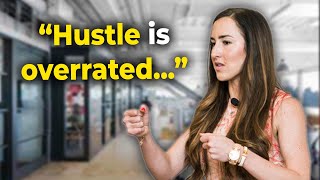
Codie Sanchez walks through a seven-step playbook for buying existing small businesses to generate $1 million annual profit in roughly a year. She uses a laundromat roll-up as a case study, showing how low-cost acquisitions and seller financing can combine into mostly passive income without building from scratch.
Questions this video answers
$67,000 per year.
$100,000 (0% down in this example).
First vending machine ≈ $3,000; about $25,000 all-in; added ≈ $50,000 in profit.
About $300,000 in profit.
Approximately $250,000 in profit.
Chapters
If you believe this, you can believe most things I'm going to tell you today. I want to get over this hustle poor nonsense mentality that you have to sleep on a cot or in a couch to make your million. I actually just think that meant that those people weren't very good buy when there's blood in the streets, even if that blood is your own, right now is the time to do it, because you're about to see a lot of stuff go on sale.
I'm the guy you go to when you want to learn how to build $1 million business and do it in 12 months or less. But Cody is the person that entrepreneurs go to when they want to acquire a million dollars in profit without building anything themselves. And yes, that is totally doable, especially right now. If you want to have a million dollar business fast, I'm your guy. I've helped people do it hundreds of times. But getting to 50 million or $100 million is a totally different playbook. And this is where I am surrounding myself with experts who are doing this. The fastest way to get to $100 million from what I've seen and what from my mentors have told me is through acquisition, meaning investing in or buying other businesses, specifically businesses that complement the one that you built to seven figures. In 2017, I sold a business for eight figures to a private equity group out of Dallas, Texas. And my hope was that I could learn from their playbook and see what they used in order to take my $10 million business and take it to 50 or $100 million. That didn't happen. Instead, what I learned was that these private equity people were no smarter than me. They did things differently, but they were no smarter than me. And they definitely didn't know my business as well as my partner. And I did. So I watched them destroy my very profitable business, which I then bought back for pennies on the dollar. But in the process, I saw how they think and I saw how they approach doing really big things. And some of the businesses that they bought or invested in did go to 50 or $100 million. And so I asked myself the question, can I do this if I'm just as smart as them and even have the entrepreneurial chops to be able to build a company that they want to buy. Can I use their playbook to, to get to where I want to go faster? I still have plenty to learn on this playbook. So I've been surrounding myself with experts and mentors who do this specifically. And one of those people is Cody Sanchez. I asked Cody to share at the Capitalism conference how she looks at businesses from a private equity lens. This is the other side of business that most YouTubers and scrappy entrepreneurs don't.
No.
And I want to give you a peek into how this playbook works because it will inspire you to think bigger and show you that the path to 50 or $100 million isn't as mysterious as we like to think.
I have this overarching truth, which if you believe this, you can believe most things I'm going to tell you today, which that is easier to buy profits than it is to build that it is way easier. Why? At contrarian thinking. I've always had this, this purpose of I don't buy into people's hopes and dreams, AKA venture capital. I buy into facts and realities, AKA private equity. And if you can believe that, then you might be interested in what the rest of this presentation is about. The second truth that these guys know that most of us don't is the exact opposite of all the books that we read early on the, you know, power of one, the one thing, I mean, the richest guys in the world tell us you must focus on one thing, right? Otherwise you won't be successful. Well, do you think the richest guy in the world, Bernard. Bernard's pretty successful? Yeah. And yet he has a holding company of more than 20 individual companies. It's all about how can you acquire, add leverage and scale and combine so that the parts are greater when they are summed. That is the goal today. The other thing that people typically get to at this point, that's awesome, Cody, but I am not Carlos Slim. I don't have access to millions of dollars or tens of millions of dollars. And so how am I going to go out there and buy these businesses? How am I going to buy profits? I can acquire a client for basically zero, theoretically, if I go do it door to door, if I go do it by cold calling. But how can I do this at scale if I don't have a ton of money? And the secret word, there is really three words and three letters called the lbo. Leveraged buyout, which is a fancy way of saying I'm going to use other people's money to buy some shit for myself and they're going to get a percentage of it, but I am not going to put my skin all the way down on it. And once you realize that there's this word LBO out there that nobody in private equity wants you to know about, and you look at any deal that's done in private equity, you'll realize, oh, wait a second. These guys didn't put a bunch of their own skin on the line. They. They didn't do what entrepreneurs today tell all of you guys to do. How many times have you heard this story? I slept on my couch for two years to pull this off. I mortgaged my house. I barely made it. I'm so tired of. We've all done it. It is hard. Don't get me wrong. Being in business means that we're all in this room a little bit. We're masochists, right? Like, it's not that fun. Actually, you know, when you run a business, it's hard to. Payroll doesn't get made all the time. Your employees are always the solution, but also the biggest problem. And we know that. But I don't want to get over this hustle porn nonsense mentality that you have to sleep on a cot or in a couch to make your millions. I actually just think that meant that those people weren't very good. Because guess what? I've accumulated a giant portfolio happily, never slept on a couch, even though my parents came from nothing and they were immigrants. So what if we could just work smarter instead of harder? That's my idea.
What Cody is saying is that it's easier to buy profits than it is to build profits. This switch really flipped for me when I saw the private equity group buy my very profitable business. With no skin in the game, they didn't use any of their own money, and they had their playbook ready to deploy into my business to hopefully grow it again. That didn't happen, but I saw that they acquired a very profitable, strong business with none of their own money. They didn't even do the work themselves. They just sat as the owner and oversaw all of these different businesses that were super profitable. And they did it without any of the risk or any of the labor themselves. What I learned from this is that it's possible to acquire income and acquire assets and acquire if you just know a different playbook. It's one playbook to take a business from 0 to 1 million. And I have that playbook. If you watch my content, you know that playbook too. If you don't watch my content, you should go grab my book on Amazon or from the library or steal it from a friend. But the playbook to go to 50 or 100 million is just different. It's not harder, it's not more work, and it's not even riskier. It's just a different set of rules. That you can learn and apply just like you would learn to build a business to your first million dollars. In this part of the talk, Cody walks through how she added $1 million in profit to a very boring business. Those laundromats. And when I saw this, I started to think how we as scrappy entrepreneurs can apply the same methodologies in the same playbook to our businesses that take our sales online.
If you believe me that tons of businesses are on sale right now, that this is going to continue, that you can grow through acquisitions faster than anything else, that you don't need a ton of cash to do it, I thought we'd walk through how we grew one particular business. We messed with some of these numbers since this. Typically my businesses have operators, and so I don't share always who the businesses are and their exact numbers because they don't love that. But how we took one business and acquired seven businesses to take it to $1 million in revenue. We're going to break that down for you and we're going to break down the profit numbers. So this is where we get a little technical. Bring out the pens, bring out the paper, and think about with each acquisition. How could you do the same exact thing in your business? Before I get into it, I want you to play this game for me. I do something called a personal P and L review. What does that mean? I want you to think about or write yourself a little to do list note after this. What is every company I spend money on personally or in my business that has a CEO I can get to, aka not a Fortune 500 company? Bezos probably isn't picking up your your phone calls. And who is also a company that you would potentially want to own if the profit is there? For instance, Matt, I'd love to own a landscaping company. Yeah, I got my landscaper over here. I've never talked to him before. He looks like he's 65. Okay, there's one. Huh? My video production team. I would love to in house and turn that liability into an asset. Maybe I should talk to the owner of that company. I spent a lot of money on PPC right now, actually. What if I could just own that agency instead of outsource it? The thing is, graphic Design is like $12,000 a month for my company. What if I just in house the graphic design? That's where I want your head going. And I'm going to show you how to do it in action. All right. You ready for that Bezos level shit? You guys ready for? Not that Bezos this bezos, this is where we're going instead. Okay. Oh, this is tiny. All right, first deal. The first deal that we did this for was a laundromat profit. $67,000 a year. Price to buy the laundromat, $100,000 money down. In this case, 0% down. But usually you'd have to go somewhere between 0 and 20%. Method Seller financing. And then you could finance down payment with investors. So this is what I call a platform acquisition. So I buy one business so that I can layer others on top of it. It's like Legos, right? You start with the big Legos on the bottom and then you think about how you can add others. This specific deal, I bought this laundromat not because I actually was thinking about it from a platform acquisition perspective, but because it was really cheap. It was opportunistic. At the time. I had some. Some spare time where I wanted to understand the laundry back in. But this was step one. You start with a platform acquisition, something that you can build on. What does that get me? That got me $67,000 in profit and one income stream. And I talk about income stream, but really this is a revenue line. You can change the two terms interchangeably. Then we do what's called an add on acquisition. So I got my Laundromat and now I'm like, huh, I'm 30 days into the business. The business is sort of motoring, but I'd like to have more revenue. How could I acquire more revenue? In this case, we added vending machines. These vending machines included soap vending machines. They included little toy vending machines. They included typical snack vending machines. This was bought all in. Our first vending machine was about $3,000. We bought it online. I think we spent about $25,000 all in on the costs of this business. And what did that then net us? That gave us another. What is that? So $50,000 in profit for $117,000 in total profit. So I have my platform acquisition. I do my first little add on acquisition after 30 days of being in business. Now we're at $117,000 in profit and two income streams. So now I'm like 90 days in, let's say. My business is sort of standardizing. I'm rocking and rolling. I'm ready to do my next acquisition. The next acquisition is called a vertical acquisition. This is I buy my competitors. Somebody's going out of business. In this case, his name is Bob. Bob is older. Austin's too. Hipster, Full right Now they roll up their jeans. I got to get out of here. I want to go out to the country. Bob says, Bob happens to run a large laundromat. This laundromat was about $300,000 in profit. So we say to Bob, hey, Bob.
First I would go to Bob and say something like, bob, credible operation. Oh my gosh, I just bought a laundromat. We don't really know what we're doing over here. We're not competitive. We're way over there. You're over here, no different. But man, kind of take you out to lunch, learn a little bit. I get to know Bob. Bob tells me his hipster feelings. I say, bob, would there ever be a world in which you'd sell at the right terms and right price and go buy your ranch out in wherever in Texas? At which point Bob says, yeah, actually, I might do that. So we acquire Bob's company $300,000 in profit, and we use seller financing. Typically for a seller financing deal, if I have cash, I'm giving them somewhere between 20 and 50% down. If I don't have cash, I'm trying to have them finance it all. Does everybody know what seller financing means? Not okay, seller finance. And mins, you take from future profits of the business to buy the business. This happens with 60% of all small business acquisitions. So if I own a business that does that, I'm going to buy for $100,000 and that business does $30,000 a year in profit. I'm going to ask the owner, hey, would you be willing to finance me this business over a five year term? I'll pay you the $100,000 in chunks over five years. Very, very normalized. All right, so I buy out Bob. Now we're at $417,000 in profit through this vertical acquisition. Next stage, asset acquisition. So now I'm like, man, I know how to run laundromats. I got two of them. Things are motoring. What if I could add more capacity to my laundromat? I don't need another one, per se, but I could probably add some more machines and then I could have more people come in here more frequently. So I go out to the market and I start looking for struggling competitors. If I. If you owned a gym company, you might go out to gyms that are struggling and say, huh, what if I was to buy up some of those bikes because you aren't using them right now. What if I was to buy up some of your barbell equipment because you're not Using them right now. So we buy machines for pennies on the dollar. And with those machines, we add another hundred k plus or 50k plus in profit to this business by stretching out how much more we could do with capacity over the year. Now we've done four acquisitions. Do any of these acquisitions feel unattainable? Do they feel super hard and onerous? If you guys can't figure out how to buy a vending machine online, like, yeah, this could seem tough. But in fact, these acquisitions do not have to feel the way we feel typically when we hear that big word. All right, now we've got our fifth one. This is what I call a satellite acquisition. So I'm basically like, okay, so I've got these laundromats. But laundromats run on average at 20 to 30% capacity. Like, my team could do more. The team at approachment that I bought, they were running at 30% capacity. Every time I buy a business, the first thing I do is do a capacity analysis. How much more work could my people machines, things be doing, and how can I get more work to them? Because I hate paying for stuff that I'm not using. And so I'm like, wait a second. We have all this extra capacity because we're only running at 30%. What if we could run all night long when nobody's doing laundry? Oh, man. Okay. If we could do that, we'd probably bring in a lot more revenue. How could we do that at a wash and fold delivery service? So what do we do? We go and buy a bunch of vans through acquisition of a company that's not doing well in the wash and fold space. We buy them out for basically the cost of their vans, plus a little bit for the owners to stay with us for six months. And with that, we've added $250,000 in profits. We acquire their machines, we acquire the owners for a period of time, and we acquire their SOPs and software. How do we do the van delivery process? That's the difference between starting a new revenue line where you're just buying the vans outright and buying another business. So you get all of that inherent knowledge. The cool part about that knowledge is it's worth zero to them because they're closing. And it's also typically valued at zero. Any businesses below 5 to definitely 1 million in revenue, you don't really value that they have systems and processes in place. You say, you guys make $100,000 a year, I'll buy you for 2 to 5x profits. That's what a small business trades for 2 to 5x profits almost every time below the 10 million mark, pretty much 100% of the time below the 5 million dollar mark. So we buy this company and we add $250,000 in profit. Now we're at $717,000 in profit. This is coming out. Let's call this like, you know, 200 days in something like that. Step 6 Horizontal acquisition. This one just really, this really did it for me. We bought a soap company. We did not buy this soap company because you econ people are clever like that. We bought a no name, brandless, no marketing soap company. And we did that because the second thing I do after a capacity analysis is I go, huh, where am I spending a ton of money? I hate spending money very cheap. I want to turn everything that is a liability into an asset. So I look at where I'm spending money and I go, oh, wait a second. Soap is one of my biggest expenses besides my lease. How could I turn that into a profit center for me? And so we buy this company that has mixers for commercial grade soap. We brand it a little bit differently, we bottle it and we cut our costs 30 to 50% within that soap line item. This adds another 200k in profit because we go, well wait a second, now we know a bunch of the other people in the area. Why don't we, and we know what the price are for soap. Why don't we undercut the, the main providers of soap that they're going to with cheaper stuff? Because we're locally based, plus there's some like goodwill between us. And so we're going to sell out into the marketplace which is how we get 200k in profit. So now we're at like 917 in profit. Step 7 hard asset real estate. This is a real book by the way, which I just think is fantastic. Could you imagine putting that on your book cover?
You know, I guess props for confidence. I hope he's not in this audience. He's like, yes, yes I am. So anyway, we buy real estate. We buy the commercial unit that we're in, the commercial building that we're in. Why? Because for your laundromat that is your most expensive cost besides water and utilities, which you can't buy. And so the most expensive is our lease. In Laundromats I typically require a 12 year lease because it's expensive to like build out all this stuff. And so we buy our commercial property which if you guys haven't been tracking the commercial real estate market, probably is going to become a really interesting play in the next one to three years. I think, arguably the commercial real estate downturn will be worse than 2008 for that market. And if you're not up to speed on that, it's worth taking a view at. Now we buy our little landlord or our little commercial strip, and we become landlords, not just for myself, but for the other properties on hand. So we then use other people's money and in the form of a mortgage, to get another 100k in profit, which takes us to a million dollars in profit inside of one year.
This is how I'm implementing what Cody shared. In my own business, I've built a $10 million business. I have a playbook for what is required to take a business from 1 million to $10 million. And a few years ago, I started a fund that invests in businesses that are doing around a million dollars and in the businesses that I'm familiar with, which is selling physical products, selling stuff online. And I know that if you pull a few levers, you can take a business from $1 million to 5 or $10 million. So instead of starting a business myself, I'm looking at how I can acquire pieces of companies that I can implement my playbook into to help those businesses grow from $1 million to five or $10 million. As a result, I've built a portfolio of businesses that are growing in the space that I'm most familiar with. And now we're looking at other acquisitions, other businesses that can complement those assets and make them even more profitable and more valuable. So I grew my portfolio with a little bit of my money, but mostly other people's money. And I'm using other people's time by investing in these entrepreneurs who. Who are following the playbook that got them to this point. And now we're working in my processes and our playbook to help them grow beyond. In my next chapter as an entrepreneur, my partner and I are looking at what other businesses we can acquire or invest in that add value to our existing portfolio that will increase their profits and increase the overall value of all of the businesses that we've invested in.
Right about now is when people are like, yeah, but the world's getting really tough. A recession's coming. It's going to be difficult out there. I'm not sure I should buy. And I always. I have this on a screensaver on my computer. It's Baron Rothschild's quote, buy when there's blood in the streets, Even if that blood is your own. There's something in equity, private equity and funds called a vintage. Guys know what a vintage is. It's basically like say you have a fund that comes out every single year. Each year is a different vintage. That's what they call it. And so the best vintages or fund years are win.
In a recession. In a recession, you do not want to invest in a private Equity Fund from 2020, 2021, 2022. Why? Valuations at all time highs, difficult to find opportunities in the market. When you actually want to be putting money to work is when everybody is fearful and running. So there's about to be blood in the streets, which means if you guys don't know how to buy businesses, if you don't know acquisitions, if you don't know deal making, I think you're fucking up right now is the time to do it. Because you're about to see a lot of stuff go on sale. Good indicator of this is what's already happening in the real estate market. You're starting to see it across the industry. That is a forward leading indicator. So the interesting part that I think most people don't realize is it's not just that a recession's coming. It's that we have a generational tectonic shift happening in the world and that's this. It's that baby boomers are retiring at all time high levels to the tune of trillions of dollars and 11.2 to 12 million small businesses being on sale. The vendors that you work with.
Those owners typically want to sell in some way, shape or form. The people who service your home in varying ways, they probably want to sell too. We are having a massive shift from the fact that baby boomers got accelerated by Covid. These baby boomers got tired after the businesses closed down. And in fact, 80% of all restaurants on Yelp that closed ever for Covid. What do they do? They shut their doors for all time. This is fascinating because how many people in here own a business? Raise your hand if you own a business. Okay, Most people. Now keep your hand up. Sorry. Keep your hand up. How many people in here would sell that business at the right price and terms? Shocking, really. If you look around the room, there's hundreds of you and in every single room, do you know what people say to Chris and I and my team? They go, well, going to no deals to be found. I'm like, motherfucker, look around. There's deals everywhere. Anybody that owns a business, if you catch them on the right day, at the right time, with the right offer, what Will they do sell? Of course, because we're masochists and running businesses is hard.
Cody says that there's going to be blood in the streets, and that's when the best time to buy businesses is that time is right now. Since interest rates are higher, the economy is a little bit slower, and a lot of the business buyers have gone away. There is a ton of of businesses that still want to exit or still need help, but the private equity bigwigs aren't available for them anymore. That brings an opportunity to people like you and me to be able to invest in or advise or acquire businesses that complement the ones that we already own. If you're watching this video and you're ready to play a much bigger game. This talk was recorded at our annual event, which is called the Capitalism conference. Our next CAPCON will be in April 2024 in Austin, Texas. And you can get on the waiting list over@capitalism.com Capcom. Cody spent a good amount of time in this presentation discussing how to do this without any money. So if you're watching this and you're like, I don't have a million dollar business and I don't have a million dollars in cash to invest in businesses. There are several other ways to have leverage in businesses that, that you can acquire or invest in.
Then people go, well, I have no cash, right? And I think in this audience, there's plenty of people with a mind capable of thinking of how to get access to capital. But if you have that sneaky little voice in the back of your head saying that you can't do acquisitions, it's too scary. I want to keep acquiring my customers one on one. I want you to talk, I want to talk to you about what I call the get rich tripod super clickbaity name. But basically what it is is there's three legs of the stool to stand on. If you don't want to use your old cash and you want to do acquisitions, I think about it like this. The highest leverage activity is cash, right? Cash is something that you, once you have some of it, you can make it work for you. How much more expensive would an hour of Jeff Bezos time be than the cash you would be willing to pay for it? It would be very, very expensive. He has a limited amount of them. So if you have money, I like to use money, or I like to use really smart deal terms so that I can use at least the seller's money to buy their business. But say that you don't have any cash. The next leg of the Stool is experience. In this room right now, there's a bunch of you that basically have businesses that operate as a glorified vendor service business. So you provide consulting for X, you provide X service for Y. This is pretty common from the group that I've looked at. What I bet you're not doing is using your experience to take distributed equity. Not straight equity, but equity that cash flows to you when you do a deal with somebody. So you could do that. You could say, hey, from now on, 10% of all clients that I take on board. When I see this little thing that I know is going to mean that that company is going to be successful, I take a little bit of equity and I take a little bit of cash instead. And we could talk later in the part where we have Q and A about how to structure that, but that's the second layer of this tool. It's going to take some of your time, so it's the least leverage. And then the third is just sweat. So for any of the young guns in the room or for people with spare time on your hands, there are people like me all over the world who do a couple different things. We pay something called a finder's fee. So if you give me a business that I want to buy, that's in my deal box, AKA the things that I buy, based on my parameters, I give you typically somewhere between 1 and 10% of the purchase price of the business. This is super normalized across the industry. People that don't have time, AKA me, also give operators equity. Right? So I all day long hire people who run my businesses for me. Those people could bring me the deal. They could just bring me their time. And for that, you could get sweat. You could get equity into a business without having to put any cash down. So either use cash highest leverage, use experience second highest leverage, or you use your time. Now, the other way to get cash are three things. The sba. How many of you guys know about SBA financing? Okay, do some perfect. The sba, getting a loan from the sba similar to a colonoscopy, just so we're honest about that. It's like doable, you know, as everybody. It happens all the time. Does it feel great? Not really. It is very detailed. They are going to ask for a bunch of information about you and the business. But SBA loans happen all the time. And the SBA or the Small Business Administration will loan you up to 90% of the purchase price of your business, which is pretty wild. They also just started for the first time Doing fractionalized loans, which means before you had to buy the whole. Whole bad boy out, you had to buy that whole business. But now let's say you want to buy part of one of your vendors, or you want to buy part of a company and the guy's still going to run it. You could actually use an SBA loan to buy 20% of the company, 30% of the company, which is totally new. The second way is seller financing. My favorite way to do deals because it happens all the time, and people on the Internet love to tell me that it never happens. And the truth of the matter is, is that if you're a business owner and you come to me like that laundromat deal, and. And I'm going to buy your business, and I tell you I'm going to buy it with future profits, most people think, why would a business owner do that? And let me tell you why. Because if there are 11 small businesses for sale inside of one calendar year, how many of them do you think sell within one year? 11 businesses. How many will sell in one year? One. One. That's right. One small business will sell. So it's the opposite of real estate. You got 10 people that are looking for a way to close a deal. Of course they're going to negotiate with you. Of course you're going to have to prove to them that you're not going to, you know, run their business into the ground and then give them no money. Of course. But this is totally doable. We do deals like this all day. The last thing is opm. So say you're in an audience like this and you want to do a deal. You want to get it done fast. So you don't want to do an SBA loan.
You.
The deal is a great deal. So it's kind of competitive, AKA they won't sell or finance you. What do you do? Raise from some friends and family and buy the business. This is a really underutilized way to do deals because how many of you guys have ever had somebody come to you and say, hey, will you invest in this business? I'm going to buy? Probably, yeah. Tons of you. So many. It's not that normal. Yet people will come to you all day and they'll do what? How many people have come to you and asked you to invest in their startup? Raise your hand if that's happened. All right, let's call it 20%. Still really low. Fascinating. People have normalized the. Let me give you money for an idea that you think might work. Maybe. Although it turns out about 90% of the time, these things fail. Horridly, they flame out and you'll never see your money. I think angel investing is a bit like taking a dollar bill, lighting it on fire, and then throwing it off a cliff. It's not a great way to make money over the long term. There are a few outlying experiences, but for the most part, you lose your first 500k. Buying a small business is the opposite of that because there's profits inherent in the business. So I think OPM or raising from friends and family is an interesting way to do it. The reason I don't do this a lot because if I love a business, do I want to give away equity? Do I want to give away a portion of that business? No way. I want to do debt, where my profits pay for me to buy the business, then I don't have to give away a percentage ownership.
I asked Cody, why do you put out all of this content when you can just add millions of dollars in profit by buying a business? Why spend time doing Instagram Reels and YouTube videos? And what she said really surprised me.
I kind of used to think that if you were on the Internet, like you didn't really do the thing, you just could only talk about it and that's how you must make all your money. And like these people were all fakes. And what is this guru thing? I had a lot of judgment and so I was not on the Internet. I mean, I posted dog pictures like everybody else, right? And then a couple things happened. One, I can't remember if it was from naval that I saw at first, but it was somewhere where somebody started explaining this phenomenon to me. Of the four types of leverage through time, the first time, the first type was labor, AKA slavery. Back in the day for the pharaohs, all the way to employment. Today, those who had labor had an unfair advantage and could create empires. Then the second was capital. When the banking statutes were enacted in the US is when the Rothschilds and the Rockefellers grew into huge titans. Why they had access to other people's money and thus could create an empire. The third type of leverage was code. That's Bezos and Musk and Gates. They had leverage in the form of an army of robots and thus were able to grow. And. And then I realized, wait a second, what's the fourth type of leverage? It's audience. And so I already have labor, I already have capital, and I already have businesses that have code in them. But I had no audience. And who actually has better deal flow? Me now or a private equity firm that has to employ millions of dollars worth of people to go out and vet deals. I talk on the Internet and get people to send them to me for nothing. And so audience was so powerful that I realized, oh, wait a second. Audience equals optionality. And I want as much optionality in the form of leverage as I can get.
On a recent video on this channel, I asked Noah Kagan how he gets some of the best advisors in the world to give him advice without paying them a ton of money. And he says that he gets advisors for almost every project that he decides to pursue. In this clip, Cody says almost the exact same same thing. And it's fascinating to see how the people who are playing a much bigger game surround themselves with experts who have done what they want to do multiple times in the past.
If you want to start something new, the question is never how. It's always who. How can you go to find the best who's in whatever your new endeavor is? You know, that's why we do so well in acquisitions, an education business, because people who are smart are like, yeah, I could learn how to do all this by myself on the Internet or I could go to a who and I could pay them. And so I use that philosophy in everything we do. We have, we have a consultant for newsletters. We had consultants for every single social platform. I hired the best experts on each social platform that I could get. I used a scorecard and a KPI tracking thing just like in every private equity firm to track week over week growth and see where people will falling down or not falling down. Every single leader inside of our business has a personal scoreboard, a company scoreboard, and a per platform score scoreboard. And so if you apply that sort of like, I jokingly call it Sauron's eye, but it's like that laser eye to your business. It's, it's hard to fail.
The formula for $1 million business is getting four products to 25 sales a day at a $30 price point. And that process takes about a year. The playbook to going much beyond that is a wildly different playbook. And the people who grow the fastest are the ones who scale through acquisition. That means creating partnerships and investments in businesses that complement the one that you've already built. If you're at the beginning of your journey and you're still building towards that first million, you can download our playbook to building million dollar businesses in 12 months or less@Capitalism.com playbook. And once you're at $1 million, my fund might consider taking the playbook that you just learned from Cody and implementing it into your business so that you can grow from 1 million to 5 or $10 million. And we'll do it as a team. Cody is smart and she's hardworking, but the thing that stands out the most is that she's just taking a different set of rules into every business that she pursues. These are the types of people that I like to surround myself with because it stretches my thinking and helps me think how I can get to where I want to go faster without figuring it all out myself. If you want to be surrounded by people like this, come join us at our next annual event, the Capitalism Conference, in April of 2024. You can get on the waiting list and see who's speaking over@capitalism.com Capcom. I'm Ryan Daniel Moran with capitalism.com thanks for watching. I'll see you next.







