
Making $100M in 1 Year and Starting Over at 50 w/ Josh Bezoni
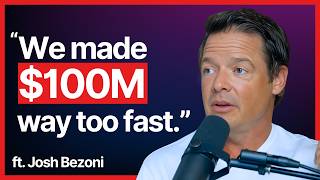
Josh Bezoni built BioTrust to $100M revenue in one year at 38, then sold for nine figures. After the sale left him empty, broken, and burned out, a magic-mushroom trip and therapy sparked a year-long reset. He now shares how he scaled through affiliate partnerships and what he learned about money, health, and starting over at 50.
Questions this video answers
May 18 (one year prior to the interview).
38 years old.
About $100 million in revenue in its first full year.
He describes selling the company for a nine‑figure sum.
He met his fiancée in November (previous year) and said they are getting married in January.
Chapters
We did 100 million in our first full year. When I was sitting at a computer and the money was wired in, I just thought, what am I going to do now? And it was almost a panic. It was like winning a gold medal and, like, no one's there to clap.
What do you think BioTrust would have been if you had been operating from that place while you were building it for 10 years?
If I could go back, I probably could have gotten the same outcome working 70% of what I did. I just knew there was more to this, more to life, than just digits on a screen. I'm more proud of the change I've made the last year than selling a company that was doing over $100 million in revenue.
Wow. If a friend came to you and they're 40, 45 and they feel like they're behind, what advice would you give to them as they reinvent the next chapter of their life?
Well, let's start with.
Josh. It's great to see you, my man. You look fantastic.
Thank you.
You look about 10 years younger since the last time I saw you. What have you been doing during this transformation? Because you. I think you've aged backwards.
I think I have. I. Wow. What have I been doing? I've been doing everything different than what I did before.
Meditating, working out, grounding in the morning.
Exercising like crazy, playing pickleball, lifting weights, reevaluating my life.
I mean, it was probably a year ago that I was coming to your house somewhat regularly to play pickleball. We fell out of touch for a bit. And then you just seem to transform physically, mentally and emotionally just in the last year. So something must have happened in that year.
So May 18, a year ago, almost to the day, which is strange, I did a large mushroom journey.
I wondered if that's where this was going to go.
Okay, so I did a magic mushroom journey and a year ago with this beautiful woman named Arya. And she's a shaman who's been doing it for 25 years. And so it's a mixture of sassafras and mushrooms. And I've done psychedelics before. I've been a big proponent. I've invested, or not invested, but contributed to psychedelic research.
So I'm a big proponent of psychedelics under the right circumstances. Not for everyone. For me, it was a huge moment of self compassion for, like, probably the first time in my life. I have a lot of compassion for other people. But the journey, if I were to summarize it, was just a lot of compassion for what I've been through and my whole journey and like accepting that and starting to it allowed me to start treating myself like I would like a good friend. So from then on I wanted to eat better, take care of myself, sleep better, work out more. It just changed everything.
Well, I usually open these conversations by asking people how they made their money. But I know enough about your story to know at 38 you start BioTrust. Before then you were, I guess you'd call your typical direct marketer or Internet marketer. So you built up relationships, you launch BioTrust at 38, you do 100 million your first year. You have an exit a couple years ago for a whack ton of money. So that's kind of the surface level resume. But what you're saying is you were having compassion for all that you've been through. Someone might look at your resume and say, what the heck have you been through? You did good, son. So could you unpack that a little bit about what that means?
A lot of high performers that I know, like good friends that are high performers and are really successful and they're out there and they're, some of them are gurus and some of them are really well known, are driven by trauma, really. And I was driven by trauma. So.
I don't know how to put it, but I would say that I wanted to prove myself and my value and my worth as a human. And I decided to do that through building businesses and acquiring money. The problem was every time I'd hit the threshold of what I thought would make me happy and have self worth, then I'd move the number. And so it was a constant game of chasing, chasing, chasing, chasing. When we finally sold the company two years ago, I remember I was sitting there in front of my computer waiting for the wire to come into my bank account. The wire comes through in my bank account. This is a large wire we sold for nine figures. And I'm just sitting there by myself. The wire comes through. The rest of my life is kind of in shambles and I just remember the money hitting and just going, wow, this is what I've chased for 25 years. And it was like winning a gold medal and like no one's there to clap. And it was a very lonely feeling. And I remember thinking, wow, I've climbed the. It's great that I accomplished this and it's amazing and I'm so grateful for it because my life is set up now financially. But at the time just thinking, wow, I've got to tackle other areas of.
Life because this isn't it did it feel empty?
It felt rewarding, but with the high, my relationship at the time was in the dumps. My physical self was in the dumps. I was like 50 pounds heavier than I am now.
I was 48 years old and probably looked 48, if not 50 or older. And.
I just knew there was more to this, more to life, than just digits on a screen. So it was really an eye opener. I think Jim Carrey talks about that too. He said he wishes everyone would make $100 million so that they could figure out that that wasn't the truth, that wasn't what they really needed.
Do you regret that in retrospect? I mean, was there enough pain there that you regretted how you got to that number? Because that was a goal. It was rewarding, you're saying. But did you look back and feel regret at what it had cost?
If I were to do it again, I wouldn't do it that way. I think I had to be. Well, I thought I had to be really self absorbed and really focused on myself all the time, focused on my business. I let relationships suffer. I let my health suffer. I'm kind of a one track guy. And so I go all in on one thing. And I'm not good at multitasking. So I wasn't keeping my health up, my relationships up. It was just all business, business, business. I would wake up and work until I woke up, until I went to bed at night. I mean, I was always working. I go on vacation. I was always working. I still had some fun, of course, through, through life, but I, I would, I do it completely different.
What would you do different if you were doing it again?
I would, I would balance things more. I would appreciate friendships more, I would appreciate relationships more, family more.
Myself more just, I mean, take care of myself, do with. I was in a nutrition company selling nutrition products. Overweight and unhealthy. I mean, that contrast is hard to imagine now.
So here's the rub, Josh is.
Most people who talk about balance talk about it after they've made a whack ton of money.
Yeah, right.
And so this is kind of cliche. You sell a company for nine figures and then you say, I wish I had more balance. But Logan Karate was here on the podcast and at our last event and said the same thing. He has a $200 million a year company, but he wishes that he had had more balance. And.
I just wonder, can you like, can you get to that level with balance or is that a necessary sacrifice that then you have to overcorrect for later. What is your opinion on that?
I think you have to go all in on the business and you have to sacrifice to make it work. But I think you don't have to go to extremes because I have an addictive personality. So for me, I was working for work's sake, for example. So if I could go back, I probably could have gotten the same outcome working 70% of what I did. A lot of times I was just working on projects and things that I didn't need to. But in my mind, I always had to be moving. I always had to be running. I always had to, you know, I didn't want to sit quiet with my own thoughts. And so work was kind of a.
Distraction of the thoughts that you wanted to avoid.
Yes.
I can relate to that.
Yeah. And then when I'd have emotions, like a lot of anxiety from overworking or I would eat the emotions, I wasn't tracking what I was eating. I was just eating lots of carbs. Then I wasn't missing workouts. And so again, it's a weird situation when you're running a health company, a nutrition company, and you're overweight and not feeling good about yourself. I felt like I was a fraud at times.
Yeah.
Yeah.
I want to tell you a quick story about when I knew that I wanted to be closer to you. So it was my 30th birthday. So six years ago. Six and a half years ago.
Right.
And I posted something on Facebook. I was turning 30 and I said, I'm the oldest I've ever been because we always are. For everyone who is over 30, what do you wish you had known? Or how young do you think 30 is? And I was just looking for advice from people who had more life experience than me. And I don't remember what anybody said except you.
Okay.
And you said, 30 is just the start. I didn't start BioTrust until I was 38. You got lots of time.
Yeah.
And that was such a eye opener for me because to think that, oh, in eight years I could start the thing that takes me to where I want to go. I've still got time. So I was hoping you could just talk about starting the company at 38. Because most of the entrepreneurial world thinks that you're 30 or under when you start the thing that makes you rich. You were 38 when you started the thing, sold it 10 years later, and now it feels like you're in this brand new chapter where you look happier and healthier and more fulfilled than I have ever seen you So I want to unpack these different chapters, but start me at the chapter 38.
38.
Did you feel young at 38?
I felt so old. I felt like I was way behind. I felt like I had screwed up because right before 38 I lived in Denver and I had a different company. And the company at the time was doing 30 million a year. And then if you remember in 2009, the real estate market crashed in, especially in Denver. And there's all kinds of challenges in the company. And the way we did business dried up certain marketing channels and it was a mess. And that company almost ran it into the ground. Like I went from a 30 some million dollar company to like nosedive the thing. And that was after working from. I started my first company when I was 22, 23. And so I'd been working at this for 15 years and it basically evaporated. And so I moved to Austin to start over. And so that was 38. I was at a real low, especially financially, and I thought I'd just blow in all these years of building equity in a company that I thought I would sell and didn't. And so I came to Austin at 38, had a conference at Lake Travis, invited Tim Ferriss to speak. He was a good friend and he.
Was like nobody at the time.
He'd come out with a four hour body around that time.
Oh, okay.
So he'd already come out with four hour Workplace.
Well, didn't you meet Tim at some event and he said he was thinking about writing a time management book before.
The four hour work week. I had Tim at Jannik Silver's event, Underground event. And he's the only one. Well, one of the only people that came up afterwards to talk to me. And I said, what are you doing? What are you working on? He goes, oh, I had this like vagabond time management type, new age. Not new age, but a book on time management, how to live your life. And I go, I try to talk him out of it, right? I go, oh, time management. I don't, I don't know if that's. This is a tough category. And this lady was like the four hour Work week, which was a bestseller, so don't ever listen to me on advice about books. But I had the conference and I met Joel, my business partner, and I met all these affiliates. And from that conference is how BioTrust just exploded. And we did 100 million in revenue the first year. So my mindset at 38, to take it back to the original question was I was kind of defeated. And I was looking for a.
Phoenix rising, so to speak, to resurrect my failed business career.
So you felt like you were behind, and then the next year you do $100 million in revenue. Weren't you deliriously excited at that point?
Wow. Thinking back, we did 100 million in our first full year of business. It took some time to prepare for it, and we were elated. But we also had a tiger by the tail. I mean, it was insane building a company that quickly. We hired over a hundred.
It doesn't happen even now, especially not 12 years ago. That doesn't happen.
Well. Well, it was easier then because the competition was so much less. There wasn't all these organifiers out there and all these other products out there. It was a lot less, especially with affiliates. And the affiliate market was ripe for, you know, for that type of company. And so it was the right place, right time for the products. But it was amazing. It was amazing, but it was. I didn't appreciate it at the time, honestly. We were just working so hard. I mean, Joel and I had a standing meeting at two in the morning, like, every day.
Oh, my goodness.
So we were working like dogs. And it was awesome. It was great.
How. I mean, I know the company went through its highs and lows over the next couple of years, but did that hundred million, did that stay. Did that grow? Did you dip under? Where did it kind of land? You had this rocket ship up, but what was the kind of trajectory and ups and downs from there?
So the ups and. Well, I went to 100 million and then we kind of kept it there. We're growing maybe 5% a year. We grew too quickly. We should have grown like 20 million the first year, and then 40 and then 60 and then 80 and then 100 and sold it. Because the trajectory would have looked like steady growth. Instead, we went to like 100 million and then like 105, 100, 610, 130. You know, it was. It was a lot slower than we had a big dip, and then we had to build it back. So we grew too quickly, in retrospect, to exit a company. It would have been better if we would have grown more slowly.
Yeah. I mean, when you have that type of a rocket ship up, you don't have the experience yet to be able to withstand that. What do you do to hire below you in order to solidify that? That's obviously really exciting and also overwhelming at the same time because you've never done this before. It sounds like the relationships that you built at this event. And relationships overall were a really vital part of that growth and sustaining that growth.
Yes.
So going deep with the relationships that you have sounds like that was key. Could you talk a little bit about why that was so important?
Well, we made relationships with all these people that had big email lists, that had like million people email lists. And so they all sold content, health content. So we approached them and said, we'll be your backend supplement company and here's all the things we're doing right, with the scientific testing and everything. And so when we did that deal, it's almost like nowadays when people do deals and they bring on a social media star or celebrity that's got a big platform, Influencer. Influencer. To help grow their company. We did that, but with people that had big email lists and we got like 50 of the biggest ones in the country. And so it's like we had 50 huge influencers and we could track everything through email. And so, I mean, that was the secret to it, honestly.
So was the intent of that event to bring bring on partnerships for that company was that you throw this cool event and you're introducing the idea that you're looking for partnerships for this company and casting the vision?
We didn't do that at all. So I had this event and my whole goal was just to meet people in the ebook space because Joel was doing $10 million a year in ebooks with one part time employee. And I'm like, I gotta figure this out. Because before that I had supplement companies with dozens of employees and all these moving parts. So, so the whole goal was to learn how to do the ebook business. And so I went there and met all these ebook people that were selling all this, are making all this revenue with ebooks, trying to learn their model and just meet all of them. And then I learned about the launches they were doing. And then Joel and I, like a year later I said to Joel, then I pitched Joel on doing a supplement company. Cause he and I launched an ebook together and it did like a million dollars in revenue in like four or five days. And then we said, well, what if we did this with supplements? And then we did it with supplements. And the first product we sold was like a nutrition shake or a protein shake. And I think it did like 2 million in revenue in the first week. And we were like, oh my gosh, we're onto something here.
So there's two key points that I'm hearing you say. One is how vital the relationships were with people who had already built platforms which is still true today. And I still think that all the influencers who are on Instagram that don't have email lists are not nearly as impactful as the people that have really responsive email lists. But the other thing is, once you attached a physical product to the audience, that was the thing where you started to build equity value. And that's different than trying to monetize in the short term of selling a course or a book. It's great cash flow, but you're not building this rocket ship that ends up selling for nine figures. So those relationships are really important. And then building something that was real, that all of these relationships could promote, it sounds like that was kind of the magic formula.
Yeah. And convincing Joel that we could build a company that we could then sell and we could, you know, have a, have a really valuable asset. Because I worked for a guy named Bill Phillips before.
That's right.
And he sold EAs, which is a company. He wrote a book called Body for Life. He sold eas, which had Myoplex, the first company with creatine monohydrate. He sold it for like altogether like half a billion dollars. And so when I left eas, I'm thinking, I've got to, you know, supplements is where it's at. And building a brand and selling it where it's at. So that was the goal. It just took me 20 some years to do it.
As Josh was talking here, I noticed that he prioritized two things that completely changed his financial future. And it was deep relationships with people who have influence and audience, and it was launching a brand. Does that sound familiar? Does that sound familiar to my thesis of what I share with you guys and how I structure the companies that I start and invest in? Josh built deep relationships with people who had influence at that time. It was bloggers and email lists. And he started a physical product brand around those influencers, around those audiences. That is still true to this day. If you build relationships with people who have the distribution and you build a brand that you're proud of, it is still possible to build a multimillion dollar business in a very short window of time. If you want to see my playbook for how we do this, go over to capitalism.com playbook. That's a free course and list of resources that'll help you get started. So you have this Great run with BioTrust and with your partner, Joel, you have your exit. And then there's this two year gap before it seems like you went through this personal revelation. Right. And are you 50 now?
Yeah.
You look great, man.
Almost 51. Great work. Thank you.
So the two years in between you mentioned that your life felt like it was in shambles.
Yeah.
What was going on?
Relationship fell apart. That I'd been in for 17 years. That was tough. That was really tough.
Not really knowing how I work or why I do what I do. Just mentally and emotionally, not really ever. Unpacking that and like understanding, you know, why I work so much, why am I workaholic, why I have such an addictive personality, what's my attachment style? I didn't know any of that.
Did you leave operations as soon as you exited?
Yeah.
So there's this void, huge void. You're used to working 12 to 16 hours a day.
Huge void. So I talked to Tim Ferriss after I sold the company.
He's the time management guy.
Time management guy, Tim, a lot more than that now. And he goes, whatever you do, don't do anything for six months. He goes to the best advice I can give you, he goes, don't buy anything. Don't start a new company. Don't do anything for six months. So what did I do? I started a new company and I started buying, investing in things. I did everything Tim told me not to do. And I should have listened to Tim because.
I was so used to working that I just couldn't shut it off. I literally could not shut it off. So right away I'm starting a new company. I couldn't do it in supplements because I'm non compete. So I go into food, right. So then investing in food companies and all these things, which is fine, but I should have just done like a work detox technology detox. Worked on myself. I didn't, I just went right back to it, which was like the worst thing I honestly could have done.
Why, why is that the case? Why is going right back into work?
It's almost like running a marathon and then when you're done and you win the race and then you, you like take a drink of water and then you start running another marathon. It's like everything needs time to chill out and calm down and figure out what's next and what's, what's truth for you, what's real for you. And I just got lost in the work shuffle and couldn't operate without it. I was just, I was actually addicted to like working 12, 16 hour days.
It's very reminiscent of when I had my exit. I was, I was 29 and I just started putting, I'll just put a little money here and a Little money here and I'll start this thing over here. And all of a sudden I've got money all over the place and I'm back on the hamster wheel of working really hard. And I had to get crushed in order to even realize that this was a problem. So did you experience something similar where the investments didn't go the way that you wanted or there was something else in your life that got your attention? What had to happen for you to have this awareness? Obviously the pile of money didn't give you that awareness, but you have it now. So where did the awareness come in?
I really think it was when I stopped running so much and I was just uncomfortable sitting with myself.
That was tough. The relationship ending also showed me a lot of things that I needed to work on just personally, like just being comfortable with myself not working all the time, unpacking my past, you know.
I.
Had to look at myself physically, like going to get blood work done and everything. And see my cholesterol is really high. My body fats at one point was like 30 some percent.
It was just not a good scene overall. So I had a lot of money, my relationships were in shambles and my relationship with myself was in shambles, honestly. And my health was bad and it was just not a good scene besides the financial aspect. So all of that hit and I started working through things and I just got honest with myself. Like I took a self, like a real self assessment and I had friends also that were there with me, helping me. And I'm like, I. I just have to change all this stuff. So I started working on myself like I was a business is the best way I would describe it. And so then I did psychedelics that helped like drop the shield. And I could really see myself and helped. I had help integrating that with like therapists.
Looked at my body, got, got help with that, got all my measurements figured out. I've got to change all this stuff. Also, side note, I met Mike Tyson at an event.
I have no idea where this is going.
Mike Tyson at one point was £300 in the hangover movies. Do you remember that?
Yeah, of course.
And his life was destructive. He was a destructive person. He was out of control. And I talked to him and he said he did bufo 5 meo dmt multiple times and it changed his life, right? And at that time he's in great, he got back in great shape and he's going to fight again soon, right? And actually Mike Tyson at that time, I met him at the same time I'm like, wow, he looks completely different. I'm like, I could have a resurrection like this. I could have a rebirth like this by meeting Mike Tyson. I'm like, I'm going to be 50. There's no better time to do it. If I don't do it before 50, I'm never going to do it.
So it's funny. It's funny that Mike Tyson was the. He was the punch in the face that got your attention, because I'm fascinated by these stories of people who resurrect and they're older than me, because I know the internal thoughts I have, which is, I'm behind, nothing's working. I'll never find X, Y, or Z. Whether that is money or joy or a partner or whatever it is. Those stories come up for me. And then I see people like you, who are 10 years my senior, and you're talking about a new start. You're talking about a resurrection.
Yeah.
My friend Tom Burns, who has been on the podcast, talks about starting new companies in his 60s. And I look at that, and I go. It sort of reframes how I think about time. So what did that meeting with Mike Tyson do to your brain in terms of thinking about a next chapter or the time you have for a resurrection?
Yeah.
How did that frame it for you?
I just remember watching him, and he was in terrible shape. And one time I was at the Hard Rock Cafe or the Hard Rock Hotel in Vegas, and it was when Mike Tyson was at his meanest, right? And I remember walking up to him to get, like, I was gonna ask him for an autograph, and he looked at me like he was gonna punch me in the face. And I turned around, right? And I thought. And. But I met him again, and he was. He'd gone to £300, and he'd gone through this hell. His life was hell. And then when I met him, he was jovial and happy and in good shape again. And I'm just like, mike Tyson is the ultimate, just, like, animal. He's like a caged pit bull. If this guy can make massive changes, like, what did he possibly do? And then I think I saw an interview with him and Tony Robbins, and he went into detail about how he changed and his thought process. And he's not even the same guy anymore. And so it was just inspiration seeing somebody that was like, the ultimate destructive human. He was made to be destructive all of a sudden. Be this compassionate human now. And just watching that trans transformation really inspired me.
What did you see in Mike Tyson 2.0? That was inspiring for you. Like what character traits did you see where you said, I want more of that or I want to transform into that?
I think it's just self compassion. I think.
To take care of yourself and want to eat right and be healthy, you have to have compassion for yourself. You have to like yourself. You have to want better for yourself. And there's times in my life I honestly just didn't like myself. And I think a lot of people have that voice in their head. It's their parents or it's how they grew up just saying, you're not enough. You're way behind. You know, don't even worry about getting in shape because you're just going to quit. It's not going to last. You know, I just had to reprogram myself and my thinking. So I really started to become aware of my thoughts and, and my inner critic and what I was saying to myself. And a lot of times I would start interrupting my thoughts out loud. It sounds crazy, but if I hear my inner critic say something to me like, you're overweight, you're 50. Don't even try to get back in shape. I'd go, bullshit. Out loud. I go, bullshit, I'm getting back in shape. But I'd say it out loud to interrupt that negative pattern. And I just started doing things like that. And doing mushrooms actually cleared out a lot of that old energy too. Like I saw myself in a completely different light. And it just gave me so much compassion. I did. I just wanted to get routine and I wanted to take care of myself. And then when I was doing that, I would go out every morning and this was one of my keys. It's the strangest key to my physical transformation is I would go outside under this big tree in my yard and I would go out there barefoot and I would do this grounding like on the earth they talk about. The earth has this magnetic aspect to it. And I don't know if this is true or not.
I don't know if it's true or not, but I have a ground. I've had a grounding pad on my bed for. Since I was in college. Yeah, I don't know if it's true.
Or not, but getting out in nature and I would sit out there and I would do some basic yoga stuff and I would do like Wim Hof breathing in the morning. And then I would do Tony. If you Google Tony Robbins prime or YouTube, Tony Robbins priming, he has this priming exercise. We do this breath work and you do like three things you're grateful for.
Three prayers for people, and then three things that you want to occur in your life and imagine as if they've already happened. Right. So I would go under this tree in my yard, like, this sounds very awesome of you, James in the sun. And I would literally do this Tony Robbins priming exercise. And some of my friends would see me sometimes and they'd be like, what are you doing? I'm like, just, I don't know, man. It just feels, it feels right. But at the time I was actually wanting a partnership to come in. And I'm engaged now. We're getting married in January.
Congratulations.
And I was really specific on what I wanted. And when she showed up, I knew it like right away. We got engaged in three months and I would have proposed earlier. I just couldn't get the ring.
We just knew it right away. And at that time too, I kept seeing my physical body and what I wanted it to look like. And I used to be in really good shape. I used to be like into bodybuilding and stuff when I was a teenager. So I knew how to do it. I just couldn't get myself to do it anymore. And so that helped a lot. It was like I was reprogramming myself every day.
So you're touching on where the gap is in my understanding of this idea of I think all of us want a great body, want a great relationship, want certain finances. And I've experienced this where sometimes you just can't get yourself to do it. And the temptation is to understand past trauma that makes you not want to work out. Sometimes that's helpful, but sometimes it just seems like I'm exhausted from working or I just have these thoughts in my head that are self defeating. And once you have a nine figure exit, it can be real easy to be lazy. It can be real tempting to just say, I've made it, I'm done. So it sounds like it started for you of taking inventory of what you wanted to be different. But then what? How did you overcome that resistance of I'm going to build, I want to build another, a new life at 50. But you have 50 years of habits behind you.
I think I was scared. I think the fear pushed me forward because I have parents who are now in their 80s and watching them in their 80s, like they have back problems and they're not getting around so well. And so watching my parents scares me because it's like I'm going to be heading there, I've got to take care of myself also. I Want to have a family. Like I'm gonna, we're gonna have children, right? And so that's a big motivator. Like I want to be around for my kids, I want to be able to play with them. I don't want to be the dad who can barely bend over and tie his shoes, right? So that was a motivator. The age, turning 50 was a huge motivator for me because I'm like, if I don't change something now, I could be in really bad shape at 70, you know, I'm at 30 some percent body fat and 215 pounds and at that time and I'm like, this is, this is not going in a good direction.
So how do you envision your 75 year old self now?
So the other day I was in Maui and I was playing pickleball with this guy and he was kicking my butt, right? And I go, how old are you? Because I'm 73. And he goes, I'm going to go wing foil after this. And he gets, and then we get done, he gets on a bike and drives away. And I'm like, that's it, that's what I want to be. I want to get on my bicycle, I want to go wing foil. I want to play pickleball with people that are much younger than me. And it reminds me, there's a study I saw, it was on Instagram or something and they talked to these 70 year old guys, right? I'll probably get this all wrong if someone looks it up, but they put them in like a campus, these 70 year old men and said 30 years. Act like it's 20 or 30 years earlier. So you're 40 years old, right? And everything on the walls was from 40 years ago. All the TV shows were 40 years ago. Everything was the music, they're playing the music, everything. And they did their blood tests, like all their testosterone went up and their cortisol and their age markers changed after like two or three weeks in this environment. So it's, it's really a lot. I think it's a lot in your mind. So I, in my mind, I'm 35. I hang out with people that play pickleball that are 35. My girlfriend's fiance's younger. I just want to be around younger people and convince myself I'm 35 so that I don't. Because if I before I'd convinced myself that I was like over like 40, something was over the hill and I couldn't make any of these changes. And it didn't serve me. So. So my story now is that I'm younger than I am and it just plays for me.
Well, Dan Sullivan says the same thing. Dan Sullivan's almost 80.
Is he really now?
Yeah. And he says that, you know, he's setting 20 year goals.
That sounds like Dan.
And he says the secret to staying, you know, vigor, vigorous is he loves to hang out with people who are in their 20s and 30s, and he acts and feels like he is one of their peers. And I sat down with lunch for him a couple of times, and we're just chatting it up like we're old homies. Right. In my mind, I'm like, I'm just sitting at the feet of an elder.
Right.
But in his mind, he's just eyes wide, having a conversation with all the young lingo.
He's dropping the young lingo on you.
He's saying, no cap that, no cap that. And he's just, you know, acting like everybody else in the room that are 30 years his junior.
Yeah.
And I think there's something to that. Even if it is as simple as a reference point. That idea of you're the five average of the five people you hang out with, you become more like them. You adopt the thoughts and the habits and the behaviors. And it sounds like you've started to construct your life for that intentionally because you want to have the life of a 35 year old when you are 65, 75 and older. Is that, is that a fair summary?
Yeah. Yeah. And I'm having a lot of fun right now too, because I feel like I didn't get to have so much fun when I was running companies. And so it probably bothers some people that watch my Instagram because all I do is like, surf, play pickleball, travel, hang out with my fiance.
Everyone on the boat is hot.
Everybody on the boat's attractive. Yeah. All my, the couples we hang out with, it's just, it's a lot of fun and they're, they're really good people.
But I'm kind of doing that intentionally because I have a lot of friends who are in the dumps and they have lives that they're not happy with. I'm trying to encourage them to, like, hey, change something. It's hard, but you got to change something.
So let's talk about that. I want to talk about resurrecting a life that you're unhappy with. Whether you have resources or not, Whether you are 25 or 55, you've been all over that spectrum. So would you say that you have a process for that reinvention or that resurrection. Or if a friend came to you and they're 40, 45, and they feel like they're behind, what advice would you give to them as they reinvent the next chapter of their life?
Well, let's start with physically. Let's start with. With the body. I would say step one is get blood work done. There's all kinds of blood works. Just see where your testosterone's at, see where your vitamin D levels are at. Just do a comprehensive blood work, and it'll probably be pretty shocking for most people, their triglycerides will be out of whack. You know, it's just. You got to start there so you know where you're starting. And then you've got to get help from someone that has done this to get your nutrition, your supplements in order, your food in order to. So that you can change that blood work and have real measurable things that you can look at. Right. And so we've both gone with pyron before. Yep. Dr. Dan, I. Dr. Dan Fountain Life, I just joined recently, is a Tony Robbins company for longevity. So I'm still doing both of those, but I get blood work done all the time. I look at it, I measure it, I change food intake, I change supplements and watch it and measure things.
So the first thing that you would encourage someone to transform is physically.
I think physically, because kind of where the body goes, the mind follows, and it gives you something set to work on. And you can see measurable changes, like in the mirror and on the scale. For me, that was the biggest thing. And then I think my mind followed, but I had to do something physically, because with your mind, you can't really get these measurements. You know, it's hard to say, oh, I'm thinking more positive. That's great. Or I'm not so hard on myself. I have more compassion for myself, or I'm being nicer to people or.
That's not quantitative.
It's not quantitative. Yeah.
Well, what's. What's striking me about what you're saying is that for you, the physical body was an area that you had neglected. And so once you started seeing progress, you saw that change was possible.
Yeah.
You start getting excited about the progress. And for most people, that is the case for most people, the thing they've neglected the most is their body.
Yeah.
You and I started as entrepreneurs early, but one of the things that I talk to even older entrepreneurs when they're starting is one of the pieces of advice I give them is start putting $500 into an S and P index fund every month because they'll get addicted to the Progress. And over 30 years, that becomes a million dollars. But as soon as they just have the plan, they can see eventually, even if I fail at everything else, I at least have this million dollar plan that I'm following. Now let's talk about making it happen faster. Now let's talk about you're addicted to the progress. Now it's gonna go somewhere. How do we make this happen a lot faster? And the way that I'm hearing you describe your physical transformation was kind of similar, was you looked under the hood, you didn't like what you saw, and now you can get addicted to the progress of going in a direction that says I can change, I do have agency, I do have control over my life. What else can I change? Yeah, is, I mean, am I understanding this correctly?
Yeah. Start with my body. And then as that went along, I started seeing the scale move, body fat percentage go down. Started having friends compliment me, people saying I look younger, which is very addictive. If you get compliments, it's great, especially if you haven't got compliments in 20 years, you know.
And then I started to unpack other areas. So like with relationships, I. I had a blank slate. I was single and I could. I was really conscious about what I wanted to do for a relationship. And so I just really took inventory of what didn't work in the past with relationships, with my own behaviors and other people that I dated and took inventory of that and just made a list, simple list on a piece of paper of what I wanted in a partner. Someone who's truthful, someone who wants to improve and change, someone who is kind, someone who's beautiful to me, someone who is supportive. And then I looked at myself and said, in order to attract that person, what do I have to become? And I'm like, I'm probably not going to get that person 40 pounds overweight. Just being honest that just know with my own confidence level and just the type of person that I want to attract. So I'm going to have to change that. I can't be self absorbed like I have in past relationships where things are more about me and my needs. I have to be become someone who like wants to support someone else and be an equal in the relationship. I need to be, I need to be kind, I need to be thoughtful. And for younger people, trying to find someone, you have to have, you have to be, you have to have an interesting story. You have to be excited about something. If you want to attract like a high value person, you know, you have to be. You don't have to be building a company, but you have to have something you're passionate about. So many people just don't have a lot of passion.
You have to have direction and you have to be up to something.
Yeah. Something you're passionate about. Most people don't care what you're doing if you're just really passionate about it and you're chasing something and you have. You can present this vision of the future to someone that you join me. This is where we're going. You know, a lot of people are like, join me and we're going to sit on the couch and play video games and get drunk on the weekends. And that's not very enticing, you know, so you have to become a person that is doing things. So when I met my current fiance, Mattie, we met playing pickleball and I'm building a pickleball facility in Austin, building a pickleball facility in Maui called Aloha Pickleball. And in Austin it's called Rush pickleball. And she's like a 5.0 semi pro player. And we had something to talk about right away and I'm doing something exciting and I live an exciting life that I built consciously. And we both want children. And I expressed that to her because I knew what I wanted. So many people, I think, just don't know what they want either. So just getting clear in my mind, like where I'm going, what I want to do, and I'm excited about it, goes a long way with meeting a partner that, you know, shares those same views and values.
Was there a period after the exit that you didn't know what you wanted?
Completely lost. When I was sitting at a computer and the money was wired in, I just thought, what am I going to do now? And it was almost a panic. Instead of being like a celebration, it was almost a panic.
I can relate to that feeling.
Yeah. It was like, what do I do now? Because my whole identity was built on I'm an entrepreneur who makes money and that I build things and now I don't have to do that and I don't know who I am without that. And so I had to kind of let that go. I started a company, another company. I finally let that go and I just had to start at ground zero and be like, okay, my 50th birthday is coming up. Who do I want to be? And let's just start putting the building blocks in place for this plan.
I'm always curious when someone at 50 resets who they want to be or become, is that based on the data that you have up to this point, or is it more tapping into what you wanted when you were 10?
That's a good question. I think it's both. At 10, I just wanted to play pickleball.
You knew what pickleball was when you were 10?
You know what's funny? In high school. So I went to high school. I graduated high school in 1992, and we played pickleball every winter. What, in Iowa? Our PE Teacher knew about pickleball somehow, and so we'd go in the gym.
Okay, so it's in your blood.
It played pickleball. It's crazy, but, yeah, I digress on that one. But what was the question again?
So is what you want now based more on the data that you've gathered over 25 years, or is it more tapping into who you were when you were a kid? Because they're different. When I play with that know based on the day that I have, I think about growing what I have or an experience that I want to have. But at 10, it's. I think about what I wanted to be when I was a kid, and it's. It's wildly different. They're both exciting, but they're very different data points. I'm curious what you indexed for.
I think it's a combination of it. I think there's a lot of fun I wanted to have as a child, and so I brought that forward. But the kind of person I wanted to be, I don't think I had great examples all the time as a child, so I kind of had to solidify that in my mind, like who I wanted to be. I want to be a good friend. I want to be honest. I want to be trustworthy. I want to be fun. I want to be, you know, diligent. You know, just all these characteristics and it's. Those are hard to measure, though.
Yeah.
So, yeah, it's a lot of journaling, but.
But it's. But it's also. It's that be. Do have idea of you. You got the stuff.
Yeah.
Right. You had the toys and the house. The houses. You had the stuff on paper, but you weren't happy with what you were doing or who you were underneath. And it seems like now you flipped it and your focus has been more on who do I want to be. And as a result of being that, I'll attract the person that I want to have in my life the projects that I want to have. But your rediscovery period was more about who you wanted to be. I did not expect you to have that answer, but that's what I'm hearing as you're talking through it. Is that a correct understanding of the process, even if it wasn't conscious?
Yeah, I think it is. It wasn't conscious at the time, but it really was, who do I want to be? And I didn't like who I was. And I think there's a certain amount of suffering that has to happen for people to change. And I think I was really suffering after I sold the company, and so much so that I just. It was like a catalyst to really make massive change. And so in the last year, I've made, like, a lot of change.
So back to this question of if a friend comes to you and is. Is unhappy with their life and wants to make a change, you said, first you're looking at the physical body, what changes need to be made physically. And then it's about relationships and who's in your life. What else would you say to that person who wants to go through a transformation?
I think in the last year, I've really learned to understand myself. So.
I think I started understanding, like, attachment styles. Right, right. In relationships, like, I'm anxious. Attachment. What does that mean? And how do I respond in relationships? And then knowing that and being aware of that. So now I'm in a relationship where I have better understanding of that and can see my patterns, and I can catch myself early. If I get triggered in my mind now, I'm like, oh, I'm getting triggered because of something from my past that. And I can. I know where it comes from. So I'm like, oh, this is no big deal. I can let this pass. You know, I also look at myself differently almost sometimes from an outsider looking at me, I'm like, oh, that's interesting. Josh is really depressed today. This character I've created, Josh, is really depressed today. Why is that? What can we do to change this instead of just sitting with it? So I've done this strange emotional evaluation of myself that I do quite often now. And I think the psychedelics help see that, because I had such a wall up before that I didn't even know why I was feeling certain things, and I didn't know where it was coming from.
It gave. It gave you a reflection of what was going on and why you did the. The things that led you to this point.
Yeah.
What do you do when you Feel depressed now? Yeah, Now.
First thing is, change my state. I go work out, I walk. I do something like that to change my state. It works tremendously. The other thing is I go out in the sun, especially in the morning. The other thing is I play pickleball or surround myself with friends that are uplifting, and it's amazing if I do. And also I eat healthy food. Right. So if I don't do those things, I just get stuck in the pattern of depression or anxiety and I think I'm a prisoner to it. But now I've learned that, oh, when those things happen, I can actually take action and work myself out of them, usually pretty quickly within an hour or two.
This is.
It's very odd to hear you talking about this for me because.
My next book is called From Dad Bod to Father Figure. And the way that you're describing your transformation is eerily similar to mine where I made the money and then I looked under the hood and didn't like what was going on physically. And I could. Then I became more aware of how I got into certain relationship patterns. And I asked that question selfishly about what do you do when you get depressed? Because that has been a shadow that follows me every couple of years. And what I've noticed for myself, that sometimes I can beat my depression out of bed. So I noticed that my depression wakes up at 7:30.
So if I get up at 5:30 and I go get in a good state.
Yeah.
Whether that is going for a walk, whether that is going and doing a hard workout, doing a cold plunge, doing something hard, that gets me into a good state.
Yeah.
It's almost like I can outrun it. Like I can run faster than my depression and it gives up.
Yeah.
But if I wake up with my depression, it's like, hey, buddy, how you doing? Let's check the numbers on our computer today and let's sit here for a while.
Sit in bed on our phone for an hour.
Exactly.
Yeah.
Yeah.
And think about all that. That's not right in our life.
That's right.
How terrible. We've got it.
So this idea of changing state. I hear Tony Robbins talk about this, and it sounds like that became a priority of yours in this transformation where you're doing the priming and you're sitting under a tree and this very Austin routine. But whatever gets you into a state is probably going to be better than just sitting and waiting for the internal thoughts to come in.
Yeah. So before I would wake up and I'd get on my phone and I Instantly get anxious. So much so that I did that for so long that I would wake.
Up anxious even after the exit.
So after the exit, I was so programmed to, like, grab my phone and see what was wrong with the companies.
Oh, that's fascinating.
That softer.
It became an automatic response.
Yeah. So then I would just get anxious every morning, whether it's the weekend, and I didn't even have a company anymore. So I would wake up with, like, massive anxiety, and I would get on my phone and I would just. It was just a programmed Pavlonian dog, you know.
Yeah. Eyes open. Something's wrong.
Something's wrong. And so then I had to. I had to be like, okay, I can't get on my phone, so I'm going to go outside and I'm going to like.
Is it response now where you have a different feeling when you wake up?
Yes, very different. But it took me months to change that.
Do you wake up peaceful?
I wouldn't. I wouldn't always say always peaceful, but I. I wake up not frantic.
You know, that is possible. Okay, Possible.
And sometimes peaceful. Ye. Yeah, sometimes peaceful, but at least it's not frantic like it used to be.
This is inspiring for me because you're reminding me of some things that I know. And also internally, I'm taking inventory of a few things, and that's one of them.
Yeah, right.
Like waking up and I use my excuse. I'm checking my OURA ring data. But then 10 minutes goes by.
Yeah. And you're on your phone and you're looking.
Yeah. Now anxious.
And now I'm looking at you.
I'm waiting for a workout. Well, I work out. All right.
Yeah.
And so that prioritization of the state you're in has become a real important part of your renaissance. I'm curious how that has changed the way that you show up in your entrepreneurial career. Because before, you were operating from fear.
Yeah.
And you did good, son. I mean, you got the results. Now you're operating from a different place. And a lot of our peers will say, I don't know that I want to heal all my trauma. I don't know that I want to change because I've accomplished so much from this place of fear. Where will I get my drive if I'm not driven by that? So how has the way that you show up in your future projects, and you're doing some really cool things now. How is it. How has it shifted now that you're more aware and more in control of your state?
I think it's Just calmer. It's just more peaceful. It's like I enjoy the process instead of just being frantic while I'm doing it or I feel like I'm late or feel like I have to.
You don't feel like you're late. What were you late for?
My whole life I felt like I was late for the result.
For the result. And so now you're thinking more about.
Enjoying the process more enjoying the process for sure. Like now we get, we're doing permitting for pickleball courts. Right. And the permits get pushed back like months and we're just like, okay, there's nothing I can do about this. Right. I'm just going to enjoy the process. I have other things to work on before I'd be frantic and I'd be trying to figure out how to contact people on the permit board and blackmail them to do it earlier.
Thinking about this project is due to failure and I'm always going to be a failure.
Yeah, all that stuff would come to play, but now it's just, it's just I have friends that say I don't want to do psychedelics or do therapy because if I do, I'll lose my edge. And I'm like, oh, you have no idea what you're talking about. Because the peace of mind that you have is so valuable. Like just your own mental health and how you go through the day is so important. And it can be so much better than being driven by trauma or fear.
The way that I put it when I was at my lowest in 2022 was there's no amount of money or success that compensates for the amount of anxiety that I was feeling on a day to day basis to get to the result that I thought I wanted. Even if I got there, I probably wouldn't feel any different. And no amount of success or admiration or whatever I was seeking was going to be worth that low. Because I didn't want to wake up in the morning. That's how low I was. And it sounds like now that you've flipped it for you, that it's almost like.
Everything is extra because you can wake up in a good place.
Yeah, the energy is more channeled too. What does that mean when you do the work so you can focus on it and get it done before I had so much lost energy. So instead of being like a laser beam, the anxiety and everything would just. I would just get exhausted by the middle of the afternoon. And so like doing the work, like what I would done with psychedelics and therapy and working through These things I'm just more like focused. And I also am not just so I'm not just. It's like a rifle versus a shotgun. But before I was permeating so much energy, just losing so much energy and in anxiety and just worried about Chaotic. Yeah.
Like frantic all over the place. Frenetic. Yeah, I get that.
So people who say I'll lose my edge. Well, you might lose your frenetic edge, but you'll be able to focus in more and you'll get more done.
That lands.
Yeah.
Because I've experienced both. And when I'm in the zone from a calm place, there's just. There's just. I feel like I'm magic.
Yeah.
And even. And I'm so unattached from the result. I'm just enjoying letting the energy flow. And is what you're telling me that that state can be more of a permanent regular thing because I slip into it. Yeah, I kind of fall into it sometimes.
I think, yes, that's true. But the frenetic is addicting and I have a very addictive personality. So I get addicted to these chaotic feelings. And it's. Sometimes it also goes into past relationships where conflict and things that weren't a big deal that would become big deals. I would just, you know, it's almost like you become addicted to those feelings and those emotions. And so it's just trying to get away from all of that. All that wasted energy and being with someone and focusing on things that are just more calm.
What do you think BioTrust would have been if you had been operating from that place while you were building it for 10 years?
I think we would have built it more slowly, which would have benefited us on an exit. I think it would have been better. I think the frenetic. We have to make as much as possible fear based. Let's do 100 million the first year. Let's kill ourselves. To do it.
Was not beneficial long term. I think we could have done much better going slowly, more calmly. Those years would have been more enjoyable. It just would have been a better outcome and a better life at the time.
So financially you think that you would have sold the company for more.
Sooner.
Sooner.
Yeah. Yeah.
You would have gotten the result faster, you think?
Yeah, because we went so fast sometimes that we didn't. We weren't thinking strategically. So here's the deal. Like we got into.
My whole brain is like reorganized. I did not expect you to say that. So my. It makes so much sense. So we would not have thought we.
Had BioTrust for 10 plus years. Our goal was to sell it in four or five. We almost did. We had someone on the line to buy it. But then some, some moves that we made that weren't well thought out cost us the sale after four, four to five years. And so then we had to go on for another five years and ended up selling it for what we originally had offered five years earlier.
Wow. So. So the, the frenetic decisions that you made to get to that point.
Yeah.
Cost you the first sale and so there was another five years just to get the same amount of about the same number. That's fascinating.
Yeah. And it was five years of like heavy lifting because then we had to like redo things and because we moved too quickly and we weren't. It was just speed. I know America and everyone's like grind mentality. Get the sales at whatever cost, drive the company, sell within three years.
It's usually the wrong approach. Those are unicorn companies that can do that. The slower, steady, well thought out approaches, less frenetic, less two in the morning standing calls, less. Let's do 30 products in one year instead of let's do four really good ones. You know, that's the other thing. We had a lot of products we put so much time and effort to that weren't really that well thought out. We didn't test market them with our customers to make sure it really worked. We'd spend so much money on a dud and time on a dud, you know, on a dud product. So there's just frenetic moves when things are going too quickly. And if we were to do it again, I would go much slower.
I'm thinking about an example in my mind of a hire I made where I felt so frenetic and ready to make a decision and get it moving. Let's get progress here. So you hire the first person that looks good and then you don't properly onboard them, don't properly train them. You're not even sure if it's the right fit for at least 90 days. And.
That energy, even if it was the right hire, the energy of just throwing them into the bullpen and seeing if they work out. And I moved on to the next piece of chaos, that person's now in a situation where they're likely to fail at their job. Whereas when I show up thoughtfully about who needs to be in this role, training them well, it takes longer in the short run. And then I get part of my day and my energy and my company back to free up into the next thing, and medium long term, that wins out. That's an example of how I've seen when I'm frenetic and I'm making decisions, I'm really just destroying things. But when I'm in that calm zone, I can make anything work. It's like anything that I put that energy into is going to pan out. It's going to be okay. It's going to be progress in the right direction. And so what I'm processing as you're sharing that is that you got the results, the $100 million result, real fast, but you would have gotten the same result, even though on paper it looked like it was slower and you might have even beaten what you took home at the end of that.
Yeah, yeah, we could have done it in half the time. And that's the negative part of my brain saying, you could have done it. You had a great exit and it was amazing. But, yeah, we didn't need to push that hard. We just didn't need to. It's like an athlete that overtrains, and when you overtrain, your performance goes down considerably. Right. There's a sweet spot for all this stuff. And so when I say that I wouldn't have pushed so hard, I would have still pushed hard. I think people in their 20s and 30s, especially before they have a family, should push really hard. But there has to be, like, a limitation to it where you can recover and you're also enjoying life.
I was talking with my therapist last week where I shared with him that I realize now that in my brain there's always someone looking for a problem. I am kind of trained to look for the threat. What's going to put everything under and surprise me. What's going to Mike Tyson sucker punch me? And I clarified and said that part of my personality. I like that part of my personality. I just don't want him to run the show. When I play a game of Risk.
Three hour game of Risk, I am constantly looking at where there's threats and I love it. I love playing that game. And if I lose, I lose. But I'm like, I'm hunting the entire time and I'm enjoying the entire game. And he said to me, the difference between you playing a game of Risk and you running your life that way is at the end of the game of Risk, you box it up and you put it away. And in work, I never put it away. It's always running the show. And so that part of my personality, I want to harness that. I like that part of me. I Like running in that mode. But now I'm coming to the awareness that sometimes I need to put it away. I need to put it up on the shelf, and then I can come back and play the game again. And it will be exciting to let that part of me out rather than it running the show all the time.
Yeah. Yeah, that makes sense.
I'm curious what your relationships are like now that you've shifted this state and this energy. So you've talked about the fact that you're newly engaged. That's new. As of, you know. When. When did you guys meet?
We met November.
Okay.
So of last year. Yeah.
That, you know, floated out of the universe into your. Into your lap. What about business relationships, investments that you make? How has shifted this changed the other relationships that show up in your life?
Well, with friends. I have a friend named Emily that I've been friends with for 12 years. And she came out to visit Maddie, my fiance and I in Maui. And at the end of the four day trip, we talked to each other and said, you know what? We really didn't know each other at all for 12 years. Like, we had. We just, we never went into these really deep discussions and vulnerable discussions. And I'm like, wow. We just have a whole new level of like, friendship that I never could have reached before because before was really more shallow and like doing things and not like going in deep like, this is who I am. These are things that happen. This is what I'm struggling with in life. Before, I always saw that type of stuff as really as vulnerable, vulnerability, as weak, and I would shy away from it. And so I think a lot of relationships I have, and even the guys we play pickleball with, like afterwards, we're always talking, we're talking about business, we're talking about family, we're talking about challenges people have. And I think I'm just a much better friend, better listener, more compassionate, and entering that stage of life where I want to have help more because I've made a lot of mistakes and I can help guide people away so they don't have to go through those mistakes. Yeah. And in business, I'm not rushed like I used to be. So I'm making better decisions.
Things are delayed with pickleball court constructions. It's just not rushed and frenetic like it used to be. And so I. And the thing is, I don't have to make more money either. So I'm doing it out of joy now. So it's a different perspective. Before, I always felt like I was Behind. And so because of that, I didn't always make the best financial decisions all the time too, because you go for the quick buck sometimes instead of thinking long term. So now I'm just trying to think long term.
Do you find that you attract a different level of friendship as a result of operating from that place? I think about a guy like Richard Branson who, who has, you know, a thousand companies and he's having the time of his life always. Right. That's probably somebody who's not operating from a frenetic place.
Yeah.
I'm curious, do you find that you're attracting more of those types of relationships? Whereas when you're in that frenetic zone, all my friends are also frenetic. So it's normal.
I don't. Yeah, I think I had more, more associates when I was running companies, like people I knew, but I didn't get to spend quality time with them. And it was always about business too. And so now I think a lot of the relationships are more outside of business. It's like 90% everything but business, 10% business.
But you still feel driven?
Still feel driven. Well, I needed a couple years break. I needed a sabbatical after starting my first company when I was 23 or 4 and then selling it at 48. Like I, I said, I've worked enough in those 20 some years for like three lifetimes. Right. So that's why I'm having lots of fun now and doing things I didn't get to do. But I'm, I'm getting machine going again. You know, I'm getting, I'm getting interested in projects and business again after a couple year sabbatical. I was always doing things, but I'm, I'm locking it down a little bit more now.
I am going to ask a couple of selfish questions.
One what. I know I've said this, I kind of alluded to it, but this state that you're talking about, I have experienced that enough to know that this is true. To know that when you're operating from that place and the energy is just lined up.
I want that. But I don't have it automatically. I sort of fall into it. Sometimes it magically shows up in my life. What daily practices or what focuses would you recommend to me and people like me who want to cultivate that more often?
I would do the, I would YouTube Tony Robbins daily prime because when I do that, it sets my whole day up. I'm calm, I go, I can get into a flow and it's like magic for me. If I don't do it, I'm more frenetic all day. I don't get as much done, I don't feel grounded. I'm easily bothered by things and distracted.
So I would start the day with some type of mindful exercise like breath work, visualization. I'm not one to meditate for like 20 minutes.
Twice a day, like people do with transcendent transcendental meditation. I haven't been religious on doing that at all. But I'll do something like a 10, 15 minute prime with breathwork and visualizing what I want in the future and things like that. So that's the big one for me.
Anything else that you'd recommend for somebody like me to cultivate that clear energy?
You know, I mismanaged sleep for years. It's so important. I'm really trying to dial it in now. When I don't get enough sleep, my next day's a wreck, kind of. So sleep's super important. And then just like lifting heavy things, like working out for me gets me in that state. So after I do my morning priming, I'm great for a couple hours and then if I work out in the afternoon, then it kind of resets me and I'm good for a couple hours.
That makes sense.
My most productive times are like after priming in the morning and then after like a workout, you know, because it removes that helps remove that frenetic energy I've got inside me.
This is really helpful for me because it, it's starting to get me to see the next chapter of possibility. For me, I've done so much transformation since I really hit my low a couple years ago. And I'm really proud of who I have become in that process. But there's these little pieces where, okay, depression no longer runs my life. I'm in the best shape of my life. I'm the healthiest I've ever been. But there's still that edge that I miss that I'm chasing in some way. And I think that I can chase the calm state with frenetic energy. I know the loop that's in my brain. I can see it. But how do I channel that energy into something that gets me into a different state of being? So that's the context through which I'm asking. This is really helpful. I'd also love to hear from you.
Similar question to what I posted on Facebook when I turned 30. What do you know now, at 50, being the most fulfilled, the happiest, the most content you've ever been. What do you know now that you wish that you had known in your mid-30s?
Wow. The first thing that pops in my head is just different. It's just different mentality. Before.
I used to think everything was science and nothing was magic.
Okay.
And everything was set kind of the way it is. And now I look at everything as magic. Like either nothing's magic or everything's magic. Right. And it's a weird thing, but I look at things as just. I mean, we're in a rock spinning around the sun. Right? Like in an infinite universe. It makes zero sense. None of this shit makes any sense really. Consciousness, all this stuff. So I don't take things as seriously as I used to. And I just think of it as I'm very grateful for it. I go in and I'm really grateful for relationships, I'm grateful for the opportunities we have. Gratitude is cliche. But when you really embrace it and just think that all this is magic and a huge gift, it's changed a lot for me. I'm more compassionate with myself. I go through life differently. Things that go wrong, I know that they're going to work themselves out. And it's not just frenetic thing of trying to prove my worth to the world.
Also, if you believe everything is magic, then you can believe in anything. You can believe in possibilities and change. Yes. When I think about the science, you're calling it the science part. My reference points in the past and then projecting them forward into what I think is reasonable or possible. Right. So somebody who has never started a business before, if they don't have a reference point for success, it's really hard for them to believe in it from a science perspective. But if you believe everything is magic, then why not believe in abundance and success and things going well? And when you believe in that and you see it as a possibility, you tend to do the habits and behaviors that bring that to fruition.
Yeah. And a year ago.
My body looked completely different. My relationship was non existent at that time. Like a lot of the friends I have now weren't in the picture. And I look back and had I just looked at things practically, I would have been like, over the next year I could probably lose 10 pounds and maybe I'll start online dating. And.
Maybe, you know, I'm almost 50, it's hard to meet friends, it's hard to meet new guy friends. I could maybe meet another couple guy buddies or something. And the practicality of it is just so not fun and exciting.
That is not inspiring at all. And I'm Relating to that feeling. It's like, I mean, I guess this is possible, like, but. But I don't want to wake up in the morning when that's just like, I could get incrementally better.
Yeah. And so for me, it was like, questioning that and being like, why can't I have a completely different life in a year? And it's very strange that we're having this conversation literally a year and two days after I kind of come came to that realization that, like, what can I really accomplish in a year? How can I change this all up? Because I got to change it all up. And looking back over the last year, I'm really proud. I'm more proud of the change I've made the last year than selling a company that was doing over $100 million in revenue.
Wow.
I'm more proud to say that again. I'm more proud of the changes I've made in the last year as a man and a human than I am in building a company that sold for nine figures over 20 some years. It's been a big shift.
It's been a big shift that lands with me because.
It's fresh in my mind. But this morning, I was working with my writing team for this book I'm writing, and I shared how in.
I think it was end of 2021, early 2022, when I was just at my lowest, that I was addicted to Kratom. I was on antidepressants.
I was out of shape by my standards, and I felt completely hopeless. And my friend and mentor, Kyle Carnahan, was like, you want to change? Start getting up at 5:30 in the morning and working out. And I hated it every day. But it was like, it gave me a different level of capacity to suffer for a short time, to the point where I said, you know, I think I can. I think maybe I can come off. I can stop using Kratom. And I didn't want. I didn't want to because I didn't want to feel the discomfort of coming off of something that made me feel like it staved off my depression for a little bit. And I was so proud of the fact that I came off of that substance. I haven't felt. I felt like, you're just saying more proud of that than the company that I built and sold. Like, feeling proud. I wouldn't put it on my resume as, like, this is why you should date me. Right?
Yeah.
It's not the highlight reel. But internally, the way I feel felt. I felt more proud of that than selling a company. And then. And then it was, if I can do that, then I can come off medications, then I. I can do this. And it was. It was who I became in overcoming that low that I was in that gave me more sense of pride than anything that I had accomplished on paper.
Yeah.
Once again, I'm not. I'm not like, that's not how I introduce myself at a party. But the internal pride was night and day.
But you say you might not put that on a dating profile. Right. But it might be the thing that brings you to the person. Because that reminds me of a story. I have a good friend who we were going around the circle at my house in Maui, talking about things that we don't know about someone, because one of my friends was a commercial airline pilot and one of the youngest ones in the country. We never knew this. And he's doing different things now. And we're like, what? So I'm like, why doesn't everyone go around the circle and talk about something we don't know about? One of my friends said.
You know, I got arrested when I was 17 and for selling black tar heroin. And I was sentenced to 20 years in federal prison.
And it's like, mic drop, right? And she proceeded to tell the story of what had happened and how she ended up getting out in, like, two years. And it was just this fantastic redemption story. And now she's very successful and amazing woman, but we're all sitting there with our eyes wide open, like, oh, my God. And her husband said. And that's when she told me that story. That's when I knew I was going to marry her.
Wow.
Because his father had been in prison and always used it as an excuse of why he could never do anything in his life and why he could never be anything because he's a felon and there's no hope, and there's not even why even try. She took the opposite approach and said, I'm going to. No matter what, I'm going to be successful. It's this beautiful story of redemption. And so when you talk about. I mean, those are the things I even think about with my fiance now is like, that we share these deep things. And she says she has so much respect for how I've changed as a man because I explain who I used to be as a man. More selfish and just, you know, ego driven. And.
Now I'm compassionate and supportive and loving and willing to change and listen to other people's points of view. And that transformation is much more impressive to her than a company that I built and sold. So for what it's worth.
That's beautiful. Josh, one more selfish question. Completely different part of your brain. How did you invest the money from your exit?
Great question. So did a lot of venture capital into other companies. A lot of it's just in the stock market. A lot of it's in the stock market.
Boring index funds.
Boring index funds that, you know, hopefully double every seven years or whatever.
Pickleball courts. I love it. And also the model's really good. When you have a restaurant and bars. Part of it, a whole social atmosphere is really cool. Invest in those. Yeah. A lot of health companies. Better for you foods. So we got kind of spoiled. So the first company we invested in was Magic Spoon.
That did okay.
They had a $4 million valuation when we invested first, and now it's like $250 million valuation or something. And then the second company I invested in was Onit, owned by Joe Rogan and Aubrey Marcus, which sold to Unilever two or three years ago. So I thought all of them were going to perform like that. And it turns out it doesn't work like that. We've invested maybe 20 companies and maybe four have gone bankrupt in the last year. And other ones are holding on by a string and other ones are doing well. So, you know, we'll see how those pan out. But index funds, bonds, venture capital, pickleball courts, and some real estate stuff with.
The companies that you're investing in, how do you evaluate if something is going to be a winner or not? Because there's. There's been some deals you've brought me into.
Yeah.
I think you're partnered with Dan Fleshman and like the syndicate that raises capital for. For cool projects.
Yeah.
I'm just curious, how do you vet a deal that you feel like is good enough to bring to your friends or bring to a syndicate that you put your own money in?
Yeah.
What do you look for to know that it's worth your time, energy and money?
A whole list of things that I have like a spreadsheet on. But having gone through several of these, the jockey, so to speak, in the horse race is super important. The operator, Their experience is critical. And that's what I've learned through this process is like, if they have experience doing it and a good track record, that's vitally important. So many people have good ideas and they can raise money, but then the follow through and the implementation and the know how is just not there. Yeah. And so I've invested in good Ideas that just didn't have good implementation and they. And they failed.
Yeah. I'm thinking about a deal. I think we're both in Skinny Pasta. They've been. They've been here on the podcast. He. I just believe that he'll fight, you know, if there.
Brian will do great.
If there's. If there's a problem at Skinny, Brian's going to go to battle, and he's willing to go to battle. He is going to fight for that company to win. And so I know if that. I think I'm in for 50k on that deal. So if he loses my 50k, I'm still proud of Brian.
Yeah.
Because I saw how hard he fought. I saw the good the company did, the innovation they brought to the table, the quality of product, the quality of branding. And so even if he loses my 50k, I'm not mad at him.
Yeah.
Because. Because I saw the character and how he showed up in that business. Whereas there's. There's another business in my portfolio. That great idea. Stack deck, clear path to victory. Guy just didn't have any fighting him.
Yeah.
And so if I lose. If I lose my thing, I'm in that one for. For 50 or 60k. I'm a little, like, a little mad.
Yeah.
But also that was a really good lesson of betting on the jockey rather than the horse.
I think it comes down to that. And also in. In Brian's got the ability to raise money, and I didn't realize that that was a skill set when I was investing in these companies. Oh, interesting that. The ability of the CEO to be able to raise money and has a history and a network to raise money is crucially important because the CEOs that we have in our fund that know how to do that, like Bill Glaser from Outstanding Foods, he comes from a background of, like, raising money, and so he's able to raise money and to get through tough times. It's not an easy market to do that. A lot of companies have gone under. The revenue was good, but they just couldn't keep raising money, and so they went under. So that's a skill set I didn't really understand when I started investing.
That's really interesting. Have I told you what we're doing at the Capitalism marketplace? So this is fun. We're about six weeks out from this, but we're building a marketplace on capitalism.com where the brands and our fund or the brands that we want to support can put a listing up. On capitalism.com we're using the Same technology that Brian used for his it's skinny raise recently. And so somebody, an investor can come in, click a button, check out on stripe, fill out their accredited investor form, see their shares all on capitalism.com and now we can take one of our students that is really successful that we believe in and we can list them on the marketplace and send it out to our investor list. And so we can advocate as this bridge. And we're not doing huge, we're not doing million dollar raises, you know, we're doing six figure raises and we're. It's not a crowdfunding platform but we wanted the minimums will be a few thousand dollars so that we could create a crowdfunding like experience because it means all the difference in the world if you have 150 investors who buy your product on launch and leave a review on Amazon and tell their friends about it. It's just like it changes the game. For a business that's doing two or three million dollars that can take them to four, six, eight.
Yeah.
And so I like building that bridge between that and that's I'm, that's the thing that's really jazzing me up at work right now.
Yeah.
What is a day look like for you now, now that you're not working 16 hours a day?
Yeah, it's great. It's great. So before I would, my day would be every minute would be accounted for. Right. When I used to work in the company and now when I have like two meetings a week, I'm like, ah, I got this meeting on Thursday.
Right.
It's really changed which is, it's this nice change of pace. But I'll wake up in the morning, I'll go out and do like the priming that we talked about and just not get on my, try not to get on my phone and just go out there and just breathe and, and do some meditation. Then I'll do like red light therapy. I do red light therapy. Seems to help. There's some good science behind it. People can Google Ben Greenfield, red light therapy. He's got great articles on it. And then I'll eat and I'm usually, you know, I usually do intermittent fasting. I'll stop eating like 8 at night, 7 or 8 at night and not eat again usually until like 11am or noon the next day. I do that quite frequently. And then I'll do some work for a few hours and then I'll work out in the afternoon and I do like, I don't do heavy weights anymore. Like I'm I'm. I'm the best shape I've ever been in, but I don't do anything, like, risky. I'm not doing, like, extreme power cleans or, like, squatting and stuff.
You know what's funny is I. I've done the same transformation over the last couple years, and I'm actually getting better results.
Me, too.
My trainer is just nuts about form.
Yeah.
So I can work out with £135 instead of £250 and get better results.
Yeah. And I even do band work when I travel and stuff. This X3 workout thing that I've got, like, all.
That guy's kind of nuts. But it's a good product.
I like the product, but. Yeah. And a lot of friends swear by that it's good for their joints and stuff like that. Mixed with free weights. I got to do free weights, too. So I'll work out, and then I'm have periodic times. I eat like, four times a day. Lots of protein, veggies, you know, eat healthy. And then I'll play pickleball almost daily. And with an apple watch, I'll burn, like, over a thousand calories playing pickleball. So people are trying to transform their body. I say do some. Find something you love. Bicycling, dancing, anything that's movement, and just do it in an addictive nature. Get after it, go after it, do it all the time. Put it in your schedule if you enjoy it. Playing pickleball for me was great because you have community and lots of friends. And I'm burning 1000 calories, and I'm playing four times a week, so I'm burning like 4000, 5000 calories a week playing pickleball. And then at night, I'm spending time with my fiance and friends, and, you know, and then I have my nighttime wind down, which I get off of screens, and I, you know, do some light yoga and stretch out and don't stimulate my brain before I go to bed. And that's. That's the typical day right now.
It sounds great.
Yeah.
Sounds like a great life.
It's a good life. And I surface. Surfing's good for the soul.
Josh. This is really inspiring for me because I'm kind of in the middle of a transformation to my next chapter. And the first part of my transformation was building capacity again, having wellness again. And this sort of frames the other side of that, the moving toward. And I'd been missing that in that transformation. You know, that idea. There's the freedom from things, of moving away from things. And then there's what you pursue on the other side of it. And this has helped kind of build a bridge for me for seeing a better experience of life. This has been really fun for me. It's great to see you, my man.
Great to see you too. Take care.
Hey, everybody. Thanks for watching. I hope if nothing else, you take away from this episode that you can start fresh and create whatever life you want, regardless of what age you are. There's a member of the 1% who is 75 years old and he just launched a business and it's doing great. I mean, he is on the growth trajectory. We're super proud of you, Russ. There are people who start in their late 50s. There's people in their 20s as well. But I hope that you take away from this that it's never too late to reinvent, invent. This is why some of my closest friends are in their 50s. And yet I see them starting new projects, completely throwing out the way that they got here and starting over. And that inspires me to remember that it's not too late. I'm 36 and sometimes I feel like I'm behind. I feel like I'm not where I want to be. And I look at my friends who are in their 50s and they're completely starting over. And they have resources, but they're starting a new chapter of their life. And I hope that you feel inspired to just go for whatever it is that you want, knowing that your life can be completely different in 12 to 36 months. If you need help on the business side, that's what we do. We help entrepreneurs build million dollar businesses, get them off the ground, have multimillion dollar exits, often in a handful of years. Great place for you to start is over@capitalism.com playbook. That's where our best free resources are. I'm Ryan. Danny Ryan with capitalism.com, thanks for watching. See you next time.







