
METAVERSE MILLIONAIRES: How to build eCommerce Empires in the Web3 World.
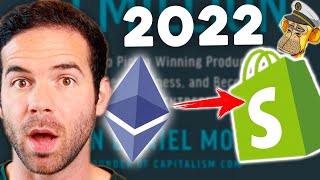
Ryan Daniel Moran walks through how NFTs, crypto tokens, and DAOs could reshape e-commerce. He covers concrete uses: VIP membership NFTs, airdropped coupons, and token-based fundraising as an alternative to VC. The shift is coming, he argues, so entrepreneurs should experiment now rather than wait.
Chapters
Oh, my goodness. I just figured out how to help that brand. That's exactly what we're going to do. We're going to do a free airdrop to that community. It'll be discounts on purchases and discounts with other brands. That's it. I just made that brand millions of dollars. Good idea, Alex.
There's a lot of talk about how crypto and NFTs are going to impact the business space, and particularly the E commerce space, because these two worlds seem diametrically opposed. But we all know that most Internet businesses are going to be impacted by NFTs and crypto. So at some point those two worlds are going to collide. Now, jury's still out about how that's going to unfold, but in this video we're gonna talk about some of the signs that we can see where those two worlds will come together and create new opportunities and disrupt a lot of businesses that are currently operating right now. Yesterday we were having a team meeting because here@capitalism.com, we're planning an NFT launch for early 2022. And the reason we are launching our NFT is because it's what's best for our customers. Now, personally, selfishly, I know that this is where the world is going. I know that everything that you buy is going to be an asset versus an exp. And since that is where the puck is going, as the leader of capitalism.com, i feel a little bit of a need to lead in this space. But this space is emerging so quickly, it's hard to keep up. And it can be really scary to say, how is my business going to be affected when everything's being run as a decentralized, autonomous organization? How am I going to stay relevant when someone does a crypto that is a business that is exactly what I'm doing and that's more attractive than what I'm doing. These are legitimate questions to ask, and the only way that I know how to answer them is by experimenting. And so one of the ways we're doing that is launching a small NFT early next year, which will be access to our existing programs. The biggest difference is, instead of it being an expense that you would cancel, you can sell that to someone else and possibly even make a profit. So that makes it my incentive to do such a good job for our community that the value of their asset goes up. I've had a difficult time seeing how NFTs specifically will impact e commerce businesses. I can see how daos and crypto will. And we'll talk about that in a second. But NFTs and physical goods, I'm not sure how those two connect yet. So thankfully I asked Gary Vaynerchuk about this. I own a hangout Hawk, which is one of his NFTs, and it gets me access to zoom calls that he does a few times a year, and the first one was last week. And so I asked Gary this question because I am helping a business right now that has a really big audience and they have a really loyal customer base. And I'm curious if an NFT might make sense for them since they have such a loyal audience. Gary said something really interesting to me. He said something to the effect of if he was launching Empathy Wines today, he would have given NFTs as like a kickback as a reward for somebody who bought early. So if somebody were to be a first customer, if they bought 100 cases of wine, he would issue an NFT almost as like a bonus to them. He, however, did not comment on what he would do to make that NFT valuable, which is what I really wanted to hear. How would you make it valuable for someone to own an nft? So I don't know Gary's opinion on this, but we can speculate a little bit about how this might play out. One of the brands that I'm helping right now has a influencer with a really big following. She's very famous in her space and she would have a lot of pull with her audience if she were to do live hangouts or Facebook lives or if she had an event where she sold tickets and people got access to it. She could make a play where if someone bought from that brand, they could have an NFT kickback to them. That would give them access to special calls with that celebrity and that influencer, or it would get them discounts on upcoming events. My favorite is to have something to the effect of if you buy a certain amount throughout the lifetime of being a customer, you get a kickback NFT that is now a discount card for when you come shopping the next time. It's almost like a special VIP that is all digital and is connected to your wallet. That way, if that person doesn't like the brand or wants to not shop there anymore, they can sell that VIP membership to somebody else who is a new customer. Somebody wants to place a thousand dollar order and they would save 20% as an NFT holder, they'd be willing to spend 100 to 150 bucks to be able to buy that coupon. Makes sense, right? This is where NFTs could play a role in e commerce, specifically. The real value between NFTs and any business, though, is the connection that it creates between the brand and the customer. For example, if you own an nft, then that wallet is on file with that nft. And whoever controls the NFT can do airdrops of new opportunities and new gifts and new bonuses that come straight to the customer. That's like, remember getting coupons in the mail 30 years ago? Well, imagine they go right to your shopping cart. And when you're using your browser and your wallet's connected to it, you're saving on things, or you have things just added to your cart because you had something airdropped to you and now you get to use the new product. That's actually a really good idea. So if you've got a VIP group that is all NFT based and you're doing a new product launch, you could airdrop an NFT to someone's wallet and have that new product just show up in their shopping cart the next time they purchase. So you could say, we just released the new flavor of our. Of our diet soda. When you come to check out on our page, you buy anything else, our new flavor will be automatically added to your cart. That's actually pretty smart, that. Because that would get a whole lot of user adoption. Feel free to run with that one. Give me credit, please. That brings up an interesting idea where you know how you're used to hearing somebody who runs a podcast say things like, hey, go to Organifi.com Ben. I obviously know Ben Greenfield. That's why I'm thinking about that example. He would say, use discount code Ben to save 10% at checkout. Well, if you just own Ben's podcast, NFT. Oh, man. Oh, I just got it. If you run a podcast and you airdrop an NFT that's free, you don't have to pay for it at all. But it gets you. Oh, my goodness, we're so doing this. But it gets you discounts on brands that sponsor the show. Now you can just say in your podcast spot, hey, go over to Organifi.com and since you're an owner of my NFT, a 20% will be added. Taken off your car.
Oh, that's wild. Oh, that's gonna be a thing. That is gonna be a thing. Oh. Oh, my goodness. That'll be true on YouTube, too. So we'll be here like, hey, everybody, watching YouTube, go download that NFT. It's free, and it will get you discounts on our Events and discounts on a free T shirt or like, whatever you can do, whatever you want.
All audiences are gonna be built all, oh, my goodness, I just figured out how to help that brand. That's exactly what we're gonna do. We're gonna do a free airdrop to that community. It'll be discounts on purchases and discounts with other brands. That's it. I just made that brand millions of dollars. Good idea, Alex. All right, that was fun. Let's go a little bit deeper down the rabbit hole, because the stuff I'm gonna talk about next scares me, and I don't know how it's gonna play out yet. But it does seem inevitable to me that issuing a coin, releasing a crypto will be the new way that people raise money for a project. Instead of going the traditional route of raising VC money or putting together a pitch deck, which I believe in and teach our students to do, I think the next wave will be just starting a crypto around a project and raising capital that way. There's benefits and challenges to this approach, however, the benefit is you could raise a lot of money quickly, especially right now where the market is so hot. If you were to. If you were to pursue that, you'd have kind of a first mover advantage and people would reward that. The downside is you'll end up giving way more equity away than if you were to do a traditional raise with a pitch deck with private investors, at least in most cases. However, there's some other, other benefits to doing it in this way as well. If people are early adopters to that crypto, which just means you're an early investor in your company, they're now more financially incentivized to see that the company wins. So it's almost like you have this really big base of excited shareholders that want to buy your product, that want to promote your product. I want to talk about you, make connections for you, and open up new opportunities for you. That's a really exciting thing for a founder. The way this might play out in the future is that founders will be used to only owning 15 to 20% of a business, knowing that the community owns 80% of it. And their board of advisors will be the entire pool of shareholders. And the shareholders can outvote the founder pretty much at any time, especially if the project is set up as a decentralized, autonomous organization. That means that the entire group of shareholders can outvote the founder. And the founder's job will be to make proposals that grow the company and improve the community. But it will be a very community run company. Businesses that win in the future will be community first. Gary Vaynerchuk said years ago that you have to think about your company as being media comma, then whatever you do, the next wave is going to be community comma and then whatever you do because you will not be able to win without having a group of raving fans that will come either as being holders of your crypto investors in your company that is, or they hold your NFT and thus have a financial incentive to see the business win. I briefly mentioned daos, decentralized Autognomist or. Yeah, that. And I am curious to see how this plays out when it comes to the operating of actual businesses. When Gary was asked about this on his last hangout, I don't think I misheard him when he said that he did not see that daos would overtake a centralized business structure. I don't mean to misquote him, but I think he said that decentralized organizations are a little bit hypey right now and that we sort of overvalue a decentralized decision making structure. I tend to agree with that analysis. There is benefit to centralized decision making. There is benefit to you. As the founder saying, this is where we are going, this is what we are doing. It's my company, let's go. There's value to that and sometimes that is very necessary, especially at the early stages of a business when you have a lot of people voting and making decisions. You can have tragedy of the commons where mob rule determines what decisions you make. Most people are not entrepreneurs and if you allow non entrepreneurs to make entrepreneurial decisions, business doesn't grow very quickly or at all. So we'll see how daos play out. But I'm very curious to see if someone can come up with a way to to make the decentralized autonomous organization a more efficient way to run an e commerce business. And if they can, then you really change the incentive structures for how one of these businesses will be run. And it will set you free as an entrepreneur to just think creatively and come up with ideas while a community both funds it and operates the business. I'm also curious to see if individuals, what we might call freelancers right now, stop working for organizations and they start working for protocols, protocols being daos that they jump into and they create value for this community. And now they're hired by the dao to be a moderator or an operator or a designer that is contributing to that project. It'd be very interesting to see if clients are replaced by protocols and you're making your money from the success of the projects that you work on, rather than being paid a stipend for your your time, that's how I think remote work is going to go over the next 10 years. What this means is that people will be compensated more fairly for the work that they bring to an organization. Or fairly isn't the right word, more equitably to the organization where they are working. This talk about everything being controlled by the 1%, by the rich, well, it's about to be controlled by the masses. The 1% will now grow by creating more things that other people can work for, which is exactly how capitalism works right now. It will just be more apparent because the incentive structures will be more aligned than they appear to be right now. So this has great implications for capitalism and it has great implications for creativity because it will set entrepreneurs free, like you and me, to come up with ideas, knowing that now we just need to create communities that will rally behind this idea and it will allow you to do what we call the owner's model much more effortlessly. You cast the vision, you bring in the capital and you bring in the partnerships, and it can all be done with one mostly decentralized organization that's powerful.
Every industry is going to be impacted by NFTs, crypto DAOs, Web3 is come, it's here, and it is how the next Uber is gonna be built, the next Amazon is gonna be built. We don't know the implications of how that's going to play out yet, but I am fascinated to see how it happens. And as an investor, if you can spot these organizations early, you're in the position to be able to pick the next Uber, pick the next Amazon, and you can ride this wave into the next era of abundance. The initial tendency is to be absolutely freaked out by this. And I was too. And I was, because I was like, all these businesses that I built, like, are they even going to be relevant in 10 years? But the fact is that all businesses become irrelevant over a certain period of time if they do not reinvent and innovate. And right now we're in a beautiful period of innovation. And if you can accept that that's the case and be curious about this world without having to make any rash decisions or change everything right now, then you're in a position to be able to lead in this marketplace rather than be put out of business by this marketplace. Of course, if you don't have a business yet, we help entrepreneurs build seven figure businesses. You can find resources around this video or just subscribe to the channel. And we produce a ton of content that help you accomplish exactly that. I'm Ryan. Daniel Moran. Thanks for watching. See you next time.







