
Mike Dillard's Audience Building Formula For Any Economy
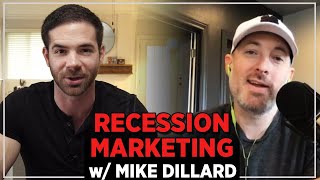
A recorded interview (podcast/YouTube) of Mike Dillard by Ryan Daniel Moran about building audiences rapidly in any economy. Dillard describes his paid-ad/webinar-driven list-building formula, lessons from past crises (2008), the responsibility of leadership when audiences scale, and strategic priorities (content, offers, personal brand). He emphasizes offer specificity, paid traffic math, non-verbal presentation, and rebuilding audience as primary leverage.
Chapters
First and foremost, non verbal body language, right? Especially if you're putting your stuff in video. Your posture, your body language is 80 to 90% of the communication. No matter what the words are that are coming.
It'S huge, right? If I'm like, hey, Ryan, do you want to prepare for the coronavirus?
Like, are you in a time of crisis? Right. It's completely different than, Ryan, are you ready to prepare for the coronavirus and your tonality, your voice, everything, People are subconsciously taking all of that into an account and what their DNA and their body and their limbic system is telling them. Is this a person that I think is a leader that can help me or not?
Hey, boys and girls, welcome back to the show. Today we're going to be chatting with my buddy Mike Dillard about building audiences. Mike is the guy that I learned a lot from in terms of building audiences quickly because I call him the magician. He can, he can just kind of make things happen out of thin air. And in this sit down, he goes through his formula on how he builds audiences very quickly. And this formula will work for physical products, it'll work for information products. It'll work if you want to have just a big Jordan Peterson, Joe Rogan sized audience so you can talk about whatever the heck you want. This is the strategy and the formula. And I went to Mike to ask him to speak about it to the 1% and also to share about the highs and lows, about what comes with that territory. Because when you start building an audience, your company and your brand start getting exposed to weak points as well. So he talks about how he has navigated through that. We talk a little bit about platforms and which ones he is using. Spoiler alert. He thinks the platform is not nearly as important as the process. Meaning specifically what happens beyond the platform. So that's really interesting. And as a result of listening to this, you're going to see how you can build responsive audiences for, for whatever business you want to follow and do it in record time. So enjoy this chat with Mike Dillard. All right, so to kick things off, Mike Dillard, I gotta ask, are you Mark, safe from coronavirus?
As of the time being, yes.
Okay, cool. So there's no earthquakes happening where you are or whatever the heck is going on. Let me ask you.
You kind of, I think your audience grew the most during the last major meltdown. So what is your overall take on coronavirus right now? I have to ask.
Yeah, you know, I've been doing this entrepreneur thing for 20 years now. So I went through 9 11. And then I went through the Iraq war and then I went through the market crash of 2008 and now it's coronavirus. Right. So I've been through a lot of these cycles and the first two I was not prepared for. So when 911 happened, I was starting my first business and it literally overnight just destroyed any plan that we had. And I went back to waiting tables and working at Best Buy and I just didn't know what to do. So after that I found some mentors and educated myself on how do you build a business and prosper during a time of crisis? How do you turn that into an opportunity? And so when 2008 happened, I was looking at that situation from a completely different perspective and lens. And it was like, okay, this is when the board gets reset. There's going to be huge opportunities created here. Huge opportunities from an investment perspective. How do we take advantage of that? And so I built an entire entirely new business in an entirely new industry that I had no previous experience in about 60 days. And we did 3.2 million in revenue in our first week.
So that to me is the big lesson here. So the whole coronavirus thing popped up. I've been ignoring it for the last three months, primarily because I've done my little prepper type stuff strategically so that I don't have to worry about things like this when they come up. I can stay focused on looking for opportunity in my business.
But now I've seen in the last week things start to shift and people have gone from this optimistic. I'm going to ignore this and hopefully hope it'll go away to like, okay, it's not going away. I'm starting to get scared and panic. And so this is creating the next opportunity for entrepreneurs to look for people who have problems, look for topics that are getting attention and use those to provide solutions and build audiences.
Yeah. So that's where I want to go. Because.
That business. Did you say 3.2 million in 60 days?
Is that seven days?
Yeah, in seven days. That's fewer days than 60.
It took about 60 days to build the business from idea to getting it live.
Okay, so I have to unpack this because you did that during the meltdown or like in the wake of the meltdown, not right after. Yeah, yeah. And so there are, you know, right now we're coming off of all time market highs. Everything's hot. You can pretty much fart in the wind and have an online business. We all kind of knew that it wasn't going to stay that Hot. But you're the guy that built the audience, built the business after the meltdown. So what do you think was the reason you were able? Was it timing? Was it luck? What was the reason why you were able to do that after all of the good days were over, as some would think?
The first thing is your brain will find what it is that you're looking for. If you're looking for fear, you're going to find fear. If you're looking for opportunity, you're going to find opportunity. So first and foremost it was constantly reading through articles and books and news of companies that were created and thrived during the Great Depression. And it's like, okay, that's all the evidence and proof I need that this is a time of opportunity. Because the weak hands are going to get shaken out, they're going to go out of business. It's kind of like a brush fire going through a forest and everybody's going to get burned down if they're not ready for this or smart. And it just leaves open pasture for new nimble entrepreneurs to take root and start to grow. So that's number one is make a very, be very, very conscious and aware of your thoughts and what you're paying attention to and what you're looking for. And I'm looking for opportunity right now. Second, you have to participate in the conversation. I think it is a massive mistake for businesses to go about business as usual and to ignore what's on their customers minds, especially if it's a fearful or frightening event. Acknowledge that they're scared. Acknowledge what's going on. Don't just pretend that they're an idiot and that they're just going to keep buying your same stuff for the same reasons they've always bought it because that's not happening in their brains right now.
And then third, I look at this as a phenomenal opportunity to create incredible amounts of goodwill. So how can you establish yourself as a leader in a time of crisis?
That's what is needed. Leadership is needed in times of crisis. So if you can stand up and be willing to take that role, you're going to create a huge following because that's what people are looking for. And then two, create goodwill. What can you do to serve your audience, to provide them with any kind of help or assistance or whatever? You know, I'm thinking about the guys at Black Rifle Coffee, you know, Evan, and I'm like, man, I guarantee you, because they're so good about this stuff that within the next month or two they're going to be doing discounted coffee campaigns or free coffee deliveries to hospitals, you know, and first responders. So what can you do? Even if it's just a thank you note to say, hey, we know times are tough right now, et cetera, et cetera. If there's anything we can do for you, we're here. We've set up private Facebook group, we're doing free coaching once a week, whatever it may be, just to provide goodwill and step up when most companies just are going to try to continue doing what they've normally done and hope that things get back to the way that they were.
Yeah. So, Mike, that makes total sense. You've built audiences in good markets, bad markets, good times, bad times. And I was hoping you could walk us through the actual mechanisms of how you build audiences. Because you, faster than anyone I know, build up a large email list, podcast followings, you've been able to kind of start and spark the audience really quickly. So how have you done that and how do you do it today?
I only have one trick.
Tell us your trick, Mike.
I only have one, which is paid advertising. That's it. I have relied on. Well, back when I first got started, my first primary source of traffic 2005 through 2008 was affiliates. That was a very different industry back then. And ever since then, it's just been paid traffic. The most effective list building tool I've ever used is a webinar.
The reason for that is you're getting accurate email addresses. People are giving their real email addresses when they opt into a webinar because they need to get the link to show up to the room where I think most capture pages. Most people are putting in fake email addresses because they just want whatever is free on the other side of the page without getting put on a list. So that's it. And then, well, how do you build and take advantage of paid traffic? It really is just a math equation and it comes down to conversion. So the real secret to building an audience quickly is really copywriting. If you have a product that doesn't convert profitably from your paid ad campaign, you don't get to build an audience. If you do, you get to build an audience really quickly. So that's been the single biggest thing that I've ever done is, you know, with the Elevation Group, which is that company that I started after the crash of 2008, I put up a webinar and it was essentially how to invest like the rich. That was a question that everybody had at that time. They just lost 50% of their of their money in retirement funds. And the only answer that their financial planner has was, you know, hey, just invest more money and et cetera, et cetera. And at that time, that was not an acceptable answer to most people. So I just stepped in with some alternative ideas and solutions for folks, put it up on a webinar, started advertising, converted really well. The offer was 97amonth or 597 for the year. And yeah, we did again, we did that 3.2 in a week. We did over eight figures in the first year. And it was just because it was very much a Zeitgeist moment. It was the right message at the right time. And it was different than everything else that was out there. And that was something that I think is also very important. When I was putting together that offer, I went to every single financial education company, Agora, Stansberry, Motley fool, all of them. And I just went and looked and studied all of their products and offers and I was like, what is it about these products that I don't like? What would I change? And then I made sure that I made my product the complete opposite of everything that they were doing. Meaning theirs were primarily written. You either got them in physical mail or you got them in email. All of the content was in written format. It was all about stocks. And there was a lot of complicated trading graphs and stock graphs of which I know that the average person, it's just going to go over their head. I also know that their average customer is over the age of 50. And so they're used to reading newspapers, they're used to reading newsletters. I knew that my target audience who was around my age is really used to consuming video content. So my kind of rules of thumb were their pages and websites look very conservative. Mine are going to look loud and colorful. Everything's in written format. Everything I do is going to be in video format. Everything is about stocks. Nothing I do is going to be about stocks. And so.
That was the formula.
So the secret of that being that there's a converting offer that you can buy a lot of traffic to and then using paid media to put them into a sequence that warms people up for that paid offer.
Yeah. So webinar registration page, obviously, I believe we offer the webinar twice a day, I believe at noon and 7 or 8 o' clock at night. The theory around that is someone's either free for lunch or it's after dinner. Those were all automated webinars, obviously. I don't ever say webinars live Especially if it's automated. I just say, hey, we're having a webinar, you know, come to the link.
And then a little follow up sequence probably of four or five emails. They had an incentive to join on the webinar. It was a 50% discount, meaning 97amonth over the course of a year is $1,200. So if they joined right then and there within the next hour, they would save 50% and could sign up for 597.
And yeah, we had over 8,700 customers sign up in the first week and over 50,000 sign up within the next two years.
Yeah, I was one of them.
Yeah, that's how we met.
I believe I remember that. Yeah. What would you do, if anything, differently today?
You know, I think.
Social media is obviously important today. I think today it's harder than ever to get attention, it's harder than ever to get an email, it's harder than ever to use a webinar, especially in this niche because this market has seen it so many times. Everybody knows a webinar is just a long sales pitch and that was not the case back in 2008 and 2009. So.
Today I think it's all about again, I think the offer is 90% of it. If you have a product that is speaking to what's on a customer's mind and to their pain point right now in the moment and you can get that out before anyone else does and you can have a phenomenal offer to it and have the product be great. Quality, quality, you're off to a great start. But a long term, the long term game is certainly around social media and attention. You've, you guys have really done a phenomenal job with this in your business and your profile over the last year and a half, two years. And at the end of the day there is a fight for attention in everybody's social media feeds and all of these apps that they're using. And so if you're making 10 posts a day and I'm making one, you're going to win. Even if I have a better product or offer, because you're getting 90% of their attention and I'm only getting 10%. So I think that that is something that people really have to consider today. I think the buying cycle is getting longer, but I also think that you can circumvent all of that with that Zeitgeist offer, that Zeitgeist product and getting into the conversation. So for me right now I'm literally working on a preparedness Product that I've had for probably four years now, I might launch it. I think I've sold it three times. Whenever something like this comes up and preparedness and personal security really comes into somebody's mind.
And I have a feeling that we're gonna put up a paid ad campaign for this product next week, that we're absolutely gonna crush it. When it comes to building a list, I think our lead costs are gonna be in the $1 to $3 range instead of the $5 to $10 range. And my goal is going to be to break even on that, on that acquisition and build a list of 100 to 250,000 people in the next 60 days. And even if I don't make a dime in profit, I've now got that list in that asset. And there's tons of opportunities that can come in on the back end of that. With that being said, the other thing that has to be considered is what is allowed, what is the language and the speech police have to say On Facebook and Google these days it is getting more and more restrictive than ever for you to put up paid ad campaigns depending upon what you want to say. So that's been an additional challenge as well. So that's how I'm thinking about it.
Okay, so there's a lot to unpack in there. But there's one piece that you said that I was surprised by and that was that you think buying cycles are getting longer. I've seen there's more impulse buying than ever and that you can be very direct with the offer today versus where it used to be that indirect offers worked because people had the capacity to sit and read a long form sales letter. So are you seeing something different than I am?
You know, I don't have a ton of direct data on that from my own personal stuff. After, you know, being sidelined for the last year with my health health stuff.
I'm really going off of conversations that I've had with, with Frank and a few other, you know, George and a few other of our colleagues and peers. Okay. Yeah, so that's basically what I'm, I'm basing that on and how I'm approaching it as well.
Yeah, because your, your model has, has long been go get the opt in, have an offer on the back end of that opt in, have a follow up sequence. And then there's the other model which is have a front end offer, drive a lot of traffic to the front end offer, break even on the front end offer, and make your money on the back end. And both seem to like both work.
And I'm seeing longer buy cycles on back end offers and shorter front end offers, shorter life cycle, you know what I'm trying to say, Shorter buying cycles on the front end. So you can acquire $37 customers or $27 customers like this. So no matter if you're selling information products or physical products or services, if you can front end the entire business with a front end offer and buy traffic to it and break even on that, you have all these buyers in your arsenal that will buy the rest of your line. Or if you're selling information or you want a huge list, you can have an offer that you put behind an opt in and drive traffic to the opt in and build the audience that way.
Mike.
You said historically you advertise mostly with affiliates. Where do you advertise today?
The last six, seven years it's all been Facebook and Instagram. We're also starting, we're going to go pretty big next month with go Google and YouTube also Google display.
YouTube is going to be a primary focus for me over the next year. We're actually just turning this office, that back wall you can see back there into a YouTube studio this week. And so just a lot more content. Again, staying in front of the audience, building rapport, building goodwill is going to be the primary piece. And as far as the, you know, the product cycles going.
I've always gone for the sale first, right up front after the opt in immediately. And you're going to get your best buyers off of that. You're going to get buyers no matter what. And then I'll go back. A lot of people like to do like a dollar trial on the front end to things, which is absolutely worth testing. I know you're having a lot of success with that right now. I usually go for the full price right up front and then I'll do the dollar trial to the people who didn't take on the back end.
Because.
I want as much money up front as possible to recoup for that ad spend.
Yeah. Mike, what would you say about finding your voice, finding your message, finding the offer? Because it's one thing to break down the mechanism of how do we buy traffic to an offer, get it to break even and build the audience that way. But you came out of nowhere with an offer that you didn't have experience in, built the audience really quickly. So what would you say to someone who is finding their voice, finding that offer, finding their message?
Great point. First and foremost.
Is non verbal body language, right? Especially if you're putting your stuff in video, your posture, your body language is 80 to 90% of the communication, no matter what the words are that are coming. Really, you tell.
It'S huge, right? If I'm like, hey, Ryan, do you want to prepare for the coronavirus?
Like, are you in a time of crisis? Right? It's completely different than, Ryan, are you ready to prepare for the coronavirus and your tonality, your voice, everything, People are subconsciously taking all of that into an account and what their DNA and their body and their limbic system is telling them. Is this a person that I think is a leader that can help me or not? And so if you're not displaying those traits, and we learned all of this back in the dating days, back in the twenties from Eben Pagan and those guys where it's status and posture and so authority. So first and foremost, you have to come out with confidence and with authority because if you don't have confidence in yourself, how is anyone else going to have confidence in you? Two, authenticity. Are you being the over the top inauthentic person because you're trying to manipulate someone? Bad news. And then number three, are you honest? And so that offer for me specifically during that time had all three of those pieces. I was very calm and cool and collected on the capture page video for that webinar. I just confidently stated what they were going to learn today and why we're going to learn about it. Number two, I did my homework and studied a lot. That webinar probably took me almost two months to write, probably four to five weeks to write, because I was going through history books, financial books, economic books and everything. So I had a lot of evidence. I had a lot. I knew my stuff by the time I started writing that presentation. But third is I was also completely 100% honest with everybody. And on that presentation, I said, I am not an expert in this. In fact, I have no idea what it, what to do when it comes to investing in money, especially now that the market has just crashed. All I know is that I went to the bookstore and none of the books that you find today about investing are relevant anymore. Because if you followed this advice, you just lost half your money. So I don't know what to do. You probably don't know what to do either. So here's what I'm suggesting, and here's what I'm building. We're going to go out and I'm going to interview the smartest people I know when it comes to investing in financing, who, who did prosper through this crash, who did turn it into an opportunity, and we're going to figure out how to invest like they are. If you'd like to follow along with me on that journey, for better or worse, you're welcome to do so. And that's how it was positioned. And so people responded to that, because most people aren't willing to admit that they don't know what they don't know, especially if they're trying to sell something. And I think that that was a really critical piece to the puzzle and why it did so well.
Yeah, that's beautiful. So what's interesting about what you said is that you were confident and calm, even though you weren't an expert on the topic. Imagine you were able to present yourself in a way that was leadership in a time of crisis, even though you were a thought leader on the topic. Would you comment further on that?
Yeah. I mean, if you imagine a building's on fire and you're trapped with a group of people, someone needs somebody to step up and calmly take control of the situation and say, all right, I don't know exactly what to do, but this isn't working, so here's what we're going to do. And you just take control of the situation. Follow me, let's go.
And that's it. And if you don't do that, somebody else is going to do that.
But the main thing is just really being honest and upfront with folks. As you know, that business imploded because 18 months in, one of the experts that we did interview ended up being a conman. And so.
That was really a part of that journey and saying that, hey, I don't know what I'm doing, and bad things might happen, good things might happen. We're going to learn about this one way or another. So I would document all of my investments that I was making. And, hey, I invested this much money in gold. I invested this much money in an oil well. I invested this much money in a real estate complex. And the whole point of this is not all of these are going to work out. Some of them will, some of them won't. We're just going to figure this out and put the puzzle piece together. And it was almost as if I was including them in my diary.
And obviously it worked really, really well until it got taken advantage of by bad people who saw that as an opportunity with someone who was a bit young and naive and who took advantage of that and turned it for the worst. Right. So I know that's getting off a Little bit off topic there, but that's a big part of that story. That's the downside of walking into an industry as sophisticated as finance and investing without a lot of experience in life in general or in a topic.
Mike, you were very quickly seen as an authority on this topic because you built this audience. And I was going to ask you about the responsibility that comes from that. You kind of just commented on the fact that when you have all that attention around one person of authority.
One error can undo the entire business as quickly as it was built. So instead of asking you to comment further about that, I just want to ask, how did you handle and recover from that?
That was easily the biggest challenge of my life. And the hard part about a situation like that is the first phone call you make is to an attorney. And the first thing your attorney tells you is that you can't say anything.
So it becomes very hard to communicate to your audience when you're in that position. So I called Mark Ford up, who was a mentor of mine and one of the co founders of Agora and Stansberry, who had been in a similar situation 20 years ago in his career, and he basically said, man, all you can do is be 100% honest and transparent with everybody as soon as you can. And so as soon as I had the green light from my attorney to talk about this in a detailed way, which is not until about a year, year and a half into it, I wrote a 30 page blog post just telling people exactly what happened. Put all of the court documents in there, all of the affidavits, like everything, and just was fully transparent. And I just said, hey guys, this is what happened. Here's all the court documents.
You know, you can come to whatever conclusion you want to. My job here is to just be honest with you and to apologize.
And that's essentially what I did. And that was the single best thing that I ever did, because the goodwill that was created from that was enormous. And what it did was that it taught my audience that Mike will tell them the truth no matter what happens. Good, bad, worse, whatever, Mike's gonna be straight with us. And that is a priceless relationship that you can have with your audience that you do build up, because the responsibility does become very big, especially when it comes to do with finance and financial education. Because what I did learn through this experience as well.
Is when you are perceived as a leader, and especially if you have a track record of success in your audience's eyes, they're not going to listen to you. Meaning if I say, hey, this is a really risky investment. I'm only going to put 1 or 2% of my money into this at most.
But there's an opportunity for some pretty substantial gains here.
They're not going to listen to that. They're going to selectively hear there's some really big opportunities for gains here. And Mike is putting his money into this. And so.
I literally put a fraction of 1% of my own money into that, which was still a substantial amount of money. But we had members of our audience put in all of their money, 100% of it. And I ended up writing an email as soon as I got wind of this. And the title of that email that I sent out to 500,000 people said, you're an effing idiot. But I didn't use effing. I used the real world. And I went on a tirade about this topic, about being responsible and irresponsible.
And so that was a very valuable lesson for me, is no matter what I say, no matter what disclaimer I give, people are not going to hear what they don't want to hear, and they're just going to do whatever they think Mike is doing, because Mike's the smart guy with the track record of success.
And they're going to get in trouble if they do that.
But let's be frank. I mean, this is the case with just about every company. I mean, Visa is going to have a credit card leak, and Wells Fargo is going to have a couple of bad executives, have to step down. The Houston Astros are going to get caught stealing. Every company has a moment on which things are on fire. If you're Samsung, things are literally on fire. And you can either be defeated by that or you can grow through that. And, Mike, you had a couple of really crappy years there, and then you came back in. The same audience supported you on the podcast, supported your new offer, supported new webinars that you put together. And if I remember correctly, the way you built and grew that audience was using almost the exact same strategies that built the previous business. You were just talking about something completely different. Would you refresh my memory and tell me if that's correct?
Yeah. No, that's. The formula has always been the same. Build a list, build a relationship with the people on that list, and market helpful products and services to that list. That's been my business model for 20, 20 years.
But the point of. The point of that is as you build your audience, because that's what we're talking about today. If you have the opportunity to build an audience of hundreds of thousands, if not millions of people, understand that.
No matter what you say, people are going to.
Do what they want to do. And you just really. It was a lesson that I wish I had known earlier and how big that responsibility is.
I wish I had business insurance at the time, because I didn't have business insurance. I didn't even know what that was. To help pay the legal bills. Right. And so it's just a huge responsibility. And you have to realize that that stuff lives forever today. And so.
Yeah, it's the biggest blessing in the world, and it's also the biggest responsibility in the world. I would also suggest with Folks trust, right. Having a large group of people following you. And I would also recommend or understand that or expect that.
There'S a lot of people out there who are not mentally well. And the larger your online presence gets and the larger your list gets, the more of these people are going to fall into your ecosystem, and you're going to need to be prepared for that. That's a pretty scary event to go through. The first time or two, when a stranger shows up at your door and says they're not going to leave until you help them.
I hope you mean the proverbial door via email.
No, I mean front door. Yeah. And that happened. That's happened more than once. So, you know, this is a. It's. With any business, with any level of success, whether you have a large audience or list or not, you know, there's going to be bigger and different challenges that come with that territory.
And just talk to someone like myself or like you, Ryan, or like Mark or anybody who's gone through this, because there are little nuances that you would not even think to consider.
That come along with this territory that you want to be aware of from the beginning.
Mike, I want to take a pause here. If you are watching live and you've got questions for Mike, Matt, I see you. Jason, Sam, Mark, Sean, Jason. If any of you want to throw a question at Mike, feel free to put it in the comments and I will bring it over to Mike's attention. But while people are jotting those down, Mike, I'm curious. You've done this several times now where you've built up a large audience, you've built goodwill with them, you sold some things, you took the proverbial arrows from the audience and you've kept going. You now do that on your podcast. It's one of my favorite podcasts. You're going into YouTube, so I'm curious. What drives your strategy with things that change as quickly as they do, you being able to recreate the formula several times, what drives how you're going to build the audience moving forward?
I really don't know if I consider that. The first thing that I consider is what is my biggest problem or what is the biggest problem I see in the world and how can I solve it. All of my primary companies have been driven or inspired or started by my own biggest problem at the time. So I really start there. Okay, what is this solution going to look like? Okay, awesome. Usually if I have a problem, there's a large number of other people who have a problem also. And then I take a look at all of the competition and strategically figure out how I'm going to set myself apart from them and stand out. Then I start to put together the product and the offer and that's all primarily copywriting and you know, from a list building perspective. Today I'll just tell you how we're going about it is it's all top of funnel goodwill with content based ads. So you're going to start seeing free content out for me on a regular basis for the first time in a while. The goal is three YouTube videos or content videos a week. Just, just content. Maybe a verbal call to action at the end. Hey, if you need help, go to mike dillard.com or whatever and then.
That'S just reviews and engagement at the top of the funnel to really build the virtual audience if you will. The next level down, anybody who engages or watches that content will then start to get ads that go to my capture page. Hey, if you've been enjoying this content about X, Y or Z, I've just put together a free 45 minute training video where I go into this in detail. If you'd like to watch it or learn more, click here. Takes them to a capture page they opt into a capture page, goes through the content, makes an offer for my products or service. At the end of that, anybody who opts into that page then gets put into a third audience in Facebook and Instagram who will then be targeted with follow up ads they didn't buy but they've seen the offer. So now we're going to get ads up about objections, answer their questions, have some kind of deadline or scarcity involved. It's probably going to be about a five day campaign for a discount. That'll be it. And the people who don't buy will go back up to the top of the funnel and they'll continue to see content videos for me, until they click on that, they'll also be continually shown ads to go back to the sales page because they've already opted in and we're just gonna then show, just keep showing them testimonials and proof and testimonials and value and testimonials and proof. And that's essentially gonna be the process. So.
So what's interesting about this is rather than having a core strategy on any specific platform, your real strategy is to identify the problem and the solution that you can build the entire business around. I'm asking for this selfishly.
I sometimes struggle with specificity and offers because I want to do so many things. So I'm curious, in your experience, how important is making the offer specific versus going a little bit broad?
Your eight figure business was a little bit broad, but had a clear hook. And so I'm trying to find that for myself. And I'm just curious how you approach that.
I'm learning this lesson the hard way right now.
Well, my core product the last couple of years has been essentially this mentoring program where we film these 50 classes with all of these experts on entrepreneurship. And the goal was to make the most comprehensive mentoring and training program for entrepreneurs that existed. And so we start with how to come up with your brand name all the way through creating your funnel, to identifying your customer avatar, to creating your product through asset protection and legal and taxes, to what to do with your money. At the end of the day, it's 52 lessons, 52 weeks long, and it covers everything. And that's the problem. Meaning that it's not, it's not super specific. It covers so much stuff in such a fairly general way that it's the most valuable thing I've ever created. And yet also people don't really understand if it's going to solve their specific problem or need right now that they have in the moment that they're willing to.
I can relate to this. I can relate to this. Putting your heart and soul into something and then people not knowing if it's for them.
Yeah. So I believe that people are always willing to pull their credit card and give it to you if you can solve a specific problem that they have right then and there and that you can provide them with a specific outcome. And so the problem with my offer is that it doesn't really get to that level of specificity. And so the people that I've witnessed having the greatest amounts of success over the last few years have picked one single thing with one single outcome and they've built Entire eight figure businesses around that. And so my last thing was how to invest like the rich, fairly specific, with a fairly specific outcome is if you invest like this, you're going to build your wealth, right?
People had that problem at that specific time. And I will say this, after EVG had its giant rise over the course of about two years, as soon as the market recovered, it stopped. People stopped buying it because that pain that they had of losing that money went away.
My portfolio is back up to where it was. I'm good now. Like, okay, they don't have that interest in that problem anymore. And so we even tried to adjust the copy and change it up and have a new offer. And it never went off the way that it did because it didn't have that specific, you know, reliever to that specific pain. And so I think that that is a huge, huge piece of the puzzle here. And my biggest challenge is I don't want to dive in and pigeonhole myself into one single thing. You know, right now I'm like, should I, should I build my business over the next 10 years around building a personal brand? Should I build it around modern marketing strategies? Should I do it around, you know, this other piece?
Did you say this has been a.
Struggle point of yours? It is right now. Because I don't want to. Let's just say over the course of the next 12 months, I put all of my time and attention into building my YouTube audience. I guarantee you I'm going to build a large YouTube audience because if I put my time and attention to something for that year, I'm going to get a positive result from it that's going to equip me with the knowledge and the skills to help other people build their YouTube audience. Do I could obviously turn that into a business that can make multiple seven figures? Do I want to do that and become the YouTube guru? Not really. Not really. Even though I know it'll make a lot of money and I'll do really well with it, I don't want to pigeonhole myself in just one single silo of skill, skill set or information, or one single solution. And that's a challenge right now. So I'm still trying to figure out exactly what to do in that case, but it does work. And so if you do have one topic that you're passionate about, you know our friend Alex Hormozi, all he does is teach gym owners how to grow their gym membership.
Andrew Argue, all he does is teach CPAs how to grow their CPA business. And they're all Doing, you know, multiple eight figures in revenue from that one single silo with that one single customer base and these super itty bitty tiny niches that you probably wouldn't even think exist, you know, they're crushing it. So unbelievably important. Yeah. Yeah.
I was really hoping you had a solution to that problem.
If you do, I would buy that.
Yeah, no, it's. And that. So that's something to talk about too. Ryan. I have found at least that my interest change about every five years. My priorities change about every five years. And so one thing that I have done in the past that I wish I had done differently is that I built all of these three companies with their own brand names and entities. So the first company I ever built was Magnetic Sponsoring. The next one was the Elevation Group. The third, third one was Self Made Man. And.
The mistake that I made was building up those social media profiles, building all the brand equity and the audience equity into those brand names instead of just me. Did I have brand equity because my name was the one on the email list? Yes. Mike at the Elevation Group was valuable. Mike at Magnetic Sponsoring was valuable. People had the relationship with me, but I built up these entities and these assets that I eventually just let go or sold. And so especially when it comes to social media today, if you have an Instagram account or Facebook or YouTube account, I'm not building up a corporate social media account. I'm building up the Mike Dillard social media account. Because the one commonality between all of these over the last 15 years has been me. And so if I had just, you know, Self Made man, we had like 20 or 25,000 Instagram followers in the first few months. When I ended that business, that's dead. I put up a couple posts saying, hey, go follow my personal account, but that, that account's dead. All that work is dead. Same thing with the YouTube channel and the post that we made there and your Self made man on YouTube. If I had just kept everything under my own personal name. As my interests change, great. The businesses and the ideas and the audience can just follow me and that single account can continue to grow and compound rather than having to start over every three to five years from scratch.
I can relate to this challenge.
Yeah. With that being said, if you're building a company with an exit in mind, if it's a physical product company that you can sell or service based, a business like an agency, whatever it may be, and that's your plan, then great. You don't want it to be your personal name, you want it to be under the corporate account. If not, if this is all about you and the personal relationship with you have with your audience, it has to be around your personal account or you're going to find yourself going through that same cycle that I've gone through a few times now.
Mike, I want to throw a couple questions at you that came in from members of the 1%. First, my buddy Bram asks, so after going in these multiple different directions and kind of sifting and sorting through your different options, what have you learned about having different paths through your content? What have you learned about that and what might you do differently?
The challenge that I have is I will go through those previous companies and they will be inspired by a personal problem of mine. And once I solve that problem and then I share everything that I possibly have to share, I feel like my job is done and I have no more use or point. And then I'm just not inspired to talk about it anymore. I'm like, guys, I gave you everything. We figured the puzzle out. There's no point in just blowing the board up again and remaking the same puzzle.
Do you think that might be different if you had a team? Mike?
I think it's different now that I'm older. I think it's different now that I'm 42 and my priorities are different. I think in my 20s and 30s, it's a game and it's fun and you have an endless amount of energy and you have an endless amount of ideas and it's time to take those risks and go for whatever gives you life and energy. I think at this phase in my life, my priorities are now different. My priorities are now around stability and security and long term financial freedom. And so what I've learned now is to really just slow down. And now I'm asking myself questions, what do I want to do for the next 20 years? The next business I start, I want to do that and still want to do that for the next 20 years. So how do I create a business that does not have an end to it? Simon Sinek has a phenomenal new book about this. If you haven't read it yet, I can't remember the name. It's something along the lines of the Infinite Game.
That's what it's called.
It's. Yeah, pretty, pretty excellent book.
I don't remember the name of it, but if I did remember it, it would be the name of the book.
Yeah.
So. But it's along these points. And.
So my question or my suggestion for folks would be to think about.
What is the topic or the industry that you're going to want to stick to for the next 20 years. And for me, the thing that I have come to and surrender to is that I love learning and I love writing and I love teaching. And so for me, the YouTube channel is going to be Mike Dillard mentoring, because the concept there is. I'm always going to be mentoring people in some form or fashion. I'm also always going to be educating people, whether it's health, wealth, business wisdom, whatever it may be. So it's a fairly unspecific umbrella, but that's for me because I know my topics are going to change and I know that everybody eventually is going to take an interest in different subjects. And as long as you're interesting and you're educational, it's kind of like Tim Ferriss, right? He's constantly talking about different topics, so he has a broad spectrum of things that he's discussing, but he has this massive audience and he's allowed himself the space and the freedom to talk about anything. Same with Joe Rogan. Right. And the challenge is it's not easy to start a business like that. They both started, or at least Tim started with a very specific book on a very specific topic, grew that into an audience, then went one level bigger, then went one level bigger, and now he's just super broad. And so I think you still need to start very specific and then you can expand after that. So.
I don't know if that made sense.
That's really helpful, starting really specific and then growing broad. A question came in from James Rooney. He asks, do you think that the core, core formula for building audiences remains the same across different industries, like information products versus E commerce? So does the formula that you're discussing, does it ring true across multiple industries?
The formula for me is can you pay for attention? If you can pay for attention and you have an effective way to capture that attention, then you can build an audience very quickly. So ultimately, yeah, the formula is the same everywhere. It's. Can you afford to advertise and buy eyeballs? That's the secret at the end of the day. Yeah, yeah. If you can't, then it's going to be a long, slow, brutal road. Yes. Yeah. The grind. The grind is not. I want to avoid the grind. And with the shortcut and you have to pay for the shortcut, it's like the toll road. So, yeah, the formula is the same for sure. Without a doubt.
I know for a lot of people, especially Amazon sellers, they struggle with this, because making money from cold traffic to Amazon is very difficult. In fact, I know very few people who have been able to make that work. The secret, if you will, is to be able to pay for the lead and then have the lead convert into sales over time, whether it's on Amazon or your own platform. What Mike is saying is that the mechanism is not as magical as the math. Can you buy a click for a dollar and have it turn into a dollar or more or at least $0.94 so that you can make that up over time? That's how you build a large audience where you can launch product after product after product and promote other people and promote whatever you want. Build a big podcast, have a book launch May 5, everybody go pre order it on Amazon. That's the goal. Can you buy traffic to an offer and be able to sustain that even if you're not making money on that so that long term you have a really, really valuable asset.
Yeah, a shortcut on that too. Ryan, kind of like an old school secret here is that you can go to data companies like Dun and Bradstreet and these other data firms and you can buy demographic lists, let's just say email lists of all the primary key demographics that your customers would have for a very reasonable amount of money. Let's just say a list of 500,000 people that match your demographics and then buy that email list from that company and then just upload into Facebook as a custom audience. Pixel tracking dramatically reduce your ad spend from the get go, just right at the start. Another, another thing that a lot of people I've seen do are doing related products that your target audience would want to buy that would provide a better conversion rate or front end. So if you're selling a health supplement, obviously it would make a lot of sense to sell an ebook because the margin is so high. You can even go buy your favorite, let's say you have Paleo related products. I know the gal I believe you invested in, but had a great episode on your show with the keto coffee creamer. Yeah, Primal.
You know, she could potentially go buy her favorite Primal book or keto book or ebook or the rights to it or whatever it may be and then do a free plus shipping book funnel where the book is literally edifying what her product does. Yeah, it's almost like a paid advertisement. Right. So there's different ways you can go around it to get to the same solution. If your product is specifically not working out from a paid ads perspective. Yeah.
So just go out to somebody who has done the work, done the math in a related market that would be perfectly primed for your business and either partner with them, buy them, or acquire their list and use it as a custom audience. Very, very smart. Mike, this question came in from the McCoolopedia. Sean McCool. He would like to know, at this point, after having wins and losses, how do you define success at this point?
So my.
Definition of success certainly changed after going through that.
Legal fraud case. And I remember that that cost me everything. Like, I lost my house, I lost my marriage, My business partner almost died of cancer from the stress. You know, eventually all the bad guys went to jail, but it literally cost everything in the process. And the biggest mistake that I made. This is a little off topic, but it's very important for people to share, especially now with what's taking place, is the biggest mistake that I made was an unwillingness to let my team go or to downsize my team. And this bullheadedness that, no, we're going to make it through this, everybody's staying, and we're going to make this happen no matter what. And so I ended up liquidating my savings and my assets to keep everybody employed, to keep everyone in place, because I cared about that from my own, just as my own pigheadedness, but also for my employees, which were like family, right? And I know that they're depending upon me and getting their bills paid and they have kids. And so I sacrificed everything I had to keep that running. And guess what? Eventually we made it two years later, but everything was gone. Like, every was just decimated. And so after going through that and literally losing everything, my definition of success at that point was as long as nobody I love is bleeding out in front of me, everything is fine. And that was a very different.
Perspective than I had a year or two previously where it was measured by money in the bank. Now it's like, you know, I'm alive. The people I love are alive. Everything's good, it's fine. And so that's my definition of success. Now is everybody safe?
Beautiful. I've had.
Similar transformations recently where I used to try and project out, like, over years what my life is gonna look like and what I'm gonna accomplish. And now I have dreams, and that's awesome. But I don't worry about where I am in, like, the trajectory of that, because I got my. You know, I had my Mike Dillard meltdown in 2019 where. Where investments went kerplunk when people backstabbed, and that was tough. And so We've talked about that a little bit where I've had that kind of similar reset where I feel just as aggressive, clear minded and big thinking as I ever did. The difference is I don't carry around the weight of I'm not there yet. And so the definition of success has been am I enjoying where I am and the overall unfolding of it all.
The trap, the trap that I fell into and that a lot of entrepreneurs get into is that you attach your identity to the amount of success your business is having. You attach your identity and your level of self worth to the amount of revenue your business is making, that you're just totally setting yourself up for the fall at that point. And it's not a pretty one because when your identity is in question.
That'S not a fun experience.
Mike, what are the next moves for you you're gonna do? You're gonna go back to creating content. You're gonna put some emphasis on YouTube. Your focus is on the Mike Dillard brand. What else?
What else is coming for you? Yeah, no, the goal is just to get back to doing what I, what I love to do. And it's not to build a business for an exit and it's not to have this secondary chess move down the road.
My favorite memories when I look back at what I've accomplished are the testimonials and the stories I get from students who have just built phenomenally successful business and where I got to play a role in that story.
That's what I'm most proud of. That's what I get the most energy from. And so I really just want to create more of those on a more regular basis. And so the mentoring side of that, the YouTube piece, is a big part of that. And.
Gosh, above and beyond that, I will say that as I've thought about this from a strategic business perspective, the power is in the audience. That is the single highest point of leverage that I have ever found. Meaning, when you have an audience, the opportunities that are available to you are really endless. The deal flow that is available to you is endless. The doors that open up are life changing. And your amount to your ability to help others is also at the highest point of leverage as well. And so if you have an audience, and that's the way I've been thinking about this is once, you know, my goal over the next year is just to really rebuild my audience back up to, let's just say, 250,000 YouTube subscribers over the next 12 months. After that, next two to three years, you know, A million. And when you have that, you can literally do anything you want at that point. I can go tour the Ferrari factory and the Porsche factory because I race cars and that's my passion. Right. I can interview F1 drivers. I can do whatever the heck I want because if I bring the camera and point some attention and bring some value to those individuals, all of those doors are wide open.
So that to me is kind of the re established priority in my mind is the leverage point is with the audience. And that's the primary focus at this point. If you want to build a large audience fast, you need to be able to sell a product. So priority number two is creating a world class product that will allow me to recoup my ad spend. And then priority number three is to have higher back end product for people who are already doing at least seven figures that could use my lessons learned, you know, in the battlefront of entrepreneurship over the last 20 years and really serve them. And that's the, that's the idea and the business model moving forward.
Yeah, beautiful. Well, Mike will be here watching and supporting however we can. I've always been a Mike Dillard fan. Always will be a Mike Dillard fan.
So thanks.
Inside the 1%. It's great to see you, dude.
Awesome, brother. Likewise. Thanks for having me, everybody.
All right, talk to you soon.







