
Miki Agrawal Built $100M Companies Using THIS Mindset.
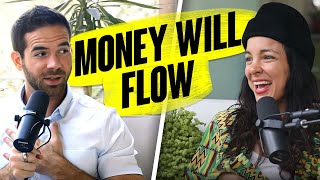
Miki Agrawal built multiple $100M companies by starting with problems that annoyed her personally, raising her first $500K through dinner parties, and obsessing over product quality and design. She treats money as energy exchange and warns against starting a business just to fix your own financial problems.
Questions this video answers
September 2021.
$500,000 (first raise).
Installs in 10 minutes or less.
Chapters
In September of 2021, I invited Mikki Agrawal to speak at the Capitalism Conference. Miki and I had a great conversation and I invited her to speak at our event because she has several very successful companies, several in E. Com, a few brick and mortar companies, and she has had success at every business that she has built. So I invited her to share with our audience about how, how she has such consistent success because I noticed that it was the way that she thought about her businesses rather than just the business itself. The way that she approaches and enters into a business affects how the business performs. And you're going to hear her talk about that as we go through this episode.
Like, money is energy and it's an energy exchange. It's like I give you this energy and if you give me this energy, if you give me your physical energy, I give you this other type of energy which can get you other type of energy like food or place to live. So it's all energy based. And I think, you know, if, if we, if we approach life from that lens and approach business from the lens of energy exchanges, like what makes it a value exchange for the customer, for the employee, for the investor, for the supplier, for the planet, for everyone in the room, how is it the best energy exchange possible? Actually, that is the definition of conscious capitalism. Conscious business. And that type of energy exchange business can sometimes out can outperform major indices like straight business by up to 14 times. That's conscious capitalism.
For any dudes who are watching this video that are a little put off by this idea of money being energy, is that sounding woo woo or foo foo or feminine? I used to feel that way too. But if you break this down logically, money is just a reflection of the decisions that we make when we trade, right? And we make our decisions about how we trade based on what our needs are, how we feel and who we trust. And all of those things are some form of energy, right? Us dudes don't usually think about it that way. But all of the decisions and feelings and needs and wants that we have start as a form of energy. So what Mickey is saying is that money is the reflection of all of those things. And so when you think about that, you start to prioritize some of the things that drive human behavior like service and value and real needs and wants in the marketplace. But no matter how you dice it up, money is just the way that we exchange value. And whether you are making that decision based on finding arbitrage in the marketplace or based on your feelings about how Money is energy. Money is, is a reflection of how you and I serve each other.
We were having a call this week with an influencer named Jimmy Darts. He's a kindness influencer. He has about 10 million followers. I was listening to him talk about how he's built this following in the last year and a half to two years and how he has a show coming out with, you know, an A list actor and how he's doing collabs with Mr. Beast and all like all these huge influencers. And it's happened in the last 18 months. Wow. And the thing that stood out to me about what he was saying was he was not trying to build a business. He was lining up with like this. I mean, he called it God. He, he was, he's like, I get in tune with God and I just do what he tells me to do. And I just follow that impulse. And it reminded me a lot of what you shared on stage about how you just kind of connect to the impact and the change that you want to make. And business kind of take care, takes care of itself, which in my brain, like I want to figure out the exact step by step plan of how that's going to happen. And I don't get the vibe that you care so much about how it unfolds.
Well, I mean, you know, I'm an athlete. I like the sport, you know, like, like everyone else, money is important to my family, to us, as from a lens of an energy exchange, able to pay for things and all that. But the way I approach business is really more of like an innate feeling. So it's like, oh, I need this thing for myself. And so like, you know, in my, my first book, Duke Will Shit, I talk about the three questions I ask myself before starting any business. The first question is, what sucks in my world? That should be something that sucks in my world. And this can't just be like, oh, I'm going to start another T shirt company. And it's like, how many of those exist? But like, what truly sucks in my world? Question number two is, does it suck for a lot of people? Because it sucks for a lot of people, then it's an opportunity. If it sucks for just me and you, then I'm a diva. And like, whatever. It's not going to, it's not going to create a very big business. The third question is the most important question. So what sucks in my world? This is like, for a lot of people. And the third question is, can I be passionate about this issue, Cause or community for a really long time.
Nicki's three questions remind me of the advice that I got from Trevor Blake, who will also be featured in this mindset series. Trevor says, rather than starting with an idea, start with something that really annoys you. Start with a problem that you've faced and then ask yourself, does this suck for other people too? And it's interesting how these two nine figure entrepreneurs have the same starting point for how they start a business. And something that I've noticed is when you ask this question about what really annoys you and what really annoys a lot of other people. I've observed that you tend to be more creative in coming up with a solution where most entrepreneurs will look at data or what's working for other people. This question of what really annoys you get you to focus on the problem and thus a creative solution to that problem, which is really where value is created. This idea is a theme for a lot of the people that I interviewed for this series with entrepreneurs who are really successful and how they think about their business. And I find it interesting that small entrepreneurs think about what's going to work and big entrepreneurs think about problems that they can solve.
My first business, when I was first starting out, I tried to raise money by putting on my investment banking suit and like having cars, coffee, meetings with potential investors. And I just, I raised zero dollars. I was like, so uncomfortable in my skin. Yeah, Energetically. I wouldn't work. And so then after six months of raising a big fat donut, I was like, what am I doing that's not bringing me out? And I was like, oh, because I'm not me in these environments. Where am I most me? And I was like, oh, I know, on the soccer field. And so, for example, in college, I would bring boys who I like to come watch me play soccer. And I'm, I'm, you know, I'm. I was really good at soccer, and so I just. They would just fall in love with me after watching me play. Right? So I was like, okay, I can't bring investors to soccer field. Where else do I shine? And I was like, oh, I shine at dinner parties. Like, I throw the best dinner parties. I've grown up throwing dinner parties. We always make it intimate. Everyone leaves feeling so connected and so good. And so I'm gonna start throwing fundraising dinner parties, and I'm gonna be like the best host. And everyone's gonna feel like when they leave, they've made epic connections, they've made best friends, and they feel like they're now part of a tribe that they want to put in. And that's literally how I raised the first 500k for.
Oh, that's really.
That's amazing.
You know, so often we see people who are successful and we assume that if we want that type of success, that we need to look like them or act like them or be like them or follow the morning routines of them. But the reality is that you will be most successful when you feel most in flow. Now, you won't always feel in flow. Sometimes you need to work yourself into flow. But when you feel like you're in alignment with the value that you bring to this world, you end up connecting with the people that you need to connect with. We human beings pick up on each other and what we're putting out there. And when you're putting out something fake, you're gonna get other fake people. So the best thing that you can do for business is drop the pretense and show up as yourself and connect with people who resonate with that. That doesn't mean that you wear pajamas to a business meeting unless you show up best as yourself in pajamas. You know what? Forget I said that. You do you, homie. Just be yourself. This next part of the conversation is very tactical. Mickey's going to go into the three pronged thesis that she uses to ensure that her companies are successful. And it's interesting, when I heard her explain this, it's the exact, exact same process that I think about in the companies that have been successful. And even more interestingly, I wasn't conscious of this until she said it. But all of the projects that have failed that I've been a part of ignored these three things. So pay attention to these three things that she focuses on to ensure that a company is going to win. Because in my experience, they're the exact three things that determine whether a product is going to win or it's going to be another failed project.
And so the three pronged thesis that has worked across every one of my companies is, you know, point number one is, I mean, pretty basic and obvious, best in class product. It has to be the best. It can't be like, oh, it just fits enough or it's has to be like the most delicious. Has to feel like a sexy lingerie underwear. It has to feel like a product that, like, hits you right in the B hole in the right temperature and the right pressure. You know what I mean? Like, it's just perfect.
That's awesome.
That has to be the right product. Installs in 10 minutes or less. It's so easy to install. It looks beautiful. It doesn't look like a weird contraption. It feels like you feel like you've upgraded your bathroom. You feel cool, you know, so best in class. Product number one, first and foremost, that's, that's the baseline. Second prong is considered artful design across every touch point of your brand. A lot of people do not consider art as, as part of the brand. Like, oh, what can be a branding thing? But it's like, no, no, no. I look at art books, I look at, I go to museums, I go to like nowness.com and find like real artful interpretations of nothing business related, all art. And then how do I basically take some of that art and translate it into art for my businesses? And so lots. Most of my inspiration doesn't come from like other companies and other brands, but it comes from the world of art. It's never seen the light of day in the branding world.
And it's very obvious, like when you're looking at what your subway campaigns that you think.
So like it's, it's art, it's gallery art. Ready? And then the four and then the third prong, which is I think the most important one from a lens of communication is accessible, relatable language. Like you're texting your best friend. Oftentimes we try to be very academic, very clinical, very medical, very technical around what we're trying to sell. And it's like got this value prop and that thing and it's got this technicality and that thing and this technology and blah blah, blah. And you're like, what? It's like over my head, does it work? I don't get it. Delete. Next, you know, swipe. And so I've learned that all of those things being too heady, being too clinical, being too technical, medical, it does not work. The what works is how do you text your best friend your things? You're like, oh my God, I discovered this new thing. Like, check this out. Like what? Oh my God. Like you, you're just, you're messy, you're clunky, you're authentic, you're yourself, you're you. And it's like that shines through in how you text your friends versus like what do they want me to say and exactly how they want me to say it?
How do I position, how do I.
Position this in a way that's perfectly aligned with these different types of demographics? Like, you know, and I can totally tell within five seconds that it's so inauthentic. It's so put on. It's such bullshit.
Remember the first question I asked you, Mickey, on stage at Capitalism? I got up, I got up as a stranger and said, how come ad agencies are so full of shit and I'm watching your stuff? Insane. It totally is. Like, it resonates with me and yet it feels so artificial, like saccharine, sweet, poor humor, trying to get my attention. And it all feels so inauthentic and fake. And I think that's the difference of what you're talking about.
Right? And it's like, whereas when you, when you kind of engage with, with our brands, there's this affinity, there's a kinship, there's a feeling of like, well, you're talking to me.
Starting a business to solve a financial problem is like having a baby and expecting it to feed you. It just doesn't work this way. It needs more resources than you take from it for a long time. I remember when I started Sheer Strength Labs, which I sold and then bought back. We didn't pay ourselves until we were pacing a seven figure run rate. The business needed those resources. And the longer that you can keep resources in a business, the faster you're going to get to the point where it can spit off profits. But a lot of entrepreneurs get into the game because a business is going to solve their financial problems, or so they think. Here's what Mickey had to say about that.
I mean, I speak to capitalists and aspiring entrepreneurs who often get into the game thinking that business is going to solve a financial problem for themselves. And so, and I tell them, if you're trying to start a business to solve a financial problem.
It'S almost like having a child so that you can have more free time.
Right.
Well, I'm not going to see my.
Friends anymore, so I guess I'll have more free time.
It's just not quite how it works, at least in the short run. And, and you have a very different approach to it. You have solved many financial problems, but not setting out to solve a financial problem. You solved a big world problem. And so there is sort of this, this tug between, like I want to go out and create a company with a big vision that I'm excited about, but also I need to make money in the short term is often the mindset that entrepreneurs come in.
And I've dealt with that.
Right. And I've overcome it to some extent, but like that still exists for me, just not at the same level it did at one point. So what would you say to somebody who is getting into the game and notices that that's coming up for them.
That, that they want to do it.
For financial reasons, well, they can tell that that's holding them back. Like, I understand like, like what we talked about earlier. I understand a lot of what you say intellectually, but the embodiment of it is a different thing. So I can look at an entrepreneur and say, if you're starting this to solve a financial challenge, it's going to be hard. And like, I get that intellectually, but I actually do need to solve a financial problem.
Well, that's, that's, that's why like, I, I always say you start with these questions, what sucks in my world? And if it's, if it's only solving a financial problem, likely the business that you're starting isn't solving a real world problem. It's probably just being like a shoe company and become like the next like Toms, and then I'll just fail. Because you're not really passionate about it, you know, or like, or it's commodity business and you're such a race to the bottom and it just, it's just margins become this and it's just not worth it. So it's like solving a real actual problem that you face and that when you're. I have so much more energy to solve my own problems, knowing that it solves the problems for other people, but especially my own. Like, I'm motivated all hell to like solve a period problem, a poop problem, and these type of problems. Like, I want to solve these problems, you know, for, for myself, for my family, for my friends, with people around me. So that's enough motivation. And if it's solving a real problem that a lot of people are facing, it's a real business.
Yeah.
And I think when people are doing a vanity thing where it's like, quick, quick buck thing. Like, look, I mean, crypto is up and like, I'm such a crypto millionaire all of a sudden.
They're like, not, you know, now I'm a crypto thousandaire.
Exactly. And so it's like, it's like unless you're really like people. That's why for me, like, like most people who are in crypto are in it for, for that money thing versus for like, wow, like changing currency and like the system and like, whatever and really trying to change it from the ground, Democrat democratizing all the things.
Like, but the people who are, have.
Been in it for a long time. Exactly.
Yeah, exactly. They've been like, like, you know, like blockchain architects or whatever, you know. And so I there's different levels of respect in the same way I have different levels of respect for people in business where it's like I can tell that that person just doing it for the buck or that person's doing it to gather community, create a thing, create a space for people to gather. Like you can tell what the motivation is and then based on that, oftentimes the most successful ones are the ones who have the right energetic motivation, like most often.
I hope you enjoyed this as much as Mickey and I enjoyed hanging out. We always have a great time when we hang out and I want to tell you that this is part of a series on mindset for entrepreneurs. Everything comes back to this. This is where success happens. So I made a list of success, some of the very successful entrepreneurs that I know, eight and nine figure entrepreneurs, and I interviewed them on their mindset and tried to piece together the stories so that we can learn from this. So subscribe to the channel so that you can see the entire series. If you want to hear the full conversation with Mickey, the unedited version, it is posted on my podcast, the capitalism.com podcast. You can find that on Spotify or Apple Podcasts. Just search my name and capitalism.com and look for the episode with Mikki Agrawal. You'll also see the full unedited conversations with this entire mindset series. It's free. Just look it up and you'll see the full conversations in this series. I'm Ryan Daniel Moran with capitalism.com I hope you enjoyed this entire series on mindsets and entrepreneurship because I think it is the single most important thing that determines whether or not you succeed or fail. Thanks for watching.







