
Million Dollar Business Owners: Behind The Scenes In The Backroom Mastermind #WineWithWyan
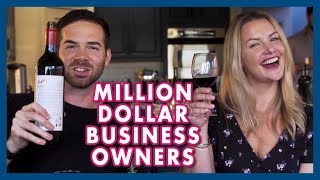
A filmed quarter‑ly backroom mastermind at Capitalism.com (Austin) hosted by Ryan Daniel Moran where entrepreneurs (Georgie, Travis Killian, Matt, Charles Crawford and others) discuss their businesses, growth strategies, audience building, product development, and founder mindset. The session mixes short founder spotlights, tactical marketing discussion (e.g., Facebook/Instagram ads, influencer endorsement), strategic advice about defining objectives and scaling, and informal Q&A over wine.
Chapters
Hey, everybody, thanks for joining us for wine with Wyan. We are here in Austin, Texas, at the capitalism.com headquarters, also known as my house. And we're in the middle of one of our quarterly backroom meetings, which is where entrepreneurs fly in and we're working on our businesses. Some people are getting ready to exit. Some people are building teams. Some people are going from right at that million dollar point, hoping to grow to, in some cases, 2 million, which means that we just have to tweak a couple things or. Or they want to go to 10 million, which means we basically need to get a new system. So we are right in the middle of our backroom meetup and just enjoying wine together. Hey, who brought this from Australia? Hey. Cheers. Cheers.
Cheers.
Do you know you could cheer with a bot? No, I'm not gonna do that. So, Georgie, first of all, give us a 60 second overview on your business.
We make holistic health products. Yoga mats.
I thought you were gonna say hallucinogenic. Hallucinogenic. I make hallucinogenic yoga mats.
Kickstarter projects.
That would be a good idea. If you need an investor, you come let me know. Yeah.
We are yoga mats. We are meditation cushions, acupressure mats, all those fun things. And we make them pretty.
You make them pretty.
We make them pretty. And we make them eco and organic and natural. So that is.
How old is your business?
About 14 months.
And I know you're like, right at the million dollar point. So what are you doing to scale from here? If you want to scale and you're.
Like, we do want to scale.
I should ban the word scale from. It's such an entrepreneurial douchebaggery word to be like, what are you hustling? How are you scaling? So what are you doing within that business right now?
We do want to build bigger. We're obviously bringing on more products. We only have four at the moment, so we will go much further with more. And we work a lot with influencers. We're building our audience on Instagram and Facebook.
So, yeah, you know, I thought we had a really good conversation today where you were gonna go in one direction, and after like 15 or 20 minutes of getting to it, we're like, we shouldn't do that. Let's do something else.
We did.
Would you summarize that?
When we had that conversation today? So that question you obviously just asked me, how we were going to scale was Facebook ads because. And Instagram ads, because that's what everyone's doing.
It's what you're supposed to do.
Yeah, that's what you're supposed to do.
So.
So we're getting all set up to do that. And then we had a conversation today about why we were doing it, why we wanted to drive. Well, yeah. What we were doing it for. And came up with a much better solution for our particular business, which was to speak more to our audience, build our audience organically. Yeah.
And it wasn't that like, there's, it's not like anything wrong with doing Facebook ads or Instagram ads.
Yeah.
But it was just. It's seemed very clear to me that that wasn't what you. I think I even asked you, is this what you want to do? And you said, well, no.
We like making our products beautiful. We like creating a beautiful customer experience. Yeah. And creating good content. So I suppose Facebook is.
Yeah, well, I mean, the thing is, I think it's so common for people to see a result and reverse engineer the result rather than knowing what they want and building on top of what it is that they want. And so in your case, you know, I. It was. It's very clear to see that you want it to grow because you love what you're doing, but that the route that you thought you had to take in order to get there was more effortful than where you really wanted to be in that place of ease. And so by switching it.
Yes.
I predict you're going to grow off hell of a lot faster.
I'll tell you next time we meet.
Good. So how did that adjust how you'll build things out for the next few months?
I think that will just change up our content structure a lot. How we're talking. We want to get in front of the camera more. We want to speak with our customers a lot more and really be authentic and organic with our audience.
It feels weird having people watch Wine with Wine Live is weird. Anyone want to talk politics and religion? Oh, come on in. Yes.
So since you believe in incentivizing hard work, I also know you're one of the hardest working entrepreneurs in Austin. Why don't you tell people about your business?
Oh, yeah. So I own like seven different brands. Lots of home good brands like Everlasting Comfort Repel number one, selling like umbrellas and oil diffusers. Arc minifier was just endorsed by Kendall Jenner.
How did that happen? How did you get a product endorsed by Kendall Jenner?
It was very difficult. I woke up, I partied a little bit and I woke up a little later than normal. I think around like 10 o'. Clock. And then I Got a Skype message from our marketing manager and she's like, hey, did we pay Kendall Jenner to talk about her humidifier? And I consulted with my partner, Joe, because, you know, this is kind of a big deal. And he's like, what are you talking about? And then I was like, no, we didn't pay for it. Can you show me the endorsement? And then she showed me.
We were on.
She was talking about us in an interview that she uses our product right before she goes to bed every day. And so I was like, that's kind of cool.
That is some super ninja stuff right there. Why do you think that happened?
I think it's just because we had the best product and she knew it, you know, And I think actually the truth is I really think that she's trying to slide into my DMs. So she thought that by endorsing my product that it would happen a little bit easier.
That's hot, Kendall.
I got you, girl.
I once heard Frank Kern say that most people do marketing first and then they figure out what product to slot into their marketing. But the very best marketing is a great frickin product.
Of course.
And the thing I admire so much about you is you put so much emphasis into making it the product people want by asking your customers and listening to their reviews and to their feedback. And you put so much emphasis into that and then you.
It's a self fulfilling prophecy. Like if I pride myself on being a good marketer, but I also pride myself on like not having to work harder than I have to. And if you have a great product, you don't have to do that.
Yeah. And it's really easy to market good products.
Exactly.
But it takes a lot of marketing and jujitsu and hypnosis to convince people to buy things they don't want. And so it's just easier if you've got a great product that people want. Which is why I always come back to who is it that you are targeting? Who is it that you're, that you're, that you're selling to before you even answer what the heck you're selling. Although you did a little bit. You said who's buying? And now let's make it even better for them.
Exactly. You know, a lot we were talking about earlier today, you know, you're talking about like audience building the product for your audience. And then there's also like, you know, building a product for the audience and then combining it with good copy. And that's how you like create the whole marketing circle. The brand circle. And I think, like, yeah, putting your product in front of the right audience is absolutely what you have to do.
Well, I secretly hope we do business together for a long, long time. I'm really excited about what you're up to in the world, Travis. You're killing it.
Killing it.
Killian. Matt, Come on in, bud. Matt. All the way from.
San Diego, but soon to be Austin.
So I know it's preeminent, but I love recruiting people to move to Austin, Texas. So tell me about the last day and a half. What's happening to your brain explosions.
It's a cool community to be in because you realize there are a thousand paths to get to success.
Yeah, absolutely.
The hardest thing is defining what success means to you.
Yeah.
And that has been, like, the big thing this week.
I honestly, I was a little afraid you didn't like me yesterday. How so? Well, because. Because we put so much.
I came to your course off of an email. The first thing.
Well, I mean, I ever bought out.
An email was coming to this.
Well, I think. I think it. Well, I appreciate that. I. I think it was. I think you were saying that you expected the path from, like, 1 or 2 to 10 to be a little bit more predictable. And we spent a lot of time yesterday, a good hour, hour and a half, going over, like, what the hell you want?
Because the path is determined on what you want.
That's true.
And there was, I think, some resistance to that idea when we were talking about it. And I could see they're like, no, it's supposed to be more formulaic than this. And it is. It is. As soon as you know what it is that you want, and that's the hard work.
Which is the ironic part about that is I spent a large portion of my military career training people how to work from the objective backwards. And only when you know the final objective can you come up with the correct tactics to get you all the.
Way to the end.
And then as soon as I go to entrepreneur mode, I completely threw that out the window. And I'm just like, tactic, tactic, tactic, tactic.
Oh, yeah.
You're the first person to ask, what is the objective?
I'm like, oh, my God, how can.
I not remember that? This is exactly what I used to teach.
I mean, I obsess over that question because I know that not answering that first has caused me a lot of pain. I mean, the idea of building something without knowing what you want means that you scale unhappiness, scale on happiness.
So unpack that.
Sure. So if you Are. It's kind of like if you are going to a job that you hate and you decide that you want to go from 40 hours a week to 80 hours a week, do you get happier or less happy, but you're making more money. Yeah, but it doesn't matter. At some point you break because you have now amplified something that didn't make you happy. And a lot of entrepreneurs start businesses because they want the money so they can live a better life. They start making money in spite of the fact that they're in a business that they don't really love. And that's okay. It's usually step one, but once you.
Have step one is breaking free.
Yeah. Yeah.
Having.
Having a way to make money on your own. Yeah. That is not connected to a job. Step two, we now have to go, okay, kudos. Now what do you want? And most people are like, no, just give me more of what I'm not happy with. What. Right. And so if you don't solve that after you've broken free a little bit, then you end up scaling on happiness, and you will break.
And it only happens 100% of the time. Yeah.
And I think that was probably one of the biggest challenges and kind of accomplishments of this weekend is watching looking around the table and watching everybody's mind kind of break a little bit. And you're like, I thought business one, that I made a million dollars off of, that was the path.
And everybody's like, is it, do I.
Want to, like, morph business 1 into business 1A, or do I want to, as you said yesterday, let business one slowly and profitably die?
Yeah. Die a slow and profitable.
Slow and profitable death, while business two, which is my real passion, I can stay, steal those skills away from that and. And put that into something else.
Yeah. Yeah. I thought, oh.
That'S what's going on behind the scenes.
Cooking cookies with Wyatt. Hey, Lance Kendrick. What's going on? Lance asks, how do you highlight your product when competing with larger companies? Selling this same product, the way that you highlight that is identifying who you sell it to and making your product more to them. You can do that in your branding. You can do that in your communication. You can do that by changing the product. You can theoretically sell the same product differently to two different groups of people. Why do some people buy from Gillette and other people buy from Dollar Shave Club? Because they're different people. That's why I feel like somebody's about to throw a cookie at me. All right, cool. All right, I'm ready now.
I Got one. I'm one for one.
Ah, I missed it. It hits the tongue. It's a drop. It did taste good.
All right, who's up? Charles Crawford. You want to come in?
You're about to meet a ninja, A real life ninja. First of all, a ninja so good, so quiet, you don't even know he's in the room.
And a ninja so stealth, you don't know that you're being retargeted nine different times on social media. A ninja so stealth that he can literally put you out of business with the wink of an eye. Charles Crawford, I didn't even know you were here. You really are a ninja. My goodness. What's up, dude? You are. You are the mysterious man behind the curtain, in my opinion. I'm kind of afraid of you sometimes because I think. I think you might, like, know my life story and have, like, a file about everyone here and be retargeting everyone with secret messages. Probably the best Facebook advertiser may.
At least in Arizona. Are you the best Facebook advertiser in the world?
Yes.
I want to know what makes you the best Facebook advertiser in the world?
Yeah, I think it's a lot of mixing copywriting with.
Like, understanding the full funnel. You know, like, some guys are, like, just good at maybe writing an ad, and they might be a good media buyer. You know, like, they can tweak budgets and do that, but they can't create a really sexy, amazing video ad. And they can't create a really good funnel with a good offer, with good copywriting, with good upsells and actually, like, manufacture the product and then build a team and, like, you know what I mean? Like, they might be good at one little thing, but to have the full package is, like, really rare.
So what you're saying is you're the full package?
Yeah, I guess.
Yeah.
I mean, your strategy has been to go into, like, old established markets and to do marketing better than any of them and then say, watch me go to work.
So I was. I'm pretend you're not here for a second, Charles. I won't tell you that I'm pretending you're not here. If I had to bet on someone having a billion dollar exit in the next 10 years in this room, it'd be Charles Crawford. Like, I. Is that a goal of yours?
Yeah.
Yeah, I think he could probably do it. I have to ask this. You're 26.
Yeah.
You have an eight figure empire. You've already had an exit. You're arguably the best Facebook advertiser In the world.
Where do you derive meaning from?
That's a good question.
Definitely a lot from business. I do feel like I'm impacting my customers so well that that helps me be motivated. Like, I don't wake up every day just for myself. Like, I don't really think about the exits. Like, I know that one day, yeah, sure, I'll sell my companies and It'll be for 10 figures. But I don't wake up every day being like, oh, I need to exit for 10 figures. I wake up, I'm like, huh? How can I help get a lot more customers today because they need my product.
That's it.
So the reason I'm emphatically waving my finger at the plant is because.
When I started, like, owning the fact that I really wanted to own the Cleveland Indians for a good year, I would wake up and beat myself up over the fact that I was 22 and didn't know how I was going to own the Cleveland Indians, because now I had created this major gap for myself. And all I thought about was the end result with of. All you're thinking about is the end result. You're never happy. You're always punting happiness.
Yeah, exactly.
And then when the pot of gold at the end of the rainbow comes, you literally haven't learned how to be happy, so you're still not gonna be happy.
Then you're depressed because you sold your business.
Exactly right. Everything that you got meaning from is now gone. And what you just said is that you don't wake up thinking about that. It's a goal.
Correct.
Cool. But the goal doesn't impact how you wake up in the morning. How you wake up in the morning is to look at what's immediate in front of you and say, I know this provides value for other people. How do I get it to more people?
Yeah, exactly.
Because I'm in the Wish I was as wise as you when you were. When I was 26.
Because I'm in monopolized markets and I'm disrupting the monopolies and then fighting them, and they send hitmen to my houses, and I have to compete with that. But, like, I feel like that.
That you. I'm. I have a strange suspicion that you're not kidding.
No, no. I'm like, Jesus, and everyone wants to crucify me.
Sorry, I don't always know when you're kidding. So that was.
Yeah. Kind of serious, but, yeah, you didn't hear the story.
The hitman is real.
Well, that was just one of them.
I mean, I Haven't heard the story, but I get the sense you ain't kidding.
Yeah, no.
Charles, I would like to give you 30 seconds to say whatever you want to say about any topic in the world. Go.
Don't live for yourself. Like, I believe I'm the king of Sparta, and I, like, widened the battle, and I don't care if I die. And when my competitors see that in my eyes, they're like, why is this guy smiling? Like, we have more men than him? But then they start to get scared because I don't stop smiling. And as I get closer and closer with my 300 men and they have 50,000.
They'Re like, looking around, they're like, does this guy have reinforcements in the mountains that we don't know about? And they start looking around, and I don't. I'm just crazy.
But the funny part is you win. And then when you win those sort of battles, your confidence gets really high and you just keep fighting.
Are we all going to die today?
What hotel are you saying?
You're not Santa Sesta, are you? Where's that mentality come from?
That's a good question.
I mean, the, like.
I mean.
I mean.
I know you a little bit outside of this world, but so, like, I know that you have a mindset of.
I actually think you thrive on the adversity of being the underdog and winning and proving that. Where did that come from?
Big drive.
I don't know. I think part of it could have come from my childhood and playing a lot of sports and doing that.
Really?
Yeah.
Where did that give you the mentality?
Like, my dad trained me really young. He was always.
Like. My mom was like, the lovey dovey. She gave me the love. And my dad was like, we're gonna work out for five hours. I'm like, dad, I'm five. He's like, I don't care.
So I was, like, playing college kids in basketball when I was like, nine, and he trained me up to be a killer. And I was, you know, I guess winning games I shouldn't have won, competing at the level that was. Not that I was like LeBron James reverse dunking on people, but, like.
I.
Went hard in sports, and so is it just that muscle of winning against all odds just continues to get refined, I think was.
That was. It's fun becoming better every day. Like, I realized, like, I played violin and piano and still play professionally, but, like, I wake up every day to be better than I was the day before, not just like, you know, so I think I Actually compete with myself more than anyone.
Yeah.
Because I think that I am my greatest competitor.
What's the biggest failure you've ever had?
Nothing. There is no such thing as failure.
Go on.
Because it's learning. You only fail if you actually, like.
Like, you get shot. You don't keep going, you know, like, if you don't learn, then that's failing.
If you stop.
Yeah. Or if you keep doing the same thing over and over again without fixing things, then that's failing. But if you're constantly improving and learning, there is no failure.
You, a year and a half in, might be the greatest Facebook advertiser on the planet.
But there. Was there a time you sucked at Facebook ads?
Hmm. I guess maybe unlike the first.
That's what I mean.
First few months or something, you're just willing.
You're just willing to suck, and you don't get your ego attached to things sucking.
Yeah. There we go.
Yeah. Okay, cool. Feedback.
Yeah. Correct. Yeah. Like in 2000. I mean, technically, I wrote my first Facebook ad in 2010, but didn't really. I wasn't a serious Internet marketer until, like, just a few years ago, so. But yeah, my first dad's totally probably sucked, but I kept going and tweaking and learning. And then you become better.
Yes.
That's the idea of, like, it's not like I just showed up and was like, hey, like, I'm Mr. Facebook Genius Killer.
But. But. So you. You wake up with that, like, that consistent compounding mentality.
Yes.
I'll be 1% better at this today.
Yeah. Correct.
And you know that if today stunk, you still know the law of averages mean that if you're improving every day, you're going to be really, really good a year from now.
Correct. And when you keep learning from the little micro failures, then you learn faster. So, like, when I test things, I test hard and fast and learn fast and learn faster. Because now speed is important. So instead of just spending $5 a day on a new funnel, I'll spend $1,000 a day or something. Then you learn so fast, you can scale faster, move faster. Everything is speed.
Well, Charles, I have a feeling I'm never going to forget this conversation.
Yeah, this was. This was fun.
Who in the world is going to follow up that one? Cheers. Charles Crawford, everybody.
I don't know how to follow that up at all. Hey, everybody, thanks for watching Wine with Wyan. I'm Wyan, and this is Wine. And it has been a surprising one, to say the least. Special thanks to the back room, everybody. Good night.
Sam.







