
My New Business: How I Chose What To Sell & Which Products To Launch
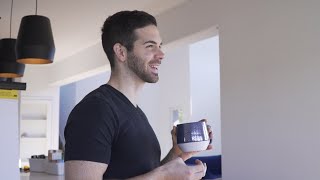
This content was created by Capitalism.com. This content was uploaded by Capitalism.com. This is a YouTube video titled "My New Business: How I Chose What To Sell & Which Products To Launch" created on July 16, 2020. It features Ryan Daniel Moran discussing his new business venture, "Switch," which focuses on developing a line of products aimed at optimizing mental health and productivity for entrepreneurs. The video includes a detailed explanation of the product development process, the target market, and the launch strategy for the brand, which includes products like nootropics and supplements designed to enhance brain function and regulate circadian rhythms.
Chapters
Good morning, my friends. I'm Ryan Daniel Moran, and this is Capitalism and Coffee. We're going to talk about both of those things today. So the purpose of today's live, I want to tell you about the new products brand that I'm launching here in a couple of weeks. And I want to go through the thought process of how I decided on what product to release and what brand to pursue. So for the last couple years, I have been advising a lot of physical products brands, but I have not had a new brand that I started. I have a couple old brands that I hold in a portfolio and I have, I have equity in, in a few physical products brands, but I haven't started something brand new. So today I'm going to walk you through how we decided on the product line, how we decided on the name, and I'm going to show you the prototype that I've got sitting right next to me. I'm going to walk you through the product and how we're positioning it. And also at the end, we're going to, if we've got time, we're to going, going to go over the launch plan of how I plan to take this business from nothing to seven figures. And we're going to document the whole thing here on YouTube and publicly. So if you are not watching on YouTube and you're not subscribed on YouTube, please go ahead and hit the subscribe button and check in for notifications because we go live here quite regularly here on the channel. First, for those of you who are watching live, please let me know in the comments. I want to say hello. And then we will get to our ceremonial simultaneous sip. Before I jump into what I want to share with you today. What's up, Esteban? Hey, Tony Torres. Hey, Drew Hitchcock. Good to see you. Drew. You are always here and I so appreciate it. And how, how happy are you to see the growth of the stuff we're working on. Glad to be working with you, Drew. Hey, Yogesh. Hey, Summit. Good to see you. Hey, Rebecca. Hey, Paul. Hey, Rules for Rebels. Hey, Lil. Good to see you. Hello. Good morning, Susan Anderson. Been thinking about you all day. Hey, Nathan Lau. Great to see you. Hey, Ted. What's up, old friend? Great to see you. Hey, Orez. Hey, David Cohen. Hey, Matt O. Hey, Salome. Is that. That's a badass name. Am I saying that right? That's a badass name. Hey, Ron Taker. Good morning, Pete. Good morning, Clean Ease. Hello, Linda Sampson. Charmaine. Good to see you. Good morning, Rita. Rita. You always be Rita. Palkovic to me. Hey, Mohammed. Good morning. Hello, Karina. Hello, Richard Bull. Good morning, Yolanda. Good morning, everybody. Good morning. Thank you for joining me on coffee and capitalism. Good morning, Helene. Good to see you. I had a crush on a girl named Helene. She was the winner of The Bachelor Season 2. Don't tell my mom. Okay, so before we go into today, what I want to share with you about. About starting a brand and how I choose them. First, we have a very special ceremony. Please grab your cup, your mug, your glass, your chalice, your sign, your tankard, your thermos, your vessel of any kind, fill it with your favorite liquid. Today I've got coffee.
That's weird. Hold on. Tennis standby.
If you can see me on. Would you let me know if you can see me on Facebook right now? Those of you who are watching on Facebook. Did you just lose me? Let me know if you're watching on Facebook. I just got a notification that the Facebook ended. So simultaneous sip on pause. Simultaneous sip is paused. Can you see me on Facebook? Please let me know on Facebook. Let me know. Dun, dun, dun, dun, dun, dun, dun, dun, dun.
I've never been caught in between a simultaneous sip before. This is weird. All right, Arhan, you can see me. Ted, you can see me. All right. Okay, okay. All right. Okay, cool. Thank you, everybody, for letting me know. All right. Thank you, Brandon. Thank you, Arhan. Thank you, Rebecca. Thank you, Ted. Thank you, Chris. Thank you, Lonnie. Thank you, Brandon. Thank you. Okay, all of you. Thank you, Rita. Thank you. All right, so grab your cup, your mug, your glass, your chalice, your sign, your tank, your thermos, your vessel of any kind, fill it with your favorite liquid. I've got coffee. And in an homage to one of my heroes, Scott Adams, please join me now for the unparalleled pleasure, the thing that makes everything better, including the stock market, unemployment rates, and physical products brands. Join me for the simultaneous sip goes.
Oh.
All right. So today we're going to talk about the new business that I am a few weeks away from launching, and I want to document this publicly so that we can celebrate the wins and also see the losses as well. So it's been a few years since I have launched my own physical products brand. The last one that I launched from scratch, I took from about $600 to. Well, when I sold it, it was valued at 15 or $16 million, and it was pacing about $10 million in revenue, making about $3 million, a little over $3 million a year in profit. So this I'm really excited to document the launch of the new business. And I'm going to tell you all about it today. And we're going to go through the wins and losses together as we build this business. And so I'm going to do this one publicly on these live calls and give you updates about what's working in the business and what's not working in the business. So if you'd like to follow along on that, please make sure you're subscribed to the channel and I'll be updating you regularly about what is going on. Okay, so let me tell you how we got to this point, because as a new entrepreneur, we've got often a thousand different ideas and we're not really sure what to pursue. So one of the things that I talk about in my book.
My book, 12 months to 1 million, is that you should always start with a person. When you're starting a new business, you should always start with who the ideal person is going to be or just any person in general, and then reverse engineer the process from there. And if you don't know who the person is, then start with yourself. Because it's really easy for us to see the challenges and the products and the things that excite us and. And it's not as easy to look at it in other people. Well, when you're starting up, when you had some success and when you want your next business to be really fun, which is where I was then, you're always looking at yourself and your own passions and your own problems to find ideas for the products that you are going to release. And that's what led me to develop the product line that I'm about to show you. Because as an entrepreneur, I've kind of gone down the rabbit hole of anxiety, excitement, depression, loneliness, and what we might call the mental health side of the physical. Physical product brand. The mental health side of being an entrepreneur. And I'm really happy that that has become such a part of the conversation and in our little community. Lately, our community of Internet entrepreneurs has been talking a lot more about the mental health side of things. And I, like many entrepreneurs, became very fascinated with going down the rabbit hole, hearing people talk about their. Their experiences with psychedelics or therapy or EMDR or all these different modalities that people use in order to stay at the top of their mental game and to increase their own performance. And a couple of years ago, I heard Tim Ferriss and Sam Harris talking about their experiences or their developments and the benefits that they experienced when they did MDMA therapy. Now MDMA therapy is in phase three trials.
You need to go through a therapist in order to get access to it. And there's basically a whole process for it. Cause it's still in evaluation process of the fda. But it led me to look at, okay, if other people are saying that this is helpful for anxiety and depression or PTSD or whatever it is that they say that it's been helpful for, why does it work? Why does it work? And so I started doing a lot, going down a little bit of a research rabbit hole, looking at, okay, it looks like the reason why this works is because it temporarily increases the amount of happy chemicals in the brain. Dopamine and serotonin, specifically. And so looking at how the brain releases those two chemicals and how it completely affects our lives was a real interesting aha. For me. It was a real interesting realization that the chemicals that our brains release really run how we view our lives and our place in the world. Our own productivity, our own happiness, our own accomplishments. They. They help set the filter and the frame for our lives. And if the brain is releasing a lot of those, then we tend to be happier, we tend to be more productive, we tend to be more alert, we tend to be more excited. And so I dove down that rabbit hole pretty deep. And I think most people who are in the entrepreneurial world, you can tell me if you've experienced something like this. You start by looking at, like, bulletproof coffee. And then it goes to, well, what about bulletproof coffee with nootropics? And then it's bulletproof coffee with modafinil? And then it becomes Adderall. And then it becomes whatever, and it. And psychedelics. And you start to go down this rabbit hole. But as if you're like me, then at some point, you've gone down the rabbit hole, and you still haven't found some sort of satisfaction or relief from the thing that was holding you back in the first place. And so seeing this as a problem for myself, of wanting to optimize my brain and also just be happy and calm and alert and excited and experience what it is that I wanted to experience, I started to look at, okay, can I do something about this for myself? Can I start to develop some products around this now? Thank you. Rules for Rebels. I appreciate that. I will certainly hit you up and I'll talk to you. Talk about that in a second.
So Drew says, I've got a friend who takes 120 different supplements for this type of thing. Yeah, right. So when you've got this problem, you'll do anything to solve this problem, myself included. I biohack. I have a biohacking doctor. I like modafinil. I've tried Adderall. I've tried bulletproof coffee. I've tried doing ketosis. And it all kind of works to a certain extent, but it's all made to do the one thing of optimizing the happy hormones in our brain. So as I went down this research rabbit hole, I discovered that there were two things that really determined how happy we feel and how we experience life from this perspective. And those two things are our nutrition and brain chemicals. So that's the supplements we take, that is the food we eat, that is the drugs we take. It's the chemicals and the nutrients in our brain. And number two, it is stress and sleep as determined by schedule. Stick with me.
So stress and sleep, as determined by schedule is the other equally.
Important, impactful part of this cocktail of happiness, this cocktail of what makes us feel good and productive and. And happy. So the nutrient part is easy, right? Like, we all need certain micronutrients. We want a good mix of omega 3 and omega 6 fatty acids. We want to eat green vegetables. We want to reduce sugar. We all kind of know that, right? And then there is the supplement part of things, which is nootropics or whatever else that we take on a regular basis in order to give our brain the edge. But then there is this other side of it that is the schedule piece of this. If you've ever experienced waking up in the morning and feeling like Tish.
Or at the end of the day, you just can't get yourself to calm down and to chill out. And at night, your brain is racing. Well, now your. Your brain and your body are off schedule. And in fact, over here I've got this thing, this test.
This is called a Dutch test. This is something that my doctor has me do once a year or so that tests my cortisol levels and my different hormone levels at different times of the day to see if my body is actually responding to.
The inputs that it should be having on a regular basis. Some of you might know this as the circadian rhythm, basically our body's rhythm with the motion of the earth, if you will, with the. With the development or the course of the day. So I've noticed, for me, this has been a big struggle, right? If I go to bed early and wake up early, I'm happier, I am happier, I'm more productive, I am nicer, I'm calmer. And then if I stay up really late, wake up later. I feel like the whole. I feel rushed, I feel chaotic. And so these are all things that play into this happiness cocktail that very few of us have an easy time following. So this led me to develop.
What will be my next brand that I'm really excited about. So what I went out to develop was, first, let's start with. Let's make, like, the best nutrient nootropic that would give the brain the best chance of producing happy hormones. And so that's what you see here. This was our first prototype right here. I have our second prototype over here, the most recent one. But this was our first prototype. And this prototype is.
Was just a nootropic that was, like, had everything right. It was the best nootropic that I knew how to develop specifically for increasing levels of dopamine and serotonin in the brain. And when you've got more dopamine and serotonin in the brain, then you're more alert, you're more focused, you're happier, you're kinder, you are the things that. It's a really good day. So that's where I started.
But that only addressed one side of the problem. The other side of the problem was the schedule was the. Was the circadian rhythm side of it. So I was only really covering half of it. And I had a member of the back room who is a doctor say the most interesting thing. Stephen Cabral, if you're watching this, you said this in passing, and it absolutely went, ding, ding, ding, ding, ding, ding, ding, ding, ding, ding in my brain. So you said this to me. We were on a phone call once, and I told you that I was really struggling with getting myself to relax at the end of the day, that I was having a hard time, like, I was in a rut, and I wanted your advice from a medical perspective. And you said this to me. You said the best thing that you can do is to have some sort of ritual that tells the brain it's time to switch off. And you even said. You said, even if that is.
Pouring a glass of whiskey, at the end of the day, he's like, not ideal from a health perspective, but the benefits outweigh the cost of something like pouring a glass of whiskey or a glass of wine and telling the brain it's time to relax. And now that doesn't need to be alcohol or it doesn't need to be wine. If you're Susan Anderson on this call, you turn in your chair and go, I'm done. You have some sort of ritual for getting the brain to switch out of go, go, go, go, go mode and into it's time to relax and rejuvenate. And most of us, especially those of us who work from home and who are entrepreneurs, do not have a ritual for this at all. Most entrepreneurs stay in this constant go, go, go, go, go, go, go, go, go, go, go, go, go, go, go, go, go, go, go, go.
Go, go, go, go, go, go, go, go, go. No wonder we're tired. No wonder we're not happy.
So it was really interesting to me when this backroom member, Steven, told me that the most, like, the best thing from the health perspective for people who are in that mode to do is to have some sort of ritual that gets them to turn off. And it made me think. I was like, you know, we, as entrepreneurs and people who work from home, we are obsessed with getting into go mode. We are obsessed with it. But we never talk about switching off, ever. We never talk about that until we go on vacation or until we all get together and we crave those highs, which really aren't highs at all. They're more downs, they're rejuvenation, they're slowing down, they're calming down. And then all of a sudden, we get this rush of happiness when we're on vacation or at our business retreat or we're traveling. We finally get our brains to calm down. And so that's what led me to take the next kind of step in this physical product brand and develop not just a nootropic, but a regimen that would also regulate the cycles that we should be going through. So this is prototype number two right here.
So this is.
This is. This one does not have flavor to it. This is prototype number two that was.
It was upgraded based on the first formula, but with more specificity to be the morning on Switch, which is the name of the product. So the morning on Switch is the first product in the line. And the company name that we came up with for this brand was Switch.
And Switch is a representation of the different modes that we go through throughout the day, or at least should go through. So in the morning, you throw this in your coffee, water or smoothie or almond milk or whatever, throw it back. And it is a nootropic blend that is made to put you in flow state within 20 to 30 minutes. So 20 to 30 minutes after consuming, we've gone through a couple different formulations. I think we've created the best in the world. 20, 30 minutes go by and you are on. You are locked on, you're now an on switch.
Then you see where this is going. At the end of the day, we need a ritual in order to decompress, to switch off. And so product number two, which is still in development, but we should be getting a prototype here in the next couple weeks, is off switch, off switch, throw it in your water. At the end of the day, drink. It tells the brain, I'm off now, done. And at the end of the day, now I've got, now I've got the boosters to help me calm down, to chill out, to relax, to decompress, to rejuvenate, to slow down. Then there's one more product because there's one more mode that we go into and it's out.
So our three modes, as an entrepreneur, or really as anybody who is working full time, there is on switch, there's on, there's off and there's out. And out is sleep. Or what we're currently calling it, we're calling it kill switch before bed, throw it in water, throw it back out, you're off. Your kill switch engaged, you're done. Have the best sleep of your life, wake up, boom, go back to on. End of the day, off out. And so what this does is this gets you to do two things. One, it gets your body and your brain producing the amount of happy hormones that would be allow you to operate at your best. But second, it puts us into the rhythm, that rhythm of.
Optimizing for circadian rhythms. So we've got an on mode, an off mode and an out. So can you imagine what your performance would be like if you had a regular way to switch into flow and get your most important work done right away? Because you felt so in flow, so focused so on, that you were able to put all of your energy.
Into that most important thing? And then when you were done at the end of the day, you had a way to calm your brain, to go into rejuvenation mode, prepare for the next day, then get the best sleep of your life, wake up, refresh, and go right back into on switch, Go right back into on mode. So that's what we're out to develop. And as a result, we'll have this process, this three stage process of optimizing the entrepreneur and their brains and their bodies and their performance to where now, by just getting somebody into the habit of taking our products, their whole company, their whole experience of life, their happiness, their family, everything has been impacted because they've done a simple thing of working in our routine into their life.
Now, so I mentioned at the beginning of the call that you always start with a person. You always start with the person that you are trying to address. So that's me, right? That's me. That's the entrepreneur who tends to work from home, who has a recurring problem and wants to do something about this problem. And what I see in the comments, this is interesting, is Matt is saying, I want to be your guinea pig. Rebecca is saying, I know somebody who really would need this. I see several of you writing in saying, this sounds awesome. This sounds great. Now, if I was doing this same talk, if I was just talking about the product to like a fitness audience.
I would have to do a lot more explaining, right? I would have to go into talking about what the product like, all the ingredients in the product, the stack and how we chose it, and the health benefits behind it. But since I know the problem that I face, I'm just communicating from the place of I'm doing this to solve my own problem. And if somebody else is like me and has the same problem, I'm developing the solution for this very specific problem. Now, because of that, a lot of you who are like me or follow me or have the same problem as me are saying, I want this, I want this, I want this, I want this. That's the power of knowing the person that, that it is that you're speaking to in the target market. I really don't have to talk about the product that much. I have to talk about the problem and the solution. And now here's a really good question. Someone just posted Salome asks, All right, so what's product three and four? So as you, as you remember from the book, I talk about how I never start a brand until I've got a suite of products that I know I can take to 100 sales a day. And the reason for that is because I don't want to have to get 100 customers per day. I want to be able to get 25 customers a day, but sell 100 units a day because I want them coming back and buying more and buying additional products. I want one customer to turn into four sales. So that's one of the. That's what's one of the beauties of having a regimental in this, this brand. On, off and kill or out, we're not sure yet. That sleep product, those are our first three products. And we can come out of the gate with those first three products and come out of the gate with those three, and then we have ideas for four, five and six. But we can come out of the gate with three that perfectly complement one another and the chances that a lot of people who try one are going to come back and buy all three. Now this is. So that's how I came to this physical product brand. I chose a person, it was me, had a very clear pain point and decided to develop a solution for that pain point. And I know exactly who the target market is because it's other people like me. And I'm confident that we've developed an amazing solution for that. And then number two, the product is the regimen, the on off and kill the switch on the off switch and then go into sleep mode.
And number three, what I want to go into next is how we're going to launch this and how we're going to take this to seven figures and of course we'll document this on the channel here and see if my prediction is right. But here is our plan for releasing this. By the way, if you are watching this and you are a member of the 1%, there's a link in your members area if you want to come hang out in the room and ask some questions or go through. If you're like challenged with what business to go into or what product to launch next, that would be a really nice compliment to what we're talking about today. So if you're in the 1% and you want to come hang out in the room and work with me, go ahead and click that link and come join me in the room. So that's if you're a member of the 1%, you can come and hang out with me live. All right, so let's talk about the launch plan for this. So the launch plan is two parts. It is the early stage, early adopter launch and then there is the cold acquisition model. There's the cold acquisition scaling part of this. So the early stage launch is going to be on Amazon and our own website. Probably very heavy on Amazon with those three products as separate products. So we'll launch it to our list.
We will go into the like, we'll launch the list, we'll get reviews on Amazon, we'll talk about it on social media, we'll gather testimonials, we'll document them on social, we'll screenshot all the positive reviews. We will, we'll do all that stuff. Everything that I talk about in 12 months to 1 million, we'll be doing publicly on Switch in order to get the brand to 25ish sales a day at very minimum hope. And then when we've got all three products launched. It'll be more like 100 sales a day and that'll be pretty specific on Amazon. But the real scalability will come when we have all three products as part of a monthly regimen and you're on auto ship. And so our strategy there will be running cold traffic From Facebook and YouTube over to a sales page that gets people to test or try the switch lineup and will probably send them straight to a sales page to get them at the monthly auto ship. And if they don't buy right away, we'll retarget them with free trial offers. So get a sample pack, try this for free plus shipping and then put them into a follow up reorder sequence to get them on auto ship. Now this is the beauty of this. So we're probably going to have the, the monthly.
The, the monthly auto ship be $99 a month. So we have $100 that we can spend actually maybe even up to two or $300 that we can spend to acquire those customers. So we'll can, we can spend, we can lose a few hundred dollars in advertising to get them to be on auto ship for the monthly package. And when they do that now we can build up an evergreen system of people who are, we have thousands of people in there on auto ship and now we've got a multi million dollar business that is growing and scaling and churning and, and growing. Plus we can take the customers from Amazon and bring them over into our sequence for the monthly auto ship. So that is the plan, that's what we are doing here. Yogi, I can see that you are here in the room but I cannot see you. So if you've got a camera, please turn it on and if you do that then I will bring you here.
Onto the live here. But I need your camera on for this.
So that's the plan. That is what that is, that is the new business that I'm going into. That's what we're launching, that's how we're launching it and that's how we are going to take it to seven figures hopefully within, within less than a year. And so we're about four weeks away from launching it. And my expectation is that just like all businesses, you come out with a bang, you optimize, get as many reviews as possible, you bring them into a sequence as quickly as possible, retarget them and then the work begins. Then it's about keeping those customers, making those customers really happy and getting more customers as it grows. So that's the plan. And I'm going to be documenting the whole thing on YouTube and inside the 1%. So if you are a physical products entrepreneur or you want to be and you're looking for a network of people who have done this, you should really be in the 1%. It's capitalism.com 1. That's our community of entrepreneurs who are building businesses and investing the profits. And if you want to follow along the entire documentation of this, please make sure you are subscribed to the channel and you'll see all of the lives and updates that we do around what's working and what's not working. I want to take a minute for any of you who are in the 1%. Yogi, I can see you here in the room but I cannot see your camera. And so I'm not going to add you if I can't see you. But if any of you are in the 1% and you want to come hang out or ask a question, feel free to do that. We're doing kind of a new format moving forward. What we're going to be doing is I've been going live Tuesdays and Thursdays and then just kind of documenting the experience or sharing what's on my mind or what we're investing in. And then on Sundays we have like an official training that we do for our 1% members. And so what we're going to do moving forward is I'm going to be documenting the development of our businesses on the twice a week lives, once or twice a week lives and then bring in 1% members who have Q and A that they want to ask. And then on Sundays we'll keep it as a structured training.
Alright, so I will see you guys, some of you, on Sunday if you're a member of the 1%. We're doing a training with our friend Kevin Wilkie who's talking about his hiring process. So we'll continue our series on team building and then I will see the rest of you here live next week on YouTube on Tuesday. So thanks for hanging out with me. Oana says, where do I subscribe to the 1% that is at capitalism.com 1capitalism.com 1.
Pete asks, hey Pete, when it comes to creating supplements, what do you look for in a supplier? I look for communication, I look for speed and I look for knowledge of the space. So I'm looking at how fast can they create and innovate, how much do they know about what products are going to work and I look for how good at communicating with me are they, what do I think about done for you. Amazon services, they can be up to $50,000. I don't recommend them. I use. I do recommend agencies, however. The best one that I know of is Turnkey Product Management. They're out of San Diego. They've been on the podcast a bunch of times and we have another episode coming up here in a couple of weeks. It's run by Jeff Lieber. He's a member of the backroom. We work together pretty closely. So I like agencies and services that do this, but.
I don't like outsourcing your marketing. You should be going with an expert who, who is going to be walking you and your team through this.
Thank you, Ron, for the kind words. Thank you, Brandon, for the kind words. Thank you, Ted, for the kind words. Thank you, Lil, for the kind words. Thank you, Drew, for always being here. Thank you, Rebecca, for the kind words. Will we use Amazon to ship every month? Sure, we'll have subscribe and save on Amazon, but I think the majority of our focus will be acquiring them through our own cold traffic system and be fulfilling through Shopify.
This is a good question. How was the process to develop a product?
So getting a prototype is really easy. Most people put way too much like thought into the prototype. Go to the manufacturer, tell them what you want, see what they can do. If they can't help you, move on to the next one. So communication and speed is the most important thing when it comes to getting a product developed. Does the supplier speak the language that you're looking for? Meaning like, do they know the space? Can they offer advice? And how quickly can they get you a prototype? Get it, get it ordered, get it tested, get it live. That's the process.
Thank you, Candy, for the kind words. I'm excited to have you follow. All right, everybody, again, we go live here regularly on YouTube, so make sure you are subscribed and I will keep you posted on the development of Switch and some of the other brands that we've got. Thanks for hanging out with me on your Thursday morning for Capitalism and Coffee and I'll chat with you guys soon. Have a great day. Take care.







