
Price Gouging Is Good: How To Succeed During Coronavirus & The Upcoming Recession
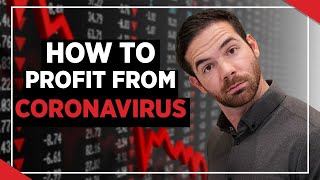
Ryan Daniel Moran argues price gouging allocates scarce goods to people who need them most. The video includes Dr. Drew on media overreaction, Naval Ravikant on why the downturn is mostly psychological, and predictions that remote work and streaming will boom.
Questions this video answers
March 17, 2020
The video states: '5,000 people just in the last two weeks have died from the flu here in America.'
Dr. Drew mentions '17,000 documented infected' and '300 deaths' (he also speculates there may be hundreds of thousands of actual cases).
A Facebook post inside the 1% group cited a 15% ROI on a 30-day put.
Chapters
Hey, capitalists. I hope your Facebook status is marked safe from coronavirus, because if so, today we're going to talk about how to profit from it. Yes, that's right. In times like this, during times of mayhem and panic, there are always opportunities. So today we're going to talk about how to protect your family's finances and maybe even benefit from all the chaos going on in the world due to coronavirus. Let's dive in.
To dive in. We're going to talk about a little controversial view that I have on price gouging. Because when we're talking about profiting during a very chaotic time like we have right now, there's always the assumption that we're going to talk about how to jack up prices and profit from all of the scarcity. And the truth is, that's not what we're talking about today. But if we were talking about this, strap in. This is controversial. I would tell people price gouging is good. Price gouging is actually a very healthy thing for the economy. Economy, it is labeled as a bad thing because the perception is, well, what about those who can't afford the higher prices? But this is where economics, and a basic understanding of economics literally saves lives. Because when you have a crisis or when you have a shortage, if the price does not go up dramatically, you run out. You run out completely. If the price stays low, then those greedy rich people can come in and buy all of it and resell it, or buy all of it and hoard it. So the most loving, caring, giving thing that you can do to ensure that very important things are distributed to those who need it most is to jack up the price. So capitalism is often labeled as being this evil thing that jacks up the price when there's shortage. Yes, that's how markets work. That's how we ensure that, that people who need things the most get it to where the price is appropriate for there to still be still beyond the shelf or at the pump or at the store for the people who need it to be able to get access to it. So you might see this in uncompetitive markets where you have only one supplier. So the price is really high. What does that do? They say, oh, that's a greedy monopoly. Those rich evil entrepreneurs are trying to make a profit. Well, guess what that does that price signal signals in other people to supply the same good. You might remember Uber surge pricing. Remember that little tag they had? We're jacking up our prices to encourage more drivers to get on the road when there's an increased demand, price goes up, which encourages more people to come into the market and supply what is needed most. That's a service, that's a good thing.
So.
So if you're an entrepreneur who is looking at the slowdown of I'm not able to get goods from China to sell on Amazon as quickly as I would. But you're worried about being labeled as a price gouger. I say raise your prices, don't run out of stock. It's the worst thing that you can do for your business. It's the worst thing you can do for your customer. Having no stock is much worse than having expensive stock. And that's why price gouging is a good thing. Now, when it comes to the coronavirus and the severity of it, let's not downplay the fact that many people are going to be negatively affected by this. Many people are negatively affected by every illness, every disease. And there's no need or positive spin on us downplaying the effect that illness and sickness has on people. But we look at the grand landscape of things. How serious is coronavirus compared to other illnesses? Well, let's be real here. We know it spreads faster than most, but we know that it is not fatal for the vast majority of people. And for those under 60 years old or who don't have compromised immune systems, the danger is very, very low. So in the grand scheme of things, we're gonna be just fine. What that means is that if you can be rational and logical right now you're in a very interesting period where everyone else is freaking out, but the 1% of us who are gonna come into this calm and cool headed are going to be open to a lot of opportunities that look very interesting right now. If you don't believe me on the impact of coronavirus, why don't you listen to what Dr. Drew had to say about it. So Dr. Drew, are we overreacting as.
Yes. I'm hearing this from doctors left and right. Yes. And we are not overreacting. The press is overreacting and it makes me furious. The press should not be reporting medical stories as though they know how to report it. People that are infectious disease specialists, the cdc, the epidemiologist, need to take the this very seriously. The press needs to shut up because you're more likely to die of influenza right now.
That's what doctors are saying. However, I'm not trying to go against you, but I have a question. It is now beat SARS in terms of fatalities 362 and they're saying but.
Its fatality rate is still lower.
But they're saying it spreads fast.
It's a mild illness. It spreads all over the place. And it's only out of these 17,000 documented infected. I bet there's hundreds of thousands of cases, 300 deaths. And always in immunocompromised people, always in people that are at risk for these sorts of things. If they get a severe viral respiratory infection, whether it's flu or corona or whatever, all of these can hurt people who are compromised. They can. The rest of us need to wash our hands carefully, get our influenza vaccines. Listen to the cdc. If there's a problem, they will let us know.
The CDC made it very clear that 5,000 people just in the last two weeks have died from the flu here in America alone.
Why are we panicked about that? Real people died on the streets of Los Angeles this morning from homelessness. If that were coronavirus, people would freak the hell out.
You're right.
Why aren't we putting our parties in the right place? It's the press. The press does not know how to report on medical issues. It's where I first learned about, should.
We have consultants now? What is really serious about coronavirus is the impact that it could have and is already having on the overall economy. In fact, I'll be as bold as to say it seems kind of obvious that this is the prick of the bubble to the next economic recession. When you have production slow down and you have people not going to the grocery store as often. I was at Whole Foods yesterday. There's nobody in the store. I asked the checkout guy, I'm like, has it been slow the last couple days? He's like, yeah, there's been hardly anybody in here. When people don't shop in stores and they don't go on vacation and they don't go to work, you have an economic slowdown. It's just the natural course of things now. I actually think that this is going to be a really good thing long term. And I'll give you my bold predictions for coronavirus here in a minute. What's important to know for your finances is that we're probably on the beginning of a decent recession, which means that we're going to have a slowdown for a couple of quarters. We're going to have a lot of hurt in the stock market. And when companies start releasing their earnings reports, they're going to be ugly for the next couple quarters. If coronavirus has the impact that I think it will, just based on the economic response in the short Term. Now when we look at the economic response, it has more possible harm than the disease itself. I was recently sitting down with Scott Adams. He's the author of the book Loser Think and he talked about how individuals response to this crisis is going to cause more harm than the disease itself. We're hearing a lot of analysis about coronavirus and its effect on the economy. And I would say that it seems to me like there's a lot of loser think being applied when it comes to really any economic analysis. But certainly right now when you have coronavirus being the thing that makes the stock market swing 5000 points up or down and I would like your analysis. Are we using loser think in our analysis or something else going on in the overall effect of coronavirus on the economy?
Well, by way of context, I have a degree in economics and MBA from a top business school. So I tell people this because they see me as an economist or they see me as a cartoonist and would lose all credibility for what I'm going to say next. Economics is a psychology engine. So the only thing that drives the economy is what we think will happen tomorrow. So the coronavirus broke. It just broke the economy. We don't see it yet because there's some inertia. You know, things carry on. But the economy is 100% broken at the moment because the psychology is all wrong.
Now what does this all mean for you? What does this mean for your finances and your future? Well, if you are calm and quiet cool headed going into this, it means that if we go into an economic recession that prices are going to come down. Prices are going to come down on labor, prices are going to come down on materials. This is going to be a good time for you to renegotiate contracts for you to go to your manufacturers and renegotiate. Because when production kicks up in China again, there is going to be a surge to try and appease the buyers again. And so it's going to be a really good time for you to open up negotiations to get better prices for your company and for your customers. This is also a good time for you to start looking at what is my next hire going to be. Because labor is going to come down. If there's an economic recession, there's going to be more people entering into the, into the workforce that are looking for jobs. And so over the last few years we've seen job numbers were insane, we might see that pull back which is going to be an opportunity for entrepreneurs and capitalists. In the short term we have some very interesting Investment options, because stocks that were not affordable as recently as 6 to 12 months ago are all of a sudden getting very interesting right now. I was having a conversation with Seam Money, the guy who makes all of this happen, and he was eyeing the stock 3M. Just so you know, this is not a stock recommendation. Don't listen to anything I say about investing. I'm just some dude on the Internet. But we were looking at the stock 3M, and the reason we were looking at it was because it has a really healthy dividend that has gone up every year for 60 years. So 3M is one of those blue chip companies that has always paid and increased its dividends. Well, I made the comment to see money. I said, 3M will never hit $150 again. This is a really good buy sign because it had just pulled back in price. Well, that was two weeks ago. And then coronavirus hit and it dropped below $150 a share. So the dividend yield was really high. When companies are paying the same amount of dividend but the price comes down, that means that the dividend yield is really high. There are companies now with dividend yields of 6, 8, 9, 10%, a few that are even higher than that. I never thought that I would see the day in which Chevron, Exxon Mobil were now paying 6 and 8% dividends. That, I mean, that's absolutely absurd. Now, the risk, of course, is that this slowdown could put those companies out of business. These companies have been around for 50 years. Could be completely put out of business because of one recession. Is that likely? There's a low likelihood, but it could happen. But we don't know. That's why the prices come down so low. Now, for the sake of timeliness, I would prefer not to give you specific stock picks in this video. Not even licensed or qualified to do that. But I do want to give you some sectors that'll be interesting to watch over the next couple of weeks and months. Energy, like oil, is a big one. Oil prices have absolutely collapsed in this overall chaos that's going on. It'll be really interesting to see what how they respond. Airline stocks. Oh, my goodness. Airline stocks. Delta Airlines. I told you I wasn't giving you specific companies, but Delta Airlines. Oh, my goodness, are you kidding me? It's fallen so much and the dividend is so juicy. Banking stocks are really interesting for me anyway, because I'm sitting here thinking, are banks really going to be affected by coronavirus and an oil shutdown? I can't see any reason why they Would I could be wrong. Maybe they'll go to zero and all the banks will get erasable. I'll go to bitcoin. But it seems to me like banks should be okay going through this. So I'm really interested in that sector. Vacation travel companies, like some of the cruise companies are really interesting because they're getting absolutely beaten up right now. But in the long term, are we going to be okay? Is this an overcorrection? That's how I'm looking at this. How much are we overreacting to this? So those are the sectors that I'm looking at now. That's from an investment standpoint, from a business standpoint, it would be wise if you sell any physical product to start thinking about what essentials are people buying that are not luxury goods. So this is the time right now that it is okay to be opportunistic because you're actually doing a good thing as a capitalist by capitalizing on where there is scarcity. So we're seeing rushes on cleaning supplies, on toilet paper, on these essential goods. Well, is there an opportunity for you to add in some essential products into your existing line? And if so, it would actually help people for you to be opportunistic right now. See, that's the thing that most people don't get about entrepreneurship and capitalism. Being opportunistic just means that you are giving people the goods and services that they're demanding right now that there's a short supply of. So thank you for being an entrepreneur. Second, if you sell information products or you blog or you run Facebook ads right now, the message is going to change from a more opportunistic message to a more problem centered message. So you're going to get better results in your advertising and from your sales presentations if you are looking at specific problems that you are solving rather than the opportunity that you're pursuing. Reason for that is during boom economies people become optimistic looking for the next opportunity. But during down cycles they're looking at problems to solve. And the problems that we solve end up being the next opportunities that lead us forward. If you want to understand our methodology for how we invest and how entrepreneurs invest, you can come join us inside the 1%. We have a class in there called the millionaire class, which is a course about how millionaires invest. Entrepreneurs tend to be a little bit risk tolerant compared to the rest of the world. We like high returns and fast results. And so balancing that entrepreneurial mindset with good long term investment requires a different type of psychology. And we go through that in the investment portion of the millionaire class, which is inside of our membership called the 1%. You can click this link right here to go check that out. There's one other kind of cool ninja thing that I like to do when markets are coming way down, and it's something called selling naked puts. Once again, please do not take my crazy ideas as investment advice. Please talk to people that actually know this stuff and are licensed. Talk about this, because I'm not. I'm just a nerd who reads books about this and has since he was literally nine years old. But there's this cool strategy that I like, which is called selling Naked puts. Now I've done a whole video about selling naked puts. You can find that somewhere around this magical video. But here is the overview. A put is a bet on a stock going down in value. And you can sell a put even if you don't own a stock. So you could say, I'm going to sell a put on Apple stock and somebody would pay you for that put. What that enters into is an agreement that you will buy Apple stock at a lower price in the future. Stick with me. What that means is that if you've got some stocks that you want to buy, but you don't want to buy them right now because you still think that they're too high in price and you want to buy them at a lower price, you can sell the right to sell them to you at a lower price. So it's kind of like you're selling insurance on the stock coming down in value. Basically just a way to get paid to be patient. That's how I view it anyway. So I do this strategy on stocks that I want to hold for a long time, that I want to buy anyway, but I'm getting paid to be patient. Spoiler alert. We just. Oh my goodness. We did this Facebook post inside the 1% Facebook group about one stock in particular that had a 15% ROI on a 30 day put, which means that you had to agree to buy a stock at a lower price in the next 30 days. And there was a 15%. I've never seen anything like that. I mean, that's just absolutely absurd. Now, of course, the risk is it goes to zero and you still have to buy the stock at the agreed upon price. But if you're gonna buy it anyway, this is a way to be paid to be patient. All right, we're talking way too much about naked puts. You can watch this video if you wanted to study it more. But it's one way that we Add in some extra sexiness to invest when markets are going down. And if you want more about this, we have a full training about it inside the 1%. Beyond just investment opportunities, there's more good news that could happen out of coronavirus and even an economic recession. So to kick this off, I want to show you a clip, a discussion between Scott Adams and Naval Ravikant. Naval Ravikant is the founder of Angellist. He is sometimes referred to as the smartest person on the planet. He's a brother of my buddy Kamal Ravikant, the author of Love like youe Life Depends on It. It's a must read. You should go pick that up. But this discussion between Scott and Naval is about what the overall impact of the response to coronavirus could be and what that means moving forward. Let's watch.
Now, one of the big fears is that the economy will get crushed worldwide. Big depression, et cetera. And I'm a optimist on this. Obviously there'll be a big disruption. So there's, there's no question about that. But how, how bad it becomes. I'm go, I'm going to add this context and I could do this because I'm the creator of Dilber. You could take 20 of any workforce and remove them from reality and nothing would happen.
I think it's more than 20, but.
Yeah, yeah, nothing would happen. And the reason I know that is not not just experience, but it's called summer, right? It's called Christmas.
We routinely have 20% of people.
You also see this when people go on strikes or there's a government shutdown. You're like, well, yeah, when I worked.
For the phone company, the local phone company, I was a salaried employee. And when the non salaried people went on strike, which happened a few times, we so called managers or salaried people would have to fill in. So there's a very small number of salaried people compared to all the union people didn't make any difference. 20% of us did the job of 80. We just didn't do the big projects and long term stuff. Put that on hold for a month and it was fine.
And if you buy the creative destruction argument, we're going to go through a shift and the new industries that we shift to are actually going to be better for the economy longer term. So going to remote work, man, being more efficient, you may be able to hold more jobs as a remote worker because you just get the job done instead of having to do FaceTime at the office. Even there was Some concern that Uber and Lyft would take a big hit because who wants to get in the car with a stranger? But it turns out that may be better than getting in the subway or a bus. So people switch away into other models of doing things. I think people are fundamentally creative and innovative and consumptive, and they don't stop doing that. They just change how they do it and what they do it around. Like, this is going to be a huge boon for Netflix and Slack and companies like that, which rely on people staying indoors. Zoom is going to do great.
There's two things that you should take away from that clip. The first is that we're going to be fine. Eventually, we're all going to be fine. The economy is going to be fine. The stock market's going to be fine. Most of us are going to be fine. Coronavirus is really being blown out of proportion by the press. And the press should. Should really be ashamed of the way that they are handling things like this. The second thing to take away is that during recessions or times of panic, it's when we have resets that introduce the new era that is going to take us forward. So whenever there is a meltdown, it means that there's fertile land again for seeds to sprout. So this is the time. This is the time for you to practice the habits, get the education, to build up your network, to be able to set the stage for your next opportunity and the next chapter of your life. Every time I go through a personal reset, the business didn't work out, the relationship didn't work out, we're starting over. You don't know who you are anymore. That's the time where the best ideas come on the other side of that. Because now there's time, there's clay for you to mold, there's newness. We don't have attachment to how things used to be or we thought it was supposed to be. That's when new innovation happens. That's when you as an entrepreneur have the best opportunity to make it. That's when you as an investor, have the best opportunity to back the next company that is going to sprout. That's when the best opportunities are. So recessions shouldn't be avoided. We should really embrace them. We should really look for the opportunities that happen out of that fertile soil. And if you're not ready for that, then you could miss that and have to wait seven years for the next recession. This is when it's time for you to get your mind right, your relationships right. Your network, Right. Your plan. Right. This is the time for that. And it requires you taking some humble pie and being willing to start over again, to try new things again. That's the beauty of this. This is when newness happens, is when great opportunity happens. We have a training inside the 1%. That's called the other half. And the other half is basically the thing I wish someone had given me when I was young and starting over after a couple failures, after graduating college and saying, what the heck am I going to do with my life? This is the training that every new entrepreneur, every ambitious person, every person who is starting a new path should go through. And at the end of these 10 lessons, you're going to have a new network, you're going to have a new plan, a new strategy, a new financial plan, and you're going to be getting momentum towards the direction that you want to go. You can get that around this video. I would highly recommend that to you or someone you know who is starting over or going in a new direction. In all seriousness, I hope you and your family are safe and prosperous during this very uncertain time. I hope that our content is a breath of fresh air for you. I hope it is a guiding light for you and your family on your financial journeys. I'd love to hear from you in the comments of this video. And if you need to be surrounded by a group of people that is on this journey together, we'd love to have you inside the 1%. Thanks so much for watching Capitalism TV and we'll see you next time.







