
Raving Fans : Turn Likes & Clicks From Your Audience Into Loyal Buyers w/ George Bryant
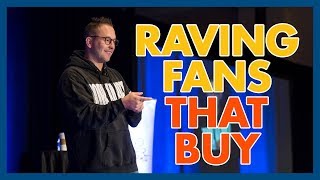
Keynote by George Bryant (Capitalism.com) arguing that marketing success comes from building relationships, not optimizing channels or algorithms. Core thesis: "Relationships beat algorithms." Bryant supports this with personal stories (military background, struggles, family why) and many practical examples: answer audience comments to win lifelong customers; use Instagram story-followups and DMs to convert likers into engaged followers; ask new subscribers to reply to an email (which effectively whitlists you) instead of burdening them with whitelist instructions; transform cart-abandon messages into "thank you"/value content to recover sales (31% recovery example). He stresses congruency (do what you say), two operational buckets for activity (learn or serve), and the PSA framework (permission, safety, accountability) to let people self-identify and start relationships. Closing call: take one actionable change to serve customers and be congruent.
Chapters
First off, my intention before I leave here is that everybody takes at least one thing with them and there's no open loops. I will be here later than all of you, I promise, because I'll answer every question because open loops drive me nuts and I can't sleep at night, so I'm gonna make sure I get them. So whatever it is for you, one nugget, one tip, one thing you can put into your business, one thing you can share with your customers, one phone call you can make. That's what I want to share. So yesterday we were talking a lot about ugc, like user generated content. I've never done this before. I'm going to do a ugk, which is a user generated keynote.
We might as well be congruent. Right? So I sat down this morning and I thought through a lot of the questions that I was asked. I'm wearing Constantine's T shirt because I get nervous and sweat. And apparently the silver in this shirt will make me not smell as bad and my wife will love me a little bit more. I know that women need scarves with pockets for their cell phones so they don't lose it. I've heard about supplements. I had no idea that pet brands were such a big commodity on Amazon. So I want to know quickly and you guys can shout it out. Any burning questions, desires, things that you want covered. The common theme that I heard more than anything yesterday is.
Thank you for making me not feel alone, because I struggle too. And I'm telling you right now that I still don't feel worthy of standing on this stage. And I think the only difference is that I talk faster and louder than most other people. So I don't give anybody the option to say no when they let me keynote. And so anything you guys have. Yes.
Turn a commodity. Yep.
How do you turn a commodity into something people are passionate about? Okay, let me write that down. Anybody else? Come on. He went first. That means you guys feel safe now. Nobody's gonna get judged. Yes.
So how do you take something that's a consumable or not a consumable? Not a consumable. Like a one time purchase like an umbrella. And then make a fan or somebody in your life around that. Right. Cause I met some umbrella people yesterday too. And seat cushions. Anybody else? Yes. Recommendations for creating authenticity with a brand that doesn't have a face for the brand. Yes. That is an amazing one. And I'm gonna cover that too. Okay, cool. So most of the other things are already covered in my notes. So faceless And I don't normally take notes, but when you guys see me looking, it's because of all the notes I took for you guys. So here's the thing. I don't wear suits. I don't do anything. Like I drink coffee. And I want this to be like a massive fireside chat with everybody.
So I just want to tell you guys why I'm here. I got asked yesterday, a couple times, like, why do I do what I do? Why do I share what I share? And so I chose a couple years ago that rather than turning to drugs or alcohol or external validation or all the things that fed my insecurities, I was going to become addicted to discomfort. And discomfort is me owning my story. And I'm still here to tell you that I've been doing it for a long time. And I'm still sweating when I talk about being bulimic for 15 years or talking about my sexual abuse, or walking into a boardroom of people that make billions of dollars a year in a hoodie with a blue mohawk.
And tattoos and being like, I'm totally different than you guys and you don't give a shit about your customers.
And like, let me tell you why. And I get nervous, I get scared. I have it. I think we all have it. And I've learned in this space that Everybody, from the seven billion dollar companies down to the $70,000 a year, down to I don't even have a business idea yet we all feel the same. The only difference is the people that own it and step into it are the ones that change their business, change their lives and change their customers lives.
I keep getting that feedback. So the reason I have this energy is not because of me. Because if I had it my way, I would be at home on the couch watching television, completely disconnected because the feelings don't always feel good. So my why is about to be put up on the screen. A little extra version of me whenever the guys in the back see it.
That's my why.
I learned something about myself when he was born.
I learned that it wasn't about me.
And every day.
He looks at me, he doesn't care about my story, he doesn't care about my business, he doesn't care how much money I make, how much money I lose. He doesn't give a rat's ass if I'm 10 pounds overweight, 3 pounds lighter, how I dress, or quite frankly, even if I showered because he smells like crap most of the time.
He is what keeps me going. The nights in the hotels, all the Airplane rides, all the conversations with customers. Because I want this world to be a better place for him than it was for me. And I want him to have a different life than I had growing up. And the reason I say that is because I'm too stubborn and smart to hold myself accountable. So I set up systems and processes and containers that do it for me. And he has taught me more than anything how to own my story. And so for everybody who asked me yesterday, where do I get the energy? How do I do it when I'm so tired? Or why do I run as fast as possible towards my fear? It's because I want him to grow up and know that he can own his story. And no matter who he is, how he feels, what his preferences are, what he likes, what he doesn't like, that it's completely okay, and he can stand in that possibility. So that's my why. And that's the earliest I've ever cried in a keynote so that one landed. So the overarching theme.
Of everything I talk about in marketing, for me, is that I am seeing a trend in marketing. I've been behind the scenes of almost 200 companies in the last couple years, and Ryan articulated it really well for me when he said, the game has slowed down for you. And it has. I can look at things. I can see them. And what I'm noticing is that everybody is spending so much time focusing on the channel and not the foundation of that channel. We focus on social. We focus on email. We focus on paid media. Those are just arms to reach out and grab people. But underneath all of those are foundational principles, marketing or relationship building. And so one of the things that I teach is that relationships beat algorithms.
I want you to write that one down, and if you want to tweet it, it's ookingcaveman. I'll respond, I promise. Relationships beat algorithms. We were talking yesterday. I think I was talking to you. Dang. About paid media. And a perfect example of this is we spend lots of money just on Facebook alone, boosting posts, running videos, running ad campaigns. We get these videos with a thousand likes on them, you know, 100,000 views and 400 comments, and yet not one person goes and responds to the comments on the ads. And I'm like, you do realize if you respond, it'll cut your CPA in half, right? Because now you get organic engagement. The relationships are what are underneath everything. And I was talking to somebody in the back of the room earlier about relationships. How many people remember the pet rock? Yeah, right. Or those stupid Chia Pets that, like, grew hair on your counter. They're still there. Is that like, a Walgreens special still? I just want to acknowledge you, Joanna, and you, David. These two amazing human beings. Did you see me on Wine with Ryan? As that was the first time? No. No. Well, we went to Wine With Ryan because we already knew you. So you knew me from food. You were going to be a speaker. I looked you up, and that's when I joined Civilized Caveman. Great. So you knew me for food. You saw me get drunk on the Internet with Ryan. Talk about marketing. And then you saw me say, I'm going to volunteer to prison and go help amazing human beings have multiple chances. And both of you showed up there and spent 12 hours there with me. Then you showed up in Austin, Texas, to hear me bump my gums and become fans of Ryan. So I just wanted to thank both of you.
This is what it's about for me.
You guys don't mind if I drink my coffee, do you?
So the thing with relationships, beating algorithms, we don't know how long Facebook's gonna be here, Instagram's gonna be here, Twitter, Pinterest, even Amazon. Sorry. I know.
I get it. I keep making the mistake. I'm like, oh, so what's your business? I'm like, oh, wait, oh, what product do you sell on Amazon?
I get that. But underneath all of it are still human beings buying your product. Right? So the reason that Pet Rocks worked and the reasons that Chia Pets worked is because it wasn't about the product and it wasn't about the funnel. Ugly funnels work not because they're ugly. Ugly funnels work because the offer and audience was right before they hit the funnel. And the funnel just became a tool. It just became a bridge. But their decision was made before, because I see it all the time. I'm gonna go make ugly funnels, and I'm gonna make a shit ton of money. No, it's not gonna work because it's not the funnel. Underneath all of it is the relationship. And so what I was talking about with a lot of you yesterday, when it comes to relationship speed algorithms, the easiest way to stand above your competition, the easiest way that I help these companies scale and we double revenue in a day or increase, like, three times net in a year, is because we just simply take 10 minutes to ask ourselves, why? Why are they commenting? Why are they engaging? Why are they sharing? Why are they tagging their friends.
And what's underneath it? And so, for me, we never focus on making them click. We focus on making them care.
You should write that down.
The focus is not to make them click, it's to make them care.
Human beings only use social media. You rethink my life.
I rethink my life every time I speak because I'm like, do I really want to sweat this much when I stand in front of this many people?
Human beings don't share on social media, comment on social media, like on social media for no reason. Okay. We're still really basic creatures. We just don't think that we are, but we are. Human beings share because they want to be right, they want to look credible, they want to create humor, or in today's day and age with the presidency, create controversy. But if you were to scroll through your feed right now, Facebook, Instagram, Twitter, any of it, underneath every one of those posts is one of those reasons as to why those people are sharing. Anybody agree with me? Okay, good. Let's get that wine out here. Coffee. Snort some coffee beans. I don't know. Tabasco in the eyes. We used to do that in Afghanistan, by the way. You don't sleep for 36, 48 hours and you're getting ready to go out on missions. And we literally used to have marines take Tabasco and put it in their eyes to stay awake. Yeah. I don't know which part of it was like, this is more sadistic and it's my ego or I'm really trying to stay awake. We were weird, weird creatures. So when it comes to social media, when it comes to business, when it comes to email, the overarching theme for me is that relationships beat algorithms. Okay, my definition of marketing, and this is like a long winded way to say it is marketing is successful. Marketing is long term value based, two way relationships.
Think about that. Long term.
Two way value based relationships.
This is where the relationships come in social media. I've given this example to 10 people yesterday. We all have competition. We're always going to have competition. Competition is a good thing. You might not be able to beat them on price, you might not be able to beat them on design, you might not be able to beat them on taste. You can beat them on relationships.
And how many people can you think of that? You wonder, like, okay, I have a competitor and their protein tastes like dog shit, but they're all still buying.
Because it's not about the protein. And so we have four protein companies. I'm just gonna use protein because it's easy. You can use pet care products, home products, you have umbrellas, you can use umbrellas because there's a lot of umbrella competition, right? You have four of them. They're on social media. Let's use Instagram because that's my preferred platform.
Customer, a, let's call it. Jane, has a question about weight loss and what this supplement does for her. She goes to four different protein pages and basically in the course of a week, ask them all the same question, different ways. What normally happens?
Say it. Nothing.
And then the one that does respond wins. Jane for life.
We have to train our customers on how to be our customers.
Pension or tweets, Write that one down. We have to train our customers on how to be our customers. So when human beings want to be heard and we give them the ammunition, we get them to be vulnerable, we get them to be authentic, we get them to self identify on our post, like, hey, I'm here. I want to use your supplement. I have a challenge. Let me ask you, because I trust you, to build a relationship with you. Here's my question.
If you had a cricket sound, that would have been a perfect opportunity. And we don't respond. We just trained Jane that we don't care enough about her to answer her questions. So why should she care enough about us to buy our products.
Right?
The reason I say you have to outcare your competition or go one click further is because the truth is, most people won't even respond. And so you don't have to go marrying every single one of your customers and sending them roses and handwritten notes every single day. You just have to acknowledge that they exist. So there's a professional sports team that hired me on my flight home from Scotland. I was on a plane and I was sitting next to this giant who was 7 foot 2, 72 years old, and he looked familiar, and I couldn't really figure out who he was. Turns out it was Kareem Abdul Jabbar.
And to speak to that man, he was in Johannesburg, South Africa, for free teaching kids how to play basketball that he flew 23 hours to do. And first class for him is like coach.
For a 6 foot 4 man. And it looked like he was just in pain, but he was there with another team. And they asked me, they're like, what do you think we can do for our social media? We love our fans, we love them and they love us. We're like the blue collar working class. I'm like, cool. Like, which platform? They're Instagram. Like, wow. I'm like, wow, you guys got 2 million followers. That's fucking amazing. I was like, you have 21 comments per post.
And nobody responds to 21. I was like, how big's your social media team? And they're like, 13.
And I was like, the fuck are you paying them for?
I'm like, not only will I fix your social media, but I'll save you about a half a million dollars in salary every single year. And the truth is, fans of sport teams are perfect, right? They go all out, they do everything to be seen, they do everything to be heard, and they just want to be acknowledged. They dress up to be on cameras. They get rowdy at the stadium so people see them. They want everybody else to know that they're the best fans in the world, even if the team is horrendous.
And then the one place where you can bridge the connection between them in person, in your stadium, and them in their house to think about you 24 hours a day, we just pretend like they don't exist.
It's really, really, really simple. If you want to train your customers on how to be your customers, you have to make them care, not click. You have to respond. You have to build two way value based relationships. You heard Josh say it yesterday, and I've given this example a hundred times, but Josh said, yes, we were trying to figure out a product launch. We paid this consultant $100,000 to tell us what we should launch. And he's like, the lesson I learned is that I should just ask and care about the response. Does this make sense to everybody? Because I see some like.
Either that or I'm really tired. Good. Maybe. Maybe. I've been on the road for 11 weeks. This is decaf too.
No, it's not. I gave up caffeine six months ago because I wanted to get uncomfortable. I wanted to see what would happen. So relationships beat algorithms, specific examples. And I asked them if I could show you my iPhone on the screen, but I can't. How many of you use Instagram?
How many of you post Instagram stories? Great. How many of you want more engagement on your Instagram stories?
Okay, so for everyone who posted them and doesn't. Cool. I haven't shown this to anybody yet. Where's my phone? Here it is.
It's really, really simple. And I'm gonna give you a tactic because you still have to care to use it. So it's amazing. So Instagram is two platforms really organically. It's feed and it's stories. Two different universes. You gotta treat them like two different platforms. So my thought was, how can I get my customers people on my stories to bridge over from feed to story. Well, Instagram did this lovely thing, and it's gonna be hard for you to see. You guys know when you click the little heart tab, it shows you how many people liked your post, what they commented on. Well, now if they have this little circle around their name, you can click on it and it opens their story. So about 10 times a day, I take about five minutes and I go for every single person who liked my post that has a circle. And we're going to pick one right now, Paleo Love Company. And I click on the icon that shows me their story. Oh, look, those are Paleo donuts. And I go, those look amazing.
And I'm done. This is my business account. And then I go to the next one. I'm like, oh, Ron Han, I hope you're not here. Keto pizza. Send me some.
Then I go to Wellness Beauty Rituals Organic Skincare. Okay. Do you think this will help me be more handsome?
Cool. Three people that have never sent me a DM on Instagram or never responded to my story now have a message from me in their inbox. They followed me, they engaged with my content. That literally, even joking, took me less than 30 seconds. If you do that 30 times a day.
That'S 20 to 30 new people that will now consume your stories every single day and message you just because you outcared your competition.
Does that make sense?
Who's gonna do that?
Brianna, you already do it.
Awesome. I'm not normally a strategies and tactics guy, but that's a good one that I thought about that I didn't have to share. So the other note that I have from everybody yesterday is, for me.
That was social media. I'm gonna talk about some products and some funnels real quick under the umbrella of the fact that relationships beat algorithms. So how many of you have a funnel, have a product, have been through a funnel, or bought a product?
Will everybody please put your fucking hands up? You don't have to say a word. I'm talking for the next 90 minutes. Including a panel of. I just need a hand. That's all I need. Thank you. And I loved your enthusiasm. Yes. Woo. Where's my bear complex? Guys, it's going to get rowdy on our panel, gentlemen. It's going to get rowdy.
How many of you have had a bad experience in a funnel?
Shout them out. What were they?
Too many fucking upsells is what you were trying to say. Yeah, yeah. Anybody else? What was it? Forced continuity? Let me trick you into an arranged Marriage. Yes.
Right. What else? Coupon code didn't work. First part, let me devalue myself by giving you a coupon. Number two, let me. Let me convince you to buy my product rather than solving your problem. And number three, let me train you to only buy from me when you have a coupon that doesn't work. Well, that was a good sound effect. You're coming to all my keynotes.
And so I like to give funnels and products what I call the grandmother test. Okay, Steve, how old's our grandmother? 90 something. 90 something. So her foray into the Internet was web TV.
Yeah. Some of you laughed because only a few of you get that web tv. My grandmother is the definition of spam. Emailers and forwarders, you know, those, like, Somalia money schemes. She probably sends me like five a day. I had to make an email address just for my grandmother so she felt important and I could respond occasionally because I'm not giving the people in Somalia any more money to get the Nelson Mandela out of prison.
And I call it the grandmother test. Right? And I go into companies, I go into these executive meetings, I go into these funnel meetings, these marketing teams. And I was like, how many of you guys love your funnels? Like, yeah, yeah. I'm like, great. How many of you think that they're the best thing ever? Yeah. I'm like, how many would be okay if your grandmother went through it?
Cricket? And I'm like, well, listen, mine might, so stop fucking doing it.
People come to me all the time. I've said this to you a couple times yesterday. I have a marketing problem. How many of you guys have ever heard anybody say that? I won't make you self identify here. We all hear it all the time, right? Nobody has a marketing problem.
No one. Everybody has a relationship problem.
Either with themselves, with their team, or with their customers.
Informed in that order.
You cannot have a successful relationship with your customers if you are, quite frankly, a massive walking incongruency.
You cannot have a successful relationship with your team.
If you say what you say and don't do what you say.
If you have trouble sleeping at night or your head, heart and belly are not aligned with what you post out onto the Internet, it won't work. That is transactional. It's basically like selling your soul to have a shit ton of one night stands.
Marketing is transactional.
Relationship building is transformational.
Right?
Please.
And my favorite thing about this is normally when I say that, I get a lot of questions, I get a lot of like, that's not possible at scale you can't do it. And that's the only reason I tell you guys the company I work with, because we do do it. We just make it a priority and it doesn't take much time. Right, Here's a little tweak. I'll give you this tactic. How many people use email marketing?
Yep, kind of. And for all you liars, it's okay, I don't mind. What's the first thing that we normally see once somebody signs up for an email and you get an inbox? Hey, you just gave me your email.
I want to appreciate you. But first I need you to do these 17 things to white list my email address, right? Add me as a contact, put me into a filter, move it to your primary tab. Right. It actually takes more effort than just simply asking them to respond, which automatically whitelists you, automatically add you as a contact and builds a relationship with your customers.
Amazing. I want to give you a mic so I see it all the time, right? We have somebody come through our funnel, we have somebody buy our product, we have somebody hit our confirmation page. Confirmation pages number one piece of wasted real estate on the Internet. Then we've got them to buy, we got them to give their credit card, they've given to us. Given to us. And in other words, we've taken from them, taken from them and taken from them. And then they hit their inbox and we take again. And we make it difficult for them to open our emails, we make it difficult for them to whitelist us and we basically train them that when you see our emails, it's associated with discomfort, so you might as well just ignore them. And then everybody tells me they're upset that they get 9% open rates. And I'm like, well, we go to supplement companies or brands and build cold traffic funnels, put 12,000 people through them and get 71% open rates, 40% click through rates on cold traffic.
Ask me why.
Because I build two way value based long term relationships. You ask them to white list right in the emails, in the everywhere.
Can you imagine, like going on Tinder? I've never been on Tinder, but I watch a lot of people on it going on Tinder and setting up a date, like, hey, I agree to this. I agree to this time and place. Here we go. And then literally sending them on a scavenger hunt before they get to your date.
Good luck. It's probably why you're on Tinder.
So I know nothing about it. That's because my wife is a goddess and she's amazing. When you look at email, right? Real example, a lot of people give away PDFs, give away eBooks, recipes, things like that, right? I'm not chasing the email address. All I really want is the pixel and the consumption of the data. So we'll give away an ebook of recipes. Now, the recipes are agnostic of our product, but if you add our product, you'll get more protein, you'll feel better, but it's not required for you to have. So now I'm creating inclusion instead of exclusion. Oh, and here's the best part. You can have the PDF without giving me your email address. Yeah, yeah. And then in the PDF or on the page, I'm like, and there's an associated video course, but not everybody likes video. So you can have the PDF, but if you want the PDF and the videos and the email walkthroughs, put your email in here. So I let people segment themselves and then that first email is like, God, I'm so proud of you. I'm like, but the truth is, is that we download a lot of things on the Internet and the only way that we change our life is if we put something into action right now. So I know you can do it. I just want you to hit yes and reply to this email to let me know that you're committed. And I promise you I'll respond.
They write yes. And I mean, like 60% of them write yes. And then we respond like, oh my God, that's so amazing. Keep it up. Let us know if you have any questions. Or even better, are there any recipes that you didn't see that you want?
It takes the same amount of time, but it's building relationships. It's getting people in the habit of associating positivity and ease of use with your brand, with your products, with the consumables. And then I'm not wasting all of my money retargeting people that didn't want the ebook, that didn't want the videos, or Quite frankly, emailing 11,000 people that were never gonna fucking buy or open emails. But yet, at scale, when you spend massive amounts of money on traffic, we spend an extra ten grand a month on our email list just paying for that.
So you just have to think one step deeper. You have to do the thinking and understand the why and the how before they get there. So if you can think through every conceivable scenario before they get there, you will save yourself a lot of time, a lot of money. You'll build better relationships, you'll get better open Rates, you'll get better conversions all the way through while actually building a tribe of hyper targeted people that love your product. Does that make sense? I normally don't talk about tactics, but I feel like it's applicable here. So other notes I have.
I have a theory. When it comes to marketing, it's more of a principle. I was a Marine for 12 years. I've been to Somalia for 13 months of my life, almost lost both my legs. Been to Afghanistan for one and a half combat tours and got seven concussions in three years. So I tell everybody that I'm only good at marketing because I got concussed. It's the only thing that makes sense. Didn't go to college, didn't read any marketing books. I just got knocked in the head enough that it gave me traumatic brain injury and made me pay attention. So I have a theory when it comes to marketing on how people create customers or turn raving fans into customers or turn customers into raving fans, or quite frankly, gets everybody excited about our brands. And it's that everybody comes home or I die trying.
What I see on the Internet is that we're gonna go find everybody, but if you don't fit into my box, get the fuck out. I'll go pay for more people to put in my box. Most people don't realize that you're only one touch point away from having a customer. You're only one question, one piece of content, one Facebook group, one video, and one PDF away from them. Either becoming a fan or becoming customer. But we do this lovely magic. Hey guys, look, I'm over here. I got this amazing product. You're gonna get your results three times faster in half the time. And it's the most expensive protein in the world, Right? Get excited. Here we go. You don't even have to work out. You can still eat like shit. I'm gonna give it to you, right? And then you're like baking soda and you pour it down the drain.
And then they come. And we're really good at taking care of the people that buy it, right? Cause we want them to buy it again. So what do we do? We nurture them, we email them, we give them coupons, blah, blah, blah, blah. Like I am at your begging call. And then everybody was just like, oh man, they just answered my questioner. If I knew if it did this, I would simply buy. But we don't follow those people. What we do is we send them an ad and we're like, hey, just in case you forgot, I still have the world's most expensive protein and you still suck at losing weight.
You laugh, but it's true, right? And then you're like, oh, you didn't click that one. Now I'm going to devalue my brand. I'm going to give you a coupon to the world's most expensive protein because I really want to trick you into forced continuity. Right?
Or you could follow them up and actually nurture them. People waste money on prospecting all the time because they're trying to figure out what audience goes into what bucket and how much money you have to spend to get there. Well, what if you just had a piece of content for that supplement on sleep, energy and mood? And if they didn't buy the content or the supplement, you just sent them to a video on sleep. Let them comment, build relationship, I don't know, build custom audiences off people who watch the video for 50% or more and then give them a sleep ad, something like that, or an opt in or an email list. Or even better, put them into a Facebook group if they're on that platform. Or get them on your organic social and build a relationship with them. But what we do is we put 100 people through a funnel. What's a good percentage rate on cold traffic for conversions out of 100? 2. 2%. You're generous, sir. 2%. So that means if those people were in this room right now and I had them raise their hand, I said, how many of you had a positive experience in my brand? How many hands would go up? 2.
I don't like those odds.
98 would say no. Or maybe 96 since your ego's a little hurt on that one. 96 would say no. You build an anti marketing machine by just simply not caring one step further. If you can turn those nos into yeses and not yeses of yes a sale, but any yes, a yes to a video, a yes to a, like a yes to a comment, a yes to a Facebook group, a yes to a video series, a yes to a PDF or a yes to an email.
You change your game of marketing. Does that make sense to everybody?
Businesses are not built on the front end.
Josh said it yesterday. And if you don't believe the man who's done 600 million, you should probably leave.
It's all sitting right here.
82% of marketing is still word of mouth.
Right? Please. That's a really important thing to remember because it informs everything that you do. So I told you that 82% of marketing is word of mouth. I also told you normally the Four reasons that people share on social media, right?
So in order for them to share on social, you need to give them the ammunition. In order for them to share out of their mouth, what do you have to give them the ammunition?
When was the last time you said no to a brand and you went and told your friends how amazing it was?
The average person in a 60 second conversation gives six to 10 brand recommendations or non recommendations, whether verbal or nonverbal. How many of you have brand name purses in here?
Brand recommendation. How many of you got a coffee this morning and it was too slow? Brand recommendation. How many of you got a coffee that you're used to getting, but this place brews Starbucks instead of being Starbucks and it tastes different? And you went to your friend, you're like, this sucks.
That was my brother, like four days in a row.
We tend to lose sight of the fact that we're constantly arming people with ammunition to talk about in a positive or negative light, our brands, our products, our experiences. And all you have to do is give them the ammunition to do it. So if somebody comes to your cart and says, no thanks, can we please not insult their intelligence? When was the last time you actually forgot to buy a product?
Hey, guys, you forgot something. No, I didn't. You fucking suck.
No, no, no. Let me convince you. I don't suck. Here's 40% off three times.
No means no.
I did that on purpose. No means no. Do you think if somebody says no and you try to convince them again that they're gonna say yes?
So we said 2%, 2%. So of those 98 that said no, how many of them do you think you're gonna recover if you send them three emails reminding them how you didn't serve their purpose, you didn't help them solve their problem, or they didn't self identify with your product as the solution?
3. And now instead of the 95 people just saying no, the 95 people are unsubscribing, reporting you as spam anyway? Those guys are fucking assholes. Ugh.
Right? It's not hard.
One of the reasons it gets so expensive at scale is because we don't take the time to plan through segmenting people, knowing what the experience is going to be.
I'm gonna share the theory of this and you can make it work for your business.
A couple years ago.
I saw a funnel that we had for a client and they were not recovering cart abandons at all, but they were giving them coupons. And so then we started searching the Internet and realized all these forums existed where they're like, if you add this to the cartoon, you wait 36 minutes, you're gonna get a 20% off coupon, but if you wait 48 hours, you're gonna get a 40% off coupon.
And then we couldn't figure out why on the front end, nothing was converting, because we were training people to devalue our brand. And so I said, well, let's flip the game a little bit rather than insulting your intelligence and being like, hey, you forgot something. I'm like, hey, I just wanted to thank you.
There's a lot of people on the Internet, a lot of brands, a lot of paid media, a lot of ads, and you could have chosen to add any of them to your cart, but you chose mine, and apparently I missed the mark. So instead of trying to get you to buy, I would just like to give you a gift. And I just wanted to say thank you. So I know you were interested in protein, so here's our video series on how to choose the right protein for you and how to get it naturally from the foods that you have. Whether you buy our product or not.
Everybody go lick this.
Make sense. I have a lot better chance of taking those 98 people unloading their ammunition of no and giving them a yes because their last experience with my brand was a yes. And at worst, they're neutral.
Right? Then we send an email the second day, like, hey, did you watch the video? I'm like, my favorite part's at 2 minutes and 37 seconds when I tell you why soy protein is horrible for you. So make sure you watch. And if you have any questions, if you have anything specific you need, any recipes you need, protein flavor recommendations or anything that we can do for you, do me a favor, just hit reply, let me know what it is, and I'll respond within 24 hours.
Another email idea number three. Hey, thanks for all those replies. I did not realize that I forgot to include all that information, and I really tanked this one. So everybody responded with all these questions, and I just wanted to give you the answers. Question one, question two, that is pain point one, pain point two, pain point three. And the truth is that if you wanted to buy my product, you still would have done it anyways. So I would love to just welcome you to our Facebook group or our social media channels where we post every single day about this. You can ask questions, get them answered, and we'll be there to support you.
Now, those people are still on our email list. They're engaging with our Content, they're pixeling themselves. By hitting these pillar pages of content that we created, we're adding value to them and we're taking their ammunition away. We recovered 31% of card abandons without even giving them a link to buy.
Let that settle for a minute. Did everybody hear that?
They actually bought the product within that seven day window.
Thank you.
Wasn't me, it was the company. Just a thought. So we in this world of discernment, because that's what we live in, right? We're competing. We're spending hundreds of millions of dollars a month on paid media. There's thousands of brands and products and people are very discerning about those products. We've trained people to skip over the ads. We've trained people to not consume the content. So instead of being like everybody else, train them to associate value with your brand. Train them that when they leave a comment on your video, you'll respond. Train them. If you have a live video ad running and they ask a question, you're gonna answer it.
But instead I see people go spend $1,000 to run cold traffic to bots in India to get fake social proof on fucking videos. You spend a grand to do it when you can just spend 10 minutes answering questions.
Don't over complicate it. Don't overthink it. Think about the fact that your grandmother, your wife, your daughter's on the other side of this funnel. How would their experience be? What could you do to improve upon the silence? What could you do to take their ammunition away? And so when I say everybody comes home or you die trying, that doesn't always mean it's your way, it means it's their way.
Because marketing should not be about us.
Marketing should be about them.
Right?
Marketing is how. I can't stand that, like yes or yes shit. So I don't do it. You ever go to personal development conferences like, do you agree with me? Yes or yes? Yeah, No.
I share how I feel most of the time. Keeps me going truthfully. And so when you think through this, if you just make that simple shift of understanding that there's an experience on the other side of it and you understand that your product is not the solution, it's a bridge to the solution. And it's how they associate success with your brand. I just almost fell off the stage. It's how they associate success with your brand and it's how you train them that it's not about your product, it's how they can consume other content from your brand. So how many of you need more than four suitcases.
So tell me how Away Luggage has raised $150 million in an industry that didn't need another fucking suitcase. And I have nine of them.
Those things are badass. And I like what it means about me when somebody sees me walking around with my away bag. Best customer service. Lifetime warranty. Content, content, content. But they don't sell a bag.
They sell a lifestyle. And you associate that positivity with that brand. So I really have only ever read one marketing book in my life. You should probably write this down. It's like, remember those old commercials? Like, I stayed at a Holiday Inn Express. Horrible marketing campaign. The book is Contagious by Jonah Berger. It's an orange cover with a matchstick. And I love that book.
And the reason I love that book is because it gives you anything that you need to ever run a successful marketing campaign. Because it talks about the human beings on the other side of it and how they collect ammunition and how they do what they do.
And I know everybody up here wants me to talk about the influencer stuff, but I'm gonna talk about that offline later today when there's no other speakers, because it's not for everybody. And it's a pretty in depth process. So bring notes. But that's an amazing marketing book to have. He covers why things catch on. How Barclays cheesesteaks can charge $165 for a cheesesteak. Well, it's across the street from the $3 one at Pat's.
It covers all of those things to give you the ammunition to think through your customer's journey.
Those guys behind the stage are really loud, by the way. It's distracting.
So the other notes I had from you guys, because this is.
A ugk, is congruency. And obviously not everybody has this crazy story. Not everybody has all of these crazy experiences that are positive and it doesn't matter. It's just about being congruent. Because how many of you can smell out shit on the Internet?
How many of you think your customers can, too?
This isn't rocket science, guys. I don't know why I get paid, but I get paid to just get really simple. We can see it coming from a mile away. Most of us now are so good. We can see the headline of an ad. And we're like, yep, seven upsells, here they come. Right?
It's true. And we're like, I know exactly we're going to say in this video, because here comes Russell's perfect webinar script on Facebook. Live.
How many of you guys have actually ever enjoyed watching a webinar?
Three. Mine. Yes. Congruency. I think that webinar Ryan said, george, you have an hour. And then three and a half hours later, I was still talking.
Thanks for trusting me, Ryan. Appreciate you, brother. We don't. But then we keep trying to do it the same way. How do you do it differently? I don't know. What do you think? I don't know. Ask.
And then try it. So one of the marketing principles I have that I want you guys to take away with you.
And it's about congruency, it's that everything we do in our business has to do one of two things. I'm gonna walk by the mic real quick.
One or two things. Either learn or serve.
If it doesn't fit into one of those buckets, you're wasting your time, money, and energy. And it's about you.
And any marketing that's about you won't work. I promise. Cause we get wrapped up in that whole headspace of like, is this gonna work? Is this gonna work? Is this gonna work? Let me make it up. Let me pull this out of thin air. Let me grab this fucking if it works. All while you have a thousand customers sitting in front of you asking you questions that you're not solving. So everything you do has to be learning or serving your customers. Ask questions, solve those questions with paid media. Ask questions. Solve those questions with emails. Serve them the answers to their questions to build trust, to build touch points, and to get people to consume your brand. Because this is a game of touch points. This is a game of building relationships and bridging the gap between them on your sales page, them on your product page, them on your emails, and them talking about you in real life.
And the only way to do that is to give them the ammunition and a touch point.
Like, everybody laughs at me when I joked about us giving an influencer a car.
And I was like, no. Every time they stuck their damn key in the ignition, there's only one person they thought about. Every time they put their hand on their steering wheel or sent a mobile detailer to their house or they walked into their driveway and saw that car. God, those guys are amazing. They actually care about me. We didn't wrap it with our logo, and quite frankly, we saved, like, 50 grand because the car payment was only, like 700 bucks a month and their contract was, like, 10.
But we give them the ammunition to talk about it.
And so you have to care about your customers by learning about them and then serving them the answers to the problems that you've seen.
So underneath that, everybody comes home or you die trying. There's one more principle that I think is the most important one out of anything that I've ever said.
Some of you have probably heard me say this 6,000 times and I'm not sorry.
Everybody should feel valuable whether they give you their credit card or not.
Write that down, please.
Everybody should feel valuable whether they give you their credit card or not.
How many buy groceries in person?
How many would love it if after you gave the clerk your credit card that you had 10 upsells on your way out the door?
Hey, you got 12 eggs. You want to double it?
How about triple it? Do you want 48 eggs today before you go home? I'll give it to you for 40% off and then I'll deliver them to your house every two weeks, 48 at a time. And you'll never be able to eat them.
And that's a very extreme example just to be thought through. Because all we're doing with marketing is we're transitioning the experience that we've created with people in person for hundreds of years onto the Internet. And yet we're recreating the wheel and quite frankly making ourselves look like idiots sometimes. And beating up relationships and abusing them to email is dead. Paid media doesn't work. No, you just don't care.
And I know every single person in this room cares. None of us started a business because we don't care. None of us serves customers because we hate them. I'm over time.
None of us. It did have 55 minutes on it, so I got five. None of us do what we do because we don't want to make a difference. And it's okay to want to make money because money equals impact. Money is how you reach more. It's okay to create products because people consume products and they use them to change their life. It's okay to sell.
Because you're selling solutions to things that people have self identified as problems. It's all okay.
So just make sure you're doing it in a manner that is congruent with your brand and gives people the ammunition to talk nothing but positive about you.
It's a different game, but we will all tell you and I've seen it a hundred times.
The small game works to a couple million. The big game does not.
Josh talked about it at scale.
Having surveys, answering questions, having pillar pages, not sending crazy abandonments. Ezra talked about it in his carts, not forced upsells, just Choices.
You can't get to where you want to go by shoving your message down their throat.
You can only get to where you want to go by listening to them and then serving them. So we talked about it on the panel yesterday, and this will be my close. The three things that people need to change or do something is the psa. It's the permission, safety, and accountability. It allows them to self identify with a pain point or a problem. It allows them to feel safe that it's okay that they want to lose 10 pounds, or it's okay that they don't like how their skin looks, or it's okay that they're empowered women that want to travel alone. Or it's okay that they want a shiny umbrella that's a bedazzled handle, or it's okay that they want nine suitcases that they don't need because it makes them look a certain way. It's all okay. And the accountability comes when you let them comment, opt in, or buy. And that's where your relationship starts. And your job from that point forth is to educate, empower, and inspire them to live a better life.
Through the use of your products, your content, or their experience with you, with your businesses.
And so all I want you to do is take one thing from today. Just one. Just one. Let go of the doubt, let go of the shame, let go of the I don't think I can do it. Cause I still don't every day.
And when you get into those places, when you feel that resistance, when you have that stress, when you have those doubts, which, by the way, I have them, Ryan has them, we talk about them all the time. That instead of being committed to being right, you become committed to being yourself and use that energy to go serve your customers.
That's it.
And thank you, everybody. Thank you.
Love you, brother.
Love you, man.
Yeah.
Oh, look at you. George Bryant, everybody.
Thank you.
Deborah.
One second.
So while.
While George is here, what was so impactful about what was the shift that George just gave you over the last hour? Just shout it out.
Out.
Carrying the competition, what else?
So how many of you in the last hour just got a gut check?
You realize you've been trying to hack the system. You realize that you have been.
Forcing your will onto other people rather than serving people.
This is when you make the shift from selling products to serving people. And as my mentor Travis would say, that's when idiots get rich.
When you start serving people.
Anything else?
What other shift did you have.
The permission to care?
Tell me why that was so impactful for you?
Well, because it sort of intuitively to someone I love.
I rather enjoy it when you say, would you be comfortable with your daughter going through your funnel? And if not, that shit's broken. Because if you are extracting from people, that's a short term business. And by the way, this is what 100% of your competitors are doing. 100% of your competitors.
All of the.
People who are selling product are freaking out every time there's a change.
Am I coming in and out of my mic? You are.
It's a remix. Yeah.
Competitor sabotaging me.
And only a few people win that game and none of your customers do. So you have held me accountable to this. You have made me be more transparent. George and I have had conversations about how we're going to do life and business together. And. And we're still exploring that, but we've talked about incubating some companies together and I'm just stoked to be doing this journey with you.
I appreciate you, man.
Get up for George Bryant, everybody.
Good start to the day.







