
Selling Physical Products Is The Best Way to Start A Business
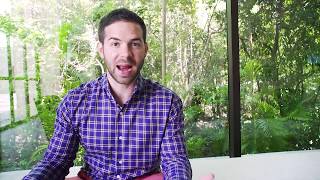
Ryan Daniel Moran (speaking at a ClickBank Platinum event) uses personal anecdotes and examples to argue that creators and information businesses should launch physical products brands to build scalable, sellable companies. He traces his start to a first ClickBank sale on July 13, 2006 (age 18) and contrasts digital-only businesses—which often hinge on a personality—with physical-product brands that can be more easily scaled, monetized, and exited. Moran cites examples (Dave Asprey/Bulletproof; Aubrey Marcus/Onnit and his near-fatal accident) to illustrate partnering with audiences and resilience. He predicts a shift toward micro-brands that serve narrowly defined, highly engaged niches (e.g., 100,000 buyers at $50/year) and emphasizes operating from a place of "you're already enough" to create customer-focused, durable products.
Chapters
I remember July 13, 2006, I'm at EIC Investors. Just for fun, I log into my affiliate account to see if there was anything in there or to grab a hop link or something.
And I saw two bars.
One for $44 a one for $66. I'd made $100 on ClickBank and that was the beginning of a journey that.
Would span all the way until today.
I end up going to college with a business that was making a few.
Hundred dollars a day.
That's when I dove into things like search engine optimization. I remember my mom called me, I got my second check was for $2,000. And my mom called me and asked me at this Christian college where I.
Was studying to be a pastor.
She asked me what illegal activity I was involved in, where this company called clickbank.com was sending me checks. What was I hustling on the Internet?
And I said it's called Search Engine Optim.
Who we're speaking to today are the ClickBank Platinum members, which means that they're selling at least a million dollars on the ClickBank platform as an affiliate or as a vendor. They have their own digital products, they have their own audiences. They're usually advertising through affiliates or through Facebook. And they're serving mostly the health and.
Fitness crowd, the entrepreneurial crowd and the.
Personal development crowd who are all growth minded customers. And so they have wide variety of needs as a customer base. So what we're talking about today is using some of that influence to build a physical products brand that they can run on Amazon or their own store and serve their exact same target audience, but do it in a way that is scalable and sellable. And I think it's the biggest opportunity that this crowd or anybody who is producing content on the Internet is missing. If you don't have the physical product side, you're missing a lot of money that you could be putting into a business that was really scalable and also sellable. I got started as an Internet marketer in 2006. I took my first sale on ClickBank July 13th of 2006. I was 18 years old. I was working as an intern at a real estate firm and I got all kinds of giddy excited because I was making money on the Internet. To come full circle 13 years later and be speaking at the event is just a personal accomplishment of mine. And.
I think we as entrepreneurs, it's so easy to compare ourselves to where we want to be. But if you take a moment and compare to where you came from in 2006, I never imagined that I'd be speaking to the company that was sending me checks while I was in my college dorm room. And so when you compare yourself backwards to where you came from, you always win that game. Assuming that you are a growth minded person and that is the difference between perpetual happiness and perpetual failure, are you comparing yourself to where you could be, where you wish you were, or are you comparing yourself to where you came from? Because that's scale is always moving and your total happiness is determined by that comparison. So I've just taken a minute to appreciate the fact that.
As an 18 year old, I would be very proud of what we've accomplished together.
And your real business is the one that the customer holds in their hand. And the best part about that is, is when you ship the product to them and they hold it in their hand, you're done.
There is no, this didn't work. It's a scam. It showed up, it arrived on time. And because you have the ability to literally take your customers who have already voted with their dollars.
That you are the information source that they want to follow, that amount of influence brought over into any channel, just like you would mail for an affiliate, just like you would.
See another product show up higher in the marketplace, has an immense impact on how Amazon, or any other place where you're taking an order, weighs your product.
I was making the comment at lunch to someone who was asking, is the sales process different for a physical product versus a digital product?
And I said, you have to think.
About the digital platform, the content platform, everything that you've been doing to build an audience, all the things you've been doing to sell digital products, that's been you building the audience. That has been you building the platform to launch the real business, which is the physical products brand. The example that I explained was a few years ago, Dave Asprey from Bulletproof was a blogger and a podcaster who wrote a couple books and now he's the founder of Bulletproof. And Bulletproof is, you know, worth hundreds of millions of dollars, I think. I don't know. I pulled that number out of my rear end.
Can you really pull a number out of a rear end? I guess if you swallowed a fortune cookie whole, you could pull the lucky number.
I'm a dad, dad joke. You'll find me funny someday. But anyway, the whole point is that the physical products brand the thing that people consume, that's the real business.
And the key differentiator there is that that can be sold.
A digital suite of products, it happens. It can be sold, but it's usually built around a personality and that personality needs to go with that person. Tony Robbins is going to have a hard time selling the Tony Robbins company. If he ever wants to exit, it's going to be almost impossible. Most personal brands, most influencers, go to grave with their audience. But a physical products brand can be bolted onto just about any platform, any.
Audience, any business and be a sellable.
Portion of the business. They can set you up for life and free you up to do the things that you actually want to do in your business without compromising your existing platform or audience. In fact, it should enhance it. Having a physical products brand will legitimize an information products business. So if you're selling digital products, if you are a blogger, if you're putting out content, you have an email list, you should have a physical products brand associated to your audience because your audience, your customers are on a journey and they're buying products along that life cycle and they're following you as part of that. So if they don't go to you, they're going to go to someone. So you might as well be the physical products brand that they trust and that's going to be the company that you can ultimately scale and sell.
Someone who has inspired me, somebody in this world is the founder of Onnit, Aubrey Marcus. How many of you know and follow Aubrey? So Aubrey has inspired me mostly for the first reason, because.
He followed this process to a T without an audience. He went out and he partnered with the audience. Who did he partner with? Joe Rogan. Joe Rogan talks about Onnit Onenit runs out of stock.
They use that to buy the next round of inventory. Joe talks about it again, they run out of stock, Joe talks about it a third time, they start to get their tish together and now they have a huge business that is impacting people all over the world.
Partnered with an audience, had one person who was passionate about the product line, somebody else had the audience. Hint, hint, hint. JV Ventures right here. They partnered together and they created a world impacting company.
That's the power of having an audience. That's the power of bringing a physical product to a hungry audience that wants what you got.
There's another reason why Aubrey specifically has inspired me.
Recently. Aubrey was in a very, very serious car accident and he should have lost his life.
He shouldn't be here. Somehow he didn't walk away from the accident. He's still recovering from the accident.
But I spoke with Aubrey a few times since his accident and.
I heard him give a talk about how he views life differently after the accident, how he views business after the accident, being on the other side of almost losing your life. How does life look different? How does business look different? There's one thing he said.
That this is so old, overblown, this is so used, but this literally changed my life. He told the story about how in the accident his physical appearance was mangled, he had scars all over his face, he had swelling in his face. And he realized that he was attached to how he looked, that he got a lot of meaning out of what he looked like. He got a lot of meaning out of the ability to persuade other people.
By being charming, by putting on the right stuff.
I sat on this and I wondered, what am I attached to? What is it that I'm hoping makes me feel like I'm valuable enough? Do I have that? Is that in me?
I sat on this for more than 24 hours with this deep sense of I need to explore this. I need to explore this idea of.
Is that in me? Is that need for validation somewhere in me? I started to look through my journal and look at my goals. They were make this much money, have this much body fat, have this many followers.
And I looked up at a friend of mine and I said, this person is sad.
Whoever wrote this is sad.
Whoever wrote this is waiting for some sort of external validation to tell them that they're valuable enough.
And it really shook me up because I realized that for the for the first time in 18 years, I was dealing with the fact that at 12 and 13, I had felt like I was alone and not enough.
And that I was trying to extract from the marketplace, trying to sell the next thing, rather than being in a place of I'm already enough and I have enough to give.
The trend for physical products brands and actually for info products as well is going to go even more micro brand moving forward. And what that means is that instead of having the products that changes the world, people are looking for the product that is specifically tailored to them.
And at this point, it's very easy.
To target 100,000 raving buyers of something. And 100,000 raving buyers who give you $50 a year is an okay business. That's an okay sized business that can be sold for a big payday. So it is about finding those small, hungry audiences and delivering products that are specifically tailored to them, to their pain points, to their needs, to their desires, rather than going for the thing that is so mass market that it's hard to stand out it's why a lot of Amazon sellers actually struggle, because they're looking to sell mass market products that have a lot of volume, which is great, but they're selling the exact same product as everyone else. They could charge much higher price points and they would have a much more loyal following and an easier time getting reviews and an easier time buying traffic so that they weren't dependent just on Amazon. If they go after a very small subsection of the market and create a product that was specifically tailored to them, that's going to be the trend moving forward. And that's going to result in higher price points, higher profit margins, and the ability for you to target audiences outside of Amazon or Facebook as well. You're going to be able to get affiliates for that, create content for that. Whereas if you're just selling spatulas, it's really hard to create content around selling grill or spatulas or just chairs or the thing that is hard to differentiate.
But if you're targeting a specific person or a pain point, very, very easy.
To go out and get hungry, rabid fans for that audience. And that's going to be the trend and that's what's going to win over the next couple of years. Let's go.
In this world, so many of us got into it because we wanted to make money.
We got into this world because we didn't want a 9 to 5. We got into this world because I never wanted to worry about a broken washing machine. We got into this world because we wanted the status. We got into this world because somebody else that we knew was living a cool lifestyle. We got into this for ourselves, a lot of us did.
And that drove us to learn certain skills.
And that drove us to be really high producers.
But what I wish someone had told.
Me.
Is that you're already enough with the money, without the money, with the followers, without the followers, with the successful product, without the successful product, you're already enough. You are always enough. You'll always be enough.
And when you recognize that and you're good no matter what, you no longer have to think about what's going to convert. That becomes a tactic and a skill that you implement through your primary question, which is what is going to be the greatest gift to the customers that are already showing up and voting with their dollars and when you can operate from that place of what's going to be best for my customers and how do I give the most to them? That is when you're unstoppable, that is when you are freed up to create. That's when people rally behind you and want to support you. It's when you're irresistible to affiliates. It's when you have no problem saying no to the person that you don't want to work with, but who might be politically expedient for you to do business with. It's when you can craft, message, and communicate with your customers in a way that make them rabid advocates for however you want to show up in the world. When you can operate from that place of I'm good and I don't need anything because I already recognize that I'm enough with the money, with the following or not.
That is when you are irresistible to the marketplace, to affiliates, to customers, to acquirers, to partners, to to yourself.







