
She hit $1,000,000 Selling Baby Clothing... Now She's Scaling to 8 Figures
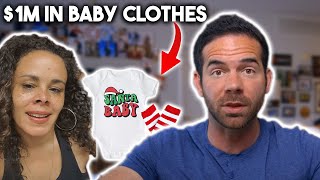
This is a coaching-style interview on Ryan Daniel Moran’s channel where Ryan helps Tanya, a baby/birthday clothing entrepreneur approaching $1M in sales, diagnose sticking points and map a plan to scale toward mid-seven to eight-figure revenue. Key themes: separate personal finances from business cashflow, stabilize inventory/operations ("protect the fort"), build an owned audience and raving fans via content and customization, and use pre-sales to launch new seasonal SKUs without upfront capital.
Chapters
Hey, everybody.
Welcome back to the show. I'm Ryan Daniel Moran. I help entrepreneurs build compelling brands, get to 100 sales a day, and have a multimillion dollar exit. And today I'm going to be chatting with somebody who's been following my work and did the hard stuff. They launched several products. They have a customer base. They've been building an audience. They've been doing all the work that I talk about doing in my book and on my podcast and on the YouTube channel. But there inevitably is a sticking point. Whenever somebody follows my work and gets four products selling consistently, they hit a wall. Because the skill set to get past the million dollars is different than getting to the million dollars. I know that if I can get somebody off the sidelines and into the game, get them to launch a few products, to build a little audience, it's just super straightforward to take that business to at least a few hundred thousand dollars a year, usually up to about $1 million. And that's where they get stuck. They hit this plateau. They've got all this stuff going on. They got multiple products and they're going, what do I do now?
And how do I handle all of this chaos?
And what's my next product going to be? And how do I increase my lifetime customer value? And I don't know what to do next. If that sounds familiar at all, then this episode is going to really help you out. I'm going to be chatting with Tanya, one of our members who has made a lot of progress on her road to a million, but now she's stuck. And in this episode, we're going to dive into her best opportunities, what she needs to start doing and stop doing. And we give her a clear plan to get to mid seven figures. Hope you enjoy.
Tanya, you're at your.
You're knocking on the door of the million.
You did 9:25 last year. And I know you know, on your call inside of the Incubator, you've been saying, this is my year. I feel like this is gonna be the year. What. What do you. You're knocking on the door. What, what do you need? Tell me a little bit about where you're feeling stuck and tell me a little bit about the business. And I'm pretty confident we're going to get you over the hump of the million way before the end of this year.
Okay, so there's. There's a. There's a couple things. I listen to Brooke Castillo because I have the crazy thoughts. So I have to go back and listen to her to get My thoughts, right? I wake up in the morning and the thoughts are like, you will fail. Everything is going to go to shit. And then I'm like, I have to, like, I have to work out of that. So I still have some fear stuff. I have business debt, but I think I will be cleared with. Cleared in about 18 months. But that fucks. I'm sorry, that messes with me because, you know, I'm like, I got to service this debt. I got to make sure I'm counting the pennies. I got to make sure that I have money. And then when I get like that, I don't necessarily make. I know I don't make the best decisions inventory wise. And so I go, maybe I shouldn't buy it because what if it doesn't sell? And then it ends up selling and then I stock out. But then, you know, I still have all my overhead and everything else and I just, I'm like, well, what if another competitor comes in and they undercut this product? And so then all the thoughts and then I just, just tread water. And I'm like, I'm tired of treading water. I just want to.
Yeah, well, you're in good company, Tanya. I think most entrepreneurs have days, months, even years like this. And I'll even tell you, Brooke Castillo said to me personally once when you were sitting at dinner, she said, ryan, most businesses have debt. Like any public company has debt. You know, most private companies have debt. Like debt is just a tool. So here's so, like thought wise, what's going on with you is you are mixing your personal financial situation with the business financial situation. Because objectively, the. What you're saying is that the business situation is actually fine. You're profitable, people buy your stuff, you have customers who like and come back when you buy inventory, you sell through it. And then personally you're like.
Okay. And so like, the first thing, like mentally is that I would encourage you to practicing the business as separate from Tanya. Right? Tanya's always going to have thoughts and junk and Tanya's always going to be growing and Tanya's always going to have challenges and Tanya may go through ebbs and flows in her financial situation, but if Tanya is removed from the situation, the business is actually very healthy. Would you agree with that or am I missing something?
No, it's healthy. When I look at my profit margins and I've listened to almost the entire Road to a Million podcast this weekend and I'm like, okay, I have cash flow issues at times, but I'm a profitable business. And I'm not racing to the bottom. In Amazon, people buy our stuff. The margins are there. I just get caught up with, oh, I need more money, or am I going to spend here? Or this month is really low and then the bills go up or I have to, you know, I'm still servicing this debt and then I have a complete freak out. But if I pull it all the way back and I go, if I take away my debt and I look at just my margins, it's good, good, good.
So you're doing your job, which is thinking about protecting the business. So the next time those thoughts come in, you can just practice the thought. This is my job. My job is to protect this business. This business. And if you can see yourself as the, you know, the CEO of this company whose job it is to protect this business, you're doing a good job. And you as a person, of course, want to make more money. You want to have a certain life for your family. You want to be free of worry. But those two things are separate.
This is the weird thing about money, right? When it is just a jumbled message, it can make us feel more stressed than before we ever even started a business. We like to think that the business is going to set us free, and it can. But most entrepreneurs are trying to extract money out of the business so that they can have the life that they want, rather than seeing the money in the business as the fuel that's going to create more cash flow. And that cash flow is what is going to set us free. That's why I'm encouraging Tanya to separate how she views her personal finances and the business's finances. The business needs that cash more than she does, so I encourage her to address her personal finances in other ways. One of the worst mistakes that early entrepreneurs make is trying to take too much money out of the business too early. Your best investment is your business. You want to keep as much in there as possible so that you can continue to grow that thing that is going to set you free for life. So be willing to address your own personal financial situation in other ways. I don't care if it's driving for Uber or keeping your job or having clients. There's lots of ways to do that. But keep your money in the business until it's spitting off enough cash flow to justify you going full time. Otherwise, you're going to be full time in a business, extracting money out of it and doing things that don't move the needle. I know because I've seen it happen lots and lots of times, your money and your business's money are different and you need to treat it as such. And that's why I encourage Tanya to separate. I think I use the word divorce. Those two entities in her mind so that they can be served independently of one another.
Tanya, let's. Let's actually go into the business side of this. Because sometimes having a really clear plan of what to do can be exactly what you need to pull you out of that funk. So tell me, tell me what you're selling, how much is selling, where your customers are coming from, and then let's carve out a path for you to sail past the million this year.
Okay. So our niche is birthday outfits. They're on Amazon. And I started off, I have five kids, so I started off selling twin outfits. Cause I have twins. And then quickly realized that that's not as big as the market. And my customers are asking for a lot of birthday stuff. So I just pivoted to birthdays and that's when sales took off and I stopped working out of my house and I started and I got a commercial shop. So we're doing on a great month. I might do 2,500 units. Around Halloween, we get to around 3,000 units and Halloween is our best season.
My price point is about $26.
And so a great month is about.
100,000 in sales, which I hit in Halloween. Right now for January, we're at 77,000.
Great.
That's great.
What is selling the most right now? When you look at a great month of 80 to 100,000 in sales, where is most of it coming from?
I'm so glad you asked because I don't have a hero ski that sells like 80%. I actually think an analysis. My top SKU sells 11 to 12%. I just have a bunch of products that sell consistently and reliably all year long. I don't have one thing that knocks everything out the box.
Okay. And it's. And is it mostly the birthday stuff?
It's all birthday. That's all.
It's.
It's all birthday stuff.
So I took a look at your store and it's like, it's cute. Cute tops for one and two year olds.
With like really adorable phrases on them. Is that. Is that the bread and butter?
That's the bread and butter.
Okay. When do you know if a customer buys once from you or do they come back and buy from you again and again?
They come back. It's a little hard to track on Amazon, but I know they come back because they'll say, like, I bought the same outfit for the past four years. And then I'll get messages in my social. Hey, you doing something for Valentine's Day? You doing something for Christmas? You have something going for Easter. So I know they want more.
Okay.
In this part of the conversation, I asked Tanya about repeat customers because this is a big sticking point. When you're at the business level that she is, you need to know that a customer that you acquire is going to come back again and again rather than just finding you on Amazon, clicking a button, buying from you and then disappearing. This is a big sticking point for a lot of entrepreneurs. They're selling stuff on Amazon, but they don't really know how their product fits into the life cycle of that customer. So there are ways to change the way that you show up for your customers and for your leads that will increase the amount of money that they spend with you. Short term, Tanya wants to drive up her revenue and profit. Long term, we want to increase the brand value and the customer life cycle.
That is what's going to help her.
Build a long term brand and that she can scale or sell. So listen to this next part where we talk about how she can continue to drive up her Amazon sales but change her approach so she's building long term equity, long term profit, and ultimately her brand's valuation.
Are you creating any content? Are you building an audience in any way, or is it just the store?
So my assistant here is taking on our social media right now, but ironically she took a course in social media management and she found me on my Instagram, said, I want to work for you. And so after my call with Stan, I thought, you know what, let me just put you to work at what you're good at. And so she's taking on doing our TikTok on our Instagram to grow that. And Stan's advice was get some money on it, get to 10,000 followers and then start doing weekly lives and offering giveaways because your moms are living on Instagram. So between the social and my email list, I want to grow that community.
Tell me what you think you have to do in order to grow on social media and then I'm going to make this a lot easier for you.
Well, what I think I have to do is grow to my 10,000 followers.
Get all these growing?
Yeah, I've got to grow. I've got to have a community, got to have an audience. I have people that want to come back and buy so that when I have inevitably have the competitors which they crop up. I've got competitors. They come in, they rip my designs off, and I do see my sales drop. But if I've got my audience of loyal followers who like and love me and trust me, and I'm guiding them on their journey, I'm not in a race to the bottom, and they will continue to buy from me for eons to come.
Okay, so do you realize that all of your expectations around building an audience are about staving off a problem? Yes, I. Like, you're basically saying I need to build a defense against competitors who are trying to. So the entire time that you are trying to build an audience, you're actually doing it in resistance to the competitors coming in and undercutting you. There's no service in that. There's no playfulness in that. There's no giving to that. You're staving off against an inevitable problem that you believe you will face. So what type of content are you posting to build this audience?
We do some fun stuff like meet the maker, like watch my boss asleep on the couch. Or like, look what we're designing today, or new stuff.
It's fun and playful. It's a lot of, like, a day in the life. Some mom, boss, girl, boss stuff off. And, you know, hey, by the way, we're making some new designs here.
And how long have you been doing this?
A solid month.
Okay.
Okay.
All right. So we don't have a whole lot of results to go off of here yet, but this. This is where I want to go with this that I think you're going to really like. I want you to start showing the customized stuff.
Okay.
That you are sending out to these parents.
Okay.
And that can be videos from the factory, videos that you have in your commercial space, or videos that are submitted to you from people who get them. Because if you can get a video that shows. Do you know that we do customized shirts for kids every time someone buys from us? How do you get a customized shirt? Any. Yeah, I can see your face. Anytime you buy from us on any platform, we do a customized shirt for our people. And you show a reel of all of the people who submitted their customized shirt. Do you have any idea how raving a fan you're going to get from somebody who buys from that?
All right, this is the part where we start combining audience building and content creation in a way that is going to build a lot of raving fans. Raving fans are the difference between someone talking about your brand as just something that they bought on Amazon versus someone recommending your brand specifically to all the people that are like them. That is what creates that long term brand value. That is going to create the profit and the valuation of the business that you ultimately want to have. But rating fans are built when you go above and beyond the call of duty at a restaurant. You give big tips to people that go out of their way to serve you. E commerce is exactly the same. People will defend and fight for the brands that they feel represent them, specifically them who they are on a journey and also them as individuals. This is why I'm encouraging Tanya to, to do something very unique in her business in order to cultivate raving fans. This is hard to justify for a lot of entrepreneurs early in their journey because they don't see an immediate ROI from this behavior. But if you do this over the course of a year, you will build a raving fan base that supports every single product that you launch and they will bring everybody else in the marketplace with you, which gives you a lot more predictability for every product product that you launch and for the consistent sales that you get each month.
So we've covered the audience building side for you pretty extensively, but it sounds like where you want to be in the business is in the place of just creating new outfits, creating new offerings for these kids and these parents.
What resistance or hesitancy do you have over doing that? Do you feel like you need to be going in a specific direction in order to do that? Or what else is holding you back from just like new thing, new product, new outfit?
Two things I get very bogged down in the, in the day to day. We have a lot of SKUs and we have a lot. I have a lot of inventory management and this was the first year we used to do everything here. Last year was the first year that I transitioned to having my stuff made completely manufactured overseas and sent to Amazon, which I encountered a whole different set of problems than I had doing my own stuff here. So that's been a big thing, just staying in freaking stock that's consumed and obsessed with that for the last year. So I get stuck on that. You know, I mentioned my cash flow issues and it is, it costs money to plan something, start it, try it out, test it, and then those holidays move. So if I don't have something in place for Valentine's Day, it doesn't sell. I don't want to put a bunch of money in it just to have stock waiting for next year.
I get it.
So you're a little bit bogged down in the details and that prevents you from launching additional SKUs because that costs additional money and additional brain power to be able to manage. Is that right?
150,000%.
Okay. You like that number?
So here are your options. Tanya, you could take a beat. Meaning, like, you could say, I'm not going to create any new products for a little bit. I'm just going to solidify what I've got. And that means I'm going to spend this year being really good at inventory management, ordering ahead of time, really understanding our customer base, really connecting with them and building that audience. And you'll cross the million because you'll have new customers and more raving fans and a bigger following and. And you won't run out of stock and you'll do great. Or you could bring on help. There are agencies that specialize in inventory management where you could bring in somebody who thinks about that and you could just put your focus on launching new stuff and documenting it and building the audience that way. And that would take you there too. Either direction will take you to the most profitable year that you've ever had. So which of those feels more fun for you this year?
What feels fun is focusing on the new designs, but it doesn't feel doable. Because when I think about handing over inventory management, I'm like, oh, they're going to screw it up that they don't know what I know. And then I think, can I afford it? And if they screw it up and I can't afford it, then I'm worse off.
Great. Then this is my invitation to you, Tanya. I think you're really going to like this this year. Your business goal on paper is going to be to solidify the fort, to solidify the castle. You've been at this game for eight years. You're finally at a point revenue wise, where you can be really profitable as long as you don't run out of stock, you don't have inventory issues. Like, if you just protect the castle, you've got a healthy, profitable business. Is that right? So that's your job this year as CEO, is a protect the castle. What does that mean? It means ensuring that you're in stock.
Documenting the process, being really good to your customers, building that audience, and your sales will grow as a result of doing that. On paper, this looks really boring, but you're going to like it at the end. So if you know that your job is just to solidify the fort and focus on the audience, does that give you a clear focus for this year?
Yes. And the gun is removed from My head.
Good. And just so you know, this was my 2022. Like@capitalism.com, i needed to solidify the Ford. And like, we didn't do capcon last year, we did not launch any new programs except for the five day challenge, which was total. Like, I put a ton of time and effort into that. We did it three times in 2021. We built the team, solidified the team, built the revenue. Like, I stayed very focused in 2022, so. And we, and we doubled. You're going to have, you're going to have the same thing. If you solidify the fort based on where you are right now, your sales will grow and you'll also have the firepower to go really deep with your audience, to really connect with them, to build those raving fan bases, to build the systems, to take a sale to a fan. Like doing that hard work of solidifying the fort, you will grow. Now here's where it gets fun. Since doing that will shore up cash flows, shore up inventory, shore up processes, shore up audience. Now you can go to your audience and say, hey, everyone, I really feel inspired to do a Easter outfit. Here's the thing, we're a small business. In order for me to do this the old way, I would need to order 10,000 units of this. Don't have the capacity for this right now. So all I'm going to do is I'm just going to do a pre sale run. If you want one, go to this website, you can fill it out and then I will place the order in time for you to have it before Easter. And so you don't put up any cash.
I love it.
You don't put up any effort except the design, which you love and you only pre sell it and you do that a couple of times throughout the year and then you have a few that just, you know, your, let's say your Christmas one crushes. You're like, didn't see that coming.
So in 2024, you make sure that you've got it ahead of time because you know you've got a winning skew for the following Christmas. You track it with me.
Yes. I was about to say 150,000. Yes.
So this, this year your focus is on building and protecting the castle, getting to the million, protecting cash flows, being more conservative on the surface. But you're actually building really deep roots because you're building connection with audience and you're building the Instagram following and the social and the raving fans. And those people are going to buy from you again and again you're building that raving fan base. But since those roots go really deep, that will increase your profitability and your revenue. But it also gives you the firepower to be able to pre launch and pre sell products without you putting up any capital or time or effort. And it actually becomes content because it looks like you're just doing your audience a service. Do you feel like you have a clear plan to mid seven figures? Good.
Yeah. No, I feel like I got, like I got permission. I can just like take the pressure off and just secure the fort, you know?
Good.
Do the things that I, that will make me feel good. Like I want to design, but I want to do that after I've secured the fort.
That's right. So this is, this is your next assignment, Tanya. I know you're in the 1% and Cap Inc. So I want you to pick one of those groups to do a two week documentation. So you're going to do a write up about the decisions you made in this 45 minutes with me, what you're going to do with it, and then I want you to come back and update every two weeks on your progress.
Oh, wow.
That will keep you accountable and it will keep me aware of you marching towards this goal.
Okay.
And if you feel led, you can also post that stuff publicly as a way to document your process of building the business.
Okay?
Got it?
Yes, sir.
Congratulations on your momentum, Tanya. I'm really excited for you. Keep me posted.
Okay, thank you, Ryan.
All right, great to see you. I'll be in touch.
Alrighty.
Okay, bye.
If Tanya does what we talked about in this time together, it's inevitable that she will have a multi million dollar business. There's nothing that would stop her from having a $5 million business or even a $10 million business. It's just dependent on how big she wants to go and how soon she wants to have an exit. And since we cleared the fog and poured gasoline on what's working and what she could optimize in order to grow faster, she'll have no problem getting there as long as she stays focused on that plan. If you're seeing yourself in Tanya and you'd like to go through the same journey that she, she went through, Tanya got involved in our capitalism incubator, which is where we help brand builders build companies that they can sell. If you want to find out what we do and get on the waiting list, you can find out more@Capitalism.com Inc. Hey, I hope you enjoyed today's conversation with Tanya. These are very common pitfalls that entrepreneurs run into. And when you're doing things alone, it can be easy to think that you're the only one struggling with them. So I hope this conversation with Tanya helped you feel less alone on your road to one million. I'm Ryan. Daniel Moran. Thanks for watching.
See you next time.







