
She Reached $1,000,000 in 90 Days... | Annie Vonheim
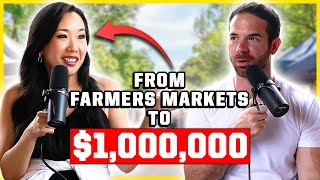
Annie Bonheim built Smart Press Juice from zero to a million-dollar run rate in 90 days by selling at farmers markets, then scaling on Amazon and Shopify. She credits product-market fit and subscriptions for the growth, but faced pressure when ad costs spiked and algorithms shifted.
Questions this video answers
2018
2020
About 1,000 people
Over $20 lost per customer (true CAC context)
Chapters
How long into the process? After you took the first sale online, how long did it take you to get to the first million?
I don't know. It was fast, Ryan. It was really, really fast.
Was it a year or less?
Of course, yeah. I think I'm doing everything wrong. Ryan. I was wondering, when are we going to die? That was my question when I met you. Like, is my company going to die, Ryan? I love this company too much to let it go.
Annie Bonheim starts a business in 2018 selling stuff at farmers markets. Not the most scalable business. Then a few years later, she discovers the 12 months to $1 million framework. And she hits a seven figure run rate within a few months. Here's why. I once heard Russell Brunson say that he could identify if somebody was going to make it based on the fact of if they were doing it for the money or if they had something that they want to bring into the world. He said, when I see somebody who always wants to bring something into the world, I know that they're going to make it. Annie is a perfect example of this. Annie had a problem that she wanted to solve and she created a product that solved it. And she said, I got to get this into the world. And for two years she's hauling around big bags of juice at farmer's markets trying to sell it. And guess what she did in that time? Built a tiny little audience of buyers that actually liked her product. Not scalable, not even profitable. And a whole hell of a lot more work than selling stuff on Amazon. But she got enough of a buyer's list to where when she hit E Commerce hard, she had people ready to buy from her. And that gave her the firepower to build a seven figure business over the course of a couple of months. In this episode with Annie, you're going to hear exactly how she did it. This interview was taken from our last Capitalist Pigs meetup. We met up in San Diego for our last Mastermind. The Pigs are where we get together three to four times a year. We have an amazing time, we bring in amazing food and we talk business. And we sat down to record this interview for you. If you want to find out what the hell we do inside of the Capitalist Pigs Mastermind, go to capitalism.com pigs to see a sales page. I feel like our events are synonymous with SmartPress juice now because every morning Annie's up making green juices for everybody first thing in the morning. You seem to really enjoy that.
It's because none of you eat enough vegetables. That's the Main reason I do it. I'm your mother incarnate. Here at your events, making sure you eat vegetables.
What do you know?
I always get this wrong. You were a nutritionist before you were an entrepreneur, right? I said dietitian earlier today. Nutrition is the right term, correct?
Yeah.
Okay, so you had that background before you started SmartPress juice. When did you start actually creating the product and why?
So I worked in functional medicine, nutrition, for about 15 years beforehand. So I'm not practicing. I was on the business side. So what we would do is we'd create health protocols for chronic disease all over the world. So that's cancer, diabetes, everything you can think of that you've seen your loved ones go through. And there's a really common denominator through all of that, which is just none of us eat the way we should. When a doctor tells a patient, you know what? You really gotta eat better or things are gonna get worse. People have no idea. Yeah.
They don't even know what that means.
Yeah. What does it mean? What does it mean?
Does that mean keto? Does that mean paleo? Or does it mean vegan or Mediterranean?
Yeah. If you were going to ask your mother, ryan, you got to eat healthier, what would she tell you? What does that mean?
She would tell me to eat more vegetables.
She would?
Yeah.
Oh, you got a good mom.
This is why we get along.
You got a good mom. I'll let her know.
She'll appreciate that.
A lot of people think I got to eat healthier. So maybe that means I get an iceberg lettuce and drench it in ranch and croutons, and that's eating healthy. It could mean anything to anyone. So I.
So you saw this all the time, over and over in your practice?
All the time.
So you would develop these plans for people, and they would either be shocked by them or they wouldn't follow them. And you see a problem starting.
Yeah. We developed them as on a mass scale. So doctors would roll it out to their patients through clinics, through hospitals, which.
Means they probably weren't even that good.
The diet plans, if they were rolled out to the masses, they were flipping fantastic.
Well, if you did them, of course, but, I mean, if they're done for the masses, don't you kind of have to water it down?
We actually. It's very formulaic. It's not that difficult. And that's why I created this company, because I just followed that exact formula. It's so easy. It's just a clean, lean protein. More vegetables than you think. The foundation of health literally is getting at least. They call it the diversity of plants. Right. So you want to have at least 30 different plants in your system every week for optimal health and longevity forever. It's easy. It's not so difficult. But when you start thinking about 30 plants, it gets really, really dicerate. Most people, we're lucky if we have a cucumber, a tomato, you know, during the day, and that. That might be it. So you'll. You're never going to get enough. Just. You need more.
And so this was. This was kind of your background before you started the company.
Yes.
When you started the company, you weren't even really thinking about being a big successful entrepreneur. You were really just creating a product because you saw a need for the people you were serving. Is that correct?
Literally, it was, how do I get people to eat right? I got to teach them how to eat right. So I just created a system of products. If they take every single one of them, I'm pretty much covering like, your entire health base. I'm just covering it all. So I got you on your protein. I got you on, like, a multitude of different types of veggies. I got you on a good fiber. And, you know, I feel pretty good about this. We start teaching them how to eat a clean meal, like layering, like, even more veggies with more clean, lean proteins, teaching them what whole grains look like. Just creating a perfect meal. Like, I'm like the clean perfect. And that just sets you up for success forever. Forever and ever.
How did you then launch the first product?
Because you were doing this, but you weren't, like, you didn't have an audience around this?
No.
Right. So you were just coming out of doing this full time and you were still, I think, working full time when you launched the thing?
No.
Okay, then tell me about that transition.
I actually was working for a pretty prominent a nutritional supplement company in New York, and I reached kind of like the pinnacle of success, as I thought. You know, every. Somebody said something this week that was so profound. Is so much of our desires to impress others and to impress our fathers. I mean, this is aimed towards males. But for some reason, that really resonated with me because I was living the life that would please my father. I was climbing the corporate ladder. I reached SVP status at a huge firm. Like, everyone knows this brand. And I was like, this is.
Was it sheer strength?
Yes, it was sheer strength.
Or was it switch on switch?
But there's a CEO named Ryan Moran, and we just had.
Sounds like an asshole.
We had philosophical differences.
So once I reached that, I realized, this isn't the life I want. I don't even want to be here. I thought I, I thought I, this is everything I should have worked for. But at that moment I thought, you know, I keep seeing this thing repeated over and over again where once I put these patients at these hospitals on this really, really simple, clean diet, all of their symptoms resolve naturally. Wouldn't it be cool if I could just roll this out to the masses? Because what I worked for before was very specialized. It was towards pretty high end patients, people who could afford these programs. I didn't think that was fair for most, Most people need to just know what it is. Most of America is a food desert. They have no idea. When you're in a rush, where do you go? You go to fast food food and you don't really have a lot of options. It's really heavy in oil. It's not really high quality meats. It's just, you know, refined carbohydrates. It's just the antithesis of how you should be eating. So I wanted to create a really simple system where it's not so hard. And even if you mess up, even if you go to that party or you go to, you know, some event where you mess up on your diet, you have a system to fall back to the next day. Nobody can exist on willpower alone. Nobody.
So I just, I just want to point something out. So I've asked you three business questions that you've come back to. Your core passion of why you started this, which is, which you have shared in these masterminds. You're like, I don't consider myself like, I didn't plan on being a business person. I didn't plan on being an entrepreneur. I just saw a problem I wanted to solve. Yeah, just something I wanted to bring out to the world. And you're, you're, you've, you even said the whole business has grown. And I got, it kind of came out like a rocket ship. And I didn't even plan for this because you're just trying to get it into the hands of so many people. And I think there's something to that. But I am curious when you went and launched the product because something had to work. You can't just be passionate. You also got to be smart at how you run the business. You have a multimillion dollar business now and the business is three years old, two and a half years old.
No, we're like five years old. But technically I kind of Wasted the first couple years slinging juice at farmer's markets.
Right. All right, so when you take. You took the first online sale in 2020.
Yeah.
So we're just gonna call it three years. You've gotten into, you know, a good seven figure run rate. So what, what, Tell me about the release of it online. And you were just one to one selling at farmer's markets and like hustling before you put it online?
I was going to dinner parties. I was speaking at corporate events. I didn't know how to sell a product. I just, I just wanted people to understand what the concept was and how to get more plants into your diet, how to eat more vegetables. I just, I just wanted to get that message out and to make it really, really. Because it's just too complicated. Most of us are too busy to eat. Right. Myself included.
And when did you start taking this? What prompted you start taking the sales online?
Actually believe it was an ex boyfriend of mine who was watching me and shaking his head, going, what is she doing? And he called me up and he said, bring your team to my office. I just need you to buy me lunch. And I'm gonna list you guys on Amazon.
Your boyfriend, Your boyfriend. Oh, oh, he was ex at that point. Your boyfriend made you buy him lunch for advice. No wonder he's an ex boyfriend.
It was an ex boyfriend. He decided to show us how to create a listing and how simple it was. And he asked how much inventory we had and we told him. And then I think it probably would have taken me like maybe two, three months to sell it all at a farmer's market, but he blew through it in a couple weeks, you know, and.
You'Re like, oh, something here.
Oh, Amazon.
This is. This reminding. This conversation reminded me of some conversations we've had in the 1% with Dr. Ben. Dr. Bennett will smile when he hears that, but there's a guy in the 1% who's been selling something in his office one to one. And people come back all the time. They go out of the way to buy it, and he joins the 1%. It takes me two or three months, two or three calls like, Dr. Ben, please put your product for sale on Amazon.com and, you know, you overthink it. Do I need a big website? Do I need a hire? Please make it easy for someone to give you money. And now he's taking regular sales and starting to grow it and build the whole thing. And we can get to a million dollars when you keep building up that snowball. So you see the Light bulb moment when you just see inventory start to move faster than you would see at farmer's markets. At what point did you start taking it seriously like it's an online business now? Because I know you had a pretty quick rocket ship up once you put all your focus into it.
Yeah, so we had Amazon, I mean, me and my partner and just a couple maybe, you know, part time employees. We created the listings ourselves, we shot all the pictures ourselves, we just put it up and we just started running automatic ads to it. And at the same time, we started building the most horrible looking website you've ever seen. I don't, I want to cry when I even think about it. It was not usable in any sense of the word. So about 2020 we created a Shopify website. I mean, it's still not fantastic looking. It will be in the fall, but right now this is still our first iteration that we're on and it's not optimized. We had nobody that had any expertise at all. I just kind of fumbled through it and just, you know, wireframed it myself. We hired a basic developer to build it out, but it's held together with scotch tape and bubblegum to this day. And now it's time for us to level up a little bit more, to start adding in some real design.
You've taken a lot of sales on a piece together website then, because you're one of the few businesses in our circle that does both Amazon and your own website and does considerable volume on both of them. And I know you've had like your challenges with the Facebook changes and algorithm changes everybody has, but you seem to. Are you pretty evenly split between the two?
Yeah, we are.
But believe it, that's rare.
Believe it or not, our website was doing much more than Amazon.
So. So tell us a little bit about that because there's something to, you know, when you're just selling a product, to sell a product, you should just sell on Amazon and optimize the heck out of it and rank for keywords and optimize your price and get a lot of reviews and be done. But when you have something that you want to bring to the world like you had when you, when you genuinely are motivated by the service of a person on their journey, which is what your company is, it seems like the rules change somehow. It seems like the ads convert better, the customers are more loyal because you're serving that person. And it seems to me like that has been a big contributor to why your funnels have converted and your ads have been Converted. So you talk a little bit about the emphasis on the Shopify side and how. Why you think that was so successful.
I still feel I got really lucky. This is really funny because when I think about your content, I'm like, I don't rank for shit on Amazon. There isn't a single keyword I rank for except for my brand. Yeah, that's it. And the only reason we're driving, you know, we're spending so much on PPC for brands is because my competitors keep outbidding me on my own brand name. Yeah. So that's primarily where all our spend is. So, yeah, it is a little bit different, I suppose. And it doesn't exactly follow, you know, the blueprint.
Well, it's interesting because you started on Amazon.
Yeah.
But all the momentum came through you going after a specific person.
Yeah, I suppose so. That makes sense. And I was thinking about the farmer's market thing and why I spent so much time. And I was talking about that earlier with hauling easy ups out at 5 in the morning and like, laying out flooring that, you know, the Department of Health would like, and hot water stations and having to go the night before and get permits from the health authorities. It was awful. And they would come and audit you throughout the day to make sure that you are being clean and following all their standards. It was nuts. And I think about that sometimes. I'm so bitter with all that time I spent. But at the same time, I really got to know my person there, basically my avatar, who I was selling to, what they're looking for. If you look at my labels, you could actually tell how many iterations I actually have of each formula. And I started with my greens juice. And if you look at all the other ones, you know, maybe I think pineapple cheese, still on its first iteration, that first formula, we nailed it. But for the other ones, maybe it might be beets. There's two iterations for, I think, immunity, there's five. For greens, there was 12. 12 times I've released it to the market and got it kicked back.
Wow.
Because.
What do you mean?
People saying, I don't like the flavor. It's too grassy. Too much celery, not enough celery. I like the flavor of peaches. No, I don't like peaches. Can we do apples? And then finally I just threw my. And I went to the food scientist. One of my good friends ended up buying the smoothie chain in California called Juice it up. And he lent me their wonderful food scientist. His name is Noah. He's Amazing. And he helped me work on the flavor profile and he taught me so much about how to neutralize the taste of greens and what customers are really looking at. He's more mass market, which would be more similar to who my avatar is. So we really worked on that.
What point in the process was this? Because you iterate for a long time but you were taking sales around.
So it was throughout. I kept.
You kept. You kept iterating over time?
Yeah, I kept doing it and I just kept listening to feedback. The 12th version was probably last year. I mean, I'm still changing it, so. And also it depends on my produce. Sometimes the produce tastes a little too herbal, so I'll dial it down. So I'll have to do things like that or take something out because the flavor is off or I don't like the quality of it. So things change. I mean, it's a vegetable juice. It's kind of like shopping at a farmer's market. You're going to change what you put in it sometimes at what point or.
How long into the process after you took the first sale online, how long did it take you to get to the first million?
Okay, if you talk about true e commerce, since the word of actually really driving traffic. I don't know. It was fast, Ryan. It was really, really fast. I don't think there was ever sitting around waiting for an order once we had the.
Was it a year or less?
Of course, yeah. I don't know how it happened so quickly, but the farmers market also helped me get an email list going, so I got to know my local community.
This is really important for people who are just starting out. How big was that email list?
Oh, small. Like a thousand people maybe. But do you know how many farmers markets and events I had to go to and break my back at to get a thousand?
Yeah, you had to go for years.
Yeah, I had to meet a thousand people, get them to give me right physically down their email address, which I would enter into mailchimp, which is what we.
This is why I tell people you don't need that many people. But. But you've got to have trust with those people. I mean, it's a big deal if you've been in person with somebody, you collect a thousand names. And it's also equally if you've responded to DMS or if you have done videos, video calls, or if you created a podcast or if you did some sort of Facebook group, you're interacting with people. It doesn't take that many people to have a successful launch. Out of the gate when you've got intimacy with a small group of people. So you had a thousand people, and then that was enough to kind of seed the launch and give you the pace for a million dollars in less. In less than a year.
Yeah. And I think a lot of. And we had a lot of help. We have a lot of friends and supporters who told their friends about it. So. So many of our most loyal customers found out about it from brand. It wasn't from a Facebook ad. It was just having a really, really good product, really strong conviction behind a strong story behind it. And, you know, somebody finds it.
Yeah.
And then they start telling their friends. And that's largely where I think a lot of those sales came from.
Yeah. It wasn't like you had Jessica Alba shouting you out publicly or Kim Kardashian shouting out. It was just a good product that people wanted to talk about. What did you do in order to get the word out more? You said it wasn't one ad that hit. It wasn't a celebrity that endorsed you. So how did you spread the message that you wanted to bring to the world is, like, when you talk, people listen. You're fun to listen to. So was it you on camera creating a bunch of content? Did you have something go viral? What were you doing to get the word out?
I think I'm doing everything wrong, Ryan. I am not on camera. I am not great at social media. I'm not really amazing at a lot of those things, but I'm really good at education. So I think a lot of it was email. Believe it or not, is telling my story through email so I can hide behind my computer and just write about what I believe in. And I think it resonates with people. So I think email is a huge part of it. Concurrent with just some really simple Facebook ads, I had created this very simple gif of, you know, for each one of my products. What they do. I just wanted, like, three things, three benefits I would get from each one of our products. And one of them did hit it was my pineapple Chia cleanse. It's actually a fiber. And who would have thought it would be a fiber? It was always my greens or my juice cleanse that led the way. But for some reason, this. This thing about the fiber, which cuts cravings and eases digestions and has activated fiber, and, you know, it's like a daily mini cleanse. It's just like three little GIFs animated. And that one just blew up, actually. Covid.
That was. That was the one that did it.
I wouldn't have thought that it was that one. And we were during COVID we were getting 10 times ROAS, and. And this is what I meant. Like, you cannot launch a product during that. Because I thought I was an e commerce goddess. I was like, look at us. 10 times.
It was good timing.
You should not start your company with those expectations.
Because when it goes away, it makes you really question who you are.
I mean, we met when you were going through that questioning where you had had big climb up and then you reach the top, and then you got punched in the mouth for the first time. Right. Because you got punched in the mouth when Facebook changed the way that it allows you to track data and every e commerce company got hit. But that was your first, like, shock moment of what could happen.
Yeah, I got punched in more than one place, and I went from 10 ROAS to 0.8 like that.
You know what's funny is enough to kill any.
But any company.
Well, what's funny is that's still good.
So you were that off the chart. So point eight is still good.
You were just not in my world.
So tell me what happened during that time and how you navigated it.
That was a lot of social g. I was wondering, when are we gonna die? That was my question when I met you. Like, is my company going to die?
Ryan.
Remember what I told you?
You told me a lot of things. I think I was. You told me a lot. A lot of things. It was like meeting you for the first time is drinking from, like, a proverbial fire hose of all the advice you're giving me. But I think you were telling me kind of what you're telling me today, which is that I need to be more in front of my audience and provide more value.
Be able to answer common nutrition questions. I think you told me to make, like, a hundred videos just answering common nutrition questions that we get so people could see, like, the philosophy behind our company and what really drives what we're putting out there.
That's funny, because I remember the. I do sort of remember that. And I remember I've been telling you for a while, just get in front of a camera and start talking, because you're very dynamic to listen to. But I remember telling you tweaks to your Facebook ads, so it's funny that I remember that part of the conversation first. And you remember that you were telling.
Me then to chop it up and put it onto Facebook as ads.
Yeah, that sounds right. Yeah. So tell me a little bit about how you Ended up navigating that challenge because you go through this period of, is our company going to die where, you know, we, we come out like a rocket ship, but now we're going to bleed money and go out of business. How did you turn things around?
Largely, it was really reevaluating. All right, how are the companies that serve? How are the companies that are making it? How are they surviving? How are they thriving? Because there are. Companies are doing great and we. I've seen a lot of my competitors fold in the last couple years. It's been sad, scary, and, And I was wondering. They're so much bigger than me. They've done so much better than I have. They got to huge heights and then they folded. So that was really frightening for me to see. But largely, there was, you know, one person that I met in, in your community that I brought onto my team that still managed to make his company thrive. And his name is Nick. And he, he taught me so, so much. And I happen to have the right team in place already. So that, that was really important. So really, it is about the people. People always say, you know, it's about people when you're growing up, but it's people and systems. I was lacking that system. I had good people, but I didn't have the systems. So Nick really helped us set in the systems. And we already are. We're on this path already where we're thinking, you know what? I think it's the retention game that's going to save us. And we happen to have really loyal customers. We have subscribers that are basically carrying our company through.
Well, didn't you, you, didn't you tell me that you set a goal of seeing if you get the subscription business to pay for the overhead of the business?
Yeah, yeah. So that's the whole idea.
That's a really effective, clear, achievable goal. When you've got an. I mean, you're not doing audience in the. In the sense of you're making all the content, but you have audience in the sense that your customers have really bought into what it is that you're doing and they're reading your emails, right? It's like, that's your audience and they believe in this. They buy. And so you say, okay, how can we leverage this and get them on subscription so we pay for our overhead. How did you go about attacking that goal?
It was really empowering my team. I have an incredible team member. Her name is Alex, and she's just becoming one of my best friends, too. She's such an incredible person and she really had that hunger to learn. And we decided everything's about retention. So she went out and found the best retention course there was. She went out and found the best software that's connected to that course, and she became a retention expert. So it's a whole new way of looking at your business. It's ratios that make you want to cry. When we first punched in our numbers and saw those ratios, I wanted to just jump off a cliff.
What were they?
I'm not telling you that. Oh my gosh. But basically we were losing a lot of money for each, for each customer. It was, I think it was over $20 a customer I was losing.
What do you mean? So with the, with the acquisition costs.
Of getting the acquisition costs and the lifetime value of like a true cac. Okay, right. So all those ratios really matter. And for cac, you never look at, you look at what Facebook tells you. My cost of acquisition is this. But true CAC adds in what your marketing team costs, like what your tech stack is. Like. There's. That is a really humbling number to look at. I think a lot of the companies that folded never really looked at what true CAC was. So that's really important. That's a humbling moment for any e commerce entrepreneur. Like, what is the true cost of acquisition?
So how did you turn that around?
So when we, when I looked at that, I honestly, I wanted to give up. I was like, this is a near impossible task. But that's when we started bringing in team members to say, all right, let's look at this. How can we tackle it? Is it solvable? And we started.
I just have to ask any, did you raise capital during this time?
No.
Because you were in a cat, you're in a cash crunch. Your cost, your roas goes from 10 to 0.8. And now you're hiring and, and you're. And you're scared about the projections of the business. So, like, it takes a certain amount of boldness to say, I'm going to invest in the company when it's ugly. That. Right. That's bold. Especially when you're a newly successful entrepreneur. So what was going through your head at that time?
To be honest, I'm not a shrewd business person. You know, there's a lot of e commerce giants, you know, in your community and I know, like, they're very shrewd of their decision making. This is my next move. For me, I guess it's just I've, I love this company too much to let it go and I'm gonna find out whatever there is. And I haven't tried everything. I haven't. You know, there's a lot of things I haven't explored yet. There's a lot of things I don't know yet. And I'm going to keep learning. I'm going to keep asking hard questions, and I know there's some solution out there. I didn't need to raise capital because thankfully, we had the profits from the years before. We run our company in a very lean manner, so we had enough to sustain us for at least probably another year. This is bleeding cash. Before, I'd have to look at taking a loan, but I had everything ready ahead of time. So if I needed to, I had my line of credit from the bank. I had all sorts of capital lined up. If I needed to, I had investors ready. So if I needed a, you know, to ask somebody, I had it.
I think the heart of that was that you care more about the company than you do what the company is doing for you. That's. That's the heart of it is you said, I love this company. I. You say I'm not a shrewd business person, but what you're really saying is, I'm not a shrewd monetizer. I don't know how to squeeze every dollar out, which is. Which means you care more about the person at the other end of the transaction than you do about squeezing every dollar out of it, which is a. Which is consistent with the theme of what you're sharing. You started it with that intention. You've grown it with that intention. You've invested into it with that intention. And you've never really asked the question about what can this do for me. You just sort of seem to let that take care of itself. Is that an accurate interpretation?
I suppose so. I never really thought about this company is, oh, I'm going to get this massive exit. I think I get to work with my best friends. I get to work with customers that I love, and I get to meet them. I get to change their lives and their health, and we all get to make money in the meantime. It's a really, really awesome feeling. You get to serve people and make their lives better and help people heal. In the meantime, you can grow profitably and it's a win for everybody. And I guess I always just kind of believe that in the back of my mind, it's going to be okay. I just always believe that we're going to be okay. We're going to figure Out. I might be scared sometimes, but having the right people, having the right systems in place, like, makes all the difference. I also have a wonderful, wonderful partner. I always say this like, her name is Jen, but she is the best part of having this business. I think there's nothing that's more rewarding. I already have my exit. Getting a best friend like that. I'm serious. I know this sounds weird. This is not that, like, align with a lot of what anyone talks about in E commerce, but holy crap, if I was on my deathbed, I'd look at my own team and go, wow, you know, I get to work with people I love, people who I respect endlessly. And gosh, we made a difference, didn't we?
That is beautiful. That is beautiful. Well, I was going to ask you where you want to take it, but I think that's perfect. Take it to your deathbed with your best friends. I think it's really neat how when you set out with the intention of making a difference in someone's life and the focus is then, okay, what do we need to do or optimize for. For that outcome? It seems like the chips sort of fall your way. Whereas so many entrepreneurs, I think, are stuck in how do I reverse engineer the process that gets me what I want instead of how do I get into the world what I want to create? And that's like the magic shift. And my final question for you is you seem to have started with that intent. I don't know if you can teach that. I don't know. But I was hoping that you could share a little bit about how you think you started out of the gate with that intent of it being inside out, rather than, how do I get what I want into my hand? Do you understand what I'm asking?
Okay, yeah, I think I can see a little bit of that. I think it takes, like, a different kind of mindset. I'm a little bit older, so I've been through some stuff. I've been through a lot of phases where I'm not necessarily person I am now. There were times in my life where I was after money and I was after prestige. I was after respect. And I went through all that in my corporate days. And I don't want to be that person anymore because there really wasn't anything waiting for me on the other side. So largely, I decided, you know, I want to make this about relationships. I want to have fun and all the little things, and I want to learn. Everything's about learning and growing. And that, to me, is the most valuable thing on earth. As long as I'm learning, I'm growing, I'm having a lot of fun. So for that, I started the company with that thing. Like, let's go on an adventure together, and every day is an adventure. And gosh, like, really, really, really hard stuff has happened. You know, I can't even begin to think about, you know, the journey that us entrepreneurs have to go through. You know, somebody was just telling me, how many times has your back been against the wall and you have no other way out? I'm like, yes, that's absolutely happened to me. And, yes, you know, maybe I wasn't my best self during that time, but, gosh, we got through it, and we can make a lot of jokes about it later on the other side, you know, and we forget about pain so quickly. So, you know, yeah, we went through some hard times, but, hey, we have all that experience under our belt. I'm still learning more. I can now help other people that are in the beginning stages of their business journey and find a way to make sure they hold onto that joy in creating the joy with connecting with your customers. Like, gosh, you know, somebody just told me they sold their first 50 units. How awesome does that feel? You know, somebody told me they just placed their first po. Do you know how hard it is.
Yesterday here at the event?
Yeah. Do you know how hard it is to find a manufacturer first to get the formulation right and to finally perfect enough to give them your money to place a PM?
She joined the 1%, like, three weeks ago exactly. From month ago or something.
I was so proud of her. That's so hard. All these little milestones are like, to me, that's, like, you know, as great as the feeling of an exit. You're like, gosh, you got to that point. That was so hard. I know how hard you worked to get to that.
Annie. I don't think we met until the first meetup we did for. For this mastermind. How did you get plugged into my cult?
Your cult?
I actually.
I think I listened to your podcast periodically. You had one called Freedom Fast Lane way back when. Yeah, yeah. So. So I think I randomly came across it, and I was like, oh, this guy's into. Actually, it was your voice. It was the sound of your voice, Ryan. That was the true reason.
I'll speak to you for the rest.
Of the podcast for 5.99aminute.
Huh?
But I loved what you said, which is, you know, you just had a really simple formula, like the way out of the Corporate race. I think I might have been in corporate still. And you kind of laid out, sitting.
Back in the freedom fast lane days. You. That was a long time.
It was a long time ago. So I. I periodically would listen to, you know, some stuff here and there, thinking like, wow, that's an interesting concept. And it wasn't till I just decided that the corporate life just didn't align with my personal values. And then. And then I don't know why I went off and did it on my own, not listening to your podcast ever again. Ever again. Until, I don't know, like, recently, a few years ago, I found it again. I'm like, oh, yeah, I remember this guy. Oh, this is so confusing. It's not Freedom Fastlane. Is it the same guy? And then I, like, looked at your website, like, I think it's the same guy.
That's funny.
But, I mean, your voice is.
It's about the same.
It was the voice. It was the voice. Yes. Ten years later, I was on that voice.
Well, I. I was. We hit it off right away at the first ever meetup. A selfish question. I mean, I know, I know you didn't go to a lot of events or masterminds before you joined into this one randomly.
Not a single one.
Not a single one.
No.
So we were like the first ever mastermind or event that you went to.
Yeah. I've never been to a mastermind.
Oh, my goodness.
Okay, so I told you, I. This all on my own.
So selfish. Selfish question. Then what. What has it been like being in this group and coming to these events?
You know, this is exactly what I wanted. There was hearing what other people saying, like, what a mastermind really is. Like, I don't know if I'd have the intensity for that. Also, I hate competing with other companies. It's really. It's just human nature. You see a company growing so fast, and you see them with their, you know, their massive teams and their, you know, their growth, you start feeling bad about yourself. And there's a lot of ego, too, and I've kind of crushed that side of me a long time ago. So when I hear it, I don't, you know, I. I don't have anything to share because I think they want to hear what I'm doing so they could, like, be more motivated to do even better, to outdo me. So this. You've created a community that is, like, you know, they're past that. They're past that stage. All of us went through it at some stage point in time.
What's Interesting. Some of it are past that. Aren't past it in business. Meaning, like, some people are just getting started in business, but they're past that in their maturity level.
Yes.
I mean, there are people. There's people in here that have run $100 million companies, and there are people that just placed their first inventory order yesterday.
Yeah.
And you don't know who's who until you get to know a little bit about them. Until, like, you're already invested in the relationship.
Yeah, exactly. It's. It's relationship first. I feel like people don't lead with their egos at all. In fact, they'll say the opposite. They'll say, these are the mistakes I made when my ego led me through business. And now I see the other part, and it's just about kindness and relationships and helping each other and celebrating as each other grows. Like when you're saying, when one person wins here, then all of us win, and all of us are genuinely excited. You've created a wonderful community of that for people who truly care about each other. I feel like I'll be friends with these people forever. It's easy. I feel inspired by them. I want to be a better person because of these people that I'm meeting.
Good. And you definitely have that effect on the rest world of the. The group, too. So we feel very lucky that you're here. Give a quick plug for the company.
All right. My company is Smart Press Juice. We teach you how to eat better because you're too busy to eat your vegetables. You're too busy to take care of yourself. So I make it really, really simple. I lay out a very simple system. If you're eating every. If you're drinking every one of our products throughout the day, I've got you covered in terms of your health. I'm easily accessible, too. We're small enough where you can reach me at any time. In my Facebook group, it's called Smart Press Juice Cleanse. Otherwise, all the socials are Smart Press Juice.
And you'll be happy to know, Annie, I take my greens every day.
I know you do. I see you drinking them on the videos and, ugh, it's that moment.
Annie, great to see you. Thanks for being here.
Thank you, Ryan.
Most entrepreneurs get into this game because they want to make money. They want to get rich. Hey, that's a good starting point. But you will get everything that you want the minute that you care about something or someone more than you care about the money. If it is a mission, if it is a person, if it is a product that you really like. You will make more money the minute that you care more about the thing that you actually want to bring into the world. I friggin promise you. Because listen, all the strategies and all the copy, it all works when there is something of actual value behind the copy or the strike strategy or the ad campaign. We love as as marketers and optimizers. Think about the strategy and optimizing for all this because that's our selfish want out of it. But all of that works so much better when you have something of value that is coming out to the world. The hack the way through. If you're in this because you're like I should just follow you because you teach me a lot of make a million dollars in a year. Yeah I do. Well, the way through is to choose one person that you you actually care about serving and then go all in on them and then you can sell them what ever you want. And it only takes four products at 25 sales a day at a $30 price point to have a million dollar business. And then you could go full time serving these people. If you need the strategies in the playbook to do it, find it around this video. It's capitalism.com playbook. You can have it. It's free. All right, thanks for watching.
Hit me in the comments.
Sam.







